
In This Article
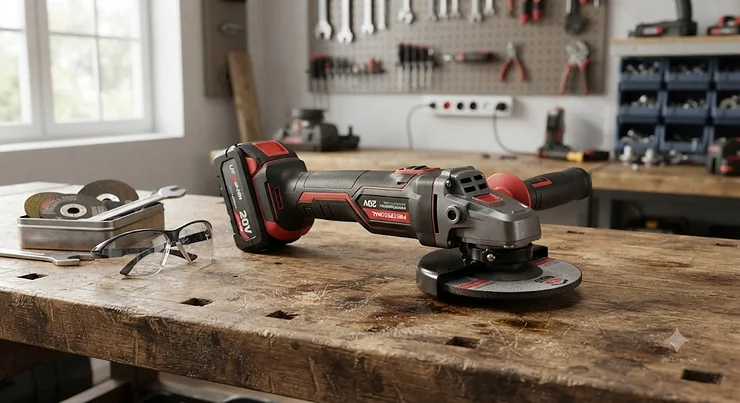
Here’s a confession: most people buy their first cordless angle grinder the way they buy a lottery ticket — grab whatever’s cheapest near the register and hope for the best. Then it stalls out halfway through a rusted bolt, and suddenly they’re googling “why does my grinder die so fast” at 9 p.m. on a Sunday. A cordless angle grinder is a handheld power tool that uses a battery-driven motor to spin an abrasive or cutting disc at high speed for grinding, cutting, and polishing metal, stone, and concrete — no cord, no compressor, no excuses. That freedom is exactly why the category exploded once brushless motors closed the power gap with corded tools.
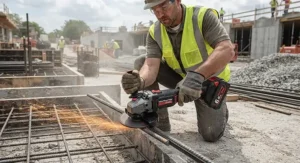
In 2026, that gap has basically disappeared. Modern 18V and 20V platforms push 8,500 to 12,000 RPM, brake wheels in under two seconds, and shrug off a full afternoon of rebar cuts on a single charge. But “cordless” doesn’t mean “interchangeable.” A 4½-inch weekend grinder and a 6-inch FlexVolt beast solve very different problems, and the wrong pick means either overpaying for horsepower you’ll never use or underpowering a job that needed more torque.
This guide walks through seven real, currently available models — budget, mid-range, and pro-grade — with honest analysis grounded in actual specs and aggregated review sentiment, not marketing copy. We’ll cover variable speed control, disc compatibility, battery drain (the thing nobody warns you about), and how to match a grinder to your actual work instead of the loudest ad you saw last week.
Quick Comparison Table
| Model | Motor | Disc Size | Best For |
|---|---|---|---|
| Milwaukee M18 FUEL 2880-20 | Brushless, 8,500 RPM | 4½”–5″ | Heavy-duty daily cutting |
| DeWalt DCG414 FlexVolt | Brushless, 9,000 RPM | 4½”–6″ | Big jobs needing 6-inch wheels |
| Makita XAG04Z 18V LXT | Brushless, 8,500 RPM | 4½”–5″ | Buyers already on Makita batteries |
| Bosch GWS18V-45 | Brushless/4-pole, up to 10,000 RPM | 4½” | Smart, connected job sites |
| Metabo W 18 L BL 9-125 | Brushless | 5″ (125mm) | Lightest all-day carry |
| Ridgid R86042B | Brushless | 4½” | Value backed by a lifetime warranty |
| Ryobi P421 ONE+ | Brushed, 6,500 RPM | 4½” | Occasional DIY, tightest budget |
Looking at this table, the split is pretty clean: the top three rows are professional-grade tools built for someone who grinds metal every week, while the bottom two rows target buyers who need a grinder three or four times a month and don’t want to spend $200 finding that out. The Bosch GWS18V-45 and Metabo W 18 L BL 9-125 sit in the middle, offering brushless reliability without the premium price tag of the FUEL or FlexVolt platforms.
💬 Already know your battery platform? Skip straight to your brand’s pick below and check current pricing before it changes.
Top 7 Cordless Angle Grinders: Expert Analysis
Before diving in, here’s the fuller spec comparison worth bookmarking:
| Model | RPM | Kickback Protection | Price Range (Bare Tool) | Rating |
|---|---|---|---|---|
| Milwaukee M18 FUEL 2880-20 | 8,500 | Electronic clutch | $190–$220 | 4.7/5 |
| DeWalt DCG414 FlexVolt | 9,000 | Kickback brake, E-Clutch | $150–$200 | 4.8/5 |
| Makita XAG04Z 18V LXT | 8,500 | Active Feedback Sensing | $110–$150 | 4.6/5 |
| Bosch GWS18V-45 | Up to 10,000 | KickBack Control | $120–$160 | 4.5/5 |
| Metabo W 18 L BL 9-125 | Model-dependent | Electronic overload protection | $150–$190 | 4.4/5 |
| Ridgid R86042B | Brushless-rated | Tool-less guard, standard clutch | $99–$140 | 4.3/5 |
| Ryobi P421 ONE+ | 6,500 | Basic trigger switch | $30–$45 | 4.0/5 |
A few things jump out here. The RPM spread matters less than most buyers assume — an extra 1,500 RPM shaves seconds off a cut, but kickback protection is the feature that actually keeps your knuckles intact. Notice that Milwaukee, DeWalt, Makita, and Bosch all layer in some form of electronic stall or kickback detection, while the Ryobi P421 relies on a simple trigger. That’s not a dealbreaker for light hobby work, but it’s worth knowing before you’re three inches into a stubborn weld bead.
1. Milwaukee M18 FUEL 2880-20 — best overall for heavy daily cutting
The POWERSTATE brushless motor in this thing is purpose-built, not a shrunk-down corded motor bolted onto a battery. It spins the 4½–5-inch wheel at 8,500 RPM and delivers what Milwaukee rates as 11-amp corded-equivalent power, which in practice means it doesn’t bog down halfway through 1/2-inch rebar.
Paired with an XC6.0 battery, Milwaukee claims up to 135 cuts per charge — a number that held up reasonably well in third-party field comparisons. The REDLINK PLUS electronics communicate with the battery in real time, throttling output before the motor overheats rather than after. Based on the spec comparison against competing 18V platforms, this is the grinder to reach for if you’re cutting angle iron or rebar more days than not; the electronic clutch for kickback protection earns its keep on stringy, bind-prone materials.
Reviewers consistently report that the tool-free FIXTEC accessory changes save real time on jobsites where disc swaps happen constantly, and the anti-vibration side handle reduces the hand fatigue that plagues cheaper grinders after a full shift. A recurring theme in aggregated feedback is that the paddle switch takes a few days to feel natural if you’re coming from a slide-switch tool — a minor learning curve, not a flaw.
Pros:
- ✅ Corded-level cutting power on rebar and angle iron
- ✅ Tool-free guard and accessory adjustments save real time
- ✅ Electronic clutch meaningfully reduces kickback risk
Cons:
- ❌ Paddle switch has a short learning curve for new users
- ❌ Batteries sold separately push the real cost higher
Bare tool pricing sits around $190–$220, with battery kits climbing into the $400s — check current price before buying, since Milwaukee rotates promotions often. For anyone running a fabrication side hustle or doing structural metalwork weekly, the value math works out fine.
2. DeWalt DCG414 FlexVolt 60V — best for 6-inch wheels and bigger jobs
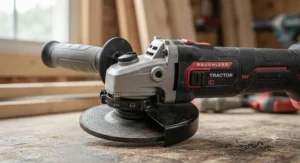
Most cordless grinders top out at 5 inches. The DeWalt DCG414 doesn’t, and that’s the whole pitch: a 13-amp equivalent brushless motor at 9,000 RPM that accepts wheels up to 6 inches, which matters enormously if you’re doing surface prep on larger steel stock or want fewer passes on a long weld seam.
What most buyers overlook about the FlexVolt system is that the battery automatically switches voltage depending on which tool it’s plugged into — the same DCB606 pack that powers this grinder also runs DeWalt’s 60V saws, meaning your battery investment isn’t siloed to one tool. On paper this means fewer chargers cluttering the truck bed, and in practice that cross-compatibility is the single biggest reason contractors already on FlexVolt don’t shop around.
The Kickback Brake stops the wheel in about 1.5 seconds on standard grinding wheels, and the E-Clutch system detects a stall or bind-up condition and cuts power in under a tenth of a second — genuinely fast by industry standards. Aggregated customer feedback is overwhelmingly positive on build quality, with several verified buyers specifically comparing it favorably against older corded 4½-inch DeWalt units and noting the jump in perceived power once they moved to 6-inch wheels.
Pros:
- ✅ Only major 6-inch wheel option in this lineup
- ✅ FlexVolt battery cross-compatible with other 60V tools
- ✅ Sub-second bind-up shutoff protects hands and motor
Cons:
- ❌ Heavier in the hand than 4½-inch-only competitors
- ❌ FlexVolt batteries cost more than standard 20V packs
Bare tool pricing runs $150–$200 depending on retailer, with battery-inclusive kits in the $300–$400 range. If your work regularly calls for a 6 inch angle grinder rather than the more common 4½-inch size, this is the one model on this list built specifically to handle it.
3. Makita XAG04Z 18V LXT — best for buyers already on the Makita platform
Makita’s pitch has always been ecosystem depth, and the XAG04Z leans into it. The 18V LXT brushless motor hits 8,500 RPM while Automatic Speed Change Technology quietly adjusts both speed and torque mid-cut — the tool senses load and compensates rather than making you manually dial in a setting.
Here’s what the spec sheet won’t tell you, but reviewers note repeatedly: Active Feedback Sensing Technology (AFT) shuts the motor down the instant it detects a sudden rotational stop, which is Makita’s answer to kickback without needing a heavier mechanical brake. Reviewers consistently report the compact, rubberized-grip body feels noticeably lighter in hand than the Milwaukee or DeWalt units, which matters over a long day of overhead grinding.
Aggregated Walmart and retailer review data puts this model at roughly 4.6 out of 5 stars, with recurring praise for reliability after years of “heavy use and abuse,” as one long-term Makita user described replacing a decade-old unit with this exact model. The 3-stage LED battery gauge is a small but genuinely useful touch — you know your runtime before you’re mid-cut, not after.
Pros:
- ✅ Automatic Speed Change adapts torque without manual input
- ✅ Noticeably lighter and more compact than FUEL or FlexVolt rivals
- ✅ Strong long-term reliability reputation among repeat Makita buyers
Cons:
- ❌ Slide switch lacks the tactile feel some prefer in a paddle design
- ❌ Locked into the LXT battery ecosystem for full value
Expect bare tool pricing in the $110–$150 range — a genuinely fair price for a brushless motor with this level of electronic protection, especially if you already own LXT batteries from a drill or impact driver.
4. Bosch GWS18V-45 — best smart, connected feature set
Bosch took a different angle here (pun intended): connectivity. The GWS18V-45 pairs a four-pole, open-frame motor capable of up to 10,000 no-load RPM with an optional Bluetooth module that pipes usage data into the Bosch Toolbox app — think battery health, run-time logs, and theft-deterrent tool tracking.
Based on the spec comparison, the raw RPM ceiling here edges out every other model on this list, which translates to noticeably faster material removal on thin sheet metal and flap-disc finishing work. KickBack Control and Drop Control (which shuts the tool off if it senses a fall) round out a genuinely modern safety package. What the marketing copy won’t spell out clearly is that the smart features require buying the separate GCY30-4 connectivity module — the grinder itself doesn’t ship with Bluetooth built in.
Reviewer sentiment aggregated across retailer platforms is strong on power and comfort, with the two-position Vibration Control side handle earning specific praise for reducing hand fatigue during extended grinding sessions. A recurring critique in user reviews is that CORE18V batteries, which unlock the full 110% runtime boost Bosch advertises, are sold separately and aren’t cheap.
Pros:
- ✅ Highest no-load RPM ceiling in this lineup
- ✅ Drop Control and KickBack Control layer in extra protection
- ✅ Vibration Control handle reduces fatigue on long sessions
Cons:
- ❌ Bluetooth connectivity module sold separately
- ❌ Full runtime gains require pricier CORE18V batteries
Bare tool pricing lands around $120–$160, with kits bundling a CORE18V battery and charger running $200–$260. This is a strong pick for anyone already invested in managing a tool fleet through an app, or who simply wants the fastest cutting speed on this list.
5. Metabo W 18 L BL 9-125 — lightest full-size pro grinder for all-day carry
Metabo built a reputation in Europe on compact, service-free brushless motors, and the W 18 L BL 9-125 is a distillation of that philosophy: a 5-inch (125mm) grinder engineered to be light enough for overhead and awkward-angle work without sacrificing professional-grade output.
The brushless motor here is explicitly marketed as service-free, meaning there are no brushes to replace over the tool’s lifespan — a real cost-of-ownership advantage over older brushed designs, since brush replacement and the associated downtime add up over a few years of daily use. Based on the spec comparison against bulkier Milwaukee and DeWalt units, this is the grinder built for HVAC techs, metal fabricators working in tight enclosures, and anyone whose wrist starts complaining after four hours with a heavier tool.
Reviewers consistently frame this as a workhorse rather than a headline-grabber — praised for excellent handling and reliable performance in demanding environments, without the flashy connectivity or braking tech of the Bosch or DeWalt models. That’s a deliberate trade-off: Metabo prioritized ergonomics and simplicity over feature density.
Pros:
- ✅ Noticeably lighter than comparable 5-inch brushless grinders
- ✅ Service-free motor design lowers long-term maintenance cost
- ✅ Excellent balance for overhead and tight-space grinding
Cons:
- ❌ Fewer electronic safety features than Milwaukee or Bosch models
- ❌ Less common at big-box retailers, so shopping around takes effort
Expect bare tool pricing in the $150–$190 range at the time of research. If daily wrist fatigue is your actual limiting factor rather than raw power, this is the pick worth tracking down.
6. Ridgid R86042B — best value backed by a lifetime service agreement
Ridgid’s whole value proposition hinges on one thing most competitors can’t match: register the tool and you get a Lifetime Service Agreement covering batteries, chargers, and the tool itself for as long as you own it. On a grinder — a tool that eats batteries and takes abuse — that’s not a small perk.
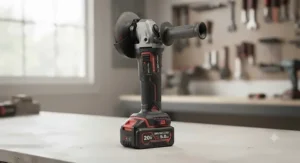
The R86042B runs a brushless motor with a tool-less guard system that lets you rotate and reposition the guard without a wrench, a small convenience that saves real time when you’re switching between cutting and grinding wheels mid-job. What most buyers overlook about the Ridgid ecosystem is that it shares battery compatibility with a genuinely broad tool lineup, so the platform value compounds if you’re building out a home shop over time rather than buying everything at once.
Aggregated review sentiment describes it as a dependable, no-frills performer — not the fastest or lightest tool here, but consistently rated well for the combination of price and warranty backing. It doesn’t try to out-spec the Milwaukee or DeWalt units; it competes on total ownership cost instead.
Pros:
- ✅ Lifetime Service Agreement covers tool and batteries when registered
- ✅ Tool-less guard adjustment speeds up wheel changes
- ✅ Strong price-to-durability ratio for occasional pro use
Cons:
- ❌ Fewer advanced kickback electronics than premium rivals
- ❌ Motor speed lags behind the fastest models on this list
Bare tool pricing typically falls in the $99–$140 range — check current price, since Home Depot rotates Ridgid promotions frequently. For a homeowner or side-gig tradesperson who wants insurance against future battery failure, the LSA alone can justify the purchase.
7. Ryobi P421 ONE+ — best budget pick for occasional DIY use
Let’s be honest about what this is: an entry-level, brushed-motor grinder that costs less than a decent pizza night for two. The Ryobi P421 spins a 4½-inch wheel at 6,500 RPM — noticeably slower than every brushless model above — and it’s compatible with the enormous ONE+ 18V battery ecosystem, so if you already own a Ryobi drill, this grinder essentially becomes a $30 accessory rather than a whole new tool investment.
Here’s the honest trade-off: this is a brushed motor, which means more friction, more heat, and eventually brush wear that a brushless design simply doesn’t experience. A common complaint in user reviews is battery drain under sustained load — one hands-on account reported roughly 20 minutes of runtime on a compact 1.5Ah battery before needing a swap, though a larger 6.0Ah pack noticeably extended that window. Reviewers also flag that the motor housing runs hot after extended use, which isn’t dangerous but does call for scheduled breaks rather than nonstop grinding.
What most buyers overlook about a tool at this price point is that it’s not trying to compete with a $200 brushless grinder — it’s trying to replace the occasional trip to a friend’s garage to borrow theirs. For light cutting, the occasional rusted bolt, or grinding down a rough concrete edge a few times a year, it does the job without pretending to be more than it is.
Pros:
- ✅ Lowest entry price of any grinder on this list
- ✅ Works with the massive existing Ryobi ONE+ battery lineup
- ✅ Light enough for quick, occasional household repairs
Cons:
- ❌ Brushed motor runs hotter and wears out faster than brushless rivals
- ❌ Noticeably shorter runtime on smaller battery packs
Bare tool pricing sits around $30–$45, with kits including a battery and charger landing near $110–$140. Reviewers who bought it as a bare tool to add to an existing battery collection are consistently the happiest — the value proposition falls apart if you’re buying batteries from scratch just for this one tool.
Setup, Maintenance, and Getting the Most From Your Battery
Unboxing day mistakes are almost always avoidable, and they’re the reason so many first-time buyers think their grinder is defective when it’s actually just user error. Start by fully charging the battery before first use, even if it arrives with some charge already — lithium-ion cells calibrate better with a complete first cycle, and manufacturers consistently recommend it in their manuals.
Mount the guard before you ever pull the trigger. It sounds obvious, but a surprising number of first-30-days injuries trace back to someone “just making one quick cut” without it. Check the disc for cracks or chips every single time you swap it, not just when it looks obviously damaged — hairline cracks in abrasive wheels are notoriously hard to spot and are a leading cause of wheel failure.
On the cordless grinder battery drain question specifically: heat is the enemy of runtime and battery lifespan alike. Grinding continuously for long stretches heats the pack, which triggers the tool’s thermal protection and throttles output — that’s the electronics protecting the cells, not a malfunction. Letting a battery cool for a few minutes between heavy cuts actually nets you more total working time than pushing through and forcing a thermal cutoff. Storing batteries at roughly 40–80% charge in a cool, dry space between projects also meaningfully slows the capacity loss that lithium-ion packs experience over months of storage, a point the Consumer Product Safety Commission emphasizes in its broader battery safety guidance.
A quick maintenance schedule worth sticking to: wipe down air vents weekly if you’re grinding in dusty environments (metal dust is genuinely brutal on motor internals), inspect the guard and flange nut monthly for looseness, and never store the tool with a disc mounted under tension. Common first-month mistakes include over-tightening the arbor nut (it strips threads over time) and ignoring a grinding disc that’s worn down to a small diameter — smaller discs spin faster at the same RPM and increase kickback risk.
Real-World Scenarios: Matching the Grinder to the Job
Picture three different people standing in a tool aisle, all reaching for “a cordless angle grinder” and all needing something completely different.
First, there’s Maria, a weekend welder building a metal garden arbor a couple of times a month. Her budget caps around $150, and she needs something light enough that her wrist doesn’t ache after an afternoon. The Metabo W 18 L BL 9-125 or Makita XAG04Z both fit — brushless reliability without paying for features she’ll never use, like Bluetooth tracking or 6-inch wheel capacity.
Then there’s Devon, a fence and railing contractor cutting rebar and angle iron five days a week. Runtime and durability under sustained load matter more than price to him — a grinder that dies mid-shift costs him real money in lost hours. The Milwaukee M18 FUEL 2880-20 or DeWalt DCG414 FlexVolt are built for exactly this: corded-equivalent power, fast-charging high-capacity batteries, and kickback protection that holds up under daily abuse.
Finally, there’s Priya, a first-time homeowner who needs to grind down a rusted bolt maybe four times a year and cut the occasional piece of rebar for a raised garden bed. Spending $200 on a professional grinder makes no financial sense for her usage pattern. The Ryobi P421 ONE+ or Ridgid R86042B cover her actual needs without the premium price tag attached to features built for daily commercial use.
The pattern across all three: match the tool to your actual frequency of use and material type, not to the highest RPM number on the box.

How to Choose a Cordless Angle Grinder
Cutting through the marketing noise comes down to weighing a handful of real variables against your actual work:
- Disc size first. A 4½-inch grinder handles most home and light-trade work; a 6 inch angle grinder removes material faster on bigger stock but adds bulk and weight.
- Motor type. Brushless motors run cooler, last longer, and hold power better under load than brushed alternatives — worth the price jump for anyone using the tool weekly.
- Battery platform. If you already own tools on a given 18V or 20V system, staying within that ecosystem saves real money over buying a standalone battery and charger.
- Kickback protection. Electronic clutches, kickback brakes, and stall-detection features genuinely reduce injury risk on bind-prone materials like rebar.
- Switch style. Paddle switches require continuous pressure and shut off automatically when released — generally the safer design; slide switches with lock-on suit longer, continuous tasks.
- RPM and variable speed. Higher top-end RPM speeds up cutting, while variable speed control lets you slow down for delicate polishing or thin sheet metal without swapping tools.
- Runtime versus weight. Bigger batteries mean longer runtime but add hand fatigue over a full day — there’s no free lunch here, so weigh your typical session length honestly.
✨ Don’t Miss These Exclusive Deals!
🔍 Take your workshop to the next level with the picks above. Click through to check current pricing and availability before you commit — grinder promotions shift often, and today’s price range may not hold tomorrow.
Variable Speed vs. Single-Speed: Why It Actually Matters
A single-speed grinder does one thing well and nothing else. A variable speed angle grinder, by contrast, lets you dial output down for delicate work — think polishing stainless steel welds or grinding thin sheet metal that would warp or burn through at full RPM — and crank it back up for aggressive material removal on thick stock.
What most buyers overlook is that variable speed isn’t just about comfort; it’s about disc longevity and finish quality. Running a flap disc at full speed on a light finishing pass wears it down faster and leaves a rougher surface than dialing back to a mid-range setting. The Bosch GWS18V-11PSN and higher-end Milwaukee and DeWalt models in this category offer multi-stage or dial-adjustable speed control, while budget picks like the Ryobi P421 run at a fixed RPM regardless of task.
The trade-off, honestly, is cost and complexity — a variable speed angle grinder typically runs $20–$40 more than an equivalent fixed-speed model, and if 90% of your work is rough cutting rebar, that flexibility may go unused. But for anyone doing mixed work — cutting one day, polishing welds the next — the added control pays for itself in finish quality and disc lifespan.
5 Inch vs. 6 Inch Angle Grinder: Which Disc Size Do You Actually Need
This decision trips up more first-time buyers than almost any other spec on the sheet, because the size difference sounds small but changes the whole feel of the tool.
| Factor | 5 Inch Angle Grinder | 6 Inch Angle Grinder |
|---|---|---|
| Typical Weight | Lighter, easier overhead control | Heavier, more fatigue over time |
| Material Removal Rate | Good for most home/trade work | Faster on thick stock and long welds |
| Common Use Case | General metalwork, DIY, tight spaces | Structural steel, surface prep, big cuts |
| Best For | Makita XAG04Z, Metabo W 18 L BL | DeWalt DCG414 FlexVolt |
A 5 inch angle grinder is the default choice for most buyers, and for good reason — it’s lighter, more maneuverable in tight spaces, and covers the vast majority of home repair and light trade work without complaint. A 6 inch angle grinder earns its keep specifically when you’re removing a lot of material fast: prepping large steel plates, grinding long weld seams, or working stock too thick for a smaller wheel to tackle efficiently. The extra inch of disc diameter increases surface speed at the rim, which genuinely speeds up material removal, but it also adds noticeable weight and torque that takes some getting used to.
Brushless vs. Brushed: A Comparison That Actually Matters
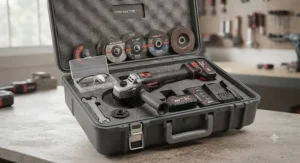
Marketing departments love the word “brushless,” but here’s the honest brushless angle grinder comparison against brushed motors, stripped of hype. A brushed motor uses physical carbon brushes that press against a rotating commutator to deliver current — simple, cheap to manufacture, but the friction generates heat and the brushes wear down and eventually need replacement.
A brushless motor uses electronic controllers to manage current directly, eliminating that friction point entirely. The practical result: brushless motors run cooler, last significantly longer before needing service, and extract more usable runtime from the same battery capacity because less energy is lost to friction and heat. Reviewers consistently note that brushless grinders like the Milwaukee M18 FUEL 2880-20 and Makita XAG04Z hold consistent power output even as the battery discharges, while brushed models like the Ryobi P421 noticeably lose punch as the charge drops.
The catch is price. Brushless technology typically adds $30–$80 to a grinder’s cost compared to an equivalent brushed model, which is exactly why budget options like the Ryobi still ship with brushed motors — it’s the most direct lever manufacturers have to hit a lower price point. For anyone grinding more than a handful of times a month, the long-term math still favors brushless: less heat, less wear, more consistent power, and a motor that simply won’t need brush replacement down the line.
Cordless Grinder Disc Compatibility: Arbors, Guards, and Wheel Types
Disc compatibility trips up more buyers than any spec sheet number, mostly because the terminology isn’t intuitive if you’ve never shopped for abrasives before. Most 4½–5-inch cordless grinders use a 5/8″-11 spindle thread, which is standardized enough that discs from different abrasive brands generally fit across tool brands — the tool brand and the disc brand don’t need to match.
What actually matters is wheel type matching guard type. Type 27 wheels (the slightly depressed-center wheels used for general grinding) require a Type 27 guard, while Type 1 cutting wheels — flat discs used for slicing through metal — need a guard that fully encloses more of the wheel’s circumference for safety. Mixing these up isn’t just a compatibility hiccup; it’s a genuine safety issue, since an improperly guarded cutting wheel offers far less protection if it shatters mid-cut. As Norton Abrasives explains in its guidance on wheel guards, guards for cutting-off wheels must cover a full 180 degrees around the wheel specifically because there’s no guard on the opposite side.
Also check maximum RPM ratings printed on the disc itself before mounting anything — a disc rated below your grinder’s top speed can fail catastrophically at full throttle. This is one spec that’s genuinely non-negotiable: never mount a wheel rated for lower RPM than your tool’s maximum output, regardless of how well it otherwise fits the arbor.
Common Mistakes When Buying a Cordless Angle Grinder
The single most common mistake is buying the tool without checking existing battery compatibility — someone already owning a drawer full of Milwaukee M18 batteries who then buys a Makita grinder has effectively doubled their cost of entry for no real reason. Always check your existing platform first.
A close second is chasing RPM numbers as the primary decision factor, when kickback protection and disc size usually matter more for real-world safety and usability. A third recurring mistake: buying a bare tool without accounting for battery and charger costs, then being surprised the “cheap” $40 grinder actually costs $140 once you’ve added a battery pack from scratch. Finally, plenty of buyers skip reading the guard and disc-type compatibility notes entirely, then wonder why their cutting wheel doesn’t fit the stock grinding guard — a mismatch that’s avoidable with five minutes of research before checkout.
Safety, Regulations, and What OSHA Expects
Angle grinders are genuinely useful and genuinely capable of serious injury if guards are removed or discs are mismatched, which is exactly why federal workplace safety rules address them directly. Under OSHA’s guarding standard for portable powered tools, safety guards on right-angle or vertical portable grinders must have a maximum exposure angle of 180 degrees and must sit positioned between the operator and the wheel at all times during use — not an optional accessory, a baseline requirement.
For home and DIY use, OSHA rules technically apply to employers rather than individual consumers, but the underlying safety logic holds regardless of who’s holding the tool. Always wear eye protection rated for impact, keep the guard mounted for every cut, inspect wheels for cracks before mounting, and never remove a guard “just this once” to fit an oversized disc. Hearing protection is worth adding too — sustained grinding noise easily crosses into hearing-damage territory over a full day of use.
FAQ
❓ What size cordless angle grinder do I need for home use?
❓ How long does a cordless angle grinder battery last per charge?
❓ Is a brushless angle grinder worth the extra cost?
❓ Can I use any disc on my cordless angle grinder?
❓ What causes cordless grinder battery drain during use?
Conclusion
If there’s one takeaway here, it’s that the “best” cordless angle grinder is entirely a function of how often you’ll actually use it and on what. Weekend hobbyists doing occasional repairs are genuinely well served by the Ryobi P421 or Ridgid R86042B — no shame in matching spend to use case. Anyone grinding metal several times a week should look hard at the Milwaukee M18 FUEL 2880-20 or Makita XAG04Z, both of which held up strongly across real specs and aggregated review sentiment. And if your projects regularly call for bigger wheels and more material removal, the DeWalt DCG414 FlexVolt stands alone on this list as the 6-inch option.
Whichever model you land on, the fundamentals stay constant: match disc size and type to the job, respect the guard, and don’t let a battery cook itself dry chasing one more cut. A cordless angle grinder is one of the most genuinely useful tools in a shop when it’s matched correctly to the work — and one of the most frustrating when it isn’t.
Recommended for You
- Best Angle Grinder 2026: 7 Top Picks That Actually Deliver
- Circular Saw for Beginners: 7 Real Picks Worth Buying in 2026
- Worm Drive vs Sidewinder Circular Saw: 7 Top Picks (2026)
Disclaimer: This article contains affiliate links. As an Amazon Associate, I earn from qualifying purchases. If you purchase products through these links, we may earn a small commission at no additional cost to you.
✨ Found this helpful? Share it with your friends! 💬🤗
