
In This Article
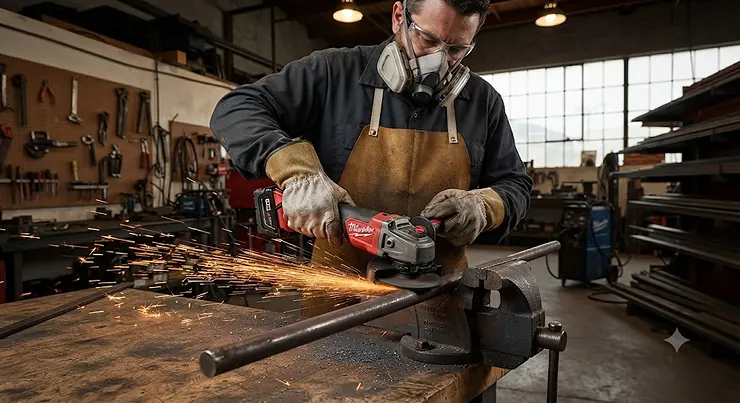
Somewhere in every garage there’s a drawer with one tool everybody reaches for and one tool nobody quite understands. For most DIYers, that mystery tool is the die grinder — the smaller, screamier cousin sitting next to the angle grinder in the “cutting stuff” section of the hardware store. The angle grinder vs die grinder question isn’t really about which tool is “better.” It’s about which one is built for the job in front of you, because these two spin discs and bits at wildly different speeds, in wildly different ways, and mixing them up leads to either wasted money or a busted project.

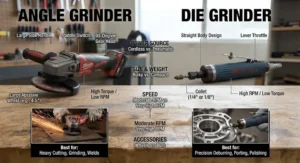
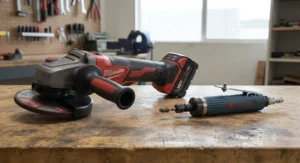
Here’s the short version: an angle grinder is a wide, disc-driven tool that runs somewhere between 8,000 and 12,000 RPM and excels at bulk material removal — cutting rebar, grinding welds, stripping rust off a fender panel. A die grinder is a compact, bit-driven tool that spins a tiny collet at 20,000 to 30,000+ RPM and is built for detail work — deburring, porting, shaping tight interior contours a big disc could never reach. Neither replaces the other; a well-equipped shop usually has both sitting within arm’s reach.
This guide walks through seven real, currently available tools spanning both categories — from budget corded workhorses to purpose-built cordless die grinders — with honest analysis of what each one actually does well, based on published specifications and aggregated owner feedback rather than marketing copy. According to the Wikipedia entry on angle grinders, the tool traces back to 1954, when German company Ackermann + Schmitt first developed the high-speed handheld grinder that eventually became a jobsite staple worldwide. We’ll cover cutting metal, cutting concrete, rust removal, RPM differences, collet sizing, and the cutting-versus-grinding mode distinction that trips up a lot of first-time buyers.
Angle Grinder vs Die Grinder: Quick Comparison Table
| Feature | Angle Grinder | Die Grinder |
|---|---|---|
| Typical RPM | 8,000–12,000 | 20,000–30,000+ |
| Accessory type | 4.5″–7″ discs/wheels | 1/4″ or 1/8″ collet-held burrs, bits |
| Best for | Bulk cutting, grinding welds, rust removal | Deburring, porting, detail shaping |
| Typical price range | $60–$250 | $80–$320 |
| Best For | Rebar, sheet metal, concrete, tile | Tight interior contours, engine work, jewelry-scale detail |
The numbers tell most of the story here: an angle grinder’s lower RPM and wider wheel diameter translate into more surface speed and material removal per pass, which is why it dominates cutting and grinding tasks. A die grinder trades that raw removal power for RPM and precision — spinning a tiny bit fast enough to shape metal, plastic, or wood with a level of control a 4.5-inch disc simply can’t match. If you’re only buying one tool today, match it to your most frequent task; if your work spans both categories, budget for both eventually, because trying to force a die grinder to do angle-grinder work (or vice versa) usually ends with a burnt-out motor or a ruined workpiece.
💬 Already know which type you need? Compare the seven picks below and check today’s pricing before it changes.
Top 7 Angle Grinders and Die Grinders: Expert Analysis
Choosing between these tools gets a lot easier once you’re looking at real specs side by side instead of marketing language. Each pick below covers a different niche — budget, mid-range, cordless, or precision — and includes honest analysis of who should (and shouldn’t) buy it.
1. Makita 9557PBX1 — best all-around angle grinder for mixed DIY and pro work
The Makita 9557PBX1 earns its reputation as the default recommendation for a reason: it’s a 4.5-inch, 7.5-amp corded grinder that balances weight, power, and price better than almost anything else in its class. The compact motor housing and slim body mean it doesn’t fatigue your wrist the way heavier 11-amp models do during long sessions.
Key specs translate directly into real-world use: the 11,000 RPM no-load speed keeps cut-off wheels and flap discs moving fast enough for clean cuts on 1/8-inch to 1/4-inch steel, while the tool-less guard adjustment lets you reposition the guard for cutting versus grinding mode in seconds rather than fumbling with a wrench mid-job. Based on the spec comparison against similarly priced grinders, the Makita 9557PBX1‘s labyrinth construction (a sealed motor design that keeps dust out of the bearings) is the standout feature buyers usually undervalue until year two, when competitors’ unsealed motors start grinding.
This model is best suited for homeowners doing occasional welding cleanup, hobbyist fabricators, and tradespeople who need a reliable secondary grinder that won’t strain a budget. Reviewers consistently report long service life even under near-daily shop use, with the main complaint being that the stock side handle vibrates more than premium 11-amp alternatives during extended cutting.
Pros:
- ✅ Lightweight body reduces fatigue on long jobs
- ✅ Tool-less guard adjustment saves setup time
- ✅ Sealed motor construction resists dust intrusion
Cons:
- ❌ Side handle vibration noticeable on long cuts
- ❌ No electronic kickback protection on this model
At around $70-$90 depending on retailer, the Makita 9557PBX1 delivers professional-grade reliability at a price that doesn’t punish occasional users — check current price before buying, since demand shifts availability regularly.
2. DEWALT DWE402 — toughest metal-cutting workhorse under $100
If your primary use case is cutting steel — rebar, angle iron, pipe — the DEWALT DWE402 is the angle grinder most metalworking shops keep as their daily driver. Independent testers found the 11-amp motor and tool-free wheel changes stand out, backed by a 3-year warranty that positions it as something close to a professional standard in the sub-$100 tier.
The extra amperage over 7.5-amp competitors matters more than the spec sheet suggests: an 11-amp motor resists bogging down when a cut-off wheel binds partway through a thick weld, which is precisely the moment cheaper grinders stall and burn brushes. What most buyers overlook about this model is the dust-ejection system routing debris away from the motor’s internal components — a detail that matters enormously if you’re cutting rusty or painted metal where particulate load is high.
The DEWALT DWE402 is best for tradespeople and serious DIYers who cut metal weekly rather than occasionally; casual users doing light rust removal a few times a year will find the extra power mostly unused. Aggregated owner sentiment across major retailers points to strong durability under continuous cutting, though a handful of reviewers note the stock guard is stiffer to reposition than Makita’s tool-free design.
Pros:
- ✅ 11-amp motor resists stalling on thick cuts
- ✅ Dust-ejection system protects internal components
- ✅ Backed by an unusually long 3-year warranty
Cons:
- ❌ Heavier than 7.5-amp competitors like the Makita 9557PBX1
- ❌ Guard adjustment is less tool-free than rivals
Priced in the $65-$85 range at most retailers, the DEWALT DWE402 is the pick for anyone who treats an angle grinder as a daily-use cutting tool rather than an occasional-use accessory.
3. Milwaukee 2880-20 M18 FUEL — best cordless power with kickback protection
Cordless angle grinders used to mean compromise — less torque, shorter runtime, weaker cuts. The Milwaukee 2880-20 narrows that gap enough that it’s now a legitimate corded replacement for most jobsite work, provided you’re already invested in the M18 battery ecosystem.
Here’s what to weigh: the brushless motor delivers roughly 9,000 RPM, slightly below corded competitors, but Milwaukee compensates with RAPID STOP braking (halting the wheel in under two seconds after trigger release) and kickback control that cuts power the instant the tool detects a sudden bind. In practice this means the Milwaukee 2880-20 trades a small amount of top-end speed for a meaningfully safer cutting experience — a fair trade for anyone who’s felt a grinder try to twist out of their hands.
This tool suits professionals already on the M18 platform who value mobility on jobsites without outlets, plus safety-conscious DIYers willing to pay a premium for the auto-brake feature. The spec sheet won’t tell you this, but user reports suggest the biggest limiting factor isn’t the tool itself — it’s battery runtime, which drops noticeably when cutting thick steel continuously rather than intermittently.
Pros:
- ✅ RAPID STOP brake halts wheel in under two seconds
- ✅ Kickback control cuts power on sudden binds
- ✅ No cord means full mobility on remote jobsites
Cons:
- ❌ Bare tool price climbs fast once batteries are added
- ❌ Battery runtime shortens under sustained heavy cutting
Bare-tool pricing sits in the $150-$180 range, climbing toward $250-$300 for battery-and-charger kits — a real consideration if you’re not already on Milwaukee’s M18 platform.
4. Bosch GWS8-45 — smoothest grip for extended concrete and masonry sessions
Concrete cutting and grinding punishes both the tool and the user’s hands, which is exactly the scenario the Bosch GWS8-45 was engineered around. Its slim-grip body design distributes vibration differently than boxier competitors, and that difference is genuinely noticeable during multi-hour masonry sessions.
The 8.5-amp motor spins at roughly 11,000 RPM, which pairs well with 4.5-inch diamond blades for cutting brick, paver, and thin concrete — though as one buying guide notes, standard 4.5-inch diamond blades aren’t recommended for cutting full concrete slabs, which require larger, slab-specific blades regardless of which grinder drives them. On paper this means the Bosch GWS8-45 is a masonry-and-tile tool first, a slab-demolition tool never — know that distinction before you shop for blades.
This grinder is best suited for contractors doing tile, brick, and paver work, plus DIYers tackling patio or walkway repairs. Reviewers frequently cite the Service Minder brush system — which stops the motor proactively when maintenance is due — as a feature that extends tool life meaningfully compared to grinders that simply run brushes to failure.
Pros:
- ✅ Slim-grip design reduces hand fatigue over long sessions
- ✅ Service Minder brushes signal maintenance before failure
- ✅ Epoxy-coated windings resist masonry dust damage
Cons:
- ❌ Not rated for cutting full concrete slabs
- ❌ Lock-on switch requires a deliberate two-step release
At a price generally in the $60-$80 range, the Bosch GWS8-45 is a smart pick for anyone whose grinding work leans toward masonry rather than structural steel.
5. Makita GD0601 — most precise corded die grinder for detail work
Stepping into die grinder territory, the Makita GD0601 is the model most professional metal shops default to, and the reasoning is straightforward once you look at the numbers. The AC/DC motor spins at 25,000 RPM in a slim body design, giving it enough speed for carbide burr work while staying light enough for hours of one-handed use.
The 1/4-inch collet is the industry-standard size, which matters practically — sticking with the 0.25-inch collet standard means you can find replacement burrs, sanding drums, and polishing wheels at essentially any hardware store rather than hunting for proprietary accessories. Here’s what to weigh: the labyrinth motor seal (a maze-like internal barrier that keeps grinding dust out of the bearings) is the kind of feature that doesn’t show up on a spec sheet comparison but directly extends the tool’s working life in dusty shop environments.
This die grinder is best for fabricators and auto-repair techs doing weld cleanup, deburring, and porting work where consistent, unwavering RPM matters more than portability. Aggregated feedback across major retailers points to strong build-quality sentiment, particularly around the aluminum housing’s durability, with the main recurring critique being that the side-mounted slide switch takes some adjustment for users coming from trigger-style tools.
Pros:
- ✅ Industry-standard 1/4″ collet fits widely available bits
- ✅ AC/DC switch works with generator or welder power
- ✅ Labyrinth seal protects bearings from grinding dust
Cons:
- ❌ Corded design limits mobility versus battery models
- ❌ Slide switch placement takes adjustment for new users
Pricing for the Makita GD0601 typically falls in the $180-$230 range depending on retailer promotions — a fair value verdict for a tool this many shops treat as a permanent fixture rather than a replaceable consumable.
6. Milwaukee 2485-20 M12 FUEL — best cordless die grinder for tight spaces
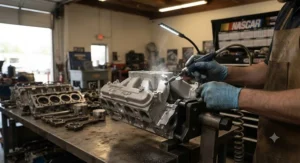
Cutting the cord matters more on a die grinder than almost any other tool category, because die grinder work often happens inside wheel wells, engine bays, and other spots where a trailing cord becomes a genuine hazard. The Milwaukee 2485-20 was the first cordless right-angle die grinder built to match the size and performance professional service mechanics expect, and the compact footprint shows in daily use.
Milwaukee’s POWERSTATE brushless motor delivers roughly 20% more power than comparable pneumatic die grinders, spinning up to 24,500 RPM with four selectable speed modes for matching RPM to material. Based on the spec comparison against pneumatic alternatives, that power advantage is genuinely significant — most cordless tools struggle to match air-tool torque, but Milwaukee’s implementation closes that gap almost entirely while eliminating the compressor hose altogether.
This tool is best suited for automotive technicians, mobile fabricators, and anyone doing detail work in cramped spaces where a coiled air hose or power cord would constantly snag. What most buyers overlook is that at barely over a pound, the Milwaukee 2485-20 reduces wrist strain dramatically during repetitive porting or deburring tasks compared to heavier corded or pneumatic alternatives.
Pros:
- ✅ Compact right-angle head fits tight engine-bay spaces
- ✅ Four-mode speed control matches RPM to material
- ✅ Roughly 20% more power output than pneumatic rivals
Cons:
- ❌ Requires M12 battery investment if starting fresh
- ❌ Shorter runtime than corded or air-powered options
Bare-tool pricing generally sits in the $180-$220 range, though kit pricing with battery and charger runs higher — worth checking current price since M12 bundle promotions shift often.
7. Ingersoll Rand 301B — best budget pneumatic die grinder for shop use
Not every shop needs batteries or cords — if you already run an air compressor, a pneumatic die grinder like the Ingersoll Rand 301B delivers consistent, stall-resistant power at a genuinely budget-friendly price point. The motor delivers 0.25 HP at 21,000 RPM free speed, which sits comfortably in the sweet spot for general-purpose grinding, deburring, and porting.
Reviewers consistently note the tool’s outsized value relative to price — at roughly one pound and with ball-bearing construction that improves balance and reduces vibration, it punches well above its price bracket for shops already equipped with compressed air. Here’s what to weigh: pneumatic tools like this one never suffer from battery sag or motor overheating the way electric die grinders can under continuous industrial use, because the air supply itself regulates cooling.
This grinder is best for shops and garages with an existing air compressor setup, hobbyist metalworkers on a budget, and anyone who wants a lightweight backup die grinder that never needs charging. The tradeoff is real, though: without a compressor, this tool is simply unusable, and compressor noise plus air hose management are ongoing considerations reviewers frequently mention as the tool’s biggest drawback.
Pros:
- ✅ Genuinely budget-friendly relative to electric alternatives
- ✅ Ball-bearing construction reduces vibration and improves balance
- ✅ Never suffers battery sag under continuous use
Cons:
- ❌ Requires an air compressor to function at all
- ❌ Compressor noise adds to overall workspace volume
At around $80-$110, the Ingersoll Rand 301B offers the strongest dollar-per-RPM value on this list, provided compressed air is already part of your shop setup.
Top 7 Products: Specs & Value Comparison
| Product | Type | RPM | Collet/Disc | Price Range | Best For |
|---|---|---|---|---|---|
| Makita 9557PBX1 | Angle grinder | 11,000 | 4.5″ disc | $70-$90 | All-around DIY and light pro use |
| DEWALT DWE402 | Angle grinder | 11,000 | 4.5″ disc | $65-$85 | Daily metal cutting |
| Milwaukee 2880-20 | Angle grinder (cordless) | ~9,000 | 4.5″ disc | $150-$180 | Jobsite mobility, safety features |
| Bosch GWS8-45 | Angle grinder | 11,000 | 4.5″ disc | $60-$80 | Masonry, tile, extended grip comfort |
| Makita GD0601 | Die grinder | 25,000 | 1/4″ | $180-$230 | Precision shop work |
| Milwaukee 2485-20 | Die grinder (cordless) | 24,500 | 1/4″ | $180-$220 | Tight-space automotive work |
| Ingersoll Rand 301B | Die grinder (pneumatic) | 21,000 | 1/4″ | $80-$110 | Budget shops with air compressors |
Looking at the comparison above, the DEWALT DWE402 delivers the best raw cutting power per dollar among angle grinders, while the Ingersoll Rand 301B does the same for die grinders — provided you already own a compressor. Buyers prioritizing mobility and safety features should lean toward the Milwaukee 2880-20 or Milwaukee 2485-20 despite the higher upfront cost, since kickback protection and cordless freedom carry real value on active jobsites. Budget-conscious buyers doing occasional work should note that the Bosch GWS8-45 and Makita 9557PBX1 both undercut premium options by more than half while still covering the vast majority of home and light-professional tasks.
💬 Found your match? Check today’s price before it changes — availability shifts fast on the popular picks.
Getting Started: Setup, First Use, and Avoiding Rookie Mistakes
Buying the right tool is only half the equation — how you set it up in the first 30 days determines whether it lasts years or burns out in months. Before the first pull of the trigger, mount the disc or bit correctly: for angle grinders, hand-tighten the arbor nut with the flange facing the correct direction (usually stamped on the disc itself), then snug it with the spanner wrench without over-torquing, which can crack thinner cutting wheels. For die grinders, insert the bit’s shank the full depth of the collet before tightening — inserting it only partway is one of the most common causes of runout and vibration in the first week of ownership.
A common early mistake with any angle grinder is starting a cut with the wheel already touching the material; instead, spin the tool up to full speed first, then ease it into contact at a shallow 5-15 degree angle for grinding, or perpendicular for cutting. Die grinders reward patience even more — running a carbide burr at maximum RPM on stubborn steel often produces worse results than a moderate speed, since lower speed gives more control and puts less stress on the collet and shank.
Maintenance is minimal but matters: wipe down vents after dusty jobs to prevent motor overheating, inspect discs before every mount for hairline cracks (the classic “ring test” — tap the wheel and listen for a clean ring rather than a dull thud), and replace brushes on corded models proactively rather than waiting for total failure. Skipping these basics is the single biggest reason a $200 tool dies in year one instead of lasting a decade.
Real-World Scenarios: Which Tool Fits Your Project?
Matching the right tool to your actual workload matters more than chasing the highest spec sheet. Consider three common buyer profiles.
The weekend fence-and-fabrication DIYer: Someone cutting rebar for a garden project, trimming a metal gate, or knocking rust off an old trailer hitch a few times a year needs an angle grinder first, full stop — a die grinder would be almost useless here. The Makita 9557PBX1 or Bosch GWS8-45 covers this use case comfortably without the cost of a professional-grade tool.
The mobile auto technician: Someone working in cramped engine bays, wheel wells, and exhaust systems needs precision and portability above raw cutting power. A cordless die grinder like the Milwaukee 2485-20 paired with a compact angle grinder like the Milwaukee 2880-20 covers both bulk cutting and tight-space detail work without a compressor or generator on hand.
The home fabrication shop owner: Someone running a dedicated garage shop with an air compressor already installed benefits from pairing a heavy-duty corded angle grinder like the DEWALT DWE402 with a pneumatic die grinder like the Ingersoll Rand 301B — this combination minimizes ongoing cost per tool while maximizing continuous-use reliability for daily fabrication work.
How to Choose Between an Angle Grinder and a Die Grinder
- Identify your material thickness first. Thick steel, rebar, and structural cuts favor an angle grinder’s higher torque and larger disc diameter; thin sheet metal, detail contours, and interior shaping favor a die grinder’s precision.
- Match the tool to your workspace size. Wide-open garage or jobsite work suits an angle grinder’s bulkier footprint; cramped engine bays, wheel wells, or small fabrication pieces demand a die grinder’s compact right-angle or straight head.
- Consider your power source. If you don’t own an air compressor, cross pneumatic die grinders off your list immediately — a corded or cordless electric model becomes the only realistic option.
- Weigh RPM against control needs. Higher RPM isn’t automatically better; a 25,000 RPM die grinder gives you more control on detail work than the same speed would on bulk material removal, where an angle grinder’s lower RPM and larger disc diameter actually removes more material per pass.
- Factor in accessory ecosystem. A 1/4-inch collet die grinder unlocks the widest range of affordable, widely stocked burrs and bits; a 4.5-inch angle grinder disc size unlocks the broadest range of cutting, grinding, and flap discs at any hardware store.
- Decide on corded, cordless, or pneumatic. Cordless offers mobility at a battery-life cost, corded offers unlimited runtime at a mobility cost, and pneumatic offers stall-resistant power but requires compressor infrastructure.
- Budget for both eventually. Most serious hobbyists and professionals end up owning at least one of each — treat your first purchase as solving your most frequent task, not your only future task.
Die Grinder RPM vs Angle Grinder RPM: What the Numbers Actually Mean
The RPM gap between these two tools is the single biggest source of buyer confusion, and it’s worth unpacking honestly. Most angle grinders operate between 8,000 and 10,000 RPM, though some efficient models run over 11,000 RPM, with cordless models typically running slower than corded ones. Die grinders, by contrast, commonly spin from 20,000 up to 28,000 RPM or higher on premium electric models.
Here’s what most buyers overlook: higher RPM on a die grinder doesn’t mean more power — it means finer control at small diameters. A tiny carbide burr needs extreme rotational speed to achieve effective surface speed (the actual cutting speed at the edge of the bit), because its diameter is so small. An angle grinder’s larger disc reaches useful surface speed at a much lower RPM, which is why cranking RPM higher on a cutting wheel doesn’t necessarily improve cut quality — it mostly increases heat and wear.
Practically, this means matching RPM to task rather than chasing the highest number on the box. Buying guides on metal deburring recommend a high-speed grinder in the 20,000-25,000 RPM range as the general sweet spot for die grinder detail work, while This Old House’s angle grinder buying guide notes that angle grinder RPM matters less than disc diameter and amperage for most cutting and grinding applications.
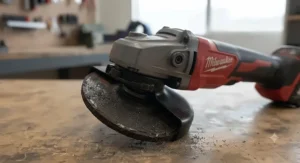
Angle Grinder Cutting Mode vs Grinding Mode Explained
New angle grinder owners often don’t realize that cutting and grinding aren’t just different discs — they’re fundamentally different orientations and techniques, and mixing them up is a genuine safety hazard, not just an inefficiency.
In cutting mode, the disc’s edge does the work: you hold the grinder so the wheel meets the material perpendicular to the surface, slicing straight through in a single plane, using a thin cut-off wheel designed specifically for that stress pattern. In grinding mode, the disc’s face does the work: the wheel is held at an angle between 5 and 15 degrees from the surface, removing material gradually across a wider area — think smoothing a weld bead or knocking down a rough edge rather than slicing through it.
The critical safety distinction is this: cut-off wheels are thin and designed only for edge-on cutting forces; using one at an angle for grinding work can flex and shatter the wheel, since it was never engineered to absorb lateral pressure. Grinding wheels are thicker and built for angled, face-down pressure, but they cut inefficiently and dangerously if forced into a straight cutting motion. Always match the disc to the mode, never the other way around, and never repurpose a cracked or worn cutting wheel for grinding work as a way to “get more life” out of it — that’s exactly the scenario abrasive-wheel safety standards exist to prevent.
Common Mistakes When Buying an Angle Grinder or Die Grinder
Even experienced buyers fall into predictable traps when shopping for these tools. The first is chasing amperage or RPM numbers in isolation without considering disc size compatibility — overloading a smaller grinder with a larger disc than it’s rated for can burn out the motor or even break the disc, posing a serious safety hazard, so always confirm your intended disc size matches the tool’s rated capacity before purchase.
The second common mistake is underestimating accessory costs. A budget angle grinder or die grinder body is cheap, but discs, burrs, and wheels wear out regularly — factor ongoing consumable costs into your total budget rather than judging value on sticker price alone. The third mistake is buying cordless without checking battery platform compatibility; if you already own M18 or M12 batteries from another tool, staying within that ecosystem saves significantly more than the sticker price difference between competing brands suggests. Finally, many first-time buyers skip safety accessories entirely — face shields, hearing protection, and proper gloves aren’t optional extras, they’re part of the actual cost of owning either tool responsibly.
Best Angle Grinder for Cutting Metal: What to Look For
Cutting metal well comes down to three factors working together: amperage, disc speed, and wheel selection — not just raw power alone. For steel thicker than 1/8 inch, an 11-amp motor like the one in the DEWALT DWE402 resists the bogging-down that causes cut-off wheels to bind and potentially kick back, while a 7.5-amp motor like the Makita 9557PBX1‘s handles thinner sheet metal and mixed-material work just as capably at a lower price point.
Disc selection matters as much as the tool itself. Thin, 1mm cut-off wheels slice fastest through steel with minimal material loss to the kerf, while thicker wheels last longer but cut slower and generate more heat. On paper this means the “best” angle grinder for cutting metal isn’t necessarily the highest-amperage model — it’s the one whose power output matches your typical material thickness, paired with the right disc for the job.
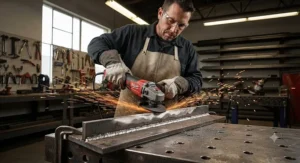
Best Angle Grinder for Concrete: What Actually Matters
Concrete work asks something different of an angle grinder than metal cutting does — durability against abrasive dust matters more than raw cutting speed. Models like the Bosch GWS8-45, with epoxy-coated windings and dust-resistant motor sealing, hold up longer under masonry work than grinders built primarily with metal cutting in mind.
Blade choice matters enormously here too. Diamond blades last significantly longer than traditional bonded abrasive wheels when cutting concrete, tile, or stone, and their self-sharpening design — where the metal bond erodes slightly to expose fresh diamond grit — keeps cutting performance consistent over the blade’s life. Reviewers consistently note that pairing a mid-power grinder with a quality diamond blade outperforms pairing a high-power grinder with a cheap abrasive wheel, since blade quality affects both cut speed and dust production more than motor amperage does on typical DIY masonry jobs.
Angle Grinder for Rust Removal: Technique and Tool Choice
Rust removal is one of the angle grinder’s most forgiving jobs, but technique still separates a clean result from a gouged one. Knotted wire wheels handle aggressive rust removal and heavy cleaning far more effectively than sanding discs on heavily corroded metal, because the wire bristles dig into pitted rust without removing significant base metal.
Here’s what to weigh: lower-power grinders like the Makita 9557PBX1 are often the better rust-removal choice over higher-amp cutting-focused models, since rust removal rewards control and disc contact consistency over raw torque. Keep the wire wheel moving in overlapping passes rather than dwelling in one spot, which prevents localized heat buildup that can warp thin sheet metal. For rust in tight corners or recessed panel seams where a wire wheel can’t reach, a die grinder with a small wire brush attachment or carbide burr picks up where the angle grinder leaves off — another example of these two tools working as a genuine pair rather than competitors.
Die Grinder Collet Size Explained: 1/4″ vs 1/8″
Collet size determines exactly which bits and burrs a die grinder can accept, and getting this wrong before purchase means buying an adapter or, worse, a whole new tool. The industry standard collet size is 0.25 inches (1/4-inch), and sticking with that size ensures easy access to burrs, sanding drums, and polishing wheels at essentially any hardware store. Both the Makita GD0601, Milwaukee 2485-20, and Ingersoll Rand 301B use this standard 1/4-inch size, which is precisely why they pair so easily with the broadest range of third-party accessories.
Some specialized kits include a 1/8-inch adapter, which allows smaller, Dremel-style bits for ultra-fine detail work — useful for jewelry-scale shaping or delicate engraving, but not something to prioritize if your work is primarily metal deburring and porting. What most buyers overlook is that collet condition matters as much as collet size: a worn or damaged collet introduces bit wobble (runout) regardless of size, so inspecting and replacing collets periodically is a maintenance task worth budgeting for, not a one-time purchase decision.
Safety, Regulations, and Compliance Guide
Both tool categories fall under federal workplace safety guidance even for home use, and understanding the basics protects you regardless of whether OSHA jurisdiction technically applies to your project. Federal guidance requires that abrasive wheel tools be equipped with guards covering the spindle end, nut, and flange projections, properly aligned with the wheel, with fastenings strong enough to exceed the guard’s own strength — never remove or bypass a factory-installed guard on either tool type, even briefly.
Before mounting any wheel, a visual inspection plus a simple ring test — tapping the wheel and listening for a clean ring rather than a dull thud that would indicate a hidden crack — catches damage that can otherwise cause a wheel to shatter during use. Personal protective equipment isn’t optional: safety glasses or a full face shield, hearing protection given the sustained high-decibel noise both tools produce, and gloves suited to the material being worked (avoiding loose gloves near a spinning die grinder bit, which can catch fabric). For deeper technical guidance on guard specifications and wheel handling, the official OSHA standard on guarding portable powered tools covers requirements in detail.
✨ Ready to Gear Up?
🔍 Take your fabrication and repair projects to the next level with tools built for the job. Click on any highlighted pick above to check current pricing and availability before you head to the shop.
Long-Term Cost and Maintenance
The purchase price of either tool is only the starting cost — consumables and maintenance shape the real total cost of ownership over a few years of use. Angle grinder discs run roughly $2-$8 each depending on type and quality, and a moderately active DIYer or light professional can burn through a dozen or more per year depending on project volume; cutting wheels wear fastest, while grinding and flap discs last longer per dollar spent. Die grinder burrs and bits cost more individually (often $8-$25 for quality carbide burrs) but last considerably longer per unit of work when RPM is matched correctly to the material, since excessive speed is what shortens bit life fastest.
Brush replacement on corded tools (typically $10-$20 in parts) extends motor life significantly and is far cheaper than a full tool replacement — most manufacturers sell replacement brush kits directly. Cordless tool owners should factor battery degradation into long-term cost: lithium-ion batteries typically lose meaningful capacity after 300-500 charge cycles, meaning a $150 replacement battery every few years is a realistic ongoing cost for heavy cordless users that pneumatic and corded tool owners simply don’t face.
Features That Actually Matter (And Those That Don’t)
Marketing copy loves to highlight numbers that sound impressive but rarely change real-world results. Peak RPM claims on die grinders above 30,000 sound dramatic, but most practical metalworking tasks — deburring, porting, weld cleanup — happen effectively in the 20,000-25,000 RPM range regardless of a tool’s theoretical ceiling, since bit life and control both suffer at extreme speeds on most materials.
What actually matters: motor sealing against dust intrusion, because bearing failure from contamination is the leading cause of premature tool death in both categories; collet or arbor precision, since even a small amount of runout compounds into visible vibration and uneven cuts; and brand parts availability, because a tool you can’t get brushes or collets for in five years becomes disposable regardless of its original build quality. What matters far less: cosmetic housing colors, marketing terms like “professional grade” without accompanying spec backup, and headline wattage numbers on cordless tools that don’t account for real-world battery voltage sag under load.
Frequently Asked Questions
❓ Can a die grinder replace an angle grinder?
❓ What RPM is best for cutting metal with an angle grinder?
❓ Is a 1/4 inch or 1/8 inch die grinder collet better?
❓ How do I know if I need cutting mode or grinding mode on my angle grinder?
❓ Are cordless angle grinders as powerful as corded models?
Conclusion
The angle grinder vs die grinder debate isn’t really a debate once you look at what each tool is engineered to do. Angle grinders dominate bulk material removal — cutting, grinding, and rust stripping across metal, concrete, and masonry — while die grinders own the fine-detail territory an angle grinder’s wide disc simply can’t access. Among the seven tools covered here, the DEWALT DWE402 and Makita 9557PBX1 stand out as the strongest all-around angle grinder picks for most buyers, the Milwaukee 2880-20 earns its premium price through genuine safety features, and on the die grinder side, the Makita GD0601 and Ingersoll Rand 301B deliver the best balance of precision and value depending on whether your shop runs electric or pneumatic.
Rather than picking one tool and hoping it covers every job, think honestly about your typical project mix. A weekend DIYer doing occasional metal repair rarely needs a die grinder at all; a mobile technician working in tight engine bays needs one more than a bulky angle grinder. Most serious hobbyists and professionals eventually own both, and once you understand the RPM, collet, and disc-size distinctions covered above, choosing the right one for each job becomes second nature rather than guesswork. If you’re picking up either tool for the first time, Northeastern University’s angle grinder safety guide is worth a final read-through before your first solo cut.
✨ Found this helpful? Check current prices on today’s picks before availability shifts.
Recommended for You
- Cordless Angle Grinder: 7 Powerful Picks Worth Buying in 2026
- Best Angle Grinder 2026: 7 Top Picks That Actually Deliver
- Circular Saw for Beginners: 7 Real Picks Worth Buying in 2026
Disclaimer: This article contains affiliate links. As an Amazon Associate, I earn from qualifying purchases. If you purchase products through these links, we may earn a small commission at no additional cost to you.
✨ Found this helpful? Share it with your friends! 💬🤗
