
In This Article
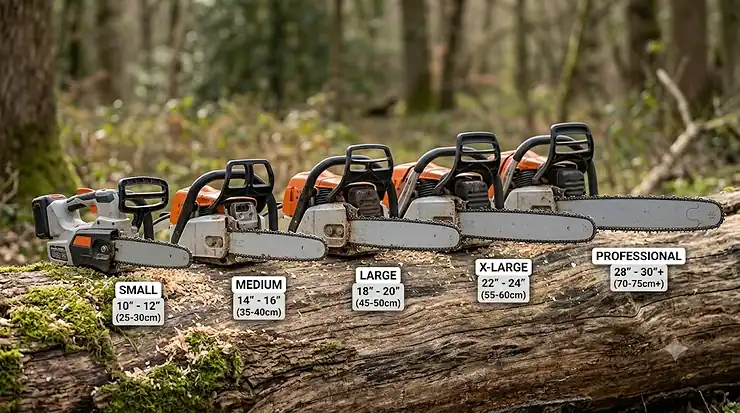
A chainsaw size guide is really just a way of matching bar length, weight, and power source to the job sitting in your yard, rather than buying on instinct or whatever’s on sale. That distinction matters more than most first-time buyers realize. A 12-inch saw and a 20-inch saw both have a chain spinning around a metal bar, but they live in completely different worlds in terms of weight, control, and what they can safely cut through.
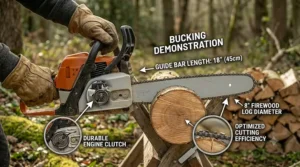
In my experience helping people pick their first saw, the chainsaw size guide mistake I see constantly is choosing based on what looks impressive in the store rather than what they’ll actually be cutting on a Saturday afternoon. A homeowner trimming deadwood off a maple tree has almost nothing in common with someone felling storm-damaged oaks, yet both are tempted by the same 20-inch “pro” model on the shelf.
This guide breaks down seven real, currently available chainsaws spanning a 6-inch pruning saw all the way up to a 24-inch land-clearing model, so you can see exactly how bar length, weight, and engine size scale together. We’ll also cover the bar-length-to-tree-diameter math that most buying guides skip, what beginners should look for, and where gas and battery power genuinely differ in practice. By the end, you should know exactly which size fits your project instead of guessing.
Quick Comparison Table: Chainsaw Sizes at a Glance
Before diving into specific models, it helps to see how chainsaw categories stack up by size and typical use case.
| Size Category | Bar Length | Power Type | Best For |
|---|---|---|---|
| Mini / Pruning | 6–8 in. | Battery | Light limbing, pruning, one-handed cuts |
| Compact | 10–14 in. | Battery | Brush clearing, small branches, beginners |
| Mid-Size | 16–18 in. | Gas or Battery | Firewood, general homeowner use |
| Large | 20–24 in. | Gas or Battery | Felling, land clearing, large-diameter logs |
Looking at this breakdown, the jump from compact to mid-size is where most homeowners should focus, since an 16–18 inch bar handles the vast majority of residential cutting without the extra weight of a 20-inch-plus saw. The large category only earns its keep if you’re regularly dropping trees wider than about 16 inches across, since anything smaller is just dead weight you’re carrying around the yard. Notice, too, that battery saws now compete directly with gas across every size tier except the largest land-clearing models.
💬 Just one click — help others make better buying decisions too! 😊
✨ Don’t Miss These Exclusive Deals!
🔍 Take your chainsaw shopping to the next level with the seven models below. Click any highlighted saw to check current pricing and availability on Amazon, and find the exact size that matches the work you actually do.
Top 7 Chainsaws by Size: Expert Analysis
1. Makita XCU14Z 18V LXT 6″ Pruning Saw
The Makita XCU14Z is the smallest entry here, and that’s precisely the point. With a 6-inch guide bar and a weight of just 3.7 pounds with battery installed, it’s built for one-handed limbing rather than felling anything. The .325-inch low-profile chain and brushless motor deliver up to 140 cuts in 2-inch cedar on a single 2.0Ah charge — plenty for pruning sessions without needing a backup battery.
What most buyers overlook about a saw this small is that the weight savings translate directly into control at awkward angles, like reaching up into a canopy one-handed while the other hand steadies a ladder. It’s the right call for homeowners with ornamental trees, fruit trees, or anyone doing repetitive small-limb work where a full-size saw would be exhausting to hold overhead.
Owners consistently note how much less fatigue they feel compared to swinging a 12-inch saw for the same light tasks, though a few mention the 6-inch bar limits it strictly to branches under about 4 inches thick.
Pros: Extremely lightweight; one-handed operation; shares Makita’s 18V LXT battery platform Cons: Limited to small branches only; battery sold separately
Pricing typically sits in the budget range for a bare tool, and it’s a smart add-on if you already own Makita 18V batteries — not a primary saw for anyone cutting firewood.
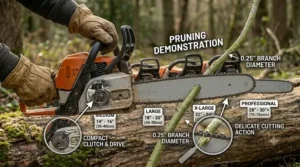
2. EGO Power+ CS1201 12″ Compact Chain Saw
The EGO Power+ CS1201 steps up to a 12-inch bar while staying remarkably light at 8.4 pounds with its included 56V 2.5Ah battery. EGO rates the brushless motor at roughly 30cc gas-equivalent power, with chain speeds up to 20 m/s — enough to clear brush and limb medium branches without bogging down.
In practice, this is the saw I’d point a homeowner toward if their chainsaw use is mostly seasonal cleanup rather than dedicated firewood processing. The reversible bar doubles its service life, and tool-free tensioning means you’re not hunting for a scrench mid-job. Up to 130 cuts per charge on 4×4 lumber is realistic for an afternoon of yard work.
Reviewers frequently mention being surprised by how much power is packed into something this compact, though a handful note the top-handle design takes a few cuts to get comfortable with if you’re used to a rear-handle saw.
Pros: Lightweight at 8.4 lbs; tool-free chain tensioning; reversible bar Cons: Top-handle grip takes adjustment; not suited to logs over 10 inches
Expect a price in the low-to-mid $200s as a kit; for occasional pruning and brush work, the value holds up well against gas alternatives of similar size.
3. Makita XCU03Z 36V (18V X2) LXT 14″ Chain Saw
The Makita XCU03Z bridges compact and mid-size by running two 18V LXT batteries together for 36V of output, equivalent to roughly a 32cc gas engine. Chain speed tops out at 3,940 feet per minute, and noise stays around 100 dB(A) — noticeably quieter than a comparable gas saw under load.
What stands out here is the battery flexibility: if you already own Makita 18V tools, you’re buying into a chain speed and run time that rivals small gas saws without adding a new battery ecosystem. At 11.35 pounds with batteries, it’s heavier than the EGO 12-inch but still very manageable for extended limbing and light bucking sessions.
Owners often mention appreciating the dual-battery setup for runtime, especially when they already have spare 18V packs from other Makita tools, though some find sourcing a third or fourth battery adds up in cost.
Pros: Shares Makita 18V battery ecosystem; quiet operation; tool-less chain adjustment Cons: Heavier than single-battery 12-inch saws; bare tool requires buying two batteries separately
As a bare tool, this typically lands in the $150–$200 range before batteries — a smart pick only if you’re already invested in Makita’s platform.
4. DEWALT DCCS670T1 60V MAX FlexVolt 16″ Chainsaw
This 16 inch chainsaw review category is dominated by the DEWALT DCCS670T1, which independent testers have repeatedly named the best all-around battery chainsaw for homeowners. The 60V FlexVolt battery delivers up to 70 cuts per charge on 6×6 pressure-treated lumber, with a low-kickback Oregon bar and tool-free tensioning that makes mid-task adjustments painless.
The real-world meaning of “FlexVolt compatible” is bigger than it sounds: the same battery powers over 300 other DeWalt 20V/60V tools, so if you already own a DeWalt drill or saw, this chainsaw effectively becomes free of platform lock-in cost. That cross-compatibility, paired with genuine small-gas-saw cutting power, is why this size and model combination consistently tops homeowner buying guides.
Feedback across owners highlights how it replaced gas saws entirely for moderate yard work, with the main complaint being that the battery and charger are sold separately on the bare-tool version, which catches some first-time buyers off guard.
Pros: Genuine gas-saw cutting power; massive battery cross-compatibility; tool-free tensioning Cons: Bare-tool listings exclude battery/charger; 16-inch bar caps larger felling jobs
Kits with a battery and charger generally run in the $300–$400 range, making this one of the stronger value picks if you’re building a DeWalt tool ecosystem anyway.
5. Husqvarna 440 18″ Gas Chainsaw
For buyers who want a dedicated gas saw, the Husqvarna 440 remains a benchmark 18-inch homeowner saw. Its 40.9cc X-Torq engine produces 2.4 HP, and Husqvarna specifically rates this saw for bar lengths between 13 and 18 inches — a useful reminder that “18-inch chainsaw” describes the bar you bought, not necessarily the only size the engine can safely swing.
What the spec sheet doesn’t fully convey is how much Smart Start technology changes the day-to-day experience of owning a gas saw: it cuts starting effort dramatically compared to older pull-start designs, which matters every single time you fire it up, not just on the first use. At 9.78 pounds bare, it’s light enough for extended firewood sessions without the arm fatigue heavier 50cc-class saws produce.
Long-term owners frequently mention running multiple units of this exact saw for years of seasonal firewood cutting, citing reliable cold starts as the main reason they keep buying the same model.
Pros: Reliable Smart Start ignition; lightweight for its power class; air-injection filtration extends engine life Cons: Requires 2-stroke fuel mixing and storage; gas engines need more routine maintenance than battery saws
Pricing generally falls in the $300–$400 range depending on the bundled chain, and it remains a strong value for anyone processing a full cord or more of firewood each season.
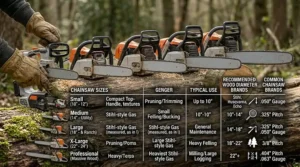
6. EGO Power+ CS2005 20″ Battery Chain Saw
The EGO Power+ CS2005 is where battery saws start outperforming gas in head-to-head speed tests. Independent lab testing recorded it cutting a 4×4 in 3.45 seconds — faster than every gas saw and every other battery saw in the same comparison. EGO rates the brushless motor as equivalent to a 55cc gas engine, with chain speeds up to 25 m/s on the 20-inch bar.
The catch most reviews bury is weight: at roughly 19.4 pounds with the included 6.0Ah battery, this is now one of the heavier saws in its class, slightly more than a comparable 20-inch gas saw. That tradeoff is worth it if cutting speed and zero maintenance matter more to you than all-day carrying comfort — this is a farm-and-ranch saw for felling and large-diameter bucking, not light yard cleanup.
Reviewers consistently single out the cutting speed as class-leading, while the most common criticism centers on the saw’s heft compared to EGO’s own 18-inch model.
Pros: Fastest cutting speed in independent testing; digital display with safety brake indicator; full EGO 56V battery compatibility Cons: Noticeably heavier than smaller EGO models; premium price point
Expect to pay in the $500–$600 range as a complete kit — a legitimate gas-saw replacement for serious property work rather than casual pruning.
7. Husqvarna 460 Rancher 24″ Gas Chainsaw
At the top of this lineup, the Husqvarna 460 Rancher is built for landowners regularly cutting wood wider than 18 inches in diameter. Its 60.3cc X-Torq engine generates 3.6 HP, rated for bar lengths up to 24 inches, with an adjustable oil pump that lets you tune lubrication for bar length and weather conditions.
The practical difference between this and the smaller 440 isn’t just bar length — it’s torque under load. A 24-inch bar dragging through a wide oak trunk needs the extra displacement to maintain chain speed, where an 18-inch engine would bog down and stall repeatedly. At 12.79 pounds dry, Husqvarna kept the ergonomics reasonable despite the larger engine, with a 7-degree offset front handle specifically designed to reduce fatigue during long felling sessions.
Owners managing several acres of property consistently describe this as the saw that finally replaced multiple smaller units for serious land-clearing and storm-cleanup work.
Pros: Handles bars up to 24 inches; adjustable oil pump for varying conditions; forged three-piece crankshaft for durability Cons: Overkill and needlessly heavy for routine pruning; highest fuel and maintenance commitment in this lineup
This model typically retails in the $450–$550 range, representing real value for anyone who regularly fells trees rather than just trims them.
How to Choose the Right Chainsaw Size
Picking the right size comes down to a short checklist rather than guesswork:
- Measure your typical cutting diameter. Walk your property and estimate the diameter of branches or trunks you cut most often — this single number drives every other decision.
- Add roughly 2 inches to that diameter. Industry rule of thumb says your bar should be at least 2 inches longer than the wood you’re cutting, so the tip clears the far side in one pass.
- Weigh portability against power. A saw you’re reluctant to lift because it’s heavy gets used less, even if it’s technically more capable.
- Decide between gas and battery based on session length. Short, frequent sessions favor battery; multi-hour felling days still favor gas.
- Check your own strength and experience honestly. A 24-inch saw in inexperienced hands is genuinely more dangerous than a properly sized 16-inch model.
- Match the bar to your typical job, not your biggest job. Rent or borrow a larger saw for the rare oversized tree rather than buying for the exception.
Chainsaw Bar Length vs. Tree Diameter: The Real-World Math
This is the single most misunderstood part of any chainsaw size guide. A 16-inch bar can technically cut a log wider than 16 inches by cutting from both sides, but it’s slower, riskier, and harder to control than simply having a longer bar in the first place. As a working rule, your bar length should exceed the diameter of your typical cut by at least 2 inches, giving the tip room to clear the wood cleanly.
So if you’re regularly cutting logs in the 12–14 inch range for firewood, a 16-inch bar is the sensible minimum — not the 20-inch model that looks more impressive on the shelf. Oversizing the bar doesn’t just add weight; it also slows the engine down, since a longer chain loop demands more power to maintain the same chain speed. This is exactly why the Husqvarna 440 and 460 Rancher above use noticeably different engine displacements despite only a 6-inch difference in bar length.
Setting Up and Maintaining Your New Chainsaw
Whichever size you land on, the first 30 days matter most for long-term reliability. Run a new chain for several minutes before your first real cut, then immediately recheck tension — new chains stretch and loosen quickly during break-in. Fill the bar oil reservoir before every session regardless of how much oil appears to remain; running dry for even a few minutes can score the bar groove.
For gas models like the Husqvarna entries above, always premix fuel at the exact ratio specified (typically 50:1) and never let mixed fuel sit unused for more than about a month, since stale fuel is the single most common cause of hard-starting complaints. For battery saws, store batteries at partial charge rather than fully depleted or fully topped off if the saw will sit unused for weeks, which meaningfully extends battery lifespan. Whatever the power source, keep the chain sharp — a dull chain forces you to push harder, which is itself a kickback risk according to occupational safety guidance from OSHA.
Real-World Scenarios: Matching Saw Size to the Job
If you’re a suburban homeowner with a few ornamental trees and the occasional storm branch, the 6-inch Makita pruning saw or 12-inch EGO compact covers nearly everything you’ll encounter, and you’ll appreciate not lugging around extra weight for jobs that don’t need it. If you heat with wood and process a cord or two each season, the 16 to 18-inch tier — the DEWALT FlexVolt or Husqvarna 440 — hits the sweet spot of power and control for repeated bucking and splitting prep.
For rural property owners managing several acres, regularly felling trees, or doing post-storm cleanup on mature hardwoods, the 20 to 24-inch tier becomes worth the added weight and cost. The EGO CS2005 suits anyone who wants gas-level power without fuel mixing, while the Husqvarna 460 Rancher suits those doing extended, all-day felling sessions where battery swaps would slow the work down.
Common Mistakes When Buying a Chainsaw by Size
The most frequent mistake is buying bar length based on the biggest tree on the property rather than the average job. That one oversized oak you cut once a year doesn’t justify carrying a 24-inch saw for routine pruning all season. A close second is ignoring weight entirely — a saw that’s 3 pounds heavier doesn’t sound like much in a store, but it’s a meaningful difference after an hour of overhead limbing.
Buyers also commonly assume bigger bar always means more power, when in reality engine displacement and bar length should scale together; pairing a small engine with an oversized bar (sometimes done to save money) just produces a slow, underpowered cut. Finally, many first-time buyers skip checking the manufacturer’s recommended bar-length range entirely, even though brands like Husqvarna publish specific minimum and maximum bar lengths for each engine size.
Gas vs. Battery: How Size Recommendations Change
Power source shifts which size makes sense for you, since gas and battery scale differently as bars get longer.
| Factor | Gas Chainsaws | Battery Chainsaws |
|---|---|---|
| Best bar-length range | 16–24+ in. | 6–20 in. (narrowing at the top) |
| Runtime per session | Limited only by fuel supply | Limited by battery capacity |
| Maintenance | Fuel mixing, air filter, spark plug | Minimal; mostly chain care |
| Weight at same bar length | Often lighter at larger sizes | Heavier due to battery mass |
Looking at this comparison, gas still wins decisively for all-day, large-diameter work simply because you can refuel in seconds rather than waiting on a charger. Battery saws, meanwhile, have closed the performance gap dramatically at 18–20 inches, as the EGO CS2005 demonstrates, but the battery itself adds enough weight that gas regains an edge once you push toward 24 inches and beyond.
Beginner Chainsaw Bar Length: What First-Time Owners Should Know
If you’ve never owned a chainsaw, starting smaller than you think you need is almost always the right call. A 12 to 14-inch saw is forgiving, easy to control, and lets you build comfort with chain tension, kickback awareness, and basic maintenance before you’re managing the torque of an 18-inch-plus engine. Beginners consistently underestimate how much arm and shoulder fatigue scales with both bar length and engine weight combined.
Battery models in the 12 to 14-inch range, like the EGO CS1201 or Makita XCU03Z above, are particularly beginner-friendly because there’s no pull-starting, no flooding the engine, and no fuel mixing to get wrong on your first attempt. Once you’ve logged real hours and understand your own typical cutting diameter, moving up to 16 or 18 inches becomes a much more informed decision than guessing on day one.
Chainsaw Weight by Size: Why It Matters More Than Bar Length
Two saws with identical 18-inch bars can differ by 4 or more pounds depending on engine size, battery capacity, and build materials — and that difference matters more than most buyers expect. Weight compounds over a session: a saw that feels fine for the first five minutes can become genuinely tiring by minute forty, especially during overhead cuts or extended limbing work.
This is precisely why the EGO CS2005’s nearly 19.4-pound weight earned mixed feedback despite class-leading cutting speed, while the lighter Husqvarna 440 at under 10 pounds draws praise specifically for all-day comfort. When comparing two saws with similar bar lengths, always check bare weight and battery-included weight separately, since manufacturers sometimes advertise the lighter bare-tool figure.
Long-Term Cost & Maintenance by Chainsaw Size
Larger saws cost more upfront and to maintain, but the math isn’t always linear. A 12-inch battery saw has nearly zero ongoing fuel cost, just occasional chain replacement and battery aging over several years. An 18-inch gas saw adds recurring costs for fuel, 2-stroke oil, air filters, and spark plugs — modest individually, but they add up across a multi-year ownership period.
The 24-inch Husqvarna 460 Rancher represents the highest total cost of ownership here: higher upfront price, more fuel consumption per session given the larger engine, and a more demanding maintenance schedule for serious land-clearing use. If your actual cutting volume doesn’t justify that size, a mid-range 16 to 18-inch saw delivers a noticeably better cost-per-cut over time.
Safety, Regulations & Compliance by Chainsaw Size
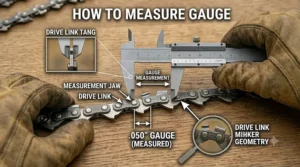
Bigger saws carry proportionally bigger risk, and kickback potential increases specifically with bar nose size according to forestry safety researchers. Cornell’s Small Farms program notes that a properly functioning chain brake is essential safety equipment regardless of saw size, and recommends never operating a saw without one, a standard echoed by Cornell Small Farms. For matching chain pitch and gauge correctly to your bar — a frequent source of preventable damage — the University of Georgia Extension publishes a clear technical breakdown worth bookmarking.
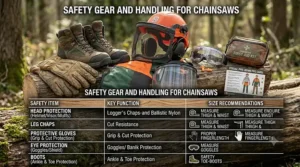
Regardless of size, always wear chainsaw chaps, eye and hearing protection, and gloves, and never operate a saw above shoulder height. Larger saws in the 20-inch-plus range generally warrant additional training or at minimum careful study of your specific model’s manual, since the kickback forces involved scale meaningfully with engine power, a point reinforced by Oregon OSHA’s chainsaw safety guidance.
FAQ
❓ What size chainsaw do I need for cutting down a tree?
❓ Is a 16-inch chainsaw big enough for firewood?
❓ What is the best chainsaw bar length for beginners?
❓ How much does a quality chainsaw cost in 2026?
❓ Can I use a smaller chainsaw bar than recommended?
Conclusion
The right chainsaw size isn’t about buying the biggest saw you can afford — it’s about matching bar length, weight, and power source to the cutting you’ll actually do most weekends. A 6-inch pruning saw and a 24-inch land-clearing model both have a place, but rarely in the same garage unless you’re managing genuinely varied property needs. Use the 2-inch rule for bar length versus typical cutting diameter, be honest about how much weight you want to carry for an hour at a time, and choose gas or battery based on how long your typical session actually runs.
Of the seven models compared here, the 16 to 18-inch tier — the DEWALT DCCS670T1 and Husqvarna 440 — covers the broadest range of homeowner needs, while the compact Makita and EGO options handle lighter work without unnecessary bulk, and the larger Husqvarna 460 Rancher and EGO CS2005 exist specifically for serious land management.
✨ Found the right size?
🪵 Check current availability on any of the seven models above before prices shift, and tackle your next yard project with a saw that actually fits the job.
Recommended for You
- Chainsaw for Cutting Firewood: 7 Best Picks for 2026
- Stihl vs Husqvarna: 7 Chainsaws That Settle the Debate (2026)
- Gas vs Electric Chainsaw 2026: 7 Top Picks Worth Buying
Disclaimer: This article contains affiliate links. As an Amazon Associate, I earn from qualifying purchases. If you purchase products through these links, we may earn a small commission at no additional cost to you.
✨ Found this helpful? Share it with your friends! 💬🤗
