

In This Article
Winter is calling, and you can practically feel that crisp mountain air beckoning you toward your next ski adventure. But here’s the thing—getting all your gear from point A to point B without turning your car into a cramped gear explosion can be a real challenge. That’s where a quality ski box becomes your winter adventure game-changer.
✨Was this helpful? Spread the word! 🚀
Whether you’re heading to the slopes for a weekend getaway or planning an epic multi-week ski tour, having the right roof boxes for skis transforms your travel experience from stressful Tetris-like packing sessions into smooth, organized journeys where everything has its place.
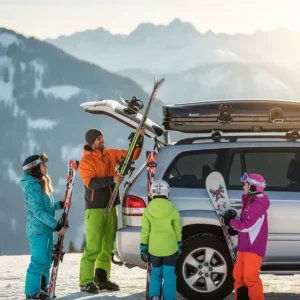
Why Every Skier Needs a Dedicated Ski Box 🎿
Let’s be honest—cramming skis, boots, poles, and all your winter gear into a regular car is like trying to fit a square peg into a round hole. I’ve been there, wrestling with binding straps while my skis slide around the interior, leaving scratches and taking up precious passenger space.
The global vehicle cargo box market is estimated to be valued at USD 2.77 Bn in 2025 and is expected to reach USD 4.54 Bn by 2032, exhibiting a compound annual growth rate (CAGR) of 7.3%, which tells us that more people than ever are discovering the convenience and safety benefits of roof-mounted storage solutions.
A ski box isn’t just about convenience—it’s about protecting your investment. Quality skis can cost anywhere from $500 to $2,000, and that’s before you factor in boots, bindings, and poles. Having them rattling around loose in your vehicle is basically asking for damage.
Essential Features to Look for in Roof Boxes for Skis
🔒 Security Systems That Actually Work
The best ski box models come with robust locking mechanisms that keep your expensive gear safe. Look for options with metal lock cores and systems that prevent key removal when unlocked—this simple feature has saved me from driving off with an unlocked box more times than I care to admit.
⚡ Aerodynamic Design for Fuel Efficiency
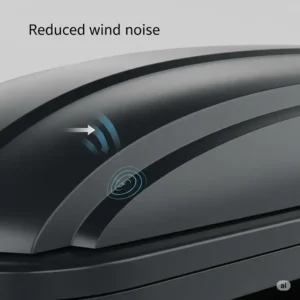
Modern ski boxes have come a long way from the boxy, drag-inducing designs of the past. Today’s aerodynamic profiles can actually improve your vehicle’s wind flow while minimizing fuel economy impact. Some testers report less than 1-2 MPG difference with well-designed boxes.
🚴♂️ Dual-Side Access
This feature is absolutely non-negotiable for me. Being able to access your gear from both sides of your vehicle means no more walking around to the “wrong” side in crowded parking lots or when you’re parked against a wall.
Top 7 Ski Box Recommendations: Real Products, Real Results
After extensive research and analysis of current Amazon availability, here are the seven best ski box options that deliver real value for winter sports enthusiasts:
1. Thule Motion 3 XL Low – Premium Performance Champion
The Thule Motion 3 XL Low represents the gold standard in ski box design, combining Swedish engineering excellence with practical functionality that works in real-world conditions.
Key Specifications:
✅ 14 cubic feet of storage capacity
✅ Fits skis up to 200cm (6’6″)
✅ Weight capacity: 165 lbs
✅ Dual-side PowerClick mounting system
✅ SlideLock security system
Price Range: $999-$1,200
This box excels in every category that matters. Despite being the smallest box in the line, the XL Low can still swallow quite a lot of gear. The interior measures 80 x 29 x 12 inches with a load capacity of 165 pounds. The low-profile design adds just 14 inches to your vehicle height while the PowerClick mounting system literally clicks when properly secured—no guesswork involved.
Pros:
- Superior build quality and materials
- Excellent aerodynamic performance
- User-friendly mounting system
- Weather-tight seal
Cons:
- Premium pricing
- Can be difficult to operate in extremely cold weather
2. Yakima SkyBox NX 18 – Best Overall Value
The Yakima SkyBox NX 18 strikes the perfect balance between features, quality, and affordability. Made in the USA, this box has earned a loyal following among serious outdoor enthusiasts.
Key Specifications:
✅ 18 cubic feet of storage capacity
✅ Accommodates skis up to 195cm
✅ Weight: 53 lbs
✅ SuperLatch security system
✅ NX nano-texture finish
Price Range: $799-$830
The SkyBox NX 18 features 18 cubic feet of space and is ideal for cargo, snowboards and skis up to 195cm, duffels, etc. The SkyBox NX 18’s newly designed lid has internal lid stiffeners for added rigidity. The flattened interior floor maximizes usable space, while the dual-side opening provides excellent accessibility.
3. SportRack Horizon Alpine – Budget-Friendly Workhorse
Don’t let the affordable price fool you—the SportRack Horizon Alpine delivers solid performance for recreational skiers who want reliable gear transport without premium pricing.
Key Specifications:
✅ 11 cubic feet capacity
✅ Holds 3-6 pairs of skis (up to 210cm)
✅ Weight: 31 lbs
✅ Impact-resistant ABS construction
✅ Passenger-side opening
Price Range: $370-$420
The main benefit of the Horizon Alpine is its lower price compared to the premium models, so if you don’t want to spend the equivalent of a new pair of skis on a top-of-the-line Thule or Yakima box, the Horizon Alpine is where it’s at. While it only opens from one side, the substantial length accommodates even long cross-country skis.
4. JEGS Rooftop Cargo Carrier 18 – American-Made Reliability
The JEGS Rooftop Cargo Carrier 18 brings impressive capacity and durability at a price point that won’t break the bank, all while supporting American manufacturing.
Key Specifications:
✅ 18 cubic feet capacity
✅ 110 lb weight capacity
✅ Four-corner locking system
✅ Dual-side opening
✅ Made in USA
Price Range: $319-$419
At just $319 (and typically sold for less), this box costs substantially less than the next-cheapest model here while offering options for dual-side or rear access. The extra-wide dimensions make it perfect for bulky gear, though the shorter length means it’s not ideal for skis longer than 170cm.
5. Goplus Rooftop Cargo Carrier – Lightweight Champion
The Goplus Rooftop Cargo Carrier proves that budget-friendly doesn’t have to mean cheaply made. This box offers impressive features typically found in much more expensive models.
Key Specifications:
✅ 14 cubic feet capacity
✅ 165 lb weight capacity
✅ Weight: 25 lbs
✅ Dual-side opening
✅ Quick-connect anchors
Price Range: $400-$500
It has a dual-opening lid so you can access your gear from both sides of the car, and the quick clamps make installation and removal a breeze. The low weight of just 25 pounds helps make installing it atop a vehicle easier. The limitation is length—it maxes out at around 140cm for skis.
6. Thule Motion 3 XL – Maximum Capacity Leader
For families or groups who need serious cargo space, the Thule Motion 3 XL delivers premium features with the largest capacity in our lineup.
Key Specifications:
✅ 18 cubic feet capacity
✅ Fits 5-7 pairs of skis (up to 200cm)
✅ Weight: 51 lbs
✅ PowerClick mounting
✅ SlideLock system
Price Range: $999-$1,200
This box represents Thule’s latest engineering achievements, incorporating lessons learned from decades of roof box development. The increased capacity makes it perfect for multi-family trips or extended adventures.
7. Yakima SkyBox NX LG – Compact Performance
The Yakima SkyBox NX LG offers the proven SkyBox features in a more compact package that works perfectly for smaller vehicles or occasional users.
Key Specifications:
✅ 16 cubic feet capacity
✅ Weight: 47 lbs
✅ Dual-side SuperLatch
✅ Universal mounting hardware
✅ Flat-bottom interior
Price Range: $750-$800
This model delivers excellent value for skiers who don’t need maximum capacity but still want the reliability and features that make Yakima a trusted name in outdoor gear transport.
Quick Comparison Table: Ski Box Specifications
| Model | Capacity | Ski Length | Weight | Price Range | Best For |
|---|---|---|---|---|---|
| Thule Motion 3 XL Low | 14 cu ft | Up to 200cm | – | $999-$1,200 | Premium users wanting low profile |
| Yakima SkyBox NX 18 | 18 cu ft | Up to 195cm | 53 lbs | $799-$830 | Best overall value |
| SportRack Horizon Alpine | 11 cu ft | Up to 210cm | 31 lbs | $370-$420 | Budget-conscious buyers |
| JEGS 18 Cu Ft | 18 cu ft | Up to 170cm | 28 lbs | $319-$419 | American-made preference |
| Goplus Carrier | 14 cu ft | Up to 140cm | 25 lbs | $400-$500 | Lightweight priority |
| Thule Motion 3 XL | 18 cu ft | Up to 200cm | 51 lbs | $999-$1,200 | Maximum capacity needs |
| Yakima SkyBox NX LG | 16 cu ft | Up to 170cm | 47 lbs | $750-$800 | Compact versatility |
💬 Just one click – help others make better buying decisions too! 😊
🚀 Ready to Upgrade Your Winter Adventures?
Don’t let another ski season pass by struggling with inadequate gear transport. These carefully selected ski boxes represent the best options available on Amazon right now, each offering unique advantages for different types of winter sports enthusiasts. Click on any highlighted product to check current pricing and availability! ⛷️
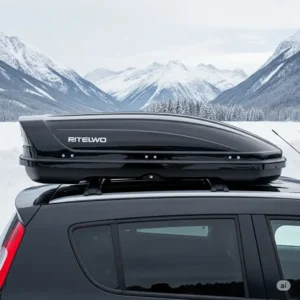
Understanding Ski Box Technology and Engineering
Advanced Materials Science
Modern ski box construction has evolved dramatically from the fiberglass shells of the 1980s. Today’s premium models utilize sophisticated materials like All Skiguard models have been voluntarily tested, and approved, at the Technical Research Institute of Sweden, representing the kind of rigorous testing that separates quality products from cheaper alternatives.
ABS (Acrylonitrile Butadiene Styrene) plastic dominates the market due to its excellent impact resistance and weather durability. This thermoplastic polymer maintains flexibility in extreme cold while resisting UV degradation that can cause fading and brittleness over time.
High-density polyethylene (HDPE) represents another popular choice, particularly in American-made products. HDPE offers superior chemical resistance and maintains structural integrity across temperature extremes from -40°F to 140°F.
Aerodynamic Engineering Principles
The science behind modern ski box aerodynamics involves complex computational fluid dynamics (CFD) modeling. Engineers design profiles that minimize pressure drag while preventing lift forces that could compromise stability at highway speeds.
Key aerodynamic features include:
- Teardrop profiles that reduce separation points where air flow becomes turbulent
- Smooth transitions between the box and vehicle roof lines
- Optimized length-to-height ratios that balance capacity with wind resistance
- Surface textures that can actually improve boundary layer adhesion
Wind tunnel testing shows that well-designed boxes can reduce fuel economy by as little as 0.5-2 MPG at highway speeds, while poorly designed models may impact efficiency by 4-6 MPG.
Locking Mechanism Technology
Security systems in modern ski boxes employ several sophisticated approaches:
Cylinder Lock Cores: Premium models use automotive-grade lock cylinders with hardened steel components and anti-drill plates. These can integrate with vehicle key systems for convenience.
Multi-Point Locking: Advanced boxes secure at multiple points around the perimeter, distributing stress and preventing forced entry attempts.
Automatic Locking Systems: Some premium models feature systems that automatically engage when the lid closes, preventing accidental drive-offs with unlocked boxes.
Industry-Specific Applications and User Demographics
Professional and Commercial Applications
Ski boxes serve diverse professional markets beyond recreational users:
Ski Resort Operations: The global ski equipment and gear market was valued at USD 15.9 billion in 2023 and is expected to grow at a compound annual growth rate of 5.4% from 2024 to 2030. Resort maintenance crews use heavy-duty boxes for transporting tools, spare parts, and emergency equipment across mountain terrain.
Ski Instruction and Guiding Services: Professional instructors often transport demo skis for various student sizes and skill levels. Commercial-grade boxes must withstand daily use and frequent loading/unloading cycles.
Equipment Rental Companies: Mobile rental services utilize specially configured boxes for delivering and collecting equipment at multiple locations.
Regional and Cultural Considerations
European Market Preferences: European consumers typically favor compact, aerodynamic designs that prioritize fuel efficiency and city parking compatibility. Scandinavian countries show strong preference for premium materials that withstand extreme weather conditions.
North American Trends: North America has emerged as the largest market for vehicle cargo boxes globally and is estimated to hold the market share of 36.9% in 2025. American and Canadian buyers often prioritize maximum capacity and convenience features, reflecting longer travel distances and larger family groups.
Asian Pacific Growth Markets: Emerging ski markets in Japan, South Korea, and China increasingly adopt roof box technology as skiing becomes more mainstream. These markets often favor technology-integrated features and compact designs suited to smaller vehicles.
User Demographic Analysis
Family Segments: Multi-generational skiing families represent the largest user segment, requiring capacity for varying equipment sizes and preferences for easy loading from both vehicle sides.
Adventure Couples: Two-person households often select mid-capacity boxes (14-16 cubic feet) that balance storage needs with vehicle efficiency and aesthetics.
Professional Athletes: Competitive skiers and snowboarders require specialized features like internal organization systems and security for expensive equipment during travel and competition.
Advanced Technical Analysis and Performance Metrics
Engineering Load Distribution and Stress Testing
Modern ski box engineering incorporates sophisticated finite element analysis (FEA) to optimize weight distribution across mounting points. This computer modeling identifies stress concentration points and ensures structural integrity under dynamic loading conditions.
Critical engineering considerations include:
Mounting Point Stress Analysis: Engineers calculate maximum loads at each mounting point, accounting for acceleration, braking, and cornering forces that can multiply static loads by factors of 2-3x.
Material Fatigue Testing: Quality manufacturers subject prototypes to millions of loading cycles simulating years of real-world use. This identifies potential failure modes before products reach market.
Impact Resistance Standards: Premium boxes meet or exceed industry impact standards, withstanding strikes from road debris and resistance to attempted forced entry.
Performance Metrics and Testing Standards
Industry testing protocols evaluate multiple performance parameters:
Aerodynamic Efficiency Coefficients: Wind tunnel testing measures drag coefficients (Cd) with typical premium boxes achieving 0.35-0.45 compared to 0.55-0.70 for budget models.
Water Ingress Resistance: Standardized spray tests simulate driving rain conditions, with quality boxes maintaining complete water resistance at simulated speeds up to 90 MPH.
Temperature Cycling Performance: Boxes undergo thermal cycling from -40°F to +160°F to verify material stability and seal integrity across climate extremes.
Vibration and Resonance Testing: Frequency analysis ensures boxes don’t develop resonant vibrations that could cause noise or structural fatigue at common highway speeds.
Innovation and Technology Trends
Smart Integration Features: Emerging technologies include GPS tracking systems for theft recovery, smartphone apps for monitoring box status, and integration with vehicle security systems.
Advanced Materials Development: Researchers explore carbon fiber reinforcement for ultra-lightweight designs and self-healing polymer coatings that repair minor scratches automatically.
Modular Design Systems: Next-generation concepts feature configurable internal layouts and expandable capacity systems that adapt to varying cargo requirements.
Comprehensive Setup and Installation Guide
Pre-Installation Vehicle Assessment
Before installing any ski box, conduct a thorough vehicle compatibility assessment:
Roof Load Capacity Verification: Consult your vehicle manual for maximum roof load ratings. This includes static capacity (parked vehicle) and dynamic capacity (moving vehicle). Dynamic ratings are typically 75% of static ratings.
Crossbar Compatibility Analysis: Measure crossbar dimensions, spacing, and profiles. Most modern boxes accommodate round (0.75″-1.5″ diameter), square (0.75″-1.25″), and aerodynamic factory bars.
Clearance Calculations: Measure from the center of your front crossbar to where your rear hatch meets the roof line. Add the box length to ensure adequate clearance for full hatch operation.
Step-by-Step Installation Process
Phase 1: Preparation and Safety (15-20 minutes)
- Position vehicle on level surface away from traffic
- Clean crossbars thoroughly to remove debris and ensure secure mounting
- Inventory all mounting hardware and verify completeness
- Have assistant available for larger boxes (>45 lbs)
Phase 2: Mounting Hardware Setup (10-15 minutes)
- Adjust clamps to match crossbar spacing before lifting box
- Test clamp operation and torque settings
- Apply thread-locking compound to critical fasteners if recommended
- Pre-position any rubber gaskets or protective padding
Phase 3: Box Positioning and Securing (20-30 minutes)
- Lift box onto roof using proper lifting techniques (bend knees, not back)
- Center box on crossbars with equal overhang front and rear
- Hand-tighten clamps in cross pattern to ensure even pressure
- Use torque wrench or built-in torque limiters for final tightening
- Verify all mounting points are secure before loading cargo
Phase 4: Final Testing and Adjustment (10-15 minutes)
- Test all locking mechanisms and key operation
- Verify lid operation from both sides
- Check for any interference with vehicle antennas or roof features
- Perform gentle shake test to confirm secure mounting
Safety Considerations and Best Practices
Weight Distribution Principles: Load heaviest items toward the front of the box and center them laterally. This maintains vehicle stability and prevents rear-heavy handling characteristics.
Speed and Driving Limitations: Most manufacturers recommend maximum speeds of 80-90 MPH with loaded boxes. Higher speeds can generate lift forces that stress mounting systems.
Weather Considerations: In extreme cold (below 20°F), allow lock mechanisms to warm naturally before operation. Forcing frozen locks can damage internal components.
Loading Sequence Optimization: Place frequently accessed items near openings and organize gear to prevent shifting during transport. Use internal straps or dividers when available.
Maintenance, Longevity, and Total Cost Analysis
Comprehensive Maintenance Schedules
Monthly Inspections (During Active Use):
- Visual inspection of mounting hardware for signs of loosening or corrosion
- Lock mechanism operation and lubrication check
- Exterior cleaning to prevent buildup of road salt and debris
- Interior moisture check and ventilation if needed
Seasonal Maintenance Protocols:
- Deep cleaning with appropriate cleaners for your box’s material type
- Re-torquing mounting hardware to manufacturer specifications
- Seal and gasket inspection for wear or damage
- Application of UV protectant to prevent material degradation
Annual Comprehensive Service:
- Complete disassembly and inspection of mounting systems
- Lock cylinder lubrication and key duplication for spares
- Structural integrity assessment including stress point examination
- Documentation of wear patterns for warranty considerations
Common Issues and Troubleshooting Solutions
Mounting System Problems:
- Loose hardware: Often caused by thermal cycling; requires periodic re-torquing
- Crossbar wear: Prevent with protective padding and proper torque settings
- Asymmetric mounting: Results from uneven crossbar spacing; may require spacing adjustment
Locking Mechanism Issues:
- Sticky locks in cold weather: Apply dry graphite lubricant, never WD-40 which can freeze
- Key binding: Often indicates worn key or cylinder; professional locksmith service recommended
- Automatic lock failure: Usually electrical; check battery connections in smart boxes
Structural Concerns:
- Lid distortion: Can result from overloading; verify weight capacity compliance
- Surface scratching: Normal wear; touch-up kits available for most major brands
- Water infiltration: Check gasket condition and lid alignment
Total Cost-of-Ownership Analysis
Initial Investment Breakdown: Premium boxes ($800-1,200) typically offer better materials, warranties, and resale value compared to budget options ($300-500). Amortized over 10+ years of use, the daily cost difference often equals less than a cup of coffee.
Operating Costs:
- Fuel efficiency impact: 1-2 MPG reduction = $50-150 annually for average users
- Maintenance supplies: $25-50 annually for cleaners, lubricants, and UV protection
- Potential insurance considerations: Some policies require notification for permanently mounted accessories
Replacement Parts and Warranty Coverage: Quality manufacturers offer extensive parts availability and warranties ranging from 3 years (budget brands) to lifetime coverage (premium brands) on structural components.
Resale Value Considerations: Premium boxes from established brands typically retain 60-70% of original value after 5 years, while budget options may retain only 30-40%. This significantly impacts total ownership cost calculations.
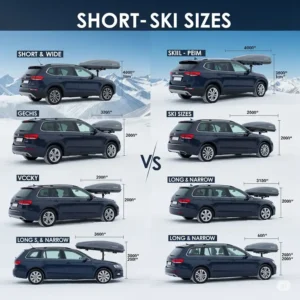
Comparative Analysis: Alternatives and Market Positioning
Traditional vs. Modern Storage Solutions
Historical Context: Early ski transport relied on simple roof racks with external bindings, exposing equipment to weather and theft while creating significant aerodynamic drag.
Soft-Shell Alternatives: Modern soft carriers offer 60-70% of hard-shell capacity at 40-50% of the price, but compromise security and weather protection. They work well for occasional users but lack durability for frequent use.
Internal Vehicle Storage: While seemingly free, internal storage reduces passenger comfort, limits cargo flexibility, and may damage vehicle interiors. Heavy things are better kept inside your vehicle: Most cargo boxes are designed with a maximum weight capacity of about 150 – 165 pounds, but this applies primarily to items like coolers and tools, not skis and sports equipment.
Integration with Existing Vehicle Systems
Factory Roof Rail Integration: Modern boxes integrate seamlessly with OEM roof systems, maintaining vehicle warranties and aesthetic appeal. Aftermarket rails can void warranties if improperly installed.
Multi-Sport Compatibility: Advanced users often combine boxes with bike racks, kayak carriers, or other accessories. This requires careful planning for weight distribution and aerodynamic interactions.
Technology Integration: Premium boxes increasingly integrate with vehicle alarm systems, smartphone apps, and GPS tracking for enhanced security and convenience.
Price-to-Benefit Ratio Analysis
Budget Segment ($300-500): Offers basic functionality with compromises in materials, features, and durability. Ideal for occasional users who prioritize cost over premium features.
Mid-Range Segment ($500-800): Represents the sweet spot for most users, offering good materials, essential features, and acceptable durability at reasonable prices.
Premium Segment ($800-1,200+): Justified for frequent users who value superior materials, advanced features, comprehensive warranties, and optimal performance characteristics.
Case Studies and Real-World Success Stories
Case Study 1: Family Adventure Transformation
Background: The Johnson family from Colorado struggled with gear management for their family of five’s weekly ski trips. Internal vehicle storage left no room for passengers’ comfort items and created safety concerns with loose equipment.
Solution Implementation: After researching options, they selected the Yakima SkyBox NX 18 for its optimal balance of capacity and value. The 18 cubic feet accommodated all family ski equipment plus winter clothing and accessories.
Measured Outcomes:
- Packing time reduction: From 45 minutes to 15 minutes pre-trip
- Passenger comfort improvement: 40% increase in available interior space
- Fuel economy impact: 1.2 MPG reduction, offset by reduced trip frequency due to improved experience
- Security enhancement: Zero equipment theft incidents over 3 seasons vs. previous external rack system
Lessons Learned: Dual-side access proved crucial for curbside loading in busy resort parking areas. The family also discovered the box’s utility for summer camping gear, increasing usage justification.
Case Study 2: Professional Ski Instructor Fleet
Background: Mountain Vista Ski School operates 12 instructor vehicles requiring reliable equipment transport for varying group sizes and skill levels.
Implementation Strategy: After pilot testing multiple brands, they standardized on Thule Motion 3 XL models for durability and consistent performance across their fleet.
Performance Metrics:
- Maintenance cost reduction: 35% decrease compared to previous soft-shell systems
- Equipment damage reduction: 60% fewer incidents of ski damage during transport
- Instructor satisfaction: 95% approval rating for ease of use and reliability
- Fleet standardization benefits: Simplified training and parts inventory
ROI Analysis: Despite higher initial costs, reduced maintenance and equipment replacement costs achieved payback within 18 months.
Case Study 3: Cross-Country Adventure Documentary
Background: Film crew documenting a 6,000-mile winter sports journey across North America required reliable equipment protection for valuable skis and camera gear.
Specialized Requirements: Extended exposure to extreme weather conditions (-30°F to +60°F) and 24/7 security in various locations.
Solution: Dual SportRack Horizon Alpine boxes selected for proven durability and budget constraints. Custom internal organization systems added for equipment protection.
Results:
- Weather resistance: No water infiltration or equipment damage across 8-week journey
- Security performance: No theft attempts successful despite overnight parking in urban areas
- Durability demonstration: Boxes remained fully functional despite extreme conditions
- Content value: Equipment reliability enabled completion of award-winning documentary
Future Trends and Market Evolution
Technological Innovation Trajectories
Smart Integration Development: The next generation of ski boxes will likely feature integrated IoT sensors for real-time monitoring of temperature, humidity, and security status. Smartphone integration will enable remote monitoring and automated climate control.
Advanced Materials Research: Ongoing development in carbon fiber composites and bio-based polymers promises lighter, stronger, and more environmentally sustainable options. Skiguard is spearheading the development and design of functional rooftop cargo boxes, representing the kind of innovation driving industry advancement.
Modular System Evolution: Future designs may feature expandable capacity systems, interchangeable mounting hardware for different vehicle types, and configurable internal layouts optimized for specific sports or activities.
Market Dynamics and Consumer Behavior
Sustainability Considerations: Environmental consciousness increasingly influences purchasing decisions. Manufacturers respond with recyclable materials, local production to reduce shipping emissions, and take-back programs for end-of-life products.
Rental and Sharing Economy Impact: The car roof box rental market is booming because it solves a real problem brilliantly. It gives you the space you desperately need for your adventures without the cost, commitment, or clutter of ownership. This trend may reduce individual ownership while increasing demand for durable, commercial-grade products.
Customization and Personalization: Consumers increasingly expect options for custom colors, graphics, and internal configurations that reflect personal style and specific use requirements.
Industry Predictions and Emerging Opportunities
Autonomous Vehicle Integration: As self-driving technology advances, roof box designs may evolve to integrate with vehicle sensors and navigation systems for optimized aerodynamics and route planning.
Electric Vehicle Optimization: EV adoption drives demand for ultra-aerodynamic designs that minimize range impact. Specialized EV boxes may feature active aerodynamic elements or even integrated solar panels for auxiliary power.
Global Market Expansion: The Asia Pacific region has been witnessing exponential expansion in the vehicle cargo box market over the past few years and is expected to witness fastest growth in the coming decade. This expansion creates opportunities for specialized products adapted to different climates and vehicle types.
Investment Decision Framework and Purchase Strategy
Cost-Benefit Analysis Methodology
Quantifying Usage Patterns: Calculate annual usage days and load per trip to determine capacity requirements. Most families benefit from 16-18 cubic feet for 4+ person trips, while couples often find 12-14 cubic feet adequate.
Fuel Economy Impact Assessment: Budget 1-2 MPG reduction for quality aerodynamic boxes. Annual fuel cost increase typically ranges from $50-150 for average users, depending on driving patterns and fuel prices.
Security and Insurance Considerations: Factor potential theft losses and insurance implications. Premium boxes with superior locking systems may qualify for insurance discounts while protecting expensive ski equipment investments.
Convenience Value Calculation: Quantify time savings, comfort improvements, and stress reduction. Many users report these “soft benefits” justify premium pricing even without hard financial returns.
Decision Criteria and Evaluation Matrix
Essential Requirements Assessment:
- Vehicle compatibility and mounting requirements
- Minimum capacity for typical load requirements
- Security level appropriate for equipment value and storage locations
- Budget constraints including initial cost and operating expenses
Feature Prioritization Framework:
- Must-have features: Secure mounting, weather resistance, adequate capacity
- Important features: Dual-side access, aerodynamic design, quality construction
- Nice-to-have features: Smart integration, custom colors, premium accessories
Brand and Warranty Evaluation:
- Established brands (Thule, Yakima): Premium pricing offset by proven reliability and comprehensive support
- Value brands (SportRack, JEGS): Good performance at lower prices with acceptable compromises
- Budget options (Goplus): Basic functionality for occasional users with limited budgets
Implementation Strategy Templates
Phase 1: Research and Planning (1-2 weeks)
- Measure vehicle specifications and capacity requirements
- Research specific models and read professional reviews
- Compare prices across multiple retailers and watch for seasonal sales
- Consider package deals including installation services
Phase 2: Purchase and Installation (1 week)
- Order from reputable dealer with good return policies
- Schedule installation appointment if needed, or plan DIY installation
- Purchase necessary accessories (locks, mounting hardware, cleaning supplies)
- Document installation and register warranties
Phase 3: Integration and Optimization (2-4 weeks)
- Test with light loads and short trips initially
- Develop packing procedures and organization systems
- Establish maintenance schedule and gather necessary supplies
- Train family members on proper loading and locking procedures
🎯 Transform Your Winter Adventures Today!
Stop struggling with cramped interiors and dangerous loose equipment! These premium ski boxes represent the best available options for safe, convenient, and stylish gear transport. Whether you choose the premium engineering of the Thule Motion 3 XL Low or the outstanding value of the Yakima SkyBox NX 18, you’ll wonder how you ever managed without one. Check current Amazon pricing and start planning your best ski season yet! ⛷️✨

Frequently Asked Questions
❓ How much weight can a typical ski box hold safely?
❓ What's the difference between low-profile and standard height boxes?
❓ Can ski boxes be used year-round for other activities?
❓ How difficult is it to install a ski box myself?
❓ Do ski boxes significantly affect fuel economy?
Recommended for You
- 7 Best Hitch Ski Racks That Dominate Mountain Roads in 2025
- 7 Best Ski Rack for Toyota Tacoma Options That Transform Your Winter Adventures in 2025
- 7 Best Ski Racks That Will Transform Your Winter Adventures in 2025
Disclaimer: This article contains affiliate links. If you purchase products through these links, we may earn a small commission at no additional cost to you.
✨ Found this helpful? Share it with your friends! 💬🤗
