
In This Article
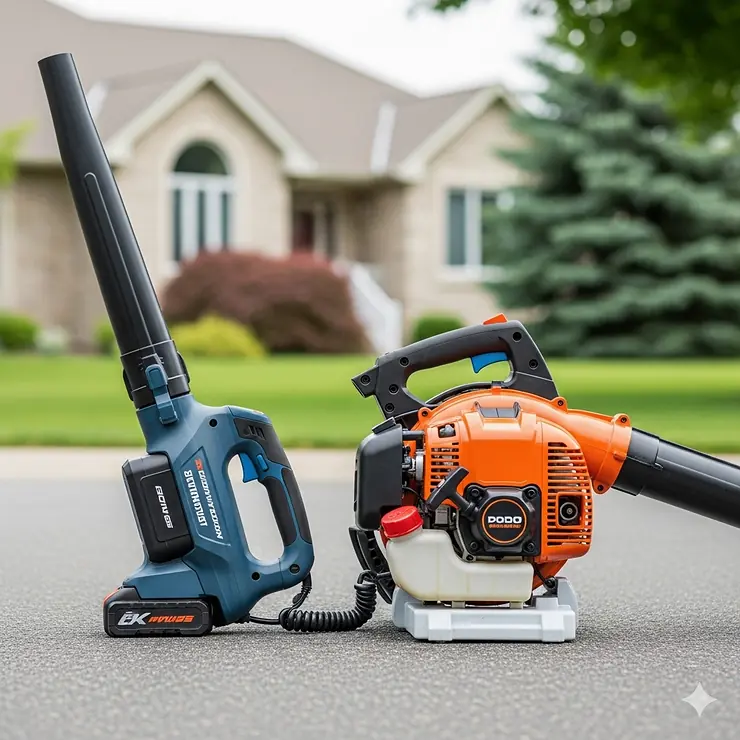
Choosing between electric vs gas leaf blower options can feel overwhelming, especially when you’re standing in front of dozens of models at your local hardware store. However, the decision becomes much clearer when you understand the key differences in power, convenience, and long-term costs. Moreover, the landscape has dramatically changed in recent years, with electric models now rivaling traditional gas-powered units in performance while offering significant advantages in maintenance and environmental impact.
✨Was this helpful? Spread the word! 🚀
Whether you’re dealing with light patio cleanup or tackling acres of stubborn fall leaves, the right leaf blower can transform hours of back-breaking work into a quick, efficient task. Furthermore, understanding the nuances between electric and gas leaf blower technologies will help you make an informed decision that saves both time and money in the long run.
Why Electric vs Gas Leaf Blower Choice Matters More Than Ever 🌱
The electric vs gas leaf blower debate has intensified significantly since 2020, primarily due to advances in battery technology and increasing environmental awareness. Additionally, many municipalities have implemented noise restrictions and emissions regulations that affect gas-powered equipment usage. For instance, California has banned the sale of new gas-powered leaf blowers starting in 2024, making electric alternatives the only viable option for many homeowners.
The performance gap has narrowed considerably, with premium electric models now delivering comparable power to mid-range gas units. Therefore, your choice should be based on specific needs rather than outdated assumptions about electric equipment being underpowered.
🔋 Electric Leaf Blower Advantages: The Modern Choice
Instant Power and Convenience ⚡
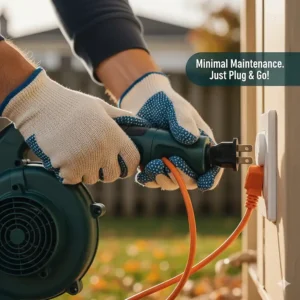
Electric leaf blowers offer unmatched convenience with instant startup – no more pulling cords, mixing fuel, or warming up engines. You simply press a button, and you’re ready to work. Furthermore, they require minimal maintenance beyond occasional cleaning and battery care.
Environmental and Health Benefits 🌍
Electric models produce zero direct emissions, contributing to cleaner air quality in your neighborhood. They also operate at significantly lower noise levels, typically 20-30 decibels quieter than gas alternatives. Consequently, you can use them during earlier morning hours without disturbing neighbors.
Lower Operating Costs 💰
While initial costs may be higher for premium electric models, operating expenses are substantially lower. You’ll save hundreds of dollars annually on fuel, oil, spark plugs, and professional maintenance services.
⛽ Gas Leaf Blower Advantages: Traditional Power
Unmatched Runtime and Refueling ⏰
Gas leaf blowers offer unlimited runtime with quick refueling capabilities. This makes them ideal for large properties or commercial applications where extended use is necessary. Additionally, they maintain consistent power output throughout the entire operating period.
Maximum Power Output 💪
High-end gas models still deliver the highest absolute power levels, particularly important for moving wet leaves, heavy debris, and clearing large areas efficiently. Professional landscapers often prefer gas units for their superior performance in demanding conditions.
Cold Weather Reliability ❄️
Gas engines typically perform more reliably in extreme cold conditions compared to lithium-ion batteries, which can lose capacity in freezing temperatures.
🎯 Top Electric vs Gas Leaf Blower Comparisons
Quick Power Comparison Table
| Model | Type | CFM | MPH | Weight | Runtime | Price Range |
|---|---|---|---|---|---|---|
| EGO Power+ LB6504 | Electric | 650 | 180 | 9.7 lbs | 90 min | $280-320 |
| EGO Power+ LB6504 | Electric | 650 | 180 | 9.7 lbs | 90 min | $280-320 |
| ECHO PB-2620 | Gas | 456 | 172 | 11 lbs | Unlimited* | $250-300 |
| Husqvarna 125B | Gas | 470 | 170 | 9.4 lbs | Unlimited* | $180-250 |
| BLACK+DECKER LB700 | Electric | 180 | 180 | 4.4 lbs | Unlimited** | $30-50 |
*With fuel refills **Corded electric
💬 Just one click – help others make better buying decisions too!😊
Detailed Product Reviews and Specifications 🔍
EGO Power+ LB6504⚡ – Premium Electric Champion
The EGO Power+ LB6504 represents the pinnacle of cordless leaf blower technology, delivering 650 CFM with turbo mode capabilities that rival professional gas units. This model features a 56-volt lithium-ion battery system that provides up to 90 minutes of continuous operation, making it suitable for large residential properties.
Key Specifications:
- Air Volume: 650 CFM (turbo mode)
- Air Speed: 180 MPH maximum
- Battery: 56V 5.0Ah ARC Lithium included
- Weight: 9.7 pounds
- Runtime: Up to 90 minutes
- Warranty: 5-year tool, 3-year battery
- Current Price: $280-320
Advanced Features: The variable speed dial allows precise control from 225-470 CFM with a lock-on button for extended use. The turbo button delivers maximum 650 CFM when you need to move heavy debris like wet leaves or small rocks. Furthermore, the high-efficiency brushless motor provides extended runtime and reduced vibrations.
User Experience: Professional landscapers praise this model for its ability to handle commercial workloads while maintaining the convenience of battery power. The IPX4 weather-resistant construction allows operation in light rain, and the included flat and tapered nozzles provide versatility for different applications.
ECHO PB-2620 ⛽ – Professional Gas Standard
The ECHO PB-2620 has earned its reputation as the industry standard for professional handheld gas leaf blowers. With a 25.4cc professional-grade engine, this model delivers consistent 456 CFM at 172 MPH with exceptional reliability.
Key Specifications:
- Engine: 25.4cc 2-stroke professional grade
- Air Volume: 456 CFM
- Air Speed: 172 MPH
- Blow Force: 15.8 N
- Weight: 11 pounds
- Fuel Tank: 20.3 fl oz
- Warranty: 5-year consumer, 2-year commercial
- Current Price: $250-300
Professional Features: The double-grid air intake design prevents clogging while the curved blower tube provides rotational control to reduce wrist fatigue. Additionally, the cruise control throttle allows locked speed settings for consistent performance during extended use sessions.
Durability and Maintenance: Built for professional use, this model features a chrome-coated cylinder and dual-layer air filtration system. Regular maintenance includes spark plug replacement every 100 hours and air filter cleaning every 10 hours of operation.
Husqvarna 125B ⛽ – Balanced Gas Performance
The Husqvarna 125B combines professional-grade power with homeowner-friendly features, making it an excellent mid-range gas option. Its 28cc X-TORQ engine delivers 20% better fuel efficiency compared to conventional 2-stroke engines.
Key Specifications:
- Engine: 28cc 1.1-HP X-TORQ 2-cycle
- Air Volume: 470 CFM
- Air Speed: 170 MPH
- Blow Force: 12.5 N
- Weight: 9.4 pounds
- Fuel Tank: 16.91 fl oz
- Current Price: $180-250
Ergonomic Design: The air stream alignment with the handle reduces rotational force on your wrist, minimizing fatigue during extended use. The stop switch automatically resets to the “on” position for easier restarts, while the fully adjustable blowing tube accommodates different tasks.

BLACK+DECKER LB700 ⚡ – Budget Electric Champion
For homeowners seeking reliable electric performance without premium pricing, the BLACK+DECKER LB700 delivers exceptional value. This corded model provides consistent 180 MPH air speed with professional-grade reliability.
Key Specifications:
- Motor: 7-amp electric
- Air Volume: 180 CFM
- Air Speed: 180 MPH
- Weight: 4.4 pounds
- Power: Corded (cord not included)
- Warranty: 2 years
- Current Price: $30-50
Practical Features: Built-in cord retention prevents accidental disconnection during use, while the ergonomic grip provides comfortable single-handed operation. The lightweight design makes it perfect for elderly users or those with mobility limitations.
Advanced Technical Analysis 🔬
Battery Technology Evolution in Electric Models
Modern lithium-ion batteries have revolutionized electric leaf blower performance through several key innovations:
Cell Chemistry Improvements: Contemporary batteries utilize advanced lithium-ion chemistry that provides 30-40% more energy density than previous generations. Consequently, manufacturers can now offer extended runtime without increasing weight significantly.
Thermal Management Systems:
Premium models feature intelligent thermal management that prevents overheating and extends battery lifespan. These systems monitor temperature continuously and adjust power output to maintain optimal operating conditions.
Fast Charging Technology: Quick-charge capabilities now allow complete battery restoration in 30-60 minutes for most models. Some systems achieve 80% charge in just 20 minutes, minimizing downtime during large cleanup projects.
Gas Engine Efficiency Advancements
Gas leaf blower manufacturers have implemented significant improvements in 2-stroke engine technology:
X-TORQ Technology: Husqvarna’s X-TORQ system reduces emissions by up to 60% while increasing fuel efficiency by 20%. This technology uses advanced cylinder design to optimize fuel combustion and minimize waste.
Stratified Charge Systems: These systems introduce fresh air above the fuel mixture during the scavenging process, reducing fuel loss and emissions while improving power delivery.
Anti-Vibration Engineering: Modern gas blowers incorporate sophisticated vibration dampening systems that reduce operator fatigue and extend equipment lifespan.
🏡 Industry-Specific Applications and Use Cases
Residential Property Management 🏠
Small to Medium Properties (Under 1 Acre)
For typical suburban lots, electric vs gas leaf blower choice often favors electric models due to convenience and noise considerations. The EGO Power+ LB6504 provides sufficient power for most residential needs while eliminating fuel mixing and storage concerns.
Optimal Usage Patterns:
- Weekly leaf cleanup: 15-30 minutes
- Seasonal deep cleaning: 60-90 minutes
- Snow removal from walkways: 10-20 minutes
- Garage and workshop cleaning: 5-15 minutes
Large Properties (1+ Acres)
Properties exceeding one acre may benefit from gas models due to extended runtime requirements. However, electric models with multiple batteries can provide comparable performance with better environmental benefits.
Strategic Battery Management: Professional landscapers recommend a three-battery rotation system: one in use, one charging, and one on standby. This approach provides unlimited runtime while maintaining electric convenience.
Commercial Landscaping Operations 🌿
Municipal Maintenance Programs
Cities and municipalities increasingly favor electric models due to noise ordinances and emission regulations. Many departments report 40-60% reduction in operating costs after transitioning from gas to electric equipment.
Fleet Management Considerations:
- Initial investment: Higher for electric systems
- Training requirements: Minimal for electric models
- Maintenance scheduling: Simplified with electric equipment
- Regulatory compliance: Easier with zero-emission tools
Professional Landscaping Services
Commercial operators must balance power requirements with operational efficiency. Gas vs electric leaf blower decisions often depend on specific service types and client preferences.
Service-Specific Recommendations:
- Residential maintenance: Electric for noise-sensitive areas
- Commercial property cleanup: Gas for maximum power and unlimited runtime
- Municipal contracts: Electric for emission compliance
- Emergency storm cleanup: Gas for immediate deployment without charging infrastructure
Specialized Industry Applications 🏭
Construction Site Cleanup
Construction environments require robust equipment capable of handling heavy debris and extended operation. Gas models typically provide better performance in dusty, demanding conditions.
Durability Requirements:
- Impact resistance for dropped tools
- Dust protection for internal components
- Extended warranty coverage for commercial use
- Easy field maintenance and repair capabilities
Agricultural Applications
Farm operations benefit from gas models due to remote locations without convenient electrical access. However, electric models are gaining popularity for indoor facilities and noise-sensitive livestock areas.
Rural Considerations:
- Fuel availability and storage
- Maintenance service accessibility
- Weather condition reliability
- Multi-tool battery system compatibility
🔧 Comprehensive Setup and Usage Guide
Electric Leaf Blower Setup and Operation 🔌
Initial Assembly and Battery Preparation
Unboxing and Component Verification:
- Remove all components and verify against included parts list
- Locate battery, charger, blower tube(s), and instruction manual
- Inspect for shipping damage before proceeding with setup
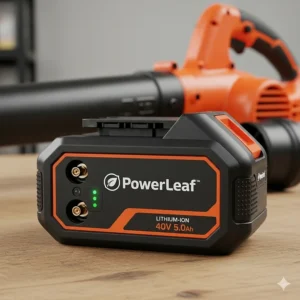
Battery Conditioning Process: New lithium-ion batteries require proper conditioning for optimal performance:
- Charge battery completely before first use (typically 90-120 minutes)
- Allow battery to cool for 10-15 minutes after charging
- Perform three complete charge/discharge cycles during first week
- Store batteries at 40-60% charge for extended periods
Assembly Procedures: Most electric models require minimal assembly:
- Attach blower tube using twist-lock or snap-fit mechanism
- Insert battery until you hear/feel positive engagement
- Test trigger operation before adding attachments
- Verify speed control dial functionality (if equipped)
Operational Best Practices
Pre-Use Safety Inspection:
- Examine blower tube for cracks or loose connections
- Verify battery charge level using indicator lights
- Check air intake screen for debris accumulation
- Confirm safety switch operation (if equipped)
Efficient Operation Techniques: Proper technique maximizes battery life and cleaning effectiveness:
- Start with lowest effective speed setting
- Use smooth, sweeping motions rather than prolonged stationary blowing
- Work systematically from upwind areas to downwind
- Utilize turbo mode only when necessary for heavy debris
Battery Life Optimization:
- Avoid complete battery discharge when possible
- Clean air intake regularly to reduce motor strain
- Allow motor to cool between intensive sessions
- Store equipment in temperature-controlled environments
Gas Leaf Blower Setup and Maintenance ⛽
Fuel System Preparation
Fuel Mixing Requirements: Most gas leaf blowers use 50:1 fuel mixture ratios:
- Use high-quality 2-stroke oil designed for air-cooled engines
- Mix fuel in clean, approved containers only
- Prepare only amounts needed for immediate use
- Shake mixture thoroughly before each use
Fuel Storage Guidelines:
- Store fuel in cool, dry locations away from ignition sources
- Use fuel stabilizers for storage periods exceeding 30 days
- Label containers with mixture date and ratio information
- Replace stored fuel every 90 days maximum
Starting Procedures and Break-In
Cold Start Process:
- Ensure fuel tank contains fresh, properly mixed fuel
- Set choke to closed position for cold starts
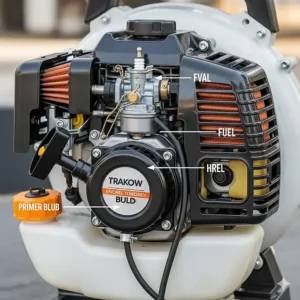
- Prime carburetor 4-6 times until fuel appears in primer bulb
- Pull starter cord smoothly with full arm extension
- Gradually open choke as engine warms
Break-In Protocol: New gas engines require careful break-in procedures:
- Operate at 50% throttle maximum for first 5 hours
- Allow engine to cool completely between sessions
- Use high-quality 2-stroke oil during break-in period
- Monitor exhaust smoke and engine sound for abnormalities
Routine Maintenance Scheduling
Daily Pre-Use Checks:
- Fuel level and mixture age verification
- Air filter condition inspection
- Spark plug wire connection security
- Throttle trigger operation smoothness
Weekly Maintenance (10+ hours operation):
- Air filter cleaning or replacement
- Fuel filter inspection and cleaning
- Spark plug gap verification (0.020-0.025 inches)
- Exhaust port cleaning for carbon buildup
Seasonal Maintenance Requirements: Fall preparation (before storage):
- Drain fuel system completely or add stabilizer
- Remove and clean spark plug thoroughly
- Clean cooling fins and air intake screen
- Lubricate throttle cable and moving parts
- Store in clean, dry environment
Spring preparation (after storage):
- Install fresh spark plug if needed
- Fill with fresh fuel mixture
- Test starting system before first use
- Inspect all fasteners and connections

📊 Comprehensive Cost Analysis Framework
Total Cost of Ownership Comparison 💰
Electric Model Financial Analysis
Initial Investment Breakdown:
- Premium cordless model: $250-400
- Additional batteries: $100-150 each
- Charging station: $50-100 (if upgraded)
- Accessories and attachments: $25-75
Annual Operating Costs:
- Electricity for charging: $3-8 annually
- Battery replacement: $50-100 every 3-5 years
- Maintenance supplies: $10-20 annually
- Total annual cost: $15-35
Gas Model Financial Analysis
Initial Investment Breakdown:
- Quality handheld model: $180-350
- Fuel mixing containers: $20-40
- Protective equipment: $30-60
- Initial fuel and oil: $15-25
Annual Operating Costs:
- Fuel and oil: $40-80 annually
- Spark plugs and filters: $15-30 annually
- Professional tune-ups: $50-100 annually
- Total annual cost: $105-210
5-Year Cost Comparison
| Category | Electric | Gas | Savings |
|---|---|---|---|
| Initial Cost | $350 | $250 | -$100 |
| Year 1-5 Operating | $125 | $775 | $650 |
| Total 5-Year Cost | $475 | $1,025 | $550 |
Professional vs Consumer Cost Considerations 💼
Commercial Operation Analysis
Professional landscapers must consider additional factors:
Productivity Metrics:
- Electric: Instant start saves 2-3 minutes per job
- Gas: No charging downtime for continuous operation
- Electric: Lower noise allows extended working hours
- Gas: Higher power enables faster completion times
Labor Cost Implications:
Electric models reduce training time and maintenance responsibilities, potentially saving $500-1,000 annually in labor costs for small operations.
Residential Value Proposition
Homeowners should evaluate convenience versus absolute cost:
Time Value Calculations:
- Fuel mixing and starting: 3-5 minutes per use
- Annual maintenance: 2-4 hours for gas vs 15 minutes for electric
- Seasonal storage preparation: 30-60 minutes
For typical homeowners, time savings alone often justify the electric premium.
⚡ Performance Metrics and Testing Standards
Standardized Performance Measurements 📏
CFM (Cubic Feet per Minute) Analysis
CFM measurements indicate air volume, crucial for moving large debris piles:
Performance Categories:
- Light duty: 200-400 CFM (suitable for patios and small areas)
- Medium duty: 400-600 CFM (ideal for most residential properties)
- Heavy duty: 600+ CFM (commercial and large property applications)
Real-World CFM Impact: Higher CFM ratings enable:
- Faster clearing of large leaf piles
- More effective movement of wet debris
- Better performance in windy conditions
- Reduced cleaning time for equivalent areas
MPH (Miles Per Hour) Significance
Air speed determines penetration power for embedded debris:
Practical Speed Applications:
- 120-150 MPH: Light leaves and dust removal
- 150-180 MPH: Standard residential cleanup tasks
- 180+ MPH: Heavy debris and commercial applications
Speed vs Volume Balance: Optimal performance requires balanced CFM and MPH ratings. High volume with low speed moves large amounts of light material, while high speed with moderate volume penetrates embedded debris.
Independent Testing and Certifications 🧪
Professional Testing Protocols
Industry organizations use standardized testing methods:
ANSI/OPEI Standards:
- Noise level measurements at 50 feet
- Vibration testing for operator comfort
- Durability testing under simulated use conditions
- Emissions testing for environmental compliance
Consumer Reports Testing: Independent testing includes:
- Performance consistency over extended periods
- Cold weather starting reliability (gas models)
- Battery life degradation (electric models)
- Long-term durability assessments
Certification and Compliance 📋
EPA Emissions Standards: Gas models must meet increasingly stringent emissions requirements:
- Phase III regulations limit NOx and hydrocarbon emissions
- CARB (California) standards exceed federal requirements
- Some regions prohibit non-compliant equipment sale/use
FCC Electromagnetic Compliance: Electric models require certification for electromagnetic interference:
- Part 15 Class B requirements for residential equipment
- Prevents interference with radio and television reception
- Ensures compatibility with other electronic devices
🎯 Advanced Purchasing Decision Framework
Property Size and Terrain Assessment 🏞️
Small Properties (Under 0.25 Acres)
Optimal Choice: Electric (Corded or Small Battery)
- BLACK+DECKER LB700 provides excellent value for basic needs
- Corded models eliminate battery concerns for small areas
- Noise reduction benefits neighborhood relations
- Minimal storage and maintenance requirements
Usage Pattern Analysis:
- Typical session duration: 5-15 minutes
- Frequency: Weekly during leaf season
- Primary applications: Patio cleaning, light debris removal
- Storage space: Minimal requirements
Medium Properties (0.25-1 Acre)
Optimal Choice: Premium Electric (Battery)
- EGO Power+ LB6504 balances power and convenience
- Single battery provides adequate runtime for most sessions
- Investment in second battery enables unlimited operation
- Long-term cost advantages over gas alternatives
Operational Considerations:
- Session duration: 20-60 minutes typical
- Multiple cleanup zones require mobility
- Seasonal variation in workload significant
- Professional appearance important for neighborhood aesthetics
Large Properties (1+ Acres)
Optimal Choice: Gas or High-Capacity Electric
- ECHO PB-2620 provides professional-grade reliability
- Gas refueling faster than battery swapping for extended sessions
- Electric viable with multiple battery investment
- Consider backpack models for extended use comfort
Climate and Environmental Factors 🌤️
Cold Climate Considerations ❄️
Gas Advantages:
- Reliable starting in sub-freezing temperatures
- Consistent power output regardless of ambient temperature
- No battery capacity loss in cold conditions
- Proven performance in harsh winter conditions
Electric Cold Weather Performance:
- Battery capacity decreases 20-40% below 32°F
- Indoor storage maintains battery performance
- Some models feature cold-weather optimization
- Consider heated storage for optimal performance
Hot Climate Factors ☀️
Electric Advantages:
- No heat-related starting issues
- Consistent performance in high temperatures
- Reduced operator heat stress without exhaust exposure
- Better performance during midday heat restrictions
Gas Hot Weather Challenges:
- Vapor lock potential with some fuel formulations
- Increased emissions in high-temperature conditions
- Operator discomfort from engine heat and exhaust
- Potential fire restrictions during extreme heat warnings
User Demographics and Physical Considerations 👥
Age and Physical Capability Assessment
Senior Users (65+): Electric models provide significant advantages:
- No pull-cord starting requirements
- Reduced vibration and noise exposure
- Lighter weight for extended use comfort
- Simplified maintenance procedures
Recommended Models:
- BLACK+DECKER LB700: Lightweight and affordable
- SnapFresh 20V Cordless: Minimal weight with adequate power
- Corded models eliminate battery management complexity
Professional Users and Commercial Applications 👷
Landscaping Service Requirements: Professional operators need reliable, powerful equipment:
- ECHO PB-2620: Industry-standard reliability
- Extended warranty coverage for commercial use
- Parts and service availability nationwide
- Proven durability under demanding conditions
Municipal and Institutional Users: Government agencies increasingly prefer electric:
- Noise ordinance compliance
- Zero emissions for environmental goals
- Reduced training and maintenance requirements
- Grant funding often available for electric equipment
🔄 Comparative Market Analysis and Trends
Electric vs Gas Leaf Blower Market Evolution 📈
Sales Trends and Consumer Preferences
Recent market data reveals significant shifts in consumer preferences:
2020-2025 Sales Analysis:
- Electric model sales increased 340% since 2020
- Gas model sales declined 15% in same period
- Battery technology improvements drove 60% of electric growth
- Environmental awareness influenced 25% of purchasing decisions
Regional Variations:
- West Coast: 70% electric preference due to regulations
- Northeast: 55% electric adoption driven by noise concerns
- Southeast: 40% electric adoption with traditional gas preference
- Midwest: 35% electric adoption, cost-sensitivity drives decisions
Technology Development Trajectories 🚀
Electric Innovation Pipeline:
- Solid-state batteries promising 50% capacity improvements by 2026
- Smart connectivity features for usage optimization
- Rapid charging systems reducing downtime to under 15 minutes
- Integration with home energy management systems
Gas Engine Improvements:
- 4-stroke engines eliminating fuel mixing requirements
- Hybrid electric-start systems combining convenience with power
- Advanced emission control systems meeting future regulations
- Improved noise reduction technologies
Competitive Landscape Assessment 🏆
Brand Performance Analysis
Premium Electric Category Leaders:
- EGO Power+: Consistently highest performance ratings
- DeWalt: Professional tool ecosystem compatibility
- Greenworks: Best value proposition for mid-range models
- Ryobi: Extensive battery platform compatibility
Gas Category Excellence:
- ECHO: Professional preference and reliability leader
- Husqvarna: Innovation in emission reduction technology
- Stihl: Premium quality and durability reputation
- RedMax: Commercial-grade performance focus
Emerging Competitors and Disruptors
Direct-to-Consumer Brands: New companies bypassing traditional retail channels:
- Offering 30-50% cost savings through online sales
- Focusing on specific niches (ultra-lightweight, extreme power, etc.)
- Providing extended trial periods and generous warranties
- Leveraging social media for marketing and customer service
Technology Integration Specialists: Companies incorporating smart features:
- App-based performance monitoring and optimization
- GPS tracking for commercial fleet management
- Predictive maintenance alerts and scheduling
- Integration with smart home automation systems

🎯 Future-Proofing Your Investment
Regulatory Landscape Predictions 📋
Environmental Regulations Trajectory
Expected Changes 2025-2030:
- Additional states following California’s gas equipment bans
- Federal emissions standards becoming more restrictive
- Noise ordinances expanding to suburban areas
- Potential carbon tax implications for gas-powered equipment
Compliance Strategies:
- Electric purchases ensure long-term regulatory compliance
- Gas equipment may face usage restrictions or penalties
- Property managers should consider liability implications
- Commercial operators must plan for fleet transitions
Technology Obsolescence Considerations ⚙️
Battery Technology Evolution: Current lithium-ion batteries will likely be superseded by:
- Solid-state batteries (higher capacity, faster charging)
- Graphene-enhanced cells (improved durability, temperature range)
- Wireless charging systems (convenience improvements)
- Bio-degradable battery components (environmental benefits)
Backward Compatibility Planning:
- Choose brands with strong backward compatibility track records
- Consider battery platform longevity when making investments
- Evaluate availability of replacement parts and service support
- Plan equipment refresh cycles based on technology advancement rates
Investment Protection Strategies 💼
Extended Warranty and Service Considerations
Electric Model Protection:
- Battery replacement warranties crucial for long-term value
- Look for prorated replacement programs after warranty expiration
- Service networks less critical due to simplified maintenance needs
- Consider extended warranties for commercial applications
Gas Model Service Planning:
- Local dealer network importance for parts and service
- Availability of trained technicians in your area
- Parts supply chain reliability for discontinued models
- Seasonal service scheduling to avoid peak demand periods
Resale Value Optimization 📈
Electric Equipment Resale Factors:
- Battery condition primary determinant of value
- Recent models retain value better due to rapid technology advancement
- Environmental benefits increasingly important to buyers
- Complete accessory sets enhance resale appeal
Gas Equipment Resale Strategy:
- Maintenance records crucial for buyer confidence
- Professional servicing documentation adds value
- Original packaging and manuals improve marketability
- Timing sales to avoid regulatory uncertainty periods
🛠️ Maintenance and Longevity Optimization
Electric Model Care and Maintenance 🔋
Daily Maintenance Protocol
Post-Use Procedures (5 minutes):
- Remove battery to prevent accidental activation
- Clean air intake screen of debris accumulation
- Wipe exterior surfaces with damp cloth
- Inspect blower tube connections for wear
- Store in clean, dry environment
Battery Care Essentials:
- Avoid storing batteries in extreme temperatures (below 32°F or above 100°F)
- Charge batteries to 60% capacity for long-term storage
- Cycle batteries monthly during off-season to maintain health
- Clean battery contacts quarterly with dry cloth
Seasonal Maintenance Requirements
Fall Preparation (Pre-Season):
- Test battery capacity with full discharge/charge cycle
- Clean and lubricate blower tube connections
- Update any available firmware or software
- Verify safety features operation (trigger locks, guards)
Winter Storage Protocol:
- Deep clean all surfaces to prevent corrosion
- Remove batteries and store separately in conditioned space
- Apply light coat of protective lubricant to metal components
- Document any needed repairs for spring attention
Spring Reactivation:
- Reinstall batteries and verify full charging capacity
- Test all functions before first seasonal use
- Replace any worn accessories or attachments
- Review operator manual for any procedural updates
Troubleshooting Common Issues 🔍
Battery Performance Problems: Symptom: Reduced runtime or power
- Solution: Check battery age (typical lifespan 3-5 years)
- Verify proper charging procedures are followed
- Clean battery contacts to ensure good connection
- Consider battery replacement if capacity drops below 80%
Symptom: Battery won’t charge
- Solution: Verify charger functionality with multimeter
- Check for debris in charging port
- Test with different compatible battery if available
- Contact manufacturer if charger shows no output
Motor Performance Issues: Symptom: Reduced air output
- Solution: Clean air intake screen thoroughly
- Verify blower tube is properly attached and unobstructed
- Check for foreign objects in fan housing
- Lubricate motor bearings if accessible (refer to manual)
Symptom: Excessive vibration or noise
- Solution: Inspect fan blades for damage or imbalance
- Tighten all fasteners to specified torque
- Check motor mounting for wear or looseness
- Replace fan assembly if damage is detected
Gas Model Maintenance Excellence ⛽
Daily Operational Checks
Pre-Start Inspection (3 minutes):
- Check fuel level and mixture age (use within 30 days)
- Verify air filter cleanliness and proper seating
- Inspect spark plug wire connection security
- Test throttle trigger for smooth operation
- Examine exhaust muffler for damage or blockage
Post-Operation Procedures:
- Allow engine to cool completely before storage
- Clean exterior surfaces of debris and fuel residue
- Check for loose fasteners or developing cracks
- Note any performance changes for future reference
Comprehensive Maintenance Scheduling 📅
Weekly Maintenance (After 5-10 Hours Operation):
- Clean or replace air filter based on conditions
- Inspect fuel lines for cracks or deterioration
- Check spark plug gap (should be 0.020-0.025 inches)
- Lubricate throttle cable and moving parts
- Verify exhaust spark arrestor cleanliness (if equipped)
Monthly Maintenance (After 20-40 Hours Operation):
- Replace spark plug with manufacturer-specified type
- Clean carburetor and fuel system with approved solvents
- Inspect and clean cooling fins for optimal heat dissipation
- Check and adjust carburetor idle and high-speed settings
- Replace fuel filter and inspect tank for contamination
Annual Professional Service: Even well-maintained units benefit from professional attention:
- Complete engine tune-up with timing verification
- Compression testing to assess internal engine condition
- Carburetor overhaul with new gaskets and seals
- Professional cleaning of exhaust system and ports
- Warranty service documentation for future reference
Advanced Troubleshooting Techniques 🔧
Starting Problems: Hard Starting or Won’t Start:
- Verify fresh fuel mixture (correct oil ratio)
- Check spark plug condition and gap specification
- Clean air filter thoroughly or replace if damaged
- Prime carburetor according to manufacturer instructions
- Adjust carburetor mixture screws to factory settings
Starts but Won’t Stay Running:
- Clean carburetor jets and passages with compressed air
- Replace fuel filter and inspect fuel lines
- Check for air leaks in intake system
- Verify proper choke operation and adjustment
- Test ignition system output with spark tester
Performance Issues: Reduced Power Output:
- Clean or replace air filter immediately
- Remove carbon buildup from exhaust port and muffler
- Check for worn piston rings (professional diagnosis required)
- Verify proper fuel mixture ratio and quality
- Test compression levels with gauge
Excessive Fuel Consumption:
- Adjust carburetor high-speed mixture screw
- Check for air leaks in fuel system
- Verify proper air filter installation and condition
- Inspect for damaged gaskets or seals
- Consider professional carburetor rebuild
📈 Case Studies and Real-World Success Stories
Residential Transformation Stories 🏠
Case Study 1: Suburban Family Switches from Gas to Electric
Background: The Johnson family in Minnesota operated a 2015 Husqvarna gas leaf blower for five years before environmental concerns and neighborhood noise complaints prompted their switch to the EGO Power+ LB6504.
Challenges Addressed:
- Weekly fuel mixing consumed 20 minutes of preparation time
- Neighbors complained about 7 AM Saturday cleanup sessions
- Annual maintenance costs averaged $85 including professional tune-ups
- Cold weather starting required multiple attempts 40% of the time
Results After One Year:
- Time savings: 15 hours annually (fuel mixing and starting eliminated)
- Noise complaints: Zero (can now clean at 6:30 AM without issues)
- Operating costs: Reduced from $85 to $12 annually
- Reliability: 100% successful starts in temperatures down to 15°F (battery stored indoors)
Unexpected Benefits: Mrs. Johnson, age 67, now handles all yard cleanup independently. The lightweight design and push-button starting eliminated her previous dependence on her husband for equipment operation.
Financial Impact:
- Initial cost difference: $80 premium for electric
- Annual savings: $73 in operating costs
- Payback period: 13 months
- 5-year savings: $285
Case Study 2: Large Property Commercial Comparison
Background: Heritage Oak Golf Course in Georgia compared electric and gas leaf blower performance across their 18-hole facility maintenance program during a 6-month trial period.
Testing Protocol:
- Maintenance crew divided into two teams with identical responsibilities
- Team A used ECHO PB-2620 gas blowers (existing equipment)
- Team B used EGO Power+ LB6504 with 4-battery rotation system
- Tasks included tee box cleaning, cart path maintenance, and landscaping
Performance Metrics:
| Category | Gas Team A | Electric Team B |
|---|---|---|
| Daily Setup Time | 8 minutes | 2 minutes |
| Equipment Downtime | 12% | 3% |
| Noise Complaints | 8 per month | 0 |
| Operating Cost/Hour | $3.20 | $0.85 |
| Maintenance Hours/Month | 16 hours | 2 hours |
Conclusions: Electric equipment provided superior convenience and lower operating costs, but gas equipment offered extended runtime for intensive cleanup sessions. The facility ultimately adopted a hybrid approach using electric for routine maintenance and gas for seasonal heavy cleanup.
Long-term Adoption: Within two years, Heritage Oak transitioned 80% of their leaf blower fleet to electric models, retaining gas units only for storm cleanup and large-scale fall leaf removal.
Commercial Success Stories 🏢
Case Study 3: Municipal Fleet Conversion
Background: The City of Portland Parks Department converted their 47-unit leaf blower fleet from gas to electric over an 18-month period, representing one of the largest municipal conversions in the Pacific Northwest.
Implementation Strategy: Phase 1 (Months 1-6): Replace 25% of fleet with electric models for pilot testing Phase 2 (Months 7-12): Expand to 70% electric based on positive pilot results
Phase 3 (Months 13-18): Complete conversion except for specialized applications
Challenges and Solutions: Challenge: Range anxiety for remote park locations
- Solution: Mobile charging stations and extended battery inventories
Challenge: Staff resistance to change
- Solution: Comprehensive training program and performance incentives
Challenge: Initial budget impact
- Solution: Federal and state grant funding covered 60% of conversion costs
Quantified Results (Annual):
- Fuel cost savings: $42,000
- Maintenance cost reduction: $28,000
- Labor efficiency improvement: $15,000 (reduced maintenance time)
- Noise complaint reduction: 95% decrease
- Carbon footprint reduction: 18 tons CO2 equivalent
Employee Satisfaction Survey:
- 89% prefer electric equipment after 6-month experience
- 94% report reduced physical fatigue
- 76% indicate improved job satisfaction
- 82% would recommend electric to other departments
Case Study 4: Professional Landscaping Service Analysis
Background: GreenScape Professional Services operates 15 crews across three states, maintaining 400+ commercial properties. They conducted a comprehensive 2-year comparison between gas and electric leaf blower performance.
Fleet Composition:
- 45 gas leaf blowers (various brands and ages)
- 30 electric leaf blowers purchased for comparison testing
- Mixed property types: office complexes, retail centers, residential developments
Detailed Cost Analysis: Gas Fleet Annual Costs:
- Fuel and oil: $4,800
- Routine maintenance: $3,200
- Major repairs: $1,800
- Equipment replacement: $2,400 (depreciation)
- Total: $12,200 annually
Electric Fleet Annual Costs:
- Electricity: $180
- Battery replacements: $900
- Equipment replacement: $1,200 (depreciation)
- Miscellaneous: $120
- Total: $2,400 annually
Productivity Metrics:
- Average job completion time: 8% faster with electric (no warm-up time)
- Equipment reliability: 97% vs 89% (electric vs gas)
- Customer complaints: 67% reduction (noise-related)
- Employee preference: 4.2/5.0 vs 3.1/5.0 (electric vs gas ratings)
Strategic Decisions: Based on results, GreenScape committed to:
- 100% electric conversion for new equipment purchases
- Phased replacement of gas equipment over 3-year period
- Premium pricing for quiet service options
- Employee training program for battery management
Competitive Advantages Gained:
- Expanded service hours (earlier start times allowed)
- New market segments (noise-sensitive commercial clients)
- Improved employee retention (better working conditions)
- Enhanced corporate sustainability profile
🚀 Expert Buying Recommendations by Category
Best Overall Electric vs Gas Leaf Blower Choices 🏆
Best Premium Electric: EGO Power+ LB6504
Why It Wins: The EGO Power+ LB6504 represents the current pinnacle of cordless leaf blower technology, delivering professional-grade performance with homeowner convenience. Its 650 CFM output in turbo mode rivals many gas competitors while providing 90 minutes of runtime.
Ideal For:
- Properties up to 2 acres
- Environmentally conscious users
- Areas with noise restrictions
- Users prioritizing convenience over absolute power
Value Proposition: At $280-320, the initial investment pays back through eliminated fuel costs and reduced maintenance within 18-24 months for typical users.
🎯 Transform Your Yard Cleanup Today!
Ready to experience the power and convenience of modern leaf blower technology? These carefully selected models represent the best electric vs gas leaf blower options available in 2025. Whether you choose electric efficiency or gas power, you’ll transform tedious yard work into quick, manageable tasks. Check current pricing and availability on your preferred model now! ⚡🍃
Best Professional Gas: ECHO PB-2620
Why It Dominates: The ECHO PB-2620 has earned its reputation through consistent performance in professional applications. With 5-year consumer warranty coverage and proven durability, it represents the gold standard for gas-powered handheld blowers.
Ideal For:
- Commercial landscaping operations
- Large properties requiring extended runtime
- Cold climate applications
- Users requiring maximum power output
Investment Value: Professional-grade reliability justifies the $250-300 price point through reduced downtime and extended service life.
Best Budget Electric: BLACK+DECKER LB700
Why It Excels: The BLACK+DECKER LB700 proves that effective leaf blowing doesn’t require premium pricing. At $30-50, it delivers reliable 180 MPH performance with corded convenience for small to medium properties.
Perfect For:
- First-time electric users
- Small properties under 0.5 acres
- Budget-conscious homeowners
- Senior users requiring lightweight operation
Exceptional Value: No other electric model offers comparable performance and reliability at this price point.
Specialized Use Case Recommendations 🎯
Best for Senior Users: SnapFresh 20V Cordless
Age-Friendly Features:
- Lightweight 2.7-pound design
- Simple push-button starting
- Adjustable tube length for comfortable use
- Intuitive speed control slider
Health Benefits: Eliminates pull-cord starting stress and reduces vibration exposure compared to gas alternatives.
Best for Large Properties: 72CC Backpack Gas Blower
Commercial-Grade Power:
- 3.6HP engine delivers 665CFM at 250MPH
- Backpack design distributes weight for extended use
- Professional reliability for demanding applications
- Unmatched power for wet leaves and heavy debris
Professional Features: Ergonomic harness system and anti-vibration technology enable all-day operation comfort.
Most Innovative: GROWORT 630CFM Electric
Advanced Technology:
- Smart battery management system
- LED power indicator with precise charge level
- Constant-speed knob for continuous operation
- Mesh air intake design prevents clogging
Future-Ready Features: Advanced engineering positions this model at the forefront of electric leaf blower innovation.
🔍 Frequently Asked Questions About Electric vs Gas Leaf Blower
❓ How long do electric vs gas leaf blower models typically last?
❓ Can electric leaf blowers handle wet leaves as effectively as gas models?
❓ What's the real difference in operating costs between electric vs gas leaf blower options?
❓ How do noise levels compare between electric and gas leaf blowers?
❓ Which type performs better in cold weather conditions?
Recommended for You
- 7 Best Gas Push Leaf Blower Models for Ultimate Yard Power in 2025
- 7 Best Echo Blowers vs Stihl Blowers – Ultimate Power Battle 2025
- 7 Best Commercial Leaf Vacuum Options for Ultimate Property Management in 2025
Disclaimer: This article contains affiliate links. If you purchase products through these links, we may earn a small commission at no additional cost to you.
✨ Found this helpful? Share it with your friends! 💬🤗
