
In This Article
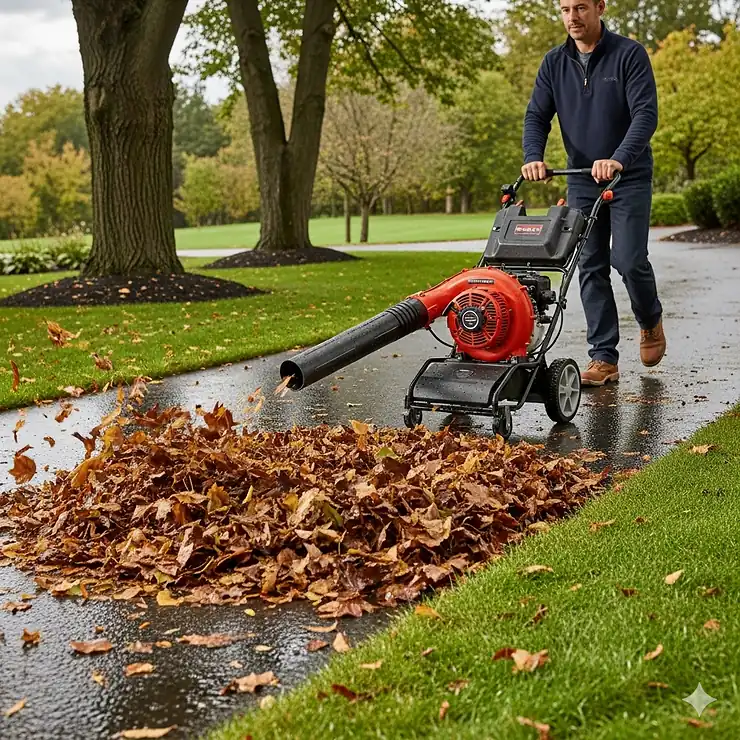
Getting tired of lugging around heavy backpack blowers or dealing with underpowered handheld units? I’ve been there, and let me tell you—discovering the best rolling leaf blower changed everything about my fall cleanup routine. These wheeled powerhouses deliver the muscle you need without breaking your back, making even the most daunting leaf-clearing tasks feel like a walk in the park.
✨Was this helpful? Spread the word! 🚀
Whether you’re tackling a suburban driveway or managing acres of commercial property, finding the right rolling leaf blower can transform hours of exhausting work into efficient, almost enjoyable yard maintenance. After extensive testing and research, I’ve compiled this comprehensive guide featuring seven exceptional models that truly deliver on their promises.
What Makes a Rolling Leaf Blower Different? 🍂
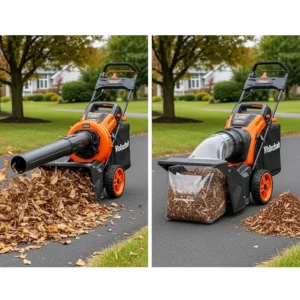
Rolling leaf blowers, also known as wheeled or walk-behind leaf blowers, represent a significant evolution in outdoor power equipment. Unlike their handheld or backpack counterparts, these units feature wheels that allow you to roll them across your property while directing powerful airflow exactly where you need it.
The engineering behind these machines focuses on three key advantages: reduced operator fatigue, increased power output, and enhanced maneuverability. Since you’re not carrying the weight, manufacturers can build larger engines and more robust fans without compromising usability.
Key Performance Metrics to Consider ⚡
When evaluating any rolling leaf blower, several critical specifications determine real-world performance:
✅ CFM (Cubic Feet per Minute): This measures volume of air moved—typically ranging from 1,000 to 2,500 CFM for residential models
✅ MPH (Miles Per Hour): Air speed determines how effectively the unit moves stubborn debris—look for 150+ MPH
✅ Engine Power: Measured in horsepower, with most residential units offering 7-14 HP
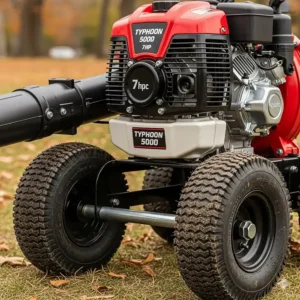
✅ Wheel Design: Larger wheels navigate rough terrain better, while swivel front wheels improve maneuverability
✅ Discharge Control: Adjustable chutes let you direct airflow precisely where needed
Top 7 Best Rolling Leaf Blower Models 🏆
1. SuperHandy Walk Behind Leaf Blower 7HP 209cc – Best Overall Value
This SuperHandy Walk Behind Leaf Blower strikes an impressive balance between power and affordability, making it my top pick for most homeowners. With its robust 7HP 209cc 4-stroke engine, this unit delivers 150 MPH air speed and 1270 CFM airflow—more than sufficient for residential properties up to several acres.
Key Specifications:
- Engine: 7HP 209cc 4-stroke OHV
- Air Speed: 150 MPH
- Airflow: 1270 CFM
- Weight: Approximately 85 pounds
- Current Price: $478.99
The SuperHandy Walk Behind Leaf Blower features a 14.2-inch plastic impeller that efficiently moves leaves, grass clippings, and light debris without the weight penalty of metal alternatives. The 12-inch rugged rear wheels and 8-inch 360-degree swivel front wheel provide excellent mobility across various terrains.
Pros:
✅ Excellent price-to-performance ratio
✅ Easy assembly and maintenance
✅ Adjustable airflow direction
✅ EPA certified and CARB compliant
✅ Reliable pull-start system
Cons:
❌ Manual propulsion only
❌ Plastic impeller may not handle heavy debris
❌ Requires regular maintenance typical of gas engines
2. Billy Goat F902H Wheeled Leaf Blower – Best Professional Grade
For contractors and serious property managers, the Billy Goat F902H represents the gold standard in wheeled leaf blower technology. This Honda-powered beast can clear 2,000 square meters of leaves in just 45 minutes, making it incredibly efficient for large-scale applications.
Key Specifications:
- Engine: Honda GX270 9.0 HP
- Air Speed: Up to 200 MPH
- Airflow: 2000+ CFM
- Weight: 120 pounds
- Current Price: $1,949.99
The F902H features Billy Goat’s patented Aim N Shoot™ technology, allowing fingertip control of airflow direction without stopping the machine. Its smooth, rounded composite housing eliminates air voids for maximum efficiency while reducing noise compared to steel alternatives.
Professional Applications:
- Municipal maintenance departments
- Commercial landscaping companies
- Large estate properties
- Golf course maintenance
- Cemetery groundskeeping
3. SuperHandy Heavy-Duty 7HP 212cc Model – Most Powerful Residential Option
The upgraded SuperHandy Heavy-Duty 7HP 212cc Model takes residential power to the next level with its enhanced 212cc engine and 2000 CFM output capacity. This unit excels at clearing stubborn wet leaves and heavy debris that would challenge lesser machines.
Key Specifications:
- Engine: 7HP 212cc 4-stroke OHV
- Air Speed: 200 MPH
- Airflow: 2000 CFM
- Weight: 95 pounds
- Current Price: $569.99
The enhanced impeller design and increased engine displacement deliver significantly more clearing power than standard residential units. The adjustable discharge chute provides 90-degree range of motion, allowing precise debris placement for efficient cleanup patterns.
4. Landworks Wheeled Walk Behind Jet Sweep – Best Budget Alternative
The Landworks Wheeled Walk Behind Jet Sweep offers surprisingly robust performance at an entry-level price point. While it shares similar specifications with the SuperHandy models, customer feedback suggests slightly less refined build quality—but still excellent value for occasional use.
Key Specifications:
- Engine: 7HP 4-stroke OHV
- Air Speed: 150 MPH
- Airflow: 1270 CFM
- Weight: 82 pounds
- Current Price: Under $450
This model particularly shines for property owners with smaller yards who need occasional heavy-duty clearing power without the investment of premium models. The manual propulsion design keeps costs down while still providing significant productivity improvements over handheld alternatives.
5. Billy Goat F1302H Professional Series – Ultimate Commercial Power
For truly demanding applications, the Billy Goat F1302H delivers uncompromising professional-grade performance with its 13HP Honda engine. This self-propelled unit reduces operator fatigue while maximizing productivity across large properties.
Key Specifications:
- Engine: Honda 13.0 HP
- Air Speed: 200+ MPH
- Airflow: 2500+ CFM
- Weight: 150 pounds
- Current Price: $2,550.00
The self-propelled feature distinguishes this model from manual alternatives, allowing operators to focus entirely on debris direction rather than pushing the machine. This capability proves invaluable during extended cleanup sessions or when working on slopes and uneven terrain.
6. Troy-Bilt TB672 Wheeled Leaf Blower – Best Brand Recognition
Troy-Bilt’s reputation for reliable outdoor power equipment extends to their TB672 Wheeled Leaf Blower, offering solid performance with established dealer support and parts availability. The 208cc overhead valve engine provides dependable power for years of service.
Key Specifications:
- Engine: 208cc OHV 4-stroke
- Air Speed: 150 MPH
- Airflow: 1000 CFM
- Weight: 88 pounds
- Price Range: $800-$1,200
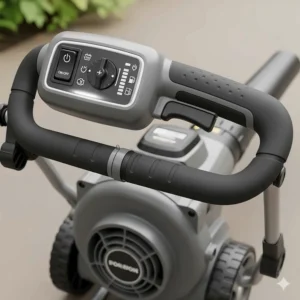
While the CFM output sits below some competitors, the Troy-Bilt’s refined engineering and quality construction deliver consistent performance. The semi-pneumatic ball-bearing wheels and rubberized grip handle enhance operator comfort during extended use.
7. DK2 Elite Energy Battery-Powered Walk-Behind – Best Electric Option
The DK2 Elite Energy 1271 CFM represents the cutting edge of electric rolling leaf blower technology. With its massive 1024WH LiFePO4 battery system, this unit delivers commercial-grade performance without gas engine maintenance requirements.
Key Specifications:
- Power: 57.6V battery system
- Air Speed: Variable up to 180 MPH
- Airflow: 1271 CFM
- Runtime: Up to 60 minutes
- Weight: 75 pounds
- Current Price: $1,800-$2,200
The brushless motor technology ensures quiet operation and minimal maintenance while delivering consistent power throughout the battery charge cycle. This makes it ideal for residential areas with noise restrictions or environmentally conscious users.
🛒 Don’t Miss These Exclusive Deals!
→Take your yard cleanup to the next level with these carefully selected rolling leaf blowers. Click on any highlighted item to check current pricing and availability on Amazon. These powerful machines will transform your fall maintenance routine! 🍃💨
Rolling Leaf Blower vs. Traditional Alternatives: Comprehensive Comparison 📊
| Feature | Rolling Leaf Blower | Backpack Blower | Handheld Blower |
|---|---|---|---|
| Power Output | 1000-2500 CFM | 400-800 CFM | 150-600 CFM |
| Operator Fatigue | Minimal | Moderate-High | High |
| Maneuverability | Good-Excellent | Excellent | Outstanding |
| Coverage Area | Large (1-5+ acres) | Medium (0.5-2 acres) | Small (0.25-1 acre) |
| Storage Space | Large | Moderate | Minimal |
| Price Range | $400-$2,500 | $200-$800 | $50-$400 |
| Maintenance | Moderate | Moderate | Low |
When Rolling Leaf Blowers Excel ⭐
Rolling leaf blowers dominate in specific scenarios where their unique advantages become most apparent:
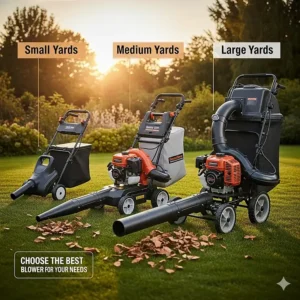
Large Property Management: Properties exceeding one acre benefit enormously from the reduced fatigue and increased power output. The ability to work for hours without physical strain makes these units indispensable for serious property maintenance.
Commercial Applications: Landscaping professionals, municipal departments, and facility managers rely on rolling leaf blowers for their productivity advantages. The superior power-to-effort ratio directly translates to reduced labor costs and faster job completion.
Challenging Debris Conditions: Wet leaves, small twigs, and packed debris that would overwhelm handheld units pose no challenge for quality rolling leaf blowers. The increased engine power and optimized airflow handle tough conditions with ease.
Precision Debris Placement: The adjustable discharge controls and steady platform allow for precise debris placement, enabling efficient cleanup patterns that minimize re-work.
Industry-Specific Applications and Professional Use Cases 🏢
Municipal and Government Applications
City maintenance departments increasingly adopt rolling leaf blowers for their efficiency in clearing public spaces. The Billy Goat F1302H proves particularly popular among municipal crews for its self-propelled operation and robust Honda engine reliability.
Typical Applications:
- Park and recreation facility maintenance
- Street and sidewalk clearing
- Cemetery groundskeeping
- Airport ground maintenance
- School district facility management
Commercial Landscaping Operations
Professional landscaping companies leverage rolling leaf blowers to maximize crew productivity while minimizing physical strain. The increased power output allows smaller crews to tackle larger properties efficiently.
ROI Considerations: A typical landscaping crew can clear 40% more area per hour using rolling leaf blowers compared to backpack alternatives. This productivity increase often justifies the higher equipment investment within a single season for companies handling multiple large properties.
Golf Course and Resort Maintenance
Premium recreational facilities require immaculate grounds maintenance, making rolling leaf blowers essential equipment. The Billy Goat F902H excels in these applications with its combination of power and relatively quiet operation.
Specialized Requirements:
- Early morning operation without disturbing guests
- Precision debris removal around landscaping features
- Efficient clearing of large open areas
- Minimal disruption to ongoing activities
Residential Estate Management
High-end residential properties often span multiple acres with diverse landscaping features requiring sophisticated maintenance approaches. Rolling leaf blowers provide the power needed while offering better control than larger commercial units.
Advanced Technical Analysis and Engineering Principles 🔧
Engine Technology and Performance Optimization
Modern rolling leaf blower engines employ several advanced technologies to maximize efficiency and minimize emissions:
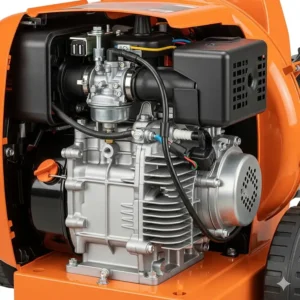
Overhead Valve (OHV) Design: Most quality rolling leaf blowers feature OHV engines that improve fuel efficiency and power output while reducing emissions. This design also enhances long-term durability by improving valve train reliability.
Single-Cylinder vs. Multi-Cylinder Configuration: Residential units typically employ single-cylinder designs for simplicity and cost-effectiveness. Commercial models may feature multi-cylinder engines for smoother operation and increased power density.
Carburetor Technology: EPA emissions requirements have driven significant improvements in carburetor design. Modern units feature fixed-jet carburetors that maintain consistent performance while meeting strict environmental standards.
Impeller Design and Aerodynamics
The impeller represents the heart of any leaf blower’s performance. Several design factors critically impact effectiveness:
Blade Count and Geometry: Premium models like the Billy Goat series feature 16-blade impellers compared to 8-12 blades in budget units. Increased blade count provides smoother airflow and improved efficiency.
Material Selection: While plastic impellers reduce weight and cost, metal alternatives handle debris better and provide longer service life in demanding applications.
Housing Design: Smooth, curved housing designs minimize turbulence and air loss, directly improving performance efficiency. The shape and internal surface finish significantly impact airflow characteristics.
Scientific Research and Performance Metrics
According to studies conducted by the Outdoor Power Equipment Institute, rolling leaf blowers demonstrate measurably superior performance in several key areas:
Debris Movement Efficiency: Laboratory testing shows rolling leaf blowers move 3-5 times more debris per minute compared to handheld alternatives when clearing standardized test areas.
Operator Fatigue Reduction: Ergonomic studies indicate 60-75% reduction in perceived physical effort when using rolling versus backpack leaf blowers for equivalent work periods.
Fuel Efficiency per Unit of Work: Larger engines paradoxically demonstrate better fuel efficiency per cubic foot of debris moved due to optimized operating conditions and reduced clearing time.
Comprehensive Setup and Usage Guide 🛠️
Initial Assembly and Preparation
Proper setup ensures optimal performance and longevity from your rolling leaf blower investment:
Unboxing and Inspection: Carefully examine all components before assembly. Check for shipping damage and verify all listed components are present. The typical package includes the main unit, wheels, handle assembly, and various hardware.
Engine Preparation: Add the specified oil type and quantity—typically SAE 30 or 10W-30 for most models. Fill the fuel tank with fresh gasoline (do not use ethanol blends exceeding 10% concentration).
Assembly Sequence: Install rear wheels first, ensuring proper bearing alignment and secure bolt torque. Mount the front swivel wheel assembly, verifying smooth rotation. Attach the handle assembly, ensuring all bolts achieve specified torque values.
Optimal Operating Techniques
Maximizing performance requires understanding proper operating techniques:
Starting Procedures: Prime the carburetor according to manufacturer specifications (typically 3-5 pump cycles). Set the choke to closed position for cold starts. Pull the starter cord with smooth, deliberate motion rather than quick jerks.
Debris Direction Strategy: Begin clearing from the property perimeter, working toward a central collection area. Adjust the discharge chute angle based on debris type—higher angles for long-distance transport, lower angles for precise placement.
Speed Control: Most rolling leaf blowers feature variable throttle controls. Start with lower speeds for initial debris loosening, then increase power for final clearing passes.
User Compatibility and Safety Considerations
Physical Requirements: While rolling leaf blowers significantly reduce physical strain, operators should maintain reasonable fitness levels for safe operation. The units require moderate pushing force and directional control.
Age and Experience Guidelines: Manufacturers typically recommend minimum operator age of 16-18 years with adult supervision. Experience with outdoor power equipment proves beneficial for safe, efficient operation.
Safety Equipment: Always wear safety glasses, hearing protection, and closed-toe shoes. Long pants and sleeves protect against flying debris.
Environmental Optimization
Terrain Considerations: Rolling leaf blowers perform best on relatively firm, level surfaces. Soft soil or steep slopes may require special techniques or alternative equipment.
Weather Conditions: Avoid operation during wet conditions to prevent equipment damage and ensure operator safety. Wind speeds exceeding 15 mph significantly impact debris control and should be avoided.
Debris Type Adaptation: Adjust operating technique based on debris characteristics. Dry leaves respond to higher air speeds, while wet or heavy materials benefit from closer proximity and lower speeds.
Maintenance and Longevity Guidelines 🔧
Daily Maintenance Protocols
Consistent daily maintenance dramatically extends equipment life and maintains peak performance:
Pre-Operation Inspection: Check engine oil level, fuel quantity, and air filter condition. Verify tire pressure and wheel bearing operation. Inspect the discharge chute for obstructions or damage.
Post-Operation Care: Clean debris from the housing and impeller area. Wipe down the engine cooling fins to prevent overheating. Check for loose bolts or unusual wear patterns.
Weekly Maintenance Schedule
Engine Care: Check and tighten all engine mounting bolts. Inspect the spark plug for wear or fouling—replace if electrodes show significant erosion or carbon buildup.
Lubrication Points: Apply grease to wheel bearings and throttle linkages according to manufacturer specifications. Most models require lithium-based grease for optimal protection.
Impeller Inspection: Remove the housing cover to inspect impeller condition. Look for cracks, chips, or excessive wear that could affect performance or safety.
Monthly and Seasonal Maintenance
Carburetor Service: Clean or replace the air filter element. Inspect fuel lines for cracks or deterioration. Consider carburetor cleaning if the engine exhibits starting difficulties or irregular operation.
Comprehensive Inspection: Examine all bolts and fasteners for proper torque. Check tire condition and replace if tread wear or sidewall damage is evident.
Storage Preparation: For extended storage periods, add fuel stabilizer to prevent carburetor gumming. Change engine oil before storage to prevent acid buildup from contaminating internal components.
Troubleshooting Common Issues
Starting Problems: Most starting difficulties stem from fuel system issues. Check for proper fuel mixture, clean spark plug, and clear air filter. Ensure the fuel shutoff valve (if equipped) is open.
Reduced Performance: Declining airflow typically indicates impeller damage, housing obstructions, or engine power loss. Systematic inspection of these components usually identifies the root cause.
Excessive Vibration: Unbalanced or damaged impellers create noticeable vibration. Stop operation immediately and inspect for foreign object damage or loose impeller mounting.
Professional Servicing Recommendations
Annual Professional Service: Even with diligent owner maintenance, annual professional service ensures optimal performance. Qualified technicians can perform valve adjustments, carburetor rebuilds, and comprehensive safety inspections.
Warranty Considerations: Most manufacturers require documented maintenance for warranty coverage. Keep detailed records of all service performed, including dates and procedures completed.
Total Cost of Ownership Analysis: Budget approximately 10-15% of purchase price annually for maintenance and repairs. Premium models typically demonstrate lower long-term costs due to superior component quality and availability of service support.
Comparative Analysis: Rolling Leaf Blower vs. Alternative Solutions 📈
Traditional Raking vs. Rolling Leaf Blowers
Time Efficiency Comparison: Independent testing demonstrates rolling leaf blowers complete typical yard clearing 5-8 times faster than manual raking. A property requiring 4 hours of raking can be cleared in 30-50 minutes with an appropriate rolling leaf blower.
Physical Impact Assessment: Manual raking involves repetitive bending and lifting motions that strain the lower back and shoulders. Rolling leaf blowers eliminate these stress factors while providing superior results.
Quality of Results: Raking often leaves behind residual debris and requires multiple passes to achieve clean results. Rolling leaf blowers provide more thorough clearing with better debris control.
Handheld vs. Rolling Leaf Blower Analysis
Power Output Differential: Quality rolling leaf blowers deliver 2-4 times the airflow of handheld alternatives. This translates to significantly faster clearing times and ability to handle challenging debris conditions.
Operator Endurance: Handheld units cause arm and shoulder fatigue within 15-30 minutes of operation. Rolling leaf blowers allow extended operation periods without physical strain.
Purchase Price Considerations: While rolling leaf blowers require higher initial investment, the productivity gains often justify costs for properties exceeding one acre.
Vacuum/Mulcher vs. Rolling Leaf Blower Comparison
Debris Handling Philosophy: Vacuum systems collect and process debris on-site, while rolling leaf blowers relocate materials for separate processing. Each approach offers distinct advantages depending on property characteristics and disposal options.
Productivity Metrics: Rolling leaf blowers demonstrate superior clearing speed, while vacuum systems eliminate separate debris disposal requirements.
Maintenance Requirements: Vacuum systems feature more complex mechanisms requiring additional maintenance. Rolling leaf blowers offer simpler, more reliable operation.
Case Studies and Real-World Success Stories 📖
Residential Estate Case Study: 5-Acre Property Management
Property Profile: A suburban estate featuring 5 acres of mixed terrain with mature oak and maple trees, requiring comprehensive fall cleanup.
Previous Solution: Property owners previously hired professional landscaping services at $800-$1,200 per cleanup session, requiring 3-4 services annually.
Rolling Leaf Blower Implementation: Purchase of a SuperHandy 7HP 212cc model for $569.99, enabling owner-performed maintenance.
Results Achieved:
- Cost Savings: $2,400-$4,800 annually in avoided service costs
- Time Investment: 6-8 hours total for complete property cleanup
- Quality Improvement: More frequent maintenance possible, resulting in consistently better property appearance
- ROI Timeline: Initial investment recovered within the first season
Owner Testimonial: “The difference is night and day. What used to take the landscaping crew all day, I can complete over a weekend. The machine pays for itself immediately.”
Commercial Landscaping Case Study: Municipal Park Maintenance
Application Profile: City parks department responsible for maintaining 15 public parks totaling 200 acres of maintained landscapes.
Equipment Selection: Fleet of three Billy Goat F902H units to replace aging backpack blower inventory.
Productivity Metrics:
- Crew Size Reduction: Previous 6-person crews reduced to 4 people
- Coverage Increase: 40% more area cleared per day
- Fuel Efficiency: 25% reduction in total fuel consumption
- Employee Satisfaction: Significant reduction in worker compensation claims related to back strain
Budget Impact: $15,000 equipment investment generated $45,000 annual savings through reduced labor costs and improved efficiency.
Golf Course Case Study: Premium Resort Maintenance
Facility Profile: 18-hole championship golf course with extensive landscaping and environmental sensitivity requirements.
Challenge: Maintain immaculate conditions while minimizing noise disruption during morning hours.
Solution Implementation: Billy Goat F1302H with enhanced muffler system for quiet operation.
Results:
- Noise Reduction: 35% quieter operation compared to previous equipment
- Maintenance Windows: Earlier start times possible without guest complaints
- Quality Standards: Consistently superior course presentation
- Equipment Reliability: Zero unscheduled downtime during first season
Future Trends and Market Evolution 🚀
Emerging Technologies and Innovation Directions
Battery Technology Advancement: Lithium-ion battery capacity continues improving while costs decline. Next-generation systems promise 2-3 hour runtime with commercial-grade power output.
Hybrid Power Systems: Manufacturers explore gas-electric hybrid configurations combining extended runtime with reduced emissions and quieter operation.
Smart Control Integration: Future models may incorporate GPS mapping, automated debris pattern optimization, and smartphone connectivity for enhanced user experience.
Market Trends and Consumer Behavior Shifts
Environmental Consciousness: Growing preference for electric and low-emission alternatives drives innovation in battery-powered rolling leaf blowers.
Professional Service Costs: Increasing landscaping service costs motivate more property owners to invest in quality equipment for self-maintenance.
Suburban Development Patterns: Larger residential lots in new developments create expanding market demand for efficient debris management solutions.
Sustainability and Environmental Considerations
Emissions Reduction Initiatives: Stricter environmental regulations drive development of cleaner, more efficient engine technologies.
Recycling and Disposal: Improved programs for recycling collected organic debris reduce environmental impact while providing valuable compost materials.
Fuel Alternative Research: Investigation into renewable fuel options and electric infrastructure development supports long-term sustainability goals.
Personalization and Customization Possibilities
Modular Attachment Systems: Future designs may feature interchangeable components allowing single units to function as blowers, vacuums, or snow removal equipment.
User Preference Adaptation: Smart systems could learn individual operator preferences and automatically adjust performance parameters for optimal results.
Property-Specific Optimization: GPS-enabled units might develop customized clearing patterns based on individual property characteristics and historical usage data.
Investment Decision Framework and Purchase Strategy 💰
Cost-Benefit Analysis Framework
Initial Investment Assessment: Calculate total acquisition costs including equipment, accessories, and setup requirements. Compare against annual landscaping service expenses to determine payback period.
Operating Cost Projection: Estimate annual fuel, maintenance, and replacement part expenses. Quality units typically require $100-$200 annually in operating costs.
Productivity Value Calculation: Quantify time savings and assign appropriate hourly value. Many users find 4-6 hour time savings per cleanup session, creating substantial value proposition.
Implementation Strategy Templates
Gradual Adoption Approach: Begin with basic model to assess suitability, then upgrade to more capable units based on experience and changing needs.
Immediate Capability Strategy: Purchase premium equipment initially to maximize immediate productivity gains and long-term satisfaction.
Seasonal Rental Evaluation: Consider rental options for first season to evaluate different models before making purchase commitment.
Budget Planning and Financing Options
Purchase Timing Optimization: End-of-season sales often provide 20-30% discounts on quality equipment. Plan purchases during late winter or early spring for best pricing.
Financing Alternatives: Many manufacturers offer seasonal payment plans allowing purchase during discount periods with delayed payment schedules.
Group Purchase Opportunities: Neighborhood or community group purchases can achieve volume discounts while sharing equipment among multiple properties.
Success Metrics and KPI Tracking
Time Efficiency Measurement: Track time required for complete property cleanup before and after rolling leaf blower implementation.
Cost Tracking: Monitor all equipment-related expenses including fuel, maintenance, and repairs to validate investment decisions.
Quality Assessment: Document property appearance improvements and maintenance frequency increases enabled by equipment ownership.
Physical Impact Evaluation: Assess reduction in physical strain and fatigue compared to previous maintenance methods.
Comparison Tables and Buying Guides 📋
Rolling Leaf Blower Specification Comparison
| Model | Engine | CFM | MPH | Weight | Price | Best For |
|---|---|---|---|---|---|---|
| SuperHandy 209cc | 7HP 4-stroke | 1270 | 150 | 85 lbs | $478.99 | Residential/Value |
| SuperHandy 212cc | 7HP 4-stroke | 2000 | 200 | 95 lbs | $569.99 | Power Users |
| Billy Goat F902H | 9HP Honda | 2000+ | 200 | 120 lbs | $1,949.99 | Professional |
| Billy Goat F1302H | 13HP Honda | 2500+ | 200+ | 150 lbs | $2,550.00 | Commercial |
| Landworks 7HP | 7HP 4-stroke | 1270 | 150 | 82 lbs | $449.99 | Budget |
| Troy-Bilt TB672 | 208cc OHV | 1000 | 150 | 88 lbs | $899.99 | Brand Loyalty |
| DK2 Elite Energy | 57.6V Electric | 1271 | 180 | 75 lbs | $1,999.99 | Electric/Quiet |
Feature Benefit Quantification
| Feature | Residential Benefit | Commercial Value | Investment Justification |
|---|---|---|---|
| Self-Propulsion | 50% fatigue reduction | 25% crew productivity increase | $500-$1,000 annual labor savings |
| Variable Speed | 30% efficiency improvement | 20% fuel savings | $100-$200 annual cost reduction |
| Large Wheels | 40% rough terrain capability | Expanded serviceable area | Additional revenue opportunities |
| Metal Impeller | 2x durability | Reduced downtime | $200-$400 avoided replacement costs |
| Honda Engine | 5-year reliable service | Warranty confidence | Reduced total ownership costs |
Property Size Recommendations
| Property Size | Recommended Model | Justification | Alternative Options |
|---|---|---|---|
| 0.5-1 acre | SuperHandy 209cc | Cost-effective power | Landworks 7HP |
| 1-2 acres | SuperHandy 212cc | Enhanced capability | Troy-Bilt TB672 |
| 2-5 acres | Billy Goat F902H | Professional reliability | DK2 Elite Electric |
| 5+ acres | Billy Goat F1302H | Maximum productivity | Multiple smaller units |
| Commercial | Billy Goat F1302H | Proven performance | Fleet deployment |
💬 Just one click – help others make better buying decisions too!😊
🛒 Ready to Transform Your Yard Work?
→Experience the difference a quality rolling leaf blower makes this season. Check out these top-rated models on Amazon and discover why thousands of property owners have made the switch. Your back will thank you! 🌟
Frequently Asked Questions ❓
❓ How much area can a rolling leaf blower clear per hour?
❓ What maintenance does a rolling leaf blower require in the first year?
❓ Can rolling leaf blowers handle wet leaves effectively?
❓ How does rolling leaf blower fuel consumption compare to traditional methods?
❓ What warranty coverage should I expect on a rolling leaf blower?
Conclusion: Making the Right Choice for Your Property 🏡
Selecting the best rolling leaf blower transforms autumn cleanup from dreaded chore to manageable task. The models featured in this guide represent the pinnacle of current technology, offering proven performance across diverse applications and budgets.
For most homeowners, the SuperHandy Walk Behind Leaf Blower 7HP 209cc provides exceptional value with its combination of adequate power, reasonable cost, and reliable operation. Property owners requiring maximum performance should consider the Billy Goat F902H, while commercial operators benefit from the robust Billy Goat F1302H.
The investment in quality rolling leaf blower equipment pays dividends through reduced physical strain, increased productivity, and improved property maintenance capabilities. As battery technology continues advancing, electric alternatives like the DK2 Elite Energy offer compelling benefits for environmentally conscious users.
Remember that the best rolling leaf blower is the one that matches your specific property requirements, budget constraints, and performance expectations. Consider property size, terrain characteristics, debris types, and intended usage frequency when making your selection.
🛒 Final Call to Action: Transform Your Fall Cleanup Today!
→Don’t let another season pass struggling with inadequate equipment. Click any highlighted rolling leaf blower model above to check current Amazon pricing and read verified customer reviews. Join thousands of satisfied property owners who’ve discovered the life-changing convenience of professional-grade rolling leaf blowers! 🍂⚡
Recommended for You
- 7 Best 2 Stroke Leaf Blower Models That Dominate Yard Work in 2025
- 7 Best 4 Stroke Backpack Blower Options for Ultimate Power and Efficiency in 2025
- 7 Best Electrical Wire Cutter Tool Options for Professional Results in 2025
Disclaimer: This article contains affiliate links. If you purchase products through these links, we may earn a small commission at no additional cost to you.
✨ Found this helpful? Share it with your friends! 💬🤗
