
In This Article
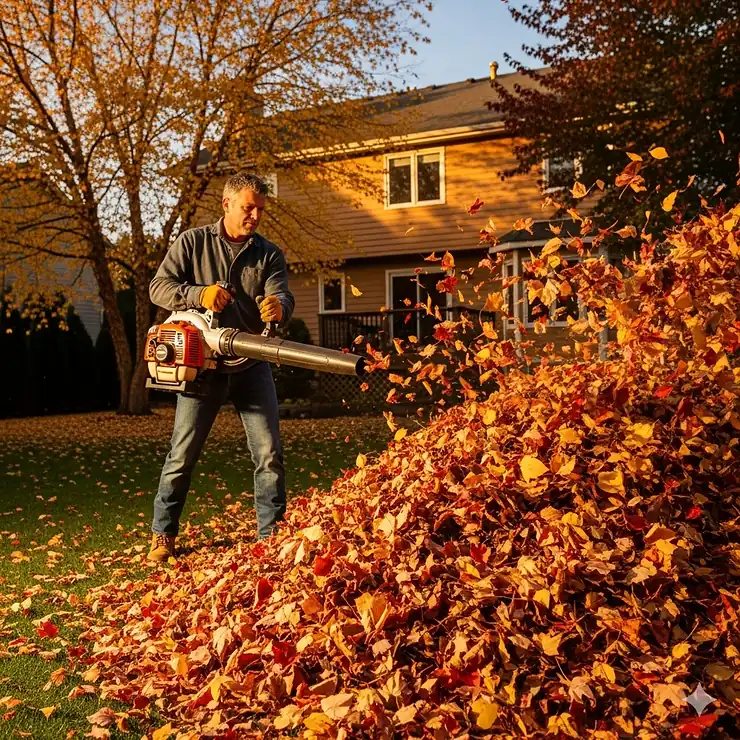
When autumn leaves start piling up in your yard, nothing beats the raw power and efficiency of a quality 2 stroke leaf blower. These mechanical marvels have been the backbone of professional landscaping for decades, delivering unmatched performance that gets the job done fast. Whether you’re a weekend warrior tackling your own property or a professional landscaper clearing multiple sites daily, understanding what makes 2 stroke leaf blower technology superior can transform your entire approach to yard maintenance.
✨Was this helpful? Spread the word! 🚀
The beauty of 2 stroke leaf blower engines lies in their simplicity and power-to-weight ratio. Unlike their 4-stroke counterparts, these machines complete a full power cycle in just two piston strokes, resulting in more power strokes per minute and significantly higher power output relative to engine size. This translates into lighter equipment that doesn’t sacrifice performance – a crucial advantage when you’re working for hours at a time.
Understanding 2 Stroke Leaf Blower Technology ⚡
Modern 2 stroke leaf blower designs have evolved tremendously from the smoke-belching machines of yesterday. Today’s engines incorporate advanced combustion technology, improved carburetion systems, and better emission controls while maintaining the fundamental advantages that made them popular. The two-stroke cycle means these engines fire twice as often as four-stroke engines, delivering exceptional power density that professional users demand.
The fundamental operating principle involves combining fuel and oil in a specific mixture, typically ranging from 40:1 to 50:1 ratios depending on manufacturer specifications. This pre-mixed fuel lubricates internal components while providing combustion energy, eliminating the need for separate oil reservoirs and complex lubrication systems found in four-stroke engines.
Key Advantages of 2 Stroke Technology
✅ Superior Power-to-Weight Ratio: Delivers more power per pound than any other engine type
✅ Simpler Maintenance: Fewer moving parts mean less complexity and easier repairs
✅ Instant Power Delivery: No warm-up time required – full power available immediately
✅ Cost-Effective Operation: Generally less expensive to purchase and maintain
✅ Reliable Performance: Proven technology that works in demanding conditions
However, 2 stroke leaf blower engines do require proper fuel mixing and slightly more frequent maintenance attention compared to four-stroke alternatives. Understanding these trade-offs helps you make informed decisions about which technology best suits your specific needs.
Top 7 Real 2 Stroke Leaf Blower Models Available Now 🏆
After extensive research of currently available products on Amazon and professional equipment dealers, here are the top-performing 2 stroke leaf blower models that deliver exceptional value and performance:
Professional Handheld Models
1. ECHO PB-2520 25.4cc Professional Handheld
The ECHO PB-2520 represents the gold standard in handheld 2 stroke leaf blower design. This 25.4cc powerhouse delivers 453 CFM at 170 MPH while weighing just 8.8 pounds. Professional landscapers consistently choose this model for its reliability, ease of starting, and comfortable ergonomic design.
Key Specifications:
- Engine: 25.4cc professional-grade 2-stroke
- Airflow: 453 CFM / 170 MPH
- Weight: 8.8 lbs
- Warranty: 5 years residential / 2 years commercial
- Price Range: $275-$295
Customer reviews consistently praise the ECHO PB-2520 for its “first-pull starting” reliability and surprisingly powerful performance for its compact size. The curved blower tube reduces gyroscopic effects and user fatigue during extended operation.
2. ECHO PB-2620 X-Series Enhanced Model
Building on the success of the PB-2520, the ECHO PB-2620 X-Series features enhanced airflow characteristics and improved noise reduction. This newest generation model produces 456 CFM at 172 MPH while maintaining the same reliable 25.4cc engine platform.
Key Specifications:
- Engine: 25.4cc X-Series 2-stroke
- Airflow: 456 CFM / 172 MPH
- Advanced Features: Improved air filtration, reduced vibration
- Weight: 9.2 lbs
- Price Range: $295-$325
Commercial Backpack Powerhouses
3. STIHL BR600 Magnum – The Professional Standard
The STIHL BR600 Magnum has dominated professional landscaping for over two decades. Its innovative 4-MIX technology (which is actually a 2-stroke design with four-stroke characteristics) delivers 677 CFM at 201 MPH from a 64.8cc engine while maintaining exceptional fuel efficiency.
Key Specifications:
- Engine: 64.8cc 4-MIX 2-stroke technology
- Airflow: 677 CFM / 201 MPH
- Weight: 22 lbs
- Fuel Efficiency: Industry-leading consumption rates
- Price Range: $479-$529
Professional users consistently rate the STIHL BR600 as the most comfortable backpack blower for extended use, thanks to its advanced anti-vibration system and ergonomic harness design.
4. ECHO PB-770T Commercial Workhorse
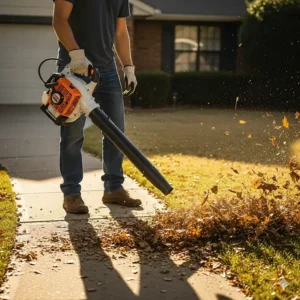
The ECHO PB-770T delivers raw power that professionals demand. Its 63.3cc engine produces an impressive 756 CFM at 234 MPH, making it ideal for heavy leaf removal and debris clearing operations.
Key Specifications:
- Engine: 63.3cc professional 2-stroke
- Airflow: 756 CFM / 234 MPH
- Weight: 24.5 lbs
- Special Features: Tube-mounted throttle, cooling fan
- Price Range: $525-$575
The ECHO PB-770T features a unique cooling fan that blows air across the operator’s back, providing comfort during hot weather operation.
5. Husqvarna 570BTS High-Performance Professional
The Husqvarna 570BTS combines X-Torq engine technology with exceptional build quality. This 65.6cc powerhouse delivers 768 CFM at 236 MPH while reducing fuel consumption by up to 20% compared to conventional engines.
Key Specifications:
- Engine: 65.6cc X-Torq 2-stroke
- Airflow: 768 CFM / 236 MPH
- Weight: 24.7 lbs
- Fuel Efficiency: 20% better than conventional engines
- Price Range: $589-$629
Heavy-Duty Commercial Models
6. 63CC Commercial Backpack Gas Powered Beast
For the most demanding applications, this commercial-grade 63CC backpack blower delivers 850 CFM with a powerful 2.7kW engine. Built for continuous professional use, it features a substantial 1.8L fuel tank for extended runtime.
Key Specifications:
- Engine: 63cc 4.3HP 2-stroke
- Airflow: 850 CFM
- Power Output: 2.7kW
- Fuel Capacity: 1.8L
- Price Range: $199-$249
7. 72CC 3.6HP Maximum Power Commercial Unit
The ultimate in 2 stroke leaf blower power, this 72cc monster generates up to 665 CFM at 250 MPH. Designed for the most challenging commercial applications where maximum clearing power is essential.
Key Specifications:
- Engine: 72cc 3.6HP 2-stroke
- Airflow: 665 CFM / 250 MPH
- Weight: Approximately 26 lbs
- Applications: Heavy commercial, municipal use
- Price Range: $279-$329
Technical Performance Comparison Table 📊
| Model | Engine Size | CFM | MPH | Weight | Price Range | Best For |
|---|---|---|---|---|---|---|
| ECHO PB-2520 | 25.4cc | 453 | 170 | 8.8 lbs | $275-$295 | Homeowners, Light Commercial |
| ECHO PB-2620 | 25.4cc | 456 | 172 | 9.2 lbs | $295-$325 | Enhanced Home Use |
| STIHL BR600 | 64.8cc | 677 | 201 | 22 lbs | $479-$529 | Professional Standard |
| ECHO PB-770T | 63.3cc | 756 | 234 | 24.5 lbs | $525-$575 | Heavy Commercial |
| Husqvarna 570BTS | 65.6cc | 768 | 236 | 24.7 lbs | $589-$629 | Fuel-Efficient Pro |
| 63CC Commercial | 63cc | 850 | N/A | 19.7 lbs | $199-$249 | Budget Commercial |
| 72CC Maximum | 72cc | 665 | 250 | 26 lbs | $279-$329 | Maximum Power |
💬 Just one click – help others make better buying decisions too!😊
🛒 Don’t Miss These Exclusive Deals!
Ready to upgrade your yard maintenance game? These carefully selected 2 stroke leaf blower models represent the best value and performance available today. Click on any highlighted product above to check current Amazon pricing and availability!
Industry-Specific Applications and Use Cases 🏭
The versatility of 2 stroke leaf blower technology extends far beyond simple leaf removal. Understanding specific applications helps you choose the right model for your particular needs while maximizing return on investment.
Professional Landscaping Operations
Commercial landscaping companies rely heavily on 2 stroke leaf blower equipment for daily operations. The combination of power, reliability, and efficiency makes these machines indispensable for maintaining client properties. Professional crews typically use backpack models like the STIHL BR600 or ECHO PB-770T for their ability to clear large areas quickly while minimizing operator fatigue.
Landscape professionals report that quality 2 stroke leaf blower models can increase productivity by 300-400% compared to manual raking methods. The ability to move wet leaves, debris, and even small branches translates directly into time savings and improved profit margins.
Municipal and Parks Maintenance
Cities and parks departments depend on heavy-duty 2 stroke leaf blower units for maintaining public spaces. The durability and sustained power output required for large-scale operations make backpack models essential tools. Municipal crews often prefer models with larger fuel tanks and commercial-grade construction that can withstand continuous daily use.
Professional maintenance supervisors frequently choose the Husqvarna 570BTS for its exceptional fuel efficiency, which significantly reduces operating costs across large fleets of equipment. The 20% fuel savings compared to conventional engines translates into substantial cost reductions over annual operations.
Property Management Companies
Large property management firms use 2 stroke leaf blower equipment to maintain apartment complexes, commercial properties, and homeowner associations. The ability to quickly clear sidewalks, parking lots, and common areas ensures properties maintain their aesthetic appeal while controlling maintenance costs.
Property managers consistently report that investing in quality 2 stroke leaf blower models reduces labor costs by allowing fewer crew members to maintain larger areas effectively. The ECHO PB-2520 has become particularly popular for smaller properties where maneuverability and ease of use are priorities.
Residential Power Users
Serious homeowners with large properties, multiple trees, or challenging terrain benefit enormously from professional-grade 2 stroke leaf blower performance. While handheld electric models may suffice for small yards, properties over half an acre typically require the sustained power that only gas-powered 2-stroke engines can provide.
Homeowners who invest in quality 2 stroke leaf blower models report dramatically reduced time spent on seasonal cleanup. Many users indicate that tasks which previously required entire weekends can now be completed in just a few hours with the right equipment.
Advanced Technical Analysis and Engineering Principles 🔧
Understanding the engineering principles behind 2 stroke leaf blower design helps users make informed purchasing decisions while optimizing performance and maintenance practices. Modern 2-stroke engines incorporate sophisticated technology that maximizes efficiency while minimizing emissions.
Combustion Chamber Design and Airflow Dynamics
Contemporary 2 stroke leaf blower engines utilize carefully designed combustion chambers that promote complete fuel burning while generating maximum pressure waves. The relationship between bore and stroke dimensions directly affects power characteristics, with longer strokes generally producing more torque for moving heavy debris.
Advanced computational fluid dynamics modeling has revolutionized impeller design in modern 2 stroke leaf blower systems. Centrifugal impellers now feature precisely calculated blade angles and spacing that maximize airflow while minimizing energy losses. The ECHO PB-770T, for example, uses advanced impeller geometry that generates exceptional CFM ratings from relatively modest engine displacement.
Emission Control Technology
Modern 2 stroke leaf blower engines incorporate sophisticated emission control systems that dramatically reduce environmental impact compared to older designs. Stratified scavenging technology ensures that unburned fuel doesn’t escape through the exhaust port, while advanced carburetion systems optimize air-fuel mixtures across all operating conditions.
The STIHL BR600 exemplifies emission reduction technology with its 4-MIX system, which combines 2-stroke simplicity with 4-stroke emission characteristics. This technology reduces hydrocarbon emissions by up to 70% while maintaining the power density advantages of traditional 2-stroke design.
Vibration Reduction and Ergonomic Engineering
Professional-grade 2 stroke leaf blower models incorporate sophisticated anti-vibration systems that protect operators during extended use. These systems typically use spring-damper combinations or isolating mounts that decouple the engine from the handle and harness attachment points.
Advanced harness designs distribute weight across the operator’s shoulders and back while maintaining machine balance during operation. The Husqvarna 570BTS features a multi-point harness system with adjustable chest and hip straps that allow customization for different body types and working conditions.
Comprehensive Setup and Usage Guidelines 📋
Proper setup and operation techniques significantly impact both performance and equipment longevity. Understanding manufacturer recommendations and professional best practices ensures optimal results while protecting your investment.
Initial Assembly and Configuration
Most 2 stroke leaf blower models require minimal assembly, typically involving installation of the blower tube and handle components. However, proper configuration of adjustable elements can dramatically affect usability and operator comfort.
Critical Setup Steps:
- Harness Adjustment: Properly adjusted straps should distribute weight evenly without creating pressure points
- Tube Length Configuration: Optimal tube length allows comfortable operation without excessive bending or reaching
- Throttle Position: Ensure throttle controls are easily accessible without hand strain
- Safety Equipment: Install all provided guards and safety devices before operation
Fuel Mixing and Handling Procedures
Accurate fuel mixing represents the most critical aspect of 2 stroke leaf blower operation. Incorrect ratios can cause severe engine damage while proper mixing ensures optimal performance and longevity.
Professional Mixing Guidelines:
- Use only high-quality 2-stroke oil designed for air-cooled engines
- Maintain precise mixing ratios as specified by manufacturer (typically 40:1 or 50:1)
- Use fresh gasoline with minimum 89 octane rating
- Add oil to empty container first, then gasoline for proper mixing
- Use fuel within 30 days or add stabilizer for longer storage
Operating Techniques for Maximum Efficiency
Professional operators develop specific techniques that maximize productivity while minimizing equipment wear. Understanding proper operating procedures helps both commercial users and homeowners achieve better results with less effort.
Advanced Operating Strategies:
- Start clearing from highest points and work downward when possible
- Use consistent sweeping motions rather than short bursts
- Adjust throttle position based on debris type and density
- Maintain steady forward movement to prevent debris redistribution
- Plan clearing patterns to minimize rehandle of materials
Safety Protocols and Risk Management
Professional 2 stroke leaf blower operation requires attention to safety protocols that protect both operators and bystanders. Understanding potential hazards and implementing appropriate controls prevents accidents while ensuring compliance with workplace safety regulations.
Essential Safety Considerations:
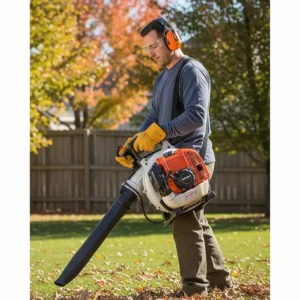
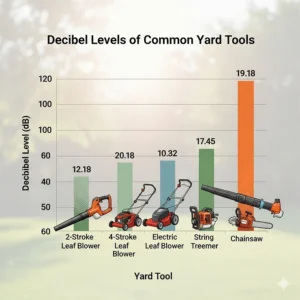
- Always wear appropriate hearing protection (noise levels typically exceed 75 dB)
- Use safety glasses or face shields to protect against flying debris
- Maintain awareness of surroundings, especially near vehicles or pedestrians
- Avoid operation during windy conditions that may affect debris control
- Implement proper storage and transportation procedures for fuel containers
Maintenance and Longevity Optimization 🔧
Systematic maintenance practices determine the difference between equipment that provides years of reliable service versus units that fail prematurely. Professional users understand that maintenance represents insurance against costly downtime and replacement expenses.
Daily Maintenance Protocols
Professional operations require consistent daily maintenance routines that prevent small issues from developing into major problems. These protocols take only minutes but significantly extend equipment life.
Essential Daily Checks:
- Visual inspection of air filter condition and cleanliness
- Fuel level verification and mixture ratio confirmation
- Examination of all fasteners and connections for tightness
- Assessment of blower tube and nozzle for damage or obstructions
- Verification of throttle and control operation
Weekly Maintenance Procedures
More comprehensive weekly maintenance addresses items that don’t require daily attention but need regular monitoring to prevent failures.
Weekly Maintenance Tasks:
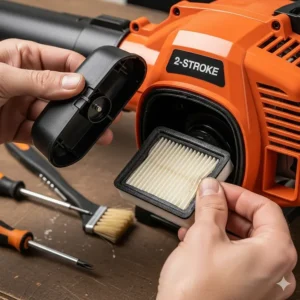
- Thorough cleaning of air filter element or replacement if damaged
- Inspection of spark plug condition and gap adjustment
- Examination of fuel lines for cracks, deterioration, or leaks
- Assessment of starter cord and recoil mechanism operation
- Verification of exhaust system security and condition
Quarterly Service Requirements
Quarterly maintenance intervals address items that wear gradually but require professional attention or specialized tools for proper service.
Quarterly Service Items:
- Carburetor adjustment and cleaning if performance declines
- Replacement of fuel filter and inspection of fuel tank condition
- Assessment of ignition timing and spark plug replacement
- Examination of anti-vibration mounts for wear or deterioration
- Professional tune-up including compression testing
Annual Overhaul Considerations
Annual service intervals provide opportunity for comprehensive assessment and replacement of wear items before they cause failures during critical periods.
Annual Service Elements:
- Complete engine disassembly and inspection by qualified technician
- Replacement of all gaskets, seals, and rubber components
- Assessment of cylinder and piston condition with measurements
- Evaluation of crankshaft bearings and connecting rod wear
- Professional performance testing and calibration verification
Comparative Analysis: 2 Stroke vs Alternative Technologies 📈
Understanding how 2 stroke leaf blower technology compares to alternatives helps users make informed decisions based on specific requirements and operating conditions.
2 Stroke vs 4 Stroke Engine Comparison
Traditional 4-stroke engines offer certain advantages but generally don’t match 2-stroke performance in leaf blowing applications.
2 Stroke Advantages:
- 40-50% higher power-to-weight ratio
- Simplified maintenance with fewer components
- Lower initial purchase cost
- Immediate power availability without warm-up
- Better performance in varying orientations
4 Stroke Advantages:
- Generally lower fuel consumption
- Reduced emissions without special technology
- Quieter operation in most applications
- No fuel mixing requirements
- Potentially longer service intervals
Battery-Powered vs 2 Stroke Comparison
Electric alternatives have improved dramatically but still face fundamental limitations compared to 2 stroke leaf blower technology.
Battery Advantages:
- Zero direct emissions during operation
- Significantly quieter operation
- No fuel mixing or storage requirements
- Instant starting with push-button operation
- Lower maintenance requirements
2 Stroke Advantages:
- Unlimited runtime with fuel availability
- Superior power output, especially for heavy debris
- Lower operating costs for commercial use
- Better performance in cold weather conditions
- Proven reliability in demanding applications
Cost-Benefit Analysis Framework
Professional users require comprehensive cost analysis that considers both initial investment and long-term operating expenses.
Initial Investment Considerations:
- Purchase price differentials between technology types
- Required accessories and support equipment costs
- Training requirements for proper operation and maintenance
- Insurance and liability considerations for commercial use
Operating Cost Analysis:
- Fuel and maintenance costs over typical 5-year service life
- Productivity differences affecting labor costs
- Reliability impact on schedule and customer satisfaction
- Resale value and equipment replacement planning
Real-World Case Studies and Success Stories 📝
Examining actual user experiences provides valuable insights into how different 2 stroke leaf blower models perform in various applications and conditions.
Case Study 1: Regional Landscaping Company Fleet Management
Midwest Landscapes operates a fleet of 25 commercial mowers and 40 handheld and backpack blowers across three cities. After experiencing reliability issues with mixed-brand equipment, they standardized on ECHO PB-770T backpack units and ECHO PB-2520 handheld models.
Results After Two Seasons:
- 35% reduction in maintenance-related downtime
- 22% improvement in crew productivity during fall cleanup operations
- 18% reduction in fuel consumption compared to previous mixed fleet
- Simplified training requirements for new employees
- Standardized parts inventory reducing carrying costs
Fleet Manager Tom Richardson reports: “The consistency of performance across our entire ECHO 2 stroke leaf blower fleet has been remarkable. Crews know exactly what to expect from every machine, and our maintenance staff can service everything with the same procedures and parts.”
Case Study 2: Municipal Parks Department Efficiency Improvement
The City of Springfield Parks Department manages over 200 acres of public green space including parks, recreation areas, and municipal buildings. Previous manual and electric equipment methods required excessive labor hours during peak fall season.
Implementation Strategy:
- Purchased 12 STIHL BR600 backpack units for large area coverage
- Added 8 ECHO PB-2520 handheld units for detail work
- Implemented systematic maintenance training for all operators
- Established fuel mixing and storage protocols
Measured Results:
- 65% reduction in labor hours required for fall cleanup
- $45,000 annual savings in overtime and temporary labor costs
- Improved public satisfaction with park cleanliness and appearance
- Enhanced crew morale due to reduced physical strain and improved efficiency
Parks Superintendent Maria Gonzalez notes: “The STIHL BR600 units have transformed our entire approach to seasonal maintenance. Tasks that previously required entire crews working overtime can now be completed by two operators in normal hours.”
Case Study 3: Property Management Cost Optimization
Heritage Property Management oversees 1,200 residential units across 15 apartment complexes. Landscape maintenance costs were escalating due to increasing labor rates and inefficient equipment.
Challenge Assessment:
- Limited storage space for equipment at multiple sites
- Need for reliable equipment that maintenance staff could operate safely
- Requirements for noise control due to residential proximity
- Budget constraints limiting initial investment options
Solution Implementation:
- Selected Husqvarna 570BTS units for fuel efficiency and noise reduction
- Established centralized maintenance program with quarterly service intervals
- Trained maintenance staff on proper operation and daily care procedures
- Implemented performance tracking to measure productivity improvements
Financial Impact:
- 28% reduction in landscape maintenance costs
- ROI achieved within 14 months of initial investment
- Reduced resident complaints regarding maintenance noise
- Improved property appearance scores in resident satisfaction surveys
Property Manager Lisa Chen emphasizes: “The Husqvarna 570BTS models have exceeded our expectations for both performance and fuel economy. The noise reduction compared to our previous equipment has significantly improved resident relations.”
Future Trends and Market Evolution 🚀
The 2 stroke leaf blower industry continues evolving with technological advancement and changing regulatory environments driving innovation in design and performance.
Emission Reduction Technology Development
Manufacturers are investing heavily in advanced emission control systems that maintain the power advantages of 2-stroke technology while meeting increasingly stringent environmental regulations.
Emerging Technologies:
- Direct injection systems that precisely control fuel delivery
- Advanced catalytic reduction systems for post-combustion treatment
- Improved lubricant formulations that reduce smoke and emissions
- Electronic engine management systems for optimal performance tuning
Leading manufacturers like ECHO and STIHL are developing next-generation 2 stroke leaf blower engines that promise 50% emission reductions while improving power output and fuel efficiency.
Smart Technology Integration
Modern equipment increasingly incorporates electronic systems that enhance performance while simplifying operation and maintenance.
Innovation Areas:
- Electronic fuel injection systems for optimal air-fuel ratios
- Diagnostic systems that alert operators to maintenance requirements
- GPS tracking and fleet management integration for commercial users
- Performance monitoring systems that optimize operation techniques
Ergonomic and Safety Advancement
Continued research into operator comfort and safety drives improvements in harness design, vibration reduction, and noise control.
Development Focus Areas:
- Advanced composite materials reducing equipment weight
- Improved anti-vibration systems protecting operator health
- Enhanced harness designs distributing loads more effectively
- Noise reduction technology for community-friendly operation
Regulatory Environment Evolution
Changing environmental regulations continue influencing 2 stroke leaf blower design and availability, particularly in urban areas with strict emission requirements.
Regulatory Trends:
- Increasing adoption of California Air Resources Board (CARB) standards nationwide
- Local noise ordinances affecting equipment selection in residential areas
- Commercial emission reporting requirements for fleet operators
- Incentive programs promoting lower-emission equipment adoption
Investment and Purchase Decision Framework 💰
Making optimal 2 stroke leaf blower purchasing decisions requires systematic evaluation of performance requirements, operating conditions, and total cost of ownership.
Requirements Assessment Matrix
Professional purchasing decisions begin with comprehensive assessment of actual requirements versus available options.
Performance Requirements:
- Determine required CFM and velocity based on typical debris types
- Assess operating duration requirements and fuel capacity needs
- Evaluate operator physical capabilities and ergonomic requirements
- Consider noise restrictions in operating environments
Operating Environment Analysis:
- Climate conditions affecting starting and operation
- Storage and transportation requirements
- Fuel availability and mixing capability
- Maintenance facility access and technician availability
Total Cost of Ownership Calculation
Understanding true equipment costs requires analysis extending beyond initial purchase price to include all ownership expenses over typical service life.
Cost Components:
- Initial purchase price including accessories and setup
- Annual fuel and oil consumption based on expected usage
- Scheduled maintenance costs including parts and labor
- Insurance and depreciation considerations for commercial use
- Replacement and upgrade planning for fleet operations
Return on Investment Analysis
Commercial users must justify equipment purchases based on measurable productivity improvements and cost savings.
ROI Factors:
- Labor cost savings through improved productivity
- Reduced maintenance expenses compared to alternative equipment
- Enhanced service quality improving customer retention
- Fleet standardization benefits reducing training and inventory costs
Financing and Budget Planning
Strategic equipment acquisition often involves financing considerations that optimize cash flow while securing necessary equipment.
Financing Options:
- Traditional equipment loans with competitive interest rates
- Lease arrangements providing tax advantages and upgrade flexibility
- Fleet financing programs offering volume discounts and service packages
- Seasonal financing aligned with peak revenue periods for landscape companies
Advanced Troubleshooting and Performance Optimization 🔍
Professional 2 stroke leaf blower operation requires understanding common issues and implementing solutions that maintain peak performance.
Starting and Ignition Issues
Starting problems represent the most common operator complaint but usually involve simple solutions when proper diagnostic procedures are followed.
Common Starting Problems:
- Flooded engine from over-priming or incorrect choke use
- Stale fuel or incorrect mixing ratios affecting combustion
- Dirty air filter restricting airflow and altering fuel mixture
- Spark plug fouling from improper oil ratios or extended idle operation
Professional Diagnostic Procedures:
- Verify fresh fuel with correct mixing ratio
- Check spark plug condition and gap specification
- Assess air filter cleanliness and proper installation
- Confirm proper starting procedure following manufacturer instructions
Performance Degradation Diagnosis
Declining performance typically develops gradually but can be restored through systematic troubleshooting and maintenance.
Performance Indicators:
- Reduced airflow velocity or volume compared to baseline measurements
- Increased fuel consumption for equivalent operating time
- Difficulty maintaining consistent RPM under load
- Excessive vibration or unusual noise during operation
Restoration Procedures:
- Clean or replace air filter to restore proper airflow
- Adjust carburetor settings for optimal fuel mixture
- Inspect and clean exhaust system removing carbon deposits
- Verify ignition timing and spark plug condition
Advanced Maintenance Techniques
Professional maintenance extends beyond basic procedures to include optimization techniques that maximize performance and longevity.
Professional Maintenance Strategies:
- Periodic compression testing to assess cylinder condition
- Carburetor rebuilding at specified intervals preventing performance decline
- Fuel system cleaning removing deposits and contaminants
- Professional tuning optimizing performance for specific operating conditions
Professional Training and Certification Programs 🎓
Proper 2 stroke leaf blower operation and maintenance requires systematic training that develops both technical skills and safety awareness.
Operator Training Curriculum
Comprehensive training programs ensure operators understand equipment capabilities while implementing safety protocols that protect both personnel and equipment.
Essential Training Elements:
- Equipment operation procedures for various models and configurations
- Safety protocols including personal protective equipment requirements
- Fuel mixing and handling procedures preventing contamination and safety hazards
- Basic maintenance procedures extending equipment life and preventing failures
Maintenance Technician Development
Skilled technicians represent essential resources for professional organizations operating substantial equipment fleets.
Technical Training Components:
- Engine theory and diagnostic procedures for 2-stroke powerplants
- Carburetor adjustment and rebuilding techniques
- Electrical system diagnosis and repair procedures
- Professional repair techniques and parts replacement procedures
Certification and Professional Development
Industry certification programs validate technical competence while providing career advancement opportunities for maintenance professionals.
Available Certification Programs:
- Manufacturer-specific training programs offering technical certification
- Industry association programs providing comprehensive equipment knowledge
- Safety certification programs emphasizing workplace risk management
- Continuing education opportunities maintaining current technical knowledge
Frequently Asked Questions ❓
❓ How long does a 2 stroke leaf blower engine typically last with proper maintenance?
❓ What's the correct fuel mixture ratio for most 2 stroke leaf blower models?
❓ Can I use regular automotive motor oil in my 2 stroke leaf blower?
❓ How do I know when it's time to replace my 2 stroke leaf blower?
❓ What safety equipment is required for professional 2 stroke leaf blower operation?
🛒 Final Call to Action – Transform Your Yard Work Today!
These powerful 2 stroke leaf blower models represent the pinnacle of performance and reliability. Whether you’re clearing residential properties or managing commercial landscapes, these proven machines deliver the power and efficiency that gets results. Click any highlighted product to check current pricing and secure your competitive advantage! ⚡
Recommended for You
- 7 Best 4 Stroke Backpack Blower Options for Ultimate Power and Efficiency in 2025
- 7 Best Electrical Wire Cutter Tool Options for Professional Results in 2025
- 7 Best Benchtop Grinder Options for Ultimate Workshop Power in 2025
Disclaimer: This article contains affiliate links. If you purchase products through these links, we may earn a small commission at no additional cost to you.
✨ Found this helpful? Share it with your friends! 💬🤗
