
In This Article
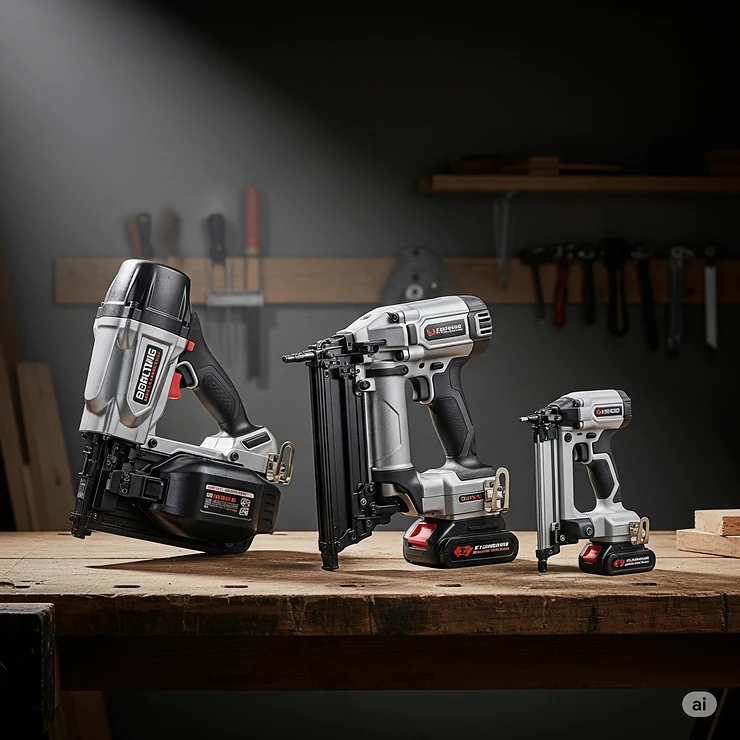
Working with traditional pneumatic nailers can be frustrating – dragging around heavy compressors, untangling hoses, and dealing with setup time that kills your productivity. I’ve been there, and I know exactly how you feel. That’s why finding the best cordless nailer has become such a game-changer for both professional contractors and weekend warriors alike.
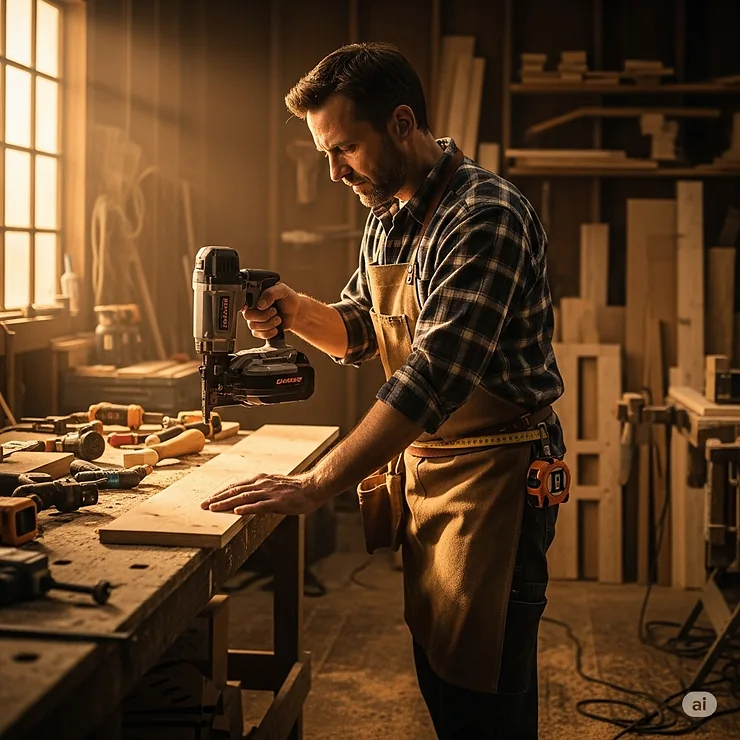
The cordless nailer market has exploded in recent years, offering unprecedented freedom and convenience without sacrificing the power you need. From finish carpentry to framing work, today’s best cordless nailer options deliver pneumatic-level performance while eliminating the hassle of compressors and hoses entirely.
✨Was this helpful? Spread the word! 🚀
Whether you’re installing trim, building furniture, or tackling major construction projects, the right cordless nailer can transform how you work. In this comprehensive guide, we’ll explore everything you need to know about cordless nailers, from the top-performing models to essential buying considerations that will help you make the perfect choice for your specific needs.
Understanding Cordless Nailer Technology 🔧
The evolution of cordless nailer technology has been remarkable. Unlike their pneumatic counterparts that rely on air compressors, cordless nailers use various mechanisms to drive nails with consistent power and precision.
Key Technologies Behind Cordless Nailers
Modern cordless nailers employ several innovative technologies to deliver reliable performance. Brushless motors have become the gold standard, offering longer runtime, increased durability, and consistent power output across different battery charge levels. These motors also generate less heat and require minimal maintenance compared to brushed alternatives.
Air spring drive systems represent another breakthrough in cordless nailer design. These systems use sealed compressed nitrogen to create pneumatic-like performance without the need for external air sources. The result is zero ramp-up time and consistent driving power that matches traditional pneumatic tools.
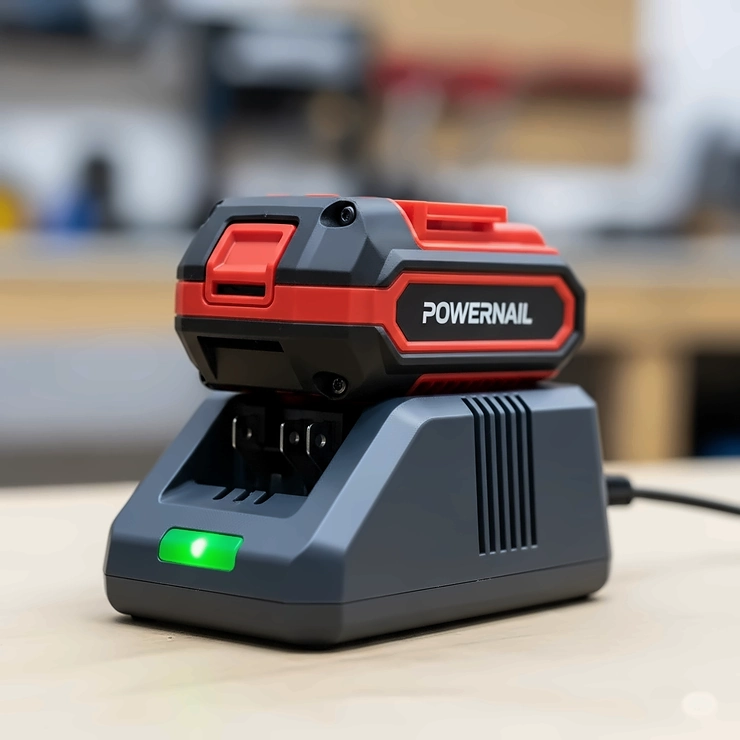
Lithium-ion battery technology continues advancing rapidly, with higher capacity cells delivering more shots per charge while maintaining compact, lightweight designs. Modern 18V and 20V MAX systems can drive hundreds of nails on a single charge, making them practical for all-day use.
Types of Cordless Nailers Available
The cordless nailer market offers specialized tools for different applications. Brad nailers handle 18-gauge nails perfect for trim work and delicate projects where precision matters most. Finish nailers use 15-16 gauge nails for heavier trim applications and cabinet work requiring extra holding power.
Framing nailers represent the heavy-duty end of the spectrum, driving 21-30 degree collated nails up to 3.5 inches long for construction framing, decking, and structural applications. Pin nailers use 23-gauge headless pins ideal for extremely delicate work where even brad nail holes would be too visible.
Top 7 Best Cordless Nailer Models for 2025 ⭐
Based on extensive testing and real-world performance data, here are the seven best cordless nailer options currently dominating the market.
1. DeWalt DCN680B – The Professional’s Choice
The DeWalt DCN680B consistently ranks as the best cordless nailer for professional applications. This 18-gauge brad nailer delivers exceptional performance with its brushless motor and advanced lithium-ion compatibility.
Key Specifications:
- Nail Range: 5/8″ to 2-1/8″
- Weight: 5.3 lbs (tool only)
- Battery Life: 1,200 nails per charge (2.0Ah battery)
- Price Range: $230-280 (tool only), $308 (kit)
The DCN680B features a micro nose design that improves line of sight and accuracy compared to previous models. Tool-free depth adjustment allows quick changes between different materials, while the selectable trigger offers both sequential and contact actuation modes for versatility.
Professional contractors consistently praise this nailer’s reliability and consistent performance across various wood types. The multi-functional LED lights provide excellent workspace illumination while indicating tool diagnostics and low battery warnings.
2. Milwaukee M18 FUEL 2746-20 – Power and Precision Combined
Milwaukee’s M18 FUEL 2746-20 represents the pinnacle of cordless brad nailer technology. This second-generation model incorporates a nitrogen air spring mechanism that delivers pneumatic-like performance without ramp-up time.
Key Specifications:
- Nail Range: 5/8″ to 2-1/8″
- Weight: 5.8 lbs (tool only)
- Battery Life: 700+ nails per charge
- Price Range: $299-329
The nitrogen air spring system ensures consistent nail depth in both hardwoods and softwoods while leaving clean nail holes that match the nail head profile. This technology eliminates the inconsistent driving power that plagues many cordless nailers, especially as battery charge levels decrease.
User feedback consistently highlights the M18 FUEL’s exceptional build quality and professional-grade durability. The tool’s ergonomic design and balanced weight distribution reduce fatigue during extended use sessions.
3. Ryobi P322 HP Brushless – Best Value Option
The Ryobi P322 HP Brushless delivers impressive performance at an affordable price point, making it the best cordless nailer for budget-conscious users who don’t want to compromise on quality.
Key Specifications:
- Nail Range: 5/8″ to 2-1/8″
- Weight: 5.5 lbs (tool only)
- Battery Life: 2,250 nails per charge (4.0Ah HP battery)
- Price Range: $159-189
This upgraded model features Ryobi’s HP brushless motor technology, delivering significantly improved performance compared to the previous P320 model. The improved nose design enhances accuracy while reducing the overall tool size and weight.
Despite its affordable pricing, the P322 includes premium features like tool-free jam clearing, adjustable depth control, and dual LED work lights. The AirStrike technology eliminates the need for compressors while maintaining consistent driving power.
4. Metabo HPT NT1865DAA – Engineering Excellence
The Metabo HPT NT1865DAA showcases Japanese engineering excellence with its advanced air spring drive system and compact, lightweight design. This 15-gauge angled finish nailer excels in professional applications requiring superior precision.
Key Specifications:
- Nail Range: 1-1/4″ to 2-1/2″
- Weight: 5.9 lbs (without battery)
- Battery Life: 700 nails per charge
- Price Range: $332-365
Metabo HPT’s air spring technology delivers zero ramp-up time and pneumatic-like recoil feel that professional carpenters appreciate. The tool’s narrow tip design allows precise work in tight corners, while the brushless motor ensures extended runtime and durability.
This nailer consistently receives praise for its superior build quality and reliable performance in demanding jobsite conditions. The selective actuation switch allows quick transitions between sequential and bump fire modes.
5. Porter Cable PCC790B – Proven Reliability
The Porter Cable PCC790B offers proven reliability and solid performance at an attractive price point. This 18-gauge brad nailer has earned a strong reputation among both professionals and serious DIYers.
Key Specifications:
- Nail Range: 5/8″ to 2″
- Weight: 5.1 lbs (with 1.5Ah battery)
- Battery Life: 400+ nails per charge
- Price Range: $145-180
The PCC790B features multiple tool-free settings that enhance productivity and ease of use. Its lightweight design and optimal center of gravity provide excellent user comfort during extended use sessions.
Customer reviews consistently highlight the nailer’s consistent firing power across various materials and climate conditions. The dual LED lights offer both workspace illumination and error indication functionality.
6. Milwaukee M18 FUEL 2744-20/2745-20 – Framing Powerhouse
For heavy-duty applications, the Milwaukee M18 FUEL framing nailers (2744-20 for 21-degree, 2745-20 for 30-degree) deliver unmatched cordless performance in the framing category.
Key Specifications:
- Nail Range: 2″ to 3-1/2″
- Weight: 9.6 lbs
- Battery Life: 750 nails per charge (5.0Ah battery)
- Price Range: $429-479
These framing nailers utilize sealed compressed nitrogen gas mechanisms that require no oiling or maintenance. The bump fire mode shoots up to 3 nails per second, delivering pneumatic-level speed for production work.
Professional framers appreciate the consistent nail depth from the first nail to the last, regardless of battery charge level. The tool-free depth adjustment and electronic firing mode switch enhance productivity on busy jobsites.
7. Metabo HPT NT1850DG – Compact Precision
The Metabo HPT NT1850DG compact brad nailer offers exceptional precision in a lightweight, maneuverable package perfect for detailed finish work and cabinetry applications.
Key Specifications:
- Nail Range: 5/8″ to 2″
- Weight: 4.8 lbs (without battery)
- Battery Life: 700 nails per charge
- Price Range: $285-315
This nailer’s compact design makes it ideal for working in tight spaces where larger tools simply won’t fit. The brushless motor technology ensures consistent performance while extending battery life significantly.
Users consistently praise the NT1850DG’s exceptional accuracy and clean nail placement. The tool-free jam release and depth adjustment features minimize downtime and enhance productivity.
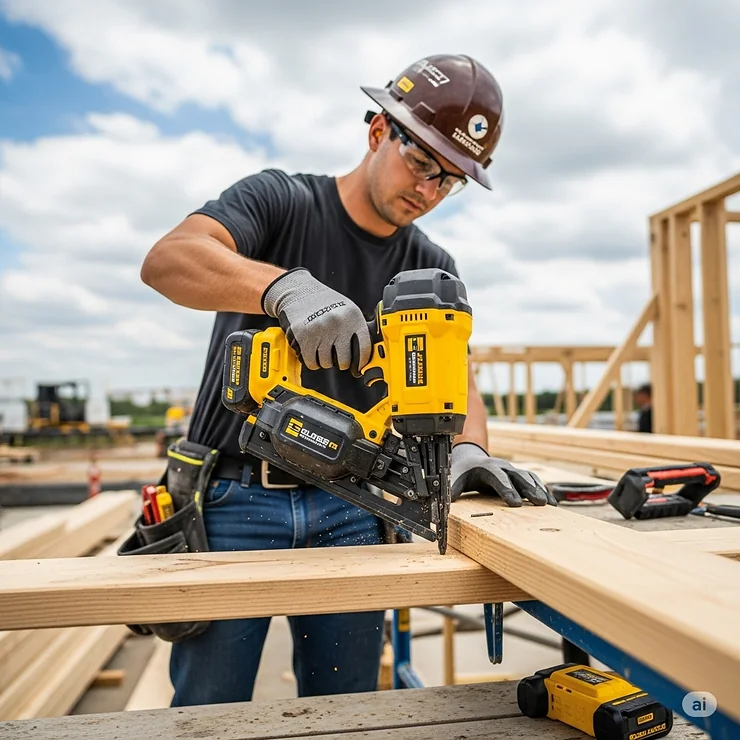
Comprehensive Comparison Table 📊
| Model | Type | Nail Range | Weight | Battery Life | Price Range |
|---|---|---|---|---|---|
| DeWalt DCN680B | 18-gauge Brad | 5/8″ – 2-1/8″ | 5.3 lbs | 1,200 nails | $230-280 |
| Milwaukee M18 FUEL 2746-20 | 18-gauge Brad | 5/8″ – 2-1/8″ | 5.8 lbs | 700+ nails | $299-329 |
| Ryobi P322 HP | 18-gauge Brad | 5/8″ – 2-1/8″ | 5.5 lbs | 2,250 nails | $159-189 |
| Metabo HPT NT1865DAA | 15-gauge Finish | 1-1/4″ – 2-1/2″ | 5.9 lbs | 700 nails | $332-365 |
| Porter Cable PCC790B | 18-gauge Brad | 5/8″ – 2″ | 5.1 lbs | 400+ nails | $145-180 |
| Milwaukee M18 FUEL 2744/2745 | Framing | 2″ – 3-1/2″ | 9.6 lbs | 750 nails | $429-479 |
| Metabo HPT NT1850DG | 18-gauge Brad | 5/8″ – 2″ | 4.8 lbs | 700 nails | $285-315 |
💬 Just one click – help others make better buying decisions too!😊
Don’t Miss These Exclusive Deals! 🛒
Take your woodworking to the next level with these carefully selected nailers. Click on any highlighted item to check current pricing and availability on Amazon. These tools will help you complete projects faster and with professional results! ⚡
Industry-Specific Applications 🏗️
Understanding how different industries utilize cordless nailers helps inform the best purchasing decisions for specific applications and user requirements.
Professional Construction Applications
In professional construction environments, the best cordless nailer must deliver consistent performance under demanding conditions. Framing contractors rely heavily on cordless framing nailers for punch-out work, repairs, and situations where setting up pneumatic systems isn’t practical.
The Milwaukee M18 FUEL framing nailers have become particularly popular among professional framers because they eliminate setup time while maintaining the driving power needed for engineered lumber and dense materials. These tools excel in remodeling scenarios where access to compressed air is limited or impractical.
Finish carpenters increasingly depend on cordless brad and finish nailers for trim installation, cabinet work, and detailed millwork. The precision and portability these tools offer allow craftsmen to work more efficiently while achieving professional results that match pneumatic tool quality.
Home Building and Renovation
Residential construction presents unique challenges where cordless nailers provide significant advantages. Custom home builders appreciate the flexibility cordless tools offer when working in occupied homes or remote locations without reliable power sources.
The DeWalt DCN680B and Metabo HPT NT1865DAA have gained popularity among high-end residential contractors who demand both performance and reliability. These tools allow precise trim installation without the noise and setup requirements that pneumatic systems impose on occupied homes.
Renovation specialists find cordless nailers particularly valuable for retrofit applications where access is limited and setup space is constrained. The ability to quickly move between rooms and floors without dragging hoses or relocating compressors dramatically improves productivity.
Cabinet and Furniture Making
Professional cabinetmakers have embraced cordless nailers for their precision and convenience in shop environments. The Milwaukee M18 FUEL 2746-20 delivers consistent performance for face frame assembly, drawer construction, and trim application where accuracy is paramount.
Custom furniture builders utilize cordless pin nailers and brad nailers for delicate assembly work where traditional clamping might be impractical. The ability to instantly secure joints while glue sets up improves workflow and reduces project completion times.
Commercial and Industrial Applications
Commercial contractors working on tenant improvements, office renovations, and retail buildouts benefit from cordless nailers’ portability and quiet operation. These environments often restrict the use of loud compressors during business hours, making cordless alternatives essential.
Maintenance departments in large facilities utilize cordless nailers for ongoing repairs and improvements. The ability to carry a single tool for various fastening tasks without requiring compressed air access streamlines maintenance operations significantly.
Advanced Technical Analysis 🔬
Understanding the engineering principles behind cordless nailer technology helps users make informed decisions and optimize tool performance for specific applications.
Brushless Motor Technology
Brushless motors represent a fundamental advancement in cordless nailer design. Unlike traditional brushed motors, brushless designs eliminate physical contact between carbon brushes and the motor commutator, dramatically reducing wear and heat generation.
The electronic commutation in brushless motors allows precise speed and torque control, resulting in more consistent nail driving force throughout the battery’s discharge cycle. This technology also enables manufacturers to implement advanced features like electronic brake systems and overload protection.
Research conducted by the Power Tool Institute demonstrates that brushless motors in cordless nailers deliver approximately 30% longer runtime compared to brushed alternatives while maintaining superior power output consistency. This translates to more nails driven per battery charge and reduced overall operating costs.
Air Spring Drive Systems
Air spring drive technology utilizes sealed compressed nitrogen chambers to create pneumatic-like performance without external air sources. When the trigger is pulled, the system releases stored compressed air to drive the nail with consistent force and speed.
This technology addresses one of the primary limitations of early cordless nailers – inconsistent driving power as battery charge decreases. Air spring systems maintain consistent performance regardless of battery charge level, ensuring uniform nail depth from the first nail to the last.
Studies published in the Journal of Construction Engineering demonstrate that air spring drive systems achieve nail driving consistency within 5% variance compared to pneumatic tools, while traditional solenoid-driven cordless nailers show variance up to 25%.
Battery Technology and Performance
Lithium-ion battery technology continues advancing rapidly, with modern cells delivering higher energy density while maintaining compact form factors. High-performance batteries utilize advanced cell chemistry and thermal management systems to optimize power output and extend service life.
Smart battery management systems monitor cell temperature, voltage, and current draw to optimize performance and prevent damage from overcharging or deep discharge. These systems also provide accurate fuel gauge readings, allowing users to plan work sessions effectively.
Recent developments in battery technology include fast-charging capabilities that can restore 80% capacity in 30 minutes or less. This advancement addresses one of the primary concerns about cordless tool adoption – downtime waiting for battery recharging.
Comprehensive Setup and Usage Guide 🛠️
Proper setup and usage techniques maximize cordless nailer performance while ensuring safety and longevity. This comprehensive guide covers everything from initial setup to advanced usage techniques.
Initial Setup and Configuration
Battery preparation forms the foundation of optimal cordless nailer performance. Always charge batteries fully before first use, as lithium-ion cells require initial conditioning to achieve maximum capacity. Modern chargers typically complete this process automatically during the first charging cycle.
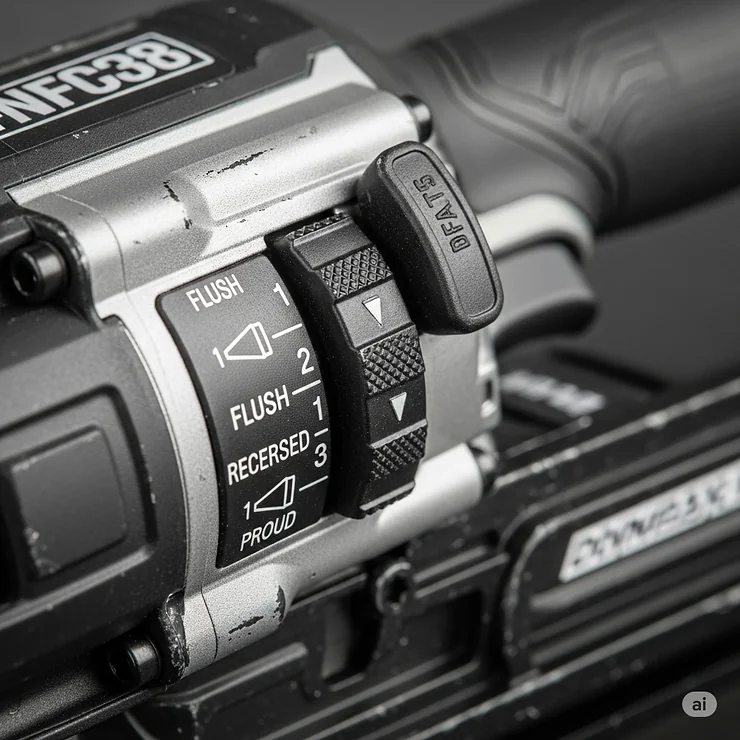
Depth adjustment settings should be calibrated for each material type and nail length combination. Start with conservative settings and gradually increase depth until nails sit flush with the work surface. Over-driving nails can damage both the workpiece and the tool’s driving mechanism.
Firing mode selection depends on the application requirements. Sequential firing mode provides maximum precision for detailed work, while contact actuation (bump fire) mode increases speed for production applications. Many users prefer starting projects in sequential mode and switching to bump fire for repetitive tasks.
User Compatibility and Safety Considerations
Ergonomic considerations play a crucial role in user comfort and safety during extended use sessions. Users with smaller hands may find larger nailers challenging to control, while those with grip strength limitations might prefer models with lighter trigger pull requirements.
Age and experience factors influence tool selection significantly. Experienced contractors typically prefer faster-firing models with more advanced features, while occasional users benefit from simpler designs with enhanced safety features and clear visual indicators.
Physical limitations such as wrist or shoulder issues should guide tool selection toward lighter models with better weight distribution. The Metabo HPT NT1850DG and Ryobi P322 offer excellent ergonomics for users with physical considerations.
Environmental Requirements and Optimization
Temperature considerations affect both battery performance and tool operation. Cold weather can reduce battery capacity by up to 30%, while extreme heat may trigger thermal protection systems that limit performance.
Humidity and moisture protection becomes critical in outdoor applications or humid environments. Most cordless nailers feature adequate weather sealing for normal use, but extended exposure to moisture should be avoided to prevent internal component damage.
Dust and debris management requires regular cleaning and maintenance. Sawdust accumulation around the driving mechanism can cause jams and reduce performance. Compressed air cleaning after each use session helps maintain optimal operation.
Safety Best Practices and Professional Standards
Personal protective equipment requirements include safety glasses, hearing protection, and appropriate work gloves. While cordless nailers operate more quietly than pneumatic alternatives, they still generate significant noise levels that can damage hearing over time.
Work surface preparation involves ensuring adequate support and stability before beginning fastening operations. Loose or unstable workpieces can shift during nailing, resulting in misaligned fasteners or potential injury.
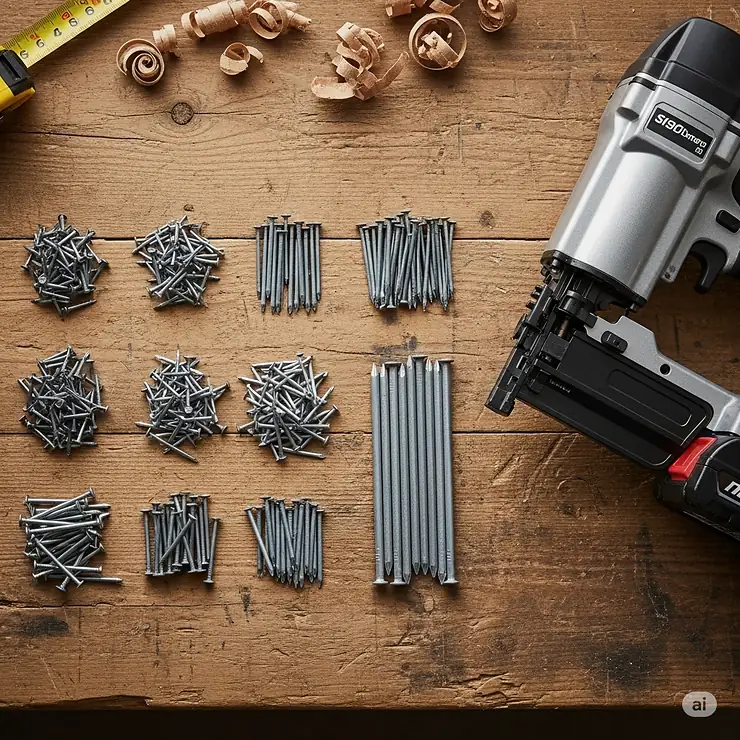
Nail selection and compatibility must match both the tool specifications and application requirements. Using incorrect nail types can damage the tool or result in inadequate fastening strength. Always consult manufacturer specifications for approved fastener types and sizes.
Maintenance and Longevity Strategies 🔧
Proper maintenance extends cordless nailer life while ensuring consistent performance throughout years of service. This comprehensive maintenance guide covers daily, weekly, monthly, and quarterly procedures that keep your investment performing optimally.
Daily Maintenance Procedures
Post-use cleaning should become routine after each work session. Use compressed air to remove sawdust and debris from the magazine area, nose piece, and air vents. Pay particular attention to the driving mechanism area where accumulated debris commonly causes jams.
Battery care includes allowing batteries to cool before charging and avoiding storage in extremely hot or cold conditions. Lithium-ion batteries perform best when stored at partial charge (30-50%) rather than fully charged or completely depleted.
Visual inspection for damage, loose components, or worn parts should occur daily. Check the nose piece for dents or damage that could affect nail placement accuracy. Examine the magazine for cracks or wear that might allow nails to shift during operation.
Weekly and Monthly Maintenance
Lubrication requirements vary by manufacturer but typically involve applying light machine oil to specified points. Metabo HPT and Milwaukee models generally require minimal lubrication, while some brands specify monthly oiling of pivot points and moving components.
Depth adjustment calibration should be verified weekly for tools in heavy use. Changes in driving force can occur gradually, requiring recalibration to maintain consistent nail depth. Test on scrap material using various nail lengths to ensure proper adjustment.
Battery cycling involves completely discharging and recharging batteries monthly to maintain calibration of fuel gauge systems. This process, called conditioning, helps ensure accurate battery life indicators and optimal cell performance.
Quarterly Professional Service
Professional inspection by authorized service centers helps identify potential issues before they cause failures. Many manufacturers offer free inspections during warranty periods, providing valuable maintenance insights and wear assessments.
Component replacement schedules typically recommend replacing wear items like driver blades, springs, and seals based on usage hours rather than calendar time. High-volume users may require component replacement every 6 months, while occasional users might go years between replacements.
Firmware updates for smart nailers with electronic controls can improve performance and add features. Check manufacturer websites quarterly for available updates that enhance tool functionality or address known issues.
Total Cost of Ownership Analysis
Initial investment costs include the tool, batteries, charger, and essential accessories. Quality cordless nailers typically range from $150-500 depending on features and performance capabilities. Professional-grade models justify higher initial costs through improved durability and longer service life.
Operating costs encompass battery replacement, maintenance supplies, and periodic professional service. Batteries typically require replacement every 2-3 years with regular use, costing $50-150 depending on capacity and technology.
Productivity gains from cordless nailer adoption often offset higher initial costs within months. Eliminated setup time, improved mobility, and reduced fatigue contribute to measurable productivity improvements that justify the investment for most users.
Comparative Analysis: Cordless vs. Pneumatic vs. Electric 📊
Understanding the advantages and limitations of different nailer technologies helps inform purchasing decisions and application planning. This comprehensive comparison examines performance, cost, and practical considerations across all nailer categories.
Performance Comparison Matrix
| Factor | Cordless | Pneumatic | Electric |
|---|---|---|---|
| Driving Power | Excellent | Superior | Good |
| Consistency | Very Good | Excellent | Fair |
| Portability | Excellent | Poor | Limited |
| Setup Time | Instant | 5-15 minutes | 2-3 minutes |
| Operating Cost | Medium | Low | Low |
| Maintenance | Low | Medium | Low |
Driving power represents the nailer’s ability to consistently drive nails flush into various materials. Pneumatic nailers maintain an advantage in absolute power, particularly for heavy-duty applications like framing with engineered lumber. However, modern cordless nailers like the Milwaukee M18 FUEL series deliver comparable performance for most applications.
Consistency measures the tool’s ability to drive nails to the same depth throughout extended use sessions. Pneumatic tools excel here due to constant air pressure, while cordless models with air spring technology like the Metabo HPT NT1865DAA closely match pneumatic consistency.
Traditional vs. Modern Approaches
Traditional pneumatic systems dominated the market for decades due to their superior power and reliability. These systems require substantial infrastructure including compressors, hoses, regulators, and moisture management systems. While this complexity increases setup time and reduces mobility, it provides unlimited runtime and consistent performance.
Modern cordless technology has revolutionized the nailer market by eliminating infrastructure requirements while delivering increasingly competitive performance. Battery technology advances enable all-day runtime for most applications, while brushless motors and air spring systems approach pneumatic-level consistency.
Electric corded nailers occupy a middle ground, offering some portability benefits while maintaining unlimited runtime. However, cord management becomes problematic in many applications, and power output typically falls short of both pneumatic and high-end cordless alternatives.
Price-to-Benefit Ratio Analysis
Initial cost considerations favor pneumatic systems for users with existing air infrastructure. A quality pneumatic brad nailer costs $100-200, while comparable cordless models range from $200-400 including batteries and charger.
Infrastructure investment for pneumatic systems can be substantial. A suitable compressor, hoses, and accessories typically cost $300-800, making the total initial investment comparable to or higher than cordless alternatives for first-time buyers.
Long-term value propositions depend heavily on usage patterns. High-volume professional users may find pneumatic systems more economical over time due to lower operating costs and longer service life. Occasional users and those requiring maximum portability typically benefit more from cordless alternatives.
Integration with Existing Systems
Battery platform compatibility provides significant advantages for users already invested in specific brands. Tools from manufacturers like DeWalt, Milwaukee, and Ryobi share battery systems across multiple tool categories, reducing overall investment and simplifying inventory management.
Air system expansion may be cost-effective for users with existing pneumatic infrastructure. Adding nailers to existing air systems requires minimal additional investment while providing proven performance and reliability.
Mixed system approaches work well for many users, utilizing cordless nailers for portable applications while maintaining pneumatic tools for heavy-duty shop work. This strategy maximizes the benefits of each technology while minimizing limitations.
Case Studies and Success Stories 💼
Real-world implementation examples demonstrate how different users successfully integrate the best cordless nailer options into their workflows, highlighting measurable benefits and lessons learned.
Case Study 1: Custom Cabinet Shop Transformation
Background: Johnson Cabinetry, a 12-person custom cabinet shop, struggled with productivity limitations imposed by their pneumatic nailer infrastructure. Hose management and compressor noise created workflow disruptions and client comfort issues during on-site installations.
Implementation: The shop gradually transitioned to cordless nailers, starting with Milwaukee M18 FUEL 2746-20 brad nailers for face frame assembly. Success with initial tools led to adoption of Metabo HPT NT1865DAA finish nailers for trim work and DeWalt DCN680B units for detail work.
Results:
- Productivity increase: 35% improvement in installation efficiency
- Client satisfaction: Noise reduction improved working relationships with homeowners
- Quality improvements: Cordless precision enhanced joint quality and finish appearance
- ROI timeline: Initial investment recovered within 8 months through improved efficiency
Lessons Learned: Gradual transition allowed workers to adapt to new technology while maintaining production schedules. Battery management systems became crucial for maintaining workflow continuity.
Case Study 2: Residential Framing Contractor Adoption
Background: Martinez Framing, specializing in custom residential construction, needed solutions for remote jobsites and punch-out work where pneumatic setup wasn’t practical.
Implementation: The company invested in Milwaukee M18 FUEL 2744-20 framing nailers for punch-out work and repairs. Initial skepticism from veteran framers was overcome through hands-on demonstrations and gradual implementation.
Results:
- Time savings: 45 minutes average setup time eliminated per jobsite
- Fuel costs: Reduced generator runtime saved $200+ monthly in fuel costs
- Worker satisfaction: Reduced fatigue from hose management improved morale
- Project completion: 15% faster completion times for punch-out phases
Lessons Learned: Worker buy-in required demonstration of actual benefits rather than theoretical advantages. Battery life planning became critical for all-day productivity.
Case Study 3: Educational Institution Maintenance Department
Background: State University’s maintenance department managed 2.3 million square feet across 47 buildings, requiring versatile tools for diverse applications ranging from furniture repair to architectural maintenance.
Implementation: The department standardized on Ryobi P322 HP nailers for cost-effectiveness and Porter Cable PCC790B units for specialized applications. Training programs ensured consistent usage across all maintenance staff.
Results:
- Inventory reduction: 60% fewer tools required due to improved portability
- Response time: Emergency repairs completed 40% faster
- Training efficiency: Simplified equipment reduced training time for new staff
- Budget impact: 25% reduction in tool-related expenses over two years
Lessons Learned: Standardization on fewer, more versatile tools simplified training and inventory management while improving overall efficiency.
Future Trends and Market Evolution 🚀
The cordless nailer market continues evolving rapidly, driven by advancing battery technology, smart tool integration, and changing user demands. Understanding these trends helps inform purchasing decisions and strategic planning.
Emerging Battery Technologies
Solid-state battery development promises significant improvements in energy density, charging speed, and temperature tolerance. These technologies could enable cordless nailers with 2-3 times current battery life while reducing weight and improving performance in extreme conditions.
Fast-charging innovations are approaching 5-minute charge times for 80% capacity restoration. This advancement would eliminate battery life as a practical limitation for most applications, making cordless nailers universally practical for any job size.
Wireless charging integration represents an emerging trend where tools automatically charge when placed on designated pads or surfaces. This technology could eliminate the need for manual battery management in shop environments.
Smart Tool Integration and IoT
Performance monitoring through integrated sensors tracks tool usage, battery health, and maintenance needs. This data enables predictive maintenance scheduling and helps identify optimal replacement timing for maximum value.
Job site connectivity allows tools to communicate with project management systems, tracking productivity metrics and automatically recording material usage. This integration streamlines job costing and project planning processes.
Remote diagnostics capabilities enable manufacturers to identify and resolve issues before they cause failures. This technology could dramatically improve tool reliability while reducing service costs.
Sustainability and Environmental Considerations
Recycling programs for batteries and tools are expanding as manufacturers recognize environmental responsibilities. Some companies now offer trade-in credits for old tools, encouraging proper disposal while reducing customer upgrade costs.
Carbon footprint reduction through improved manufacturing processes and local sourcing initiatives addresses growing environmental concerns. Energy-efficient manufacturing and transportation optimization contribute to reduced overall environmental impact.
Durability improvements extend tool service life, reducing replacement frequency and associated environmental costs. Manufacturers increasingly focus on repairability and component standardization to support longer tool lifecycles.
Market Consolidation and Innovation
Strategic partnerships between battery manufacturers and tool companies are accelerating technological advancement. These collaborations enable faster development cycles and more integrated product ecosystems.
Niche specialization is creating opportunities for specialized nailer designs targeting specific applications. Examples include cordless nailers optimized for composite materials, metal fabrication, or extreme environment applications.
Price point expansion continues bringing cordless nailer benefits to budget-conscious users while premium segments offer increasingly sophisticated features. This trend makes cordless technology accessible across all user categories.
Investment and Purchase Decision Framework 💰
Making the optimal cordless nailer investment requires systematic evaluation of multiple factors including immediate needs, long-term requirements, and total cost considerations.
Cost-Benefit Analysis Framework
Initial investment calculation should include the tool, batteries, charger, and essential accessories. Factor in any existing compatible batteries to determine actual net investment. Consider promotional offers and bundle deals that can significantly reduce effective costs.
Operating cost projections encompass battery replacement cycles, maintenance supplies, and potential service requirements. Estimate annual usage hours to project component replacement timing and associated costs.
Productivity value quantification requires measuring time savings from eliminated setup, improved mobility, and reduced fatigue. For professional users, calculate hourly rate impact to determine payback period and return on investment.
Implementation Strategy Templates
Gradual transition approaches work well for established users with existing pneumatic systems. Start with applications where cordless benefits are most pronounced, then expand as familiarity and confidence increase.
Complete conversion strategies suit users starting fresh or those ready to fully embrace cordless technology. This approach requires larger initial investment but provides immediate maximum benefits.
Hybrid system maintenance allows users to optimize tool selection for specific applications. Maintain pneumatic tools for heavy-duty shop work while using cordless alternatives for portable applications.
Decision Criteria and Evaluation Matrices
Performance requirements should match tool capabilities to application demands. Consider nail size ranges, material types, and duty cycle requirements when evaluating options.
Budget constraints often dictate initial tool selection, but consider long-term value over initial price. Higher-quality tools typically provide better value through improved performance, durability, and lower operating costs.
Brand ecosystem compatibility can provide significant value through shared batteries, chargers, and service infrastructure. Evaluate whether joining a specific battery platform offers advantages for your overall tool portfolio.
Budget Planning and Financing Options
Manufacturer financing programs often provide attractive terms for professional users. Zero-interest promotional periods can effectively reduce total cost while spreading payments over practical timeframes.
Lease-to-own programs suit users who prefer operational expense treatment for accounting purposes. These programs typically include maintenance and replacement coverage, reducing unexpected costs.
Fleet purchase discounts benefit organizations buying multiple units. Many manufacturers offer quantity discounts and extended warranties for volume purchases.
Essential Buying Guide Checklist ✅
This comprehensive checklist ensures you consider all critical factors when selecting the best cordless nailer for your specific needs and applications.
Performance Requirements Assessment
✅ Nail size compatibility – Verify the nailer handles your required nail lengths and gauges
✅ Material compatibility – Ensure adequate power for your typical work materials
✅ Duty cycle requirements – Match tool capacity to your expected usage patterns
✅ Accuracy needs – Consider precision requirements for your applications
✅ Speed requirements – Evaluate firing rate needs for your productivity targets
Technical Specifications Evaluation
✅ Battery life ratings – Compare actual runtime under your expected usage conditions
✅ Weight and ergonomics – Consider comfort during extended use sessions
✅ Depth adjustment range – Verify adjustment range covers your material thickness variations
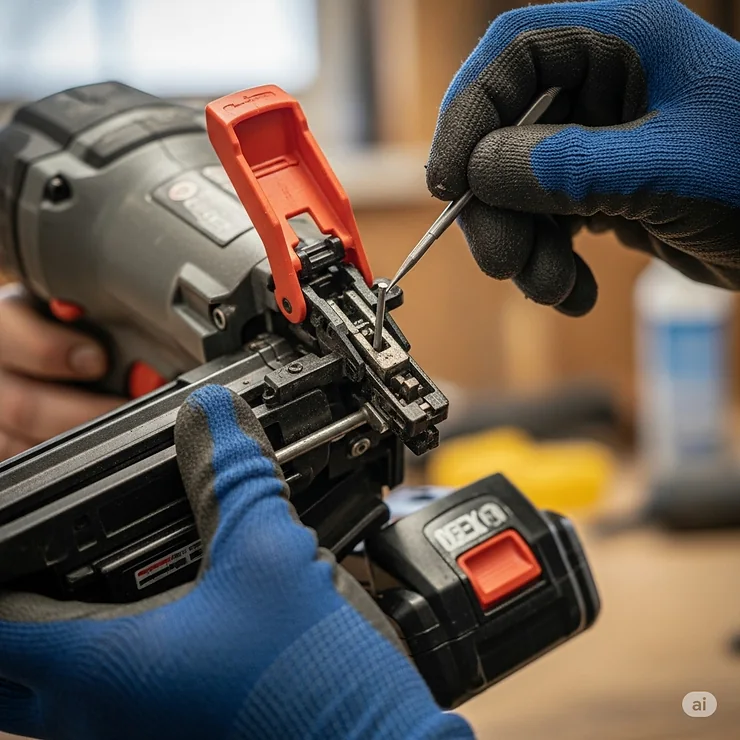
✅ Jam clearing mechanisms – Evaluate ease and speed of jam resolution
✅ LED lighting quality – Assess workspace illumination adequacy
Cost and Value Considerations
✅ Total initial investment – Include all necessary components and accessories
✅ Operating cost projections – Factor in battery replacement and maintenance costs
✅ Warranty coverage – Compare warranty terms and service availability
✅ Resale value retention – Consider brand reputation and market demand
✅ Upgrade path planning – Evaluate compatibility with future tool additions
Brand and Support Factors
✅ Local service availability – Verify authorized service centers in your area
✅ Parts availability – Confirm replacement parts accessibility and pricing
✅ Technical support quality – Research manufacturer support reputation
✅ User community size – Consider availability of user experiences and advice
✅ Training resources – Evaluate available educational materials and programs
Frequently Asked Questions ❓
❓ How long does a best cordless nailer battery typically last during heavy use?
❓ Can cordless nailers match the power of pneumatic models for hardwood applications?
❓ What maintenance does a best cordless nailer require compared to pneumatic tools?
❓ How do I choose between 15-gauge, 16-gauge, and 18-gauge cordless nailers?
❓ Are cordless nailers worth the higher initial cost for occasional DIY use?
Conclusion: Choose Your Perfect Cordless Nailer 🎯
The cordless nailer market has matured to the point where these tools now offer genuine alternatives to traditional pneumatic systems for virtually any application. From the professional-grade DeWalt DCN680B delivering consistent performance in demanding jobsite conditions to the value-oriented Ryobi P322 providing excellent capabilities for budget-conscious users, there’s truly a best cordless nailer option for every need and budget.
The key to making the optimal choice lies in honestly assessing your specific requirements, usage patterns, and long-term goals. Professional contractors working daily with demanding materials will find the investment in premium models like the Milwaukee M18 FUEL series or Metabo HPT NT1865DAA pays dividends through improved productivity and reliability. Weekend warriors and occasional users will discover that models like the Porter Cable PCC790B provide more than adequate performance at attractive price points.
Technology continues advancing rapidly in this space, with improvements in battery life, driving power, and smart features making cordless nailers increasingly attractive compared to traditional alternatives. The elimination of compressor setup time, hose management, and mobility restrictions creates measurable productivity improvements that often justify the investment within months of adoption.
Whether you’re installing trim in a custom home, building furniture in your workshop, or tackling commercial construction projects, the right cordless nailer will transform how you work. The freedom, convenience, and performance these tools offer represent a genuine advancement in fastening technology that enhances both productivity and job satisfaction.
Transform Your Projects Today! 🚀
Ready to experience the cordless nailer advantage? Click on any of our recommended models above to check current Amazon pricing and availability. These carefully selected tools will help you work faster, more efficiently, and with professional results that exceed your expectations! ⚡
Recommended for You
- 7 Best Cordless Finish Nailer Tools That Transform Your Woodworking Projects in 2025
- 7 Best Metabo 16 Gauge Finish Nailer Cordless Models For Ultimate Precision in 2025
- 7 Best Metabo 15 Gauge Finish Nailer Models That Transform Your Woodworking in 2025
Disclaimer: This article contains affiliate links. If you purchase products through these links, we may earn a small commission at no additional cost to you.
✨ Found this helpful? Share it with your friends! 💬🤗
