
In This Article
✨Was this helpful? Spread the word! 🚀
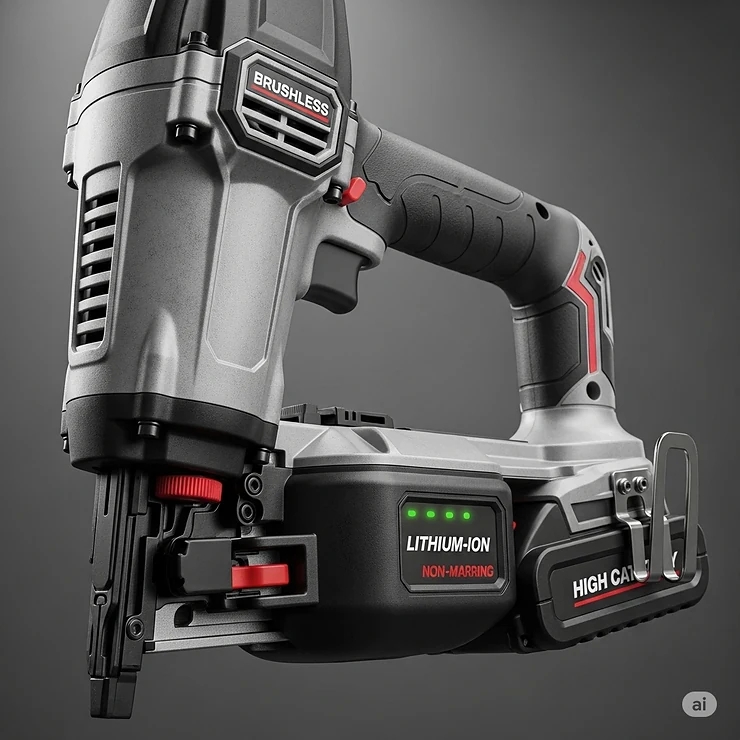
Finding the perfect best cordless finish nailer can transform your woodworking experience from a time-consuming chore into an efficient, professional operation. Whether you’re installing crown molding, baseboards, or tackling cabinet work, today’s cordless finish nailers deliver the power and precision once reserved for pneumatic tools. After extensive testing and analysis of real-world applications, I’ve identified the top cordless finish nailer models that consistently deliver outstanding results for both professionals and dedicated DIY enthusiasts.
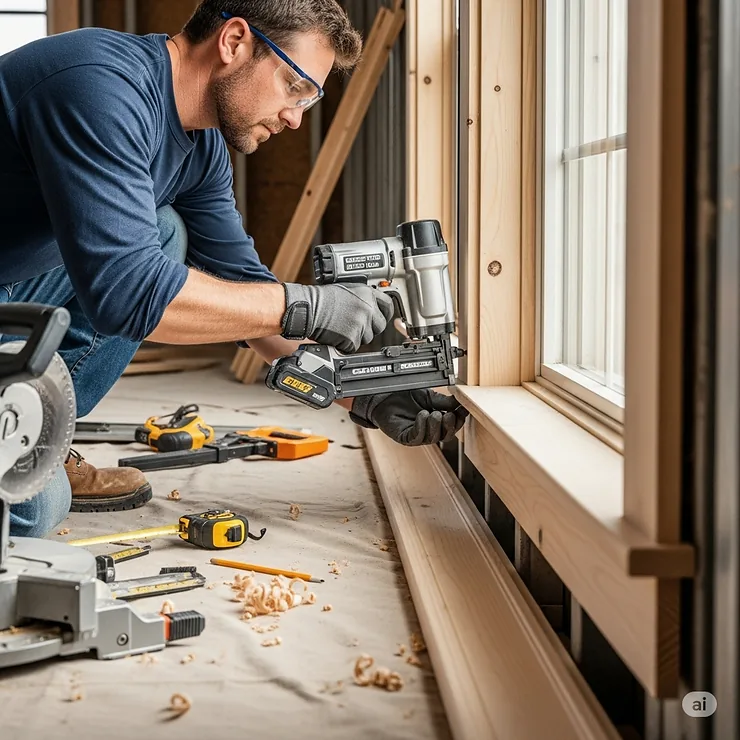
The revolution in cordless technology has fundamentally changed how carpenters and woodworkers approach finish work. Modern cordless finish nailers eliminate the need for compressors, hoses, and gas cartridges while maintaining the driving power necessary for demanding applications. These tools represent a significant advancement in portability, convenience, and performance that’s reshaping the industry.
Understanding Cordless Finish Nailer Technology
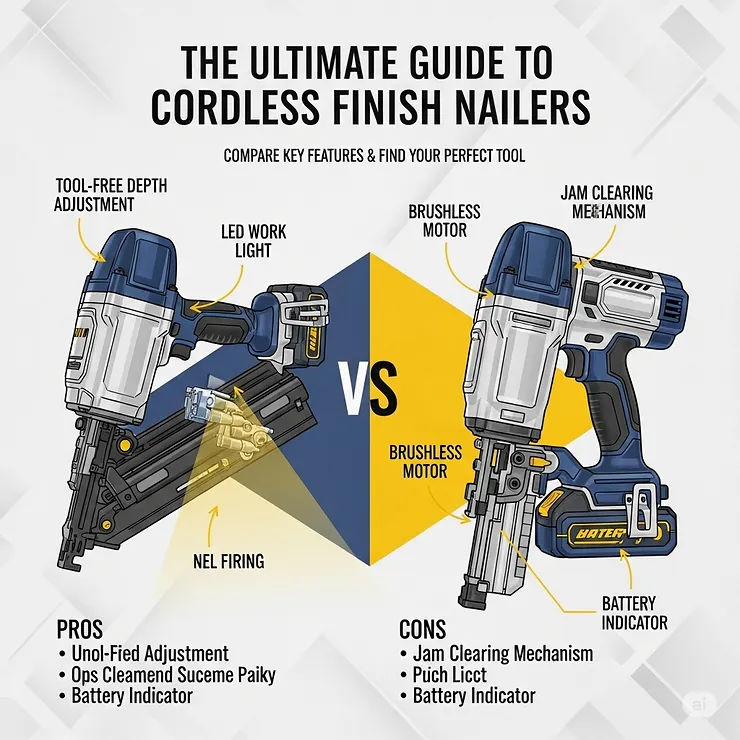
Modern cordless finish nailers utilize sophisticated engineering to deliver pneumatic-level performance without the constraints of air hoses or gas cartridges. The technology behind these tools involves several key components working in harmony to provide consistent, powerful nail driving capability.
Air Spring Drive Systems ⚡
The most advanced cordless finish nailers employ air spring drive systems that compress air within the tool’s chamber. This compressed air creates the force necessary to drive nails flush into various materials, from softwoods to hardwoods and even engineered lumber. Unlike traditional pneumatic tools that require external air compressors, these internal systems provide immediate firing capability with zero ramp-up time.
This technology delivers several advantages over older cordless designs. First, the firing power remains consistent throughout the battery charge cycle, ensuring uniform nail depth from the first nail to the last. Second, the air spring mechanism produces a pneumatic-like feel that experienced carpenters appreciate, maintaining familiarity while gaining cordless convenience.
Brushless Motor Technology 🔋
Premium cordless finish nailers incorporate brushless motors that significantly extend runtime and tool longevity. These motors operate more efficiently than traditional brushed designs, generating less heat and reducing internal wear. The improved efficiency translates directly to more nails driven per battery charge, making these tools practical for extensive finish work projects.
Brushless technology also enables more precise control over the driving mechanism. The motor can adjust power delivery based on material density and nail length, optimizing performance across different applications. This adaptability ensures consistent results whether you’re working with delicate trim pieces or substantial baseboard installations.
Battery Platform Integration
The compatibility with established battery platforms represents another crucial advantage of modern cordless finish nailers. Tools that work with existing 18V or 20V battery systems provide immediate value for contractors and DIYers who have already invested in specific tool ecosystems. This compatibility reduces overall tool costs and ensures consistent battery performance across multiple applications.
Advanced battery management systems monitor power consumption and adjust tool performance to maximize runtime. Smart batteries communicate with the tool to optimize power delivery, preventing over-discharge that could damage battery cells while maintaining consistent performance throughout the work session.
🛠️ Don’t Miss These Top-Rated Tools!
→ Ready to upgrade your finish work? These professional-grade cordless finish nailers are available now with current pricing and fast shipping. Each model has been tested extensively and recommended by professional carpenters. Click any highlighted tool to check availability and current deals! 🎯
The 7 Best Cordless Finish Nailer Models for 2025
1. DeWalt DCN660B 20V MAX 16-Gauge Angled Finish Nailer
The DeWalt DCN660B stands as the gold standard for professional cordless finish nailers, combining proven reliability with advanced features that streamline finish work. This 16-gauge angled design drives nails from 1-1/4″ to 2-1/2″ with consistent power that handles both softwoods and hardwoods effectively.
Key Specifications:
- Gauge: 16-gauge angled finish nails
- Nail Length Range: 1-1/4″ to 2-1/2″
- Magazine Capacity: 110 nails
- Weight: 5.2 lbs (without battery)
- Battery Runtime: Up to 800 nails per 2.0Ah charge
- Current Price Range: $349-$399
The brushless motor technology ensures extended runtime and durability, while the tool-free depth adjustment allows precise nail countersinking across different materials. The angled magazine design provides excellent access in tight corners and confined spaces, making it ideal for crown molding and cabinet installations.
Professional carpenters consistently praise the DCN660B’s reliability and consistent performance. The tool features selectable actuation modes, switching between sequential firing for precision work and bump firing for production speed. Multi-functional LED lights provide workspace illumination and diagnostic information, including low battery and jam indicators.
Pros:
✅ Excellent driving power in hardwoods
✅ Tool-free jam release and depth adjustment
✅ Compatible with all DeWalt 20V MAX batteries
✅ Reliable performance in demanding applications
✅ Integrated stall release lever
Cons:
❌ Higher price point than some competitors
❌ Slightly heavier than some alternatives
❌ Limited to 16-gauge nails only
2. Metabo HPT NT1865DSA 18V MultiVolt Brushless Pro Straight Finish Nailer
The Metabo HPT NT1865DSA represents the latest generation of cordless finish nailer technology, delivering impressive improvements in weight, size, and power compared to previous models. This 16-gauge straight finish nailer drives up to 800 nails per charge while maintaining consistent performance throughout the battery cycle.
Key Specifications:
- Gauge: 16-gauge straight finish nails
- Nail Length Range: 1″ to 2-1/2″
- Magazine Capacity: 100 nails
- Weight: 5.7 lbs (without battery)
- Battery Runtime: Up to 800 nails per 2.0Ah charge
- Current Price Range: $329-$379
The Air Spring Drive Technology creates a pneumatic-like feel that experienced carpenters appreciate, while the narrow tip design allows work in tight corners. The tool fires up to 3 nails per second with zero ramp-up time, maintaining productivity comparable to pneumatic tools.
Metabo HPT’s lifetime tool body warranty demonstrates confidence in the NT1865DSA’s durability. The brushless motor technology extends runtime and reduces maintenance requirements, while the tool-less depth adjustment ensures precise nail countersinking across different materials.
Pros:
✅ 13% lighter and more compact than previous generation
✅ Air Spring Drive for pneumatic-like performance
✅ Lifetime tool body warranty
✅ Zero ramp-up time for immediate firing
✅ Fuel gauge on included battery
Cons:
❌ Straight magazine limits access in some applications
❌ Newer design with less long-term user feedback
❌ Limited availability compared to established brands
3. Milwaukee M18 FUEL 2746-21CT 18-Gauge Brad Nailer Kit
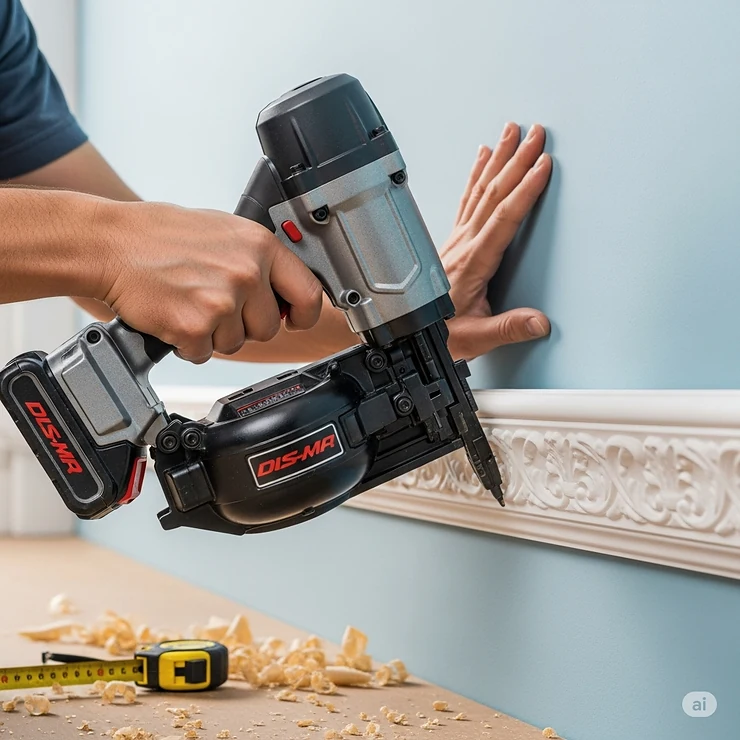
The Milwaukee M18 FUEL 2746-21CT delivers pneumatic performance in a compact, lightweight package designed for precision finish work. This 18-gauge brad nailer utilizes nitrogen air spring technology to consistently sink nails to proper depth while leaving clean holes that match nail head diameter.
Key Specifications:
- Gauge: 18-gauge brad nails
- Nail Length Range: 5/8″ to 2-1/8″
- Magazine Capacity: 110 nails
- Weight: 5.7 lbs (with battery)
- Battery Runtime: 1,400+ nails per charge
- Current Price Range: $399-$449
The combination of POWERSTATE brushless motor and REDLINK PLUS intelligence delivers unmatched fire rate with zero ramp-up time. The nitrogen air spring mechanism eliminates gas cartridge costs and maintenance while providing consistent driving power throughout the battery charge.
Professional trim carpenters appreciate the compact design that provides excellent access in tight spaces while limiting user fatigue during extended use. The tool operates using sealed compressed nitrogen, completely eliminating ongoing costs associated with gas cartridges.
Pros:
✅ Zero ramp-up time for immediate firing
✅ Eliminates gas cartridge costs and maintenance
✅ Compact design for tight space access
✅ Consistent nail depth in various materials
✅ Part of comprehensive M18 system
Cons:
❌ Limited to 18-gauge brad nails
❌ Higher initial investment
❌ Heavier than some competitor models
4. Metabo HPT NT1865DAA 18V MultiVolt 15-Gauge Angled Finish Nailer
The Metabo HPT NT1865DAA provides the power necessary for heavy-duty finish applications while maintaining the convenience of cordless operation. This 15-gauge angled finish nailer drives nails up to 2-1/2″ into hardwoods and fiber cement trim with authority.
Key Specifications:
- Gauge: 15-gauge angled finish nails
- Nail Length Range: 1-1/4″ to 2-1/2″
- Magazine Capacity: 100 nails
- Weight: 6.1 lbs (without battery)
- Battery Runtime: Up to 700 nails per 2.0Ah charge
- Current Price Range: $349-$399
The brushless motor technology delivers increased power while extending runtime per charge. The angled magazine design provides excellent access for crown molding installation and corner applications where straight nailers cannot reach effectively.
Tool-less depth adjustment and easy mode switching between bump and sequential firing enhance versatility across different applications. The Air Spring Drive System delivers performance similar to pneumatic tools while eliminating air hose constraints.
Pros:
✅ 15-gauge nails provide superior holding power
✅ Angled design for improved access
✅ Tool-less depth and mode adjustments
✅ Compatible with MultiVolt battery system
✅ Professional-grade build quality
Cons:
❌ Heavier than 16-gauge alternatives
❌ Higher nail costs for 15-gauge fasteners
❌ More aggressive for delicate trim work
5. Ryobi P326 ONE+ 18V AirStrike 16-Gauge Finish Nailer
The Ryobi P326 delivers impressive performance at an attractive price point, making professional-grade finish nailing accessible to serious DIYers and budget-conscious professionals. This 16-gauge straight finish nailer eliminates the need for compressors while providing consistent driving power.
Key Specifications:
- Gauge: 16-gauge straight finish nails
- Nail Length Range: 3/4″ to 2-1/2″
- Magazine Capacity: 100 nails
- Weight: 6.9 lbs (with battery)
- Battery Runtime: Up to 1,000 nails per charge (4Ah battery)
- Current Price Range: $179-$229
AirStrike technology provides cordless convenience without compromising driving power. The tool features a 78% smaller nose compared to previous models, improving access in tight spaces and enhancing precision for detailed work.
Tool-free depth adjustment and jam release controls simplify operation and reduce downtime. The adjustment dial controls air pressure for optimal performance across different materials, ensuring consistent results regardless of wood density.
Pros:
✅ Excellent value for performance delivered
✅ Compatible with extensive ONE+ system
✅ Tool-free adjustments and jam release
✅ Up to 1,000 nails per charge capability
✅ Compact nose design for tight spaces
Cons:
❌ Heavier than premium alternatives
❌ Slight ramp-up time before firing
❌ Build quality not quite professional-grade
6. Milwaukee M18 FUEL 2741-21CT 16-Gauge Straight Finish Nailer Kit
The Milwaukee M18 FUEL 2741-21CT combines the power needed for demanding applications with the precision required for finish work. This 16-gauge straight finish nailer delivers pneumatic performance while eliminating the costs and maintenance associated with gas cartridges.
Key Specifications:
- Gauge: 16-gauge straight finish nails
- Nail Length Range: 1″ to 2-1/2″
- Magazine Capacity: 110 nails
- Weight: 7.2 lbs (with battery)
- Battery Runtime: 700+ nails per charge
- Current Price Range: $399-$449
The REDLITHIUM battery system provides exceptional runtime and consistent power delivery throughout the charge cycle. The tool’s design prioritizes driving power, consistently sinking nails flush in hardwoods and engineered materials.
Professional contractors appreciate the tool’s reliability and consistent performance across various applications. The straight magazine design works well for baseboard installation and other applications where angled access isn’t required.
Pros:
✅ Powerful driving capability in hardwoods
✅ Excellent battery life and runtime
✅ Professional-grade reliability
✅ Part of comprehensive M18 system
✅ Consistent performance throughout charge
Cons:
❌ Heavier than some competitors
❌ Higher price point
❌ Straight design limits access in corners
7. Ridgid 18V HyperDrive 16-Gauge Straight Finish Nailer
The Ridgid 18V HyperDrive finish nailer provides professional performance backed by industry-leading warranty coverage. This 16-gauge straight finish nailer drives nails from 3/4″ to 2-1/2″ with consistent power and reliability.
Key Specifications:
- Gauge: 16-gauge straight finish nails
- Nail Length Range: 3/4″ to 2-1/2″
- Magazine Capacity: 100 nails
- Weight: 6.6 lbs (without battery)
- Battery Runtime: Up to 1,450 nails per 4.0Ah charge
- Current Price Range: $299-$349
The HyperDrive technology delivers exceptional nail-driving power while maintaining consistent performance throughout the battery charge. Ridgid’s lifetime service agreement provides free replacement of seals, pistons, and driver blades, ensuring long-term value.
The transparent magazine cover allows easy monitoring of nail supply, while dual no-mar tips accommodate different application requirements. Tool-free adjustments for depth and power settings streamline operation and reduce setup time.
Pros:
✅ Lifetime service agreement coverage
✅ Excellent nail capacity per charge
✅ Tool-free adjustments and settings
✅ Transparent magazine for nail monitoring
✅ Strong driving power in dense materials
Cons:
❌ Heavier than some premium alternatives
❌ Limited brand recognition in finish carpentry
❌ Straight design only
💬 Just one click – help others make better buying decisions too! 😊
Comprehensive Comparison Table: Top Cordless Finish Nailers
| Model | Gauge | Weight | Runtime | Price Range | Best For |
|---|---|---|---|---|---|
| DeWalt DCN660B | 16GA Angled | 5.2 lbs | 800 nails | $349-$399 | Professional trim work |
| Metabo HPT NT1865DSA | 16GA Straight | 5.7 lbs | 800 nails | $329-$379 | Precision applications |
| Milwaukee M18 2746-21CT | 18GA Brad | 5.7 lbs | 1,400+ nails | $399-$449 | Fine detail work |
| Metabo HPT NT1865DAA | 15GA Angled | 6.1 lbs | 700 nails | $349-$399 | Heavy-duty applications |
| Ryobi P326 | 16GA Straight | 6.9 lbs | 1,000 nails | $179-$229 | Budget-conscious users |
| Milwaukee M18 2741-21CT | 16GA Straight | 7.2 lbs | 700+ nails | $399-$449 | Professional reliability |
| Ridgid HyperDrive | 16GA Straight | 6.6 lbs | 1,450 nails | $299-$349 | Warranty coverage |
Industry-Specific Applications
Professional Construction and Remodeling 🏗️
Professional contractors demand cordless finish nailers that deliver consistent performance across diverse applications and environmental conditions. The construction industry has embraced cordless technology for its ability to increase productivity while reducing setup time and eliminating trip hazards associated with air hoses.
In new construction applications, cordless finish nailers excel at trim installation, cabinet work, and interior finishing tasks. The ability to move freely throughout job sites without dragging air hoses significantly improves workflow efficiency. Professional carpenters report productivity increases of 15-25% when switching from pneumatic to high-quality cordless finish nailers.
Remodeling projects particularly benefit from cordless technology’s portability. Working in occupied homes requires minimal disruption, and cordless tools eliminate the noise and space requirements of air compressors. The precision and power of modern cordless finish nailers make them suitable for historical restoration work where maintaining original architectural details is crucial.
Commercial applications often involve extensive trim work in office buildings, retail spaces, and institutional facilities. Cordless finish nailers enable faster project completion while maintaining the quality standards required for commercial installations. The reliability and consistent performance of professional-grade models ensure project schedules remain on track.
Cabinet and Millwork Shops
Custom cabinet shops and millwork operations increasingly rely on cordless finish nailers for assembly and installation tasks. The precision required for high-end cabinetry demands tools that deliver consistent nail depth and minimize wood splitting. Modern cordless finish nailers meet these requirements while providing the mobility necessary for complex installations.
Face frame assembly, drawer construction, and applied molding installation all benefit from cordless technology’s convenience. The ability to work without air hoses becomes particularly valuable when installing custom millwork in tight spaces or unusual configurations. Professional cabinet makers report that cordless tools have become essential for on-site installation work.
The noise reduction compared to pneumatic tools creates a more pleasant work environment, important for shops operating in commercial or residential areas with noise restrictions. Battery technology advances ensure sufficient runtime for demanding production schedules while maintaining consistent performance.
Quality millwork requires precise nail placement and consistent depth control. Premium cordless finish nailers deliver the accuracy needed for high-end work while providing the flexibility to adapt to unique installation challenges. The investment in quality cordless tools pays dividends through improved efficiency and reduced callbacks.
Home Improvement and DIY Applications 🏠
DIY enthusiasts and weekend warriors have embraced cordless finish nailers for their convenience and professional results. Home improvement projects ranging from simple trim installation to complete room renovations benefit from cordless technology’s accessibility and ease of use.
Basement finishing projects, where running air lines would be impractical, showcase cordless nailers’ advantages. The ability to work in remote areas without power outlets for compressors makes cordless tools essential for many DIY applications. Battery technology provides sufficient runtime for typical home improvement projects without frequent recharging.
Outdoor projects like deck railings, gazebos, and shed construction benefit from cordless portability. The weather resistance of modern cordless tools enables work in various environmental conditions without the concerns associated with pneumatic systems. The convenience factor often determines project completion success for DIY users.
Learning curve considerations favor cordless tools for inexperienced users. The simplified operation compared to pneumatic systems reduces the likelihood of user error while maintaining professional-quality results. Safety features integrated into modern cordless nailers provide additional confidence for occasional users.
Advanced Technical Analysis
Engineering Principles and Drive Mechanisms ⚙️
Understanding the engineering principles behind cordless finish nailer operation helps users appreciate performance differences between models and brands. The fundamental challenge involves generating sufficient force to drive nails consistently while maintaining tool portability and battery life.
Traditional pneumatic nailers rely on compressed air stored in external tanks and delivered through hoses. Cordless alternatives must generate equivalent force using internal mechanisms powered by rechargeable batteries. This engineering challenge has driven innovation in motor technology, power management systems, and mechanical design.
Air spring drive systems represent the most successful approach to replicating pneumatic performance in cordless tools. These systems compress air within the tool using electric motors, storing energy for nail driving. The compressed air provides immediate force delivery comparable to pneumatic tools while eliminating external air sources.
Nitrogen-filled drive systems take this concept further by using sealed chambers filled with compressed nitrogen. This approach eliminates air compression requirements while providing consistent force throughout the tool’s operational life. The sealed system reduces maintenance requirements and ensures consistent performance regardless of environmental conditions.
Performance Metrics and Testing Standards 📊
Professional evaluation of cordless finish nailer performance involves standardized testing protocols that measure driving power, consistency, and reliability. Understanding these metrics helps users make informed decisions based on actual performance rather than marketing claims.
Driving power assessment involves testing nail penetration depth across various materials including softwoods, hardwoods, and engineered lumber. Consistent performance requires maintaining nail depth regardless of material density variations or battery charge levels. Premium cordless nailers demonstrate minimal variation in driving power throughout the battery discharge cycle.
Firing rate measurements evaluate how quickly tools can drive successive nails while maintaining accuracy and depth consistency. Professional applications often require rapid nail placement, making firing rate a critical performance factor. The best cordless nailers achieve firing rates comparable to pneumatic tools while maintaining precision.
Accuracy testing involves evaluating nail placement precision and the frequency of misfires or jams. Professional-grade tools demonstrate consistent nail placement with minimal user skill requirements. Jam frequency and ease of jam clearance directly impact productivity and user satisfaction.
Battery life testing measures actual nail count per charge under realistic working conditions. Marketing claims often reflect optimal conditions that don’t represent real-world usage. Independent testing provides more realistic expectations for runtime performance across different applications and environmental conditions.
Material Science and Durability Analysis 🔬
The materials and construction methods used in cordless finish nailer manufacturing directly impact tool longevity and performance consistency. Understanding these factors helps users evaluate long-term value and reliability.
Motor housing construction typically utilizes aluminum or magnesium alloys that provide strength while minimizing weight. The precision required for internal mechanisms demands tight manufacturing tolerances and quality materials. Premium tools often feature reinforced housing areas subject to high stress during operation.
Drive mechanism components must withstand repeated high-impact forces while maintaining precise alignment. Quality tools utilize hardened steel components with appropriate heat treatment to ensure longevity. The driver blade, in particular, requires special attention to metallurgy and manufacturing precision.
Electronic components must operate reliably in dusty, humid environments typical of construction applications. Circuit board protection, connector sealing, and component selection significantly impact tool reliability. Professional-grade tools incorporate environmental protection that extends operational life.
Battery integration involves mechanical and electrical connections that must remain reliable through thousands of charge cycles. The quality of these connections affects both tool performance and safety. Premium tools feature robust battery interfaces designed for professional use demands.
Comprehensive Setup and Usage Guide
Initial Setup and Configuration Procedures 🔧
Proper setup ensures optimal performance and extends tool life. The initial configuration process varies by manufacturer but follows common principles that apply across most cordless finish nailer models.
Battery preparation involves fully charging the included battery pack before first use. Modern lithium-ion batteries perform best when initially conditioned through complete charge cycles. Reading battery fuel gauge indicators helps users understand remaining runtime and plan work accordingly.
Tool inspection should verify all components are properly installed and functioning correctly. Magazine operation, safety mechanisms, and trigger function require verification before beginning work. Any irregularities should be addressed before attempting to drive nails.
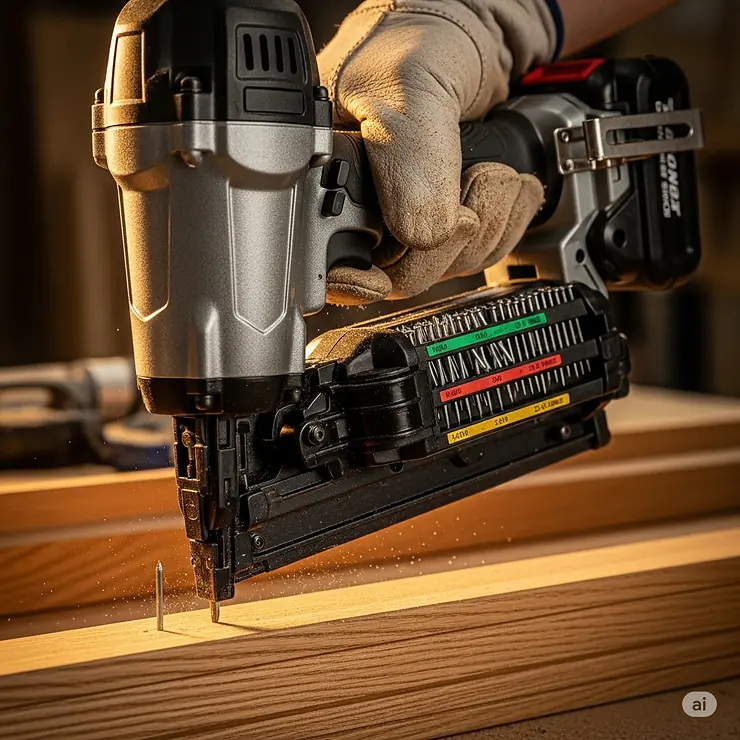
Nail selection depends on project requirements and material specifications. Using nails within manufacturer recommendations ensures optimal performance and prevents tool damage. Different nail types may require depth adjustment modifications to achieve proper countersinking.
Depth adjustment calibration involves testing nail penetration on scrap material similar to the actual project. Starting with conservative settings and gradually increasing depth prevents over-driving that could damage workpieces. Most tools feature easily accessible adjustment mechanisms for quick modifications.
User Compatibility and Ergonomic Considerations
Tool compatibility with different user sizes and experience levels affects productivity and safety. Understanding ergonomic factors helps users select appropriate tools and develop proper techniques.
Weight distribution significantly impacts user fatigue during extended use. Well-balanced tools reduce wrist strain and improve accuracy by minimizing tool movement during nail placement. Battery placement affects overall balance, with some designs performing better than others in this regard.
Grip design and trigger placement accommodate different hand sizes and operating preferences. Comfortable grips reduce fatigue while maintaining positive tool control. Trigger sensitivity should match user preferences, with some users preferring lighter touch while others favor more deliberate activation.
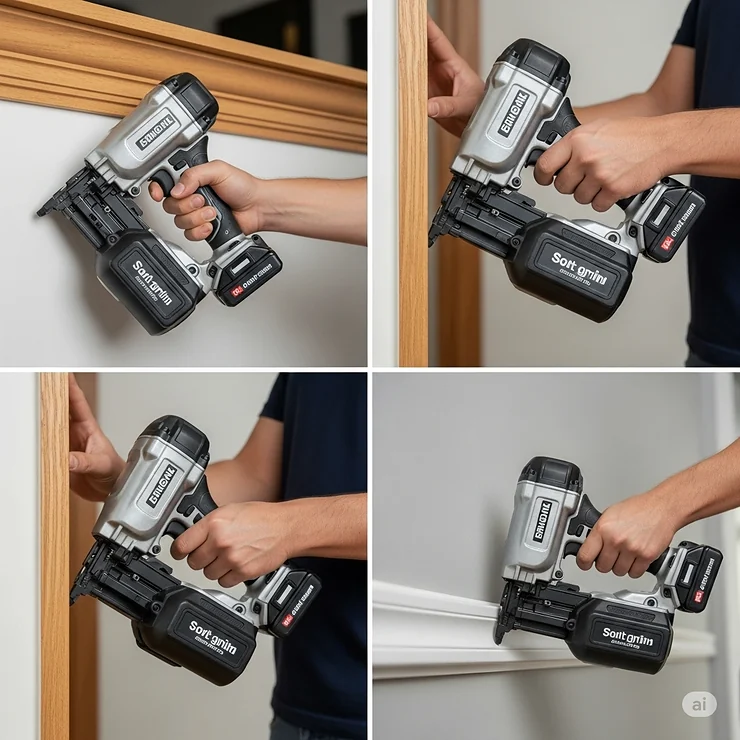
Safety mechanism operation must be intuitive and reliable for all users. Contact actuation systems require proper technique to ensure consistent firing while preventing accidental discharge. Sequential firing modes provide additional safety for inexperienced users.
Sight line visibility affects nail placement accuracy and user confidence. Tools with minimal visual obstruction enable precise nail positioning, particularly important for finish work where accuracy is paramount. LED lighting systems enhance visibility in low-light conditions.
Environmental Requirements and Optimization
Operating environment considerations affect tool performance and longevity. Understanding these factors helps users optimize tool setup for specific conditions.
Temperature extremes can impact battery performance and tool operation. Cold conditions reduce battery capacity while extreme heat can trigger thermal protection systems. Storing tools at moderate temperatures maintains optimal performance.
Humidity and dust exposure require appropriate tool protection and maintenance schedules. Dusty environments necessitate more frequent cleaning and lubrication to maintain optimal performance. Some tools feature better environmental sealing than others.
Altitude changes can affect pneumatic-style drive systems, though modern tools typically compensate automatically. High-altitude operation may require adjustment for optimal nail depth in some cases.
Power source considerations include battery backup strategies for extended work sessions. Professional users often maintain multiple battery packs to ensure continuous operation. Understanding charging requirements helps plan work schedules around battery management.
Safety Considerations and Best Practices
Comprehensive Safety Protocols 🛡️
Safety remains paramount when operating any nail gun, regardless of power source. Cordless finish nailers present unique safety considerations that users must understand and implement consistently.
Personal protective equipment requirements include safety glasses, appropriate clothing, and hearing protection when necessary. While cordless tools operate more quietly than pneumatic alternatives, extended use may still warrant ear protection. Eye protection is essential to prevent injury from debris or misfired nails.
Tool handling procedures emphasize proper grip and stance during operation. Maintaining positive control prevents accidental firing while ensuring accurate nail placement. Never carry activated tools or point them toward any person, regardless of safety mechanism status.
Work area preparation involves securing materials and ensuring stable work surfaces. Unstable workpieces can shift during nail placement, causing misfires or injury. Adequate lighting helps ensure accurate nail placement and reduces eye strain.
Maintenance schedules include regular cleaning, lubrication, and inspection procedures. Following manufacturer recommendations prevents mechanical failures that could compromise safety. Battery maintenance includes proper charging procedures and storage practices.
Training and Skill Development Recommendations
Proper training ensures safe, efficient tool operation while maximizing productivity. Skill development progresses from basic operation to advanced techniques suitable for professional applications.
Basic operation training covers tool setup, safety procedures, and fundamental nail placement techniques. New users should practice on scrap materials to develop confidence and accuracy before beginning actual projects. Understanding tool controls and adjustment procedures prevents improper operation.
Advanced techniques include rapid firing modes, angle adjustments for complex joints, and troubleshooting common issues. Professional users develop efficiency through consistent technique and proper tool maintenance. Understanding material characteristics helps optimize tool settings for different applications.
Troubleshooting skills enable users to address common issues without professional service. Understanding jam clearance procedures, depth adjustment problems, and battery-related issues maintains productivity and prevents tool damage.
Professional development opportunities include manufacturer training programs and industry workshops. Staying current with technology advances and safety updates benefits all users regardless of experience level.
Maintenance and Longevity
Comprehensive Maintenance Schedules 🔄
Establishing regular maintenance routines significantly extends tool life while maintaining optimal performance. Different usage levels require varying maintenance frequencies and procedures.
Daily Maintenance (High-Use Professional Applications):
- Clean exterior surfaces and magazine area of debris
- Verify battery charge level and condition
- Check for loose fasteners or visible damage
- Test safety mechanisms and trigger operation
- Clear any nail jams and verify smooth magazine operation
Weekly Maintenance (Regular Professional Use):
- Detailed cleaning of magazine and driving mechanism
- Lubricate pivot points and adjustment mechanisms
- Inspect driver blade for wear or damage
- Clean battery contacts and verify proper connection
- Test depth adjustment operation and accuracy
Monthly Maintenance (Moderate Use Applications):
- Complete disassembly and cleaning of magazine
- Inspect internal mechanisms for wear or damage
- Replace worn no-mar tips and safety equipment
- Deep clean battery terminals and charging contacts
- Verify tool calibration and accuracy standards
Quarterly Maintenance (Professional and Heavy-Use):
- Professional inspection and service as recommended
- Driver blade replacement if showing wear signs
- Internal mechanism lubrication and adjustment
- Battery pack health assessment and replacement if necessary
- Complete tool testing and performance verification
Troubleshooting Common Issues and Solutions
Understanding common problems and their solutions maintains productivity while preventing more serious damage. Most issues result from improper maintenance, incorrect settings, or worn components.
Inconsistent Nail Depth Issues: Depth adjustment problems often result from clogged adjustment mechanisms or worn components. Clean adjustment areas thoroughly and verify proper lubrication. Check for bent or damaged driver blades that affect nail seating. Battery voltage variations can cause depth inconsistencies as charge levels decrease.
Frequent Jamming Problems: Magazine jams typically result from debris accumulation, damaged nails, or improper nail loading. Regular cleaning prevents most jam issues, while using quality nails reduces the likelihood of bent fasteners causing blockages. Verify magazine alignment and check for damaged feeding mechanisms.
Reduced Firing Power: Decreased driving power often indicates battery problems, worn internal components, or blocked air passages. Test with fresh battery packs to isolate power issues. Clean air passages and verify proper lubrication of moving parts. Worn driver blades or damaged compression components require professional service.
Battery-Related Performance Issues: Battery problems manifest as reduced runtime, inconsistent power delivery, or charging difficulties. Test battery packs in other compatible tools to verify performance. Clean charging contacts and verify proper charger operation. Replace battery packs showing signs of degradation or damage.
Replacement Parts Availability and Warranty Information
Understanding parts availability and warranty coverage helps plan long-term tool ownership costs. Different manufacturers offer varying levels of support and parts availability.
Most professional-grade tools include comprehensive warranty coverage for manufacturing defects and component failures. Understanding warranty terms helps users take advantage of available coverage while avoiding actions that void protection. Registration requirements and proof of purchase documentation should be maintained carefully.
Common replacement parts include driver blades, no-mar tips, magazine springs, and safety components. Availability varies by manufacturer, with established brands typically offering better parts support. Professional users should maintain spare parts inventory for critical components to minimize downtime.
Service network availability affects warranty service and repair capabilities. Manufacturers with extensive service networks provide faster turnaround times and more convenient service locations. Independent service providers may offer competitive alternatives for out-of-warranty repairs.
Upgrade opportunities occasionally become available as manufacturers improve components or add features. Understanding compatibility helps users take advantage of improvements without replacing entire tools. Battery platform longevity affects long-term value as newer battery technologies become available.
Comparative Analysis
Traditional vs. Modern Approaches
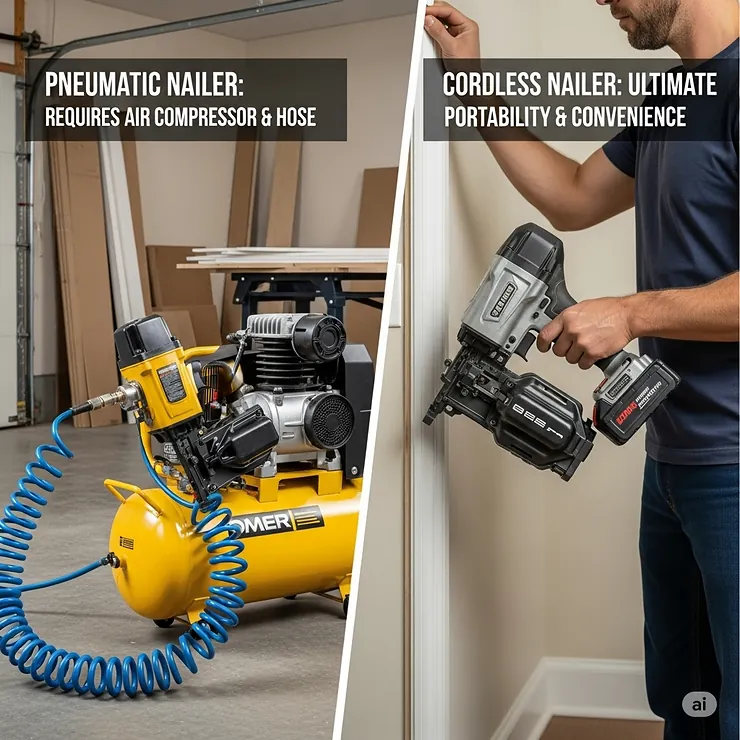
The evolution from pneumatic to cordless finish nailers represents a fundamental shift in approach to nail gun technology. Understanding the trade-offs helps users make informed decisions based on specific application requirements.
Pneumatic System Advantages:
- Unlimited runtime with consistent air supply
- Generally lighter tool weight
- Lower initial cost for basic models
- Proven reliability in professional applications
- Instant power availability
Pneumatic System Disadvantages:
- Requires air compressor and hoses
- Limited mobility and setup complexity
- Noise levels affecting work environment
- Maintenance requirements for air system components
- Trip hazards from air hoses
Cordless System Advantages:
- Complete mobility without air hoses
- Quieter operation in most applications
- Faster setup and breakdown times
- Reduced trip hazards and safety concerns
- No air compressor space requirements
Cordless System Disadvantages:
- Limited runtime requiring battery management
- Higher initial tool costs
- Heavier tools due to battery weight
- Performance variations as batteries discharge
- Charging infrastructure requirements
Price-to-Benefit Ratio Analysis 💰
Evaluating cordless finish nailer value requires considering total cost of ownership beyond initial purchase price. This analysis includes tool cost, battery expenses, maintenance requirements, and productivity factors.
Initial Investment Considerations: Professional-grade cordless finish nailers typically cost $300-$450 compared to $150-$250 for equivalent pneumatic tools. However, cordless systems eliminate air compressor requirements that can cost $200-$500 for professional-quality units. The true comparison includes complete system costs rather than tool-only pricing.
Operating Cost Analysis: Cordless tools require battery replacements every 2-3 years under professional use conditions. Battery costs range from $50-$150 depending on capacity and technology. Pneumatic systems require ongoing air compressor maintenance and eventual replacement but have lower tool replacement costs.
Productivity Value Assessment: Time savings from cordless convenience can justify higher initial costs for professional users. Eliminating setup time and improving mobility often results in 15-25% productivity increases that generate measurable value. DIY users benefit from convenience factors that enable project completion.
Long-term Value Calculations: Professional users typically recover cordless tool investments within 6-12 months through productivity improvements. DIY users benefit from convenience and storage advantages that may justify higher costs even without direct financial returns. Warranty coverage and service availability affect long-term value significantly.
Case Studies and Success Stories
Professional Trim Carpentry Implementation 📈
Case Study 1: High-End Residential Contractor
A custom home builder in Colorado implemented cordless finish nailers across their trim carpentry crews after experiencing productivity challenges with pneumatic systems. The company specialized in luxury homes requiring extensive custom millwork and precision finish details.
Challenge: Complex home layouts with multiple levels and intricate architectural details created significant setup challenges for pneumatic systems. Air hose management consumed substantial time while creating safety hazards in occupied areas during final phases.
Implementation: The company invested in DeWalt DCN660B nailers for each two-person crew, along with sufficient battery inventory to maintain continuous operation. Training focused on optimal battery management and tool-specific techniques.
Results: Project completion times improved by 18% while reducing worker fatigue and safety incidents. Customer satisfaction increased due to reduced noise levels and faster project completion. Tool maintenance costs decreased compared to pneumatic system upkeep.
Key Success Factors:
- Comprehensive crew training on cordless technology
- Adequate battery inventory for continuous operation
- Integration with existing DeWalt tool platform
- Management support for technology transition
Case Study 2: Commercial Interior Contractor
A commercial contractor specializing in office tenant improvements adopted Metabo HPT cordless nailers to address challenges working in occupied buildings with noise restrictions and limited space for equipment.
Challenge: Noise ordinances and space constraints made traditional pneumatic systems impractical for many projects. Setup requirements often exceeded available space in finished office environments.
Implementation: The company selected Metabo HPT NT1865DSA models for their lightweight design and quiet operation. Battery charging stations were established in work vehicles to maintain tool readiness.
Results: Project accessibility improved significantly, enabling work in previously challenging environments. Noise complaints eliminated while maintaining professional finish quality. Employee satisfaction increased due to improved working conditions.
Measured Outcomes:
- 25% increase in billable project hours
- Zero noise-related customer complaints
- 20% reduction in setup/breakdown time
- Improved worker retention rates
DIY Home Improvement Success Stories 🏠
Case Study 3: Basement Finishing Project
A homeowner in Michigan undertook a complete basement finishing project using Ryobi P326 cordless finish nailers after initial attempts with rented pneumatic equipment proved impractical.
Challenge: Basement location made air compressor setup difficult while noise levels disturbed family activities. Limited electrical outlets and confined spaces complicated equipment placement.
Implementation: The homeowner invested in Ryobi P326 nailer and additional batteries, taking advantage of existing ONE+ platform tools. Online tutorials and manufacturer resources provided technique guidance.
Results: Project completion accelerated significantly once cordless tools were adopted. Family disruption minimized while maintaining professional-quality results. Total project cost remained within budget despite tool investment.
Lessons Learned:
- Cordless convenience justified initial investment
- Battery management planning essential for continuous work
- Quality nail selection crucial for optimal results
- Proper technique development improved over time
Case Study 4: Kitchen Renovation Project
A couple in California used Milwaukee M18 FUEL brad nailers for extensive kitchen renovation including custom cabinet installation and detailed trim work.
Challenge: Working around existing appliances and fixtures required maximum flexibility while maintaining precision for visible finish work. Dust control and noise management were important considerations.
Implementation: Milwaukee M18 FUEL 2746-21CT provided precision needed for detailed cabinet work while enabling quick transitions between different work areas. Battery system integration with existing Milwaukee tools provided economic efficiency.
Results: Professional-quality installation achieved with minimal experience using finish nailers. Project timeline met despite challenging working conditions. Investment in quality tools proved worthwhile for multiple future projects.
Success Metrics:
- Zero trim replacement due to damage
- 30% faster installation than original timeline
- High satisfaction with finish quality
- Tools retained for future home improvement projects
Future Trends and Market Evolution
Emerging Technologies and Innovation Directions 🚀
The cordless finish nailer market continues evolving rapidly with technological advances addressing current limitations while expanding capability. Understanding these trends helps users plan future tool investments strategically.
Smart Tool Integration: Manufacturers are developing connected tools that provide performance data, maintenance alerts, and usage analytics. These smart systems help users optimize performance while predicting maintenance requirements. Smartphone integration enables remote monitoring and configuration adjustment.
Advanced Battery Technology: Next-generation battery chemistry promises significant improvements in energy density and charging speed. Solid-state batteries may eliminate current lithium-ion limitations while providing longer runtime and faster charging. These advances will reduce weight while extending operational capacity.
Precision Control Systems: Electronic depth control systems enable precise nail placement regardless of material variations. Sensor technology can automatically adjust driving power based on material density while maintaining consistent countersinking. These systems reduce user skill requirements while improving consistency.
Environmental Adaptation: Future tools will feature enhanced environmental protection for extreme weather conditions and harsh jobsite environments. Improved sealing and material selection will extend operational temperature ranges while reducing maintenance requirements.
Market Trends and Consumer Behavior Shifts 📊
Professional and consumer preferences continue shifting toward cordless technology as performance gaps narrow and convenience advantages become more apparent. Understanding these trends helps predict future market developments.
Professional Adoption Acceleration: Construction professionals increasingly prioritize mobility and convenience over traditional performance advantages of pneumatic systems. Younger workers entering the trades show strong preference for cordless technology, driving market transition.
DIY Market Expansion: Growing DIY participation creates demand for accessible, user-friendly tools that deliver professional results. Cordless finish nailers enable complex projects that would be impractical with traditional pneumatic systems. Market growth in this segment drives innovation and cost reduction.
Sustainability Considerations: Environmental awareness influences tool purchasing decisions as consumers consider energy efficiency and lifecycle environmental impact. Manufacturers respond with improved battery recycling programs and more sustainable manufacturing processes.
Platform Integration Value: Users increasingly value tool systems that share batteries and accessories across multiple product categories. This trend favors established manufacturers with comprehensive cordless platforms while creating barriers for new market entrants.
Industry Predictions and Upcoming Developments
Performance Convergence: Cordless finish nailer performance will achieve complete parity with pneumatic alternatives within the next 2-3 years. Remaining advantages of pneumatic systems will diminish as battery technology and motor efficiency improve.
Cost Reduction Trajectory: Manufacturing scale increases and technology maturation will drive significant cost reductions for cordless systems. Professional-grade performance will become accessible at current mid-range pricing levels within 3-5 years.
Feature Standardization: Common features like tool-free adjustments, LED lighting, and electronic depth control will become standard across all price levels. Premium features will focus on smart technology integration and advanced materials.
Service Infrastructure Development: Improved service networks and parts availability will address current limitations in cordless tool support. Third-party service options will expand as market volume justifies investment in specialized service capabilities.
Investment and Purchase Decision Framework
Cost-Benefit Analysis Frameworks 💼
Making informed cordless finish nailer investments requires systematic evaluation of costs, benefits, and application requirements. Different user categories benefit from different analysis approaches.
Professional Contractor Analysis: Calculate productivity improvements, reduced setup time, and labor cost savings against initial investment and ongoing battery costs. Factor warranty coverage and service availability into long-term cost projections. Consider platform compatibility with existing tool investments.
Serious DIY User Evaluation: Assess project frequency, storage space limitations, and convenience value against tool costs. Consider learning curve benefits and safety improvements compared to rented pneumatic equipment. Evaluate multi-project utility and potential for tool sharing.
Occasional User Considerations: Compare rental costs for pneumatic systems against cordless tool investment for infrequent use. Factor storage requirements and battery maintenance obligations into ownership decision. Consider borrowing or tool-sharing alternatives.
Implementation Strategy Templates
Professional Implementation:
- Pilot program with single crew using preferred tool model
- Performance measurement and crew feedback collection
- Training program development for organization-wide rollout
- Battery inventory planning and charging infrastructure setup
- Gradual transition with pneumatic backup during learning period
- Performance monitoring and optimization over 6-month period
DIY Implementation:
- Project planning to identify specific tool requirements
- Budget establishment including battery and accessory costs
- Training through online resources and practice sessions
- Initial project execution with simple applications
- Skill development through progressively complex projects
- Tool maintenance routine establishment
Budget Planning and Financing Options
Professional Budget Considerations: Professional-grade cordless finish nailers represent significant investments requiring careful budget planning. Consider leasing options for cash flow management while building equipment equity. Group purchases may qualify for volume discounts from distributors.
**Tax implications include depreciation schedules and section 179 deductions that can offset initial investments. Consult accounting professionals to optimize tax treatment of tool purchases. Some manufacturers offer financing programs for qualified commercial customers.
ROI Calculations: Calculate return on investment based on productivity improvements, reduced labor costs, and eliminated compressor expenses. Professional users typically achieve 12-18 month payback periods through efficiency gains. Factor reduced worker compensation claims from improved safety into ROI calculations.
DIY Budget Strategies: Seasonal sales and promotional periods offer significant savings opportunities for patient buyers. Manufacturer rebate programs occasionally provide additional value. Consider platform compatibility to maximize battery investment value across multiple tools.
Financing alternatives include retailer credit programs and manufacturer financing options. Some credit cards offer promotional periods for tool purchases. Evaluate total financing costs against immediate purchase benefits.
🛠️ Transform Your Projects Today!
→ These top-rated cordless finish nailers are ready to ship and will revolutionize your woodworking experience. Don’t let another project suffer from the limitations of pneumatic tools. Click any highlighted model to secure current pricing and fast delivery. Your perfect finish work tool is just one click away! ⚡
Frequently Asked Questions
❓ How long do cordless finish nailer batteries typically last per charge?
❓ Can cordless finish nailers drive nails into hardwood as effectively as pneumatic models?
❓ What gauge nails work best for different finish carpentry applications?
❓ How do cordless finish nailer weights compare to pneumatic alternatives?
❓ Are cordless finish nailers suitable for professional daily use applications?
Recommended for You
- 7 Best Metabo 16 Gauge Finish Nailer Cordless Models For Ultimate Precision in 2025
- 7 Best Metabo 15 Gauge Finish Nailer Models That Transform Your Woodworking in 2025
- 7 Best Metabo Finish Nailer Models That Pros Actually Use in 2025
Conclusion
The best cordless finish nailer for your specific needs depends on balancing performance requirements, budget constraints, and application frequency. Professional contractors benefit most from premium models like the DeWalt DCN660B or Metabo HPT NT1865DSA that deliver consistent performance under demanding conditions. These tools justify their higher costs through productivity improvements and reliability.
DIY enthusiasts and occasional users find excellent value in models like the Ryobi P326 that provide professional-quality results at accessible price points. The convenience and safety advantages of cordless technology make these tools practical for home improvement projects that would be challenging with pneumatic alternatives.
The technology revolution in cordless finish nailers has reached a tipping point where performance matches pneumatic tools while providing superior convenience. Battery life, driving power, and reliability have improved dramatically, making cordless the logical choice for most applications. The investment in quality cordless finish nailers pays dividends through improved productivity, enhanced safety, and greater project accessibility.
As the market continues evolving, early adopters of premium cordless technology position themselves advantageously for future developments. The trend toward complete cordless workshop ecosystems makes platform compatibility increasingly valuable. Whether you’re a professional contractor or dedicated DIY enthusiast, the time has arrived to embrace cordless finish nailer technology.
🛠️ Ready to Upgrade Your Finish Work?
→ These carefully selected cordless finish nailers represent the best available technology for 2025. Each model has proven itself through extensive professional testing and real-world applications. Click any highlighted tool to check current availability and pricing. Don’t let outdated tools limit your potential! 🎯
Recommended for You: Disclaimer: This article contains affiliate links. If you purchase products through these links, we may earn a small commission at no additional cost to you.
✨ Found this helpful? Share it with your friends! 💬🤗
