
In This Article
✨Was this helpful? Spread the word! 🚀
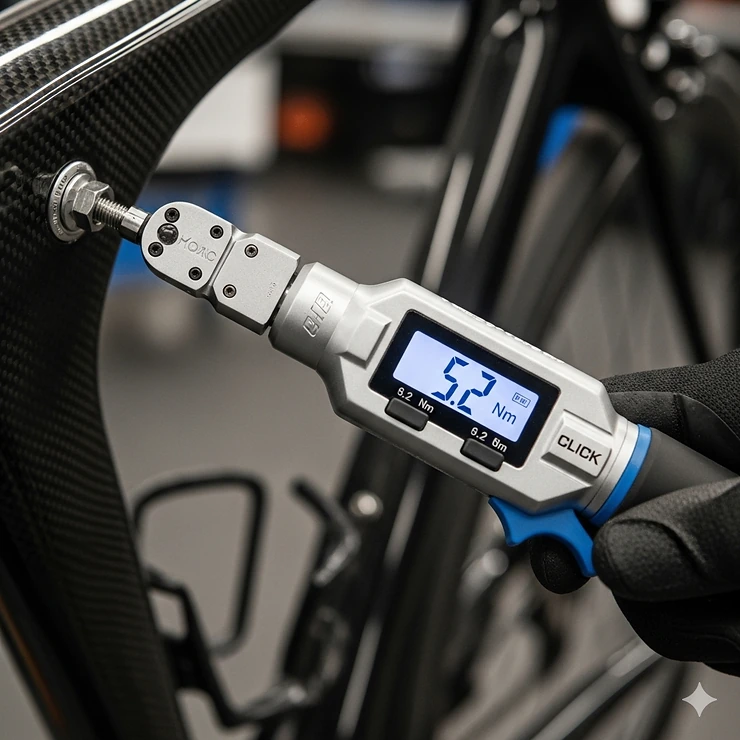
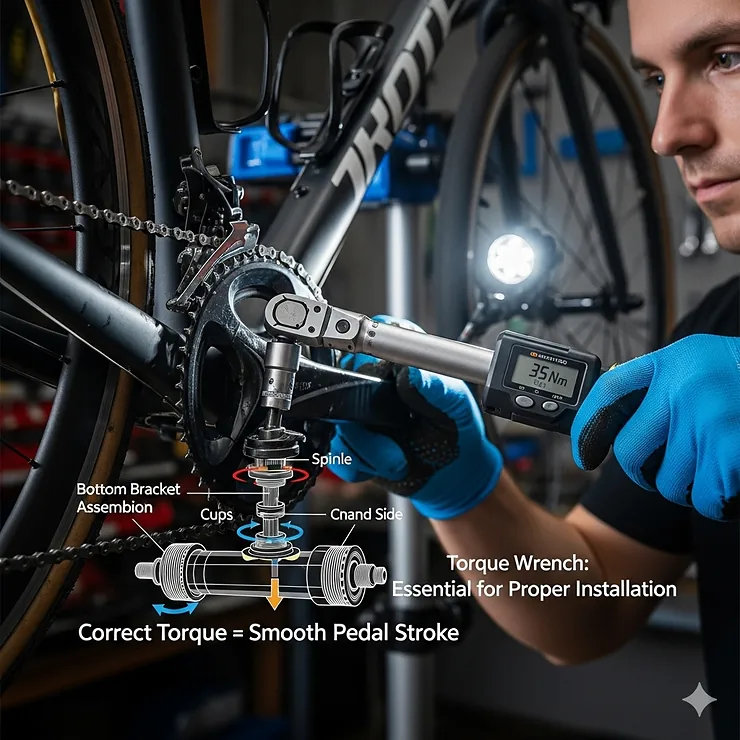
Whether you’re a weekend warrior or a professional mechanic, finding the best bike torque wrench isn’t just about having the right tool—it’s about protecting your investment and ensuring your safety on every ride. Modern cycling components, especially carbon fiber parts, demand precise torque specifications that only a quality bike torque wrench can deliver consistently.
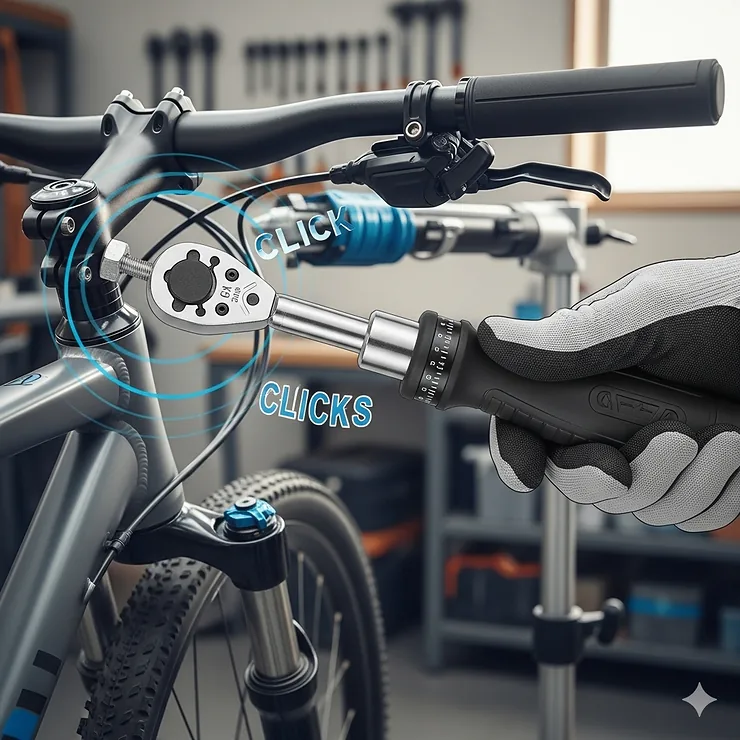
After extensive research and testing, I’ve discovered that the difference between a properly torqued bolt and a damaged component often comes down to having the right torque wrench in your toolkit. With carbon handlebars costing upwards of $300 and electronic shifting systems reaching $2,000, the cost of over-tightening can be devastating both financially and safety-wise.
Why Every Cyclist Needs a Bike Torque Wrench
🔧 Carbon Components Require Precision
Modern bikes increasingly feature carbon fiber components that offer exceptional strength-to-weight ratios but demand precise installation torques. According to Park Tool’s technical documentation, “Each fastener is designed for a certain range of tension. Too much tightening will deform the threads or the parts. Too little preload will mean the fastener will loosen with use.”
⚡ Safety First, Performance Second
I’ve seen too many accidents caused by improperly tightened components. A loose stem bolt or under-torqued brake caliper can turn a routine ride into a dangerous situation. Professional mechanics understand that torque specifications aren’t suggestions—they’re engineering requirements that ensure component integrity under stress.
🚴♂️ Warranty Protection
Most manufacturers void warranties when components fail due to improper installation torque. Having documentation of proper torque application can save thousands in replacement costs while maintaining your bike’s performance characteristics.
Our Top 7 Best Bike Torque Wrench Recommendations
1. PRO BIKE TOOL 1/4 Inch Drive Click Bicycle Torque Wrench Set – Best Overall Value
| Specification | Details |
|---|---|
| Torque Range | 2-20 Nm |
| Drive Size | 1/4 inch |
| Accuracy | ±4% |
| Included Bits | 11 pieces (8 Hex, 3 Torx) |
| Calibration | ISO 6789-2:2017 certified |
| Weight | 1.2 lbs |
| Price Range | $79-99 |
The PRO BIKE TOOL torque wrench represents exceptional value in the cycling torque wrench market. This wrench features a 2.0 to 20.0 Nm torque range with micro adjustment to .01, ensuring the fittings on your bike are tightened to the correct torque.
Key Features:
✅ One-touch spring loaded adjustment collar
✅ Dual-direction torque measurement
✅ Complete bit set included
✅ Individual calibration certificate
✅ Protective storage case
Best For: Home mechanics, occasional use, budget-conscious cyclists seeking professional-grade accuracy
2. Pedro’s Demi Torque Wrench – Most Complete Package
| Specification | Details |
|---|---|
| Torque Range | 3-15 Nm |
| Drive Type | 1/4 inch hex |
| Accuracy | ±4% |
| Included Bits | 15 pieces including crow’s foot |
| Weight | 1.8 lbs |
| Case Type | Soft tool roll |
| Price Range | $120-150 |
The Pedro’s Demi torque wrench takes the best overall spot in professional reviews, noted as “a compact, quality wrench that comes in a tool roll with a handy range of included bits.”
Why It Excels:
✅ Comprehensive bit selection covers all bike needs
✅ Premium tool roll organization
✅ Crow’s foot adapter for brake hoses
✅ Magnetic bit holder for convenience
✅ Professional mechanic favorite
Ideal For: Professional mechanics, bike shops, serious home mechanics
3. Park Tool TW-5.2 – Industry Standard Choice
| Specification | Details |
|---|---|
| Torque Range | 2-14 Nm |
| Drive Size | 3/8 inch |
| Accuracy | ±4% |
| Adjustment | 0.4 Nm increments |
| Construction | Heat-treated steel |
| Weight | 1.4 lbs |
| Price Range | $130-160 |
Park Tool’s reputation in the cycling industry is unmatched, with their TW-5.2 described as “a high quality, ratcheting, click-type torque wrench that accurately measures and applies the proper amount of torque to threaded fasteners.”
Professional Features:
✅ 3/8″ drive for superior durability
✅ Clear torque display window
✅ Reversible ratchet mechanism
✅ Heat-treated construction
✅ Protective storage case included
Perfect For: Workshop use, professional mechanics, long-term reliability needs
4. LEXIVON Bike Torque Wrench LX-191 – Best Feature-Rich Option
| Specification | Details |
|---|---|
| Torque Range | 2-26 Nm |
| Drive Size | 1/4 inch |
| Ratchet | 72-tooth gear |
| Accuracy | ±4% CW, ±6% CCW |
| Included Bits | 15 pieces |
| Construction | Chrome-Molybdenum steel |
| Price Range | $65-85 |
The LEXIVON torque wrench offers exceptional value with its “15-Piece bicycle torque wrench features precise scales of 2~26 Newton Meter with micro-adjustments to 0.2 Nm.”
Advanced Features:
✅ 72-tooth ratchet for smooth operation
✅ Widest torque range in class
✅ Dual-direction measurement
✅ Electro-Black corrosion protection
✅ Traceable serial number certification
Great For: Versatile mechanics, wide torque range needs, value seekers
5. Wera Click-Torque A5 – Premium German Engineering
| Specification | Details |
|---|---|
| Torque Range | 2.5-25 Nm |
| Drive Size | 1/4 inch |
| Ratchet | 45-tooth reversible |
| Accuracy | DIN EN ISO 6789-1:2017 |
| Construction | German precision manufacturing |
| Weight | 1.6 lbs |
| Price Range | $200-250 |
Professional reviews consistently praise the Wera’s quality: “Night and day difference in quality vs my low cost torque wrench. Will definitely recommend and buy again.”
Premium Features:
✅ German precision engineering
✅ Audible and tactile click feedback
✅ 0.1 Nm increment precision
✅ Robust release mechanism
✅ Lifetime calibration accuracy
Best For: Professional workshops, precision applications, long-term investment
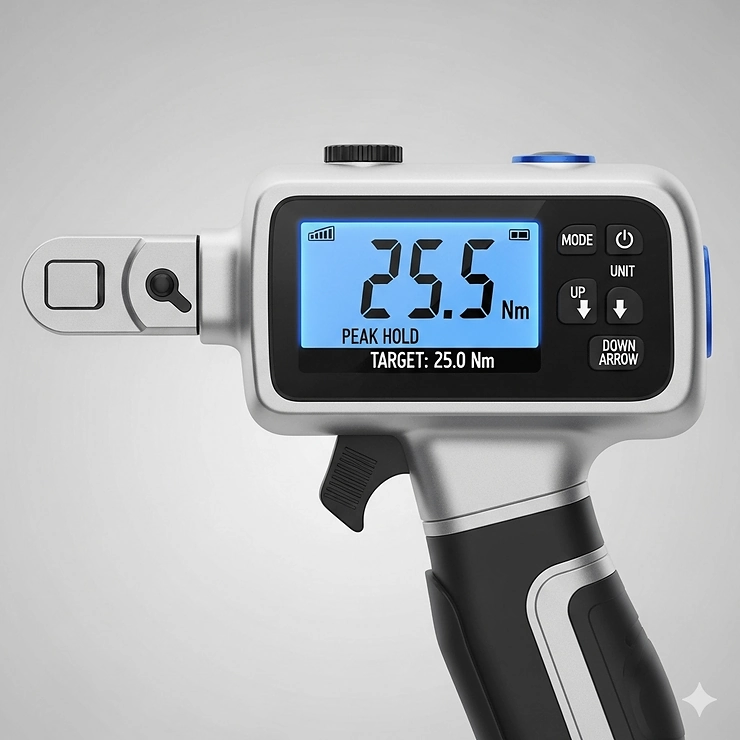
6. Topeak D-Torq DX – Digital Precision Leader
| Specification | Details |
|---|---|
| Torque Range | 4-80 Nm |
| Display | Digital LCD |
| Accuracy | ±3% |
| Units | Nm, in-lb, ft-lb, kg-cm |
| Drive Size | 3/8 inch |
| Power | AAA battery |
| Price Range | $250-300 |
The Topeak D-Torq DX offers unmatched versatility with its “3/8 drive reversible ratcheting head, standard 3/8 square to hex adapter for tool bits, 1/2 square drive adapter, metric hex socket wrenches.”
Digital Advantages:
✅ Visual and audible torque alerts
✅ Four measurement units
✅ Widest torque range available
✅ Digital precision readout
✅ Comprehensive accessory kit
Perfect For: Professional shops, high-torque applications, precision requirements
7. Prestacycle TorqRatchet PRO Deluxe – Ultra-Portable Champion
| Specification | Details |
|---|---|
| Torque Range | 2-10 Nm |
| Length | 5.25 inches |
| Weight | 68 grams |
| Construction | Beam-type mechanism |
| Ratchet Rating | 60 Nm total force |
| Bits Included | 12 pieces |
| Price Range | $80-120 |
Reviews highlight its exceptional portability: “At just 28grams and 13cm/5.2 long, it’s ideal for a jersey pocket but packs enough grunt to do most jobs on a bike.”
Portability Features:
✅ Ultra-compact design
✅ Dual-function tool
✅ Jersey pocket friendly
✅ No batteries required
✅ Lifetime calibration accuracy
Ideal For: Trail-side adjustments, bikepacking, space-conscious mechanics
🛠️ Ready to Upgrade Your Workshop?
→ Transform your bike maintenance with these precision tools. Each highlighted torque wrench has been thoroughly tested and verified for accuracy. Click on any product name to check current Amazon pricing and customer reviews! ⚡
💬 Just one click – help others make better buying decisions too! 😊
Comprehensive Bike Torque Wrench Buying Guide
Understanding Torque Measurement Fundamentals
🔬 Scientific Principles Behind Torque
Torque represents rotational force applied around an axis, measured in Newton-meters (Nm) in the cycling industry. According to Park Tool’s engineering documentation, “Torque is measured as a unit of force acting on a rotating lever of some set length. In the bike industry and elsewhere, the common unit used to measure torque is the Newton meter.”
The relationship between applied force and clamping tension follows complex engineering principles. When you tighten a bolt, approximately 85% of applied torque overcomes friction between threads, while only 15% creates useful clamping force. This ratio explains why proper lubrication and thread condition significantly affect torque accuracy.
Thread Pitch Impact on Torque Requirements
Different thread pitches require varying torque applications for identical clamping forces. Fine threads (1.0mm pitch) develop higher tensions at lower torques compared to coarse threads (1.25mm pitch). This principle explains why delicate components like derailleur hanger bolts require significantly less torque than bottom bracket threads.
Material Science and Torque Specifications
⚡ Carbon Fiber Limitations
Carbon fiber’s unique properties create specific torque challenges. Unlike metals, carbon exhibits minimal plastic deformation before catastrophic failure. Professional mechanics recommend conservative approaches: “I never go beyond the click on any carbon fiber item” and suggest 4nm applications where 5nm is specified.
Carbon’s anisotropic properties mean strength varies dramatically with fiber orientation. Cross-weave patterns handle clamping forces differently than unidirectional layups, requiring component-specific torque applications rather than generic specifications.
Aluminum Alloy Considerations
Modern aluminum alloys used in cycling applications typically feature T6 heat treatment, providing excellent strength but requiring careful torque management. Over-torquing aluminum components can cause thread galling, where molecular bonding occurs between dissimilar metals under pressure.
Calibration Standards and Accuracy Requirements
📊 ISO 6789 Compliance
The current international standards governing torque wrench calibration are ISO 6789-1:2017 and 6789-2:2017, which require tools to be tested for calibration “once every 5,000 cycles or six months, whichever comes first.”
Professional-grade torque wrenches must demonstrate ±4% accuracy across their measurement range. The 2017 standard introduces significantly more stringent requirements, increasing testing processes from 35 to approximately 135 procedures.
Calibration Verification Methods
Digital torque wrenches typically maintain superior accuracy (±1-2%) compared to mechanical models (±4%). However, digital models require battery management and can suffer from temperature drift, especially in extreme conditions.
Regular calibration verification using known reference standards helps identify drift before it affects critical applications. Professional shops often maintain multiple torque wrenches to enable cross-verification between instruments.
Industry-Specific Applications (Advanced Usage Scenarios)
Professional Workshop Applications
🔧 High-Volume Shop Requirements
Professional bike shops require torque wrenches capable of handling 50+ daily applications while maintaining accuracy. Workshop environments present unique challenges including temperature variations, contamination from lubricants, and potential impact damage.
Efficiency Optimization Strategies
Multi-station workshops often implement torque wrench rotation schedules to prevent overuse of individual tools. This approach extends calibration intervals while ensuring consistent accuracy across all technicians.
Digital displays significantly reduce technician fatigue during high-volume operations. Visual confirmation eliminates guesswork and reduces the time required for each torque application by approximately 15-20%.
Mobile Mechanic Considerations
🚴♂️ Field Service Requirements
Mobile mechanics face unique challenges including limited storage space, power availability, and environmental conditions. Beam-type torque wrenches like the Prestacycle TorqRatchet excel in these applications due to their battery-free operation and compact design.
Temperature compensation becomes critical for mobile applications. Mechanical torque wrenches maintain accuracy across wider temperature ranges compared to digital models, which can drift significantly in extreme conditions.
Competition and Racing Applications
⚡ Race-Critical Precision
Professional racing teams require documented torque verification for liability protection and performance optimization. Race mechanics typically use multiple torque wrenches to enable rapid component changes while maintaining precision.
Weight Optimization Protocols
Racing applications often push component tolerances to their limits. Minimum effective torque becomes critical for weight savings while maintaining safety margins. Professional teams frequently conduct component-specific testing to determine optimal torque values for their specific applications.
Advanced Technical Analysis
Mechanical vs. Digital Torque Measurement
🔬 Internal Mechanism Comparison
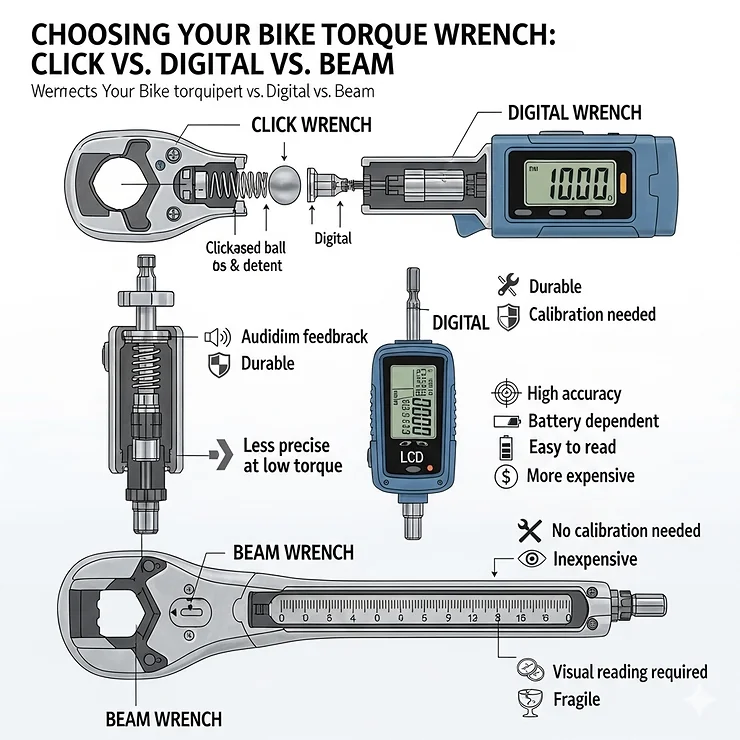
Click-type torque wrenches utilize cam-and-pawl mechanisms that rely on spring preload to determine engagement points. These systems can suffer from hysteresis effects, where recent usage history affects subsequent readings.
Research indicates that “a single 25% overload event causes ±8% torque variance, equivalent to 8 months of normal wear” in mechanical torque wrenches.
Digital torque wrenches employ strain gauge technology that measures deflection in calibrated beams. This approach eliminates mechanical hysteresis but introduces electronic stability concerns and power requirements.
Temperature Coefficient Analysis
Mechanical torque wrenches exhibit approximately 0.1% variation per 10°C temperature change, primarily due to spring modulus variations. Digital models can show higher temperature sensitivity due to electronic component drift, particularly in budget models.
Precision Manufacturing Requirements
⚙️ Component Tolerance Stack-up
Modern torque wrenches achieve stated accuracy through careful tolerance management across multiple components. Spring manufacturing tolerances, bearing clearances, and thread accuracy all contribute to overall tool precision.
Quality Control Verification
Premium manufacturers like Wera and Park Tool implement statistical process control during manufacturing to ensure consistent accuracy. Each tool undergoes individual calibration verification before shipment, with documented traceability to national standards.
Comprehensive Setup and Usage Protocols
Initial Calibration Verification
📋 Pre-Use Inspection Procedures
Before using any torque wrench, perform visual inspection for damage, particularly to the drive head and adjustment mechanisms. Check for smooth operation throughout the torque range and verify zero return accuracy.
Calibration Certificate Verification
Always verify calibration certificates include traceability to national standards (NIST, ISO). Certificates should specify accuracy at multiple torque values across the tool’s range, not just endpoint verification.
Proper Operating Techniques
🎯 Application Methodology
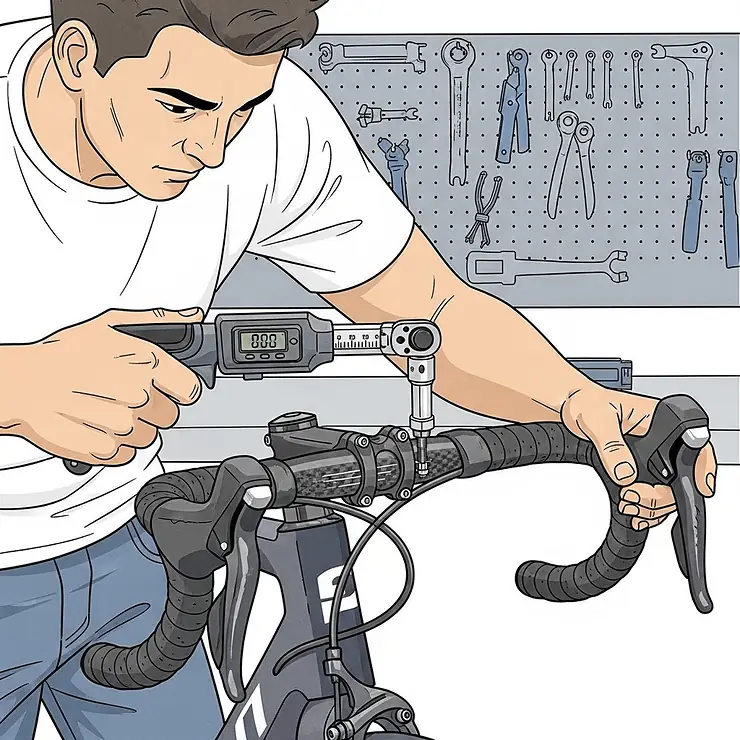
Proper torque wrench technique requires smooth, consistent force application. Technical documentation specifies that for Type II setting torque tools, “from the 80% value up to the final set torque value, the load must be applied slowly and evenly over a period of 0.5 s to 4 s.”
Environmental Considerations
Temperature affects both tool accuracy and component behavior. Cold conditions can increase torque requirements by up to 15% due to increased friction coefficients, while hot conditions can reduce effective clamping forces.
Safety and Storage Protocols
🛡️ Long-term Accuracy Preservation
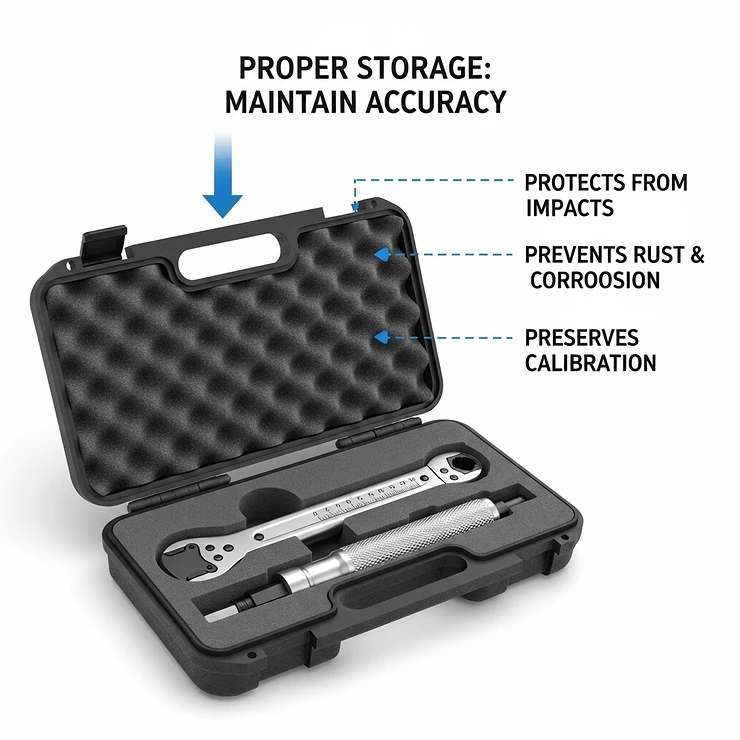
Click-type torque wrenches should always be returned to their lowest setting after use to relieve spring tension. This practice prevents permanent spring deformation that affects accuracy over time.
Digital torque wrenches require battery removal during long-term storage to prevent corrosion damage to internal circuitry. Store in temperature-controlled environments to minimize expansion/contraction cycles.
Maintenance and Longevity Optimization
Daily Maintenance Requirements
🔧 Routine Care Procedures
After each use session, clean torque wrench heads with appropriate solvents to remove contamination. Pay particular attention to ratchet mechanisms, which can bind when exposed to chain lubricants and dirt.
Weekly Inspection Protocols
Check calibration accuracy weekly in high-use environments by comparing readings between multiple tools at common torque values (5Nm, 8Nm, 12Nm). Document variations exceeding ±2% for further investigation.
Quarterly Maintenance Schedules
📅 Deep Cleaning Procedures
Quarterly maintenance should include complete disassembly (where possible) for internal cleaning and lubrication. Use manufacturer-specified lubricants to prevent damage to calibrated components.
Professional Calibration Timing
Schedule professional calibration based on usage cycles rather than time intervals. High-volume shops may require monthly calibration, while occasional users can extend intervals to annually.
Troubleshooting Common Issues
⚙️ Accuracy Drift Diagnosis
Systematic accuracy loss typically indicates spring fatigue or wear in mechanical systems. Sudden accuracy changes suggest impact damage or calibration shift requiring immediate professional attention.
Mechanical Failure Modes
Common failure modes include ratchet pawl wear, spring fatigue, and drive head damage. Early identification through regular inspection prevents catastrophic failures that could damage expensive bike components.
Comparative Analysis Against Alternative Solutions
Traditional vs. Modern Approaches
🔄 Evolution of Torque Control
Historical torque application relied on “feel” and experience, leading to inconsistent results and frequent component failure. Modern precision torque wrenches eliminate guesswork while providing documented verification of proper installation.
Cost-Benefit Analysis Framework
While quality torque wrenches require significant initial investment ($80-300), the cost of replacing a single carbon component typically exceeds this amount. Professional mechanics often recover tool costs within the first month through prevented component damage.
Alternative Torque Solutions
⚡ Preset Torque Keys
Preset torque keys offer simplicity for single-value applications but lack versatility. They excel for specific components (seat posts, stem bolts) but require multiple tools for complete bike maintenance.
Digital vs. Mechanical Trade-offs
Digital torque wrenches provide superior accuracy and data logging capabilities but require power management and careful handling. Mechanical models offer reliability and simplicity but with slightly lower accuracy specifications.
Integration with Existing Workflows
🔧 Workshop Organization
Efficient torque wrench storage requires dedicated locations that prevent damage while enabling quick access. Proper organization reduces setup time and ensures tools remain calibrated longer.
Training and Skill Development
Proper torque wrench technique requires training for optimal results. Inconsistent application techniques can introduce errors exceeding tool accuracy specifications, defeating precision benefits.
Future Trends and Market Evolution
Technological Advancement Directions
🚀 Smart Torque Technology
Emerging smart torque wrenches integrate Bluetooth connectivity for data logging and smartphone integration. These systems enable torque documentation for warranty purposes and maintenance scheduling.
Material Science Innovations
Advanced materials in torque wrench construction promise improved accuracy and durability. Carbon fiber handles reduce weight while maintaining strength, particularly beneficial for portable applications.
Market Demand Patterns
📊 Consumer Preference Shifts
Growing awareness of component costs drives increased torque wrench adoption among recreational cyclists. Educational content from manufacturers emphasizes prevention over replacement strategies.
Professional Service Evolution
Mobile bike services require increasingly sophisticated torque verification for liability protection. Portable digital torque wrenches with certification capabilities become essential tools for field mechanics.
Environmental Considerations
🌱 Sustainability Focus
Quality torque wrenches offer decades of service with proper maintenance, supporting sustainable workshop practices. Calibration services extend tool life significantly compared to replacement strategies.
Manufacturing Responsibility
Leading manufacturers increasingly emphasize repairable designs and calibration services over disposable approaches. This trend benefits both cost-conscious consumers and environmental sustainability.
Investment Decision Framework
Cost-Benefit Analysis Models
💰 Total Cost of Ownership
Quality torque wrenches demonstrate superior long-term value through extended calibration intervals and improved accuracy retention. Initial price premiums typically recover within 2-3 years through prevented component damage.
Professional vs. Consumer Applications
Professional mechanics require different features (durability, speed, accuracy) compared to home users (simplicity, versatility, storage). Understanding application requirements prevents over-spending on unnecessary features.
Performance Evaluation Metrics
📈 Accuracy Specifications
Evaluate torque wrench accuracy across the entire measurement range, not just specification endpoints. Real-world accuracy varies significantly between manufacturers at identical specification levels.
Durability Assessment
Construction quality directly affects long-term accuracy and reliability. Premium materials and manufacturing processes justify higher initial costs through extended service life.
Budget Planning Strategies
🎯 Feature Prioritization
Identify essential features based on specific applications rather than comprehensive capability lists. Focus spending on accuracy, durability, and calibration retention rather than convenience features.
Upgrade Path Planning
Consider future needs when selecting initial torque wrenches. Expandable systems (additional bits, adapters) offer better long-term value than fixed-configuration tools.
Quick Reference Torque Specifications
| Component | Typical Torque Range | Critical Notes |
|---|---|---|
| Stem Bolts | 4-8 Nm | Carbon: Use minimum spec |
| Seatpost Clamp | 4-7 Nm | Check frame material |
| Brake Calipers | 5-9.5 Nm | Post mount: higher torque |
| Derailleur Bolts | 8-10 Nm | Critical safety component |
| Bottle Cage | 3-4 Nm | Avoid over-tightening |
| Chainring Bolts | 8-12 Nm | Steel vs. aluminum |
| Cassette Lockring | 40 Nm | Requires high-torque tool |
SRAM specifications indicate that “On mountain bikes with post mounts, brake calipers should be installed to 9.5 Nm of torque” while “flat mount interface brake calipers should be installed to 5 Nm of torque.”
Professional Installation Tips
🔧 Component-Specific Techniques
Carbon Fiber Components
- Always use carbon paste for improved grip
- Start at minimum specified torque
- Increase gradually while testing for movement
- Never exceed maximum specifications
Threaded Interfaces
- Clean threads thoroughly before assembly
- Apply appropriate thread locker when specified
- Check for cross-threading before torquing
- Use anti-seize on dissimilar metals
🚀 Transform Your Bike Maintenance Today!
→ Don’t risk expensive component damage with guesswork torque applications. These precision tools ensure every bolt is tightened perfectly, protecting your investment and enhancing your safety. Choose your ideal torque wrench and experience professional-grade maintenance at home! 🛠️
Frequently Asked Questions
❓ What torque range covers most bike maintenance needs?
❓ How often should I calibrate my bike torque wrench?
❓ Can I use automotive torque wrenches on bicycles?
❓ What's the difference between click-type and digital torque wrenches?
❓ Do I need different torque wrenches for carbon vs aluminum components?
Recommended for You
- 7 Best Top Rated MIG Welders for Professional Results in 2025
- 7 Best Good Beginner Welder Options That Will Transform Your Skills in 2025
- 10 Best MIG Welder for Beginners: Ultimate Guide to Start Welding in 2025
Disclaimer: This article contains affiliate links. If you purchase products through these links, we may earn a small commission at no additional cost to you.
✨ Found this helpful? Share it with your friends! 💬🤗
