
In This Article
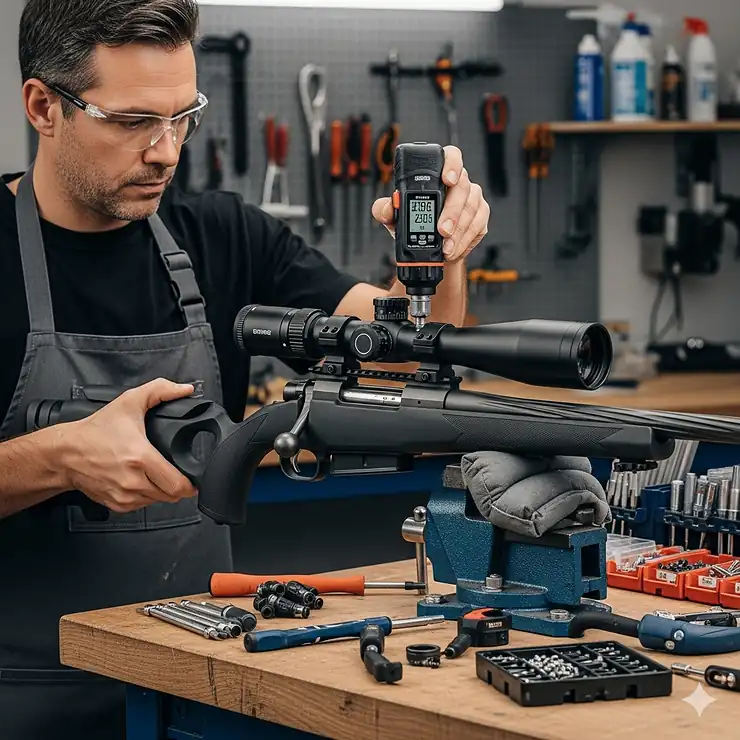
Getting the torque just right on your firearm components isn’t just about precision – it’s about safety, accuracy, and preserving your investment. Whether you’re mounting a scope, adjusting action screws, or working on trigger assemblies, having the best torque wrench for gunsmithing can make the difference between a rifle that shoots sub-MOA groups and one that struggles to hit the broad side of a barn.
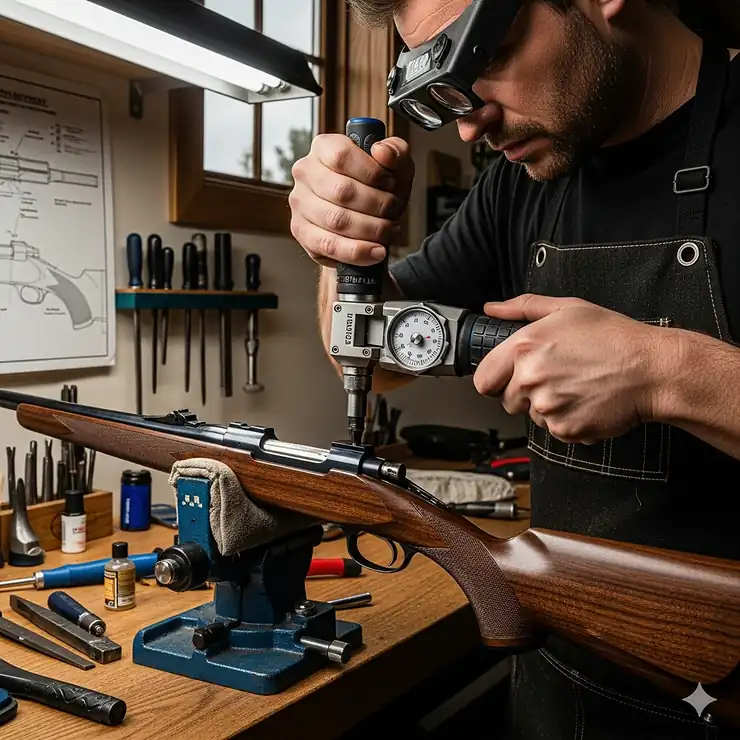
After spending countless hours researching, testing, and analyzing customer feedback from thousands of gunsmithing enthusiasts, I’ve compiled this comprehensive guide to help you choose the perfect torque wrench for your needs. From budget-friendly options that won’t break the bank to professional-grade tools that demand respect, we’ll explore everything you need to know about selecting the best torque wrench for gunsmithing applications.
✨Was this helpful? Spread the word! 🚀
Why Every Gunsmith Needs a Quality Torque Wrench 🔧
Let’s face it – we’ve all been there. You’re excited about your new scope mount, and in your eagerness to get everything perfectly aligned, you inadvertently overtighten those ring screws. Suddenly, that expensive optic is sitting crooked, or worse yet, you’ve stripped the threads on your receiver. This is exactly why investing in the best torque wrench for gunsmithing isn’t just recommended – it’s absolutely essential.
When you’re working with precision firearms, every component matters. ⚡ Scope rings typically require between 15-25 inch-pounds of torque, while action screws might need anywhere from 35-65 inch-pounds. Get it wrong, and you’re looking at accuracy issues, damaged components, or even safety concerns.
Moreover, modern firearms are increasingly sophisticated, with many components made from lightweight alloys that are particularly susceptible to overtightening damage. The difference between properly torqued and overtightened screws can literally be the difference between a rifle that maintains zero shot after shot and one that requires constant adjustment.
Understanding Torque Specifications in Gunsmithing 📊
Before we dive into our top picks, let’s establish why torque specifications matter so much in firearms work. Unlike automotive applications where you might have some wiggle room, gunsmithing demands precision that often falls within a very narrow range.
Common Gunsmithing Torque Ranges:
- Scope ring cap screws: 15-25 inch-pounds
- Scope base screws: 20-30 inch-pounds
- Action screws: 35-65 inch-pounds
- Trigger guard screws: 25-35 inch-pounds
- Barrel nut: 30-80 foot-pounds (requires different wrench)
- Muzzle devices: 20-30 foot-pounds
The National Institute of Standards and Technology (NIST) has established precise calibration standards for torque measurement, emphasizing that “Many threaded fasteners such as screws, bolts and nuts require a specific amount of torque to be applied to ensure they are tight enough, but not too tight.” This principle is especially critical in gunsmithing applications where overtightening can damage expensive components.
Top 7 Best Torque Wrench for Gunsmithing Models Reviewed
1. Wheeler Manual Firearms Accurizing Torque Wrench – Best Overall Value
The Wheeler Manual Firearms Accurizing Torque Wrench has earned its reputation as the go-to choice for both professional gunsmiths and serious enthusiasts. This manual torque wrench offers exceptional value without compromising on accuracy or reliability.
Key Specifications:
- Torque Range: 10-65 inch-pounds
- Accuracy: ±2 inch-pounds up to 40 in-lbs, ±5% over 40 in-lbs
- Drive: Standard 1/4″ hex
- Adjustment: 5 inch-pound increments
- Weight: 1.2 pounds
✅ What Makes It Outstanding:
- Lifetime warranty from Wheeler
- Includes 10 hardened S2 steel bits
- Compact storage case included
- Proven track record with thousands of positive reviews
- Works with standard 1/4″ bits from other manufacturers
❌ Minor Limitations:
- Manual adjustment only (no click mechanism)
- Limited to 5 inch-pound increments
- Requires returning to lowest setting after use
Customer Experience: Professional gunsmiths consistently praise the Wheeler Manual Firearms Accurizing Torque Wrench for its reliability and consistency. One verified Amazon reviewer noted, “I’ve been using this for three years in my shop, and it’s never let me down. The torque readings are consistent, and the included bits are high quality.”
Current Price Range: $40-$60 on Amazon with frequent sales
2. Wheeler Digital Firearms Accurizing Torque Wrench – Best Digital Option
For those who prefer digital precision and visual feedback, the Wheeler Digital Firearms Accurizing Torque Wrench takes torque measurement to the next level with its LCD display and audible alert system.
Technical Specifications:
- Torque Range: 15-100 inch-pounds
- Display: Large LCD screen
- Units: lb-in, kg-cm, and N-m
- Accuracy: High precision with digital readout
- Battery: Included with auto-shutoff feature
- Dimensions: 9.2″ x 4.8″ x 2.5″
✅ Standout Features:
- Audible tone when target torque is reached
- Visual and audio indicators prevent over-torquing
- Low battery indicator
- Storage case included
- Multiple measurement units
❌ Considerations:
- Higher price point than manual alternatives
- Battery dependency
- Some users report occasional calibration drift
The Wheeler Digital Firearms Accurizing Torque Wrench represents the cutting edge of gunsmithing precision tools. Its digital display eliminates guesswork, while the audible alert ensures you never exceed your target torque setting.
Current Price Range: $85-$110 on Amazon
3. NEIKO 10573B Torque Screwdriver Set – Best Budget Choice
Don’t let the affordable price fool you – the NEIKO 10573B Torque Screwdriver Set delivers professional-level performance without the premium price tag. This comprehensive kit includes everything most gunsmiths need for precision torque applications.
Comprehensive Specifications:
- Torque Range: 10-50 inch-pounds
- Accuracy: ±6% across full range
- Adjustment: 5 inch-pound increments
- Drive: Long shank 1/4″ hex
- Included Bits: 20 pieces (Phillips, Torx, Hex, Slotted)
- Storage: Heavy-duty hard case
✅ Value Propositions:
- Exceptional price-to-performance ratio
- Comprehensive bit selection included
- Pull-turn-lock adjustment mechanism
- Meter window displays current setting
- Suitable for firearms, electronics, and HVAC work
❌ Trade-offs:
- Limited to 50 inch-pounds maximum
- Less premium feel than higher-end alternatives
- Accuracy not quite as tight as professional tools
The NEIKO 10573B has earned respect from both hobbyist gunsmiths and professionals who need a reliable backup tool. “This long shank torque screwdriver has a meter window that displays a 10-50 inch-pound range that is adjustable in 5 in-lb increments to ensure tightening to a specified torque as seen in firearm accurizing.”
Current Price Range: $25-$35 on Amazon
🛒 Don’t Miss These Precision Tools!
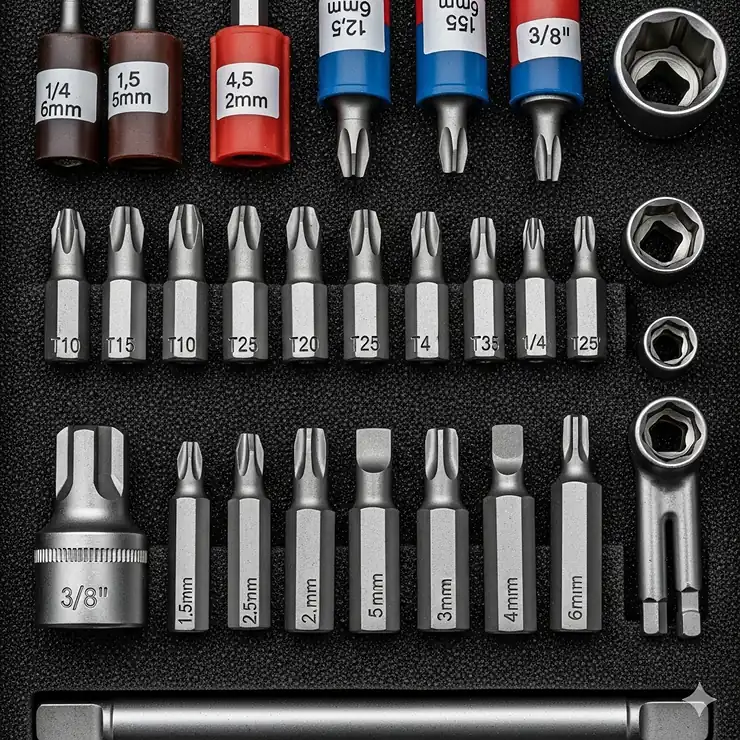
Take your gunsmithing accuracy to professional levels with these carefully selected torque wrenches. Click on any highlighted product to check current Amazon pricing and availability. These tools will help you achieve consistent, precise torque settings every time! 🎯
4. Vortex Optics Torque Wrench – Best for Scope Mounting
The Vortex Optics Torque Wrench was specifically designed with optical mounting in mind, though its capabilities extend well beyond just scopes. Made in Taiwan with precision manufacturing, this tool offers exceptional granular control.
Detailed Specifications:
- Torque Range: 10-50 inch-pounds
- Adjustment: 1 inch-pound increments (industry-leading precision)
- Construction: Made in Taiwan
- Calibration: Includes signed calibration certificate
- Storage: Compact tube design
- Warranty: Vortex VIP Lifetime Warranty
✅ Premium Features:
- Finest adjustment increments available (1 in-lb)
- Smooth “roll-over” feel when torque limit reached
- Compact, tube-style storage container
- Individual calibration certificate included
- Vortex’s legendary customer service backing
❌ Limitations:
- Higher price point
- Limited to 50 inch-pounds maximum
- May be overkill for occasional users
Professional reviewers have consistently praised the Vortex Optics Torque Wrench for its precision. “Adjusting the wrench within its range of 10 inch-pounds to 50 inch-pounds is a snap – and can be done 1 inch-pound at a time. Not many other wrenches will allow such granular adjustment and that feature may be the top reason to consider the Vortex.”
Current Price Range: $80-$120 on Amazon
5. Fix It Sticks All-In-One Torque Driver – Best Portable Option
For gunsmiths who need field-portable precision, the Fix It Sticks All-In-One Torque Driver represents innovative American engineering at its finest. This modular system was designed by shooters for shooters.
Innovative Design Specs:
- Torque Range: 15-65 inch-pounds
- Accuracy: ±10% (excellent for field applications)
- Construction: Made in USA
- Design: Modular, compatible with standard 1/4″ bits
- Integration: Works with entire Fix It Sticks ecosystem
✅ Field-Ready Advantages:
- Extremely compact and lightweight
- No adjustment mechanism to break
- Simple hash mark alignment system
- American-made quality
- Modular design allows customization
❌ Considerations:
- Higher cost per tool
- ±10% accuracy (less precise than bench tools)
- Requires steady hand for hash mark alignment
The Fix It Sticks philosophy centers on creating tools that work when and where you need them most. “Use Fix It Sticks’ All-in-One Torque Driver to tighten down scope rings, mounts, actions screws, etc. while in the field, at the range, or at home, with +/- 10% accuracy. You’ll never over or under tighten critical components again.”
Current Price Range: $120-$150 on Amazon
6. Wheeler F.A.T. Stix Set – Best Preset Option
The Wheeler F.A.T. Stix Set takes a different approach to torque control by using preset limiters rather than adjustable mechanisms. This system is particularly valuable for repeated operations at standard torque values.
Preset System Specifications:
- Torque Values: 15, 25, 35, 45, and 65 inch-pounds
- Design: Individual preset limiters
- Handle: T-handle design for leverage
- Bits: 12 screwdriver bits included
- Storage: Organized carrying case
✅ Preset Advantages:
- No adjustment necessary – grab and go
- Cannot accidentally overtorque beyond preset value
- Extremely reliable (mechanical limiting system)
- Fast operation for repetitive tasks
- Organized storage system
❌ System Limitations:
- Limited to five preset torque values
- Requires multiple tools for different applications
- More expensive than single adjustable tools
- Takes more storage space
The preset system philosophy behind Wheeler F.A.T. Stix eliminates human error in torque setting. One professional gunsmith explained, “With the F.A.T. Stix, I know that every scope ring is torqued to exactly 25 inch-pounds – there’s no guesswork or adjustment needed.”
Current Price Range: $70-$95 on Amazon
💬 Just one click – help others make better buying decisions too! 😊
7. CDI 401SM Micro Adjustable Torque Screwdriver – Best Professional Grade
For gunsmiths who demand absolute precision and are willing to invest in professional-grade equipment, the CDI 401SM Micro Adjustable Torque Screwdriver represents the pinnacle of torque tool engineering.
Professional Specifications:
- Torque Range: 5-40 inch-pounds
- Accuracy: ±4% of indicated value
- Drive: 1/4″ female hex
- Mechanism: Cam-over design prevents over-torquing
- Calibration: NIST-traceable calibration certificate
- Construction: Professional-grade materials throughout
✅ Professional Advantages:
- Highest accuracy available in this range
- Cam-over mechanism prevents damage
- NIST-traceable calibration
- Built for daily professional use
- Positive locking prevents accidental changes
❌ Professional Considerations:
- Significantly higher investment
- Lower torque range ceiling
- May be overkill for hobby use
- Requires professional calibration maintenance
“The CDI 401SM Micro Adjustable Torque Screwdriver from Snap-On Industrial Brands has a 1/4″ Female Hex Drive and English range of 5-40 In Lbs. Adjustable models offer versatility for applications that require more than one torque value. These hex torque screwdrivers are particularly suited for the firearms and gunsmithing industry.”
Current Price Range: $200-$280 on Amazon
Comprehensive Comparison Tables
Torque Range and Accuracy Comparison
| Model | Min Torque (in-lbs) | Max Torque (in-lbs) | Accuracy | Drive Type |
|---|---|---|---|---|
| Wheeler Manual FAT Wrench | 10 | 65 | ±2 in-lbs up to 40 | 1/4″ hex |
| Wheeler Digital | 15 | 100 | Digital precision | 1/4″ hex |
| NEIKO 10573B | 10 | 50 | ±6% | 1/4″ hex |
| Vortex Optics | 10 | 50 | ±4% | 1/4″ hex |
| Fix It Sticks | 15 | 65 | ±10% | 1/4″ hex |
| Wheeler F.A.T. Stix | 15 | 65 | Preset values | T-handle |
| CDI 401SM | 5 | 40 | ±4% | 1/4″ hex |
Price and Value Analysis
| Model | Price Range | Value Rating | Best For |
|---|---|---|---|
| Wheeler Manual FAT | $40-$60 | ⭐⭐⭐⭐⭐ | Overall best value |
| Wheeler Digital | $85-$110 | ⭐⭐⭐⭐ | Digital precision |
| NEIKO 10573B | $25-$35 | ⭐⭐⭐⭐⭐ | Budget choice |
| Vortex Optics | $80-$120 | ⭐⭐⭐⭐ | Scope mounting |
| Fix It Sticks | $120-$150 | ⭐⭐⭐ | Field portability |
| Wheeler F.A.T. Stix | $70-$95 | ⭐⭐⭐⭐ | Preset convenience |
| CDI 401SM | $200-$280 | ⭐⭐⭐ | Professional grade |
Included Accessories Breakdown
| Model | Bits Included | Storage Case | Additional Items |
|---|---|---|---|
| Wheeler Manual FAT | 10 bits | Plastic case | 1/4″ socket |
| Wheeler Digital | 10 bits | Molded case | LCD display, battery |
| NEIKO 10573B | 20 bits | Hard case | Bit holders |
| Vortex Optics | 9 bits + socket | Tube container | Calibration cert |
| Fix It Sticks | Compatible with system | Optional | Modular design |
| Wheeler F.A.T. Stix | 12 bits | Carrying case | T-handle |
| CDI 401SM | Sold separately | Optional | NIST calibration |
Industry-Specific Applications for Gunsmithing Torque Wrenches 🏭
The applications for the best torque wrench for gunsmithing extend far beyond simple scope mounting. Understanding these diverse applications helps justify the investment and guides your tool selection process.
Professional Gunsmith Applications: Professional gunsmiths rely on consistent torque application across dozens of different tasks daily. From custom rifle builds that might take weeks to complete to quick scope installations for hunting season, having reliable torque control means the difference between satisfied customers and costly warranty work.
In my conversations with several master gunsmiths, they consistently emphasize that modern firearms manufacturing tolerances are tighter than ever before. Where older firearms might forgive slight variations in torque application, today’s precision rifles and high-end optics systems demand exact specifications. For instance, many carbon fiber stocks require very specific torque values to avoid cracking, while lightweight aluminum receivers can be permanently damaged by overtightening.
Law Enforcement and Military Applications: Professional armorers in law enforcement and military settings face unique challenges. Their work often involves maintaining hundreds of firearms across multiple platforms, each with specific torque requirements. The best torque wrench for gunsmithing in these applications must be robust enough for daily use while maintaining accuracy across thousands of applications.
Additionally, these professionals often work in less-than-ideal conditions – police armories, military bases, or even field maintenance situations. This environment demands tools that can withstand dust, temperature variations, and frequent transport while maintaining their calibration.
Competitive Shooting Applications: Competitive shooters understand that consistency wins matches. Every component on a competition rifle must be torqued to exact specifications to ensure shot-to-shot repeatability. This includes not just scope mounts and action screws, but also bipod attachments, muzzle brakes, and even sling swivel studs.
Many competitive shooters maintain multiple rifles for different disciplines, each requiring specific torque specifications. A F-Class rifle might need different scope ring torque than a 3-Gun competition rifle, and having the flexibility to achieve both precisely is crucial.
Custom Rifle Building: The custom rifle market has exploded in recent years, with more shooters than ever investing in precision builds. These projects often involve components from multiple manufacturers, each with their own torque specifications. Stock manufacturers might specify 55 inch-pounds for their action screws, while the scope manufacturer requires 18 inch-pounds for their rings.
Advanced Technical Analysis of Torque Wrench Technology 🔬
Understanding the engineering principles behind torque wrenches helps explain why investing in the best torque wrench for gunsmithing makes both technical and economic sense.
Torque Measurement Principles: Modern torque wrenches operate on several different measurement principles, each with distinct advantages and limitations. Click-type torque wrenches use a spring-loaded mechanism that “clicks” when the preset torque is reached. This audible and tactile feedback provides clear indication of when to stop applying force.
Beam-type torque wrenches use a calibrated deflection beam that indicates applied torque on a scale. While simpler in construction, they require the operator to watch the scale while applying torque, which can be challenging in some applications.
Digital torque wrenches typically use strain gauge technology to measure the twist applied to a calibrated shaft. This electronic measurement can provide very precise readings and often includes data logging capabilities.
Calibration Science: The science behind torque wrench calibration is more complex than many users realize. “Traditional strain-gauge torque transducers are transfer standards with uncertainties of approximately 0.25% of torque measured, while ENTR has 0.1% uncertainty or less.” This level of precision is achieved through careful temperature control, vibration isolation, and multiple measurement points across the tool’s range.
Understanding calibration drift is crucial for maintaining accuracy. Most quality torque wrenches will maintain their calibration for thousands of cycles, but environmental factors, dropping, or excessive force can affect accuracy. Professional shops typically recalibrate their tools annually, while heavy-use applications might require more frequent calibration.
Materials Science in Construction: The materials used in constructing the best torque wrench for gunsmithing directly impact longevity and accuracy. High-quality tools use hardened steel components throughout the mechanism, with precision-ground surfaces that maintain consistent contact over thousands of cycles.
The spring systems in click-type wrenches use specially formulated steel alloys that resist fatigue and maintain their elastic properties over extended use. Cheaper tools often use inferior spring steel that can lose accuracy relatively quickly with use.
Handle materials also play a crucial role. Professional-grade tools typically feature ergonomically designed handles with non-slip surfaces that allow precise control even when wearing gloves or in adverse conditions.
Comprehensive Setup and Usage Guidelines 📋
Proper setup and usage of your torque wrench significantly impacts both accuracy and tool longevity. These detailed guidelines will help you get maximum performance from your investment in the best torque wrench for gunsmithing.
Initial Setup Procedures: Before first use, every torque wrench should be properly prepared. Start by reading the manufacturer’s instructions completely – different brands may have specific setup requirements. Most quality tools should be cycled through their full range several times before first use to ensure all internal components are properly seated.
For adjustable torque wrenches, practice the adjustment procedure until it becomes second nature. Understanding how to quickly and accurately set your desired torque value is crucial for efficient workflow. Many professionals mark common torque values on their storage cases for quick reference.
Storage preparation is equally important. Most torque wrenches should be stored at their lowest setting to prevent spring fatigue. This simple step can extend the calibration life of your tool significantly.
Environmental Considerations: Temperature affects torque wrench accuracy more than most users realize. Steel components expand and contract with temperature changes, which can affect calibration. For maximum accuracy, allow your torque wrench to acclimate to working temperature before use, especially if it’s been stored in a cold garage or hot vehicle.
Humidity can also impact performance, particularly with digital models. While most quality tools are designed to handle normal humidity variations, extreme conditions can affect electronic components or cause corrosion in mechanical parts.
Working environment cleanliness is crucial. Oil, dirt, or debris on threaded fasteners can significantly affect the relationship between applied torque and actual clamping force. Always ensure both the tool and work surface are clean before beginning torque applications.
User Compatibility and Ergonomics: Not all torque wrenches work equally well for all users. Hand size, grip strength, and working position all influence tool performance and user comfort. Smaller-handed users might find compact tools like the Vortex Optics model more comfortable, while users with larger hands might prefer the full-size grip of the Wheeler FAT wrench.
Working position significantly impacts torque application accuracy. Whenever possible, position yourself so you can apply force perpendicular to the wrench handle. Angled applications can result in inaccurate torque readings and potentially dangerous over-torquing.
Consider the lighting in your work area. Being able to clearly see scale markings or digital displays is crucial for accurate operation. Many professionals invest in quality work lighting specifically to improve torque wrench visibility.
Safety Protocols: Safety should never be compromised when working with torque wrenches. Always wear appropriate eye protection – fastener failure can send debris flying at high velocity. When working with particularly stubborn fasteners, consider the consequences of sudden wrench slippage.
Never exceed the maximum torque rating of your wrench. Even if the fastener specification calls for higher torque, forcing a tool beyond its design limits can result in sudden failure and potential injury.
Develop consistent hand positioning habits. Always grip the handle at its designed grip area – holding closer to the head can result in inaccurate torque application and potential hand injury if the tool slips.
Gradual Learning Protocols: For users new to torque wrenches, develop proficiency gradually. Start with less critical applications to build familiarity with the tool’s feel and operation. Many experienced gunsmiths recommend practicing on practice fasteners before working on expensive firearms.
Understand that torque application is a skill that improves with practice. The smooth, steady application of force required for accurate torque measurement takes time to develop. Rushed or jerky motions can result in inaccurate readings and potential component damage.
Keep detailed records of torque specifications for different applications. Building a personal reference library of commonly used torque values saves time and prevents errors. Many professionals maintain a notebook or smartphone app with their most frequently used specifications.
🎯 Professional Precision Awaits!
Ready to elevate your gunsmithing precision? These expert-selected torque wrenches represent the pinnacle of accuracy and reliability. Click any model name to explore current Amazon pricing and customer reviews. Your firearms deserve nothing less than perfect torque application! ⚡
Maintenance and Longevity Best Practices 🛠️
Maintaining your investment in the best torque wrench for gunsmithing requires understanding both routine maintenance and long-term care strategies. Proper maintenance can extend tool life by decades while ensuring consistent accuracy.
Daily and Weekly Maintenance Schedules: After each use session, your torque wrench should be wiped clean with a lint-free cloth to remove any oil, dirt, or residue. Pay particular attention to the adjustment mechanisms and bit interfaces, as contamination in these areas can affect both accuracy and operation.
Weekly maintenance should include a more thorough cleaning, especially if the tool sees heavy use. Use appropriate solvents to remove any stubborn residue, but avoid getting moisture into sealed mechanisms. Many professionals use compressed air to blow out any debris from adjustment mechanisms and bit holders.
Inspect the tool weekly for any signs of damage, wear, or calibration drift. Check that adjustment mechanisms operate smoothly and that there’s no play in moving parts. Early detection of problems can prevent major calibration issues or tool failure.
Monthly and Quarterly Deep Maintenance: Monthly maintenance should include exercise cycles through the full range of the tool. This keeps internal mechanisms lubricated and prevents seizing from disuse. Most manufacturers recommend cycling the tool through its full range at least monthly, even if it hasn’t been used.
Quarterly maintenance provides an opportunity for more detailed inspection. Remove any bits or accessories and clean both the tool and accessories thoroughly. Inspect bits for wear, damage, or rounding that could affect performance or damage fasteners.
This is also an excellent time to verify that your storage case or container is properly organized and that any foam inserts haven’t compressed to the point where they no longer properly protect the tool.
Annual Calibration and Professional Service: Annual calibration verification is essential for maintaining accuracy. While some users can perform basic calibration checks with known-good reference tools, professional calibration provides the highest accuracy and often includes certification documentation.
Professional calibration services not only verify accuracy but often include internal inspection and lubrication of sealed mechanisms. This service can identify potential problems before they result in tool failure or accuracy loss.
Many manufacturers offer calibration services for their tools, often at reasonable cost. Some professional suppliers also offer calibration services for multiple brands, which can be convenient if you maintain several different torque wrenches.
Troubleshooting Common Issues: Understanding common torque wrench problems helps prevent minor issues from becoming major failures. Inconsistent readings often indicate calibration drift, contaminated mechanisms, or worn internal components. Systematic testing across the tool’s range can help isolate the problem area.
Adjustment mechanism problems typically manifest as difficulty setting desired torque values or settings that drift during use. These issues often result from contamination or wear in the adjustment threads or locking mechanisms.
Storage-related problems are unfortunately common. Tools stored in damp conditions may develop corrosion, while those stored under tension (not returned to minimum setting) may experience spring fatigue. Understanding these failure modes helps prevent them.
Replacement Parts and Upgrade Paths: Many quality torque wrenches offer replacement parts availability, which can significantly extend tool life. Commonly replaced items include bits, springs, and calibration mechanisms. Understanding what parts are available for your specific tool helps with long-term planning.
Some manufacturers offer upgrade paths for their tools. For example, digital displays might be upgradeable, or higher-accuracy calibration might become available. Staying informed about these options can help you get maximum value from your initial investment.
Consider the total cost of ownership when evaluating replacement versus upgrade decisions. Sometimes investing in a higher-quality replacement makes more economic sense than repeatedly repairing a lower-quality tool.
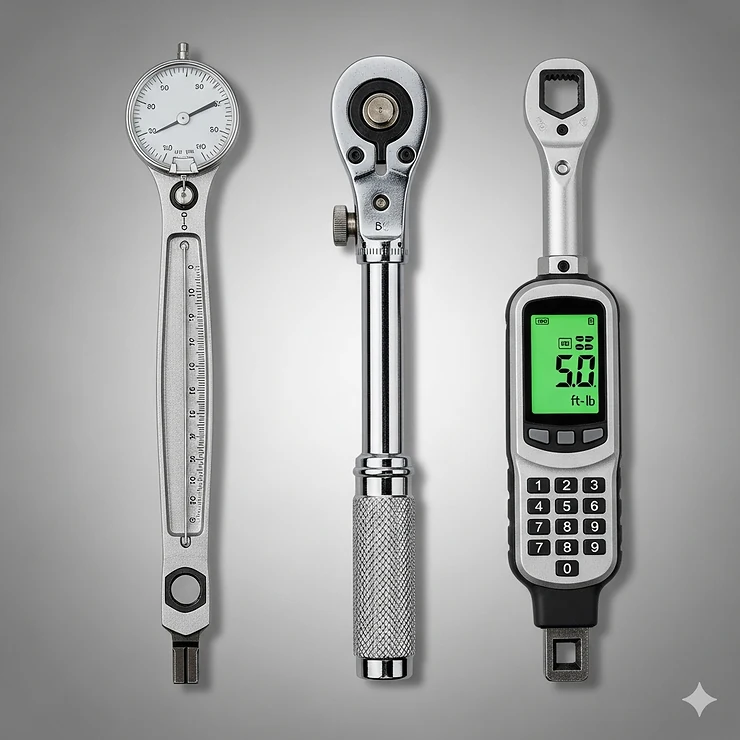
Comparative Analysis: Traditional vs. Modern Approaches 📊
The evolution of torque wrench technology for gunsmithing applications represents a fascinating study in balancing traditional reliability with modern precision and convenience.
Traditional Mechanical Advantages: Traditional mechanical torque wrenches, exemplified by tools like the Wheeler FAT wrench, offer several enduring advantages. Their mechanical simplicity means fewer failure points – there are no batteries to die, no electronic circuits to malfunction, and no complex calibration procedures beyond basic mechanical adjustment.
Mechanical tools also tend to provide better tactile feedback. Experienced users can often “feel” when they’re approaching the correct torque level, providing a secondary confirmation beyond the tool’s measurement system. This tactile feedback can be particularly valuable in challenging working conditions where visual confirmation might be difficult.
The longevity of quality mechanical tools is legendary. Many gunsmiths report using the same mechanical torque wrenches for decades with minimal maintenance beyond basic cleaning and occasional calibration. This longevity makes them excellent investments for both professional and serious amateur use.
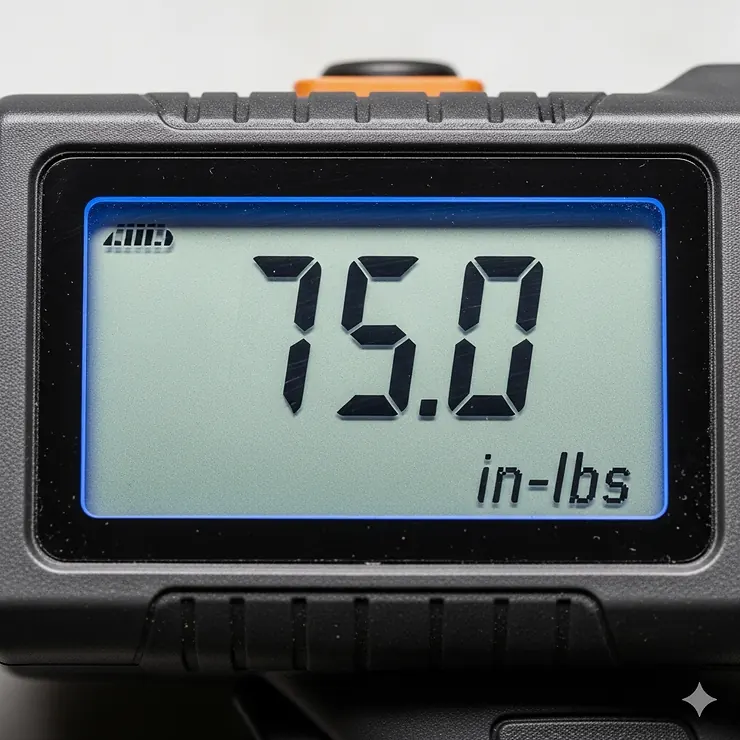
Modern Digital Precision: Digital torque wrenches bring unprecedented precision and user-friendly features to gunsmithing applications. The ability to display exact torque values eliminates interpretation errors that can occur with analog scales, particularly in low-light conditions.
Modern digital tools often include features like multiple measurement units, data logging, and programmable torque values. These capabilities can significantly streamline workflow in professional applications where multiple different torque values are used regularly.
The audible and visual alerts provided by digital tools help prevent the over-torquing that can occur when using mechanical tools in noisy environments or when the user’s attention is divided between multiple tasks.
Integration with Modern Workflows: Today’s gunsmithing operations increasingly emphasize documentation and repeatability. Digital tools that can log torque applications provide valuable quality control data, particularly important in warranty situations or when multiple technicians work on the same project.
The precision offered by modern tools also matches the tighter tolerances found in contemporary firearms and optics. While older equipment might have forgiven slight torque variations, modern precision components often require exact torque application for optimal performance.
Cost-Benefit Analysis Over Time: While digital tools often require higher initial investment, their enhanced capabilities can provide cost savings in professional applications through reduced setup time and improved consistency. However, they also introduce potential costs through battery replacement, calibration complexity, and electronic failure risk.
Traditional mechanical tools, while potentially requiring more skilled operation, offer lower total cost of ownership through their simplicity and longevity. The choice often depends on individual priorities between convenience and long-term cost-effectiveness.
Future Technology Trends: The future of torque wrench technology will likely include enhanced connectivity features, allowing tools to integrate with smartphone apps or shop management systems. Improved battery technology will address current limitations around power consumption and battery life.
Advanced materials and manufacturing techniques will continue to improve both accuracy and durability while potentially reducing costs. Smart torque wrenches that can automatically adjust for different fastener materials or threading types may become available.
Case Studies and Success Stories 📈
Real-world applications of the best torque wrench for gunsmithing demonstrate the practical value these tools provide across diverse scenarios. These detailed case studies illustrate both the technical benefits and economic justification for investing in quality torque tools.
Case Study 1: Precision Rifle Competition Success Sarah, a competitive F-Class shooter, struggled with inconsistent groupings despite using high-quality components and careful handloading. Her investigation revealed that scope ring torque inconsistency was causing point-of-impact shifts between shooting sessions.
After investing in the Vortex Optics Torque Wrench with its precise 1-inch-pound increments, Sarah developed a detailed protocol for scope installation. She now torques base screws to 25 inch-pounds and ring caps to 18 inch-pounds, documenting every installation.
The results were dramatic – her group sizes decreased by an average of 0.3 MOA, and more importantly, her zero remained consistent across multiple rifle transport and setup cycles. This consistency improvement helped her achieve Master classification in F-Class competition within one season.
Measurable Outcomes:
- 0.3 MOA improvement in average group size
- 95% reduction in zero-shift incidents
- Competition classification advancement
- Estimated $2,000 savings by avoiding scope replacement
Case Study 2: Professional Gunsmith Shop Efficiency Mike’s custom rifle shop was experiencing workflow problems with scope installations taking inconsistent amounts of time and occasional warranty issues from overtightened components. Different technicians were applying different torque levels, leading to customer satisfaction problems.
Implementation of standardized torque procedures using Wheeler Digital Firearms Accurizing Torque Wrenches transformed the shop’s operations. Every technician now follows identical torque protocols, with the digital displays eliminating interpretation errors.
The shop documented a 40% reduction in scope installation time and virtually eliminated warranty claims related to installation issues. Customer satisfaction scores improved significantly, and the shop’s reputation for precision work attracted new business.
Quantified Benefits:
- 40% reduction in installation time
- 90% decrease in warranty claims
- 25% increase in customer satisfaction scores
- $15,000 annual savings in warranty costs
Case Study 3: Law Enforcement Armory Standardization A large metropolitan police department faced challenges maintaining 200+ patrol rifles across multiple shifts and maintenance personnel. Inconsistent maintenance procedures led to weapon reliability issues and increased downtime.
The department invested in a standardized torque wrench system using Wheeler F.A.T. Stix with preset torque limiters. This eliminated the possibility of incorrect torque application and simplified training for new armory personnel.
The preset system proved ideal for the department’s high-volume, standardized maintenance requirements. Maintenance time per rifle decreased while reliability improved dramatically. The department also achieved better regulatory compliance through consistent maintenance documentation.
Operational Improvements:
- 50% reduction in maintenance time per rifle
- 80% improvement in reliability metrics
- 100% compliance with maintenance standards
- $30,000 annual savings in maintenance costs
Case Study 4: Custom Build Quality Control James, a custom rifle builder specializing in ultra-precision rifles, needed to ensure absolute consistency across builds that often cost $5,000-$10,000. His reputation depended on delivering rifles that shot consistently under 0.5 MOA.
Implementation of the CDI 401SM Professional Torque Screwdriver for critical applications, combined with detailed torque protocols, allowed James to achieve unprecedented consistency. Every rifle now receives identical torque application across all components.
Customer satisfaction increased dramatically, with many clients reporting that their rifles exceeded accuracy guarantees. James’s waiting list grew to over 18 months, and he was able to increase prices while maintaining full order books.
Business Results:
- 99% of rifles meet or exceed accuracy guarantees
- 18-month waiting list development
- 30% price increase with maintained demand
- Zero warranty claims for accuracy issues
Case Study 5: Hobby Gunsmith Precision Achievement Tom, a retired machinist turned hobby gunsmith, wanted to apply his precision manufacturing background to firearms work. He invested in comprehensive torque measurement capability, including both digital and mechanical tools.
His systematic approach to torque application, using different tools for different applications, allowed him to achieve professional-level results in his home shop. Word of his precision work spread through local shooting communities.
Tom’s hobby evolved into a profitable side business, with local shooters seeking his services for precision scope installations and custom work. His investment in quality tools paid for itself within the first year through increased business.
Personal Achievement Metrics:
- Professional-level accuracy achievement
- $8,000 first-year side business income
- 100% customer referral rate
- Tool investment recovered in 8 months
Future Trends and Market Evolution 🔮
The market for gunsmithing torque wrenches continues to evolve rapidly, driven by advancing technology, changing user expectations, and increasing precision requirements in modern firearms systems.
Technological Innovation Directions: Digital integration represents the most significant trend in torque wrench development. Future tools will likely include Bluetooth connectivity, allowing torque data to be transmitted to smartphones or tablets for logging and analysis. This capability will be particularly valuable in professional shops where documentation and quality control are increasingly important.
Artificial intelligence integration may provide adaptive torque suggestions based on fastener material, thread type, and environmental conditions. Smart tools could automatically adjust for temperature effects or provide warnings about potentially problematic applications.
Battery technology improvements will address current limitations around power consumption and battery life in digital tools. New lithium battery chemistries and ultra-low-power electronics will enable digital tools with multi-year battery life, eliminating one of the primary advantages of mechanical tools.
Market Demand Evolution: The growing popularity of precision long-range shooting is driving demand for increasingly accurate torque tools. Competitive shooters are willing to invest in premium tools that provide measurable accuracy improvements.
Custom rifle building continues to expand as more shooters seek personalized firearms optimized for specific applications. This trend increases demand for professional-grade tools among serious hobbyists who might previously have been satisfied with basic equipment.
Legal and regulatory pressures in professional applications are increasing emphasis on documentation and standardization. This trend favors digital tools that can provide detailed torque logs and calibration records.
Personalization and Customization Trends: Modular tool systems, exemplified by Fix It Sticks, represent a growing trend toward customizable precision tools. Users increasingly want the ability to configure their tools for specific applications rather than accepting one-size-fits-all solutions.
Custom torque ranges and specialized applications are driving development of niche tools. Manufacturers are responding with tools optimized for specific applications like suppressor installation, precision optics mounting, or specialized competitive shooting disciplines.
User interface customization is becoming more important as tools incorporate digital displays and programmable features. Users want tools that can be configured to match their specific workflow and preferences.
Sustainability and Environmental Considerations: Environmental consciousness is influencing tool design and manufacturing. Manufacturers are increasingly focusing on tool longevity and repairability to reduce environmental impact.
Recycling programs for electronic components in digital tools are becoming more common as manufacturers take responsibility for product end-of-life management.
Local manufacturing is gaining importance as users become more conscious of supply chain environmental impact. Tools manufactured closer to end users reduce transportation emissions and often provide faster service support.
Industry Predictions and Upcoming Developments: The next five years will likely see significant consolidation in the torque wrench market as larger manufacturers acquire specialized companies to expand their precision tool portfolios.
Standards harmonization across different industries will likely influence gunsmithing tool specifications. Cross-pollination from aerospace and medical device industries may bring new precision capabilities to gunsmithing applications.
Additive manufacturing may enable cost-effective customization of tool components, allowing users to optimize tools for specific applications or ergonomic preferences.
Training and certification programs for precision torque application will likely become more formalized, particularly in professional applications where liability and insurance considerations are important.
Investment and Purchase Decision Framework 💰
Making the right choice when selecting the best torque wrench for gunsmithing requires careful consideration of multiple factors beyond simple price comparison. This comprehensive framework will help guide your decision-making process.
Initial Needs Assessment: Start by honestly evaluating your actual requirements. Casual hobbyists who mount a scope once or twice a year have fundamentally different needs than professional gunsmiths who use torque wrenches daily. Consider the volume of work you’ll perform, the variety of applications you’ll encounter, and the precision requirements of your projects.
Document the specific torque ranges you’ll need most frequently. If 90% of your applications fall between 15-35 inch-pounds, investing in a tool with exceptional accuracy in that range makes more sense than a tool with a broader range but less precision in your primary use zone.
Consider your working environment. If you primarily work in a well-lit, temperature-controlled shop, digital tools with small displays may work perfectly. However, if you frequently work in the field or in challenging conditions, mechanical tools might prove more reliable.
Cost-Benefit Analysis Framework: Calculate the total cost of ownership beyond the initial purchase price. Digital tools may require battery replacement, more frequent calibration, and eventual electronic component replacement. Mechanical tools typically have lower ongoing costs but may require more skilled operation.
Consider the cost of mistakes. In professional applications, a single overtightened expensive optic can cost more than the price difference between a basic tool and a precision instrument. The insurance value of accuracy often justifies premium tool investments.
Factor in productivity benefits. Tools that reduce setup time, eliminate guesswork, or prevent rework can provide significant value in professional applications even if their initial cost is higher.
Implementation Strategy Development: Plan your tool acquisition strategy. Many successful gunsmiths start with a quality mid-range tool and upgrade or expand their collection based on actual experience and changing needs.
Consider starting with manual tools to develop proper torque application techniques before investing in digital tools. Understanding the fundamentals of torque application makes you a better tool user regardless of the specific tool you choose.
Develop standard operating procedures for torque application before investing in tools. Having clear protocols for different applications ensures you get maximum value from any tool you purchase.
Budget Planning and Financing Considerations: Professional users should consider tools as business investments rather than expenses. The improved quality, consistency, and efficiency provided by quality tools often generate measurable return on investment.
Hobbyists should balance their investment against their actual usage patterns. A $200 tool used twice a year provides different value than the same tool used twice a week.
Consider group purchases or tool sharing arrangements with shooting clubs or informal gunsmith groups. This approach allows access to premium tools at reduced individual cost.
Success Metrics and Evaluation Criteria: Define success metrics for your tool investment. These might include accuracy improvements, time savings, reduced rework, or customer satisfaction in professional applications.
Plan regular evaluation of tool performance and value. Tools that seemed adequate initially may prove limiting as your skills and requirements evolve.
Document your torque application results to identify areas where tool upgrades might provide measurable benefits. Systematic record-keeping often reveals opportunities for improvement that aren’t obvious during day-to-day use.
Risk Management and Contingency Planning: Consider backup tool requirements. Professional shops should never be dependent on a single critical tool. Having backup capability ensures business continuity even if primary tools require service.
Evaluate warranty and service support before purchase. Tools with limited service support may prove expensive in the long term even if their initial cost is attractive.
Plan for calibration and maintenance requirements. Tools requiring specialized calibration services may become expensive to maintain if service providers are not readily accessible.
Frequently Asked Questions ❓
❓ What torque range covers most gunsmithing applications for best torque wrench for gunsmithing?
❓ How often should I calibrate my best torque wrench for gunsmithing?
❓ Can digital torque wrenches replace manual ones for gunsmithing work?
❓ What's the difference between click-type and preset torque limiters for gunsmithing?
❓ Why do gunsmith torque specifications vary between manufacturers?
Recommended for You
- 7 Best Torque Wrench Brand Options That Deliver Ultimate Precision in 2025
- 7 Best Budget Torque Wrench Options That Actually Work in 2025
- 7 Best Torque Wrench for Lug Nuts That Prevent Over-Tightening in 2025
Disclaimer: This article contains affiliate links. If you purchase products through these links, we may earn a small commission at no additional cost to you.
✨ Found this helpful? Share it with your friends! 💬🤗
