
In This Article
A ratcheting screwdriver set for tight spaces is a short-bodied driver with a built-in ratchet and a handful of interchangeable bits. It turns screws through small arcs when you have no room for a full wrist rotation or a long shaft. It trades reach for access, which is exactly what cramped repairs demand.

Anyone who has ever lain half inside a cabinet knows the feeling. The screw is right there. Your screwdriver is eleven inches long and the clearance is four. So you grip, twist, lift, reposition, repeat, and somewhere around the fortieth reset your knuckles file a formal complaint.
That’s the problem a good ratcheting screwdriver set for tight spaces solves. The ratchet lets you swing the handle back and forth without lifting the bit off the screw. The stubby body shrinks the footprint. And the bit storage keeps you from hunting for a #2 Phillips in a drawer you can’t reach.
This guide ranks seven real, currently listed options for 2026, from a compact ratcheting screwdriver you can palm to a full kit with sockets and offset handles. You’ll also get a buying framework, practical walkthroughs for appliance panel screws and cabinet hinge repair, and honest notes about what the research could and couldn’t verify. One more thing before we start: every spec here is explained in plain terms, because a number on a box means nothing until you know what it does to your Saturday.
Quick Comparison: 7 Picks at a Glance
Before the deep dives, here’s the whole field on one screen. Think of it as the cheat sheet you’d scribble on a napkin if the napkin were organized.
| Product | Standout Trait | Best For |
|---|---|---|
| Wera Kraftform Kompakt 27 RA | In-handle six-bit carousel | Best overall everyday driver |
| Klein Tools 32593 | About 3.5 inches long, nut drivers included | Truly cramped electrical and panel work |
| Milwaukee 8-in-1 Compact Ratcheting Driver | All-metal ratchet, revolver bit storage | Budget-friendly toughness |
| GearWrench 85035 Microdriver Set | Small-arc ratchet plus sockets and bits | Anyone who wants a full kit |
| Craftsman CMHT68132 | Push-and-pick bit storage, lifetime warranty | Light-duty household use |
| Wera Kraftform Kompakt Stubby Magazine RA 4 | Shortest Wera with magazine | Premium low-clearance jobs |
| Megapro 211R2C36RD | 13-in-1 bit load, high torque rating | When you have a few more inches |
The pattern is clear: the shorter the tool, the more clearance you gain and the less leverage you keep. The Klein Tools 32593 and Wera Kraftform Kompakt Stubby Magazine RA 4 win on pure access. The Megapro 211R2C36RD wins on muscle. The Wera Kraftform Kompakt 27 RA and Milwaukee 8-in-1 Compact Ratcheting Driver sit in the sweet spot between them, and the GearWrench 85035 Microdriver Set is the odd one out because it’s really a mini toolkit.
If your budget is tight, the Craftsman CMHT68132 and Milwaukee 8-in-1 Compact Ratcheting Driver deliver the most capability per dollar. If you want one driver to last a decade of abuse, the Weras are the ones to examine first.
💬 Just one click — help others make better buying decisions too!😊
Top 7 Ratcheting Screwdriver Sets for Tight Spaces: Expert Analysis
A note on method: specs below come from manufacturer and retailer listings, and review sentiment comes from published roundups. Where a large pool of verified customer reviews couldn’t be confirmed, the entry says so. Prices are ranges only, based on research in October 2026, so check current price before you buy.
1. Wera Kraftform Kompakt 27 RA — best overall for bit storage
The headline trick is the handle. Press the button on the end and a six-bit carousel opens, so your Phillips, Pozidriv and slotted bits live inside the tool instead of rattling around a junk drawer. Retail listings for the common set pair PH1, PH2, PZ1, PZ2 and two slotted bits, all 25 mm long.
Wera lists a fine-pitched ratchet with a three-position ring (forward, locked, reverse) and a maximum torque of up to 50 Nm. One caveat deserves honesty: retailer pages disagree on tooth count, with figures from 24 to 60 appearing. Treat any single number with suspicion and judge the tool by the small return angle Wera advertises.
On paper, here’s what that means: a 1/4-inch hex blade with a magnetic stainless sleeve holds bits steady at awkward angles, while the locked position lets you break loose a stubborn screw without stressing the pawl. It’s the tool for someone who wants one driver to cover the whole house. It isn’t the shortest here, so it suits spaces with a few inches of room rather than a sliver.
Reviewer sentiment: Tool roundups consistently single out the integrated bit storage and smooth ratcheting, and one reviewer admits the handle looks odd at first before proving comfortable. I couldn’t verify a large pool of Amazon customer reviews, so check current ratings before you commit.
Pros:
- ✅ Six bits stored inside the handle
- ✅ Fine-pitched ratchet with a small return angle
- ✅ Locked mode for breaking screws loose
Cons:
- ❌ Not the shortest option for truly tiny gaps
- ❌ Retailer tooth-count figures conflict
Price range: roughly $40-$60 at the time of research; prices may vary. Verdict: premium, but it earns it if you value organization.
2. Klein Tools 32593 — shortest true stubby for the money
Here’s the tool for when “tight” means “hand barely fits.” Klein lists the 6-in-1 at about 3.5 inches overall, with a shank near 1.3 inches. It carries #1 and #2 Phillips tips, two slotted tips, and 1/4-inch and 5/16-inch nut drivers, all in a cushion-grip body.
That nut-driver pairing is the sneaky useful part. Appliance panels, HVAC covers and electrical enclosures often mix hex-head and slotted fasteners, so one palm-sized tool covers both. The trade-off is leverage: a body this short gives you a short moment arm, so it’s meant for turning, not for breaking rusted fasteners free.
What the spec sheet won’t tell you, but reviewer commentary hints at: stubby drivers in this style are most useful for a small number of jobs, and a forum thread I found on a related Klein stubby set shows buyers split on whether they’re worth owning at all. The practical reading: buy it for the jobs where nothing else fits, not as your only driver. A trade-focused roundup praised Klein’s stubby for putting a sturdy ratchet into a palm-sized body.
Pros:
- ✅ Roughly 3.5 inches overall length
- ✅ Includes two nut driver sizes
- ✅ Cushion grip suits repetitive turning
Cons:
- ❌ Limited torque and bit variety
- ❌ Smaller bit selection than larger sets
Price range: typically under $25; check current price. Verdict: the best value pick if raw clearance is your priority.
3. Milwaukee 8-in-1 Compact Ratcheting Driver — all-metal ratchet on a budget
Milwaukee’s compact ratcheting multi-bit driver (the US-market listing is model 48-22-2330) leans on an all-metal ratchet that the company says delivers roughly twice the driving speed of a standard driver in high-torque use. The European listing, 4932471868, adds detail: about 90 mm long, with revolver-style bit storage in the handle and a bit load of PH1, PH2, PZ1, PZ2, TX15 and two slotted sizes. Bit loads may differ by region, so check your listing.
That torque-versus-size balance matters. Plastic-bodied ratchets can feel mushy under load; a metal mechanism tends to resist slipping when you lean on a stubborn screw. It’s compact rather than strictly stubby, which a ToolGuyd review of an earlier Milwaukee compact model pointed out while still calling it a favorite stubby-style ratcheting driver in the reviewer’s limited experience.
Reviewer sentiment: Published commentary is positive on value and ratchet feel, but it comes from a small number of reviewers, and I couldn’t confirm a large verified Amazon review pool for this exact model.
Pros:
- ✅ All-metal ratchet resists slipping under load
- ✅ Revolver-style bit storage in the handle
- ✅ Includes Torx, Pozidriv and Phillips bits
Cons:
- ❌ Compact, not truly stubby
- ❌ Bit contents vary by region
Price range: around $15-$25; prices may vary. Verdict: a strong budget workhorse.
4. GearWrench 85035 Microdriver Set — best full kit for mixed jobs
This one isn’t a single driver; it’s a space-saving screwdriver kit built around a double-ended micro-driver. GearWrench lists a ratchet that needs only about a 6-degree arc to turn a fastener, a 15-degree handle offset for knuckle clearance, and a roughly 5-inch overall length. Inside the case you get ten 1/4-inch 6-point sockets (SAE and metric), eighteen 1/4-inch bits, a drive-socket adapter, and a belt-clip case.
What does a 6-degree arc mean? Standard driving needs a big sweep of your wrist; here you work in a few degrees of motion, which is the difference between a job you can do and a job you abandon. The offset also keeps your knuckles from banging the surrounding structure. It’s less “palm tool,” more “tiny ratchet wrench with bits.”
Reviewer sentiment: The only verifiable ratings I found were two five-star marketplace reviews with minimal detail, which isn’t enough to draw conclusions. Verdict on the evidence: strong specs, thin review data.
Pros:
- ✅ Tiny working arc for cramped spots
- ✅ Sockets and bits in one case
- ✅ Offset handle protects knuckles
Cons:
- ❌ More pieces than most people need
- ❌ Not a one-handed palm driver
Price range: roughly $20-$50 depending on the seller; pricing varies widely. Verdict: the best choice when your repairs include nuts and bolts, not just screws.
5. Craftsman CMHT68132 — best budget push-and-pick set
Craftsman’s 8-piece stubby set bundles a ratcheting stubby driver with seven 1-inch bits, covering Phillips, slotted, Torx and square. The push-and-pick design stores bits in the handle, and a magnetic holder keeps the active bit from dropping into whatever dark void you’re working in. A bi-material handle and a limited lifetime warranty round it out.
That magnet is more than a convenience. In a cabinet or behind a panel, a dropped screw or bit is a multi-minute retrieval mission. The short 1-inch bits are also genuinely helpful: stubby driver bits like these cut the stack height so the whole tool fits where a standard bit-and-holder combo can’t.
Reviewer sentiment: The manufacturer page has a reviews section, but I couldn’t confirm verified customer ratings to summarize, so I won’t invent any. What the listing supports is the feature set and the warranty.
Pros:
- ✅ Seven short bits stored in the handle
- ✅ Magnetic bit retention
- ✅ Limited lifetime warranty
Cons:
- ❌ Basic ratchet feel compared with premium tools
- ❌ Fewer specialty bits
Price range: generally under $25; check current price. Verdict: sensible for light-duty household work.
6. Wera Kraftform Kompakt Stubby Magazine RA 4 — premium stubby with magazine
This is the Wera for people who liked the idea of the 27 RA but needed it shorter. The 6-piece stubby set pairs a fine-toothed ratchet in the handle with a ring switch for direction changes and a fixed-drive mode, plus a strong magnet to hold bits. Six 25 mm bits ride in an on-board magazine: Phillips, slotted and Square-Plus.
The short bit mounting is the point. By pulling the bit closer to the handle, the tool drives in places a longer driver simply can’t seat. For electricians and joiners facing awkward access, that’s the whole value proposition.
An honest limitation: I found specification data and retailer descriptions, but no verified review pool to summarize. And the listing I found was at a UK retailer with a lead time, so US availability may be patchy. Verify stock before planning a project around it.
Pros:
- ✅ Shorter body than the 27 RA
- ✅ Magazine keeps six bits in the handle
- ✅ Fixed-drive position for stubborn screws
Cons:
- ❌ Availability may be limited in the US
- ❌ Higher price than most stubbies
Price range: roughly $45-$75 where stocked; prices may vary. Verdict: worth it only if you regularly hit very low clearance.
7. Megapro 211R2C36RD — high-torque 13-in-1 for roomier jobs
Consider this the contrast pick. Megapro’s ratcheting 13-in-1 uses pull-out bit storage in a cushion-grip handle and a 1/4-inch hex shaft. The bit load covers Phillips #0-3 and #1-2, slotted #4-6, Torx T10-15 and T20-25, and square #1-2. The listing cites over 225 in-lbs of torque strength, and Megapro’s sell sheet describes a 28-tooth ratcheting mechanism.
Here’s why that matters: if you hit a tough screw with only moderate clearance, a longer, fatter handle turns torque into progress. This is not a palm-sized driver, and the listing didn’t give a length, so don’t expect it to slip into a four-inch gap. It earns its place on the list as the “bigger sibling” you reach for once access opens up.
Reviewer sentiment: The listing I found had no published reviews yet, so there’s nothing verified to summarize. The spec-based reading is clear: more bits, more torque, more length.
Pros:
- ✅ Wide bit range including Torx
- ✅ High torque rating for stubborn screws
- ✅ Pull-out bit storage
Cons:
- ❌ Too long for truly tight gaps
- ❌ Overkill for light jobs
Price range: roughly $35-$50; check current price. Verdict: a good companion, not a replacement, for the stubbies.
Top 7 Specs Side by Side
| Product | Format | Notable Spec | Price Range | Best For |
|---|---|---|---|---|
| Wera Kraftform Kompakt 27 RA | Handle with six-bit carousel | Up to 50 Nm listed | $40-$60 | Everyday versatility |
| Klein Tools 32593 | About 3.5-inch stubby | Two nut drivers included | Under $25 | Cramped panel work |
| Milwaukee 8-in-1 Compact Ratcheting Driver | Compact, about 90 mm | All-metal ratchet | $15-$25 | Budget toughness |
| GearWrench 85035 Microdriver Set | Kit with micro-driver | About 6-degree arc | $20-$50 | Mixed screw and nut jobs |
| Craftsman CMHT68132 | Stubby with 1-inch bits | Push-and-pick storage | Under $25 | Light household use |
| Wera Kraftform Kompakt Stubby Magazine RA 4 | Stubby with magazine | Short bit mounting | $45-$75 | Very low clearance |
| Megapro 211R2C36RD | Full-size ratcheting | Over 225 in-lbs listed | $35-$50 | Higher-torque tasks |
Looking at the table, the Klein Tools 32593 and Wera Kraftform Kompakt Stubby Magazine RA 4 are your clearance champions, while the Megapro 211R2C36RD trades size for strength. The GearWrench 85035 Microdriver Set costs more for a reason: it carries sockets and bits for jobs the others can’t touch. If you’re only buying one, the Wera Kraftform Kompakt 27 RA gives the broadest everyday coverage.
How to Choose a Ratcheting Screwdriver Set for Tight Spaces
Choosing a ratcheting screwdriver set for tight spaces comes down to seven decisions. Work through them in order and the shortlist builds itself.
- Measure your worst-case clearance. Measure the gap behind the handle, not just the screw. If you have under five inches, you need a true stubby; if you have more, a compact ratcheting screwdriver gives you extra leverage.
- Check the ratchet’s return angle. Smaller is better in cramped areas. A fine-tooth mechanism lets you make progress with tiny wrist movements.
- Count your bit types. Make sure the set includes the heads you actually meet: Phillips, Pozidriv, slotted, Torx and square. Missing one ends the job.
- Look for locked mode. A fixed-drive setting lets the tool behave like a regular screwdriver for breaking screws loose.
- Prefer in-handle bit storage. Dropped bits in tight spaces are expensive in time, so storage and magnetic retention save real effort.
- Match torque to the task. Light assembly and appliance covers need little torque; stuck cabinet hardware needs more.
- Think about the kit. A space-saving screwdriver kit with sockets and offset drivers beats a single tool if you also work on nuts.
Compact Ratcheting Screwdriver vs Low-Clearance Alternatives
Not every tight spot wants the same tool. A compact ratcheting screwdriver is excellent when you can approach the screw head-on but have little room above it. If you can’t get straight on, the answer changes.
An offset (right-angle) driver attacks screws from the side, which helps when the head is recessed against a wall. A stubby ratcheting ratchet with a driver-bit socket works when you need socket-style leverage, and low-profile ratchets can help in electronics-adjacent work. Long-reach options can also be surprisingly effective for low-torque fasteners deep inside housings, according to tool-industry guidance on tight-space ratchets.
| Tool Type | Clearance Needed | Speed | Best For |
|---|---|---|---|
| Stubby ratcheting driver | Very low above the screw | Fast | Straight-on access in cramped areas |
| Standard ratcheting screwdriver | Several inches | Fast | General household use |
| Offset or right-angle driver | Low, from the side | Moderate | Recessed screws near walls |
| Plain stubby fixed driver | Very low | Slow | Simple one-screw jobs |
| Micro-driver with offset (like the GearWrench 85035 Microdriver Set) | Low | Fast | Mixed screws and nuts |
The table shows why no single tool wins everything. A ratcheting stubby saves time on any screw you can face, while an offset driver rescues you when you can’t. Because they’re cheap relative to the aggravation they save, many people end up owning both a Klein Tools 32593-style stubby and a larger driver like the Megapro 211R2C36RD.
Space-Saving Screwdriver Kit: What to Pack
A space-saving screwdriver kit shouldn’t mean a tiny drawer full of tiny regrets. The smartest kit is one that covers 90 percent of cramped jobs without becoming its own storage problem.
Start with one stubby ratcheting driver with in-handle bits, such as the Craftsman CMHT68132 or Klein Tools 32593. Add a compact ratcheting screwdriver for moderate clearance, like the Milwaukee 8-in-1 Compact Ratcheting Driver. Then add a small socket-and-bit kit, which is where something like the GearWrench 85035 Microdriver Set shines, because it brings 1/4-inch sockets for the nuts you’ll inevitably discover under the panel.
What to skip: duplicate Phillips drivers in six sizes, jumbo kits full of bits you’ll never use, and anything without a magnetic bit holder. The goal of a space-saving screwdriver kit is a bag you’ll actually carry to the job, not a trophy.
A final tip: label the case with your most common fastener types. In a rush, being able to see “PH2, PZ2, T15” at a glance is worth more than an extra twenty bits.
Stubby Driver Bits: Why Length Matters
Stubby driver bits are the unsung heroes of cramped repair. A standard bit is typically 1 inch (25 mm) long, which already beats a long-shaft screwdriver, but short bits in a compact holder shave even more height. The Craftsman CMHT68132 and Wera Kraftform Kompakt Stubby Magazine RA 4 both use short 1-inch-class bits for this reason.
What do shorter bits cost you? Reach. If a screw sits deep in a recess, a stubby bit may not touch bottom. They can also feel less stable in a loose holder, which is why magnetic retention matters.
Here’s the practical rule: use stubby driver bits when the limiting factor is height above the screw, and swap to a longer bit when the screw is recessed. The Milwaukee 8-in-1 Compact Ratcheting Driver is a good example of balancing the two, since its bits are held in a compact body but remain easy to swap.
Features That Actually Matter (And Those That Don’t)
Marketing loves a number. Here’s how to filter hype in a low-clearance screwdriver set.
What matters: a fine ratchet (small return angle), magnetic bit retention, a locked mode, and a grip you can control with fingertips. These directly decide whether you can finish the job in a four-inch gap.
What matters less: bit count above about a dozen, flashy handle colors, and ultra-high torque claims. A low-clearance screwdriver set is not a breaker bar, so a huge torque figure is pointless if the tool can’t physically fit.
One more thing the spec sheet won’t tell you: tooth count varies in how it’s reported. The Wera Kraftform Kompakt 27 RA shows how retailers can list wildly different figures for the same tool. Treat tooth count as one clue and read the return angle, locked mode and review notes alongside it.
Practical Guide: Appliance Panel Screws
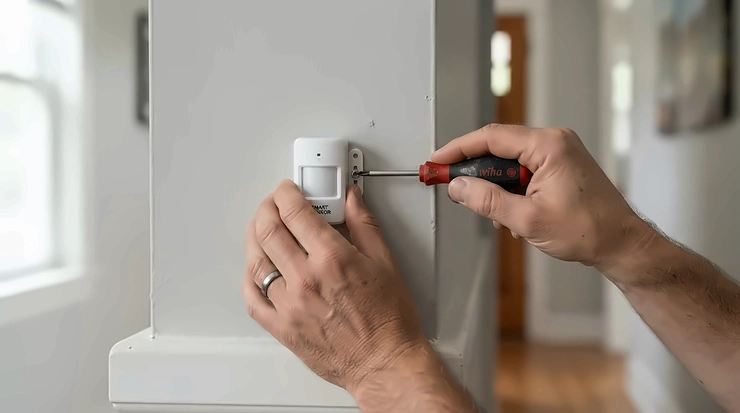
Appliance panel screws are a classic place where a stubby ratchet earns its keep. Back panels, access covers and control housings are often held by short screws in shallow, awkward recesses.
Start by disconnecting power. Safety guidance from OSHA’s hand and power tools publication is clear that tools should be disconnected before servicing, and the same principle applies to any appliance you open. Unplug it, wait if it holds a charge, and keep your hands out of anything you can’t identify.
Next, check the head type before you ratchet. Many appliances mix Phillips, Torx and hex-head screws. A tool like the Klein Tools 32593 helps because its nut drivers cover the hex-head fasteners that Phillips-only sets miss.
Then use the ratchet to back each screw out in small arcs, placing screws in a magnetic tray or labeled cup. Photograph the panel before removal, because screw lengths often vary by location. When you reinstall, hand-tighten first and snug with the ratchet; overtightening strips plastic threads, and appliance panels are often threaded into plastic.

Practical Guide: Cabinet Hinge Repair
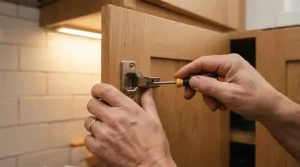
Cabinet hinge repair is where stubby tools quietly outperform. Hinges sit in tight corners, often with a door or frame blocking straight-on access, and the screws are small enough to strip if you rush.
First, diagnose. If a door sags, the cause is usually a loose screw or stripped hole. Use the ratchet in locked mode for the initial turn on the loose screw, then switch to ratcheting to snug it up. The locked position on tools like the Wera Kraftform Kompakt Stubby Magazine RA 4 makes that two-step approach easy.
If the screw spins freely, the hole is stripped. A common fix is to insert wooden toothpicks or a matchstick with wood glue, let it set, and re-drive the screw. For hinges with recessed screw heads, a short bit from a Craftsman CMHT68132-style set keeps the driver aligned instead of cocking at an angle.
Adjust last: many European-style hinges have separate adjustment screws, so work in small increments and check the door after each turn. A good cabinet hinge repair takes minutes when the right tool fits, and an afternoon when it doesn’t.
Real-World Scenarios: Which Set Fits Which Buyer
The renter with a dishwasher panel. You have a modest budget, mixed fasteners, and about three inches behind the front kick plate. The Klein Tools 32593 is the logical match: it’s short, includes nut drivers, and costs little.
The weekend DIYer rebuilding kitchen cabinets. You’ll tighten dozens of hinge and drawer screws, some in corners. The Milwaukee 8-in-1 Compact Ratcheting Driver gives you metal-ratchet durability, and the Craftsman CMHT68132 covers the occasional ultra-tight spot.
The technician or serious hobbyist. You open panels weekly and care about workflow. The Wera Kraftform Kompakt 27 RA keeps bits organized, and the GearWrench 85035 Microdriver Set covers the nut-and-socket jobs that crop up inside equipment.
The tinkerer with stubborn fasteners. You have a few inches of room but fight rusted or tight screws. Pair a stubby with a Megapro 211R2C36RD for torque, and use the locked mode on the stubby to break screws loose first.
Long-Term Cost and Maintenance
A tool’s real cost is price divided by the number of jobs it makes possible. A budget driver that fits only one job is expensive per use; a premium driver you use weekly is cheap.
| Tier | Products | Typical Range | Value Verdict |
|---|---|---|---|
| Budget | Craftsman CMHT68132, Milwaukee 8-in-1 Compact Ratcheting Driver | Under $25 | Excellent for occasional use |
| Mid-range | Klein Tools 32593, GearWrench 85035 Microdriver Set, Megapro 211R2C36RD | $20-$50 | Best cost per capability |
| Premium | Wera Kraftform Kompakt 27 RA, Wera Kraftform Kompakt Stubby Magazine RA 4 | $40-$75 | Pays off with frequent use |
The table suggests the mid-range is where most buyers should live, since it adds real capability without paying for brand polish. Premium tools earn their keep when you use them often enough that organization and feel compound over time.
Maintenance is simple: wipe off dust, keep ratchets dry, and avoid using a stubby as a pry bar. Industry guidance on tight-space ratchets notes that contamination is especially noticeable in fine-tooth mechanisms, because you depend on smooth resets, so a quick wipe after dusty jobs is worth the ten seconds.
Safety and Compliance Guide
Cramped work raises the risk of slipped tools and scraped knuckles. The National Safety Council’s tips, reported by HealthDay, stress using the right tool for the job and keeping tools clean and in good condition. That’s more relevant than it sounds: a worn bit in a tight space slips, and slips hurt.
Practical rules: wear safety glasses when working above your head or behind panels, keep your free hand clear of the bit’s path, and never use a driver as a chisel. Turn off and unplug anything electrical before you start, and don’t rely on a switch alone.
Regulations matter mainly for professional work, where employers follow OSHA hand-tool guidance. For home use, the same logic applies: inspect tools before use and replace damaged ones. A cracked handle or chipped bit isn’t a bargain, it’s a hazard waiting for a Saturday.
Frequently Asked Questions
❓ Can a ratcheting screwdriver strip screws?
❓ Are ratcheting screwdriver sets worth it for occasional DIY?
❓ Do ratcheting screwdrivers work for left-handed users?
❓ Is a low-clearance screwdriver set suitable for small electronics?
❓ What bit sizes should a low-clearance screwdriver set include?
Conclusion
A good ratcheting screwdriver set for tight spaces isn’t glamorous, but it changes how a repair feels. It turns a knuckle-scraping fight into a series of small, efficient wrist flicks, and it keeps the right bit within reach when you can’t see a thing.
If you want the best all-around driver, the Wera Kraftform Kompakt 27 RA is the strongest everyday pick. If clearance is your enemy, the Klein Tools 32593 is hard to beat for the money, and the Wera Kraftform Kompakt Stubby Magazine RA 4 goes even shorter for those willing to pay for it. The Milwaukee 8-in-1 Compact Ratcheting Driver and Craftsman CMHT68132 are the sensible budget answers, the GearWrench 85035 Microdriver Set is the one to buy if nuts and bolts are in your future, and the Megapro 211R2C36RD is a worthy partner when you need extra muscle.
Whatever you choose, remember the rule: measure your clearance first, then pick the tool that fits it, not the one with the biggest number on the box.
✨ Ready to stop fighting your fasteners?
🔧 Check current prices on the picks above and choose the set that fits your tightest job. Click any highlighted product name to see availability. Your knuckles will thank you!
Recommended for You
- Precision Screwdriver Set For Electronics: 7 Best Picks 2026
- Craftsman Vs Husky Wrench Set: 7 Best Picks Compared (2026)
- Wrench Set For Motorcycle Repair: 7 Best Picks (2026 Guide)
Disclaimer: This article contains affiliate links. As an Amazon Associate, I earn from qualifying purchases. If you purchase products through these links, we may earn a small commission at no additional cost to you.
✨ Found this helpful? Share it with your friends! 💬🤗
