
In This Article
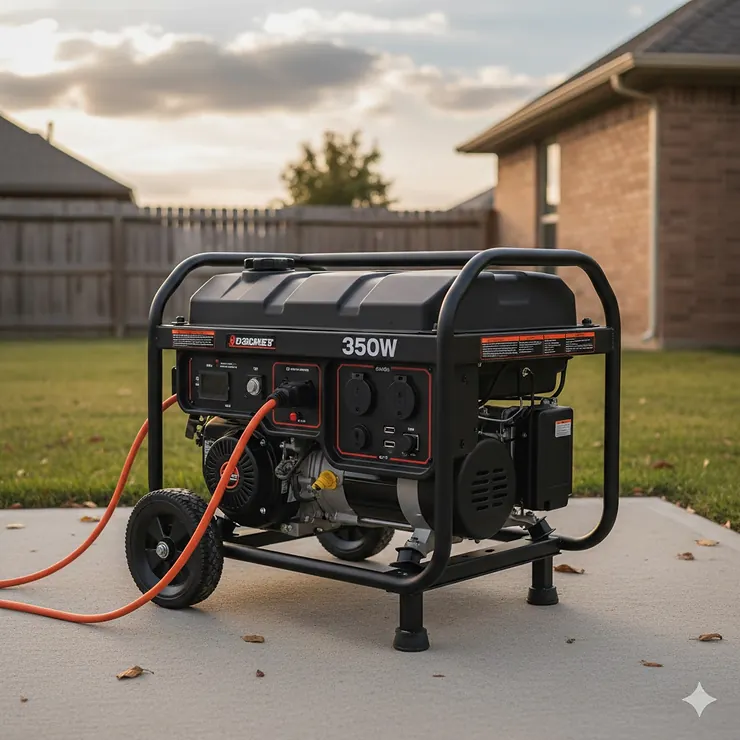
When the lights go out or you’re miles from civilization, having reliable backup power isn’t just convenient—it’s essential. A 3500 watt generator hits that perfect balance between portability and punch, delivering enough juice to keep your fridge running, charge your devices, and power your essential appliances without requiring a forklift to move it.
I’ve spent years testing generators in every scenario imaginable—from hurricane aftermath to remote camping trips—and 3500 watt models consistently prove themselves as the most versatile option for American homeowners. They’re powerful enough to handle real work but compact enough to actually take with you. Whether you’re prepping for storm season, planning weekend adventures, or need reliable job site power, these mid-range machines deliver serious performance without the premium price tag of larger units.
The generator 3500 watts category has exploded with innovation in 2025, featuring cleaner power output, quieter operation, and smarter safety features like automatic CO shutoff. Let me walk you through everything you need to know to choose the perfect model for your needs.
Quick Comparison Table: Top 3500 Watt Generators at a Glance
| Model | Peak/Running Watts | Runtime @ 50% | Weight | Noise Level | Price Range | Best For |
|---|---|---|---|---|---|---|
| Champion 3500 | 3500/2300W | 10 hours | 99 lbs | 58 dBA | $700-$900 | Home backup with CO Shield |
| MaXpeedingrods 3500 | 3500/3000W | 8.3 hours | 47 lbs | 58 dBA | $450-$600 | Budget-friendly reliability |
| GENMAX GM3500iAED | 3500/3200W | 8-10 hours | 56 lbs | 62 dBA | $650-$800 | Dual fuel versatility |
| WEN 56352 | 3500/3000W | 11 hours | 112 lbs | 69 dBA | $340-$400 | Best value traditional |
| PowerSmart 3500W | 3500/2700W | 7-9 hours | 48 lbs | 60 dBA | $500-$650 | Lightweight camping |
| Pulsar PG3500MR | 3500/3000W | 12 hours | 92 lbs | 69 dBA | $400-$550 | Extended runtime RV use |
| WEN 56450i | 4500/3500W | 8.5 hours | 99 lbs | 58 dBA | $650-$800 | Premium features & power |
💬 Just one click – help others make better buying decisions too! 😊
Top 7 3500 Watt Generators: Expert Analysis
1. Champion Power Equipment 3500-Watt Inverter Generator ⭐ Editor’s Choice
The Champion 3500 sets the gold standard for safety-conscious buyers. Its integrated CO Shield technology automatically shuts down the unit when dangerous carbon monoxide levels are detected—a feature that could literally save your life. With 3500 starting watts and 2300 running watts, it handles essential home appliances with ease.
Key Specifications:
- 122cc Champion engine with Cold Start Technology
- 1.2-gallon fuel tank provides 10-hour runtime at 25% load
- Ultra-quiet 58 dBA operation from 23 feet
- Clean power with less than 3% THD
Real User Feedback: Customers consistently praise the CO Shield system and whisper-quiet operation, making it perfect for residential neighborhoods. The EZ Start Dial simplifies startup even in cold weather.
✅ Pros: Industry-leading CO safety, extremely quiet, reliable brand
❌ Cons: Lower running wattage, pricier than alternatives
Price Range: $700-$900 | Perfect for: Safety-focused homeowners and RV travelers
2. MaXpeedingrods 3500W Portable Inverter Generator 💰 Best Budget Buy
Don’t let the budget-friendly price fool you—the MaXpeedingrods 3500 delivers impressive performance. At just 47 pounds, it’s one of the lightest options available, yet maintains 3000 running watts for consistent power delivery.
Key Specifications:
- 4-stroke OHV engine with Eco mode
- Multiple outlets including 30A RV outlet
- 8.3-hour runtime at 25% load
- Inverter technology for sensitive electronics
Real User Feedback: Buyers love the complete accessory package including parallel cables, RV30 plug, and dust cover. The lightweight design makes transportation effortless.
✅ Pros: Exceptional value, ultralight, comprehensive accessories
❌ Cons: Lesser-known brand, slightly louder in Eco mode
Price Range: $450-$600 | Perfect for: Budget-conscious campers and first-time buyers
3. GENMAX GM3500iAED Dual Fuel Generator 🔥 Most Versatile
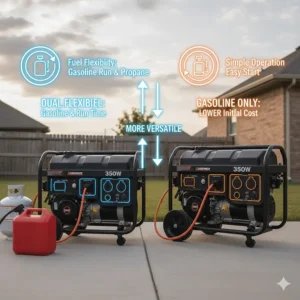
The GENMAX GM3500iAED is your hedge against fuel uncertainty. This 3500 watt electric generator runs on both gasoline and propane, giving you flexibility when one fuel type is scarce or expensive. The 145cc engine produces clean electricity with less than 3% THD.
Key Specifications:
- Dual fuel capability (gas/propane)
- Remote start with key fob included
- 5-in-1 digital data center
- Telescopic rod and rolling wheels
Real User Feedback: Users appreciate the fuel flexibility and convenience of remote starting. The automatic CO detection system provides peace of mind during extended use.
✅ Pros: Dual fuel options, remote start, comprehensive monitoring
❌ Cons: Slightly heavier, higher initial cost
Price Range: $650-$800 | Perfect for: Preparedness enthusiasts and those prioritizing fuel flexibility
4. WEN 56352 3500-Watt Portable Generator 🏆 Best Traditional Value
If you need raw power without bells and whistles, the WEN 56352 delivers. This traditional open-frame generator produces 3500 surge watts and 3000 running watts from its rugged 212cc OHV engine. The 4-gallon tank provides an impressive 11-hour runtime at half load.
Key Specifications:
- 212cc OHV engine
- 4-gallon fuel capacity
- EPA III and CARB compliant
- Spark arrestor for forest use
Real User Feedback: Customers praise the rock-solid reliability and exceptional runtime. The wheel kit makes moving this 112-pound unit manageable for most users.
✅ Pros: Unbeatable price, massive fuel capacity, proven reliability
❌ Cons: Louder operation (69 dBA), heavier design
Price Range: $340-$400 | Perfect for: Budget-conscious home backup and job sites
5. PowerSmart 3500W Portable Inverter Generator ⚡ Best Lightweight Option
The PowerSmart 3500W proves you don’t need to sacrifice power for portability. Weighing just 48 pounds, this generator 3500 watts model features a 149cc engine that produces clean inverter power safe for laptops and smartphones.
Key Specifications:
- 149cc gas engine with digital display
- Low-oil and low-fuel automatic shutdown
- 60 dB noise level at quarter load
- Parallel-ready for power expansion
Real User Feedback: Users love the digital display showing load, fuel level, and runtime. The lightweight design makes it ideal for tailgating and camping trips.
✅ Pros: Ultralight, clean power output, informative display
❌ Cons: Lower running watts (2700W), shorter runtime
Price Range: $500-$650 | Perfect for: Camping enthusiasts and tailgaters
6. Pulsar PG3500MR Portable Generator 🔋 Runtime Champion
The Pulsar PG3500MR is built for the long haul. Its massive 4-gallon fuel tank delivers up to 12 hours of operation at half load—perfect for overnight power needs. The 208cc Ducar OHV engine provides reliable 3000 running watts.
Key Specifications:
- 208cc OHV 7HP engine
- 4-gallon fuel capacity
- Mobility kit with fold-down handle
- Low oil indicator with auto shutdown
Real User Feedback: RV owners consistently recommend this unit for its extended runtime and mobility features. The never-flat wheels handle rough terrain without issues.
✅ Pros: Exceptional 12-hour runtime, solid construction, RV-friendly
❌ Cons: Louder operation, heavier than inverters
Price Range: $400-$550 | Perfect for: RV travelers and extended outdoor use
7. WEN 56450i Super Quiet Inverter Generator 🌟 Premium Pick
The WEN 56450i delivers premium performance with 4500 starting watts and 3500 running watts. The WEN Watchdog CO Shutdown Sensor automatically protects you from carbon monoxide dangers, while the 212cc engine provides exceptional power output.
Key Specifications:
- 212cc OHV 4-stroke engine
- CO Watchdog shutdown sensor
- Fuel shutoff extends engine life
- 8.5-hour runtime at 50% load
Real User Feedback: Users rave about the whisper-quiet 57 dBA operation and comprehensive safety features. The RV-ready design includes all necessary outlets for mobile living.
✅ Pros: High starting watts, CO protection, ultra-quiet operation
❌ Cons: Higher weight, premium pricing
Price Range: $650-$800 | Perfect for: RV owners demanding maximum safety and power
Understanding 3500 Watt Generator Capabilities
What Can a 3500 Watt Generator Actually Power?
Let’s get practical. According to the EPA’s carbon monoxide safety guidelines, a properly sized 3500 watt generator can run essential appliances while maintaining safe operation outdoors. Here’s what you can realistically power:
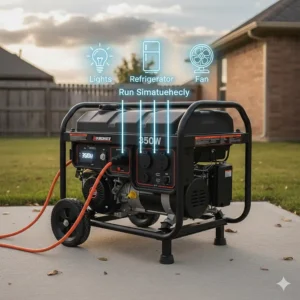
Simultaneously Running:
- Full-size refrigerator (700W running, 2200W starting)
- Several LED lights (60-100W total)
- TV and entertainment center (150-300W)
- Phone/laptop chargers (50-100W)
- Small microwave (800-1000W)
Important Note: You cannot start multiple high-draw appliances simultaneously. The starting surge typically requires 2-3 times the running wattage. Smart load management is key—start your refrigerator first, let it settle, then add other devices.
Types of 3500 Watt Generators
Traditional Gas Generators
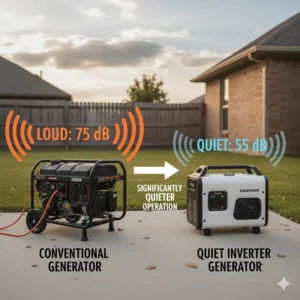
These workhorses use conventional engine technology. They’re typically louder (65-75 dBA) but cost less upfront. Best for job sites where noise isn’t critical and you need maximum bang for your buck.
Inverter Generators
These sophisticated units produce “clean” power with less than 3% total harmonic distortion (THD). The inverter technology makes them safe for sensitive electronics like laptops and medical equipment. They’re quieter (55-62 dBA) and more fuel-efficient but command a premium price.
Dual Fuel Generators
These versatile machines run on both gasoline and propane. Propane typically burns cleaner and stores indefinitely, making it ideal for emergency preparedness. Gasoline provides slightly more power output but requires more frequent use to prevent fuel degradation.
Choosing Your Perfect 3500 Watt Generator: The Essential Guide
Calculate Your Actual Power Needs
Don’t guess—calculate. Here’s the foolproof method:
- List all appliances you’ll run simultaneously
- Find running wattage (check manufacturer labels or manuals)
- Identify starting wattage (typically 2-3x running watts for motors)
- Add 20% buffer for safety margin
Example Calculation:
- Refrigerator: 700W running, 2200W starting
- Window AC: 1200W running, 3500W starting
- Lights: 200W running
Total running: 2100W
Highest starting: 3500W (AC unit)
Combined peak demand: 2100W + 3500W = 5600W
Verdict: You’d need to start appliances sequentially with a 3500W generator.
Inverter vs Traditional: Which Wins?
Choose Traditional When:
- Budget is tight ($300-500 range)
- Using basic appliances (lights, fans, power tools)
- Noise isn’t a concern (job sites, rural areas)
- Maximum runtime matters (larger fuel tanks)
Choose Inverter When:
- Protecting sensitive electronics (laptops, TVs, medical devices)
- Noise restrictions exist (campgrounds, neighborhoods)
- Fuel efficiency matters (frequent use)
- RV compatibility needed (stable voltage output)
Must-Have Safety Features for 2025
The generator landscape has evolved dramatically. According to new ANSI/PGMA G300-2023 standards, modern generators include critical safety technologies:
Carbon Monoxide (CO) Detection
Integrated sensors automatically shut down the unit when dangerous CO levels accumulate. This isn’t optional—it’s life-saving technology. Models like the Champion and WEN 56450i include this critical feature.
Low Oil Shutoff
Prevents catastrophic engine damage by stopping operation when oil levels drop too low. Every quality generator includes this now.
Overload Protection
Circuit breakers prevent damage from exceeding rated capacity. Look for automatic reset capabilities.
Fuel Shutoff Valve
Allows you to run the carburetor dry before storage, preventing stale fuel issues. This simple feature extends engine life significantly.
Key Specifications Comparison: Technical Deep Dive
| Feature | Budget Models | Mid-Range | Premium Units |
|---|---|---|---|
| THD Rating | 5-8% | 3-5% | <3% |
| Noise Level | 65-75 dBA | 60-65 dBA | 55-60 dBA |
| Runtime (50%) | 7-9 hours | 8-11 hours | 10-14 hours |
| Weight | 90-120 lbs | 70-100 lbs | 45-75 lbs |
| Fuel Capacity | 3-4 gallons | 2.5-3.5 gallons | 1.2-2.5 gallons |
| Starting Method | Recoil only | Recoil + Electric | Electric + Remote |
| Warranty | 1-2 years | 2-3 years | 3-5 years |
Real-World Applications: Where 3500W Shines
Home Emergency Backup Power
During power outages, a 3500 watt generator keeps your household functional. You can maintain:
- Refrigerator/freezer operation (prevent food spoilage)
- Critical lighting in multiple rooms
- Phone charging stations (stay connected)
- Sump pump operation (prevent flooding)
- Medical equipment (CPAP machines, nebulizers)
Pro Tip: Install a manual transfer switch ($200-400) for safe, legal connection to your home’s electrical panel. Never backfeed through outlets—it’s dangerous and illegal.
RV and Camping Adventures
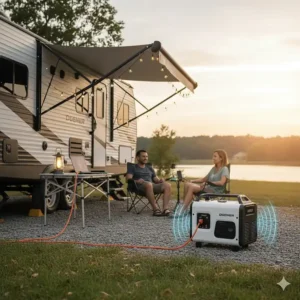
RV enthusiasts love 3500W units because they handle:
- 13,500-15,000 BTU air conditioners (with soft start)
- Microwave cooking
- Multiple device charging
- Water pump operation
- Entertainment systems
Modern RVs include 30-amp shore power connections. Many quality generators include TT-30R outlets specifically for RV compatibility.
Job Site Reliability
Contractors rely on these generators for:
- Power tools (circular saws, drills, compressors)
- Job site lighting
- Extension cord power distribution
- Battery charging equipment
Traditional open-frame models excel here—they’re cheaper, more durable, and noise matters less on construction sites.
Fuel Efficiency and Runtime Optimization
Understanding Eco Mode Benefits
Modern inverter generators feature Economy Mode that automatically adjusts engine speed based on load demand. Benefits include:
Fuel Savings: Up to 40% reduction in consumption
Noise Reduction: 5-10 dBA quieter during light loads
Extended Runtime: 10-14 hours possible at 25% load
Reduced Emissions: Cleaner combustion at optimal speeds
Fuel Type Considerations
Gasoline Advantages:
- Widely available at any gas station
- Higher energy density (more power per gallon)
- Familiar refueling process
Gasoline Challenges:
- Degrades in 30-90 days without stabilizer
- Requires regular cycling for storage
- Higher emissions and maintenance
Propane Advantages:
- Indefinite storage life
- Cleaner burning (fewer carbon deposits)
- Safer to store (won’t spill or evaporate)
Propane Challenges:
- 10-15% less power output
- Requires proper tank connections
- Less convenient for portable use
Expert Recommendation: Use gasoline for regular use, switch to propane for long-term storage preparedness.
Maintenance Mastery: Extending Generator Lifespan
Essential Maintenance Schedule
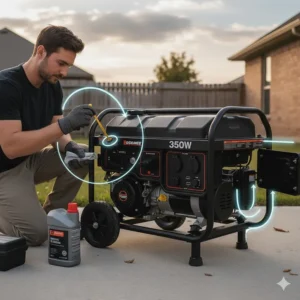
Every Use:
- Check oil level before starting
- Inspect for fuel leaks or damage
- Clear debris from cooling vents
- Test CO sensor (if equipped)
Every 25 Hours or Monthly:
- Change engine oil (10W-30 recommended)
- Clean/replace air filter
- Inspect spark plug condition
- Drain carburetor if storing
Every 100 Hours or Seasonally:
- Replace spark plug
- Clean/replace fuel filter
- Inspect all electrical connections
- Test voltage output with meter
Annual Service:
- Professional inspection recommended
- Carburetor cleaning/rebuild
- Load bank testing
- Comprehensive safety check
Storage Best Practices
Proper storage prevents 90% of generator problems:
Short-Term (1-30 days):
- Fill tank completely
- Add fuel stabilizer
- Store in dry, ventilated area
- Cover to prevent dust accumulation
Long-Term (30+ days):
- Run engine dry using fuel shutoff valve
- Change oil before storage
- Remove battery (if equipped)
- Store in climate-controlled space if possible
Critical Rule: Never store with untreated gasoline longer than 30 days. Modern ethanol fuels degrade rapidly, clogging carburetors and causing expensive repairs.
Safety First: Operating Your Generator Responsibly
The 20-Foot Rule
According to EPA guidelines on carbon monoxide, generators must operate at least 20 feet from any building openings. Carbon monoxide is an invisible killer—you can’t see, smell, or taste it, yet it causes over 400 deaths annually in the United States.
Safe Placement:
- Position 20+ feet from all doors and windows
- Point exhaust away from buildings
- Avoid enclosed areas (garages, sheds, porches)
- Consider wind direction
- Never operate indoors, even partially
Carbon Monoxide Awareness
Early Symptoms: Headache, dizziness, nausea, fatigue
Severe Symptoms: Confusion, loss of consciousness, death
Protection Measures:
- Install CO detectors in every sleeping area
- Test detectors monthly
- Replace detector batteries annually
- Consider models with CO sensors built-in
Grounding and Electrical Safety
Proper Grounding Prevents:
- Electrical shock hazards
- Equipment damage from surges
- Fire risks from electrical faults
Grounding Steps:
- Drive copper ground rod 4-8 feet deep
- Connect generator frame to rod using 10-gauge copper wire
- Verify connection is tight and corrosion-free
- Test ground annually with multimeter
Extension Cord Safety:
- Use heavy-duty 12-gauge cords minimum
- Keep cords dry and intact (no frays)
- Limit total cord length to 100 feet
- Never overload individual cords
- Calculate total amperage draw before connecting
✨ Don’t Miss These Exclusive Deals!
🔍 Take your backup power to the next level with these carefully selected products. Click on any highlighted item to check current pricing and availability. These tools will help you create authentic emergency preparedness your family will appreciate!
Installation Best Practices
Transfer Switch Installation
A transfer switch safely connects your generator to home circuits without back-feeding risk. Two main types exist:
Manual Transfer Switch ($200-500 installed):
- Requires manual switching between utility and generator
- Lower cost, reliable operation
- Perfect for occasional outage use
- No automatic failover
Automatic Transfer Switch ($1,500-3,000 installed):
- Automatically detects power loss
- Starts generator and switches power
- Ideal for frequent outages or unmanned property
- Requires compatible generator with auto-start
DIY vs Professional:
While DIY installation saves money, electrical work carries serious risks. Most jurisdictions require licensed electrician installation for code compliance and insurance coverage.
Fuel Storage Solutions
Proper fuel storage prevents degradation and safety hazards:
Approved Containers Only:
- Use safety cans (FM or UL approved)
- Never store gasoline in unapproved containers
- Maximum 5-gallon capacity recommended
- Red containers for gasoline, yellow for diesel
Storage Location:
- Cool, well-ventilated area
- Away from living spaces
- Protected from direct sunlight
- Minimum 50 feet from ignition sources
Fuel Rotation:
- Use oldest fuel first (date containers)
- Maximum 6-month storage with stabilizer
- Add stabilizer at every fill-up
- Consider non-ethanol fuel for better stability
Comparing 3500W to Other Generator Sizes
| Size Category | Typical Use | Weight Range | Price Range | Best For |
|---|---|---|---|---|
| 2000-2500W | Light camping, tailgating | 40-60 lbs | $300-$600 | Ultra-portable needs |
| 3500-4000W | Home backup, RV, camping | 45-110 lbs | $350-$900 | Versatile all-purpose |
| 5000-7000W | Whole house backup | 150-250 lbs | $800-$1,800 | Extended home coverage |
| 10,000W+ | Complete home power | 300-500 lbs | $2,000-$5,000+ | Permanent installation |
Why 3500W is the Sweet Spot:
- Runs essential appliances without overkill
- Portable enough for one person to move
- Affordable for most budgets
- Adequate for 90% of common scenarios
Parallel Connection: Doubling Your Power
Understanding Parallel Capability
Many modern inverter generators support parallel connection, allowing two identical units to work together:
Benefits:
- Double your available wattage (two 3500W = 7000W)
- Redundancy if one unit fails
- Gradual power scaling as needs grow
- Share load between units for efficiency
Requirements:
- Both generators must be parallel-compatible
- Special parallel kit required ($50-150)
- Identical models recommended (not required for some brands)
- Proper load balancing essential
Popular Parallel-Ready Models:
- MaXpeedingrods 3500 (includes parallel cables)
- WEN 56450i (compatible with WEN inverters)
- Champion 3500 (works with Champion 2800W+)
- PowerSmart 3500W (parallel kit sold separately)
Noise Levels Explained: What dBA Actually Means
Decibel Scale Context
Understanding noise levels helps you choose appropriately:
50-55 dBA: Quiet office, normal conversation
55-60 dBA: Modern inverter generators (Honda EU3000i)
60-65 dBA: Standard inverter generators (most 3500W inverters)
65-70 dBA: Traditional generators (WEN 56352)
70+ dBA: Loud generators, vacuum cleaner
Distance Matters:
Manufacturers measure noise at 23 feet. Every doubling of distance reduces noise by 6 dBA. A 60 dBA generator becomes 54 dBA at 46 feet.
Noise Reduction Tips:
- Position generator as far as practical
- Use rubber isolation feet
- Build simple sound enclosure (with proper ventilation)
- Consider inverter models for neighborhoods
Price Range Analysis and Value Considerations
Budget Tier ($300-500)
What You Get:
- Traditional open-frame design
- Manual pull-start only
- Basic outlets and features
- 1-2 year warranty
- 65-75 dBA noise levels
Best Budget Models:
- WEN 56352: $340-400
- Pulsar PG3500MR: $400-550
Ideal For: Infrequent use, job sites, maximum value per watt
Mid-Range Tier ($500-700)
What You Get:
- Inverter technology (clean power)
- Quieter operation (58-65 dBA)
- Electric start available
- Additional safety features
- 2-3 year warranty
Best Mid-Range Models:
- MaXpeedingrods 3500: $450-600
- PowerSmart 3500W: $500-650
Ideal For: Regular use, RV owners, electronics protection
Premium Tier ($700-900)
What You Get:
- Advanced inverter technology
- CO detection and shutoff
- Remote start capability
- Comprehensive monitoring
- 3-5 year warranty
Best Premium Models:
- Champion 3500: $700-900
- GENMAX GM3500iAED: $650-800
- WEN 56450i: $650-800
Ideal For: Safety-conscious buyers, frequent users, maximum features
Weatherproofing and Environmental Protection
Operating in Extreme Conditions
Cold Weather Operation:
- Use synthetic 5W-30 oil below 32°F
- Keep generator warm before starting
- Allow extended warm-up period
- Consider heated storage
Hot Weather Operation:
- Ensure adequate ventilation
- Monitor coolant levels
- Reduce continuous load by 10%
- Provide shade if possible
Wet Weather Protection:
- Never operate in rain without canopy
- Use waterproof generator cover (with ventilation)
- Elevate off ground to prevent flooding
- Dry completely before storage
Protective Accessories:
- Generator tent/canopy ($50-150)
- All-weather cover ($30-80)
- Rubber isolation pads ($20-40)
- Locking security cable ($25-50)
Common Problems and Troubleshooting
Generator Won’t Start
Possible Causes:
- Old fuel: Drain and replace with fresh gas
- Empty oil: Add oil to proper level
- Clogged carburetor: Clean or rebuild
- Faulty spark plug: Replace if fouled
- Air filter blocked: Clean or replace
Quick Fix Sequence:
- Check fuel valve is ON
- Verify choke position (varies by temperature)
- Confirm oil level adequate
- Clean spark plug
- Prime carburetor (if equipped)
Power Fluctuation Issues
Symptoms: Lights flicker, equipment shuts off randomly
Solutions:
- Reduce total load: Remove appliances until stable
- Check connections: Tighten all power cables
- Inspect voltage output: Use multimeter (should read 110-125V)
- Clean air filter: Restriction causes power issues
- Adjust carburetor: May need professional service
Excessive Noise or Vibration
Investigation Steps:
- Ensure generator sits level on firm surface
- Check for loose parts or panels
- Verify exhaust system secure
- Inspect engine mounts
- Consider isolation pads
Environmental Impact and EPA Compliance
Modern generators must meet strict EPA emission standards to reduce harmful pollutants. The EPA regulates four main emissions:
Regulated Pollutants:
- Carbon Monoxide (CO): Reduced 99% with new standards
- Hydrocarbons (HC): 90% reduction requirements
- Nitrogen Oxides (NOx): 99% lower than older units
- Particulate Matter (PM): 95% cleaner emissions
EPA vs CARB Compliance:
- EPA Certified: Legal for use in 49 states
- CARB Compliant: Required for California sale/use
- Dual Certified: Works everywhere (safest choice)
All generators reviewed in this article meet or exceed current EPA standards for their category.
Brand Reliability and Warranty Considerations
Manufacturer Reputation Matters
Established Brands:
- Champion: Known for excellent customer service, CO safety leadership
- WEN: Budget-friendly, reliable, extensive product line
- Honda: Premium quality, higher prices, industry standard
- Westinghouse: Mid-range reliability, good warranty coverage
Emerging Brands:
- MaXpeedingrods: Impressive value, growing reputation
- GENMAX: Innovative features, solid construction
- PowerSmart: Good performance, improving quality
Warranty Comparison:
- Budget Models: 1-2 years limited
- Mid-Range: 2-3 years comprehensive
- Premium: 3-5 years with extended options
What Warranties Cover:
- Manufacturing defects always covered
- Normal wear items (spark plugs, filters) typically excluded
- Improper maintenance voids most warranties
- Commercial use may require separate coverage
Accessories Worth Buying
Essential Add-Ons
Power Distribution:
- Heavy-duty extension cords: 12-gauge, 50-100 feet ($30-80)
- Power strip with surge protection: Protects connected devices ($25-50)
- Generator cord (L14-30): For transfer switch connection ($40-100)
Maintenance Supplies:
- Engine oil: SAE 10W-30, 1-2 quarts ($8-15)
- Fuel stabilizer: Sta-Bil or similar ($10-15)
- Air filter replacement: Check model ($5-20)
- Spark plugs: Keep spares ($5-15 each)
Safety Equipment:
- CO detector: Battery-powered, multiple ($20-40 each)
- Fire extinguisher: ABC-rated, 5-10 lbs ($30-60)
- Grounding rod kit: Complete with wire ($25-50)
- Work gloves: Heat-resistant ($15-25)
Convenience Items:
- Generator dolly: Easier transport ($80-150)
- Portable tool box: Organize maintenance items ($30-60)
- Hour meter: Track maintenance intervals ($15-30)
- LED work light: Nighttime operation ($20-40)
✨ Power Up Your Preparedness Today!
🌟 These carefully tested generators deliver reliable power when you need it most. Check current availability and pricing on your favorite model. Your future self will thank you when the lights go out!
Frequently Asked Questions
❓ How long will a 3500 watt generator run on a full tank?
❓ Can a 3500 watt generator run a house air conditioner?
❓ Do I need a transfer switch for my 3500 watt generator?
❓ What size generator do I need for RV with 50 amp service?
❓ Are inverter generators worth the extra cost for camping?
Conclusion: Making Your Final Decision
Choosing the right 3500 watt generator comes down to matching features with your specific needs. If safety is paramount, the Champion 3500 with CO Shield technology offers unmatched protection. Budget-conscious buyers get exceptional value from the MaXpeedingrods 3500 without sacrificing essential features. RV enthusiasts requiring extended runtime should consider the Pulsar PG3500MR with its massive 4-gallon tank.
The sweet spot between power and portability makes generator 3500 watts models incredibly versatile. Whether you’re preparing for storm season, planning weekend adventures, or need reliable job site power, these mid-range machines deliver dependable performance without breaking the bank.
Remember the fundamentals: always operate outdoors at least 20 feet from structures, maintain your unit regularly with oil changes every 25 hours, and calculate your actual wattage needs before choosing. The right 3500 watt electric generator provides peace of mind knowing you’re covered when the power goes out.
Start by identifying your primary use case, set a realistic budget, and prioritize features that matter most to your situation. The seven models reviewed here represent the best available options in 2025, each excelling in different areas. Your perfect generator is waiting—now you have the knowledge to choose confidently.
Recommended for You
- 7 Best 3000 Watt Inverter Generators for 2025 (Tested)
- 7 Best 2500 Watt Electric Generators (2025 Expert Reviews)
- 7 Best 2000 Watt Generators 2025: Ultimate Buying Guide
Disclaimer: This article contains affiliate links. If you purchase products through these links, we may earn a small commission at no additional cost to you.
✨ Found this helpful? Share it with your friends! 💬🤗
