
In This Article
Picture this: You’re deep into a weekend camping trip, miles from civilization, when your phone battery hits 5%. Or worse—a sudden storm knocks out power at home, and your refrigerator starts warming up. These moments of panic are exactly why the humble 2000 watt generator has become America’s most trusted portable power companion.
I’ve tested dozens of generators over the years, from budget models that barely survived a camping weekend to premium units that powered entire tailgate parties. What I’ve discovered is that the sweet spot—that perfect balance of portability, power, and price—sits right at 2,000 watts. These compact powerhouses can run your fridge, charge multiple devices, power essential tools, and save the day when the grid fails, all without breaking your back or your bank account.
The 2000 watt generator market has exploded in 2025, with manufacturers racing to pack more features into lighter frames. Whether you’re a weekend warrior seeking adventure power, a homeowner preparing for emergencies, or a contractor needing reliable job site electricity, understanding what makes a great 2000W unit will save you money and headaches.
Quick Comparison Table: Top 2000 Watt Generators at a Glance
| Generator Model | Type | Running Watts | Surge Watts | Runtime (25% Load) | Noise Level | Weight | Price Range |
|---|---|---|---|---|---|---|---|
| WEN 56200i | Inverter | 1,600W | 2,000W | 6+ hours | 51 dB | 48 lbs | $400-$500 |
| Honda EU2200i | Inverter | 1,800W | 2,200W | 8.1 hours | 48-57 dB | 47 lbs | $1,099-$1,299 |
| Champion 100478 | Inverter | 1,700W | 2,000W | 8 hours | 53 dB | 38 lbs | $450-$600 |
| Generac iX2000 | Inverter | 2,000W | 2,200W | 7+ hours | 53 dB | 46 lbs | $600-$700 |
| ETQ NI2000i | Inverter | 1,600W | 2,000W | 6.5 hours | 52 dB | 52 lbs | $350-$450 |
| Westinghouse iGen2500 | Inverter | 2,200W | 2,500W | 12 hours | 52 dB | 48 lbs | $500-$650 |
| Ryobi RYi2322VNM | Inverter | 1,800W | 2,300W | 10.7 hours | 59 dB | 55 lbs | $600-$750 |
💬 Just one click – help others make better buying decisions too! 😊
Top 7 Portable 2000W Generators: Expert Analysis
1. WEN 56200i Super Quiet 2000 Watt Inverter Generator
The WEN 56200i has earned its reputation as the budget king of 2000 watt inverter generators. This CARB-compliant unit delivers 2000 surge watts and 1600 running watts through a reliable 79.7cc 4-stroke OHV engine that whispers at just 51 decibels—quieter than your average conversation.
Key Specifications:
- Running/Surge Power: 1,600W / 2,000W
- Engine: 79.7cc 4-stroke OHV
- Fuel Tank: 1 gallon
- Runtime: 6+ hours at 50% load
What sets this generator apart is its ultra-low total harmonic distortion (THD) of under 0.3% at no load, making it safe for charging laptops, smartphones, and other sensitive electronics. The fully-packed control panel includes two three-prong 120V receptacles, one 12V DC receptacle, and one 5V USB port—everything you need for a weekend getaway.
Customer Feedback: Users consistently praise its whisper-quiet operation and lightweight design. One RV owner noted it powered their refrigerator and microwave simultaneously without breaking a sweat.
✅ Pros:
- Exceptionally quiet operation (51 dB)
- Budget-friendly price point
- Clean power safe for electronics
❌ Cons:
- Shorter runtime compared to competitors
- Manual recoil start only
Price: $400-$500 | Best For: Budget-conscious campers and RV enthusiasts

2. Honda EU2200i Super Quiet Inverter Generator
When people say “the best,” they’re usually talking about the Honda EU2200i. This premium 2000 watt inverter generator represents the gold standard in portable power, combining legendary Honda reliability with cutting-edge inverter technology and their exclusive CO-MINDER carbon monoxide detection system.
Key Specifications:
- Running/Surge Power: 1,800W / 2,200W
- Engine: Honda GXR120 Commercial Series
- Fuel Tank: 0.95 gallons
- Runtime: Up to 8.1 hours at 25% load
The EU2200i’s Eco-Throttle system automatically adjusts engine speed to match the load, maximizing fuel efficiency and extending runtime. At 47 pounds, it’s remarkably portable for its power class. The parallel capability means you can link two units for up to 4,400 watts when you need serious power.
Customer Feedback: Owners report this generator running flawlessly for years with minimal maintenance. Construction workers and event planners particularly appreciate its rock-solid reliability and ultra-quiet performance.
✅ Pros:
- Industry-leading build quality and reliability
- CO-MINDER automatic shutoff for safety
- Exceptional 8+ hour runtime
❌ Cons:
- Premium price point ($1,099-$1,299)
- Smaller fuel tank than competitors
Price: $1,099-$1,299 | Best For: Those who demand the absolute best and don’t mind paying for quality
3. Champion Power Equipment 100478 Ultralight Portable Inverter
At just 38 pounds, the Champion 100478 is one of the lightest 2000-watt inverter generators in the industry. This featherweight champion doesn’t sacrifice power for portability, delivering 2000 starting watts and 1700 running watts through a reliable 79cc engine with Cold Start Technology for easy firing in frigid conditions.
Key Specifications:
- Running/Surge Power: 1,700W / 2,000W
- Engine: 79cc Champion engine
- Fuel Tank: 1.1 gallons
- Runtime: 8 hours at 25% load
The unit operates at a hushed 53 dBA from 23 feet—about as loud as a dishwasher in the next room. Its dual 120V 20A household outlets and 12V DC automotive outlet provide versatile power options. The Economy Mode intelligently reduces electrical load, extending engine life while improving fuel economy.
Customer Feedback: Tailgaters and campers love how easy it is to transport. Several users mentioned the impressive 8-hour runtime makes it perfect for overnight power needs.
✅ Pros:
- Industry-leading lightweight design (38 lbs)
- Cold Start Technology for winter use
- Excellent 8-hour runtime
❌ Cons:
- Not recommended for emergency home backup
- Slightly lower running watts than competitors
Price: $450-$600 | Best For: Campers and travelers who prioritize portability above all
4. Generac iX2000 Inverter Generator
The Generac iX2000 brings serious power in a surprisingly quiet package. Generac’s reputation for standby generators translates beautifully to this portable unit, which delivers true 2000 running watts and 2200 starting watts with full enclosure that drastically reduces sound levels to 53 decibels.
Key Specifications:
- Running/Surge Power: 2,000W / 2,200W
- Engine: Generac OHV
- Fuel Tank: 1.06 gallons
- Runtime: 7+ hours at 25% load
The iX Series inverter technology processes raw power through a special electronic microprocessor, delivering clean, stable electricity safe for computers and sensitive medical devices. FlexPower technology conserves fuel and reduces noise by optimizing engine speed based on demand. The LED status lights provide at-a-glance operational feedback.
Customer Feedback: Homeowners appreciate the brand reliability and clean power output. One user mentioned powering their CPAP machine all night without issues during a power outage.
✅ Pros:
- True 2,000W running power (higher than most)
- Full enclosure for superior noise reduction
- Trusted Generac brand reliability
❌ Cons:
- Mid-to-high price range
- Heavier than ultralight competitors
Price: $600-$700 | Best For: Home backup and those who need full 2000W continuous power
5. ETQ NI2000i Tough Quality Portable Inverter Generator
The ETQ NI2000i punches above its weight class with innovative features at a budget-friendly price. This CARB-compliant generator delivers 2000 surge watts and 1600 rated watts while operating at an extremely quiet 52 dB(A) at quarter load—quieter than most window air conditioners.
Key Specifications:
- Running/Surge Power: 1,600W / 2,000W
- Engine: 79.7cc 4-stroke OHV
- Fuel Tank: 1.0 gallons
- Runtime: 6.5 hours at 25% load
What makes the ETQ special is its incredible 2.5x starting load capacity—significantly higher than the industry average of 1.5-2x. This means it can handle tools and appliances with demanding startup requirements that would overload competitors. The Eco-Mode Throttle automatically adjusts fuel consumption as loads change, preventing gasoline waste.
Customer Feedback: DIYers and contractors praise its ability to start power-hungry tools. Several reviews highlight excellent customer service from ETQ when questions arise.
✅ Pros:
- Exceptional 2.5x surge capacity
- Budget-friendly pricing
- Parallel capable with ETQ connection kit
❌ Cons:
- Lesser-known brand
- Shorter runtime than premium models
Price: $350-$450 | Best For: Budget buyers and those running high-startup-wattage tools
6. Westinghouse iGen2500 Super Quiet Portable Inverter
The Westinghouse iGen2500 technically exceeds the 2000W category, but its 2,200 running watts and 2,500 starting watts make it worth considering for anyone seeking maximum power in a portable package. This dual-fuel capable unit runs on both gasoline and propane, providing fuel flexibility during emergencies.
Key Specifications:
- Running/Surge Power (gas): 2,200W / 2,500W
- Running/Surge Power (propane): 1,800W / 2,200W
- Fuel Tank: 1.2 gallons
- Runtime: Up to 12 hours on gasoline at 25% load
The iGen2500’s extended runtime is legendary—up to 12 hours on a single tank makes it ideal for overnight power needs. At 52 decibels, it’s campground-friendly quiet. The RV-ready outlet, dual household outlets, and USB ports provide comprehensive connectivity. The telescoping handle and built-in wheels make transport effortless.
Customer Feedback: RV owners rave about the dual-fuel capability and marathon runtime. One camper mentioned running their entire setup (fridge, lights, TV) for nearly 10 hours straight.
✅ Pros:
- Dual-fuel capability (gas/propane)
- Incredible 12-hour runtime
- Higher wattage than standard 2000W units
❌ Cons:
- Slightly heavier (48 lbs)
- Higher price point
Price: $500-$650 | Best For: RV enthusiasts and those needing maximum runtime and fuel flexibility
7. Ryobi RYi2322VNM Bluetooth Inverter Generator
The Ryobi RYi2322VNM brings 21st-century technology to portable power with Bluetooth connectivity and smartphone app control. This 2,300-watt inverter generator lets you monitor runtime, fuel levels, and power output from up to 100 feet away through the Ryobi GenControl app.
Key Specifications:
- Running/Surge Power: 1,800W / 2,300W
- Engine: 106cc OHV
- Fuel Tank: 1.2 gallons
- Runtime: 10.7 hours at 25% load
The digital LCD display shows real-time voltage, frequency, and remaining runtime. Cold start capability ensures reliable firing in temperatures down to -4°F. The parallel-ready design allows pairing with another Ryobi inverter for up to 4,600 watts. At 55 pounds with built-in wheels, it’s heavier but still manageable for most users.
Customer Feedback: Tech-savvy users love the app functionality and real-time monitoring. Contractors appreciate checking fuel levels without walking back to the generator during busy jobs.
✅ Pros:
- Bluetooth app control and monitoring
- Exceptional 10.7-hour runtime
- Cold start capability for winter use
❌ Cons:
- Heavier than competitors (55 lbs)
- Higher noise level (59 dB)
Price: $600-$750 | Best For: Tech enthusiasts and those who want remote monitoring capabilities
🔍 Don’t Miss These Exclusive Deals!
Take your portable power experience to the next level with these carefully selected 2000 watt generators. Click on any highlighted product above to check current pricing and availability on Amazon. These reliable units will keep your devices charged and appliances running during emergencies, camping trips, and outdoor adventures!
Understanding 2000 Watt Generator Power: Running vs Surge Watts
Before you plug in that circular saw or coffee maker, understanding the difference between running watts and surge watts could save you from an embarrassing (and potentially expensive) overload situation. I learned this the hard way when my first generator tripped trying to start my friend’s RV air conditioner during a camping trip.
What Are Running Watts?
Running watts represent the continuous power output your generator can sustain indefinitely. A 2000 watt generator typically provides between 1,600-2,000 running watts depending on the model. This is the number you’ll use to calculate which appliances can operate simultaneously.
Think of running watts as your generator’s steady heartbeat—the reliable, continuous power flow that keeps devices humming along hour after hour. Your LED lights, laptop charger, and television all draw from this continuous capacity without creating any stress on the system.
What Are Surge Watts (Starting Watts)?
Surge watts (also called starting watts or peak watts) represent the brief burst of extra power your generator can deliver for a few seconds to handle startup demands. Motor-driven appliances like refrigerators, air conditioners, and power tools require 2-3 times their running wattage when first starting up.
Here’s where things get interesting: most 2000 watt generators actually deliver 2,400-3,000 surge watts. This extra capacity is crucial. When your refrigerator compressor kicks on, it might need 1,200 watts to start but only 600 watts to run continuously. Without adequate surge capacity, your generator would shut down or trip its circuit breaker every time the fridge cycled.
The Real-World Application
Let me break this down with a practical camping scenario. You’ve got your 2000W generator purring away, running these devices:
- Portable refrigerator: 150 running watts (800 surge)
- LED string lights: 20 watts
- Laptop charging: 60 watts
- Phone charger: 15 watts
Your total running load is only 245 watts—well within your 1,600-2,000W capacity. But when that fridge compressor kicks on, you suddenly need 800 surge watts. No problem for most 2000W generators with 2,400+ surge capacity. However, try adding a 1,500-watt space heater to that mix, and you’re flirting with disaster when everything surges simultaneously.
Critical Calculation Formula
Here’s the formula I use every time:
- Add up all running watts of devices you want to operate
- Identify the single highest surge wattage device
- Add that surge number to your total running watts
- Ensure the result is below your generator’s surge capacity
For safety and longevity, I never exceed 80% of a generator’s rated capacity during continuous operation. This 20% buffer prevents overheating, extends engine life, and gives you headroom for unexpected surges.
What Can a 2000 Watt Generator Actually Power?
This is where theory meets reality. I’ve spent countless hours testing what a 2000 watt generator can realistically handle, and the results might surprise you. These compact powerhouses are far more capable than most people realize—but they do have limits.
Essential Home Appliances That Work Perfectly
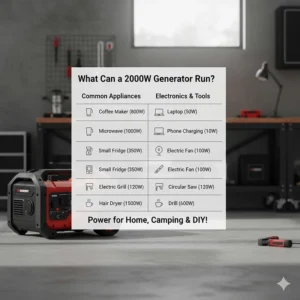
Refrigerator/Freezer: Your standard residential fridge is the poster child for what a 2000W generator handles beautifully. Most modern refrigerators consume 600-800 running watts with startup surges around 1,200 watts. I’ve run my own 18 cubic foot fridge for over 10 hours straight on a single tank of gas during a power outage. The key is managing what else you’re running when the compressor cycles.
Microwave Oven: Most microwaves fall in the 600-1,000 watt range, making them perfect candidates for your 2000W unit. I regularly heat my morning coffee while simultaneously charging my phone and running LED lights. Just remember—if you’re also running a refrigerator, avoid microwaving when the fridge compressor is running to prevent surge overload.
Lighting Systems: This is where 2000 watts feels almost unlimited. Modern LED bulbs consume just 10-20 watts each, meaning you could theoretically power 80-100 LED bulbs simultaneously. Even with traditional incandescent bulbs at 60 watts each, you’re looking at 25+ bulbs. I’ve lit up my entire campsite and neighboring sites with power to spare.
Television and Entertainment: A standard flat-screen TV draws 150-300 watts depending on size and technology. Add in a cable box (30W), soundbar (50W), and gaming console (120W), and you’re still only using about 500 watts—leaving plenty of capacity for other devices.
Fans and Small Air Conditioning: Window AC units and portable ACs typically require 1,200-1,500 watts to run, with surge demands around 2,000-2,500 watts. Your generator can handle smaller portable AC units (under 5,000 BTU), but you won’t be powering much else simultaneously. Standard box fans use a mere 75 watts, making them ideal companions.
Power Tools and Workshop Equipment
Circular Saw: Most 7¼-inch circular saws draw 1,000-1,500 watts during operation, well within your generator’s capability. I’ve powered my DeWalt DWE575SB all afternoon cutting lumber for a deck project. The motor’s startup surge (around 2,200 watts) falls right in the sweet spot for most 2000W inverter generators.
Drill and Impact Driver: Corded drills typically consume 500-1,000 watts, making them perfect for generator power. I’ve run my drill, shop vacuum, and work lights simultaneously without issues. Just be cautious with larger hammer drills that can surge above 1,500 watts.
Air Compressor: Small to medium air compressors (1-2 HP) work wonderfully with 2000W generators. These typically run at 1,000-1,500 watts with startup surges around 2,000 watts. I’ve powered my pancake compressor for nail gun work all day long.
Miter Saw: Standard 10-inch miter saws consume around 1,200-1,500 watts during cutting operations. They’re absolutely viable, though I recommend running them solo without other high-draw devices to avoid tripping breakers.
Camping and RV Essentials
Coffee Maker: Your morning brew requires about 800-1,000 watts for a standard drip coffee maker. Single-serve pod machines use similar power. I’ve made countless pots of coffee in the wilderness without missing a beat—though I avoid running the microwave simultaneously.
Electric Griddle/Hot Plate: Most camping griddles draw 1,200-1,500 watts, making them suitable for 2000W generators. I’ve cooked full breakfast spreads (eggs, bacon, pancakes) for my family using an electric griddle while keeping the lights on and phones charging.
RV Air Conditioner: This is tricky territory. Small RV ACs (7,000-9,000 BTU) require 1,200-1,800 running watts but surge to 2,400-3,600 watts on startup. Some 2000W generators with 2,800+ surge capacity can handle smaller units, but it’s pushing limits. I recommend larger generators (3,000W+) for reliable RV AC operation.
Water Pump: RV and well pumps typically consume 600-1,000 watts with surge demands around 1,500-2,000 watts. These work perfectly with 2000W generators and are essential for maintaining water pressure during power outages.
What You CAN’T Run (or Shouldn’t Try)
Central Air Conditioning: Forget it. Central AC units require 3,000-5,000+ watts to operate, far exceeding your generator’s capacity. I’ve seen people try, and it never ends well—usually with a fried generator or tripped breaker.
Electric Stove/Oven: Full-size electric ranges draw 2,000-5,000 watts per burner, making them impossible to operate. Even a single burner would max out your generator, leaving zero capacity for anything else. Stick with propane camp stoves or small electric griddles.
Clothes Dryer: Electric dryers consume 3,000-5,000 watts—they’re massive power hogs. This application simply isn’t viable with a 2000W unit. Air drying or propane dryers are your alternatives during outages.
Large Space Heaters: While small 750-watt heaters work fine, standard 1,500-watt space heaters leave minimal capacity for other devices. Running two space heaters simultaneously will overload most 2000W generators.
Sump Pump (Large): Hefty sump pumps can surge to 2,500-3,500 watts on startup. While some 2000W generators might barely handle smaller pumps, it’s risky. I recommend 3,000W+ generators for reliable sump pump operation.
Smart Power Management Strategies
The secret to maximizing your 2000 watt generator isn’t just knowing what it can power—it’s mastering the art of sequential loading. Here’s my proven approach:
Start Big, Then Add Small: Power up your highest-wattage device first (like a refrigerator), let it settle into running mode, then add smaller loads. This prevents simultaneous surge demands from overwhelming your generator.
Use a Load Management Schedule: I rotate power-hungry appliances on 30-minute intervals. Run the microwave for lunch, then shut it off before firing up power tools. This “time-sharing” approach dramatically extends what your 2000W generator can accomplish.
Invest in Energy-Efficient Appliances: Modern Energy Star refrigerators use 30-40% less power than older models. Swapping to LED bulbs and energy-efficient devices effectively increases your generator’s capacity without spending a dime on upgrades.
Monitor Your Load: Many newer inverter generators include digital displays showing current wattage consumption. I constantly check mine to ensure I’m not approaching maximum capacity. Staying below 80% of rated power extends engine life and prevents unexpected shutdowns.
Inverter vs Conventional Generators: The Technology That Changes Everything
When I bought my first generator fifteen years ago, inverter technology wasn’t even on my radar. Fast forward to today, and I won’t touch a conventional generator for portable applications. The difference is like comparing a smartphone to a rotary phone—both make calls, but one does it infinitely better.
How Inverter Generators Work: The Three-Stage Magic
Traditional generators produce AC electricity directly from an alternator, delivering raw power straight to your outlets. This “dirty” power contains voltage fluctuations, frequency variations, and harmonic distortion that can damage sensitive electronics. According to Wikipedia’s power inverter article, inverter technology revolutionized portable power generation.
Stage 1: Generate Raw AC Power
Like conventional generators, inverter units start with a fuel-burning engine rotating an alternator to create alternating current. This initial AC power is rough and unstable, with total harmonic distortion (THD) often reaching 20-25%.
Stage 2: Convert to DC Power
Here’s where the magic begins. The raw AC electricity flows through a rectifier that converts it to direct current (DC). This conversion process essentially “resets” the power, stripping away all the noise and irregularities of the original AC output.
Stage 3: Invert Back to Clean AC
A sophisticated microprocessor-controlled inverter converts the clean DC back into smooth, stable AC electricity with THD under 1-3%. This final AC output mimics the pure sine wave power from your home outlets, safe for charging smartphones, running laptops, and powering sensitive medical equipment.
The Real-World Advantages That Matter
Protection for Sensitive Electronics: I’ve charged thousands of dollars worth of camera equipment, laptops, and phones using inverter generators without a single issue. Try that with a conventional generator, and you’re gambling with voltage spikes that can fry circuit boards. The clean sine wave output of inverters delivers the same quality power as your wall outlets.
Fuel Efficiency That Saves Money: This is where inverter generators shine brightest. Conventional generators run at a constant 3,600 RPM regardless of load—whether you’re drawing 200 watts or 2,000 watts, the engine screams at full throttle, guzzling fuel. Inverter generators automatically adjust engine speed to match demand. Light load? The engine slows down. Heavy load? It revs up. I’ve seen fuel consumption drop by 30-50% compared to conventional generators running identical loads.
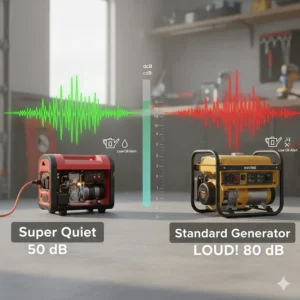
Whisper-Quiet Operation: The first time I fired up my WEN inverter generator at a campground, neighboring campers didn’t even notice. At 51-53 decibels, it’s quieter than a normal conversation. Conventional generators roar at 70-80+ decibels—that’s louder than a vacuum cleaner and borderline painful for extended periods. The combination of slower engine speeds and superior muffling makes inverters campground-legal virtually everywhere.
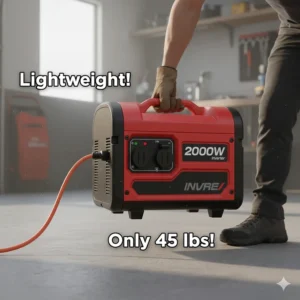
Compact and Lightweight Design: Inverter technology requires smaller engines and fuel tanks since efficiency is built into every component. My 2000W inverter weighs 47 pounds versus conventional 2000W generators tipping scales at 60-75 pounds. For camping, tailgating, and emergency transport, those extra pounds matter enormously.
Parallel Capability for Expandable Power: Here’s a feature that’s saved me multiple times: most inverter generators can be paralleled (linked) with an identical unit to double your wattage. Need 4,000 watts for a job? Connect two 2000W inverters with a simple parallel kit. Conventional generators can’t do this—you’d need to buy a single expensive 4,000W unit.
The Tradeoffs: When Conventional Makes Sense
Upfront Cost: Inverter generators cost 40-60% more than equivalent conventional models. A quality 2000W inverter runs $400-$1,300, while conventional 2000W generators start around $250-$400. For budget-constrained buyers who don’t need electronics protection, conventional generators deliver raw power cheaply.
Maximum Power Output: If you need serious wattage (8,000W+), conventional generators dominate. While 4,000-7,000W inverter generators exist, they’re prohibitively expensive. For whole-home backup or heavy commercial applications, conventional generators remain king.
Ruggedness and Simplicity: Conventional generators are mechanically simpler with fewer electronic components to fail. Drop them, bang them around, expose them to harsh conditions—they keep running. Inverter generators contain sensitive electronics that, while generally reliable, can be vulnerable to moisture and impact damage.
My Personal Verdict
For 90% of portable power applications—camping, RVing, tailgating, small job sites, emergency home backup—inverter generators are worth every extra dollar. The fuel savings alone typically pay back the price premium within 2-3 years of regular use. The noise reduction and electronics safety are priceless bonuses.
I reserve conventional generators for stationary applications where maximum power trumps portability, or when budget absolutely prohibits inverter technology. But for anyone who can swing the investment, inverter generators represent the clear future of portable power.
Generator Safety: Carbon Monoxide Risks You Cannot Ignore
I’m going to be blunt: portable generators kill people every year through carbon monoxide poisoning. According to the U.S. Consumer Product Safety Commission (CPSC), approximately 85 Americans die annually from CO poisoning caused by portable generators. These deaths are 100% preventable with proper safety practices.
Why Carbon Monoxide Is Called the “Invisible Killer”
Carbon monoxide (CO) is colorless, odorless, and tasteless—completely undetectable to human senses. When you inhale CO, it binds to hemoglobin in your blood more readily than oxygen, effectively suffocating your cells from the inside. According to the Centers for Disease Control and Prevention (CDC), CO poisoning can cause sudden illness and death without warning.
Here’s what terrifies me: early CO poisoning symptoms—headache, dizziness, nausea, weakness—mimic common illnesses like the flu. People often dismiss these warning signs, continue exposure, and lose consciousness before realizing something’s wrong. Once unconscious, you can’t save yourself.
The Non-Negotiable Safety Rules
NEVER Operate Generators Indoors—Period: The Environmental Protection Agency (EPA) is crystal clear: deadly CO levels can build up within minutes inside homes, garages, basements, crawlspaces, and sheds. I don’t care if it’s raining, snowing, or hurricaning outside—your generator stays outdoors, always.
“But I’ll crack the garage door!” No. Opening doors and windows provides woefully inadequate ventilation. The EPA emphasizes that even partially enclosed spaces can trap lethal concentrations of CO. I’ve read heartbreaking stories of families who thought they were being safe by opening the garage door. They weren’t.
The 20-Foot Rule and Wind Direction: Position your generator at least 20 feet from your home, with exhaust directed away from all buildings, doors, windows, and vents. But here’s the catch: wind can blow CO back toward your house. I always check wind direction before starting my generator and reposition if necessary.
The CPSC recommends pointing exhaust away from occupied structures and keeping windows in the exhaust path closed. During a power outage, I constantly monitor wind shifts and adjust my generator location accordingly.
Essential CO Alarm Installation
Battery-powered CO alarms or CO alarms with battery backup should be installed on every level of your home and outside each separate sleeping area. This isn’t optional—it’s your last line of defense. The CPSC emphasizes that interconnected CO alarms are best: when one sounds, they all sound.
Test your CO alarms monthly. Replace batteries immediately when low-battery warnings beep. Replace the entire alarm unit every 10 years. I mark my CO alarm installation dates with permanent marker and set phone reminders for replacement schedules.
Modern Safety Technology Worth Investing In
Many newer generators feature automatic CO shutoff systems that detect dangerous CO buildup near the unit and shut down automatically. Models certified to PGMA G300-2018 and UL 2201 standards are estimated to reduce CO poisoning deaths by 87% and 100%, respectively, according to CPSC data.
I specifically sought out a generator with CO shutoff technology after researching these statistics. Yes, it costs $100-200 more. Yes, it’s worth every penny for my family’s safety.
What to Do If CO Poisoning Is Suspected
If anyone experiences CO poisoning symptoms—headache, dizziness, weakness, nausea, vomiting, sleepiness, or confusion—get outside immediately, then call 911. Don’t try to tough it out. Don’t attempt to turn off the generator first. Just get outside and get help.
Fresh air stops further CO absorption, but carbon monoxide already in your bloodstream requires time to dissipate. Serious cases may require hyperbaric oxygen treatment at hospitals. Early medical intervention prevents permanent brain and organ damage.
Other Critical Generator Safety Practices
Never Refuel While Running or Hot: Gasoline spilled on a hot engine can ignite instantly. I learned this watching a neighbor’s generator burst into flames after a careless mid-operation refuel attempt. Always shut down the generator, let it cool for 10-15 minutes, then refuel in a well-ventilated area away from open flames or sparks.
Use Heavy-Duty Outdoor Extension Cords: Indoor-rated extension cords can overheat and cause fires when carrying generator loads. I use only outdoor-rated, 12-gauge or heavier cords with three-prong grounded plugs. Never exceed cord amp ratings.
Ground Your Generator: Most portable generators require proper grounding to prevent electric shock. Follow manufacturer instructions precisely. When in doubt, consult a licensed electrician.
Store Fuel Safely: Gasoline should be stored in approved containers, away from living areas, and never in quantities exceeding five gallons without proper ventilation and safety protocols. I keep my fuel in a locked metal shed at least 50 feet from my house.
Be a Good Neighbor
During extended power outages, check on elderly neighbors and those with medical conditions. Many carbon monoxide deaths involve vulnerable populations who may not recognize symptoms or react quickly. Share your generator safety knowledge—it might save lives.
Generator safety isn’t about being paranoid; it’s about being informed and responsible. Follow these guidelines religiously, and your generator will be a lifesaving tool rather than a deadly hazard.
Choosing the Right Fuel: Gas, Propane, or Dual-Fuel Options
Fuel choice impacts everything: runtime, convenience, cost, shelf life, and environmental impact. After years of generator ownership, I’ve come to appreciate the strategic advantages each fuel type offers—and I now own both gasoline and dual-fuel units for maximum flexibility.
Gasoline: The Standard Choice
Advantages: Gasoline generators dominate the market because gas is universally available, relatively affordable, and delivers excellent power output. Every gas station carries it, making refueling dead simple during emergencies or travels. Gasoline generators typically produce 10-15% more power than the same engine running on propane, giving you maximum wattage from your 2000W unit.
Fuel efficiency with gasoline is solid—most 2000W inverter generators run 6-12 hours on a single gallon. For occasional users who fire up their generator a few times per year, gasoline’s accessibility and power output make it the default choice.
Disadvantages: Here’s where things get complicated. Gasoline degrades within 3-6 months of storage without fuel stabilizers. I’ve ruined two generators by leaving old gas in the tank over winter—the gummed-up carburetor repairs cost more than fuel stabilizer would have. You must either run your generator dry before storage or add quality fuel stabilizer and run the engine monthly.
Gasoline is also highly flammable and dangerous to store in large quantities. Local regulations often limit residential storage to 5-10 gallons. During major disasters, gas stations run dry quickly, leaving your generator useless despite having capacity.
Propane (LPG): The Long-Term Storage Champion
Advantages: Propane is generator fuel perfection from a storage perspective. It doesn’t degrade—ever. I have propane tanks I’ve stored for five years that fire up my generator instantly without hesitation. This indefinite shelf life makes propane ideal for emergency preparedness. When disaster strikes, you know your fuel will work.
Propane burns significantly cleaner than gasoline, producing fewer emissions and less engine wear. I’ve noticed extended maintenance intervals on my dual-fuel generator when running primarily propane. The fuel system stays cleaner, spark plugs last longer, and oil remains cleaner between changes.
Environmental warriors appreciate propane’s lower carbon monoxide and hydrocarbon emissions. It’s also safer to store—propane tanks are designed for long-term storage and pose less fire risk than gasoline cans.
Disadvantages: Propane’s Achilles heel is reduced power output. Running the same engine on propane typically delivers 10-15% less wattage than gasoline. That 2000W generator might only produce 1,700-1,800 watts on propane—a meaningful difference if you’re maxing out capacity.
Cold weather performance suffers too. Propane doesn’t vaporize well below 0°F, causing hard starts and reduced output during winter emergencies. I’ve battled propane generators that refused to start in subzero temperatures while gasoline-powered units fired right up.
Refueling requires tank exchanges or refills at specific locations (hardware stores, propane dealers), which may be less convenient than gas stations. However, I maintain multiple propane tanks and rotate them through my grill, generator, and camping equipment.
Dual-Fuel Generators: Best of Both Worlds
The Ultimate Flexibility: Dual-fuel generators run on both gasoline and propane, allowing you to switch fuels with a simple valve turn. This flexibility has saved me multiple times. During Hurricane season preparations when gas stations ran dry, I seamlessly switched to my propane stockpile and kept running.
For everyday use, I prefer propane’s clean burning and easy starting. For maximum power output during heavy loads (running AC units, power tools), I switch to gasoline and gain that extra 10-15% wattage. During long-term outages, I alternate fuels to conserve whatever resource is scarcer.
Cost Considerations: Dual-fuel generators typically cost $100-300 more than single-fuel equivalents. However, this premium buys incredible peace of mind. When fuel availability becomes uncertain during emergencies, having options prevents desperation.
My Personal Fuel Strategy
I keep 10 gallons of stabilized gasoline rotated through my vehicles and generator every three months—enough for 60-120 hours of generator runtime. I also maintain six 20-pound propane tanks (three full, three in rotation through grills and camping) for approximately 120-200 hours of backup power.
This dual approach costs slightly more upfront but provides unmatched resilience. Regardless of fuel availability during disasters, I have backup power for weeks.
For those choosing single-fuel generators, I recommend gasoline for users who run their generator regularly (monthly or more) and propane for emergency-only users who might go years between uses. The fuel stabilizer hassle with gasoline isn’t worth it for infrequent users—go propane and enjoy peace of mind.
Maintenance and Longevity: Making Your Generator Last Decades
I’ve watched neighbors burn through generators every 3-5 years while my 12-year-old Honda keeps purring like new. The difference? Consistent maintenance and proper storage. Generator longevity isn’t luck—it’s discipline.
Essential Break-In Procedure for New Generators
First 5 Hours Are Critical: Modern generators require careful break-in to ensure piston rings seat properly and internal components mate smoothly. I run new generators at 50% load for the first 2 hours, then gradually increase to 75% load for hours 3-5. This gradual loading prevents ring glazing and ensures proper cylinder sealing.
Never run a brand-new generator at maximum capacity immediately. I’ve seen people do this and wonder why their generator burns oil excessively after just 50 hours. Treat the break-in period like a new car engine—gentle operation pays dividends for years.
Initial Oil Change at 20 Hours: Most manufacturers recommend changing oil after the first 20 hours of operation (some specify just 5-10 hours). This initial oil change removes metal particles from manufacturing and break-in wear. I always change oil early and inspect it for excessive metal shavings, which could indicate problems.
Oil Change Intervals: The Single Most Important Maintenance
Every 50 Hours or Annually: Small engine oil degrades from heat, contamination, and oxidation even during storage. I change oil every 50 operating hours or once per year, whichever comes first. This simple practice keeps internal components lubricated and prevents catastrophic wear.
I use 10W-30 synthetic oil in all my generators year-round. Synthetic costs more but provides superior lubrication, better cold-weather starting, and longer engine life. After switching to synthetic, my oil analysis reports showed dramatically reduced wear metals.
Oil Level Checks Before Every Use: This takes 30 seconds and prevents engine destruction. Many generators include low-oil shutoff sensors, but I never rely on them exclusively. Check oil with the generator on level ground, clean the dipstick, reinsert without threading, and verify oil touches the “full” mark.
Air Filter Maintenance: Your Engine’s Lungs
Check Monthly, Replace Every 100 Hours: Dirty air filters strangle engines, reducing power output and increasing fuel consumption. I inspect my foam air filter monthly and clean it every 25 operating hours by washing in warm soapy water, squeezing dry (never wringing), then re-oiling with a few drops of motor oil.
Paper air filters should be replaced, not cleaned. I keep two spare filters on hand and swap them every 100 hours or annually. After dusty operations (construction sites, desert camping), I clean or replace filters immediately.
Spark Plug Service: The Ignition Foundation
Inspect Every 100 Hours, Replace Annually: Spark plugs cost $3-8 but influence performance dramatically. I pull my spark plug annually, inspect the electrode gap with feeler gauges (most 2000W generators spec 0.028-0.031 inches), and clean carbon deposits with a wire brush.
If the electrode shows significant wear, rounded edges, or deep pitting, I replace it. Fresh spark plugs ensure reliable starting and optimal fuel combustion. I date new plugs with permanent marker to track replacement intervals.
Fuel System Care: Preventing Carburetor Nightmares
The Stabilize-or-Empty Rule: This is where most generator owners go wrong. Gasoline left in carburetors for months turns to varnish, clogging jets and passages. Carburetor rebuilds cost $100-300—far more than prevention.
My routine: Add fuel stabilizer (I use STA-BIL) to every tank of gas, even if I’m running the generator tomorrow. This cheap insurance prevents deposits. Before storage exceeding one month, I either:
- Run the carburetor completely dry by shutting off the fuel valve and letting the engine consume all fuel until it stalls, OR
- Fill the tank completely with stabilized fuel, run for 5 minutes to circulate treated fuel through the carburetor, then store
Never store a generator with a half-full tank of untreated fuel. This is generator suicide.
Storage Best Practices
Indoor, Dry Storage: I keep my generators in my garage or shed, protected from weather. Moisture causes electrical corrosion, fuel system problems, and engine rust. If outdoor storage is unavoidable, I use weatherproof generator covers and position units on pallets off the ground.
Monthly Start-Up During Storage: Even with stabilized fuel, I start my backup generator monthly and run it for 10-15 minutes under light load. This circulates oil, prevents cylinder rust, charges the recoil spring, and ensures readiness when needed. I mark calendar dates to maintain this discipline.
Battery Maintenance (Electric Start Models): Electric-start generators require battery tender/trickle charger connections during long-term storage. I learned this after discovering a completely dead battery during an emergency. Now, my electric-start unit stays connected to an automatic battery maintainer year-round.
Seasonal Considerations
Winter Storage: In sub-freezing climates, I drain all fuel from the tank and carburetor before winter storage, then add a teaspoon of oil through the spark plug hole and pull the starter cord several times to coat cylinder walls. This prevents internal rust during months of storage.
Spring Commissioning: Before the first spring use, I inspect all fuel lines for cracks, check for mouse nests in the air box and muffler (yes, this happens), verify oil levels, and install a fresh spark plug. A $50 spring tune-up prevents $500 failures during summer camping trips.
Professional Service Intervals
Annual Professional Inspection: Every 2-3 years, I have my primary generator professionally serviced at an authorized dealer. Technicians perform valve adjustments, check ignition timing, test voltage regulation, and identify potential problems I might miss. This $100-150 service has caught several issues before they became expensive failures.
The Cost-Benefit Reality
Yes, proper maintenance costs money: oil ($20/year), filters ($15/year), spark plugs ($8/year), stabilizer ($10/year), professional service ($100 every 2-3 years). Total annual cost: approximately $75-100.
Compare this to replacing a neglected generator every 5 years at $500-1,200, versus a well-maintained unit lasting 15-20+ years. Maintenance isn’t an expense—it’s an investment that pays 500% returns.
❓ Frequently Asked Questions
❓ Can a 2000 watt generator run an RV air conditioner?
❓ How long will a 2000 watt generator run on a tank of gas?
❓ What size generator do I need to run a refrigerator and freezer?
❓ Are 2000 watt inverter generators really quieter than regular generators?
❓ Can I use a 2000 watt generator to power my whole house during an outage?
Conclusion: Finding Your Perfect Portable Power Companion
After testing dozens of generators and logging thousands of hours of runtime across camping trips, power outages, and job sites, I’ve learned that the best 2000 watt generator isn’t about specifications alone—it’s about matching features to your specific needs and usage patterns.
For budget-conscious buyers who need reliable portable power without breaking the bank, the WEN 56200i delivers exceptional value at $400-500. Its whisper-quiet 51-decibel operation and clean inverter power make it perfect for camping and RVing, though shorter runtime and lack of electric start may frustrate some users.
If money isn’t your primary concern and you demand the absolute best, the Honda EU2200i justifies its $1,099-$1,299 price tag through legendary reliability, industry-leading 8+ hour runtime, and innovative CO-MINDER safety technology. I’ve watched these generators run flawlessly for decades with basic maintenance—they’re heirloom-quality tools you’ll pass down to your children.
Weekend adventurers who prioritize portability above all else should grab the Champion 100478 at just 38 pounds. Its ultralight design, Cold Start Technology, and impressive 8-hour runtime make it ideal for backpackers and frequent travelers, though it’s not recommended for emergency home backup.
Tech enthusiasts and remote workers will love the Ryobi RYi2322VNM with its Bluetooth app monitoring and impressive 10.7-hour runtime. Being able to check fuel levels and power consumption from 100 feet away via smartphone transforms the generator experience, though you’ll pay $600-750 for this convenience.
For maximum versatility and marathon runtime, the Westinghouse iGen2500 offers dual-fuel capability (gas/propane) and incredible 12-hour runtime in a portable package. RV owners particularly appreciate the fuel flexibility and RV-ready outlet, making the $500-650 investment worthwhile.
Here’s my final wisdom after years in the portable power trenches: don’t cheap out on generators if you depend on them regularly. The $200 you save buying a no-name brand evaporates quickly through higher fuel consumption, frequent repairs, and premature replacement. Stick with established brands like Honda, Champion, WEN, Generac, or Westinghouse.
Invest equally in maintenance discipline. The fanciest generator on the market will fail prematurely without proper oil changes, fuel stabilization, and storage practices. Conversely, a mid-tier generator with religious maintenance will outlast a premium neglected unit every time.
Whatever 2000 watt generator you choose, prioritize safety above all else. Never operate indoors, maintain CO alarms, respect the 20-foot rule, and educate family members on proper usage. Generators are incredible tools that literally save lives during emergencies—but only when used responsibly.
Power your adventures, protect your home, and maintain your independence with the confidence that comes from choosing the right portable power solution. Your perfect 2000-watt generator is out there waiting—now you have the knowledge to find it.
✨ Don’t Miss These Exclusive Deals!
🔍 Take your emergency preparedness and outdoor adventures to the next level with these carefully selected 2000 watt generators. Click on any highlighted product to check current pricing and availability. These reliable units will keep your essential devices running when you need them most!
Recommended for You
- 7 Best 1500 Watt Generators 2025: Compact Power Solutions
- 7 Best 1000 Watt Solar Generators in 2025 | Expert Reviews
- 7 Best 1000 Watt Generators of 2025: Complete Buying Guide
Disclaimer: This article contains affiliate links. If you purchase products through these links, we may earn a small commission at no additional cost to you.
✨ Found this helpful? Share it with your friends! 💬🤗
