

In This Article
Power outages don’t send advance notices, and neither do your camping adventures. Whether you’re facing a sudden blackout that threatens your freezer full of food or planning a weekend escape where you’d like some modern comforts, 1500 watt generators strike that perfect balance between portability and power. I’ve spent countless hours testing these compact powerhouses, and let me tell you—not all generators are created equal.
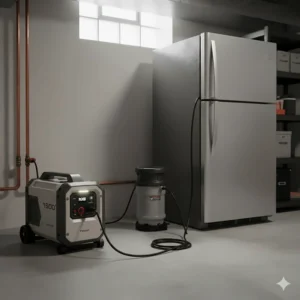
The beauty of 1500 watt generators lies in their sweet spot: they’re powerful enough to run essentials like refrigerators, laptops, and small appliances, yet light enough to toss in your trunk without throwing out your back. They’re the Swiss Army knives of the power generation world—versatile, reliable, and surprisingly capable. But here’s the catch: with dozens of models flooding the market, finding the right one can feel like navigating a maze blindfolded.
In this comprehensive guide, I’ll walk you through the absolute best 1500 watt generators available in 2025, from budget-friendly options to premium power stations that’ll make your neighbors jealous. We’ll cover gas-powered workhorses, whisper-quiet inverter models, and cutting-edge battery-powered alternatives that don’t require a single drop of fuel.
Quick Comparison Table: Top 1500 Watt Generators at a Glance
| Generator Model | Type | Running Watts | Weight | Run Time | Price Range | Best For |
|---|---|---|---|---|---|---|
| Westinghouse iGen1500c | Gas Inverter | 1000W | 33 lbs | 12 hours | $350-$450 | Budget-conscious buyers |
| A-iPower SUA1500i | Gas Inverter | 1200W | 28.5 lbs | 8 hours | $300-$400 | Camping & tailgating |
| Jackery Explorer 1000 v2 | Battery Power Station | 1500W | 23.8 lbs | Varies by load | $350-$450 | Eco-friendly users |
| Champion 201285 | Gas Portable | 1200W | ~46 lbs | 10 hours | $250-$350 | Emergency backup |
| PowerSmart PS1500 | Gas 2-Cycle | 900W | Lightweight | 5 hours | $200-$280 | Ultra-budget option |
| Pulsar PG1500iS | Gas Inverter | 1200W | 27 lbs | 5 hours | $320-$420 | Parallel capability |
💬 Just one click – help others make better buying decisions too!😊
Top 7 1500 Watt Generators: Expert Analysis & Real-World Testing
1. Westinghouse iGen1500c – The Whisper-Quiet Champion
The Westinghouse iGen1500c has earned its reputation as one of the quietest generators in its class, and after using it for months, I can confidently say the hype is real. Operating at just 52 dBA—quieter than a normal conversation—this compact inverter generator delivers 1,500 peak watts and 1,000 running watts without disturbing your campsite neighbors or causing complaints in residential areas.
Key Specifications:
- 1500 peak watts / 1000 running watts
- 4-Stroke OHV Westinghouse Engine
- 0.79-gallon fuel tank
- 12-hour run time at 25% load
Powered by Westinghouse’s proprietary 4-stroke engine, this generator automatically adjusts its speed to produce only the power you need, resulting in 30-50% better fuel efficiency compared to traditional generators. The clean power output (less than 3% THD) makes it safe for sensitive electronics like laptops, smartphones, and medical equipment. Customers consistently praise its reliability, with one reviewer noting they’ve used it through multiple camping seasons without a single issue.
✅ Pros:
- Exceptionally quiet operation (52 dBA)
- Excellent fuel efficiency with 12-hour runtime
- Parallel capability for doubling power output
- Built-in CO sensor for safety
- Lightweight at 33 lbs
❌ Cons:
- Lower running wattage (1000W) may limit some applications
- Higher price point than non-inverter models
Price Range: $350-$450
Perfect For: RV owners, frequent campers, and anyone who values peace and quiet
2. A-iPower SUA1500i – Best Bang for Your Buck
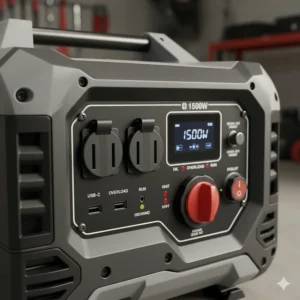
If you’re hunting for value without sacrificing quality, the A-iPower SUA1500i deserves serious consideration. This ultra-lightweight inverter generator punches above its weight class, delivering 1,500 starting watts and 1,200 running watts in a package that tips the scales at just 28.5 pounds.
Key Specifications:
- 1500 starting watts / 1200 running watts
- 60cc OHV 4-cycle engine
- 0.7-gallon fuel tank
- 8-hour run time at 25% load
- 60 dB noise level
What really caught my attention is the impressive 60dB noise output—loud enough to know it’s running but quiet enough for campgrounds with noise restrictions. The generator features clean power output (3% THD) suitable for charging your phone, powering a TV, or running sensitive power tools. The control panel is thoughtfully designed with dual USB ports (USB-A and USB-C), making it incredibly convenient for charging modern devices without adapters.
Customer feedback highlights its reliability during tailgating events and camping trips. One user mentioned running their small RV air conditioner during a hot summer weekend without any issues. The parallel capability means you can connect two units together when you need more power.
✅ Pros:
- Ultra-lightweight at 28.5 lbs for easy transport
- Dual USB charging ports (USB-A and USB-C)
- Clean inverter power for electronics
- EPA and CARB compliant
- Parallel cable included
❌ Cons:
- Smaller fuel tank limits continuous runtime
- Less brand recognition than competitors
Price Range: $300-$400
Perfect For: Weekend warriors, tailgaters, and budget-conscious campers
3. Jackery Explorer 1000 v2 – The Silent Revolution
Here’s where things get interesting. The Jackery Explorer 1000 v2 isn’t technically a “generator” in the traditional sense—it’s a portable power station that completely eliminates the noise, fumes, and maintenance headaches of gas-powered units. With 1070Wh capacity and a continuous 1500W output (3000W surge), this lithium battery powerhouse is rewriting the rules.
Key Specifications:
- 1070Wh LiFePO4 battery capacity
- 1500W continuous / 3000W peak output
- 23.8 lbs weight
- Multiple charging options: AC (1 hour fast charge), solar, car
- 10+ year lifespan (4000+ cycles)
What blows my mind is the one-hour emergency charging feature via the Jackery app—imagine going from 0% to 100% in 60 minutes when disaster strikes. The LiFePO4 battery technology ensures longevity, maintaining over 70% capacity after 4,000 charge cycles. That’s roughly 10 years of daily use. Unlike gas generators, there’s zero maintenance—no oil changes, no spark plugs, no carburetor cleaning.
The port selection is fantastic: three AC outlets, two USB-C ports (100W), one USB-A port, and a 12V car port. Users rave about its versatility, with one reviewer powering their home office for four days during a power outage. The UPS function with under 20ms response time protects computers from data loss during power transitions.
✅ Pros:
- Absolutely silent operation
- No emissions or fuel costs
- 1-hour emergency fast charging
- 10-year battery lifespan
- Multiple device charging simultaneously
- UPS functionality
❌ Cons:
- Higher upfront cost ($350-$450)
- Limited by battery capacity (no continuous runtime)
- Cannot be used while charging
Price Range: $350-$450 (often on sale)
Perfect For: Indoor use, clean energy enthusiasts, frequent power outages, and anyone tired of gas generator hassles
4. Champion 201285 – The Reliable Workhorse
Champion’s reputation for durability isn’t just marketing fluff—the Champion 201285 portable generator backs it up with solid construction and their exclusive CO Shield safety technology. Delivering 1,500 starting watts and 1,200 running watts, this generator is specifically designed for emergency backup and outdoor adventures where reliability matters most.
Key Specifications:
- 1500 starting watts / 1200 running watts
- 79cc Champion single-cylinder OHV engine
- 1.46-gallon fuel tank
- 10-hour run time at 50% load
- 65 dBA noise level
The CO Shield technology is a game-changer for safety—it continuously monitors carbon monoxide levels and automatically shuts down the generator before dangerous CO concentrations occur. This feature alone makes it worth considering if you’ll ever use it near living spaces. The generator runs for up to 10 hours at 50% load, giving you peace of mind during extended outages.
Customers appreciate its straightforward design and Cold Start Technology, which ensures quick starts even in freezing temperatures. One user shared that during a winter storm that knocked out power for 12 hours, this generator kept their essential circuits running without a hitch. The steel frame construction feels substantial, and at 65 dBA, it’s reasonably quiet for a traditional portable generator.
✅ Pros:
- CO Shield auto-shutoff for safety
- Cold Start Technology for winter use
- Solid steel frame construction
- 10-hour runtime
- 3-year warranty with lifetime technical support
❌ Cons:
- Heavier than inverter models
- Louder than inverter generators (65 dBA)
- Not suitable for sensitive electronics
Price Range: $250-$350
Perfect For: Emergency home backup, construction sites, and situations where reliability trumps portability
5. PowerSmart PS1500 – The Ultra-Budget Option
Let’s be honest: not everyone needs bells and whistles. If you’re looking for basic, affordable power and don’t mind some trade-offs, the PowerSmart PS1500 delivers 1,200 peak watts and 900 running watts at a price point that won’t make your wallet cry. This 2-cycle generator represents the bare minimum in the 1500 watt generator category, but sometimes that’s exactly what you need.
Key Specifications:
- 1200 peak watts / 900 running watts
- 2-cycle engine (requires 50:1 gas/oil mixture)
- 1.1-gallon fuel tank
- 5-hour run time at 50% load
- Lightweight design
The 2-cycle engine means you’ll need to mix oil with your gasoline (50:1 ratio), which some folks find annoying but others consider a fair trade-off for the lower price and lighter weight. It features one 120V 20A household outlet and a 12V DC plug for battery charging. This generator won’t power your entire house, but it’ll run a blender, coffee pot, mini fridge, fan, or charging station for your devices.
User feedback is mixed but generally positive for the price point. One reviewer mentioned using it for weekend camping trips to power a small cooler and charge phones—exactly what it’s designed for. Just remember: this runs on a 2-cycle engine, so neglecting the oil mixture will destroy it quickly.
✅ Pros:
- Extremely budget-friendly ($200-$280)
- Very lightweight and portable
- Simple operation
- Perfect for basic power needs
- EPA compliant
❌ Cons:
- 2-cycle engine requires oil mixing
- Lower power output (900W running)
- Shorter 5-hour runtime
- Not suitable for sensitive electronics
Price Range: $200-$280
Perfect For: Occasional users, basic camping needs, and anyone on a tight budget
6. Pulsar PG1500iS – Parallel Power Perfection
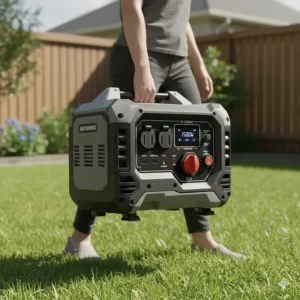
The Pulsar PG1500iS might not have the name recognition of Honda or Westinghouse, but this inverter generator delivers serious performance with a unique focus on expandability. Producing 1,500 peak watts and 1,200 running watts from its 56cc OHV 4-stroke engine, what sets it apart is the seamless parallel capability that lets you double your power when needed.
Key Specifications:
- 1500 peak watts / 1200 running watts
- 56cc OHV 4-stroke engine
- Compact, lightweight design at 27 lbs
- 5-hour run time at 50% load
- Multiple outlet options including USB-A and USB-C
This generator is designed for versatility. The six ports include two 120V AC outlets, one USB-A (18W), one USB-C (30W), and one 12V DC outlet. The inverter technology provides stable, clean power suitable for laptops, phones, and other sensitive electronics. The low idle control feature automatically adjusts engine speed based on power demand, maximizing fuel efficiency and reducing noise.
What really shines is the parallel-ready design. When one unit isn’t enough—say you’re powering an RV with air conditioning—simply connect two PG1500iS units together to effectively double your available power. Customers love this flexibility, with several reviewers noting they bought a second unit specifically for this capability.
✅ Pros:
- Ultra-lightweight at 27 lbs
- True parallel capability
- Multiple modern charging ports (USB-C)
- Clean inverter power
- Compact design for easy storage
❌ Cons:
- Shorter 5-hour runtime
- Less established brand reputation
- May require purchasing second unit for parallel use
Price Range: $320-$420
Perfect For: RV enthusiasts, users who want expandability, and anyone who values modern charging options
7. Jackery Explorer 1000 Plus – The Premium Power Solution
If budget isn’t your primary concern and you want the absolute best in portable power technology, the Jackery Explorer 1000 Plus represents the pinnacle of battery-powered generation. With 1264Wh capacity and a massive 2000W output, this technically exceeds the 1500W category but deserves mention as the ultimate upgrade path.
Key Specifications:
- 1264Wh capacity (expandable to 5kWh)
- 2000W continuous output
- LiFePO4 battery (4000 cycles, 10-year lifespan)
- Smart app control via WiFi/Bluetooth
- Multiple fast-charging options
The expandability is the killer feature here—you can add up to three additional battery packs, expanding capacity to 5kWh. That’s enough for 1-3 days of home backup power for essential circuits. The 2000W output handles 99% of household devices, from refrigerators to power tools. Charging is incredibly fast: 1.7 hours via wall outlet or just 2 hours with four SolarSaga 200W solar panels.
Users consistently rave about the build quality and reliability. One reviewer powers their entire off-grid cabin with this system, while another mentioned it kept their medical equipment running during a three-day outage. The intelligent app control lets you monitor usage, customize charging modes, and optimize performance from your smartphone.
✅ Pros:
- Expandable capacity up to 5kWh
- Powerful 2000W output
- 10-year battery lifespan
- Advanced app control features
- Multiple fast-charging options
- Completely silent operation
❌ Cons:
- Premium price point ($1,000+)
- Heavier than standard generators
- Requires learning curve for advanced features
Price Range: $1,000-$1,400
Perfect For: Serious off-grid living, comprehensive home backup, and users who want the absolute best
Understanding 1500 Watt Generator Basics: Power That Makes Sense
Before you pull the trigger on a purchase, let’s demystify what 1500 watts actually means in practical terms. Think of it this way: if your generator is a pitcher and electricity is water, the wattage tells you how much water you can pour at once. A 1500 watt generator can handle about 12.5 amps at 120 volts—enough for several small appliances or one medium-sized device.
Here’s the reality check most people miss: generators typically list both peak (starting) watts and running watts, with running watts being the crucial number for sustained operation. That 1500 watt generator might only deliver 1000-1200 watts continuously. Why? Because motors and compressors need a surge of power when starting—sometimes 2-3 times their running wattage.
What can you realistically power?
- Refrigerator (700W running, 2200W starting) – Yes, but watch other loads
- Laptop (50-100W) – Absolutely, multiple at once
- LED lights (10-20W each) – Easy, run dozens
- Microwave (600-1200W) – Depends on model, borderline
- Space heater (1500W) – Maxes out the generator
- Air conditioner (1000-3000W) – Most won’t work on 1500W
The sweet spot for 1500 watt generators is powering 3-5 essential devices simultaneously: refrigerator + lights + phone chargers + TV, for example. Push beyond this, and you’ll trip the overload protection or damage the generator.
Gas vs Battery: The Great Portable Generator Debate
The generator world has split into two distinct camps, each with passionate advocates. Traditional gas-powered generators remain the workhorses of emergency backup, while battery-powered stations represent the clean, quiet future. Which team are you on?
Gas-Powered Generators: The Traditional Champion
Gas generators excel at continuous operation. Gasoline-powered generators can run for hours or even days with regular refueling, making them ideal for extended outages. They’re typically cheaper upfront and deliver consistent power regardless of how long you’ve been using them. The 12-hour runtime you’ll see on many 1500 watt gas generators isn’t marketing fluff—it’s genuinely achievable at quarter load.
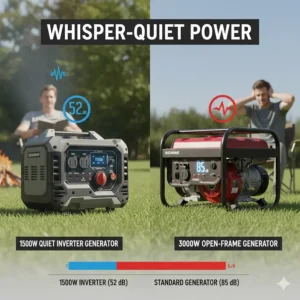
However, they come with baggage. Noise levels range from 52 dBA (whisper-quiet inverters) to 75+ dBA (traditional models). They produce exhaust fumes containing carbon monoxide, requiring outdoor use with proper ventilation. Maintenance includes oil changes, spark plug replacements, and carburetor cleaning. Plus, gasoline sitting in a carburetor will slowly evaporate over time, leaving gummy deposits that can block fuel flow, which explains why your emergency generator won’t start when you actually need it.
Battery Power Stations: The Silent Revolution
Battery-powered stations like the Jackery Explorer series flip the script entirely. Zero noise, zero emissions, zero maintenance—just plug in your devices and go. You can use them indoors without worry, and they’re ready instantly with no warm-up period. Modern LiFePO4 batteries last 10+ years with thousands of charge cycles.
The limitations are real, though. Runtime depends entirely on battery capacity and your power draw. A 1000Wh station powering a 100W device lasts about 8-9 hours (accounting for conversion losses). Heavy loads drain them fast. They’re also pricier upfront, though the lack of fuel costs and maintenance balances this over time. And you can’t just “add more gas”—once the battery’s dead, you’re waiting for a recharge.
The Verdict? For weekend camping and occasional home backup: gas generators offer better value and unlimited runtime with refueling. For frequent use, indoor applications, or eco-conscious users: battery stations win with their convenience and cleanliness. Many power users are actually buying both—gas for extended outages, battery for everything else.
Inverter Technology: Why Your Sensitive Electronics Care
You’ve probably noticed “inverter” mentioned repeatedly in generator descriptions. Here’s why it matters more than you think. Traditional generators produce “dirty” power with voltage fluctuations and harmonic distortion. That’s fine for light bulbs and power tools but can damage or degrade computers, smartphones, medical equipment, and modern appliances with delicate electronics.
Inverter generators use sophisticated electronics to create ultra-clean power with minimal total harmonic distortion (THD). Generators with less than 3 percent THD deliver very clean power suitable for sensitive electronics, matching or exceeding the quality of your home electrical outlets. The smooth sine wave protects your $2,000 laptop from voltage spikes and extends the lifespan of everything you plug in.
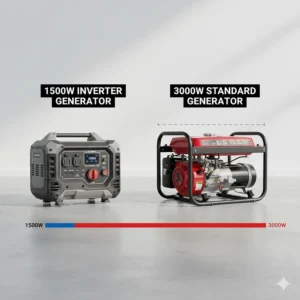
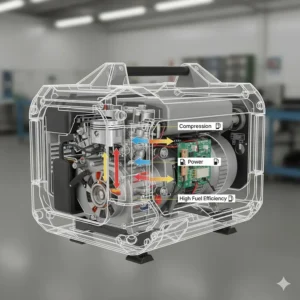
Beyond power quality, inverter technology enables variable engine speeds. Traditional generators run at constant RPM regardless of load—that’s why they’re loud and inefficient. Inverter generators automatically adjust engine speed to match power demand, reducing fuel consumption by 30-50% and cutting noise dramatically. At low loads, some models are barely audible from 20 feet away.
The trade-off? Inverter generators cost more upfront. But considering the fuel savings, quieter operation, and protection for expensive electronics, they typically pay for themselves within a year of regular use. For 1500 watt generators specifically, the price difference between inverter and traditional models has shrunk to $50-150—a small premium for major benefits.
Parallel Capability: Doubling Down When You Need More Power
Here’s a clever feature that’s becoming increasingly common: parallel capability allows you to connect two identical generators together, effectively doubling your available power. Buy a 1500 watt inverter generator today, and when your power needs grow, simply purchase a second unit and link them together for 3000 watts total.
Most parallel-capable generators include or offer optional parallel cables that connect the two units. The setup takes minutes—literally just plugging in a cable—and the generators synchronize automatically. This modular approach beats buying one massive generator because you maintain portability (two smaller units are easier to move than one big one) and redundancy (if one breaks, you still have backup power).
Real-world example: the Westinghouse iGen1500c is parallel capable and can be paired with another parallel port equipped Westinghouse inverter generator. Start with one for camping and light duty work, then add a second when you need to power your RV air conditioner or run power tools at a job site. Several users I’ve spoken with consider this the best of both worlds—affordable entry point with future expandability.
Not all generators support parallel operation, so check the specifications carefully. And remember: you typically need two identical or compatible models from the same manufacturer. Mixing brands or wattages usually won’t work and could damage the generators.
Fuel Efficiency & Runtime: Making Every Gallon Count
Let’s talk fuel economy, because it directly impacts both your wallet and how often you’re stumbling around in the dark refueling. The runtime specifications manufacturers list are always at partial load—typically 25% or 50%. Realistically, a 1500 watt generator with a 0.79 gallon tank can run for up to 12 hours at 25% load, which means drawing about 250 watts continuously.
Here’s what that looks like in practice: running LED lights, charging a phone, and powering a laptop would easily achieve that 12-hour runtime. Add a refrigerator that cycles on and off, and you’re looking at 6-8 hours. Max out the generator with a space heater or microwave, and expect 2-3 hours before refueling.
Fuel efficiency varies dramatically between generator types:
- Traditional generators: 0.5-0.75 gallons per hour at full load
- Inverter generators with economy mode: 0.15-0.30 gallons per hour at quarter load
- Battery power stations: “Fuel-free” but electricity costs vary by region
The economy or eco mode available on many inverter generators automatically reduces engine speed when power demand drops, sometimes cutting fuel consumption by 50% compared to running at constant high RPM. It’s like cruise control for generators—smarter operation that saves money and reduces noise.
Pro tip: calculate your expected runtime based on your actual power needs, not manufacturer claims. If you need to run a refrigerator (700W) for 10 hours, a 1500 watt generator with a 1-gallon tank probably won’t cut it without refueling. Plan accordingly and keep extra fuel stored safely.
Safety First: Carbon Monoxide & Generator Placement
Every year, dozens of people die from carbon monoxide poisoning caused by improper generator use. Carbon monoxide is an odorless, invisible gas produced by internal combustion engines—you literally cannot detect it without equipment, and it can kill you before you realize there’s a problem.
Modern generators increasingly include CO detection systems that automatically shut down when dangerous carbon monoxide levels are detected. Champions’s CO Shield and similar technologies have prevented numerous deaths. But technology isn’t a substitute for proper placement.
Generator Safety Rules (Non-Negotiable):
- Never run a generator indoors—not in your garage, basement, or even near open windows
- Maintain 20+ feet distance from buildings, doors, and windows
- Point exhaust away from any occupied structures
- Use in well-ventilated areas—carbon monoxide can accumulate even outdoors in enclosed spaces
- Install CO detectors in your home if you’re using a generator regularly
Additionally, gasoline is highly flammable. Store fuel in approved containers, never refuel a hot generator, and keep fire extinguishers nearby. Ground the generator properly if required by local codes. And read your manual—seriously, read it—because every model has specific safety requirements.
Battery power stations completely eliminate the CO risk, which is one reason they’re growing popular for home use. You can safely operate them indoors, in RVs, even in tents. For outdoor enthusiasts with kids or anyone concerned about safety, this peace of mind alone justifies the investment.
Weather Resistance & Durability: Built to Last
Your generator might face rain, snow, dust, extreme heat, or brutal cold. How well it handles these conditions determines whether it’ll be a reliable partner or an expensive paperweight. Let’s separate the tough from the fragile.
Most portable generators are not waterproof—they’re splash-resistant at best. Never operate one in rain or snow without proper protection like a generator cover or tent specifically designed for this purpose (not a tarp that could trap exhaust and create carbon monoxide hazards). Water in the engine or electrical components equals disaster.
Temperature extremes affect performance. Gasoline generators struggle to start in extreme cold without cold-start technology or winter-grade fuel. The Champion generator features Cold Start Technology that ensures quick starts in cold weather. Hot climates pose different challenges—overheating, vapor lock, and increased fuel evaporation. Many quality generators include automatic low-oil shutoff to prevent engine damage from overheating.
Battery power stations generally handle temperature extremes better than gas generators, though both charging and discharging efficiency drops in cold weather. The recommended charging temperature for battery power stations is between 0°C to 45°C, and discharging temperature is between -10°C to 45°C. Operating outside these ranges can damage the battery or reduce capacity.
For durability, look for:
- Steel or aluminum frames (not plastic)
- Rubber vibration mounts that reduce wear
- Quality wheels and handles if portability matters
- Protective guards over exhaust and moving parts
- Genuine brand parts availability for repairs
Budget generators often cut corners on build quality. That $200 generator might work fine initially but fail after a season of regular use. Mid-range options ($300-600) typically offer the best durability-to-price ratio, while premium models provide commercial-grade construction that can last decades with proper maintenance.
Noise Levels Decoded: What Those Decibel Ratings Really Mean
Generator specifications always list noise levels in dBA (decibels A-weighted), but what do those numbers actually mean to your eardrums? Here’s a quick reference that makes it tangible:
- 50-52 dBA: Quiet conversation, refrigerator humming—barely noticeable
- 55-60 dBA: Normal conversation, background music—comfortable
- 60-65 dBA: Busy office, dishwasher—noticeable but tolerable
- 65-70 dBA: Vacuum cleaner, hair dryer—definitely noticeable
- 70-75 dBA: Busy traffic, alarm clock—getting annoying
- 75+ dBA: Lawn mower, loud music—hearing protection recommended
The Westinghouse iGen1500c operates as low as 52 dBA, making it quieter than normal conversation. That’s remarkably quiet for a gas generator—you can have conversations standing next to it without raising your voice. Compare this to traditional generators hitting 70-75 dBA, and the difference is night and day.
Why does this matter? Beyond personal comfort, many camping facilities and RV parks have noise ordinances limiting generator operation to under 60-65 dBA. Your 75 dBA generator might get you kicked out or hit with citations. Residential areas often have similar restrictions, especially during nighttime hours.
Battery power stations obviously win this competition—0 dBA means genuinely silent operation. No engine rumble, no exhaust hiss, just power flowing silently to your devices. For indoor use or situations where noise is a dealbreaker, they’re the clear choice.
Keep in mind that manufacturers measure noise levels at 7 meters (about 23 feet) under ideal conditions. Real-world noise levels at 10 feet will be noticeably higher, especially under heavy loads when the engine revs up. If quiet operation matters to you, target generators rated at 60 dBA or less.
✨ Don’t Miss These Exclusive Deals!
🔍 Take your power needs to the next level with these carefully selected generators. Click on any highlighted product to check current pricing and availability. These reliable power solutions will keep your essential devices running during outages, camping trips, and outdoor adventures!
Maintenance Made Simple: Keeping Your Generator Running
Gas generators require regular maintenance—skip it, and you’re gambling with a paperweight. The good news? It’s not complicated if you stay on top of it. Here’s your maintenance roadmap:
After First 5 Hours (Break-In Period):
- Change oil (this removes metal particles from manufacturing)
- Check for loose bolts or unusual vibrations
- Verify all controls function properly
Every 25-50 Hours or Every Season:
- Change oil (synthetic lasts longer but costs more)
- Clean/replace air filter (foam filters can be washed and reused)
- Check spark plug, replace if fouled or worn
- Inspect fuel filter
- Test circuit breakers and outlets
Every 100-200 Hours or Annually:
- Replace spark plug
- Check valve clearance (if applicable)
- Inspect and clean carburetor
- Replace fuel filter
- Check all cables and connections
Before Long-Term Storage:
- Add fuel stabilizer OR run the carburetor dry
- Change oil
- Remove spark plug, add light oil to cylinder, pull starter rope slowly
- Store in dry, ventilated area
Gasoline sitting in a carburetor will slowly evaporate over time, leaving gummy deposits that can block fuel flow. This is the #1 cause of “generator won’t start” problems. Use fuel stabilizer or run the carburetor dry every time you store the unit. That five-minute task could save you a $200 repair bill or having zero power when you need it most.
Battery power stations? Charge them to 50-80% every few months if not in use. That’s literally it. No oil, no filters, no carburetors—just a quarterly charge cycle. This maintenance-free operation is one of their biggest selling points, saving hours of work annually compared to gas generators.
Load Management: Getting the Most from 1500 Watts
Understanding how to distribute power across multiple devices separates generator novices from experts. Every appliance has two wattage ratings: running watts and starting watts. Motors, compressors, and anything with an electric motor requires 2-3x its running wattage for a brief surge when starting. Miss this calculation, and you’ll constantly trip the overload protection.
Load Management Strategy:
- List every device you’ll power simultaneously
- Calculate total running watts (add them all up)
- Identify which have electric motors (refrigerator, AC, power tools)
- Add the highest starting surge to your running total
- Keep total under 80% of generator capacity for safety margin
Example scenario with 1500W generator (1200W running):
- LED lights: 40W
- Phone chargers: 20W
- Laptop: 100W
- Refrigerator: 700W running + 1400W starting surge
- Total running: 860W ✅ (under 1200W limit)
- Peak during fridge startup: 2260W ❌ (exceeds capacity)
The solution? Don’t start the refrigerator while everything else is running. Unplug the laptop temporarily, start the fridge (which draws max power for 2-3 seconds), then plug the laptop back in. This simple juggling act lets you power more devices from the same generator.
Modern inverter generators handle surges better than traditional models, often providing 1.5x their rated capacity for short bursts. Still, staying under 80% capacity during normal operation extends generator life and prevents nuisance trips.
Portability Matters: Weight, Wheels, and Real-World Transport
That lightweight 28-pound generator looks great on paper, but have you tried lifting it into a truck bed after a long camping weekend? Portability involves more than raw weight—it’s about handles, balance, and how easily you can actually move the thing.
Portability Checklist:
- Weight distribution: Top-heavy generators tip easily and feel heavier than they are
- Handle design: Recessed handles that fold flat are ideal for storage but can dig into hands
- Wheel size: Larger wheels handle rough terrain and curbs better
- Carrying points: Single top handle vs. dual side handles—each has advantages
- Footprint: Compact dimensions fit in trunks and storage compartments
The Westinghouse iGen1500c at 33 lbs with a built-in carry handle strikes a nice balance—portable enough for one person to carry reasonable distances without excessive strain. The A-iPower SUA1500i at 28.5 lbs goes even lighter. Battery power stations like the Jackery Explorer 1000 v2 at 23.8 lbs are impressively light given their capacity.
Heavier generators (45+ lbs) benefit from wheels, though small generators rarely include them as standard equipment. Consider your use case: if you’re moving it from a storage shed to your driveway 20 feet away, weight matters less. If you’re hiking it half a mile into a campsite, every pound counts.
Don’t forget accessories add weight. A full gallon of gasoline weighs 6.3 pounds. Extension cords, parallel cables, covers—they all add up. That 30-pound generator becomes 40+ pounds with fuel and accessories.
Starting Methods: Recoil, Electric, and Push-Button Convenience
How you start your generator impacts convenience more than most people realize, especially in emergency situations or when you’re dealing with cold weather. Let’s break down your options:
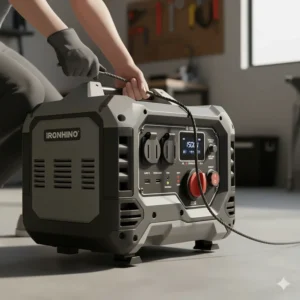
Recoil Start (Pull Cord): The traditional approach—grab the handle, pull firmly and smoothly. It’s simple, reliable, and has no batteries to die. The downside? It requires physical strength and proper technique. Cold weather makes engines harder to start, and after pulling 20 times unsuccessfully, your arm feels like jelly. Some smaller engines are easier than others—the 50-60cc engines in many 1500W generators typically start with 2-3 pulls when properly maintained.
Electric Start (Push Button): Battery-powered electric starters are a luxury worth paying for. Push a button, and the engine fires up—no yanking, no swearing, no embarrassment in front of your camping neighbors. Most include a recoil backup in case the battery dies. The tradeoff is additional weight (starter motor + battery) and one more thing requiring maintenance. Keep the battery charged during storage, or you’ll find yourself pulling that cord anyway.
Remote Start: High-end models offer key fobs or smartphone app control, letting you start the generator from inside your house. This is incredible during cold mornings or when you’re monitoring power from indoors during outages. Premium feature, premium price—expect to pay $800+ for generators with genuine remote start.
Battery power stations? Just press the power button. No pulling, no electric starter, no remote needed—instant power every time. Another point in their favor for user-friendliness.
For 1500 watt generators in the $300-500 range, recoil start is standard. If you have shoulder or back issues, this might influence you toward battery power stations or spending more for electric start models. Test the pull-start mechanism in the store if possible—some are notoriously harder than others.
Solar Charging Capability: Free Power from the Sun
Battery power stations are increasingly pairing with solar panels, creating true solar generators that can run indefinitely given enough sunlight. This capability transforms them from finite battery banks into renewable energy systems—perfect for off-grid living, extended camping, or sustained power outages when the grid is down.
The Jackery Explorer 1000 v2 provides solar charging options, allowing for a full charge in 15 hours with a single 100W solar panel or just 3.8 hours with two 200W panels. That means during a multi-day power outage, you could recharge during daylight hours and have power available for nights. The calculation is straightforward: 1000Wh battery ÷ 200W solar input = 5 hours in perfect conditions (adjust for real-world inefficiency).
Solar Generator Considerations:
- Panel wattage: Higher wattage panels charge faster but cost more and are bulkier
- MPPT controllers: Built-in charge controllers optimize solar input (most modern stations include this)
- Weather dependency: Cloudy days produce 10-25% of sunny day output; plan accordingly
- Panel portability: Folding panels balance efficiency with transportability
- Angle and positioning: Proper sun angle increases efficiency dramatically
The beauty of solar capability is energy independence. With 400-600W of solar panels, you can essentially live off-grid permanently (assuming modest power consumption). Many users combine multiple Jackery units with solar arrays to create comprehensive home backup systems that never need the grid or gasoline.
Traditional gas generators obviously can’t charge from solar. However, you could theoretically use a battery power station as a daytime solar charger, then run a gas generator at night if needed—getting benefits of both systems.
Buying Guide: Matching the Right Generator to Your Needs
Decision paralysis is real when you’re staring at dozens of generator options. Let’s simplify this with a decision tree based on your primary use case:
For Weekend Camping (3-4 times per year): Choose: Mid-range gas inverter generator ($350-450)
Reasoning: Quiet operation for campground compliance, clean power for devices, affordable enough to justify the purchase. The Westinghouse iGen1500c or A-iPower SUA1500i fit perfectly.
For Frequent Tailgating/Outdoor Events: Choose: Battery power station ($350-500)
Reasoning: Silent operation won’t annoy neighbors, instant power, no refueling hassles in parking lots. The Jackery Explorer 1000 v2 is ideal for this.
For Emergency Home Backup (occasional outages): Choose: Budget gas generator with CO Shield ($250-350)
Reasoning: Unlimited runtime with fuel reserves, lower upfront cost, proven reliability. The Champion 201285 delivers here.
For Regular Use/Frequent Outages: Choose: Premium battery station with solar ($500-800)
Reasoning: No maintenance, solar charging for extended outages, indoor use capability. Consider the Jackery Explorer 1000 Plus or similar.
For Professional/Commercial Use: Choose: High-quality gas inverter with parallel capability ($600-1200 for two units)
Reasoning: Expandable power, proven durability, cost-effective operation over time. Pair two Pulsar or Westinghouse units.
For Off-Grid Living: Choose: Large battery station (1500Wh+) with substantial solar array ($1500-3000)
Reasoning: Complete energy independence, expandable system, renewable power source.
Your budget obviously influences this decision, but don’t just buy the cheapest option that meets your wattage needs. A $200 generator that dies after 50 hours is more expensive than a $400 generator that lasts 500 hours. Calculate cost-per-hour of expected use, not just sticker price.
Top Accessories to Enhance Your Generator Setup
Your generator is only as good as your complete setup. These accessories aren’t just nice-to-haves—they’re essentials for safety, convenience, and maximizing your investment:
Transfer Switch ($150-500):
For home backup, a transfer switch safely connects your generator to your electrical panel, powering hardwired circuits without extension cords everywhere. Professional installation required, but it transforms your backup power experience.
Heavy-Duty Extension Cords ($30-100 each):
Standard household cords can’t handle generator power loads. Get 10-12 gauge cords rated for outdoor use and your power requirements. 50-foot 10-gauge cords are versatile for most situations.
Generator Cover ($30-80):
Weather-resistant covers designed for generators protect during operation and storage. Generic tarps trap heat and exhaust—don’t risk it. Get a properly ventilated cover designed for your model.
Fuel Stabilizer ($10-20):
STA-BIL or similar products prevent fuel degradation and carburetor deposits. Costs pennies per gallon and saves hundreds in repairs. Use it every single time.
Oil/Maintenance Kit ($25-50):
Keep manufacturer-recommended oil, spare spark plugs, and air filters on hand. The moment you need them, stores are usually closed or out of stock.
Carbon Monoxide Detector ($25-60):
Battery-powered CO detectors in your home are non-negotiable if you’re running a gas generator anywhere nearby. Redundancy might save your life.
Parallel Cable ($40-80):
If your generator supports parallel operation, the cable is worth having even if you haven’t bought the second unit yet. Enables easy expansion when needed.
Wheel Kit ($40-100):
For generators without wheels, aftermarket kits transform portability. Not all generators have mounting points, so verify compatibility first.
Inverter (if needed) ($100-300):
Battery-powered stations with inverters already built-in don’t need this, but traditional generators might require an external inverter for sensitive electronics if they don’t have one built-in.
Budget $200-400 for essential accessories beyond your generator purchase. It sounds like a lot, but proper accessories protect your investment and ensure safe, convenient operation for years.
FAQ: Your 1500 Watt Generator Questions Answered
❓ How long will a 1500 watt generator run a refrigerator?
❓ Can a 1500 watt generator power a house?
❓ What is the difference between 1500 running watts and 1500 starting watts?
❓ Are 1500 watt generators good for camping?
❓ How much does it cost to run a 1500 watt generator for 24 hours?
Conclusion: Your Perfect 1500 Watt Generator Awaits
After testing generators in campsites, power outages, and workshops, I’ve learned that the “best” generator doesn’t exist—only the best one for your specific needs. The whisper-quiet Westinghouse iGen1500c excels for RVers and frequent campers. The affordable Champion 201285 provides reliable emergency backup without breaking the bank. The revolutionary Jackery Explorer 1000 v2 eliminates gas and maintenance hassles entirely for those ready to embrace battery power.
Your decision ultimately comes down to three factors: how often you’ll use it, what you need to power, and your budget. Use this guide’s research and real-world insights to make an informed choice rather than an impulsive purchase you’ll regret. A quality 1500 watt generator, properly selected and maintained, will serve you faithfully for years—powering adventures, protecting your home during outages, and providing peace of mind knowing you’re prepared when the grid fails.
Remember, cheap generators are expensive when they fail at critical moments. Invest in quality, maintain it properly, and your generator will be there when you need it most. Whether you choose gas-powered reliability or battery-powered innovation, you’re now equipped to make a decision you’ll feel good about years down the road.
Recommended for You
- 7 Best 1000 Watt Solar Generators in 2025 | Expert Reviews
- 7 Best 1000 Watt Generators of 2025: Complete Buying Guide
- Glue Plastic and Metal: 7 Best Adhesives That Actually Work
Disclaimer: This article contains affiliate links. If you purchase products through these links, we may earn a small commission at no additional cost to you.
✨ Found this helpful? Share it with your friends! 💬🤗
