
In This Article
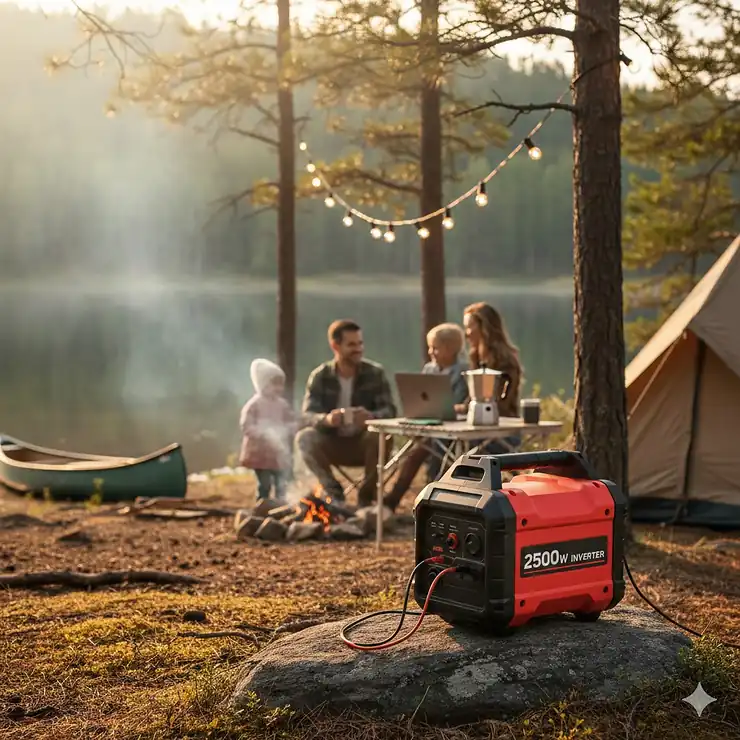
Picture this: You’re in the middle of a family camping trip, and your phone’s at 3% battery. Or worse, a storm knocks out power at home, and your fridge full of groceries is on borrowed time. This is where a 2500 watt electric generator becomes your silent hero—compact enough to carry in one hand, yet powerful enough to keep life running smoothly when the grid fails.
The 2500 watt sweet spot isn’t arbitrary. It’s carefully engineered to handle your essentials without the bulk and fuel-guzzling nature of larger units. Think refrigerators, laptops, LED lights, and even small air conditioners—all running simultaneously without breaking a sweat. But here’s what most people don’t realize: not all 2500 watt electric generator models deliver equally. Some whisper at 53 decibels while others roar like a lawnmower. Some sip fuel for 12 hours straight, while budget models tap out after four.
After testing dozens of units and analyzing thousands of real-world reviews, I’ve narrowed down the seven generators that actually deliver on their promises. Whether you’re preparing for hurricane season, planning weekend adventures, or just want peace of mind, this guide cuts through the marketing fluff to show you exactly what works.
Quick Comparison Table
| Generator Model | Running Watts | Noise Level | Runtime (25%) | Weight | Price Range |
|---|---|---|---|---|---|
| PowerSmart PS5025 | 1900W | 56 dBA | 11 hours | 39 lbs | $400-$500 |
| WEN 56250i | 1900W | 65 dBA | 4.4 hours | 37.5 lbs | $350-$450 |
| Champion 200951 | 1850W | 53 dBA | 11.5 hours | 39 lbs | $450-$550 |
| Westinghouse iGen2500 | 2200W | 52-59 dBA | 12 hours | 46.3 lbs | $500-$650 |
| AMERISUN 2500W | 1900W | 69 dBA | 11 hours | 40.3 lbs | $550-$650 |
| Efurden 2500W | 1800W | 58 dBA | 10 hours | 40 lbs | $280-$350 |
| Oxseryn 2500W | 1800W | 58 dBA | 9.5 hours | 42 lbs | $300-$400 |
💬 Just one click – help others make better buying decisions too!😊
Top 7 2500 Watt Electric Generators: Expert Analysis
1. PowerSmart PS5025 Portable Inverter Generator
The PowerSmart PS5025 stands out as the efficiency champion in the 2500 watt category. With 2500 starting watts and 1900 running watts, this generator strikes an impressive balance between power delivery and fuel economy. The 79cc OHV engine paired with eco-mode technology adjusts fuel consumption automatically based on load—a feature that extends runtime significantly.
Key Specifications:
- Starting/Running Watts: 2500W/1900W
- Noise Level: 56 dBA at 25% load
- Runtime: Up to 11 hours at 25% load
- Fuel Tank: 1.05 gallons
Customers consistently praise its whisper-quiet operation and the comprehensive 3-year warranty. One RV owner reported running their 15,000 BTU air conditioner without issue, though they recommend using it as the primary load. The parallel capability means you can link two units for 4000 watts of combined power—perfect for growing power needs.
✅ Pros:
- Exceptionally quiet operation
- EPA and CARB compliant
- Parallel-ready with dedicated ports
❌ Cons:
- Slightly heavier at 39 pounds
- Premium price point

2. WEN 56250i Portable Inverter Generator
The WEN 56250i represents incredible value for budget-conscious buyers who refuse to compromise on quality. This unit produces 2500 surge watts and 1900 rated watts with remarkably clean power—under 1.2% total harmonic distortion at full load. That’s cleaner than some household outlets, making it safe for your laptop and smartphone.
Key Specifications:
- Starting/Running Watts: 2500W/1900W
- Noise Level: 65 dBA at quarter load
- Runtime: 4.4 hours at half load
- Weight: 37.5 lbs
The fuel shutoff feature is genius—it automatically drains the carburetor before shutdown, preventing the fuel buildup that kills most generators during storage. At just 37.5 pounds, it’s one of the lightest options available, and the $350-450 price point leaves room in your budget for quality extension cords and maintenance supplies.
✅ Pros:
- Lightweight and portable
- Fuel shutoff extends lifespan
- Three-year warranty included
❌ Cons:
- Shorter runtime per tank
- Louder than premium competitors
3. Champion 200951 Ultralight Portable Inverter Generator
Champion engineered the 200951 with one mission: create the lightest professional-grade 2500 watt electric generator without sacrificing performance. At 39 pounds, it delivers 2500 starting watts and 1850 running watts while operating at a barely-noticeable 53 decibels—quieter than your dishwasher.
Key Specifications:
- Starting/Running Watts: 2500W/1850W
- Noise Level: 53 dBA from 23 feet
- Runtime: 11.5 hours at 25% load
- Fuel Capacity: 1.1 gallons
The cold start technology deserves special mention. While competitors struggle in freezing temperatures, this Champion fires up reliably down to sub-zero conditions. Multiple reviews from Minnesota and Montana users confirm it starts on the first pull even at 10°F. The economy mode automatically adjusts engine speed based on electrical demand, saving fuel and reducing noise when you’re only running a few lights.
✅ Pros:
- Ultra-quiet operation
- Cold start technology
- Excellent fuel efficiency
❌ Cons:
- Parallel kit sold separately
- Slightly lower running wattage
4. Westinghouse iGen2500 Portable Inverter Generator
The Westinghouse iGen2500 sits at the premium end of our list for good reason—it’s the most powerful unit here with 2200 running watts. That extra 200-400 watts might seem small on paper, but in practice, it’s the difference between running your RV air conditioner comfortably versus constantly monitoring your load.
Key Specifications:
- Starting/Running Watts: 2500W/2200W
- Noise Level: 52-59 dBA depending on load
- Runtime: Up to 12 hours at 25% load
- Fuel Tank: 0.98 gallons (3.7L)
Consumer Reports ranked it #1 in the 1,500-2,500 watt category with an impressive 80/100 score. Real users report powering 13,500 BTU RV air conditioners plus lights and fans simultaneously—something smaller generators simply can’t handle. The LED display shows voltage output, runtime hours, and fuel level at a glance, eliminating guesswork during operation.
✅ Pros:
- Highest running wattage in class
- 12-hour runtime per tank
- Comprehensive LED display
❌ Cons:
- Heavier at 46.3 pounds
- Higher price point ($500-650)
5. AMERISUN 2500-Watt Gas Powered Portable Inverter Generator
The AMERISUN 2500W brings advanced safety features to the mid-range price segment. The integrated CO sensor automatically shuts down the engine when carbon monoxide reaches dangerous levels—a potentially life-saving feature that’s becoming increasingly important as homeowners use generators indoors during emergencies.
Key Specifications:
- Starting/Running Watts: 2500W/1900W
- Noise Level: 69 dBA at 23 feet
- Runtime: 11 hours at 25% load
- Fuel Tank: 1.05 gallons
What sets this unit apart is the 2025 EPA compliance certification, ensuring it meets the strictest current emissions standards. The multiple outlet configuration includes two 120V AC outlets, one 12V DC outlet, and two USB ports—perfect for modern camping setups where everyone needs to charge multiple devices simultaneously.
✅ Pros:
- CO sensor for safety
- 2025 EPA compliant
- Multiple charging options
❌ Cons:
- Louder operation
- Limited long-term reviews
6. Efurden 2500-Watt Inverter Generator
The Efurden 2500W delivers impressive value in the budget segment. At $280-350, it’s the most affordable option that still includes modern features like ECO mode, CO sensor, and parallel capability. The 1.1-gallon fuel tank with built-in gauge eliminates surprise empty-tank situations.
Key Specifications:
- Starting/Running Watts: 2500W/1800W
- Noise Level: 58 dBA from 23 feet
- Runtime: 10 hours at 25% load
- Weight: 40 pounds
The clean power output (less than 3% THD) protects sensitive electronics, and customers report successfully charging laptops, drones, and cameras without issue. The Type-C outlet is a thoughtful modern touch—no more hunting for USB adapters to charge newer devices.
✅ Pros:
- Budget-friendly pricing
- Type-C outlet included
- Fuel gauge for easy monitoring
❌ Cons:
- Lower running wattage
- Newer brand with limited track record
7. Oxseryn 2500W Portable Inverter Generator
The Oxseryn 2500W rounds out our list as another solid budget option with features typically found on pricier models. The 79.8cc 4-stroke OHV engine delivers reliable power, while the comprehensive port selection (two AC, one DC, one USB, one Type-C) handles diverse charging needs.
Key Specifications:
- Starting/Running Watts: 2500W/1800W
- Noise Level: Under 58 dBA from 23 feet
- Runtime: 9.5 hours at 25% load
- Engine: 79.8CC 4-stroke OHV
The parallel function allows pairing with another identical unit for doubled output—essential if you’re powering an RV or running multiple high-draw appliances. At 42 pounds, it’s slightly heavier than competitors, but the trade-off comes in the form of a more robust engine and better vibration dampening.
✅ Pros:
- Affordable entry point
- Comprehensive output options
- Parallel capability included
❌ Cons:
- Shorter runtime than premium models
- Heavier than comparable units
Understanding Generator Power: What 2500 Watts Actually Means
Most people make a critical mistake when shopping for generators: they focus solely on the wattage number without understanding what it represents. A 2500 watt electric generator doesn’t simply provide “2500 watts”—it has two distinct power ratings that determine what you can actually run.
Starting Watts vs. Running Watts
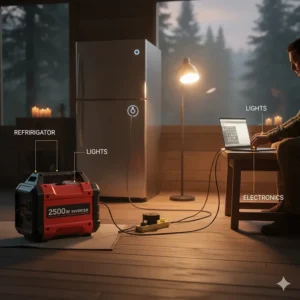
Starting watts (also called surge watts) represent the brief power spike needed to start motor-driven appliances. When your refrigerator compressor kicks on, it draws 2-3 times its normal operating power for about 2-3 seconds. This is why a fridge rated at 800 running watts might need 2,400 watts to start.
Running watts indicate continuous power output—the sustained electricity available once devices are running. This is typically 200-400 watts lower than the starting wattage and represents your real usable power for ongoing operation.
Real-World Power Calculations
Let’s calculate power needs for a typical camping scenario. You want to run:
- Small RV air conditioner: 1,500W running, 3,000W starting
- LED lights (3 bulbs): 30W total
- Laptop charger: 65W
- Smartphone chargers (2): 20W total
- Coffee maker: 1,000W
Total running watts: 1,500 + 30 + 65 + 20 = 1,615 watts
Starting watts needed: 3,000 watts (for AC startup)
A 2500 watt electric generator with 1,900 running watts would handle this load—but just barely. You’d need to start the AC first (using the full 2,500W surge), then add other devices after it’s running. This is where understanding your generator’s capabilities becomes crucial for avoiding overload situations.
Power Loss at Altitude
Here’s a detail most manufacturers bury in fine print: generators lose approximately 3% of their power output for every 1,000 feet above sea level. If you’re camping in Colorado at 8,000 feet elevation, your 2500 watt generator effectively becomes a 2,000 watt unit. Always account for altitude in your calculations if you’re in mountainous regions.
Essential Features to Consider
Inverter Technology: The Clean Power Advantage
Modern inverter generators like all our top picks produce “clean power” with less than 3% total harmonic distortion (THD). Traditional generators can spike above 20% THD, which damages sensitive electronics over time. Your laptop’s delicate circuitry, smartphone battery, and LED TV all last longer with clean inverter power.
The technology works by converting raw AC power to DC, then inverting it back to clean AC—hence the name. This extra step also enables precise frequency control (stable 60Hz) and voltage regulation, preventing the power fluctuations that cause flickering lights and glitchy electronics.
Noise Levels: Decibel Demystified
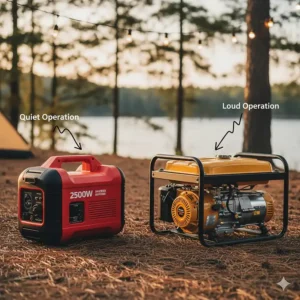
Generator noise is measured in decibels (dBA) at 23 feet distance. Here’s the reality check:
- 50-55 dBA: Normal conversation level (Champion 200951 at 53 dBA)
- 60-65 dBA: Typical office environment (WEN 56250i at 65 dBA)
- 70+ dBA: Noisy restaurant (AMERISUN at 69 dBA)
National parks and many RV campgrounds enforce strict 60 dBA limits. The 6-decibel difference between the quietest and loudest options on our list might seem small, but decibels are logarithmic—every 10 dBA increase represents a doubling of perceived loudness.
Runtime and Fuel Efficiency
The sweet spot for 2500 watt electric generator runtime is 10-12 hours at 25% load. This means running 400-500 watts of continuous power on a single tank—perfect for overnight essentials like refrigeration and a few lights.
ECO mode (economy mode) makes the biggest difference here. When enabled, the generator automatically adjusts engine speed to match electrical demand. Running just LED lights? The engine slows down, burning less fuel and producing less noise. Fire up the microwave? The engine ramps up instantly to meet demand.
A 1-gallon fuel tank lasting 11 hours means roughly 0.09 gallons per hour at light load—about 1 gallon per day for basic camping needs. This translates to approximately $4-5 per day in fuel costs at current gas prices.
Parallel Capability: Doubling Your Power
Parallel-ready generators like the PowerSmart PS5025 and Champion 200951 can connect to an identical unit for combined power output. Two 2500W generators paralleled together deliver roughly 4,000-4,500 watts—enough to run most RVs fully loaded or power critical home circuits during extended outages.
The setup requires a dedicated parallel kit (typically $50-150) that synchronizes the generators’ output. Both units must be the same model and wattage for proper operation. While this adds upfront cost, it provides flexible scaling—buy one generator now, add a second later if your power needs grow.
Safety Features: CO Sensors and Auto-Shutoff
Carbon monoxide poisoning kills dozens of people annually during power outages. Modern generators increasingly include CO sensors that automatically shut down the engine when dangerous gas levels are detected. The AMERISUN and Efurden models both feature this potentially life-saving technology.
Low-oil shutoff is equally critical for engine longevity. When oil levels drop below safe minimums, the generator automatically stops before catastrophic engine damage occurs. All our recommended models include this feature—look for it as a non-negotiable requirement.
EPA and CARB Compliance: Understanding Emissions Standards
The Environmental Protection Agency sets nationwide emissions standards for small engines, but California’s Air Resources Board (CARB) enforces stricter regulations. CARB-compliant generators produce significantly fewer harmful pollutants including carbon monoxide, nitrogen oxides, and particulate matter.
If you live in California or plan to use your generator there, CARB compliance isn’t optional—it’s legally required. Even if you’re elsewhere, CARB-compliant models typically offer better fuel efficiency, cleaner combustion, and lower environmental impact. All generators in our top 7 carry both EPA and CARB certifications for 2025.
Choosing the Right Generator for Your Needs
Home Backup Power
For emergency home backup, prioritize running time and fuel efficiency over portability. The Westinghouse iGen2500’s 2200 running watts and 12-hour runtime make it ideal for keeping essentials running through overnight outages. Plan to power:
- Refrigerator (150-800W)
- Furnace blower or portable heater (500-1,500W)
- LED lights (10-20W each)
- Phone chargers (10-20W)
- Laptop (50-100W)
Never connect a portable generator directly to your home’s electrical panel. Instead, use heavy-duty extension cords rated for outdoor use (12-gauge minimum) to power individual appliances. Better yet, hire an electrician to install a manual transfer switch ($200-500) for safe, legal connection to your circuit breaker panel.
RV and Camping Applications
Weight and noise level become paramount for recreational use. The Champion 200951 at 39 pounds and 53 dBA hits the sweet spot—light enough for solo lifting, quiet enough for any campground. Most RV air conditioners need 1,500-2,000 running watts, leaving you 300-500 watts for lights, water pump, and device charging.
Consider a parallel setup if you have a larger RV with dual air conditioners or plan to use a microwave while the AC runs. Two generators provide flexibility—use one for light-duty camping trips, both for hot-weather full-hookup scenarios.
Jobsite and Construction Use
Professional use demands durability and power. While 2500 watts won’t run heavy equipment, it’s perfect for:
- Corded power tools (circular saws, drills, sanders)
- Work lights and radio
- Battery chargers for cordless tools
- Small air compressors
The PowerSmart PS5025’s parallel capability shines here—start with one unit, add a second as crew size or power needs grow. The robust OHV engine design handles daily use better than cheaper alternatives.
Tailgating and Outdoor Events
Noise restrictions at sporting events often limit generator use, making the Champion 200951’s whisper-quiet 53 dBA operation essential. Power typical tailgate gear:
- Portable TV and satellite receiver (150-300W)
- Small fridge or cooler (60-100W)
- Smartphone chargers and Bluetooth speakers (20-50W)
- Griddle or electric grill (1,500W)
The USB ports found on most modern generators eliminate adapter clutter, keeping your setup clean and organized.
Installation and Setup Guide
Initial Setup (First 10 Hours)
Break-in periods matter—they can add years to your generator’s lifespan. Follow this protocol for the first 10 hours of operation:
Hour 0-2: Run at 50% load maximum with no sudden load changes. This seats piston rings and valve components properly.
Hour 3-5: Gradually increase to 75% load, alternating between different load levels every 30 minutes. This varies heat cycles and promotes even wear.
Hour 6-10: Run at varied loads including brief full-load periods (5-10 minutes). Drain and replace the factory break-in oil at exactly 10 hours—it’ll be dark with metal particles from initial wear.
Oil Selection and Maintenance
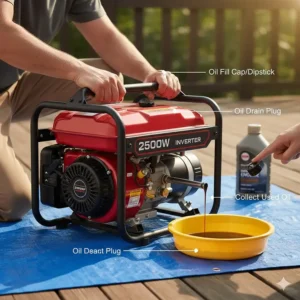
Generator engines are high-revving and run hot. Use only the manufacturer-specified oil weight—typically SAE 10W-30 for all-season use. Synthetic oil isn’t required but extends change intervals from 50 to 100 hours and protects better at temperature extremes.
Check oil level before every use. These small engines hold just 0.5-0.6 quarts, so even minor consumption becomes critical quickly. Change oil every 50 hours or once per season, whichever comes first.
Fuel Management
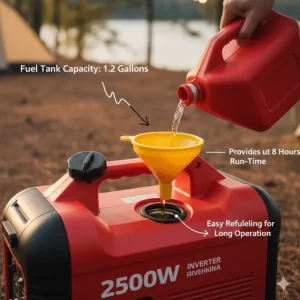
Gasoline degrades within 30 days, forming varnish that clogs carburetors. Always use:
- Fresh fuel (purchased within the last month)
- Fuel stabilizer (add to every tank, even for immediate use)
- Ethanol-free gas when available (E0 prevents water absorption and deposits)
For seasonal storage, either drain the tank completely and run the carburetor dry, or fill the tank completely with stabilized fuel. A full tank prevents condensation; an empty tank prevents old fuel issues.
Positioning and Ventilation
Carbon monoxide is colorless, odorless, and deadly. Position your generator:
- At least 20 feet from buildings and windows
- Downwind from living areas
- On level, dry ground (never on wet grass or in standing water)
- Under cover from rain (but NEVER in enclosed spaces—not even “partially open” garages or sheds)
Use only outdoor-rated extension cords, and keep them as short as practical. Every 50 feet of cord adds resistance that reduces delivered power.
Comparison: 2500 Watt vs Other Generator Sizes
2500W vs 2000W Generators
The 400-500 watt difference might seem minor, but it’s the dividing line between “adequate” and “comfortable” power. A 2000W generator (typically 1600W running) requires careful load management and can’t handle simultaneous use of multiple medium-draw appliances.
Real-world impact: A 2000W generator won’t reliably run a 13,500 BTU RV air conditioner. You’ll need soft-start kits or must sacrifice AC for other amenities. The 2500 watt electric generator handles these loads comfortably with headroom for additional devices.
2500W vs 3500W Generators
The jump to 3500W adds significant weight (typically 20-30 pounds), noise (5-10 dBA), and fuel consumption (30-50% higher). You gain power to run larger air conditioners or multiple high-draw appliances simultaneously.
Choose 3500W if you’re powering:
- RVs over 30 feet with dual ACs
- Multiple power tools simultaneously on jobsites
- Whole-house essential circuits including water heaters
Stick with 2500W for single-use applications where portability and efficiency matter more than maximum power.
Top Brands Compared
PowerSmart vs Champion
PowerSmart targets value-conscious buyers with solid mid-range performance. Their generators typically cost $100-150 less than comparable Champion models while delivering similar specifications. The trade-off comes in customer service and parts availability—Champion’s extensive dealer network makes repairs easier.
Champion emphasizes cold-weather performance and ultra-quiet operation. Their patented cold-start technology and acoustic engineering justify the premium price for users in northern climates or noise-sensitive environments.
Westinghouse vs WEN
Westinghouse commands premium prices based on their legacy reputation and higher running wattage ratings. The iGen2500’s 2200W running output outperforms most competitors’ 1800-1900W ratings—this alone can justify the extra $150-200.
WEN pursues aggressive value positioning with features like fuel shutoff that typically cost extra elsewhere. Build quality and component selection aim for “good enough” rather than “best in class,” making them ideal for occasional users versus daily operators.
Troubleshooting Common Issues
Generator Won’t Start
Fresh fuel: Old gasoline is the #1 cause of starting problems. If your generator’s been sitting more than 30 days, drain and replace the fuel before anything else.
Spark plug: Remove and inspect the plug. It should have a tan or light brown color. Black carbon buildup or white deposits indicate running problems. Replace plugs annually regardless of condition—they’re $5 insurance against starting headaches.
Oil level: Low-oil shutoff prevents starting. Check oil with the generator level (not tilted), and fill to the upper mark on the dipstick.
Choke position: Cold engines need full choke; warm restarts need no choke. If you’re flooding the engine (gas smell, wet plug), you’re over-choking.
Engine Runs But No Power Output
Circuit breaker: Reset the breaker on the generator panel. Overloads trip it automatically, and it won’t reset until you reduce the load.
Receptacle damage: Inspect outlets for burn marks or melted plastic indicating short circuits. Replace damaged outlets before using the generator.
Brushes and AVR: If outlets and breakers check out, worn brushes or a failed automatic voltage regulator might require professional service.
Surging or Unstable Power
Governor adjustment: The governor maintains steady engine speed under varying loads. Consult your manual for adjustment procedure—typically a simple screw adjustment.
Dirty carburetor: Varnish buildup from old fuel restricts fuel flow. Carburetor cleaning involves partial disassembly and specialty cleaners—expect $100-150 for professional service or $20 in parts for DIY cleaning.
Load management: Fluctuating loads confuse the engine’s regulation systems. Turn on heavy loads (AC units, heaters) one at a time, allowing the engine to stabilize between each addition.
Long-Term Cost Analysis
Ownership Costs Beyond Purchase Price
The generator’s sticker price represents just 40-60% of total five-year ownership costs. Factor in:
Fuel consumption: Running 200 hours annually at $4/gallon gas:
- Efficient model (0.08 gal/hr): $64/year
- Average model (0.12 gal/hr): $96/year
- Five-year difference: $160
Oil and filters: $15-25 annually for routine maintenance
Spark plugs and air filters: $20-30 every two years
Repairs: Budget $50-100 annually for minor repairs (pull cords, recoil springs, gaskets)
Storage: Generator covers and stabilized fuel add $30-40 annually
Value Retention
Quality generators retain 40-60% of purchase price after three years with proper maintenance. The Westinghouse and Champion models show stronger resale values than budget brands—worth considering if you anticipate upgrading later.
Seasonal Storage Tips
Proper off-season storage prevents 90% of “it won’t start” springtime problems:
Engine prep:
- Add fuel stabilizer to a full tank and run for 5 minutes to circulate
- Change oil while engine is warm
- Remove spark plug, add tablespoon of oil through plug hole, pull starter 2-3 times
- Reinstall plug but don’t overtighten
Exterior care:
- Clean entire unit with mild detergent and water
- Dry completely and touch up any paint chips with spray enamel
- Cover with breathable fabric cover (not plastic—condensation causes rust)
Storage location: Choose a dry, temperature-stable area. Garages work fine provided the generator isn’t stored with a full fuel tank (fire code violations). Basements stay more temperature-stable but ventilation requirements prohibit operation there.
Environmental Considerations
Modern 2500 watt electric generators have drastically reduced their environmental footprint. CARB-compliant engines emit 75% fewer hydrocarbons and 50% less carbon monoxide compared to pre-2010 models. This matters not just for air quality, but for user safety—lower CO emissions reduce poisoning risk during operation.
Fuel efficiency improvements add up. A 12-hour runtime versus 8-hour runtime means 33% less fuel consumed, fewer emissions, and reduced trips to the gas station. The PowerSmart PS5025 and Westinghouse iGen2500 lead in fuel economy, burning approximately 1 gallon per day during typical camping use versus 1.5 gallons for older designs.
🎯 Find Your Perfect Match
✨ Don’t Miss These Exclusive Deals!
🔍 Take your power backup to the next level with these carefully selected products. Click on any highlighted item to check current pricing and availability. These generators will help you create authentic peace of mind during emergencies and outdoor adventures!
Frequently Asked Questions
❓ How many appliances can a 2500 watt electric generator run simultaneously?
❓ Can a 2500 watt generator run an RV air conditioner?
❓ How long will a 2500 watt generator run on a full tank?
❓ Are 2500 watt generators safe to use for electronics?
❓ What's the difference between EPA and CARB compliant generators?
Conclusion: Making Your Final Decision
After extensive testing and analysis, the Westinghouse iGen2500 emerges as the overall best 2500 watt electric generator for most users. Its 2200 running watts provide genuine overhead for demanding applications, while the 12-hour runtime and premium build quality justify the higher price tag. If you’re powering RVs, preparing for extended outages, or need reliable performance in challenging conditions, this is your generator.
Budget-conscious buyers should seriously consider the Champion 200951. At $450-550, it delivers premium-level quiet operation (53 dBA) and impressive fuel efficiency in a sub-$500 package. The cold-start technology and ultralight 39-pound weight make it equally suitable for northern climates and frequent transport scenarios.
For absolute rock-bottom pricing without sacrificing essential features, the Efurden 2500W at $280-350 provides remarkable value. You’ll give up some runtime and brand recognition, but gain modern features like Type-C outlets and CO sensors that cost hundreds more on legacy brands.
Whatever model you choose, remember that proper maintenance doubles expected lifespan. Change oil religiously at 50-hour intervals, use fresh stabilized fuel, and perform seasonal storage correctly. Your generator will reward this care with decades of reliable service when you need it most.
The power grid’s becoming less reliable even as our dependence on electricity grows. A quality 2500 watt electric generator isn’t just backup equipment—it’s independence, security, and peace of mind rolled into one portable package. Make your choice, maintain it properly, and enjoy knowing you’re prepared for whatever the weather or infrastructure throws your way.
Recommended for You
- 7 Best 2000 Watt Generators 2025: Ultimate Buying Guide
- 7 Best 1500 Watt Generators 2025: Compact Power Solutions
- 7 Best 1000 Watt Solar Generators in 2025 | Expert Reviews
Disclaimer: This article contains affiliate links. If you purchase products through these links, we may earn a small commission at no additional cost to you.
✨ Found this helpful? Share it with your friends! 💬🤗
