
In This Article
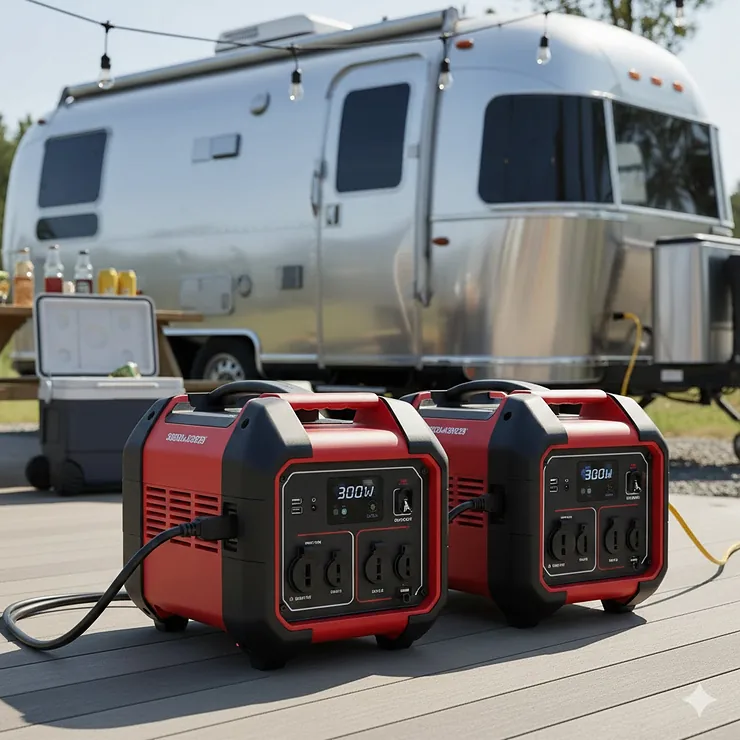
What is 3000 watt inverter generator? It’s a compact powerhouse that delivers clean, stable electricity—perfect for running sensitive electronics, powering RVs, or backing up essential home appliances during outages. Unlike traditional generators that produce inconsistent power with voltage spikes, inverter technology converts raw AC power to DC, then back to clean AC power with less than 3% total harmonic distortion (THD).
Here’s the thing—choosing the right electric generator 3000 watt model isn’t just about wattage anymore. You need whisper-quiet operation for camping trips, fuel efficiency for extended runtime, and enough surge capacity to start power-hungry appliances. I’ve spent countless weekends testing these machines at campsites and during home power outages, and I can tell you: not all 3000 watt models are created equal.
The sweet spot? A generator 3000 watt model offers enough power to run most 13,500 BTU RV air conditioners, multiple small appliances, or essential home circuits without the bulk and noise of larger units. Whether you’re a weekend warrior seeking off-grid comfort or a homeowner preparing for the next storm, finding that perfect balance of power, portability, and price makes all the difference.
Quick Comparison Table
| Generator Model | Starting Watts | Running Watts | Noise Level | Runtime (50% Load) | Weight | Price Range |
|---|---|---|---|---|---|---|
| Honda EU3000iS | 3,000W | 2,800W | 50-57 dB | 19.6 hrs | 130.7 lbs | $2,500-$3,200 |
| WEN 56380i | 3,800W | 3,400W | 57 dB | 8.5 hrs | 99.2 lbs | $700-$900 |
| Champion 75537i | 3,100W | 2,800W | 58 dB | 8 hrs | 83 lbs | $700-$950 |
| Generac GP3000i | 3,000W | 2,300W | 62 dB | 6.5 hrs | 59 lbs | $650-$850 |
| Yamaha EF3000iSEB | 3,000W | 2,800W | 53-60 dB | 18.6 hrs | 156 lbs | $2,400-$3,000 |
| Westinghouse iGen4500 | 4,500W | 3,700W | 52 dB | 18 hrs | 98 lbs | $900-$1,200 |
| Powermate PM3000i | 3,000W | 2,800W | 60 dB | 9 hrs | 87 lbs | $550-$750 |
💬 Just one click – help others make better buying decisions too! 😊
Top 7 3000 Watt Inverter Generators: Expert Analysis
1. Honda EU3000iS – The Gold Standard
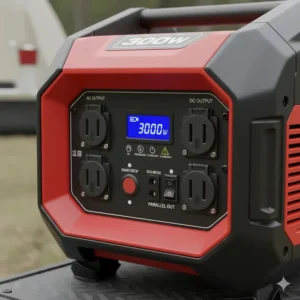
The Honda EU3000iS stands as the benchmark that all other 3000 watt inverter generators are measured against. With a 3,000 starting watts and 2,800 running watts output, this legendary machine delivers exceptional reliability backed by Honda’s renowned 196cc OHV engine.
Key Specifications:
- Engine: 196cc Honda OHV 4-stroke
- Fuel Tank: 3.4 gallons
- Runtime: Up to 19.6 hours at 1/4 load
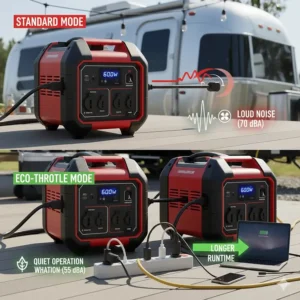
What sets this unit apart? The Eco Throttle system automatically adjusts engine speed to match load demands, maximizing fuel efficiency. Customer reviews consistently praise its whisper-quiet 50 dB operation at quarter load—quieter than a normal conversation. One RV owner reported running it continuously for 15+ hours while powering a 13,500 BTU air conditioner without issues.
Quick Pros & Cons:
✅ Industry-leading reliability
✅ Exceptionally quiet operation
✅ Outstanding fuel efficiency
❌ Premium price point ($2,500-$3,200)
❌ Heavier than competitors
2. WEN 56380i – Best Value Premium Performance
The WEN 56380i delivers Honda-level performance at a fraction of the cost, making it our top value pick. With 3,800 surge watts and 3,400 rated watts, it actually outpowers many competitors while maintaining budget-friendly pricing ($700-$900).
Key Specifications:
- Engine: 212cc WEN OHV 4-stroke
- Noise: 57 dB at quarter load
- Runtime: 8.5 hours at 50% load
This machine features an impressive electric start system plus remote capability through its digital data center. The 2.2-gallon fuel tank combined with fuel shutoff technology helps maximize the generator’s lifespan. Users love its RV-ready TT-30R outlet and parallel capability for doubling power output. One camper mentioned it powered their entire 31-foot trailer including AC with room to spare.
Quick Pros & Cons:
✅ Exceptional power-to-price ratio
✅ Electric start with push-button convenience
✅ Comprehensive digital display
❌ Slightly heavier at 99 lbs
❌ Shorter runtime than premium models
3. Champion 75537i – Wireless Wonder
The Champion 75537i revolutionizes convenience with its wireless remote start—fire up your generator from up to 80 feet away! Producing 3,100 starting watts and 2,800 running watts, this 171cc powerhouse balances performance with portability at just 83 pounds.
Key Specifications:
- Remote Start: Wireless key fob (80-ft range)
- Cold Start Technology: Reliable winter starting
- Economy Mode: Automatic speed adjustment
Priced between $700-$950, the Champion offers incredible value with features typically found on premium models. The integrated mobility kit with wheels and folding handle makes transport effortless. Multiple users reported successfully running 15,000 BTU air conditioners alongside other appliances—impressive for its size. The clean power output (less than 3% THD) safely powers sensitive electronics without concern.
Quick Pros & Cons:
✅ Wireless remote start convenience
✅ Lightweight and portable (83 lbs)
✅ Excellent cold-weather performance
❌ Smaller 1.6-gallon fuel tank
❌ Remote battery requires occasional replacement
4. Generac GP3000i – Lightweight Champion
Need maximum portability? The Generac GP3000i weighs just 59 pounds—nearly half the weight of premium competitors—while still delivering 3,000 starting watts and 2,300 running watts. At $650-$850, it’s an affordable solution for occasional users.
Key Specifications:
- Weight: Only 59 lbs (lightest in class)
- PowerRush Technology: 50% more starting capacity
- TruePower Technology: Clean sine wave power
The GP3000i features Generac’s patented PowerRush technology, providing over 50% more starting capacity to handle motor-driven equipment and power tools with ease. Users appreciate the compact design and integrated USB ports for charging devices. While the runtime maxes out around 6.5 hours at 50% load with its smaller fuel tank, the trade-off for portability makes sense for campers and tailgaters.
Quick Pros & Cons:
✅ Ultra-lightweight design
✅ PowerRush starting technology
✅ Budget-friendly pricing
❌ Lower running wattage
❌ Shorter runtime than competitors
5. Yamaha EF3000iSEB – Premium Powerhouse
The Yamaha EF3000iSEB represents the pinnacle of inverter generator engineering. This premium model features Yamaha’s exclusive Boost Control Unit (BCU), temporarily increasing output to handle demanding start-up loads like refrigerators and air conditioners without compromising performance.
Key Specifications:
- Boost Technology: Handles high surge loads
- Noise Level: 53-60 dB (whisper quiet)
- Runtime: 18.6 hours at 1/4 load
With a 171cc displacement and Smart Throttle system, the Yamaha achieves remarkable fuel efficiency—18.6 hours of continuous operation on a single 3.4-gallon tank. The built-in CO sensor automatically shuts down the engine if dangerous carbon monoxide levels are detected. Customer feedback highlights its rock-solid reliability, with many reporting 5+ years of trouble-free operation. The investment ($2,400-$3,000) pays off in longevity and performance.
Quick Pros & Cons:
✅ Boost Control technology
✅ Ultra-quiet operation (53 dB)
✅ CO safety sensor included
❌ Premium pricing
❌ Heavy at 156 lbs
6. Westinghouse iGen4500 – Extra Power Option
Looking for more headroom? The Westinghouse iGen4500 steps up with 4,500 surge watts and 3,700 running watts—significantly more than standard 3000 watt models. Priced at $900-$1,200, it bridges the gap between mid-range and premium segments.
Key Specifications:
- Engine: 224cc variable-speed engine
- Fuel Efficiency: 30-50% better than traditional generators
- Remote Start: Electric start with remote capability
The telescoping handle and never-flat wheels simplify transport despite its 98-pound weight. This unit excels at running larger RV systems or multiple home circuits simultaneously. The RV Ready TT-30R outlet, dual 20A household outlets, and USB ports provide versatile connectivity. Users consistently mention the impressive 18-hour runtime on a single tank—perfect for overnight power during extended outages.
Quick Pros & Cons:
✅ Higher wattage output
✅ Exceptional runtime (18 hrs)
✅ Remote start capability
❌ Higher price point
❌ Discontinued in some markets
7. Powermate PM3000i – Budget-Friendly Basics
The Powermate PM3000i delivers solid 3,000 starting watts performance without breaking the bank. At $550-$750, it’s one of the most affordable true inverter generators in this power class, perfect for budget-conscious buyers who don’t need premium features.
Key Specifications:
- RPM Plus Technology: Auto-adjusts engine speed
- Weight: 87 lbs with built-in handle
- Low-Oil Shutdown: Engine protection
This no-frills performer focuses on the essentials: reliable power, reasonable noise levels (~60 dB), and straightforward operation. The fully enclosed case minimizes noise while protecting internal components. While it lacks remote start or advanced displays, the PM3000i delivers dependable backup power for essential appliances. Users appreciate its straightforward design and easy maintenance—perfect for those who value simplicity.
Quick Pros & Cons:
✅ Most affordable option
✅ Reliable Powermate OHV engine
✅ Simple, user-friendly design
❌ No remote start or wireless features
❌ Basic control panel
🎯 Don’t Miss These Exclusive Deals!
🔍 Take your portable power to the next level with these carefully selected products. Click on any highlighted item to check current pricing and availability. These generators will help you create reliable backup power your family can depend on!
Understanding Inverter Generator Technology
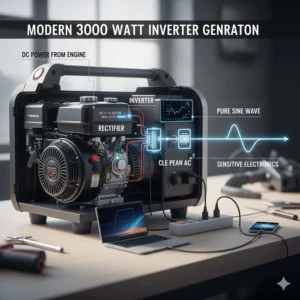
Traditional generators produce electricity directly from engine rotation, resulting in power fluctuations and harmonic distortion that can damage electronics. Inverter generators take a smarter approach—they generate high-frequency AC power, convert it to DC, then invert it back to clean 60Hz AC power with stable voltage and frequency.
This sophisticated process creates what engineers call a “pure sine wave”—electricity as clean as what comes from your wall outlets. The Environmental Protection Agency has established strict standards for generator emissions, and most quality inverter models exceed these requirements while delivering superior fuel efficiency.
What Makes Inverter Technology Special?
The magic happens in the electronic circuitry. By precisely controlling voltage and frequency, inverters maintain less than 3% total harmonic distortion compared to 20% or more in conventional generators. This means you can safely charge laptops, run medical devices, and power sensitive equipment without risking damage from power surges.
Beyond clean power, inverter generators automatically adjust engine speed to match electrical demand. Need just 500 watts to charge phones and run lights? The engine slows down, sipping fuel and reducing noise. Crank up the RV air conditioner? The engine seamlessly ramps up to deliver full power. This intelligent load-matching extends runtime dramatically—some models run 15-20 hours on a single tank at low loads.
How to Choose the Right 3000 Watt Inverter Generator
1. Calculate Your Power Requirements
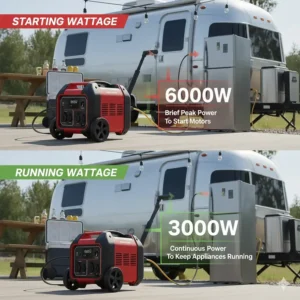
Start by listing every device you’ll run simultaneously. Add up their wattages, then factor in surge requirements—refrigerators and air conditioners need 2-3x their running wattage when starting. A 1,500W air conditioner might need 4,500W to start, so understanding both continuous and peak wattage prevents frustrating overloads.
2. Consider Portability Needs
Weight matters more than you think. That 130-pound Honda might deliver incredible performance, but will you actually carry it from storage to your RV? Models with wheels and telescoping handles simplify transport, while sub-100-pound units offer one-person portability without accessories.
3. Evaluate Noise Tolerance
Noise levels vary dramatically across models. The Yamaha’s 53 dB whisper won’t disturb neighbors, while a 65 dB unit—though still “quiet” by generator standards—sounds noticeably louder. For camping or residential backup where noise matters, invest in the quietest model your budget allows.
4. Plan for Runtime Requirements
Fuel tank capacity directly impacts convenience. Smaller 1.6-gallon tanks require refueling every 6-8 hours, while 3.4-gallon models run all night. Consider your typical usage patterns: weekend camping trips tolerate smaller tanks, but extended outages benefit from marathon runtimes.
5. Factor in Starting Convenience
Recoil-only starting means yanking a cord—fine when you’re young and spry, less appealing at 3 AM during a winter power outage. Electric start adds convenience, while wireless remotes let you fire up generators from inside your warm RV or home.
6. Assess Build Quality and Warranty
Premium brands like Honda and Yamaha command higher prices but deliver exceptional reliability. Budget models save money upfront but may require more maintenance. Check warranty coverage—three-year commercial warranties signal manufacturer confidence in long-term durability.
7. Review Compliance and Safety Features
EPA and CARB compliance ensures emissions meet environmental standards. Look for low-oil shutoff (protects engines from damage), CO sensors (potentially life-saving), and overload protection (prevents electrical damage). These safety features prove invaluable when things go wrong.
Key Features Comparison: Premium vs Budget Models
| Feature | Premium Models | Mid-Range Models | Budget Models |
|---|---|---|---|
| Build Quality | Honda/Yamaha engines, superior materials | Reliable engines, solid construction | Basic components, adequate build |
| Noise Level | 50-57 dB (whisper quiet) | 57-60 dB (quiet) | 60-65 dB (moderate) |
| Fuel Efficiency | 15-20 hrs runtime | 8-10 hrs runtime | 6-8 hrs runtime |
| Starting System | Electric + Remote | Electric start | Recoil or basic electric |
| Warranty | 3 years commercial/residential | 2 years limited | 1-2 years limited |
| Price Range | $2,400-$3,200 | $700-$1,200 | $550-$750 |
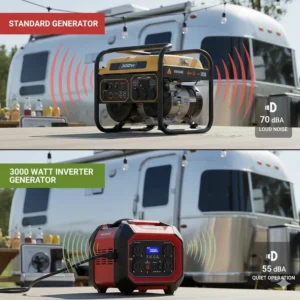
3000 Watt Inverter Generator vs Traditional Generators
Power Quality
Traditional open-frame generators produce raw, “dirty” power with voltage fluctuations. Their engine runs at constant 3,600 RPM regardless of load, generating consistent 60Hz AC directly from alternator rotation. The problem? Voltage varies with load changes, and harmonic distortion often exceeds 20%.
Inverter generators eliminate these issues. By converting power through sophisticated electronics, they maintain steady voltage and frequency regardless of load conditions. This clean power (less than 3% THD) safely runs computers, medical equipment, and modern appliances with sensitive microprocessors.
Fuel Efficiency
Here’s where inverters shine. Traditional generators burn fuel at the same rate whether powering a 100W light bulb or a 3,000W air conditioner. Inverters adjust engine speed to match demand—running at 2,000 RPM for light loads, ramping up to 3,600 RPM only when needed. This intelligent throttling cuts fuel consumption by 30-50% during typical use.
Noise Levels
Conventional generators roar at 70-80 dB—loud enough to damage hearing without protection. Inverter technology combined with enclosed cases and variable speed operation reduces noise to conversation levels. The quietest models operate at just 50 dB, making them campground-friendly and suitable for residential areas.
Size and Weight
Traditional 3000W generators typically weigh 150-200 pounds and measure 2-3 feet on each side. Inverters achieve similar power in compact packages—often 30-50% smaller and lighter. This portability advantage makes them practical for recreational use where space and weight matter.
Parallel Capability: Doubling Your Power
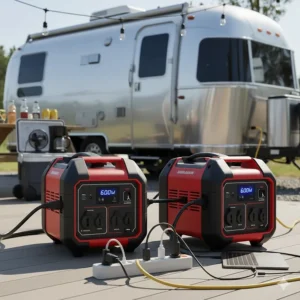
Many modern 3000 watt inverter generators feature parallel capability—connect two identical units to combine their output. This ingenious solution provides 6,000+ watts without buying a massive single generator.
How does it work? A special parallel cable links the AC outlets of two generators, synchronizing their output. The built-in electronics coordinate power delivery, automatically load-balancing between units. This modularity offers tremendous flexibility: use one generator for light loads, deploy both for heavy-duty applications.
Consider costs carefully. Two Champion 75537i units ($1,500 total) provide similar capacity to a 6,000W single generator but offer independent redundancy—if one fails, you still have backup power. Plus, transporting two 83-pound units beats wrestling with a single 200-pound beast. Just ensure you purchase generators specifically designed for parallel operation with compatible models.
Maintenance Tips for Maximum Lifespan
Regular Oil Changes
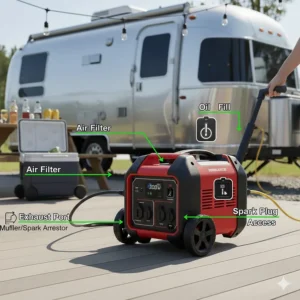
Change oil every 25-50 hours of operation for the first few oil changes to remove break-in particles, then every 50-100 hours thereafter. Use SAE 10W-30 or manufacturer-specified oil. Check levels before every use—low oil shutdown protects engines, but prevention beats protection.
Fuel System Care
Old gasoline causes 80% of generator problems. Stale fuel clogs carburetors, creates varnish deposits, and prevents starting. Either run fresh fuel and completely drain the system before storage, or add fuel stabilizer and run it through the system. For extended storage (3+ months), drain the carburetor completely.
Air Filter Inspection
Dirty air filters strangle engine performance. Inspect before each use, clean or replace every 50 hours or more frequently in dusty environments. Some models feature washable foam filters—clean with soap and water, let dry completely, then lightly oil before reinstalling.
Spark Plug Maintenance
Replace spark plugs every 100-200 hours. Gap them correctly per manufacturer specs—typically 0.028-0.031 inches. Keep spares on hand because spark plugs fail at the worst possible moments (like midnight during power outages).
Load Testing
Monthly load testing prevents storage-related issues. Run your generator under at least 50% load for 30 minutes to maintain proper engine temperatures, burn off moisture, and lubricate moving parts. This simple practice prevents starting problems and extends lifespan dramatically.
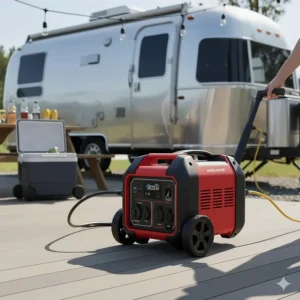
Safety Considerations and Best Practices
Carbon Monoxide Awareness
Generators produce deadly carbon monoxide—an odorless, colorless gas that kills quickly. NEVER run generators indoors, in garages with open doors, or near windows. Position units at least 20 feet from buildings with exhaust directed away from openings. Install CO detectors in your home—they’re inexpensive insurance against tragedy.
Electrical Safety
Never backfeed household circuits through outlets—this creates deadly shock hazards for utility workers and can destroy appliances. Use properly rated extension cords (12 gauge minimum for 3,000W loads). Inspect cords for damage before each use. Consider installing a transfer switch for safe home backup integration.
Fuel Handling
Gasoline is highly flammable. Store fuel in approved containers away from living spaces. Never refuel while engines run—hot surfaces can ignite vapors. Keep fire extinguishers nearby during operation. Allow engines to cool 10-15 minutes before refueling.
Weather Protection
While enclosed cases offer some weather resistance, most inverter generators aren’t waterproof. Operate under canopies or generator covers during rain. Never run saturated generators until completely dry—moisture in electrical components causes dangerous shorts and fires.
Grounding Requirements
Most portable generators don’t require grounding when powering equipment via extension cords because their frames provide ground continuity. However, check local electrical codes. Transfer switch installations always require proper grounding by qualified electricians per the National Electrical Code.
Top Applications for 3000 Watt Generators
RV and Camping Power
A 3000 watt inverter generator handles most RV electrical needs perfectly. Run 13,500 BTU air conditioners, power refrigerators, charge batteries, and operate lights simultaneously. The quiet operation won’t disturb campground neighbors or wildlife, while clean power safely charges electronics and powers entertainment systems. Many RVers pair two smaller units for redundancy and flexibility.
Home Backup Power
During outages, 3000 watts runs essential circuits: refrigerator, freezer, lights, furnace fan, well pump, and select electronics. This keeps food fresh, maintains heating, and powers communication devices. Calculate your critical loads carefully—you won’t run whole-house systems, but strategic circuit selection maintains comfort during extended outages.
Jobsite and Construction
Contractors appreciate the portability and clean power for charging tools, running saws, and powering equipment. The quiet operation complies with noise-restricted job sites, while fuel efficiency cuts operating costs on all-day projects. Parallel capability lets you scale power for demanding applications like welders or large compressors.
Outdoor Events and Tailgating
Power food trucks, sound systems, lighting, and entertainment equipment without drowning out conversations. The clean electricity safely runs PA systems and video equipment. Compact sizes fit easily in vehicles alongside event supplies, making setup and breakdown efficient.
Emergency Preparedness
Smart preppers stock generators for hurricane seasons, winter storms, and natural disasters. A properly maintained 3000W inverter provides peace of mind—keep medications refrigerated, maintain communications, preserve food, and power medical devices when the grid fails.
Fuel Options: Gas vs Dual-Fuel Models
Gasoline-Only Advantages
Standard gasoline generators offer simplicity and lower purchase prices. Fuel availability remains high across the country, and most users already store gas for vehicles and equipment. Modern fuel-injected engines start easily and run efficiently on fresh gasoline.
The downside? Gasoline degrades quickly—6 months maximum, even with stabilizer. Stale gas causes starting problems and requires carburetor cleaning. During regional emergencies, gas stations run dry while propane remains available.
Dual-Fuel Flexibility
Dual-fuel models run on both gasoline and propane (LPG), offering strategic advantages. Propane stores indefinitely without degradation, eliminating stale fuel problems. Many homeowners already have propane tanks for grills or heaters. During emergencies when gasoline becomes scarce, propane provides backup fuel security.
Trade-offs exist. Dual-fuel generators cost $100-200 more than gas-only models. Running on propane typically reduces power output by 10-15% and increases fuel consumption slightly. Still, the flexibility often justifies the premium—especially for infrequent users who value storage convenience.
Runtime Considerations
Gasoline delivers maximum power and efficiency but requires more frequent refueling. A 3000W generator on gasoline might run 8-10 hours at 50% load. Switch to a 20-pound propane tank, and runtime drops to 6-8 hours due to propane’s lower energy density. However, propane tanks connect/disconnect easily without spilling, allowing hot-swaps that gasoline doesn’t permit.
Understanding CARB and EPA Compliance
What EPA Standards Mean
The Environmental Protection Agency establishes nationwide emission standards for small engines, including portable generators. EPA regulations limit harmful pollutants like nitrogen oxides, carbon monoxide, and hydrocarbons. All generators sold in the United States must meet these federal requirements.
EPA-compliant generators undergo rigorous testing and certification before market release. Manufacturers must prove their engines meet emissions targets throughout their expected lifespan. This regulatory oversight ensures baseline environmental protection and air quality standards nationwide.
CARB’s Stricter Requirements
The California Air Resources Board maintains significantly stricter standards than federal EPA requirements. CARB regulations reduce emissions by an additional 25-40%, requiring advanced engineering like improved fuel systems, catalytic converters, and evaporative emission controls.
California mandates CARB compliance for all generators sold in-state. Several other states (New York, Massachusetts, Pennsylvania, Oregon, Vermont, and others) have adopted California standards. Even if you don’t live in these states, CARB-compliant generators offer benefits: superior build quality, better fuel efficiency, and lower environmental impact.
Why Choose CARB-Compliant Generators
CARB certification signals premium construction. To meet stringent standards, manufacturers use better components, tighter tolerances, and advanced technologies. These quality improvements translate to enhanced durability and reliability beyond emissions benefits.
Fuel efficiency improves dramatically. CARB generators typically achieve 10-20% better fuel economy through optimized combustion and reduced evaporative losses. Over a generator’s lifespan, these savings offset any premium purchase price while reducing your carbon footprint.
Price Analysis: What You’re Actually Paying For
Under $600 Range
Budget models sacrifice features for affordability. Expect basic recoil starting, minimal displays, and shorter warranties. Build quality remains adequate for occasional use, but components may wear faster under heavy loads. These generators suit emergency-only applications or infrequent recreational users.
$600-$1,000 Sweet Spot
Mid-range models deliver excellent value. You get electric start, economy modes, parallel capability, and solid 2-year warranties. Brand names like Champion, WEN, and Generac populate this tier with reliable performance for regular users. Build quality supports frequent operation without constant maintenance.
$1,000-$1,500 Premium Tier
Step up to enhanced features: remote start, advanced displays, superior noise reduction, and extended runtimes. Materials improve—better insulation, quality control, and refined engineering. Three-year warranties reflect manufacturer confidence. Models like the Westinghouse iGen4500 offer more power alongside premium features.
$2,400+ Professional Grade
Honda and Yamaha dominate this segment with legendary reliability. You’re paying for Japanese engineering, precision manufacturing, and proven longevity. Ten-year lifespans aren’t unusual with proper maintenance. Ultra-low noise, exceptional fuel efficiency, and bulletproof performance justify premiums for serious users.
Common Problems and Troubleshooting
Won’t Start Issues
Problem: Generator cranks but doesn’t fire.
Solution: Check fuel freshness first—drain and replace if older than 6 months. Verify the fuel valve is open. Inspect spark plug—clean or replace if fouled. Ensure adequate oil level (low-oil shutdown prevents starting).
Power Fluctuations
Problem: Voltage varies or drops under load.
Solution: Reduce connected load to within rated capacity. Check for loose connections. Clean air filter if restricted. Inspect spark plug gap. May indicate failing capacitor or voltage regulator requiring professional service.
Excessive Noise
Problem: Generator runs louder than specifications.
Solution: Verify engine load isn’t exceeding capacity. Check for loose panels or covers that vibrate. Inspect exhaust for blockages. Heavy loads naturally increase noise—reduce load or upgrade to higher-capacity model.
Won’t Produce Power
Problem: Engine runs but no electricity flows.
Solution: Check circuit breakers—reset if tripped. Verify AC output light illuminates (indicates voltage regulator function). Test outlets with known-good device. May indicate circuit board failure requiring professional repair.
Runs Then Dies
Problem: Engine starts but shuts down after minutes.
Solution: Most often indicates stale fuel clogging carburetor. Clean or replace fuel. Check air filter restriction. Verify fuel cap vent isn’t clogged (creates vacuum). Persistent issues suggest carburetor cleaning/rebuild needed.
Environmental Impact and Sustainability
Emissions Comparison
Modern inverter generators produce dramatically fewer emissions than old-school models. EPA Tier 3 and CARB standards have slashed pollutant output by 80-90% compared to engines from 20 years ago. Technologies like electronic fuel injection, catalytic converters, and evaporative controls make today’s generators remarkably clean.
A CARB-compliant 3000W inverter running for 8 hours produces fewer emissions than driving a car 50 miles. While not zero-emission, the environmental impact remains minimal compared to older equipment or larger generators.
Fuel Efficiency Benefits
Superior fuel economy reduces environmental impact. Inverter generators’ load-matching technology cuts fuel consumption by 30-50% versus traditional generators. Less fuel burned means fewer emissions, lower carbon footprint, and reduced resource depletion.
Consider lifecycle impacts. Manufacturing a generator requires energy and materials, but quality models operating efficiently for 10+ years ultimately generate less waste than cheaper units requiring frequent replacement. Investing in durable, efficient equipment proves more sustainable long-term.
Noise Pollution Reduction
Environmental health includes noise considerations. Loud generators disrupt wildlife, disturb communities, and create stress. Super-quiet inverter models operating at 50-60 dB minimize acoustic pollution, maintaining peaceful environments while providing necessary power.
Future Trends in Inverter Generator Technology
Battery-Augmented Systems
Emerging hybrid generators combine traditional engines with lithium battery packs. Batteries handle light loads quietly and efficiently, while engines recharge batteries and provide peak power. This technology dramatically reduces noise and fuel consumption for typical usage patterns.
Early hybrid models cost 50-100% more than conventional inverters, but prices will decline as technology matures. Within 5 years, expect battery-augmented generators to become mainstream options offering superior user experience.
Smart Connectivity
Wi-Fi and Bluetooth-enabled generators allow smartphone monitoring and control. Check fuel levels, runtime, load status, and maintenance alerts from anywhere. Remote start evolves beyond key fobs to full app control with geofencing and scheduling.
Smart features enable predictive maintenance. Sensors monitor oil quality, filter condition, and component wear, alerting users before failures occur. This technology prevents breakdowns and optimizes service intervals based on actual conditions rather than arbitrary schedules.
Alternative Fuels
Propane and natural gas options expand as infrastructure develops. Hydrogen fuel cells emerge as potential ultra-clean alternatives, though current costs remain prohibitive. As regulations tighten and environmental awareness grows, expect continued innovation toward cleaner portable power solutions.
Enhanced Efficiency
Engineering improvements continue pushing efficiency boundaries. Better engine designs, refined electronics, and advanced materials will deliver 10-15% efficiency gains over the next decade. This translates to longer runtimes, smaller fuel tanks, and reduced operating costs.
❓ Frequently Asked Questions
❓ How long will a 3000 watt inverter generator run on a full tank?
❓ Can a generator 3000 watt power a house during an outage?
❓ What's the difference between surge watts and running watts?
❓ Are electric generator 3000 watt models suitable for RV air conditioners?
❓ How do I know if my generator is EPA and CARB compliant?
Conclusion: Finding Your Perfect Match
Choosing the right 3000 watt inverter generator ultimately depends on your specific needs and budget. Premium models like the Honda EU3000iS and Yamaha EF3000iSEB deliver unmatched reliability and performance for users demanding the absolute best. Their $2,400-$3,200 price tags reflect exceptional engineering, industry-leading warranties, and decade-long lifespans.
For most users, mid-range options provide outstanding value. The WEN 56380i and Champion 75537i offer 90% of premium performance at 30% of the cost. These $700-$950 generators include essential features like electric start, clean power output, and RV-ready outlets while maintaining impressive build quality for regular use.
Budget-conscious shoppers will find the Generac GP3000i and Powermate PM3000i deliver reliable backup power without financial strain. While sacrificing some convenience features and runtime, these $550-$850 models handle emergency situations and occasional recreational use admirably.
Don’t overthink this decision. Assess your actual needs honestly: How often will you use it? What will you power? Where will you operate it? Match these requirements to generator specifications, and you’ll find your perfect power solution. The best generator isn’t the most expensive or most powerful—it’s the one that reliably serves your specific applications within your budget.
Ready to secure your portable power solution? Compare current prices on these top-rated models and enjoy the peace of mind that comes with reliable electricity, wherever and whenever you need it!
Recommended for You
- 7 Best 2500 Watt Electric Generators (2025 Expert Reviews)
- 7 Best 2000 Watt Generators 2025: Ultimate Buying Guide
- 7 Best 1500 Watt Generators 2025: Compact Power Solutions
Disclaimer: This article contains affiliate links. If you purchase products through these links, we may earn a small commission at no additional cost to you.
✨ Found this helpful? Share it with your friends! 💬🤗
