
In This Article
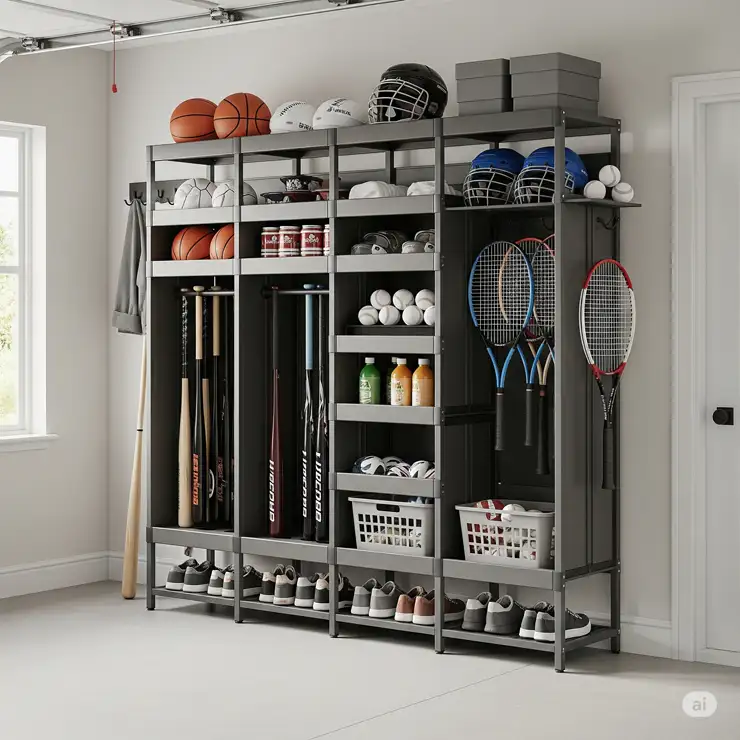
Every family with an athlete knows the scene. A soccer ball hides under the car. Three baseball bats lean in the corner like drunks at last call. A hockey bag sits against the wall, still damp from Tuesday. Good sports equipment storage isn’t about looking tidy for the neighbors. It decides whether your kid finds the shin guard in 10 seconds or in 10 minutes of swearing.
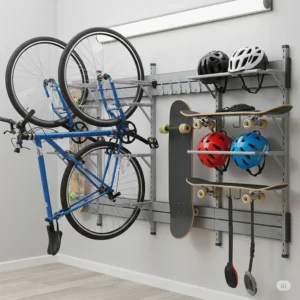
Here’s the catch: sports gear is awkward. Balls roll, bats tip, helmets don’t stack, and wet pads breed bacteria. So the right sports equipment storage has to solve geometry, weight and moisture at once. That’s why one-size-fits-all bins usually fail.
This guide compares seven real products across budget, mid-range and premium tiers. I researched current specs, retailer listings and aggregated customer-review patterns. I haven’t handled any of these products myself, so everything below is analysis built on published specs and what reviewers consistently report. Where I couldn’t verify a data point, I say so.
The advice isn’t only about gear. Storage basics matter just as much: clean, dry, inspect, then rack. Public Storage’s guidance on storing hockey sticks says as much, and that logic applies to nearly everything in your sports equipment storage zone. Let’s get your floor back. 🏆
Quick Comparison Table: 7 Sports Equipment Storage Options at a Glance
| Product | Type | Standout Spec | Price Range | Best For |
|---|---|---|---|---|
| Rubbermaid FastTrack Vertical Ball Rack | Rail-mounted ball rack | 50 lb capacity | Under $35 | Ball-heavy households |
| Gladiator Sports Caddy GearTrack Pack | Wall-track caddy + hooks | 10-year limited warranty | $90–$135 | Kids’ mixed gear |
| Gladiator Overhead GearLoft 4×8 | Ceiling rack | 750 lb rating (4×8 size) | Roughly $110 (2×4) to a few hundred (4×8) | Off-season bulk gear |
| Rubbermaid FastTrack 20-Piece Large Kit | Full wall rail system | Modular rails and hooks | $140–$170 | Whole-garage overhaul |
| Rubbermaid Roughneck 18-Gallon Tote | Stackable bin | 72 lb load capacity | $30–$50 each | Pads and protective gear |
| Delta Cycle Ball Storage Garage Organizer | Mesh ball holder | Holds up to 5 balls | Mid-$30s | Tight budgets, simple needs |
| Mythinglogic Rolling Sports Equipment Organizer | Rolling steel cart | Locking wheels, bins and bat rack | Check current price | Renters, flexible layouts |
Read the table as a decision shortcut. If your problem is rolling balls, the Rubbermaid FastTrack Vertical Ball Rack or the Delta Cycle Ball Storage Garage Organizer fixes it for the price of a pizza night. If you need real capacity for seasonal overflow, the Gladiator Overhead GearLoft uses ceiling space nobody is using. Renters who can’t drill into walls should look hard at the Mythinglogic Rolling Sports Equipment Organizer, since it moves with you.
💬 Just one click — help others make better buying decisions too!😊
Top 7 Sports Equipment Storage Picks: Expert Analysis
1. Rubbermaid FastTrack Vertical Ball Rack — keeps balls off the floor
This rack clips onto Rubbermaid’s FastTrack rail and swaps the “ball pile” for a vertical stack held by flexible bungee bands.
On paper it’s about 12 x 12 x 37 inches with a 50 lb capacity, powder-coated steel and a soft-grip coating. In practice, 50 lbs is plenty for basketballs, soccer balls and footballs, since even a full-size basketball weighs only about a pound. The soft coating also matters. It stops the rack from scuffing leather and composite covers, which a bare wire rack can’t promise.
Based on the specs, this suits parents of multi-sport kids who want one-handed grab-and-go access. Reviewers on retailer listings are broadly positive. One Lowe’s listing shows about 4.3 out of 5 across 123 reviews, with 86% recommending it. Some of those reviews were incentivized, so weigh them accordingly. The recurring complaint is the bungee bands. A handful of reviewers report snapping, and the manufacturer’s replies suggest the bands may not be user-replaceable.
Pros:
- ✅ Holds several balls vertically with quick access
- ✅ Soft-grip coating protects ball surfaces
- ✅ Clicks onto existing FastTrack rails
Cons:
- ❌ Bungee bands can fail over time
- ❌ Works best only if you already use the FastTrack rail
Price range: under $35, and a strong value if you already own the rails.
2. Gladiator Sports Caddy GearTrack Pack — best mixed-gear wall kit
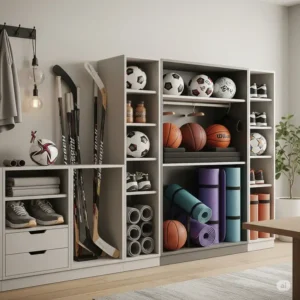
Gladiator’s GAKT48SLGY pack bundles a mesh ball caddy with two heavy-duty scoop hooks, built for Gladiator’s GearTrack channel.
The mesh matters more than it looks. Open mesh lets damp balls and pool toys breathe, which beats a closed bin where moisture lingers. The standalone Gladiator ball caddy is listed as holding up to nine full-size basketballs, so this pack is generous for a family. The scoop hooks handle the heavier stuff: bags, helmets and gear you’d otherwise toss on the floor.
My read: this is the tidy pick for households with kids in two or three sports. One retailer listing shows a 4.9 out of 5 rating from 28 reviews, though that’s a small pool and promotional reviews are mixed in. Reviewers praise the design and the simple installation. The catch is that it assumes you have, or will buy, the GearTrack channel. Factor that into the real cost.
Pros:
- ✅ Breathable mesh caddy for balls and toys
- ✅ Scoop hooks handle heavier bags
- ✅ 10-year limited warranty
Cons:
- ❌ Requires Gladiator GearTrack channel
- ❌ Small review pool limits confidence
Price range: roughly $90–$135, good value if you’re building a Gladiator wall.
3. Gladiator Overhead GearLoft 4×8 — turns dead ceiling space into storage
The GearLoft hangs from your ceiling joists and adds an adjustable-height steel platform. The 4×8 version in listings carries a 750 lb rating.
Here’s the practical part. That rating describes the rack, not your ceiling. Joist condition and fastener quality decide what’s actually safe. Used well, it holds seasonal bins: winter hockey bags in July, baseball gear in January. This Old House’s overhead-storage walkthrough covers the basics, from locating joists to leaving clearance for the garage door and lights.
Reviews are positive but not unanimous. One Lowe’s listing (a 4×4 size) shows about 4.1 out of 5 across 200 reviews. Reviewers frequently say it feels sturdy and recommend two people for installation. The recurring warning is hardware. Several reviewers report lag bolts snapping while being driven into joists, so keep a spare set of quality lags on hand.
Pros:
- ✅ Reclaims unused ceiling space entirely
- ✅ Adjustable height fits bins stacked two high
- ✅ Heavy-duty steel build with high rating
Cons:
- ❌ Installation is a two-person job
- ❌ Included lag bolts draw complaints
Price range: roughly $110 for the 2×4 up to a few hundred dollars for the 4×8, so check current price for your size.
4. Rubbermaid FastTrack 20-Piece Large Kit — best full-wall upgrade
Instead of buying hooks one at a time, this kit gives you a rail-and-hook system you can reconfigure for whatever sport is in season.
The logic is modular thinking. Rails mount on studs, and hooks slide anywhere along them. That means your layout can change when your kid switches from lacrosse to baseball. Listing data on a similar 15-piece kit shows about 4.4 out of 5 from 144 reviews, and the 20-piece listing at Walmart shows about 4.4 from 162. Reviewers describe clear directions, easy installation and a habit of adding more rails later.
I’d pick this for anyone planning a proper wall rather than a patch job. You’ll still want a ball rack or caddy, because hooks alone won’t corral loose balls. Pair it with the vertical rack from pick one and you’ve got a surprisingly complete sports equipment storage wall.
Pros:
- ✅ Rails and hooks rearrange as sports change
- ✅ Easy installation praised in reviews
- ✅ Expandable with shelves and racks
Cons:
- ❌ Needs wall studs for secure mounting
- ❌ Hooks alone don’t solve loose balls
Price range: about $140–$170, solid value for a full wall.
5. Rubbermaid Roughneck 18-Gallon Tote — the pad-and-gear workhorse
Sometimes the answer is a very good box. Roughneck totes are stackable, washable and rated for a 72 lb load, with a lifetime warranty and US manufacturing per the brand.
Why this matters for protective gear: bins stack vertically, so a whole team’s worth of shin guards, pads and cleats fits in a small footprint. Independent testing by YourBestDigs found the classic Roughneck to be its top heavy-duty storage container, with Sterilite’s Ultra Tote as runner-up. Aggregated shopper ratings on Walmart listings land around 4.5 out of 5 across several hundred reviews, with reviewers repeatedly praising sturdiness.
The big caveat is moisture. A sealed bin with damp gear is a mold incubator. Use it for dry, clean gear only, and give pads time to air out first (more on that below).
Pros:
- ✅ Rugged, stackable and washable construction
- ✅ 72 lb load capacity per tote
- ✅ Lifetime warranty on the brand’s totes
Cons:
- ❌ Sealed lids trap moisture from damp gear
- ❌ Opaque bins hide what’s inside
Price range: roughly $30–$50 each, with multipacks available, which makes it a dependable value.
6. Delta Cycle Ball Storage Garage Organizer — simplest budget fix
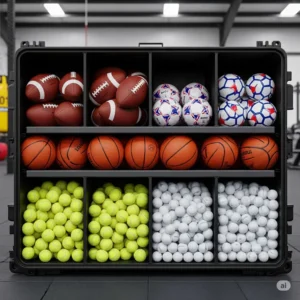
Delta Cycle’s ball holder pairs a molded steel rim with rip-resistant mesh and holds up to five balls, per its listing.
This is the “I just need the balls to stop rolling” solution. A mesh net hangs, flexes and gives you quick access without tools. It won’t help with bats or helmets, and five balls is the ceiling. I’d call it perfect for a single-sport kid or a small apartment storage closet.
Independent aggregated reviews were thin when I looked. The listings I found showed no meaningful rating count, so I can’t give you a verified satisfaction figure. That’s a reason to treat it as a low-stakes purchase rather than a long-term anchor. If it fails, you’ve lost the price of a few sandwiches.
Pros:
- ✅ Molded steel rim keeps the net open
- ✅ Rip-resistant mesh with easy ball access
- ✅ Very low cost and tool-light setup
Cons:
- ❌ Capped at about five balls
- ❌ Doesn’t handle bats or bulky gear
Price range: mid-$30s, fine value for a narrow job.
7. Mythinglogic Rolling Sports Equipment Organizer — best for renters on the move
This steel rolling cart bundles two bins, a mesh basket, hooks, a ball tier and a bat rack on lockable wheels. One roundup lists it at around 16.8 lbs.
The wheels are the point. A cart rolls out of the garage for a weekend tournament and back in afterward. It also doesn’t require drilling, which makes it one of the few options here that suits a rental. The multi-zone layout means balls, bats and small gear each get a lane.
On reviews, I need to be straight with you. Strong ratings for this model appear mostly on affiliate roundup sites, and I couldn’t verify independent aggregated review data. So treat the praise as unconfirmed. What the spec sheet suggests is sensible design for light-to-medium loads, but check weight limits and assembly feedback on the current listing before you buy.
Pros:
- ✅ Rolls out for games and back for storage
- ✅ Combines bins, basket, ball tier and bat rack
- ✅ No wall drilling needed for rentals
Cons:
- ❌ Independent review data is hard to verify
- ❌ Takes floor space compared to wall systems
Price range: positioned as budget-to-mid-range, so check current price before deciding.
Practical Usage Guide: Set Up Your Sports Equipment Storage in One Weekend
Buying the gear is the easy half. Putting it where it works is what separates a lasting setup from one that collapses by March.
Saturday morning: purge. Pull everything out. Anything cracked, outgrown or deflated goes. Sort what’s left by sport, not by item type. This is the single most useful trick, because it means a kid can find “everything for soccer” in one spot.
Saturday afternoon: map zones by height. Put the daily-use stuff (balls, helmets) between knee and shoulder height. That’s the grab zone for kids. Put the bulky off-season stuff overhead or in the highest bins. Wet-and-smelly gear gets ventilation, never a closed bin.
Sunday: mount, then label. Find studs before you drill. For rails like the Rubbermaid FastTrack 20-Piece Large Kit, space them so hooks can slide without crowding. For a ceiling system like the Gladiator Overhead GearLoft, measure clearance from garage door tracks, lights and your tallest vehicle first. Label every bin with its sport and a season tag.
First 30 days: watch for the common failure points. Balls creeping out of racks? Tighten the layout. Hooks overloaded? Redistribute weight toward the studs. Kids ignoring the system? Lower the grab zone. A setup that fights your family’s habits loses. One that matches them wins. 🛠️
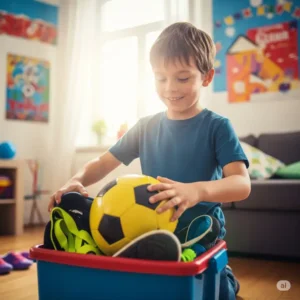
Real-World Scenarios: Matching Sports Equipment Storage to Your Household
Specs only help if they fit a life. Here are three realistic profiles and the combos that suit them best.
The three-sport family (soccer, baseball, basketball), two-car garage, owns the home. Budget is $250–$400. The smart build is a full rail wall with the Rubbermaid FastTrack 20-Piece Large Kit, plus the Rubbermaid FastTrack Vertical Ball Rack for balls. Add one Rubbermaid Roughneck 18-Gallon Tote per kid for cleats and pads. Everything’s visible, nothing’s buried.
The renter with one serious athlete, small shared storage space, can’t drill. Budget is under $150. The Mythinglogic Rolling Sports Equipment Organizer gives mobility and zoning without holes in anyone’s wall. If it’s mostly balls, the Delta Cycle Ball Storage Garage Organizer is a cheaper, lighter alternative.
The hockey household with seasonal swings. Budget is flexible, but moisture is the enemy. Hockey gear lives on open racks or hooks during the season, then goes into clean, dry bins overhead in the off-season. Pair the Gladiator Sports Caddy GearTrack Pack for daily-use items with a Gladiator Overhead GearLoft for the summer stash.
Notice the pattern. None of these households bought one product. They bought a system, with each piece doing one job well.
Problem → Solution: Fixing the Five Most Common Sports Gear Storage Headaches
Problem 1: Balls everywhere. Solution: assign balls a vertical home. Either the Rubbermaid FastTrack Vertical Ball Rack or the Delta Cycle Ball Storage Garage Organizer works. The key is one container per ball type if you can swing it, because mixed sizes jam.
Problem 2: Hockey and football gear stinks. Solution: dry it before you store it. The advice from Minnesota Hockey’s equipment guidance is blunt: wet pads and clothing mean bacteria, mold and smell, so proper drying is the foundation. Hang gear open, use a fan, and never zip it into a bag while damp.
Problem 3: Bats and sticks tip over. Solution: use hooks or a dedicated bat rack. The cart in pick seven includes one, and a rail with spaced hooks also does the job. Vertical and indoors is the rule for sticks.
Problem 4: Kids won’t put things back. Solution: lower everything to their reach and label by sport. Compliance is a design problem, not a character flaw.
Problem 5: Not enough floor. Solution: go up. Ceiling storage in the garage is typically the most underused space you have. Keep only current-season gear at ground level.
What Is Sports Equipment Storage?
Sports equipment storage is any system, such as racks, hooks, bins, carts or ceiling shelves, that gives balls, bats, helmets, pads and bags a dedicated, organized home. Good setups keep gear accessible, protected from damage and moisture, and off the floor, so it’s easy to grab before practice and easy to put away afterward.
That definition hides a useful truth: there are really two jobs. The first is access storage, the daily stuff your kid grabs and returns. The second is archive storage, the gear you only need seasonally. Most failed setups confuse the two. They bury daily gear in deep bins or leave off-season gear cluttering prime floor space.
Think of it like a kitchen. You keep the frying pan on the stove and the turkey roaster in the high cabinet. Your garage deserves the same logic. When you’re evaluating any product in this guide, ask which job it does. A ball caddy is access storage. A ceiling rack is archive storage. A rail wall can do both, which is why modular systems tend to age well as kids and sports change.
How to Choose Sports Equipment Storage: 7 Steps
- Inventory what you actually own. Count balls, bats, helmets and bags before shopping. Buying for imaginary gear is the number one waste.
- Decide: wall, ceiling, floor or cart. Walls suit daily gear, ceilings suit seasonal overflow, and carts suit renters and flexible layouts.
- Check capacity ratings and read them skeptically. A rack’s rating describes the rack. Your studs and joists set the real limit. For overhead systems, This Old House’s guide to installing overhead garage storage is a good primer on joist-finding and clearance.
- Prioritize ventilation for anything that gets sweaty. Mesh, open racks and hooks beat sealed bins for damp gear.
- Match the system to your kids’ height and habits. If they can’t reach it, it won’t get used.
- Plan for expansion. Modular rails and add-ons grow with you. Fixed units don’t.
- Budget for the hidden extras. Rail systems need hooks, and ceiling racks need good fasteners.
Follow these seven steps in order and you’ll avoid most regret purchases. Skip step one and the rest become guesswork.
Common Mistakes When Buying Sports Equipment Storage
Mistake one: trusting a capacity number without context. A 750 lb rating sounds like a vault, but it only applies if the ceiling framing behind it can carry that load. Reviewers of overhead racks regularly mention installation hurdles and weak included hardware, so budget for quality fasteners and a helper.
Mistake two: sealing wet gear in a bin. Roughneck-style totes are excellent for dry, clean gear. They’re terrible for damp pads. Moisture plus a closed lid equals mold, and no tote is worth that trade.
Mistake three: buying cute instead of modular. A single-purpose unit looks tidy for a season. Then your kid switches sports and the thing is useless. Systems built on rails or carts adapt.
Mistake four: ignoring floor traffic. A rolling cart that blocks the car door will get shoved aside daily. Measure your actual walkways first.
Mistake five: skipping the weight of the gear itself. Bags full of lacrosse equipment or golf clubs are heavier than they look. Check hook ratings, not just shelf ratings.
Mistake six: assuming reviews are neutral. Many retailer listings include promotional or incentivized reviews, and some roundup sites are affiliate-driven. Look for recurring complaints, such as bungee bands snapping or bolts breaking, and weigh those more heavily than glowing one-liners.
Avoid these six and you’ve already outperformed most buyers. ⚠️
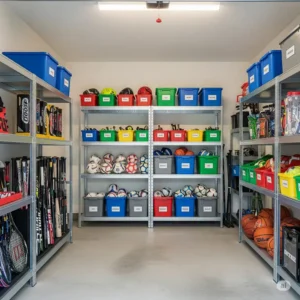
Sports Equipment Storage vs Traditional Alternatives
Is dedicated sports equipment storage actually better than a plastic bin and a few nails? Usually, yes, but not always. Here’s the honest breakdown.
| Option | Strength | Weakness | Best For |
|---|---|---|---|
| Rubbermaid FastTrack Large Kit | Reconfigurable wall system | Needs stud mounting | Growing households |
| Rubbermaid Roughneck 18-Gallon Tote | Cheap, stackable, rugged | Traps moisture, hides contents | Dry off-season gear |
| Mythinglogic Rolling Organizer | Mobile, no drilling | Eats floor space | Renters, tournaments |
| Old cardboard box in a corner | Free | Weak, absorbs moisture | Nothing long-term |
| Pile on the floor | Zero effort | Damage, tripping, lost gear | Nobody |
The table shows why “traditional” fixes keep failing. A pile or a cardboard box costs nothing today, then costs you in bent bats, flat balls and lost gear. Dedicated systems cost more upfront but pay back in longevity and sanity. That said, the Rubbermaid Roughneck 18-Gallon Tote is basically a traditional alternative that got good at its job, so it deserves a spot in most setups. The real winner for most families is a hybrid: a wall or cart for daily gear and tote bins or overhead racks for seasonal overflow.
Features That Actually Matter (And Those That Don’t)
Marketing copy loves to shout about things that don’t affect your life. Here’s what to care about.
Matters: mounting method. Studs and joists carry the load, so match the system to your structure. Rails and ceiling racks need solid framing. Carts don’t.
Matters: ventilation. Mesh baskets, open racks and hooks let gear dry. This single feature protects your pads and your nose.
Matters: modularity. Systems like the Rubbermaid FastTrack 20-Piece Large Kit let you move hooks as needs change, which is worth more than any fancy finish.
Matters: warranty and replaceability. A 10-year limited warranty, like the one listed for the Gladiator Sports Caddy GearTrack Pack, signals confidence. Parts that wear out, like bungee bands, should ideally be replaceable.
Doesn’t matter: color. Nobody ever lost a game because of the wrong shade of gray.
Doesn’t matter: massive capacity numbers you’ll never use. Do you really need a 750 lb overhead rack for two hockey bags? Probably not. Buy for your real load.
Doesn’t matter: too many compartments. More lanes means more rules, and kids won’t follow rules. Simple, visible and reachable wins.
Remember the filter: does this feature help me find, grab or protect gear faster? If not, skip it.
Safety Guide: Ceiling Racks, Moisture and Mold
Two risks deserve respect in any serious sports equipment storage plan: heavy things overhead, and wet things in closed spaces.
Overhead racks. The rack’s weight rating isn’t the ceiling’s weight rating. Before you hang anything heavy, confirm you’re anchoring into solid joists. If your garage has roof trusses rather than conventional joists, check with the truss manufacturer or a structural engineer before loading heavy bins overhead. Load heavy items near the vertical posts and lighter items toward the center. Keep clearance from garage door tracks, openers and lights.
Moisture and mold. The EPA’s guide to mold, moisture and your home states the principle plainly: the key to mold control is moisture control. If you find mold, clean it up and fix the water problem, or it will come back. For sports gear, that translates to a simple rule. Dry everything fully before it goes into a bin, never store damp equipment, and keep the storage area ventilated.
Skip those two habits and even the best rack becomes a liability. Follow them and your gear lasts longer and smells better. 🔒
Long-Term Cost & Maintenance: Which Sports Equipment Storage Pays Off?
The cheapest option rarely stays cheapest. Think in cost per year of use.
| Product | Upfront Range | Likely Lifespan Factor | Value Take |
|---|---|---|---|
| Delta Cycle Ball Storage Organizer | Mid-$30s | Mesh wears with use | Great low-risk fix |
| Rubbermaid FastTrack Vertical Ball Rack | Under $35 | Bungee bands are the weak point | Strong if you own rails |
| Rubbermaid Roughneck 18-Gallon Tote | $30–$50 each | Long, backed by a lifetime warranty | Excellent per-year cost |
| Rubbermaid FastTrack Large Kit | $140–$170 | Long, expandable | Best whole-wall value |
| Gladiator Overhead GearLoft | $110 up to a few hundred | Long if installed correctly | High value for bulk gear |
The analysis is simple. Items with warranties and replaceable parts, like the totes and rail systems, lower your cost per year. Small, low-cost pieces like the mesh ball holder are cheap to replace, so they’re low-risk even if they wear out sooner. The mistake is paying for capacity you don’t use, so size the purchase to your actual inventory.
Maintenance is light. Wipe totes down seasonally, check hook screws and rail mounts annually, inspect bungee bands before each season, and re-torque ceiling-rack hardware carefully, without overtightening. A 15-minute check each fall prevents most failures.
Frequently Asked Questions About Sports Equipment Storage
❓ What is the best sports equipment storage for a small garage?
❓ How do I stop sports balls from rolling around the garage?
❓ Can I store sports gear in a garage year-round?
❓ How much weight can an overhead garage rack hold?
❓ How do I keep stored sports equipment from smelling?
Conclusion: Build a Sports Equipment Storage System That Actually Lasts
Here’s the short version. Match the product to the job. For rolling balls, the Rubbermaid FastTrack Vertical Ball Rack and Delta Cycle Ball Storage Garage Organizer are cheap, effective fixes. For a complete, adaptable wall, the Rubbermaid FastTrack 20-Piece Large Kit and Gladiator Sports Caddy GearTrack Pack lead the pack. For seasonal bulk, the Gladiator Overhead GearLoft and the Rubbermaid Roughneck 18-Gallon Tote do the heavy lifting. And if drilling isn’t an option, the Mythinglogic Rolling Sports Equipment Organizer deserves a look, provided you verify its current reviews first.
The bigger lesson is that sports equipment storage works when it respects how your family actually lives. Put daily gear low and visible. Put seasonal gear high and out of the way. Keep wet gear ventilated. Check your ceiling before you trust a rack. Do those four things and the garage stops being a battlefield.
Recommended for You
- 15 Best Exercise Ball Rack Solutions That Will Transform Your Home Gym in 2025
- 10 Best Medicine Ball Rack Options For Ultimate Gym Organization in 2025
- 15 Best Basketball Storage Rack Solutions That Transform Your Space in 2025
Disclaimer: This article contains affiliate links. As an Amazon Associate, I earn from qualifying purchases. If you purchase products through these links, we may earn a small commission at no additional cost to you.
✨ Found this helpful? Share it with your friends! 💬🤗
