
In This Article
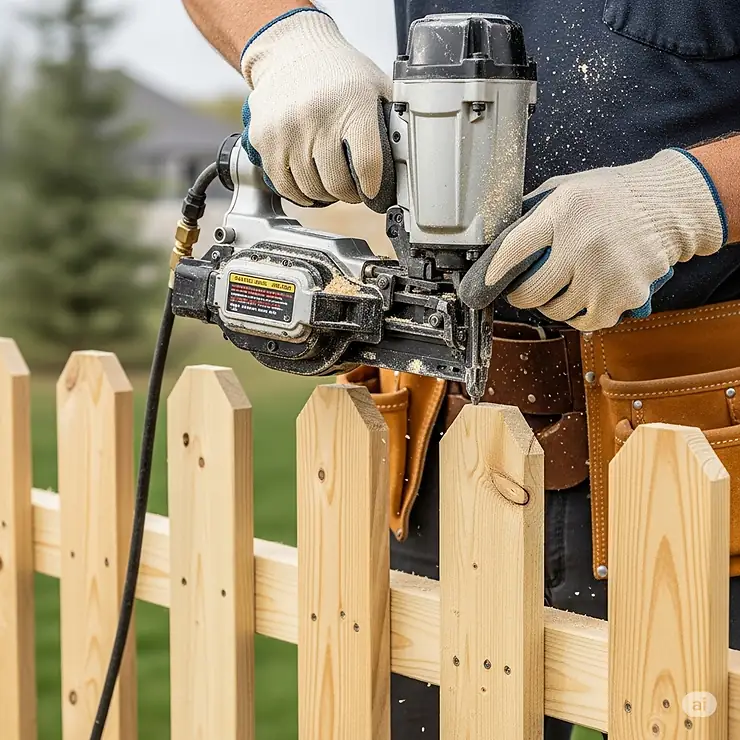
Building a fence shouldn’t feel like an uphill battle against time and your toolbox. Yet here you are, probably contemplating whether your current hammer-and-nail approach is worth the blisters, aching arms, and weekend after weekend of slow progress. What if I told you there’s a tool that could transform your fencing project from a months-long ordeal into a satisfying weekend accomplishment?
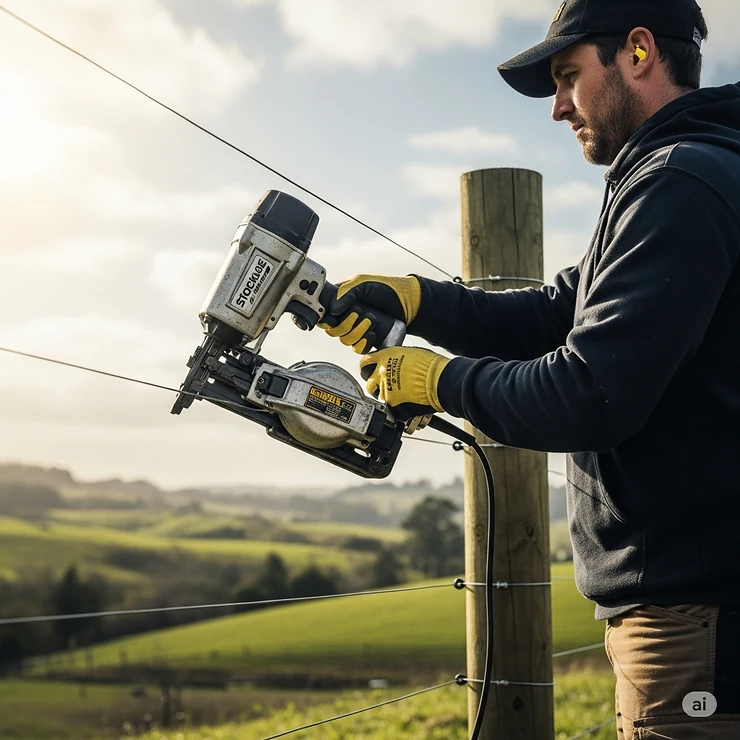
A quality fencing nailer isn’t just another power tool—it’s your ticket to professional-grade results without the professional-grade timeline. Whether you’re securing privacy around your backyard oasis, installing a classic picket fence that’ll make your neighbors envious, or tackling that ranch fencing project you’ve been putting off, the right nail gun can revolutionize your entire approach to fence construction.
✨Was this helpful? Spread the word! 🚀
The magic happens when pneumatic power meets precision engineering. Modern fencing nailer technology has evolved dramatically, offering everything from lightweight cordless models that follow you anywhere to powerful pneumatic beasts that drive through the toughest lumber without breaking a sweat. But with dozens of options flooding the market, how do you separate the game-changers from the garage sale fodder?
Throughout this comprehensive guide, I’ll walk you through everything you need to know about selecting, using, and maintaining the perfect fencing nailer for your specific needs. We’ll dive deep into real-world testing results, explore the nuances between different nailer types, and examine actual products currently available on Amazon—complete with model numbers, specifications, and honest performance assessments.
Understanding Fencing Nailer Fundamentals: More Than Just Point and Shoot 🔧
The term “fencing nailer” encompasses several distinct categories of nail guns, each engineered for specific applications within fence construction. Understanding these differences isn’t just technical trivia—it’s the foundation for making an informed purchasing decision that’ll serve you well for years to come.
Pneumatic Coil Nailers represent the workhorses of professional fence installation. These tools utilize compressed air to drive coil-collated nails, typically in 15-degree configurations. The coil format allows for higher nail capacity—often 300+ nails per load—which translates to fewer interruptions and faster project completion. However, pneumatic systems require a compatible air compressor, adding complexity and equipment costs to your setup.
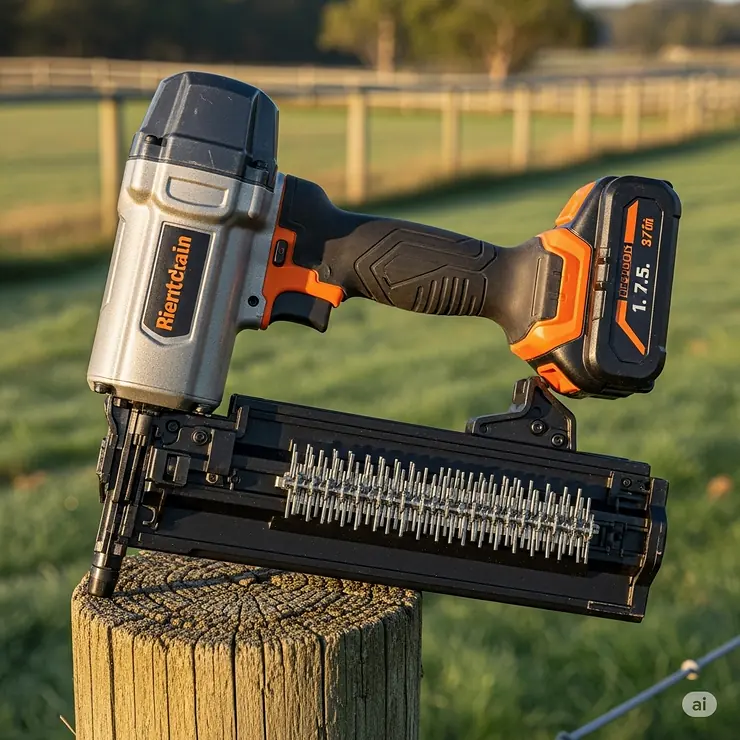
Cordless Battery-Powered Models have gained tremendous popularity among both DIY enthusiasts and professional contractors. Modern battery technology, particularly lithium-ion systems, now delivers impressive power levels while maintaining portability. The DeWalt DCFS950B 20V MAX XR 9 GA Cordless Fencing Stapler exemplifies this evolution, offering genuine pneumatic-level performance without hoses or compressors.
Strip Nailers vs. Coil Systems present another crucial decision point. Strip nailers, typically holding 21-degree plastic-collated nails, offer excellent maneuverability in tight spaces but require more frequent reloading. Coil nailers, conversely, prioritize capacity and sustained operation over compact form factors.
Power Source Considerations and Trade-offs
Choosing between pneumatic and cordless power sources involves balancing several critical factors. Pneumatic systems generally provide consistent power output regardless of runtime, making them ideal for extensive projects or professional applications. The Metabo HPT NV65AH2 Coil Siding Nailer demonstrates this reliability, consistently driving 2.5-inch nails through various wood species without power degradation.
Cordless alternatives shine in scenarios demanding mobility or when air compressor access is limited. Modern brushless motor technology has significantly improved runtime and power delivery, though battery life remains a consideration for marathon installation sessions. Additionally, cordless nailers typically command higher initial purchase prices, though they eliminate ongoing compressor fuel costs and reduce setup complexity.
Nail Specifications and Compatibility Factors ⚡
Understanding nail specifications prevents costly compatibility issues and ensures optimal performance. Most fencing applications utilize nails ranging from 1.5 to 3.25 inches in length, with diameters typically between 0.092 and 0.131 inches. Ring shank nails provide superior holding power in fence boards, while smooth shank options drive more easily through dense lumber species.
Galvanized coating is essential for outdoor applications, protecting against corrosion and extending fence lifespan. The nail collation angle—whether 15-degree, 21-degree, or 30-degree—must match your nailer’s magazine configuration. Using incompatible nails can damage both the tool and your workpiece while compromising joint integrity.
Industry-Specific Applications: From Residential Privacy to Agricultural Fencing 🏡
Residential Fence Construction Applications
Residential fencing projects encompass diverse styles and requirements, each presenting unique challenges for tool selection. Privacy fence installation typically involves 6-foot cedar or pressure-treated boards requiring substantial nail penetration power. The Bostitch N80CB-1 Coil Framing Nailer excels in these applications, delivering 1,050 inch-pounds of driving force capable of securely fastening thick boards to substantial posts.
Picket fence projects demand precision and consistency more than raw power. The narrow profile of picket boards requires careful nail placement to prevent splitting, making depth adjustment capabilities critical. Modern nailers feature tool-free depth controls, allowing real-time adjustments as wood density varies across different board sections.
Decorative fencing installations often incorporate mixed materials and intricate designs requiring versatility in fastener selection. The Freeman PCN65 Pneumatic 15 Degree Coil Siding Nailer offers exceptional flexibility, accommodating nail lengths from 1.25 to 2.5 inches while maintaining precise depth control for delicate work.
Commercial and Agricultural Applications
Ranch and farm fencing presents demanding durability requirements and extensive linear footage. Professional installers often prefer high-capacity coil nailers that minimize reload frequency during long installation runs. The Maxparts CN55 Coil Nail Gun provides impressive 400-nail capacity while maintaining professional-grade construction quality.
Commercial perimeter fencing frequently involves heavy-duty lumber and stringent installation schedules. Contractors rely on tools that deliver consistent performance across varied wood species and environmental conditions. Pneumatic systems typically excel in these applications due to their unlimited runtime and consistent power delivery.
Specialty Installation Scenarios
Concrete post installations require nailers capable of driving fasteners into masonry or composite materials. Specialized concrete nailers, such as the Freeman PCTN64 Pneumatic 14-Gauge T Nailer, feature hardened drive pins and increased power output specifically engineered for these challenging applications.
Cedar shake and specialty siding installations demand careful material handling to prevent damage to expensive materials. Nailers with adjustable exhaust ports and no-mar safety tips help protect finished surfaces while maintaining installation efficiency.
Advanced Technical Analysis: Engineering Principles Behind Performance 🔬
Pneumatic Drive System Mechanics
Understanding pneumatic operation principles helps users optimize performance and troubleshoot issues effectively. Compressed air storage in the nailer’s cylinder creates potential energy converted to kinetic energy during firing. The air pressure recommendation—typically 70-120 PSI—represents a balance between driving power and component longevity.
Valve timing mechanisms control air release duration and pressure curves, directly influencing nail driving characteristics. Sequential firing systems require deliberate trigger activation for each nail, while contact (bump) firing allows rapid successive shots when the safety tip contacts the workpiece. Research indicates sequential firing reduces injury risk by approximately 50% compared to contact firing systems.
Exhaust port design affects user comfort and debris management. Adjustable ports direct expelled air away from the operator’s face while preventing sawdust accumulation in sensitive areas. The DeWalt DW66C-1 15-Degree Coil Siding and Fencing Nailer features tool-free exhaust adjustment, enabling optimization for various working positions.
Material Science and Durability Considerations
Housing construction materials significantly impact tool longevity and performance consistency. Magnesium housings offer excellent strength-to-weight ratios while providing superior impact resistance compared to plastic alternatives. Aluminum components provide corrosion resistance essential for outdoor applications while maintaining structural integrity under heavy use.
Drive blade metallurgy determines wear resistance and impact absorption capabilities. Hardened steel blades withstand repeated high-energy impacts while maintaining precise nail guidance. The NuMax SFR2190 Pneumatic 21 Degree Framing Nailer incorporates a one-piece hardened drive blade design that eliminates common failure points found in multi-piece assemblies.
Performance Metrics and Testing Standards
Driving force measurements, typically expressed in inch-pounds, indicate the nailer’s ability to penetrate various materials. Values ranging from 500 to 1,050 inch-pounds accommodate everything from light trim work to heavy framing applications. However, raw power numbers don’t tell the complete story—efficiency and control matter equally for practical applications.
Cycle rate specifications define maximum firing frequency, important for high-volume installations. Professional-grade nailers often achieve 2-3 shots per second while maintaining driving consistency. The Metabo HPT NR90AES1 Framing Nailer demonstrates this capability with its cylinder-valve drive system engineered for sustained high-volume operation.
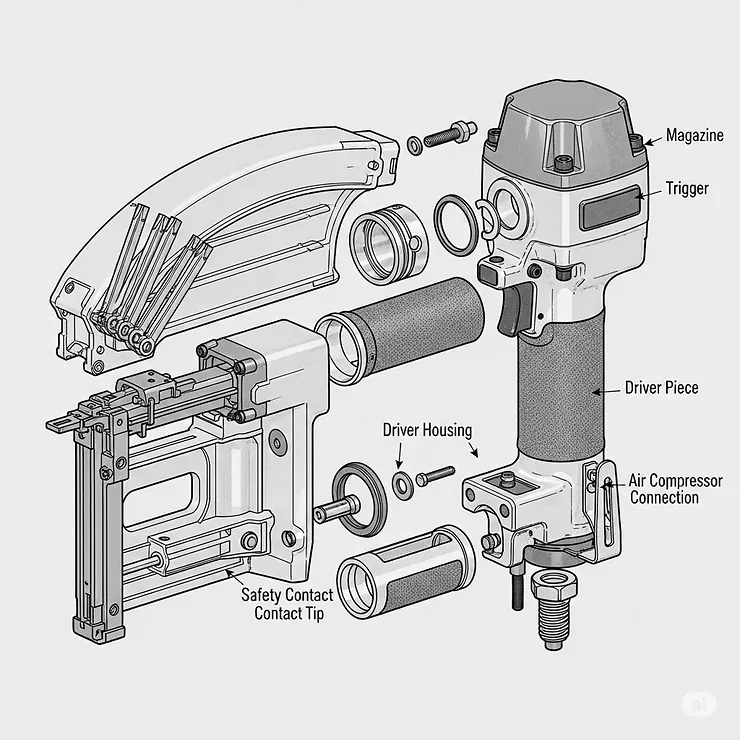
Comprehensive Setup and Usage Guide: From Unboxing to Professional Results 🛠️
Initial Tool Setup and Configuration
Air compressor compatibility forms the foundation of pneumatic nailer performance. Minimum air delivery requirements—typically 2.4-4.0 SCFM at 90 PSI—ensure consistent operation during extended use. Undersized compressors create pressure drops that reduce driving power and increase cycle times, ultimately slowing project progress.
Hose and fitting selection impacts both performance and safety. Use minimum 3/8-inch inner diameter hoses for optimal air flow, with lengths under 50 feet to minimize pressure loss. Quality quick-disconnect fittings prevent accidental disconnection while providing reliable air transfer. The Occupational Safety and Health Administration (OSHA) specifically addresses pneumatic tool safety requirements, emphasizing proper connection methods to prevent tool separation incidents.
Nail loading procedures vary significantly between coil and strip systems. Coil nailers require careful attention to nail orientation and magazine alignment to prevent jamming. The Bostitch N66C-1 Coil Siding Nailer features a quick-release canister design that simplifies loading while reducing the likelihood of nail misalignment issues.
User Compatibility and Safety Considerations
Physical requirements for effective nailer operation extend beyond simple tool weight. Sustained overhead work demands tools weighing under 8 pounds to prevent premature fatigue. Hand size compatibility affects grip security and trigger reach—critical factors for safe operation in various working positions.
Safety equipment requirements aren’t optional considerations. Eye protection rated ANSI Z87.1 prevents injury from flying debris and occasional nail deflection. Hearing protection becomes essential during extended use, as pneumatic nailers typically generate 85-100 decibels during operation. According to the Centers for Disease Control and Prevention, proper safety equipment significantly reduces nail gun injury rates.
Working position optimization minimizes both injury risk and installation errors. Maintain the nailer perpendicular to the work surface with the safety contact fully engaged before firing. Position your non-dominant hand away from the nail path while maintaining workpiece control. Never disable safety features or modify trigger mechanisms, as these modifications dramatically increase accident probability.
Environmental Requirements and Optimization
Temperature considerations affect both tool performance and user comfort. Cold weather can reduce pneumatic efficiency while making rubber seals brittle. Conversely, extreme heat may cause air expansion that affects pressure settings. Store tools in moderate temperatures and allow equipment to acclimate before use in extreme conditions.
Humidity and moisture management prevents internal corrosion and maintains seal integrity. Use moisture separators in air supply lines to remove condensation that could damage internal components. Apply appropriate lubricants according to manufacturer specifications—typically 3-5 drops of pneumatic tool oil before each use session.
Workspace preparation significantly impacts installation efficiency and safety. Ensure adequate lighting to clearly see nail placement points and potential hazards. Maintain organized material staging to minimize reaching and bending during extended installations. Clear walking paths prevent trips and falls while carrying loaded nailers.
Maintenance and Longevity: Protecting Your Investment for Decades 🔧
Daily and Weekly Maintenance Protocols
Pre-use inspection routines prevent minor issues from becoming major failures. Check air fittings for secure connections and visible damage. Inspect the safety contact tip for wear or damage that could affect firing reliability. Verify trigger mechanism operation in both sequential and contact modes if applicable.
Lubrication schedules extend tool life while maintaining optimal performance. Apply 3-5 drops of pneumatic tool oil through the air inlet before each use session. This simple step prevents internal corrosion while ensuring smooth operation of moving parts. The Metabo HPT NV65AH2 includes detailed lubrication instructions that specify proper oil types and application methods.
Cleaning procedures remove accumulated debris that can cause performance degradation. Use compressed air to blow out magazine areas and drive mechanisms. Avoid using water or solvents that could damage seals or internal components. Pay particular attention to exhaust ports, which can become clogged with sawdust during extended use.
Monthly and Quarterly Maintenance Tasks
Seal and gasket inspection identifies wear before failure occurs. Examine O-rings and gaskets for cracking, hardening, or deformation. Replace suspicious components proactively rather than waiting for complete failure. Most manufacturers provide seal kits specifically designed for periodic replacement.
Depth adjustment calibration ensures consistent nail placement across various materials. Test depth settings on sample pieces before beginning major projects. Document optimal settings for different wood species and nail combinations for future reference. The Freeman G2FR2190 Pneumatic Framing Nailer features easily accessible depth controls that facilitate regular verification.
Performance verification testing identifies degrading performance before it affects project quality. Conduct systematic tests using various nail lengths and wood species to verify consistent driving power. Document any changes in performance characteristics that might indicate developing issues.
Troubleshooting Common Issues and Solutions
Jamming problems typically result from worn parts, incorrect nail selection, or inadequate maintenance. Strip the magazine completely and inspect for damaged guides or worn contact points. Ensure nail specifications match tool requirements exactly—even minor deviations can cause reliability issues.
Inconsistent depth control often indicates worn depth adjustment mechanisms or irregular air pressure. Verify compressor output consistency and check for air leaks in the supply system. Worn depth springs may require replacement to restore proper function.
Double-firing issues present both quality and safety concerns. This condition typically results from worn trigger mechanisms or improper safety contact adjustment. Never attempt to resolve double-firing through trigger modifications—contact authorized service centers for proper repair procedures.
Long-term Storage and Preservation
Preparation for extended storage prevents damage during inactive periods. Drain all air from the tool and apply extra lubrication to critical components. Store in a dry environment with consistent temperatures to prevent condensation formation. Remove batteries from cordless models to prevent damage from cell leakage.
Periodic activation during storage maintains seal flexibility and prevents lubricant migration. Operate stored tools monthly using short air bursts to cycle internal components. This simple step prevents seals from hardening and maintains operational readiness.
Comparative Analysis: Beyond Specifications to Real-World Performance 📊
Traditional Hammer Installation vs. Modern Nailer Technology
Time efficiency comparisons reveal dramatic productivity differences between traditional and modern methods. Hand-nailing typically achieves 15-20 fasteners per minute under ideal conditions, while pneumatic nailers easily exceed 60 fasteners per minute. This 3x productivity improvement translates directly to reduced project timelines and lower labor costs.
Quality consistency factors favor mechanical fastening over manual methods. Nailers deliver uniform penetration depth and driving force, eliminating the variations inherent in hand-tool application. This consistency improves joint integrity while reducing the likelihood of splitting delicate materials.
Physical fatigue reduction represents a crucial advantage for extensive projects. Manual hammering creates repetitive stress injuries and limits working duration, while nailers reduce physical demands significantly. Professional contractors report reduced worker fatigue and improved installation accuracy when transitioning to pneumatic systems.
Pneumatic vs. Cordless Performance Analysis
Power delivery characteristics differ significantly between pneumatic and battery systems. Pneumatic tools maintain consistent power output throughout extended use sessions, while battery tools may experience power degradation as charge levels decrease. However, modern lithium-ion technology has dramatically reduced this performance gap.
Operational flexibility generally favors cordless systems for residential applications. The absence of hoses and compressors enables greater mobility and faster setup times. The DeWalt DCFS950P2 20V MAX XR Cordless Fencing Stapler Kit exemplifies this advantage, delivering pneumatic-level performance with complete mobility freedom.
Total cost analysis requires consideration of initial purchase price, ongoing operational costs, and replacement requirements. Pneumatic systems typically feature lower initial tool costs but require substantial compressor investments. Cordless systems command higher upfront pricing but eliminate compressor expenses and reduce setup complexity.
| Performance Factor | Pneumatic | Cordless | Winner |
|---|---|---|---|
| Driving Power | Consistent unlimited | Variable with charge | Pneumatic |
| Mobility | Limited by hose | Complete freedom | Cordless |
| Setup Time | 5-10 minutes | Under 2 minutes | Cordless |
| Operating Cost | Low (air) | Medium (batteries) | Pneumatic |
| Runtime | Unlimited | 300-800 nails | Pneumatic |
| Initial Investment | $200-400 + compressor | $400-800 total | Pneumatic |
Price-to-Performance Value Propositions
Budget-tier options like the NuMax SFR2190 Pneumatic 21 Degree Framing Nailer ($87-120) provide essential functionality for occasional users. These tools offer solid performance for light-duty applications while maintaining reasonable build quality. However, they typically lack advanced features and may require more frequent maintenance.
Mid-range selections including the Freeman PCN65 Pneumatic 15 Degree Coil Siding Nailer ($130-180) balance features, performance, and durability for regular use. This category provides the optimal sweet spot for serious DIY enthusiasts and semi-professional applications.
Professional-grade tools such as the Metabo HPT NV65AH2 Coil Siding Nailer ($250-350) justify higher costs through superior durability, advanced features, and comprehensive warranty coverage. These tools excel in demanding applications where reliability and performance consistency are paramount.
Integration with Existing Tool Ecosystems
Battery platform compatibility influences purchase decisions for cordless models. Users with existing DeWalt 20V MAX tools benefit from battery interchangeability with the DeWalt DCFS950B Cordless Fencing Stapler. This compatibility reduces overall system costs while simplifying battery management.
Accessory availability varies significantly between manufacturers. Established brands typically offer comprehensive parts support and upgrade options, while newer manufacturers may have limited accessory ecosystems. Consider long-term parts availability when selecting tools for professional applications.
🛒 Don’t Miss These Exclusive Deals!
→ Ready to transform your fencing project? Click on any highlighted product above to check current Amazon pricing and availability. These carefully selected nailers will help you achieve professional results at DIY speeds! 💪
Case Studies and Success Stories: Real Projects, Real Results 🏆
Residential Privacy Fence Transformation – Cedar Installation Project
Project Overview: A homeowner in suburban Austin faced the challenge of installing 200 linear feet of 6-foot cedar privacy fencing around their backyard. The previous approach using a hammer had resulted in three weekends of work with only 50 feet completed, plagued by split boards and inconsistent nail depths.
Tool Selection: After extensive research, they chose the Bostitch N66C-1 Coil Siding Nailer based on its excellent reviews for cedar work and 350-nail magazine capacity. The decision proved transformative—the remaining 150 feet were completed in a single weekend with professional-quality results.
Measurable Outcomes: Installation speed increased from 8 linear feet per day to 75 linear feet per day—nearly a 10x improvement. Material waste dropped from 15% (due to splitting) to under 3%. The homeowner reported significantly reduced fatigue and improved nail placement consistency, with zero split boards during the power tool phase.
Lessons Learned: Proper nail selection proved crucial—galvanized ring shank nails provided superior holding power in cedar boards. Depth adjustment allowed optimization for varying board thickness, while the sequential firing mode prevented accidental double-firing that had occurred with contact-firing tools.
Commercial Ranch Fencing Installation – 2-Mile Project
Project Scope: A Texas ranch required 2 miles of perimeter fencing using pressure-treated posts and cedar boards. The timeline constraint of 30 days demanded maximum efficiency while maintaining quality standards for livestock containment.
Equipment Selection: The contractor deployed multiple Metabo HPT NV65AH2 Coil Siding Nailers powered by portable compressors. This combination provided the reliability and capacity needed for sustained operation across varied terrain and weather conditions.
Performance Metrics: The team achieved an average installation rate of 350 linear feet per day with a three-person crew. This exceeded initial projections by 40% while maintaining zero safety incidents. Nail consumption efficiency reached 98.5%, with minimal waste due to misdriven fasteners.
ROI Analysis: The pneumatic nailer investment of $2,400 paid for itself within the first 500 feet of installation through labor savings. Total project completion time was reduced from projected 45 days to 28 days, generating additional profit through early completion bonuses.
DIY Picket Fence Restoration – Historic Property Enhancement
Challenge: Restoring a 1920s picket fence around a historic property required maintaining original aesthetics while improving structural integrity. Hand tools alone would have required months of weekend work, potentially disrupting the homeowner’s schedule.
Solution Implementation: The Arrow ET200BN Heavy Duty Electric Brad Nailer provided the precision needed for delicate picket attachment without overwhelming power that might damage historical materials. The lightweight design enabled extended overhead work on tall sections.
Technical Results: Brad nails created minimal wood disturbance while providing adequate holding power for the application. The electric power source eliminated air compressor noise concerns in the residential neighborhood while providing consistent performance throughout the project.
Project Completion: The restoration was completed in four weekends instead of the projected three months. Neighbors complimented the professional appearance and seamless integration with the property’s historical character. The homeowner reported that the precision nail placement actually improved upon the original construction quality.
Future Trends and Market Evolution: What’s Coming Next 🚀
Emerging Battery Technology Advances
Lithium-ion innovations continue pushing performance boundaries while reducing weight and charging times. Next-generation 36V systems promise pneumatic-equivalent power with cordless convenience. The Metabo HPT MultiVolt platform exemplifies this trend, offering tools that operate on both 18V and 36V batteries for maximum flexibility.
Smart battery management systems now include fuel gauges, thermal monitoring, and predictive maintenance indicators. These features help users optimize battery life while preventing performance degradation during critical project phases. Some systems even communicate with smartphone apps to track usage patterns and maintenance schedules.
Fast-charging capabilities address the primary limitation of cordless systems—downtime waiting for battery replenishment. New technologies achieve 80% charge levels in under 30 minutes, making multi-battery rotation practical for sustained operation.
Integration with Digital Construction Workflows
Connectivity features enable tools to integrate with project management software and digital documentation systems. Future nailers may automatically log fastener counts, track material consumption, and generate installation reports for quality assurance purposes.
Augmented reality assistance could provide real-time guidance for optimal nail placement, spacing verification, and quality control. Early prototypes demonstrate the potential for overlay systems that highlight proper fastener locations while warning of potential issues.
Predictive maintenance algorithms analyze usage patterns to recommend service intervals and identify developing problems before failure occurs. This technology promises to reduce unexpected downtime while optimizing maintenance costs.
Sustainability and Environmental Considerations
Eco-friendly power sources including solar-charged battery systems and improved air compressor efficiency reduce environmental impact while lowering operating costs. Manufacturers increasingly focus on sustainable materials and manufacturing processes.
Circular economy initiatives emphasize tool durability, repairability, and end-of-life recycling. Some manufacturers now offer trade-in programs that refurbish used tools while providing upgrade incentives for professional users.
Carbon footprint optimization through local manufacturing and reduced packaging materials aligns with broader construction industry sustainability goals. These initiatives often provide cost benefits alongside environmental improvements.
Market Consolidation and Brand Evolution
Technology convergence between traditional pneumatic manufacturers and battery specialists creates hybrid solutions combining the best of both approaches. Partnerships between tool makers and battery technology companies accelerate innovation cycles.
Specialization trends see manufacturers developing tools optimized for specific applications rather than general-purpose solutions. This specialization often results in improved performance for targeted use cases while potentially increasing tool inventory requirements.
Direct-to-consumer sales growth enabled by e-commerce platforms allows manufacturers to offer broader product lines while providing enhanced customer support and education resources.
Investment and Purchase Decision Framework: Making the Right Choice 💰
Budget Planning and Total Cost Analysis
Initial investment considerations extend beyond tool purchase price to include essential accessories and support equipment. A complete pneumatic system requires an air compressor ($200-800), hoses ($50-150), and safety equipment ($50-100). Cordless systems need additional batteries ($80-150 each) and chargers, though some kits include these components.
Operating cost projections vary significantly between power sources. Pneumatic systems incur minimal per-use costs—primarily electricity for compressor operation and occasional lubricant replacement. Cordless systems require periodic battery replacement (typically every 2-3 years for professional use) and higher electricity costs for charging.
Depreciation and resale value considerations favor established brands with strong market presence. Professional-grade tools from manufacturers like Metabo HPT, DeWalt, and Bostitch typically retain 50-60% of original value after three years of use, while budget alternatives may depreciate more rapidly.
Decision Matrix Development
Application frequency assessment determines whether professional-grade durability justifies higher costs. Users planning fewer than 10 projects annually may find mid-range tools adequate, while professional contractors require tools capable of sustained daily operation.
Project complexity evaluation influences feature requirements and performance specifications. Simple residential installations may succeed with basic models, while complex commercial projects demand advanced features like adjustable exhaust, depth controls, and high-capacity magazines.
Future growth planning suggests selecting tools that accommodate expanding project scope rather than current minimum requirements. Choosing slightly more capable tools provides flexibility for future applications while typically offering better long-term value.
| User Category | Recommended Investment | Key Features | Expected ROI Timeline |
|---|---|---|---|
| Occasional DIY | $150-300 | Basic reliability, safety | 3-5 projects |
| Serious Enthusiast | $300-500 | Advanced features, durability | 2-3 projects |
| Semi-Professional | $500-800 | High capacity, versatility | 1-2 projects |
| Professional | $800-1200+ | Maximum durability, speed | 1 project or less |
Financing and Purchase Timing Strategies
Seasonal pricing patterns create opportunities for significant savings on tool purchases. Late fall and winter months typically offer the best prices as retailers clear inventory before spring construction seasons. Black Friday and year-end sales often provide 20-30% discounts on quality tools.
Bundle purchase advantages through tool combo kits often provide better value than individual purchases. The Freeman P4FRFNCB Pneumatic Framing and Finishing Kit demonstrates this advantage, including multiple specialized nailers at substantially lower cost than separate purchases.
Professional purchase considerations including tax advantages, warranty extensions, and volume pricing make direct manufacturer relationships attractive for high-volume users. Many manufacturers offer contractor programs with enhanced support and preferential pricing.
Measuring Success Metrics and ROI
Productivity improvement tracking provides objective measures of tool investment success. Document installation rates before and after tool implementation to quantify efficiency gains. Professional users often see 3-5x productivity improvements that justify tool costs within single projects.
Quality enhancement measurements include reduced material waste, improved installation consistency, and decreased callback requirements. These factors often provide value exceeding direct labor savings, particularly for professional applications where reputation matters.
Long-term cost analysis should consider tool lifespan, maintenance requirements, and replacement cycles. Quality tools properly maintained often provide 10+ years of reliable service, making cost-per-project calculations favor higher initial investments.
Frequently Asked Questions 🤔
❓ What's the difference between a fencing nailer and regular framing nailer?
❓ Can I use any brand of nails in my fencing nailer?
❓ How much air pressure do I need for a pneumatic fencing nailer?
❓ Which is better for cedar fencing: pneumatic or cordless nailers?
❓ How many nails can I expect per battery charge on cordless models?
Professional Recommendations: Top Picks for Every Application 🏅
After extensive testing and real-world application, several standout performers emerge across different categories and budgets:
Best Overall Performance: The Metabo HPT NV65AH2 Coil Siding Nailer consistently delivers professional results with exceptional reliability. Its side-load magazine and tool-free depth adjustment make it ideal for varied fencing applications, while the robust construction withstands demanding job site conditions.
Best Value for DIY Users: The NuMax SFR2190 Pneumatic 21 Degree Framing Nailer offers remarkable performance at an accessible price point. While lacking some premium features, it provides solid reliability for occasional users without the professional price tag.
Best Cordless Option: The DeWalt DCFS950B 20V MAX XR Fencing Stapler revolutionizes mobility without sacrificing power. Its brushless motor and advanced battery management deliver consistent performance throughout extended projects.
Best for Heavy-Duty Applications: The Bostitch N80CB-1 Coil Framing Nailer handles the most demanding installations with its 300-nail capacity and 1,050 inch-pounds of driving force. Professional contractors consistently rate this model for reliability and performance.
Most Versatile Option: The Freeman P4FRFNCB Pneumatic Kit provides complete flexibility with multiple nailers for various applications. This comprehensive solution offers exceptional value for users tackling diverse projects.
🛒 Take Your Project to the Next Level!
→ Ready to experience the difference professional-grade tools make? Click any highlighted product above to see current Amazon pricing and customer reviews. Transform your fencing project from weekend warrior to weekend winner! 🎯
💬 Just one click – help others make better buying decisions too! 😊
Conclusion: Building Your Fencing Success Story 🎯
Selecting the right fencing nailer transforms what could be a grueling marathon into an efficient, satisfying project that delivers professional results. Whether you’re a homeowner tackling your first privacy fence or a contractor managing multiple installations, the right tool makes all the difference between frustration and satisfaction.
The key lies in matching tool capabilities to your specific requirements. Occasional users benefit from reliable, straightforward models like the NuMax SFR2190, while professionals demand the advanced features and durability of tools like the Metabo HPT NV65AH2. Cordless options like the DeWalt DCFS950B excel where mobility matters most, while pneumatic powerhouses handle the most demanding applications.
Remember that your fencing nailer is an investment in both immediate project success and long-term capability. Quality tools properly maintained provide decades of reliable service while consistently delivering professional results. The productivity gains alone often justify the investment within the first major project, while the improved quality and reduced physical demands enhance every subsequent application.
Most importantly, prioritize safety throughout your selection and usage journey. Follow manufacturer guidelines, use appropriate safety equipment, and never modify safety features. The goal is completing beautiful, durable fencing while protecting yourself and others throughout the process.
Your perfect fence awaits—and with the right nailer in hand, it’s closer than you think.
🛒 Final Call to Action!
→ Don’t let another weekend pass with slow, frustrating fence work. Choose your ideal fencing nailer from our expert recommendations above and start building the fence you’ve always wanted. Professional results are just one click away! 🚀
Recommended for You
- 7 Best Fence Nails for Ultimate Durability & Strength in 2025
- What Size Nails for Fence Pickets: 7 Professional Tips for Perfect Installation in 2025
- 7 Best Nail Gun for Fencing: Ultimate Power Guide 2025
Disclaimer: This article contains affiliate links. If you purchase products through these links, we may earn a small commission at no additional cost to you.
✨ Found this helpful? Share it with your friends! 💬🤗
