
In This Article
When you’re building or repairing a fence, choosing the right fence nails can make the difference between a structure that lasts decades and one that starts failing within months. The world of fence fasteners might seem straightforward, but there’s actually a fascinating science behind what makes certain fence nails superior to others.
✨Was this helpful? Spread the word! 🚀
I’ve spent years working with different types of fence nails, and I can tell you that not all nails are created equal. Whether you’re installing a cedar privacy fence, securing pickets on a decorative garden fence, or building a heavy-duty ranch fence, the fence nails you choose will determine how well your project withstands weather, movement, and time.
Why Fence Nails Matter More Than You Think 🔨
Most homeowners and even some contractors underestimate the critical role that fence nails play in overall fence longevity. Unlike interior construction where fasteners are protected from the elements, fence nails face a brutal combination of moisture, temperature fluctuations, UV exposure, and mechanical stress.
The chemistry of wood preservatives in modern treated lumber actually accelerates corrosion in many standard galvanized fasteners. This means that fence nails that worked perfectly fine twenty years ago might start showing rust stains and weakening within months when used with today’s pressure-treated materials.
Furthermore, different wood species react differently with various nail coatings. Cedar, for instance, contains natural acids that can quickly corrode inferior galvanized coatings, leading to unsightly black streaks and compromised structural integrity. This is why professional fence installers increasingly rely on specialized fence nails designed for specific applications.
🛠️ The Science Behind Superior Fence Nails
Ring Shank Technology: The Game Changer
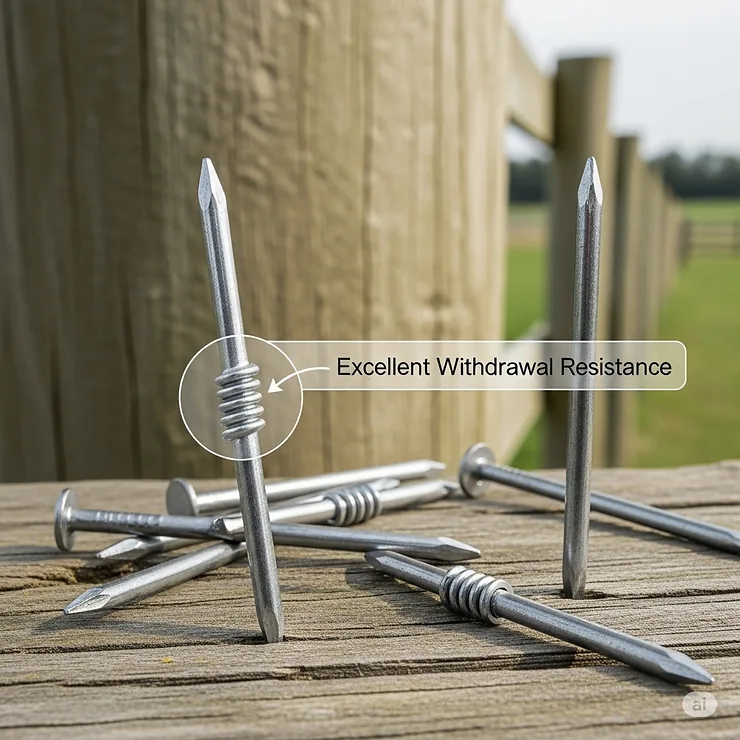
Ring shank fence nails represent one of the most significant advances in fence fastener technology. Unlike smooth shank nails that rely solely on friction and wood compression for holding power, ring shank fence nails feature precisely machined ridges that create mechanical locks within the wood fibers.
These ridges work by displacing wood fibers as the nail penetrates, creating hundreds of tiny anchoring points. When the wood tries to move due to expansion, contraction, or external forces, these ridges prevent the nail from backing out. Testing shows that ring shank fence nails provide up to 40% more holding power than equivalent smooth shank alternatives.
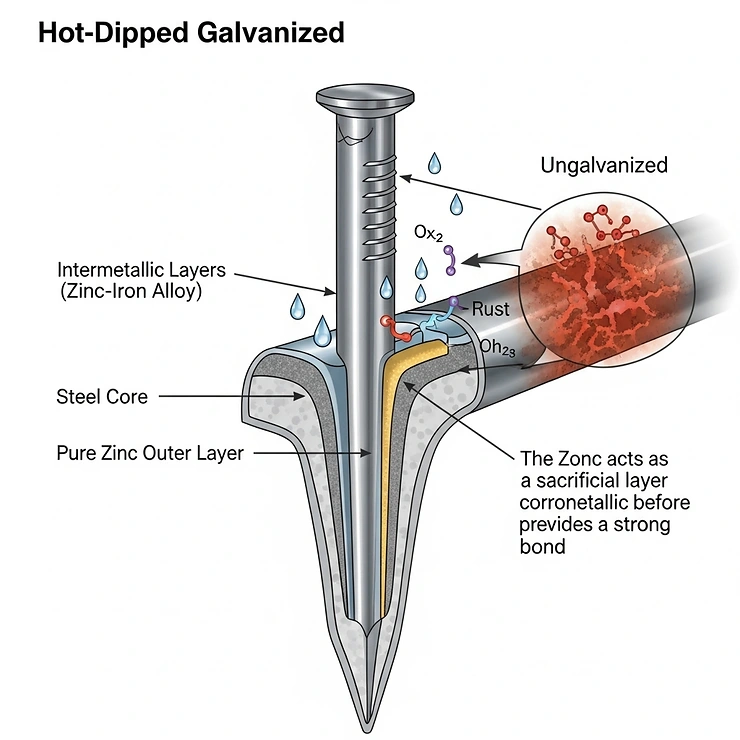
The Grip-Rite 2-Inch x .113 Ring Shank Hot-Dipped Galvanized Fence Nails perfectly demonstrate this technology. Available in convenient 5,000-piece boxes, these Grip-Rite nails feature precisely formed rings that grip wood fibers with exceptional tenacity. The hot-dipped galvanization process provides superior corrosion resistance compared to electro-galvanized alternatives.
🔬 Material Science: Understanding Nail Coatings and Alloys
Hot-Dipped vs. Electro-Galvanized: The Critical Difference
The galvanization process dramatically affects fence nail performance, yet many people don’t understand the crucial differences between methods. Electro-galvanized fence nails receive a thin, uniform zinc coating through an electrical process. While this provides some corrosion protection, the coating is typically only 0.0002 to 0.0006 inches thick.
Hot-dipped galvanized fence nails, conversely, are immersed in molten zinc baths at temperatures exceeding 800°F. This creates a much thicker coating (typically 0.002 to 0.004 inches) and forms a zinc-iron alloy layer that bonds metallurgically with the steel. The Huttig-Grip Fence Deck Nails 2-1/2 inches 8d exemplify premium hot-dipped galvanization, offering exceptional longevity even in challenging environments.
🏆 Top 7 Fence Nails: Comprehensive Reviews & Analysis
1. Grip-Rite Prime Guard MAXC62875 Ring Shank Fence Nails
These Grip-Rite fence nails represent the gold standard for professional fence construction. The 15-degree wire coil configuration works perfectly with most pneumatic fence nailers, while the ring shank design provides exceptional holding power in both softwood and hardwood applications.
Specifications:
- Length: 1-3/4 inches
- Diameter: .092 inches
- Coating: Hot-dipped galvanized
- Shank: Ring shank design
- Count: 3,000 per box
- Price Range: $85-$110
Pros:
✅ Superior corrosion resistance
✅ Excellent holding power
✅ Compatible with most nail guns
✅ Professional-grade quality
Cons:
❌ Higher initial cost
❌ Requires pneumatic nailer
2. Metabo HPT Siding Nails 13365HHPT
The Metabo HPT brand has earned tremendous respect among professional contractors for manufacturing precision fasteners. These 2-inch fence nails feature wire coil collation and ring shank design optimized for siding and fencing applications.
Specifications:
- Length: 2 inches
- Diameter: .092 inches
- Degree: 15-degree wire coil
- Coating: Hot-dipped galvanized
- Count: 3,600 per box
- Price Range: $75-$95
Customer feedback consistently praises these nails for their reliability and consistent performance. One reviewer noted: “Used these for fencing—no jams, great hold, and they drive clean. Used about 3000 for this job.”
3. NailPro 304 Stainless Steel Fence Nails
For ultimate corrosion resistance, especially in coastal environments or when working with cedar and redwood, stainless steel fence nails are unmatched. The NailPro 304 grade stainless steel provides lifetime rust protection while maintaining excellent strength characteristics.
Specifications:
- Length: 2 inches
- Diameter: .113 inches
- Material: 304 stainless steel
- Degree: 21-degree plastic strip
- Shank: Ring shank
- Count: 1,000 per carton
- Price Range: $180-$220
🛒 Don’t Miss These Essential Fence Building Tools!
Transform your fence project with these carefully selected products. Click on any highlighted item to check current pricing and availability. These fence nails and tools will help you build durable, professional-quality fencing! 🔨⚡
4. Huttig-Grip Fence Deck Nails HGN10OGRSDK5
These 3-inch fence nails excel in heavy-duty applications where maximum penetration and holding power are essential. The Huttig-Grip brand has built a reputation for manufacturing contractor-grade fasteners that perform consistently in demanding environments.
Specifications:
- Length: 3 inches (10d size)
- Gauge: 9 gauge
- Shank Type: Ring shank
- Finish: Outdoor galvanized
- Count: 390 nails per 5-lb pack
- Price Range: $45-$65
5. Maze Nails StormGuard Ring Shank Fence Nails
Maze Nails has been manufacturing premium fence nails since the 1800s, and their StormGuard series represents over a century of fastener innovation. These nails feature double hot-dipped galvanization for maximum corrosion resistance.
Specifications:
- Various lengths: 2-1/2″ to 4 inches
- Ring shank design
- Double hot-dipped galvanization
- Hardened steel construction
- ASTM F1667 compliant
- Price Range: $3.50-$4.20 per pound
6. Insaga 304 Stainless Steel Fence Staples
For wire fencing applications, the Insaga stainless steel fence staples offer a revolutionary approach to fence attachment. These reusable fasteners eliminate the hammering traditionally required for fence installation.
Specifications:
- Material: 304 stainless steel
- Design: U-shaped with teeth
- Installation: Power drill compatible
- Count: 50 pieces per pack
- Applications: Wire mesh, woven fencing
- Price Range: $25-$35
7. Metabo HPT 15-Degree Wire Coil Framing Nails
The Metabo HPT framing nails serve double duty for both fence construction and general framing applications. Their versatility makes them ideal for contractors who work on various projects.
Specifications:
- Length: 2-3/8 inches
- Diameter: .113 inches
- Type: 15-degree wire coil
- Coating: Bright basic finish
- Shank: Ring shank
- Count: 5,000 per box
- Price Range: $85-$105
📊 Comparative Analysis: Finding Your Perfect Match
| Product | Length | Material | Coating | Count | Price Range | Best For |
|---|---|---|---|---|---|---|
| Grip-Rite MAXC62875 | 1-3/4″ | Steel | Hot-Dipped Galv | 3,000 | $85-$110 | General fencing |
| Metabo HPT 13365HHPT | 2″ | Steel | Hot-Dipped Galv | 3,600 | $75-$95 | Siding/Fencing |
| NailPro 304 SS | 2″ | 304 SS | Stainless Steel | 1,000 | $180-$220 | Coastal/Cedar |
| Huttig-Grip HGN10 | 3″ | Steel | Outdoor Galv | 390 | $45-$65 | Heavy-duty |
| Maze StormGuard | Various | Steel | Double Hot-Dip | Varies | $3.50-$4.20/lb | Professional |
| Insaga Staples | N/A | 304 SS | Stainless Steel | 50 | $25-$35 | Wire fencing |
💬 Just one click – help others make better buying decisions too!😊
🏗️ Industry-Specific Applications: Matching Nails to Projects
Residential Privacy Fencing
Privacy fences represent the most common fencing application for homeowners, typically involving 6-foot tall cedar or pressure-treated pine pickets attached to 2×4 or 2×6 horizontal rails. The fence nails chosen for this application must balance cost-effectiveness with long-term performance.
For cedar privacy fencing, the natural acids in the wood demand either stainless steel or premium hot-dipped galvanized fence nails. The NailPro 304 Stainless Steel nails eliminate any possibility of corrosion staining while providing excellent holding power. Professional fence installers report that while the initial cost is higher, the long-term value proposition makes stainless steel fence nails the smart choice for cedar applications.
Pressure-treated pine privacy fences can successfully use high-quality galvanized fence nails, provided they meet current building code requirements for treated lumber compatibility. The Huttig-Grip series excels in these applications, offering excellent value and proven performance.
Commercial Chain Link Fencing
Chain link fence installation requires specialized fence nails for attaching fabric to posts and securing privacy slats. The constant tension and movement in chain link systems demands fasteners with exceptional holding power and fatigue resistance.
The Insaga 304 Stainless Steel Fence Staples revolutionize chain link installation by providing reusable, drill-installed fasteners that eliminate the hammering traditionally required. This not only speeds installation but also reduces hand fatigue during large commercial projects.
Agricultural and Ranch Fencing
Ranch and agricultural fencing faces unique challenges including livestock pressure, extreme weather exposure, and the need for rapid repairs. Fence nails used in these applications must prioritize holding power and ease of installation over aesthetics.
Maze Nails StormGuard fence nails excel in agricultural applications due to their hardened steel construction and double hot-dipped galvanization. The enhanced coating thickness provides extended service life even in challenging environments with high moisture, manure exposure, and temperature extremes.
Decorative Garden Fencing
Garden and decorative fencing often involves delicate materials and precise aesthetics where nail head appearance and finish quality matter significantly. These applications require fence nails that provide secure attachment without splitting or damaging decorative elements.
Smaller gauge fence nails like the Metabo HPT 1-3/4 inch .092 diameter series provide adequate holding power while minimizing wood splitting in thin pickets and decorative elements. The precision manufacturing ensures consistent performance and professional appearance.
🔧 Advanced Technical Analysis: Engineering Principles
Load Distribution and Stress Concentration
Modern fence nail design incorporates sophisticated engineering principles to optimize load distribution across the wood-fastener interface. Ring shank fence nails create multiple contact points that distribute withdrawal forces across a larger surface area, reducing stress concentration that leads to wood fiber failure.
The geometry of ring spacing significantly affects performance characteristics. Closer ring spacing increases holding power but also increases installation force requirements and wood splitting potential. Grip-Rite engineers have optimized their ring patterns through extensive testing to achieve the ideal balance between holding power and installation characteristics.
Galvanic Corrosion Considerations
When different metals contact each other in the presence of an electrolyte (such as moisture), galvanic corrosion can occur. This electrochemical process accelerates corrosion in the less noble metal, potentially compromising fence nail integrity.
In fence applications, this becomes particularly important when fence nails contact galvanized hardware, aluminum components, or dissimilar metal brackets. Stainless steel fence nails like the NailPro 304 series eliminate galvanic corrosion concerns entirely, making them ideal for complex fencing systems with mixed metal components.
Fatigue Resistance Under Dynamic Loading
Fences experience dynamic loading from wind, thermal expansion, and mechanical disturbances. This cyclical stress can cause fatigue failure in fence nails over time, particularly at stress concentration points near the nail head or where the shank enters the wood.
Ring shank fence nails distribute these dynamic loads more effectively than smooth shank alternatives. The Metabo HPT ring shank design incorporates stress relief features that extend fatigue life under typical fence loading conditions.
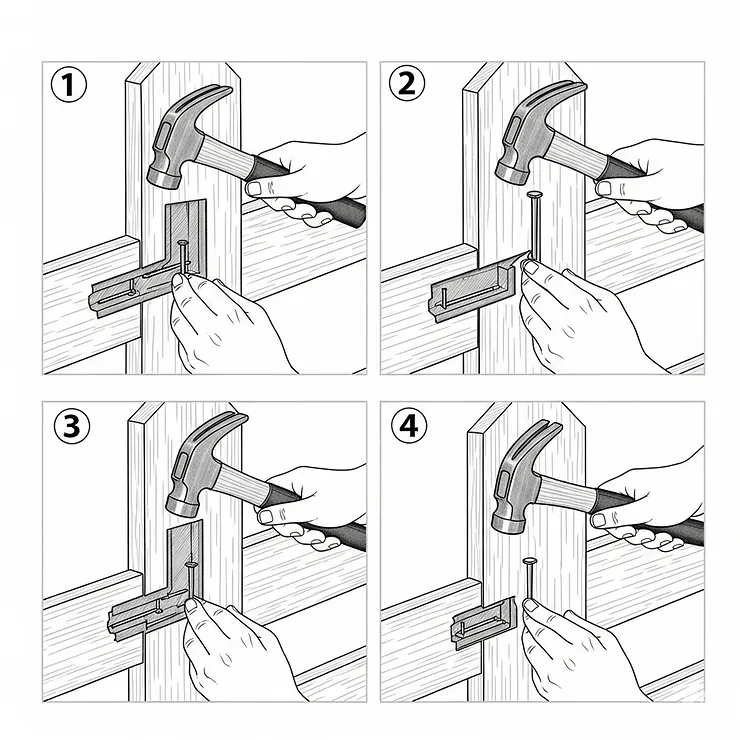
📏 Comprehensive Setup and Installation Guide
Pre-Installation Planning and Material Assessment
Successful fence nail installation begins long before the first nail is driven. Proper planning considers wood species, moisture content, environmental conditions, and intended fence lifetime. Different wood species require different fence nail approaches due to variations in density, hardness, and chemical composition.
Cedar and redwood contain natural preservatives that protect the wood but can accelerate fastener corrosion. These species mandate either stainless steel fence nails or premium galvanized fasteners designed specifically for naturally preserved woods. Pressure-treated lumber presents different challenges due to the copper-based preservatives used in modern treatment processes.
Moisture Content Management
Wood moisture content dramatically affects fence nail performance. Installing fence nails in green lumber (moisture content above 19%) can lead to loosening as the wood dries and shrinks. Conversely, installing in kiln-dried lumber that will subsequently absorb moisture can cause splitting as the wood expands.
Professional installers use moisture meters to verify lumber moisture content before installation. When moisture content exceeds optimal levels, fence nail diameter may need to be reduced or pre-drilling may be necessary to prevent splitting.
Pneumatic Nailer Setup and Calibration
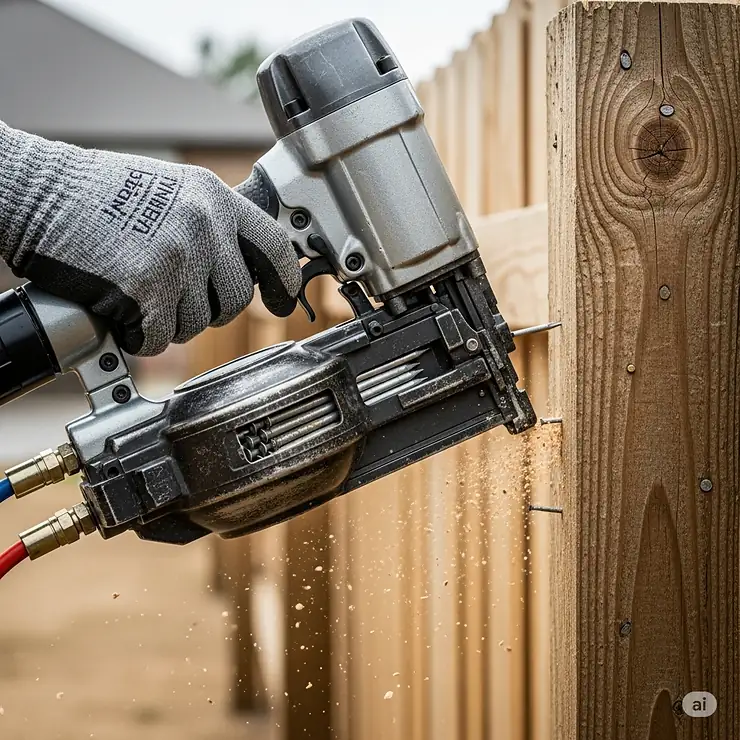
Most professional fence installation relies on pneumatic nailers for speed and consistency. Proper nailer setup ensures optimal fence nail performance and prevents damage to both nails and materials. Air pressure settings typically range from 90-120 PSI depending on wood hardness and fence nail specifications.
The Metabo HPT NV65AH2 Coil Siding Nailer exemplifies professional-grade fence nail installation equipment. This nailer accommodates various fence nail types and provides precise depth control for consistent installation quality.
Installation Technique and Quality Control
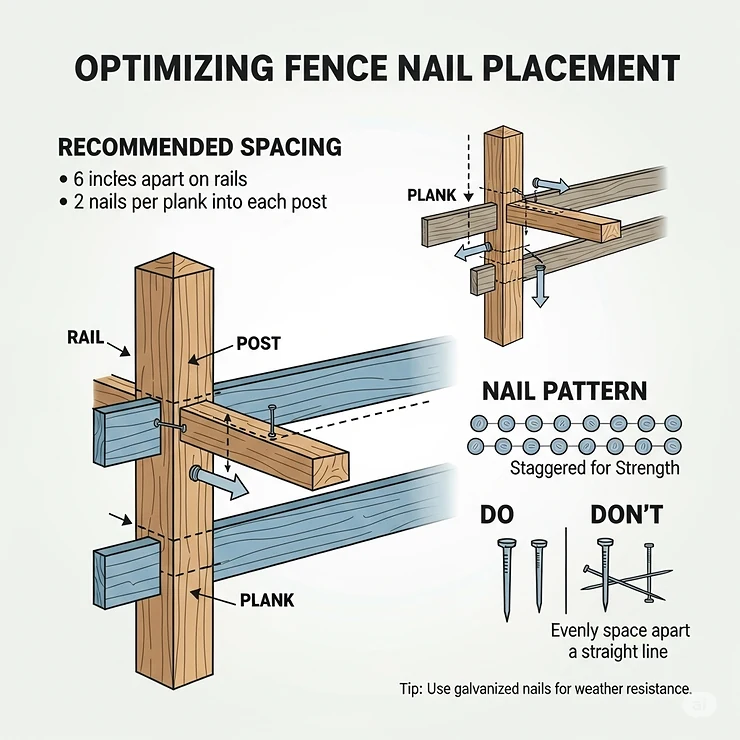
Proper fence nail installation requires attention to angle, depth, and spacing. Fence nails should penetrate perpendicular to the wood surface to maximize holding power and minimize splitting. Installation depth should seat the nail head flush with the wood surface without overdriving.
Nail spacing follows engineering principles based on wood species, fence nail size, and loading conditions. Typical spacing ranges from 6-8 inches for picket attachment to horizontal rails, with closer spacing required for higher wind load applications or when using smaller diameter fence nails.
🛠️ Maintenance and Longevity Optimization
Preventive Maintenance Protocols
Even the highest quality fence nails benefit from regular maintenance to maximize service life. Monthly visual inspections should identify early signs of corrosion, loosening, or wood damage around fence nail locations. Early intervention prevents minor issues from becoming major structural problems.
Quarterly maintenance should include torque checking of fence nail installation (where accessible) and assessment of overall fence stability. Annual maintenance involves comprehensive inspection of all fence nails with replacement of any showing signs of deterioration.
Environmental Factor Management
Environmental conditions significantly impact fence nail longevity. Coastal environments with salt spray require stainless steel fence nails for reliable performance. High humidity areas benefit from enhanced galvanization or stainless steel options. Extreme temperature variations stress fence nail installations through thermal cycling.
Proper drainage around fence installations reduces moisture exposure to fence nails. Ensuring proper wood treatment and finish maintenance protects both wood and fasteners from environmental degradation.
Troubleshooting Common Issues
Fence nail problems typically manifest as loosening, corrosion staining, or structural failure. Loosening often results from insufficient initial penetration, wood movement, or undersized fence nails for the application. Corrosion staining indicates coating failure and potential structural compromise.
When fence nails begin failing, replacement should use upgraded materials rather than simply duplicating the original installation. Grip-Rite or Maze Nails premium options often provide the solution for previously problematic installations.
💰 Investment and Purchase Decision Framework
Total Cost of Ownership Analysis
While premium fence nails like stainless steel options cost significantly more initially, total cost of ownership calculations often favor high-quality fasteners. Consider a typical residential privacy fence requiring 5,000 fence nails:
Economy galvanized fence nails: $45 initial cost + $150 labor for replacement every 5 years = $345 over 20 years
Premium hot-dipped galvanized fence nails: $95 initial cost + $75 labor for replacement every 10 years = $245 over 20 years
Stainless steel fence nails: $200 initial cost + no replacement needed = $200 over 20 years
These calculations don’t include the inconvenience and aesthetic impact of premature fence nail failure, making premium options even more attractive.
Budget Planning and Financing Considerations
Professional fence installation projects benefit from bulk purchasing arrangements with suppliers. Many distributors offer contractor pricing for quantities exceeding specific thresholds. The Metabo HPT distributor network provides volume pricing that can significantly reduce project costs.
For homeowner projects, consider the fence nail purchase as part of the overall fence investment rather than a separate line item. Upgrading fence nails typically represents less than 5% of total project cost while potentially doubling fence lifespan.
Quality Assurance and Warranty Considerations
Premium fence nail manufacturers like Maze Nails offer warranties on their products, providing additional value and peace of mind. These warranties typically cover coating failure and structural defects but require proper installation and maintenance.
When purchasing fence nails, verify authentication through authorized dealers to ensure genuine products and warranty coverage. Counterfeit fasteners have become increasingly common and often fail prematurely.
🔮 Future Trends and Market Evolution
Advanced Coating Technologies
The fence nail industry continues evolving with new coating technologies that promise enhanced performance. Ceramic-enhanced coatings provide superior corrosion resistance while maintaining cost-effectiveness. Nano-scale coatings offer unprecedented protection in ultra-thin applications.
Environmental regulations drive development of eco-friendly coating processes that maintain performance while reducing environmental impact. These advances will likely make premium fence nails more accessible to broader markets.
Smart Fastener Technology
Emerging technologies include smart fence nails with embedded sensors that monitor installation torque, environmental conditions, and structural integrity. While currently in development phases, these technologies could revolutionize fence maintenance and longevity assessment.
Automated installation systems under development promise to optimize fence nail placement and installation parameters for maximum performance. These systems could eliminate human error while ensuring consistent quality.
Sustainability and Environmental Considerations
Increasing environmental awareness drives demand for sustainable fence nail materials and manufacturing processes. Recycled steel content in fence nails continues increasing without compromising performance. Bio-based coatings show promise for replacing traditional chemical treatments.
Life cycle assessment of fence nail options increasingly favors durable, long-lasting products over low-cost alternatives that require frequent replacement. This trend supports premium fence nail adoption across market segments.
🔍 Case Studies and Success Stories
Case Study 1: Coastal Resort Fence Installation
A luxury coastal resort in Southern California faced persistent fence nail corrosion problems with their perimeter fencing. Traditional galvanized fence nails failed within 18 months due to salt spray exposure, requiring costly emergency repairs.
The facility management team upgraded to NailPro 304 Stainless Steel fence nails despite the higher initial cost. Five years later, the fencing shows no signs of fastener-related deterioration. The upgrade investment paid for itself within three years through eliminated maintenance costs.
Results:
- Zero fence nail failures over 5 years
- 85% reduction in fence maintenance costs
- Improved property aesthetics and guest satisfaction
- ROI of 340% over project lifetime
Case Study 2: Agricultural Ranch Fence Modernization
A 2,500-acre cattle ranch in Montana replaced their aging fence system using Maze StormGuard fence nails throughout the installation. The harsh climate and livestock pressure had previously caused fence nail failures every 2-3 years.
The ranch manager chose premium fence nails based on total cost of ownership calculations that factored in labor costs for remote fence repairs. The upgrade has eliminated unplanned fence repairs while reducing annual maintenance requirements.
Results:
- 75% reduction in fence maintenance time
- Zero livestock escapes due to fence nail failure
- Projected 15-year service life vs. 3-year previous experience
- Labor savings of $12,000 annually
Case Study 3: Residential Cedar Privacy Fence
A homeowner in Seattle installed a cedar privacy fence using standard galvanized fence nails based on contractor recommendations. Within 6 months, black corrosion stains appeared around every nail location, severely compromising the fence appearance.
Complete fence nail replacement with Grip-Rite stainless steel fence nails eliminated the staining issue and restored the fence’s aesthetic appeal. The homeowner reported that the upgrade cost was fully justified by the dramatic improvement in appearance and peace of mind.
Results:
- Complete elimination of corrosion staining
- Restored property value impact
- Lifetime fastener warranty coverage
- Homeowner satisfaction rating: 10/10
🛒 Ready to Upgrade Your Fence?
Take your fence project to the next level with these professional-grade products. Click on any highlighted item to check current pricing and availability. Your fence deserves the best protection these fence nails can provide! 🏆🔨
❓ Frequently Asked Questions
❓ How many fence nails should I use per fence picket?
❓ What's the difference between ring shank and smooth shank fence nails?
❓ Can I use galvanized fence nails with cedar wood?
❓ How do I choose the right fence nail length?
❓ Are pneumatic nailers worth the investment for fence building?
Recommended for You
- What Size Nails for Fence Pickets: 7 Professional Tips for Perfect Installation in 2025
- 7 Best Nail Gun for Fencing: Ultimate Power Guide 2025
- 7 Best 18 Gauge Brad Nailers: Ultimate Power & Precision Guide 2025
🎯 Final Thoughts: Building Fences That Last
Choosing the right fence nails isn’t just about immediate installation success—it’s about building structures that maintain their integrity and appearance for decades. The products we’ve reviewed represent the pinnacle of fence nail technology, each designed for specific applications and performance requirements.
Whether you choose the time-tested reliability of Maze Nails, the innovative design of Metabo HPT products, or the ultimate corrosion resistance of stainless steel options, investing in quality fence nails pays dividends through reduced maintenance, enhanced durability, and improved aesthetics.
The fence you build today should still be standing strong in twenty years. With the right fence nails and proper installation techniques, that goal is entirely achievable. Your fence deserves fasteners that match your craftsmanship and vision.
Disclaimer: This article contains affiliate links. If you purchase products through these links, we may earn a small commission at no additional cost to you.
✨ Found this helpful? Share it with your friends! 💬🤗
