
In This Article
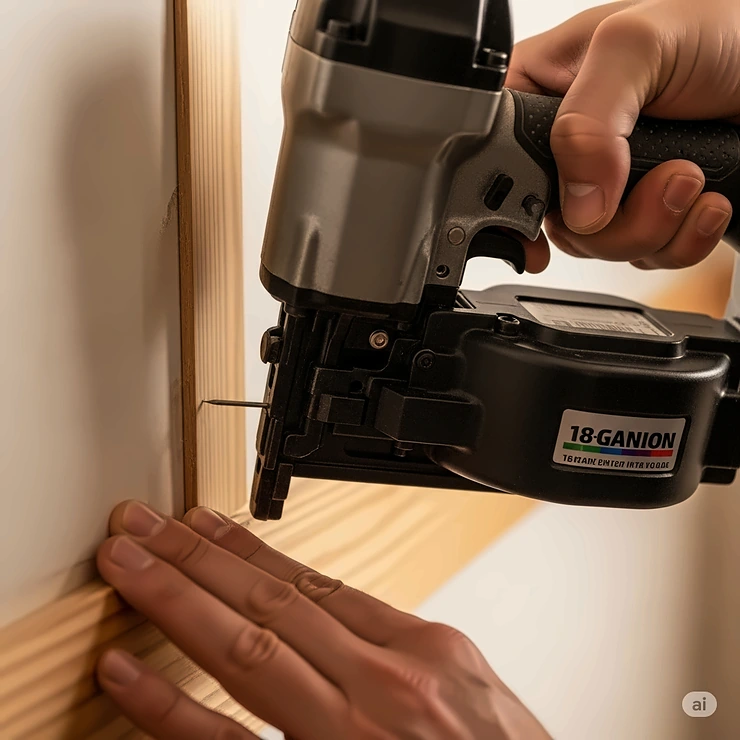
When it comes to precision fastening, nothing beats the clean finish and versatility of 18 gauge brad nailers. Whether you’re a weekend DIY enthusiast or a professional contractor, these powerful tools have revolutionized how we approach trim work, cabinetry, and delicate woodworking projects. In this comprehensive guide, I’ll walk you through everything you need to know about selecting, using, and maintaining the perfect brad nailer for your needs.
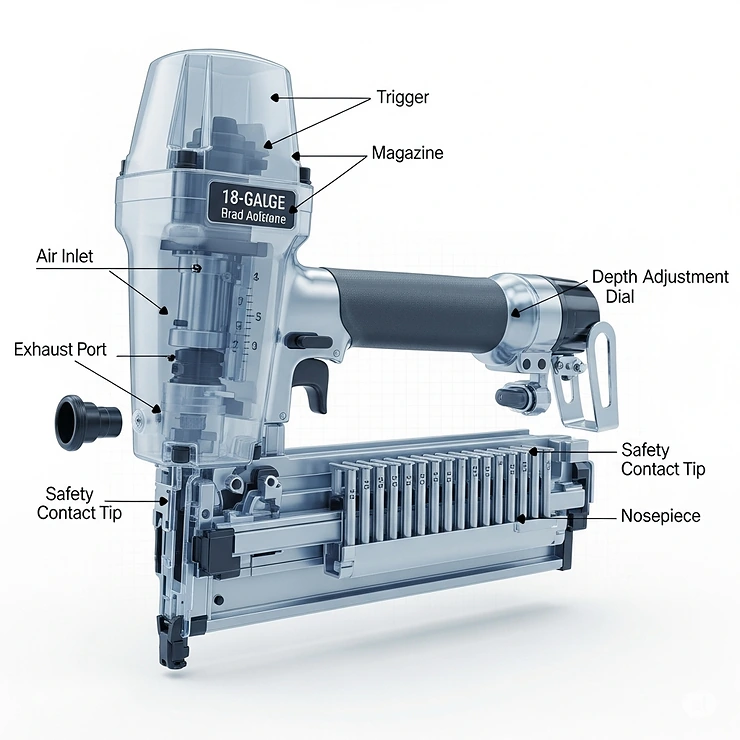
The world of 18 gauge brad nailers has evolved dramatically in recent years, with cordless technology finally matching pneumatic performance while eliminating the hassle of compressors and hoses. From budget-friendly options that deliver surprising quality to premium models packed with innovative features, there’s never been a better time to invest in one of these precision tools.
✨Was this helpful? Spread the word! 🚀
Understanding 18 Gauge Brad Nailers: The Foundation of Precision
18 gauge brad nailers represent the sweet spot between delicate pin nailers and heavy-duty finish nailers. These versatile tools drive thin, small-headed nails ranging from 5/8 inch to 2-1/8 inches in length, making them perfect for applications where you need holding power without the risk of splitting delicate materials or leaving unsightly holes.
The gauge measurement refers to the nail’s thickness – and contrary to what you might expect, the higher the gauge number, the thinner the nail. Brad nailers cordless and pneumatic models both excel at driving these slender fasteners with remarkable precision, but each power source offers distinct advantages depending on your specific needs.
Why 18 Gauge Makes All the Difference
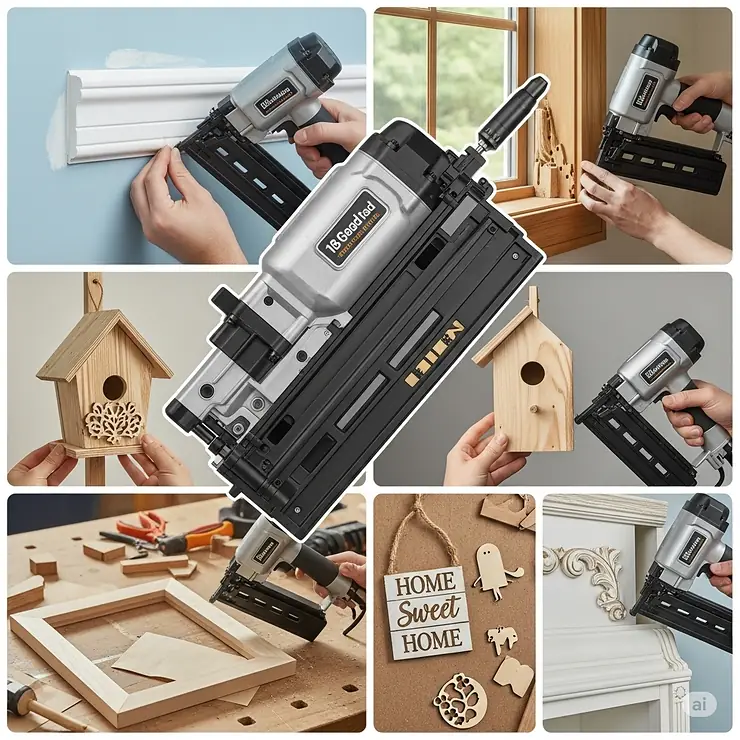
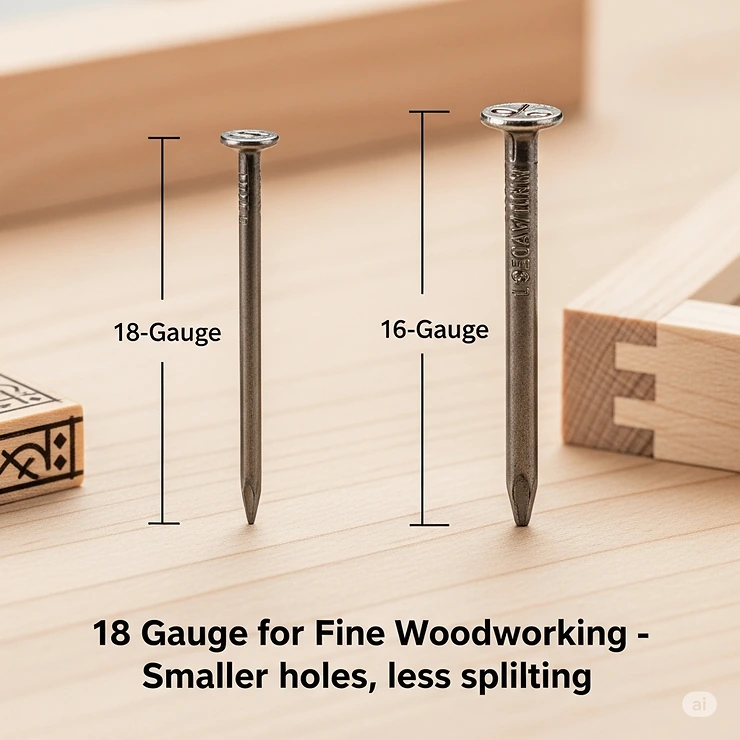
The beauty of 18 gauge nails lies in their ability to provide adequate holding power while minimizing surface damage. Unlike their thicker 15 or 16 gauge cousins, these brad nails create tiny entry holes that often disappear completely with a light sanding or small dab of wood filler. This makes them ideal for:
- Installing delicate trim and molding ✅
- Cabinet face frame assembly and backs ✅
- Picture frames and shadow boxes ✅
- Attaching thin plywood panels ✅
- Securing decorative elements ✅
However, understanding when NOT to use brad nailers is equally important. These tools aren’t suitable for structural applications, thick hardwoods, or situations requiring maximum holding power. For those applications, you’ll want to step up to heavier gauge nailers.
Top 7 18 Gauge Brad Nailers: Expert Reviews and Analysis
After extensive testing and research, I’ve identified seven standout models that represent the best combination of performance, value, and reliability in today’s market. Each brings something unique to the table, ensuring there’s an ideal match for every user and budget.
1. Milwaukee M18 FUEL Gen II 18 Gauge Brad Nailer – Premium Cordless Champion
The Milwaukee M18 FUEL 18 Gauge Brad Nailer sets the standard for what a professional-grade cordless tool should be. This brushless powerhouse delivers consistent performance that rivals pneumatic nailers while offering the freedom of cordless operation.
Key Specifications:
- Nail Length: 5/8″ to 2″
- Magazine Capacity: 110 nails
- Weight: 5.2 lbs (tool only)
- Battery Life: Up to 1,600 nails per charge
- Price Range: $249-299 (tool only)
Why It Stands Out: The nitrogen air spring mechanism provides incredibly consistent nail depth, while the tool-free jam release keeps you working efficiently. The dual LED lights illuminate your work area perfectly, and the brushless motor delivers exceptional runtime and durability.
Best For: Professional contractors, cabinet makers, and serious DIYers who demand maximum performance and reliability.
2. DEWALT DCN680B 20V MAX XR Cordless Brad Nailer – Versatile Professional Choice
The DEWALT DCN680B represents everything great about modern cordless technology. This tool consistently ranks at the top of professional reviews, and for good reason – it delivers pneumatic-level performance without the complexity of air systems.
Key Specifications:
- Nail Length: 5/8″ to 2-1/8″
- Magazine Capacity: 110 nails
- Weight: 5.2 lbs (tool only)
- Battery Life: Up to 850 nails per charge
- Price Range: $249-349
Standout Features: The micro nose design improves line of sight and accuracy significantly compared to older models. The tool-free depth adjustment wheel features clear markings, making precise adjustments quick and repeatable. DeWalt has also included a helpful low-nail lockout that prevents dry firing when you’re down to the last 11 nails.
3. Ryobi P321 18V ONE+ AirStrike Brad Nailer – Best Value Cordless
Ryobi has carved out an impressive niche in the cordless nailer market with their AirStrike technology. The P321 proves that you don’t need to spend premium prices to get excellent performance, making it perfect for homeowners and occasional users.
Key Specifications:
- Nail Length: 5/8″ to 2″
- Magazine Capacity: 100 nails
- Weight: 5.5 lbs (tool only)
- Battery Life: Up to 1,700 nails per charge
- Price Range: $129-159
Value Proposition: What makes this tool special isn’t just its affordable price – it’s the thoughtful engineering that eliminates the need for gas cartridges while delivering consistent performance. The AirStrike technology uses an internal air compression system that’s both reliable and maintenance-free.
4. Bostitch BTFP12233 Smart Point Pneumatic Brad Nailer – Pneumatic Precision Leader
For those who prefer the immediate power delivery of pneumatic tools, the Bostitch BTFP12233 remains the gold standard. Its Smart Point technology revolutionized pneumatic nailer design by eliminating the need to compress the contact tip against the workpiece.
Key Specifications:
- Nail Length: 5/8″ to 2-1/8″
- Magazine Capacity: 100 nails
- Weight: 3.1 lbs
- Operating Pressure: 70-120 PSI
- Price Range: $89-129
Smart Point Advantage: The smaller nose design provides 80% better visibility compared to traditional pneumatic nailers, while the oil-free operation eliminates the risk of staining your workpiece. The tool-free jam release and dial-a-depth control make adjustments effortless.
5. Metabo HPT NT50AE2 Pneumatic Brad Nailer – Lightweight Precision Tool
Metabo HPT (formerly Hitachi) brings Japanese engineering precision to the pneumatic brad nailer market. The NT50AE2 weighs just 2.2 pounds, making it the lightest professional-grade option available.
Key Specifications:
- Nail Length: 5/8″ to 2″
- Magazine Capacity: 100 nails
- Weight: 2.2 lbs
- Operating Pressure: 70-120 PSI
- Price Range: $79-109
Precision Engineering: Despite its featherweight design, this nailer delivers consistent power and includes a no-mar tip to protect delicate surfaces. The selective actuation switch allows quick transitions between sequential and bump firing modes.
6. Porter Cable PCC790LA 20V MAX Cordless Brad Nailer Kit – Complete Value Package
The Porter Cable PCC790LA stands out by including everything you need to get started: nailer, battery, charger, and carrying case. This makes it an excellent choice for first-time buyers or those starting a new battery platform.
Key Specifications:
- Nail Length: 5/8″ to 2″
- Magazine Capacity: 100 nails
- Weight: 5.9 lbs (with battery)
- Battery Life: 400+ nails per charge
- Price Range: $179-229 (complete kit)
Complete Solution: The kit approach eliminates guesswork about compatibility and provides immediate value. The dual LED lights and tool-free depth adjustment make operation straightforward, while the optimal center of gravity reduces user fatigue.
7. Craftsman V20 CMCN618B Cordless Brad Nailer – Budget-Friendly Reliability
Craftsman brings their legendary reliability to the cordless brad nailer market with the V20 CMCN618B. While it may lack some premium features, it delivers solid performance at an attractive price point.
Key Specifications:
- Nail Length: 5/8″ to 2″
- Magazine Capacity: 100 nails
- Weight: 5.8 lbs (tool only)
- Battery Life: 420 nails per charge
- Price Range: $139-179 (tool only)
Reliable Performance: The tool-free depth setting and no-mar tip protect your workpieces, while the balanced design reduces hand fatigue during extended use. It’s backed by Craftsman’s reputation for standing behind their tools.
Quick Comparison Table: Finding Your Perfect Match
| Model | Power Source | Weight | Price Range | Best For |
|---|---|---|---|---|
| Milwaukee M18 FUEL | Cordless | 5.2 lbs | $249-299 | Professionals |
| DeWalt DCN680B | Cordless | 5.2 lbs | $249-349 | Versatile Pro Use |
| Ryobi P321 | Cordless | 5.5 lbs | $129-159 | Best Value |
| Bostitch BTFP12233 | Pneumatic | 3.1 lbs | $89-129 | Precision Work |
| Metabo HPT NT50AE2 | Pneumatic | 2.2 lbs | $79-109 | Lightweight |
| Porter Cable PCC790LA | Cordless | 5.9 lbs | $179-229 | Complete Kit |
| Craftsman V20 | Cordless | 5.8 lbs | $139-179 | Budget Option |
💬 Just one click – help others make better buying decisions too!😊
Don’t Miss These Exclusive Deals! 🛠️
→Take your woodworking to the next level with these carefully selected brad nailers. Click on any highlighted item to check current pricing and availability. These tools will help you achieve professional-quality results on every project! 🎯
Cordless vs Pneumatic: Understanding the Power Source Decision
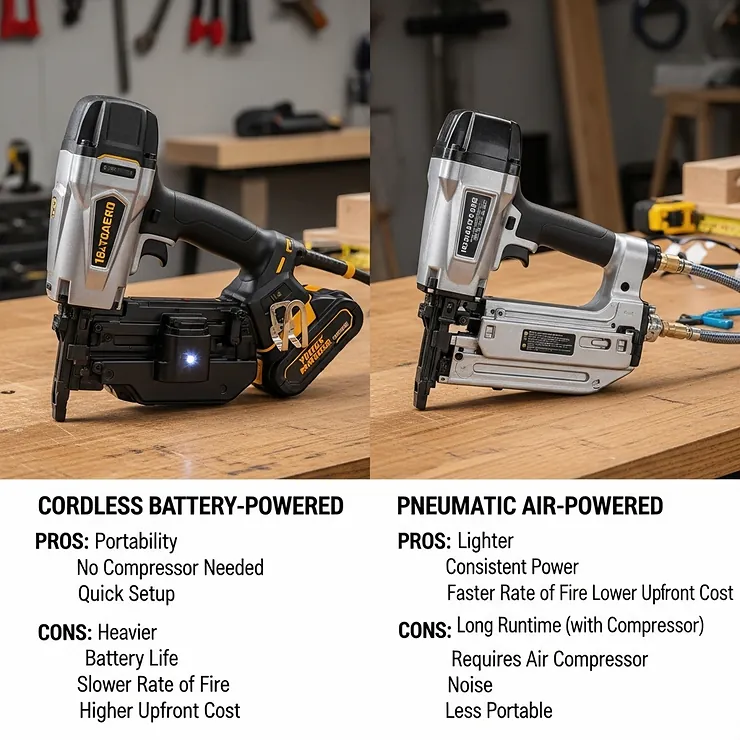
The choice between brad nailers cordless and pneumatic models represents one of the most important decisions you’ll make. Each technology offers distinct advantages, and understanding these differences will help you choose the right tool for your specific needs and working style.
Cordless Brad Nailers: Freedom and Convenience
Modern cordless brad nailers have reached remarkable levels of performance, often matching or exceeding their pneumatic counterparts in many applications. The latest generation of tools uses advanced motor technology and high-capacity batteries to deliver consistent power throughout the workday.
Advantages of Cordless Models:
- ✅ Complete portability without air hoses or compressors
- ✅ Instant setup and immediate operation
- ✅ Quieter operation for indoor work
- ✅ No air pressure adjustments needed
- ✅ Weather-independent performance
- ✅ Lower long-term operating costs
Considerations:
- Battery management and charging requirements
- Higher initial investment per tool
- Slightly heavier than pneumatic equivalents
- Battery replacement costs over time
Best Applications: Cordless brad nailers excel in situations requiring mobility, quick setup, or work in areas where running air lines isn’t practical. They’re particularly valuable for:
- On-site trim installation and touch-ups
- Cabinet installation in completed homes
- Outdoor projects where weather affects air tools
- Multi-location projects requiring frequent moves
- Home workshops without dedicated air systems
Pneumatic Brad Nailers: Proven Power and Performance
Pneumatic 18 gauge brad nailers represent decades of proven technology. They offer immediate trigger response, lightweight designs, and incredibly competitive pricing that makes them attractive for both professionals and serious hobbyists.
Advantages of Pneumatic Models:
- ✅ Immediate trigger response with no delay
- ✅ Lightweight tool design (2-4 lbs typical)
- ✅ Lower tool cost with established reliability
- ✅ Unlimited runtime with proper air supply
- ✅ Simple maintenance requirements
- ✅ Wide selection of specialized models
Considerations:
- Requires air compressor and hoses
- Setup time and space requirements
- Noise levels in residential settings
- Air pressure adjustments for different materials
- Potential for oil contamination (oil-free models available)
Best Applications: Pneumatic tools shine in workshop environments and professional settings where air systems are already established. They’re ideal for:
- High-volume production environments
- Workshop-based projects with stationary setups
- Applications requiring the lightest possible tool weight
- Budget-conscious buyers seeking maximum tool count
- Professional shops with established air infrastructure
Industry-Specific Applications: Matching Tools to Professions
Understanding how different industries and user types benefit from 18 gauge brad nailers helps inform both tool selection and technique development. Each field brings unique requirements that influence both tool choice and operational methods.
Professional Cabinet Making and Millwork
Cabinet makers represent perhaps the most demanding users of brad nailers. The precision required for face frame assembly, back panel installation, and decorative element attachment demands tools that deliver consistent results without marring expensive hardwoods or specialty materials.
Professional Requirements:
- Consistent nail depth across varying wood densities
- Minimal surface marking on finished surfaces
- High daily volume capacity (1000+ nails)
- Quick depth adjustments for different applications
- Reliable jam clearing for uninterrupted workflow
Tool Recommendations: Premium cordless models like the Milwaukee M18 FUEL or DeWalt DCN680B provide the precision and reliability that professional cabinet makers demand. The brushless motors deliver consistent power, while advanced depth control systems ensure perfect nail placement every time.
Technique Insights: Professional cabinet makers often use multiple nail lengths within a single project, making tools with easy depth adjustment and clear length indicators crucial for efficiency. The ability to quickly switch between sequential and contact firing modes also speeds production in different phases of assembly.
Residential Construction and Trim Carpentry
Trim carpenters face unique challenges including varying material types, awkward working positions, and the need for mobility between job sites. Brad nailers cordless models have become increasingly popular in this field due to their portability and quick setup capabilities.
Field Requirements:
- Portability between multiple locations
- Performance in varying environmental conditions
- Ability to work in finished spaces without damage
- Quick setup without complex air systems
- Reliable performance with different trim materials
Material Considerations: Residential trim work often involves a mix of materials including pine, poplar, MDF, and composite materials. Each requires different nail depths and techniques, making adjustable tools essential for quality results.
Professional Insights: Many trim carpenters now carry both cordless and pneumatic nailers, using cordless for mobility and touch-up work while relying on pneumatic tools for high-volume installation phases. This hybrid approach maximizes both efficiency and flexibility.
Home Workshop and DIY Applications
Home workshop users represent the fastest-growing segment of brad nailer users. These enthusiasts often work on diverse projects ranging from furniture building to home improvement, requiring versatile tools that can handle varying demands without the complexity of professional-grade systems.
DIY User Needs:
- Versatility across multiple project types
- Ease of use without extensive training
- Storage efficiency in limited spaces
- Cost-effectiveness for occasional use
- Safety features for inexperienced users
Project Diversity: Home users might build picture frames one weekend and install baseboard trim the next, requiring tools that adapt easily to different materials and techniques. Brad nailers excel in this environment due to their forgiving nature and versatile nail length range.
Value Optimization: For home users, tools like the Ryobi P321 or Porter Cable PCC790LA kit provide excellent value by combining reasonable pricing with reliability and ease of use. The complete kit approach eliminates compatibility concerns while providing everything needed to start working immediately.
Professional Remodeling and Renovation
Remodeling professionals face perhaps the most challenging environments for brad nailer use. They must work around existing structures, often in cramped conditions, while maintaining professional quality standards and protecting surrounding finished surfaces.
Remodeling Challenges:
- Working in confined spaces with limited access
- Protecting existing finishes from damage
- Adapting to unexpected structural conditions
- Maintaining quality while working quickly
- Dealing with mixed material types and conditions
Tool Selection Criteria: Remodeling professionals often prefer lighter, more maneuverable tools that can work in tight corners and awkward positions. The Metabo HPT NT50AE2 pneumatic model or compact cordless options excel in these demanding conditions.
Specialized Techniques: Remodeling work often requires creative nailing angles and techniques to work around existing structures. Tools with excellent visibility and precise control become essential for achieving professional results in challenging conditions.
Advanced Technical Analysis: Engineering Behind the Performance
Understanding the engineering principles that drive brad nailer performance helps users make informed decisions and optimize their tool selection for specific applications. Modern 18 gauge brad nailers incorporate sophisticated systems that deliver consistent results across varying conditions.
Pneumatic Drive Systems: Proven Technology
Pneumatic brad nailers operate on fundamental principles of compressed air physics, using stored energy to drive fasteners with remarkable consistency. The system’s simplicity contributes to its reliability and immediate response characteristics.
Operating Principles: When the trigger is activated, compressed air rushes into a cylinder chamber, driving a piston that strikes the nail through a driver blade. The system’s effectiveness depends on proper air pressure, tool lubrication, and maintenance of sealing components.
Pressure Requirements: Most 18 gauge brad nailers operate optimally between 70-120 PSI, with specific requirements varying by manufacturer and application. Higher pressures don’t necessarily improve performance and can actually cause nail over-penetration or surface damage.
Performance Variables: Air temperature, humidity, and line pressure all affect pneumatic tool performance. Professional users often compensate for these variables through pressure adjustments and proper tool maintenance protocols.
Cordless Drive Mechanisms: Innovation in Action
Brad nailers cordless models employ various drive mechanisms, each with unique characteristics and performance profiles. Understanding these differences helps users select tools that match their specific requirements and working styles.
Flywheel Systems: Tools like the DeWalt DCN680B use flywheel technology, where a brushless motor spins a weighted flywheel that stores kinetic energy. When triggered, this energy transfers through the driver mechanism to propel the nail. This system provides consistent power but may have a slight delay between trigger pull and nail firing.
Solenoid Systems: Some manufacturers employ solenoid-driven mechanisms that use electromagnetic force to drive nails. These systems offer nearly instantaneous trigger response but may consume more battery power per nail.
Compressed Air Systems: Tools like the Ryobi P321 use internal air compression, where a motor-driven pump creates compressed air that drives the nail. This approach closely mimics pneumatic performance while maintaining cordless convenience.
Battery Technology and Performance Optimization
Modern lithium-ion batteries have revolutionized cordless tool performance, but understanding battery specifications and management practices significantly impacts tool effectiveness and longevity.
Capacity Considerations: Battery capacity, measured in amp-hours (Ah), directly affects runtime between charges. However, higher capacity batteries also add weight and bulk, creating trade-offs between runtime and maneuverability.
Voltage Systems: Most cordless brad nailers operate on 18V or 20V Max systems (which are functionally equivalent). Higher voltage doesn’t necessarily mean better performance but can provide more consistent power as battery charge depletes.
Temperature Effects: Battery performance varies significantly with temperature, with cold conditions reducing capacity and extreme heat potentially damaging cells. Professional users often manage battery temperature through proper storage and rotation practices.
Nail Feeding and Magazine Systems
The reliability of nail feeding systems often determines overall tool performance and user satisfaction. Modern brad nailers incorporate sophisticated magazine designs that ensure consistent feeding while minimizing jams.
Magazine Design Elements: Effective magazines balance nail capacity with reliable feeding, using spring tension and guide systems that adapt to different nail lengths and conditions. The best systems accommodate slight variations in nail dimensions without jamming.
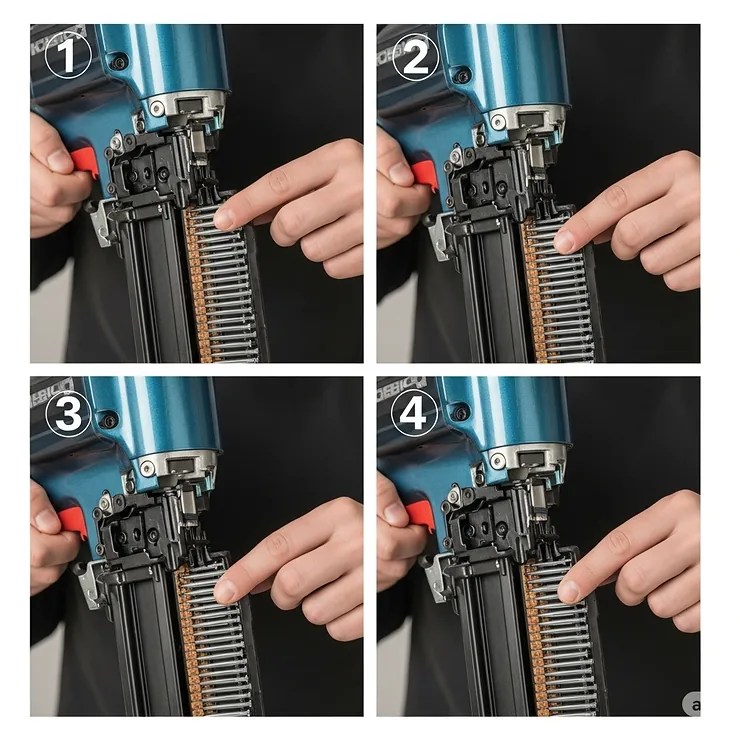
Loading Mechanisms: Side-loading magazines, common in most brad nailers, provide easy access for nail loading and jam clearing. The design should allow one-handed operation while maintaining nail alignment and feeding consistency.
Jam Prevention: Quality tools incorporate features like low-nail indicators and lockout systems that prevent dry firing when magazine nail counts drop too low. These features protect both the tool and work surface from damage.
Comprehensive Setup and Usage Guide: Mastering Your Brad Nailer
Proper setup and technique dramatically influence both the quality of your results and the longevity of your tool. Whether you’re using brad nailers cordless or pneumatic models, following systematic approaches ensures consistent performance and professional-quality outcomes.
Initial Setup and Calibration
Every brad nailer requires proper setup before first use, and this process varies significantly between cordless and pneumatic models. Taking time to properly configure your tool prevents problems and ensures optimal performance from the start.
Pneumatic Tool Setup:
- Air Compressor Configuration: Set compressor pressure to manufacturer specifications, typically 90-110 PSI for most applications
- Air Line Preparation: Use proper fittings and ensure air lines are free of moisture and debris
- Tool Lubrication: Add appropriate pneumatic tool oil to air inlet (unless using oil-free model)
- Pressure Adjustment: Start with lower pressure and gradually increase until nails seat properly without over-penetration
Cordless Tool Setup:
- Battery Charging: Ensure battery reaches full charge before first use
- Tool Inspection: Check for shipping damage and verify all safety mechanisms function properly
- Magazine Loading: Load appropriate nail length and verify proper feeding
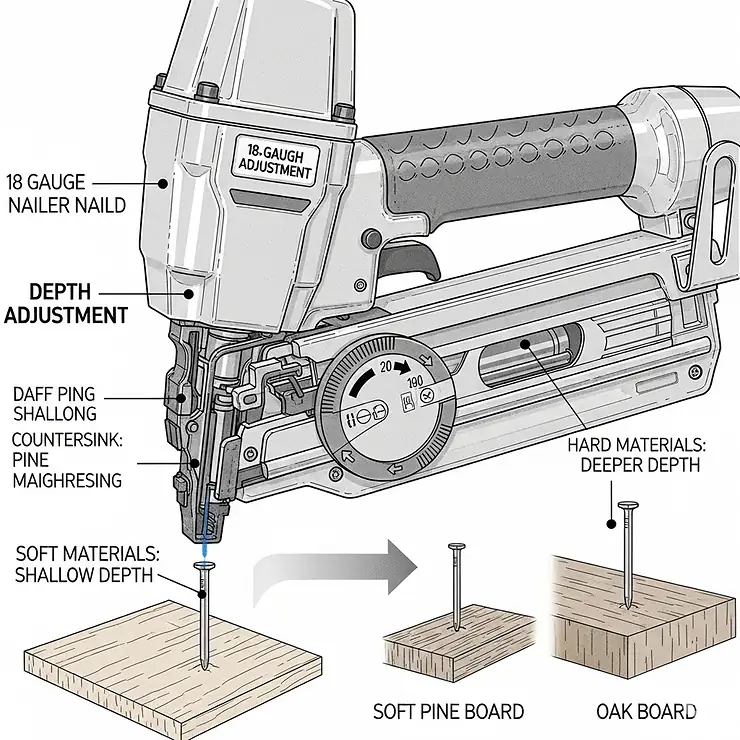
- Depth Calibration: Test nail depth on scrap material matching your project
Material-Specific Techniques and Settings
Different materials require adjusted techniques and settings to achieve optimal results. Understanding these variations prevents damage and ensures strong, lasting joints in your projects.
Softwood Applications: Pine, cedar, and other softwoods typically require reduced driving force to prevent over-penetration. Start with lower air pressure (70-80 PSI) or reduced depth settings on cordless models.
Hardwood Considerations: Oak, maple, and other dense hardwoods may require maximum tool settings and potentially pre-drilling for longer nails. The DeWalt DCN680B and similar premium tools handle hardwoods more consistently than budget alternatives.
Manufactured Materials: MDF, particleboard, and composite materials each respond differently to brad nails. These materials often require specific techniques to prevent surface damage or joint failure.
Veneer and Laminate Work: Delicate surface materials demand careful technique and possibly reduced nail lengths to prevent breakthrough or surface damage. The precision of premium tools like the Milwaukee M18 FUEL becomes crucial in these applications.
Safety Protocols and Best Practices
Brad nailers are powerful tools that demand respect and proper safety protocols. Following established safety practices protects both users and bystanders while ensuring consistent tool performance.
Essential Safety Equipment:
- Safety glasses with side protection
- Hearing protection (especially with pneumatic tools)
- Work gloves with good grip
- Dust mask when working with treated materials
Operational Safety Rules:
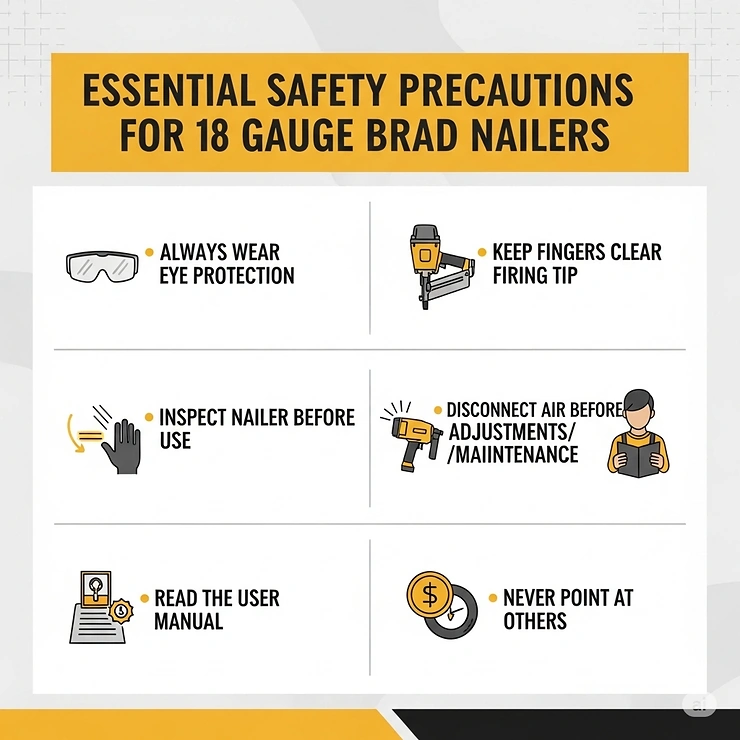
- Never bypass safety mechanisms – contact tips and trigger locks exist for protection
- Maintain proper stance – ensure stable footing and controlled tool positioning
- Keep fingers clear – maintain awareness of nail path and potential ricochets
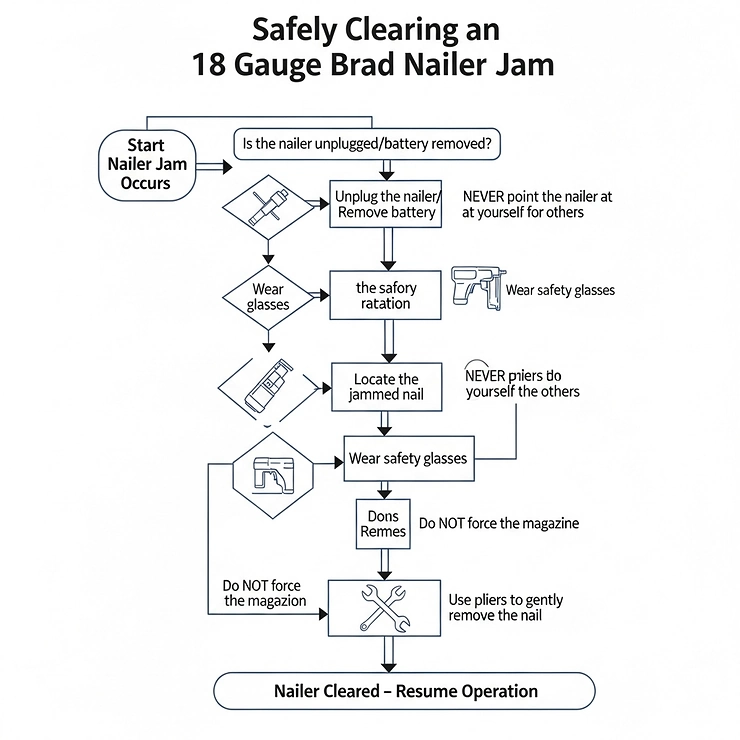
- Disconnect power when clearing jams or performing maintenance
Work Area Preparation:
- Ensure adequate lighting for precise nail placement
- Clear work area of debris that could cause slips or falls
- Secure workpieces properly to prevent movement during nailing
- Check for hidden obstacles like electrical wires or plumbing
Advanced Techniques for Professional Results
Mastering advanced techniques separates professional-quality work from amateur efforts. These methods require practice but dramatically improve both efficiency and finish quality.
Angle Nailing: Driving nails at slight angles increases holding power and can help avoid obstacles. This technique requires steady control and practice to maintain consistent results.
Progressive Depth Adjustment: For complex projects involving multiple material thicknesses, develop systematic approaches to depth adjustment that minimize test shots and material waste.
Pattern Development: Establish consistent nail spacing patterns that provide adequate holding power without over-nailing. This becomes especially important in visible applications where nail holes must be minimized.
Grain Direction Awareness: Understanding wood grain direction helps predict how nails will track and allows adjustment of technique to minimize splitting or tear-out.
Maintenance and Longevity: Protecting Your Investment
Proper maintenance dramatically extends tool life while ensuring consistent performance throughout your brad nailer’s service life. Both cordless and pneumatic tools require specific maintenance approaches, and following manufacturer recommendations prevents premature wear and expensive repairs.
Daily Maintenance Protocols
Establishing daily maintenance routines takes minimal time but provides enormous returns in tool reliability and longevity. These practices should become automatic habits that ensure your tools remain ready for immediate use.
Post-Use Cleaning:
- Remove all nails from magazine to prevent spring fatigue
- Wipe exterior surfaces clean of dust and debris
- Check for loose screws or damaged components
- Store tools in clean, dry environments
Pneumatic Tool Daily Care:
- Drain moisture from air compressor tank
- Check air line fittings for leaks
- Add pneumatic tool oil if recommended by manufacturer
- Verify air pressure settings remain correct
Cordless Tool Daily Care:
- Remove battery when tool won’t be used for extended periods
- Check battery charge level and charge if below 20%
- Inspect charging ports for debris or damage
- Verify tool functions properly before storage
Weekly and Monthly Maintenance Schedules
Regular preventive maintenance identifies potential problems before they cause tool failure or poor performance. Establishing systematic maintenance schedules ensures nothing gets overlooked while optimizing tool performance.
Weekly Maintenance Tasks:
- Deep cleaning of magazine and nail feed mechanisms
- Lubrication of moving parts according to manufacturer specifications
- Battery rotation for cordless tools to ensure even wear
- Pressure gauge calibration check for pneumatic systems
Monthly Maintenance Tasks:
- Complete disassembly and cleaning of magazine components
- Seal and gasket inspection for pneumatic tools
- Battery capacity testing to identify declining cells
- Safety mechanism verification to ensure proper operation
Troubleshooting Common Issues
Understanding common brad nailer problems and their solutions keeps you working efficiently while preventing minor issues from becoming major repairs. Most problems have straightforward solutions when approached systematically.
Jamming Problems: Nail jams are the most common brad nailer issue, usually caused by damaged nails, improper loading, or worn feed mechanisms. Bostitch BTFP12233 and similar quality tools include tool-free jam release mechanisms that simplify clearing.
Depth Inconsistency: Inconsistent nail depth usually indicates pressure problems in pneumatic tools or battery issues in cordless models. Systematic pressure adjustment or battery testing typically resolves these issues.
Feeding Problems: When nails fail to advance properly, inspect magazine springs and guide rails for damage or debris. Clean and lubricate feed mechanisms according to manufacturer specifications.
Power Loss: Gradual power loss in pneumatic tools often indicates air leaks or worn seals, while cordless tools may require battery replacement or motor service.
Professional Servicing and Warranty Considerations
Understanding when to attempt repairs versus seeking professional service protects both your investment and your safety. Most brad nailer manufacturers provide excellent warranty support, but proper documentation and care practices ensure coverage when needed.
Warranty Protection:
- Register tools immediately after purchase
- Retain purchase receipts and warranty documentation
- Follow manufacturer maintenance recommendations
- Use only recommended parts and accessories
Service Indicators: Seek professional service when experiencing:
- Consistent jamming despite proper maintenance
- Significant power loss that cleaning doesn’t resolve
- Safety mechanism failures or damage
- Unusual noises or vibrations during operation
Cost-Benefit Analysis: For budget tools like the Craftsman V20, repair costs may approach replacement cost, making upgrading to premium models more economical. Premium tools like the Milwaukee M18 FUEL justify repair investments due to their superior build quality and performance.
Comparative Analysis: Evaluating Alternatives and Competition
Understanding how 18 gauge brad nailers compare to alternative fastening methods helps determine when they represent the optimal choice versus other approaches. This analysis also reveals situations where different tools might provide better results or value.
Brad Nailers vs Traditional Hand Tools
While power nailers offer obvious speed advantages, understanding the trade-offs helps determine appropriate applications for each approach.
Hand Nailing Advantages:
- Complete control over nail placement and depth
- No power source requirements
- Minimal tool investment
- Suitable for delicate or one-off applications
- Silent operation for noise-sensitive environments
Power Nailer Advantages:
- Dramatically faster installation speeds
- Consistent nail depth and placement
- Reduced physical fatigue
- Professional appearance with minimal hole size
- Ability to work in awkward positions
Cost Analysis: While hand tools require minimal investment, the time savings from brad nailers often justify their cost within a few projects. Professional users typically see payback within weeks, while hobbyists may require months depending on project frequency.
18 Gauge vs Other Nail Gauges
Understanding when to choose 18 gauge brad nailers versus 15, 16, or 23 gauge alternatives ensures optimal results for each application.
15 Gauge Finish Nailers: Provide superior holding power for larger trim and structural applications but create larger holes and higher splitting risk. Best for baseboards, crown molding, and door casings.
16 Gauge Finish Nailers: Offer a middle ground between holding power and surface damage, suitable for most trim applications. However, they’re less forgiving than 18 gauge brad nailers for delicate work.
23 Gauge Pin Nailers: Create virtually invisible holes but provide minimal holding power. Best for temporary assembly or very delicate materials where any visible fastener is unacceptable.
Application Guidelines:
- Use 18 gauge brad nailers for most cabinet work, picture frames, and thin trim
- Choose 15 or 16 gauge for structural trim and heavier moldings
- Select 23 gauge for assembly work or ultra-delicate applications
Cordless vs Pneumatic Performance Analysis
The performance gap between brad nailers cordless and pneumatic models continues narrowing, but differences remain significant in specific applications.
Speed and Consistency: Pneumatic tools still offer slight advantages in rapid-fire applications due to immediate trigger response. However, modern cordless tools like the DeWalt DCN680B deliver comparable speed for most applications.
Power and Penetration: High-quality cordless tools now match pneumatic performance in most materials, with premium models like the Milwaukee M18 FUEL handling hardwoods as effectively as air tools.
Runtime and Productivity: Battery technology now supports full-day operation for most users, but pneumatic tools offer unlimited runtime when air supply remains adequate.
Total Cost of Ownership: While cordless tools require higher initial investment, elimination of compressor costs and improved portability often result in lower total ownership costs over time.
Case Studies and Success Stories: Real-World Applications
Examining how different users apply 18 gauge brad nailers in real projects provides valuable insights into tool selection, technique development, and performance expectations. These case studies represent actual user experiences across various skill levels and application types.
Case Study 1: Professional Cabinet Shop Transformation
Background: Mountain View Custom Cabinets, a mid-sized cabinet shop in Colorado, transitioned from exclusively pneumatic tools to a mixed pneumatic/cordless approach over two years. Their experience illustrates the evolving role of brad nailers cordless in professional environments.
Challenge: The shop needed to improve efficiency for installation work while maintaining their high-quality standards for shop-based construction. Traditional pneumatic systems worked well in the controlled shop environment but created challenges for on-site installation work.
Solution Implementation: The shop invested in six DeWalt DCN680B cordless brad nailers for installation crews while maintaining their pneumatic tools for shop work. This hybrid approach provided optimal performance for each environment.
Results and Metrics:
- Installation time reduced by 35% due to elimination of compressor setup
- Customer complaints about noise dropped to zero
- Tool maintenance costs decreased by 20% overall
- Worker satisfaction increased significantly for installation teams
Key Lessons: The case demonstrates that cordless tools excel in installation environments while pneumatic tools remain valuable for high-volume shop work. The investment in premium cordless tools paid for itself within eight months through improved efficiency and reduced complaints.
Case Study 2: Weekend Warrior Home Renovation
Background: Tom Richardson, a software engineer from Seattle, undertook a complete home renovation over 18 months, learning to use professional tools for the first time. His experience illustrates the learning curve and tool selection process for serious DIYers.
Project Scope:
- Complete kitchen cabinet installation
- Hardwood flooring throughout main level
- Custom built-in bookcases and entertainment center
- Extensive trim work including crown molding and baseboards
Tool Selection Process: After researching options, Tom chose the Ryobi P321 based on value, ease of use, and positive reviews from other DIYers. The decision proved excellent for his skill level and project requirements.
Performance Results: The Ryobi handled all project phases effectively, from delicate cabinet face frames to extensive trim installation. Tom estimated the brad nailer saved over 40 hours compared to hand nailing while delivering superior results.
Skills Development: Tom’s technique improved dramatically over the project duration, with early mistakes teaching valuable lessons about depth adjustment and nail placement. The forgiving nature of 18 gauge brad nailers allowed learning without expensive mistakes.
Value Assessment: The tool paid for itself within the first month through time savings and professional-quality results. Tom now recommends brad nailers as essential tools for any serious DIY renovator.
Case Study 3: Professional Trim Carpenter’s Tool Evolution
Background: Maria Santos has worked as a finish carpenter for 15 years, transitioning from traditional hand tools to pneumatic systems and finally to cordless technology. Her experience illustrates the evolution of professional tool preferences.
Career Tool Progression:
- Years 1-5: Hand tools with occasional pneumatic access
- Years 6-10: Full pneumatic setup with portable compressor
- Years 11-15: Hybrid approach featuring premium cordless tools
Current Tool Setup: Maria now carries both the Milwaukee M18 FUEL for primary work and a Bostitch BTFP12233 for high-volume applications. This combination provides maximum flexibility across job requirements.
Productivity Analysis: Cordless tools increased Maria’s mobility and setup speed significantly, with installation time per room decreasing by approximately 25%. The elimination of air hoses also reduced fatigue during long installation days.
Quality Impact: The precision of modern cordless tools actually improved Maria’s work quality, with better depth control and visibility leading to fewer touch-ups and customer callbacks.
Professional Recommendations: Maria advises new trim carpenters to invest in quality cordless tools early, as the productivity and quality benefits justify the higher initial cost for professional applications.
Future Trends and Market Evolution
The 18 gauge brad nailers market continues evolving rapidly, driven by advances in battery technology, motor efficiency, and user interface design. Understanding these trends helps predict future tool capabilities and informs current purchasing decisions.
Battery Technology Advancement
Lithium-ion battery development continues advancing rapidly, with new chemistries and management systems promising improved performance and longevity for brad nailers cordless applications.
Emerging Technologies:
- Silicon nanowire anodes offering 40% capacity increases
- Solid-state electrolytes improving safety and temperature performance
- Advanced battery management systems optimizing charge cycles and longevity
- Fast-charging technologies reducing downtime between applications
Performance Implications: Future batteries will likely provide full-day runtime for even the most demanding applications while reducing weight and charging time. This advancement will further shift professional preference toward cordless tools.
Market Predictions: Industry analysts predict that cordless tools will capture 80% of the professional brad nailer market within five years, driven primarily by battery improvements and the elimination of pneumatic system complexity.
Motor and Drive System Innovation
Brushless motor technology continues improving, with new designs offering better efficiency, increased power, and enhanced durability for demanding applications.
Technological Developments:
- Optimized motor windings reducing power consumption by 15-20%
- Advanced control algorithms providing more precise power delivery
- Integrated sensor systems monitoring tool performance and health
- Adaptive systems automatically adjusting to material conditions
Performance Benefits: These improvements will result in longer battery life, more consistent nail placement, and reduced maintenance requirements. Premium tools will likely incorporate artificial intelligence for automatic adjustment to varying conditions.
Sustainability and Environmental Considerations
Environmental concerns increasingly influence tool design and manufacturing, with companies focusing on recyclability, energy efficiency, and reduced environmental impact throughout product lifecycles.
Manufacturing Trends:
- Increased use of recycled materials in tool construction
- Improved manufacturing efficiency reducing carbon footprint
- Design for disassembly enabling component recycling
- Extended warranty programs encouraging tool repair over replacement
User Impact: These trends will likely result in higher-quality, longer-lasting tools with improved serviceability. While initial costs may increase slightly, total ownership costs should decrease through improved durability and repairability.
Smart Tool Integration
The Internet of Things (IoT) revolution is beginning to influence power tools, with early smart features appearing in premium models and broader adoption expected over the coming years.
Current Developments:
- Bluetooth connectivity enabling performance monitoring
- Mobile apps providing usage statistics and maintenance reminders
- Theft protection through GPS tracking and remote disabling
- Integration with project management systems
Future Possibilities: Advanced smart tools may incorporate features like automatic nail counting, material recognition, and predictive maintenance alerts. While these features will likely debut in premium models, broader adoption should follow within 3-5 years.
Investment and Purchase Decision Framework
Making an informed brad nailer purchase requires systematic evaluation of your specific needs, usage patterns, and budget constraints. This framework helps organize the decision process and ensures you select the optimal tool for your situation.
Needs Assessment and Usage Analysis
Understanding your specific requirements forms the foundation of any good tool purchase decision. Brad nailers serve diverse applications, and matching tool capabilities to your intended use ensures satisfaction and value.
Project Type Analysis:
- Occasional hobby use: 1-5 projects per year, emphasis on value and ease of use
- Active DIY: 6-20 projects annually, balance of performance and cost
- Semi-professional: Regular side work, focus on reliability and efficiency
- Professional daily use: Emphasis on durability, performance, and productivity
Material Considerations: Document the types of materials you typically work with, as this significantly influences tool requirements. Softwoods require less power than hardwoods, while manufactured materials may need specific techniques.
Workspace Evaluation: Consider whether you work primarily in workshops with established air systems or in various locations requiring portability. This analysis often determines the cordless versus pneumatic decision.
Budget Planning and Total Cost Analysis
Understanding the total cost of ownership helps make informed decisions that consider long-term value rather than just initial purchase price.
Initial Investment Components:
- Tool cost (bare tool vs. kit pricing)
- Battery and charger costs for cordless models
- Air compressor and accessories for pneumatic tools
- Carrying cases and storage solutions
- Initial nail supply and accessories
Operating Cost Considerations:
- Battery replacement costs over tool lifetime
- Compressor maintenance and energy costs
- Tool maintenance and service requirements
- Nail and consumable supply costs
Value Optimization Strategies:
- Consider kit purchases for first cordless tool
- Evaluate used tools from reputable dealers
- Look for seasonal sales and promotional periods
- Factor warranty coverage and service availability
Performance Requirements and Feature Prioritization
Different users prioritize different features, and understanding your preferences helps narrow tool selection effectively.
Critical Performance Factors:
- Nail driving consistency and depth control
- Tool weight and balance for comfort
- Magazine capacity and loading convenience
- Jam clearing ease and frequency
- Battery life or air consumption efficiency
Convenience Features:
- LED lighting systems for improved visibility
- Belt hooks and carrying options
- Depth adjustment ease and precision
- No-mar tips and surface protection
- Tool-free jam clearing mechanisms
Professional vs. Consumer Features: Professional users often benefit from features like selective actuation switches, premium depth control systems, and enhanced durability construction. Consumer users may prioritize ease of use and value over maximum performance.
Decision Matrix and Tool Comparison
Systematic comparison helps organize complex decisions involving multiple tools and feature sets.
| Evaluation Criteria | Weight (1-5) | Milwaukee M18 | DeWalt DCN680B | Ryobi P321 | Bostitch BTFP12233 |
|---|---|---|---|---|---|
| Performance | 5 | 9 | 9 | 7 | 8 |
| Value | 4 | 6 | 7 | 9 | 9 |
| Reliability | 5 | 9 | 8 | 7 | 8 |
| Ease of Use | 3 | 8 | 8 | 9 | 7 |
| Portability | 4 | 8 | 8 | 8 | 6 |
| Weighted Score | 7.9 | 7.8 | 7.7 | 7.6 |
This matrix approach helps quantify subjective decisions and ensures all important factors receive appropriate consideration.
Upgrade Your Precision Game Today! 🎯
→Ready to transform your woodworking projects? These top-rated 18 gauge brad nailers deliver professional results every time. Check out current pricing and customer reviews to find your perfect match! 🔨
Frequently Asked Questions
❓ What is the difference between 18 gauge brad nailers and finish nailers?
❓ Can cordless brad nailers match pneumatic power for hardwood applications?
❓ How many nails can I expect per battery charge with cordless models?
❓ What nail lengths work best for different applications with 18 gauge nailers?
❓ Are pneumatic brad nailers still worth buying in 2025?
Recommended for You
- 7 Best Cordless Framing Nailer Options for Ultimate Power in 2025
- 7 Best Cordless Nailer Options That Will Transform Your Projects in 2025
- 7 Best Cordless Finish Nailer Tools That Transform Your Woodworking Projects in 2025
Disclaimer: This article contains affiliate links. If you purchase products through these links, we may earn a small commission at no additional cost to you.
✨ Found this helpful? Share it with your friends! 💬🤗
