
In This Article
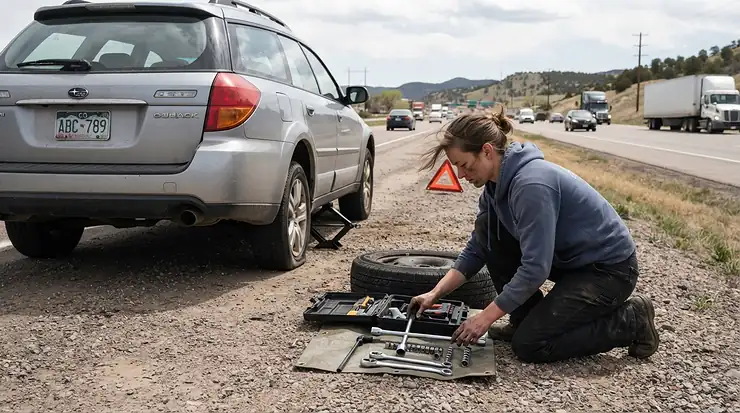
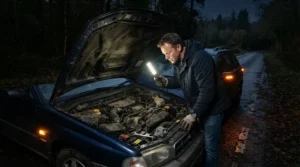
Here’s the thing nobody tells you about breakdowns: they never happen in front of your house. They happen on a shoulder with no cell signal, at 11 p.m., in the one week you forgot to charge your phone. An emergency roadside hand tool kit is a compact set of tools, safety gear, and repair essentials — jumper cables, a tire kit, screwdrivers, a flashlight — kept in your trunk to handle common breakdowns before a tow truck ever gets involved. Not glamorous. Just useful, in the exact moment you need useful.

According to AAA, drivers placed over 27 million emergency roadside service calls across the United States in 2024, with the majority of vehicles needing a tow or dealing with battery issues. Towing and dead batteries alone accounted for roughly 74% of every call AAA fielded that year. Translation: most roadside disasters are boring, predictable, and fixable with the right car emergency tool kit sitting five feet away in your trunk.
This guide breaks down seven real, currently sold options — from all-in-one 100-plus-piece kits to standalone jump starters and tire repair tools — so you can build a setup that matches your car, your climate, and your risk tolerance. We’ll compare specs honestly, flag the compromises nobody puts on the box, and walk through exactly how to use what you buy. No invented five-star reviews here — just the aggregated sentiment real buyers left, and straight commentary on what it means for you.
Quick Comparison Table
| Kit / Tool | Best For | Price Range | Standout Feature |
|---|---|---|---|
| Thrive Roadside Assistance & Car Emergency Kit | Budget shoppers who want one box that does it all | Under $40 | 104 pieces in one rigid case |
| Lifeline AAA Severe Weather Emergency Road Safety Kit | Drivers who want AAA’s own endorsement | $40–$60 | Severe-weather-rated components |
| AAA Excursion Road Kit | Anyone who actually plans to jump-start a battery | $65–$85 | Thick 8-gauge, 10-foot jumper cables |
| LIANXIN Roadside Assistance Emergency Kit | Drivers who want real hand tools, not just safety gear | $35–$50 | 142 pieces including a hard toolbox |
| Gerber Suspension NXT Multi-Tool | Small-car owners short on trunk space | $40–$55 | Full toolset in a 4.25-inch frame |
| CTR Heavy Duty Tire Plug Kit | Anyone who’s ever waited an hour for roadside tire help | $30–$45 | 68-piece kit with T-handle tools |
| NOCO Boost Plus GB40 | Drivers who want to skip cables entirely | $100–$130 | 1,000-amp jump starts, 2.4 lbs |
Look at that spread and a pattern jumps out fast: the all-in-one kits win on breadth, but the standalone jump starter and tire plug kit win on depth for the two problems that actually strand people. If you’re assembling a trunk tool kit for emergencies from scratch, pairing one comprehensive kit with one specialist tool — say the Lifeline AAA Severe Weather Emergency Road Safety Kit plus the NOCO Boost Plus GB40 — usually beats buying the single biggest box you can find.
💬 Found a combo you like already? Bookmark this page — you’ll want to compare prices again before you check out.
Top 7 Emergency Roadside Hand Tool Kits: Expert Analysis
1. Thrive Roadside Assistance & Car Emergency Kit — best value for a fast, complete setup
The Thrive Roadside Assistance & Car Emergency Kit packs 104 pieces into a single rigid carrying case, which matters more than it sounds — a soft bag that spills every time you open the trunk isn’t an emergency kit, it’s a scavenger hunt. Inside you’ll find a genuine screwdriver and socket set with several bit attachments, a safety triangle, and a set of jumper cables robust enough for routine use, not just decoration. The first-aid section is compact but covers the basics: gauze, antiseptic pads, scissors, tweezers, and bandages.
Based on the spec comparison with other 100-plus-piece kits in this price bracket, what stands out here is tool quality over raw item count — testers specifically praised the screwdriver and socket wrench setup while calling out the included ice scraper as the weak link. That’s a useful signal: buy this kit for the tools, and consider swapping the ice scraper for a real one if you live somewhere it snows. This is the pick for first-time buyers who want one purchase that covers 90% of common breakdowns without researching seven separate products.
Pros:
- ✅ Real screwdriver and socket set, not toy-grade tools
- ✅ Fits neatly in one rigid, grab-and-go case
- ✅ Jumper cables solid enough for actual use
Cons:
- ❌ Included ice scraper feels flimsy in cold climates
- ❌ First-aid kit is basic — fine for cuts, not for much else
At under $40 at the time of research, the Thrive Roadside Assistance & Car Emergency Kit is hard to beat as a single starting purchase — check current price before buying, since inventory and bundles shift often.
2. Lifeline AAA Severe Weather Emergency Road Safety Kit — broadest coverage with an AAA endorsement
The Lifeline AAA Severe Weather Emergency Road Safety Kit (model 4390) leans on its AAA branding for a reason: this 66-piece kit is built around severe-weather scenarios specifically, bundling jumper cables, a first-aid section, reflective triangles, an emergency thermal blanket, and a rain poncho into one bag rather than treating weather protection as an afterthought.
What most buyers overlook about AAA-endorsed kits is that the badge isn’t just marketing — it usually means the components were vetted against the same checklist AAA technicians use in the field, which explains why this kit reads as “the broadest protection for the widest range of drivers at the most accessible price point” in independent comparisons. If you drive through genuine seasonal extremes — ice in January, heat advisories in July — the thermal blanket and poncho aren’t padding, they’re the two items you’ll actually reach for during a roadside wait. Families and road-trippers who want one kit that doesn’t assume perfect weather should start here.
Pros:
- ✅ AAA-endorsed component list, not a generic assortment
- ✅ Rain poncho and thermal blanket built in, not optional add-ons
- ✅ Balanced coverage across mechanical, medical, and weather needs
Cons:
- ❌ 66 pieces is lighter on tools than box-count-focused rivals
- ❌ No dedicated tire inflator included
Priced in the $40–$60 range at most retailers, this is the emergency roadside hand tool kit to reach for if weather, not mechanics, is your bigger worry.
3. AAA Excursion Road Kit — the jumper cables actually work
Here’s a stat that should change how you shop: cables rated 16- to 20-gauge, the kind bundled into bargain kits, often can’t reliably start a car. The AAA Excursion Road Kit solves that at the source with 10-foot, 8-gauge jumper cables — thick enough to carry real current — paired with an air compressor that includes its own pressure gauge, a 9-LED flashlight, pliers, screwdrivers, and a utility knife.
The honest analytical take here: this 76-piece kit isn’t trying to win on item count, and that’s exactly the point. What the spec sheet won’t tell you outright is that gauge thickness is the single biggest predictor of whether jumper cables actually work when you need them, and most bundled kits quietly cut corners here to hit a lower price. The AAA Excursion Road Kit doesn’t, which is why it’s the pick for drivers whose actual anxiety is “will this dead battery leave me stranded,” rather than general preparedness. The first-aid section also includes real wound-care basics — gauze, antiseptic, tape — rather than a fistful of adhesive strips counted as ten separate “pieces.”
Pros:
- ✅ 8-gauge, 10-foot jumper cables rated for real starts
- ✅ Built-in air compressor with an actual pressure gauge
- ✅ First-aid section covers real wound care, not just band-aids
Cons:
- ❌ Pricier than kits with double the piece count
- ❌ No jump starter, so you still need a second battery or a helpful stranger
Expect to pay in the $65–$85 range for the AAA Excursion Road Kit — a fair trade if jumper cables are the one thing you refuse to gamble on.
4. LIANXIN Roadside Assistance Emergency Kit — most actual hand tools in one box
If your priority is genuinely a hand tool kit rather than a safety-gear bundle, the LIANXIN Roadside Assistance Emergency Kit earns its spot with 142 pieces built around a hard toolbox holding screwdrivers, a hammer, pliers, and a utility knife — tools meant for substantial roadside or parking-lot repairs, not just signaling for help. Beyond the toolbox, it also includes a seatbelt cutter, a glass breaker, electrical tape, a windshield snow shovel, a tow rope, and spare car fuses.
Reviewers consistently note that the hard toolbox is the differentiator here — most competing kits at this price stuff loose tools into fabric pouches that tangle and rattle, while a rigid case keeps hammer, pliers, and screwdrivers organized and quick to grab under stress. What most buyers overlook is that a seatbelt cutter and glass breaker are two of the cheapest, smallest items you can add to a kit and two of the only ones with genuine life-safety implications in a crash — worth checking for on any kit you consider, this one included. This is the pick for drivers who see “emergency kit” and think tools first, safety gear second.
Pros:
- ✅ Hard toolbox with hammer, pliers, screwdrivers, and utility knife
- ✅ Includes seatbelt cutter and glass breaker for crash scenarios
- ✅ Tow rope and spare fuses cover mechanical, not just medical, needs
Cons:
- ❌ 142-piece count includes small consumables that inflate the number
- ❌ Bulkier than kits built around a soft bag
At under $40 at the time of research, the LIANXIN Roadside Assistance Emergency Kit delivers a genuinely tool-forward car emergency tool kit for less than many single specialty tools cost on their own.
5. Gerber Suspension NXT Multi-Tool — full toolset, glovebox-sized
Not every driver has room — or budget — for a full kit, and that’s where the Gerber Suspension NXT Multi-Tool earns its keep. At a closed length of 4.25 inches and a weight of 6.7 ounces, it fits a glovebox pocket or a small zippered pouch without competing for space against a tire gauge or first-aid kit. Inside its stainless steel frame: pliers, Phillips and standard screwdrivers, a wire stripper, a file, an awl, a ruler, and bottle and can openers, all secured by a locking blade mechanism.
Based on the spec comparison with other compact multi-tools, the standout here is functional density — you’re getting close to a dozen discrete functions in a package smaller than most smartphones, which matters most for small-car owners who genuinely can’t spare cargo space for a boxed kit. Aggregated review sentiment from retail buyers is mixed but instructive: several reviewers flagged the pocket clip as prone to bending or catching on clothing, while others specifically called it “perfect for car tool emergency prepper” use. Read that as: buy it for the tool functions, and consider a separate pouch instead of relying on the clip long-term.
Pros:
- ✅ Fits in a glovebox pocket — no cargo space sacrificed
- ✅ Near a dozen functions in one locking, compact frame
- ✅ Stainless construction holds up to repeated roadside use
Cons:
- ❌ Pocket clip reported as prone to bending by multiple buyers
- ❌ No pliers-forward “big grip” tool for stubborn bolts
Typically priced in the $40–$55 range, the Gerber Suspension NXT Multi-Tool is the smartest add-on purchase for anyone who already owns a first-aid kit and flashlight but lacks actual roadside repair tools.
6. CTR Heavy Duty Tire Plug Kit — fixes the emergency that strands people most
A blown tire doesn’t care about your schedule, and the CTR Heavy Duty Tire Plug Kit is built specifically for that moment. This 68-piece universal tubeless tire repair kit uses ergonomic T-handle tools and premium steel construction to insert reusable plugs into cars, trucks, SUVs, and motorcycles alike, all packed into a portable, color-coded case designed by CTR, a Korean automotive tools brand with a track record in professional repair equipment.
What the spec sheet doesn’t fully capture is how much faster a plug repair is than swapping a spare — done correctly, a plugged tire can get you rolling again in minutes rather than the 20-plus it takes to jack up a car, especially in the rain or on a narrow shoulder. Reviewers consistently rate this kit highly, with an aggregated 4.8-star average across more than a thousand ratings on major retail platforms, and the color-coded, T-handle design is repeatedly cited as the reason beginners can complete a repair without a mechanic walking them through it. Pair this with any of the kits above and you’ve covered the single most common physical breakdown that a first-aid kit or jumper cables simply can’t touch.
Pros:
- ✅ Color-coded, T-handle tools built for first-time users
- ✅ Reusable plugs work across tubeless tires on multiple vehicle types
- ✅ Strong aggregated review record — 4.8 stars across 1,000-plus ratings
Cons:
- ❌ Plugs address punctures, not sidewall damage or blowouts
- ❌ Still requires a portable inflator to fully reinflate the tire
Expect to pay roughly $30–$45 for the CTR Heavy Duty Tire Plug Kit — genuinely one of the best-reviewed tire changing tools available for the price, based on current research.
7. NOCO Boost Plus GB40 — the lightest way to skip the jumper cable dance
Standalone jump starters solve a real annoyance: you shouldn’t need a second running car and a cooperative stranger just to fix a dead battery. The NOCO Boost Plus GB40 delivers 1,000 amps of peak current from a lithium-ion pack that weighs just 2.4 pounds, rated for gasoline engines up to 6 liters and diesel engines up to 3 liters — enough for the overwhelming majority of passenger vehicles, SUVs, and light trucks on the road.
Here’s what most buyers overlook about jump starters versus jumper cables: a jump starter works when you’re alone, at night, in a parking garage with zero other cars around — a scenario where cables are functionally useless no matter how thick the gauge. The GB40’s IP65 water-resistant housing and spark-proof, reverse-polarity-protected clamps mean it tolerates the kind of sloppy, panicked cable connections people actually make during a real breakdown, and it doubles as a 100-lumen flashlight with an SOS strobe mode and a USB power bank for a dying phone. Aggregated customer sentiment across multiple retailers is strongly positive, with long-term owners specifically noting years of reliable service and consistently rating it a dependable purchase.
Pros:
- ✅ 1,000-amp peak output covers most gas and diesel engines
- ✅ Works solo — no second vehicle or stranger required
- ✅ Doubles as a flashlight and USB power bank
Cons:
- ❌ Costs more than a basic set of jumper cables alone
- ❌ Needs periodic recharging to stay ready — easy to forget
Pricing for the NOCO Boost Plus GB40 typically falls between $100 and $130 depending on retailer and bundle — check current price, since it fluctuates more than most items on this list.
Setting Up and Maintaining Your Trunk Tool Kit for Emergencies
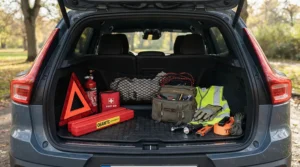
Buying the kit is the easy part. Here’s what most drivers skip: a car emergency tool kit that sits untouched for three years is worse than useless, because you’ll trust it right up until the moment it fails you. Start by unpacking whatever kit you buy and actually testing the jumper cables, flashlight, and tire inflator once — not during an emergency, but in your driveway, on a Saturday, with nothing at stake.
From there, build a simple maintenance rhythm: check the first-aid kit for expired items every six months, recharge any jump starter every 90 days even if unused (lithium packs self-discharge slowly but not never), and inspect jumper cable clamps for corrosion before winter. Store the kit somewhere accessible — not buried under camping gear — and somewhere temperature-tolerant, since extreme heat degrades rubber hoses, cable insulation, and adhesive bandages faster than most owners expect. A common first-30-days mistake: people cram a new kit into the spare tire well and forget it exists until they need it, by which point the tire iron is buried under three bags of groceries. Keep the kit itself in the trunk, visible and separate.
Real-World Scenarios: Matching the Kit to Your Life
Not every driver needs the same setup, and pretending otherwise wastes money. Consider three profiles. The daily commuter driving 12 miles each way in a compact car has limited trunk space and mostly needs speed over comprehensiveness — the Gerber Suspension NXT Multi-Tool paired with the CTR Heavy Duty Tire Plug Kit covers 80% of realistic scenarios without eating cargo room.
The road-trip family covering 300-plus miles through variable weather needs breadth: the Lifeline AAA Severe Weather Emergency Road Safety Kit handles medical, weather, and signaling needs in one purchase, and adding the NOCO Boost Plus GB40 removes dependence on a stranger’s car for a jump. Finally, the rural or off-schedule driver — someone whose commute runs through areas with spotty cell coverage — benefits most from the LIANXIN Roadside Assistance Emergency Kit‘s actual repair tools plus the AAA Excursion Road Kit‘s heavy-duty jumper cables, since a slow response time makes self-sufficiency the priority over convenience.
Problem → Solution: Fixing Common Roadside Breakdowns
Most roadside emergencies fall into a short, predictable list, and knowing the fix in advance beats improvising under stress.
Dead battery: A jump starter like the NOCO Boost Plus GB40 solves this without a second car; heavy-gauge jumper cables from the AAA Excursion Road Kit are the backup plan.
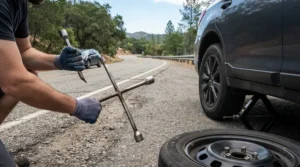
Flat or punctured tire: The CTR Heavy Duty Tire Plug Kit handles most punctures in minutes; a full blowout still requires the spare and a jack.
Loose or rattling part under the hood: A real screwdriver and pliers set — found in the Thrive and LIANXIN kits — handles loose clamps, hoses, and battery terminals that a basic kit’s flimsy tools can’t grip.
Crash-related door or seatbelt jam: The seatbelt cutter and glass breaker bundled into the LIANXIN Roadside Assistance Emergency Kit are the two cheapest tools with the highest stakes attached.
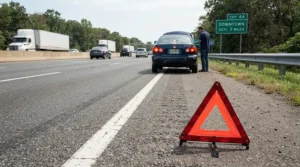
Nighttime visibility or signaling: Reflective triangles and the flashlight built into most kits, plus the GB40’s SOS strobe function, cover this without a separate purchase.
🔧 Ready to stop guessing and start stocking your trunk properly? The picks above cover every scenario on this list.
How to Choose an Emergency Roadside Hand Tool Kit
- Start with your climate. Drivers in snow or extreme heat need weather-specific components — thermal blankets, rain ponchos — more than extra screwdriver bits.
- Count real tools, not total pieces. A “150-piece” kit padded with bandages and zip ties isn’t more useful than a 70-piece kit with a real socket set.
- Check jumper cable gauge before anything else. Anything thinner than 8-gauge is a gamble on the one failure — a dead battery — that happens most often.
- Decide between cables and a jump starter. If you regularly park alone or drive at night, a standalone jump starter removes your dependence on a second vehicle.
- Match kit size to your vehicle. A compact car benefits more from a multi-tool and a tire plug kit than a bulky 150-piece box that eats trunk space.
- Verify the tire repair path. Confirm whether your kit includes plug tools, a spare, or neither — this is the single most common breakdown a kit needs to solve.
- Budget for maintenance, not just purchase price. Batteries drain, bandages expire, and rubber degrades — build a six-month check into your calendar from day one.
Common Mistakes When Buying a Roadside Tool Kit
The biggest mistake is buying on piece count alone. A 200-piece kit stuffed with adhesive strips and cable ties looks impressive on the box and performs worse than a 70-piece kit built around real screwdrivers and thick jumper cables. The second most common mistake is buying a kit and never testing it — flashlights die, jump starters lose charge, and the first time you learn a component doesn’t work shouldn’t be during an actual breakdown.
A third mistake, particularly common with tire kits: assuming a plug kit replaces a spare tire entirely. Plugs fix punctures in the tread, not sidewall damage or blowouts, so pairing a tire plug kit with a functioning spare and jack remains the safer standard, as the National Highway Traffic Safety Administration recommends carrying a jack and ground mat for changing a tire as part of any roadside kit. Finally, drivers often overlook checking whether their vehicle even still has a spare — a growing number of newer models ship without one.
Emergency Roadside Hand Tool Kit vs. Calling a Tow Truck
| Approach | Typical Response Time | Cost Per Incident | Control |
|---|---|---|---|
| Emergency roadside hand tool kit | Immediate (self-service) | One-time purchase, no per-incident fee | High — you control the fix |
| Calling a tow truck / roadside service | 30–90+ minutes, longer in rural areas | $75–$250+ per call without membership | Low — dependent on provider availability |
| No preparation | Indefinite | Unpredictable, often highest overall | None |
The math favors preparation almost every time: a one-time kit purchase in the $40–$130 range pays for itself against a single uncovered tow call, and it works in the dead zones where a tow truck’s ETA stretches past an hour. That said, a hand tool kit doesn’t replace roadside assistance membership entirely — mechanical failures beyond a dead battery or flat tire, which make up the largest share of AAA’s roadside calls, still require professional towing. Think of a kit as buying time and independence, not replacing help entirely.

What to Expect: Real-World Performance
Specs on a box rarely match the experience of using a kit at 9 p.m. in the rain. In practice, thick jumper cables like the AAA Excursion Road Kit‘s 8-gauge set connect and hold a charge noticeably faster than thin bargain cables, often shaving several minutes off a jump start. A tire plug repair with the CTR Heavy Duty Tire Plug Kit genuinely takes under 10 minutes for a first-timer following the color-coded steps, versus 20-plus minutes wrestling a jack and lug wrench in the dark. Jump starters like the NOCO Boost Plus GB40 perform closest to their rated specs in moderate weather; extreme cold reduces peak output on any lithium pack, so a full charge before winter matters more than the amp rating printed on the box.
Features That Actually Matter (And Those That Don’t)
Jumper cable gauge, tire repair capability, and a genuine screwdriver/socket set matter enormously — these three cover the incidents that actually strand drivers. Piece count, branded packaging, and bundled “extras” like key chains or notepads matter far less than marketing suggests. A seatbelt cutter and glass breaker are cheap but genuinely important for crash scenarios specifically, not general breakdowns. Ignore any kit that advertises “200+ pieces” without listing what those pieces actually are — that’s usually a sign of padded bandage and zip-tie counts rather than useful tools.
Long-Term Cost & Maintenance
A one-time kit purchase in the $35–$130 range, spread across an average vehicle ownership period of several years, works out to pennies per month of protection. The ongoing cost is small but real: replacing expired first-aid items every year or two, recharging a jump starter quarterly, and occasionally replacing degraded rubber components like cable insulation or tire plug materials after extreme heat exposure. Compared to even one uncovered tow call or a single missed workday from being stranded, the total cost of ownership on any kit in this guide is difficult to beat.
Price Range & Value Analysis
| Tier | Price Range | What You Get | Value Verdict |
|---|---|---|---|
| Budget | Under $45 | Thrive or LIANXIN kit, basic tools and safety gear | Best entry point for first-time buyers |
| Mid-Range | $45–$85 | Lifeline AAA kit or AAA Excursion Road Kit, better cables and weather gear | Best balance of coverage and cost |
| Premium | $85–$130+ | NOCO Boost Plus GB40 added to any base kit | Best for drivers who want independence from cable jumps entirely |
The jump from budget to mid-range buys meaningfully thicker jumper cables and better weather protection — a worthwhile upgrade for most drivers. The premium tier isn’t about more pieces; it’s about removing your single biggest point of failure (a dead battery with no other car around) entirely, which is why breakdown preparedness experts increasingly recommend a jump starter over cables alone.
Frequently Asked Questions
❓ What should be in an emergency roadside hand tool kit?
❓ How much does a good roadside emergency kit cost?
❓ Do I need a separate tire kit if my car kit already has tools?
❓ Are jump starters better than jumper cables?
❓ How often should I check my roadside kit?
Conclusion
Breakdowns are annoying by nature, but they’re rarely dangerous if you’re prepared for them — and preparation here doesn’t require guesswork. A car emergency tool kit built around real jumper cables, a working tire repair option, and a genuine set of hand tools solves the overwhelming majority of what actually strands drivers, according to AAA’s own call data. Whether you start with a single comprehensive box like the Lifeline AAA Severe Weather Emergency Road Safety Kit or build a custom combination around the NOCO Boost Plus GB40 and CTR Heavy Duty Tire Plug Kit, the goal is the same: turn a roadside emergency into a five-minute inconvenience instead of a multi-hour ordeal. Breakdown preparedness isn’t about buying the biggest kit on the shelf — it’s about buying the right tools for the breakdowns you’re actually likely to face, and testing them before you need them.
Recommended for You
- Tool Set For RV And Camping: 7 Best Picks For 2026
- Tool Set For Women Beginners: 7 Best Picks For 2026
- Tool Kit For College Dorm Room: 7 Best Picks For 2026
Disclaimer: This article contains affiliate links. As an Amazon Associate, I earn from qualifying purchases. If you purchase products through these links, we may earn a small commission at no additional cost to you.
✨ Found this helpful? Share it with a friend who still doesn’t have a kit in their trunk!🚗
