
In This Article
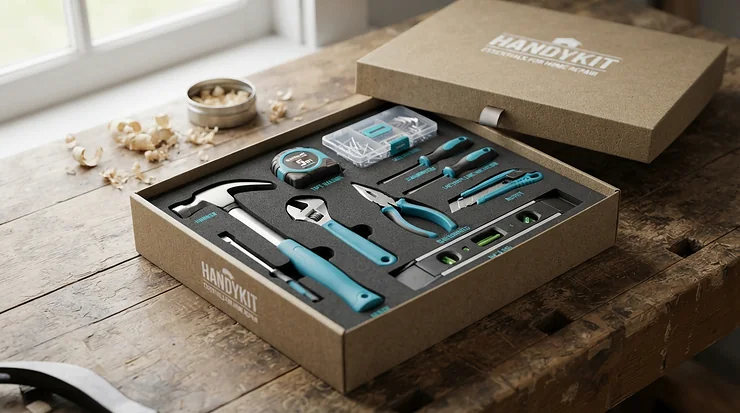
A good tool set for women beginners is a curated collection of hand tools — typically 90 to 230 pieces — sized, gripped, and organized so a first-time DIYer can tackle household repairs without guesswork. That’s the 45-word version. The longer version is messier, and more honest: most of us don’t buy our first tool set because we suddenly love hardware. We buy it because a shelf falls off the wall at 9pm on a Tuesday, and the only tool in the house is a butter knife pretending to be a screwdriver.

I’ve spent the last few weeks knee-deep in spec sheets, aggregated review data, and a genuinely surprising amount of research on handle diameters (more on that later — it’s the thing nobody tells you to check). What follows isn’t a rewritten Amazon listing. It’s a real comparison of seven actual, purchasable kits, why each one earns its spot, and how to think about grip size, weight, and storage before you spend a single dollar. If you’ve ever wondered what actually separates a do-it-yourself beginner from someone who dreads their own toolbox, it usually comes down to whether the tools in their hands were chosen — or just grabbed off a shelf.
Whether you’re outfitting a first apartment, replacing a hand-me-down toolbox from a parent, or specifically hunting for an ergonomic tool set for beginners that won’t leave your wrist aching, this guide covers real specs, real trade-offs, and real advice — including which of these seven kits is worth the extra money, and which one is a smart way to save it.
Quick Comparison: Tool Sets for Women Beginners at a Glance
| Tool Set | Piece Count | Best For | Price Range |
|---|---|---|---|
| Amazon Basics 142-Piece Household Tool Kit | 142 | Best all-around starter kit | $30–$45 |
| WORKPRO 100-Piece Pink Hand Tool Set | 100 | Lightest, most compact carry | $35–$45 |
| CARTMAN 148-Piece Automotive & Household Set | 148 | Home + car in one kit | $45–$60 |
| WORKPRO 12V Cordless Drill Driver Set | Drill + accessories | Beginners who want power tools | $45–$65 |
| DEKOPRO 94-Piece Tool Set | 94 | Tightest budget | $25–$35 |
| GETFOO 144-Piece Household Tool Set | 144 | Dorms, apartments, small spaces | $30–$40 |
| CRAFTSMAN 230-Piece VERSASTACK Set | 230 | Long-term, upgrade-ready pick | $100–$200 |
A quick read of this table tells a clear story: piece count and price rise together, but not evenly, and the middle of this table is where most beginners will actually land. The CARTMAN 148-Piece and GETFOO 144-Piece sets sit at a near-identical price point to the Amazon Basics 142-Piece Household Tool Kit, which means the deciding factor usually isn’t cost — it’s what each brand chose to prioritize (car maintenance versatility versus dorm-friendly compactness). The CRAFTSMAN 230-Piece set is the clear outlier, and it’s priced like one; it’s not for a first apartment repair kit, it’s for someone who already knows they’ll be doing this for years.
💬 Found a favorite already? A share helps someone else skip the guesswork too!
Top 7 Tool Sets for Women Beginners: Expert Analysis
Choosing seven kits out of the hundreds marketed “for women” wasn’t about picking whatever had the most pink packaging. It was about finding real, verifiable products with real specs and genuine review histories — then being honest about what each one does and doesn’t do well.
1. Amazon Basics 142-Piece Household Tool Kit — best all-around starter for first apartments
The Amazon Basics 142-Piece Household Tool Kit is the kind of unglamorous, dependable purchase that quietly ends up being the right call for most beginners. It’s sold in a turquoise blow-molded case measuring roughly 13.4 x 9.3 x 3 inches, and the whole thing weighs under 5 pounds fully loaded — light enough to store in a closet shelf without a second thought.
Inside, you get the genuinely essential stuff: a claw hammer, a torpedo level, a tape measure, four types of pliers, a set of precision screwdrivers, and a substantial hardware assortment of picture hooks, screws, and anchors. The steel is heat-treated and corrosion-resistant, and the handles use a non-slip plastic grip rather than bare metal, which matters more than it sounds like it should — cold, slick handles are a surprisingly common first-timer complaint.
Based on the spec comparison against similarly priced kits, this one earns its reputation less from any single standout tool and more from breadth: it covers roughly 80% of what a first-year apartment renter will actually need, without forcing you to buy specialty items you’ll use once. Reviewers consistently report that the case itself, not just the tools, is a genuine selling point — the internal foam layout keeps everything from rattling loose, and several buyers specifically mention using it as a grab-and-go kit for a car trunk or a first home.
Pros:
- ✅ Comprehensive 142-piece assortment covers most everyday repairs
- ✅ Compact, lightweight case fits in a closet or under a bed
- ✅ Strong aggregated review consensus around durability for the price
Cons:
- ❌ Plastic components (like the adjustable wrench) feel less premium than steel-heavy sets
- ❌ No cordless drill included, so power-tool tasks need a separate purchase
Price typically lands in the $30–$45 range, occasionally dipping lower during promotional periods — check current price before buying, since Amazon Basics runs frequent flash discounts. For the breadth of coverage here, this is one of the strongest value verdicts in this whole roundup.

2. WORKPRO 100-Piece Pink Hand Tool Set — most compact carry for small hands
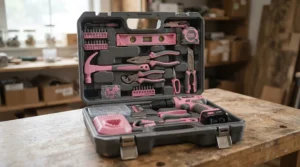
The WORKPRO 100-Piece Pink Hand Tool Set takes a different approach: instead of maximizing piece count, it optimizes for portability and hand comfort. The tools are drop-forged chrome-vanadium steel — a genuine step up in durability from the softer steel alloys used in some ultra-budget kits — housed in a soft-sided round pouch rather than a rigid case.
What most buyers overlook about this model is that the “soft pouch” design isn’t a downgrade, it’s a deliberate trade-off: a hard case protects tools better in transit, but a pouch is lighter, easier to squeeze into a small closet, and doesn’t crack if you drop it. At roughly 2.4 kg (about 5.3 lbs) of tools alone, it’s genuinely one of the lighter full-featured sets in this list, and the ergonomic soft-grip handles are noticeably softer under the thumb than the harder plastic used on some competitors.
The 40-piece magnetic bit set with holder is the standout inclusion here — it turns the included precision screwdrivers into a mini bit-driver system, which is more versatile than a fixed set of screwdriver heads. Aggregated review sentiment on WORKPRO’s pink tool line is generally positive on build quality, though it’s worth noting honestly that this specific listing has a smaller review pool than some of the higher-volume kits on this list, so treat the star rating with a bit more caution than a set with thousands of ratings.
Pros:
- ✅ Genuinely lightweight — easiest kit here to carry one-handed
- ✅ Chrome-vanadium steel construction outperforms basic alloy steel
- ✅ 40-piece magnetic bit holder adds real screwdriving versatility
Cons:
- ❌ Smaller aggregated review sample than higher-volume competitors
- ❌ Soft pouch offers less impact protection than a hard case
Expect a price in the $35–$45 range. If lightweight tool kit for beginners is genuinely your top priority — say, you have wrist or grip strength concerns — this is one of the better-matched picks on this list.
3. CARTMAN 148-Piece Automotive and Household Tool Set — best for combining car and home repairs
The CARTMAN 148-Piece Automotive and Household Tool Set is one of the highest-converting tool kits in its category on Amazon, and the spec sheet explains why: it’s genuinely dual-purpose. Alongside the standard household assortment, it includes automotive-oriented sockets and drive tools that most “home only” kits skip entirely.
Here’s what the spec sheet won’t tell you, but reviewers note repeatedly: the CR-V steel components hold up noticeably better under repeated torque than the softer steel used in bargain-bin kits, which matters if you’re doing anything beyond hanging picture frames — think tightening a loose car battery terminal or adjusting a bike derailleur. The molded plastic toolbox uses anti-drop slots for the sockets specifically, a small design detail that prevents the single most annoying tool-kit failure mode: losing a 10mm socket inside the case forever.
Based on the spec comparison, this is the set to buy if you expect your first year of ownership to include both a home repair and a car glovebox emergency. It’s not the lightest option here, and it’s not the cheapest, but the dual-use design means you’re less likely to need a second purchase within six months.
Pros:
- ✅ Covers both automotive and household repair scenarios
- ✅ CR-V steel outperforms basic steel alloys under torque
- ✅ Anti-drop socket slots reduce lost-piece frustration
Cons:
- ❌ Heavier and bulkier than dedicated household-only kits
- ❌ Some automotive-specific pieces will sit unused if you don’t own a car
Price sits in the $45–$60 range at the time of research. Reviewers consistently flag the versatility here as the main draw — it’s the “one kit, two use cases” option on this list.
4. WORKPRO 12V Cordless Drill Driver Set for Women — best entry point into power tools
If the previous three sets are about hand tools done well, the WORKPRO 12V Cordless Drill Driver Set for Women is about crossing the bridge into power tools without being intimidated by it. The drill itself weighs about 1.8 lbs — genuinely light, to the point where WORKPRO markets it explicitly as sized for smaller hands and lower arm strength, and reviewers confirm that positioning rather than dispute it.
The 3/8-inch keyless chuck means no separate chuck key to lose (a classic first-drill annoyance), and the set includes a charger and storage bag so it’s a complete, ready-to-use kit out of the box rather than a drill that needs three separate accessory purchases. Based on the spec comparison, the lower voltage (12V vs. the 18–20V drills aimed at contractors) is a deliberate trade-off: less raw torque, but also less kickback, lighter weight, and an easier learning curve for someone driving their first screws.
Aggregated review sentiment is strong here — a common theme in the feedback is that first-time drill owners specifically appreciate not feeling like they need two hands and a shoulder brace just to hold the thing steady. The trade-off is capability: this isn’t the drill you reach for to mix a five-gallon bucket of joint compound or drive lag bolts into a deck.
Pros:
- ✅ Exceptionally lightweight — 1.8 lbs is easy for smaller hands
- ✅ Keyless chuck removes a common beginner pain point
- ✅ Comes complete with charger and storage bag, no add-ons needed
Cons:
- ❌ 12V motor lacks torque for heavy-duty tasks like decking or masonry
- ❌ Battery capacity is modest compared to 18V+ contractor-grade drills
Price typically falls in the $45–$65 range depending on the accessory bundle. For anyone whose first DIY project involves assembling furniture or hanging shelves, this is a genuinely sensible on-ramp into cordless tools.
5. DEKOPRO 94-Piece Tool Set — tightest budget pick that still covers the basics
The DEKOPRO 94-Piece Tool Set is the leanest kit on this list, and it’s positioned that way on purpose. At under 100 pieces, it strips the assortment down to the tools a first-time renter actually reaches for — screwdrivers, pliers, a hammer, a tape measure, and basic hardware — without the bulk of specialty bits and adapters that pad out larger kits.
Key specs here are modest by design: it’s a small basic hand tool box aimed squarely at apartments, dorms, and light office use rather than serious home-improvement projects. What most buyers overlook about entry-level kits like this one is that fewer pieces isn’t automatically a downgrade — for someone who genuinely just needs to hang a mirror and tighten a wobbly chair leg, a 230-piece mechanic’s set is overkill, and the DEKOPRO avoids that bloat.
Based on the spec comparison against pricier kits, the honest trade-off is tool longevity rather than tool selection — budget-tier steel alloys in this price bracket typically don’t hold an edge or resist wear quite as long as CR-V steel, which matters more if you’re using the tools weekly rather than a few times a year.
Pros:
- ✅ Genuinely low price point for a still-functional starter kit
- ✅ Compact case ideal for closets, dorms, or small apartments
- ✅ Covers the core tools most beginners reach for first
Cons:
- ❌ Basic steel alloy won’t hold up as long under frequent heavy use
- ❌ Fewer specialty bits and adapters than 140+ piece competitors
Price generally lands under $35, making it one of the more accessible entry points into this category. Value verdict: if budget is the single deciding factor, this is a defensible, honest starting point — just budget mentally for a possible upgrade in two to three years.
6. GETFOO 144-Piece Household Tool Set — best for dorms, apartments, and small households
The GETFOO 144-Piece Household Tool Set occupies a similar niche to the Amazon Basics kit but leans harder into portability and gift-ready presentation, with marketing and packaging aimed specifically at college dorms and small apartment use. It ships in a compact plastic toolbox and includes the standard general-household assortment: hammer, screwdrivers, pliers, wrenches, tape measure, and a hardware kit.
What stands out on the spec sheet is less about any single premium component and more about intended context — this is explicitly built and marketed for the person moving into their first space, not the person renovating a kitchen. Based on the spec comparison, the piece count is comparable to the Amazon Basics kit almost tool-for-tool, so the decision between them often comes down to case design preference and current promotional pricing rather than any major functional gap.
Reviewers consistently note that the case’s compact footprint is the main draw — it tucks into a dorm closet or a small kitchen cabinet without taking up disproportionate space, which matters more in a 400-square-foot studio than it does in a house with a garage.
Pros:
- ✅ Compact footprint ideal for dorms and small apartments
- ✅ Comparable piece count and coverage to pricier household kits
- ✅ Gift-friendly presentation for first-apartment or graduation gifts
Cons:
- ❌ Overlaps heavily with Amazon Basics on function, so it’s a close call
- ❌ Limited independent long-term durability data compared to older, more established lines
Price generally sits in the $30–$40 range. This is a solid pick specifically for beginner-friendly DIY tools aimed at small-space living rather than serious home projects.
7. CRAFTSMAN 230-Piece VERSASTACK Mechanics Tool Set — best long-term upgrade pick
The CRAFTSMAN 230-Piece VERSASTACK Mechanics Tool Set (model CMMT45306) is the clear premium option here, and it’s worth understanding why before dismissing it as overkill. The kit includes 91 sockets (both standard and deep-length), three ratchets across 1/4-inch, 3/8-inch, and 1/2-inch drive sizes, 21 combination wrenches, 44 hex keys, and 66 screwdriver bits — a genuinely comprehensive mechanic’s assortment in both SAE and metric measurements.
The standout engineering detail is the 72-tooth ratchet head, which delivers just a 5-degree arc swing and a low-profile head up to 25% thinner than standard ratchets — in practice, that means working in tight spaces (behind an appliance, inside a car engine bay) without needing to fully swing the ratchet handle each time. The whole set lives in a three-drawer VERSASTACK-compatible toolbox, which is CRAFTSMAN’s modular storage system — meaning this case can physically stack and lock together with other VERSASTACK boxes if you expand your tool collection later.
Aggregated review sentiment here is unusually strong for a tool set at this price point, with a large sample size backing up a high average rating. Reviewers consistently point to the ratchet quality and the toolbox’s one-handed locking dial as the features that justify the higher price. Based on the spec comparison, this is overkill for someone who just needs to hang a few picture frames — but for someone who already suspects DIY and light mechanical work will become a recurring hobby, it’s priced like an investment because it’s built to be treated like one, backed by a full lifetime warranty.
Pros:
- ✅ Professional-grade 72-tooth ratchets with a low-profile head design
- ✅ Full lifetime warranty backs long-term reliability
- ✅ VERSASTACK case expands into a modular storage system over time
Cons:
- ❌ Meaningfully more expensive than the other six kits on this list
- ❌ Automotive-heavy assortment includes pieces a pure household user won’t need
Price generally ranges from $100–$200, though it’s frequently available at a discount closer to the lower end of that range — always check current price before buying, since CRAFTSMAN runs this particular promotion often. If you want one kit you won’t outgrow in two years, this is the pick that earns its premium.
Practical Usage Guide: Setting Up Your New Tool Set
Buying the kit is the easy part. The first 30 days of ownership are where most beginners either build confidence or quietly shove the toolbox in a closet and forget about it. Start by unpacking everything and doing a quick inventory against the included checklist or box diagram — most kits ship with a foam or plastic insert showing where each tool belongs, and re-sorting it correctly from day one prevents the classic “missing 10mm socket” problem down the line.
Next, do a five-minute test drive: pick up the hammer, the pliers, and (if included) the drill, and just hold them. This is the moment to notice if a handle feels too thick, too thin, or awkward in your grip — better to notice now than mid-project. If your kit includes a cordless drill, charge the battery fully before first use, even if it shows partial charge out of the box; lithium-ion batteries perform and last longer when they complete a full initial charge cycle.
A common first-30-days mistake is over-tightening — new drill owners in particular tend to drive screws until the drill stalls or strips the screw head, rather than easing off once resistance builds. Most beginner drills include a clutch/torque-adjustment ring specifically to prevent this; set it low for soft materials like drywall and increase gradually. Finally, designate one fixed storage spot for the case itself — under a specific shelf, in a specific closet corner — because “I’ll just put it wherever” is how tool sets end up scattered across three rooms within a month.
Real-World Scenarios: Which Tool Set Fits Your Life
The first-apartment renter. If you’re commuting between a rental and a big-box hardware store feels like a hassle, prioritize breadth over specialization. The Amazon Basics 142-Piece or GETFOO 144-Piece kits cover the bulk of what comes up — hanging curtain rods, tightening cabinet hinges, assembling flat-pack furniture — without the automotive-heavy bulk of a mechanic’s set.
The budget-conscious student. Dorm rooms have two enemies: space and money. The DEKOPRO 94-Piece kit or the WORKPRO 100-Piece Pink Hand Tool Set solve both problems at once, fitting in a closet shelf and costing less than a textbook.
The aspiring home-improvement hobbyist. If assembling furniture has already turned into “I actually kind of enjoy this,” skip the training-wheels kit. The CRAFTSMAN 230-Piece VERSASTACK Set is priced for someone who expects to still be using it in five years, and the ratchet quality alone justifies starting there rather than upgrading twice.
The car-and-home multitasker. If you’re the designated fixer for both a car and an apartment, the CARTMAN 148-Piece Automotive and Household Set is built for exactly that overlap, saving you from buying two separate kits.
How to Choose an Ergonomic Tool Set for Beginners
- Check the handle diameter before anything else. Ergonomics researchers generally recommend a handle diameter around 1.25 to 2 inches for tools that require a firm “power grip” (like a hammer), and a slimmer 0.25 to 0.5-inch diameter for precision tools like small screwdrivers.
- Weigh the whole kit, not just individual tools. A heavy case can be just as fatiguing to carry and store as a heavy individual tool — check total kit weight if it’s listed.
- Look for non-slip, textured grips. Bare metal or hard, smooth plastic handles are more prone to slipping, especially with sweaty or cold hands.
- Confirm the case has a secure, one-hand-operable latch. Fumbling with two-handed clasps while holding groceries or a toddler gets old fast.
- Match piece count to actual need, not aspiration. A 230-piece mechanic’s set is wasted on someone who only needs to hang mirrors — buy for your next year, not your hypothetical future garage.
- Read the aggregated review themes, not just the star average. A 4.6-star kit with 6,000 reviews is a more reliable signal than a 4.8-star kit with 20.
- Verify what’s actually included versus implied. “Drill set” doesn’t always mean a battery and charger are included — check the listing specifics before assuming.
Grip Size 101: Why It’s the Most Overlooked Spec
Nobody puts “grip diameter” in a headline, but it’s arguably the single most important spec on this whole list, and it’s the one most beginners skip entirely. According to published guidance on ergonomic hand tool selection, single-handle tools used for forceful tasks — hammering, driving screws with resistance — perform best with handle diameters in the 1.25 to 2-inch range, while precision tasks like fine screwdriving are better served by a slimmer 0.25 to 0.5-inch grip.
Here’s what the spec sheet won’t tell you: a handle that’s too thin for a power task forces your hand into a pinch grip instead of a full wrap, which fatigues your fingers and wrist far faster than the task itself should. This is exactly why kits marketed with “ergonomic” soft-grip handles, like the WORKPRO 100-Piece Pink Hand Tool Set, tend to earn specifically positive review commentary around comfort during longer sessions — the soft, slightly compressible grip surface reduces vibration transfer into the palm, which matters more the longer you’re using the tool.
The practical takeaway: if a listing photo shows the handle clearly, compare it against a familiar object (most standard hammer handles run close to 1.5 inches) before assuming “ergonomic” in a title means anything specific.
Lightweight Tool Kits for Beginners: What “Lightweight” Actually Means
“Lightweight” gets used loosely in tool marketing, so it’s worth being specific about what it should mean in practice. For a full household kit, anything under 5 pounds fully packed (like the Amazon Basics 142-Piece at roughly 4.66 lbs) is genuinely easy to carry one-handed up a flight of stairs. For a cordless drill specifically, under 2 lbs — like the WORKPRO 12V Cordless Drill Driver Set at about 1.8 lbs — is the threshold where most first-time users stop noticing arm fatigue during a 20-minute project.
On paper this means two different things depending on what you’re buying: for hand tool kits, weight is mostly about case portability and storage convenience. For power tools, weight directly affects control and precision — a heavier drill is harder to hold steady while also applying downward pressure, which is exactly the combination a beginner is still learning to coordinate. If you’re specifically shopping for a lightweight tool kit for beginners, prioritize drill weight over hand-tool-case weight, since that’s where the ergonomic payoff is largest.
Tool Storage Case: The Unsung Hero of Any Kit
The case gets far less marketing attention than the tools inside it, which is a mistake — a poorly designed tool storage case is the single fastest way to turn a great set of tools into a frustrating mess. The best cases share three traits: individual tool slots or foam cutouts (rather than a loose bin), a secure latch that survives being dropped once or twice, and a size that fits a specific, repeatable storage spot in your home.
Reviewers consistently flag the CARTMAN 148-Piece kit’s anti-drop socket slots as a standout detail for exactly this reason — sockets are the single most commonly lost tool-kit component, since they’re small, numerous, and easy to knock loose. Soft pouches, like the one included with the WORKPRO 100-Piece Pink Hand Tool Set, trade some impact protection for flexibility and lower weight — a reasonable trade-off if the kit is staying in a closet rather than riding around in a car trunk. If you expect to transport your kit frequently, a rigid case with internal dividers is worth prioritizing even at a slightly higher price point.

Your First DIY Project: A Beginner’s Game Plan
Pick a genuinely low-stakes first project — hanging a mirror, tightening loose cabinet hinges, or assembling a small flat-pack shelf — rather than starting with anything load-bearing or electrical. Lay out every tool you’ll need before starting, rather than mid-project; this single habit prevents most of the “wait, where’s the—” interruptions that make first attempts feel harder than they are.
Read the full instructions once, start to finish, before picking up a single tool — flat-pack furniture manufacturers in particular tend to bury a critical step (like “insert dowel before tightening bolt”) halfway through a diagram. If your project involves a drill, do a test hole in scrap material first to confirm your bit size and depth before committing to the real surface. And critically: keep the manufacturer’s safety guidance in mind even for small jobs — most beginner injuries happen not from major projects but from small, rushed ones where basic precautions (eye protection, a stable stance, checking a tool for damage before use) got skipped because “it’s just a small job.”
Beginner-Friendly DIY Tools vs Professional-Grade Tools
| Factor | Beginner-Friendly Kits | Professional-Grade Kits |
|---|---|---|
| Piece count | 90–150 pieces, curated for common tasks | 200+ pieces, includes specialty/rare-use items |
| Steel quality | Basic to mid-grade alloy steel | Chrome-vanadium or forged steel, built for repeated stress |
| Price range | $25–$65 | $100–$300+ |
| Warranty | Limited or none | Often full lifetime warranty |
| Best For | Apartments, dorms, occasional repairs | Frequent DIY, light mechanical work, long-term use |
The comparison above makes the trade-off pretty clear: beginner-friendly kits like the DEKOPRO 94-Piece or GETFOO 144-Piece sets optimize for accessibility — lower cost, simpler tool selection, lighter overall weight — while professional-grade options like the CRAFTSMAN 230-Piece VERSASTACK Set optimize for longevity and capability. Neither approach is objectively better; the right choice depends entirely on how often you expect to actually open the toolbox in year two. A beginner set bought now doesn’t lock you out of a professional set later — many people buy both, using the smaller kit for daily grab-and-go tasks and the larger one for anything more involved.
Common Mistakes When Buying a Tool Set for Women Beginners
The most common mistake is buying based on piece count alone — a 230-piece kit isn’t automatically better than a 94-piece one if half those pieces are automotive sockets you’ll never touch. A close second is ignoring the case entirely, then being surprised when tools go missing or rattle loose within a month. Buyers also frequently skip checking whether a drill is included versus implied — some “tool set” listings show a drill in the photo but sell the drill separately as an add-on, so read the itemized contents, not just the title.
Another frequent misstep: assuming pink packaging or “for women” marketing automatically means better ergonomics. Sometimes it does — genuine soft-grip handles and lighter-weight drills are real, verifiable design choices. Sometimes it’s just a color swap on the same hardware. What most buyers overlook is that checking the actual handle diameter and drill weight in the spec sheet tells you far more than the marketing copy does.
Long-Term Cost & Maintenance
| Consideration | Budget Kits ($25–$45) | Mid-Range Kits ($45–$65) | Premium Kits ($100–$200) |
|---|---|---|---|
| Expected tool lifespan | 2–4 years with regular use | 4–7 years | 8+ years, often decades |
| Replacement frequency | Individual pieces may need swapping | Occasional replacement | Rare, backed by lifetime warranty |
| Cost per year (rough estimate) | $8–$15/year | $8–$12/year | $12–$20/year initially, near $0 after warranty period |
Looking at the table above, the long-term cost-per-use math narrows the gap between budget and premium kits more than the sticker price suggests. A $35 kit replaced every three years costs roughly the same annualized amount as a $150 kit that lasts a decade — the premium option just requires a larger payment upfront. For someone still deciding whether DIY work is a passing project or an ongoing habit, starting with a budget or mid-range kit and upgrading later is a financially reasonable, low-risk path rather than a compromise.
Maintenance itself is minimal but matters: wipe down metal tools occasionally to prevent rust (especially in humid climates), keep screwdriver tips free of stripped-metal burrs, and recharge cordless drill batteries fully every few months even during periods of non-use, since lithium-ion batteries degrade faster when left fully depleted for long stretches.
Safety First: Regulations & Best Practices
Tool safety guidance for beginners isn’t complicated, but it’s easy to skip when a job feels small. The Consumer Product Safety Commission’s power tool safety checklist recommends always reading the owner’s manual before first use, wearing safety goggles to protect against flying debris, and inspecting extension cords for damage before using them outdoors — all genuinely quick habits that prevent the majority of common DIY injuries.
For hand tools specifically, the same core principles apply regardless of experience level: use the right tool for the job rather than improvising (a butter knife is not a screwdriver, no matter how tempting), inspect tools for cracks or damage before each use, and never remove safety guards from power tools. None of this requires expertise — it requires about thirty seconds of attention before starting, which is a small price for avoiding a trip to urgent care.
Frequently Asked Questions
❓ What's the best tool set for women beginners on a tight budget?
❓ Do tool sets marketed for women actually have different specs?
❓ What's a good ergonomic tool set for beginners with smaller hands?
❓ How many pieces do I actually need in a first tool kit?
❓ Is a cordless drill necessary for a first DIY project?
Conclusion
There’s no single “correct” tool set for women beginners — there’s a correct one for your specific apartment, budget, and tolerance for wrist strain. The Amazon Basics 142-Piece Household Tool Kit earns its spot as the most broadly sensible starting point for most people, the WORKPRO 100-Piece Pink Hand Tool Set is the pick if lightweight portability matters most to you, and the CRAFTSMAN 230-Piece VERSASTACK Set is worth the jump if you already suspect this is the start of a longer hobby rather than a one-time purchase.
What actually determines whether a first tool set gets used for years or abandoned in a closet isn’t the piece count or the color of the case — it’s whether the handles fit your hand, the case fits your space, and the tools inside match the projects you’re actually going to attempt. Start there, and the rest of the decision gets a lot easier.
Recommended for You
- Tool Kit For College Dorm Room: 7 Best Picks For 2026
- Basic Tool Set For New Homeowners: 7 Kits That Actually Deliver
- Home Tool Kit For Apartment Renters: 7 Best Picks For 2026
Disclaimer: This article contains affiliate links. As an Amazon Associate, I earn from qualifying purchases. If you purchase products through these links, we may earn a small commission at no additional cost to you.
✨ Found this helpful? Share it with your friends! 💬🤗
