
In This Article
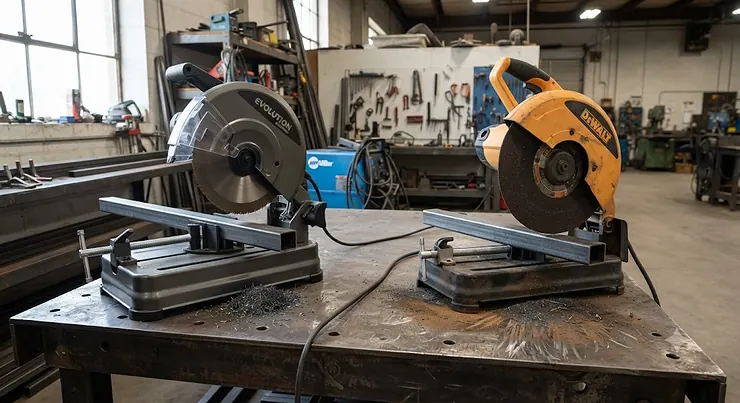
If you have ever stood next to a cut off saw while it screamed through a piece of angle iron, you already know the two personalities of metal cutting. One camp throws a rooster tail of orange sparks and leaves the cut end glowing like a branding iron. The other just… cuts, quietly, and hands you a piece of steel you can pick up bare-handed thirty seconds later. That is the entire cold cut saw vs abrasive cut off saw debate in a nutshell, and it is a bigger decision than most buying guides let on.
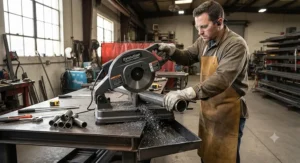
A cold cut saw uses a toothed, carbide or high-speed-steel blade that shears metal at low RPM, pushing heat into the chips instead of the workpiece, producing burr-free, cool-to-the-touch cuts. An abrasive cut off saw grinds through metal with a spinning resin wheel at high RPM, generating sparks and significant heat but costing far less upfront. Both machines cut the same materials; they just get there through opposite physics — and that spinning-wheel noise is loud enough that occupational hearing loss prevention is worth thinking about before you ever pull the trigger.
This guide walks through seven real machines spanning budget, mid-range, and premium tiers, breaks down cut off saw blade types, explains cut off saw safety requirements you cannot skip, and settles the ferrous vs non-ferrous cut-off question once and for all. By the end, you will know exactly which saw belongs in your shop, garage, or jobsite trailer, and why.
Quick Comparison: Cold Cut Saw vs Abrasive Cut Off Saw
Before diving into individual products, here is the shorthand version fabricators actually use when deciding between these two tool categories.
| Factor | Cold Cut Saw | Abrasive Cut Off Saw | Best For |
|---|---|---|---|
| Cut finish | Burr-free, clean edge | Rough, often needs deburring | Cold saw for weld-ready parts |
| Heat generated | Minimal — workpiece stays cool | High — visible discoloration | Cold saw for thin-wall or coated metal |
| Consumable cost | Higher per blade, lasts longer | Lower per wheel, wears fast | Abrasive for occasional cutting |
| Noise & sparks | Quiet, no sparks | Loud, heavy spark shower | Cold saw for indoor/enclosed shops |
| Upfront tool price | Higher | Lower | Abrasive for tight budgets |
Looking at the table, the real trade-off isn’t power or speed on paper — it’s what happens to the metal and the wallet over hundreds of cuts. A shop doing production fabrication that needs weld-ready edges will recoup a cold saw’s higher sticker price in blade life and skipped deburring labor within a year or two. A homeowner cutting rebar twice a season, on the other hand, has no reason to outspend a decent abrasive machine.
💬 Already leaning one way? Scroll down — one of these seven saws is probably exactly what your shop needs.
Top 7 Cold Cut Saws and Abrasive Cut Off Saws: Expert Analysis
1. Evolution EVOSAW380 — biggest cutting capacity in the cold-saw class
The standout here is sheer capacity: this saw swallows rectangular tube up to roughly 3-3/4″ x 7-1/8″ without a second pass. Specs-wise, the EVOSAW380 runs an 1800W, 15-amp motor at a relatively low 1,450 RPM no-load speed, and it ships with a 14-inch, 66-tooth tungsten-carbide blade rated for around 1,000 cuts in 2″ x 2″ mild steel. That low RPM is exactly why the cut stays cold — the blade’s geometry pushes heat into the chips rather than the plate itself, so operators can pick up a freshly cut piece almost immediately. Based on the spec comparison with the abrasive saws further down this list, the EVOSAW380 is the pick for anyone running a home fabrication shop who is tired of babysitting hot metal and doesn’t want to buy an industrial cold saw costing several times as much. Reviewers consistently note that the saw ships with a 14-inch blade despite having 15-inch capacity, so budget for an upgraded blade if you want to use the full cutting window. Owners on fabrication forums also report the miter gauge lock underperforms compared to the rest of the build, a minor gripe on an otherwise well-regarded machine.
Pros:
- ✅ Largest rectangular and round tube capacity in this roundup
- ✅ Genuinely cool, burr-free cuts straight off the blade
- ✅ Three-year manufacturer warranty for peace of mind
Cons:
- ❌ Ships with a 14″ blade despite 15″ rated capacity
- ❌ Miter gauge lock feels underbuilt versus the rest of the saw
At around $400-$500 at the time of research, the EVOSAW380 delivers legitimate industrial cold-cut performance for roughly half what dedicated shop cold saws cost — check current price before buying since availability shifts.
2. Evolution S355CPSL — most portable true cold saw for jobsite work
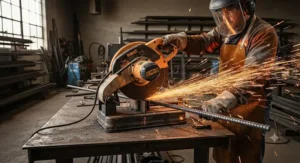
This model’s standout is weight: a stamped-steel base instead of cast aluminum shaves pounds off without sacrificing the carbide-tipped, dry-cut technology that defines the category. The 15-amp motor and 14-inch TCT blade combination is rated to outlast an abrasive wheel by roughly twenty to one, according to the manufacturer’s published blade-life claims, and the chip deflector routes debris away from the operator instead of into your boots. What most buyers overlook about this model is that the lighter base trades off some vibration dampening compared to heavier cast-iron cold saws — fine for tube and angle iron, less ideal for thick plate all day. Reviewers describe being able to grab a cut piece of quarter-inch plate seconds after the blade stops, and several mention it replaced decades-old habits of quenching cuts with water before handling. Aggregated feedback also highlights the clear viewing window in the guard as an underrated safety touch most competitors skip.
Pros:
- ✅ Lightweight, bench-mountable base for easy transport
- ✅ Blade life dramatically outlasts abrasive wheels
- ✅ Quick-release vise speeds up repetitive cuts
Cons:
- ❌ Lighter base means more vibration on thick material
- ❌ Carbide blades cost more upfront than abrasive wheels
Priced in the $350-$450 range at the time of research, the Evolution S355CPSL earns its keep for mobile fabricators who need cold-saw cut quality without hauling a heavier shop machine to every jobsite.
3. Milwaukee 6177-20 — most durable abrasive saw for daily jobsite abuse
The standout feature is Milwaukee’s fit-and-finish: oversized wheel guards and a deliberately placed all-metal foot at the rear corner to prevent sparks from igniting the rubber feet elsewhere on the base. Under the hood sits a 15-amp motor delivering up to 4.0 maximum horsepower and roughly 3,900 RPM, with a 5-inch vertical cutting capacity that handles drywall track, conduit, angle iron, and rebar. Here’s what to weigh: this is a friction-based abrasive machine, so it trades the cool, burr-free cut of the Evolution saws for raw cutting speed and a much lower entry price. Reviewers consistently note the 45-degree adjustable fence and quick-adjust vise clamp as genuine time-savers on repetitive jobsite cuts, and Milwaukee backs the tool with an unusually long five-year warranty that stands out against typical one-to-three-year coverage in this category. On the downside, aggregated feedback mentions that abrasive wheels on this saw wear faster in dense stainless or hardened steel than in mild steel or conduit.
Pros:
- ✅ Five-year Milwaukee warranty, longest in this roundup
- ✅ Thoughtful spark-safe foot design prevents fire risk
- ✅ Strong 4.0 max HP motor for fast cuts
Cons:
- ❌ Abrasive wheels wear quickly on hardened steel
- ❌ Generates real heat and sparks, unlike cold-cut rivals
At a price generally in the $300-$400 range at the time of research, the Milwaukee 6177-20 is the abrasive saw to buy if you want jobsite-grade reliability and don’t need burr-free finish work.
4. DEWALT D28715 — best tool-free blade changes on an abrasive saw
The headline feature is DEWALT’s Quick-Change keyless blade system, which lets you swap a worn abrasive wheel without hunting for a wrench — a small thing that saves real minutes across a busy day. The saw runs a 15-amp, 5.5 max-HP motor at roughly 4,000 RPM, with a 5-inch round and 4-1/2″ x 6-1/2″ rectangular cutting capacity, putting it solidly in line with the Milwaukee above on raw output. On paper this means faster wheel turnover translates directly into more billable cuts per hour on production jobs, which is exactly the audience DEWALT is chasing with this model. Reviewers frequently mention the Quick-Fence 45-degree adjustable fence as tool-free and genuinely accurate, while the heavy-duty lock-down pin makes the 39-pound saw easier to carry between truck and site. The spec sheet won’t tell you this, but user reports suggest the extra-wide steel base noticeably reduces walking or shifting on longer stock compared to older DEWALT chop saw generations.
Pros:
- ✅ Tool-free Quick-Change blade swaps save real time
- ✅ Strong 5.5 max HP motor for demanding cuts
- ✅ Wide steel base stabilizes longer workpieces
Cons:
- ❌ Still an abrasive wheel — expect sparks and heat
- ❌ Heavier at 39 lbs than some jobsite competitors
Typically found in the $200-$300 range at the time of research, the DEWALT D28715 is the abrasive pick for shops that value uptime and fast consumable changes over ultimate cut quality.
5. Makita LC1230 — cleanest cut of any 12-inch metal saw here
This saw’s standout is speed of clean cutting: Makita’s own testing claims roughly four times faster cutting in light pipe, angle iron, tubing, and channel versus a comparable abrasive cut off saw, thanks to a carbide-tipped blade instead of a resin wheel. The 15-amp motor spins at about 1,700 RPM — again, low relative to abrasive machines — which is precisely why the carbide-tipped blade produces a virtually burr-free finish that reviewers say holds up over tens of thousands of cuts. Based on the spec comparison, this is the machine for a shop that primarily cuts thinner-wall pipe and conduit and wants near-cold-saw finish quality without stepping up to a 14-inch industrial model. Aggregated review sentiment consistently praises the shavings collection tray and D-shaped two-finger trigger for reducing daily fatigue, though a few owners note the 12-inch capacity limits it on larger rectangular tube compared to the 14 and 15-inch machines earlier in this list.
Pros:
- ✅ Carbide blade cuts roughly 4x faster than abrasive wheels
- ✅ Virtually burr-free finish out of the box
- ✅ Shaft lock and socket wrench make blade changes fast
Cons:
- ❌ Smaller 12″ capacity limits large rectangular stock
- ❌ Carbide blades cost noticeably more than abrasive discs
Generally priced in the $500-$650 range at the time of research, the Makita LC1230 suits professionals who cut pipe and conduit daily and want Makita’s build quality behind the investment.
6. WEN CM1452 — best budget alternative to a true cold saw
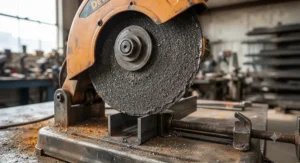
The standout advantage is value: a cast-aluminum base and 66-tooth carbide-tipped blade deliver a cold-cut-style experience — cool cuts, minimal sparks — at a price that undercuts the premium cold saws in this list significantly. WEN specs the motor at 15 amps driving the blade to roughly 1,450 RPM, with a rectangular capacity of 3.75″ x 7.25″ and round capacity around 5.125″, numbers that land close to the Evolution machines above. Reviewers consistently note the cast aluminum base reduces vibration compared to thinner stamped-steel competitors, and several explicitly compare the cut quality favorably against pricier Evolution saws while paying a fraction of the cost. What most buyers overlook about this model is that WEN backs it with only a two-year warranty versus Evolution’s three-year and Milwaukee’s five-year coverage, so factor that into long-term value math. Aggregated feedback does flag that the sharp metal slivers thrown during cutting need a shop-vac attachment or dedicated collection routine to keep the work area tidy.
Pros:
- ✅ Carbide-tipped blade gives near-cold-saw cut quality
- ✅ Cast aluminum base cuts vibration versus stamped steel
- ✅ Significant savings versus premium cold saw brands
Cons:
- ❌ Only a two-year warranty, shorter than competitors
- ❌ Metal slivers require extra cleanup management
Sitting in the $200-$250 range at the time of research, the WEN CM1452 is the value pick for hobbyists and DIYers who want cold-cut-style results without cold-saw pricing.
7. HERCULES 14 in. Abrasive Cut-Off Saw — most affordable entry point overall
The standout here is straightforward: a 15-amp, 4.3 HP motor spinning at up to 4,100 RPM, priced well under every other tool in this roundup, with a 5-inch max cutting capacity that covers drywall track, angle iron, conduit, pipe, and rebar. Here’s what to weigh: this is a pure abrasive machine with no pretense of cold-cut finish, so expect sparks, heat discoloration, and the need to deburr your cuts before welding or fitting. Reviewers frequently highlight the quick-adjust vise, adjustable fence, and depth stop as unusually capable features for the price point, along with an all-metal gearbox that has held up well in home-shop use. The trade-off shows up in the fine print: a 90-day warranty is dramatically shorter than the three-to-five-year coverage on the pricier saws in this list, and aggregated feedback suggests build tolerances vary more unit to unit than with the name-brand alternatives.
Pros:
- ✅ Lowest price point of any saw in this roundup
- ✅ 4.3 HP motor is strong for the price tier
- ✅ Long 10 ft. 2 in. cord adds jobsite flexibility
Cons:
- ❌ Only a 90-day warranty, shortest here by far
- ❌ Build consistency varies more than name-brand rivals
At roughly $150-$200 at the time of research, the HERCULES 14 in. Abrasive Cut-Off Saw is the entry point for anyone who needs an occasional-use metal saw and doesn’t want to spend more than necessary.
Practical Usage Guide: Setting Up Your New Cut-Off Saw Right
Whatever you buy, the first thirty days determine whether your saw performs well for years or frustrates you immediately. Start by bolting the base to a bench or stand — even the heaviest cold saws walk under lateral pressure if left loose on a table. Before the first cut, check blade runout by spinning it by hand; a wobbling arbor on a new abrasive saw, as some owners have reported, is a return-worthy defect rather than something to fight through. For cold saws, resist the urge to force the feed rate; let the carbide teeth do the work at the manufacturer’s rated speed, since forcing the cut is the single fastest way to chip teeth prematurely. For abrasive saws, replace the wheel the moment you see glazing or chunking rather than running it to complete failure, since a degraded wheel is both slower and genuinely more dangerous. Clean the chip tray or collection area weekly; accumulated metal shavings on a cold saw’s cast base can throw off squareness over time, and on an abrasive saw they present a real fire risk if allowed to build up near the motor housing.
🔧 Ready to pick your saw and get cutting?
Real-World Scenarios: Matching the Saw to the Job
Consider three buyers who each need a metal cutting saw but for entirely different reasons. First, a hobbyist welder building trailer frames on weekends, cutting maybe fifty pieces of angle iron and square tube a month in a home garage — this buyer benefits most from the WEN CM1452 or the Evolution S355CPSL, since both deliver near-cold-cut finish without demanding a dedicated 220V circuit or a large upfront investment. Second, a metal fabrication shop running production cuts eight hours a day on structural steel and pipe — here the Evolution EVOSAW380 or a true dedicated cold saw earns back its price through blade longevity and eliminated deburring labor within the first year, since labor hours saved on grinding burrs typically dwarf the blade cost difference. Third, a general contractor who occasionally needs to trim rebar, conduit, or drywall track on a jobsite and doesn’t want another heavy tool in the truck — the HERCULES 14 in. Abrasive Cut-Off Saw or DEWALT D28715 fits that intermittent, budget-conscious use case far better than a pricier cold saw that would sit idle most of the year.
How to Choose Between a Cold Cut Saw and an Abrasive Cut Off Saw
Picking between these two categories comes down to seven concrete questions, not gut feeling.
- How often will you cut metal? Daily production work favors a cold saw’s blade economics; occasional use favors an abrasive saw’s lower entry cost.
- Does the finished edge need to be weld-ready? Cold saws skip the deburring step entirely; abrasive cuts almost always need grinding first.
- What material are you cutting most? Cold saws handle both ferrous and non-ferrous metals cleanly; abrasive saws are more universal but rougher on softer alloys.
- Is workspace ventilation or fire risk a concern? Abrasive sparks are a real hazard around flammable dust or in enclosed spaces; cold saws produce almost none.
- What’s your total budget, including consumables? Abrasive wheels cost less individually but wear far faster than carbide cold-saw blades over time.
- Do you need portability? Lighter abrasive saws and the stamped-base Evolution S355CPSL travel easier than heavier cast-base cold saws.
- How much noise can your environment tolerate? Cold saws run dramatically quieter than the high-RPM whine of an abrasive wheel, a real factor if you’re working near other trades or in a residential area.
Cold Saw Heat Generation vs Abrasive Saw Burr Formation
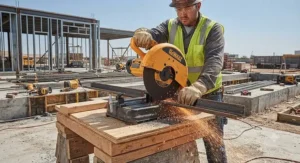
This is the mechanical heart of the entire cold cut saw vs abrasive cut off saw debate, and it comes down to friction versus shearing. An abrasive wheel cuts by grinding away material through friction, which converts enormous mechanical energy directly into heat concentrated at the cut line — that’s the physical process behind the spark shower and the classic straw-to-blue discoloration you see along a fresh abrasive cut. A cold saw’s toothed blade shears the metal instead, and its geometry is specifically engineered to carry that heat away in the chips rather than into the surrounding plate, so the workpiece stays close to ambient temperature throughout the cut. This distinction matters more than most buyers realize because concentrated heat can alter the microstructure right at the cut edge — engineers call this region the heat-affected zone, and it’s the same phenomenon that shows up around welds, just produced by cutting friction instead of an arc. Burr formation follows the same logic in reverse: an abrasive wheel’s grinding action tends to push a thin lip of displaced metal along the cut edge, which is why nearly every abrasive cut needs a pass with a file or grinder before it’s weld- or paint-ready, while a sharp cold-saw blade shears cleanly enough that most fabricators skip deburring entirely on thinner stock.
Ferrous vs Non-Ferrous Cut-Off: Which Saw Wins
The ferrous vs non-ferrous cut-off question trips up more first-time buyers than any other spec on this list. Cold saws are genuinely more capable across material types, but they are also more particular about it: a blade ground for mild steel will dull quickly or gum up if you run it against aluminum, and Evolution, Makita, and most other manufacturers sell material-specific blades for exactly this reason. Abrasive wheels are less picky in one sense — the same wheel will chew through mild steel, stainless, and even masonry — but they struggle with soft non-ferrous metals like aluminum and copper, which tend to clog the abrasive grain and load the wheel rather than cutting cleanly. Reviewers consistently note that dedicated aluminum blades on cold saws like the Evolution EVOSAW380 deliver genuinely clean, non-gummed cuts, something an abrasive wheel simply cannot match on soft metals without excessive wheel wear. What most buyers overlook is that switching material families on a cold saw means budgeting for a second blade, while an abrasive saw only needs a different wheel grade for masonry versus metal — a smaller but real recurring cost difference depending on how varied your cutting workload actually is.
Cut Off Saw Blade Types Explained
Understanding cut off saw blade types is the difference between buying the right saw and fighting the wrong one for years. Abrasive wheels are bonded discs of aluminum oxide or silicon carbide particles, typically around 14 inches in diameter and roughly 1/8 inch thick, designed to wear down gradually as they cut — cheap to replace but consumed relatively quickly, especially on dense or hardened steel. Cold saw blades fall into two main families: high-speed steel (HSS) blades, which are more affordable but wear faster, and tungsten carbide-tipped (TCT) blades, which cost significantly more per blade but can outlast dozens of abrasive wheels on the same material, as several manufacturers in this roundup claim. Within TCT blades, tooth count and geometry matter enormously — a 66-tooth blade like the one bundled with the Evolution EVOSAW380 and WEN CM1452 is tuned for mild steel, while thinner-wall or aluminum work generally calls for a different tooth pitch to avoid grabbing or chatter. Reviewers who switch material types often learn this lesson the expensive way, running a steel-rated blade on stainless or aluminum and burning through it in a fraction of its rated life.
Cut Off Saw Safety: What Every Operator Needs to Know
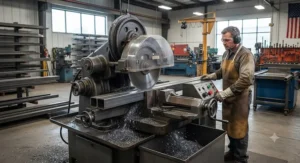
Whichever machine you choose, cut off saw safety isn’t optional, and the two saw types carry genuinely different risk profiles. Abrasive wheels can shatter under stress or improper mounting, which is exactly why federal machine guarding rules mandate specific guard coverage, flange dimensions, and maximum wheel speeds for this equipment — reading the guard requirements isn’t bureaucratic box-checking, it’s the standard built from decades of documented wheel-failure injuries. Cold saws largely eliminate the shattering risk since their blades are solid steel, but they introduce their own hazards: a locked-in-position blade traveling at speed can still cause serious lacerations, and reviewers across multiple cold saws in this list specifically flag chip shields and trigger locks as features worth checking before buying. Regardless of saw type, ANSI-rated eye protection is non-negotiable given how far metal chips and sparks travel, and hearing protection matters more than most buyers assume — the shrieking pitch of an abrasive wheel or a cold saw blade running all day adds up over years of shop use. Clamping the workpiece securely in the saw’s vise every single time, rather than hand-holding material “just for a quick cut,” remains the single most common safety shortcut that leads to preventable injuries in metal shops.
Evolution Cut Off Saw Review: Where the Brand Fits in This Market
Any honest evolution cut off saw review has to start with the company’s positioning: Evolution built its entire brand identity around convincing fabricators to abandon abrasive wheels for carbide-tipped cold cutting, and the EVOSAW380 and S355CPSL in this roundup are the clearest expression of that pitch. Independent reviewers and long-term forum users consistently describe the transition from an old abrasive chop saw to an Evolution cold saw as a genuine quality-of-life upgrade — no more waiting for cuts to cool, no more shower of sparks, and blades that last roughly twenty times longer than an abrasive disc according to manufacturer figures. That said, honest analysis also surfaces real limitations: Evolution blades are material-specific and pricier per unit than a generic abrasive wheel, the base models trade off some rigidity for portability, and buyers used to abrasive saw pricing sometimes experience sticker shock at the blade replacement cost. Based on the spec comparison across this entire roundup, Evolution’s saws consistently occupy the upper-middle tier on both price and cut quality — not the cheapest option here, but arguably the best value among true cold-cut machines for shops that don’t need full industrial-grade capacity.
Common Mistakes When Buying a Metal Cutting Saw
The most common mistake is buying strictly on motor horsepower or amperage without considering cut finish, since a bigger motor on an abrasive saw still leaves you deburring every piece afterward. A close second is underestimating consumable costs over a year — a cheaper abrasive saw can end up costing more in wheels than a pricier cold saw costs in blades, depending on cutting volume. Buyers also frequently ignore duty cycle and warranty length, assuming all saws in a similar price range are built to the same standard, when coverage in this roundup alone ranges from ninety days to five full years. Another overlooked factor is workspace compatibility: a shop with limited ventilation or nearby flammable materials is a poor fit for a spark-throwing abrasive saw regardless of price, while a cold saw’s quieter, spark-free operation is a better match. Finally, many first-time buyers skip checking material compatibility entirely, then discover their new blade or wheel isn’t rated for the specific alloy they cut most, leading to premature wear and disappointing results right out of the gate.
Frequently Asked Questions
❓ Is a cold cut saw better than an abrasive cut off saw?
❓ Can an abrasive cut off saw cut aluminum?
❓ Why does a cold saw run at lower RPM than an abrasive saw?
❓ How long does a cold saw blade last compared to an abrasive wheel?
❓ Do I need special safety gear for a cut off saw?
Conclusion
The cold cut saw vs abrasive cut off saw decision really isn’t about which machine is objectively better — it’s about matching the tool to how often you cut, what you’re cutting, and what a clean edge is actually worth to your workflow. If you’re running production fabrication or simply tired of deburring every piece before welding, the Evolution EVOSAW380 and Makita LC1230 justify their higher price through blade longevity and finish quality alone. If your budget or cutting frequency doesn’t support that investment, the Milwaukee 6177-20, DEWALT D28715, and HERCULES 14 in. Abrasive Cut-Off Saw all deliver solid, dependable performance at a fraction of the cost, provided you accept sparks and a deburring step as part of the process. And if you want a middle path — cold-cut-style finish without cold-saw pricing — the WEN CM1452 and the lighter Evolution S355CPSL both make a compelling case. Whichever you choose, respect the safety fundamentals covered above, match the blade or wheel to your actual material mix, and you’ll get years of reliable service out of any saw on this list.
✨ Found the right saw for your shop? Check current pricing and availability before you buy — specs and stock can shift.
Recommended for You
- 7 Best Cut Off Saw For Metal Picks in 2026
- Track Saw vs Table Saw 2026: 7 Picks That End the Debate
- Cabinet Table Saw vs Contractor Table Saw: 7 Picks Compared (2026)
Disclaimer: This article contains affiliate links. As an Amazon Associate, I earn from qualifying purchases. If you purchase products through these links, we may earn a small commission at no additional cost to you.
✨ Found this helpful? Share it with your friends! 💬🤗
