
In This Article
When you’re standing in the tool aisle trying to decide between a miter saw vs cut off saw, you’re not alone. I’ve been there myself, staring at these powerful machines and wondering which one would actually serve my projects better. The truth is, both tools cut materials, but they’re designed for completely different purposes – and understanding these differences could save you hundreds of dollars and countless hours of frustration.
✨Was this helpful? Spread the word! 🚀
Whether you’re a professional contractor, weekend warrior, or someone just starting their woodworking journey, the miter saw vs cut off saw decision impacts everything from precision to portability. Today’s market offers incredible options like the Bosch GCM12SD Axial Glide Miter Saw and the powerful Milwaukee M18 FUEL 14-inch Abrasive Chop Saw, but choosing between them requires understanding what makes each tool unique.
Understanding the Fundamental Differences Between Miter Saw vs Cut Off Saw
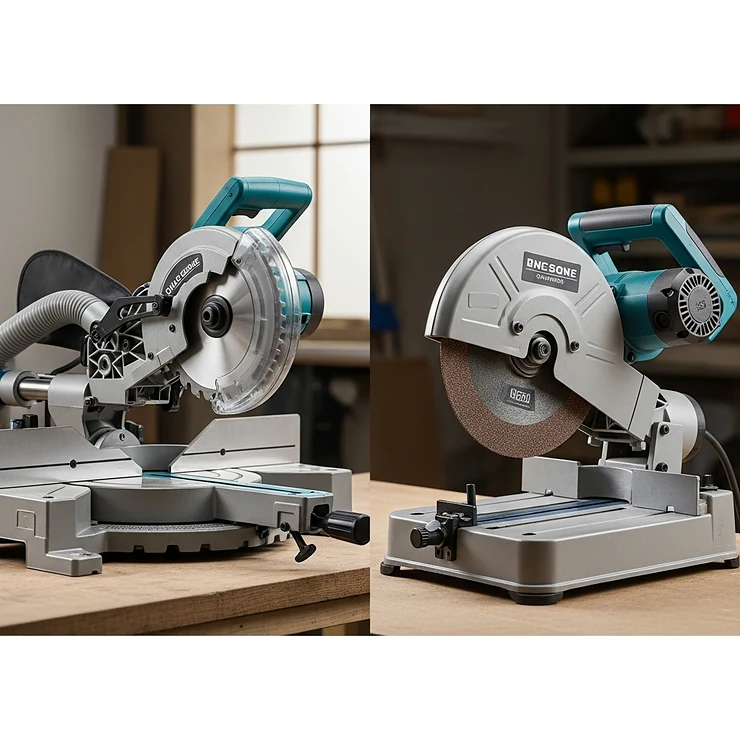
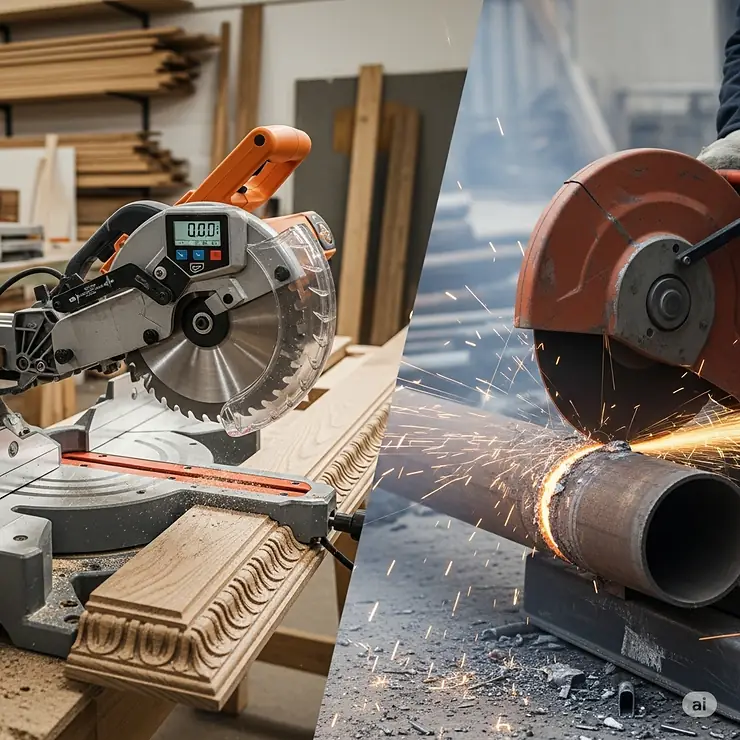
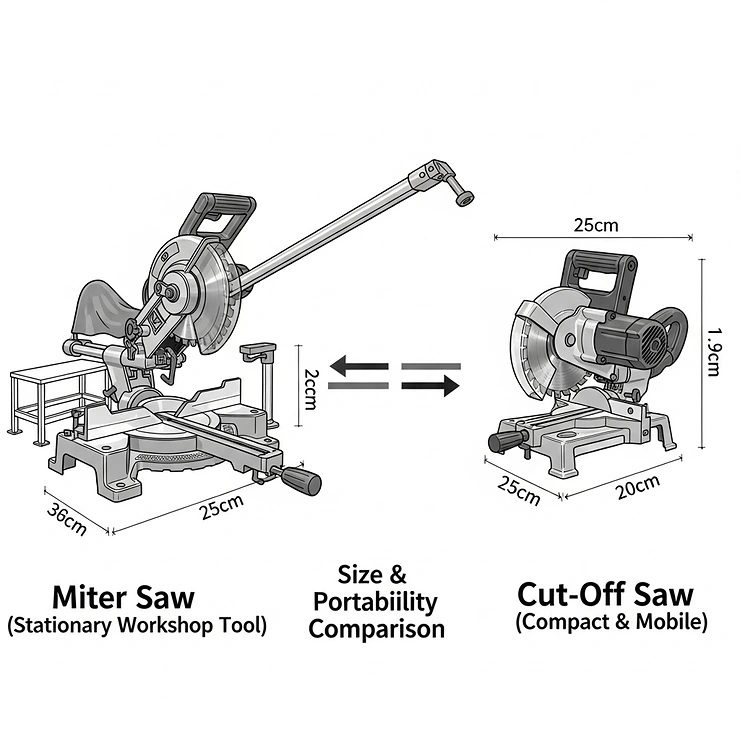
The most significant difference between a miter saw vs cut off saw lies in their intended applications and cutting mechanisms. While both tools feature circular blades and pivoting heads, they’re engineered for entirely different materials and precision requirements.
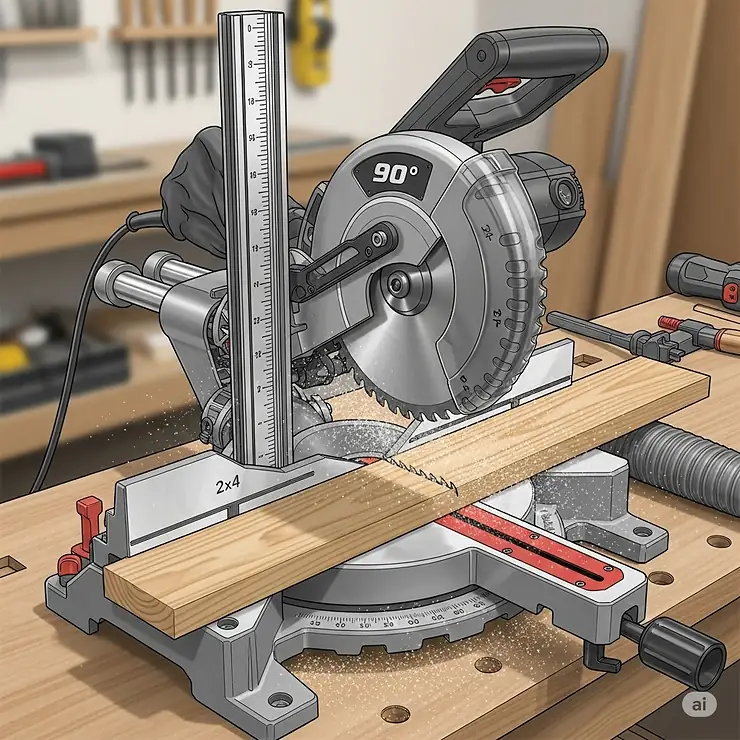
A miter saw specializes in precise angled cuts through wood, trim, and similar materials. It features a toothed blade that slices through fibers cleanly, creating smooth finishes perfect for finish carpentry. The DeWalt DWS780 12-Inch Double-Bevel Sliding Compound Miter Saw exemplifies this precision, offering XPS shadow line technology for incredibly accurate cuts.
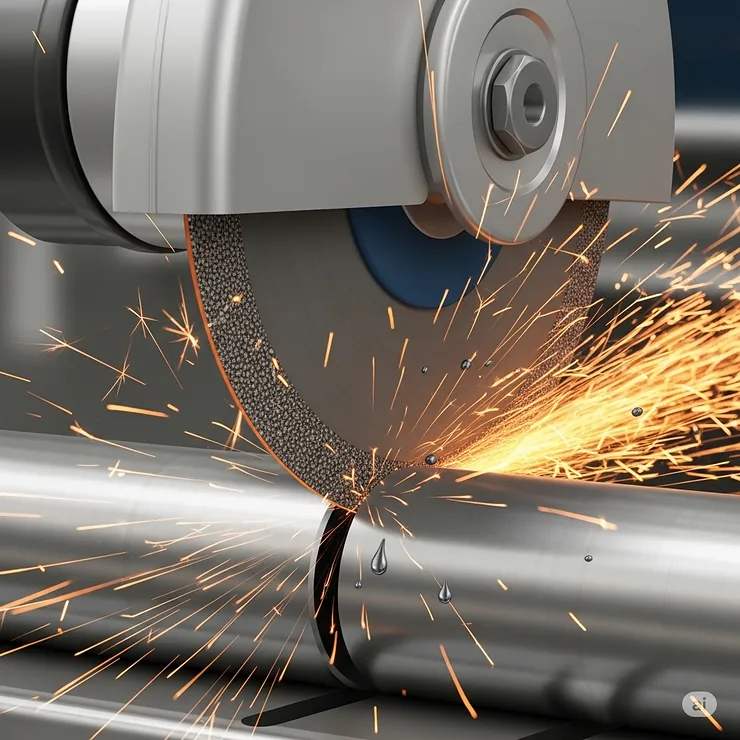
Conversely, a cut off saw (also called a chop saw) tackles heavy-duty materials like metal, concrete, and masonry. It typically uses abrasive wheels or specialized blades that grind through tough materials rather than slicing. The Evolution S355CPSL 14-Inch Metal Cutting Chop Saw demonstrates this capability, featuring a tungsten carbide-tipped blade that cuts through steel with minimal sparks.
Primary Application Differences
Miter Saws Excel At:
- ✅ Crown molding and trim work
- ✅ Picture frames and furniture joinery
- ✅ Crosscutting lumber to length
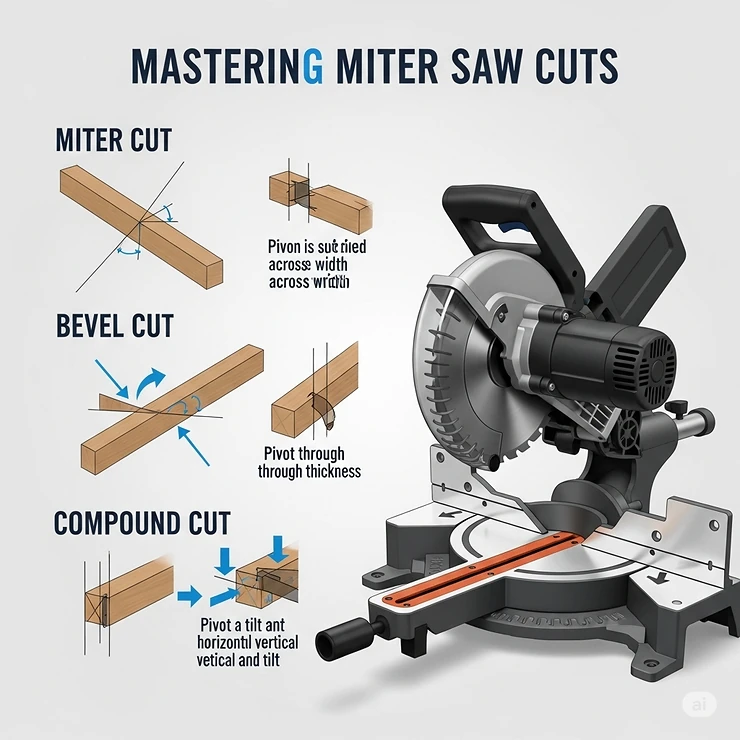
- ✅ Compound angle cuts for complex projects
- ✅ Precise woodworking applications
Cut Off Saws Dominate:
- ✅ Metal fabrication and welding prep
- ✅ Concrete and masonry cutting
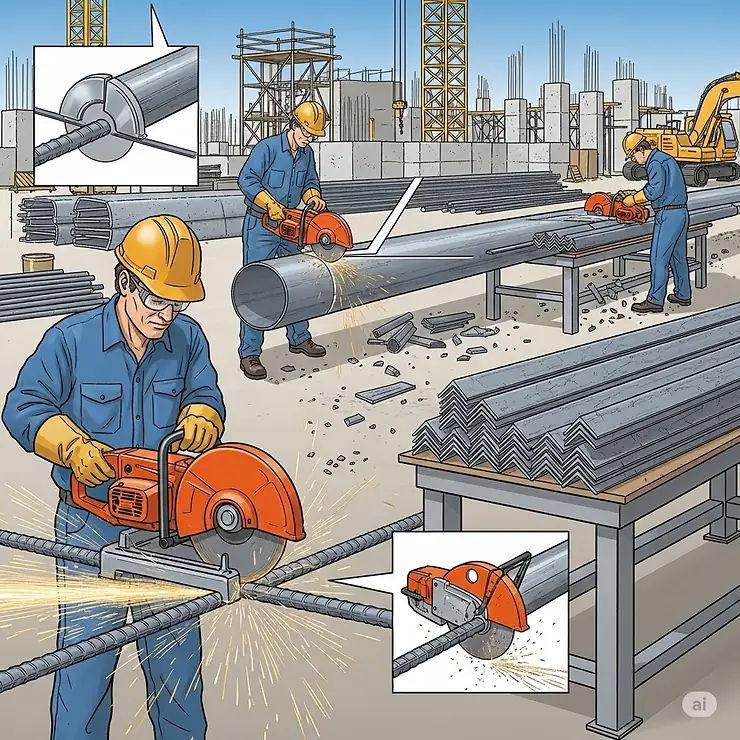
- ✅ Rebar and structural steel work
- ✅ Heavy construction applications
- ✅ Industrial manufacturing processes
Detailed Product Analysis: Top Miter Saw Recommendations
Premium Choice: Bosch GCM12SD Axial Glide Miter Saw
The Bosch GCM12SD represents the pinnacle of miter saw engineering, featuring their revolutionary axial glide system instead of traditional sliding rails. Priced around $899, this saw delivers unparalleled smoothness and precision for professional applications.
Key Specifications:
- 12-inch blade capacity
- 65-pound construction weight
- Dual-bevel capability (0° to 47° left and right)
- 14-inch horizontal cutting capacity
- 6.5-inch vertical cutting capacity
- Integrated tool storage
The axial glide system requires 12 inches less space than traditional sliding saws, making it perfect for cramped workshops. Professional carpenters consistently rate this saw highest for accuracy and build quality, though the premium price reflects its advanced features.
Best Value Professional: DeWalt DWS780 12-Inch Double-Bevel Sliding Compound Miter Saw
Currently available for around $490-599, the DeWalt DWS780 offers exceptional value for professional and serious hobbyist applications. Its XPS shadow line system eliminates guesswork by casting shadows that show exactly where the blade will cut.
Performance Features:
- 15-amp motor generating 3,800 RPM
- 16-inch crosscut capacity
- Integrated dust collection system
- Precise miter system with 10 positive stops
- Crown molding capacity up to 7.5 inches nested
- LED work light illumination
This saw consistently ranks among top professional choices, offering reliability and precision that justifies its mid-range price point. The dust collection system captures approximately 75% of generated sawdust, keeping workspaces cleaner.
Budget Champion: Metabo HPT C10FCGS 10-Inch Compound Miter Saw
At just $94-169, the Metabo HPT C10FCGS delivers surprising performance for budget-conscious users. Despite its lightweight 24.2-pound design, this saw features a powerful 15-amp motor generating 5,000 RPM.
Notable Features:
- Single bevel 0-45° capability
- 0-52° miter angle range (left and right)
- Electric brake for rapid blade stopping
- Thumb-activated positive stops
- Large 10-inch cutting table
- Carbide-tipped 24-tooth blade included
Professional reviews consistently praise this saw’s accuracy straight from the box, with many users reporting it rivals saws costing three times more. The lightweight design makes it extremely portable for job site applications.
Comprehensive Cut Off Saw Product Analysis
Heavy-Duty Metal Cutting: Evolution S355CPSL 14-Inch Metal Cutting Chop Saw
The Evolution S355CPSL revolutionizes metal cutting with its tungsten carbide-tipped blade technology. Priced around $299-399, this saw cuts steel with virtually no sparks, heat, or burrs – a game-changer for welders and fabricators.
Technical Specifications:
- 15-amp motor delivering 1,550 RPM
- 14-inch carbide-tipped blade (66 teeth)
- Cast steel vise with 0-45° miter capacity
- Quick-release clamping mechanism
- Lightweight pressed steel base
- Integrated chip deflector
The cold-cutting technology means metal comes off the saw ready to weld without cleanup. Professional fabricators report this saw cuts through 4-inch steel tube faster than traditional abrasive wheels while producing superior edge quality.
Cordless Powerhouse: Milwaukee M18 FUEL 2990-20 14-Inch Abrasive Chop Saw
At $399 for the bare tool, the Milwaukee M18 FUEL 2990-20 delivers 15-amp corded power in a cordless package. This saw represents the future of portable metal cutting for contractors and fabricators.
Advanced Features:
- PowerState brushless motor generating 4,000 RPM
- RedLink Plus intelligence prevents overload
- Up to 200 cuts per charge (with 12.0Ah battery)
- Rapid Stop brake (3-second blade stop)
- Tool-free blade and fence adjustments
- 5-inch maximum cutting capacity
The cordless design eliminates extension cords and provides access to remote locations. Professional contractors report this saw maintains consistent power throughout the battery charge cycle, unlike many cordless tools that fade as batteries drain.
Versatile Cordless Option: DEWALT DCS690X2 FlexVolt 60V 9-Inch Cut-Off Saw Kit
The DEWALT DCS690X2 kit, priced around $849-999, includes two 9.0Ah FlexVolt batteries and showcases DEWALT’s advanced battery technology. This saw excels at concrete, masonry, and metal cutting applications.
Premium Features:
- High-performance brushless motor (6,500 RPM)
- 3.25-inch maximum cutting depth
- 5-position rotatable guard
- Dual-sided water feed system (OSHA Table 1 compliant)
- Heavy-load indicator light
- Latched and sealed battery box
- Tool Connect Tag-Ready technology
The dual-sided water system effectively controls dust when cutting concrete and masonry, making this saw ideal for indoor renovation work. Battery life provides approximately 25.5 feet of concrete scoring per charge.
💬 Just one click – help others make better buying decisions too! 😊
Industry-Specific Applications and Use Cases
Construction and Framing Applications
In construction environments, the miter saw vs cut off saw choice often depends on specific trade requirements. Framers universally prefer miter saws for accurate cuts in dimensional lumber, while concrete contractors rely on cut off saws for scoring and cutting hardscape materials.
Framing Carpenters typically choose sliding compound miter saws like the DeWalt DWS779 for their ability to handle large dimensional lumber. The 12-inch blade capacity allows crosscutting 2×12 lumber in a single pass, while the sliding mechanism accommodates wider boards.
Concrete Contractors depend on cut off saws for expansion joints, doorway cuts, and repair work. The DEWALT DCS690X2 has become increasingly popular for interior work because its water system contains dust effectively, meeting OSHA requirements for indoor concrete cutting.
Professional Woodworking and Cabinetry
Fine woodworkers demand precision that only quality miter saws can deliver. The difference between a $200 and $800 miter saw becomes apparent when cutting complex molding profiles or creating furniture joints requiring perfect fit.
Cabinet Makers often invest in premium saws like the Bosch GCM12SD because the axial glide system maintains precision over thousands of cuts. The smooth operation reduces blade deflection, crucial when working with expensive hardwoods.
Trim Carpenters value portability and precision equally. The Metabo HPT C10FCGS offers surprising accuracy for its price point, making it popular among contractors who need reliable performance without premium investment.
Metal Fabrication and Welding
Welders and fabricators have transformed their operations with modern cold-cut technology. Traditional abrasive wheels create heat-affected zones that can weaken metal, while carbide-tipped blades on saws like the Evolution S355CPSL produce weld-ready edges.
Structural Steel Fabrication benefits from the precision and speed of modern cut off saws. The Evolution S355CPSL cuts through I-beams and angle iron 4x faster than abrasive wheels while producing superior edge quality.
Ornamental Iron Work requires both precision and clean cuts for attractive finished products. The cold-cutting technology eliminates the heat discoloration common with abrasive wheels, reducing finish preparation time.
Advanced Technical Analysis and Performance Metrics
Blade Technology and Cutting Mechanisms
The fundamental difference between miter saw vs cut off saw blade technology explains their distinct capabilities. Miter saw blades feature sharp teeth designed to slice wood fibers cleanly, while cut off saw blades either grind (abrasive) or shear (carbide-tipped) through harder materials.
Miter Saw Blade Technology:
- High-speed steel (HSS) or carbide-tipped teeth
- Aggressive hook angles for efficient wood cutting
- Tooth counts ranging from 24 (framing) to 100+ (fine crosscuts)
- Operating speeds typically 3,000-5,000 RPM
- Designed for pulling cuts (teeth angle backward)
Cut Off Saw Blade Technology:
- Abrasive wheels (aluminum oxide or silicon carbide)
- Carbide-tipped blades for metal cutting
- Diamond blades for concrete and masonry
- Operating speeds typically 3,500-6,500 RPM
- Designed for grinding or shearing action
Motor Performance and Power Requirements
Motor specifications reveal crucial differences in how these tools deliver cutting power. Miter saws typically use universal motors optimized for high speed and smooth operation, while cut off saws employ motors designed for sustained high-torque applications.
Miter Saw Motors:
- 15-amp universal motors (most common)
- Optimized for consistent speed under varying loads
- Direct drive or belt drive configurations
- Soft-start features reduce startup surge
- Designed for intermittent operation
Cut Off Saw Motors:
- 15-amp induction motors (corded models)
- High-torque brushless motors (cordless models)
- Designed for continuous operation under heavy loads
- Advanced thermal protection systems
- Electronic speed control maintains cutting speed
Precision and Accuracy Comparison
Precision requirements differ dramatically between miter saw vs cut off saw applications. Miter saws must deliver repeatable accuracy within 1/64-inch tolerances for fine woodworking, while cut off saws focus on consistent material removal rates and edge quality.
Miter Saw Precision Features:
- Laser guides or LED shadow systems
- Positive stops at common angles
- Micro-adjustment capabilities
- Fence systems ensuring material stability
- Sliding mechanisms maintaining blade alignment
Cut Off Saw Accuracy Features:
- Adjustable fences for consistent positioning
- Vise systems securing irregular materials
- Guide systems for straight cuts
- Depth stops for consistent cut depths
- Quick-release mechanisms maintaining repeatability
Comprehensive Setup and Usage Guidelines
Miter Saw Setup and Optimization
Proper miter saw setup dramatically impacts both safety and cutting quality. The process begins with selecting an appropriate workspace that accommodates the saw’s footprint and material handling requirements.
Workspace Requirements:
- Minimum 12 feet of linear space for handling long boards
- Sturdy support at saw height (typically 32-36 inches)
- Adequate lighting for seeing cut lines clearly
- Dust collection connection for cleaner operation
- Easy access to electrical supply
Initial Calibration Process:
- Check blade alignment using a quality combination square
- Verify fence squareness to the blade and table
- Calibrate miter settings at common angles (0°, 45°, 90°)
- Test bevel accuracy with bevel gauge
- Adjust positive stops for precise repeatability
The Bosch GCM12SD requires minimal calibration due to its precision manufacturing, while budget saws like the Metabo HPT C10FCGS may need more extensive setup but can achieve similar accuracy with patience.
Cut Off Saw Installation and Configuration
Cut off saws require different setup considerations due to their material requirements and safety demands. Proper ventilation becomes crucial when cutting materials that generate dust or fumes.
Safety Setup Requirements:
- Adequate ventilation for dust and fume extraction
- Secure material handling systems for heavy stock
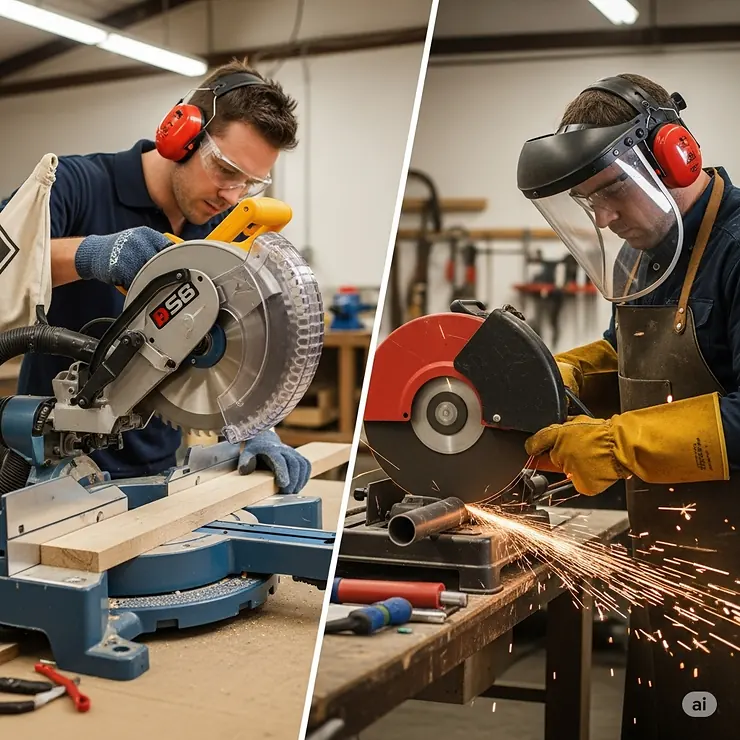
- Appropriate blade guards and safety equipment
- Emergency stop mechanisms within easy reach
- Fire safety considerations for spark-generating operations
Optimization for Different Materials: The Evolution S355CPSL excels with proper setup for steel cutting, while the DEWALT DCS690X2 requires different configuration for concrete work. Material-specific blade selection and cutting speed optimization dramatically impact results.
Don’t Miss These Cutting-Edge Deals! 🔥
→Transform your workshop with these game-changing saws. Check current pricing and availability on these professional-grade tools that deliver precision and power for years of reliable service! ⚡
Maintenance and Longevity Strategies
Daily and Weekly Maintenance Protocols
Consistent maintenance extends tool life and maintains cutting quality. Both miter saws and cut off saws benefit from regular cleaning and inspection, though their maintenance requirements differ significantly.
Daily Maintenance (After Each Use):
- Remove sawdust and debris from all surfaces
- Check blade tightness and condition
- Inspect safety guards for proper operation
- Clean and lubricate sliding mechanisms
- Store in dry location to prevent corrosion
Weekly Maintenance (Heavy Use):
- Deep clean all moving parts
- Check fence alignment and adjustments
- Inspect electrical connections and cords
- Lubricate pivot points and slides
- Verify calibration accuracy with test cuts
Blade Maintenance and Replacement
Blade condition directly impacts cutting quality and safety. Professional users often maintain multiple blades for different applications, extending blade life through proper rotation and sharpening.
Blade Inspection Criteria:
- Tooth sharpness and chip damage
- Blade runout and warping
- Arbor hole wear and elongation
- Heat damage indicators
- General cleanliness and resin buildup
The DeWalt DWS780 uses standard 12-inch blades available from multiple manufacturers, while the Evolution S355CPSL requires specific carbide-tipped blades for optimal performance. Blade costs range from $30 for basic models to $200+ for premium options.
Long-term Durability Factors
Tool longevity depends on build quality, usage patterns, and maintenance consistency. Professional-grade saws like the Bosch GCM12SD feature components designed for decades of service, while budget options may require more frequent replacement.
Durability Indicators:
- Motor bearing quality and design
- Frame material and construction methods
- Component precision and tolerances
- Manufacturer warranty terms and support
- Available replacement parts and service
Comparative Analysis: Miter Saw vs Cut Off Saw Performance
Speed and Efficiency Comparison
Cutting speed varies dramatically between miter saw vs cut off saw applications. Miter saws prioritize accuracy over speed, while cut off saws focus on material removal rates and productivity in heavy-duty applications.
Miter Saw Performance Metrics:
- Average cut time: 5-15 seconds per cut (depending on material)
- Setup time between cuts: 30-60 seconds
- Precision level: ±1/64 inch (quality models)
- Material thickness capacity: Up to 12 inches (sliding models)
- Duty cycle: Intermittent use, cooling between cuts
Cut Off Saw Performance Metrics:
- Average cut time: 10-30 seconds per cut (depending on material)
- Setup time between cuts: 15-30 seconds
- Precision level: ±1/16 inch (typical applications)
- Material thickness capacity: Up to 5 inches (most models)
- Duty cycle: Continuous operation capability
Cost-Effectiveness Analysis
The true cost of ownership includes initial purchase price, consumables, maintenance, and productivity factors. While premium tools cost more initially, they often provide better long-term value through reduced downtime and superior performance.
Total Cost of Ownership (5-Year Projection):
| Tool Category | Initial Cost | Blade Costs | Maintenance | Total |
|---|---|---|---|---|
| Budget Miter Saw | $150 | $200 | $100 | $450 |
| Professional Miter Saw | $600 | $300 | $150 | $1,050 |
| Budget Cut Off Saw | $200 | $300 | $150 | $650 |
| Professional Cut Off Saw | $400 | $400 | $200 | $1,000 |
Material Versatility Comparison
Material compatibility represents a crucial difference between miter saw vs cut off saw capabilities. Understanding these limitations prevents tool damage and ensures project success.
Miter Saw Material Compatibility:
- ✅ Softwood lumber (pine, fir, cedar)
- ✅ Hardwood species (oak, maple, cherry)
- ✅ Composite materials (MDF, plywood, OSB)
- ✅ Aluminum extrusions (with proper blade)
- ❌ Steel or iron materials
- ❌ Concrete or masonry
- ❌ Thick metal stock
Cut Off Saw Material Compatibility:
- ✅ Structural steel and iron
- ✅ Concrete and masonry
- ✅ Rebar and reinforcement materials
- ✅ Cast iron and heavy metals
- ✅ Stone and tile (with proper blade)
- ❌ Precision woodworking
- ❌ Delicate trim materials
Investment Decision Framework and Buying Guide
Determining Your Primary Needs
Choosing between a miter saw vs cut off saw requires honest assessment of your typical projects and future requirements. Many professionals eventually own both tools, but initial investment should focus on your most frequent applications.
Decision Matrix Questions:
- What materials do you cut most frequently?
- How important is precision versus speed?
- Do you work primarily in a shop or on job sites?
- What’s your available budget for tools and maintenance?
- How often will you use the tool?
Workflow Analysis: Consider your typical project workflow. Carpenters installing trim benefit more from miter saw precision, while contractors doing renovation work may prioritize cut off saw versatility for various materials.
Budget Planning and Financing Options
Tool investment should align with usage frequency and income generation potential. Professional users can often justify premium tools through improved productivity, while hobbyists may find budget options perfectly adequate.
Budget Categories:
- Hobbyist Level: $100-300 (adequate for occasional use)
- Serious DIY: $300-600 (good balance of features and quality)
- Professional Entry: $600-1,200 (reliable daily use capability)
- Premium Professional: $1,200+ (maximum precision and durability)
Many retailers offer financing options for professional tools. The Milwaukee M18 FUEL 2990-20 at $399 represents excellent value for professionals needing cordless capability, while the Metabo HPT C10FCGS at under $100 serves budget-conscious users well.
ROI Calculations for Professional Users
Professional contractors should consider productivity improvements and quality enhancements when evaluating tool investments. Premium tools often pay for themselves through reduced project time and improved client satisfaction.
Productivity Factors:
- Time savings per project
- Reduced material waste from accurate cuts
- Decreased callbacks from precision issues
- Enhanced capability to accept premium projects
- Reduced labor costs through efficiency
A professional trim carpenter investing in the Bosch GCM12SD might complete projects 20% faster while achieving superior results, easily justifying the premium price through increased capacity and client satisfaction.
Case Studies and Real-World Applications
Case Study 1: Custom Furniture Workshop
Challenge: A small furniture maker needed to upgrade from a basic miter saw to handle increasing order volume while maintaining quality standards.
Solution: Investment in the DeWalt DWS780 provided the precision needed for complex joinery while the sliding mechanism accommodated larger panels.
Results:
- 30% reduction in material waste
- 25% faster completion times
- Improved joint quality leading to higher prices
- Payback period: 8 months
The LED shadow system eliminated marking and measuring steps, while the superior dust collection kept the workshop cleaner and healthier.
Case Study 2: Metal Fabrication Shop
Challenge: A welding shop struggled with traditional abrasive cut off wheels that created heat-affected zones requiring additional cleanup work.
Solution: Upgrading to the Evolution S355CPSL with carbide-tipped blade technology eliminated heat issues and improved cut quality.
Results:
- 75% reduction in post-cut cleanup time
- Improved weld quality due to clean, cool cuts
- 60% reduction in blade costs (carbide blades last longer)
- Worker satisfaction improved due to reduced sparks and noise
Case Study 3: Home Renovation Contractor
Challenge: A contractor needed versatile cutting capability for diverse renovation projects involving wood, metal, and masonry.
Solution: Combination of Metabo HPT C10FCGS miter saw and DEWALT DCS690X2 cordless cut off saw provided comprehensive cutting capability within budget.
Results:
- Capability to handle 95% of cutting needs
- Cordless cut off saw eliminated extension cord hassles
- Lightweight miter saw improved job site mobility
- Total investment under $1,200 for both tools
Future Trends and Technology Evolution
Battery Technology Advancements
Cordless tool technology continues advancing rapidly, with new battery chemistries and management systems extending runtime while reducing weight. The Milwaukee M18 FUEL and DEWALT FlexVolt platforms represent current technology leaders.
Emerging Battery Technologies:
- Solid-state batteries promising 50% more capacity
- Faster charging systems (30-minute full charge)
- Intelligent battery management preventing damage
- Interchangeable battery platforms reducing investment
- Wireless charging for tool stands and vehicles
Smart Tool Integration
Modern tools increasingly feature connectivity and intelligence systems. The DEWALT DCS690X2 includes Tool Connect Tag-Ready technology, enabling tracking and usage monitoring through smartphone apps.
Smart Features Trending:
- Usage tracking and maintenance reminders
- Cut count and blade life monitoring
- GPS location tracking for tool management
- Integration with project management software
- Remote diagnostics and troubleshooting
Sustainable Manufacturing Trends
Environmental considerations increasingly influence tool design and manufacturing. Companies focus on recyclable materials, energy-efficient motors, and longer tool lifecycles.
Sustainability Initiatives:
- Brushless motors improving efficiency and lifespan
- Recyclable plastic components and packaging
- Trade-in programs for end-of-life tools
- Local manufacturing reducing transportation impacts
- Renewable energy in manufacturing facilities
Recommended Buying Strategy and Final Recommendations
Primary Tool Selection Strategy
Most users benefit from choosing one primary tool first, then adding complementary tools as needs and budget allow. The miter saw vs cut off saw decision should prioritize your most frequent applications.
For Woodworkers and Carpenters: Start with a quality miter saw like the DeWalt DWS780 or Bosch GCM12SD. These tools handle most woodworking needs while delivering professional results.
For Metal Workers and Contractors: Begin with a cut off saw such as the Evolution S355CPSL or Milwaukee M18 FUEL 2990-20. These tools tackle the heavy-duty cutting that other saws cannot handle.
For DIY Enthusiasts: The Metabo HPT C10FCGS provides excellent miter saw capability at budget pricing, while basic cut off saws handle occasional metal cutting needs.
### Don’t Miss These Professional-Grade Tools! 🛠️
→Invest in precision and power that pays for itself. These professional saws deliver consistent results project after project. Check availability and current pricing to transform your cutting capability today! 🎯
Timing Your Purchase for Maximum Value
Tool prices fluctuate seasonally, with best deals typically available during spring clearance events and fall preparation sales. Professional-grade tools rarely see deep discounts, but timing can save 10-20% on quality options.
Optimal Purchase Timing:
- Spring (March-May): Clearance of winter inventory
- Fall (September-November): Pre-holiday promotions
- End of Model Years: Substantial savings on discontinued models
- Professional Trade Shows: Manufacturer promotions and demos
- Black Friday/Cyber Monday: Limited but significant discounts
Conclusion: Making the Right Choice for Your Projects
The miter saw vs cut off saw decision ultimately depends on your specific needs, but understanding their distinct capabilities ensures you choose wisely. A miter saw excels at precision cuts in wood and similar materials, making it essential for finish carpentry, furniture making, and trim work. Meanwhile, a cut off saw dominates heavy-duty applications involving metal, concrete, and masonry.
For most woodworkers and carpenters, the DeWalt DWS780 or Bosch GCM12SD provide professional capability with long-term reliability. The precision and versatility justify their investment for serious woodworking applications. Budget-conscious users find excellent value in the Metabo HPT C10FCGS, which delivers surprising accuracy at entry-level pricing.
Metal workers and contractors benefit most from modern cut off saws like the Evolution S355CPSL or Milwaukee M18 FUEL 2990-20. These tools transform metal cutting from a messy, time-consuming chore into efficient, precise operations that improve overall productivity.
The cordless revolution has made tools like the DEWALT DCS690X2 increasingly attractive for their convenience and comparable performance to corded models. While initial investment is higher, the productivity benefits often justify the cost for professional applications.
Remember that tool selection represents an investment in your capability and efficiency. Quality tools maintained properly serve for decades, making them excellent long-term investments that improve both work quality and enjoyment. Whether you choose a miter saw or cut off saw first, understanding their capabilities helps you make decisions that enhance your projects and expand your possibilities.
Transform Your Workshop Today! 🌟
→Ready to take your cutting precision to the next level? These professional-grade tools offer the accuracy and power you need for outstanding results. Check current availability and pricing to start creating projects that showcase true craftsmanship! 🚀
Frequently Asked Questions
❓ Can I use a miter saw to cut metal pipes and steel?
❓ What's the maximum thickness a cut off saw vs miter saw can handle?
❓ Which is better for a beginner: miter saw vs cut off saw?
❓ How much should I budget for a quality miter saw vs cut off saw?
❓ Can cordless models match corded power in miter saw vs cut off saw performance?
Recommended for You:
- 7 Best Table Chop Saw Models for Ultimate Precision & Power in 2025
- 7 Best Saw Table Stand Options That Will Transform Your Workshop in 2025
- 7 Best 12 Inch Table Saw Models That Dominate Workshops in 2025
Disclaimer: This article contains affiliate links. If you purchase products through these links, we may earn a small commission at no additional cost to you.
✨ Found this helpful? Share it with your friends! 💬🤗
