
In This Article
Here’s something that will stop you mid-scroll: according to Remodeling Magazine’s 2025 Cost vs. Value Report, garage-related improvements delivered the single highest return on investment of any home upgrade category — a jaw-dropping 268% ROI on garage door replacement alone. But that number barely scratches the surface of what a thoughtfully organized garage can do for your property value.

The question most homeowners never ask is this: what about the inside of the garage? While everyone obsesses over curb appeal and kitchen backsplashes, the savviest sellers are quietly investing in garage organization ROI for home value — and walking away with faster closings, stronger offers, and buyers who feel like they just found a hidden gem.
Think about what a buyer sees when that garage door rolls up. An organized, functional space sends an immediate signal: this homeowner took care of things. A cluttered, chaotic wall of bikes, gardening tools, and mystery boxes sends the opposite. You can’t put a dollar figure on buyer psychology — but real estate agents will tell you, without hesitation, that garage presentation influences offers. A lot.
This guide will show you exactly which garage storage investments deliver real returns — not vague “adds value” platitudes, but concrete products, practical strategies, and honest ROI expectations. Whether you’re prepping to sell in six months or playing the long game, the right garage storage investment pays dividends every single day. Let’s dig in.
Quick Comparison: Top 7 Garage Organization Products at a Glance
| Product | Type | Weight Capacity | Best For | Price Range |
|---|---|---|---|---|
| Rubbermaid FastTrack 15-Piece Rail Kit | Wall Rail System | 1,750 lbs/rail | Flexible everyday use | $60–$100 |
| FLEXIMOUNTS 4×8 Classic Overhead Rack | Ceiling Rack | 600–750 lbs | Bulk/seasonal storage | $130–$200 |
| Gladiator 4′ GearWall Panels (GAWP042PBY) | Slatwall Panel | 75 lbs/hook | Visual showroom look | $80–$130 |
| Wall Control 4 ft. Metal Pegboard Kit | Pegboard System | 200+ lbs total | Tool-heavy workshops | $80–$120 |
| Gladiator Premier 30″ Wall GearBox (GAWG302DRG) | Wall Cabinet | 100 lbs (shelves) | Locking/secure storage | $180–$280 |
| NewAge Products Pro Series 2×8 Overhead Shelf (40406) | Wall/Overhead Shelf | 600 lbs | Corner/perimeter storage | $200–$350 |
| Gladiator Overhead GearLoft Rack 2×4 (GALS24M1KG) | Ceiling Rack | 350 lbs | Smaller garages | $130–$200 |
Looking at the table above, a well-organized strategy uses at least two of these systems together. The Rubbermaid FastTrack or GearWall handles daily-access tools on the wall, while a FLEXIMOUNTS or GearLoft rack reclaims ceiling space for bulk items. For homes going on the market, adding even a single Gladiator wall cabinet transforms the visual impression dramatically — and costs less than a single weekend’s worth of open-house staging.
💬 Just one click — help others make better buying decisions too! 😊
Top 7 Garage Organization Products: Expert Analysis
1. Rubbermaid FastTrack 15-Piece Garage Wall-Mounted Storage Kit
The FastTrack system is the Honda Civic of garage organization: not the flashiest thing on the market, but astonishingly reliable, remarkably easy to own, and wildly popular for a reason.
This 15-piece kit includes four 48-inch horizontal rails, locking hooks, ladder hooks, cooler hooks, and multi-purpose hooks — enough to cover a solid section of one garage wall right out of the box. Each rail is rated to hold up to 1,750 pounds, which sounds like marketing hyperbole until you realize you’re hanging bikes, kayaks, and a season’s worth of gardening equipment off the same system. The locking hooks are the secret sauce: they don’t wiggle loose when you pull items off, which cheaper rail systems absolutely do.
What most buyers overlook about this model is how expandable it is. You’re not buying a product, you’re buying into an ecosystem. Rubbermaid has been building FastTrack accessories for years, which means the rails you install today will accept every new hook, basket, and bin they release tomorrow. That modularity is genuinely rare in this price range. Installation is a one-person job, typically 30–45 minutes, with standard drywall anchors and studs.
Customer reviews consistently highlight the system’s “set it and forget it” reliability — multiple buyers mention loading the rails with heavy equipment for 3–5 years without a single accessory failure.
✅ Massive hook variety covering almost any storage scenario
✅ Locks into studs, dramatically more stable than adhesive systems
✅ Expandable over time without replacing rails
❌ Accessories purchased separately add up quickly for a full-wall setup
❌ Primarily a tool/equipment system — won’t replace cabinet storage
Price range: $60–$100 for the starter kit | Value verdict: The most cost-efficient entry into real garage organization. For homes on the market, it’s the first thing buyers notice — and it photographs beautifully.

2. FLEXIMOUNTS 4×8 Classic Series Overhead Garage Ceiling Storage Rack
If the FastTrack is the Honda Civic, the FLEXIMOUNTS 4×8 is the pickup truck: built for hauling capacity, unapologetically utilitarian, and the single most space-efficient upgrade you can make to a two-car garage.
The headline spec is a 600–750 lb rated capacity (tested, not just claimed), but the number that actually matters is this: it reclaims up to 105 cubic feet of completely unused ceiling space. That’s the space above your cars that currently holds nothing but air. Height is fully adjustable from 22 to 40 inches below the ceiling joists, which is critical — you need to clear your car roof and your garage door’s travel path simultaneously, and this range handles both.
What the spec sheet won’t tell you is how transformative the visual result is. When you move seasonal boxes, holiday decorations, and camping gear off the floor and onto the ceiling, the garage doesn’t just look bigger — it looks finished. That’s the visual signal buyers respond to. In a 2026 competitive real estate market, “finished-looking garage” is a legitimate differentiator.
Installation takes about 2.5–3 hours and absolutely requires mounting into ceiling joists (not drywall — ever). A stud finder is non-negotiable here. First-time installers consistently report it’s the most satisfying home project they’ve completed in years.
Verified buyers — including one who reported storing approximately 450 pounds of moving boxes without sagging after two years — give this rack consistently strong marks across Amazon’s over-12,000-review base.
✅ Reclaims 100+ cu. ft. of dead ceiling space
✅ 22–40″ height adjustment handles almost any garage ceiling height
✅ Tested to 600–750 lbs with consistent real-world verification
❌ Requires confident joist installation — not for the skittish DIYer
❌ Items stored overhead require a step stool for access
Price range: $130–$200 | Value verdict: Pound for pound, the highest-impact single purchase for garage organization ROI for home value.
3. Gladiator 4′ GearWall Panels (Model GAWP042PBY)
Walk into any high-end custom garage showroom in 2026 and you’ll see slatwall panels. That’s not a coincidence. The Gladiator GearWall panels — 4 feet wide, tongue-and-groove interlocking — are what transforms a garage from “storage room” to “intentional space.”
The tongue-and-groove design is genuinely clever: panels lock together so there are no visible gaps or misalignment seams. You can cover an entire wall and it looks like it was custom-installed. Friction-lock tabs engage each accessory hook, meaning hooks don’t tilt, slip, or fall when you yank a heavy item off them — a frustration point that plagues cheaper slatwall alternatives constantly. Each accessory point handles around 75 pounds, and the panels mount directly to bare wood studs or drywall over studs with straightforward hardware.
Here’s what this product does that the others on this list can’t: it creates a showroom aesthetic that directly influences perceived home value. When buyers walk into a garage with full GearWall coverage, they don’t see a storage system — they see a home that’s been cared for, curated, and taken seriously. You could argue the GearWall pays for itself in offer psychology alone.
Accessories are sold separately, which is the honest catch — a fully accessorized GearWall setup requires budgeting for hooks, baskets, and bins beyond the panel cost. But Gladiator’s accessory catalog is enormous, and everything fits the same channel.
✅ Showroom-quality appearance that elevates buyer perception
✅ Tongue-and-groove locking prevents panel gaps
✅ Expandable with Gladiator cabinets, shelves, and bins
❌ Accessories sold separately — budget accordingly
❌ Heavier installation than rail systems, easier with two people
Price range: $80–$130 per 4′ panel | Value verdict: If you’re staging a garage for sale, this is the highest-visual-ROI product on this list.
4. Wall Control 4 ft. Metal Pegboard Standard Tool Storage Kit (Galvanized)
Traditional fiberboard pegboard is the stubbornly mediocre option that most homeowners default to — it warps with humidity, cracks with weight, and looks worn within two years. The Wall Control 4 ft. Metal Pegboard kit makes that whole category obsolete.
Built from 20-gauge galvanized steel (roughly ten times stronger than fiberboard by Wall Control’s testing), these panels will never warp, never crack, and never give you the “loose hook falling on the floor” problem that makes traditional pegboard such a liability in a working garage. The patented slotted design creates a locking engagement with accessories that standard peg holes simply can’t match — hooks grab and hold rather than tipping forward when you grab a tool.
The practical meaning of “20-gauge steel”: you can hang a full socket set, two cordless drills, and a collection of hand saws from this board without any deflection. Fiberboard pegboard starts sagging visually at a fraction of that load. This is an American-made product from a family-owned company, which matters both for quality assurance and for buyers who care about provenance.
The 4-foot kit covers about 10.5 square feet of wall space and includes a starter set of accessories. For tool-heavy homeowners — woodworkers, mechanics, serious DIYers — this is the anchor piece that makes the rest of the garage feel organized.
✅ 20-gauge steel construction outlasts fiberboard by decades
✅ Locking slotted hooks don’t fall out when removing tools
✅ Magnetic surface accepts magnetic tool holders as a bonus
❌ Premium price vs. basic fiberboard (though the lifespan more than justifies it)
❌ Not the right choice for primarily bike/sports storage (the rail systems handle that better)
Price range: $80–$120 for starter kit | Value verdict: The tool storage upgrade that separates serious homeowners from casual ones. Buyers who know tools notice immediately.
5. Gladiator Premier 30″ Wall GearBox (Model GAWG302DRG)
Storage that you can lock is storage that buyers trust. The Gladiator Premier 30″ Wall GearBox is a welded steel wall cabinet that installs directly onto bare studs or GearWall panels — and once it’s up, it telegraphs “premium” to anyone who sees it.
Two full-width adjustable shelves (each rated for 50 pounds) sit behind tread-plate doors that close with magnetic latches and can be locked with an included key. That means hazardous chemicals, power tools, and valuables stay secure — which is relevant both for daily home use and for buyer safety concerns during open houses. The 30″ width fits comfortably on most single-stud bays, and multiple units can be installed side by side for a custom modular look.
What elevates this above a generic cabinet is the GearWall compatibility. Mount it directly onto existing GearWall panels and the whole wall system becomes a cohesive, finished installation. The tread-plate door design matches other Gladiator products aesthetically, creating a coherent visual language that feels purposeful rather than piecemeal.
The spec sheet says “welded steel” — what that means practically is that you’re not assembling particleboard with cam locks, hoping it holds. This cabinet is structural. Buyers who open it and tap the walls hear steel, not hollow composite. That tactile quality impression is worth money.
✅ Lockable doors — secures hazardous chemicals and valuables
✅ Welded steel construction with genuine premium tactile feel
✅ Mounts to GearWall panels or studs for flexible placement
❌ Pricier than basic wire shelving — a deliberate upgrade buy
❌ 30″ size may require multiple units for comprehensive coverage
Price range: $180–$280 | Value verdict: Single best “wow factor” item for an open house garage walkthrough. One cabinet changes the room’s entire impression.
6. NewAge Products Pro Series 2×8 ft. Wall Mounted Steel Shelf (Model 40406)
Overhead wall-mounted shelving is the overlooked middle ground between floor shelving (takes up floor space) and pure ceiling racks (requires joist drilling). The NewAge Products Pro Series 2×8 shelf finds that sweet spot and exploits it beautifully.
The key engineering detail here is the aircraft-grade steel support cables tested to over 3,000 pounds — far beyond the 600-pound working capacity rating. Those cables anchor to wall studs, ceiling joists, or other shelf units, which gives you installation flexibility that most products in this category don’t offer. The 1-inch perimeter safety lip prevents items from sliding off during earthquakes, door vibration, or overzealous unloading sessions. A powder-coat finish is color-matched to NewAge cabinet frames, meaning this shelf integrates seamlessly into a multi-piece NewAge system if you ever expand.
What most buyers overlook about this shelf is the corner capability. The 4×4 square version (model 40402) slots perfectly into garage corners — dead space that virtually no other storage product addresses effectively. Stacked corner shelves can create a massive storage platform that turns your garage’s most awkward geometry into its most efficient zone.
Customer reviews highlight the clear, detailed installation instructions and the thoughtful hardware kit that supports both wood stud and concrete installation — relevant if your garage has a poured concrete rear wall.
✅ Aircraft-grade cable support with 3,000+ lb tested strength
✅ Corner-capable configuration addresses wasted garage geometry
✅ Integrates visually with NewAge cabinet systems
❌ Best results require careful stud/joist location — not a casual weekend project
❌ Maximum proximity to ceiling (18 inches minimum) limits placement in very low garages
Price range: $200–$350 | Value verdict: Underrated gem for homeowners doing a full garage renovation. Pairs exceptionally with NewAge cabinet sets for a cohesive, high-end appearance.
7. Gladiator Overhead GearLoft Storage Rack 2×4 ft. (Model GALS24M1KG)
Not everyone has a two-car garage with 10-foot ceilings and endless joist spacing. The Gladiator GearLoft 2×4 Overhead Rack is designed for the other garage — the one-car, the tight single-bay, the narrow converted space. And in smaller garages, it’s nothing short of a revelation.
Twenty-five cubic feet of storage from a 2×4 footprint. The adjustable height accommodates up to that volume, and the rack holds 350 pounds evenly distributed — more than enough for a season’s worth of storage totes, camping bins, and out-of-season sports gear. Gladiator’s EZ Connect technology makes assembly genuinely tool-light; locking pins hold connection points in place without the fiddly nut-and-bolt tightening that frustrates installers on competing products.
The 10-year limited warranty is the meaningful differentiator versus budget rack brands that offer 90-day or one-year coverage. For a home sale, documentation of a warranted Gladiator installation is a genuine value signal — it’s the difference between a buyer thinking “nice storage” and thinking “well-built home.”
Customers consistently mention the “finished” appearance compared to utilitarian-looking wire ceiling racks. The decking design and powder-coat finish look intentional rather than improvised — which is precisely what you want when buyers are forming split-second impressions.
✅ Purpose-built for smaller one-car or tight garages
✅ EZ Connect system makes installation faster and less frustrating
✅ 10-year warranty documents quality to future buyers
❌ 350 lb capacity is lower than full-size 4×8 racks — not suited for heavy seasonal storage
❌ 2×4 footprint limits total storage volume compared to larger alternatives
Price range: $130–$200 | Value verdict: The right-sized solution for smaller garages. Don’t overlook small spaces — organized tight garages impress buyers just as much as spacious ones.
✨ Don’t Miss These Exclusive Garage Deals!
🔍 Take your home storage to the next level with these carefully selected products. Click any highlighted item to check current pricing and availability on Amazon. These tools will help you create a garage that wows buyers — and serves your family every single day.
The Three-Zone Garage Setup: A Practical Installation Guide
The products above don’t work in isolation. The homeowners who see the biggest garage organization ROI for home value are the ones who think in zones — and set them up in the right sequence.
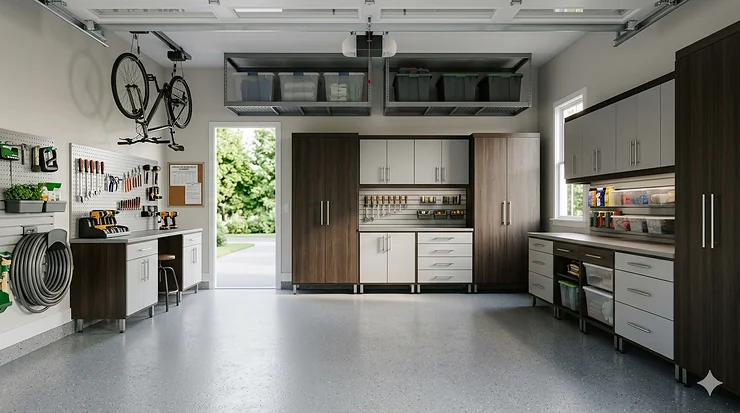
Zone 1: The Wall Zone (Daily Access). This is where your FastTrack rails, GearWall panels, or Wall Control pegboard lives. Items stored here are the ones you reach for multiple times per week: power tools, garden tools, sports equipment, extension cords. The rule for Zone 1 is visibility — everything should be identifiable at a glance from the garage door. Buyers walking in scan this zone first, and it forms their immediate impression. Invest here first, install at eye height, and don’t overcrowd it. A wall that’s 70% full looks organized; 95% full looks chaotic.
Zone 2: The Ceiling Zone (Seasonal Storage). Your FLEXIMOUNTS or GearLoft rack belongs here, above the parking spaces. The ceiling zone stores items you access a few times per year: holiday bins, camping gear, ski equipment, moving boxes. What you never put here: anything fragile, anything you need urgently, or anything so heavy it makes you nervous at height. The golden rule for ceiling storage is labeled bins — clear plastic totes with typed label tags. Buyers who see ceiling racks with labeled bins don’t think “storage problem.” They think “this person is organized.”
Zone 3: The Cabinet Zone (Secure and Chemical Storage). Gladiator GearBoxes or NewAge shelving anchors this zone, typically along one side wall. Chemicals (fertilizers, paint, motor oil), sharp tools, and anything lockable lives here. This zone is less about daily convenience and more about safety and visual finish. A single Gladiator wall cabinet with closed, locked doors elevates the entire garage’s perceived quality level — even buyers who never open it.
Common first-timer mistake: Starting with the ceiling zone. It’s the most dramatic visual change but requires the most confidence on a ladder. Start with the wall zone, get the visible space looking intentional, then tackle the ceiling. You’ll have the momentum and the confidence by then.
Which Homeowner Profile Are You? A Real-World Case Study
Understanding your profile determines which products deliver the best garage storage investment for your situation.
Profile A: The Pre-Sale Homeowner (6–12 months out). You’re not organizing for yourself — you’re organizing for the buyer standing in your garage during an open house. Your priorities are visual impact, perceived quality, and fast installation. Best combination: Gladiator GearWall Panels (full back wall) + one Gladiator Premier Wall GearBox + FLEXIMOUNTS 4×8 ceiling rack with labeled bins. Budget: $600–$900. Expected ROI influence: significant — real estate professionals consistently cite organized garages as reducing buyer hesitation and supporting asking price confidence.
Profile B: The Long-Term Owner (5+ years before selling). You want a system that genuinely improves daily life AND pays off at resale. Durability and expandability matter more than immediate visual flash. Best combination: Rubbermaid FastTrack multi-rail setup + Wall Control pegboard + NewAge Pro Series overhead shelf. Budget: $400–$700 installed. Expected daily benefit: dramatic — organized homeowners spend less time looking for tools, fewer trips to the hardware store, and less frustration during every project.
Profile C: The Weekend Workshop Enthusiast. Your garage is a working space, not just parking. Tool accessibility and workflow efficiency are your organizing principles. Best combination: Wall Control Metal Pegboard (full workshop wall) + Gladiator Wall GearBox for locked storage + FLEXIMOUNTS rack for material storage overhead. Budget: $500–$800. The Wall Control pegboard pays for itself in time saved per project within a year.
Profile D: The Small Garage Maximizer. One-car garage, every square foot counts. The ceiling and walls are your only options. Best combination: Rubbermaid FastTrack (vertical wall space), Gladiator GearLoft 2×4 Overhead Rack, and a single compact Gladiator Wall GearBox. Budget: $350–$500. Small garages that are organized well photograph identically to larger organized garages — buyers often can’t tell the size difference from listing photos.
What Real Estate Agents Actually Think About Garage Organization
Here’s the honest conversation that happens between listing agents and their clients, which most home improvement articles are too polite to report directly.
Agents don’t tell sellers that an organized garage adds $10,000 to the listing price — because it doesn’t work like that. What they tell sellers is that garage condition influences offer confidence. A buyer who walks into a chaotic garage mentally adds $5,000–$15,000 in “deferred maintenance” to their risk calculation, even if nothing is actually wrong with the home. An organized garage removes that mental tax. The seller gets full-price offers instead of lowball hedges. That’s not the same as “adding value” — but in a competitive market, it’s worth real money.
According to data compiled by HomeLight’s 2025 seller research, a garage adds 60%–85% ROI when properly maintained and presented. The keyword is presented. A garage that exists but looks neglected doesn’t deliver that return. A garage that’s organized, functional, and visually coherent — that’s the ROI machine.
The specific elements agents cite most often: cleared floor space (buyers need to visualize parking their car), working lighting, no visible water stains or oil spills, and some form of intentional wall storage. It doesn’t need to be a $5,000 custom cabinet system. A clean Rubbermaid FastTrack installation and labeled ceiling bins tell the story agents want buyers to receive: someone lived here thoughtfully.

Garage Storage Systems vs. Traditional Alternatives
| Storage Method | Cost Range | Visual Impact | ROI Potential | Durability |
|---|---|---|---|---|
| Wall Rail System (FastTrack) | $60–$300 | High | High | 15+ years |
| Metal Pegboard (Wall Control) | $80–$200 | Medium-High | Medium-High | Lifetime |
| Overhead Ceiling Rack | $130–$400 | High | High | 10–20 years |
| Slatwall Panels (GearWall) | $150–$600 | Very High | Very High | 15+ years |
| Steel Wall Cabinet (Gladiator) | $180–$600 | Very High | High | Lifetime |
| Basic Wire Shelving | $30–$100 | Low | Low | 3–7 years |
| Plastic Freestanding Shelf | $40–$150 | Very Low | Negligible | 3–5 years |
The table tells a blunt story: the difference in visual impact between a $50 plastic shelf and a $200 steel wall system is enormous — but the price gap is modest. Buyers don’t see cost; they see quality. Replacing two plastic shelving units with one Rubbermaid FastTrack kit and a Gladiator cabinet costs roughly the same and produces a completely different buyer impression.
How to Choose Garage Storage for Maximum Property Value
If you’re treating this as a property value enhancement rather than purely personal convenience, these six criteria should drive every purchase decision.
1. Choose steel over plastic, always. Plastic shelving yellows, cracks, and sags. Steel ages gracefully and communicates permanence. Buyers notice the difference in the first five seconds.
2. Prioritize visible systems over hidden ones. A ceiling rack loaded with labeled bins is more impressive than the same items stuffed in a corner. Buyers reward visibility because it signals the homeowner “solved” the storage problem rather than just moved it.
3. Match your storage system to your garage’s architecture. Garages with open stud walls need pegboard or slatwall. Finished drywall garages need rail systems that anchor to studs behind the surface. Using the wrong mounting approach leads to failure and damage — both of which kill the ROI argument instantly.
4. Leave floor space. This is the most counterintuitive rule. Don’t fill your garage floor with shelving. The emptier the floor, the larger the garage appears — and buyers respond viscerally to perceived space. Push everything to walls and ceiling. The National Association of Realtors consistently finds that spatial impression is among the top buyer priorities in all rooms, including garages.
5. Budget for accessories, not just the base product. Every rail system, pegboard, and slatwall product on this list generates its full value only when properly accessorized. Budget an additional 30–50% of the base product price for hooks, bins, and specialty attachments.
6. Install everything level and plumb. This sounds obvious, but a visibly crooked rail or a cabinet that’s not flush to the wall destroys the “intentional” impression that creates ROI. Spend the extra ten minutes with a level. Take the extra drill hole if something’s off. Buyers don’t consciously measure — but they feel when things are right.
Common Mistakes That Kill Your Garage Organization ROI
The garage organization mistakes that actually cost homeowners money are almost never the ones they expect.
Buying cheap, buying twice. The $39 plastic shelving unit from a discount store seems like an easy win until it’s yellowing and bowing under weight eighteen months later. Buyers who see degraded shelving don’t think “oh they tried” — they think “deferred maintenance.” Steel systems cost more upfront and last decades. The U.S. Department of Energy’s home improvement guidelines consistently note that material durability is the primary driver of long-term home value improvement, not initial cost.
Organizing without decluttering first. This is the classic mistake. Buying a beautiful GearWall system and then filling it with junk doesn’t create ROI — it creates expensive organized junk. Declutter aggressively before installing any storage system. Rule of thumb: if it hasn’t been used in 18 months, it shouldn’t have a hook in your show-ready garage.
Ignoring the ceiling. Most homeowners focus entirely on walls and ignore 300+ square feet of overhead real estate. A single FLEXIMOUNTS 4×8 rack removes virtually all of the “bulk storage problem” from a garage — freeing up walls for the organized, visually clean installations that photograph well.
Installing systems that limit parking. If your storage solution requires using parking space for access — rolling carts that extend into the driveway, shelves that force you to squeeze between them and the car — it’s a net negative for resale. Every storage system in this guide preserves full parking access. That’s non-negotiable.
Skipping lighting. Organized storage in a dark garage is invisible. A $40 LED shop light makes the same organizational setup look dramatically better in both real life and listing photos. It’s the highest-ROI accessory in any garage, period.
Long-Term Cost & Maintenance: Total Cost of Ownership
The ROI conversation usually stops at installation cost. Smart homeowners extend it to total cost of ownership over the likely hold period of the home.
A Rubbermaid FastTrack system installed today carries zero meaningful maintenance cost. Steel rails don’t corrode in typical garage environments, hooks don’t wear out, and the system adds accessories indefinitely. Amortized over a 10-year home hold, a $200 FastTrack investment costs $20 per year — roughly the price of one trip to the coffee shop per month.
The FLEXIMOUNTS ceiling rack requires one annual inspection of all lag bolt connections — fifteen minutes with a socket wrench, checking for any loosening. The entire maintenance protocol costs nothing beyond that time. Given a 600-lb tested capacity, properly installed racks don’t fail from normal use; they fail from improper initial installation.
Gladiator steel cabinets are essentially permanent. The welded steel construction has no moving parts that wear — hinges are heavy-duty, latches are mechanical. A Gladiator cabinet installed in 2026 will be in your garage when the home sells in 2031, 2036, or beyond, still looking the same.
The honest comparison: a $150 plastic shelving unit typically needs replacement every 3–5 years in a garage environment (heat cycling, UV, moisture). Over ten years, you’ll buy it 2–3 times: $300–$450 total, ending up with something that still looks cheap. One $200 Wall Control pegboard system, installed once, looks better in year ten than any plastic alternative looks on day one.
✨ Ready to transform your garage and boost your home’s value?
🔍 Check current pricing and availability on any of the highlighted products above. Your organized garage is closer — and more affordable — than you think.

Frequently Asked Questions
❓ Does garage organization increase home value directly?
❓ What garage improvements are worth making before selling?
❓ How much should I invest in garage storage for home sale purposes?
❓ How long does garage organization installation take?
❓ What garage renovation value do buyers actually notice?
Conclusion: The Garage Is the First Room Buyers Judge and the Last One Sellers Think About
There’s a peculiar blind spot in home selling. Sellers obsess over the kitchen, agonize over bathrooms, and argue with their agents about paint colors — while the garage, which buyers literally walk through to enter many American homes, gets a half-hearted sweep and a prayer.
The garage organization ROI for home value conversation isn’t about magic numbers or guaranteed appraisal bumps. It’s about buyer psychology, first impressions, and the quiet confidence that comes from showing a home that was cared for comprehensively — not just in the rooms with granite countertops.
A Rubbermaid FastTrack system, a FLEXIMOUNTS ceiling rack, and a Gladiator wall cabinet. Combined, that’s under $600. One weekend. The result is a garage that tells every buyer who walks in: this homeowner takes care of things. And in a market where offers are decided on feel as much as fact, that message is worth more than any backsplash you’ve ever argued about.
Start with the wall. Then the ceiling. Then one cabinet. The formula is simple. The returns — both financial and daily — will surprise you.
✨ Found this helpful? Share it with a neighbor who’s getting ready to list!
🔍 Every garage becomes someone’s deciding factor. Make yours count.
Recommended for You
- 10 Garage Organization Mistakes to Avoid in 2026
- 7 Best Garage Storage for Apartment Dwellers (2026 Guide)
- 12 Small Garage Organization Ideas on a Budget (2026 Guide)
Disclaimer: This article contains affiliate links. As an Amazon Associate, I earn from qualifying purchases. If you purchase products through these links, we may earn a small commission at no additional cost to you.
✨ Found this helpful? Share it with your friends! 💬🤗
