
In This Article
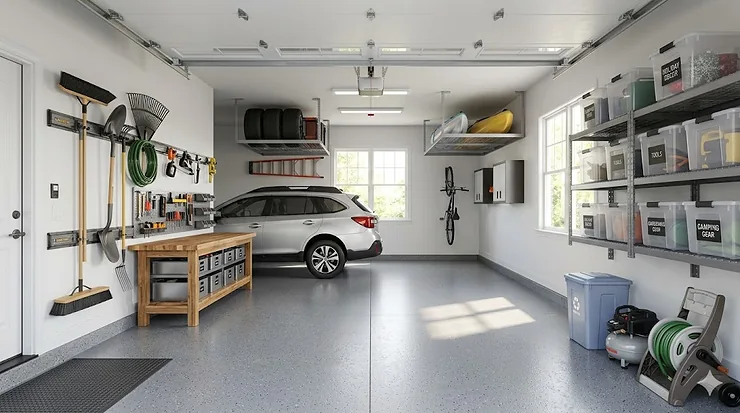
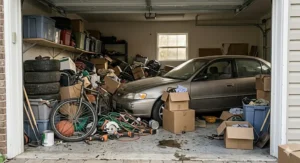
Let’s be honest. For most American homeowners, the garage is less “organized storage space” and more “everything-that-didn’t-fit-inside goes here.” A bike you haven’t ridden since 2019. Three half-empty cans of paint in colors you no longer remember choosing. An extension ladder leaning at an optimistic angle against the wall. Tools scattered across a folding table like the aftermath of a very specific natural disaster.
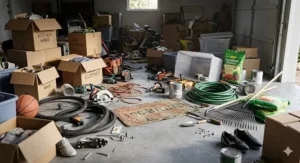
Understanding the most common garage organization mistakes to avoid isn’t just about aesthetics — it’s about safety, functionality, and honestly, your sanity. According to the U.S. Fire Administration (FEMA), garage fires spread faster and cause more damage than fires elsewhere in the home, largely because of how — and what — people store there. A poorly organized garage isn’t just inconvenient. It’s a genuine hazard.
This guide cuts through the clutter — pun very much intended — to walk you through the most costly, dangerous, and frustratingly common garage organization mistakes to avoid in 2026. Better still, we’re pairing each problem with real, proven solutions and actual products currently available on Amazon, so you can fix your garage this weekend, not “someday.” Whether you’re working with a single-car garage in a townhouse or a three-bay setup that could fit a small aircraft, the principles are the same: plan smart, store strategically, and stop making the same seven mistakes everyone else makes.
Ready? Good. Let’s reclaim that space.
Quick Comparison: Top 7 Garage Organization Products at a Glance
| Product | Type | Weight Capacity | Best For | Price Range |
|---|---|---|---|---|
| Rubbermaid FastTrack 24-Piece Kit | Wall Rail System | 1,750 lbs/rail | Versatile everyday use | $80–$120 |
| FLEXIMOUNTS 4×8 Overhead Rack | Ceiling Storage | 600 lbs | Seasonal/bulky items | $160–$230 |
| POKIPO 49″ Power Tool Organizer | Wall Mount Rack | 800 lbs | Tool-heavy workshops | $90–$140 |
| Akro-Mils 30270 AkroBins (3-Pack) | Stackable Bins | 75 lbs/bin | Hardware & small parts | $30–$55 |
| Gladiator GAWG28KDYG Wall GearBox | Steel Cabinet | 150 lbs | Secure enclosed storage | $110–$160 |
| BEESTMUEBLE 5-Tier Heavy Shelving | Freestanding Unit | 3,000 lbs | General heavy storage | $100–$150 |
| TORACK Tool Storage Rack (8-Pack) | Wall Hook System | 800 lbs total | Long-handled tools & gear | $40–$70 |
Analysis: Looking at this table, one thing jumps out immediately: there’s no single “best” product here, because different problems demand different solutions. The Rubbermaid FastTrack system wins for flexibility — you can reconfigure it endlessly — while the FLEXIMOUNTS rack turns dead ceiling space into actual real estate. Budget-conscious buyers should note that the TORACK hooks deliver a surprisingly high weight capacity at the lowest price point, making them a smart first move for anyone starting from scratch.
💬 Just one click — help others make better buying decisions too! 😊
Top 7 Garage Organization Products: Expert Analysis
1. Rubbermaid FastTrack 24-Piece Garage Wall-Mounted Storage Kit
If garage organization had a Swiss Army knife, it would look a lot like the Rubbermaid FastTrack 24-Piece Kit. This system includes six 48-inch rails plus 18 hooks in seven different configurations — multi-purpose hooks, utility hooks, vertical bike hooks, low-profile twin hooks, compact hooks, and scoop hooks — all designed to click into the rail without needing a drill for repositioning.
The spec that matters most here isn’t the hook count. It’s the 1,750-pound per rail capacity. Most people assume wall rail systems are for light-duty stuff — a few tools, maybe a hose. The FastTrack rails are rated to hold nearly a ton each, which means you can confidently hang heavy garden equipment, bikes, and even ladder accessories without the whole thing pulling free of the wall. That said, proper stud installation is non-negotiable; anchoring into drywall alone will absolutely let you down.
What most buyers overlook about this system is its true long-term value: you’re not just buying hooks, you’re buying a platform. As your needs change — kids grow, hobbies shift, vehicles change — you slide hooks to new positions in seconds. No new holes in the wall. No new hardware. Reviewers consistently highlight this rearrangeability as the reason they come back to buy more rails.
This is the right product for: families with evolving storage needs, anyone who wants a clean, wall-hugging aesthetic without sacrificing capacity.
✅ Clips reposition without tools
✅ Exceptional 1,750 lb/rail capacity
✅ Broad accessory ecosystem (shelves, bins, bike hooks sold separately)
❌ Rails require stud mounting — drywall-only installs will fail
❌ Full kit cost climbs quickly as you add shelves and bins
Price range: $80–$120. For a system that replaces the need for a freestanding shelving unit entirely, that’s excellent value.

2. FLEXIMOUNTS 4×8 Overhead Garage Storage Rack
Here’s the one insight that separates good garage organizers from great ones: most people ignore the ceiling. Completely. It just sits there, empty and judging you, while your floor gets more crowded by the week. The FLEXIMOUNTS 4×8 Overhead Garage Storage Rack fixes that problem with 32 square feet of ceiling-mounted platform storage rated to hold 600 pounds.
The adjustable drop height — ranging from 22 to 40 inches below the ceiling — is the spec that actually matters in practice. A 40-inch drop gives you enough clearance to store taller items upright, while a 22-inch drop keeps things tight to the ceiling so your garage door still clears with room to spare. The steel wire deck design means weight distributes naturally across the grid, preventing the soft-point failures you get with solid panel shelving that’s been overloaded.
In my assessment, this is the highest-impact upgrade available for a standard two-car garage. Store holiday bins, camping gear, sporting equipment — anything that only comes down two or three times a year — up top, and suddenly your wall and floor space opens up dramatically. Reviewers who “finally” put up an overhead rack consistently report it as the single biggest improvement to their garage. The installation requires drilling into ceiling joists (not drywall), so a stud finder is mandatory, and a second person makes the job infinitely less frustrating.
This is the right product for: homeowners with high ceilings who feel like their garage is always full despite their best efforts.
✅ 600 lbs capacity across 32 sq ft of platform space
✅ Adjustable drop height (22–40 inches)
✅ Frees up wall and floor real estate permanently
❌ Requires ceiling joist installation — not a beginner solo job
❌ Items stored up top are less accessible than wall-hung alternatives
Price range: $160–$230. Given the floor space it liberates, this is an investment that pays back immediately.
3. POKIPO 49″ W Large Power Tool Organizer Wall Mount
If you own more than two cordless drills — and plenty of serious DIYers do — you already understand the particular frustration of a workbench buried under chargers, batteries, and tools that never seem to be where you left them. The POKIPO 49″ W Large Power Tool Organizer Wall Mount is built specifically for this chaos, featuring a 4-tier steel rack that holds up to 12 cordless drills plus accessories, with an overall weight capacity of 800 pounds.
The detail that separates POKIPO from cheaper alternatives is the wide drill slot design. Budget tool racks typically feature narrow cradles that only accept specific drill neck widths — meaning your DeWalt 20V MAX fits but your Milwaukee M18 doesn’t. The POKIPO’s wider, angled slots accommodate essentially every major cordless brand. The standard 16-inch stud alignment means installation is straightforward rather than a puzzle. One upgrade model also includes a built-in 8-outlet power strip, so your batteries charge on the wall itself — no more power strips snaking across the floor.
The spec sheet won’t tell you this, but where POKIPO really wins is in the way it centralizes your entire power tool ecosystem. You stop walking in circles looking for your impact driver. You stop losing batteries behind the bench. Everything has a dedicated slot, and that consistency alone saves real time on every project.
This is the right product for: active DIYers, woodworkers, contractors who use their garage as a workshop.
✅ Accommodates virtually all major cordless tool brands
✅ 800 lb capacity on a 49-inch wall footprint
✅ Optional charging station model keeps batteries topped up
❌ Overkill (and expensive) if you only own 2–3 tools
❌ Some users report the wall-mounting template could be clearer
Price range: $90–$140 (base model). The charging station version runs slightly higher but is well worth the premium for daily workshop users.
4. Akro-Mils 30270 AkroBins Plastic Storage Bins (3-Pack)
Small parts organization is the unsung hero of a truly functional garage. You can have perfect wall rails and an overhead rack and a gorgeous tool station — and still waste ten minutes every project hunting for the right bolt, fitting, or drill bit. The Akro-Mils 30270 AkroBins are the industrial world’s answer to this problem, and they’ve been for decades. This isn’t a trendy product. It’s a workhorse.
Each bin measures 18″ × 16″ × 11″ and holds up to 75 pounds — which is genuinely industrial-grade capacity for a $10-per-bin purchase. The hopper-front design (that angled open face) lets you see and grab contents without unstacking anything. The extra-wide stacking ledge and anti-slide stops mean a column of four bins loaded with hardware won’t topple sideways when you pull out the bottom one.
What most home buyers overlook: these bins are fully compatible with Akro-Mils louvered panels and rail racks, meaning they can be wall-hung rather than stacked on a shelf. That’s the configuration you’ll see in every professional auto shop and machine shop in America — rows of hanging bins at eye level, contents immediately visible and accessible. For screws, nails, bolts, sandpaper grits, and paintbrush collections, there is genuinely no smarter system available at this price.
This is the right product for: serious hobbyists, home mechanics, woodworkers, anyone managing a large hardware collection.
✅ 75 lbs per bin — genuinely industrial-grade
✅ Compatible with wall-mount louvered panel systems
✅ Hopper front provides instant visibility and access
❌ Open-front design isn’t ideal for fine dust environments
❌ Colors are limited for those who prefer clear storage
Price range: $30–$55 for a 3-pack. One of the best dollars-per-organized-item values in this roundup.
5. Gladiator GarageWorks GAWG28KDYG Ready-to-Assemble 28-Inch Wall GearBox
There are certain things you don’t necessarily want on display in your garage — automotive chemicals, pesticides, medications you keep in the garage fridge, expensive small tools. For this category of storage, a proper enclosed steel cabinet is the right move, and the Gladiator GarageWorks GAWG28KDYG Wall GearBox delivers at a very reasonable price point.
The cabinet measures 28″ × 28″ × 12″ — compact enough to wall-mount without dominating your space, deep enough to hold spray cans, small power tools, and stacked containers comfortably. The rated capacity is 150 pounds total (40 lbs per shelf), which is more than enough for its intended purpose. A full-width adjustable interior shelf lets you configure the space to your actual items rather than forcing your items into a predetermined layout. The open bottom shelf features a power cord grommet — genuinely useful detail that lets you charge battery-powered equipment inside the cabinet rather than leaving cords draped across your floor.
What matters most here is build quality relative to price. Gladiator uses 18-gauge steel with Allen-head bolt assembly — this thing does not flex or rattle. It’s backed by a 10-year limited warranty from a brand with serious staying power. If you’re comparing it to the cheaper steel cabinets flooding Amazon, the gauge difference is real and it shows up in long-term durability.
This is the right product for: homeowners who want to secure chemicals, tools, or valuables out of sight and away from kids.
✅ 18-gauge steel construction with 10-year warranty
✅ Compatible with Gladiator GearWall panel system
✅ Power cord grommet for in-cabinet charging
❌ 150-lb total capacity is moderate — not for heavy tool storage
❌ Assembly required; budget 30–45 minutes
Price range: $110–$160. Exceptional value for what is effectively a locked, professional-grade steel cabinet.

6. BEESTMUEBLE 5-Tier Heavy Duty Metal Storage Shelves
Sometimes you just need a lot of shelf space, and you need it to hold a lot of weight, and you need it to not cost a fortune. Enter the BEESTMUEBLE 5-Tier Heavy Duty Metal Storage Shelves, a 35.4″ × 15.7″ × 72″ freestanding unit with a 3,000-pound total capacity and anti-fall rails on every tier — a feature that cheaper units typically omit.
That 3,000-lb number is distributed across five shelves (roughly 600 lbs per shelf), which means you can stack totes, toolboxes, automotive parts, and power equipment without mental math about whether the shelf will hold. The anti-fall rails prevent items from sliding off the back edge, which matters enormously if your garage floor isn’t perfectly level (spoiler: most aren’t). Assembly requires no tools, using a bolt-free interlocking design that goes together in about 20 minutes.
The spec sheet won’t tell you this, but the 15.7-inch depth is where this unit both shines and shows its limits. It’s perfect for standard storage totes and most tool cases, but it won’t comfortably accommodate deep items like large coolers or wide workshop equipment. For a versatile household garage — the kind storing holiday boxes, sports gear, and garden supplies — this is an outstanding value. For a dedicated workshop, you’d want a deeper shelving unit.
This is the right product for: garages that need immediate, high-capacity storage without the cost of a full wall system.
✅ 3,000 lbs total capacity with anti-fall rails on every tier
✅ No-tool assembly in approximately 20 minutes
✅ Adjustable feet level out on uneven concrete
❌ 15.7-inch depth won’t fit large or irregularly shaped items
❌ Takes up floor space — not ideal in tight single-car garages
Price range: $100–$150. For the capacity it delivers, this is one of the best-value freestanding shelving options on Amazon.
7. TORACK Tool Storage Rack — Heavy Duty Steel Garage Wall Hook System (8-Pack)
The TORACK Tool Storage Rack is the answer to one of the most persistent and maddening garage storage problems: what do you do with the big stuff? Ladders, garden chairs, rakes, snow shovels, hoses, long-handled tools — they’re awkward, they take up floor space, and no standard hook seems built to handle them properly. TORACK’s 8-pack of mixed heavy-duty hooks (ranging from 5.7″ to 11″ in depth) handles 800 pounds total across the set, with each individual hook rated for 100+ pounds.
The mixed-size approach is what makes this pack genuinely useful rather than a compromise. Shorter hooks work for hand tools and cords; longer hooks handle bikes, ladders, and folding chairs. The hooks are made from heavy-gauge carbon steel with a textured coating that prevents items from slipping — a detail that sounds minor until you’ve watched a ladder slide off a cheap plastic hook at 11 PM.
Installation hits studs with included lag bolts, and the hook angles are specifically designed to prevent items from sliding off when your garage door vibrates as it opens. What most buyers overlook: TORACK hooks can be used in combination with a wall rail system or installed directly into studs independently, giving you layout flexibility that many competing hook systems don’t offer.
This is the right product for: anyone who needs to get ladders, chairs, and bulky equipment off the floor without committing to a full wall system.
✅ 8-pack covers multiple hook sizes and use cases
✅ 800-lb total capacity with 100+ lb per hook rating
✅ Carbon steel with non-slip coating — built for real use
❌ Direct-to-stud installation means placement is permanent
❌ Not compatible with rail systems — separate planning needed
Price range: $40–$70 for the 8-pack. Among the best cost-per-pound-of-capacity values in this entire roundup.
✨ Don’t Miss These Exclusive Deals!
🔍 Take Your Garage to the Next Level
Click any highlighted product name in this guide to check current pricing and availability on Amazon. These tools will help you create a safer, smarter, and genuinely usable garage you’ll actually be proud of.
The Transformation Blueprint: How to Fix Your Garage in One Weekend
You don’t need six months and a contractor. Most garage transformations — real ones, not just shuffling clutter from one corner to another — take one focused weekend. Here’s how it actually works.
Step 1: The Brutal Edit (Saturday Morning, 2–3 Hours)
Empty everything out of the garage. Yes, everything. Put it in the driveway. Now sort into four piles: Keep-and-Access-Often, Keep-Seasonal, Donate/Sell, and Trash. Be brutal. If you haven’t touched it in two years and it doesn’t have sentimental or high monetary value, it goes. Most people discover that 20–30% of their garage contents can simply be eliminated — and that single step does more for organization than any product purchase.
Step 2: Zone Your Space (Saturday Afternoon, 1 Hour)
Map your garage into activity zones before you install a single thing. A typical layout includes: a tool and workshop zone (typically a back wall), a garden and outdoor equipment zone (side wall near the door), a seasonal storage zone (overhead or deep shelves), and a daily-access zone (near the entry door). Products should serve zones, not the other way around.
Step 3: Work Vertically, Then Overhead (Saturday Afternoon–Evening, 3–4 Hours)
Install wall systems first — rails, hooks, pegboard — before placing any freestanding shelves. This creates the maximum possible floor area. Once wall storage is established, install any overhead rack. The floor shelving unit fills in last, in zones where wall space is already exhausted.
Step 4: Bin, Label, and Commit (Sunday Morning, 2 Hours)
Akro-Mils bins or labeled clear totes give every category of item a physical home. Without this step, clutter returns within two months. Label everything — not just the bins, but the shelves themselves. When something has an obvious designated home, it gets returned there.
Real Scenarios: Matching Storage Profiles to Solutions
Not every garage owner has the same problem. Here’s how the three most common garage profiles map to the right combination of products.
The Active Family — two kids, bikes, sporting equipment, seasonal gear, lawn tools, and a perpetually buried minivan. Priority solution: Rubbermaid FastTrack rails across the longest wall (bikes, sports gear, lawn tools), FLEXIMOUNTS overhead rack for seasonal bins, and TORACK hooks for the ladder and folding chairs. Total investment: around $350–$450, transforming wall-to-wall chaos into a system where every item has a visual home.
The Workshop Owner — serious DIYer with a growing tool collection, workbench, and space that’s functionally a shed with a car sometimes in it. Priority solution: POKIPO tool organizer above the workbench (eliminates bench clutter entirely), Akro-Mils bins in a louvered panel setup for hardware, and BEESTMUEBLE shelving for heavy equipment. This profile benefits most from the investment in proper small-parts organization — the time savings across hundreds of future projects is enormous.
The Minimalist Homeowner — single-car garage, no workshop, just needs to actually park in there. Priority solution: TORACK hooks for the few large items, Gladiator wall cabinet for chemicals and valuables, and one tier of BEESTMUEBLE shelving for totes. This setup costs well under $300 and reclaims the floor entirely.

Mistake #1: Ignoring Vertical Wall Space Entirely
Walk into the average American garage and you’ll notice something immediately: the floor is packed, the shelves (if any exist) are overloaded, and the six feet of wall space between the top of those shelves and the ceiling is completely empty. That’s not a minor oversight. In a two-car garage, that neglected upper wall zone represents 50 to 100 square feet of potential storage surface.
Wall rail systems like the Rubbermaid FastTrack exist precisely because a wall is a storage system waiting to happen. The rails mount into studs and can support nearly a ton each — meaning you can move bikes, ladders, heavy tools, and equipment completely off the floor, transforming the space from a navigation challenge into a functioning garage. The key insight: hooks, shelves, and bins all slide onto the same rail. You’re not committing to a fixed layout. You’re building a framework that adapts.
The secondary mistake within this category is installing hooks too low. Hooks at shoulder height are constantly in the way. Mount frequently used items at eye level for quick access, and push seasonal and bulky items up toward the ceiling where they’re out of the daily traffic path.
Mistake #2: Storing Hazardous Materials Unsafely
This is where garage disorganization crosses from annoying to genuinely dangerous. According to FEMA’s U.S. Fire Administration, proper storage of flammable materials like gasoline, paints, propane, and varnishes is one of the primary factors in preventing garage fires. The recommendation is explicit: keep these materials at least three feet from water heaters, furnaces, and heat-producing appliances. If possible, store them in a shed separate from the home.
When keeping chemicals in the garage is unavoidable, a locked steel cabinet like the Gladiator GarageWorks GearBox changes the risk profile significantly. Enclosed steel storage prevents fumes from accumulating, keeps containers upright and properly sealed, and — critically — keeps children and pets away from substances that can cause serious harm. It’s also worth noting that aerosol cans, pool chemicals, and car batteries create specific risks: aerosols can explode under heat, pool chemicals can react violently with other stored materials, and old batteries can leak or arc.
The OSHA flammable liquids standard provides detailed guidance on storage quantities and container requirements for flammable materials in residential and commercial spaces. For homeowners: if you’re storing more than a few gallons of gasoline or paint thinner, take it to your county’s hazardous waste collection day. Most counties run these programs multiple times per year, and they’re free.
Mistake #3: Treating the Ceiling as Wasted Space
The overhead zone — anything from about 7 feet up to the ceiling — is the most universally ignored storage opportunity in the American garage. It’s also one of the most logical places to put items you only access a few times per year: holiday decorations, camping gear, seasonal sports equipment, suitcases, spare tire sets.
The FLEXIMOUNTS 4×8 overhead rack transforms 32 square feet of ceiling into functional storage that holds 600 pounds — enough for 10 to 15 large storage bins. The adjustable drop height (22 to 40 inches) means you can tune the installation to your ceiling height and car clearance simultaneously. The practical rule of thumb: leave at least 2 inches of clearance between your tallest vehicle’s roof and the lowest point of the loaded rack.
What most guides miss about overhead storage is the access factor. If you install your rack and then stack bins 3 deep without labeling them, you’ve created a new problem. Proper overhead storage requires clear labeled containers, strategic placement (most-accessed items on the edges, least-accessed in the center), and a dedicated spot for the step ladder that lets you reach it safely.
Mistake #4: Buying Cheap Hooks That Pull Free Under Load
There’s a category of Amazon garage hook that costs $8 for a 20-pack and feels satisfyingly solid when you first install it. Two months later, the adhesive fails, or the plastic cracks, or the drywall anchor strips out under the weight of a single garden hose. The cheap hook isn’t just useless — it’s actively dangerous when it’s failing under a ladder or a pair of bikes.
The TORACK system uses heavy-gauge carbon steel with a non-slip coating, rated for 100+ pounds per individual hook. That’s not marketing — it’s a function of the lag bolt installation into studs, which distributes load across the structural member of the wall rather than just the surface drywall. The difference in long-term performance between a stud-mounted steel hook and an adhesive drywall hook is roughly the difference between a proper shelf and a stack of books.
For anyone equipping a new garage or replacing failed cheap hooks, the principle is simple: every load-bearing hook in your garage should be lag-bolted into a stud or installed via a properly rated rail system. This is especially true for bikes, ladders, and heavy tools — items where a failure means something heavy falls on a person or a vehicle.
Mistake #5: Organizing Without a Zone Plan
Random organization — putting things wherever there’s space — is the reason most garages revert to chaos within weeks of a cleanup. Without a deliberate zone system, every item is homeless, and homeless items end up on the floor or the nearest flat surface.
The zone approach assigns specific physical areas to specific functional categories. Workshop zone, outdoor/garden zone, seasonal zone, automotive zone, daily-use zone. This sounds obvious, but the execution matters: tools stored in the garden zone get confused with garden implements, sports gear stored near the shop causes traffic flow problems, and seasonal items stored at the front block daily access to things you actually use.
A properly zoned garage also dramatically speeds up the “grab and go” experience that makes the space genuinely useful. When your drill is always in the workshop zone and your leaf blower is always in the garden zone, you stop spending three minutes hunting every time you need something. Multiply that time savings across 300 uses per year and the ROI on a weekend of thoughtful planning becomes obvious.
The quick framework: draw your garage footprint on paper, identify where the door is, where the car needs to be, and where your workbench (if any) lives. Build your zones outward from those fixed points.
Mistake #6: Neglecting Small Parts Organization
You can organize every large item in your garage perfectly and still lose 15 minutes a project hunting for the right-sized bolt, the specific drill bit, or that one hex key you know you own. Small parts disorganization is a persistent, productivity-destroying problem — and it has a genuinely elegant solution that most home garages never implement.
The Akro-Mils 30270 bins represent the system that professional shops and machine operations have used for decades. The key to making it work at home is paired implementation: bins on a shelf or louvered panel, plus a labeling system that’s specific enough to actually help. Not “screws” — “wood screws #8,” “sheet metal screws,” “deck screws 3 inch.” That level of specificity sounds excessive until you’re mid-project and need the right fastener immediately.
For hobbyists with growing hardware collections, a full louvered panel wall installation creates a visible, accessible library of parts that genuinely transforms project efficiency. It’s also, incidentally, much easier to identify when you’re running low on something — open bins make inventory visible in a way that closed boxes never do.
What Not to Store in Your Garage: A Practical Safety Guide
Some of this surprises people. The garage feels like the “overflow” room, but certain items genuinely don’t belong there — and not just for organizational reasons.
Items to keep out of the garage: Propane tanks and gasoline (store in outdoor sheds, away from the home structure per FEMA guidance). Refrigerators stocked with perishables (extreme temperature swings degrade food and stress compressors). Important documents and electronics (humidity and heat cause permanent damage). Photographs and artwork (same reason). Pet food in open bags (attracts rodents and pests, which then damage everything else). Wine and premium beverages (temperature cycling destroys them).
Items that need special storage conditions in the garage: Batteries (keep cool and dry, away from metal surfaces that could cause shorts). Paint (store upside down to create an airtight seal, in a location where temperatures stay above freezing). Pool chemicals (isolated from all other flammables and combustibles, in their original containers with lids sealed).
The broader principle from OSHA and FEMA is consistent: flammable and hazardous materials require dedicated, properly sealed containers, separation from heat sources, and ideally, enclosed cabinet storage that limits vapor accumulation and prevents accidental access.
Garage Organization for the Long Term: Avoiding the Relapse
Here’s the uncomfortable truth: garages don’t stay organized on their own. The entropy is relentless. The reason most garage organization projects fail — even the ambitious, expensive ones — isn’t the products. It’s the absence of maintenance habits.
Two practices make all the difference. First, the one-in-one-out rule: every new item that enters the garage displaces an existing one. This forces a decision rather than passive accumulation. Second, the quarterly 30-minute reset: four times a year, spend half an hour returning displaced items to their zones, discarding empties, and catching issues before they compound.
The best-organized garages aren’t the ones with the most expensive systems. They’re the ones owned by people who made a sustainable system that works with their actual habits, not an ideal version of how they wish they operated. Build zones around how you actually use the space. Buy products that match your real behavior, not aspirational behavior. And do the 30-minute reset before it becomes a 6-hour emergency.
FAQ: Garage Organization Mistakes to Avoid
❓ What are the most common garage organization mistakes to avoid?
❓ Is it safe to store gasoline and propane in the garage?
❓ What should I buy first to organize my garage on a budget?
❓ How much weight can garage wall storage systems hold?
❓ How do I stop my garage from reverting to clutter after organizing it?
Conclusion: The Garage You Actually Want
The difference between a garage that works and a garage that doesn’t isn’t money, square footage, or how many hooks you own. It’s decisions. The decision to use vertical space. The decision to zone deliberately. The decision to store hazardous materials safely. The decision to invest in storage that holds what you need it to hold rather than collapsing under the first real load.
Every product in this guide — from the Rubbermaid FastTrack’s legendary rearrangeability to the FLEXIMOUNTS rack turning your ceiling into real estate to the Akro-Mils bins giving every bolt a permanent address — exists to make those decisions easy to execute. Start with the biggest pain point in your specific garage. One focused weekend, the right tools, and a clear plan. That’s genuinely all it takes.
✨ Don’t Miss These Exclusive Deals!
🔍 Ready to transform your garage? Click any product name in this guide to check current pricing and availability on Amazon. These solutions will help you build a cleaner, safer, and more functional garage — starting this weekend.
Recommended for You
- 7 Best Garage Storage for Apartment Dwellers (2026 Guide)
- 12 Small Garage Organization Ideas on a Budget (2026 Guide)
- 7 Best Garage Storage Systems Comparison 2026
Disclaimer: This article contains affiliate links. As an Amazon Associate, I earn from qualifying purchases. If you purchase products through these links, we may earn a small commission at no additional cost to you.
✨ Found this helpful? Share it with your friends! 💬
