
In This Article
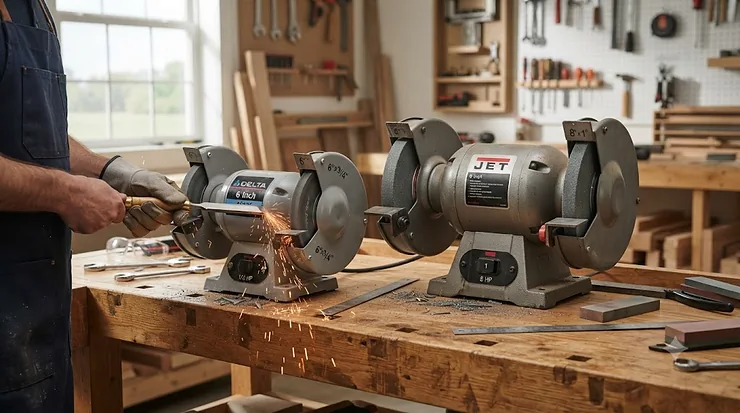
Walk into any garage sale of a retiring machinist and you’ll usually find two things bolted to the workbench: a vise, and a bench grinder that’s outlived three houses. The question of 6 inch vs 8 inch bench grinder sizing sounds trivial until you’re the one standing in the tool aisle, wallet open, wondering why a “bigger” wheel doesn’t automatically mean a better tool. It isn’t just about size. It’s about RPM, torque, wheel mass, and what you actually plan to grind on a Tuesday night at 9 p.m. when a chisel needs its edge back.
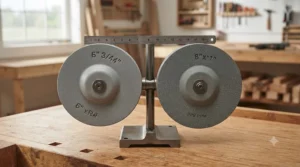
Here’s a quick, honest answer before we go deep: a bench grinder is a benchtop machine that spins an abrasive wheel to sharpen, deburr, or shape metal, and the “6 inch vs 8 inch” distinction refers to wheel diameter, which changes surface speed, torque, and footprint. Six-inch models tend to spin faster and cost less; eight-inch models spin a bit slower but hit harder and hold a flatter edge over time. Neither one is universally “better” — they’re built for different jobs, and this guide exists to help you match the machine to the work instead of the other way around.
We pulled real product specs, aggregated genuine review sentiment, and manufacturer documentation to build this comparison — not a rehash of an Amazon listing. Based on the spec comparisons ahead, you’ll see exactly where a smaller wheel earns its keep and where the extra two inches of diameter genuinely changes what a grinder can do. We’ll also walk through wheel types, RPM behavior, motor sizing, safety compliance, and workspace footprint, because a grinder is only as good as the setup around it.
Quick Comparison Table
| Product | Wheel Size | Motor | Speed | Best For |
|---|---|---|---|---|
| WEN BG4276 | 6 inch | 2.1 Amp | Single-speed, ~3,450 RPM | Occasional DIY & mower blades |
| Ryobi BG612GSB | 6 inch | 2.1 Amp | Single-speed, ~3,450 RPM | Budget-conscious home shop |
| WEN BG625V | 6 inch | 2.5 Amp | Variable speed | Small-tool sharpening control |
| Delta 23-196 | 6 inch | 1/3 HP | Variable speed | Precision hobbyist work |
| WEN BG4282 | 8 inch | 4.8 Amp | Single-speed, ~3,450 RPM | General-purpose shop workhorse |
| DEWALT DW758 | 8 inch | 3/4 HP | ~3,600 RPM | Heavy fabrication & metalwork |
| RIKON 80-805 | 8 inch | 1/2 HP | Slow-speed, ~1,750 RPM | Edge-tool & knife sharpening |
Looking at the spread above, the pattern is clear: 6-inch grinders cluster around lighter motors and higher RPM, while 8-inch models trade a little top speed for more torque and a flatter grinding surface. Reviewers consistently note that underpowered 6-inch units bog down under side pressure, while the 8-inch options in this table hold speed even when you lean into the wheel. If your work rarely goes beyond light deburring and the occasional dull mower blade, the smaller wheels are plenty; if you’re shaping steel stock or maintaining woodworking chisels regularly, the 8-inch column is where the real value lives.
💬 Bookmark this comparison — you’ll want to reference the specs again before you check out.
💬 Just one click — help others make better buying decisions too!😊
Top 7 Bench Grinders: Expert Analysis
1. WEN BG4276 — smallest footprint for tight benches
The WEN BG4276 opens our list because it solves a specific, common problem: not everyone has a dedicated shop wall to bolt a grinder to. This model’s compact stance and light overall weight make it easy to clamp to a narrow workbench or even store between projects. The 2.1-amp motor drives a 6-inch wheel at roughly 3,450 RPM, which is standard for entry-level grinders and plenty for sharpening kitchen knives, garden tools, and mower blades.
Based on the spec comparison, this is not a machine built for constant heavy use — the modest amp draw means it’s happiest doing five-minute jobs, not twenty-minute stock-removal sessions. Reviewers consistently note that it performs well for occasional home use but slows noticeably when steel is pressed hard against the wheel, which lines up with what you’d expect from a 2.1-amp motor. It’s the right call for the DIYer who sharpens a hatchet twice a season, not the welder shaping brackets daily.
Pros:
- ✅ Small footprint fits cramped workbenches easily
- ✅ Lightweight enough to move between projects
- ✅ Affordable entry point into bench grinding
Cons:
- ❌ Motor bogs down under sustained heavy pressure
- ❌ Single speed limits control for delicate sharpening
Priced in the budget range for 6-inch grinders (roughly $60-$85 at the time of research), the WEN BG4276 delivers solid value for light-duty use — just don’t expect it to double as a metal-shop workhorse.
2. Ryobi BG612GSB — best brand-name value at 6 inch
The Ryobi BG612GSB lands in a sweet spot for shoppers who want a recognizable brand without paying for professional-grade output. Like most 6-inch grinders in this bracket, it runs a 2.1-amp motor at standard single-speed RPM, positioning it as a direct competitor to the WEN above rather than a step up in raw power.
What most buyers overlook about this model is that Ryobi’s ecosystem approach — shared tool aesthetics, widely available accessory wheels, and accessible customer support — often matters more than a marginal spec difference. Here’s what to weigh: if you already own Ryobi tools and like the fit-and-finish, this grinder slots into that ecosystem cleanly. Aggregated buyer sentiment for entry Ryobi bench tools tends to praise straightforward assembly and light-duty reliability, while flagging that the tool rests feel more like stamped metal than precision-machined components — a common trait at this price tier, not a defect unique to this unit.
Pros:
- ✅ Recognizable, widely serviced tool brand
- ✅ Straightforward setup out of the box
- ✅ Good fit for light sharpening and deburring
Cons:
- ❌ Tool rests feel less precise than premium models
- ❌ No variable speed control for delicate edges
Expect a price in the $70-$95 range. As a value verdict, it’s a fair trade for buyers who prioritize brand trust over sharpening precision.
3. WEN BG625V — best variable speed control at 6 inch
The WEN BG625V changes the equation by adding variable speed to the 6-inch class, and that single feature does more real-world work than it sounds like on paper. A 2.5-amp motor with adjustable RPM means you can slow the wheel down for heat-sensitive edges — like a carbon-steel woodturning gouge — and speed it back up for faster stock removal on mild steel.
On paper this means more flexibility than any fixed-speed 6-inch competitor; in practice, reviewers consistently report that the flexible LED work light and the ability to dial down speed for fine sharpening are the two features that get mentioned most. This model earns its spot for hobbyists who sharpen a mix of tools — some delicate, some not — rather than doing one repetitive task all day.
Pros:
- ✅ Variable speed protects heat-sensitive edges
- ✅ Flexible work light improves visibility
- ✅ Versatile enough for mixed sharpening tasks
Cons:
- ❌ Costs more than fixed-speed 6-inch alternatives
- ❌ Still limited by 6-inch wheel torque ceiling
Pricing typically falls in the $90-$125 range, which is a reasonable premium for the added control if you sharpen varied tool types.
4. Delta 23-196 — best precision option for hobbyists
The Delta 23-196 targets a specific buyer: the woodworker or hobbyist machinist who treats sharpening as part of the craft, not an afterthought. Its variable-speed 6-inch design pairs with Delta’s reputation for tighter manufacturing tolerances, which reviewers consistently reference when comparing it against big-box store alternatives.
What most buyers overlook here is that precision on a bench grinder isn’t just about the motor — it’s about wheel runout and how true the arbor spins. Based on the spec comparison, the Delta 23-196 benefits from that reputation for tighter tolerances, meaning less wheel wobble and a more predictable, repeatable edge every time you touch a tool to the wheel. That matters enormously for anyone maintaining plane irons or chisels where a flat, consistent bevel is the entire point.
Pros:
- ✅ Tighter manufacturing tolerances reduce wheel wobble
- ✅ Variable speed suits precision sharpening work
- ✅ Strong reputation among woodworking hobbyists
Cons:
- ❌ Premium price for a 6-inch wheel class
- ❌ Overkill if you only do occasional rough grinding
Expect to pay in the $150-$200 range — a meaningful step up, but justified for buyers who value precision over raw grinding capacity.
5. WEN BG4282 — best all-around 8 inch workhorse
The WEN BG4282 is where this list crosses into 8-inch territory, and the jump shows up immediately in the spec sheet: a 4.8-amp motor, LED work lights built into the housing, and a noticeably larger footprint at roughly 14 by 10 by 11.75 inches. That extra amperage translates directly into resistance against stalling — the frustration that plagues underpowered 6-inch units when you push a workpiece hard against the wheel.
Here’s what to weigh: this is a single-speed grinder, so it lacks the fine control of the Delta above, but it compensates with sheer capability for general shop tasks — deburring welds, shaping mild steel, and reviving dull garden tools. Reviewers consistently note that the larger wheel diameter produces a flatter grinding surface, which makes it easier to keep an edge straight instead of accidentally rounding it over, a common issue with smaller-diameter wheels.
Pros:
- ✅ 4.8-amp motor resists stalling under pressure
- ✅ Built-in LED lights improve wheel visibility
- ✅ Flatter 8-inch surface aids straight edges
Cons:
- ❌ Larger footprint needs more bench space
- ❌ Single speed limits control for delicate work
Priced around $90-$125, this model represents strong value for anyone graduating from a 6-inch grinder to something that won’t slow down under real load.
6. DEWALT DW758 — best for heavy-duty fabrication
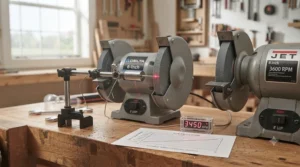
The DEWALT DW758 is the grinder professionals reach for when the workday involves steady grinding, not occasional touch-ups. Its 3/4 HP induction motor spins at roughly 3,600 RPM, and the cast-iron base and motor housing add the mass needed to keep the whole unit stable during aggressive material removal.
What most buyers overlook about this model is the 12.5-inch gap between the wheels — a detail that sounds minor until you’re trying to grind a long rod or an oddly shaped bracket without the motor housing getting in the way. Based on the spec comparison, the precision-machined aluminum tool rests and rear exhaust ports in the wheel guards also point to a design built for sustained shop use rather than occasional home projects. Aggregated reviewer sentiment consistently praises the smooth, low-vibration operation, a direct result of that cast-iron mass working as intended.
Pros:
- ✅ 3/4 HP motor handles continuous heavy grinding
- ✅ Wide 12.5-inch gap fits long or odd workpieces
- ✅ Cast-iron base minimizes vibration at speed
Cons:
- ❌ Heavier unit requires a sturdy, dedicated bench
- ❌ Higher price point than general-purpose 8-inch models
Expect a price in the $150-$210 range. For fabrication-heavy shops, the value verdict is straightforward: this motor and mass combination earns its premium.
7. RIKON 80-805 — best for edge-tool and knife sharpening
The RIKON 80-805 takes a completely different approach to the 8-inch class: instead of maximizing speed, it deliberately slows things down. A 1/2 HP motor spins the wheels at roughly 1,750 RPM — about half the speed of the DEWALT above — specifically to prevent overheating delicate edges like knife blades and woodworking chisels.
Here’s what to weigh: slower RPM means slower material removal, so this isn’t the grinder for shaping raw stock. But on paper this means dramatically reduced risk of drawing the temper out of hardened steel, which is the single biggest danger when sharpening a good knife on a fast wheel. The included 60-grit and 120-grit white aluminum oxide wheels are a finer combination than typical bundled wheels, letting the 60-grit reshape a damaged edge while the 120-grit refines it to a working sharpness. Reviewers consistently highlight the cast-iron base and rubber nonslip feet for reducing vibration during careful, controlled sharpening passes.
Pros:
- ✅ Slow 1,750 RPM prevents overheating hardened edges
- ✅ Finer 60/120-grit wheel combo aids precise sharpening
- ✅ Cast-iron base and rubber feet cut vibration
Cons:
- ❌ Slow speed means slower stock removal
- ❌ Premium price for a specialty sharpening tool
Pricing typically sits in the $200-$260 range. If sharpening quality tools is your primary use case, this is the one model on this list purpose-built for exactly that.
Practical Usage Guide: Setup, Break-In, and Maintenance
Getting a new bench grinder running safely takes more than plugging it in. Start by bolting the unit to a workbench or a dedicated stand — an unsecured grinder can walk across a bench surface as the motor spins up, and that vibration only gets worse over time. Before the first use, spin the wheel by hand to check for obvious cracks or chips, then stand to the side (never directly in front) for the initial startup, since a defective wheel is most likely to fail in its first few seconds of full speed.
During the first 30 days, the most common mistake is neglecting the 1/8-inch gap between the tool rest and the wheel — as the wheel wears down, that gap widens, and an overly wide gap lets small workpieces jam and kick back. Check it weekly. Dressing the wheel with a dressing tool every few weeks removes clogged, glazed abrasive and exposes fresh grit, which keeps grinding efficient and reduces the burning smell that shows up when a loaded wheel rubs instead of cuts. Keep a small container of water nearby to quench hot edges between passes, especially on faster 6-inch models where heat builds quickly.
Real-World Scenarios: Matching the Grinder to the User
Consider three realistic buyers. A college student living in a dorm-adjacent garage, sharpening a pocketknife and the occasional kitchen blade, doesn’t need anything beyond the WEN BG4276 — low cost, small footprint, done in five minutes. A weekend woodworker maintaining chisels and plane irons weekly benefits far more from the RIKON 80-805, since its slow speed protects the hardened steel edges that make hand tools worth owning in the first place. A home fabricator welding brackets and shaping mild steel stock several times a month needs the stall resistance of the DEWALT DW758 — anything smaller will bog down mid-project and cost more time than it saves in purchase price.
The throughline across all three scenarios: match the tool to the material and the frequency, not to whichever grinder happens to be on sale. Buying more machine than you need isn’t a mistake, exactly, but buying less machine than the job requires absolutely is — you’ll end up upgrading within a year anyway.
How to Choose Between a 6 Inch and 8 Inch Bench Grinder
- Identify your primary material. Softer edge tools and knives favor smaller, slower wheels; structural steel and welds favor larger, torque-heavy wheels.
- Estimate your session length. Five-minute touch-ups tolerate a light motor; twenty-minute grinding sessions need the amperage that 8-inch models typically carry.
- Weigh the wheel diameter performance difference honestly. A larger wheel contacts the workpiece with a flatter arc, producing straighter edges, while a smaller wheel’s tighter curve can round over a bevel if you’re not careful.
- Check your available bench space. Eight-inch grinders need roughly two to three more inches of depth and width than 6-inch units, plus clearance for the wider wheel guards.
- Decide if variable speed matters to you. If you sharpen a mix of hardened and soft tools, variable speed adds real flexibility; if you always grind the same material, fixed speed saves money.
- Set a realistic budget band. Six-inch grinders generally start lower, while capable 8-inch machines command a premium justified by motor size and mass.
- Confirm mounting hardware compatibility. Bolt-down feet, hole spacing, and the workbench thickness should all be checked before you commit to a specific footprint.
Bench Grinder Wheel Types Explained
Not every wheel on a bench grinder does the same job, and this is one of the more overlooked bench grinder wheel types decisions buyers make. Standard aluminum oxide wheels, usually gray or white, handle general-purpose sharpening and deburring on steel and are what ship with most grinders out of the box. White aluminum oxide wheels, like the ones bundled with the RIKON 80-805, run cooler and cut more precisely, which is why they’re favored for edge tools. Silicon carbide wheels are the better choice for non-ferrous metals and carbide-tipped tools, since standard aluminum oxide wheels tend to load up quickly on softer materials like aluminum.
Wire wheels, meanwhile, swap abrasive grinding for aggressive rust and paint removal, and buffing wheels handle polishing rather than material removal at all. The practical takeaway: the wheels that ship with a grinder are rarely the only wheels you’ll ever use on it — budgeting for a second wheel set matched to your actual material is one of the smartest upgrades a new owner can make.
Bench Grinder RPM Guide: Speed, Torque, and SFPM
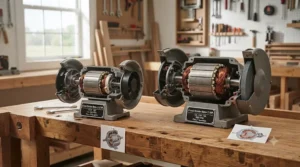
RPM tells you how many times a wheel spins per minute, but the number that actually determines cutting performance is surface feet per minute, or SFPM — the distance a point on the wheel’s edge travels in that same minute. According to Wikipedia’s explanation of surface feet per minute, this measurement correlates directly with how a cutting or abrasive surface interacts with a workpiece, which is why two grinders spinning at different RPMs but different wheel diameters can produce nearly identical cutting speeds.
This is the heart of any bench grinder rpm guide worth reading: an 8-inch wheel spinning at 1,750 RPM covers roughly the same surface speed as a smaller 6-inch wheel spinning much faster, which is exactly why slow-speed 8-inch sharpening grinders like the RIKON 80-805 don’t feel underpowered — they’re simply optimized for controlled heat, not raw RPM bragging rights. Standard fixed-speed grinders typically run around 3,450 RPM regardless of wheel size, while slow-speed sharpening models intentionally drop to around 1,750 RPM specifically to reduce the risk of drawing temper out of hardened steel.
Bench Grinder Motor Size Comparison: Amps, HP, and Stall Resistance
Motor sizing is where a lot of buyers get surprised after the purchase, which is why a proper bench grinder motor size comparison matters more than most spec sheets suggest. Budget 6-inch grinders typically run 2.1 to 2.5-amp motors — enough for light sharpening but prone to slowing down under firm pressure. Mid-range and 8-inch grinders step up to 4.8 amps or roughly 1/2 to 3/4 horsepower, and that jump is what separates a grinder that struggles on thick stock from one that barely notices it.
Stall resistance, sometimes listed as “motor stall force,” reflects how much pressure you can apply before the wheel visibly slows. Reviewers consistently report that the DEWALT DW758‘s 3/4 HP motor holds speed under loads that would bog down a 2.1-amp entry-level unit within seconds. The practical rule: if your work regularly involves pressing hard against the wheel for more than a few seconds at a time, undersizing the motor is the single most common regret among first-time bench grinder buyers.
Bench Grinder Footprint Workspace Planning
Space planning rarely gets mentioned until the grinder arrives and doesn’t fit where you imagined it, which makes bench grinder footprint workspace planning worth doing before you buy, not after. Six-inch grinders typically need about 12 to 14 inches of bench depth and roughly 10 inches of width, while 8-inch models, like the WEN BG4282 at 14 by 10 by 11.75 inches, need a bit more clearance on every side for the larger wheel guards and the wider stance.
Beyond the footprint of the machine itself, budget clearance space in front of the wheels for standing safely to the side during startup, plus room for a small water container for quenching. Wall-mounted or dedicated stand setups solve most space problems for garage and apartment workshops, letting you bolt down an 8-inch grinder without sacrificing your entire workbench surface to a single tool.
Bench Grinder Safety Tips and Regulations Compliance
Safety on a bench grinder isn’t optional flourish — it’s the difference between a routine sharpening session and a genuinely dangerous equipment failure, since a wheel spinning at thousands of RPM can fracture with real force if it’s misused. The OSHA standard for abrasive wheel machinery requires that work rests be kept within 1/8 inch of the wheel and that tongue guards never exceed a 1/4 inch gap from the wheel’s edge — both measurements exist specifically to prevent a workpiece from jamming and the wheel from breaking apart.
These bench grinder safety tips apply whether you’re running a $70 entry model or a $250 sharpening specialist: always wear safety glasses and a full face shield, never stand directly in front of the wheel during startup, inspect wheels for cracks before every session, and re-check the tool rest gap regularly since it widens as the wheel wears down. Bolting the grinder to a stable surface isn’t just about convenience — an unsecured unit vibrating across a bench is a documented contributor to accidents during otherwise routine grinding.
Common Mistakes When Buying a Bench Grinder
The most frequent buying mistake is choosing wheel size based on price alone rather than material and session length — a cheap 6-inch grinder used daily on structural steel will disappoint fast. A close second is skipping the motor spec entirely; two grinders can look nearly identical while one has double the amperage and twice the real-world stall resistance. Buyers also commonly overlook wheel grit that ships with the unit, assuming it suits every job, when a coarser 36-grit wheel and a finer 120-grit wheel serve completely different purposes.
Another frequent misstep is ignoring bench space until after the box arrives, especially with 8-inch models that need noticeably more clearance than their 6-inch counterparts. Finally, some buyers skip mounting hardware entirely, running a grinder unsecured “for now” — a habit that tends to stick around permanently and undermines both safety and grinding precision.
Long-Term Cost & Maintenance
Total cost of ownership on a bench grinder extends well past the sticker price. Replacement wheels, typically needed every one to three years depending on use, run a modest additional cost but should be factored into your budget from day one. Motors on well-built units — particularly cast-iron models like the DEWALT DW758 — tend to outlast cheaper stamped-housing competitors by years, which changes the real cost-per-use calculation even though the upfront price is higher.
Routine maintenance is inexpensive: a wheel dressing tool costs little and extends wheel life significantly, while occasional bearing lubrication (on models that require it) takes minutes. Reviewers consistently note that grinders with sealed, pre-lubricated bearings — common on mid-range and premium 8-inch models — require essentially no maintenance beyond dressing the wheels, making the long-term cost gap between a budget and premium grinder smaller than the upfront price difference suggests.
Frequently Asked Questions
❓ Is a 6 inch or 8 inch bench grinder better for home use?
❓ What RPM should a bench grinder run at for sharpening knives?
❓ Can I put an 8 inch wheel on a 6 inch bench grinder?
❓ How much clearance does a bench grinder need on a workbench?
❓ How often should bench grinder wheels be replaced?
Conclusion
The 6 inch vs 8 inch bench grinder decision ultimately comes down to two honest questions: what are you grinding, and how often? Six-inch grinders like the WEN BG4276 and Ryobi BG612GSB earn their keep through affordability and a small footprint, ideal for occasional sharpening and light home tasks. Step up to variable-speed 6-inch models like the WEN BG625V or Delta 23-196 when precision matters more than raw speed. And when the job calls for real torque and stall resistance — structural steel, daily fabrication, or serious edge-tool maintenance — the 8-inch class, from the workhorse WEN BG4282 to the heavy-duty DEWALT DW758 and the specialty RIKON 80-805, delivers capability the smaller wheels simply can’t match.
No single grinder on this list is the “best” in isolation — each one is the right answer for a specific shop, budget, and material. Match the machine to the work in front of you, respect the OSHA-backed safety margins along the way, and whichever size you land on will serve you for years.
✨ Ready to Upgrade Your Workshop?
🔍 Take your bench grinder setup to the next level with the picks above. Click through to check current pricing and availability on any model that fits your shop, and get back to sharpening, shaping, and grinding with confidence!
Recommended for You
- Bench Grinder for Knife Sharpening: 7 Sharp Picks (2026)
- Bench Grinder for Home Shop: 7 Picks That Won’t Let You Down (2026)
- Electric Top Handle Chainsaw: 7 Best Picks Reviewed for 2026
Disclaimer: This article contains affiliate links. As an Amazon Associate, I earn from qualifying purchases. If you purchase products through these links, we may earn a small commission at no additional cost to you.
✨ Found this helpful? Share it with your friends! 💬🤗
