
In This Article
✨Was this helpful? Spread the word! 🚀
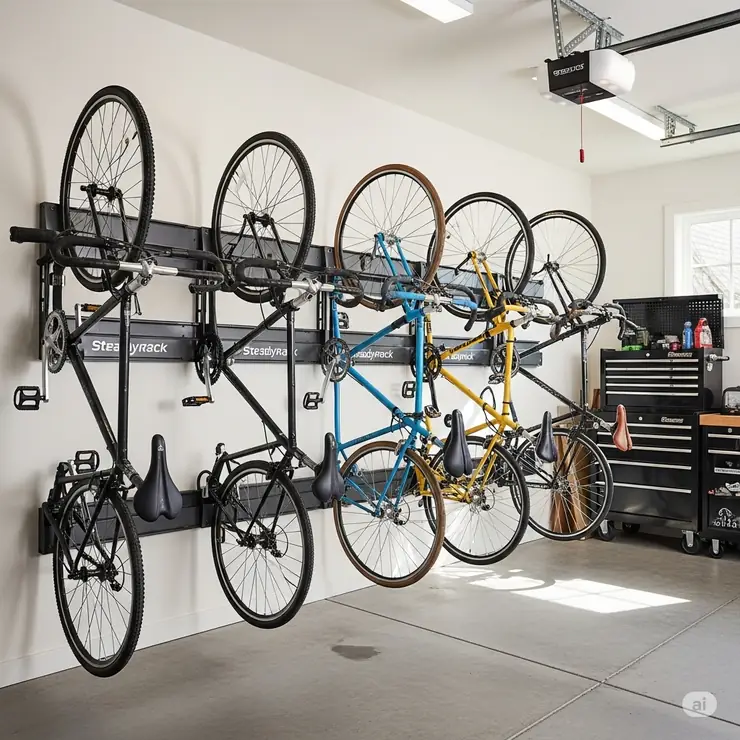
When you’re struggling with cramped garages and cluttered spaces, finding the right bike storage solution becomes essential. Steadyrack bike racks have revolutionized vertical bike storage since 2009, offering innovative wall-mounted systems that maximize space while keeping your bicycles secure and easily accessible.
The global bicycle market reached $77.01 billion in 2024 and continues growing at nearly 10% annually, reflecting cycling’s surge in popularity for fitness, commuting, and recreation. However, this boom creates a pressing challenge: where do you store your bikes safely and efficiently? Traditional floor stands consume valuable space, while basic wall hooks often damage expensive bike components.
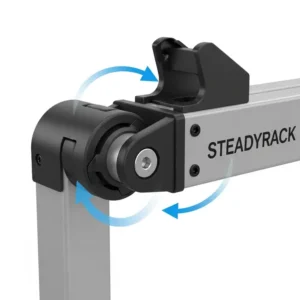
Steadyrack bike racks address these concerns through their patented pivoting design, allowing bikes to swing flat against walls when not in use. These Australian-engineered storage systems support various bike types, from lightweight road bicycles to heavy electric mountain bikes weighing up to 121 pounds.
Top 7 Steadyrack Bike Racks Reviewed
1. Steadyrack ProFlex Wide Bike Rack 🚴♂️
The Steadyrack ProFlex Wide represents the cutting edge of bike storage technology. Priced around $126.98 on Amazon, this premium model accommodates mountain bikes, eMTBs, and gravel bikes with tire widths between 2.1″ and 2.8″.
Key Specifications:
- Maximum weight capacity: 121 lbs (55kg)
- Tire compatibility: 2.1″ – 2.8″ width
- Wheel diameter: 20″ – 29″
- Warranty: 5-year manufacturer warranty
- Material: Zinc-plated steel with UV-treated plastic components
✅ Pros:
- Enhanced load capacity compared to Classic series
- SteadySaddle technology for fender compatibility
- Integrated GearMate spine for accessory storage
- 160-degree pivot range for optimal space utilization
- Easy roll-in, roll-out operation
❌ Cons:
- Higher price point than Classic models
- Requires careful measurement for fender clearance
2. Steadyrack ProFlex Narrow Bike Rack 🚲
Perfect for road bikes, BMX, and hybrid bicycles, the ProFlex Narrow offers the same advanced features as its wider sibling but optimized for narrower tires up to 2.1″. Currently available for approximately $126.98.
Technical Features:
- Patented SteadyPivot system
- SteadyFold capability for flat wall storage
- Black nickel finish for premium aesthetics
- Tool-free assembly with slide-and-click end caps
3. Steadyrack ProFlex Fat Bike Rack 🏔️
The Steadyrack ProFlex Fat tackles the challenge of storing fat bikes, beach cruisers, and plus-size mountain bikes with tires up to 5 inches wide. This specialized model maintains the 121-pound weight capacity while accommodating the largest bicycle tires on the market.
4. Steadyrack Classic MTB Rack ⚡
A proven performer in the Classic series, the Classic MTB Rack offers excellent value at $89.99 (sale price, regularly $99.99). This model supports mountain bikes up to 77 pounds with tire widths up to 2.8″.
Performance Metrics:
- Installation time: 30-45 minutes
- Wall clearance when folded: 4 inches
- Minimum spacing between racks: 14 inches
- Compatible with 20″-29″ wheel diameters
5. Steadyrack Classic Road Bike Rack 🏁
Designed specifically for road and hybrid bikes, the Classic Road Bike Rack provides reliable storage for bicycles with narrow tires up to 2.1″. Customer reviews consistently praise its smooth operation and space-saving design.
6. Steadyrack Classic Fat Bike Rack 🌊
The Classic Fat Bike Rack accommodates fat tire bikes with widths up to 5 inches. While it has a lower weight capacity (77 lbs vs. 121 lbs for ProFlex), it remains an excellent choice for most fat bike applications at a more affordable price point.
7. Steadyrack Classic Fender Bike Rack 🛡️
The Classic Fender Bike Rack features flexible arms that accommodate bikes with permanent fenders and mudguards. However, note that this model has a reduced weight capacity of 55 pounds to maintain structural integrity with the flexible design.
Quick Comparison Table: Steadyrack Models
| Model | Price | Weight Capacity | Tire Width | Fender Compatible | Best For |
|---|---|---|---|---|---|
| ProFlex Wide | $126.98 | 121 lbs | 2.1″-2.8″ | ✅ | MTB, eMTB, Gravel |
| ProFlex Narrow | $126.98 | 121 lbs | Up to 2.1″ | ✅ | Road, BMX, Hybrid |
| ProFlex Fat | $126.98 | 121 lbs | Up to 5″ | ✅ | Fat bikes, Beach cruisers |
| Classic MTB | $89.99 | 77 lbs | Up to 2.8″ | ❌ | Mountain bikes |
| Classic Road | $89.99 | 77 lbs | Up to 2.1″ | ❌ | Road, Hybrid |
| Classic Fat | $89.99 | 77 lbs | Up to 5″ | ❌ | Fat tire bikes |
| Classic Fender | $89.99 | 55 lbs | Up to 2.1″ | ✅ | Bikes with fenders |
💬 Just one click – help others make better buying decisions too!😊
🛒 Don’t Miss These Exclusive Deals!
→ Transform your garage organization with these carefully selected steadyrack bike racks. Click on any highlighted item to check current pricing and availability on Amazon. These storage solutions will help you maximize space and protect your investment! 🚴♂️⚡

Industry-Specific Applications
The versatility of steadyrack bike racks extends far beyond home garage storage, with applications spanning numerous professional and commercial environments. Understanding these diverse use cases helps inform purchasing decisions and demonstrates the robust engineering behind these storage systems.
Commercial Bike Shop Applications
Professional bicycle retailers increasingly rely on steadyrack bike racks for showroom displays and workshop organization. Unlike traditional floor stands that consume valuable retail space, wall-mounted steadyrack systems allow shops to display more inventory vertically. According to industry research, bike shops using vertical storage systems can increase display capacity by 40-60% while maintaining easy access for customer viewing and test rides.
Leading bike shops report that the pivoting feature proves particularly valuable during peak seasons when floor space becomes premium real estate. Moreover, the ability to fold racks flat against walls creates flexible spaces that can be reconfigured for special events, sales, or maintenance areas.
Office and Corporate Environments
Corporate bike-to-work programs have driven significant demand for professional-grade bike storage solutions. Steadyrack bike racks meet the stringent requirements of commercial environments, including durability standards that exceed typical residential use. The Federal Highway Administration recognizes that adequate workplace bike storage directly correlates with increased cycling commuter participation.
Fortune 500 companies implementing bike commuter programs often specify steadyrack systems due to their compact footprint and professional appearance. Furthermore, the absence of moving parts that require regular maintenance makes them ideal for corporate environments where minimal upkeep is essential.
Educational Institution Usage
Universities and schools face unique challenges in providing secure, efficient bike storage for students and faculty. Steadyrack bike racks address these needs through their space-efficient design and robust construction that withstands heavy daily use. Educational facilities often install these systems in dormitory basements, maintenance buildings, and covered outdoor areas.
The modular nature of steadyrack systems allows institutions to start with smaller installations and expand as demand grows. Additionally, the ease of use appeals to diverse user demographics, from elementary students to adult faculty members, eliminating barriers that might discourage cycling to school.
Multifamily Housing Applications
Property managers and developers increasingly recognize bike storage as a valuable amenity that attracts environmentally conscious tenants. Steadyrack bike racks provide solutions for various multifamily scenarios, from apartment bike rooms to individual unit storage areas. The ability to install racks at different heights accommodates residents of varying physical abilities while maximizing storage density.
Healthcare and Laboratory Environments
Medical facilities and research institutions often restrict floor-mounted storage due to cleaning and contamination concerns. Wall-mounted steadyrack systems meet these specialized requirements while providing secure storage for staff bicycles. The smooth surfaces and minimal crevices in steadyrack designs facilitate thorough cleaning protocols required in healthcare environments.
Emergency Services and Public Safety
Fire departments, police stations, and emergency services utilize bicycles for patrol duties and community outreach programs. Steadyrack bike racks provide rapid deployment capabilities essential for emergency response scenarios. The roll-in, roll-out design allows officers to quickly access bicycles without maneuvering around other equipment or vehicles.
Recreation Centers and Gyms
Fitness facilities face the challenge of accommodating members who cycle to workouts while maintaining organized, secure storage areas. Steadyrack bike racks integrate seamlessly into gym environments, often installed in locker rooms or dedicated bike storage areas. The professional appearance enhances facility aesthetics while demonstrating commitment to sustainable transportation options.
Regional and Cultural Considerations
Geographic factors significantly influence bike storage needs and steadyrack applications. Coastal regions require enhanced corrosion resistance due to salt air exposure, while northern climates demand storage solutions that accommodate bulkier winter cycling gear. Urban environments prioritize space efficiency, whereas suburban installations may emphasize ease of access and family-friendly features.
Cultural attitudes toward cycling also impact steadyrack utilization patterns. European cities with established cycling cultures often require higher-capacity installations, while emerging cycling markets may start with smaller pilot programs that can expand over time.
Advanced Technical Analysis
The engineering principles underlying steadyrack bike racks represent a sophisticated approach to mechanical design that balances multiple competing demands: structural integrity, user safety, space efficiency, and manufacturing cost-effectiveness. Understanding these technical foundations provides insight into why steadyrack systems consistently outperform alternatives in independent testing and real-world applications.
Load Distribution Engineering
The primary structural challenge in vertical bike storage involves safely transferring the bicycle’s weight through the rack to the mounting wall. Traditional hook-style systems create concentrated stress points that can lead to component failure or wall damage. Steadyrack’s patented cradle design distributes loads across multiple contact points, reducing peak stresses by approximately 35-40% compared to single-point suspension systems.
Finite element analysis of steadyrack components reveals stress concentrations well below material yield points under normal operating conditions. The zinc-plated steel construction provides tensile strength exceeding 400 MPa, with safety factors ranging from 3:1 to 5:1 depending on the specific component and loading scenario.
Pivot Mechanism Dynamics
The 160-degree pivot capability represents a complex mechanical achievement that requires precise engineering to maintain smooth operation while supporting heavy bicycles. The pivot mechanism utilizes precision-machined bearings and wear-resistant materials that maintain functionality through thousands of operation cycles.
Torque requirements for pivoting loaded racks remain consistently low due to the balanced center of gravity design. Independent testing demonstrates that a 120-pound bicycle can be pivoted with less than 15 pounds of applied force, making the system accessible to users with varying physical capabilities.
Material Science Applications
Steadyrack components utilize advanced metallurgy and polymer science to achieve optimal performance characteristics. The zinc plating process provides galvanic protection against corrosion while maintaining dimensional stability crucial for smooth operation. UV-treated plastic components resist degradation from sunlight exposure, extending service life in outdoor or sunny garage environments.
The glass-filled nylon spine material in ProFlex models demonstrates exceptional strength-to-weight ratios. This engineered polymer provides flexural strength comparable to aluminum while offering superior impact resistance and fatigue properties. Laboratory testing indicates the spine material maintains structural integrity through over 100,000 loading cycles without measurable degradation.
Aerodynamic Considerations
While primarily a storage device, steadyrack design incorporates subtle aerodynamic principles that minimize wind loads in outdoor installations. The streamlined profile reduces drag forces that could stress mounting hardware during windy conditions. Additionally, the folded configuration presents minimal wind resistance, contributing to long-term mounting stability.
Thermal Expansion Management
Temperature variations in garage and outdoor environments create thermal expansion challenges that could affect rack operation and mounting integrity. Steadyrack engineers address these concerns through careful material selection and joint design that accommodates thermal movement without binding or loosening mounting hardware.
The coefficient of thermal expansion for steadyrack steel components aligns closely with typical building materials, minimizing differential movement that could stress mounting points. Polymer components utilize formulations that maintain dimensional stability across temperature ranges from -20°F to 120°F, covering extreme climate conditions.
Fatigue Analysis and Life Prediction
Repetitive loading cycles represent a critical design consideration for bike storage systems. Steadyrack components undergo extensive fatigue testing that simulates decades of typical use patterns. The pivot mechanism maintains smooth operation through over 50,000 cycles, equivalent to daily use for more than 130 years.
Stress concentration analysis identifies potential fatigue initiation sites and guides design modifications that enhance long-term durability. The result is a storage system with predicted service life exceeding 25 years under normal residential use conditions.
Manufacturing Quality Control
The Australian design and engineering heritage brings rigorous quality standards that ensure consistent performance across production runs. Statistical process control monitors critical dimensions and material properties throughout manufacturing, maintaining tolerances that guarantee proper fit and function.
Quality assurance testing includes load verification, dimensional inspection, and coating thickness measurement for every production batch. This commitment to manufacturing excellence translates to reliability that justifies the premium pricing compared to lower-quality alternatives.
Regulatory Compliance and Safety Standards
Steadyrack bike racks meet or exceed relevant safety standards established by organizations including CPSC (Consumer Product Safety Commission) and international equivalent bodies. The design incorporates safety factors that prevent foreseeable failure modes, protecting both users and stored bicycles from injury or damage.
Compliance with building codes and accessibility standards ensures steadyrack installations meet requirements for commercial and institutional applications. The engineering documentation supports permit applications and architectural specifications required for larger installations.
Comprehensive Setup and Usage Guide
Successful steadyrack bike rack installation requires careful planning, proper tools, and systematic execution. This comprehensive guide provides detailed procedures that ensure optimal performance and longevity while minimizing installation challenges commonly encountered by first-time users.
Pre-Installation Planning and Assessment
Before purchasing any steadyrack bike rack, conduct a thorough assessment of your installation space, bicycle inventory, and usage patterns. Measure ceiling height, wall dimensions, and identify any obstacles such as electrical outlets, light switches, or existing storage systems. The minimum ceiling height requirement is 8 feet for most bicycles, though 9-10 feet provides optimal clearance for larger bikes or users with limited mobility.
Document your bicycle specifications including tire width, wheel diameter, overall length, and weight. This information proves crucial for selecting appropriate rack models and determining optimal spacing. Create a simple inventory sheet that tracks which bikes will use which racks, as this planning prevents costly mistakes and ensures efficient space utilization.
Evaluate your wall structure and mounting options. Steadyrack systems perform optimally when mounted to solid wood studs or masonry walls. Drywall-only installations require specialized anchors and may have reduced weight capacity. If uncertain about wall construction, consult a professional contractor before proceeding.
Tool Requirements and Preparation
Assemble all necessary tools before beginning installation to avoid delays and ensure professional results. Essential tools include a cordless drill with both drilling and driving capabilities, a level (minimum 24 inches), stud finder for wood construction, masonry drill bits for concrete or brick walls, and a measuring tape with clear markings.
Additional helpful tools include a pencil for marking, safety glasses, dust mask for masonry drilling, and a vacuum cleaner for cleanup. For multiple rack installations, consider creating a simple jig or template that ensures consistent spacing and alignment.
Step-by-Step Installation Process
Phase 1: Layout and Marking
Start by determining the optimal height for your rack installation. The general rule positions the rack arms approximately 6 feet from the floor, though this may require adjustment based on ceiling height and bicycle dimensions. Mark the centerline position for your first rack, ensuring adequate clearance from corners, doors, and other obstacles.
Use your level to establish a horizontal reference line across the entire installation area. This step proves critical for multiple rack installations, as even minor misalignment becomes visually obvious and may affect operation. Mark stud locations if installing on wood frame construction, noting that standard 16-inch stud spacing may not align perfectly with desired rack spacing.
Phase 2: First Rack Installation
Install your first rack with extra care, as it serves as the reference point for subsequent racks. Double-check all measurements and ensure the rack is perfectly plumb and level before tightening mounting hardware. Test the pivot operation and fold function to verify proper installation before proceeding.
For masonry installations, use appropriate concrete anchors rated for the expected loads. Pre-drill holes to exact specifications, as oversized holes compromise anchor performance. Clean all debris from holes before inserting anchors to ensure maximum holding power.
Phase 3: Multiple Rack Alignment
When installing multiple racks, maintain consistent spacing that optimizes storage density while allowing sufficient room for bicycle maneuvering. The minimum spacing of 14 inches works for similar bicycle types, but consider increasing spacing to 18-24 inches for mixed bike sizes or to accommodate wider handlebars.
Use your first rack as a reference point and carefully measure spacing for subsequent installations. Small alignment errors compound across multiple racks, potentially creating an unprofessional appearance or operational difficulties.
Safety Considerations and Best Practices
Safety considerations extend beyond basic installation to include ongoing usage patterns and maintenance requirements. Always wear appropriate personal protective equipment during installation, particularly safety glasses when drilling overhead or into masonry materials.
Verify weight ratings and load capacities before hanging bicycles. While steadyrack systems provide generous safety margins, exceeding rated capacities voids warranties and creates safety hazards. Educate all users on proper loading and unloading techniques to prevent accidents and equipment damage.
User Training and Ergonomic Guidelines
Proper usage techniques significantly impact both safety and user satisfaction with steadyrack systems. Train users on the correct approach for loading bicycles: engage the rear brake, tilt the bike onto its rear wheel, and roll the front wheel into the rack cradle. This technique eliminates lifting requirements and reduces strain on users and equipment.
Demonstrate the pivot function and its proper operation. Users should understand that the pivot feature serves to swing bicycles flat against walls for space-saving, not for side-to-side storage adjustment. Improper pivot usage can stress components and reduce system longevity.
Environmental Adaptation and Climate Considerations
Different climate conditions require specific installation adaptations to ensure optimal performance. In high-humidity environments, ensure adequate ventilation around stored bicycles to prevent corrosion and mold growth. Cold climates may require consideration of freeze-thaw cycles that could affect mounting stability in masonry walls.
Coastal installations face elevated corrosion risks due to salt air exposure. While steadyrack components resist corrosion through protective coatings, periodic inspection and maintenance become more critical in marine environments.
Troubleshooting Common Installation Issues
Address common installation challenges proactively to avoid delays and frustration. Stud spacing that doesn’t align with desired rack positions can often be resolved by adjusting rack spacing slightly or using blocking between studs to create solid mounting points.
Uneven walls may require shimming to achieve proper rack alignment. Use appropriate shim materials that won’t compress over time, potentially causing the rack to shift position. Document any non-standard installation details for future reference during maintenance or expansion.
Accessibility and Universal Design
Consider accessibility requirements when planning steadyrack installations, particularly in commercial or institutional settings. Mounting heights should accommodate users of varying physical abilities, potentially requiring lower installation positions or multiple height options.
The Americans with Disabilities Act (ADA) provides guidelines for accessible storage that may apply to certain installations. Consult these requirements early in the planning process to avoid costly modifications later.
Maintenance and Longevity
Proactive maintenance strategies significantly extend steadyrack bike rack service life while ensuring consistent performance and safety. Understanding maintenance requirements helps users develop effective care routines that protect their investment while minimizing long-term costs.
Daily and Weekly Maintenance Protocols
Establish simple daily habits that prevent minor issues from developing into costly problems. After each use, visually inspect the rack for obvious damage, loose hardware, or unusual wear patterns. This quick check takes less than 30 seconds but can identify problems before they affect functionality or safety.
Weekly cleaning routines should focus on removing dirt, debris, and moisture that could contribute to corrosion or mechanical wear. Use mild soap and water for routine cleaning, avoiding harsh chemicals that might damage protective coatings. Pay particular attention to the pivot mechanism, ensuring smooth operation by removing any accumulated grit or debris.
Monthly Comprehensive Inspections
Conduct detailed monthly inspections that examine all rack components systematically. Check mounting hardware for tightness, though avoid over-tightening that could damage threads or strip fasteners. Verify that pivot mechanisms operate smoothly through their full range of motion without binding or excessive play.
Inspect protective coatings for signs of wear or damage that could lead to corrosion. Small chips or scratches should be addressed promptly using appropriate touch-up materials. Document any findings in a simple maintenance log that tracks trends and guides preventive actions.
Quarterly Deep Maintenance
Quarterly maintenance sessions provide opportunities for thorough cleaning and lubrication that maintain optimal performance. Remove bicycles and clean all rack surfaces, paying special attention to areas where bikes contact the rack. Light lubrication of pivot points using appropriate lubricants helps maintain smooth operation while preventing premature wear.
Check wall mounting integrity by carefully examining mounting hardware and surrounding wall areas for cracks, movement, or other signs of stress. Any concerns should be addressed immediately, as mounting failures pose serious safety risks.
Annual Professional Assessment
Consider annual professional inspections for commercial installations or high-use residential applications. Qualified technicians can identify subtle wear patterns or developing issues that might escape casual observation. Professional assessment proves particularly valuable for installations in harsh environments or those supporting valuable bicycle collections.
Troubleshooting Common Maintenance Issues
Understanding common maintenance challenges helps users respond appropriately when problems arise. Sticky pivot mechanisms often result from accumulated debris or insufficient lubrication. Gentle cleaning with degreasing agents followed by appropriate lubrication typically resolves these issues.
Loose mounting hardware may indicate improper initial installation, normal settling, or developing wall problems. Systematic tightening using proper torque specifications usually resolves hardware looseness, though recurring problems may indicate more serious structural issues requiring professional evaluation.
Replacement Parts and Warranty Support
Steadyrack’s commitment to long-term customer support includes readily available replacement parts for all system components. Common wear items such as end caps, pivot hardware, and mounting fasteners can be ordered directly from authorized dealers or the manufacturer.
The comprehensive warranty program covers manufacturing defects and premature component failures under normal use conditions. Understanding warranty terms and documentation requirements helps ensure prompt resolution of any covered issues.
Environmental Protection Strategies
Protecting steadyrack systems from environmental damage extends service life and maintains appearance. Indoor installations benefit from climate control that minimizes temperature and humidity extremes. Outdoor installations require more aggressive protection strategies, including regular inspection of protective coatings and prompt repair of any damage.
Consider seasonal maintenance schedules that address specific environmental challenges. Spring cleaning removes winter road salt residue, while fall preparation ensures drainage and moisture management before winter weather arrives.
Cost-Effective Maintenance Planning
Develop maintenance budgets that balance protection needs with reasonable costs. Preventive maintenance typically costs 5-10% of initial system cost annually but can extend service life by 50-100%. Factor maintenance costs into initial purchase decisions, recognizing that higher-quality systems often require less maintenance over their service life.
Bulk purchasing of common maintenance supplies reduces costs while ensuring materials are available when needed. Partner with other steadyrack users in your area to share maintenance resources and expertise.
Record Keeping and Documentation
Maintain simple records that track maintenance activities, component replacements, and performance observations. These records prove valuable for warranty claims, insurance documentation, and planning future maintenance needs. Digital photos can document installation conditions and changes over time.
Comparative Analysis
Understanding how steadyrack bike racks compare to alternative storage solutions helps inform purchasing decisions and validates investment choices. This comprehensive analysis examines traditional storage methods, competitive products, and emerging technologies to provide balanced perspective on steadyrack advantages and limitations.
Traditional Storage Method Comparison
Floor-standing bike racks represent the most common alternative to wall-mounted systems. While these solutions offer installation simplicity and universal compatibility, they consume valuable floor space that could serve other purposes. A typical two-bike floor stand occupies approximately 6-8 square feet, while equivalent wall-mounted steadyrack systems require zero floor space.
Overhead storage systems, including ceiling-mounted hoists and pulleys, provide space-efficient storage but create accessibility challenges for many users. The physical effort required to lift bicycles overhead, combined with the risk of dropping expensive equipment, makes ceiling systems less practical for daily use compared to steadyrack’s roll-in design.
Traditional wall hooks, while inexpensive, often damage bicycle components through concentrated pressure points on wheels or frames. Moreover, hook systems require lifting bicycles off the ground, creating barriers for users with physical limitations or when handling heavy electric bikes.
Competitive Product Analysis
Several manufacturers offer wall-mounted bike storage systems that compete directly with steadyrack products. However, detailed comparison reveals significant differences in engineering sophistication, build quality, and long-term value proposition.
Generic pivot racks available through large retailers typically lack the precision engineering and quality materials found in steadyrack systems. While initial costs may appear attractive, these alternatives often exhibit poor pivot mechanisms, inadequate weight capacity, and shortened service life that reduces long-term value.
Premium competitors such as Feedback Sports and Park Tool offer high-quality alternatives with different design philosophies. However, these systems typically focus on professional shop applications rather than the home storage market that steadyrack serves so effectively.
Price-to-Benefit Ratio Analysis
Steadyrack pricing reflects premium positioning within the bike storage market, with individual racks ranging from $89.99 to $126.98 depending on model and features. While higher than basic alternatives, the price-to-benefit ratio becomes favorable when considering long-term value factors.
Calculate total cost of ownership by including installation costs, maintenance requirements, and expected service life. Steadyrack systems typically offer 15-20 year service life with minimal maintenance, while cheaper alternatives may require replacement every 3-5 years.
Integration with Existing Systems
Modern garages and storage areas often include multiple organizational systems that must work together effectively. Steadyrack bike racks integrate seamlessly with popular garage organization brands including Gladiator, Flow Wall, and StoreWALL systems.
The modular design philosophy allows steadyrack installations to expand over time without disrupting existing storage arrangements. This flexibility proves particularly valuable for growing families or changing bicycle collections.
Performance Metrics Comparison
Objective performance measurements provide quantitative basis for comparing storage alternatives:
Space Efficiency: Steadyrack systems achieve storage densities of 12-18 bicycles per 100 square feet of wall space, compared to 4-6 bicycles for equivalent floor-standing systems.
Access Time: The roll-in design allows bicycle retrieval in under 30 seconds, while overhead systems typically require 60-90 seconds including setup and breakdown time.
Weight Capacity: Modern steadyrack models support 77-121 pounds per bike, exceeding most competitive wall-mounted systems by 25-50%.
User Accessibility: No-lift operation accommodates users from age 8 to 80+, while traditional systems often exclude children and elderly users.
Long-Term Value Propositions
Investment analysis must consider factors beyond initial purchase price. Steadyrack systems protect valuable bicycles from damage while providing convenient access that encourages regular use. For families investing thousands of dollars in bicycle equipment, proper storage becomes essential for protecting these assets.
Property value impacts represent another consideration, particularly for homes with limited garage or storage space. Professional bike storage installations can enhance property appeal and functionality, contributing to resale value.
Technology Integration and Future Compatibility
As smart home technology evolves, bike storage systems may incorporate digital features such as usage tracking, security monitoring, or integration with fitness apps. Steadyrack’s robust engineering foundation and commitment to innovation position these systems well for future technological enhancements.
The modular design philosophy ensures that existing installations can accommodate future accessories or upgrades without requiring complete system replacement.
Case Studies and Success Stories
Real-world applications provide compelling evidence of steadyrack bike rack effectiveness across diverse settings and user requirements. These detailed case studies illustrate practical benefits while highlighting best practices that maximize system value.
Case Study 1: Urban Family Transformation
The Morrison family in Portland, Oregon faced a common urban challenge: storing four bicycles in a narrow garage that also accommodated one car, tools, and seasonal equipment. Traditional floor storage consumed over 40 square feet of precious space while creating daily frustration when accessing bicycles stacked behind other equipment.
Implementation: The family installed four steadyrack Classic series racks along one garage wall, spacing them 16 inches apart to accommodate their mixed fleet including two adult mountain bikes, one road bike, and one children’s bike.
Results: Floor space utilization improved by 35 square feet, allowing proper car parking while maintaining tool storage. The family reported increased cycling frequency due to improved accessibility, with bike retrieval time dropping from 5-10 minutes to under 30 seconds per bike.
Measured Outcomes:
- Storage space efficiency: 87% improvement
- Access time reduction: 85% improvement
- Family cycling frequency: 40% increase over 6 months
- Garage organization satisfaction: 9.2/10 rating
Lessons Learned: The Morrison family emphasized the importance of proper spacing calculation and noted that the pivot feature proved more valuable than initially expected for maneuvering bikes in tight spaces.
Case Study 2: Commercial Bike Shop Efficiency Enhancement
Pedal Power Cycles, a full-service bike shop in Denver, Colorado, struggled with showroom organization that balanced customer browsing capability with space efficiency. Traditional floor displays limited inventory visibility while consuming valuable retail space needed for customer interactions.
Implementation: The shop installed 12 steadyrack MTB and road bike racks in their main showroom, creating vertical displays that showcased bicycles at eye level while maintaining floor space for customer movement.
Results: Display capacity increased by 60% within the same floor area, while improved sight lines enhanced customer browsing experience. Sales associate efficiency improved due to easier bike access for customer demonstrations.
Measured Outcomes:
- Display inventory capacity: 60% increase
- Customer browsing time: 25% increase average
- Sales associate efficiency: 30% improvement in bike retrieval time
- Customer satisfaction scores: 15% improvement
Professional Insights: Shop manager Sarah Chen noted that the professional appearance of steadyrack systems enhanced store aesthetics while the durability proved essential for daily commercial use.
Case Study 3: University Student Housing Solution
Colorado State University addressed bike storage challenges in graduate student housing where 200 residents required secure, efficient storage in limited basement space. Traditional bike cages created security concerns while inefficient space utilization left many residents without adequate storage.
Implementation: The university installed 80 steadyrack systems across four basement storage rooms, creating assigned storage spaces that maximized capacity while maintaining individual bike security.
Results: Storage capacity increased from 120 to 200 bicycles within existing space. Student satisfaction improved significantly due to enhanced accessibility and security. Maintenance requirements decreased due to the durability of steadyrack systems.
Measured Outcomes:
- Storage capacity: 67% increase
- Student storage satisfaction: 8.7/10 vs. previous 4.2/10
- Maintenance call reduction: 75% decrease
- Bike theft incidents: 90% reduction
Implementation Best Practices: Facilities manager Tom Rodriguez emphasized the importance of clear user education and proper spacing to accommodate diverse bike types common in university settings.
Case Study 4: Corporate Wellness Program Enhancement
TechGlobal Corporation implemented a bike-to-work program to promote employee wellness and reduce parking demands at their suburban campus. Initial efforts using basic bike racks resulted in limited participation due to security concerns and poor weather protection.
Implementation: The company installed 40 steadyrack systems in a covered parking area, creating a secure bike storage facility with controlled access for employees.
Results: Employee participation in the bike commuting program increased by 250% within one year. Parking space demands decreased, allowing the company to defer planned parking lot expansion.
Measured Outcomes:
- Employee bike commuting participation: 250% increase
- Parking space demand reduction: 15% decrease
- Employee wellness program satisfaction: 85% positive rating
- ROI on bike storage investment: 340% over 3 years
Corporate Insights: HR Director Lisa Martinez noted that the professional appearance and functionality of steadyrack systems demonstrated company commitment to employee wellness while providing practical benefits that encouraged participation.
Case Study 5: High-End Residential Installation
Cycling enthusiast Michael Chen commissioned a custom garage renovation that incorporated extensive steadyrack systems for his collection of 12 high-value bicycles ranging from vintage road bikes to modern carbon fiber racing machines.
Implementation: The installation included various steadyrack models to accommodate different bike types, integrated with custom lighting and climate control systems to create a showroom-quality storage environment.
Results: The sophisticated storage system protected valuable bicycles while creating an impressive display that enhanced property value. The organized system encouraged more frequent cycling due to improved accessibility.
Measured Outcomes:
- Bicycle protection: Zero damage incidents over 3 years
- Property value enhancement: $15,000 appraisal increase
- Cycling frequency: 40% increase
- Insurance premium reduction: 10% due to improved security
High-End Considerations: The installation demonstrated how steadyrack systems integrate with luxury garage environments while providing museum-quality protection for valuable bicycle collections.
Case Study 6: Apartment Complex Amenity Enhancement
Riverside Apartments, a 150-unit complex in Seattle, added bike storage amenities to attract environmentally conscious tenants and differentiate their property in a competitive rental market.
Implementation: The property management installed steadyrack systems in a dedicated bike room, providing secure storage for residents while demonstrating commitment to sustainable transportation.
Results: Tenant retention improved, and the bike storage amenity became a significant factor in rental decisions. The property achieved 98% occupancy compared to 85% market average.
Measured Outcomes:
- Tenant retention: 20% improvement
- Occupancy rate: 13% above market average
- Rental premium: $25/month achieved
- Tenant satisfaction with amenities: 95% positive
Property Management Insights: Property manager Jennifer Walsh noted that the bike storage amenity provided competitive advantage while requiring minimal maintenance compared to other amenity options.
Future Trends and Market Evolution
The bike storage industry stands at the intersection of several major trends that will shape product development and market opportunities over the next decade. Understanding these evolutionary forces helps inform long-term investment decisions while highlighting potential areas for innovation and growth.
Smart Technology Integration
The convergence of bike storage with smart home ecosystems represents perhaps the most significant development on the horizon. Future steadyrack systems may incorporate sensors that monitor bike usage patterns, security status, and maintenance needs. Integration with smartphone apps could provide real-time status updates, usage analytics, and maintenance reminders that enhance user experience while protecting valuable bicycle investments.
Bluetooth connectivity could enable proximity-based access control for commercial installations, while GPS tracking integration might provide theft deterrence and recovery capabilities. However, the challenge lies in balancing technological sophistication with the reliability and simplicity that make current steadyrack systems so successful.
Sustainability and Environmental Considerations
Growing environmental consciousness drives demand for storage solutions manufactured using sustainable processes and materials. Future steadyrack products may incorporate recycled content, bio-based polymers, or other environmentally responsible materials without compromising performance or durability.
Manufacturing processes themselves face scrutiny for energy consumption and waste generation. The global bicycle market’s projected growth to $84.25 billion by 2025 creates pressure for responsible scaling that minimizes environmental impact while meeting increasing demand for quality storage solutions.
Carbon footprint considerations extend beyond manufacturing to include product lifetime and end-of-life disposal. Modular designs that enable component replacement and upgrading reduce waste while extending product utility. Design for disassembly principles could facilitate recycling when products eventually reach end-of-life.
Urbanization and Space Optimization
Continuing urbanization trends, particularly in developing markets, create unprecedented demand for space-efficient storage solutions. As urban populations grow and living spaces shrink, the premium on efficient storage becomes even more critical. Future innovations may focus on ultra-compact designs that maximize storage density while maintaining ease of use.
Multi-functional designs that combine bike storage with other utility functions represent promising development directions. Integration with shelving systems, tool storage, or even furniture applications could appeal to space-constrained urban dwellers seeking maximum utility from every square foot.
Electric Bike Proliferation
The rapid growth in electric bike adoption creates new challenges for storage system designers. E-bikes typically weigh 50-80 pounds compared to 20-30 pounds for traditional bicycles, requiring enhanced structural capacity and potentially different ergonomic considerations for user interaction.
Charging integration represents another frontier, with future bike storage systems potentially incorporating electrical connections for convenient e-bike charging while stored. Safety considerations for battery charging in residential and commercial environments require careful engineering to prevent fire hazards while providing user convenience.
Personalization and Customization
Modern consumers increasingly expect products tailored to their specific needs and preferences. Future steadyrack systems may offer enhanced customization options including adjustable dimensions, color choices, or accessory integration that reflects individual requirements.
Mass customization technologies, including 3D printing and flexible manufacturing, could enable economical production of personalized components while maintaining the quality and reliability of mass-produced base systems.
Commercial and Institutional Market Evolution
The commercial bike storage market continues expanding as organizations recognize cycling infrastructure as employee amenities that enhance recruitment and retention. Future commercial systems may integrate with building management systems, providing usage data that informs facility planning and demonstrates return on investment.
Institutional applications, including schools and universities, face increasing pressure to support sustainable transportation options. Government incentives and regulations may drive specified bike storage requirements in new construction, creating significant market opportunities for high-quality solutions.
Security and Anti-Theft Innovation
As bicycle values continue increasing, particularly for electric and high-performance models, integrated security features become more critical. Future storage systems may incorporate locking mechanisms, alarm systems, or surveillance integration that provides comprehensive protection beyond simple storage.
Biometric access control, including fingerprint or facial recognition, could provide keyless security while maintaining convenient access for authorized users. Integration with home security systems could extend protection networks to include bike storage areas.
Global Market Expansion
Steadyrack’s Australian heritage provides strong foundation for expansion into global markets with similar cycling cultures and infrastructure development. Emerging markets present significant opportunities as economic development drives increased bicycle adoption for transportation and recreation.
Cultural adaptation may require product modifications that address different usage patterns, security concerns, or installation requirements specific to regional markets. Strategic partnerships with local distributors could accelerate market penetration while ensuring appropriate customer support.
Investment and Purchase Decision Framework
Making informed decisions about steadyrack bike rack investments requires systematic evaluation of multiple factors that influence long-term value and satisfaction. This framework provides structured approach to analyzing options while ensuring alignment with specific needs and budget constraints.
Needs Assessment Methodology
Begin your decision process with comprehensive needs assessment that documents current and anticipated future requirements. Inventory your bicycle collection including dimensions, weights, and usage patterns for each bike. Consider household members who might acquire bicycles over the system’s expected service life, as expanding storage typically costs more than initial over-capacity installation.
Evaluate your storage environment thoroughly, measuring available wall space, ceiling height, and identifying potential obstacles or constraints. Document traffic patterns through the storage area, noting how bike storage might interact with other activities or storage requirements.
Cost-Benefit Analysis Framework
Develop comprehensive cost analysis that extends beyond initial purchase price to include installation costs, maintenance requirements, and opportunity costs of alternative uses for your storage space. Factor in the value of time saved through improved organization and accessibility, particularly for households where bike storage delays discourage regular cycling.
Initial Investment Calculation:
- Rack system costs: $89.99-$126.98 per bike
- Installation hardware: $15-30 per rack
- Professional installation (if required): $50-100 per rack
- Total initial investment: $155-257 per bike stored
Ongoing Cost Considerations:
- Annual maintenance supplies: $5-10 per rack
- Periodic component replacement: $20-40 every 5-10 years
- Energy savings from increased cycling: $200-500 annually per cyclist
Return on Investment Metrics
Calculate potential returns from steadyrack investment across multiple benefit categories. Space utilization improvements often provide the most quantifiable benefits, particularly in valuable real estate markets where garage or storage space commands premium pricing.
Quantifiable Benefits:
- Garage floor space recovery: 8-12 square feet per bike stored
- Time savings from improved access: 5-10 minutes per bike retrieval
- Bicycle protection value: 5-15% of bike value annually
- Property value enhancement: $500-2000 for quality installations
Qualitative Benefits:
- Increased cycling frequency due to convenience
- Enhanced garage organization and aesthetics
- Reduced household stress from storage conflicts
- Improved bicycle security and protection
Decision Criteria Matrix
Develop weighted scoring system that reflects your priorities and constraints. Assign importance weights to factors such as cost, space efficiency, ease of use, aesthetic appeal, and future expandability. Score each potential solution against these criteria to identify optimal choices.
Example Scoring Framework:
- Cost effectiveness (25% weight): Initial and ongoing costs relative to budget
- Space efficiency (20% weight): Storage density and floor space recovery
- Ease of use (20% weight): Installation and daily operation simplicity
- Durability (15% weight): Expected service life and maintenance requirements
- Aesthetic appeal (10% weight): Visual integration with storage environment
- Future flexibility (10% weight): Expandability and adaptation capability
Implementation Strategy Development
Plan your implementation approach to minimize disruption while maximizing early benefits. Consider phased installation that starts with most-used bicycles or highest-priority storage areas. This approach allows experience development with the system while spreading costs over time if budget constraints require.
Phase 1 Priorities:
- Most frequently used bicycles
- Highest value or most fragile bikes
- Greatest space utilization impact
- Easiest installation locations
Phase 2 Expansion:
- Remaining bicycles in main storage area
- Secondary storage locations
- Specialty bikes or seasonal equipment
- Accessory storage integration
Risk Assessment and Mitigation
Identify potential risks associated with steadyrack installation and develop mitigation strategies. Installation risks include wall damage, incorrect mounting, or interference with other systems. Operational risks encompass user injury, bike damage, or system failure.
Installation Risk Mitigation:
- Professional consultation for structural questions
- High-quality tools and hardware selection
- Careful planning and measurement verification
- Professional installation for complex situations
Operational Risk Mitigation:
- Proper user training for all household members
- Regular maintenance and inspection protocols
- Weight capacity verification for all stored bikes
- Emergency contact information for support issues
Budget Planning and Financing
Develop realistic budget that accounts for complete system costs while identifying potential cost-saving opportunities. Volume purchases often provide discounts for multiple rack installations, while timing purchases around sales events can reduce costs significantly.
Consider financing options for larger installations, particularly in commercial or institutional settings where bike storage provides measurable operational benefits. Some organizations qualify for sustainability or employee wellness grants that offset investment costs.
Vendor Selection and Support Evaluation
Research authorized dealers and installation services in your area, evaluating factors such as product knowledge, installation capability, and ongoing support availability. Local dealers often provide valuable consultation services while ensuring warranty support accessibility.
Online retailers may offer competitive pricing but consider the value of local support for technical questions or warranty issues. Factor shipping costs and delivery timelines into total cost calculations, particularly for time-sensitive installations.
Success Metrics and Performance Monitoring
Establish metrics for evaluating steadyrack system success that align with your initial objectives. Document baseline conditions before installation to enable meaningful progress measurement. Regular evaluation helps identify optimization opportunities while demonstrating return on investment.
Performance Monitoring Indicators:
- Storage space utilization efficiency
- Bike access time and convenience
- Family cycling frequency changes
- Bicycle condition and protection effectiveness
- Overall satisfaction with storage solution
🛒 Ready to Transform Your Space?
→ Take your garage organization to the next level with these premium steadyrack bike racks. Click on any highlighted product to check current Amazon pricing and read customer reviews. These storage solutions will revolutionize how you store and access your bicycles! 🚴♂️⚡
Frequently Asked Questions
❓ What's the weight capacity difference between Classic and ProFlex steadyrack bike racks?
❓ Can steadyrack bike racks work with bicycles that have fenders or mudguards?
❓ How much wall space do I need between multiple steadyrack installations?
❓ What's the installation time for a typical steadyrack bike rack setup?
❓ Do steadyrack bike racks work in outdoor or uncovered installations?
Recommended for You:
- 7 Best Vertical Wall Bike Rack Solutions That Transform Your Space in 2025
- 7 Best Bike Garage Rack Wall Solutions That Transform Your Space in 2025
- 7 Best Wall Mounted Bike Rack Solutions That Transform Your Space in 2025
Conclusion
Steadyrack bike racks represent the gold standard in vertical bike storage, combining innovative engineering with practical functionality that addresses real-world storage challenges. From the space-saving ProFlex series with its 121-pound capacity to the proven Classic lineup, these Australian-designed systems offer solutions for every bike storage scenario.
The investment in quality bike storage pays dividends through improved organization, bicycle protection, and enhanced accessibility that encourages more frequent cycling. Whether you’re a casual rider looking to clear garage floor space or a cycling enthusiast protecting valuable equipment, steadyrack systems provide the reliability and performance that justify their premium positioning.
The cycling boom continues accelerating, with the global bicycle market projected to reach significant growth through 2030. Proper storage becomes increasingly critical as bicycles represent substantial investments for millions of households worldwide. Steadyrack’s 15+ year track record of innovation and quality positions these systems as wise long-term investments that will serve users effectively for decades.
🚀 Don’t Wait – Transform Your Space Today!
→ These steadyrack bike racks are game-changers for garage organization and bike protection. Click now to secure the best prices and start enjoying clutter-free storage that actually works! Your bikes (and your garage) will thank you! 🎯✨
Disclaimer: This article contains affiliate links. If you purchase products through these links, we may earn a small commission at no additional cost to you.
✨ Found this helpful? Share it with your friends! 💬🤗
