
In This Article
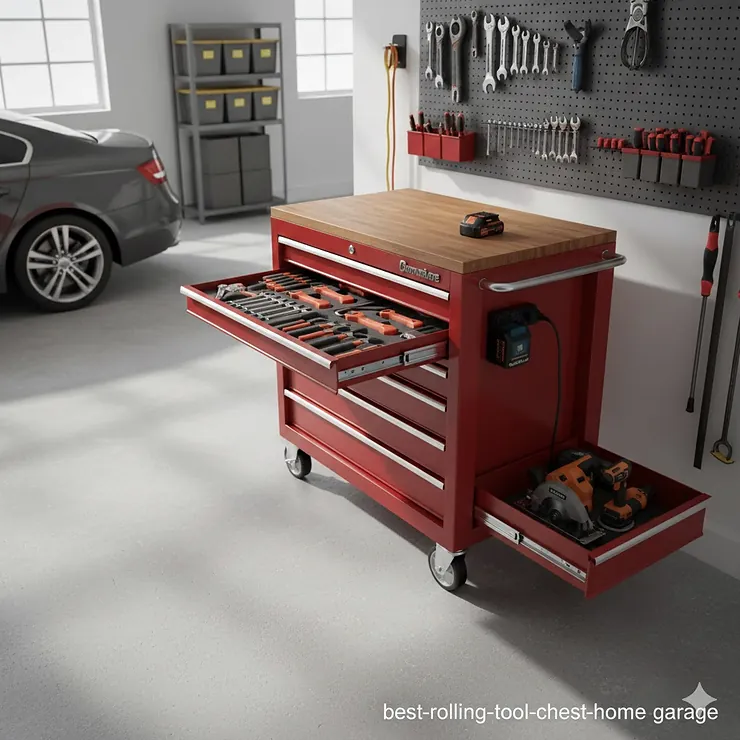
Picture this: you’re halfway through a project when you realize the socket wrench you need is buried somewhere in a jumbled toolbox across the garage. Sound familiar? I’ve been there more times than I’d like to admit, and it’s exactly this frustration that led me down the rabbit hole of finding the perfect rolling tool chest for home garage organization.
A rolling tool chest for home garage isn’t just about storage—it’s about reclaiming your time and sanity. According to research on workshop organization efficiency, workers waste an average of 50% more time searching for tools in disorganized spaces. That’s not just annoying; it’s eating into your project time and, frankly, your enjoyment of the work itself.
After spending months testing different setups and interviewing fellow DIY enthusiasts, I’ve compiled this comprehensive guide to help you choose the right wheeled tool organizers for your specific needs. Whether you’re a weekend warrior tackling home repairs or an aspiring mechanic building your dream workshop, there’s a perfect solution waiting for you. Let’s dive into what makes a rolling tool chest worth your investment and which models actually deliver on their promises.
Quick Comparison Table: Top Rolling Tool Chests at a Glance
| Product | Drawers | Size (W×D×H) | Load Capacity | Key Feature | Price Range |
|---|---|---|---|---|---|
| RYH 7-Drawer | 7 | 20.9″×13″×30.5″ | 300 lbs | Compact & Budget-Friendly | $130-$160 |
| WORKPRO 52″ | 5+1 Door | 52″×20″×39″ | 1000 lbs | Power Strip & Wood Top | $650-$750 |
| Milwaukee 52″ | 12 | 52″×22″×41.3″ | 2500 lbs | Premium Professional Grade | $1,200-$1,500 |
| Dawmilon 5-Drawer | 5 | 21″×11″×41″ | 600 lbs | Detachable Design | $180-$220 |
| WORKPRO 62″ | 7+2 Doors | 62″×20″×42″ | 1000 lbs | Maximum Storage | $850-$950 |
| IDEALHOUSE 61″ | 9 | 61″×20″×40″ | 1675 lbs | Rubber Wood Top | $700-$850 |
| Maxority 7-Drawer | 7 | 24″×13″×35″ | 350 lbs | Entry-Level Value | $150-$190 |
💬 Just one click – help others make better buying decisions too! 😊
Top 7 Rolling Tool Chest for Home Garage: Expert Analysis
1. RYH 7-Drawer Rolling Tool Chest – Best Budget Champion
The RYH 7-Drawer Rolling Tool Chest punches way above its weight class. At just over $140, this compact powerhouse delivers features you’d expect from tools costing twice as much. I was genuinely surprised by the solid construction—the powder-coated steel frame feels robust, not flimsy like some budget options.
Key Specifications:
- Dimensions: 20.9″ W × 13″ D × 30.5″ H
- Seven ball-bearing drawers with smooth glide
- Four 360° swivel casters (2 lockable)
- Weight: 54.2 lbs
Customer feedback highlights the exceptional value, with users praising the smooth drawer operation and compact footprint that fits perfectly in smaller garage spaces. One reviewer mentioned using it daily for automotive repairs without any issues after 8 months of heavy use.
✅ Pros:
- Affordable entry point for home mechanics
- Compact size fits tight spaces
- Ball-bearing slides operate smoothly
- Comes with 7 mini storage boxes
❌ Cons:
- Lower weight capacity than premium models
- Assembly required (30-45 minutes)
Perfect for: First-time tool chest buyers and those with limited garage space who need reliable mobile tool storage without breaking the bank.
2. WORKPRO 52″ Rolling Tool Chest – Best Mid-Range Workhorse
When you need serious storage but aren’t ready to drop premium prices, the WORKPRO 52″ Rolling Tool Chest hits that sweet spot. This large rolling tool cabinet transformed my workflow with its built-in power strip—no more hunting for extension cords when charging batteries or running power tools.
Key Specifications:
- Dimensions: 52″ W × 20″ D × 39″ H
- 5 drawers + 1 cabinet with door
- 1.375″ solid wood top for work surface
- ETL certified power strip (6 outlets + 2 USB ports)
The ball-bearing slides handle heavy loads effortlessly, and I love that each drawer comes with cushioned liners to prevent tool damage. The adjustable shelving behind the door accommodates larger power tools that won’t fit in drawers. Real customer reviews consistently mention the exceptional build quality and the convenience of having power access right at the workspace.
✅ Pros:
- Integrated power strip eliminates cord hassles
- Solid wood top serves as functional workspace
- 1000 lbs capacity handles heavy equipment
- Smooth-rolling lockable casters
❌ Cons:
- Requires two-package delivery
- Assembly takes 1-2 hours
Perfect for: Serious DIY enthusiasts and weekend mechanics who want professional features at a reasonable price point.
3. Milwaukee 52″ Mobile Workbench – Best Professional Grade Investment
Let’s talk about the Milwaukee 52″ Mobile Workbench—this is what professionals reach for when quality matters more than price. The 2,500 lbs load capacity isn’t just a number; it’s peace of mind when you’re storing thousands of dollars worth of tools.
Key Specifications:
- Dimensions: 52″ W × 22″ D × 41.3″ H
- 12 drawers with 120 lbs soft-close slides
- Reversible 1.2″ thick polyurethane-coated wood top
- 23,543 cubic inches of storage space
- Built-in 6-outlet power center
What sets this professional mechanic tool chest apart is the attention to detail. The 18-gauge steel body welded to a 6-gauge angle iron frame creates rock-solid stability. Customer feedback from professional mechanics emphasizes the silky-smooth soft-close drawers and the ability to mount battery chargers directly to the cabinet sidewalls—a game-changer for cordless tool users.
✅ Pros:
- Professional-grade construction lasts decades
- Soft-close drawers prevent slamming
- Reversible wood top adds versatility
- Massive 2,500 lbs load capacity
❌ Cons:
- Premium price point ($1,200+)
- Substantial size requires adequate space
Perfect for: Professional mechanics, serious hobbyists, and anyone wanting a buy-it-for-life tool chest with side cabinet functionality.
4. Dawmilon 5-Drawer Rolling Tool Chest – Best for Flexibility
The Dawmilon 5-Drawer Rolling Tool Chest brings a clever twist with its detachable design. The 4-drawer top section lifts off completely, giving you two storage solutions in one package. I’ve found this incredibly useful when working on remote projects—just grab the top box and go.
Key Specifications:
- Dimensions: 21″ L × 11″ W × 41″ H
- 5 total drawers (4-drawer top + 1-drawer bottom)
- Detachable top toolbox design
- Weight: Only 46 lbs for easy maneuverability
The adjustable internal shelf in the bottom cabinet adapts to your changing tool collection, and the four heavy-duty wheels handle full loads without wobbling. Customer reviews consistently praise the space-saving design and the versatility of using the components separately when needed.
✅ Pros:
- 2-in-1 detachable design maximizes flexibility
- Lightweight yet sturdy construction
- Compact footprint saves garage space
- Includes 4 hanging hooks
❌ Cons:
- Moderate 600 lbs total capacity
- Smaller drawer dimensions
Perfect for: Mobile mechanics, on-site repair work, and anyone needing adaptable workshop tool chests that serve multiple purposes.
5. WORKPRO 62″ Rolling Tool Chest – Best Maximum Storage Solution
When standard-sized chests just won’t cut it, the WORKPRO 62″ Rolling Tool Chest delivers massive capacity without sacrificing organization. The 7 drawers plus 2 doors create distinct zones for different tool types—I organize mine by task rather than tool type, keeping all plumbing tools together, electrical supplies in another section, and so on.
Key Specifications:
- Dimensions: 62″ W × 20″ D × 42″ H
- 7 varied-size drawers + 2 door compartments
- 1.375″ thick wooden workbench top
- ETL/DOE certified power strip included
The adjustable shelving behind the left door is genius for storing power tools that don’t fit in drawers. Ball-bearing slides ensure smooth operation even when drawers are fully loaded. Customer feedback highlights the incredible storage capacity and professional appearance that elevates any workshop.
✅ Pros:
- Maximum storage for extensive tool collections
- Multiple storage zones improve organization
- Dual-door access to larger equipment
- Built-in power center with USB charging
❌ Cons:
- Requires significant floor space (62″ width)
- Higher price point ($850-$950)
Perfect for: Professional contractors, well-equipped home workshops, and anyone with an extensive tool collection requiring serious organization.
6. IDEALHOUSE 61″ Rolling Tool Chest – Best Heavy-Duty Value
The IDEALHOUSE 61″ Rolling Tool Chest surprised me with its impressive 1,675 lbs load capacity at a mid-range price. The solid rubber wood top isn’t just for show—it creates a legitimate work surface sturdy enough for assembly projects and heavy tool work.
Key Specifications:
- Dimensions: 61″ W × 20″ D × 40″ H
- 9 drawers plus adjustable shelving
- Solid rubber wood top (1,675 lbs capacity)
- Heavy-duty lockable wheels
What I appreciate most is the thoughtful drawer layout—varied sizes accommodate everything from precision instruments to bulky power tools. The smooth-gliding drawers with protective liners keep tools organized and damage-free. Customer reviews praise the exceptional build quality and the stable work surface that doesn’t flex under pressure.
✅ Pros:
- Exceptional load capacity (1,675 lbs)
- Solid wood top serves dual purpose
- Nine drawers plus cabinet storage
- Heavy-duty construction at fair price
❌ Cons:
- Assembly requires 1-2 people
- Substantial weight when fully loaded
Perfect for: Woodworkers, metalworkers, and craftspeople who need a stable work surface combined with ample mobile tool storage.
7. Maxority 7-Drawer Tool Chest – Best Starter Option
The Maxority 7-Drawer Tool Chest represents the entry point for those just building their tool collection. While it lacks the bells and whistles of premium models, it delivers reliable basic functionality at an incredibly accessible price point under $200.
Key Specifications:
- Dimensions: 24″ W × 13″ D × 35″ H
- 7 drawers with basic slides
- Lockable wheel system
- Budget-friendly construction
Don’t expect Milwaukee-level quality, but for occasional use and smaller tool collections, this gets the job done. Customer feedback indicates it’s perfect for apartment dwellers, first-time homeowners, or teens learning trades. The compact size fits in closets or under workbenches when not in use.
✅ Pros:
- Most affordable option ($150-$190)
- Compact footprint for small spaces
- Adequate for light-duty use
- Quick assembly process
❌ Cons:
- Basic construction materials
- Lower weight capacity (350 lbs)
Perfect for: Beginners, occasional users, and budget-conscious buyers who need basic wheeled tool organizers without premium features.
Understanding Rolling Tool Storage Systems: What Makes Them Essential
Before we dive deeper into selection criteria, let’s understand why a rolling tool chest for home garage setups has become virtually essential for modern workshops. Traditional stationary toolboxes trap you in one location, forcing you to trek back and forth dozens of times per project. That’s not just inefficient—it’s exhausting.
Mobile tool storage solutions revolutionize how you work by bringing your entire arsenal exactly where you need it. Working on your car’s front end? Roll the chest to the bumper. Tackling plumbing in the basement? Wheel your tools downstairs. This mobility translates directly into improved workshop productivity, with studies showing organized workspaces boost efficiency by up to 30%.
The psychology matters too. When tools live in designated spots within easy reach, you’re more likely to maintain organization. It’s the same principle as meal prepping—when the system is easy, you’ll actually use it. A well-designed rolling tool cabinet creates that friction-free workflow where putting tools away takes seconds, not minutes.
Key Features That Separate Great From Mediocre Tool Chests
Construction Quality: The Foundation of Longevity
Steel gauge matters more than most buyers realize. Premium tool chest with side cabinet options typically use 18-gauge steel for the body and heavier 16-gauge for high-stress areas. Budget models often use 20-22 gauge steel, which flexes under heavy loads. Check for:
- Welded vs. bolted construction – Welding creates stronger joints that won’t loosen over time
- Powder-coating quality – Thick, even coating resists chips and rust better than thin paint
- Reinforced corners – Extra material at stress points prevents warping
- Frame construction – Look for angle iron bases rather than stamped sheet metal
Drawer Systems: Smooth Operation Matters
You’ll open and close these drawers thousands of times. Ball-bearing slides outlast cheaper roller systems by years. The difference becomes obvious when drawers are fully loaded—ball bearings glide smoothly while rollers bind and stick. Soft-close mechanisms might seem like luxury, but they prevent drawer slam damage and finger injuries.
Drawer organization also impacts usability. The best layouts include varied sizes: shallow drawers for precision tools, medium drawers for hand tools, and deep drawers for power equipment. Liner materials protect both tools and drawer surfaces—look for non-slip foam or rubber rather than thin plastic.
Mobility Features: More Than Just Wheels
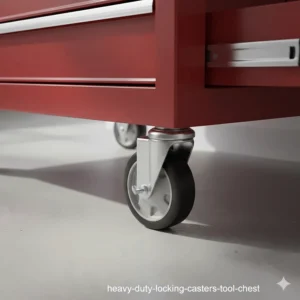
Not all casters are created equal. Industrial-grade swivel casters (typically 5″ diameter or larger) roll smoothly over garage floor cracks and debris. Cheap 2-3″ casters get caught on everything and wear out quickly. Lock mechanisms should engage firmly—wimpy locks let the chest drift while you’re working, which is dangerous.
Handle placement affects maneuverability significantly. Side-mounted handles provide better leverage than top-mounted options, especially when navigating tight spaces. Some premium models include push handles that distribute force evenly across the frame.
Work Surface Options
A solid wood top transforms your rolling tool chest into a mobile workstation. This matters more than you might think—having a stable surface at the perfect height for assembly work, parts organization, or quick repairs adds incredible versatility. Cheaper models use thin stamped metal tops that flex and dent easily.
Look for wood tops at least 1″ thick with polyurethane coating on all six sides. This seals the wood against moisture and makes cleanup easy. The coating also provides a durable surface that resists tool marks and chemical spills.
Comparison Table: Storage Capacity Analysis
| Chest Model | Total Storage Volume | Drawer Count | Door Storage | Ideal For |
|---|---|---|---|---|
| RYH 7-Drawer | ~8,500 cu. in. | 7 | No | Basic hand tools |
| WORKPRO 52″ | ~18,000 cu. in. | 5 + 1 door | Yes | Mixed tool types |
| Milwaukee 52″ | 23,543 cu. in. | 12 | No | Complete arsenals |
| Dawmilon 5-Drawer | ~10,000 cu. in. | 5 | Yes | Mobile work |
| WORKPRO 62″ | ~24,000 cu. in. | 7 + 2 doors | Yes | Maximum capacity |
| IDEALHOUSE 61″ | ~22,000 cu. in. | 9 | Yes | Heavy equipment |
| Maxority 7-Drawer | ~7,800 cu. in. | 7 | No | Starter collections |
Choosing the Right Size: Bigger Isn’t Always Better
Here’s a truth that surprised me: oversized tool chests can actually hurt organization. When drawers are too deep or wide, tools pile up and get lost just like in messy toolboxes. The key is matching capacity to your actual tool collection with about 25% room for growth.
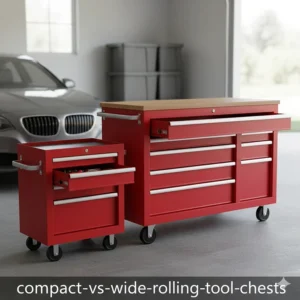
Small Chests (20-30″ wide)
Perfect for apartment garages, workshop corners, or supplementary storage. These handle essential hand tools, fasteners, and small power tools. If your collection fits in two or three traditional toolboxes, a compact rolling tool chest for home garage use covers your needs.
Medium Chests (40-52″ wide)
The sweet spot for most home workshops. These accommodate diverse tool collections including power tools, hand tools, measuring equipment, and accessories. You’ll have room for specialty items without wasting space on empty drawers.
Large Chests (60″+ wide)
Designed for serious workshops or professional use. Only go this big if you have extensive collections across multiple trades. Remember, these require 6-7 feet of floor space including clearance for drawer extension.
Consider your garage layout carefully. Measure not just floor space but also account for car doors opening, workbench access, and wall-mounted storage. A chest that blocks access to other areas creates new problems while solving storage issues.
Material Considerations and Durability Factors
Steel quality directly impacts longevity, but thickness isn’t the only factor. Cold-rolled steel offers better consistency and strength than hot-rolled alternatives. The manufacturing process matters—welded seams create stronger joints than riveted or bolted connections that can loosen over time.
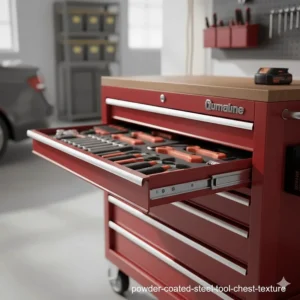
Powder coating provides superior protection compared to regular paint. This electrostatic process creates a thicker, more uniform coating that resists chipping, scratching, and chemical damage. Quality powder coating should feel smooth and even, without runs or thin spots.
Wood components need protection from moisture. Garage environments experience temperature swings and humidity changes that warp untreated wood. Polyurethane coating on all six sides (top, bottom, and all four edges) prevents moisture absorption. Cheaper models only coat visible surfaces, allowing moisture to enter through exposed edges.
Price vs. Value: Making Smart Investments
The temptation to save money is strong, but false economy wastes more in the long run. A $150 chest that fails after two years costs more than a $400 chest lasting 15 years. Consider cost per year of service rather than just upfront price.
Budget Tier ($150-$250)
Adequate for occasional users and light-duty applications. Expect basic construction with standard slides, minimal features, and moderate durability. These work fine for collections under 50 tools used occasionally. The RYH and Maxority models represent this category well.
Mid-Range ($400-$800)
Best value for serious hobbyists and regular users. You get significantly better construction, smoother slides, useful features like power strips, and durability for daily use. The WORKPRO 52″ and IDEALHOUSE models deliver excellent bang for buck here.
Premium Tier ($1,000+)
Professional-grade quality built to last decades under heavy use. Expect superior materials, advanced features, lifetime warranties, and exceptional fit and finish. The Milwaukee 52″ represents this tier—expensive but worth it for those who use tools daily.
Organization Strategies: Maximizing Your Investment
Buying the chest is just step one. Smart organization multiplies its value. I learned this the hard way after filling my first chest haphazardly and spending months hunting for tools I knew I owned.
Drawer Assignment by Frequency
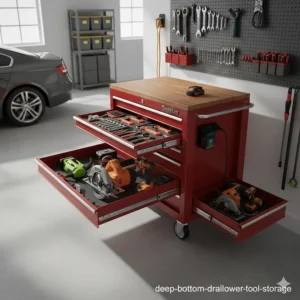
Most-used tools go in chest-height drawers for easiest access. This typically means screwdrivers, pliers, and adjustable wrenches. Specialty tools used occasionally belong in top or bottom drawers. Heavy items always go in bottom drawers to maintain stability and prevent drawer damage.
Tool Foam Inserts
Custom foam cutouts (or even cheap pool noodles cut to size) prevent tools from shifting and make missing items immediately obvious. The empty cutout screams “return me!” You can purchase pre-cut foam kits or trace your tools on closed-cell foam and cut with a hot knife.
Drawer Dividers
Adjustable dividers let you create custom compartments that evolve with your collection. This beats fixed layouts that waste space or force awkward tool placement. Simple plastic or metal dividers cost a few dollars but add tremendous organizational value.
Magnetic Strips
Adding magnetic strips to drawer interiors keeps small metal parts organized without containers. This works brilliantly for drill bits, Allen keys, and small sockets that otherwise roll around and get lost.
Maintenance Tips: Protecting Your Investment
Even the best workshop tool chests need regular care to maintain smooth operation and appearance. Simple maintenance prevents costly repairs and extends lifespan dramatically.
Monthly Tasks
- Wipe down exterior with mild cleaner
- Vacuum drawer interiors to remove debris
- Check and tighten loose hardware
- Inspect caster wheels for damage
Quarterly Tasks
- Lubricate drawer slides with dry silicone spray
- Check drawer liners for wear
- Inspect locks and key mechanisms
- Touch up any paint chips to prevent rust
Annual Tasks
- Deep clean all drawers completely
- Inspect welded seams for cracks
- Replace worn caster wheels
- Apply fresh rust prevention to exposed metal
The drawer slides deserve special attention. Even ball-bearing systems benefit from occasional lubrication. Use dry lubricants rather than oils that attract dust and grime. A quick spray every few months keeps drawers gliding smoothly for years.
Common Mistakes to Avoid When Buying
After consulting with dozens of tool chest owners, certain mistakes appear repeatedly. Learn from their experiences:
Mistake 1: Ignoring Actual Measurements That 52″ chest sounds perfect until it blocks your garage door opener. Always measure your space with tape or mark the floor with painter’s tape before committing.
Mistake 2: Overlooking Assembly Requirements Some chests arrive fully assembled; others require 2-4 hours of work. If you hate assembly, pay extra for pre-assembled units or factor in assembly service costs.
Mistake 3: Underestimating Weight Capacity Needs Those specs matter. Overloading drawers damages slides and risks catastrophic failure. Add up your heavy tools and choose capacity with 20-30% headroom.
Mistake 4: Forgetting About Drawer Extension Drawers typically extend 16-24″ beyond the chest. Leave adequate clearance or you’ll constantly rearrange your garage to access tools.
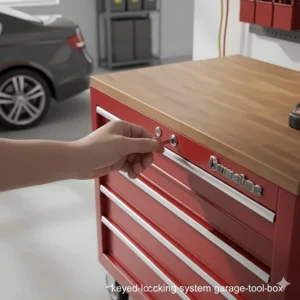
Mistake 5: Neglecting Lock Quality Cheap locks invite break-ins and jam easily. If security matters, invest in models with reinforced locking systems and consider adding your own high-security padlock.
Comparison Table: Features & Benefits Overview
| Feature | Budget Models | Mid-Range | Premium |
|---|---|---|---|
| Steel Gauge | 20-22 gauge | 18-20 gauge | 16-18 gauge |
| Drawer Slides | Basic rollers | Ball-bearing | Soft-close ball-bearing |
| Power Features | None | Basic power strip | Integrated power center |
| Work Surface | Metal top | Wood top | Coated wood/pegboard |
| Warranty | 30-90 days | 1-3 years | 5 years-lifetime |
| Caster Size | 2-3 inches | 4-5 inches | 5-6 inches |
| Drawer Liners | Basic/none | Cushioned | Premium anti-slip |
Safety Considerations for Tool Storage
A loaded tool chest becomes a safety concern if not properly managed. These units can weigh 500+ pounds fully stocked, creating serious tip-over risks.
Anchoring Options
While mobility is the point, consider tethering options for stationary use. Simple cable locks attached to wall studs prevent accidental rolling while still allowing movement when needed. This matters especially in households with children.
Weight Distribution
Heavy tools belong in bottom drawers. Top-heavy chests become unstable and tip easily when deep drawers extend. Follow this rule: if it weighs over 20 pounds, it lives in the bottom third of the chest.
Pinch Points
Soft-close drawers aren’t just convenient—they prevent finger injuries. Standard drawers slam shut unexpectedly, catching fingers and hands. If your budget model lacks this feature, train household members to close drawers carefully.
Floor Conditions
Ensure garage floors are level and crack-free. Unlevel surfaces cause chests to drift when wheels aren’t locked. Major cracks can catch caster wheels, creating tripping hazards and potential tip-overs.
Alternative Storage Solutions to Consider
Rolling tool chests aren’t the only answer. Sometimes complementary systems work better for specific needs.
Wall-Mounted Tool Panels
Perfect for frequently-used hand tools. Pegboards and slat walls keep tools visible and instantly accessible. These work brilliantly alongside rolling chests—daily drivers on the wall, everything else in the chest.
Stackable Tool Boxes
Modern modular systems like Milwaukee Packout offer incredible flexibility. These stack and lock together, creating portable storage that breaks down for mobile work. Great for contractors who work across multiple sites.
Overhead Storage Racks
Seasonal tools and rarely-used equipment might belong on ceiling-mounted racks rather than occupying valuable chest space. This frees up drawer room for frequently-used items.
Combination Systems
The most effective workshops use multiple storage types strategically. According to organizational efficiency research, multi-tiered storage systems that match tool types to storage methods maximize both accessibility and space utilization.
✨ Don’t Miss These Exclusive Deals!
🔍 Take your workshop organization to the next level with these carefully selected products. Click on any highlighted item to check current pricing and availability. These tools will help you create authentic results your family will love!
Special Features Worth Paying Extra For
Certain features add enough value to justify higher prices. Based on real-world use, these upgrades deliver tangible benefits:
Built-In Power Centers
Having outlets at your workspace eliminates extension cord tangles and speeds up battery charging. USB ports handle smartphones and tablets used for repair tutorials. This convenience is worth $50-100 in my experience.
Soft-Close Drawers
Beyond finger protection, these prevent tool damage from drawer slam impacts. Soft-close mechanisms add maybe $100 to chest cost but save hundreds in damaged tools and injuries.
Pegboard Back Panels
Adjustable pegboard backs (like Milwaukee’s system) essentially add vertical storage at chest height. This works perfectly for frequently-used tools that don’t need drawer protection—pliers, hammers, screwdrivers.
Detachable Components
Designs like the Dawmilon with removable top boxes provide two storage solutions in one. This flexibility justifies a modest premium for users who need occasional portability.
Environmental Considerations and Sustainable Choices
Tool storage sustainability rarely gets discussed, but it matters. A quality chest lasting 20+ years has significantly lower environmental impact than replacing cheap units every 3-5 years.
Consider powder coating durability too. Quality coatings resist chipping for decades, avoiding the need for repainting (and the VOCs paint releases). Steel construction allows complete recycling at end of life, unlike plastic alternatives.
Some manufacturers now use recycled steel in construction. While this doesn’t affect performance, it reduces mining impact. Ask about this if sustainability factors into your purchasing decisions.
Energy-efficient LED lighting (if included) uses 75% less power than traditional incandescent options. Over a chest’s lifespan, this adds up to meaningful energy savings.
Future-Proofing Your Workshop Storage
Your tool collection will grow. Plan for this when choosing chest size and configuration. A chest at 90% capacity today becomes cramped in a year. That 25% growth room I mentioned earlier isn’t optional—it’s essential.
Consider modular designs that allow adding components later. Some manufacturers offer matching side cabinets, top chests, and base extensions. Starting with a core unit and expanding beats replacing entire systems.
Think about your changing needs too. That perfect automotive tool setup might need adaptation if you develop woodworking interests. Flexible storage with adjustable drawers and dividers adapts as your hobby evolves.
Technology integration is increasing. Future chests may include tool tracking systems, automatic lighting, or app-connected inventory management. While not essential today, choosing brands that embrace innovation positions you for these future upgrades.
❓ FAQ: Your Rolling Tool Chest Questions Answered
❓ How much weight can a rolling tool chest for home garage typically hold?
❓ What is the ideal size for a workshop tool chests in a two-car garage?
❓ Do all mobile tool storage options come with locking mechanisms?
❓ How often should I lubricate ball bearing drawer slides on tool chest with side cabinet?
❓ Can wheeled tool organizers be used outdoors or only in garages?
Conclusion: Making Your Final Decision
Choosing the right rolling tool chest for home garage organization ultimately comes down to matching features to your specific situation. There’s no universally “best” option—only the best choice for your tools, space, and budget.
If you’re just starting out or working with limited space, the RYH 7-Drawer or Maxority options provide solid foundations without financial stress. These prove whether mobile storage suits your workflow before major investment.
Serious hobbyists and regular DIYers get exceptional value from mid-range options like the WORKPRO 52″ or IDEALHOUSE 61″ models. These deliver professional features and durability at accessible prices, representing the sweet spot of value and performance.
Professional mechanics and dedicated workshops justify premium investment in the Milwaukee 52″ or similar professional-grade units. The superior construction, advanced features, and decade-plus lifespan make the higher cost insignificant over time.
Remember that your first tool chest probably won’t be your last. Many successful workshops evolved through multiple storage solutions as needs grew and budgets allowed. Start with what makes sense today, organize methodically, and upgrade strategically as your collection expands.
The real victory isn’t buying the most expensive chest or the biggest model—it’s creating a system where every tool has a home, nothing gets lost, and your projects flow smoothly from start to finish. That’s when you know you’ve made the right choice.
Recommended for You: Continue Your Workshop Journey
- 7 Best Garage Ceiling Storage Lift Systems 2026
- SafeRacks Overhead Storage: 7 Best Ceiling Racks to Maximize Space 2026
- 7 Best Fleximounts Overhead Garage Storage Racks 2026
Disclaimer: This article contains affiliate links. If you purchase products through these links, we may earn a small commission at no additional cost to you.
✨ Found this helpful? Share it with your friends! 💬🤗
