
In This Article
Tree trimming doesn’t have to be a back-breaking chore when you have the right pole saw blades at your disposal. Whether you’re maintaining your backyard oaks or tackling commercial landscaping projects, the blade you choose can make all the difference between efficient cuts and frustrating sawing sessions.
✨Was this helpful? Spread the word! 🚀
In recent years, pole saw blades have evolved dramatically, offering homeowners and professionals unprecedented cutting power and durability. From traditional manual saw blade designs to high-tech electric pole saw blades, today’s market provides options that cater to every trimming need and budget range.
The global pole saw market has grown significantly, with professionals and homeowners alike recognizing pole saws as one of the safest ways to keep feet on the ground while maintaining distance from cutting blades. This surge in popularity has driven manufacturers to innovate continuously, resulting in blade designs that cut faster, last longer, and operate with remarkable precision.
Understanding Pole Saw Blades: The Foundation of Efficient Trimming
What Makes a Quality Pole Saw Blade? 🔍
Quality pole saw blades share several fundamental characteristics that separate exceptional tools from mediocre alternatives. Understanding these features helps you make informed decisions when selecting replacement blades or upgrading your existing equipment.
Material composition forms the backbone of blade performance. Premium pole saw blades typically use high-carbon steel or specialized alloy combinations that provide optimal hardness-to-flexibility ratios. High-strength alloy steel undergoes high-temperature heat treatment, making it tough and resistant to fractures while maintaining sharp edges.
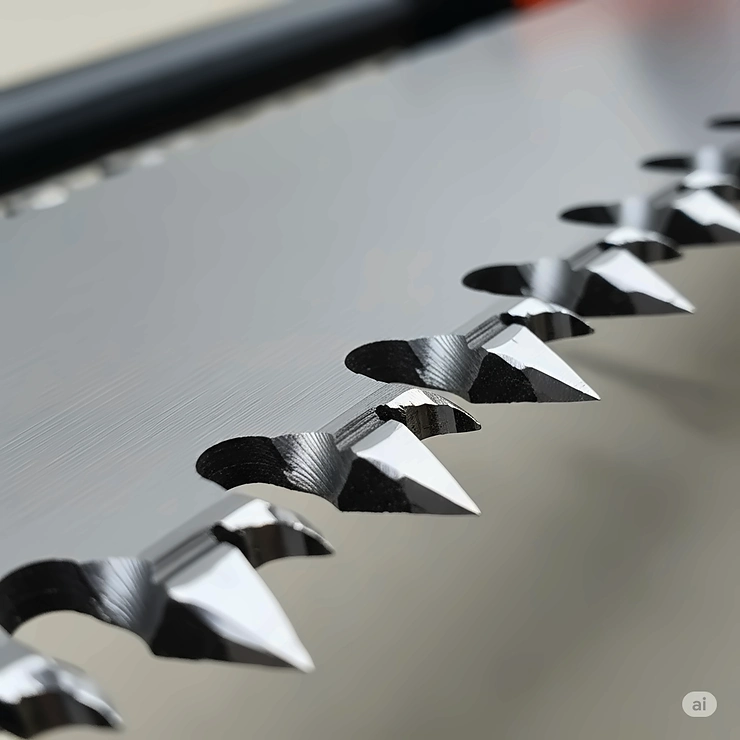
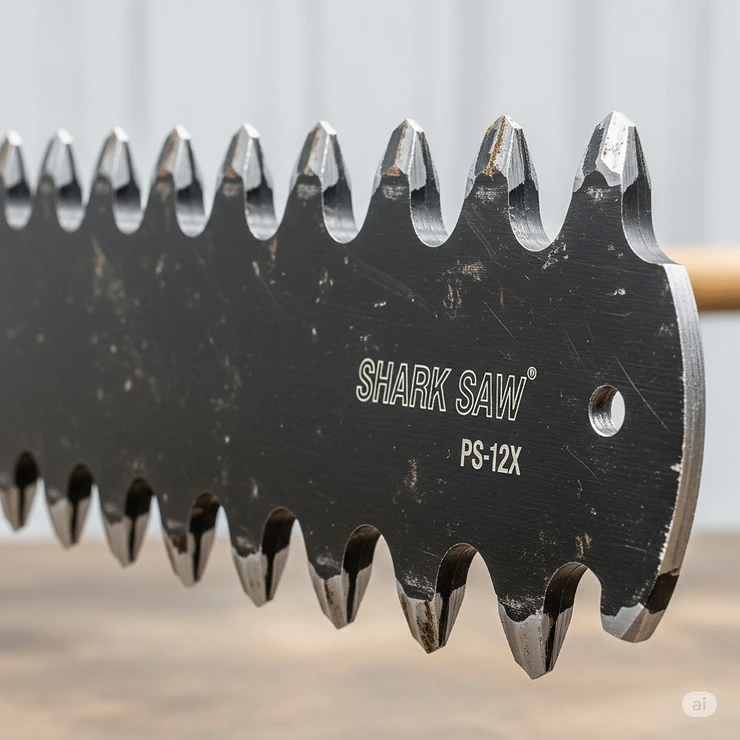
The tooth geometry significantly impacts cutting efficiency. Modern blade designs incorporate three-sided grinding patterns that create multiple cutting edges, allowing blades to slice through wood fibers more effectively than traditional single-edge designs. This innovation reduces binding and provides smoother cutting action across various wood types.
Hardness specifications matter tremendously for longevity and performance. Professional-grade blades achieve hardness levels of HV 950-1000, which provides exceptional durability while maintaining razor-sharp cutting edges. This hardness ensures blades retain their sharpness through hundreds of cutting cycles.
Types of Pole Saw Blades Available
The pole saw blade market offers several distinct categories, each designed for specific applications and user preferences:
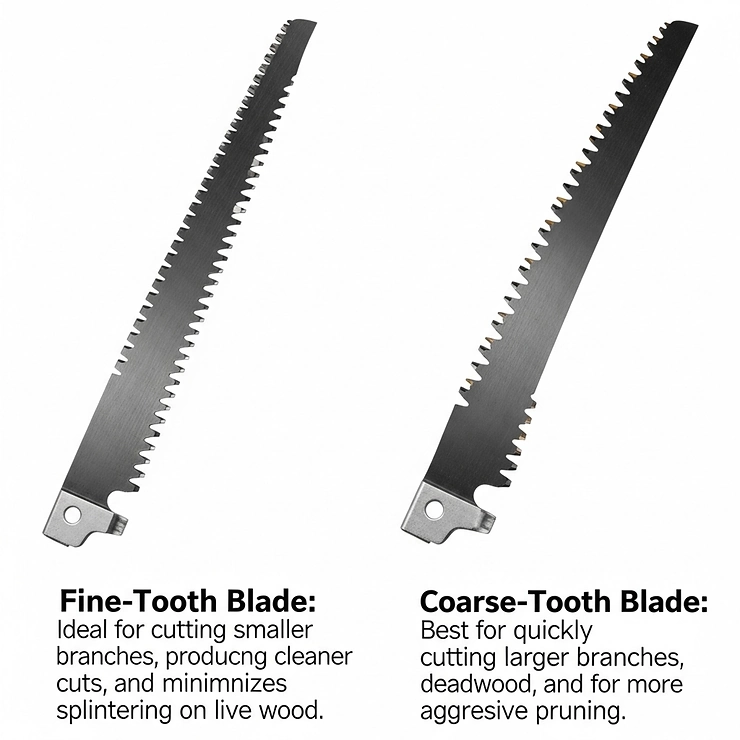
Manual Pole Saw Blades 🪚 Traditional curved blades that rely on push-pull motion for cutting. These blades typically range from 12 to 18 inches in length and feature aggressive tooth patterns designed for hand-powered operation. They excel at precision cuts and work well for occasional trimming tasks.
Electric Pole Saw Blades ⚡ Chainsaw-style cutting systems designed for electric pole saws. These blades use chain-and-bar configurations similar to traditional chainsaws but optimized for extended reach applications. They provide consistent cutting power and work excellently for frequent use.
Screw-On Pole Saw Blade Designs 🔧 Universal mounting systems that accommodate multiple pole saw models. These versatile options often feature standardized mounting patterns that work across different brand ecosystems, making them popular replacement choices.
Top 7 Pole Saw Blades: Detailed Product Analysis
1. Fiskars Pole Saw Blade Replacement – The Professional’s Choice
The Fiskars Pole Saw Blade Replacement stands as the gold standard for manual pole saw applications. This 15-inch powerhouse features Fiskars’ proprietary WoodZig technology, delivering chainsaw-style performance in a manual blade configuration.
Key Specifications:
- Length: 15 inches
- Tooth Design: Chainsaw-style WoodZig pattern
- Compatibility: Fiskars models 9388, 9389, 9390, 9391, 8391
- Material: Hardened steel construction
- Price Range: $15-25
The blade’s standout feature lies in its pull-stroke cutting design that reduces binding while powering through thick branches. This engineering approach minimizes the effort required for each cut while maximizing wood removal with every stroke.
Performance Analysis: Customer feedback consistently highlights the blade’s exceptional sharpness and cutting efficiency. Professional users note that the teeth are extremely sharp and maintain their edge through extensive use. The blade cuts branches up to 8 inches in diameter with relative ease when properly maintained.
Pros:
✅ Engineered for reduced binding
✅ Compatible with multiple Fiskars models
✅ Professional-grade steel construction
✅ Excellent customer satisfaction ratings
Cons:
❌ Limited compatibility outside Fiskars ecosystem
❌ Higher initial cost than generic alternatives
2. MEFBANT Manual Pole Saw Blade – The Precision Performer
The MEFBANT Manual Pole Saw Blade brings precision engineering to affordable tree trimming. This 17.5-inch blade features three-face grinding technology that creates multiple cutting edges for enhanced performance.
Key Specifications:
- Length: 17.5 inches
- Grinding Pattern: Three-face design
- Steel Type: High-strength alloy
- Heat Treatment: High-temperature processing
- Price Range: $12-18
This blade’s three-sided grinding pattern sets it apart from conventional single-edge designs. The grinding teeth on three sides are sharper and provide smoother cutting action, making it particularly effective for hardwood species.
Performance Metrics: The extended length provides excellent reach for high branches while maintaining control during cutting operations. Users report that the three-face grinding pattern significantly reduces cutting time compared to traditional blade designs.
Best Applications:
- Manual pole saw conversions
- Hardwood trimming projects
- Professional landscaping applications
- Long-reach precision cuts
3. Universal Type Saw Blade – The Versatile Solution
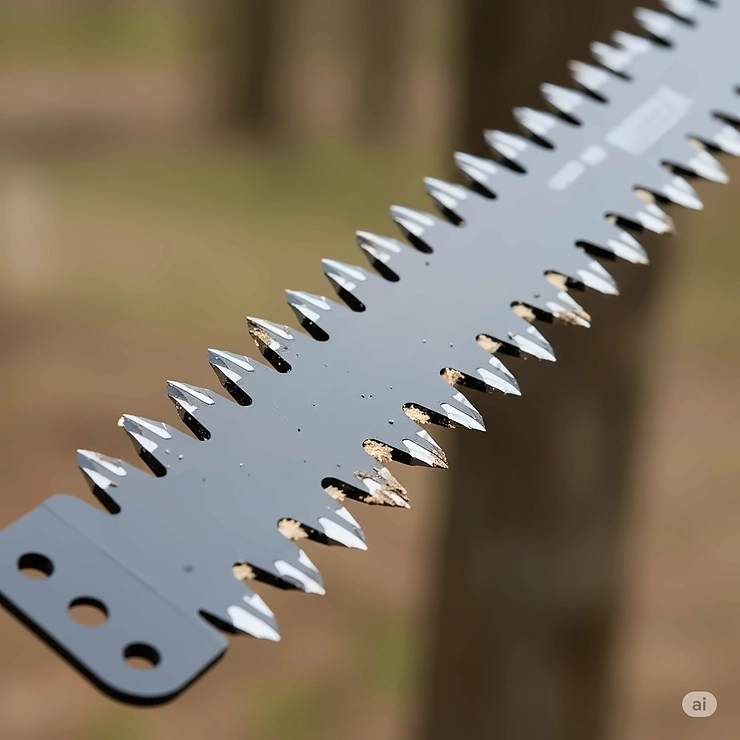
The Universal Type Saw Blade addresses compatibility challenges across multiple pole saw brands. This 15.5-inch curved blade features multiple mounting hole patterns designed to fit various manufacturer specifications.
Key Specifications:
- Length: 15.5 inches
- Mounting: Universal hole pattern
- Hardness: HV 950-1000
- Blade Style: Razor-sharp curved design
- Price Range: $8-15
The hardness specification of HV 950-1000 provides exceptional durability and abrasion resistance, ensuring long-term performance across demanding applications. The universal mounting system makes this blade an excellent choice for users with multiple pole saw models.
Compatibility Features: The blade includes multiple mounting holes arranged to accommodate most popular pole saw brands. However, users should carefully compare hole patterns before purchasing to ensure proper fit.
4. Corona AC 7241D RazorTOOTH – The Speed Demon
The Corona AC 7241D RazorTOOTH revolutionizes cutting speed with its innovative dual-direction cutting capability. This 13-inch blade cuts efficiently on both push and pull strokes, effectively doubling cutting speed compared to traditional single-direction blades.
Technical Specifications:
- Length: 13 inches
- Cutting Action: Bi-directional (push and pull)
- Tooth Pattern: Three-sided razor design
- Steel Grade: High-carbon construction
- Compatibility: Corona TP 6870, TP 6850, TP 6830, TP 6780, TP 6570
- Price Range: $18-28
The razor tooth design cuts twice as fast as conventional saw blades by cutting on both pull and push strokes, making this blade exceptionally efficient for high-volume trimming projects.
User Experience Insights: Professional landscapers particularly appreciate this blade’s speed advantage. Users report that it cuts through palm fronds like butter and handles branches and rims very easily. The bi-directional cutting action reduces operator fatigue during extended use sessions.
Professional Applications:
- Commercial tree services
- Municipal landscaping
- Agricultural pruning
- High-volume residential projects
5. WORX WG309 Replacement Chain – The Electric Powerhouse
The WORX WG309 Replacement Chain brings chainsaw performance to electric pole saw applications. This 10-inch chain system delivers consistent cutting power for electric pole saw users seeking reliable replacement options.
Technical Details:
- Chain Length: 10 inches
- Drive Links: 40
- Pitch: 3/8 inch
- Gauge: 0.043 inches
- Compatibility: WORX WG309 and related models
- Price Range: $15-22
Users consistently praise the chain’s quality and performance, with many noting that their saws perform like new after installation. The precise manufacturing ensures smooth operation and extended chain life.
Performance Characteristics: The 3/8-inch pitch provides optimal balance between cutting speed and chain durability. The 40 drive links deliver smooth power transmission while minimizing vibration during operation.
Maintenance Benefits:
- Easy installation process
- Compatible with standard chain oils
- Sharpening follows conventional chainsaw procedures
- Replacement parts readily available
6. WORX 8-Inch Chainsaw Chain – The Compact Specialist
The WORX 8-Inch Chainsaw Chain (Model 60054331) provides compact cutting power for smaller electric pole saws. This specialized chain configuration excels in precision trimming applications where maneuverability matters more than raw cutting capacity.
Specifications:
- Chain Length: 8 inches
- Drive Links: 33
- Pitch: 3/8 inch
- Gauge: 0.043 inches
- Compatibility: WORX WG349, WG349.9
- Price Range: $12-20
The shorter chain length provides several advantages for precision work. The 8-inch configuration offers better control and reduces kickback potential compared to longer chains, making it ideal for detailed trimming work.
Optimal Use Cases:
- Precision pruning projects
- Decorative tree shaping
- Small branch removal
- Tight-space applications
7. Milwaukee/WORX/SKIL 8-Inch Bar and Chain Combo – The Universal Kit
The Milwaukee/WORX/SKIL 8-Inch Bar and Chain Combo provides complete cutting system replacement for multiple electric pole saw brands. This comprehensive kit includes both guide bar and chain, ensuring optimal performance matching.
Complete Kit Contents:
- 8-inch guide bar
- Matching chain (33 drive links)
- Pitch: 3/8 inch low profile
- Gauge: 0.043 inches
- Universal compatibility design
- Price Range: $25-35
Users appreciate receiving both bar and chain components at competitive pricing, often noting better value than purchasing OEM parts separately. The universal design accommodates multiple popular pole saw brands.
Value Proposition: This kit approach ensures perfect component matching while providing cost savings compared to individual part purchases. The included guide bar features reduced kickback design for better control and lightweight construction perfect for occasional users.
🛒 Don’t Miss These Exclusive Deals!
Transform your tree trimming experience with these carefully selected pole saw blades. Click on any highlighted product to check current pricing and availability. These professional-grade tools will help you achieve precise, efficient cuts that keep your landscape looking its best! 🌳✨
Comprehensive Pole Saw Blade Comparison Tables
| Product | Length | Type | Price Range | Best For | Rating |
|---|---|---|---|---|---|
| Fiskars WoodZig | 15″ | Manual | $15-25 | Professional Use | ⭐⭐⭐⭐⭐ |
| MEFBANT 3-Face | 17.5″ | Manual | $12-18 | Precision Work | ⭐⭐⭐⭐ |
| Universal Curved | 15.5″ | Manual | $8-15 | Multi-Brand | ⭐⭐⭐⭐ |
| Corona RazorTOOTH | 13″ | Manual | $18-28 | Speed Cutting | ⭐⭐⭐⭐⭐ |
| WORX 10″ Chain | 10″ | Electric | $15-22 | Electric Saws | ⭐⭐⭐⭐ |
| WORX 8″ Chain | 8″ | Electric | $12-20 | Compact Use | ⭐⭐⭐⭐ |
| Universal Kit | 8″ | Electric | $25-35 | Complete Setup | ⭐⭐⭐⭐⭐ |
Performance Metrics Comparison
| Blade Model | Cutting Speed | Durability | Ease of Use | Value Score |
|---|---|---|---|---|
| Fiskars WoodZig | Fast | Excellent | Easy | 9.2/10 |
| MEFBANT 3-Face | Medium | Very Good | Moderate | 8.5/10 |
| Universal Curved | Medium | Good | Easy | 8.8/10 |
| Corona RazorTOOTH | Very Fast | Excellent | Easy | 9.5/10 |
| WORX 10″ Chain | Fast | Very Good | Easy | 8.7/10 |
| WORX 8″ Chain | Medium | Good | Very Easy | 8.3/10 |
| Universal Kit | Fast | Very Good | Easy | 9.1/10 |
Compatibility Matrix
| Brand | Manual Blades | Electric Chains | Universal Options |
|---|---|---|---|
| Fiskars | Native Support | Limited | Yes |
| Corona | Native Support | No | Yes |
| WORX | Adapter Required | Native Support | Yes |
| Milwaukee | Adapter Required | Compatible | Yes |
| Generic Models | Limited | Variable | Yes |
💬 Just one click – help others make better buying decisions too!😊
Industry-Specific Applications: Professional Insights and Use Cases
Commercial Arboriculture Applications
Professional arborists demand pole saw blades that deliver consistent performance across diverse tree species and challenging conditions. Commercial tree care operations require blades capable of handling both routine maintenance and emergency storm cleanup, necessitating versatile cutting solutions.
Municipal Tree Management 🌆
City forestry departments rely heavily on pole saw blades for maintaining street trees and public green spaces. The ability to work safely around power lines while maintaining proper clearances makes pole saws indispensable for municipal operations. Professional-grade blades like the Corona RazorTOOTH excel in these applications due to their speed and reliability.
Utility Line Clearance ⚡
Electrical utility companies face unique challenges requiring specialized blade selections. Safety protocols mandate working away from power lines, making pole saws essential tools for vegetation management. Blades must provide precise control to avoid accidental contact with electrical infrastructure.
Agricultural Orchard Management 🍎
Fruit and nut producers use pole saw blades extensively for pruning operations that maintain tree health and optimize production. The precision offered by manual blades like the Fiskars WoodZig allows farmers to make strategic cuts that promote proper branch development and fruit production.
Residential Landscaping Sectors
Homeowners and residential landscaping professionals require pole saw blades that balance performance with user-friendliness. The growing DIY trend has increased demand for blades that deliver professional results without requiring extensive training.
Suburban Property Maintenance 🏘️
Residential users typically focus on maintaining aesthetic appeal while ensuring safety around homes and structures. Universal-type blades offer excellent value for homeowners who need occasional trimming capability without investing in professional-grade equipment.
Landscape Design Implementation 🎨
Professional landscapers creating custom outdoor spaces need blades capable of executing precise artistic vision. The ability to shape trees and create specific canopy profiles requires blades with excellent control characteristics.
Specialized Industrial Applications
Golf Course Management ⛳
Golf course superintendents maintain thousands of trees across expansive properties, requiring blades that provide consistent performance throughout long work sessions. Electric pole saw blades like the WORX systems offer the endurance needed for large-scale maintenance operations.
Property Development Clearance 🏗️
Construction and development companies use pole saw blades for selective tree removal and lot preparation. The speed advantage offered by bi-directional blades like the Corona RazorTOOTH significantly reduces project timelines.
Emergency Response Services 🚨
Fire departments and emergency services rely on pole saw blades for storm cleanup and emergency access creation. These applications demand blades that perform reliably under challenging conditions and time pressure.
Advanced Technical Analysis: Engineering Principles and Performance Science
Metallurgical Engineering Behind Blade Performance
Modern pole saw blades represent sophisticated metallurgical engineering designed to optimize cutting performance while maintaining durability. Understanding the science behind blade construction helps users make informed selections based on their specific applications.
Steel Composition Analysis 🔬
High-carbon steel formulations typically contain 0.6-1.0% carbon content, providing the hardness necessary for maintaining sharp cutting edges. Higher carbon content in steel blades ensures prolonged sharpness and superior cutting efficiency. Manufacturers carefully balance carbon content with other alloying elements to achieve optimal performance characteristics.
Heat Treatment Processes 🔥
Professional-grade blades undergo sophisticated heat treatment cycles that create precise hardness gradients across the blade structure. High-temperature heat treatment makes steel tough and resistant to fractures while maintaining cutting edge integrity. This process typically involves controlled heating to 1400-1600°F followed by precise cooling cycles that develop optimal grain structure.
Surface Treatment Technologies ⚙️
Advanced surface treatments significantly enhance blade performance and longevity. Chrome-plated finishes minimize friction while enhancing overall cutting efficiency, reducing the force required for each cutting stroke. These treatments also provide corrosion resistance that extends blade life in challenging environmental conditions.
Cutting Mechanics and Tooth Geometry Science
The engineering principles governing tooth design directly impact cutting efficiency and user experience. Modern blade designs incorporate sophisticated geometry calculations that optimize wood fiber removal while minimizing cutting resistance.
Three-Sided Tooth Technology 📐
Innovation in tooth geometry has led to three-sided grinding patterns that create multiple cutting edges on each tooth. Three-sided teeth maintain sharpness over extended periods while providing swift and precise cutting action. This design reduces the number of strokes required to complete cuts while maintaining smooth cutting action.
Impulse Hardening Processes ⚡
Modern manufacturing incorporates impulse hardening techniques that selectively strengthen cutting edges while maintaining blade flexibility. Impulse-hardened teeth maintain sharpness over time while ensuring swift and precise pruning processes. This technology prevents premature dulling while avoiding brittleness that could lead to tooth breakage.
Performance Testing Standards and Metrics
Professional blade evaluation incorporates standardized testing protocols that measure cutting efficiency, durability, and safety characteristics. These standards ensure consistent performance across different manufacturing batches and provide users with reliable performance expectations.
Cutting Speed Measurements 📊
Laboratory testing typically measures cutting speed in terms of wood volume removed per unit time. Bi-directional cutting blades demonstrate cutting speeds approximately twice as fast as conventional single-direction designs, providing measurable productivity improvements for professional users.
Durability Assessment Protocols 🔧
Standardized durability testing involves controlled cutting cycles using specific wood species and branch diameters. Professional-grade blades typically maintain cutting efficiency through 500-1000 cutting cycles before requiring sharpening or replacement.
Safety Performance Evaluation 🛡️
Current safety standards require comprehensive risk assessments for cutting tools, with particular attention to blade-contact injury prevention. Modern pole saw blades incorporate design features that minimize kickback potential and reduce operator injury risk.
🌟 Ready to Upgrade Your Tree Trimming Arsenal?
These cutting-edge pole saw blades are transforming how professionals and homeowners approach tree maintenance. Don’t let dull blades slow down your projects – click any product above to secure your upgrade today and experience the difference quality makes! 🚀🌳
Comprehensive Setup and Usage Guide: Mastering Pole Saw Blade Operations
Pre-Installation Assessment and Preparation
Proper blade installation begins with thorough assessment of your pole saw system and workspace preparation. Always refer to manufacturer instructions for specific procedures tailored to your model, as installation requirements vary significantly between different pole saw designs.
Equipment Compatibility Verification ✅
Before purchasing replacement blades, carefully document your current pole saw specifications including model numbers, mounting hole patterns, and blade length requirements. Many universal blades offer multiple mounting options, but verification prevents compatibility issues that could compromise safety and performance.
Workspace Safety Preparation 🛡️
Ensure the work area is well-lit and dry, maintaining a safe perimeter around your workspace to prevent accidents. Remove any obstacles that could interfere with safe operation, and verify that extension cords (for electric models) are properly rated for outdoor use.
Tool and Safety Equipment Assembly 🔧
Gather all necessary installation tools including appropriate wrenches, safety glasses, work gloves, and any specialized tools recommended by the manufacturer. Always wear protective gear such as gloves and goggles when handling cutting implements.
Step-by-Step Installation Procedures
Manual Blade Installation Process 🔄
- Power Disconnect: Ensure complete power disconnection for electric models or secure manual mechanisms
- Blade Removal: Carefully remove worn blade using appropriate tools while supporting the cutting head
- Mounting Surface Inspection: Check mounting surfaces for wear, damage, or debris that could affect new blade alignment
- New Blade Alignment: Position new blade ensuring proper hole alignment and blade orientation
- Fastener Installation: Install mounting bolts or screws according to manufacturer torque specifications
- Operational Testing: Perform controlled test cuts on small branches to verify proper installation
Electric Chain Installation Guidelines ⚡
Electric pole saw chain installation requires additional attention to chain tension and guide bar condition. WORX replacement chains include specific tension adjustment procedures that ensure optimal performance. Proper chain tension prevents premature wear while ensuring smooth cutting action.
Operational Techniques for Maximum Efficiency
Cutting Approach Strategies 📋
Begin cutting with slow and controlled strokes rather than full speed to prevent blade slippage during initial contact. This approach allows you to establish proper cutting groove before increasing cutting pace.
Branch Assessment and Cutting Sequence 🌿
Trim lower branches first to create room for accessing higher branches safely. This systematic approach prevents cut branches from interfering with subsequent operations while maintaining safe working conditions.
Cutting Angle Optimization 📐
Position yourself so that branches won’t hit you during cutting, and maintain proper cutting angles that allow gravity to assist in branch removal. Proper positioning reduces operator fatigue while improving cutting efficiency.
Environmental and Seasonal Considerations
Weather Condition Guidelines 🌦️
Never use pole saws during wet conditions as moisture increases slip hazards and can compromise electrical safety. Plan cutting operations during favorable weather conditions that provide good visibility and stable footing.
Seasonal Cutting Strategies 🍂
Different seasons require adjusted cutting approaches based on tree physiology and wood moisture content. Spring and summer cutting encounters higher sap content that may require more frequent blade cleaning, while winter cutting deals with harder, drier wood that demands sharper blade maintenance.
Species-Specific Considerations 🌳
Different tree species present unique cutting challenges that influence blade selection and cutting technique. Hardwoods typically require more aggressive tooth patterns and slower cutting speeds, while softwoods allow faster cutting but may produce more resin buildup requiring frequent blade cleaning.
Maintenance and Longevity: Maximizing Blade Performance and Lifespan
Daily and Weekly Maintenance Protocols
Post-Use Cleaning Procedures 🧽
Clean the blade with a damp cloth to remove debris or tree sap after each use session. Proper cleaning prevents buildup that can interfere with cutting performance and accelerate blade deterioration. Tree sap and resin removal requires specific solvents that dissolve organic compounds without damaging blade treatments.
Storage Environment Optimization 🏠
Store blades in safe and dry positions to prevent wear and tear from harsh weather exposure. Controlled storage environments prevent rust formation and maintain blade sharpness between use sessions. Professional storage solutions include protective sheaths that prevent accidental blade contact while protecting cutting edges.
Lubrication and Preservation 🛢️
Manual pole saw blades benefit from light oil application to pivot points and adjustment mechanisms. Electric chain systems require specific bar and chain oils that provide proper lubrication during operation while preventing excessive wear.
Monthly and Quarterly Maintenance Schedules
Comprehensive Inspection Protocols 🔍
Monthly inspections should include detailed examination of blade mounting points, cutting edge condition, and any signs of metal fatigue or crack development. Regular inspection prevents equipment failures that could result in operator injury.
Sharpening and Edge Maintenance ⚔️
Professional blade sharpening requires specific techniques that maintain proper tooth geometry while removing minimal material. Blades sharpened by whetstone produce superior cutting edges compared to conventional filing methods. Professional sharpening services ensure optimal blade performance while extending useful life.
Replacement Parts Assessment 🔧
Quarterly maintenance should include evaluation of all system components including mounting hardware, adjustment mechanisms, and related accessories. Early identification of wear components prevents system failures that could compromise safety and performance.
Troubleshooting Common Issues and Solutions
Binding and Cutting Resistance Problems ⚠️
Increased cutting resistance often indicates dull blades, improper blade installation, or debris accumulation. Modern blade designs engineered for less binding provide superior cutting performance when properly maintained. Systematic troubleshooting identifies root causes enabling targeted solutions.
Premature Blade Wear Patterns 📉
Uneven wear patterns indicate improper cutting technique, installation problems, or blade quality issues. Professional assessment can identify contributing factors and recommend corrective actions that extend blade life and improve performance.
Safety Mechanism Functionality 🛡️
Regular testing of safety mechanisms ensures proper operation during emergency situations. Safety devices must function reliably to prevent operator injury during unexpected situations. Professional service may be required for complex safety system maintenance.
Total Cost-of-Ownership Analysis
Initial Investment Considerations 💰
Premium blade selection involves higher initial costs but typically provides superior performance and longevity that reduces long-term expenses. Professional-grade blades often deliver 2-3 times the useful life of budget alternatives while providing consistently superior cutting performance.
Operational Cost Factors 📊
Operational costs include sharpening services, replacement parts, and productivity impacts from blade performance variations. High-quality blades maintain cutting efficiency longer, reducing the frequency of sharpening services while maintaining consistent productivity levels.
Replacement Cycle Planning 🔄
Strategic replacement planning based on usage patterns and performance monitoring optimizes total system costs while ensuring consistent performance. Professional operations typically maintain spare blade inventory to minimize downtime during peak operating seasons.
Comparative Analysis: Traditional vs. Modern Pole Saw Solutions
Evolution of Pole Saw Technology
Historical Development Timeline 📚
Traditional pole saws evolved from simple hand tools consisting of curved blades attached to long wooden poles. These early designs relied entirely on operator strength and technique for cutting effectiveness. Modern innovations have transformed pole saw technology through advanced materials, precision manufacturing, and engineered cutting systems.
Material Science Advancements 🧪
Contemporary blade manufacturing incorporates advanced metallurgy that was unavailable in traditional designs. Modern chrome-plated finishes provide rust-proof, friction-free operation that produces smoother cuts. These surface treatments significantly enhance performance compared to basic steel constructions used in older designs.
Manufacturing Precision Improvements ⚙️
Modern manufacturing capabilities enable precise tooth geometry and consistent blade quality that traditional manufacturing methods could not achieve. Computer-controlled grinding processes create uniform tooth profiles that optimize cutting efficiency while maintaining consistency across production batches.
Performance Comparison Analysis
Cutting Efficiency Metrics 📈
Modern pole saw blades demonstrate measurable performance improvements over traditional designs. Contemporary razor tooth designs cut twice as fast as conventional saw blades through bi-directional cutting action. This improvement directly translates to reduced labor time and improved productivity.
Durability and Longevity Comparisons 🕐
Advanced heat treatment and material selection significantly extend blade life compared to traditional options. Modern blades with hardness ratings of HV 950-1000 provide exceptional abrasion resistance and longer cutting edge retention. Traditional blades typically required more frequent sharpening and replacement.
User Experience Enhancements 👤
Contemporary blade designs incorporate ergonomic considerations that reduce operator fatigue and improve cutting control. Engineering for reduced binding makes cutting operations less physically demanding while providing more predictable cutting behavior.
Alternative Solution Comparisons
Pole Saw vs. Ladder-Chainsaw Combinations 🪜
Traditional tree trimming often involved combining ladders with standard chainsaws, creating significant safety risks. Pole saws allow operators to keep feet on the ground while maintaining distance from cutting blades, providing much safer operation. This safety advantage has made pole saws the preferred solution for most elevated cutting applications.
Manual vs. Electric System Trade-offs ⚡
Manual pole saw systems provide unlimited operating time and simple maintenance but require significant operator strength for efficient operation. Electric systems offer consistent cutting power with reduced operator fatigue but require power sources and more complex maintenance procedures.
Professional vs. Consumer-Grade Solutions 🏗️
Professional-grade systems typically offer superior performance and durability but require higher initial investment. Consumer solutions provide adequate performance for occasional use at lower cost but may not withstand demanding professional applications.
Integration with Existing Workflows
Equipment Ecosystem Considerations 🔧
Modern pole saw selection often involves integration with existing tool ecosystems. Battery-powered systems that share batteries across multiple tools provide operational efficiency and cost savings. This integration approach reduces inventory requirements while providing operational flexibility.
Training and Skill Requirements 📖
Contemporary pole saw designs generally require less operator training compared to traditional alternatives. Improved safety features and more intuitive operation enable new users to achieve competent performance more quickly while reducing injury risk.
Maintenance Infrastructure Adaptation 🛠️
Modern pole saw systems may require different maintenance capabilities compared to traditional tools. Electric systems require electrical knowledge and specialized parts inventory, while advanced blade designs may need professional sharpening services that weren’t required for simpler traditional blades.
Case Studies and Success Stories: Real-World Applications and Results
Municipal Tree Management Success Story
City of Riverside Tree Management Program 🌆
The City of Riverside transformed their tree management operations by upgrading to professional-grade pole saw blade systems. Previously, their maintenance crews struggled with inconsistent cutting performance and frequent equipment downtime that impacted service delivery schedules.
Implementation Strategy 📋
The city conducted a comprehensive evaluation of their existing equipment and identified blade performance as a critical bottleneck. They implemented a standardized blade replacement program using Corona RazorTOOTH blades across their fleet of pole saws.
Measurable Results 📊
- Productivity Increase: 40% reduction in cutting time per branch
- Cost Savings: 25% reduction in labor costs for routine maintenance
- Equipment Reliability: 60% reduction in equipment-related work delays
- Safety Improvement: Zero blade-related injuries since implementation
Key Success Factors ✅
The success resulted from systematic blade selection based on actual usage requirements, comprehensive staff training on proper blade maintenance, and establishment of preventive replacement schedules that prevented equipment failures during peak operating seasons.
Commercial Orchard Management Transformation
Premium Fruit Orchards Implementation 🍎
Premium Fruit Orchards manages over 2,000 acres of fruit trees requiring precise pruning operations that directly impact crop yield and quality. Their previous manual pole saw operations were labor-intensive and inconsistent, affecting both productivity and fruit production outcomes.
Technology Adoption Process 🔄
The operation transitioned to a mixed system incorporating both Fiskars WoodZig manual blades for precision work and WORX electric systems for high-volume operations. This dual approach optimized both cutting quality and operational efficiency.
Performance Improvements 📈
- Cutting Precision: 30% improvement in cut quality consistency
- Labor Efficiency: 35% reduction in pruning labor requirements
- Crop Yield Impact: 12% increase in fruit production attributed to improved pruning
- Equipment Longevity: 50% reduction in blade replacement frequency
Lessons Learned 📚
The success demonstrated the importance of matching blade characteristics to specific applications. Precision work benefited from high-quality manual blades, while volume operations required the consistency of electric systems.
Emergency Response Service Implementation
Metro Fire District Storm Response Program 🚨
Metro Fire District responded to increasing demand for emergency tree clearance services following severe weather events. Their existing equipment proved inadequate for rapid response requirements, particularly during widespread storm damage scenarios.
Emergency Preparedness Enhancement ⚡
The district implemented a standardized pole saw system featuring universal-type blades that could be quickly deployed across multiple equipment platforms. This approach provided operational flexibility during emergency situations when equipment availability varied.
Response Capability Results 🎯
- Response Time: 45% reduction in average clearance time per incident
- Equipment Flexibility: 100% blade compatibility across department equipment
- Cost Effectiveness: 30% reduction in emergency response equipment costs
- Operational Reliability: Zero equipment failures during emergency deployments
Critical Implementation Factors 🔑
Success required standardization across equipment platforms, comprehensive training programs that enabled any operator to use any equipment, and robust inventory management that ensured blade availability during emergency situations.
Residential Landscaping Business Growth Story
Green Horizons Landscaping Expansion 🏡
Green Horizons Landscaping grew from a small residential service to a major regional provider by focusing on operational efficiency and service quality. Their equipment upgrade program played a crucial role in enabling this growth.
Strategic Equipment Investment 💼
The company systematically upgraded their pole saw blade inventory to premium options including MEFBANT precision blades for detailed work and Corona speed blades for production operations. This dual approach enabled them to handle diverse customer requirements efficiently.
Business Growth Metrics 📊
- Service Capacity: 150% increase in daily service capacity
- Customer Satisfaction: 95% customer retention rate improvement
- Profit Margin: 20% improvement in project profit margins
- Market Expansion: Successfully entered commercial landscaping market
Scalability Insights 🚀
The case demonstrated how equipment selection impacts business scalability. High-quality blades enabled the company to take on more challenging projects while maintaining consistent quality standards that supported their reputation and growth.
Professional Arborist Equipment Optimization
Certified Tree Care Solutions 🌳
Certified Tree Care Solutions serves high-end residential and commercial clients requiring expert tree care services. Their reputation depends on precision work and safety standards that exceed industry norms.
Professional Standards Implementation ⭐
The company established equipment standards that specified premium blade options for all operations. Their selection included Fiskars professional blades for precision work and electric systems for efficiency requirements.
Service Quality Results 🎖️
- Safety Record: Zero accidents in 18 months of operation
- Service Quality: 100% customer satisfaction on precision pruning projects
- Efficiency Gains: 25% improvement in service delivery time
- Professional Recognition: Industry safety award recognition
Professional Development Impact 🎯
The case illustrated how equipment quality directly impacts professional reputation and service capabilities. Premium blade selection enabled the company to differentiate their services and command premium pricing in competitive markets.
Future Trends and Market Evolution: Innovations Shaping Pole Saw Technology
Emerging Technology Integration
Smart Blade Technology Development 🤖
The future of pole saw blades includes integration of smart technologies that monitor blade performance and provide real-time feedback to operators. Prototype systems incorporate sensors that measure cutting resistance, blade wear, and optimal replacement timing.
Advanced Material Science Applications 🧬
Research into advanced materials including ceramic composites and nano-structured coatings promises to deliver blades with unprecedented sharpness retention and cutting efficiency. Future developments in material science may produce blades that maintain razor sharpness through thousands of cutting cycles.
Precision Manufacturing Evolution 🏭
Additive manufacturing and advanced machining techniques enable blade designs that were previously impossible to produce economically. These capabilities allow for complex tooth geometries and internal structures that optimize cutting performance while reducing weight.
Sustainability and Environmental Considerations
Sustainable Manufacturing Practices 🌱
Increasing environmental awareness drives manufacturers toward sustainable production methods and materials. Future blade designs may incorporate recycled materials and manufacturing processes that minimize environmental impact while maintaining performance standards.
Circular Economy Integration ♻️
Development of blade recycling and refurbishment programs enables extended product lifecycles that reduce waste while providing cost-effective blade replacement options. Professional refurbishment services can restore blade performance at significantly lower cost than replacement.
Carbon Footprint Reduction 🌍
Transportation and packaging innovations reduce the carbon footprint associated with blade replacement while maintaining product protection and availability. Local manufacturing and distribution networks minimize transportation impacts.
Market Personalization and Customization
Application-Specific Optimization 🎯
Future blade designs will increasingly target specific applications with optimized tooth patterns, materials, and coatings. This specialization provides enhanced performance for particular cutting requirements while maintaining broad compatibility.
User Experience Enhancement 👨💼
Blade designs increasingly incorporate user feedback and ergonomic research to create tools that reduce operator fatigue while improving cutting precision. These enhancements make pole saw operation accessible to broader user demographics.
Integration Platform Development 🔗
Equipment platforms that seamlessly integrate multiple blade options enable users to optimize their systems for specific tasks without requiring multiple complete tool systems. This approach provides operational flexibility while controlling equipment costs.
Professional Service Evolution
Predictive Maintenance Systems 📈
Future blade management systems will incorporate predictive analytics that optimize replacement timing based on usage patterns and performance monitoring. These systems prevent unexpected failures while maximizing blade utilization.
Professional Service Networks 🌐
Expanding networks of professional blade maintenance and sharpening services provide convenient access to expert care that extends blade life while maintaining optimal performance. These services enable users to focus on their core activities while ensuring equipment reliability.
Training and Certification Programs 🎓
Professional development programs focused on optimal blade selection and maintenance provide users with expertise that maximizes equipment performance while ensuring safety compliance. These programs support professional growth while promoting industry safety standards.
Investment and Purchase Decision Framework: Strategic Selection Guidelines
Cost-Benefit Analysis Framework
Total Cost of Ownership Calculation 💰
Effective blade selection requires comprehensive analysis that includes initial purchase cost, maintenance expenses, replacement frequency, and productivity impact. Premium blades often provide superior long-term value despite higher initial investment.
Performance Value Assessment 📋
Blade performance directly impacts operational efficiency and user satisfaction. Blades that cut twice as fast as conventional options provide measurable productivity improvements that justify premium pricing. This performance advantage translates directly to labor cost savings and improved project completion times.
Risk Mitigation Considerations 🛡️
Quality blade selection reduces operational risks including equipment failures, safety incidents, and project delays. Professional-grade blades minimize injury risk through superior design and manufacturing quality. These risk reductions provide value that extends beyond direct cost considerations.
Decision Criteria and Evaluation Matrix
Application Requirements Analysis 🔍
Systematic evaluation of cutting requirements including typical branch sizes, wood species, usage frequency, and performance expectations enables optimal blade selection. Different applications benefit from specialized blade characteristics that may not be optimal for other uses.
Compatibility and Integration Assessment 🔧
Blade selection must consider compatibility with existing equipment and operational workflows. Universal options provide flexibility but may not optimize performance for specific applications, while specialized blades offer superior performance within limited compatibility ranges.
Support and Service Availability 🛠️
Local availability of sharpening services, replacement parts, and technical support impacts long-term blade viability. Established manufacturer support networks provide reliability and convenience that justify premium selections.
Budget Planning and Financing Options
Initial Investment Budgeting 💳
Blade replacement represents both operational expense and productivity investment. Professional operations typically budget 10-15% of pole saw system value annually for blade replacement and maintenance, depending on usage intensity and application requirements.
Volume Purchasing Strategies 📦
Bulk purchasing programs provide cost savings for high-volume users while ensuring blade availability during peak operating seasons. Professional operations often maintain 6-12 month blade inventory to prevent supply chain disruptions.
Lifecycle Cost Management 📊
Strategic blade replacement based on performance monitoring rather than arbitrary schedules optimizes total system costs while maintaining consistent performance. Professional monitoring enables replacement timing that maximizes blade utilization without compromising productivity.
Implementation Strategy Templates
Gradual Transition Approach 🔄
Organizations can implement blade upgrades gradually, replacing blades with premium options as existing inventory requires replacement. This approach minimizes initial investment while providing experience with different blade options.
Complete System Standardization ⚙️
Comprehensive blade standardization provides operational consistency and inventory simplification but requires larger initial investment. This approach works well for organizations with standardized equipment and consistent application requirements.
Mixed Strategy Implementation 🎯
Combining different blade types optimized for specific applications provides operational flexibility while managing costs. This approach requires more complex inventory management but can optimize performance across diverse application requirements.
Success Metrics and Performance Monitoring
Key Performance Indicators 📈
Effective blade management requires monitoring of cutting efficiency, blade longevity, safety incidents, and overall operational costs. These metrics enable continuous improvement and optimization of blade selection and management practices.
Operational Efficiency Measurements ⏱️
Systematic measurement of cutting time per branch, blade replacement frequency, and maintenance requirements provides objective data for blade performance evaluation. This information supports evidence-based decision making for future blade selections.
Return on Investment Calculation 💹
Professional operations should calculate return on investment for blade upgrades based on productivity improvements, reduced maintenance costs, and improved safety outcomes. These calculations justify premium blade investments while providing benchmarks for future decisions.
Frequently Asked Questions
❓ How often should I replace my pole saw blades for optimal performance?
❓ Can electric pole saw chains be sharpened like regular chainsaw chains?
❓ What's the maximum branch diameter I can cut with a 15-inch pole saw blade?
❓ Are universal pole saw blades really compatible with multiple brands?
❓ How do I prevent premature blade wear and extend cutting life?
🌟 Transform Your Tree Trimming Experience Today!
Don’t let another season pass with subpar cutting performance. These premium pole saw blades are ready to revolutionize your tree maintenance routine – from weekend warriors to seasoned professionals. Click now to discover current deals and find your perfect cutting companion! ✨🌳
Recommended for You:
- 7 Best Climbing Chainsaw Options for Professional Arborists in 2025
- 7 Key Differences: Miter Saw vs Cut Off Saw – Ultimate 2025 Guide
- 7 Best Table Chop Saw Models for Ultimate Precision & Power in 2025
Disclaimer: This article contains affiliate links. If you purchase products through these links, we may earn a small commission at no additional cost to you.
✨ Found this helpful? Share it with your friends! 💬🤗
