
In This Article
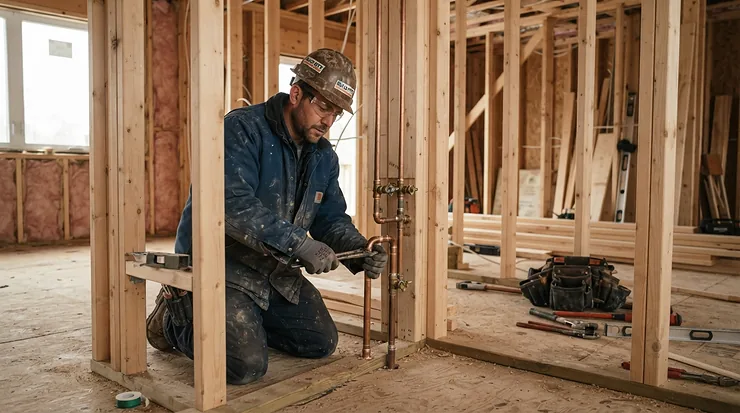
A pipe cutter for plumbers is a hand or cordless tool that slices copper, PVC, CPVC or PEX with a rotating wheel, ratcheting blade or shear. It leaves a square end that seats fully in a fitting. The basic mechanics are simple: a pipe cutter slices more cleanly and quickly than a hacksaw. A sharp wheel circles the pipe while the jaws tighten gradually, so the cut stays straight instead of wandering.
Here’s the thing nobody prints on the box: a joint is only as good as the pipe end that goes into it. Crush a tube, leave a ragged burr, or cut PVC off-square, and even a perfect fitting starts the job at a disadvantage. That’s why the right pipe cutter for plumbers matters far more than its modest price tag suggests. It’s also why a hacksaw habit tends to get expensive in callbacks, wasted fittings and lost afternoons.
This guide compares seven real tools using manufacturer specifications, published roundups and aggregated reviewer sentiment from retailer listings. The lineup includes two close-quarters and full-size copper pipe cutter options, a budget plumber pipe cutter set, a cordless copper cutter, and three picks for a PVC pipe cutting tool. None of them were bench-tested for this article, so every verdict below is spec-and-review analysis, labeled as such. Along the way you’ll get practical coaching on pipe deburring, soldering copper joints and plumbing rough-in, the three places where a good cut pays off most.
Quick Comparison Table: Pipe Cutter for Plumbers at a Glance
| Product | Best For | Cuts | Capacity | Price Range |
|---|---|---|---|---|
| RIDGID Model 101 Close Quarters Tubing Cutter | Tight wall cavities | Copper, aluminum, brass, plastic tubing | 1/4″–1-1/8″ OD | Under $30 |
| RIDGID Model 150 Constant Swing Tubing Cutter | All-round copper work | Copper, brass, aluminum, thin-wall conduit | 1/8″–1-1/8″ OD | $35–$85 range |
| SEDY Ultimate Tube Cutter Set | Budget starter bag | Copper, aluminum, stainless tubing | 1/8″–2″ OD (two cutters) | $25–$50 range |
| Milwaukee M12 Copper Tubing Cutter 2471-20 | High-volume copper runs | Type K, L, M copper | 1/2″–1-1/8″ OD | $160–$200 range (tool only) |
| RIDGID RC-1625 Ratchet Cutter | Everyday PVC and PEX | PVC, CPVC, PP, PEX, PE | 1/8″–1-5/8″ OD | $70–$115 range |
| Klein Tools 50063 Ratcheting PVC Cutter | Budget PVC cutting | Sch 40/80 PVC, CPVC, PEX | Up to 1-5/8″ OD | $20–$30 range |
| Milwaukee M12 PVC Shear 2470-20 | High-volume plastic drains | PVC, CPVC, ABS, PEX | Up to 2″ Sch 80 | $150–$200 range (tool only) |
Looking at the table above, the RIDGID Model 101 Close Quarters Tubing Cutter and Klein Tools 50063 Ratcheting PVC Cutter offer the lowest cost of entry. The two cordless Milwaukee tools cost roughly six to ten times as much, so they only make sense if you’re making dozens of cuts a day. The SEDY Ultimate Tube Cutter Set is the wild card, bundling two cutters and a deburring tool for less than most single-purpose options. Prices are ranges seen across retailers at the time of research and may vary, so check the current price before buying.
💬 Just one click — help others make better buying decisions too!😊
Top 7 Picks: Expert Analysis of Each Pipe Cutter for Plumbers
Each entry covers what the specs mean on the job, who the tool suits, what reviewers keep saying, and whether the price range earns its keep. Review sentiment is aggregated from retailer listings and published roundups. Where the verifiable review pool was thin, I say so rather than paper over it.
1. RIDGID Model 101 Close Quarters Tubing Cutter — best for cramped wall cavities
The RIDGID Model 101 earns its keep where a full-size cutter can’t swing, such as a 1/2-inch line hugging a stud. It covers 1/4 to 1-1/8 inch OD tubing, which takes in common 1/2-inch and 3/4-inch copper plus aluminum, brass and plastic tubing. The zinc body is about 3-1/8 inches long and weighs roughly half a pound. A large knurled feed-screw knob lets you meter pressure gently.
Gentle pressure is the whole point. Over-tightening is a classic way to crush soft copper and leave an oval end that never sits flush. The trade-off of a tiny frame is short leverage, so expect more turns per cut than with a full-size copper pipe cutter. Based on the spec comparison, this works best as the second cutter in the bag rather than the only one.
Buyer feedback on resale listings leans positive on value and build quality. One eBay product page showed a 4.9 average across 35 ratings. The samples are small, so treat that as a directional signal rather than a verdict.
Pros:
- ✅ Fits where full-size cutters can’t swing
- ✅ Spare cutter wheel included with the tool
- ✅ Lifetime warranty backing from RIDGID
Cons:
- ❌ More hand turns per cut than larger cutters
- ❌ Tops out at 1-1/8 inch OD
Price range: typically under $30, which makes the RIDGID Model 101 one of the best-value tools in this guide.
2. RIDGID Model 150 Constant Swing Tubing Cutter — best all-round copper workhorse
What sets the RIDGID Model 150 apart is its enclosed feed screw, designed to resist the clogging and jamming that plague open-screw cutters. The constant-swing radius keeps it usable in tight quarters. Capacity runs 1/8 to 1-1/8 inch, so one tool covers nearly every copper supply line in a house. Grooved rollers allow cuts close to a flare. A spare wheel hides in the knob, and a tool-free X-CEL pin makes swapping wheels painless.
In practice, the fold-away reamer stored in the frame is the sleeper feature. It puts pipe deburring one flip away from every cut, and that single habit does more for joint quality than any marketing bullet. At about a pound, it’s light enough for all-day carry. For general residential work, this is the safest single copper pipe cutter in this list.
On the sentiment side, a Home Depot listing showed a 4.6-star average across roughly 290 reviews at the time of research. The page didn’t expose review text, so I can’t tell you which complaints dominate. What I can say is that the volume and rating suggest a broadly satisfied buyer base.
Pros:
- ✅ Enclosed feed screw resists clogging and jamming
- ✅ Built-in fold-away reamer for quick deburring
- ✅ Tool-free wheel changes with spare included
Cons:
- ❌ Bulkier than a true close-quarters cutter
- ❌ Designed primarily for copper, brass and aluminum
Price range: retailer pricing varies widely, roughly $35–$85, so check the current price. At the low end it’s a bargain.
3. SEDY Ultimate Tube Cutter Set — best plumber pipe cutter set on a budget
The SEDY Ultimate Tube Cutter Set packs a heavy-duty cutter (3/16 to 2 inch OD), a mini cutter (1/8 to 7/8 inch OD) and a deburring tool into a carry case. Listings describe heat-treated blades and six bearings for smooth rotation. The package weighs about 1.8 pounds. That spread covers everything from a 1/4-inch ice-maker line to a 2-inch copper main.
As a plumber pipe cutter set, the logic is coverage per dollar. You get a large tool, a close-quarters tool and a reamer for less than many single-purpose cutters cost. The caveat is durability. Wheel and bearing life under daily use is the unknown, and the set lacks the decades-long reputation of a RIDGID. Listings also advertise plastic compatibility, but tubing cutters suit thin-wall plastic at best, so use a ratchet cutter for PVC.
Buyer sentiment on reseller pages is encouraging but thin. One buyer acknowledged it isn’t a RIDGID yet was pleasantly surprised. Others praised the mini cutter in tight spaces and the included deburring tools.
Pros:
- ✅ Two cutters plus deburring tool in one case
- ✅ Covers 1/8 to 2 inch OD range
- ✅ Low cost of entry for apprentices
Cons:
- ❌ Long-term wheel and bearing durability unproven
- ❌ Not a substitute for a PVC pipe cutting tool
Price range: roughly $25–$50. Strong value for apprentices and DIYers, a reasonable backup kit for pros.
4. Milwaukee M12 Copper Tubing Cutter 2471-20 — best cordless speed for copper runs
The Milwaukee M12 Copper Tubing Cutter 2471-20 turns a wrist-burning chore into a trigger squeeze. It spins at 500 RPM and auto-adjusts to Type K, L and M copper from 1/2 to 1-1/8 inch OD. The rotating head cuts installed tubing with as little as 1-1/2 inches of clearance. The manufacturer claims up to 200 cuts per charge and speeds up to ten times faster than conventional cutters. Treat that as a marketing claim, not a measured result. The tool weighs about 2.8 pounds, and an LED lights the cut line.
Here’s what to weigh: the value case is cumulative. Saving even a minute on each of 50 cuts in a day adds up to most of an hour, which is the real argument for a cordless copper pipe cutter on repipe jobs. It’s tool-only, so you need an M12 battery and charger.
Reviewer sentiment is mixed. A retailer listing showed 86% of reviewers would recommend it among 24 ratings, with 79% giving five stars. Some reports describe trouble: one reviewer said it stopped cutting after the first cut on 1/2-inch copper, and another review noted a trickle of water stopped it. That moisture sensitivity matters on service calls.
Pros:
- ✅ Cuts copper without wrist-twisting effort
- ✅ Rotating head works in 1-1/2 inch clearance
- ✅ Built-in LED and battery fuel gauge
Cons:
- ❌ Reports of stalling and moisture sensitivity
- ❌ High price, battery and charger sold separately
Price range: roughly $160–$200, tool only. It’s worth it for high-volume crews and overkill for occasional use.
5. RIDGID RC-1625 Ratchet Cutter — best everyday PVC pipe cutting tool
The RIDGID RC-1625 is a ratcheting cutter for PVC, CPVC, PP, PEX, PE and multilayer tubing up to 1-5/8 inch OD. A quick-change X-CEL blade swaps without tools, and the grips are marked at 1/2-inch intervals for quick measuring. A tester at Bob Vila reported about one squeeze for pipe 1/2 inch or smaller and roughly three squeezes near the top of its range.
Since it’s a ratchet, effort stays low even on thicker walls. The catch is capacity. Nominal 1-1/2 inch PVC measures about 1.9 inches OD, which is beyond this tool. Garage Tooled’s reviewer notes that size needs the larger RC-2375. Always check actual OD, not nominal size, before buying a PVC pipe cutting tool.
Reviewers consistently praise the burr-free cuts and sharp blade. Reported drawbacks include sensitive springs that can pop out after a hard knock and a rounded lower jaw that makes starting a cut slightly harder. Bob Vila’s tester also noted grips can feel slippery in warm conditions.
Pros:
- ✅ Clean, burr-free cuts with low effort
- ✅ Tool-free quick-change blade
- ✅ Lightweight aluminum build with lifetime warranty
Cons:
- ❌ Won’t fit nominal 1-1/2 inch PVC
- ❌ Springs can pop out after hard knocks
Price range: supply-house pricing runs roughly $70–$115, so check the current price. It’s pricier than the Klein but well regarded for quality.
6. Klein Tools 50063 Ratcheting PVC Cutter — best budget ratchet for light plastic work
The Klein Tools 50063 cuts Schedule 40 and 80 PVC, CPVC and PEX up to 1-1/4 inch ID (1-5/8 inch OD). The body is die-cast aluminum with a steel blade. It weighs 13.4 ounces and measures 8.9 inches long. Pulling the handles apart retracts the blade, so you can work one-handed. A locking latch keeps the blade closed in a tool bag, and a replacement blade (catalog 50064) is sold separately.
For plumbers, the weight is the selling point. At under a pound, it rides in a pouch all day, which matters on rough-in days with hundreds of small cuts. Klein’s own warnings are worth repeating: wear eye protection, never use it near live circuits, and don’t cut cold PVC, which can shatter.
I couldn’t verify a deep review pool for this exact model. For the older 50031 in the same family, reviewers praised the straight cuts and one-hand operation, but noted a learning curve lining up the blade. Expect similar handling, with the caveat that this is inference.
Pros:
- ✅ Lightweight 13.4 oz die-cast aluminum body
- ✅ One-handed retraction and locking latch
- ✅ Replacement blades available separately
Cons:
- ❌ Verifiable review pool for this model is thin
- ❌ Smaller capacity than the Milwaukee M12 PVC Shear 2470-20
Price range: roughly $20–$30, which makes the Klein Tools 50063 the cheapest route to clean PVC cuts here.
7. Milwaukee M12 PVC Shear 2470-20 — fastest option for high-volume plastic drains
The Milwaukee M12 PVC Shear 2470-20 cuts 2-inch Schedule 80 PVC in about three seconds, according to the manufacturer. It uses a 3mm reinforced stainless blade driven at 1,900 inch-pounds of torque. An offset blade lets it work close to a wall. It handles PVC, CPVC, ABS, PEX, nonmetallic conduit and rubber hose, but not copper or steel. The tool weighs 4.7 pounds, shares M12 batteries and is sold tool-only.
That 4.7 pounds is the trade-off against speed. If you’re cutting 75 pieces for a basement bath, the hand-fatigue savings are substantial, which is why published roundups pick it as the cordless favorite. For occasional cuts, a ratchet cutter is the saner choice.
Sentiment skews positive: a SupplyHouse listing showed eleven reviews, all five-star, from plumbers praising clean cuts on 1-1/2 and 2-inch pipe. Reviewer-reported drawbacks include a larger head that limits vertical clearance, mixed results on thick pipe, and a safety switch that’s awkward left-handed.
Pros:
- ✅ Cuts 2-inch Schedule 80 PVC in seconds
- ✅ Offset blade works close to walls
- ✅ Shares M12 batteries with other tools
Cons:
- ❌ Heavy at 4.7 lb with bulky head
- ❌ Dual-trigger layout can be awkward for some hands
Price range: roughly $150–$200 tool only. Excellent for volume, hard to justify for occasional use.
Side-by-Side Spec Table
| Product | Power | Approx. Weight | Warranty/Notes | Best For |
|---|---|---|---|---|
| RIDGID Model 101 | Manual | ~0.5 lb | Lifetime warranty | Tight cavities |
| RIDGID Model 150 | Manual | ~1 lb | Spare wheel, fold-away reamer | All-round copper |
| SEDY Ultimate Tube Cutter Set | Manual | ~1.8 lb (set) | Carry case, deburring tool | Budget starter bag |
| Milwaukee M12 Copper Tubing Cutter 2471-20 | 12V cordless | ~2.8 lb | Battery sold separately | High-volume copper |
| RIDGID RC-1625 | Ratchet | ~1.1–1.4 lb (varies by listing) | Quick-change blade | Everyday PVC and PEX |
| Klein Tools 50063 | Ratchet | 13.4 oz | Replacement blade 50064 | Budget PVC |
| Milwaukee M12 PVC Shear 2470-20 | 12V cordless | ~4.7 lb | Battery sold separately | High-volume PVC |
The table makes the weight-versus-speed trade-off obvious: the Milwaukee M12 PVC Shear 2470-20 is more than five times the weight of the Klein Tools 50063. If you carry your kit up ladders all day, that matters. For most residential work, pairing the RIDGID Model 150 with a RIDGID RC-1625 covers copper and plastic with about two pounds of tools.
✨ Ready to Upgrade Your Tool Bag?
🔍 Take your plumbing work to the next level with these carefully selected cutters. Click on any highlighted product name to check current pricing and availability. These tools will help you make clean, leak-free cuts your customers will never call you back about!
How to Choose a Pipe Cutter for Plumbers
Choose a pipe cutter for plumbers by matching the tool to the pipe material first, then checking capacity, clearance, replaceable parts and daily workload. Here are seven steps with the reasoning behind each.
- Match the tool to the material. A wheel-style copper pipe cutter will crush PVC, and a ratcheting blade won’t touch copper. Buy one of each, because they’re different jobs.
- Check actual OD, not nominal size. Nominal 1-1/2 inch PVC runs about 1.9 inches OD, which is why a 1-5/8 inch cutter won’t fit it.
- Measure your tightest space. Close-quarters models and rotating heads, like the one on the Milwaukee M12 Copper Tubing Cutter 2471-20, trade leverage for clearance.
- Confirm replaceable wheels and blades. Wheels and blades are consumables. Tools with tool-free swaps, like the RIDGID Model 150, keep you cutting.
- Count your cuts. Under a few dozen per day, manual tools win on cost. Past that, cordless starts paying for itself.
- Test the grip. Fatigue shows up at cut 200, not cut two. Lightweight bodies like the Klein Tools 50063 help on rough-in days.
- Plan the finish. Budget for a reamer. A cut without deburring is only half done.
For a more detailed pass on cut quality, see the pipe deburring section below.
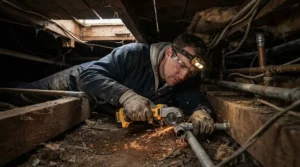
Copper Pipe Cutter vs PVC Pipe Cutting Tool: Why One Tool Can’t Do Both
Plumbers carry both for a reason. A copper pipe cutter works by rolling a hardened wheel around the tube while the feed screw advances, displacing metal until the wall parts. A PVC pipe cutting tool uses a sharp blade that shears or pierces through the plastic. Swap them and both fail: the wheel scores and can crack plastic, and a plastic blade has no business near copper.
| Option | Cut Quality | Speed | Cleanup | Best For |
|---|---|---|---|---|
| Manual copper cutter (RIDGID Model 150) | Square, minimal kerf | Moderate | Ream inside edge | Copper supply lines |
| Ratcheting plastic cutter (RIDGID RC-1625) | Clean with sharp blade | Fast | Light chamfer | PVC, CPVC, PEX to 1-5/8″ |
| Cordless shear (Milwaukee M12 PVC Shear 2470-20) | Clean, square | Fastest | Minimal | High-volume PVC drains |
| Hacksaw | Wandering, ragged | Slow | Heavy burr cleanup | Emergencies only |
The table shows why the hacksaw falls to the bottom: its cut needs the most cleanup, and cleanup time is hidden cost. The RIDGID RC-1625 hits the sweet spot for plastic work, while the Milwaukee M12 PVC Shear 2470-20 wins only when volume is high. Pairing a RIDGID Model 150 with a ratchet cutter covers nearly every residential material.
Plumber Pipe Cutter Set: What Really Belongs in the Bag
A well-built plumber pipe cutter set is less about quantity and more about covering three scenarios: open copper, cramped copper and plastic. Think of it as a three-tier system.
Starter bag. The SEDY Ultimate Tube Cutter Set gives you a large cutter, a mini cutter and a deburring tool in one case, which is hard to beat for apprentices. Add a Klein Tools 50063 for PVC and you’ve covered both materials for well under $100 at the ranges seen.
Working bag. Upgrade to a RIDGID Model 150 for daily copper, add a RIDGID Model 101 for cramped spots, and swap in the RIDGID RC-1625 for plastic. This is the combination I’d point most residential plumbers toward, based on capacity coverage and warranty support.
Pro bag. Add a cordless pair, the Milwaukee M12 Copper Tubing Cutter 2471-20 and Milwaukee M12 PVC Shear 2470-20, once volume justifies it.
Finally, add a dedicated reamer. The RIDGID 223S Inner-Outer Reamer covers 1/4 to 1-1/4 inch tubing with 45 cutting edges, reaming the inside and deburring the outside in one tool. A mirrored Amazon listing showed roughly 4.8 stars across more than two thousand ratings, and distributor pricing ran about $45–$95. Spares of wheels and blades round out the set.
Pipe Deburring: The Two-Minute Step That Saves the Joint
Every wheel cut raises a small ridge inside the tube. Pipe deburring is the step that removes it, and the Copper Development Association is blunt about why. Cut tube ends should be reamed to the full inside diameter, because a rough inside edge can cause erosion-corrosion through local turbulence and increased flow velocity. The outside burr also needs removing so the tube enters the fitting cup properly.
A practical routine for pipe deburring:
- Ream the inside first. Use a reamer, such as the fold-away blade on the RIDGID Model 150 or the dedicated RIDGID 223S Inner-Outer Reamer, or a half-round file.
- Chamfer the outside lightly. Just enough to ease insertion, not enough to thin the wall.
- Go gently on soft copper. Soft-temper tube can deform under heavy pressure, and a sizing tool can restore roundness if it does.
- Wipe away filings. Debris left in a line can lodge in valves and aerators.
In my analysis, the most common deburring mistake is skipping it because a cut “looks clean.” The burr is small precisely because it’s easy to miss. If you make pipe deburring automatic, the rest of the process gets easier, including the next step.
Soldering Copper Joints: Start With the Cut
When it comes to soldering copper joints, the torch gets all the credit, but the sequence starts earlier. The CDA’s guidance, based on ASTM B828, lists measuring and cutting, reaming, cleaning, fluxing and assembly in that order. Cutting and reaming come before anything involving heat.
Why the cut matters: capillary action draws molten solder into the gap between tube and fitting. A square, round, burr-free end seats fully in the cup and leaves an even gap all the way around. A crushed or angled end leaves a wedge-shaped gap, and solder won’t fill it reliably. That’s before considering a burr that restricts flow or snags debris.
A practical sequence for soldering copper joints:
- Cut square with a copper pipe cutter, feeding gently so the tube stays round.
- Ream and chamfer inside and out.
- Clean the tube end and fitting cup to bright metal.
- Flux lightly with a flux meeting ASTM B813.
- Heat the fitting, not the solder, and let capillary action pull the solder in.
The CDA notes that newer lead-free alloys have lower thermal conductivity, so following proper heating procedure matters more than ever. The upshot: a good tubing cutter makes soldering copper joints easier because it removes variables before the flame comes out.
Plumbing Rough-In: Matching Cutters to the Job
Plumbing rough-in is the stage where supply and drain lines are installed inside open walls and floors before fixtures and finished surfaces. It’s cut-heavy, tight and fast, so tool choices compound. Here are three scenarios, offered as reasoning rather than field anecdotes.
Scenario 1: Two-bath remodel crew. A crew mixing 1/2-inch and 3/4-inch copper supplies with 2-inch PVC drains will make hundreds of cuts across a few days. A RIDGID Model 150 and RIDGID Model 101 handle the copper. A Milwaukee M12 PVC Shear 2470-20 makes sense for the drains, since 75-plus cuts in a basement bath is exactly the volume where hand fatigue becomes real.
Scenario 2: Solo service plumber. Mostly repairs, with a few new runs per week. Budget matters, and a RIDGID Model 150 plus Klein Tools 50063 covers nearly everything for well under $100 at the ranges seen. Cordless tools would sit unused.
Scenario 3: Weekend renovator. A basement bath rough-in once. The SEDY Ultimate Tube Cutter Set and a RIDGID RC-1625 get the job done without a premium price. Frequency of use is the deciding factor.
Whatever the scenario, plumbing rough-in rewards a standard routine: measure twice, cut square, ream or chamfer, then fit. Skip a step and the open walls give you a chance to fix it. Once drywall closes, they won’t.
Pipe Cutter for Plumbers by Experience Level: Apprentice, Journeyman, DIY
A pipe cutter for plumbers isn’t one-size-fits-all, because skill and volume change the equation.
Apprentices should prioritize forgiveness and cost. The SEDY Ultimate Tube Cutter Set gives breadth cheaply, while the RIDGID Model 101 is a low-cost step up in quality. The feed-screw knob rewards learning to cut gently.
Journeymen benefit from reliability and warranty support. The RIDGID Model 150 and RIDGID RC-1625 are the sort of tools that justify their price through daily use. Parts like spare wheels and quick-change blades matter more than a lower sticker price.
Production crews are where the cordless Milwaukee M12 Copper Tubing Cutter 2471-20 and Milwaukee M12 PVC Shear 2470-20 earn their keep. The moisture and stall reports on the copper cutter suggest keeping a manual backup in the bag.
DIYers can usually skip power tools entirely. A Klein Tools 50063 for PVC and a RIDGID Model 150 for copper handle nearly every household project. Add a reamer and you’re set.
Features That Actually Matter (And Those That Don’t)
Marketing copy loves big numbers. Here’s what’s worth your attention.
Matters:
- Replaceable wheels and blades. Consumables wear out. Tool-free swaps keep you moving.
- Capacity that matches your real pipe. Capacity beats feature count every time.
- Clearance. The Milwaukee M12 Copper Tubing Cutter 2471-20 advertises 1-1/2 inches of clearance for a reason.
- Warranty and service. RIDGID’s lifetime warranty on the RIDGID Model 101 and RIDGID Model 150 reduces long-term risk.
- Weight. The 13.4 oz Klein Tools 50063 versus the 4.7 lb Milwaukee M12 PVC Shear 2470-20 shows how fast it adds up.
Matters less:
- “Ten times faster” claims. Speed multipliers are manufacturer claims, and real gains depend on pipe and technique.
- Color and brand styling. A bright housing won’t improve a cut.
- Giant tool counts in cheap kits. Three well-chosen tools beat twelve you never use.
The spec sheet won’t tell you this, but reviewers repeatedly point to blade or wheel quality and ergonomics as the deciding factors.
Common Mistakes When Buying and Using a Pipe Cutter for Plumbers (And How to Fix Them)
Problem: Crushed or oval copper. Over-tightening the feed screw is the usual cause. Solution: advance the screw a small fraction of a turn per rotation, and consider a sizing tool for soft tube.
Problem: Burrs left behind. Skipping pipe deburring invites turbulence and fitting damage. Solution: ream every cut. HVAC School advises pointing the open end down while reaming so shavings fall out, and warns against over-reaming a tube you plan to flare.
Problem: A cutter that won’t fit. Buying by nominal size is a classic trap. Solution: check OD against the spec, as with the RIDGID RC-1625 and 1-1/2 inch PVC.
Problem: Shattered or chipped PVC. Cold pipe can crack. Solution: follow Klein’s warning not to cut cold PVC, and wear eye protection.
Problem: A cutter that stalls on service calls. Some reviewers report moisture sensitivity on the Milwaukee M12 Copper Tubing Cutter 2471-20. Solution: drain the line, dry the area and keep a manual cutter like the RIDGID Model 101 as backup.
Long-Term Cost & Maintenance
Sticker price is only the start. Consumables, downtime and fatigue all show up on the bill.
| Tool Tier | Upfront Range | Ongoing Costs | Best For |
|---|---|---|---|
| Budget manual (RIDGID Model 101, Klein Tools 50063) | $20–$30 | Spare wheel or blade | Apprentices, DIYers |
| Mid-tier manual (RIDGID Model 150, SEDY Ultimate Tube Cutter Set) | $25–$85 | Wheels, occasional bearing wear | Residential plumbers |
| Premium ratchet (RIDGID RC-1625) | $70–$115 | Replacement blades | Frequent plastic work |
| Cordless (Milwaukee M12 Copper Tubing Cutter 2471-20, Milwaukee M12 PVC Shear 2470-20) | $150–$200 each, tool only | M12 batteries and charger | Production crews |
The cost story depends on volume. A cordless tool at roughly $190 is a poor deal for a few cuts a week. But if it saves a minute on each of 50 daily cuts, it returns close to an hour a day. Maintenance is simple: clean wheels and blades after use, replace dull ones promptly, and keep feed screws lightly lubricated. Dull wheels are a common source of excess burrs, which loops back to pipe deburring.
FAQ: Pipe Cutter for Plumbers Questions Answered
❓ What is the best copper pipe cutter for tight spaces?
❓ Can a tubing cutter cut PVC?
❓ Is a plumber pipe cutter set worth it?
❓ Do I need to deburr every cut?
❓ How much should I spend on a pipe cutter for plumbers?
Conclusion
The best pipe cutter for plumbers depends on material, space and volume, but a few patterns hold up across the research. For copper, the RIDGID Model 150 is the safest all-round pick, and the RIDGID Model 101 is the cheap, compact companion for cramped cavities. For plastic, the RIDGID RC-1625 balances quality and price, while the Klein Tools 50063 is the budget alternative. If budget is tight, the SEDY Ultimate Tube Cutter Set gets you covering both small and large copper lines at a low price, with the durability question mark noted above.
Production crews should look at the Milwaukee M12 Copper Tubing Cutter 2471-20 and Milwaukee M12 PVC Shear 2470-20, with eyes open about the copper cutter’s reported stalling and moisture issues and the heft of the shear. For plumbing rough-in work with a lot of cutting, they can save real time and wrist strain.
Whatever you buy, the habits matter more than the logo: cut square, feed gently, and make pipe deburring automatic. Those steps make soldering copper joints and gluing PVC far more forgiving. Prices and availability change, so check current pricing before you decide.
Recommended for You
- Bolt Cutters For Chain Link: 7 Proven Picks Ranked (2026)
- Tin Snips For Sheet Metal: 7 Best Picks Ranked For 2026
- Utility Knife For Box Cutting: 7 Best Picks For 2026
Disclaimer: This article contains affiliate links. As an Amazon Associate, I earn from qualifying purchases. If you purchase products through these links, we may earn a small commission at no additional cost to you.
✨ Found this helpful? Share it with your friends! 💬🤗
