
In This Article
Standing in a flooring showroom, staring at rows of gorgeous wood-look planks, you’re facing one of the biggest home investment decisions of your life. Should you go with laminate flooring versus hardwood? The answer could literally save you thousands of dollars—or cost you just as much if you choose wrong.
Here’s the thing: I’ve watched countless homeowners make this decision, and the ones who regret it always say the same thing: “I wish I’d known…” Well, today you’re going to know everything. We’re diving deep into the laminate flooring versus hardwood debate, and by the time you finish reading, you’ll have total clarity on which option belongs in your home.
The flooring industry has evolved dramatically in the past few years. Laminate technology has reached levels of realism that would’ve been impossible a decade ago, while hardwood continues to offer that irreplaceable authenticity that no manufactured product can fully replicate. But which one actually makes sense for your lifestyle, budget, and long-term plans?
✨Was this helpful? Spread the word! 🚀
Understanding the Fundamental Difference: What Sets Them Apart
Let’s start with the basics, because understanding construction is key to making an informed choice about laminate flooring versus hardwood.
Hardwood Flooring Construction
Hardwood flooring comes in two main varieties: solid and engineered. Solid hardwood is exactly what it sounds like—planks cut from a single piece of timber, typically 3/4 inch thick. These are the floors that have graced homes for centuries, the kind that can be sanded and refinished multiple times over their lifetime.
Engineered hardwood, on the other hand, features a real wood veneer (the top layer you see and walk on) bonded to multiple layers of plywood or high-density fiberboard beneath. This construction makes it more stable in varying humidity conditions and allows installation in places where solid hardwood would be risky—like basements or over radiant heating.
The Bruce Natural Statement Plus Waterproof Engineered Hardwood exemplifies modern engineered wood technology. With its Densitek core, it offers 33% more hardness than traditional plywood-core products and 100% waterproof protection. Available on Amazon for around $4.50-$6.00 per square foot, the Bruce Natural Statement Plus represents the cutting edge of engineered hardwood design. This 6.5-inch wide plank flooring features authentic wood grain variation and can be installed on, above, or below grade.
Laminate Flooring Construction
Laminate is an entirely different beast. It’s a synthetic product consisting of four main layers: a wear layer on top (melamine resin infused with aluminum oxide particles), a high-resolution photographic layer that creates the wood appearance, a core layer of high-density fiberboard (HDF), and a backing layer for moisture resistance and stability.
Modern laminates like the Pergo Outlast+ Waterproof Laminate have revolutionized the category. The Pergo Outlast+ line features AC4-AC5 durability ratings, integrated underlayment pads, and waterproof cores that can withstand spills for up to 72 hours. Priced between $2.50-$4.50 per square foot on major retail platforms, Pergo offers remarkable wood-look realism with embossed textures that match the grain patterns.
The Dream Home 12mm Water-Resistant Laminate from Lumber Liquidators provides another excellent option in the laminate versus hardwood comparison. This Dream Home product features a low-swell core technology exclusive to the brand, offering twice the water resistance of standard laminates at prices ranging from $1.99-$2.69 per square foot. The Dream Home 12mm planks come with attached 3mm padding and AC3-AC4 ratings, making them suitable for moderate to heavy residential traffic.
The Visual Difference
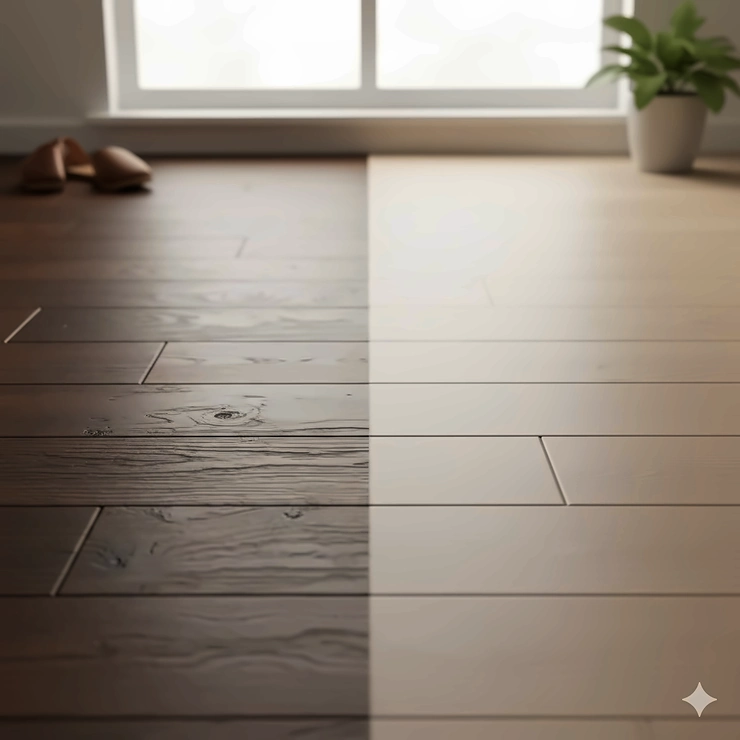
Here’s where things get interesting. Ten years ago, you could spot laminate from across the room. Today? Not so much. Premium laminates feature high-definition imaging technology that captures thousands of wood grain variations, embossed textures that match the visual grain patterns, and realistic beveled edges that mimic traditional hardwood planking.
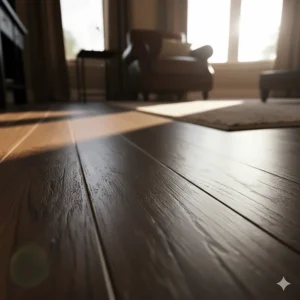
However—and this is important—even the best laminate can’t fully replicate the dimensional depth and natural variation you see in real hardwood. When light hits authentic wood, you see subtle shifts in color, natural mineral streaks, and organic imperfections that tell a story. Laminate is a photograph, no matter how good the camera.
Cost Analysis: Initial Investment and Long-Term Value
Let’s talk money, because the financial consideration in the laminate flooring versus hardwood decision extends far beyond the price tag on the box.
Material Costs Breakdown
Laminate Flooring:
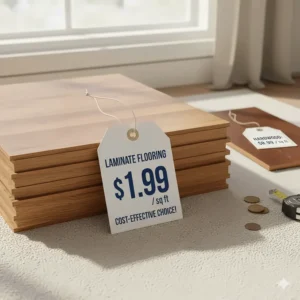
- Budget tier: $0.69-$1.50 per square foot
- Mid-range: $1.50-$3.00 per square foot
- Premium: $3.00-$5.00 per square foot
Hardwood Flooring:
- Engineered hardwood: $4.00-$10.00 per square foot
- Solid hardwood (oak, maple): $5.00-$15.00 per square foot
- Exotic hardwood (Brazilian cherry, tigerwood): $8.00-$25.00 per square foot
For a 1,000-square-foot installation, you’re looking at $690-$5,000 for laminate materials versus $4,000-$25,000 for hardwood materials. That’s a significant spread.
Installation Costs: DIY vs. Professional
The installation cost equation differs substantially between laminate flooring versus hardwood, and this is where laminate shines for budget-conscious renovators.
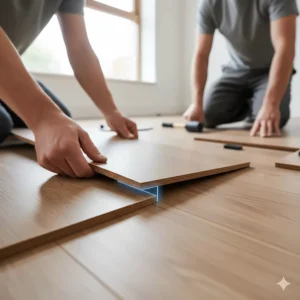
Most laminate flooring uses click-lock installation systems that literally snap together without glue, nails, or special tools. A motivated DIYer with basic skills can install laminate over a weekend. Professional installation typically runs $1-$3 per square foot.
The Newton Laminate Flooring Collection from Flooring Stores stands out for its user-friendly installation. The Newton brand offers multiple collections priced between $4.50-$7.00 per square foot, all featuring click-lock systems with detailed installation guides. Newton laminate comes with GreenGuard Gold certification and AC4-AC5 wear ratings, making it excellent for first-time installers who want professional results.
Hardwood installation is considerably more complex. Solid hardwood requires nail-down installation, which demands specialized tools and experience. Engineered hardwood offers more flexibility—glue-down, nail-down, or floating installations—but still benefits from professional expertise. Professional hardwood installation costs $3-$8 per square foot, sometimes more for intricate patterns or difficult spaces.
For a 1,000-square-foot project:
- Laminate DIY: Material only ($690-$5,000)
- Laminate professional: $1,690-$8,000 total
- Hardwood professional: $7,000-$33,000 total
Long-Term Value and ROI
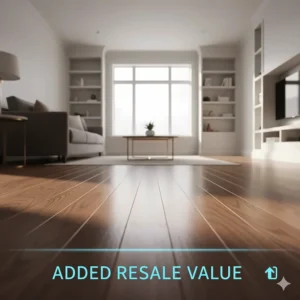
Here’s where the laminate flooring versus hardwood debate gets nuanced. According to real estate professionals, hardwood flooring typically returns 75-85% of its installation cost when you sell your home. Some sources even suggest premium hardwood in desirable markets returns 100% or more.
Laminate? The return is murkier. While quality laminate won’t hurt your home’s value, it typically doesn’t command the same premium as genuine hardwood. Realtors report that buyers often view laminate as a placeholder—something functional but not a selling point.
However, this calculation shifts if you’re not selling soon. If you’re staying in your home for 10-15 years, the lower initial investment and lower maintenance costs of laminate might offer better value for your particular situation.

Durability and Performance: How They Handle Real Life
The laminate flooring versus hardwood comparison gets real when you consider how these materials perform under daily wear and tear.
Scratch and Dent Resistance
Laminate’s wear layer creates exceptional scratch resistance. Those aluminum oxide particles are among the hardest materials used in consumer products. Premium laminates with AC4 or AC5 ratings can withstand commercial-level traffic without showing visible wear.
The Mohawk Castlebriar Waterproof Laminate exemplifies this durability. The Mohawk Castlebriar features a RevWood construction with enhanced surface protection and scores an AC4 rating. Priced around $3.50-$5.00 per square foot at major retailers, this Mohawk product includes Hydroseal protection and a lifetime residential warranty.
Hardwood, particularly softer species like pine or fir, shows scratches more readily. However, here’s the counterintuitive part: those scratches and dents add character to hardwood. They become part of the floor’s story. And unlike laminate—where a deep scratch exposes the brown HDF core beneath—hardwood scratches can be sanded out during refinishing.
Harder wood species help bridge this gap. The Bruce Hydropel Natural Hickory Engineered Hardwood leverages hickory’s natural hardness (Janka rating of 1820) with waterproof engineering. Available for $5-$7 per square foot at Home Depot and other retailers, the Bruce Hydropel features six layers of waterproof protection and a watertight locking system. This Bruce engineered product offers genuine wood beauty with enhanced durability.
Water and Moisture Resistance
Traditional hardwood and water are mortal enemies. Spills left sitting can stain, warp, or permanently damage hardwood. Humidity fluctuations cause expansion and contraction, potentially creating gaps or cupping.
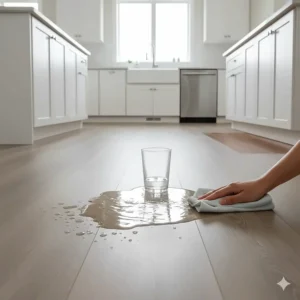
Standard laminate handles moisture better than hardwood but isn’t waterproof. Water seeping into the HDF core causes irreversible swelling. However, waterproof laminate technology has changed this game dramatically.
The KronoSwiss Origin Wide Plank Waterproof Laminate showcases advanced moisture protection. The KronoSwiss 14mm extra-wide planks feature a completely waterproof core and can handle standing water for extended periods. Priced at $4.50-$6.50 per square foot, this KronoSwiss product also includes a 72-hour water warranty and superior sound absorption.
Recent innovations in engineered hardwood have narrowed this gap. The Mannington Palace Waterproof Engineered Hardwood combines authentic wood veneers with waterproof cores, offering the best of both worlds. The Mannington Palace line, priced around $6-$9 per square foot, uses HydroLoc technology for complete moisture protection while maintaining the dimensional stability of engineered construction.
Impact Resistance and Foot Traffic
Heavy furniture, dropped objects, pet claws—real life is hard on floors. In the laminate flooring versus hardwood debate, both materials have strengths and weaknesses.
Laminate’s HDF core provides excellent impact resistance. The layer structure distributes force across the plank, reducing the likelihood of deep dents. However, once you do damage a laminate plank beyond its wear layer, there’s no fixing it—you must replace the entire plank.
Hardwood dents more easily, especially softer species. But here’s the advantage: those dents can often be steamed out or sanded during refinishing. The ability to refresh hardwood gives it a massive advantage in high-traffic areas over decades of use.
Installation Environments: Where Each Flooring Type Excels
Your home’s specific conditions dramatically influence the laminate flooring versus hardwood decision.
Above-Grade Living Spaces
Both flooring types work beautifully in above-grade areas (first floor and up). These spaces offer stable temperature and humidity conditions where either material can thrive.
For living rooms, dining rooms, and bedrooms, the choice often comes down to aesthetics and budget. Hardwood delivers unmatched visual appeal and long-term value. Laminate offers nearly the same look at a fraction of the cost.
The Mohawk Boardwalk Waterproof Laminate serves as an excellent choice for main living areas. The Mohawk Boardwalk features realistic oak embossing, attached underlayment, and complete waterproof protection. Priced competitively at $3-$4.50 per square foot, Boardwalk offers professional-grade durability with easy click-lock installation.
Kitchens: The Moisture Challenge
Kitchens present unique challenges for the laminate flooring versus hardwood decision. Spills happen constantly. Appliance leaks occur. Humidity from cooking affects flooring daily.
Traditional hardwood in kitchens requires vigilance. You must wipe up spills immediately and maintain proper humidity levels (30-50%). Many homeowners have learned this lesson the hard way when discovering warped boards around dishwashers or refrigerators.
Waterproof laminate has made kitchen installation much more practical. Products like the Dream Home Copper Valley Chestnut Water-Resistant Laminate specifically target kitchen applications. This Dream Home 12mm product features a low-swell core that resists moisture absorption 2X longer than standard laminates. At $1.99-$2.69 per square foot, it provides budget-friendly kitchen protection.
Engineered hardwood with waterproof cores offers an interesting middle ground. The genuine wood surface provides authentic kitchen aesthetics while the sealed core prevents moisture damage. However, prices typically run higher than waterproof laminate.
Basements: Below-Grade Considerations
Here’s where the laminate flooring versus hardwood choice becomes clearer: basements favor laminate and engineered hardwood over solid hardwood almost universally.
Below-grade installation faces concrete subfloors, potential moisture infiltration, and humidity fluctuations that would destroy solid hardwood. The wood would swell, cup, and possibly develop mold.
Laminate’s synthetic construction resists these moisture issues. Many manufacturers explicitly approve their products for below-grade installation. The click-lock floating installation also accommodates the minor shifting common with concrete slabs.
Engineered hardwood works in basements if proper moisture barriers are installed and humidity is controlled. The cross-ply construction resists the expansion/contraction that plagues solid wood. However, you’re still introducing organic material into a moisture-prone environment.
The Audacity Flooring Engineered Laminate collection offers basement-appropriate options. Audacity products feature FloorScore certification, recycled materials, and robust AC4-AC5 ratings. Priced around $3-$5 per square foot, Audacity laminate handles basement conditions while maintaining visual appeal.
Maintenance Requirements: Daily Care and Long-Term Upkeep
The ongoing maintenance comparison in laminate flooring versus hardwood significantly impacts total cost of ownership and daily convenience.
Daily and Weekly Cleaning
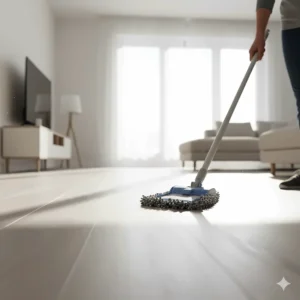
Laminate maintenance is remarkably simple:
- Sweep or vacuum regularly to remove grit that could scratch the surface
- Damp mop with laminate-specific cleaner (never saturate the floor)
- Wipe spills immediately
- Use felt pads under furniture legs
That’s essentially it. Laminate doesn’t require special treatments, conditioning, or refinishing. The wear layer protects the floor throughout its lifespan.
Hardwood demands more attention:
- Sweep or vacuum using soft bristle attachments (hard wheels can scratch)
- Damp mop with hardwood-approved cleaners only
- Wipe spills immediately and thoroughly
- Maintain consistent humidity (30-50%) to prevent gaps or cupping
- Use area rugs in high-traffic zones
- Apply felt pads and use furniture coasters
- Avoid harsh chemicals, vinegar, or steam cleaners
Refinishing and Restoration
Here’s where hardwood’s true value emerges in the laminate flooring versus hardwood debate: refinishing capability.
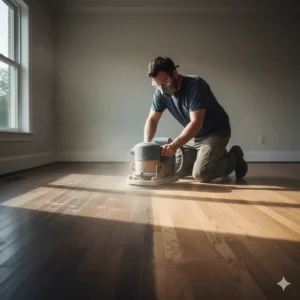
Solid hardwood can typically be sanded and refinished 4-6 times over its lifetime, depending on the plank thickness. Each refinishing removes scratches, dents, and wear, essentially giving you a brand-new floor. Professional refinishing costs $3-$5 per square foot—far less than replacement.
Engineered hardwood can usually be refinished 1-3 times, depending on the veneer thickness. A 4mm wear layer allows more refinishing than a 2mm layer.
Laminate cannot be refinished. Ever. The wear layer is extremely thin, and sanding through it exposes the photographic layer and HDF core beneath. Once laminate wears out, you replace it entirely.
For a 1,000-square-foot floor over 50 years:
- Hardwood: Possible refinishing costs of $9,000-$15,000 (3 refinishes), but the floor still functions
- Laminate: Possible full replacement costs of $5,000-$15,000 (1-2 replacements)
Repair and Replacement
Damage repair differs dramatically between laminate flooring versus hardwood.
Hardwood repairs are relatively straightforward. Individual damaged boards can be cut out and replaced. Minor scratches can be filled with wood putty. Deep dents can sometimes be steamed out. Most repairs blend into the existing floor seamlessly as the wood ages and patinas together.
Laminate repairs are trickier. Replacing a single damaged plank in a click-lock system may require disassembling large portions of the floor. The new plank often doesn’t match the aged surrounding planks perfectly. Minor surface damage can’t be repaired—you live with it or replace the plank.
Environmental Impact and Sustainability Considerations
For eco-conscious homeowners, the environmental comparison in laminate flooring versus hardwood matters significantly.
Forest Sourcing and Certification
Hardwood sustainability depends entirely on sourcing. Responsibly harvested hardwood from FSC-certified forests represents renewable resource management. The trees are replaced, wildlife habitats are protected, and local economies benefit from sustainable forestry.
However, not all hardwood meets these standards. Illegal logging and unsustainable harvesting practices damage rainforests and old-growth forests globally. When choosing hardwood, verification of FSC, PEFC, or similar certification is essential.
Engineered hardwood uses less solid timber than solid planks, stretching wood resources further. The plywood or MDF cores often come from faster-growing trees, reducing pressure on premium hardwood stocks.
VOC Emissions and Indoor Air Quality
Volatile organic compounds (VOCs) affect indoor air quality, and the laminate flooring versus hardwood comparison reveals important differences.
Quality hardwood with low-VOC finishes (like water-based urethanes) emits minimal harmful compounds. Natural oil finishes emit virtually nothing after curing. Unfinished hardwood installed and finished on-site may temporarily elevate indoor VOCs, but levels drop quickly.
Laminate historically had VOC concerns due to formaldehyde in the resin adhesives. However, modern laminates have addressed this issue. Look for CARB Phase 2 compliance and GreenGuard or GreenGuard Gold certification.
The Evoke Flooring Laminate Collection leads in environmental responsibility. Evoke products carry GreenGuard Gold certification, meeting the strictest indoor air quality standards globally. Manufactured in North America, Evoke laminate features sustainable materials and advanced low-VOC adhesives, priced around $4-$6 per square foot.
Product Lifespan and Disposal
Hardwood’s multi-decade lifespan (50-100+ years with proper maintenance) means less frequent replacement and reduced waste. At end of life, hardwood can be reclaimed, repurposed into furniture or decorative items, or even safely burned for energy.
Quality laminate lasts 15-25 years. End-of-life disposal is problematic since laminate contains synthetic materials that don’t biodegrade. Recycling options remain limited, though some manufacturers now accept old laminate for reprocessing.
Industry-Specific Applications and Use Cases
The laminate flooring versus hardwood decision varies dramatically across different property types and user demographics.
Residential Applications by Room Type
Master Bedrooms and Living Rooms: Hardwood reigns supreme for aesthetic reasons. These showcase spaces benefit from wood’s natural warmth and luxury appeal. Homeowners typically choose premium species like white oak, walnut, or hickory.
Children’s Rooms and Play Areas: Laminate makes practical sense. Kids create messes, drop toys, and generally abuse floors. The scratch-resistant wear layer handles punishment while the lower cost makes replacement less painful.
Home Offices: Either works well, though the choice often reflects the room’s previous function. Laminate offers better scratch resistance under rolling desk chairs, while hardwood provides a professional appearance for virtual meetings.
Commercial and Light-Industrial Applications
Commercial installations favor laminate’s durability and cost-effectiveness. Retail stores, restaurants, and office spaces often use AC4 or AC5-rated laminate in wood-look patterns.
The TrafficMaster Laminate Collection from Home Depot specifically targets commercial applications. TrafficMaster offers AC3-AC5 ratings at budget-friendly prices ($1.50-$3.00 per square foot), making it ideal for commercial renovations where appearance and durability matter but budgets are tight.
Engineered hardwood appears in upscale commercial settings—boutiques, professional offices, and high-end restaurants. The authentic wood appearance justifies the higher investment in image-conscious businesses.
Rental Property Considerations
Property owners face unique calculations in the laminate flooring versus hardwood debate. Tenant turnover means frequent cleaning, potential damage, and periodic replacement.
Laminate wins for rental properties due to:
- Lower initial investment
- Easier cleaning between tenants
- Better resistance to tenant abuse
- Lower repair costs
- Faster installation during turnovers
However, upscale rental units targeting premium tenants benefit from hardwood’s perceived value. The ability to refinish hardwood between long-term tenants can prove more economical than repeatedly replacing laminate.
Pet-Friendly Homes
Pet owners know the special challenges of maintaining beautiful floors. Scratches from claws, accidents, tracked-in mud—these issues influence the laminate flooring versus hardwood choice significantly.
Laminate’s scratch-resistant surface handles pet claws remarkably well. The AC ratings directly correlate with pet-friendliness. However, laminate’s inability to absorb moisture means pet accidents sit on the surface where they must be cleaned immediately.
Hardwood’s organic nature actually makes it more pet-accident friendly in one sense: the wood can absorb and later release moisture without permanent damage (if cleaned quickly). But those same pet claws that laminate shrugs off can leave visible marks in softer hardwoods.
The Newton Clearwater Collection Laminate specifically targets pet owners. Newton Clearwater features a scratch-resistant aluminum oxide surface, water protection, and GreenGuard Gold certification. At $5.13 per square foot, this Newton product balances pet durability with aesthetic appeal. The 7.6″ x 54.45″ planks handle everything pets throw at them.
Advanced Technical Analysis: Engineering and Performance Metrics
Understanding the science behind the laminate flooring versus hardwood comparison helps make informed decisions based on measurable performance.
AC Rating System for Laminates
The Abrasion Class (AC) rating system measures laminate durability through standardized tests. The rating directly impacts longevity in real-world applications:
- AC1: Light residential (closets, bedrooms with minimal traffic) – virtually discontinued
- AC2: General residential (living rooms with normal traffic) – rare in current market
- AC3: Heavy residential (all residential areas, light commercial) – minimum recommended
- AC4: General commercial (offices, cafes, shops) – excellent for high-traffic homes
- AC5: Heavy commercial (department stores, public buildings) – maximum residential durability
The AC rating comes from the European Producers of Laminate Flooring (EPLF) and involves multiple tests:
- Abrasion resistance (Taber test)
- Impact resistance (falling steel ball test)
- Stain resistance (various chemical exposure)
- Cigarette burn resistance
- Swelling thickness (24-hour water exposure)
For the laminate flooring versus hardwood comparison, an AC4 or AC5 laminate approaches or exceeds many hardwood species’ durability in daily wear resistance.
Janka Hardness Scale for Wood Species
The Janka hardness test measures wood’s resistance to denting and wear by measuring the force required to embed an 11.28mm (.444 inch) diameter steel ball halfway into the wood sample.
Common hardwood species ratings:
- Brazilian Walnut: 3,684 lbf (extremely hard)
- Hickory: 1,820 lbf (very hard)
- White Oak: 1,360 lbf (hard)
- Red Oak: 1,290 lbf (moderately hard)
- American Cherry: 950 lbf (moderately soft)
- Pine: 690 lbf (soft)
In the laminate flooring versus hardwood debate, the Janka rating helps predict how hardwood will perform under daily use. Higher ratings mean better dent resistance but often make installation more difficult (harder to cut and nail).
Dimensional Stability and Expansion Coefficients
All wood-based flooring materials expand and contract with humidity changes. Understanding these movements is crucial for successful installation.
Solid hardwood experiences the most dimensional change:
- Typical expansion: 0.2-0.6% across grain width
- A 3-inch oak plank might expand/contract by 0.006-0.018 inches
- Across a 10-foot span, total movement could be 0.24-0.72 inches
This necessitates expansion gaps around the room perimeter and careful humidity control.
Engineered hardwood’s cross-ply construction significantly reduces movement:
- Typical expansion: 30-50% less than solid hardwood
- The opposing grain directions in ply layers counteract each other
- More stable in variable humidity environments
Laminate’s HDF core also experiences dimensional changes:
- Primarily expands along length rather than width
- High-quality laminates move less than 0.1% per inch
- Expansion gaps still required but generally smaller
The Pacmat Waterproof Laminate Collection showcases advanced dimensional stability. Pacmat uses high-density cores and multi-layer sealants to achieve exceptional stability ratings. Priced around $3.50-$5.50 per square foot, Pacmat maintains its shape even in challenging moisture conditions.
Acoustic Properties and Sound Transmission
Flooring acoustics matter enormously, particularly in multi-story homes or condominiums where sound transmission affects living quality.
Sound Absorption: Laminate with attached underlayment pads typically offers better sound absorption than thin hardwood. The foam or cork underlayment dampens footfall noise.
Sound Transmission: Both materials transmit impact noise to rooms below. Proper underlayment selection dramatically affects acoustic performance.
Impact Insulation Class (IIC) ratings measure sound transmission:
- IIC 50+: Good acoustic performance
- IIC 55+: Very good, suitable for condos and apartments
- IIC 60+: Excellent, minimizes noise complaints
The Bruce Natural Statement Engineered Hardwood includes acoustic considerations in its Densitek core design. The Bruce product, when installed with quality underlayment, achieves IIC ratings suitable for multi-family applications.
Fire Resistance and Safety Ratings
Both laminate flooring and hardwood have fire resistance characteristics that affect building code compliance and safety.
Hardwood is naturally combustible but burns relatively slowly and predictably. Most building codes approve hardwood for residential use without additional fire-resistant treatments. The solid mass creates a char layer during burning that somewhat protects the wood beneath.
Laminate’s melamine resin wear layer provides some fire resistance, but the HDF core is combustible. Quality laminates include fire-retardant additives in the core material. Most achieve Class 1 or Class A fire ratings required for residential use.
European laminate manufacturers follow the Bfl-s1 fire classification, indicating:
- Very limited contribution to fire
- Very limited smoke production
- No flaming droplets/particles
Comprehensive Setup and Installation Guide
Successful flooring installation requires proper preparation and execution. The laminate flooring versus hardwood comparison extends to installation complexity and requirements.
Subfloor Preparation Requirements
Both flooring types demand proper subfloor preparation, though specific requirements differ.
Flatness: Maximum allowable variation is typically 3/16 inch over 10 feet. Uneven subfloors cause:
- Laminate: Plank locking system stress, potentially leading to separation
- Hardwood: Squeaks, potential plank cracking, uneven appearance
Level subfloors using self-leveling compound, floor patch, or sand down high spots.
Moisture Content: Critical for both materials but differently important:
- Hardwood: Subfloor moisture content must be within 4% of hardwood’s moisture content (typically 6-9%)
- Laminate: Concrete subfloors should test below 4.5 lbs/1000 sq ft (calcium chloride test) or 75% RH (relative humidity probe test)
Structural Integrity: Both require structurally sound subfloors:
- Replace damaged sections
- Secure squeaky areas
- Ensure joist spacing meets requirements (typically 16 inches maximum)
Acclimation Procedures
Acclimation allows flooring materials to adjust to installation environment conditions before installation.
Hardwood Acclimation:
- Unbox and stack flooring in installation room
- Maintain room temperature 60-80°F
- Maintain relative humidity 30-50%
- Acclimate 5-10 days minimum (longer for extreme climate differences)
- Check moisture content with moisture meter before installation
The Bruce Hydropel Engineered Hickory requires less acclimation than solid hardwood due to its stable engineered construction. Bruce recommends 48 hours minimum acclimation for their engineered products.
Laminate Acclimation:
- Keep cartons sealed for most of acclimation period
- Maintain room temperature 60-75°F
- Maintain relative humidity 35-65%
- Acclimate 48 hours minimum
- Open cartons 24 hours before installation
Installation Method Selection
The laminate flooring versus hardwood debate includes installation method complexity.
Laminate Click-Lock Installation:
- Install moisture barrier (if required)
- Lay foam or cork underlayment (if not pre-attached)
- Leave 1/4-1/2 inch expansion gap around perimeter
- Start first row straight along longest wall
- Stagger end joints at least 12 inches between rows
- Click planks together using tapping block
- Cut final row to fit with 1/4-1/2 inch gap
- Install baseboards or quarter-round to cover expansion gaps
The Dream Home Water-Resistant Laminate uses standard click-lock installation with attached padding. This Dream Home system allows rapid DIY installation without specialized tools. A 1,000-square-foot room takes approximately 15-20 hours for an experienced DIYer.
Engineered Hardwood Installation Methods:
Floating Installation (similar to laminate):
- Underlayment required
- Click-lock or glue-lock systems
- Expansion gaps necessary
- No fasteners penetrate flooring
Glue-Down Installation:
- Trowel urethane adhesive directly on subfloor
- Set planks in adhesive
- Requires clean, flat subfloor
- No expansion gaps needed (adhesive controls movement)
- Professional installation recommended
Nail-Down Installation:
- Applicable to 3/8-inch minimum thickness engineered or solid hardwood
- Requires wood subfloor (plywood or OSB)
- Uses flooring staples or cleats
- Professional tools required (pneumatic nailer, air compressor)
Solid Hardwood Nail-Down Installation:
- Install moisture barrier over concrete subfloor (if applicable)
- Install plywood subfloor (if over concrete)
- Snap chalk lines for layout
- Install first row face-nailed along starter wall
- Blind-nail subsequent rows through tongues using flooring nailer
- Maintain 1/4-1/2 inch expansion gaps
- Face-nail final rows where nailer won’t fit
- Install baseboards and transitions
Tool Requirements and Costs
DIY installation costs differ significantly in the laminate flooring versus hardwood comparison.
Basic Laminate Tool Kit ($150-$300):
- Tapping block
- Pull bar
- Rubber mallet
- Spacers
- Circular saw or jigsaw
- Tape measure
- Speed square
- Pencil
- Safety glasses
The WORKPRO Laminate Installation Kit available on Amazon ($35-$50) includes tapping block, pull bar, rubber mallet, and spacers—everything needed for laminate installation.
Hardwood Installation Tool Kit ($500-$2,000+ for purchase, $75-$150/day rental):
- Pneumatic flooring nailer
- Air compressor
- Miter saw or chop saw
- Table saw (optional but helpful)
- Moisture meter
- Chalk line
- Nail set and hammer
- Pry bar
- Tapping block
- Various measuring tools
Professional hardwood installers invest significantly more in specialized equipment, which partly explains higher installation costs.
Safety Considerations and Protective Equipment
Both installations require proper safety equipment:
- Safety glasses (flying debris from cutting)
- Knee pads (hours of kneeling work)
- Dust mask or respirator (saw dust)
- Hearing protection (power tools)
- Work gloves (splinter prevention for hardwood)
Laminate installation is generally safer for DIYers due to simpler tool requirements and no nail guns.
Maintenance and Longevity Strategies
Maximizing lifespan requires understanding proper care protocols for the laminate flooring versus hardwood comparison.
Daily and Weekly Maintenance Schedules
Laminate Daily Care:
- Sweep high-traffic areas
- Wipe spills immediately with damp cloth
- Spot-clean sticky residues
Laminate Weekly Care:
- Vacuum entire floor using soft bristle attachment
- Damp mop using laminate-specific cleaner
- Check for plank separation at seams (excessive moisture indicator)
- Clean and replace entry mats to reduce tracked-in dirt
Hardwood Daily Care:
- Sweep or vacuum high-traffic areas
- Wipe spills immediately and dry thoroughly
- Monitor humidity levels if possible
Hardwood Weekly Care:
- Vacuum entire floor
- Damp mop with hardwood cleaner (well-wrung mop, never saturate)
- Inspect for finish wear in traffic patterns
- Check humidity levels and adjust if needed
- Rotate area rugs to distribute wear
Monthly and Seasonal Maintenance
Laminate Monthly Tasks:
- Deep clean with laminate cleaning system
- Inspect all seams and transitions for damage
- Check and replace worn furniture pads
- Clean window tracks and door thresholds (grit sources)
Laminate Seasonal Tasks:
- Inspect floor for moisture damage after humid seasons
- Check expansion gaps haven’t closed (furniture or debris)
- Deep clean grout lines (if installed with tile borders)
Hardwood Monthly Tasks:
- Move furniture and rugs to clean underneath
- Deep clean with appropriate hardwood cleaner
- Apply hardwood polish or rejuvenator (oil soap type products) if finish appears dull
- Inspect for finish breakdown in high-traffic areas
- Check for new scratches or dents requiring attention
Hardwood Seasonal Tasks:
- Adjust humidifier/dehumidifier for seasonal humidity changes
- Inspect floor for gaps (winter) or cupping (summer)
- Schedule refinishing if finish wear becomes apparent
- Deep clean and condition (appropriate products for finish type)
Troubleshooting Common Issues
Laminate Problems:
Buckling or Peaking: Caused by insufficient expansion gaps or moisture infiltration. Solution: Remove baseboards to check expansion space, investigate moisture sources, potentially disassemble and reinstall affected sections with proper gaps.
Separating Planks: Results from subfloor movement, improper installation, or excessive moisture. Solution: For minor separation, pull planks apart and re-snap. For persistent issues, disassemble back to problem area and reinstall with attention to proper locking.
Surface Dulling: Improper cleaning products leave residue. Solution: Use residue-removing laminate cleaner. For stubborn buildup, use mixture of 1 cup vinegar to 1 gallon water (rinse thoroughly).
Squeaking: Subfloor unevenness or lack of underlayment. Solution: Difficult to fix without reinstallation. Sometimes weight placement reduces squeaks. Prevention through proper subfloor preparation is key.
Hardwood Problems:
Cupping (edges higher than center): Excessive moisture from below. Solution: Identify and eliminate moisture source. Allow floor to dry naturally over weeks/months. May flatten as moisture equalizes. Severe cases require refinishing after drying.
Crowning (center higher than edges): Result of sanding cupped floor too soon. Solution: Allow more drying time. May require re-sanding if it doesn’t flatten.
Gaps Between Planks: Normal during dry winter months due to shrinkage. Solution: Maintain 30-50% relative humidity year-round. Small gaps (< 1/16 inch) are normal and acceptable. Larger gaps indicate excessive dryness or installation issues.
Scratches: Daily wear creates surface scratches. Solution: Use touch-up markers, wood putty, or fill sticks for color-matching. Deep scratches may require professional refinishing.
Water Stains: Spills left sitting can penetrate finish. Solution: For white haze (trapped moisture in finish), try rubbing with mineral spirits. Dark stains may require sanding and refinishing.
Replacement Parts and Warranty Information
The laminate flooring versus hardwood comparison includes replacement considerations.
Laminate Warranties:
- Wear warranty: 10-30 years residential, 3-10 years commercial
- Structural warranty: Lifetime for some premium brands
- Moisture warranty: 72 hours for waterproof products (specific conditions apply)
- Fading warranty: 10-25 years
The Pergo Outlast+ includes lifetime residential structural warranty plus 30-year wear warranty. The Pergo waterproof protection covers 72-hour water exposure under specific conditions. These warranties require proper installation and maintenance per manufacturer guidelines.
Hardwood Warranties:
- Finish warranty: 10-50 years depending on brand and grade
- Structural warranty: Often lifetime for solid hardwood
- Pre-finished warranty: typically longer than site-finished
The Bruce Natural Statement Plus carries lifetime structural warranty plus 50-year finish warranty for residential use. Bruce warranties require professional installation (or detailed DIY documentation) and proper maintenance.
Replacement Cost Planning:
Calculate total cost of ownership for laminate flooring versus hardwood over 50 years:
Laminate Scenario:
- Initial installation: $5,000 (1,000 sq ft at $5/sq ft installed)
- Replacement after 20 years: $5,500 (accounting for inflation)
- Replacement after 40 years: $6,000
- Total 50-year cost: $16,500
Hardwood Scenario:
- Initial installation: $12,000 (1,000 sq ft at $12/sq ft installed)
- Refinishing after 15 years: $4,000
- Refinishing after 30 years: $4,500
- Refinishing after 45 years: $5,000
- Total 50-year cost: $25,500
However, at year 50, the hardwood floor still has value and functionality while laminate is near replacement again. Factor this into long-term planning.
Comparative Analysis: Head-to-Head Product Comparison
Let’s examine specific products across the laminate flooring versus hardwood spectrum with detailed comparison tables.
Premium Tier Products Comparison
| Feature | Pergo Outlast+ Laminate | Mohawk Castlebriar Laminate | Bruce Hydropel Engineered Hardwood | Mannington Palace Engineered Hardwood |
|---|---|---|---|---|
| Price per sq ft | $3.50-$4.50 | $3.50-$5.00 | $5.00-$7.00 | $6.00-$9.00 |
| AC Rating | AC5 | AC4 | N/A (genuine wood) | N/A (genuine wood) |
| Water Resistance | 72-hour waterproof | Waterproof | 100% waterproof | Waterproof core |
| Thickness | 10-12mm | 10mm | 7/16 inch | 1/2 inch |
| Installation | Click-lock DIY | Click-lock DIY | Click-lock DIY/Pro | Click-lock or glue |
| Warranty | Lifetime/30-year | Lifetime | Lifetime/50-year | 50-year finish |
| Refinishing | No | No | Limited (1-2 times) | Yes (2-3 times) |
| Visual Realism | High | High | Authentic wood | Authentic wood |
| Maintenance Level | Low | Low | Medium | Medium |
| Best For | High-traffic/pets/kitchens | Families/pets/humid areas | Upscale homes/authenticity seekers | Luxury applications |
Mid-Range Products Comparison
| Feature | Dream Home 12mm Laminate | Newton Clearwater Laminate | KronoSwiss Origin Laminate | Bruce Natural Statement Engineered |
|---|---|---|---|---|
| Price per sq ft | $1.99-$2.69 | $4.50-$7.00 | $4.50-$6.50 | $4.50-$6.00 |
| AC Rating | AC3-AC4 | AC4-AC5 | AC5 | N/A (genuine wood) |
| Water Resistance | 2X standard | Water-resistant | Waterproof | Enhanced water resistance |
| Thickness | 12mm | 7.6-10mm | 14mm | 3/8 inch |
| Attached Pad | Yes | Yes/No | Yes | No |
| Installation | Click-lock DIY | Click-lock DIY | Click-lock DIY | Click-lock DIY |
| Warranty | 30-year | 20-30 year | Lifetime | Lifetime |
| Certification | GreenGuard | GreenGuard Gold | FloorScore | Low-VOC |
| Visual Style | Traditional wood looks | Contemporary/traditional | Wide plank European | Classic American hardwood |
| Best For | Budget-conscious renovation | Pet owners/active families | Statement floors/large spaces | Value-seeking hardwood aesthetics |
Budget Tier Products Comparison
| Feature | Dream Home 7-8mm Laminate | TrafficMaster Laminate | Evoke Entry-Level Laminate | Value Engineered Hardwood |
|---|---|---|---|---|
| Price per sq ft | $0.69-$1.50 | $1.50-$3.00 | $2.50-$4.00 | $4.00-$6.00 |
| AC Rating | AC3 | AC3 | AC3-AC4 | N/A |
| Water Resistance | Water-resistant | Water-resistant | Water-resistant | Standard engineered |
| Thickness | 7-8mm | 8-10mm | 8-10mm | 3/8 inch |
| Attached Pad | No | Sometimes | Yes | No |
| Installation | Click-lock DIY | Click-lock DIY | Click-lock DIY | Varies by product |
| Warranty | 10-year | 10-20 year | 20-year | 20-year |
| Best For | Rental properties/flips | DIY first-timers/rentals | Eco-conscious budgets | Budget real wood aesthetics |
💬 Just one click – help others make better buying decisions too! 😊
🛒 Transform Your Space With These Top Flooring Choices! 🏡
Ready to upgrade your floors with confidence? The products we’ve discussed represent the best options available right now. Click through to check current pricing, read verified customer reviews, and take advantage of any active promotions. Your dream floor is just a click away—don’t let your outdated flooring hold you back any longer! 🌟
Case Studies and Success Stories: Real-World Applications
Understanding how the laminate flooring versus hardwood decision plays out in real homes helps contextualize the choice.
Case Study 1: Young Family Renovation – Laminate Victory
The Situation: Sarah and Mike renovated their 1,200-square-foot suburban home with two children (ages 4 and 7) and a golden retriever. Their original 20-year-old carpet was beyond salvaging.
The Decision Process: Initially attracted to hardwood’s aesthetic appeal, the couple struggled with the $18,000 professional installation quote. Their research led them to premium waterproof laminate options.
The Choice: They selected the Mohawk Castlebriar AC4 Waterproof Laminate in a gray-toned oak pattern for $4,200 in materials plus $1,800 for professional installation. Total investment: $6,000.
Results After 3 Years:
- Zero visible wear in main traffic patterns
- Successfully survived two juice-box spills left overnight (waterproof core handled it)
- Dog claws created no visible scratching
- Kids’ dropped toys caused no dents
- Cleaning takes 15 minutes weekly with simple damp mopping
- No humidity control needed despite varied Kansas weather
ROI Analysis: The $12,000 savings versus hardwood went into kitchen updates that increased home value by approximately $20,000 in their market. The laminate floor looks nearly identical to installation day.
Key Lessons: For active families with young children and pets, premium laminate offered the perfect balance of durability, aesthetics, and value. The inability to refinish didn’t concern them given the excellent condition after three years of abuse.
Case Study 2: Historic Home Restoration – Hardwood Triumph
The Situation: Jennifer inherited a 1920s craftsman home with original oak hardwood buried under multiple layers of linoleum and carpet. The 1,500-square-foot main floor needed complete restoration.
The Decision Process: Preservationists and appraisers strongly encouraged maintaining the home’s historic character. While the existing hardwood showed 100 years of wear, it was structurally sound and could be restored.
The Choice: Professional refinishing of existing solid oak hardwood: $7,500 including repairs to damaged sections. They matched the existing 2.25-inch red oak planks for repair areas.
Results After Refinishing:
- Floors transformed from damaged and dark to beautiful honey-toned oak
- Increased home appraisal value by $15,000
- Authentic historic character preserved
- Minor scratches and dents add character rather than detract
- Rooms feel warmer and more authentic
Maintenance Reality: Jennifer uses area rugs in traffic zones and maintains 40% humidity year-round with a whole-house humidifier. She expects the floors will need another refinishing in 15-20 years ($4,000-$5,000), but considers it worthwhile for the authentic period aesthetics.
Key Lessons: In historic homes where authenticity matters and original hardwood exists, restoration beats replacement. The ability to refinish multiple times justifies higher initial investment and ongoing maintenance requirements.
Case Study 3: Condo Conversion – Engineered Hardwood Compromise
The Situation: Robert converted a 900-square-foot industrial loft condo in Chicago. Concrete subfloors and condo association noise restrictions complicated flooring selection.
The Decision Process: The association required minimum IIC 55 acoustic rating. Solid hardwood wasn’t suitable for concrete subfloors. He needed authentic wood appearance for the modern aesthetic but with practical installation.
The Choice: Bruce Natural Statement Plus Waterproof Engineered Hardwood with premium cork underlayment. Material and installation cost: $9,000 total. Acoustic testing confirmed IIC 58 rating.
Results After 2 Years:
- Authentic hardwood appearance impressed prospective buyers and renters
- Zero moisture issues despite exposed concrete subfloors
- Below neighbors reported no noise concerns
- Two refinishing cycles remain available in veneer thickness
- Modern waterproof core protected against appliance leak in kitchen
ROI Analysis: Condo appraised $25,000 higher than comparable units with carpet or vinyl. When Robert rented it, the hardwood floors commanded $200/month premium over similar units.
Key Lessons: Engineered hardwood bridges the gap between laminate’s practicality and solid hardwood’s authenticity. For condos and situations where solid hardwood isn’t feasible, quality engineered products deliver real wood benefits with modern performance.
Case Study 4: Rental Property Investment – Budget Laminate Strategy
The Situation: Investment company purchased five single-family rental properties needing complete flooring updates. Budget was critical but appearance mattered for tenant appeal.
The Decision Process: Properties targeted median-income families. Flooring needed to withstand 5-7 year tenant cycles, look attractive in photos, and minimize replacement costs.
The Choice: TrafficMaster AC3 Laminate throughout all properties (total 6,000 square feet). DIY installation by handyman crew. Cost: $1.50/sq ft materials = $9,000 for all five properties.
Results After 5 Years:
- Three properties show minimal wear with conscientious tenants
- Two properties required plank replacements in kitchen areas ($300 per repair)
- All properties rented within one week of listing
- Tenant complaints about flooring: zero
- Cleaning between tenants takes half the time versus carpet
ROI Analysis: Attractive laminate flooring improved initial rental rates by $50-$75/month per property. Lower maintenance costs versus carpet saved approximately $1,000 annually across five properties. The company considers the laminate strategy successful and plans to replace all units after 10 years for approximately $11,000 (accounting for modest material cost inflation).
Key Lessons: For rental properties targeting middle-income tenants, budget laminate with AC3+ ratings provides excellent value. The low initial investment, easy cleaning, and decent aesthetics meet investment property requirements without overinvestment.
Future Trends and Market Evolution in Flooring
The laminate flooring versus hardwood landscape continues evolving with technological innovations and changing consumer preferences.
Emerging Technologies in Laminate Manufacturing
Enhanced Surface Realism: New generation high-definition printing achieves 20,000+ DPI resolution, capturing microscopic wood grain details invisible to previous technology. Three-dimensional embossing with registered texture (synchronized with printed grain) creates surfaces that fool even experienced designers.
Performance Innovations: Manufacturers are developing diamond-infused wear layers promising AC6-level durability (beyond current AC5 maximum). These next-generation surfaces will handle commercial applications that currently require LVT or porcelain.
Sustainability Advances: Bio-based resin development reduces petroleum-derived materials in laminate production. Some manufacturers are achieving 40-50% recycled content in HDF cores without compromising performance. Expect 60-70% recycled content products within 3-5 years.
Smart Flooring Integration: Prototypes incorporate sensors beneath laminate surfaces for health monitoring (activity tracking), security (pressure-activated alerts), and home automation (presence detection for lighting/HVAC). While currently expensive, expect mainstream availability within a decade.
Hardwood Innovation and Sourcing Trends
Thermally Modified Woods: Heat treatment processes alter wood cellular structure, increasing dimensional stability and rot resistance without chemicals. Thermally modified hardwood handles moisture and humidity extremes that would destroy traditional hardwood. This technology makes genuine hardwood practical for bathrooms and basements.
Reclaimed and Upcycled Materials: Growing market demand for reclaimed barnwood, industrial timber, and salvaged flooring reflects both sustainability consciousness and desire for unique character. Expect continued premium pricing for authenticated reclaimed materials.
Fast-Growth Hardwood Species: Bamboo, eucalyptus, and acacia plantations mature in 5-15 years versus 50-100 for traditional oaks and maples. These sustainable alternatives offer hardwood aesthetics at lower environmental cost. Quality improvements make them increasingly competitive with traditional species.
Advanced Finishing Technologies: UV-cured finishes with ceramic particles create scratch resistance approaching laminate wear layers while maintaining hardwood’s refinishability. Some finishing systems now offer 50-year warranties—unthinkable a decade ago.
Market Trends and Consumer Behavior Shifts
Wider Planks Dominate: Consumer preference continues shifting toward wider planks (7-9 inches versus traditional 3-5 inches). Both laminate and hardwood manufacturers respond with wider offerings. Extra-wide planks create contemporary aesthetics and make rooms appear larger.
Matte Finishes Replace Glossy: High-gloss polyurethane finishes feel dated to modern consumers. Low-sheen, natural oil look finishes dominate new installations. This trend benefits hardwood (natural oil finishes showcase grain) and pressures laminate manufacturers to perfect matte surface technology.
Gray Tones Stabilizing: After five years of gray-everything domination, market data shows stabilization. Warm honey and caramel tones are resurging, though pure whites and bright natural finishes remain unpopular. Consumers seek richness and depth versus the cold grays of 2015-2022.
Waterproof Becomes Standard: Waterproof technology in both laminate and engineered hardwood has progressed from premium feature to baseline expectation. Manufacturers without waterproof offerings lose market share rapidly.
Sustainability and Environmental Considerations
Carbon Footprint Awareness: Consumers increasingly demand lifecycle carbon analysis. Hardwood from nearby sustainable forests often has lower carbon footprint than laminate manufactured overseas and shipped long distances. However, local laminate manufacturing is growing in response.
Circular Economy Initiatives: Some manufacturers now accept old flooring for recycling into new products. While still rare, expect expansion as regulations and consumer pressure increase. Both laminate and hardwood industries are developing take-back programs.
VOC Elimination Progress: Near-zero VOC products becoming standard rather than premium. CARB Phase 2 compliance is minimum; future standards will tighten further. This benefits consumers while increasing manufacturing complexity and costs.
Biodegradability Concerns: Laminate’s synthetic components don’t biodegrade, creating end-of-life disposal challenges. Research into biodegradable laminate core materials progresses slowly. Hardwood maintains advantage as completely biodegradable and reusable material.
Installation and Professional Services Evolution
DIY Support Technology: Augmented reality apps now overlay installation instructions on smartphone screens as you work. These tools make complex installations more accessible to homeowners, potentially reducing professional installer demand for straightforward projects.
Hybrid Installation Services: Companies offering partial DIY support—professional prepares subfloor and performs complex cuts, homeowner installs majority of field—grow in popularity. This model balances cost savings with quality assurance.
Warranty Protection Shifts: Manufacturers increasingly void warranties on DIY installations, pushing consumers toward certified installers. This trend may slow the DIY movement as consumers value warranty security.
Investment and Purchase Decision Framework
The laminate flooring versus hardwood choice ultimately comes down to structured decision-making aligned with your specific situation.
Cost-Benefit Analysis Framework
Calculate true cost of ownership rather than just purchase price:
Total Cost Formula: Total Cost = (Material Cost × Square Footage) + Installation + Maintenance Annual Cost × Years + Replacement Costs - Resale Value Impact
Example Calculation (1,000 sq ft, 20 years):
Premium Laminate:
- Materials: $4.00 × 1,000 = $4,000
- Installation: $2.00 × 1,000 = $2,000
- Annual maintenance: $50 × 20 = $1,000
- Replacement costs: $0
- Resale value impact: +$0 to +$2,000
- Total: $5,000-$7,000
Solid Oak Hardwood:
- Materials: $8.00 × 1,000 = $8,000
- Installation: $5.00 × 1,000 = $5,000
- Annual maintenance: $150 × 20 = $3,000
- Refinishing (year 15): $4,000
- Resale value impact: +$8,000 to +$12,000
- Total: $10,000-$20,000 before resale value, $2,000-$12,000 after
These calculations show hardwood’s higher initial and maintenance costs but potentially excellent ROI through increased home value.
Decision Criteria Evaluation Matrix
Score each criterion 1-10 based on your priorities, then multiply by the rating for each flooring option:
| Criterion | Your Priority Weight (1-10) | Laminate Score | Hardwood Score |
|---|---|---|---|
| Initial Budget | ___ | 9 | 4 |
| Aesthetic Appeal | ___ | 7 | 10 |
| Durability/Wear | ___ | 9 | 7 |
| Water Resistance | ___ | 9 | 5 |
| DIY Installation | ___ | 9 | 3 |
| Maintenance Ease | ___ | 9 | 6 |
| Refinishing Option | ___ | 1 | 10 |
| Resale Value | ___ | 6 | 10 |
| Environmental Impact | ___ | 6 | 8 |
| Lifetime Longevity | ___ | 6 | 10 |
Multiply your priority weight by each score, then sum columns. Higher total indicates better match for your priorities.
Budget Planning and Financing Options
Cash Purchase Considerations:
- Allows negotiation for cash discounts (typically 5-10%)
- No interest costs
- Requires significant liquid capital
- May deplete emergency funds
Home Equity Line of Credit (HELOC):
- Current rates: 7-9% typically
- Interest may be tax-deductible (consult tax professional)
- Preserves cash reserves
- Requires home equity and good credit
Personal Loan:
- Rates: 8-15% depending on credit
- Fixed payment schedule
- No home collateral requirement
- May include origination fees
Credit Cards (promotional periods):
- 0% APR periods (12-24 months common at home improvement stores)
- Requires excellent credit
- Must pay off before promotional period ends
- High post-promotional rates (20-30%)
Retailer Financing:
- Home Depot, Lowe’s, Floor & Decor offer project loans
- Often include 0% promotional periods
- May require special credit card
- Sometimes offers delayed payment (6-12 months)
Financing Example: $10,000 hardwood project:
- Cash: $10,000 upfront
- HELOC (7%, 5 years): $198/month, $11,880 total
- Personal loan (10%, 5 years): $212/month, $12,748 total
- 0% credit card (24 months): $417/month, $10,000 total
Implementation Strategy and Timeline
Plan your flooring project with realistic timelines:
Pre-Purchase Phase (2-4 weeks):
- Week 1: Research products, read reviews, collect samples
- Week 2: Measure spaces, calculate square footage with 10% waste factor
- Week 3: Get installation quotes (3-5 contractors minimum)
- Week 4: Make final decision, order materials
Installation Phase:
- Laminate DIY: 2-4 days for 1,000 sq ft (weekend projects possible)
- Laminate Professional: 1-2 days for 1,000 sq ft
- Hardwood Professional: 3-5 days for 1,000 sq ft (plus finishing time for site-finished)
Post-Installation:
- Laminate: Walk on immediately, place furniture after 24 hours
- Hardwood (pre-finished): Walk on immediately, furniture after 24 hours
- Hardwood (site-finished): Wait times vary:
- Oil-based polyurethane: Walk after 24 hours, furniture after 4-5 days
- Water-based polyurethane: Walk after 6-8 hours, furniture after 48 hours
- Oil finish: Walk after 12 hours, furniture after 24 hours
Break-In Period:
- Both materials benefit from 30-day gentle use period
- Avoid rolling heavy loads
- Use felt pads under all furniture immediately
- Keep high-traffic areas covered with runners initially
Measuring Success: Key Performance Indicators
Track these metrics to evaluate your flooring decision success:
Year 1 Evaluation:
- Installation quality satisfaction (smooth? level? gaps?)
- Aesthetic satisfaction (matches vision? compliments? room feel?)
- Maintenance time required (hours per month)
- Unexpected issues (warranty claims? damage?)
5-Year Evaluation:
- Visible wear patterns (where? severity?)
- Maintenance cost total (cleaners, repairs, preventive care)
- Performance versus expectations (better? worse? same?)
- Regret level (would you choose differently?)
10-Year Evaluation:
- Replacement/refinishing required? (cost? compared to initial?)
- Impact on home value (appraiser feedback? comparable sales?)
- Technology obsolescence (does floor look dated?)
- Lifestyle fit (still meets needs? family changes?)
Honest evaluation at these intervals helps inform future flooring decisions and maintenance adjustments.
🏆 Make Your Dream Floor a Reality Today! 🎯
Don’t wait another day to upgrade your space with flooring that matches your lifestyle and budget. Every product we’ve recommended is available right now with competitive pricing and fast shipping. Click on any of the highlighted products above to check today’s deals, compare specifications, and read thousands of verified customer reviews. Your perfect floor is waiting—and your home deserves it! ✨
Conclusion: Making Your Final Decision
We’ve covered everything in this comprehensive laminate flooring versus hardwood guide—from construction differences and cost analysis to real-world case studies and future trends. Now it’s time to make your decision.
Here’s the bottom line: Neither choice is universally “better.” The right flooring depends on your specific circumstances:
Choose Laminate If:
✅ Budget is your primary concern
✅ You have children and/or pets
✅ DIY installation appeals to you
✅ Water exposure is likely (kitchens, basements)
✅ You value low-maintenance convenience
✅ You’re in a rental property or short-term home
✅ Scratch resistance is critical
✅ You don’t plan to refinish floors
Choose Hardwood If:
✅ Authentic materials matter to you
✅ Long-term investment return is priority
✅ Your home is in a premium market
✅ You can control humidity and temperature
✅ Professional installation is acceptable
✅ You value refinishing capability
✅ Environmental sustainability is critical
✅ You appreciate natural patina and character development
The laminate flooring versus hardwood debate isn’t about one product beating another—it’s about aligning flooring characteristics with your lifestyle, budget, and long-term plans.
Consider your family’s reality. Do you have young kids who spill constantly? A golden retriever with sharp claws? Are you planning to sell in 3-5 years or staying for decades? Is your subfloor concrete or wood? These practical questions matter more than abstract preferences.
Think about your maintenance personality. Will you actually maintain 40% humidity year-round for hardwood? Or does the set-it-and-forget-it nature of laminate better match your lifestyle?
Remember: The most expensive floor you can afford isn’t necessarily the best floor for your needs. A $4 per square foot laminate that performs flawlessly for 20 years beats $12 per square foot hardwood that shows every scratch and requires constant vigilance.
Whatever you choose, buy quality within your category. Cheap laminate with an AC2 rating will disappoint just as surely as poor-quality hardwood with thin finish will frustrate. Invest in good products—whether laminate or hardwood—and proper installation.
Your floor is more than a surface—it’s the foundation of every room’s design, the backdrop for daily life, and often one of the single largest home improvement investments you’ll make. Choose wisely by letting your specific situation guide the decision rather than generic advice or trends.
The perfect floor for your home is out there. Whether it’s the cutting-edge realism of premium laminate or the timeless authenticity of genuine hardwood, you now have the knowledge to choose confidently.
Frequently Asked Questions
❓ How long does laminate flooring versus hardwood actually last in real-world conditions?
❓ Can you tell the difference between high-quality laminate flooring versus hardwood by looking at them?
❓ Is waterproof laminate actually better than engineered hardwood for kitchen installations?
❓ What's the real installation cost difference between DIY laminate flooring versus hardwood installed professionally?
❓ Does laminate flooring or hardwood add more value when selling a home?
Recommended for You
- Engineered Hardwood Flooring vs Laminate: 7 Critical Differences That Will Save You Thousands in 2025
- Hardwood Floor vs Laminate vs Engineered: 7 Game-Changing Factors That’ll Transform Your Home in 2025
- 7 Best Waterproof Engineered Hardwood Options For Modern Homes in 2025
Disclaimer: This article contains affiliate links. If you purchase products through these links, we may earn a small commission at no additional cost to you.
✨ Found this helpful? Share it with your friends! 💬🤗
