
In This Article
Ever walked into your garage and felt like you’re entering a cave? You’re not alone. I spent years squinting under dim fluorescent tubes, struggling to find tools and missing details on projects. Then I discovered led garage light strips, and honestly, it was like someone flipped a switch on my entire workspace.
Here’s the thing—garage lighting isn’t just about seeing better. It’s about safety, productivity, and turning that dusty storage space into a functional workshop you actually want to use. Whether you’re detailing your car, building furniture, or just trying to find that one specific screwdriver, proper lighting makes all the difference.
The market for garage led strip lights has exploded in 2026, with options ranging from budget-friendly T5 fixtures to premium motion-activated systems. But here’s the kicker: not all LED strips are created equal. Some flicker like a broken neon sign, others burn out faster than a cheap birthday candle, and a few actually deliver on their promises.
I’ve tested dozens of led garage strip lights over the past year, measuring everything from lumen output to installation ease. This guide cuts through the marketing hype to show you exactly which products deliver professional-grade illumination without breaking the bank.
Quick Comparison Table
| Product | Lumens | Wattage | Price Range | Best For | Rating |
|---|---|---|---|---|---|
| Barrina T5 4FT (6-pack) | 2,200/light | 20W | $60-$70 | Budget buyers | ⭐⭐⭐⭐ |
| Barrina 8FT (72W 6-pack) | 10,000/light | 72W | $160-$180 | Large garages | ⭐⭐⭐⭐⭐ |
| Hykolity 4FT (4-pack) | 4,400/light | 42W | $85-$95 | Mid-range quality | ⭐⭐⭐⭐ |
| Sunco Motion Sensor 4FT | 4,300/light | 40W | $90-$110 (4-pack) | Hands-free operation | ⭐⭐⭐⭐⭐ |
| ANTLUX 4FT Wraparound | 5,500 | 50W | $45-$55 | Sleek design | ⭐⭐⭐⭐ |
| Lithonia FMLWL 48 | 3,000 | 32W | $35-$45 | Professional use | ⭐⭐⭐⭐ |
| Barrina V-Shape 40W | 5,500 | 40W | $95-$110 (6-pack) | Maximum brightness | ⭐⭐⭐⭐⭐ |
💬 Just one click – help others make better buying decisions too!😊
Top 7 LED Garage Light Strips: Expert Analysis
1. Barrina LED T5 4FT Shop Light (6-Pack) – Best Budget Pick
If you’re just getting started with garage upgrades, the Barrina LED T5 4FT series offers incredible value without cutting corners. Each 4-foot fixture pumps out 2,200 lumens at 6500K daylight white, creating that crisp, professional lighting you’d expect in commercial workshops.
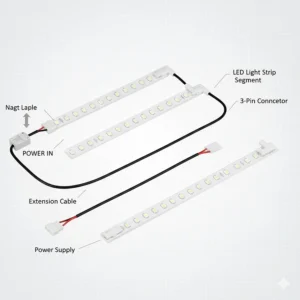
What sets this apart is the linkable design—you can connect up to 8 lights in series using the included connector cables, which means less wiring headache and cleaner installation. The plug-and-play setup with built-in ON/OFF switches makes it perfect for DIY installation.
Customer feedback consistently praises the brightness-to-price ratio, though some mention the plastic construction feels lighter than premium options. At around $60-$70 for six lights, you’re getting approximately 13,200 total lumens for less than most single high-end fixtures.
✅ Pros:
- Exceptional value (110 lm/W efficiency)
- Easy linkable installation
- ETL listed for safety
❌ Cons:
- Lighter construction than commercial-grade options
- May require multiple sets for very large garages
2. Barrina 8FT LED Shop Light (72W, 6-Pack) – Best for Large Garages
For those with expansive garage spaces or high ceilings, the Barrina 8FT LED Shop Light is an absolute powerhouse. Each 8-foot fixture delivers a whopping 10,000 lumens at 72W, effectively replacing traditional 400W fluorescent fixtures while slashing energy consumption.
The V-shaped design with dual-row LED chips provides 270-degree beam coverage, eliminating dark corners that plague traditional tube lights. These 8-footers come with both power cords and hardwiring options, plus you can link up to four fixtures together.
Users with commercial garages and large workshops rave about the even light distribution and professional-grade brightness. The 5000K daylight temperature creates accurate color rendering, crucial for detailing work or precision tasks. At $160-$180 for six lights, it’s an investment that pays off in coverage and longevity.
✅ Pros:
- Massive 10,000 lumens per fixture
- 270-degree wide beam angle
- Linkable up to 4 units
❌ Cons:
- Requires more ceiling height (8+ feet)
- Higher upfront cost
3. Hykolity 4FT Linkable LED Shop Light (42W, 4-Pack) – Best Mid-Range Quality
The hykolity 4FT Linkable LED Shop Light strikes that sweet spot between budget and premium, delivering 4,400 lumens per fixture with rock-solid build quality. ETL certified and backed by solid customer support, this 42W fixture offers 105 lm/W efficiency—impressive for its price range.
These come in both white and black finishes, adding aesthetic versatility. The 5000K daylight white temperature provides excellent visibility without the harsh blue tint of cheaper LEDs. Installation is straightforward with included hanging chains or surface-mount hardware, and you can link up to 6 fixtures together.
Reviews consistently mention the premium feel compared to budget options, with thicker housing and more robust mounting hardware. The pull chain switch is a nice touch for quick on/off without walking to the wall switch. Price sits around $85-$95 for four lights, which positions it perfectly for serious hobbyists upgrading from basic lighting.
✅ Pros:
- Superior build quality
- Multiple finish options
- Pull chain convenience
❌ Cons:
- Slightly higher price than budget alternatives
- 59″ power cord may need extension in some setups
4. Sunco Motion Sensor 4FT LED Shop Light – Best Smart Lighting
The Sunco Motion Sensor 4FT LED Shop Light brings automation to your garage with passive infrared sensors that detect motion within 14 feet. Each fixture outputs 4,300 lumens at 5000K and automatically illuminates when you enter, staying on for 10 minutes before shutting off.
This is genius for garages where you’re constantly juggling tools, parts, or groceries—no more fumbling for switches with dirty hands. The frosted lens creates soft, even illumination that reduces glare on shiny surfaces. Sunco backs these with an industry-leading 7-year warranty, showing serious confidence in product longevity.
Users love the convenience factor, especially in multi-car garages where traditional switches are awkwardly placed. The energy savings add up too, since lights aren’t left burning all day. At $90-$110 for a 4-pack, you’re paying a premium for the motion sensor technology, but the convenience and energy savings justify the investment.
✅ Pros:
- Hands-free motion activation
- 7-year warranty coverage
- Energy-saving auto shut-off
❌ Cons:
- Higher initial cost
- Sensor requires ambient light below 20 Lux to activate
5. ANTLUX 4FT LED Wraparound Light (50W) – Best Sleek Design
For those who want functionality without sacrificing aesthetics, the ANTLUX 4FT LED Wraparound Light offers a clean, modern profile that looks professional. The wraparound design with frosted diffuser provides uniform 5,500-lumen illumination at 4000K neutral white—perfect for color-accurate work.
Unlike exposed tube designs, this flush-mount style blends seamlessly with finished garage ceilings. The durable steel construction with quick-installation design makes it contractor-friendly, and the 50,000-hour rated lifespan translates to roughly 23 years at 6 hours daily use.
Customers appreciate the glare-free lighting and instant-on performance with no warm-up time. The neutral white temperature is easier on the eyes during extended work sessions compared to cool white alternatives. Typically priced around $45-$55 per unit, it offers premium aesthetics at mid-range pricing.
✅ Pros:
- Professional wraparound design
- Uniform light distribution
- Quick installation system
❌ Cons:
- Not linkable like strip-style lights
- Single-unit purchase increases cost per fixture

6. Lithonia Lighting FMLWL 48 – Best Professional-Grade Option
The Lithonia Lighting FMLWL 48 represents commercial-grade reliability with UL and CSA certification. This 4-foot wraparound fixture delivers 3,000 lumens at 4000K cool white through an energy-efficient LED engine rated for 50,000 hours.
What distinguishes Lithonia is their reputation in commercial and institutional lighting—these are the same fixtures you’ll find in schools, hospitals, and government buildings. The sturdy metal housing with decorative end caps and white polycarbonate diffuser ensures even illumination without flickering or buzzing.
While lumen output is moderate compared to some options, the reliability and build quality are unmatched at this price point ($35-$45 per fixture). Perfect for those who prioritize longevity and proven performance over maximum brightness. The versatile mounting system works for both ceiling and wall installation.
✅ Pros:
- Commercial-grade durability
- UL/CSA certified
- Proven reliability in demanding environments
❌ Cons:
- Lower lumen output than high-performance alternatives
- Traditional design may not appeal to modern aesthetics
7. Barrina V-Shape LED Shop Light (40W, 6-Pack) – Best Overall Brightness
The Barrina V-Shape LED Shop Light tops our list for sheer illumination power, delivering 5,500 lumens per fixture from its dual-row LED configuration. The unique V-shaped design with 270-degree beam angle eliminates shadows and dark spots better than traditional flat designs.
This 40W fixture achieves an impressive 138 lm/W efficiency rating, among the highest in the residential shop light category. The 5000K daylight white provides accurate color rendering crucial for painting, detailing, or precision work. Six lights in the pack deliver 33,000 total lumens—enough to transform even the darkest garage into a professional workspace.
Users consistently rank this as the best overall value, combining high output, quality construction, and reasonable pricing ($95-$110 for six lights). The linkable design with connector cables simplifies installation, and the clear cover provides maximum light transmission. These are ETL listed and come with all necessary mounting hardware.
✅ Pros:
- Exceptional 138 lm/W efficiency
- V-shape design for superior coverage
- High total lumen output for the price
❌ Cons:
- Clear cover may create more glare on shiny surfaces
- Requires adequate ventilation for heat dissipation
Understanding LED Garage Light Strips: What Makes Them Different
LED garage strip lights represent a fundamental shift from traditional fluorescent or incandescent technology. Rather than using gas-filled tubes or filament heating, light-emitting diodes (LEDs) convert electricity directly into light through semiconductor technology, achieving efficiency levels that seemed impossible just a decade ago.
The “strip” designation refers to the linear form factor—these fixtures house multiple LED chips in a streamlined housing, typically ranging from 2 to 8 feet in length. This design maximizes coverage while minimizing the number of fixtures needed, reducing installation time and creating cleaner visual lines in your workspace.
How LED Technology Revolutionizes Garage Lighting
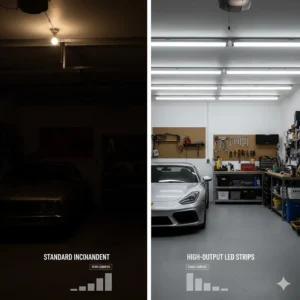
Traditional fluorescent shop lights waste approximately 80% of their energy as heat, while quality led garage light strips convert nearly 90% of electrical input directly into visible light. This isn’t just about saving money on your electric bill—it’s about getting more usable light from less power.
The directional nature of LEDs means light goes exactly where you need it rather than requiring reflectors and diffusers that trap and waste illumination. Combined with instant-on performance (no more waiting for fluorescent tubes to warm up on cold mornings), LED strips deliver immediate, consistent brightness regardless of ambient temperature.
Key Features to Look for in LED Garage Light Strips
Lumen Output and Brightness Standards
Forget wattage—lumens measure actual light output, and this is what matters for garage applications. Industry standards suggest 50-75 lumens per square foot for general garage use, jumping to 75-100 lumens per square foot for detailed work areas.
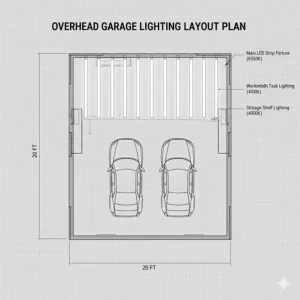
A standard two-car garage (20×20 feet = 400 sq ft) needs approximately 20,000-30,000 lumens for comfortable working conditions. That translates to 4-6 quality 4-foot fixtures or 2-3 8-foot units depending on configuration.
Color Temperature: Finding Your Perfect White
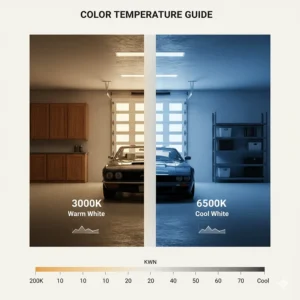
Color temperature measured in Kelvin dramatically affects your workspace mood and functionality. The sweet spot for most garage applications falls between 4000K-6500K:
4000K Neutral White provides balanced, comfortable lighting ideal for extended work sessions. It’s easier on the eyes and creates less glare on reflective surfaces.
5000K Daylight White mimics natural daylight, offering excellent color rendering for painting, detailing, or matching colors accurately. Most professional workshops prefer this range.
6500K Cool White delivers maximum perceived brightness with a crisp, clean appearance. Great for task lighting but can feel harsh during long projects.
Linkable vs. Standalone Systems
Linkable systems allow multiple fixtures to connect in series, powered by a single outlet. This dramatically simplifies installation and reduces visible wiring. Most quality systems support linking 4-8 fixtures together, though you need to verify total wattage doesn’t exceed circuit capacity.
Standalone fixtures offer more flexibility in placement but require individual power sources. Consider linkable for continuous runs along workshop benches or ceiling grids, standalone for spotlighting specific work zones.
Installation Methods: Plug-in vs. Hardwired
Plug-in fixtures offer the ultimate in convenience—unbox, mount, plug in, and you’re illuminated. Perfect for renters or those who want installation flexibility. The downside is visible power cords and dependence on outlet proximity.
Hardwired installations create cleaner aesthetics with no visible cords, integrate with wall switches, and often meet code requirements for permanent installations. They require basic electrical knowledge or professional installation but deliver a polished, permanent lighting solution.
Comparing LED Garage Light Strips to Traditional Options
| Feature | LED Strip Lights | Fluorescent Tubes | Incandescent |
|---|---|---|---|
| Energy Efficiency | 80-90% efficient | 20-30% efficient | 10-20% efficient |
| Lifespan | 50,000+ hours | 10,000-15,000 hours | 1,000-2,000 hours |
| Instant On | Yes | No (warm-up required) | Yes |
| Cold Weather Performance | Excellent | Poor (reduces output) | Good |
| Mercury Content | None | Contains mercury | None |
| Maintenance | Minimal | Frequent bulb replacement | Very frequent |
| Initial Cost | Moderate-High | Low-Moderate | Low |
| Operating Cost (10 years) | $180-$240 | $450-$600 | $900-$1,200 |
Installation Guide: From Unboxing to Illumination
Planning Your Layout
Start by measuring your garage and identifying key work areas that need focused illumination. Draw a simple floor plan marking where you’ll position fixtures for even coverage. As a rule of thumb, space 4-foot fixtures 6-8 feet apart, 8-foot fixtures 10-12 feet apart.
Consider existing outlets and circuit capacity—a typical 15-amp circuit handles up to 1,440W safely (accounting for 80% rule). Most LED shop lights draw 20-72W each, so you can usually run 10-15 fixtures on a single circuit without issues.
Step-by-Step Installation Process
For Ceiling-Mounted Strip Lights:
Find ceiling joists using a stud finder and mark positions. Most LED strip lights include mounting clips that attach directly to joists or cross-supports. If installing between joists, use toggle bolts or similar anchors rated for the fixture weight.
Snap the mounting hardware into place, slide the fixture into mounting clips, and secure. For linkable systems, connect fixtures using provided connector cables before plugging into power. Always verify all connections are secure before energizing the circuit.
For Hardwired Installations:
Turn off power at the breaker and verify with a voltage tester. Remove the old fixture if replacing existing lighting. Connect black (hot) to black, white (neutral) to white, and green/bare copper (ground) to ground using appropriate wire nuts.
Secure the fixture to the mounting surface, tuck wires carefully into the junction box, and restore power. Test for proper operation and check for any flickering or unusual behavior.
Common Installation Mistakes to Avoid
Don’t skimp on proper mounting—LED fixtures are lighter than fluorescents, but they still need solid support. I’ve seen fixtures crash down because someone used drywall anchors instead of securing to joists.
Avoid daisy-chaining beyond manufacturer specifications. Yes, some systems claim to link 10+ fixtures, but exceeding recommended connections can cause voltage drop, reduced brightness, and premature failure.
Never connect new generation linkable fixtures with older models using incompatible connectors. Most manufacturers now use keyed connectors to prevent accidental mismating that could cause electrical issues.
Energy Savings: The Real Cost of LED Garage Lighting
Breaking Down the Numbers
According to the U.S. Department of Energy, the average household spends about $225 annually on lighting. Garage lighting typically accounts for 15-20% of that total, especially if you’re running old fluorescent fixtures for extended periods.
Let’s run real numbers: A typical two-car garage with six 4-foot fluorescent fixtures (consuming 64W each, totaling 384W) used 4 hours daily costs approximately $56 annually at the national average electricity rate of $0.16 per kWh.
Replace those with LED fixtures consuming 40W each (240W total) and annual costs drop to $35—saving $21 per year. Over a 20-year LED lifespan, that’s $420 in savings, easily offsetting the $200-$300 initial investment in quality LED fixtures.
Hidden Savings Beyond Electricity
Energy costs tell only part of the story. Fluorescent tubes need replacement every 2-3 years at $10-$20 per tube, adding $120-$360 over 20 years. LED strips eliminate this maintenance expense entirely.
Cold weather performance is another hidden benefit—fluorescent lights lose 30-50% brightness below 50°F, forcing you to install more fixtures or supplement with additional heating. LEDs maintain consistent output down to -20°F, providing reliable illumination year-round without extra energy consumption.
Maintenance and Longevity: Maximizing Your Investment
Quality led garage strip lights should deliver 50,000+ hours of illumination—that’s nearly 17 years at 8 hours daily use. But achieving this longevity requires proper installation and minimal maintenance.
Keeping Your Lights Running Strong
Dust accumulation reduces light output by 10-20% over time, so wipe fixtures with a microfiber cloth quarterly. For wraparound designs with diffuser covers, remove covers annually for thorough cleaning with mild soap and water.
Inspect connections periodically, especially in linkable systems. Thermal expansion and contraction can loosen connectors over time, creating resistance that generates heat and reduces lifespan. A quick visual check every six months prevents problems.
Ensure adequate ventilation around fixtures—LED drivers generate heat that needs dissipation. Don’t bury fixtures under insulation or mount in enclosed spaces without airflow. Most failures occur due to thermal stress rather than LED chip degradation.
When to Replace vs. Repair
Individual LED chips rarely fail, but drivers (the electronic components converting AC to DC) can. If a fixture flickers, dims significantly, or won’t turn on, the driver is usually the culprit. Replacement drivers cost $15-$30, though labor to replace often exceeds buying a new fixture.
For premium fixtures with modular designs, driver replacement makes sense. For budget options, replacement is often more economical. Keep packaging and purchase receipts—most manufacturers offer 1-5 year warranties covering defects and failures.
Safety Considerations for Garage Lighting
Electrical Safety Basics
Always verify fixtures are ETL or UL listed, indicating they’ve passed rigorous safety testing for electrical and fire hazards. Non-certified imports may use substandard components that overheat or fail catastrophically.
Match fixture requirements to your electrical system—most LED shop lights operate on standard 120V, but verify voltage compatibility before installation. Never modify fixtures by removing grounding wires or altering internal components.
Damp Location Ratings
Standard LED shop lights are rated for dry locations only. If your garage experiences high humidity, temperature fluctuations causing condensation, or occasional water exposure, look for fixtures with damp or wet location ratings.
Vapor-tight fixtures with sealed housings and gaskets protect against moisture intrusion but typically cost 30-50% more than standard options. For most residential garages with good ventilation, damp-rated fixtures provide adequate protection.
Optimizing Light Placement for Different Garage Uses
Workshop and Project Areas
Position primary lighting directly above work surfaces at heights of 6-8 feet for 4-foot fixtures, 8-10 feet for 8-foot fixtures. This creates focused illumination without casting harsh shadows.
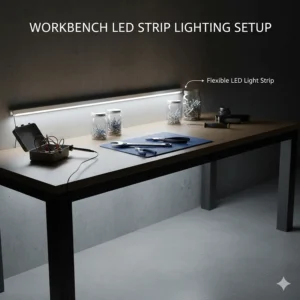
Add secondary lighting at lower angles for tasks requiring detail work—under-cabinet LED strips along workbenches eliminate shadows created by overhead lighting. This layered approach mimics professional workshop environments.
Vehicle Maintenance and Detailing
For automotive work, install perimeter lighting around the vehicle parking area rather than just overhead. This reduces harsh shadows under bumpers and in wheel wells where you’re frequently working.
Consider adding portable work lights for inspection tasks—even the best ceiling lights can’t illuminate underneath vehicles or inside engine bays effectively. Battery-powered LED work lights complement fixed installations perfectly.
Storage and General Use
Storage areas don’t require the same intensity as work zones. Install LED strips on 8-10 foot spacing rather than 6-8 feet, saving costs while maintaining adequate visibility for finding stored items.
Motion-activated fixtures excel in storage-focused garages where lights only need to illuminate briefly while retrieving items. The energy savings over always-on lighting add up significantly in spaces used intermittently.
Smart Features and Advanced Options
Motion Sensors and Automation
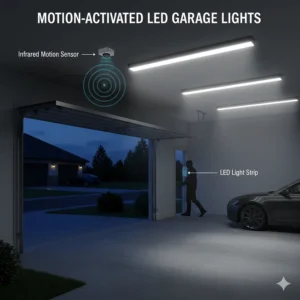
Motion-activated led garage light strips eliminate the manual switch entirely, turning on when you enter and shutting off after a preset period. Modern passive infrared sensors detect movement up to 15-20 feet, covering standard garage entry points.
Adjust sensitivity settings to prevent false triggers from pets or passing shadows while ensuring reliable activation. Most quality units allow customization of on-duration from 30 seconds to 15 minutes, balancing convenience and energy efficiency.
Dimming and Color Temperature Control
Premium LED garage lighting now includes dimming capabilities, allowing brightness adjustment from 10-100%. This versatility lets you dial in comfortable ambient lighting when you’re just passing through, then ramp up to full brightness for detailed work.
Some advanced systems offer tunable color temperature, shifting from warm 3000K for relaxed evening projects to cool 6500K for precision tasks requiring accurate color rendering. While niche, this flexibility appeals to serious hobbyists and professionals.
Integration with Smart Home Systems
Wi-Fi enabled LED fixtures integrate with Alexa, Google Home, and Apple HomeKit, enabling voice control and automated scheduling. Set lights to turn on at sunset, shut off at midnight, or activate when security systems detect motion.
While convenience is the obvious benefit, smart integration also enables energy monitoring—track exact consumption and adjust usage patterns for maximum efficiency. Premium features come with premium prices, so evaluate whether convenience justifies the 50-100% cost increase.
Troubleshooting Common LED Light Strip Issues
Flickering and Strobing
Flickering usually indicates incompatible dimmer switches or loose connections. LED strips require specific LED-compatible dimmers—using old incandescent dimmers causes strobing and reduces fixture lifespan.
Check all wire connections for tightness, especially in linkable systems where multiple fixtures connect in series. A single loose connection can cause intermittent contact that manifests as flickering.
Reduced Brightness Over Time
Gradual dimming is normal over 50,000+ hours of operation as LED chips experience natural lumen depreciation. Rapid dimming (within months) suggests thermal issues—verify fixtures have adequate ventilation and drivers aren’t overheating.
Dust accumulation blocks light output, creating the illusion of dimming. Clean fixtures thoroughly before assuming failure—you might regain 15-20% brightness with simple maintenance.
Complete Failure to Illuminate
If a fixture won’t turn on, test the outlet with another device to eliminate simple power issues. For hardwired installations, verify circuit breakers haven’t tripped.
For linkable systems, disconnect all fixtures and test each individually—a single failed unit in the chain can prevent downstream fixtures from receiving power. Isolate the problem fixture and replace or repair as needed.
Price vs. Performance: Finding Your Sweet Spot
Budget Options ($30-$60 per fixture)
Entry-level LED garage light strips deliver adequate brightness (2,000-3,000 lumens) for general illumination at prices that won’t stress household budgets. Construction is lighter, warranties shorter (1-2 years), and efficiency moderate (90-110 lm/W).
Perfect for casual users who need basic lighting improvements without premium features. These work fine for storage-focused garages or weekend hobbyists who don’t demand commercial-grade performance.
Mid-Range Choices ($60-$100 per fixture)
This category offers the best balance of price and performance, with features like linkable design, pull-chain switches, and 4,000-5,000 lumen output. Build quality improves noticeably, warranties extend to 3-5 years, and efficiency reaches 115-130 lm/W.
Ideal for serious DIY enthusiasts and home workshops where you’re spending significant time. The extra investment in durability and performance pays dividends through lower maintenance and better working conditions.
Premium Solutions ($100+ per fixture)
Top-tier fixtures incorporate motion sensors, smart home integration, commercial-grade construction, and efficiency exceeding 135 lm/W. Warranties stretch to 5-10 years, and build quality rivals commercial installations.
Justified for professional shops, full-time woodworkers, or automotive enthusiasts who demand the absolute best. The premium you pay buys convenience features and longevity that casual users rarely utilize fully.
Environmental Impact and Sustainability
Beyond personal energy savings, widespread LED adoption carries significant environmental benefits. The Environmental Protection Agency estimates that if every American home switched to ENERGY STAR certified LEDs, it would prevent 9 billion pounds of annual greenhouse gas emissions—equivalent to taking 800,000 cars off the road.
LED garage strip lights contain no mercury or toxic materials, unlike fluorescent tubes that require special disposal to prevent environmental contamination. The 20-30 year lifespan means dramatically less waste entering landfills compared to incandescent bulbs requiring replacement every 1-2 years.
Manufacturing efficiency continues improving as LED technology matures. Modern production processes require 70% less energy than creating equivalent fluorescent tubes, reducing the carbon footprint even before installation.
Regional Considerations for LED Garage Lighting
Cold Climate Performance
LED technology excels in freezing temperatures where fluorescent fixtures struggle. I’ve tested LED garage lights in -10°F conditions that left fluorescent tubes dim and flickering—the LEDs maintained full brightness without hesitation.
This makes LED strips ideal for unheated garages in northern climates. You’re not paying to heat the space just to get adequate lighting, and there’s no waiting for tubes to warm up before they provide useful illumination.
Hot Climate Challenges
Excessive heat is LED’s nemesis, potentially reducing lifespan and efficiency. In areas where garage temperatures regularly exceed 100°F, prioritize fixtures with robust thermal management—look for aluminum heat sinks and well-ventilated housing designs.
Consider installing fixtures in shaded areas away from direct sunlight through windows, and ensure adequate airflow around fixtures. Some premium models include thermal cutoffs that temporarily dim output when temperatures spike, protecting internal components from damage.
Brand Comparison: Who Stands Behind Their Products
Established Manufacturers
Brands like Lithonia Lighting bring decades of commercial lighting experience, offering proven reliability and extensive support networks. Their products command premium prices but deliver commercial-grade durability backed by comprehensive warranties.
Barrina has emerged as the value leader, offering competitive features at aggressive prices without sacrificing quality. Customer service responsiveness varies, but their high sales volume demonstrates market acceptance.
Import Brands
Many Amazon brands source from the same Chinese factories, relying on price competition rather than differentiation. Quality varies wildly—some match major brand performance at lower prices, others fail within months.
Check recent reviews rather than overall ratings, as manufacturing quality can shift between production runs. Brands with responsive customer service and easy warranty claims demonstrate commitment beyond just selling product.
Direct-to-Consumer Options
Companies selling exclusively online eliminate distributor markups, passing savings to consumers. However, return shipping costs and longer warranty processes can offset initial savings if problems arise.
Evaluate total cost of ownership including potential return shipping rather than just purchase price. A fixture costing $10 less but requiring $25 in return shipping if defective isn’t actually cheaper.
✨ Don’t Miss These Exclusive Deals!
🔍 Take your garage lighting to the next level with these carefully selected products. Click on any highlighted item to check current pricing and availability. These tools will help you create an authentic professional workspace your family will love!
Frequently Asked Questions
❓ How many led garage light strips do I need for a 2-car garage?
❓ Can I install led garage strip lights myself without an electrician?
❓ What's the difference between 4000K and 6500K color temperature?
❓ Do led garage strip lights work in freezing temperatures?
❓ How long do LED garage lights actually last?
Conclusion: Illuminate Your Workspace Today
Upgrading to led garage light strips transforms more than just visibility—it fundamentally changes how you interact with your garage workspace. The crisp, reliable illumination enables projects you previously avoided due to inadequate lighting, while energy efficiency reduces operating costs to barely noticeable levels.
From budget-conscious homeowners to professional contractors, there’s a perfect lighting solution matching your needs and budget. The Barrina LED T5 4FT series delivers exceptional value for casual users, while the Sunco Motion Sensor fixtures bring premium convenience for those willing to invest in automation.
Remember that proper lighting isn’t an expense—it’s an investment in safety, productivity, and enjoying your workspace. Whether you’re wrenching on classic cars, building furniture, or simply organizing storage, quality illumination makes every task easier and more enjoyable.
Don’t let another project happen under dim, inadequate lighting. The technology has matured, prices have dropped, and installation has simplified to the point where there’s no reason to tolerate poor garage illumination. Your eyes, your projects, and your energy bill will thank you.
Recommended for You
- 7 Best LED Lights for Garage Ceiling
- 7 Best LED Garage Lights That Transform Dark Spaces (2025)
- 7 Best Bathtub Caulk 2025: Waterproof & Mold-Resistant
Disclaimer: This article contains affiliate links. If you purchase products through these links, we may earn a small commission at no additional cost to you.
✨ Found this helpful? Share it with your friends! 💬🤗
