
In This Article
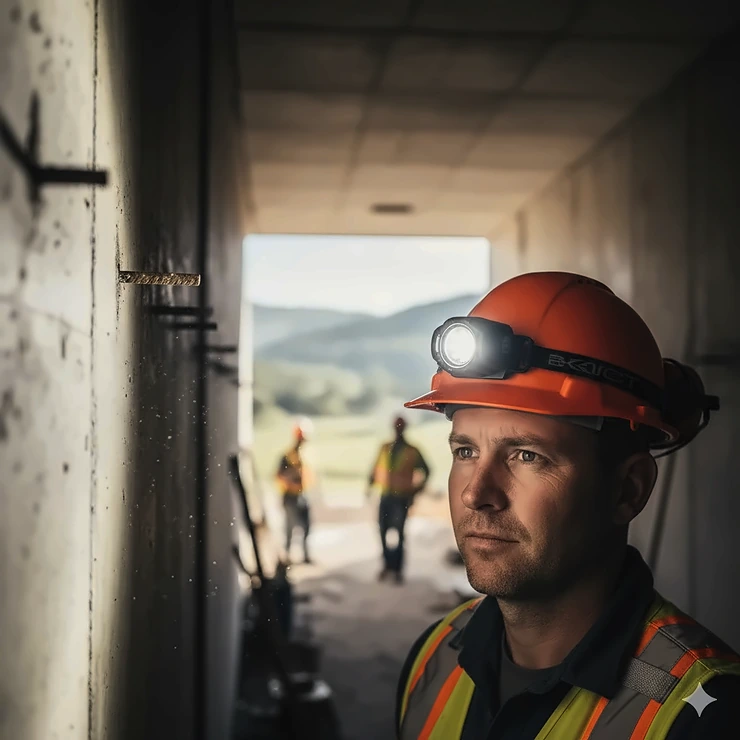
Picture this: you’re 30 feet underground, navigating a cramped tunnel where every shadow could hide a hazard. Your flashlight died an hour ago, and holding your phone’s light means you can’t use both hands. Sound familiar? That’s exactly why finding the right hard hat light isn’t just about convenience—it’s about safety, productivity, and getting home in one piece every single day.
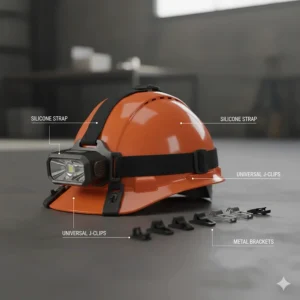
A hard hat light transforms how you work in low-light conditions by mounting directly to your safety helmet, giving you hands-free illumination exactly where you need it. Unlike traditional flashlights that require constant repositioning or battery-draining headlamps that dig into your forehead, modern hard hat lights clip securely to your protective gear and move naturally with your head, directing light precisely where you’re looking.
The market has exploded with options in recent years. From budget-friendly LED clips to professional-grade rechargeable systems with proximity sensors, there’s a hard hat light for every application and budget. Construction workers swear by rugged Milwaukee models, electricians prefer Klein Tools for their magnetic bases, while miners and industrial workers often choose high-lumen Streamlight or OLIGHT options for maximum visibility in the darkest environments. Whether you’re inspecting ductwork, welding in tight quarters, or working night shifts on a highway crew, the right hard hat with light setup can dramatically improve your efficiency and safety.
Quick Comparison Table: Top Hard Hat Lights at a Glance
| Product | Lumens | Runtime | Battery Type | Weight | Price Range |
|---|---|---|---|---|---|
| Milwaukee 2115-21 | 600 | 3-28 hours | USB Rechargeable | Lightweight | $70-$90 |
| Klein Tools 56062 | 300 | 4-14 hours | USB Rechargeable | Ultra-Light | $45-$60 |
| OLIGHT Perun 2 | 2500 | Variable | USB Rechargeable | Medium | $80-$110 |
| Milwaukee 2111-21 | 475 | Up to 31 hours | USB Rechargeable | Medium | $65-$85 |
| Streamlight Vantage II | 350 | 6 hours | CR123A Battery | Compact | $50-$70 |
| COSOOS Original 2 | 1000 | 3-10 hours | USB Rechargeable | 2.4 oz | $18-$30 |
| Streamlight SL-SideSaddle | 250 | Variable | 3x AAA Batteries | Lightweight | $40-$55 |
💬 Just one click – help others make better buying decisions too! 😊
Top 7 Hard Hat Lights: Expert Analysis and Reviews
1. Milwaukee 2115-21 USB Rechargeable Low-Profile Hard Hat Headlamp
The Milwaukee 2115-21 stands as the gold standard for professional contractors who demand both power and precision. With its ultra-thin 1-inch light head design, this hard hat lamp delivers an impressive 600 lumens while maintaining an unobstructed field of view that chunky competitors simply can’t match.
What sets this model apart is Milwaukee’s REDLITHIUM USB battery technology, which survives over 2,000 recharges—meaning you’ll replace your hard hat before you replace this light. The 125-degree flood beam provides exceptional peripheral coverage, eliminating those frustrating dark corners that traditional spotlights miss. Battery placement in the rear creates perfect weight distribution, preventing the front-heavy wobble that plagues inferior designs.
Key Features:
- 600 lumens maximum output with 125° flood beam
- Four modes: High (3hr), Medium (7.5hr), Low (13hr), Eco (28hr)
- IP54 water and dust resistance
- Survives 2-meter drops
Pros:
✅ Ultra-thin profile doesn’t obstruct vision
✅ Exceptional runtime on single charge
✅ LED fuel gauge shows remaining battery
Cons:
❌ Premium price point
❌ Clips may not fit all hard hat brands
Customers consistently praise its durability in harsh environments. One electrician reported 18 months of daily use without any performance degradation. The micro-USB charging means you can top up from your truck, laptop, or portable battery pack.
Price: Typically $75-$90 on Amazon
2. Klein Tools 56062 Rechargeable LED Headlamp
Klein Tools has built a legendary reputation among tradespeople, and the 56062 hard hat light proves why. This cleverly designed unit doubles as both a helmet-mounted light and a magnetic work light, giving you incredible versatility on the jobsite.
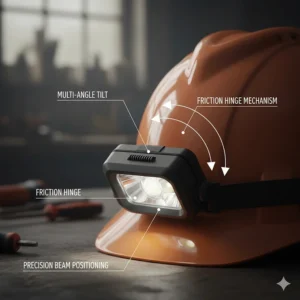
The integrated magnet is genuinely powerful—strong enough to hold the light on a vertical steel beam while you work with both hands free. Three brightness modes let you balance runtime against visibility needs, while the battery level indicator prevents those frustrating mid-task darkness situations. The pivoting mount offers 64 degrees of adjustment, perfect for directing light into ceiling cavities or under equipment.
Key Features:
- 300 lumens max output
- Three modes with 4-14 hour runtime
- Built-in magnet for work light use
- Direct Klein hard hat compatibility
Pros:
✅ Dual function as work light
✅ Battery gauge prevents surprises
✅ Lightweight at just 3.8 oz
Cons:
❌ Lower lumen output than competitors
❌ USB-C cable sold separately
The real genius is in the clip system—it snaps firmly into Klein hard hats without tools, yet releases instantly when you need handheld illumination. HVAC technicians particularly love this feature for quick transitions between tasks.
Price: Around $50-$60 on Amazon
3. OLIGHT Perun 2 Rechargeable Headlamp
When you absolutely need maximum visibility, the OLIGHT Perun 2 delivers with an astounding 2,500 lumens—bright enough to illuminate an entire construction site. This beast of a hard hat with a light features a built-in proximity sensor that automatically dims when detecting nearby obstructions, preventing accidental blinding or battery drain.
The magnetic tail cap is a game-changer for versatility. Attach it to metal surfaces as a stationary work light, or use the included headband for traditional headlamp mode. MCC3 magnetic charging cable increases charging current to 2A, reducing charge time by 33% compared to standard micro-USB connections.
Key Features:
- Massive 2,500 lumen maximum output
- Proximity sensor for safety
- Magnetic base + headband included
- IPX8 waterproof rating
Pros:
✅ Brightest light in this roundup
✅ Smart sensor prevents accidents
✅ Versatile mounting options
Cons:
❌ Heavier than competitors
❌ Overkill for basic tasks
Underground miners and cave rescue teams favor this model for extreme conditions. The rugged metal construction withstands serious abuse—one reviewer reported it surviving a 20-foot drop onto concrete.
Price: $85-$110 on Amazon
4. Milwaukee 2111-21 USB Rechargeable Hard Hat Headlamp
The Milwaukee 2111-21 offers the perfect middle ground between power and practicality. At 475 lumens, it provides serious illumination without the weight penalty of ultra-bright models. Five different modes—including spot, flood, and combination beams—adapt to virtually any task.
Milwaukee’s slip-resistant strap and universal clips ensure secure attachment to any hard hat brand, solving the compatibility frustrations that plague proprietary systems. The REDLITHIUM USB battery delivers up to 31 hours runtime on lower settings, making it ideal for extended shifts or remote locations.
Key Features:
- 475 lumens TRUEVIEW High Definition output
- Five modes with spot, flood, and combo beams
- Universal hard hat compatibility
- Water and dust resistant
Pros:
✅ Versatile beam patterns
✅ Fits all major hard hat brands
✅ Extended runtime options
Cons:
❌ Slightly heavier than ultra-compact models
❌ More expensive than budget options
Pipeline inspectors appreciate the spot/flood combination that lets them survey long runs and then focus on specific connection points without switching tools.
Price: $65-$85 on Amazon
5. Streamlight Vantage II 69333 Industrial Hard Hat Light
Firefighters and industrial workers love the Streamlight Vantage II for its rock-solid reliability and thoughtful safety features. The blue tail light LED provides 360-degree visibility so coworkers can spot you in thick smoke or around moving equipment—a feature that’s saved countless workers from backing vehicles.
The large push-button switch works perfectly with heavy gloves, while the “safe off” feature prevents accidental activation that drains batteries. Streamlight’s V-Guard slot mount slides into accessory slots on industrial hard hats without tools or modifications.
Key Features:
- 350 lumens with blue safety tail light
- One CR123A battery included
- Large glove-friendly switch
- Compact, low-profile design
Pros:
✅ Rear safety visibility light
✅ Works with thick gloves
✅ Virtually indestructible
Cons:
❌ Uses disposable batteries
❌ Single brightness setting only
The “safe off” requires deliberate rotation to activate, eliminating those annoying moments when your light turns on in your toolbox and kills the battery overnight.
Price: $55-$70 on Amazon
6. COSOOS Original 2 Rechargeable Headlamps
Budget-conscious workers rejoice—the COSOOS Original 2 delivers incredible value without sacrificing essential features. This 2-pack hard hat lights set provides 1,000 lumens with a 230-degree wide beam that eliminates the tunnel vision effect of narrow spotlights.
The motion sensor feature (once you get used to it) is genuinely convenient for quick tasks. Wave your hand to turn light on/off without removing gloves or fumbling for buttons. At just 2.4 ounces, you’ll forget you’re wearing it after the first hour.
Key Features:
- 1,000 lumens with 230° coverage
- Motion sensor activation
- Spot + wide beam combination
- Includes hard hat clips
Pros:
✅ Unbeatable price for 2-pack
✅ Motion sensor convenience
✅ Ultra-lightweight design
Cons:
❌ Motion sensor occasionally activates accidentally
❌ Build quality not as robust as premium brands
Warehouse workers and delivery drivers appreciate having a backup light that costs less than a tank of gas. The USB rechargeable design means no hunting for specialty batteries.
Price: $18-$30 for 2-pack on Amazon
7. Streamlight SL-SideSaddle 61626 Hard Hat Light
The SL-SideSaddle takes a completely different approach to hard hat with light design. Instead of front-mounting, this innovative system mounts on the side of your helmet, keeping weight off your forehead while providing dual LED beams with spot, flood, and combination modes.
The blue rear safety light programs independently, letting you maintain visibility from behind without draining your main illumination. Quick-release tabs let you detach the light for handheld use while the mount stays on your hat—perfect for inspecting tight spaces.
Key Features:
- 250 lumens dual LED system
- Side-mounting design
- Programmable front and rear lights
- IPX7 waterproof rating
Pros:
✅ Unique side-mount reduces neck strain
✅ Detaches for handheld use
✅ No interference with visors or earmuffs
Cons:
❌ Requires AAA batteries (not rechargeable)
❌ Learning curve for side-mount preference
Utility linemen particularly favor the side-mount design that doesn’t interfere with face shields or hearing protection—essential when working around high-voltage equipment.
Price: $42-$55 on Amazon
Understanding Hard Hat Light Technologies
Modern hard hat light systems have evolved dramatically from the simple incandescent bulbs of yesteryear. Today’s LED technology provides 10 times more light per watt while generating minimal heat—critical when you’re wearing equipment on your head for 8-12 hours straight.
LED vs Traditional Bulbs
LEDs dominate the market for good reason. They’re virtually unbreakable (important when you’re climbing ladders or crawling through tight spaces), last 50,000+ hours versus 1,000 for incandescent bulbs, and maintain consistent brightness as batteries drain. According to the U.S. Department of Energy, LED lighting offers the highest luminous efficacy of any light source technology, with some models exceeding 150 lumens per watt. The initial higher cost pays for itself within months through eliminated bulb replacements.
Lumen Output Explained
Don’t fall into the “more lumens equals better” trap. A 2,500-lumen light sounds impressive, but it’s overkill for most applications and drains batteries rapidly. For close-up work like electrical panel inspections, 150-300 lumens provides ample illumination. Medium-range tasks like plumbing or HVAC work benefit from 300-600 lumens. Only extremely dark environments like underground mining or cave exploration truly require 1,000+ lumens.
According to OSHA workplace safety guidelines, proper illumination significantly reduces workplace accidents. The right hard hat lamp can prevent trips, misidentified hazards, and eye strain from working in poor lighting conditions.
Beam Patterns Matter
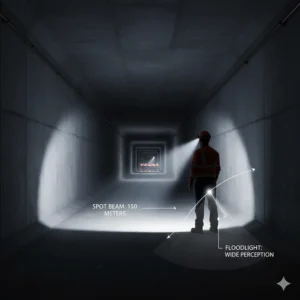
Spotlight beams throw light far but create tunnel vision. Floodlight beams illuminate wide areas but lack distance. The best hard hat light options offer both—either switchable modes or combination beams that give you peripheral awareness plus focused detail work capability.
The 230-degree wide beam found in models like the COSOOS provides nearly complete forward visibility, eliminating dangerous blind spots when you turn your head. This wide coverage is why many construction site safety managers now specify wide-beam hard hat lights for their crews.
Power Source Comparison: Rechargeable vs Disposable
USB Rechargeable Batteries
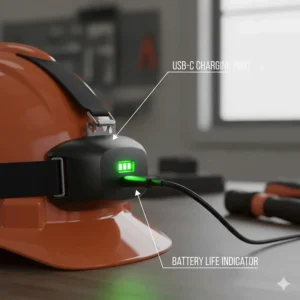
Modern hard hat lights with USB charging offer compelling advantages. You’ll never buy batteries again, saving $50-100 annually if you work regularly. Charging from any USB port—truck, laptop, power bank—means you’re never stranded with dead batteries far from a store.
Milwaukee and Klein Tools use proprietary lithium-ion battery technology that survives 2,000+ charge cycles. Even budget options like the COSOOS provide 500+ recharges. The environmental impact reduction is significant—one rechargeable light prevents hundreds of disposable batteries from entering landfills.
The downside? If you forget to charge, you’re stuck. Some professionals carry a backup disposable-battery light for emergencies.
Disposable Battery Options
CR123A and AAA batteries offer instant swapping when power runs out. No waiting for recharges means continuous operation on critical deadlines. For workers in remote locations without reliable electricity access, disposable batteries ensure operational reliability.
However, the ongoing cost adds up quickly. Premium CR123A batteries cost $2-4 each and last 4-6 hours on high settings. That’s $100+ yearly for regular users. AAA batteries are cheaper but provide less runtime per set.
Battery Life Expectations
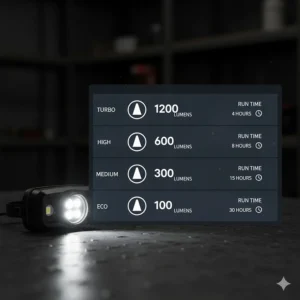
Most rechargeable hard hat with a light models provide 3-8 hours on high settings, extending to 20-30 hours on eco modes. This matches typical work shifts perfectly—charge overnight, use all day. Cold weather reduces runtime by 20-40%, so factor that in for winter outdoor work.
Smart features like auto-shutoff and dimming when not detecting motion can double battery life. The Milwaukee models’ fuel gauge prevents mid-task darkness by warning when power drops below 20%.
Essential Features to Consider When Buying
Mounting System Compatibility
Not all hard hat lights fit all hard hats—a frustrating discovery after purchase. Universal clips work with most helmets but may feel less secure than brand-specific systems. Klein Tools lights snap perfectly into Klein hard hats but require adapter straps for others.
Before buying, verify your hard hat brand and model. Construction hard hats typically use accessory slots, while mining helmets may require different clip styles. Some lights offer multiple mounting options—headband, clips, and magnetic bases—providing maximum versatility.
The best hard hat light mounting systems hold firmly during movement but release quickly when needed. Nobody wants to wrestle with stuck clips while balanced on scaffolding.
Weather Resistance Ratings
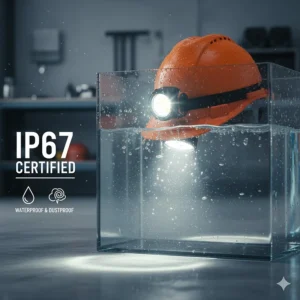
IP ratings indicate protection levels against dust and water. IP54 means “limited dust protection” and “splash resistant”—adequate for most construction sites. IP65-67 offers full dust protection and submersion resistance for harsh marine or underground environments. IPX8 ratings on lights like the OLIGHT Perun 2 mean it’ll survive complete immersion.
Realistically, IP54 suffices unless you regularly work in heavy rain or extremely dusty conditions. Over-spec’ing for weather resistance you don’t need just increases cost.
Weight and Comfort
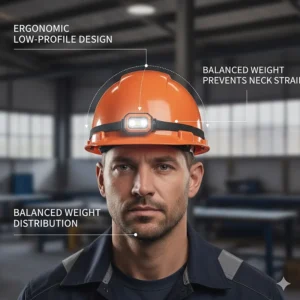
A heavy hard hat light becomes a literal pain in the neck after hours of wear. Anything over 6 ounces can cause neck strain during 10-hour shifts. The 2.4-ounce COSOOS feels weightless, while the OLIGHT Perun 2’s heft reminds you it’s there.
Rear-battery designs like Milwaukee’s balance weight distribution, preventing the forward-tilt that front-heavy lights cause. This seemingly minor detail makes a massive difference in end-of-day fatigue.
Additional Useful Features
Adjustable Brightness: Multi-mode lights adapt to different tasks and extend runtime. You don’t need 600 lumens to read a blueprint—save battery with a lower setting.
Red Light Options: Preserve night vision for security, astronomy, or hunting applications. Red light doesn’t trigger the eye’s brightness adjustment like white light does.
Magnetic Bases: Transform your hard hat lamp into a hands-free work light. Stick it to ductwork, electrical boxes, or vehicle hoods while you work.
Motion Sensors: Wave-activation sounds gimmicky but proves genuinely useful when hands are dirty or gloved. Once calibrated properly, it’s more convenient than fumble-searching for buttons.
Safety Regulations and Compliance Standards
Understanding safety standards isn’t just bureaucratic box-checking—it’s about ensuring your hard hat light won’t become a liability in hazardous environments.
ANSI/ISEA Z89.1 Certification
The American National Standards Institute establishes requirements for industrial head protection. While this standard primarily covers hard hats themselves, accessories like hard hat lights must not compromise the helmet’s protective capabilities. Quality manufacturers design clip systems that attach securely without drilling, riveting, or otherwise weakening the helmet shell.
Never modify your hard hat to accommodate a light. Drilling holes, using strong adhesives, or overtightening screws can create stress points that fail on impact. According to OSHA head protection regulations, any modification that compromises structural integrity violates safety standards.
Electrical Hazard Ratings
Working around high-voltage equipment requires Class E (Electrical) hard hats rated for 20,000 volts. Your hard hat light shouldn’t conduct electricity or create arc flash risks. Most modern LED lights use plastic housings and operate at low voltages, but verify electrical ratings if you work in utility, electrical, or high-voltage environments.
Explosion-Proof Requirements
Oil refineries, chemical plants, and grain handling facilities require intrinsically safe lighting that won’t ignite flammable atmospheres. Standard hard hat lights don’t meet these requirements. If you work in hazardous locations classified by the National Electric Code as Class I, Division 1, you need specially certified explosion-proof lighting.
Industry-Specific Regulations
Mining operations follow MSHA (Mine Safety and Health Administration) standards distinct from OSHA. Underground mining lights require specific cap lamp ratings. Offshore oil and gas platforms may mandate specific equipment certifications. The CDC’s National Institute for Occupational Safety and Health (NIOSH) provides comprehensive construction safety guidelines that include proper equipment use. Always verify your industry’s requirements before purchasing.
Best Hard Hat Lights for Specific Applications
Construction and General Contracting
Construction sites demand durability and versatility. The Milwaukee 2115-21 excels here with its 600-lumen output, rugged IP54 rating, and 2-meter drop protection. According to construction site safety research, proper illumination is crucial for reducing workplace accidents. Framers, concrete workers, and general laborers benefit from the wide flood beam that illuminates entire work areas. The rechargeable battery eliminates the hassle of battery replacements during multi-day projects.
Electricians and plumbers working indoors often prefer the Klein Tools 56062 for its magnetic base feature. Set it on a junction box or pipe while you work with both hands free—no need for a helper holding a flashlight.
Mining and Underground Work
Extreme darkness and wet conditions demand maximum lumens and weather protection. The OLIGHT Perun 2 delivers 2,500 lumens with IPX8 waterproof rating—complete submersion won’t phase it. The proximity sensor prevents blinding reflected light in tight tunnels, while the magnetic charging system works even with muddy connections.
Underground environments require extended runtime. The Milwaukee 2111-21’s 31-hour eco mode ensures you won’t go dark during a double shift if charging access is limited.
Industrial and Manufacturing
Factory environments need lights that won’t interfere with machinery operation. The Streamlight SL-SideSaddle’s side-mount design keeps your centerline clear for precise positioning tasks. The programmable blue tail light provides essential visibility around forklifts and conveyor systems.
For welding and metal fabrication, consider lights with spot/flood combinations that let you survey wide areas then focus on weld seams without switching equipment.
Emergency Services and First Responders
Firefighters require lights that perform in extreme conditions. The Streamlight Vantage II meets fire service standards with heat-resistant construction and a blue tail light visible through smoke. The “safe off” feature prevents accidental activation during equipment donning.
EMTs and paramedics benefit from adjustable brightness that adapts from dark alleys to brightly-lit ambulances without requiring different lights.
Outdoor and Recreational Use
Hunters, campers, and outdoor enthusiasts often choose hard hat lights for hiking, fishing, or night navigation. The budget-friendly COSOOS Original 2 provides excellent value with its 230-degree beam perfect for campsite setup or trail navigation. The motion sensor lets you activate light without removing gloves in cold weather.
For extended backcountry trips, disposable battery options like the Streamlight SL-SideSaddle ensure operation when solar chargers fail.
Maintenance and Care Best Practices
Proper maintenance extends hard hat light lifespan from months to years. Here’s how to maximize your investment:
Cleaning and Storage
After each shift, wipe down your hard hat lamp with a slightly damp cloth to remove dust, oil, and grime. Don’t use harsh chemicals that can crack plastic lenses or damage seals. Pay special attention to the mounting clips—accumulated debris prevents secure attachment.
Store lights in a dry, temperature-controlled location when not in use. Extreme heat degrades batteries and plastic components. Cold storage below 0°F can damage LCD displays and reduce battery capacity. If you store equipment in an unheated shed or vehicle, bring your light indoors overnight.
Battery Maintenance
Rechargeable batteries perform best with regular charging cycles. Don’t let them fully discharge frequently—this reduces overall lifespan. Charge when power drops to 20-30% remaining. Modern lithium batteries don’t suffer from “memory effect,” so partial charges don’t harm them.
For lights stored long-term, charge to 40-60% and check every 3 months. Completely dead batteries can become unrecoverable. If you won’t use your hard hat with light for months, remove batteries entirely to prevent corrosion from leakage.
Lens Care
Scratched lenses scatter light and reduce effective output. Use microfiber cloths for cleaning—paper towels can scratch plastic. If scratches develop, some manufacturers sell replacement lenses, or you can carefully polish with plastic polish compound.
Keep lens covers closed during storage and transport. Even inside toolboxes, loose items can scratch sensitive surfaces.
When to Replace
Replace your hard hat light when:
- Brightness noticeably decreases despite fresh batteries
- Cracks appear in housing or lens
- Mounting clips loosen or break
- Water intrusion damages electronics
- Battery won’t hold charge longer than 2 hours
Most quality hard hat lights last 2-3 years with regular professional use, 5+ years for occasional recreational use. Budget models may require replacement annually.
Don’t attempt DIY repairs on sealed rechargeable units. The cost of replacement exceeds repair value, and improper fixes create safety hazards.
Cost Analysis: Budget vs Premium Options
Entry-Level ($15-$30)
Budget hard hat lights like the COSOOS Original 2 provide basic illumination at minimal investment. You get LED efficiency, rechargeable batteries, and adequate brightness for most tasks. Build quality and longevity suffer—expect 6-18 months lifespan with regular use.
Best for: Occasional users, backup lights, workers whose employers provide primary lighting.
Mid-Range ($40-$70)
This sweet spot includes the Klein Tools 56062 and Streamlight Vantage II. You gain better weather sealing, more reliable mounting, and 2-3 year lifespan. Features like magnetic bases, multiple beam modes, and superior battery technology justify the increased cost.
Best for: Professional tradespeople, serious DIYers, anyone using their light 20+ hours weekly.
Premium ($75-$110+)
Professional-grade options like Milwaukee 2115-21 and OLIGHT Perun 2 offer maximum lumens, advanced features, and exceptional durability. These lights survive jobsite abuse that destroys cheaper alternatives. The 5+ year lifespan and eliminated battery costs create genuine long-term value.
Best for: Daily professional use, extreme environments, workers whose safety depends on reliable illumination.
Total Cost of Ownership
Calculate real costs over 3 years:
Budget Rechargeable ($25):
- Initial cost: $25
- Replacement after 18 months: $25
- Total: $50
Mid-Range Rechargeable ($55):
- Initial cost: $55
- No replacement needed
- Total: $55
Disposable Battery Option ($50 initial):
- Initial cost: $50
- Batteries ($8/month × 36 months): $288
- Total: $338
The numbers clearly favor rechargeable mid-range or premium options for regular users. Even if the Milwaukee costs $85, it saves hundreds over disposable battery lights.
How to Choose the Perfect Hard Hat Light
With dozens of options available, selecting your ideal hard hat with a light requires matching features to your specific needs:
Step 1: Assess Your Work Environment
Start by honestly evaluating your lighting requirements:
- Extremely dark spaces (mines, caves, nighttime outdoor work): 1,000+ lumens
- Moderate darkness (warehouses, construction sites, basements): 300-600 lumens
- Supplemental lighting (well-lit areas needing focused task light): 150-300 lumens
Consider weather exposure. If you work primarily indoors, IP54 suffices. Outdoor workers benefit from IP65+ ratings. Wet environments demand IPX7-8 waterproof protection.
Step 2: Determine Power Source Preference
Ask yourself:
- Do you have reliable charging access? → Choose rechargeable
- Work in remote locations for days? → Consider disposable backup
- Forget to charge equipment? → Disposable might save frustration
- Care about environmental impact? → Rechargeable reduces waste
Step 3: Evaluate Required Features
Create a must-have list:
- Multiple brightness modes for runtime extension?
- Magnetic base for dual-purpose use?
- Lightweight design for all-day comfort?
- Universal compatibility with existing hard hats?
Separate wants from needs. Motion sensors sound cool but aren’t essential. Rear safety lights prevent accidents in busy environments but aren’t necessary for solo work.
Step 4: Set a Realistic Budget
Determine your spending comfort zone, then explore options $10-20 above and below it. Sometimes stretching $15 more gets dramatically better features. Other times, you’re paying for brand name without functional benefit.
Remember total cost of ownership—a $90 light that lasts 5 years costs less annually than a $25 light replaced yearly.
Step 5: Read Real User Reviews
Amazon reviews reveal real-world performance. Look for patterns:
- Multiple complaints about the same issue? Red flag.
- Consistent praise across reviews? Good sign.
- Professional tradespeople enthusiastic? Buy with confidence.
Ignore single-star reviews from customers who clearly misused the product and five-star reviews that seem suspiciously generic.
Common Mistakes to Avoid
Over-Specifying for Your Needs
That 2,500-lumen behemoth might seem impressive, but if you’re doing residential electrical work, you’re paying for power you’ll never use while dealing with unnecessary weight. Match lumens to actual darkness levels.
Ignoring Mounting Compatibility
Verify your hard hat brand before ordering. The heartbreak of receiving a perfect light that won’t attach properly to your helmet is real. Contact manufacturers if compatibility information isn’t clear.
Neglecting Weather Resistance
“I’ll just be careful not to get it wet” never works out. Unexpected rain, splashed by pressure washers, accidental drops in puddles—if there’s any chance of water exposure, pay for proper IP ratings.
Choosing Based on Price Alone
The cheapest option often costs more long-term through frequent replacements and poor performance. That $15 light that fails after 3 months costs more annually than a $60 light lasting 3 years.
Conversely, don’t overpay for features you don’t need. That $120 mining-rated light is unnecessary for weekend garage projects.
Forgetting About Replacement Parts
Can you buy replacement batteries, clips, or lenses? Some brands offer zero aftermarket support, forcing complete replacement when a $5 part fails. Milwaukee and Streamlight provide excellent parts availability.
Frequently Asked Questions About Hard Hat Lights
❓ What is the best lumen count for a hard hat light?
❓ Can I use any headlamp as a hard hat light?
❓ How long should a rechargeable hard hat lamp last on a single charge?
❓ Are milwaukee hard hat light options worth the premium price?
❓ Do hard hat lights interfere with ANSI safety certification?
Conclusion: Finding Your Perfect Hard Hat Lighting Solution
Choosing the right hard hat light transforms your working experience from fumbling in shadows to confidently seeing every detail. Whether you need the professional-grade power of the Milwaukee 2115-21, the versatile functionality of the Klein Tools 56062, or the budget-friendly value of the COSOOS Original 2, there’s a perfect solution for your specific needs.
Remember that the best hard hat light for you balances lumen output, runtime, durability, and cost against your actual working conditions. A 300-lumen mid-range option often outperforms a 2,500-lumen beast for everyday construction work by offering superior battery life and reduced neck strain. Conversely, underground work or extreme darkness justifies premium high-output models.
The shift toward USB rechargeable systems reflects the industry’s future direction. Environmental benefits aside, the convenience of charging from any USB port and eliminating battery purchases makes rechargeable hard hat lights the smart long-term investment for regular users. Keep a disposable battery backup for emergencies, but rely on rechargeable for daily operations.
Safety regulations from OSHA and ANSI aren’t just bureaucratic requirements—they’re lessons written in blood from past accidents. Choose lights that enhance rather than compromise your hard hat’s protective capabilities. Never modify your helmet to accommodate a light, and always verify compatibility before purchasing.
As LED technology continues advancing and prices decrease, we’re seeing impressive features trickle down from premium to budget tiers. Motion sensors, magnetic bases, and multi-mode beams are becoming standard rather than premium features. This democratization of quality means even entry-level workers can access professional-grade illumination.
Your safety and productivity deserve proper illumination. Invest in a quality hard hat with light that matches your work requirements, maintain it properly, and replace it when performance degrades. The cost difference between adequate and exceptional lighting often amounts to less than a single tank of gas—yet the impact on your daily work experience is immeasurable.
Stop squinting in shadows. Stop holding flashlights in your teeth. Stop asking coworkers to aim their lights just right. Get a proper hard hat light and experience the freedom of hands-free illumination that moves naturally with your head. Your neck, your productivity, and your safety will thank you.
Recommended for You
- 7 Best LED Garage Light Strips 2026
- 7 Best LED Lights for Garage Ceiling
- 7 Best LED Garage Lights That Transform Dark Spaces (2025)
Disclaimer: This article contains affiliate links. If you purchase products through these links, we may earn a small commission at no additional cost to you.
✨ Found this helpful? Share it with your crew! 💬🤗
