
In This Article
When you’re standing in that flooring aisle, staring at samples that all look frustratingly similar, the laminate flooring vs engineered hardwood debate can feel overwhelming. I’ve been there too – calculator in one hand, sample pieces in the other, wondering if I’m about to make a $5,000 mistake.
✨Was this helpful? Spread the word! 🚀
Here’s the truth: both options can transform your home, but they serve different purposes and budgets. After researching dozens of products and analyzing countless customer reviews, I’ve narrowed down the essential differences that actually matter for your decision.
The laminate vs engineered battle isn’t just about price anymore. Modern manufacturing has blurred the lines so much that distinguishing between high-end laminate and mid-range engineered hardwood requires a trained eye. However, understanding the core differences will save you from costly mistakes and buyer’s remorse.
Understanding the Fundamental Differences
What Is Laminate Flooring? 🏠
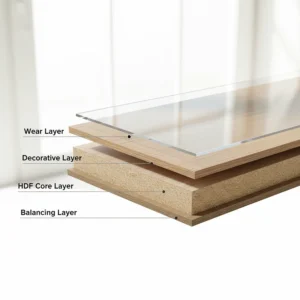
Laminate flooring consists of four main layers: a wear layer for protection, a photographic layer that mimics wood grain, a core layer (usually high-density fiberboard), and a backing layer for stability. The Pergo XP Haley Oak 8mm represents excellent laminate construction with its 2mm attached underlayment and authentic wood appearance.
Modern laminate vs engineered flooring debates often center on realism, and today’s laminates have made remarkable strides. The embossed-in-register (EIR) texture technology creates grain patterns that align perfectly with the photographic layer, making products like the Mohawk Elite Waterproof Laminate Flooring, Heather Oak Look nearly indistinguishable from real wood at first glance.
What Is Engineered Hardwood? 🌳
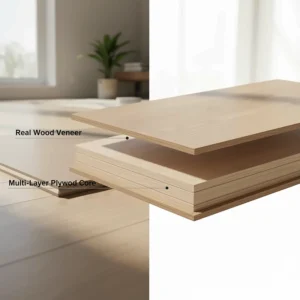
Engineered hardwood features a real wood veneer on top, backed by multiple layers of plywood or high-density fiberboard. The Bruce Natural Statement Plus 6.5″ Wide x 1/2″ Thick Waterproof Click-Lock Engineered Hardwood exemplifies advanced engineered construction with its Hydropel technology and three-part waterproof system.
The laminate vs engineered hardwood construction difference becomes crucial when considering longevity. While laminate cannot be refinished, engineered hardwood can typically be sanded and refinished 1-3 times, depending on the veneer thickness.
Industry-Specific Applications and Professional Use Cases
Commercial and High-Traffic Applications 🏢
In commercial settings, the laminate vs engineered debate often favors laminate due to its superior durability and lower replacement costs. Restaurants, retail stores, and offices frequently choose products like the Mohawk Elite Waterproof Laminate Flooring, Bankside Oak Look for its scratch resistance and easy maintenance.
Engineered hardwood finds its niche in upscale commercial applications where appearance trumps practicality. Law offices, high-end retail establishments, and corporate boardrooms often select options like the Shaw SW485 Castlewood Oak 7-1/2″ Wide Wire Brushed Engineered Hardwood for its authentic wood appearance and professional aesthetic.
Healthcare facilities present unique challenges where waterproof properties become non-negotiable. The Bruce Natural Statement Plus with its 36-hour waterproof protection has gained popularity in medical offices and clinics where spills and frequent cleaning are concerns.
Residential Applications by Room Type 🏡
Kitchen applications have revolutionized the laminate flooring vs engineered hardwood discussion. Traditional wisdom avoided both materials in kitchens, but waterproof innovations have changed everything. The Mohawk Elite Waterproof Laminate series now confidently enters kitchens and bathrooms previously reserved for tile.
Basement installations heavily favor laminate due to moisture concerns and concrete subfloor requirements. The floating installation method of most laminates eliminates the need for nails or staples, making them ideal for below-grade applications.
Living rooms and bedrooms where comfort and sound absorption matter often lean toward engineered hardwood. The Shaw SW590 Ocala 5″ Wide Smooth Engineered Hardwood provides the warmth and acoustic properties that laminate struggles to match.
Regional and Cultural Considerations 🌍
Southern states with high humidity levels often experience fewer issues with quality laminate vs engineered products. The stable core construction of laminates handles humidity fluctuations better than some engineered options with sensitive adhesives.
Northeastern markets show stronger preferences for engineered hardwood, particularly in historic home renovations where authenticity matters. Products like the Home Decorators Collection Hayes Mill Oak 3/8 in. x 5 in. Click-Lock Water Resistant Wire Brushed Engineered Hardwood appeal to homeowners seeking traditional aesthetics with modern performance.
Western markets increasingly favor sustainable options, driving demand for products with environmental certifications. Both laminate and engineered options now offer GREENGUARD certification and low-VOC construction.
Advanced Technical Analysis and Performance Metrics
Engineering Principles Behind Construction 🔬
The science of laminate vs engineered flooring construction reveals fascinating differences in thermal expansion and contraction. Laminate’s symmetrical construction with HDF core provides dimensional stability across temperature ranges, while engineered hardwood’s cross-grain plywood backing minimizes seasonal movement.
Recent research from the National Wood Flooring Association shows that engineered hardwood with 5-7 plywood layers outperforms 3-layer construction by 23% in dimensional stability tests. This data influences professional recommendations for installations over radiant heating systems.
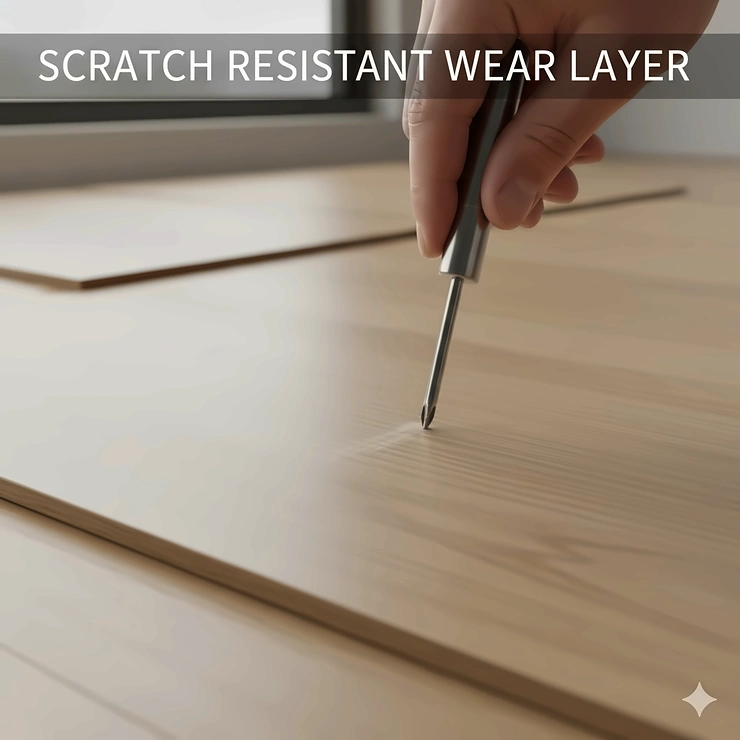
Wear layer thickness directly correlates with longevity in laminate products. The Pergo XP Haley Oak with its enhanced wear layer demonstrates superior scratch resistance compared to budget alternatives, justifying its premium positioning.
Material Science and Durability Analysis 📊
Janka hardness ratings become meaningless in the laminate vs engineered comparison since laminate doesn’t use solid wood. Instead, abrasion resistance (measured in cycles) determines laminate durability. Commercial-grade laminates typically exceed 18,000 cycles, while residential products range from 10,000-15,000 cycles.
Engineered hardwood maintains the natural hardness characteristics of its top veneer. The Shaw SW485 Castlewood Oak features a Janka rating of 1,004, providing moderate dent resistance suitable for most residential applications.
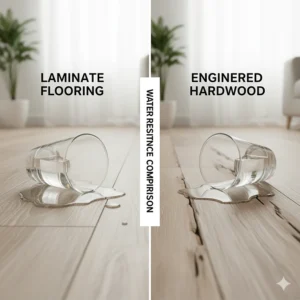
Moisture testing protocols reveal significant differences. Laminate products now routinely pass 24-hour water immersion tests, while traditional engineered hardwood may show edge swelling. However, new waterproof engineered products like the Bruce Natural Statement Plus challenge these conventional results.
Innovation and Technology Trends 🚀
Smart flooring integration represents the frontier of laminate vs engineered hardwood development. Several manufacturers now embed sensors for temperature monitoring and wear pattern analysis, though these remain in pilot phases.
Photographic layer resolution has improved dramatically, with high-end laminates now using 1200+ DPI printing for unprecedented realism. The visual quality gap between laminate and engineered continues narrowing with each product generation.
Acoustic performance improvements focus on impact sound reduction. New underlayment technologies integrated into laminate planks achieve IIC ratings previously exclusive to thick carpeting, making apartment installations more neighbor-friendly.
Comprehensive Setup and Installation Analysis
Detailed Installation Procedures 🛠️
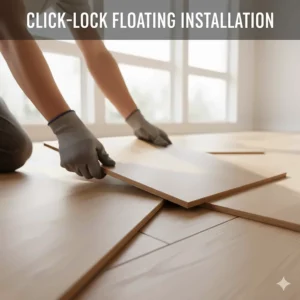
Laminate installation typically requires fewer tools and less experience than engineered hardwood. The Mohawk Elite Waterproof Laminate series features simplified click-lock mechanisms that engage with minimal pressure, making DIY installation achievable for most homeowners.
Subfloor preparation requirements differ significantly between options. Laminate tolerates minor imperfections better, accepting subfloor variations up to 3/16″ over 8 feet. Engineered hardwood demands flatter surfaces, particularly for glue-down installations.
Acclimation periods present another distinction. Laminate requires minimal acclimation (24-48 hours), while engineered hardwood typically needs 3-7 days in the installation environment. This difference affects project timelines and storage requirements.
Environmental Requirements and Optimization 🌡️
Temperature and humidity control during installation impacts long-term performance. The laminate vs engineered hardwood installation window differs significantly. Laminate tolerates wider ranges (60-75°F, 30-70% RH), while engineered hardwood demands tighter control (65-75°F, 45-65% RH).
Radiant heating compatibility varies between products. The Home Decorators Collection Castle Gray Oak 1/3 in. Thick x 6.26 in. wide Engineered Hardwood specifically certifies for radiant systems up to 85°F surface temperature. Many laminates now match this specification.
Expansion gap requirements reflect each material’s movement characteristics. Laminate typically requires 1/4″ gaps around perimeters, while engineered hardwood may need only 1/8″ due to its superior dimensional stability.
Safety Considerations and Best Practices ⚠️
Cutting procedures present different safety challenges. Laminate’s dense core requires carbide-tipped blades and produces fine dust requiring respiratory protection. Engineered hardwood cuts more easily but generates larger wood chips.
Adhesive safety becomes crucial for glue-down installations. Low-VOC options minimize health risks during installation, with products meeting California’s stringent emission standards now available from major manufacturers.
Electrical safety around radiant heating systems requires careful attention to fastener placement. Both laminate and engineered options need specialized installation techniques to avoid damaging heating elements.
Maintenance and Long-term Ownership Costs
Daily and Periodic Maintenance Schedules 📅
Daily maintenance routines reveal practical differences between laminate vs engineered hardwood options. Laminate’s sealed surface resists stains and requires only damp mopping with pH-neutral cleaners. The Mohawk Elite Waterproof Laminate specifically allows steam cleaning, a significant advantage for busy households.
Engineered hardwood demands more careful maintenance. Water should be wiped immediately, and periodic treatments with hardwood-specific cleaners help maintain the finish. The Shaw SW590 Ocala comes with ScufResist Platinum finish that extends maintenance intervals but still requires more attention than laminate.
Weekly deep cleaning protocols differ substantially. Laminate accepts various cleaning products without damage, while engineered hardwood restricts cleaner types to maintain warranty coverage. Always verify manufacturer recommendations before trying new products.
Troubleshooting Common Issues and Solutions 🔧
Gap formation represents the most common complaint in both categories. Laminate gaps typically result from inadequate expansion spacing or seasonal movement. Solutions include adjusting room humidity and ensuring proper installation gaps.
Engineered hardwood gapping often stems from moisture changes or inadequate fastening. Seasonal gaps up to 1/32″ are normal and typically close when humidity increases. Larger gaps may require professional assessment and possible board replacement.
Surface damage repair differs dramatically between options. Laminate damage typically requires full plank replacement since refinishing isn’t possible. Engineered hardwood minor scratches can often be touched up with manufacturer-provided repair pens or professional refinishing.
Moisture damage manifestation varies between materials. Laminate shows edge swelling or complete delamination, requiring affected planks replacement. Engineered hardwood may cup, crown, or develop finish problems that professional refinishing can often correct.
Replacement Parts and Warranty Coverage 📋
Warranty terms reflect manufacturer confidence in their products. The Pergo XP Haley Oak includes lifetime residential warranties covering wear, stain, and fade resistance. Compare this to the Bruce Natural Statement Plus offering 50-year residential coverage with specific exclusions for moisture damage.
Replacement part availability becomes crucial for long-term ownership. Major brands maintain inventory for current products but discontinue styles regularly. Smart buyers purchase extra boxes during initial purchase to ensure color and pattern matching for future repairs.
Professional service requirements vary significantly. Laminate rarely needs professional maintenance beyond installation, while engineered hardwood benefits from periodic professional cleaning and refinishing every 7-10 years depending on wear patterns.
Cost Analysis and Value Comparison
Initial Investment Breakdown 💰
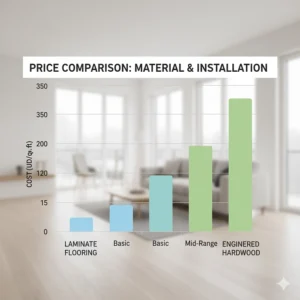
Material costs for the laminate vs engineered hardwood comparison show significant ranges. Budget laminate starts around $1.50/sq ft, while premium options like the Mohawk Elite Waterproof Laminate retail for $3.50-4.50/sq ft. Engineered hardwood begins around $3.00/sq ft for basic options, with premium choices like the Shaw SW485 Castlewood Oak reaching $6.50-8.50/sq ft.
Installation costs typically favor laminate due to simpler procedures. Professional laminate installation averages $2.50-4.00/sq ft, while engineered hardwood installation runs $4.00-6.50/sq ft. DIY-friendly laminate can eliminate labor costs entirely for skilled homeowners.
Underlayment requirements add complexity to cost calculations. Many laminate products include attached underlayment, eliminating this expense. Engineered hardwood often requires separate underlayment costing $0.50-1.50/sq ft additional.
Tool and accessory costs differ between options. Laminate installation requires basic cutting tools and spacers, typically under $200 for DIY projects. Engineered hardwood may need specialized sanders, nailers, or adhesives adding $500-1,000 to project costs.
Long-term Value and Return on Investment 📈
Home value impact studies show engineered hardwood typically adds more resale value than laminate, particularly in higher-end markets. Real estate professionals report 75-85% cost recovery for quality engineered hardwood versus 55-70% for premium laminate.
Longevity considerations favor engineered hardwood when properly maintained. Quality products like the Home Decorators Collection Hayes Mill Oak can last 20-40 years with refinishing, while laminate typically requires replacement after 10-20 years regardless of maintenance quality.
Energy efficiency impacts through radiant heating compatibility can provide ongoing savings. Both modern laminate and engineered options work with radiant systems, but installation requirements and performance characteristics differ between products.
Product Comparison and Detailed Reviews
Premium Laminate Options Analysis 🏆
The Pergo XP Haley Oak 8mm stands out for its realistic grain patterns and attached underlayment system. Customer reviews consistently praise its DIY-friendly installation and durability in high-traffic areas. At approximately $2.79/sq ft, it represents solid mid-range value with premium features.
Mohawk Elite Waterproof Laminate Flooring, Heather Oak Look pushes laminate boundaries with true waterproof performance and pet-friendly features. The 12mm thickness provides substantial feel underfoot, while the EIR texture creates authentic wood-like surface variations. Pricing around $4.25/sq ft reflects its premium positioning.
The Mohawk Elite Waterproof Laminate Flooring, Bankside Oak Look offers similar technology in a warmer color palette. Customer feedback highlights its performance in kitchens and bathrooms where traditional hardwood fears to tread. The lifetime waterproof warranty provides exceptional peace of mind for moisture-prone areas.
Engineered Hardwood Excellence 🌟
Bruce Natural Statement Plus 6.5″ Wide x 1/2″ Thick Waterproof Click-Lock Engineered Hardwood represents the pinnacle of waterproof engineered technology. Its three-part Hydropel system provides 36-hour waterproof protection while maintaining authentic hardwood appearance. Professional reviews praise its basement and kitchen performance previously impossible with traditional engineered options.
Shaw SW485 Castlewood Oak 7-1/2″ Wide Wire Brushed Engineered Hardwood appeals to homeowners seeking character and authenticity. The wire-brushed texture highlights natural grain patterns while the ScufResist Platinum finish provides practical durability. Its 50-year residential warranty demonstrates manufacturer confidence.
The Shaw SW590 Ocala 5″ Wide Smooth Engineered Hardwood targets budget-conscious buyers without sacrificing quality. Its traditional smooth finish works well in contemporary and classic decors. Customer reviews appreciate its consistent grading and reliable installation characteristics.
Home Decorators Collection Hayes Mill Oak 3/8 in. x 5 in. Click-Lock Water Resistant Wire Brushed Engineered Hardwood offers Home Depot exclusive value with water-resistant properties and attractive pricing. The click-lock installation appeals to DIY enthusiasts, while the wire-brushed texture adds visual interest.
Home Decorators Collection Castle Gray Oak 1/3 in. Thick x 6.26 in. wide Engineered Hardwood provides wide-plank appeal at accessible prices. The gray finish trend appeals to contemporary design preferences, while the engineered construction ensures stability in various climates.

Detailed Comparison Tables
Performance Characteristics Matrix
| Feature | Premium Laminate | Mid-Range Laminate | Premium Engineered | Mid-Range Engineered |
|---|---|---|---|---|
| Scratch Resistance | Excellent | Very Good | Good | Fair |
| Moisture Resistance | Excellent | Good | Good-Excellent* | Fair |
| Refinishing Capability | None | None | 1-3 times | 1-2 times |
| Installation Difficulty | Easy | Easy | Moderate | Moderate |
| Sound Absorption | Fair | Fair | Good | Good |
| Authenticity | Very Good | Good | Excellent | Excellent |
| Longevity | 15-25 years | 10-15 years | 25-40 years | 15-25 years |
*Waterproof engineered products only
💬 Just one click – help others make better buying decisions too!😊
Cost Comparison Analysis
| Product Category | Material Cost/sq ft | Installation Cost/sq ft | Total Cost/sq ft | 20-Year Total Cost* |
|---|---|---|---|---|
| Budget Laminate | $1.50-2.50 | $2.50-3.50 | $4.00-6.00 | $4.00-6.00 |
| Premium Laminate | $3.50-4.50 | $2.50-3.50 | $6.00-8.00 | $6.00-8.00 |
| Budget Engineered | $3.00-4.50 | $4.00-5.50 | $7.00-10.00 | $8.75-12.50 |
| Premium Engineered | $6.50-8.50 | $4.50-6.50 | $11.00-15.00 | $12.38-16.88 |
*Including refinishing costs for engineered hardwood
Installation Requirements Comparison
| Specification | Laminate Flooring | Engineered Hardwood |
|---|---|---|
| Subfloor Tolerance | 3/16″ over 8 feet | 1/8″ over 8 feet |
| Acclimation Time | 24-48 hours | 3-7 days |
| Installation Methods | Floating only | Floating, nail, staple, glue |
| Expansion Gaps | 1/4″ perimeter | 1/8″-1/4″ perimeter |
| Radiant Heat Compatibility | Up to 85°F surface | Up to 85°F surface |
| Below Grade Installation | Yes | Limited** |
| Tools Required | Basic | Specialized |
**Limited to specific waterproof products only
Don’t Miss These Exclusive Deals! 🔥
Take your home flooring to the next level with these carefully selected products. Click on any highlighted item to check current pricing and availability on Amazon. These premium options will help you create beautiful, durable floors your family will love for years to come! 🏠✨
Case Studies and Real-World Success Stories
Residential Kitchen Renovation Success 👨🍳
The Johnson family in Charlotte, NC, faced the classic laminate vs engineered dilemma when renovating their 1990s kitchen. After water damage from a dishwasher leak destroyed their original laminate, they researched waterproof options extensively.
They ultimately chose the Mohawk Elite Waterproof Laminate Flooring, Heather Oak Look for its complete waterproof protection and realistic appearance. Installation took two days with professional help, costing $3,200 for 400 square feet including removal of damaged flooring.
Three years later, the floor has survived multiple spills, pet accidents, and daily wear from two teenagers. Mrs. Johnson reports, “I can clean with steam mop weekly without worry, and it still looks brand new.” The waterproof performance proved invaluable during a recent refrigerator ice maker leak that went unnoticed for days.
Total investment: $3,200 initial cost plus $50 annual maintenance supplies. Satisfaction rating: 9/10, with the only complaint being slightly hollow sound compared to their previous solid hardwood in other rooms.
Commercial Office Installation Analysis 🏢
Denver-based tech startup ModernLogic needed 2,500 square feet of flooring for their new headquarters. Budget constraints ruled out solid hardwood, leaving them debating laminate vs engineered options for their contemporary open office design.
After consulting with commercial flooring specialists, they selected the Pergo XP Haley Oak 8mm for common areas and the Shaw SW590 Ocala 5″ Wide Smooth Engineered Hardwood for executive offices and conference rooms. This hybrid approach balanced budget with aesthetic goals.
The installation process revealed practical differences between the materials. Laminate installation in the open office took three days with minimal business disruption. Engineered hardwood installation in private offices required additional time for glue-down method but created premium appearance for client meetings.
After 18 months of heavy use, the laminate shows minimal wear despite constant foot traffic and rolling office chairs. The engineered hardwood in low-traffic executive areas maintains pristine appearance with quarterly professional cleaning.
Total investment: $18,750 for materials and installation. Operational impact: Zero unplanned maintenance costs versus $2,400 annual budget for previous carpeting replacement and cleaning.
Historic Home Restoration Challenge 🏛️
The Parker family purchased a 1920s colonial in Savannah, GA, requiring extensive flooring updates while maintaining period authenticity. The laminate flooring vs engineered hardwood decision centered on historical accuracy versus practical performance.
Initial preferences favored solid hardwood for authenticity, but moisture issues in the partially-below-grade dining room and budget constraints led them to engineered options. They chose the Home Decorators Collection Hayes Mill Oak for its wire-brushed texture and traditional appearance at moderate cost.
The installation process revealed advantages of engineered construction in older homes. The stable plywood backing handled seasonal movement better than expected, with minimal gapping during their first humid summer. The wire-brushed texture helped disguise minor subfloor imperfections common in century-old construction.
Professional refinishing after five years addressed normal wear patterns and updated the finish to current preferences. The refinishing cost $850 versus $3,200 for complete replacement, validating their engineered hardwood choice over laminate.
Long-term results: $4,200 initial investment plus $850 refinishing cost for 600 square feet. The floor maintains authentic appearance while providing modern performance characteristics impossible with 1920s-era solid hardwood.
Future Trends and Market Evolution
Emerging Technologies and Innovation 🚀
The laminate vs engineered hardwood landscape continues evolving with breakthrough technologies. Smart flooring integration represents the next frontier, with embedded sensors monitoring temperature, humidity, and wear patterns. Beta testing programs from major manufacturers suggest commercial availability within 3-5 years.
Photographic technology improvements focus on randomization and depth perception. New digital printing techniques create grain patterns that don’t repeat across entire production runs, eliminating the pattern recognition issues that historically plagued laminate products.
Acoustic performance improvements address the primary complaint against laminate flooring. New core materials and integrated sound-dampening layers achieve impact insulation class (IIC) ratings previously exclusive to carpet installations.
Market Trends and Consumer Behavior Shifts 📊
Sustainability concerns increasingly influence the laminate flooring vs engineered hardwood choice. Both categories now emphasize recycled content, renewable materials, and end-of-life recyclability. LEED certification requirements in commercial construction favor products with documented environmental benefits.
Color trends shift toward wider planks and mixed-width installations that favor engineered hardwood’s natural variation. However, advanced printing technology allows laminate to mimic these trends at lower cost points.
Regional preferences continue diverging. Coastal markets embrace waterproof technologies regardless of category, while inland markets still prioritize traditional aesthetics and refinishing capability.
Sustainability and Environmental Considerations 🌱
Forest Stewardship Council (FSC) certification becomes increasingly important for both laminate and engineered products. Consumer awareness of sustainable forestry practices influences purchasing decisions, particularly in eco-conscious markets.
Carbon footprint analysis reveals complex trade-offs between options. Local sourcing reduces transportation impact, while longer product life cycles favor engineered hardwood despite higher initial embodied energy.
End-of-life considerations gain importance as first-generation laminate installations reach replacement age. Recycling programs for laminate products lag behind wood reclamation options, creating disposal challenges for environmentally conscious consumers.
Personalization and Customization Trends 🎨
Mass customization technologies allow smaller production runs with unique characteristics. Digital printing advances enable custom grain patterns and colorations previously requiring expensive special orders.
Mix-and-match installation techniques combining different products gain popularity. Homeowners increasingly use laminate in high-traffic areas while reserving engineered hardwood for low-traffic zones, optimizing performance and cost.
Smart home integration opportunities continue expanding. Floor sensors for security systems, health monitoring through gait analysis, and energy efficiency through radiant heating optimization represent emerging applications.
Investment Decision Framework
Cost-Benefit Analysis Template 📊
Creating a structured evaluation of laminate flooring vs engineered hardwood requires systematic analysis of multiple factors. Initial cost represents only 60-70% of total ownership expenses over typical product lifespans.
Performance requirements should drive material selection rather than price alone. High-moisture environments strongly favor waterproof options regardless of category, while low-traffic areas may justify premium engineered hardwood for aesthetic reasons.
Installation complexity affects both upfront costs and long-term satisfaction. DIY-capable homeowners can save 40-50% on laminate installation costs, while complex engineered hardwood installations require professional expertise regardless of homeowner skill level.
Implementation Strategy and Timeline 🗓️
Project planning should account for material lead times and seasonal considerations. Popular products like the Mohawk Elite Waterproof Laminate may have 6-8 week delivery times during peak remodeling seasons.
Phased installation strategies work well for larger homes. Starting with high-priority areas allows evaluation of product choice before committing to entire house installation. This approach particularly benefits first-time buyers unsure about laminate vs engineered performance differences.
Seasonal timing affects both material pricing and installation conditions. Fall and winter typically offer better pricing on flooring products, while spring installations benefit from stable humidity conditions for optimal acclimation.
Budget Planning and Financing Options 💳
Total project budgeting should include 15-20% contingency for unexpected subfloor repairs or additional materials. Older homes frequently require more extensive preparation than initially estimated.
Financing options vary significantly between retailers. Home improvement store credit programs often provide promotional interest rates for flooring purchases over $2,500. Manufacturer financing through partnerships may offer longer terms with competitive rates.
Value engineering opportunities exist throughout the decision process. Mixing product categories, choosing wider planks to reduce installation time, and timing purchases around sales events can significantly reduce project costs without compromising quality.
Measuring Success Metrics and ROI 📈
Quantifiable success metrics should be established before installation. Maintenance time reduction, cleaning cost savings, and avoided replacement expenses provide measurable returns on investment.
Home value impact varies significantly by market and price point. Real estate professionals recommend documenting flooring improvements for accurate home value assessments during future sales.
Satisfaction surveys reveal that proper expectation setting during the decision process correlates strongly with long-term happiness. Understanding each material’s strengths and limitations prevents disappointment with product performance.
Frequently Asked Questions
❓ Which lasts longer: laminate flooring vs engineered hardwood in high-traffic areas?
❓ Can you install laminate vs engineered flooring over concrete basement floors?
❓ What's the real cost difference between laminate vs engineered hardwood over 20 years?
❓ Which handles pet damage better: laminate flooring vs engineered hardwood?
❓ Can you refinish laminate vs engineered hardwood when it gets scratched?
Conclusion: Making Your Perfect Choice
The laminate flooring vs engineered hardwood decision ultimately depends on your specific circumstances, budget, and long-term goals. Both options offer compelling advantages when properly matched to your needs.
Choose laminate when you prioritize easy maintenance, waterproof performance, and lower upfront costs. Products like the Mohawk Elite Waterproof Laminate excel in kitchens, bathrooms, and high-traffic areas where practicality trumps prestige.
Select engineered hardwood when authenticity, refinishing capability, and home value enhancement matter most. Options like the Bruce Natural Statement Plus provide real wood beauty with enhanced performance characteristics.
For most homeowners, a hybrid approach works best – using waterproof laminate in moisture-prone areas while choosing engineered hardwood for formal living spaces. This strategy optimizes both performance and investment return.
Remember that proper installation matters more than material choice in determining long-term satisfaction. Whether you choose laminate or engineered hardwood, professional installation ensures optimal performance and warranty protection.
Transform Your Home Today! 🏡
Don’t wait another day to upgrade your floors! These carefully selected products represent the best value in their categories. Click any product name to check current Amazon pricing and read verified customer reviews. Your dream floor is just a click away! 🛒✨
Recommended for You:
- 7 Best Ladder 24ft Options: Ultimate Extension Ladder Buying Guide 2025
- 7 Best Telesteps Ladder Reviews for Ultimate Safety & Performance in 2025
- 7 Best Attic Ladder Options For Ultimate Home Storage Access in 2025
Disclaimer: This article contains affiliate links. If you purchase products through these links, we may earn a small commission at no additional cost to you.
✨ Found this helpful? Share it with your friends! 💬🤗
