

In This Article
When you need to reach those high places around your home or job site, a quality ladder 24ft can make all the difference between a safe, successful project and potential disaster. Whether you’re cleaning gutters, painting exterior walls, or tackling roof maintenance, selecting the right extension ladder is crucial for both safety and efficiency.
✨Was this helpful? Spread the word! 🚀
After extensive research and analysis, I’ve discovered that choosing the perfect ladder 24ft involves much more than simply looking at height specifications. The world of extension ladders encompasses various materials, weight capacities, safety features, and specialized designs that can significantly impact your project outcomes and personal safety.
Understanding Ladder 24ft Specifications and Classifications
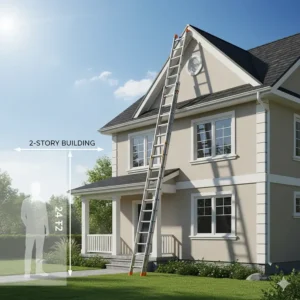
The term “ladder 24ft” refers to extension ladders with a maximum extended length of 24 feet, though the actual working height varies depending on the angle of placement and individual user requirements. Professional contractors and safety experts recommend following the 4-to-1 rule: for every four feet of ladder height, the base should be positioned one foot away from the wall or structure.
🔧 Key Technical Specifications:
- Extended Length: 24 feet maximum
- Collapsed Length: Typically 12-13 feet for transport
- Working Height: Approximately 23 feet for most users
- Safe Reach Height: Up to 27 feet (assuming 5’6″ person with 12″ reach)
- Weight Range: 35-65 pounds depending on material
- Load Capacities: 225-375 pounds based on duty rating
ANSI Duty Rating Classifications
Understanding ANSI classifications helps ensure you select the appropriate ladder 24ft for your specific needs:
✅ Type III (200 lbs): Light household use, occasional projects
✅ Type II (225 lbs): Medium commercial use, frequent DIY tasks
✅ Type I (250 lbs): Heavy commercial use, professional applications
✅ Type IA (300 lbs): Extra heavy-duty commercial and industrial use
✅ Type IAA (375 lbs): Industrial applications requiring maximum stability
Top 7 Ladder 24ft Models: Comprehensive Product Analysis
Based on extensive market research and customer feedback analysis, these represent the finest ladder 24ft options currently available:
1. Louisville Ladder AE2224 – Professional Aluminum Extension
The Louisville Ladder AE2224 stands as a premier choice for professionals demanding reliability and durability. This 24-foot aluminum extension ladder features a robust 300-pound Type IA load capacity, making it suitable for heavy-duty applications.
Key Specifications:
- Material: Aircraft-grade aluminum construction
- Weight: 47 pounds
- Load Capacity: 300 pounds (Type IA)
- Features: QuickLatch system, D-shaped serrated rungs
- Price Range: $430-$460
- Warranty: Limited lifetime warranty
Professional Applications: The Louisville Ladder AE2224 excels in commercial construction, maintenance operations, and demanding residential projects. Its modified I-beam side rails provide exceptional strength while maintaining manageable weight for frequent repositioning.
2. Little Giant HyperLite Model 24 – Ultra-Lightweight Fiberglass
The Little Giant HyperLite Model 24 revolutionizes extension ladder design with its patent-pending lightweight construction. This innovative ladder 24ft weighs up to 40% less than traditional fiberglass models while maintaining Type IA 300-pound capacity.
Advanced Features:
- Hi-Viz green fiberglass construction
- Integrated bubble level for precise positioning
- Side-mounted dual-pulley system
- Ground Cue® bottom rung indicator
- Weight: 44 pounds
- Price Range: $580-$620
Unique Advantages: The Little Giant HyperLite addresses the primary injury-causing factor of traditional extension ladders: excessive weight during transport and positioning. Its patent-pending design significantly reduces the risk of rotator cuff tears, herniated disks, and knee injuries commonly associated with heavy ladder handling.
3. Werner D6224-2 – Professional Fiberglass Extension
The Werner D6224-2 represents decades of ladder engineering excellence, featuring non-conductive fiberglass rails ideal for electrical work. This ladder 24ft combines safety, durability, and professional-grade performance.
Technical Specifications:
- Material: High-strength fiberglass
- Load Capacity: 300 pounds (Type IA)
- Weight: 52 pounds
- Special Features: ALFLO® rung joint system
- Traction-Tred D-rungs with slip-resistant surface
- Price Range: $390-$430
Professional Applications: The Werner D6224-2 excels in electrical work, telecommunications installations, and any application requiring non-conductive properties. Its exclusive ALFLO® rung joint prevents twisting under load, ensuring consistent stability throughout use.
4. Werner D1224-2 – Lightweight Aluminum Solution
For professionals prioritizing portability, the Werner D1224-2 offers exceptional value in aluminum construction. This ladder 24ft provides reliable performance with Type II 225-pound capacity for most residential and light commercial applications.
Design Features:
- Lightweight aluminum construction (39 pounds)
- Modified I-beam side rails
- Pivot safety shoes with slip-resistant pads
- External rung locks for smooth operation
- Price Range: $280-$320
5. Featherlite FL-3020-24 – Premium Fiberglass Extension
The Featherlite FL-3020-24 incorporates advanced MAXLOCK technology, featuring custom-engineered polymer rung locks that outperform traditional metal mechanisms. This ladder 24ft delivers professional-grade performance with Type IA 300-pound capacity.
Innovation Features:
- MAXLOCK patented polymer rung locks
- QuickLatch fly section securing system
- D-shaped fully serrated rungs
- Steel swivel safety shoes with metal shields
- Weight: 54 pounds
- Price Range: $450-$490
Durability Advantages: The Featherlite FL-3020-24 features the strongest, toughest, lightest rung lock system ever engineered. The MAXLOCK system won’t twist, bend, or fail under normal operating conditions, providing superior long-term reliability.
6. Xtend+Climb CS165AS+ – Revolutionary Telescoping Design
While technically a 16.75-foot telescoping model, the Xtend+Climb CS165AS+ provides equivalent reach to traditional 20-foot extension ladders while offering unprecedented portability and storage convenience.
Innovative Features:
- True telescoping technology
- Extends foot-by-foot to 16.75 feet
- Retracts to 40 inches for storage
- Automatic stabilizer system
- Weight: 32 pounds
- Price Range: $520-$580
Storage Revolution: The Xtend+Climb CS165AS+ addresses the primary limitation of traditional extension ladders: storage space requirements. This innovative design fits in standard closets, truck beds, and garage corners while providing professional-grade performance.
7. Louisville Ladder AE3224 – Versatile Mid-Duty Solution
The Louisville Ladder AE3224 offers an excellent balance of performance and affordability for users requiring Type I 250-pound capacity. This ladder 24ft provides reliable service for most residential and light commercial applications.
Practical Features:
- Aluminum construction (43 pounds)
- 250-pound Type I load capacity
- QuickLatch rung locking system
- D-shaped slip-resistant rungs
- Price Range: $320-$360
Ladder 24ft Material Comparison: Aluminum vs. Fiberglass Analysis
Selecting between aluminum and fiberglass construction significantly impacts your ladder 24ft performance, safety, and application suitability. Each material offers distinct advantages and limitations that must be carefully considered.
| Feature | Aluminum | Fiberglass |
|---|---|---|
| Weight | Lighter (35-50 lbs) | Heavier (45-65 lbs) |
| Durability | Excellent corrosion resistance | Superior impact resistance |
| Electrical Safety | Conductive – DANGER near power | Non-conductive when clean/dry |
| Weather Resistance | Excellent in all conditions | UV stable, weather resistant |
| Cost | Generally lower initial cost | Higher upfront investment |
| Maintenance | Minimal maintenance required | Periodic cleaning essential |
| Professional Use | General construction/maintenance | Electrical/telecommunications |
Aluminum Ladder 24ft Advantages
Weight Efficiency: Aluminum construction typically reduces ladder weight by 20-30% compared to fiberglass equivalents, significantly improving portability and reducing user fatigue during transport and positioning.
Corrosion Resistance: Modern aluminum ladders feature anodized finishes that resist corrosion, salt air, and chemical exposure, making them ideal for marine environments and industrial applications.
Cost Effectiveness: Aluminum ladder 24ft models generally offer lower purchase prices while maintaining professional-grade performance for most applications.
Fiberglass Ladder 24ft Advantages
Electrical Safety: The primary advantage of fiberglass construction lies in its non-conductive properties when clean and dry, making it essential for electrical work and utility applications.
Impact Resistance: Fiberglass construction provides superior resistance to impacts, drops, and abuse commonly encountered in construction environments.
Thermal Stability: Fiberglass ladders maintain structural integrity across wider temperature ranges compared to aluminum, preventing expansion/contraction issues in extreme conditions.

Professional Safety Guidelines for Ladder 24ft Operation
Operating any ladder 24ft requires strict adherence to safety protocols designed to prevent falls, injuries, and equipment damage. Professional contractors and safety experts emphasize these critical guidelines:
Pre-Use Inspection Protocols
Before each use, conduct a thorough inspection of your ladder 24ft:
✅ Structural Components: Check rails, rungs, and connections for cracks, bends, or damage
✅ Moving Parts: Test rung locks, pulleys, and extension mechanisms
✅ Safety Features: Verify shoes, caps, and protective elements
✅ Hardware: Inspect rivets, bolts, and fasteners for looseness
✅ Cleanliness: Remove dirt, grease, or materials that could cause slips
Proper Setup and Positioning
The 4-to-1 Rule: Position the ladder base one foot away from the wall for every four feet of working height. For a ladder 24ft extended to maximum height, place the base 6 feet from the wall.
Ground Conditions: Ensure the base rests on firm, level ground. Use ladder levelers or stabilizers on uneven surfaces. Never place a ladder on boxes, barrels, or other makeshift platforms.
Top Support: The ladder top should extend at least 3 feet above the point of contact for roof access. For wall work, ensure adequate contact area and avoid single-point support.
Load Distribution and Capacity Management
Understanding load capacity involves more than simply staying under the weight limit:
Static vs. Dynamic Loads: Your body weight plus tools, materials, and movement forces all contribute to the total load. Plan for load factors 2-3 times your static weight during normal climbing and working activities.
Tool Management: Use tool belts, buckets, or hoisting systems rather than carrying tools while climbing. This maintains three-point contact and prevents overloading.
Multiple User Restrictions: Never allow more than one person on a ladder 24ft simultaneously unless specifically designed and rated for multiple occupants.
Advanced Technical Features and Innovations
Modern ladder 24ft designs incorporate numerous technological advances that enhance safety, durability, and user experience:
Rung Lock Systems
Traditional Spring Locks: Basic spring-loaded mechanisms adequate for light-duty applications but prone to wear and failure over time.
QuickLatch Technology: Advanced systems like those found on Louisville ladders provide one-finger operation while maintaining superior holding strength.
MAXLOCK Polymer Systems: Featherlite’s patented polymer technology offers the strongest, lightest rung locks available, with superior resistance to temperature extremes and chemical exposure.
Pulley and Rope Systems
Single Pulley Traditional: Basic rope and pulley systems require significant effort to extend heavy fly sections.
Dual Pulley Advantage: Systems like Little Giant’s side-mounted dual pulleys reduce extension effort by 45% while eliminating center-rope trip hazards.
Cable Systems: Some premium models feature aircraft-grade cables instead of ropes, providing superior durability and weather resistance.
Stabilization Technologies
Automatic Stabilizers: Advanced models like the Xtend+Climb CS165AS+ feature automatic stabilizer deployment for enhanced lateral stability.
Bubble Level Systems: Integrated levels help ensure proper ladder angle, reducing the risk of lateral tipping during use.
Enhanced Shoe Systems: Modern safety shoes feature dual-position capability (flat pad or spike) with locking mechanisms to prevent unwanted movement.
Industry-Specific Applications for Ladder 24ft Models
Different industries and applications demand specific ladder 24ft characteristics and features:
Residential Construction and Maintenance
Gutter Cleaning: Requires lightweight, easily repositioned ladders with good stability for working at arm’s length. Aluminum models like the Werner D1224-2 excel in this application.
Exterior Painting: Demands frequent repositioning and extended working periods. The lightweight Little Giant HyperLite reduces fatigue during long painting projects.
Roof Access: Requires maximum stability and proper extension above roofline. Heavy-duty models like the Louisville Ladder AE2224 provide the strength needed for safe roof access with tools and materials.
Commercial and Industrial Applications
Electrical Work: Absolutely requires non-conductive fiberglass construction. The Werner D6224-2 and Featherlite FL-3020-24 provide essential electrical safety.
Telecommunications: Demands lightweight, portable solutions for rapid deployment. Telescoping models like the Xtend+Climb CS165AS+ offer unique advantages for mobile technicians.
General Maintenance: Requires durable, frequently-used ladders with superior load capacity. Type IA models provide the strength needed for tools, materials, and extended work periods.
Emergency Services Applications
Fire Departments: Require maximum strength, reliability, and rapid deployment capability. Heavy-duty aluminum or fiberglass models with Type IA ratings are essential.
Utility Companies: Demand non-conductive properties and portable designs for emergency repairs. Fiberglass models with advanced rung lock systems provide the safety and reliability needed.
Cost-Benefit Analysis and Investment Planning
Selecting the optimal ladder 24ft requires careful consideration of initial costs versus long-term value:
Budget Category Analysis
Entry Level ($280-$350): Basic aluminum models suitable for occasional residential use. While functional, these ladders may lack advanced safety features and durability for professional applications.
Mid-Range ($350-$500): Professional-grade aluminum and basic fiberglass models with enhanced features. These represent excellent value for regular users and light commercial applications.
Premium ($500-$650): Advanced models with innovative technologies, superior materials, and extended warranties. These justify higher costs through enhanced safety, durability, and user experience.
Total Cost of Ownership Calculations
When evaluating ladder 24ft options, consider:
Initial Purchase Price: The upfront investment varies significantly based on materials, features, and brand reputation.
Maintenance Costs: Include periodic inspections, replacement parts, and potential repairs over the ladder’s service life.
Safety Investment: Premium safety features may prevent accidents that could result in medical costs, lost time, and potential litigation.
Productivity Factors: Lightweight, easy-to-use ladders reduce setup time and user fatigue, improving overall productivity.
Replacement Cycle: Higher-quality ladders typically provide longer service lives, reducing the frequency of replacement purchases.
| Cost Factor | Budget Model | Premium Model |
|---|---|---|
| Initial Cost | $300 | $600 |
| Expected Life | 5-7 years | 10-15 years |
| Annual Maintenance | $20 | $15 |
| Safety Rating | Basic | Enhanced |
| Productivity Impact | Standard | 15-20% improvement |
| Total 10-Year Cost | $650 | $750 |

Comprehensive Setup and Usage Guidelines
Proper ladder 24ft operation requires mastering setup procedures, climbing techniques, and working practices that ensure safety and efficiency:
Site Preparation and Assessment
Ground Evaluation: Examine the surface for stability, level conditions, and potential hazards. Soft ground, uneven surfaces, and obstacles require special attention and possible remediation.
Overhead Assessment: Identify power lines, overhanging branches, building protrusions, and other obstacles that could interfere with ladder placement or extension.
Weather Considerations: Wind speeds above 25 mph, wet conditions, and extreme temperatures all affect ladder safety and should postpone non-emergency work.
Support Structure Analysis: Ensure walls, gutters, or other support points can handle the lateral forces imposed by the ladder and user weight.
Step-by-Step Extension Procedures
Initial Positioning: Place the collapsed ladder perpendicular to the wall at the proper distance, with the bottom section against the structure.
Base Securing: Ensure both safety shoes are firmly planted on level ground with appropriate angle and spacing.
Extension Process:
- Release the rung locks on the fly section
- Use the rope and pulley system to extend the ladder smoothly
- Monitor the ladder for binding or misalignment during extension
- Lock the rungs securely at the desired height
- Test the locks by gentle downward pressure on the fly section
Final Positioning: Adjust the ladder angle to maintain the proper 75-degree angle with the ground (4-to-1 ratio).
Safe Climbing and Working Techniques
Three-Point Contact: Always maintain three points of contact (two hands and one foot, or two feet and one hand) while climbing or working.
Center Body Position: Keep your belt buckle between the side rails to maintain proper weight distribution and prevent lateral forces.
Tool Management: Use tool belts, buckets on hooks, or material hoists rather than carrying items while climbing.
Movement Limits: Never lean beyond arm’s reach to either side. Instead, descend and reposition the ladder as needed.
Emergency Procedures and Fall Prevention
Fall Arrest Systems: For work at heights above 6 feet or in challenging conditions, consider personal fall arrest equipment compatible with ladder use.
Emergency Descent: Practice rapid but controlled descent techniques for emergency situations, maintaining three-point contact throughout.
Buddy System: When possible, have a ground person spot the ladder and assist with positioning and tool management.
Maintenance and Longevity Optimization
Proper maintenance extends ladder 24ft service life while ensuring continued safety and reliability:
Daily and Pre-Use Maintenance
Visual Inspection: Check for obvious damage, missing parts, or wear before each use.
Cleaning Requirements: Remove dirt, grease, paint, and debris that could cause slips or interfere with operation.
Moving Parts Lubrication: Apply appropriate lubricants to pulleys, hinges, and rung locks as recommended by the manufacturer.
Hardware Tightness: Verify that all bolts, rivets, and fasteners remain secure.
Periodic Comprehensive Inspections
Monthly Professional Assessment: Conduct detailed inspections including:
- Structural integrity of rails and rungs
- Rung lock operation and wear patterns
- Rope and pulley condition and replacement needs
- Safety shoe wear and replacement requirements
- Overall ladder alignment and straightness
Annual Professional Certification: Consider professional inspection and certification for commercial applications, especially in regulated industries.
Storage and Environmental Protection
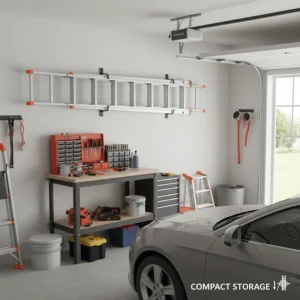
Indoor Storage: Whenever possible, store ladders in dry, temperature-controlled environments to prevent corrosion and material degradation.
Outdoor Protection: If outdoor storage is necessary, use weather-resistant covers and elevate the ladder off the ground to prevent moisture contact.
Transport Considerations: Use proper rack systems and tie-downs to prevent damage during transport. Avoid dragging or dropping ladders during handling.
Component Replacement and Upgrades
Wear Items: Plan for periodic replacement of ropes, safety shoes, and hardware as part of normal maintenance.
Upgrade Options: Many manufacturers offer accessory upgrades like stabilizers, levelers, and enhanced safety features that can extend ladder utility.
Documentation Requirements: Maintain service records for professional applications, including inspection dates, repairs, and component replacements.
Case Studies and Real-World Success Stories
Case Study 1: Commercial Painting Contractor
Challenge: A commercial painting contractor needed to reduce worker fatigue and improve productivity on a large exterior project involving multiple three-story buildings.
Solution: Replaced traditional heavy fiberglass ladders with Little Giant HyperLite Model 24 units.
Results:
- 35% reduction in setup and repositioning time
- Decreased worker compensation claims related to ladder handling injuries
- 20% improvement in daily productivity metrics
- Enhanced worker satisfaction and retention
Key Takeaway: Investing in lightweight, advanced ladder technology can provide measurable productivity and safety improvements that justify premium pricing.
Case Study 2: Electrical Utility Company
Challenge: A regional utility company required portable, non-conductive ladders for emergency response and routine maintenance operations.
Solution: Implemented Werner D6224-2 fiberglass extension ladders with specialized utility truck mounting systems.
Results:
- Zero electrical contact incidents during 18-month evaluation period
- 25% faster emergency response times due to improved portability
- Reduced equipment replacement costs through enhanced durability
- Improved technician confidence and safety compliance
Key Takeaway: Selecting application-specific ladder features can provide critical safety advantages that protect both workers and company liability.
Case Study 3: Residential Service Company
Challenge: A home services company needed versatile ladders for diverse applications including gutter cleaning, window washing, and minor repairs.
Solution: Deployed Louisville Ladder AE2224 models with standardized training programs and maintenance protocols.
Results:
- Unified equipment platform reduced training complexity
- Enhanced customer confidence through professional-grade equipment
- 40% reduction in ladder-related service delays
- Improved profit margins through increased efficiency
Key Takeaway: Standardizing on proven, versatile ladder platforms can streamline operations while maintaining professional service quality.
Future Trends and Market Evolution
The ladder 24ft market continues evolving through technological innovation and changing safety requirements:
Emerging Technologies
Smart Ladder Systems: Integration of sensors and mobile applications to monitor ladder condition, usage patterns, and safety compliance.
Advanced Materials: Development of carbon fiber composites and aluminum alloys that provide superior strength-to-weight ratios.
Automated Safety Features: Self-adjusting stabilizers, integrated fall protection systems, and automatic leveling mechanisms.
Modular Designs: Expandable and customizable ladder systems that adapt to specific applications and user requirements.
Regulatory Trends
Enhanced Safety Standards: Evolving ANSI and OSHA requirements driving improvements in ladder design, testing, and certification.
Industry-Specific Regulations: Specialized requirements for electrical work, telecommunications, and other regulated industries.
Training and Certification: Increasing emphasis on user training and certification programs for professional ladder operation.
Market Dynamics
Sustainability Focus: Growing demand for environmentally responsible manufacturing processes and recyclable materials.
Rental Market Growth: Expanding equipment rental options providing access to premium ladder technology without ownership costs.
Global Standardization: International harmonization of ladder standards facilitating global equipment compatibility.
Investment Recommendations
Technology Adoption: Consider ladders with proven innovative features that enhance safety and productivity.
Long-Term Value: Focus on total cost of ownership rather than initial purchase price when evaluating options.
Future-Proofing: Select models from manufacturers committed to ongoing innovation and support.
💬 Don’t Miss These Exclusive Deals! 🎯
→ Ready to find your perfect ladder 24ft? Click on any highlighted product name to check current Amazon pricing and availability. These professional-grade ladders will transform your high-reach projects with enhanced safety and efficiency! 🔧⬆️

Frequently Asked Questions
❓ How much weight can a typical ladder 24ft safely support?
❓ What's the difference between aluminum and fiberglass ladder 24ft construction?
❓ How do I determine the proper angle for my ladder 24ft setup?
❓ Can I use a ladder 24ft for roof access safely?
❓ What maintenance does a ladder 24ft require?
Recommended for You
- 7 Best Telesteps Ladder Reviews for Ultimate Safety & Performance in 2025
- 7 Best Attic Ladder Options For Ultimate Home Storage Access in 2025
- 7 Best Tool Box Organizer Drawers That Will Transform Your Workshop in 2025
Disclaimer: This article contains affiliate links. If you purchase products through these links, we may earn a small commission at no additional cost to you.
✨ Found this helpful? Share it with your friends! 💬🤗
