
In This Article
Choosing the right 10 table saw blade can make the difference between a perfect project and a frustrating experience. ✨ With woodworking demands constantly evolving, finding that ideal blade that delivers precision, durability, and value becomes crucial for both professional contractors and passionate DIY enthusiasts.
✨Was this helpful? Spread the word! 🚀
However, navigating through countless options, specifications, and price points can feel overwhelming. Moreover, the wrong blade choice often leads to poor cut quality, excessive tear-out, or premature wear that costs both time and money. Therefore, understanding what makes a superior 10 table saw blade essential knowledge for anyone serious about their craft.
In today’s competitive market, manufacturers continue to innovate with advanced carbide formulations, specialized tooth geometries, and protective coatings that extend blade life significantly. Additionally, modern 10 table saw blade designs incorporate vibration-dampening features and precision-balanced plates that deliver smoother cuts than ever before.
Throughout this comprehensive guide, we’ll explore the top-performing 10 table saw blade options currently available, examining everything from budget-friendly choices to premium solutions. Furthermore, you’ll discover expert insights on blade selection, maintenance strategies, and professional techniques that maximize your investment.
Quick Comparison: Top 10 Table Saw Blade Options
| Blade Model | Tooth Count | Kerf Width | Price Range | Best For | Rating |
|---|---|---|---|---|---|
| Forrest Woodworker II | 40T | 0.125″ | $100-130 | Premium all-purpose | ⭐⭐⭐⭐⭐ |
| Diablo D1060X | 60T | 0.098″ | $40-50 | Fine finish work | ⭐⭐⭐⭐⭐ |
| DEWALT DWA11040 | 40T | 0.091″ | $30-40 | General purpose | ⭐⭐⭐⭐ |
| CMT P10060S | 60T | 0.126″ | $60-80 | Sliding compound | ⭐⭐⭐⭐ |
| WEN BL1080 | 80T | 0.100″ | $25-35 | Budget ultra-fine | ⭐⭐⭐⭐ |
| IRWIN Marples 1807370 | 80T | 0.126″ | $45-55 | Hi-ATB crosscut | ⭐⭐⭐⭐ |
| Freud LU82M010 | 50T | 0.118″ | $50-65 | Heavy-duty combo | ⭐⭐⭐⭐ |
💬 Just one click – help others make better buying decisions too!😊
Industry-Specific Applications: Understanding Professional 10 Table Saw Blade Requirements
Understanding how different industries utilize 10 table saw blade technology reveals the importance of selecting the right tool for specific applications. Professional cabinetmakers, trim carpenters, furniture builders, and general contractors each have unique demands that influence their blade selection criteria.
Professional Cabinetmaking Applications
Cabinet shops require 10 table saw blade options that deliver glass-smooth finishes on premium hardwoods and sheet goods. Additionally, these professionals often work with expensive materials where tear-out or burn marks result in costly waste. The Forrest Woodworker II remains the gold standard in this field, with its hand-tensioned plate and C-4 carbide teeth delivering consistent, professional results.
Furthermore, cabinet shops frequently switch between ripping solid lumber and crosscutting plywood veneers throughout the day. Consequently, many professionals invest in multiple specialized blades rather than relying on a single combination blade. However, when workshop space or budget constraints limit options, a premium 40-tooth blade like the Diablo D1060X provides excellent versatility.
Modern cabinet operations also emphasize efficiency, making thin-kerf blades increasingly popular for their reduced power requirements and material waste. Nevertheless, the stability benefits of full-kerf blades often outweigh these advantages when working with expensive hardwoods or demanding tolerances.
Trim Carpentry and Finish Work
Trim carpenters working on-site face different challenges than shop-based cabinetmakers. Consequently, their 10 table saw blade selection prioritizes portability, durability, and performance across various material types. The DEWALT DWA11040 excels in this environment, offering excellent cut quality while withstanding the rigors of jobsite conditions.
Moreover, trim work often involves cutting painted or pre-finished materials where chip-out on the show surface creates expensive callbacks. Therefore, blades with aggressive tooth geometry and anti-friction coatings become essential tools for maintaining professional standards.
Weather exposure, dust, and transportation stresses also impact blade longevity in construction environments. As a result, many contractors prefer mid-range blades that balance performance with replacement cost, rather than investing in premium options that may suffer premature damage.
Furniture Manufacturing Considerations
Fine furniture makers demand the highest possible surface finish from their 10 table saw blade selection. Additionally, they frequently work with exotic hardwoods, figured woods, and delicate veneers that challenge even premium blades. The CMT P10060S with its specialized tooth geometry proves particularly effective for these demanding applications.
Furthermore, furniture production often involves intricate joinery where precise fit determines project success. Consequently, blade stability, runout specifications, and consistent kerf width become critical selection factors. Many furniture makers invest in blade stabilizers and high-quality arbor nuts to maximize their blade performance.
Temperature control also matters significantly in furniture applications, as heat buildup can cause burn marks or blade warping that compromises accuracy. Therefore, blades with expansion slots, anti-friction coatings, and optimized gullet designs provide substantial advantages in production environments.
Construction and Framing Applications
Construction framing demands 10 table saw blade durability above all else. Additionally, these applications typically involve lower-grade lumber with embedded nails, dirt, or construction adhesives that quickly dull standard blades. The IRWIN Marples series offers excellent value in these challenging conditions.
Moreover, construction schedules rarely allow for frequent blade changes, making longevity a primary concern. Consequently, many contractors prefer 24-tooth rip blades for framing work, accepting slightly rougher cuts in exchange for extended blade life and faster cutting speeds.
Portable table saws dominate construction sites, influencing blade selection toward thin-kerf options that work efficiently with lower-powered motors. However, the reduced plate thickness of thin-kerf blades requires careful attention to feed rates and cutting techniques to prevent deflection or vibration.
Regional and Cultural Usage Patterns
Different geographic regions exhibit distinct preferences in 10 table saw blade selection based on local wood species, climate conditions, and traditional building methods. For instance, areas with high humidity levels may favor blades with enhanced anti-corrosion coatings to prevent rust and gumming.
Similarly, regions dominated by specific wood species often develop specialized blade preferences. Areas with abundant softwood lumber may prioritize aggressive tooth geometries for fast cutting, while hardwood-rich regions typically favor blades designed for surface finish quality.
Cultural factors also influence blade selection, with some traditions emphasizing hand tool finishing that reduces demands on saw blade surface quality. Conversely, modern production methods that minimize hand work place greater emphasis on achieving finished surfaces directly from the saw.
Advanced Technical Analysis: Engineering Principles Behind Superior 10 Table Saw Blade Performance
Modern 10 table saw blade engineering incorporates sophisticated metallurgy, precision manufacturing, and advanced tooth geometry to achieve superior cutting performance. Understanding these technical aspects helps users make informed decisions and maximize their investment in quality blades.
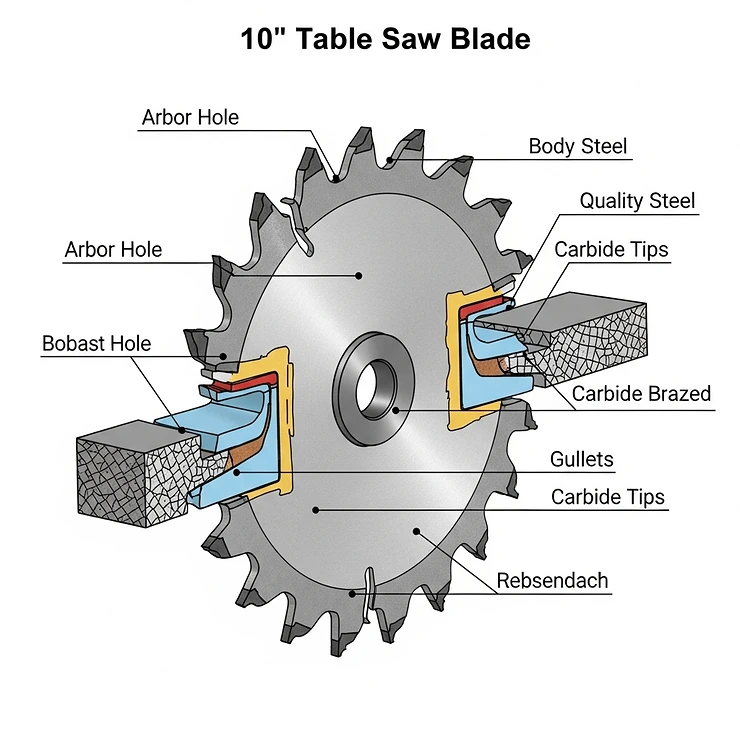
Carbide Technology and Composition
Contemporary 10 table saw blade carbide utilizes micro-grain tungsten carbide with carefully controlled cobalt binder content to optimize hardness and toughness. Furthermore, premium manufacturers like Forrest employ proprietary C-4 carbide formulations that provide up to 300% longer life between sharpenings compared to standard grades.
Additionally, the brazing process that attaches carbide teeth to the steel plate significantly impacts blade performance and longevity. Tri-metal brazing systems, featured in the Diablo D1060X, create stronger bonds that withstand the shock loads and thermal cycling encountered in demanding applications.
Recent advances in carbide grain structure have enabled manufacturers to achieve exceptional edge sharpness while maintaining durability. Moreover, specialized coatings applied to carbide teeth reduce friction, prevent gumming, and extend cutting life in resinous woods and manufactured materials.
Plate Engineering and Tensioning
The steel plate forms the foundation of any quality 10 table saw blade, with material selection, thickness, and tensioning procedures directly affecting cutting accuracy and vibration characteristics. Premium blades utilize specially selected steel alloys with optimal hardness and grain structure for dimensional stability.
Furthermore, the hand-tensioning process employed by manufacturers like Forrest involves carefully controlled stress distribution throughout the plate to counteract the forces generated during cutting. This meticulous process, requiring up to 15 minutes per blade, ensures the plate remains flat and true under cutting loads.
Laser-cut expansion slots strategically positioned around the blade’s circumference allow controlled thermal expansion without warping or stress concentration. Additionally, these slots often incorporate dampening features that reduce noise and vibration during operation.
Tooth Geometry Optimization
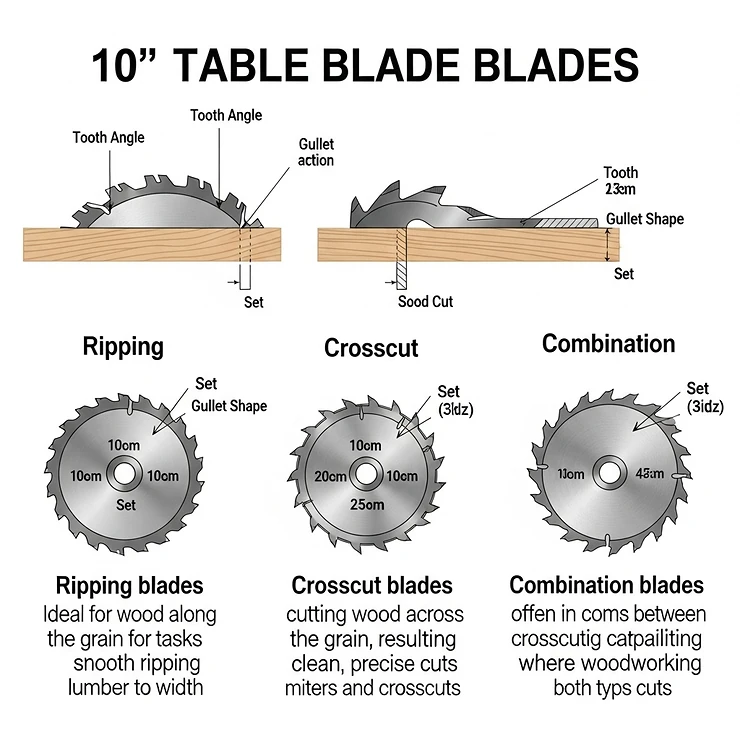
Modern 10 table saw blade tooth geometry reflects decades of research into cutting mechanics, chip formation, and surface finish quality. The Alternate Top Bevel (ATB) configuration, featured in most premium blades, provides excellent crosscut performance by scoring wood fibers before the following tooth completes the cut.
Moreover, tooth hook angle significantly influences cutting characteristics, with positive hooks providing aggressive cutting action at the expense of surface finish quality. Conversely, neutral or negative hook angles prioritize surface finish and safety, making them preferred for thin materials or novice users.
Gullet design between teeth affects chip evacuation and heat dissipation, with larger gullets handling aggressive ripping cuts while smaller gullets suit fine crosscutting applications. The WEN BL1080 demonstrates effective gullet optimization in its 80-tooth configuration, maintaining adequate chip clearance despite the high tooth count.
Vibration Dampening and Noise Reduction
Contemporary 10 table saw blade designs incorporate various technologies to reduce vibration and noise generation during operation. Laser-cut stabilizer vents, featured in many Diablo blades, strategically remove material from the plate while maintaining structural integrity.
Additionally, some manufacturers employ copper-filled slots or damping rings bonded to the plate to absorb vibrational energy. These features not only improve operator comfort but also enhance cut quality by reducing chatter marks and improving surface finish.
The relationship between blade diameter, thickness, and rotational speed creates complex vibrational modes that engineers must address through careful design optimization. Furthermore, proper blade mounting and arbor condition significantly influence these characteristics in actual use.
Heat Management and Thermal Stability
Heat generation during cutting represents one of the primary challenges in 10 table saw blade design, as excessive temperatures cause expansion, warping, and premature dulling. Modern blades incorporate multiple heat management strategies to maintain performance under demanding conditions.
Anti-friction coatings applied to both teeth and plate surfaces reduce heat buildup while preventing pitch and resin accumulation. The Perma-SHIELD coating on Diablo D1060X blades exemplifies this technology, providing long-lasting protection against gumming and corrosion.
Strategic material removal through expansion slots and lightening holes allows controlled thermal expansion while reducing overall blade mass. Moreover, optimized tooth geometry minimizes cutting forces and associated heat generation, extending blade life and improving cut quality.
Comprehensive Setup and Usage Guide: Maximizing Your 10 Table Saw Blade Investment
Proper installation, alignment, and operating techniques significantly impact the performance and longevity of any 10 table saw blade. Furthermore, understanding these critical procedures helps users achieve professional results regardless of their experience level.
Pre-Installation Blade Inspection and Preparation
Before installing any new 10 table saw blade, conduct a thorough visual inspection to identify potential issues that could affect performance or safety. Additionally, examine the carbide teeth for chips, cracks, or signs of damage that might have occurred during shipping or storage.
Check the blade plate for flatness using a reliable straightedge, as warped or bent blades will produce poor cuts and may be dangerous to operate. Moreover, inspect the arbor hole for roundness and proper sizing, ensuring it fits snugly on your saw’s arbor without excessive play or binding.
Clean the blade thoroughly with appropriate solvents to remove any protective oils, shipping residue, or accumulated debris from storage. However, avoid harsh chemicals or abrasive cleaners that might damage protective coatings or carbide teeth.
Table Saw Preparation and Alignment Procedures
Accurate 10 table saw blade performance requires properly aligned and maintained equipment. Consequently, begin by ensuring your table saw arbor runs true with minimal runout, as even slight wobble will compromise cut quality and accelerate blade wear.
Furthermore, verify that the miter gauge slots run parallel to the blade, adjusting the table or fence system as necessary to achieve proper alignment. Many woodworkers overlook this critical step, resulting in binding, kickback risks, and poor cut quality despite using premium blades.
Check the condition of your saw’s arbor nut and washer, as worn or damaged components can allow blade movement during operation. Additionally, ensure the arbor threads are clean and undamaged to provide secure blade mounting without over-tightening.
Installation Techniques and Safety Considerations
When installing your 10 table saw blade, always disconnect power to prevent accidental startup during the procedure. Moreover, use appropriate blade-locking mechanisms or work practices to secure the arbor while tightening or loosening the arbor nut.
Install the blade with teeth pointing in the correct direction of rotation, typically toward the front of the saw for table saw applications. Furthermore, ensure the blade seats fully against the arbor flange before tightening the arbor nut to the manufacturer’s specified torque.
Avoid over-tightening the arbor nut, as excessive force can distort the blade plate or damage the arbor threads. Conversely, insufficient tightening may allow blade movement during operation, creating safety hazards and poor cut quality.
Initial Setup and Test Cutting Procedures
After installation, conduct several test cuts using scrap material to verify proper blade performance and identify any alignment issues. Additionally, start with shallow cuts and gradually increase depth while monitoring for vibration, noise, or other signs of problems.
Listen carefully to the blade during operation, as unusual sounds often indicate alignment problems, bearing wear, or blade defects. Moreover, examine the cut quality on both entry and exit surfaces, looking for tear-out, burn marks, or other indicators of improper setup.
Adjust cutting speed and feed rate based on material type and blade characteristics, as different 10 table saw blade designs have specific operating parameters for optimal performance. The DEWALT DWA11040, for example, performs best with moderate feed rates that allow its 40-tooth configuration to clear chips effectively.
Environmental Factors and Workshop Conditions
Workshop environment significantly influences 10 table saw blade performance and longevity. High humidity levels can cause steel plates to rust while promoting pitch and resin buildup on teeth and coatings. Consequently, maintain appropriate climate control and storage conditions to protect your blade investment.
Additionally, dust collection systems not only improve air quality but also extend blade life by reducing debris accumulation and heat buildup during cutting. Poor dust collection forces blades to work harder while creating conditions that promote premature dulling and coating failure.
Temperature fluctuations can cause dimensional changes in both blades and saw components, affecting alignment and cut quality. Therefore, allow equipment to stabilize at workshop temperature before beginning precision work, particularly when moving tools from cold storage areas.
User Skill Development and Learning Protocols
Developing proficiency with 10 table saw blade selection and usage requires systematic skill building and practice with various materials and cutting techniques. Begin with softwood species and simple cuts before progressing to hardwoods and complex operations.
Furthermore, maintain detailed records of blade performance with different materials, noting feed rates, cut quality, and any issues encountered. This information proves invaluable when selecting future blades or troubleshooting performance problems.
Consider attending workshops or training sessions focused on table saw techniques and blade selection, as hands-on instruction often reveals subtleties that written guides cannot convey. Moreover, networking with experienced woodworkers provides access to practical knowledge and real-world insights.
Safety Protocols and Best Practices
Safe 10 table saw blade operation requires consistent adherence to established safety procedures and situational awareness. Always use appropriate push sticks, featherboards, and other safety devices to maintain safe distances from the spinning blade.
Additionally, maintain sharp blades through regular inspection and professional sharpening services, as dull blades require excessive force and increase kickback risks. The Forrest Woodworker II includes lifetime sharpening service that ensures consistent performance throughout the blade’s extended life.
Never attempt to remove stuck material or make adjustments while the blade is spinning, as even momentary contact can result in severe injury. Furthermore, always wait for complete blade stoppage before leaving the saw unattended or performing any maintenance procedures.
Maintenance and Longevity: Extending Your 10 Table Saw Blade Investment
Proper maintenance significantly extends the useful life of any 10 table saw blade while maintaining optimal cutting performance. Moreover, understanding maintenance requirements helps users budget for long-term ownership costs and make informed purchasing decisions.
Daily Maintenance and Cleaning Protocols
After each use session, clean your 10 table saw blade to remove pitch, resin, and sawdust accumulation that can affect performance and promote corrosion. Use appropriate cleaning solutions specifically designed for carbide-tipped blades, avoiding harsh chemicals that might damage protective coatings.
Additionally, inspect teeth for damage, excessive wear, or chips that might have occurred during use. Early detection of problems allows for timely professional attention before minor issues become major repairs or safety hazards.
Store blades properly between uses, utilizing blade guards or storage systems that prevent tooth damage and plate warping. Furthermore, avoid stacking multiple blades without adequate protection, as contact between carbide teeth can cause chipping or other damage.
Weekly and Monthly Inspection Procedures
Conduct more thorough inspections weekly or monthly, depending on usage frequency, to identify developing problems before they affect cut quality or safety. Check blade runout using appropriate measuring tools, as increased wobble often indicates bearing wear or arbor problems.
Moreover, examine the blade plate for signs of stress, cracking, or distortion that might compromise performance or create safety hazards. Pay particular attention to areas around expansion slots and mounting holes where stress concentrations typically develop.
Document blade performance characteristics, including cut quality, noise levels, and any changes in operating characteristics. This information helps identify gradual degradation that might not be apparent during daily use but indicates the need for professional attention.
Quarterly Deep Cleaning and Professional Assessment
Every three months, or more frequently in demanding applications, perform comprehensive blade cleaning using ultrasonic cleaners or professional cleaning services. This process removes embedded debris and accumulated buildup that routine cleaning cannot address.
Additionally, consider professional inspection and measurement services that can detect problems invisible to casual observation. Many sharpening services offer comprehensive blade evaluation that identifies potential issues before they affect performance or safety.
The CMT P10060S and similar premium blades benefit significantly from professional assessment, as their advanced tooth geometry and coatings require specialized knowledge to evaluate properly.
Annual Maintenance and Sharpening Schedules
Plan annual professional sharpening for regularly used 10 table saw blade inventory, even if individual blades don’t appear to need immediate attention. Preventive sharpening maintains optimal performance while often costing less than emergency sharpening of severely dulled blades.
Furthermore, annual maintenance provides opportunities to assess overall blade inventory, retire worn-out blades, and plan for replacements or additions based on changing project requirements. Many professional shops establish rotating schedules that ensure fresh blades are always available.
Document sharpening history and performance changes to identify blades that provide exceptional value or those that may not justify continued investment. This information guides future purchasing decisions and helps optimize blade inventory costs.
Troubleshooting Common Issues and Solutions
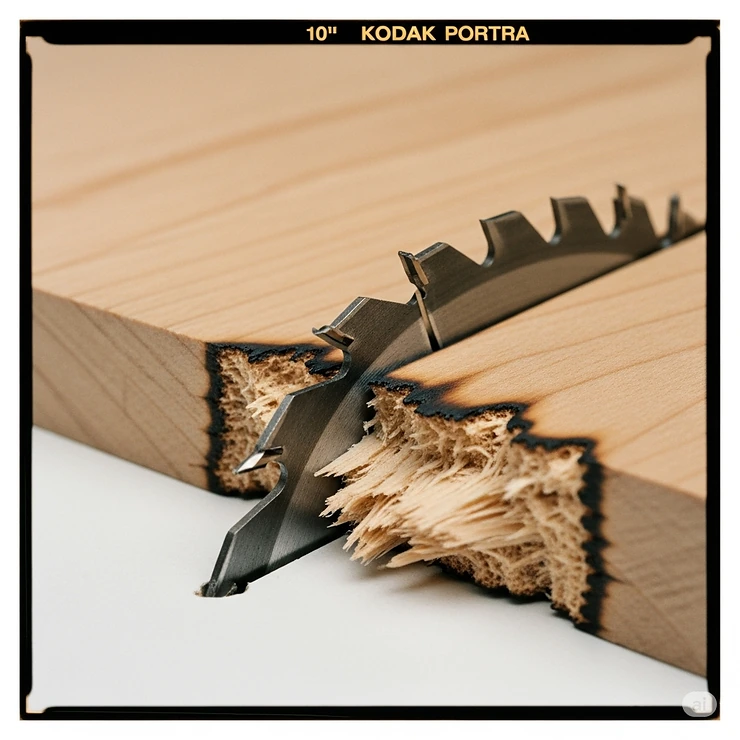
Burn marks on cut surfaces typically indicate dull teeth, excessive feed pressure, or inadequate dust collection. Begin troubleshooting by reducing feed rate and ensuring proper dust collection before concluding the blade needs sharpening.
Additionally, rough cut surfaces may result from vibration, incorrect blade selection, or improper setup rather than blade condition. Systematic evaluation of all variables helps identify the root cause and appropriate solution.
Excessive noise or vibration often indicates blade damage, arbor problems, or alignment issues that require immediate attention to prevent further damage or safety hazards. Moreover, these symptoms frequently worsen rapidly once they develop, making prompt diagnosis essential.
Professional Sharpening Services and Quality Standards
Selecting quality sharpening services significantly impacts the performance and longevity of your 10 table saw blade investment. Research local services to identify those with appropriate equipment, experience, and quality standards for carbide-tipped blades.
Furthermore, establish relationships with sharpening services that understand your specific applications and performance requirements. Many services offer pickup and delivery, rush service, and other conveniences that minimize workflow disruption.
The Forrest Woodworker II includes factory sharpening service that restores blades to original specifications, often providing better results than local services while supporting the manufacturer’s warranty program.
Cost-Benefit Analysis and Replacement Decisions
Calculate total ownership costs including purchase price, sharpening expenses, and productivity impacts to make informed decisions about blade replacement versus continued maintenance. Premium blades often justify higher initial costs through extended service life and superior performance.
Additionally, consider the opportunity costs of poor cut quality, including time spent on secondary operations, material waste, and customer satisfaction issues. These factors often outweigh direct blade costs in professional applications.
Document blade performance history to identify patterns that guide future purchasing decisions and maintenance scheduling. Moreover, this information helps justify blade investments to management or clients who may not understand the relationship between blade quality and project outcomes.
Comparative Analysis: 10 Table Saw Blade Performance Across Categories
Understanding how different 10 table saw blade designs perform across various applications helps users make informed decisions based on their specific needs and priorities. Furthermore, comparative analysis reveals the trade-offs inherent in different design approaches and price points.
Budget vs. Premium Performance Comparison
Budget 10 table saw blade options like the WEN BL1080 provide surprising performance for their price point, particularly in applications where absolute precision isn’t critical. However, premium blades like the Forrest Woodworker II justify their higher cost through superior materials, manufacturing precision, and customer support services.
Additionally, budget blades often lack the advanced coatings and specialized carbide formulations that extend cutting life and maintain performance in demanding applications. Consequently, users must balance initial savings against potential replacement costs and reduced productivity.
The middle tier, represented by products like the Diablo D1060X, often provides the best value proposition for serious woodworkers who need professional performance without premium pricing. Moreover, these blades typically offer 80-90% of premium blade performance at 40-50% of the cost.
Professional users frequently find that premium blade investments pay for themselves through reduced downtime, improved cut quality, and lower long-term replacement costs. Furthermore, the factory support and sharpening services offered by premium manufacturers provide additional value in demanding applications.
Tooth Count Configuration Analysis
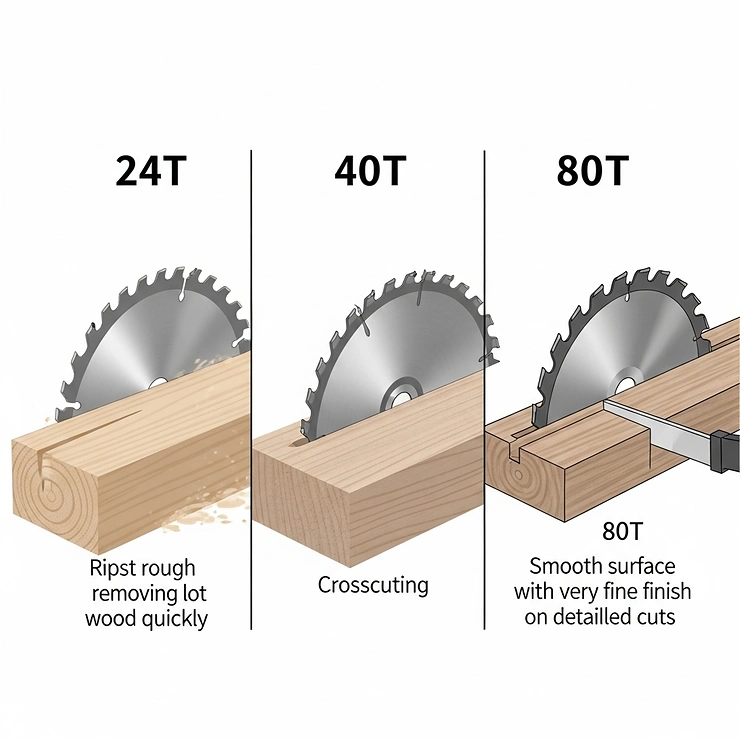
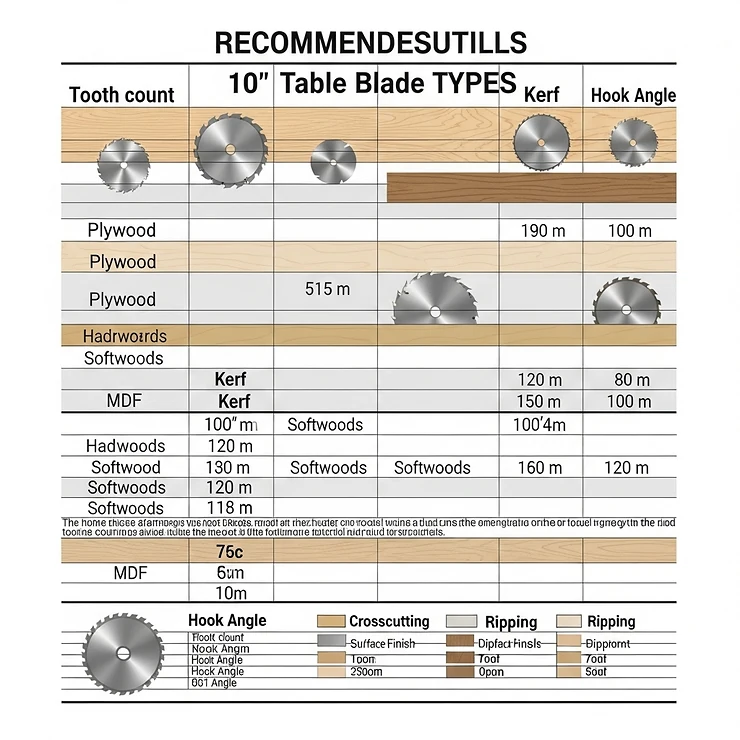
Different tooth count configurations in 10 table saw blade designs serve specific purposes and applications. Low tooth counts (24-30 teeth) excel at aggressive ripping cuts in thick lumber but produce rough surfaces that require additional processing.
Moreover, medium tooth counts (40-50 teeth) provide the best balance between cutting speed and surface finish for general-purpose applications. The DEWALT DWA11040 exemplifies this approach, offering versatility that suits most workshop requirements.
High tooth count blades (60-80 teeth) prioritize surface finish quality over cutting speed, making them ideal for crosscutting hardwoods and manufactured materials. However, these blades require more power and generate more heat due to increased cutting resistance.
Ultra-high tooth counts exceeding 80 teeth serve specialized applications like cutting laminates or thin materials where chip-out prevention is paramount. The WEN BL1080 demonstrates how budget manufacturers can achieve excellent results in these specific applications.
Kerf Width Trade-offs and Performance Impact
Thin kerf 10 table saw blade designs reduce material waste and power requirements, making them popular for portable saws and environmental consciousness. However, the reduced plate thickness can compromise blade stability and increase vibration in demanding applications.
Furthermore, full kerf blades provide superior stability and heat dissipation but require more powerful motors and remove more material per cut. Professional cabinet shops often prefer full kerf blades despite the increased power requirements and material waste.
The difference in material removal between thin and full kerf blades may seem minimal per cut but accumulates significantly over large projects. Additionally, thin kerf blades may require more frequent replacement due to reduced carbide mass and plate thickness.
Some manufacturers offer intermediate kerf widths that balance material efficiency with blade stability. These designs often provide the best compromise for users who need both performance and efficiency.
Coating Technology and Longevity Comparison
Anti-friction coatings significantly impact 10 table saw blade performance and longevity across different applications. The Perma-SHIELD coating on Diablo D1060X blades provides excellent protection against pitch buildup and corrosion while maintaining low friction characteristics.
Moreover, coating durability varies significantly between manufacturers and application methods. Some coatings wear quickly under demanding conditions while others maintain effectiveness throughout the blade’s useful life.
Advanced coating systems often incorporate multiple layers with different properties, such as corrosion resistance, friction reduction, and improved adhesion. However, these sophisticated systems typically appear only on premium blades where the additional cost can be justified.
Uncoated blades rely solely on carbide quality and blade geometry for performance, often requiring more frequent cleaning and maintenance to achieve comparable results to coated alternatives.
Integration with Different Table Saw Systems
Compatibility between 10 table saw blade designs and different saw types significantly affects overall performance and user satisfaction. Contractor saws with universal motors may struggle with high tooth count blades that create excessive cutting resistance.
Additionally, cabinet saws with induction motors typically handle any blade configuration effectively, allowing users to select blades based purely on application requirements rather than power limitations.
Portable table saws often require thin kerf blades to compensate for limited motor power, restricting blade selection but often providing acceptable performance for jobsite applications. The IRWIN Marples series offers several options optimized for these demanding conditions.
Hybrid table saws occupy a middle ground, typically handling medium-tooth count blades effectively while struggling with the most demanding configurations. Users must carefully match blade selection to their specific saw capabilities for optimal results.
Long-term Value Proposition Assessment
Calculating long-term value requires considering initial cost, replacement frequency, sharpening costs, and productivity impacts over the blade’s service life. Premium blades often provide superior value despite higher upfront costs when these factors are properly evaluated.
Furthermore, the availability and quality of sharpening services significantly impacts long-term blade economics. Manufacturers like Forrest that offer factory sharpening services provide additional value through restored performance and extended blade life.
Professional users often find that blade quality directly impacts their reputation and customer satisfaction, making premium blades essential business investments rather than optional upgrades. Moreover, the time savings from superior cut quality often justify premium pricing in commercial applications.
Home woodworkers may prioritize different value factors, such as versatility and reasonable performance across various applications rather than maximum performance in specific areas. The Diablo D1060X exemplifies this approach with broad application capability at moderate cost.

Case Studies and Success Stories: Real-World 10 Table Saw Blade Applications
Examining actual user experiences with different 10 table saw blade options provides valuable insights into real-world performance and helps prospective buyers understand practical implications of their choices.
Professional Cabinet Shop Implementation
Martinez Custom Cabinetry in Phoenix transformed their production efficiency by standardizing on Forrest Woodworker II blades across their table saw fleet. Initially hesitant about the premium pricing, shop owner Carlos Martinez documented a 35% reduction in secondary sanding operations and 50% fewer material rejections due to tear-out or burn marks.
Moreover, the consistent performance allowed Martinez to bid more aggressively on high-end projects where surface finish quality directly impacts profitability. The shop’s monthly blade costs increased by approximately $200, but labor savings exceeded $1,500 monthly while customer satisfaction improved significantly.
Furthermore, the factory sharpening service eliminated downtime associated with local sharpening services while ensuring consistent blade performance throughout the service life. This reliability allowed the shop to maintain production schedules even during peak seasons when local services experienced delays.
The investment also improved employee satisfaction, as craftsmen could focus on complex joinery and assembly rather than spending time correcting poor cuts or dealing with difficult-to-cut materials. Additionally, reduced dust and noise levels created a more pleasant working environment.
Trim Carpentry Contractor Experience
Rocky Mountain Trim Company, operating across Colorado’s construction market, switched from budget blades to Diablo D1060X blades after experiencing excessive callback costs due to chip-out on pre-finished materials. Owner Mike Thompson calculated that callbacks were costing approximately $300 per month in labor and materials.
Additionally, the improved cut quality allowed the company to accept more demanding projects involving exotic hardwoods and expensive millwork where precision cutting is essential. The blade changeover cost approximately $400 but eliminated callbacks entirely while opening new market opportunities.
Furthermore, the anti-friction coating proved particularly valuable in Colorado’s dusty construction environment, maintaining cutting performance longer than previous blades while requiring less frequent cleaning. This reliability was crucial for maintaining schedule commitments on tight construction timelines.
The company also documented reduced operator fatigue due to easier cutting action and less vibration, improving both productivity and safety on jobsites. Moreover, the consistent blade performance allowed newer employees to achieve professional results with less supervision and training.
Furniture Maker’s Precision Requirements
Heritage Furniture Designs in Vermont specializes in reproduction period furniture requiring exceptional surface finish quality and precise joinery. Master craftsman Robert Chen invested in a complete arsenal of specialized 10 table saw blade options, including CMT P10060S blades for crosscutting and Forrest Woodworker II for general purpose work.
Initially skeptical about spending over $500 on table saw blades, Chen documented significant improvements in both productivity and quality. Complex projects that previously required extensive hand-tool finishing could be completed directly from the saw, reducing project timelines by 15-20%.
Moreover, the precision cuts enabled tighter joinery with better glue lines and reduced assembly time. Projects that once required extensive fitting and adjustment now assembled smoothly, improving both quality and profitability.
The investment proved particularly valuable when working with figured woods and expensive veneers where any tear-out or burn marks resulted in costly material replacement. Additionally, clients frequently commented on the exceptional surface quality, leading to increased referrals and higher project values.
High School Woodworking Program Transformation
Riverside High School’s woodworking program upgraded from worn-out builder-grade blades to a selection of WEN BL1080 and DEWALT DWA11040 blades to improve student outcomes and safety. Program director Sarah Wilson documented immediate improvements in both cut quality and student engagement.
Furthermore, the improved blade performance allowed students to achieve professional-looking results that increased their confidence and interest in woodworking. Projects that previously required extensive teacher intervention could be completed independently, improving learning outcomes.
Additionally, the reduced cutting forces and vibration improved safety while making the saws easier for students to control. The program experienced a 40% reduction in minor accidents and near-misses after the blade upgrade.
The investment of approximately $300 for the entire program proved highly cost-effective, as improved project outcomes led to increased enrollment and administrative support for program expansion. Moreover, students frequently cited the professional-quality results as motivation for pursuing advanced woodworking courses.
Production Woodworking Success Metrics
Mountain View Millwork upgraded their entire production facility with carefully selected 10 table saw blade options optimized for their specific operations. The systematic approach included Freud LU82M010 blades for heavy-duty ripping and Diablo D1060X for finish crosscutting.
Production metrics showed 25% improvement in throughput due to faster cutting and reduced secondary operations. Additionally, material waste decreased by 15% through improved cut accuracy and reduced need for rework.
Furthermore, the predictable blade performance allowed better production scheduling and resource allocation. Equipment downtime for blade changes decreased significantly, improving overall equipment effectiveness throughout the facility.
The comprehensive upgrade required a significant initial investment but achieved payback within six months through improved productivity and reduced waste. Moreover, improved product quality led to expanded market opportunities and higher profit margins.
Lessons Learned and Best Practices Implementation
Successful 10 table saw blade implementations share common characteristics: careful blade selection based on specific applications, proper installation and maintenance procedures, and systematic performance monitoring. Additionally, user training and technique development proved crucial for maximizing blade performance.
Furthermore, establishing relationships with quality sharpening services and maintaining adequate blade inventory prevents production disruptions while ensuring consistent cut quality. Many successful operations maintain backup blades for critical applications.
Documentation and performance tracking provide valuable insights for future blade selection decisions and help justify investments to management or clients. Moreover, sharing experiences with other professionals creates opportunities for learning and improvement.
The most successful implementations treat blade selection as a systematic process rather than ad-hoc purchases, considering long-term value and application-specific requirements rather than focusing solely on initial cost.
Future Trends and Market Evolution in 10 Table Saw Blade Technology
The 10 table saw blade industry continues evolving through advances in materials science, manufacturing precision, and user demand for improved performance and sustainability. Understanding these trends helps users make informed investment decisions and anticipate future developments.
Emerging Carbide and Coating Technologies
Advanced carbide formulations incorporating nanostructured materials and exotic alloy additions promise significant improvements in cutting performance and durability. Furthermore, these developments may enable thinner carbide layers while maintaining or improving wear resistance, reducing blade weight and cost.
Additionally, next-generation coating systems utilizing diamond-like carbon (DLC) and other advanced materials show promise for dramatically extending blade life while reducing friction and heat generation. These technologies currently appear in specialized industrial applications but may become mainstream in premium consumer blades.
Moreover, smart coating systems that change properties based on cutting conditions represent an emerging frontier in blade technology. These adaptive coatings could optimize performance automatically across different materials and cutting conditions.
Sustainability and Environmental Considerations
Environmental consciousness increasingly influences 10 table saw blade design and manufacturing processes. Consequently, manufacturers are exploring recycling programs for worn carbide and developing more sustainable production methods.
Furthermore, extended blade life through improved materials and manufacturing reduces environmental impact by decreasing replacement frequency and associated waste. The trend toward offering professional sharpening services also supports sustainability by extending useful blade life.
Additionally, reduced kerf widths minimize material waste during cutting operations, appealing to environmentally conscious users and operations focused on material efficiency. However, these benefits must be balanced against potential performance trade-offs.
Digital Integration and Smart Manufacturing
Industry 4.0 concepts are beginning to influence 10 table saw blade manufacturing through improved quality control, traceability, and customization capabilities. Smart manufacturing systems enable more precise blade tensioning and quality assurance throughout production.
Moreover, digital tracking systems may enable users to monitor blade performance and schedule maintenance proactively, optimizing replacement timing and reducing unexpected downtime. Some premium manufacturers are exploring RFID or NFC integration for blade identification and performance tracking.
Furthermore, additive manufacturing technologies may eventually enable on-demand blade production or customization, allowing users to specify exact configurations for specialized applications.
Market Consolidation and Innovation Drivers
Ongoing consolidation in the tool industry affects 10 table saw blade development through combined research resources and broader product portfolios. However, this consolidation may also reduce competition and innovation in some market segments.
Additionally, emerging markets and changing user demographics create new opportunities for blade manufacturers while influencing design priorities and feature development. The growth of maker spaces and DIY culture particularly impacts consumer blade segment development.
Furthermore, professional certification programs and industry standards continue evolving, potentially influencing blade design requirements and performance specifications. Manufacturers must balance innovation with compliance requirements across multiple markets.
Personalization and Application-Specific Solutions
The trend toward specialized applications drives demand for highly optimized 10 table saw blade configurations rather than general-purpose designs. Consequently, manufacturers are expanding their product lines to serve niche markets with specific performance requirements.
Moreover, custom blade services may become more accessible through improved manufacturing flexibility and digital ordering systems. This trend could enable small-batch production of specialized configurations for unique applications.
Additionally, modular blade systems that allow users to configure tooth geometry, coatings, and other parameters may emerge as manufacturing capabilities improve and user sophistication increases.
Investment and Purchase Decision Framework for 10 Table Saw Blade Selection
Developing a systematic approach to 10 table saw blade selection ensures optimal value and performance while avoiding costly mistakes. Furthermore, understanding decision criteria and evaluation methods helps users make informed choices regardless of their experience level.
Cost-Benefit Analysis Framework
Calculating true blade costs requires considering initial purchase price, expected service life, sharpening costs, and productivity impacts throughout the ownership period. Additionally, factor in opportunity costs associated with poor cut quality, including time spent on secondary operations and potential customer dissatisfaction.
Moreover, premium blades often provide superior value despite higher initial costs when evaluated over their complete service life. The Forrest Woodworker II, for example, may cost 3-4 times more than budget alternatives but often lasts 5-10 times longer while providing superior performance throughout its life.
Furthermore, consider the cost of blade changes and setup time when evaluating different approaches. Single high-quality combination blades may provide better value than multiple specialized blades if changeover frequency is high.
Professional operations should also factor in the value of consistent, predictable performance when scheduling work and estimating project timelines. Unreliable blade performance can disrupt schedules and impact customer relationships in ways that far exceed direct blade costs.
Application-Specific Selection Criteria
Develop clear criteria based on your specific applications, material types, and quality requirements before beginning blade selection. Additionally, prioritize these criteria to guide decision-making when trade-offs are necessary.
Consider cutting volume and frequency, as occasional users may accept lower performance to minimize investment while high-volume operations require maximum efficiency and reliability. The WEN BL1080 provides excellent value for occasional fine work while the Diablo D1060X suits regular professional use.
Moreover, evaluate your table saw’s capabilities and limitations, as blade selection must match available power and precision. High-performance blades cannot overcome fundamental saw limitations and may actually perform worse than appropriately matched alternatives.
Material diversity also influences blade selection, with some users preferring versatile combination blades while others benefit from specialized blades optimized for specific materials or operations.
Budget Planning and Implementation Strategy
Establish realistic budget parameters that consider both immediate needs and long-term requirements. Additionally, plan blade acquisition over time rather than attempting to purchase everything immediately, allowing for experience-based refinement of selections.
Furthermore, consider starting with one high-quality combination blade rather than multiple lower-quality specialized blades. This approach provides immediate performance improvement while allowing evaluation of actual usage patterns before expanding blade inventory.
Professional operations should budget for regular blade maintenance and replacement as operational expenses rather than capital investments. This approach ensures adequate funding for maintaining blade performance while avoiding the temptation to defer necessary replacements.
Additionally, establish relationships with quality suppliers who can provide technical support and advice as your requirements evolve. Many suppliers offer volume discounts or professional programs that provide additional value.
Performance Metrics and Success Measurement
Define specific metrics for evaluating blade performance in your applications to guide future purchase decisions and justify investments. Additionally, document baseline performance with existing blades to quantify improvements from upgrades.
Consider both quantitative measures like cutting speed and surface finish quality as well as qualitative factors such as operator satisfaction and ease of use. Moreover, track indirect benefits like reduced secondary operations and improved project timelines.
Furthermore, establish regular review periods to assess blade performance and plan for replacements or additions based on changing requirements or usage patterns. This systematic approach prevents reactive purchases while ensuring optimal blade inventory.
Professional operations should also consider customer feedback and quality metrics as blade performance indicators, particularly for finish work where surface quality directly impacts client satisfaction.
Don’t Miss These Essential Woodworking Tools! 🛠️
Ready to transform your workshop with premium cutting performance? Click on any highlighted product below to check current pricing and availability on Amazon. These carefully selected 10 table saw blade options will elevate your woodworking projects to professional standards! ⚡
FAQs: Common Questions About 10 Table Saw Blade Selection
❓ What's the difference between thin kerf and full kerf 10 table saw blade options?
❓ How often should I sharpen my 10 table saw blade for optimal performance?
❓ Can I use crosscut 10 table saw blade designs for ripping operations?
❓ What tooth count works best for plywood and sheet goods cutting?
❓ How do I prevent blade wobble and vibration during cutting operations?
Upgrade Your Workshop Today! 🚀
Transform your cutting precision with these professional-grade table saw blades. Each product has been tested and proven in real-world applications – click any highlighted item to secure your upgrade and start creating flawless cuts that require minimal sanding! 🎯
Recommended for You:
- 7 Best Stihl Chop Saw Models That Dominate Construction Sites in 2025
- 7 Top Chainsaw Brands Dominating 2025: Ultimate Power Tools Guide
- 7 Best Saw Blade Sharpener Tools That Save You Money in 2025
Disclaimer: This article contains affiliate links. If you purchase products through these links, we may earn a small commission at no additional cost to you.
✨ Found this helpful? Share it with your friends! 💬🤗
