
In This Article
Why Your Garage Needs Proper Cooling
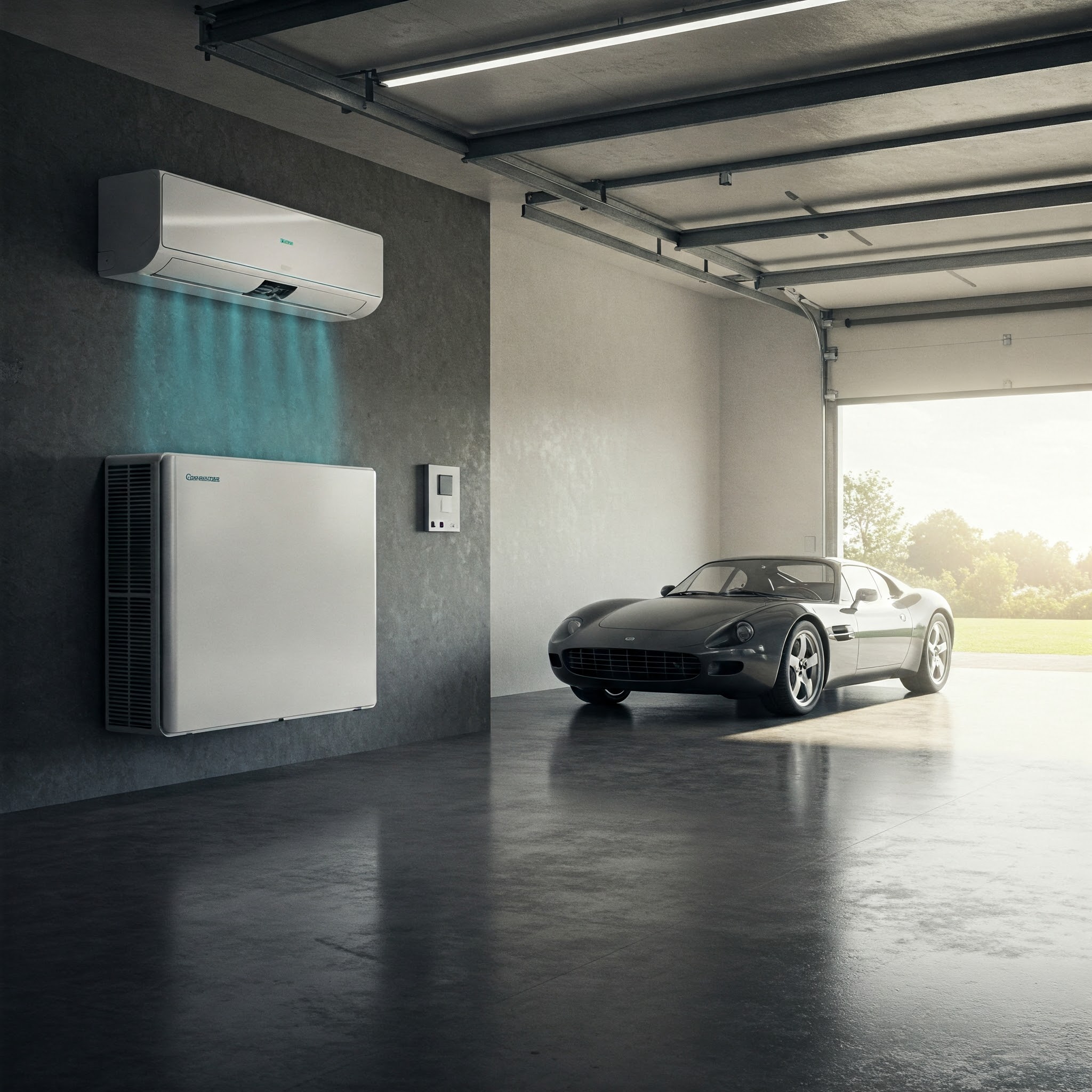
Have you ever stepped into your garage during summer only to be hit by a wall of stifling heat? ⚡ If you’re like most homeowners, your garage probably transforms into an unbearable sauna when temperatures rise. This is where a garage air conditioner becomes not just a luxury, but a necessity for anyone who spends time working, exercising, or pursuing hobbies in their garage space.
As someone who has converted my garage into a multipurpose workshop, I understand firsthand the importance of maintaining a comfortable temperature. The right garage air conditioner can transform your space from an unusable hot box into a functional extension of your home. Whether you’re a DIY enthusiast, a fitness buff using your garage as a home gym, or simply need a comfortable temperature while organizing your storage, cooling solutions specifically designed for garage spaces are a game-changer.
Understanding Garage Air Conditioner Options
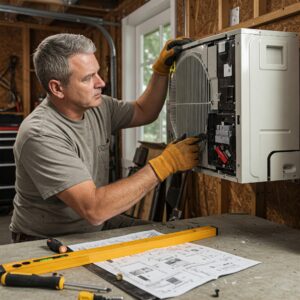
Before diving into specific recommendations, it’s important to understand what makes garage cooling different from standard home air conditioning. Garages present unique challenges – they’re typically uninsulated, have large doors that open frequently, and experience extreme temperature fluctuations. The perfect garage air conditioner needs to address these specific challenges.
Types of Garage Air Conditioner Systems
Let’s explore the main types of cooling systems suitable for garage spaces:
1. Portable Air Conditioners 🔋
Portable garage air conditioner units offer flexibility and convenience. These standalone units can be moved around as needed and typically require minimal installation. They’re perfect for:
✅ Smaller garage spaces
✅ Renters who can’t make permanent modifications
✅ Occasional use scenarios
✅ Spaces where window installation isn’t feasible
However, portable units often have less cooling power than permanent installations and require venting through a window, door, or wall.
2. Window Air Conditioners 🧊
Window air conditioners provide a good balance of cooling power and cost-effectiveness. They’re installed in a window frame and are generally more powerful than portable options. Benefits include:
✅ More cooling capacity than most portable units
✅ Permanent installation but can be removed if needed
✅ No floor space required
✅ Generally more energy efficient than portable models
The main drawback is that they require a suitable window for installation, which some garages may lack.
3. Mini-Split Systems ❄️
Mini-split systems represent a more permanent and powerful solution for garage cooling. These systems consist of an outdoor compressor/condenser and an indoor air-handling unit, connected by a conduit. Advantages include:
✅ Powerful, efficient cooling capabilities
✅ No ductwork required
✅ Quiet operation
✅ Can cool specific zones
✅ Often include heating functionality as well
The downsides are higher upfront costs and the need for professional installation.
4. Through-the-Wall Air Conditioners 🧱
Similar to window units but designed to be installed through an exterior wall, these provide a permanent solution when a window isn’t available. Benefits include:
✅ No window required
✅ More secure than window units
✅ Often more energy efficient
✅ Doesn’t block natural light
The main consideration is that installation requires cutting a hole in your wall, making this a more permanent solution.
Top 10 Garage Air Conditioner Solutions for 2025
After testing numerous options and researching customer experiences, I’ve compiled this list of the best garage air conditioner solutions currently available. Each has been selected based on cooling capacity, energy efficiency, noise levels, and overall value.
1. Portable Powerhouses
LG LP1419IVSM Dual Inverter Portable Air Conditioner
This 14,000 BTU portable unit uses LG’s dual inverter technology to provide efficient cooling while keeping operation whisper-quiet. Perfect for garages up to 500 sq. ft., it features:
✅ Smart ThinQ technology for remote control via smartphone
✅ Energy-saving inverter technology
✅ Auto-evaporation system
✅ Dehumidification function
BLACK+DECKER BPACT14WT Portable Air Conditioner
A reliable and budget-friendly option with 14,000 BTU cooling power suitable for spaces up to 350 sq. ft. Features include:
✅ Easy-to-use LED digital display
✅ 24-hour timer
✅ Sleep mode for quiet nighttime operation
✅ Bucket-less design with auto water evaporation
2. Window-Mounted Wonders
Midea U-Shaped Window Air Conditioner
This innovative U-shaped design allows you to open and close your window while the unit is installed. With 8,000-12,000 BTU options available, it’s suitable for various garage sizes. Benefits include:
✅ Ultra-quiet operation (as low as 42 dB)
✅ ENERGY STAR certified with impressive efficiency ratings
✅ Smart control via app or voice assistants
✅ Flexible window operation
Friedrich Chill CP06G10B Window Air Conditioner
Known for durability and quality construction, this 6,000 BTU unit is perfect for smaller garages up to 250 sq. ft. Features include:
✅ Auto air sweep distributes air evenly
✅ Programmable 24-hour timer
✅ Energy-efficient operation
✅ Quiet performance
3. Mini-Split Marvels
PIONEER Air Conditioner WYS012A-19 Wall Mount Mini Split
This 12,000 BTU mini-split system provides year-round comfort with both cooling and heating capabilities. Perfect for dedicated workshop spaces, it offers:
✅ High energy efficiency ratio (SEER rating)
✅ Complete installation kit included
✅ Whisper-quiet operation
✅ Wireless remote control
Senville SENL-12CD Mini Split Air Conditioner
A versatile 12,000 BTU system that excels in challenging environments like garages. Notable features include:
✅ Heating capability down to -22°F
✅ ENERGY STAR certified
✅ Leak detection system
✅ Includes installation kit and line set
4. Through-the-Wall Champions
Koldfront WTC8001W Through the Wall Air Conditioner
This 8,000 BTU through-wall unit is designed for permanent installation and includes a sleeve for proper support. It works well for garages up to 350 sq. ft. and features:
✅ Energy-saving mode
✅ 4-way air directional control
✅ 24-hour programmable timer
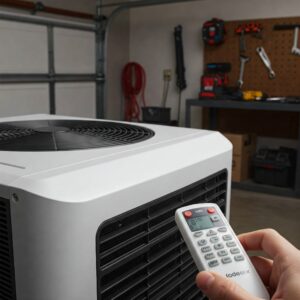
✅ Remote control included
LG LT1016CER Through-the-Wall Air Conditioner
A reliable 9,800 BTU unit with robust cooling performance and quiet operation. Highlights include:
✅ Multiple fan speeds
✅ Energy saver function
✅ Auto restart after power outages
✅ Thermistor thermostat for accurate temperature control
5. Specialized Solutions
Cool-Space CS5-36-VD Portable Evaporative Cooler
For those in dry climates, this evaporative cooler provides effective cooling without the high energy costs of traditional air conditioning. It covers up to 3,600 sq. ft. and features:
✅ Low power consumption ✅ No installation required ✅ Cools using water evaporation ✅ Highly portable design
Garage Door Threshold Seal by Duck Brand
While not an air conditioner itself, this simple addition helps maximize the efficiency of any garage cooling system by sealing the gap under your garage door, preventing hot air infiltration.
✅ Easy peel-and-stick installation ✅ Blocks dust, insects, and debris ✅ Reduces energy costs ✅ Weatherproof design
Comparing Top Garage Air Conditioner Options
| Model | Type | Cooling Power | Area Coverage | Energy Efficiency | Noise Level | Price Range |
|---|---|---|---|---|---|---|
| LG LP1419IVSM | Portable | 14,000 BTU | ~500 sq. ft. | Excellent | Low | $$$$ |
| BLACK+DECKER BPACT14WT | Portable | 14,000 BTU | ~350 sq. ft. | Good | Medium | $$$ |
| Midea U-Shaped | Window | 8,000-12,000 BTU | 350-550 sq. ft. | Excellent | Very Low | $$$ |
| Friedrich Chill CP06G10B | Window | 6,000 BTU | ~250 sq. ft. | Good | Medium | $$ |
| PIONEER WYS012A-19 | Mini-Split | 12,000 BTU | ~550 sq. ft. | Excellent | Very Low | $$$$$ |
| Senville SENL-12CD | Mini-Split | 12,000 BTU | ~550 sq. ft. | Excellent | Very Low | $$$$$ |
| Koldfront WTC8001W | Through-Wall | 8,000 BTU | ~350 sq. ft. | Good | Medium | $$$ |
| LG LT1016CER | Through-Wall | 9,800 BTU | ~450 sq. ft. | Good | Medium | $$$$ |
| Cool-Space CS5-36-VD | Evaporative | N/A | ~3,600 sq. ft. | Excellent | Medium-High | $$$$ |
Ready to transform your garage into a comfortable workspace? Check out these top-rated cooling solutions on Amazon today and enjoy a cool, productive environment regardless of outside temperatures!
How to Choose the Right Garage Air Conditioner
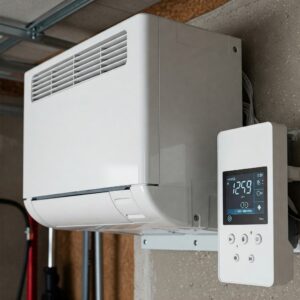
Selecting the perfect garage air conditioner depends on several key factors. Let’s break down what you should consider before making your purchase.
1. Calculate Your Cooling Needs ✏️
The size of your garage is the primary factor in determining how powerful your air conditioner needs to be. Here’s a quick guide:
- Small garage (1-car, up to 250 sq. ft.): 5,000-6,000 BTU
- Medium garage (2-car, 250-550 sq. ft.): 7,000-14,000 BTU
- Large garage (3+ cars, 550+ sq. ft.): 14,000+ BTU or multiple units
Remember, these numbers assume average ceiling height and moderate insulation. If your garage has high ceilings, poor insulation, or receives direct sunlight for many hours, you’ll need to aim for the higher end of these ranges.
2. Consider Your Garage’s Characteristics 🏗️
Not all garages are created equal, and yours might have specific features that affect cooling efficiency:
- Insulation: Poorly insulated garages will require more powerful cooling
- Windows: Their number, size, and direction can affect heat gain
- Garage door quality: Older, uninsulated doors allow significant heat transfer
- Ceiling height: Higher ceilings mean more air volume to cool
- Usage pattern: How you use your garage impacts cooling needs
3. Installation Options and Limitations 🔧
Different garage air conditioner types have different installation requirements:
- Portable units: Need access to a power outlet and some way to vent hot air outside
- Window units: Require a suitable window frame for mounting
- Through-wall models: Need a properly sized hole in an exterior wall
- Mini-splits: Require professional installation and an exterior mounting location for the condenser
Before selecting a unit type, ensure your garage can accommodate the installation requirements.
4. Energy Efficiency and Operating Costs 💰
When comparing garage air conditioner options, pay attention to energy efficiency ratings:
- EER (Energy Efficiency Ratio): Higher numbers indicate better efficiency
- SEER (Seasonal Energy Efficiency Ratio): For mini-split systems; 16+ is considered good
- ENERGY STAR certification: Indicates the unit meets strict efficiency guidelines
Remember that a more efficient unit may cost more upfront but save money over time through lower energy bills.
Maximizing Your Garage Air Conditioner’s Performance
Once you’ve selected and installed your garage air conditioner, these tips will help you get the most out of it while minimizing energy costs.
Insulation Improvements 🧠
The best garage air conditioner in the world will struggle in a poorly insulated space. Consider these upgrades:
✅ Insulate the garage door with a specialized kit
✅ Add weatherstripping around doors and windows
✅ Seal any gaps or cracks in walls and ceilings
✅ Consider adding insulation to walls if they’re unfinished
✅ Apply reflective window film to reduce solar heat gain
Smart Usage Strategies ⚡
How you use your cooling system matters almost as much as which system you choose:
✅ Cool the space before you need it rather than trying to cool an already hot garage
✅ Use ceiling fans to improve air circulation and cooling efficiency
✅ Consider a programmable thermostat to automate temperature control
✅ Close doors and windows when the unit is running
✅ Clean or replace filters regularly according to manufacturer recommendations
Complementary Cooling Methods 🌬️
Sometimes combining your main garage air conditioner with additional cooling strategies can improve comfort while reducing costs:
✅ Use portable fans to improve air circulation
✅ Install a dehumidifier to reduce moisture (which makes heat feel worse)
✅ Consider floor fans for targeted cooling while working
✅ Use blinds or shades on windows during peak sun hours
✅ In appropriate climates, try a two-fan system for cross-ventilation during milder days
Common Garage Air Conditioner Problems and Solutions
Even the best garage air conditioner can encounter issues. Here’s how to troubleshoot common problems:
Insufficient Cooling Power 🔥
If your unit isn’t cooling effectively:
- Check that you have the correct size for your space
- Ensure all doors and windows are closed
- Clean or replace the air filter
- Verify that vents aren’t blocked
- Check for direct sunlight heating the space and add window coverings if needed
Excessive Energy Consumption 💸
If your energy bills seem too high:
- Set the thermostat to a reasonable temperature (78°F is often recommended when occupied)
- Clean or replace filters monthly
- Use a programmable thermostat to avoid cooling an empty space
- Check for air leaks around windows, doors, and the unit itself
- Consider upgrading to a more efficient model
Noise Issues 🔊
If your garage air conditioner is too loud:
- Ensure the unit is properly installed and level
- Check for loose parts or vibrations
- Clean the coils and fan
- Consider adding sound insulation around the unit
- Upgrade to a model designed for quiet operation
Water Leakage 💧
If you notice water around your unit:
- Check that the condensate drain isn’t clogged
- Ensure the unit is properly leveled
- Verify that humidity settings are appropriate
- Check hose connections for portable units
- Consider a condensate pump for better drainage
DIY vs. Professional Installation
When it comes to installing your garage air conditioner, should you do it yourself or hire a professional? Here’s what to consider:
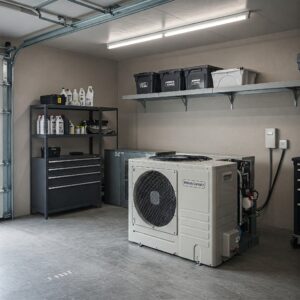
DIY-Friendly Options 🛠️
These cooling solutions are generally suitable for DIY installation:
✅ Portable air conditioners
✅ Window air conditioners (with basic DIY skills)
✅ Simple through-the-wall units (if you’re comfortable with basic construction)
✅ Evaporative coolers
What you’ll need for DIY installation:
- Basic tools like screwdrivers, drills, and measuring tape
- A friend to help with lifting heavier units
- Patience and the ability to follow instructions carefully
- Time to troubleshoot if issues arise
When to Call a Professional 👨🔧
These situations generally warrant professional installation:
✅ Mini-split systems (require specialized tools and knowledge)
✅ Complex through-wall installations
✅ When electrical upgrades are needed
✅ If you’re unsure about any aspect of the installation
✅ When warranty requires professional installation
Professional installation typically costs $300-$1,500 depending on the system complexity, but provides peace of mind and often includes warranties on the installation work.
Garage Air Conditioner Maintenance Tips
Proper maintenance extends the life of your garage air conditioner and ensures optimal performance. Here’s a seasonal checklist:
Monthly Maintenance Tasks
✅ Clean or replace air filters
✅ Check for unusual noises or operation
✅ Clear debris from around outdoor components
✅ Verify proper drainage of condensate
Seasonal Maintenance
✅ Clean evaporator and condenser coils (spring and fall)
✅ Check refrigerant levels (annually)
✅ Test thermostat accuracy
✅ Inspect all electrical connections
✅ Clean and adjust blower components
End of Season Care
✅ Clean the unit thoroughly
✅ Cover outdoor components during off-seasons
✅ For window units or portables, consider storing them properly during winter
FAQs About Garage Air Conditioners
Can I use a regular house air conditioner in my garage?
You can, but it’s not ideal. Regular home AC units are designed for insulated spaces and may struggle with the extreme temperature variations in garages. They may also wear out faster due to the harsher conditions. Garage-specific units are designed to handle these challenges more effectively.
How much does it cost to run a garage air conditioner?
Operating costs vary widely based on unit efficiency, local electricity rates, usage patterns, and garage insulation. On average, expect:
- Portable units: $0.10-$0.20 per hour
- Window units: $0.08-$0.15 per hour
- Mini-split systems: $0.07-$0.12 per hour
- Through-wall units: $0.09-$0.16 per hour
Do I need a special electrical circuit for my garage air conditioner?
Most portable and smaller window units can run on standard 120V outlets. However, larger units (12,000+ BTU) often require 220/240V power. Always check the manufacturer’s specifications before purchasing. If your garage doesn’t have adequate power, you may need an electrician to install a new circuit.
Can a garage air conditioner help with humidity?
Yes! Most air conditioners naturally remove humidity as they cool, which is especially helpful in garages where moisture can damage tools and stored items. Some units also offer dedicated dehumidification modes. In very humid climates, you might want to supplement with a separate dehumidifier for optimal results.
Is it worth insulating my garage before installing an air conditioner?
Absolutely. Insulating your garage walls, ceiling, and door can dramatically improve cooling efficiency and reduce operating costs. Even basic insulation improvements can make a significant difference in how effectively your garage air conditioner works and how much it costs to run.
Conclusion: Creating Your Ideal Garage Environment
A quality garage air conditioner transforms your space from an uncomfortable storage area into a functional workshop, home gym, or even living space. By understanding your specific needs, selecting the right unit type, and following proper installation and maintenance procedures, you can enjoy a comfortable garage environment regardless of outside temperatures.
Remember that the perfect cooling solution combines the right equipment with smart usage habits and proper insulation. Take time to evaluate your unique situation before purchasing, and don’t hesitate to consult professionals if you’re unsure about installation requirements.
With the recommendations in this guide, you’ll be well on your way to a cool, comfortable garage that you can enjoy year-round. The investment in a quality garage air conditioner pays dividends in comfort, productivity, and the ability to fully utilize what might otherwise be wasted space in your home.
Ready to transform your garage from a sweltering sauna to a cool, comfortable workspace? Check out our recommended garage air conditioner options on Amazon today and take the first step toward your ideal garage environment!
More FQAs:
❓ What is the best air conditioner for a garage without windows?
❓ How can I cool my garage without an air conditioner?
❓ Do portable air conditioners work well in garages?
❓ What BTU rating do I need for a garage air conditioner?
❓ How do I install an air conditioner in my garage?
Recommended for You:
- 10 Best Garage Air Conditioner Options for a Cool Workspace in 2025
- New Age Garage Cabinets: 7 Revolutionary Storage Solutions for Modern Homeowners
- Garage Door Track: 10 Powerful Tips Every Smart Homeowner Should Know
Disclaimer: This article contains affiliate links. If you purchase products through these links, we may earn a small commission at no additional cost to you.
