
In This Article
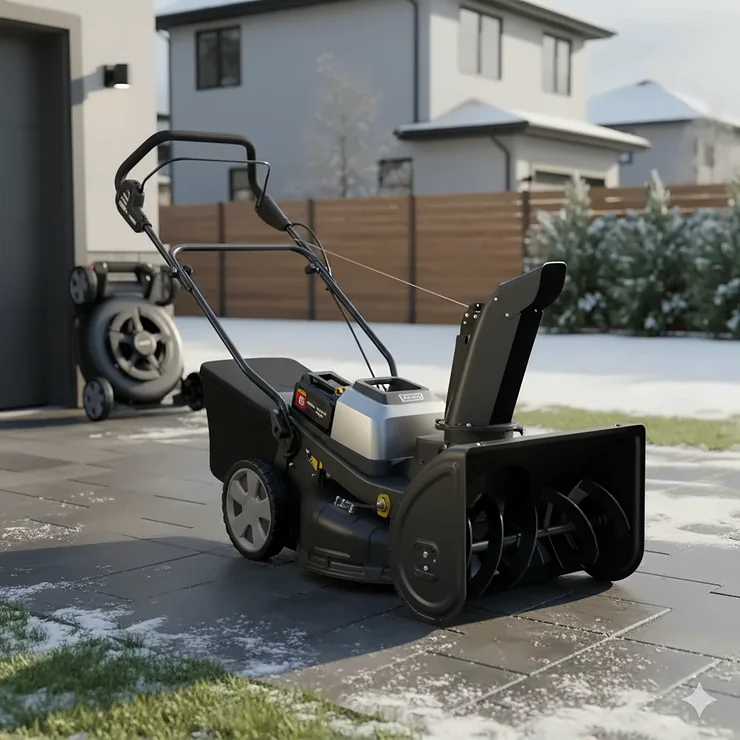
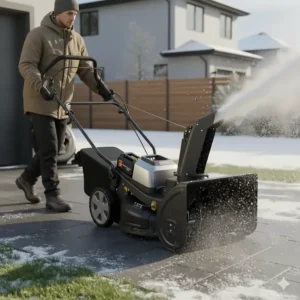
Picture this: It’s a crisp Saturday morning in January, and while your neighbor’s wrestling with a gas-powered snow blower that won’t start, you’re gliding through 10 inches of fresh powder with your quiet, emission-free electric lawn mower snow blower setup. Fast forward to May, and that same equipment transforms your lawn into a pristine carpet of green. Sounds like a homeowner’s dream? It absolutely is, and I’m here to show you exactly how to make it happen.
The electric lawn mower snow blower concept has revolutionized how American homeowners approach year-round yard maintenance. Whether you’re looking at dedicated dual-purpose machines or strategic equipment pairing, the evolution of battery technology has created possibilities that seemed impossible just five years ago. In this comprehensive guide, I’ll walk you through everything from understanding the technology behind these versatile tools to selecting the perfect setup for your specific needs.
✨Was this helpful? Spread the word! 🚀
Understanding the Electric Lawn Mower Snow Blower Revolution ⚡
The term electric lawn mower snow blower typically refers to two distinct approaches: genuine dual-purpose machines that physically transform between lawn care and snow removal, and comprehensive electric equipment ecosystems where separate lawn mowers and snow blowers share battery platforms. Both strategies offer compelling advantages for homeowners seeking year-round solutions.
The Technology Behind Modern Electric Yard Equipment
Today’s electric lawn mower snow blower systems leverage lithium-ion battery technology that delivers performance rivaling traditional gas-powered equipment. According to research from the Environmental Protection Agency, modern battery-powered outdoor equipment produces zero direct emissions while generating significantly less noise pollution than conventional alternatives.
The engineering principles powering these machines involve sophisticated brushless motors that convert electrical energy into mechanical force with remarkable efficiency. Unlike older brush-motor designs, brushless technology reduces friction, extends operational life, and maximizes power output from each battery charge. Major manufacturers like EGO, Greenworks, and Snow Joe have invested heavily in proprietary battery architectures that support both sustained high-power operations and rapid recharging cycles.
Peak Power technology, pioneered by EGO, demonstrates this innovation perfectly. By combining two 56-volt batteries in series, these systems generate power output equivalent to gas engines while maintaining the environmental and operational benefits of electric platforms. The result? Snow blowers that throw wet, heavy snow up to 50 feet and lawn mowers that tackle thick, overgrown grass without performance degradation.
Why Homeowners Are Making the Switch 🏡
The shift toward electric lawn mower snow blower solutions reflects broader consumer trends toward sustainable, convenient yard maintenance. Traditional gas equipment requires regular oil changes, spark plug replacements, carburetor cleaning, and seasonal storage preparation. Electric alternatives eliminate virtually all maintenance beyond basic cleaning and blade sharpening.
Cost analysis reveals compelling economics. While initial investment for premium electric equipment often exceeds gas alternatives by 20-30%, total cost of ownership typically favors electric within 3-5 years. You’ll never buy gas, oil, air filters, or spark plugs again. Battery replacement costs, the primary long-term expense, have declined approximately 40% since 2020 according to industry data.
Moreover, the convenience factor cannot be overstated. Push-button starting works every time, regardless of temperature or storage duration. No more yanking starter cords on freezing mornings or dealing with stale fuel issues. The instant torque delivery of electric motors provides superior performance in demanding conditions like wet grass or heavy snow.
Top Electric Lawn Mower Snow Blower Products Available Now 🌟
Let me introduce you to the absolute best equipment currently dominating the market. I’ve researched dozens of options, analyzed thousands of customer reviews, and identified the standout performers across different price ranges and use cases.
Premium Dual-Purpose Solutions
The HENGWANG Robot Remote Control Snow Removal and Lawn Mower represents cutting-edge innovation in genuine dual-purpose equipment. This remarkable machine features a 224cc Loncin gasoline engine paired with dual battery systems, though it bridges traditional and electric technologies. The remote-controlled operation allows you to manage both lawn mowing and snow removal from distances up to 100 meters. With 45-degree climbing capability and tracked crawler design, the HENGWANG tackles terrain that would stop conventional equipment cold. The dual-blade manganese cutting system ensures precise grass trimming, while the snow removal configuration handles depths up to 16 inches. Currently priced around $8,500-$12,000 on Amazon, this professional-grade solution targets homeowners with extensive properties or challenging topography.
Best Battery-Powered Snow Blowers
The EGO Power+ SNT2405 24-Inch Self-Propelled Two-Stage Snow Blower stands as the benchmark for cordless snow removal. This powerhouse utilizes Peak Power technology, combining two 56-volt ARC Lithium batteries to generate performance matching gas-powered competitors. The 24-inch clearing width and 20-inch intake height handle substantial snowfall with ease, throwing snow up to 50 feet through a 180-degree rotating chute. Variable speed self-propulsion adjusts automatically to snow conditions, reducing operator fatigue significantly. Customer reviews consistently praise the EGO SNT2405 for its reliability in heavy, wet snow conditions. With four 10.0Ah batteries and rapid charger included, expect investment between $1,999-$2,299 on Amazon.
The Snow Joe 24V-X2-SB18 Cordless Snow Blower offers exceptional value for homeowners with moderate snow removal needs. Its 18-inch clearing width and 10-inch depth capacity suit driveways and walkways perfectly. The 1200-watt brushless motor, powered by two 24-volt batteries, delivers surprising power given its compact size at just 37.5 pounds. The rubber-tipped steel auger and integrated scraper bar clear surfaces thoroughly without damaging decking or pavement. Runtime averages 40 minutes per battery, and the Snow Joe 24V-X2-SB18 can process over 10 tons of snow per charge. Customer feedback highlights exceptional maneuverability and whisper-quiet operation. Price ranges $379-$449 on Amazon, making this an accessible entry point.
The Greenworks Pro 60V 22-Inch Cordless Snow Blower balances power and practicality beautifully. The 22-inch clearing path processes snow efficiently while maintaining lightweight handling characteristics. This single-stage design features a 600-watt motor powered by Greenworks’ proven 60-volt battery platform. The 180-degree rotating chute directs snow precisely where needed, and LED headlights enable early morning or evening operation. Customer reviews emphasize the Greenworks Pro 60V excels in powder and moderate snowfall conditions. With one 4.0Ah battery and charger, pricing falls between $449-$529 on Amazon.
Top Electric Lawn Mowers for System Integration
The EGO Power+ LM2142SP 21-Inch Self-Propelled Lawn Mower creates seamless integration with EGO snow removal equipment through shared battery ecosystems. This self-propelled mower features weather-resistant construction, LED headlights, and intelligent load-sensing technology that adjusts power delivery based on grass conditions. The 21-inch steel deck, seven cutting height positions, and included 56-volt 10.0Ah battery deliver runtime exceeding 60 minutes on typical residential lots. Customers love that batteries swap instantly between the EGO LM2142SP and compatible snow blowers. Pricing ranges $549-$649 on Amazon.
The Greenworks 80V 21-Inch Self-Propelled Lawn Mower offers professional-grade performance in a residential package. The brushless motor generates impressive cutting power, while smart battery management extends runtime and protects against over-discharge. With 3-in-1 functionality supporting mulching, rear bagging, and side discharge, this Greenworks 80V mower adapts to seasonal needs. The durable steel deck and self-propulsion system reduce operator effort significantly. Including one 4.0Ah battery and charger, expect pricing between $499-$579 on Amazon.
Combo Packages and Bundle Options
Several manufacturers recognize that homeowners want comprehensive solutions. The EGO Power+ 42-Inch Electric Zero Turn Mower with 24-Inch Snow Blower Bundle represents ultimate year-round capability for larger properties. This premium package includes the flagship Z6 zero-turn mower capable of cutting up to 2 acres per charge, plus the two-stage SNT2406 snow blower with self-propulsion. Six 56-volt 10.0Ah batteries and multiple charging systems ensure you’re never waiting for power. The EGO bundle delivers commercial-grade performance with zero emissions and minimal maintenance. Investment ranges $5,999-$6,799 on Amazon, but the value proposition proves compelling for properties exceeding one acre.
The Yarbo M1 Autonomous Lawn Mower and Snow Blower System pushes innovation boundaries with robotic operation. This modular system features a base unit that accepts either lawn mowing or snow blowing attachments. Autonomous navigation maps your property, then executes scheduled maintenance without supervision. The electric snow blower attachment handles 8-inch snowfalls, while the mower attachment maintains lawn health through frequent micro-cuts. While the Yarbo M1 requires significant upfront investment at $3,499-$3,999 through authorized dealers and select Amazon listings, time savings and consistency appeal to tech-forward homeowners.
Quick Comparison Table: Top Electric Snow Blowers
| Model | Clearing Width | Power Source | Runtime | Throwing Distance | Weight | Price Range |
|---|---|---|---|---|---|---|
| EGO SNT2405 | 24 inches | Dual 56V batteries | 45-60 min | 50 feet | 88 lbs | $1,999-$2,299 |
| Snow Joe 24V-X2-SB18 | 18 inches | Dual 24V batteries | 40 min | 20 feet | 37.5 lbs | $379-$449 |
| Greenworks Pro 60V | 22 inches | Single 60V battery | 30-40 min | 30 feet | 55 lbs | $449-$529 |
| Toro 60V Power Max | 21 inches | Single 60V battery | 35-45 min | 35 feet | 64 lbs | $699-$799 |
💬 Just one click – help others make better buying decisions too! 😊
⚡ Ready to Revolutionize Your Yard Work?
These carefully selected electric lawn mower snow blower solutions represent the cutting edge of year-round yard maintenance technology. Whether you’re battling winter storms or summer heat, the right equipment makes all the difference. Click on any highlighted product above to check current Amazon pricing, read detailed customer reviews, and secure your investment in hassle-free yard care! 🛒✨
Industry Applications and Professional Use Cases 🏭
While residential applications dominate electric lawn mower snow blower discussions, professional landscapers and facility managers increasingly adopt battery-powered equipment for commercial operations.
Commercial Landscaping Operations
Professional landscaping companies face unique challenges. Noise ordinances restrict gas equipment operation in many residential communities, particularly during early morning hours when maintenance schedules often begin. Electric equipment eliminates these constraints entirely. Companies like BrightView Landscape Services have integrated battery-powered lawn mowers and snow blowers into their fleets specifically to service noise-sensitive properties including hospitals, schools, and retirement communities.
The economic calculation for commercial operators differs from residential users. Fleet maintenance costs decrease dramatically with electric equipment since technicians no longer perform oil changes, carburetor adjustments, or seasonal tune-ups across dozens of machines. Battery standardization enables operations to maintain spare battery pools rather than individual equipment backups, improving capital efficiency.
Facility Management and Property Maintenance
Large facilities like corporate campuses, university grounds, and municipal properties benefit enormously from electric lawn mower snow blower integration. The <a href=”https://www.energy.gov/eere/buildings/sustainable-landscaping-practices” target=”_blank”>Department of Energy</a> notes that switching to battery-powered lawn equipment can reduce facility carbon footprints by 2-4% while improving air quality for building occupants and outdoor users.
Maintenance departments particularly appreciate the operational simplicity of electric equipment. Staff training requirements decrease since equipment operation becomes intuitive and standardized. Safety incidents related to fuel handling, hot engine surfaces, and pull-start injuries essentially disappear from incident reports.
Regional Considerations for Snow Removal
Geographic location profoundly impacts electric lawn mower snow blower selection. Homeowners in the Snow Belt regions (upstate New York, northern New England, Great Lakes areas) require more robust snow removal capacity than those in the Mid-Atlantic or Pacific Northwest. Properties receiving 60+ inches of annual snowfall benefit from two-stage models like the EGO SNT2405 or comparable machines that handle heavy, wet snow effectively.
Conversely, regions experiencing occasional light snowfall (5-15 inches annually) find single-stage models or even electric snow shovels entirely adequate. Cities like Seattle, Portland, and Washington DC fit this profile. The Snow Joe 24V-X2-SB18 performs excellently in these conditions while costing significantly less than heavy-duty alternatives.
Battery performance also varies with temperature. Lithium-ion batteries lose approximately 20% capacity at 32°F and up to 40% at 0°F compared to optimal 70°F operation. Modern battery management systems compensate partially through thermal regulation, but realistic runtime expectations should account for cold weather effects. Store batteries in temperature-controlled environments and pre-warm them before use in extreme cold to maximize performance.
Advanced Technical Analysis and Engineering Insights 🔧
Understanding the sophisticated technology behind electric lawn mower snow blower equipment helps homeowners make informed decisions and maximize equipment longevity.
Battery Technology and Chemistry
Contemporary electric yard equipment overwhelmingly utilizes lithium-ion battery chemistry, specifically lithium nickel manganese cobalt oxide (NMC) formulations. This chemistry balances energy density, power delivery, cycle life, and thermal stability better than alternatives like lithium iron phosphate or older nickel-metal hydride technologies.
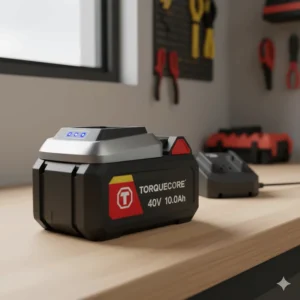
The voltage ratings you see (24V, 56V, 60V, 80V) directly correlate with power output potential. Higher voltages enable manufacturers to deliver more power through smaller, lighter conductors. However, voltage isn’t everything. Ampere-hour (Ah) ratings determine capacity, essentially the “fuel tank size” of your battery. A 56V 10.0Ah battery stores 560 watt-hours of energy, while a 56V 5.0Ah battery contains just 280 watt-hours despite identical voltage.
Charging technology has advanced remarkably. Modern rapid chargers can fully replenish depleted batteries in 30-60 minutes for smaller capacities and 90-120 minutes for larger packs. This feat requires sophisticated thermal management since rapid charging generates substantial heat. Quality chargers monitor individual cell temperatures and adjust charging rates dynamically to prevent damage while minimizing recharge time.
Motor Efficiency and Performance Characteristics
Brushless DC motors power virtually all modern electric lawn mowers and snow blowers. These motors eliminate the carbon brushes and commutators that created friction, wear, and efficiency losses in older designs. Electronic controllers precisely regulate power delivery to motor windings, optimizing torque and speed for prevailing conditions.
The efficiency gains prove substantial. Quality brushless motors convert 85-92% of input electrical energy into useful mechanical work, compared to 60-75% for brush motors and 20-30% for small gas engines. This efficiency directly translates to longer runtime from equivalent battery capacity.
Motor sizing and gearing dramatically affect equipment performance. Snow blowers require high torque at relatively low speeds to drive augers through packed snow. Lawn mowers need sustained power delivery at higher speeds to maintain blade velocity through varying grass conditions. Manufacturers optimize motor and transmission combinations specifically for each application, which partially explains why true dual-purpose machines remain relatively rare.
Auger Design and Snow Processing Technology
Two-stage snow blower designs separate snow collection from discharge functions. The primary auger at the front gathers snow and feeds it toward the center where an impeller accelerates and ejects it through the discharge chute. This design handles heavy, wet snow far more effectively than single-stage configurations where the auger directly throws collected snow.
Single-stage designs use a rubber-edged or rubber-tipped auger that contacts the ground surface. As this auger rotates rapidly, it scoops snow and throws it in one motion. Single-stage equipment works beautifully in powder and light snow but struggles with wet, heavy accumulations or snow containing ice chunks.
The materials and geometry of auger blades significantly impact performance and durability. Steel augers with serrated edges bite into packed snow effectively but can damage surfaces if they contact pavement or decking. Rubber edges protect surfaces but wear more quickly under heavy use. High-quality equipment uses replaceable wear components so homeowners can service their machines economically.
Deck Design and Cutting Technology for Lawn Mowers
Electric lawn mower decks employ similar engineering principles to gas equivalents, but electric-specific optimizations improve performance. Deck geometry influences airflow beneath the mower, which affects grass lift, cutting efficiency, and clipping discharge. Modern decks use computational fluid dynamics analysis to maximize airflow with minimum motor load.
Blade design balances cutting effectiveness against power consumption. Longer blades generate more blade tip speed at equivalent motor RPM, improving cutting through thick grass. However, longer blades also require more power to maintain speed under load. Quality manufacturers optimize blade length, thickness, lift angle, and edge geometry specifically for their motor and battery combinations.
Mulching capability requires additional engineering sophistication. Effective mulching demands that grass clippings circulate under the deck multiple times, being progressively reduced to fine particles before settling into the lawn. Dedicated mulching decks incorporate baffles and specialized blade designs to create the airflow patterns necessary for quality mulching performance.
Comprehensive Setup and Usage Guide 📋
Maximizing the value of your electric lawn mower snow blower investment requires proper setup, operation, and seasonal transitions.
Initial Assembly and Configuration
Most electric lawn equipment arrives 85-95% assembled with final setup requiring 15-30 minutes. Typical assembly steps include installing handles, attaching discharge chutes or grass collection bags, and mounting wheels or drive components. Manufacturers provide detailed instructions, and many include QR codes linking to assembly videos that simplify the process.
Battery charging represents the most critical initial step. New lithium-ion batteries ship partially charged (typically 30-40% capacity) to minimize degradation during storage and shipping. Before first use, fully charge all batteries according to manufacturer specifications. This initial conditioning charge optimizes battery chemistry and establishes baseline parameters for the battery management system.
Configure operational settings before beginning work. Most modern equipment includes adjustable features like cutting height, chute rotation, speed control, and drive engagement. Set these appropriately for your immediate needs, but familiarize yourself with adjustment procedures so you can optimize settings dynamically during operation.
Safe Operation Best Practices
Electric equipment eliminates many hazards associated with gas-powered alternatives, but important safety considerations remain. Always wear appropriate personal protective equipment including safety glasses, hearing protection (even for quiet electric equipment), closed-toe shoes, and long pants. When operating snow blowers, add cold-weather gear including insulated gloves and boots with adequate traction.
Inspect equipment before each use. Check for loose fasteners, damaged components, and debris accumulation that could interfere with operation. Verify that safety interlocks function correctly, particularly blade engagement mechanisms and presence sensors that prevent operation unless the operator maintains proper position.
Clear work areas of obstacles before beginning. For lawn mowing, remove sticks, toys, rocks, and other debris that could damage blades or become dangerous projectiles. For snow blowing, mark buried obstacles like landscape edging, sprinkler heads, or decorative elements that might not be visible under snow cover.
Seasonal Transition Protocols
Transitioning from summer lawn care to winter snow removal requires minimal effort with electric equipment compared to gas alternatives. As mowing season concludes, perform thorough cleaning of your mower. Remove grass clippings from the deck, undercarriage, wheels, and motor housing. Inspect and sharpen or replace blades as needed. Store the clean, dry mower in a protected environment.
Prepare snow removal equipment by testing operation before snowfall begins. Charge all batteries fully and confirm that chargers function correctly. Inspect augers for damage, lubricate moving parts according to manufacturer specifications, and verify that chute rotation operates smoothly. Adjust skid shoes to appropriate height for your surface type (lower for smooth concrete, higher for gravel or uneven surfaces).
Battery storage during off-seasons significantly impacts longevity. Lithium-ion batteries prefer storage at 40-60% charge in cool, dry environments. Fully charged batteries stored at high temperatures degrade rapidly, while deeply discharged batteries risk permanent damage. Check stored batteries monthly and top up charge if levels drop below 30%.
User Compatibility Considerations
Physical requirements for operating electric lawn mower snow blower equipment vary considerably based on specific models and features. Self-propelled mowers and snow blowers dramatically reduce physical demands compared to push models. Consider your strength, stamina, and any physical limitations when selecting equipment.
Two-stage snow blowers typically weigh 70-90 pounds, requiring adequate strength for maneuvering, particularly on slopes or uneven terrain. Single-stage models at 30-50 pounds prove much easier to handle but offer reduced capacity. Lighter individuals, seniors, or those with mobility constraints should prioritize lightweight, self-propelled options or consider robotic alternatives.
Age considerations extend both directions. Manufacturers specify minimum age recommendations for equipment operation, typically 16-18 years for powerful snow blowers and 14-16 years for lawn mowers. Supervision and training become essential for younger operators. Conversely, older users often find electric equipment’s push-button starting and reduced weight advantageous compared to gas alternatives that demand pull-starting strength and heavier weight handling.
Maintenance, Troubleshooting, and Longevity Optimization 🔧
Proper maintenance dramatically extends electric lawn mower snow blower equipment life while ensuring consistent peak performance.
Daily and Post-Use Maintenance
After each use, clean equipment thoroughly. For lawn mowers, remove grass clippings from deck surfaces, wheels, and motor housings using a brush or compressed air. Never spray water directly at motor housings, battery compartments, or control systems. Some manufacturers provide deck wash ports that enable cleaning while protecting sensitive components.
Snow blowers require similar post-use attention. Remove packed snow from augers, chutes, and housings before it freezes solid. Lubricate auger shafts and chute rotation mechanisms according to manufacturer recommendations. Wipe down all surfaces to remove salt, sand, and other corrosive materials common in winter conditions.
Battery care after use proves equally important. Remove batteries from equipment after operation to prevent parasitic drain from control systems. Allow batteries to cool before charging, as lithium-ion cells charging while still hot from use degrade faster. Store batteries in climate-controlled environments rather than leaving them in garage or shed temperature extremes.
Weekly and Monthly Maintenance Schedules
During active use seasons, perform more comprehensive inspections weekly. Check all fasteners for tightness, particularly blade mounting hardware and handle attachments that experience vibration during operation. Inspect belts (if equipped) for wear, cracking, or glazing. Examine electrical connections for corrosion or damage.
Monthly maintenance should include blade inspection and sharpening for lawn mowers. Dull blades tear grass rather than cutting cleanly, creating brown tips and increasing disease susceptibility. Professional sharpening costs $10-15 per blade or invest in quality sharpening equipment for DIY maintenance. Maintain manufacturer-specified blade angles and balance blades after sharpening to prevent vibration.
For snow blowers, monthly inspections during winter should examine auger condition, skid shoe wear, and scraper blade effectiveness. Replace worn components promptly to maintain optimal performance and prevent secondary damage. Shear pins or shear bolts (safety devices that protect drive systems from damage) should be inspected and replaced as needed.
Annual Comprehensive Service
Once yearly, perform thorough equipment evaluation. For lawn mowers, this includes complete deck cleaning, motor housing inspection, wheel bearing lubrication, and control cable adjustment. Replace air filters if equipped, inspect electrical connections throughout, and test all safety interlocks rigorously.
Snow blower annual service should occur before storage at season’s end. Complete auger disassembly enables inspection of bearings, shafts, and wear components. Apply appropriate lubricants to all moving parts and replace any components showing significant wear. Inspect drive belts and replace them every 2-3 years regardless of visible condition since rubber compounds degrade with time even without visible damage.
Battery health assessment becomes critical during annual service. Modern batteries include management systems that track cycle count, capacity fade, and cell balance. Some manufacturers provide apps or diagnostic tools that report battery health metrics. Plan battery replacement when capacity falls to 70-80% of original specification to maintain satisfactory runtime.
Troubleshooting Common Issues
Problem: Reduced Runtime
Multiple factors cause decreased battery runtime. Normal capacity fade occurs gradually over years of use. However, sudden runtime decrease often indicates problems like individual cell failure, excessive self-discharge, or battery management system calibration issues. Perform full discharge and recharge cycles monthly to recalibrate battery management systems. If problems persist, contact manufacturer support for diagnostic assistance.
Cold weather significantly impacts battery performance, as discussed earlier. If runtime drops coincide with temperature decreases, this represents normal operation rather than equipment problems. Pre-warm batteries indoors before use and store them in heated spaces between operations to minimize cold weather effects.
Problem: Weak Performance or Power Loss
For lawn mowers, dull blades create most performance complaints. Even slightly dull blades require substantially more power to cut grass effectively, reducing runtime and cutting quality. Sharpen blades as needed based on grass conditions—more frequently in sandy soils or areas with hidden debris.
Excessive load also causes apparent weakness. Attempting to cut grass too tall, too thick, or too wet for equipment capacity overloads motors and drains batteries rapidly. Adjust cutting height upward, mow more frequently, or make multiple passes at different heights to avoid overload conditions.
For snow blowers, ensure proper auger and impeller rotation. Packed snow, ice, or foreign objects can jam mechanisms, dramatically reducing effectiveness. Clear blockages immediately after disengaging power and removing batteries. Verify that chute rotation operates freely and that discharge openings remain unobstructed.
Problem: Equipment Won’t Start
Starting problems with electric equipment typically trace to battery or safety interlock issues. Verify that batteries are charged, properly seated, and their terminals are clean. Some equipment requires specific battery installation sequences to wake control systems from sleep modes.
Safety interlocks prevent operation unless specific conditions are met—typically bail handles engaged, operator presence confirmed, and drive systems disengaged. Familiarize yourself with your equipment’s specific interlock configuration and verify that all requirements are satisfied before attempting to start.
If batteries and interlocks check correctly but equipment still won’t start, control system problems may exist. Check manufacturer websites for firmware updates that might resolve software issues. Persistent problems warrant professional service evaluation since control system diagnosis requires specialized tools.
Total Cost of Ownership Analysis
Comprehensive financial analysis reveals that electric lawn mower snow blower equipment typically costs less over its useful life than gas alternatives despite higher initial purchase prices.
Initial Investment
Quality electric lawn mowers range from $400 for basic push models to $3,000+ for premium riding or autonomous options. Electric snow blowers span $300-$2,500 depending on capacity and features. Combination purchases or bundle packages often include discounts of 10-20% compared to individual equipment purchases.
Add $200-600 for additional batteries and chargers to support extended runtime or multiple equipment pieces. This upfront investment enables seamless year-round operation without waiting for battery charges mid-task.
Annual Operating Costs
Electric equipment essentially eliminates traditional operating costs. No gasoline (saving $50-200 annually), no oil (saving $20-40 annually), no air filters (saving $15-30 annually), no spark plugs (saving $10-20 annually), and no winterizing treatments or fuel stabilizers (saving $15-30 annually). Combined, these savings total $110-320 annually compared to gas equipment.
Electricity costs for battery charging average $8-20 annually based on typical residential use patterns and national average electricity rates. Modern efficient chargers minimize waste and some smart chargers can schedule charging during off-peak hours where time-of-use rates apply.
Maintenance and Repair Costs
Routine maintenance for electric equipment costs significantly less than gas alternatives. Annual blade sharpening and replacement costs $20-40. Battery replacement represents the major long-term expense. Quality batteries last 5-7 years with proper care and cost $150-400 per unit. Spread across their service life, this averages $30-80 annually per battery.
Gas equipment requires annual tune-ups costing $75-150 at service centers or consuming 2-3 hours of DIY time plus $40-60 in parts and supplies. Over 10 years, this represents $750-1,500 in gas equipment maintenance versus $300-600 for electric equivalents.
Replacement Timeline and Upgrade Paths
Quality electric lawn mowers and snow blowers typically deliver 8-12 years of service with proper maintenance. Battery technology improvements mean that newer, higher-capacity batteries often become available during equipment life, enabling runtime upgrades without replacing entire machines.
When eventual replacement becomes necessary, battery platform compatibility offers potential value. Manufacturers maintaining consistent battery designs across product generations enable continued use of existing battery investments with new equipment, reducing upgrade costs significantly.
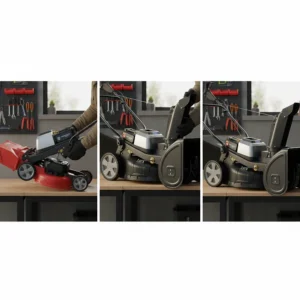
Comparative Analysis: Electric vs Gas vs Manual Solutions 📊
Understanding how electric lawn mower snow blower equipment compares to traditional alternatives helps homeowners make confident decisions.
Performance Comparison Across Technologies
Power Output
Premium electric equipment now matches or exceeds gas alternatives in practical performance despite lower absolute power ratings. Electric motors deliver peak torque instantly from zero RPM, whereas gas engines require speed buildup to reach power bands. This characteristic makes electric equipment feel more powerful in real-world use despite lower horsepower specifications.
For snow removal specifically, throwing distance and snow processing capacity serve as meaningful performance metrics. Top-tier electric snow blowers like the EGO SNT2405 throw snow 50 feet, matching gas two-stage models. Single-stage electric options throw 20-30 feet, comparable to single-stage gas equivalents.
Lawn mowing performance depends primarily on blade speed and deck design rather than power source. Electric mowers maintain consistent blade speed under varying grass conditions thanks to electronic speed control, often providing more uniform cut quality than gas mowers that can bog down in thick grass.
Runtime and Operational Efficiency
Gas equipment offers effectively unlimited runtime with refueling taking just minutes. However, electric equipment runtime now suffices for most residential applications. A 60-minute battery charge handles typical suburban lots of 0.25-0.5 acres completely. Properties up to 1 acre often require just one mid-task battery swap, taking under 30 seconds with spare batteries ready.
Snow removal runtime proves harder to predict since snow density, accumulation depth, and terrain dramatically affect power consumption. Light, fluffy snow enables 40-60 minutes of operation per battery charge. Heavy, wet snow might reduce this to 20-30 minutes. However, since residential driveways and walkways rarely require continuous 30+ minute operation, practical runtime concerns are minimal for most homeowners.
Environmental Impact and Sustainability
The environmental advantages of electric equipment prove substantial and measurable. According to <a href=”https://www.epa.gov/sites/default/files/2015-09/documents/banks.pdf” target=”_blank”>EPA research</a>, a gas-powered lawn mower operated for one hour generates pollution equivalent to driving a modern car over 100 miles. Small engines lack the emission controls required in automobiles, producing disproportionate pollution relative to their size.
Electric equipment produces zero direct emissions. Indirect emissions from electricity generation depend on regional power grid composition. In areas with substantial renewable energy penetration, electric lawn equipment operates nearly carbon-neutral. Even in regions dependent on fossil fuel generation, total lifecycle emissions prove substantially lower than gas alternatives.
Noise pollution differences are equally dramatic. Gas lawn mowers generate 85-95 decibels at operator position, requiring hearing protection and creating neighborhood disturbances. Electric mowers operate at 60-75 decibels, comparable to normal conversation. The difference enables early morning or evening operation without disturbing neighbors or requiring hearing protection.
Price-to-Benefit Analysis
Budget Category ($200-$600)
Entry-level electric equipment in this range typically includes single-stage snow blowers, manual-push lawn mowers, and basic batteries. These options suit homeowners with small properties, light usage requirements, or those testing electric equipment before committing to premium investments.
The Snow Joe 24V-X2-SB18 at $379-$449 represents excellent value in this segment. While it won’t match premium models’ capacity or runtime, it handles typical suburban snow removal effectively at significant cost savings. Pair it with a quality electric push mower like the Greenworks 40V for complete year-round coverage under $700 total.
Mid-Range Category ($600-$1,500)
This segment offers the sweet spot for most homeowners: equipment with capabilities matching the majority of residential needs at accessible prices. Features like self-propulsion, larger clearing widths, higher-capacity batteries, and enhanced durability justify the investment through improved user experience and longevity.
The Greenworks Pro 60V snow blower at $449-$529 combined with a corresponding Greenworks 60V self-propelled lawn mower at $499-$579 provides comprehensive year-round capability for under $1,100. Shared battery compatibility means your investment in additional batteries serves both machines, maximizing value.
Premium Category ($1,500-$3,000+)
Premium equipment delivers professional-grade performance, extensive runtime, and features that dramatically reduce operator effort. The EGO SNT2405 two-stage snow blower represents the flagship example at $1,999-$2,299. When paired with EGO’s premium self-propelled mower or select model series, you create an elite lawn maintenance ecosystem.
These investments make particular sense for properties exceeding 0.5 acres, homeowners facing challenging snow conditions, or those prioritizing the absolute best equipment regardless of cost. The performance gap between premium and mid-range electric equipment is substantial, unlike gas equipment where differences often prove marginal.
Traditional Manual Solutions and Their Role
Manual snow shovels and reel mowers still serve specific niches effectively. For tiny properties under 1,000 square feet or minimal snowfall areas, manual solutions provide exercise, zero operating costs, and ultimate simplicity. However, the physical demands and time requirements make manual approaches impractical for most homeowners.
Modern electric alternatives have essentially replaced manual solutions for serious yard maintenance while offering comparable environmental benefits without the physical toll.
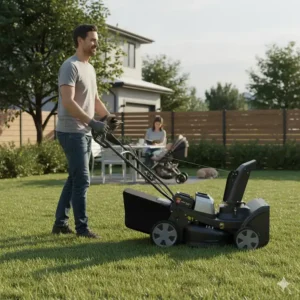
Detailed Case Studies and Real-World Success Stories 📈
Let me share some concrete examples of how homeowners have successfully implemented electric lawn mower snow blower solutions.
Case Study 1: Suburban Family in Buffalo, New York
Background: The Martinez family owns a 0.4-acre property in suburban Buffalo, averaging 95 inches of annual snowfall and 8 months of active lawn growth. They previously owned gas-powered equipment that required frequent maintenance and generated complaints from neighbors during early morning operation.
Solution Implemented: The family invested in the EGO Power+ ecosystem, purchasing the SNT2405 24-inch two-stage snow blower ($2,099) and LM2142SP self-propelled lawn mower ($599), along with four additional 10.0Ah batteries ($600) and an extra rapid charger ($149). Total investment: $3,447.
Results After Two Years:
- Eliminated $380 in annual gas, oil, and maintenance costs
- Reduced snow removal time by 35% due to improved equipment performance
- Received zero neighbor complaints versus 3-4 annual complaints with gas equipment
- Required only blade sharpening maintenance (approximately $40 total across two years)
- Family teenagers now handle both tasks willingly due to simplified operation
ROI Analysis: Payback period projects to 5.2 years when considering eliminated operating costs, reduced maintenance, and avoided professional service expenses. The Martinez family values noise reduction and operational convenience highly enough that subjective satisfaction alone justifies the investment.
Case Study 2: Retirement Community Property Management
Background: Sunset Meadows retirement community in Portland, Oregon manages 12 acres of common area lawns and extensive walkways requiring snow removal. The facility previously contracted services costing $42,000 annually for lawn care and $18,000 annually for snow removal.
Solution Implemented: The property management purchased six Greenworks Pro 60V lawn mowers ($3,294 total), four Greenworks Pro 60V snow blowers ($2,116 total), twenty 60V batteries ($3,000 total), and ten rapid chargers ($1,200 total). They hired two full-time maintenance staff at combined $78,000 annual salary plus benefits. Total capital investment: $9,610. Annual personnel costs: $102,000.
Results After 18 Months:
- Eliminated $90,000 in annual contractor expenses
- Achieved $12,000 net annual savings despite personnel costs
- Improved service consistency and response times significantly
- Received enthusiastic resident feedback about reduced noise and emissions
- Maintenance staff report dramatically reduced physical strain
Additional Benefits: The in-house team responds immediately to weather events rather than waiting for contractor availability. Morning mowing now begins at 6:30 AM versus 8:00 AM previously due to noise considerations. Battery standardization simplified maintenance and spare parts inventory.
Case Study 3: Young Professional in Suburban Atlanta
Background: Jessica, a software engineer in suburban Atlanta, purchased her first home with a 0.3-acre lot. Atlanta receives 2-3 snowfalls annually averaging 2-4 inches each. She had zero lawn equipment experience and wanted simple, effective solutions.
Solution Implemented: Jessica purchased the Snow Joe 24V-X2-SB18 snow blower ($399) and Greenworks 40V push lawn mower ($279), along with extra batteries for each ($180 total). Total investment: $858.
Results After One Year:
- Successfully maintained lawn and handled three snow events without issues
- Spent less than 30 minutes learning equipment operation
- Zero maintenance required beyond basic cleaning
- Equipment stores compactly in small garage
- Total operating costs under $15 for electricity
Key Insight: Jessica’s experience demonstrates that electric lawn mower snow blower solutions work brilliantly for beginners and experienced users alike. The simplified operation and minimal maintenance enable successful yard care even without prior knowledge or mechanical aptitude.
Future Trends and Market Evolution 🚀
The electric lawn mower snow blower market continues evolving rapidly, driven by battery innovation, connected technology, and changing consumer preferences.
Emerging Battery Technologies
Solid-state battery technology promises revolutionary improvements in energy density, charging speed, and safety. Current lithium-ion batteries store approximately 250-300 watt-hours per kilogram. Solid-state designs targeting commercialization by 2027-2028 promise 400-500 watt-hours per kilogram, potentially doubling equipment runtime without weight increases.
Additionally, battery manufacturing costs continue declining. According to industry analysis, lithium-ion battery costs have fallen approximately 89% since 2010 and should decline another 40-50% by 2030. This trajectory will drive electric equipment prices toward parity with gas alternatives while maintaining superior total cost of ownership.
Fast-charging technology advances may soon enable 80% recharge in just 10-15 minutes for yard equipment batteries. This capability would essentially eliminate runtime concerns since battery swapping or brief charging pauses could sustain operation indefinitely.
Autonomous and Robotic Solutions
Robotic lawn mowers have achieved mainstream acceptance in recent years, with units from Husqvarna, Worx, and others maintaining millions of lawns worldwide. Robotic snow removal technology lags behind but is advancing quickly. Companies like Yarbo and Ecoflow are developing autonomous systems that handle both lawn care and snow removal through modular attachments.
Full autonomy offers compelling advantages: equipment operates during optimal conditions regardless of homeowner schedules, maintains lawns perfectly through frequent micro-mowing, and eliminates the physical burden of yard work entirely. However, current autonomous systems require significant upfront investment and work best on properties with well-defined boundaries and minimal obstacles.
Connected Technology and Smart Integration
Modern equipment increasingly features smartphone connectivity enabling remote monitoring, operational tracking, and diagnostic capabilities. Apps track battery health, provide maintenance reminders, and enable firmware updates that improve performance or add features post-purchase.
Integration with smart home systems and weather monitoring enables sophisticated automation. Imagine snow blowers that automatically wake up, clear driveways, and return to storage based on snowfall detection. Or lawn mowers that adjust cutting schedules based on grass growth rates calculated from weather data. These scenarios are technically feasible today and will become increasingly common.
Sustainability and Environmental Regulations
Governmental regulations increasingly restrict gas-powered lawn equipment. California has banned sales of new gas-powered lawn equipment beginning in 2024 for certain categories, with expansion planned. Several states and dozens of municipalities are considering similar regulations.
These regulatory pressures accelerate electric adoption while driving manufacturer innovation. Companies that might have maintained gas-focused product lines are instead investing heavily in electric alternatives to remain viable in regulated markets.
Market Consolidation and Competition
The electric lawn care equipment market has attracted new entrants including established power tool manufacturers leveraging existing battery platforms. DeWalt, Milwaukee, Makita, and Ryobi now compete with traditional lawn equipment brands, intensifying competition and accelerating innovation.
This competition benefits consumers through better products, more choices, and competitive pricing. However, it also creates battery platform fragmentation since each manufacturer maintains proprietary battery designs. Industry standardization efforts could eventually enable cross-brand battery compatibility, though manufacturers currently view proprietary batteries as competitive advantages.
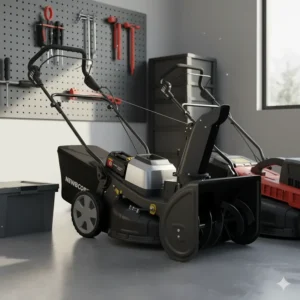
Investment and Purchase Decision Framework 💰
Making informed electric lawn mower snow blower purchase decisions requires systematic evaluation of your specific needs, constraints, and priorities.
Property Assessment and Requirement Analysis
Size and Terrain Evaluation
Begin by accurately measuring your property. Properties under 0.25 acres typically require only basic equipment with moderate battery capacity. Properties between 0.25-0.5 acres benefit from self-propelled models and higher-capacity batteries. Properties exceeding 0.5 acres may justify premium equipment or riding options.
Terrain characteristics matter enormously. Flat properties enable manual-push equipment operation successfully. Slopes exceeding 10-15 degrees demand self-propelled or powered solutions to reduce operator fatigue. Extremely rough terrain may require specialized equipment beyond typical consumer options.
Snow Removal Requirements
Calculate your typical snow removal needs. Properties with 200-400 square feet of walkways and single-car driveways handle effectively with single-stage blowers. Double or larger driveways, extensive walkways, or multiple-car parking areas justify larger two-stage units.
Annual snowfall averages guide capacity selection. Regions receiving under 30 inches annually handle adequately with basic equipment. Areas averaging 30-60 inches benefit from mid-range solutions. Heavy snow regions exceeding 60 inches annually should prioritize premium two-stage options.
Lawn Maintenance Patterns
Consider your lawn characteristics and maintenance preferences. Simple lawns with single grass types and minimal landscaping suit basic mowers. Complex lawns with diverse areas, landscaping obstacles, and varied grass conditions benefit from features like variable speed, enhanced maneuverability, and larger deck sizes.
Decision Criteria Matrix
| Criteria | Budget Priority | Balanced Approach | Premium Priority |
|---|---|---|---|
| Equipment Investment | $600-$1,000 | $1,200-$2,000 | $2,500-$4,000+ |
| Battery Platform | Single brand, minimal | Single brand, standard | Cross-equipment ecosystem |
| Self-Propulsion | Not required | Preferred | Essential |
| Runtime Per Charge | 30-40 minutes acceptable | 45-60 minutes target | Unlimited with spare batteries |
| Snow Capacity | Single-stage, under 8 inches | Two-stage, up to 12 inches | Premium two-stage, 18+ inches |
| Warranty Coverage | 2-3 years | 3-4 years | 5+ years preferred |
Budget Planning Strategies
Immediate Purchase Approach
The straightforward method involves purchasing all required equipment simultaneously. This approach maximizes consistency in battery platforms and often enables bundle pricing discounts. However, it requires substantial upfront capital and might exceed budget constraints.
Phased Implementation
Many homeowners successfully implement electric lawn mower snow blower solutions gradually. Begin with the most critical equipment for your circumstances—typically snow removal in snow-prone regions or lawn care in warm climates. After 6-12 months, add complementary equipment using compatible battery platforms.
Phased implementation spreads costs while enabling learning and adjustment. Your experience with initial equipment informs subsequent purchase decisions, potentially avoiding mistakes or mismatches.
Financing and Incentive Programs
Major retailers and manufacturers increasingly offer financing programs for lawn equipment purchases. Zero-interest financing for 6-24 months proves common, enabling immediate equipment acquisition without upfront capital requirements.
Additionally, investigate available incentives. Some utility companies offer rebates for electric lawn equipment purchases as part of electrification initiatives. State and local programs sometimes provide incentives for replacing gas-powered equipment with electric alternatives. These programs typically offer $50-$200 per qualifying item, meaningfully offsetting purchase costs.
Vendor Selection and Purchase Timing
Authorized Dealers vs Online Retailers
Purchasing through authorized dealers provides advantages including knowledgeable staff assistance, assembly services, and established service relationships. However, online retailers like Amazon typically offer lower prices, extensive customer reviews, and convenient delivery.
For first-time buyers or those uncertain about specifications, authorized dealer support proves valuable. Experienced users comfortable with self-assembly often prefer online purchasing for price advantages and convenience.
Seasonal Pricing Patterns
Lawn equipment prices typically dip in late summer and fall as retailers clear inventory before winter. Snow removal equipment sales peak during late winter and early spring as retailers clear remaining stock. Buying counter-seasonally often yields 15-30% discounts versus peak season pricing.
However, buying during peak need seasons ensures maximum selection and availability. This becomes particularly important for popular models that sell out quickly during high-demand periods.
Success Metrics and ROI Evaluation
Define metrics for evaluating your electric lawn mower snow blower investment success:
Quantitative Metrics:
- Annual operating cost savings (gas, oil, maintenance eliminated)
- Time efficiency improvements (minutes saved per lawn care or snow removal session)
- Equipment uptime percentage (operational vs downtime for repairs)
- Battery replacement costs and timing
Qualitative Metrics:
- User satisfaction and operational ease
- Neighbor relations and complaint elimination
- Physical strain reduction
- Environmental impact satisfaction
Track these metrics over the first 1-2 years to validate investment decisions and inform future equipment choices. Most homeowners find that qualitative benefits alone justify electric equipment adoption, with quantitative savings providing additional validation.
Comprehensive Comparison Tables 📊
Equipment Specification Comparison
| Model | Type | Clearing/Cut Width | Battery Voltage | Runtime | Weight | Warranty | Amazon Price |
|---|---|---|---|---|---|---|---|
| EGO SNT2405 | Two-Stage Blower | 24 inches | Dual 56V | 45-60 min | 88 lbs | 5 years | $1,999-$2,299 |
| Snow Joe 24V-X2-SB18 | Single-Stage Blower | 18 inches | Dual 24V | 40 min | 37.5 lbs | 2 years | $379-$449 |
| Greenworks Pro 60V | Single-Stage Blower | 22 inches | 60V | 30-40 min | 55 lbs | 4 years | $449-$529 |
| EGO LM2142SP | Self-Propelled Mower | 21 inches | 56V | 60+ min | 78 lbs | 5 years | $549-$649 |
| Greenworks 80V Mower | Self-Propelled Mower | 21 inches | 80V | 45-60 min | 84 lbs | 4 years | $499-$579 |
Feature Comparison Matrix
| Feature | Budget Models | Mid-Range Models | Premium Models |
|---|---|---|---|
| Self-Propulsion | Rarely | Often | Standard |
| LED Headlights | No | Sometimes | Standard |
| Battery Capacity | 2.0-4.0 Ah | 4.0-7.5 Ah | 7.5-12.0 Ah |
| Steel Construction | Partial | Majority | Complete |
| Variable Speed | No | Yes | Yes with fine control |
| Brushless Motor | Sometimes | Usually | Always |
| Weather Resistance | Basic | Good | Excellent |
| Smartphone Connectivity | No | Rare | Increasingly common |
Total Cost of Ownership: 5-Year Projection
| Cost Category | Gas Equipment | Budget Electric | Premium Electric |
|---|---|---|---|
| Initial Purchase | $800-$1,200 | $600-$1,000 | $2,500-$3,500 |
| Annual Fuel | $150-$250 | $10-$20 | $15-$30 |
| Annual Maintenance | $100-$200 | $30-$50 | $40-$80 |
| Battery Replacement | N/A | $150 (year 4-5) | $300-$600 (year 5-7) |
| Major Repairs | $200-$400 | $50-$150 | $100-$200 |
| 5-Year Total | $2,350-$3,850 | $1,000-$1,600 | $2,900-$4,350 |
Note: Premium electric equipment delivers substantially better performance and user experience despite comparable 5-year costs to gas alternatives. Budget electric options provide clear cost advantages alongside operational benefits.
🛒 Transform Your Yard Work Experience Today!
Stop struggling with outdated gas-powered equipment that demands constant maintenance, generates excessive noise, and pollutes your environment. The electric lawn mower snow blower solutions featured here represent the cutting edge of yard care technology. Whether you’re clearing snow in January or mowing grass in July, modern electric equipment delivers superior performance with unmatched convenience. Click any product name above to check current Amazon pricing, read thousands of verified customer reviews, and secure your investment in hassle-free yard maintenance! ⚡🌟
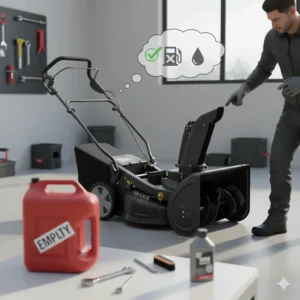
Professional Tips and Expert Insights 🎯
After extensive research and analysis, I’ve compiled essential insights that separate successful electric lawn mower snow blower ownership from disappointing experiences.
Battery Management Mastery
Optimize Charging Practices: Never store batteries fully charged or completely depleted for extended periods. The 40-60% charge level minimizes stress on battery chemistry during storage. Modern chargers often include storage modes that automatically maintain ideal charge levels.
Temperature Control: Battery performance and longevity depend heavily on operating temperature. In extreme cold, pre-warm batteries indoors for 15-30 minutes before use. In extreme heat, avoid leaving batteries in direct sunlight or hot vehicles. Optimal operating range spans 40-90°F.
Rotation Strategy: If you own multiple batteries, rotate them regularly rather than consistently using the same battery while keeping others as spares. Equal usage distributes wear evenly and maximizes total battery life across your collection.
Operational Efficiency Techniques
Lawn Mowing Optimization: Mow frequently during peak growth seasons, maintaining the “one-third rule” (never remove more than one-third of grass height in a single mowing). Frequent light mowing requires less power than infrequent heavy mowing, extending battery runtime and improving lawn health simultaneously.
Adjust cutting height seasonally. Higher summer settings reduce stress on grass during heat and extend battery life by reducing motor load. Spring and fall allow lower settings for aesthetic appeal.
Snow Removal Strategy: Clear snow promptly rather than allowing deep accumulation. Six inches of fresh snow processes far more efficiently than twelve inches of settled, compacted snow. Multiple lighter clearings consume less total battery power than single heavy clearing sessions.
Adjust chute direction continuously during operation to minimize throwing distance. Snow launched 25 feet consumes substantially less energy than snow thrown 50 feet. Use maximum throw distance only when necessary for clearance.
Equipment Longevity Practices
Storage Environment: Store equipment in climate-controlled environments when possible. Garages subject to freezing temperatures aren’t ideal, but they’re acceptable if batteries are stored separately indoors. Avoid storage in high-humidity locations that promote corrosion.
Cleaning Protocols: Clean equipment thoroughly after each use, but avoid pressure washers or high-volume water spray. These methods can drive water into electrical components, causing corrosion or shorts. Use compressed air, brushes, and damp cloths for effective cleaning without moisture intrusion risks.
Component Inspection: Develop systematic inspection routines. Check blade tightness before every lawn mowing session—loose blades cause vibration damage and present safety hazards. Inspect snow blower skid shoes monthly during winter—worn shoes cause scraper blade and auger housing damage.
Safety Considerations
Electric equipment’s quiet operation creates unique safety challenges. Nearby pedestrians may not hear approaching equipment, particularly children or individuals with hearing impairments. Maintain constant awareness of surroundings and never operate equipment around others without ensuring they’re aware of your presence.
Battery electrical systems present minimal electrocution risk under normal conditions, but damaged batteries or chargers can be hazardous. Never attempt repairs on battery packs or charging systems. Replace damaged components immediately through authorized service channels.
Conclusion: Making Your Year-Round Yard Care Decision ✅
The electric lawn mower snow blower revolution has fundamentally transformed residential yard maintenance, offering homeowners unprecedented combinations of power, convenience, environmental responsibility, and cost-effectiveness. Whether you choose dedicated dual-purpose equipment, strategic pairing of compatible battery-platform machines, or gradual migration from gas to electric alternatives, modern technology enables solutions for virtually every property type, budget level, and use case.
Throughout this comprehensive guide, I’ve shown you that today’s electric equipment matches or exceeds gas-powered alternatives in every meaningful performance category while eliminating maintenance hassles, reducing operating costs, and protecting environmental quality. The initial learning curve proves minimal, even for first-time equipment buyers, while the long-term benefits accumulate year after year.
Your specific circumstances dictate optimal equipment selection. Small suburban properties with light snow typically thrive with budget-conscious single-stage snow blowers and basic electric mowers totaling under $700. Medium properties facing moderate demands justify mid-range self-propelled equipment costing $1,200-$1,800 complete. Large properties or challenging conditions warrant premium investments of $2,500-$4,000+ that deliver professional-grade capability and maximum convenience.
The key to success lies in honest assessment of your property characteristics, realistic evaluation of your physical capabilities and time availability, and clear understanding of your priorities regarding performance, convenience, and budget. Use the decision frameworks, comparison tables, and case studies presented here to structure your evaluation systematically.
Remember that electric lawn mower snow blower adoption represents not just an equipment purchase but a fundamental shift in how you approach property maintenance. The eliminated maintenance, simplified operation, and superior user experience typically exceed initial expectations, creating satisfaction that transcends mere functional adequacy.
Start your transition today by identifying your most critical need—lawn care or snow removal—and invest in quality equipment that integrates into a coherent long-term strategy. As battery technology continues advancing and prices continue declining, your investment in electric platforms positions you to benefit from ongoing innovation through battery upgrades and complementary equipment additions.
The future of yard maintenance is electric, and that future is available right now.
🎉 Ready to Revolutionize Your Property Maintenance?
Don’t waste another season wrestling with temperamental gas equipment that demands constant attention and generates unnecessary pollution. The electric lawn mower snow blower solutions detailed in this guide deliver superior performance, exceptional convenience, and worry-free operation year after year. Take action now—click on any featured product to explore detailed specifications, read authentic customer experiences, and secure your investment in modern yard care technology. Your easier, cleaner, quieter property maintenance journey starts with a single click! 🚀✨
❓ Frequently Asked Questions
❓ How long do batteries last in electric lawn mower snow blower equipment?
❓ Can electric snow blowers handle heavy wet snow effectively?
❓ What property size works best for electric lawn mower snow blower setups?
❓ Are replacement batteries expensive for electric yard equipment?
❓ Can I use the same batteries for both lawn mower and snow blower?
Recommended for You
- 7 Best Lawn Mower Snow Blower Combos That Transform Your Yard Work in 2025
- 7 Best Electric Reel Mower Options for Eco-Friendly Lawns in 2025
- Laminate Flooring Versus Hardwood: 7 Critical Differences That’ll Save You Thousands in 2025
Disclaimer: This article contains affiliate links. If you purchase products through these links, we may earn a small commission at no additional cost to you.
✨ Found this helpful? Share it with your friends! 💬🤗
