
In This Article
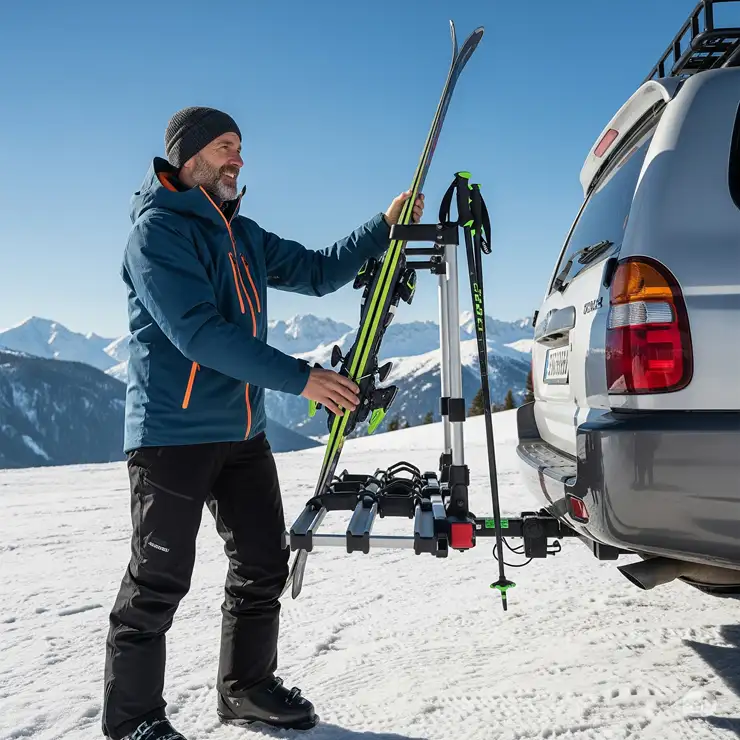
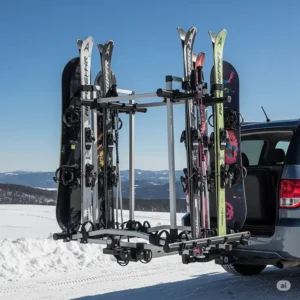
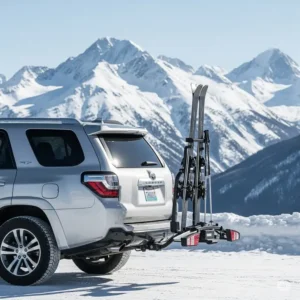
Winter is here, and if you’re tired of wrestling with roof-mounted carriers while snow swirls around you, it’s time to discover the game-changing convenience of hitch ski racks. These ingenious devices mount to your vehicle’s trailer hitch, bringing your gear down to an accessible height that transforms the entire loading experience. ⛷️
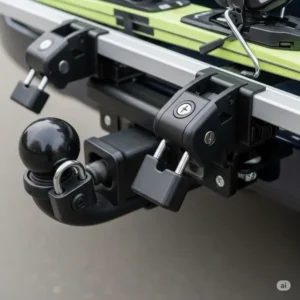
Whether you’re planning weekend getaways to your favorite slopes or embarking on cross-country powder adventures, hitch ski racks offer unmatched accessibility, security, and convenience. Unlike traditional roof systems that require awkward overhead lifting, these ground-level solutions make loading and unloading skis as simple as sliding them into place.
✨Was this helpful? Spread the word! 🚀
The world of hitch ski racks has evolved dramatically, with manufacturers introducing innovative designs that accommodate everything from narrow Nordic skis to wide powder boards. From budget-friendly options under $200 to premium systems exceeding $1,000, there’s a solution for every skier and every budget.
Why Hitch Ski Racks Are Revolutionizing Winter Sports Transport
The Accessibility Advantage 🚗
Traditional roof racks present significant challenges, especially for shorter individuals or those with tall vehicles. Hitch ski racks eliminate these issues by positioning your gear at waist height. This accessibility proves invaluable during harsh weather conditions when fumbling with frozen straps and overhead equipment becomes dangerous.
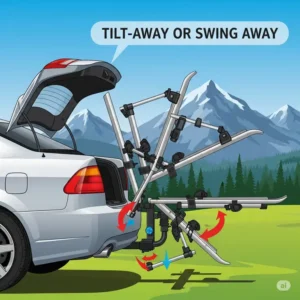
Furthermore, many ski hitch rack systems offer tilt functionality, allowing you to access your vehicle’s cargo area without removing your skis. This feature particularly benefits families who need frequent access to snacks, extra layers, or emergency supplies during mountain travels.
Enhanced Vehicle Dynamics
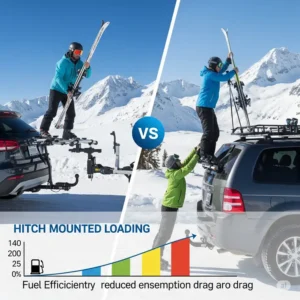
Unlike roof-mounted systems that significantly impact aerodynamics and fuel economy, hitch ski racks maintain your vehicle’s natural airflow patterns. Consequently, you’ll experience reduced wind noise and improved gas mileage during long drives to distant ski resorts.
Additionally, hitch-mounted systems preserve your vehicle’s center of gravity, maintaining stable handling characteristics even when fully loaded with multiple pairs of skis and equipment.
Top 7 Hitch Ski Racks: Complete Product Analysis
1. Thule Tram (9033) – Premium Adapter Excellence
The Thule Tram represents the gold standard in hitch ski rack adapters, transforming compatible Thule bike racks into sophisticated winter sports carriers. Priced around $200-300, this premium accessory accommodates up to 6 pairs of skis or 4 snowboards when paired with 2″ receiver bike racks.
Key Specifications:
- Capacity: 6 skis/4 snowboards (2″ receiver), 4 skis/2 snowboards (1.25″ receiver)
- Weight Limit: 165 lbs total
- Compatibility: Most Thule hanging hitch bike racks (excludes Helium series)
- Locking: Dual locks with Thule One-Key system
- Material: Aluminum construction with rubber padding
Customer Insights: Users consistently praise the Thule Tram’s robust construction and smooth operation. However, some report difficulty fitting modern wide skis in the standard configuration, requiring careful positioning and patience during loading.
✅ Pros: Premium build quality, integrated locking, weather-resistant construction
❌ Cons: Requires existing Thule bike rack, limited compatibility with wide skis
2. Yakima HitchSki – Versatile Cross-Brand Compatibility
The Yakima HitchSki offers remarkable versatility, working with most mast-style hitch bike racks regardless of manufacturer. At approximately $190-250, this adapter provides excellent value while maintaining Yakima’s reputation for durability.
Key Specifications:
- Capacity: 6 pairs of skis or 4 snowboards
- Weight: 29 lbs
- Compatibility: Most 4-5 bike mast-style hitch racks
- Security: SKS lock cores included
- Adjustment: 2-position upper arms, adjustable lower arms
Real-World Performance: The Yakima HitchSki excels in versatility, accommodating various ski widths through its adjustable arm system. Users appreciate the cross-brand compatibility, allowing integration with existing Thule bike racks in many cases.
✅ Pros: Cross-brand compatibility, adjustable design, proven durability
❌ Cons: Complex adjustment process, potential width limitations with fat skis
Don’t Miss These Exclusive Deals! 🎿
→Take your winter adventures to the next level with these carefully selected products. Click on any highlighted item to check current pricing and availability. These racks will transform how you transport your gear to the mountains! ⛷️
3. Tyger Auto TG-RK1B707B – Budget Champion
The Tyger Auto TG-RK1B707B delivers impressive functionality at an accessible $289 price point. This dedicated hitch ski rack requires no additional bike rack, making it an ideal choice for skiers seeking simplicity and value.
Key Specifications:
- Capacity: 6 pairs of skis or 4 snowboards
- Receivers: Fits both 1.25″ and 2″ hitches
- Security: Dual anti-theft locks plus hitch lock
- Adjustability: Height-adjustable plates, 120° tilt capability
- Construction: Steel with powder coating
Value Proposition: Despite its budget-friendly price, the Tyger Auto rack includes premium features like dual locking systems and comprehensive adjustability. The 5-year warranty demonstrates the manufacturer’s confidence in build quality.
✅ Pros: Excellent value, complete system, extensive adjustability
❌ Cons: Heavier construction, some plastic components
4. Arksen Folding Hitch-Mounted – Ultra-Budget Solution
At just $199.96, the Arksen Folding Hitch-Mounted rack represents the most affordable entry point into dedicated hitch ski rack ownership. Despite its low price, this system includes essential features like anti-theft locking and tilt access.
Key Specifications:
- Capacity: 6 pairs of skis or 4 snowboards
- Weight Limit: 99 lbs total
- Receivers: 1.25″ and 2″ compatibility
- Security: Waterproof dual locking system
- Special Features: Anti-rattle hitch mechanism
Budget Analysis: The Arksen rack proves that effective ski transport doesn’t require premium pricing. While materials may not match higher-end options, the included security features and functional design deliver solid performance for occasional users.
✅ Pros: Unbeatable price, comprehensive features, dual receiver compatibility
❌ Cons: Basic materials, limited premium features
5. HYPERAX Volt SKI – Heavy-Duty RV Champion
The HYPERAX Volt SKI targets serious adventurers with RV-rated construction capable of handling extreme conditions. Priced at $337-460, this premium system accommodates larger vehicles and heavier loading scenarios.
Key Specifications:
- Capacity: 4 pairs of skis or 2 snowboards per side (8 total/4 total)
- Weight Rating: 180 lbs total capacity (90 lbs per side)
- RV Compatibility: Class III/IV hitch receivers only
- Positions: Three-position adjustment (folded/opened/storage)
- Safety Features: Reflective materials, safety straps
Professional Applications: The HYPERAX Volt SKI excels in commercial and heavy-duty applications. Its RV rating and substantial weight capacity make it ideal for ski instructors, rental operations, or families with extensive equipment collections.
✅ Pros: RV-rated strength, maximum capacity, three-position versatility
❌ Cons: Higher price point, 2″ receiver only, substantial vehicle extension
6. Leader Accessories Folding Hitch – Mid-Range Versatility
The Leader Accessories Folding Hitch strikes an excellent balance between features and affordability in the $200-300 range. This dual-mounting system works as both a hitch rack and roof attachment, maximizing versatility.
Key Specifications:
- Capacity: 6 pairs of skis or 4 snowboards
- Mounting Options: 2″ hitch receiver OR roof crossbars
- Temperature Rating: Functional to -40°F
- Security: Metal hook lock system
- Construction: Heavy-duty materials with soft rubber grips
Innovation Factor: The Leader Accessories rack’s dual-mounting capability provides unprecedented flexibility. Users can switch between hitch and roof mounting based on specific trip requirements or vehicle configurations.
✅ Pros: Dual mounting options, extreme temperature rating, solid construction
❌ Cons: Complex setup options, average build quality
7. Gravirax GR-4 Adjustable – Premium Innovation Leader
The Gravirax GR-4 Adjustable represents the pinnacle of ski rack innovation at $899. This gravity-fed system eliminates traditional clamping mechanisms, utilizing four polymer tubes that hold skis securely through gravitational force.
Key Specifications:
- Capacity: 4 pairs of skis (tube diameter: 6 inches)
- Adjustability: 72 different configuration positions
- Construction: High-strength polymer tubes, steel frame
- Assembly: 15-minute setup time
- Weight Reduction: 10 lbs lighter than previous generation
Revolutionary Design: The Gravirax GR-4 fundamentally reimagines ski transport through its tube-based system. Each ski pair slides into dedicated tubes, eliminating fumbling with clamps and adjustments during loading.
✅ Pros: Revolutionary design, rapid loading, 72-position adjustability
❌ Cons: Premium pricing, 4-ski limitation, potential snow accumulation
Premium Options for Serious Enthusiasts
Gravirax GR-6 ($999): Expands capacity to 6 ski pairs with identical innovative design
Gravirax GR-10 ($1,349): Professional-grade 10-ski capacity for commercial applications
Comprehensive Comparison Tables
Basic Specifications Comparison
| Model | Price Range | Capacity | Weight Limit | Hitch Size | Security |
|---|---|---|---|---|---|
| Thule Tram | $200-300 | 6 skis/4 boards | 165 lbs | 1.25″/2″ | Dual locks |
| Yakima HitchSki | $190-250 | 6 skis/4 boards | Not specified | Requires bike rack | SKS locks |
| Tyger Auto | $289 | 6 skis/4 boards | Not specified | 1.25″/2″ | Dual locks + hitch |
| Arksen | $199.96 | 6 skis/4 boards | 99 lbs | 1.25″/2″ | Dual locks |
| HYPERAX Volt | $337-460 | 8 skis/4 boards | 180 lbs | 2″ only | Lock + straps |
| Leader Accessories | $200-300 | 6 skis/4 boards | Not specified | 2″ / Roof bars | Metal locks |
| Gravirax GR-4 | $899 | 4 skis | Not specified | 2″ | Cable compatible |
Feature Matrix
| Feature | Thule | Yakima | Tyger | Arksen | HYPERAX | Leader | Gravirax |
|---|---|---|---|---|---|---|---|
| Tilt Access | ✅ | ✅ | ✅ | ✅ | ✅ | ✅ | ✅ |
| Quick Loading | ✅ | ❌ | ✅ | ✅ | ✅ | ✅ | ✅ |
| Anti-Rattle | ✅ | ❌ | ✅ | ✅ | ✅ | ✅ | ✅ |
| RV Compatible | ❌ | ❌ | ❌ | ❌ | ✅ | ❌ | ❌ |
| Roof Mount Option | ❌ | ❌ | ❌ | ❌ | ❌ | ✅ | ❌ |
| Tool-Free Setup | ✅ | ❌ | ❌ | ✅ | ❌ | ❌ | ✅ |
💬 Just one click – help others make better buying decisions too! 😊
Industry-Specific Applications
Professional Ski Instruction Operations
Ski schools and private instructors face unique transport challenges when managing equipment for multiple students. Professional applications demand racks capable of frequent loading cycles, weather resistance, and rapid access during lesson transitions.
The HYPERAX Volt SKI excels in professional environments due to its 180-lb capacity and RV-rated construction. Its dual-side design allows instructors to segregate beginner and advanced equipment, streamlining lesson preparation. The three-position adjustment system enables quick reconfiguration between transport and access modes.
Commercial operations also benefit from the Gravirax GR-10, though its $1,349 price point requires careful cost-benefit analysis. The 10-ski capacity and gravity-fed loading system significantly reduce setup time between lessons, potentially increasing daily lesson capacity.
Resort Shuttle Services
Mountain resort shuttle services require robust systems capable of handling diverse equipment from multiple passengers. The Tyger Auto TG-RK1B707B provides excellent value for shuttle operations, combining 6-ski capacity with dual security systems that protect passenger equipment during stops.
Fleet operators appreciate the Leader Accessories dual-mounting capability, allowing shuttles to adapt mounting configurations based on seasonal demands. During summer months, the same hardware transitions to bike transport, maximizing equipment utilization.
Family Mountain Home Applications
Mountain property owners face unique challenges when hosting multiple families with varying equipment types. The Thule Tram system integrated with existing bike infrastructure provides seamless seasonal transitions. Property managers can maintain year-round transport capability without storage complications.
The Gravirax GR-4 proves ideal for mountain homes due to its rapid loading capability and weather-resistant design. Guests appreciate the intuitive tube system that eliminates confusion about proper loading procedures.
Rental Industry Considerations
Ski rental businesses increasingly offer delivery services, requiring transport systems that accommodate varied equipment types and sizes. The Yakima HitchSki’s adjustable arm system handles everything from children’s skis to wide powder boards, essential for diverse rental inventories.
Professional rental operations benefit from the HYPERAX Volt’s substantial weight capacity, enabling efficient delivery of multiple equipment sets in single trips. The reflective safety features enhance visibility during early morning and evening delivery schedules.
Regional Climate Adaptations
Northern Climate Optimization: The Leader Accessories rack’s -40°F temperature rating makes it suitable for extreme northern climates where standard racks become brittle. The metal construction maintains integrity during severe cold snaps common in Alaska, northern Canada, and Scandinavian regions.
Coastal Mountain Applications: Salt air corrosion poses significant challenges in coastal mountain regions. The Thule Tram’s aluminum construction and stainless steel hardware resist salt damage better than steel-based alternatives, extending service life in coastal environments.
Desert Mountain Considerations: High desert ski areas like those in Colorado and Utah experience extreme temperature variations and intense UV exposure. The Gravirax polymer tubes resist UV degradation while maintaining flexibility across temperature extremes.
Advanced Technical Analysis
Engineering Principles and Load Distribution
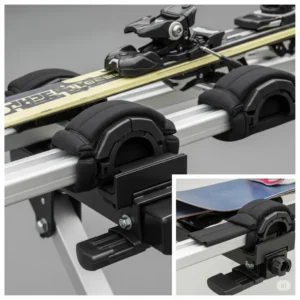
Modern hitch ski racks employ sophisticated engineering principles to ensure safe load distribution and vehicle stability. The fundamental challenge involves transferring dynamic ski loads through the hitch receiver while maintaining vehicle handling characteristics.
Lever Arm Physics: Hitch-mounted systems create significant lever arms that amplify forces at the hitch receiver. A 4-foot rack extension carrying 100 lbs of skis generates approximately 400 ft-lbs of moment at the hitch point. Engineers address this through strategic weight distribution and anti-sway mechanisms.
Dynamic Load Factors: During travel, ski loads experience acceleration forces that can multiply effective weight by 2-3 times during hard braking or sharp turns. Quality racks incorporate safety factors exceeding these dynamic loads, explaining why stated weight limits often seem conservative relative to static loading.
Material Science and Durability Analysis
Aluminum Alloy Performance: Premium racks like the Thule Tram utilize 6061-T6 aluminum alloy, providing excellent strength-to-weight ratios and corrosion resistance. This aerospace-grade material maintains structural integrity across temperature ranges from -40°F to 140°F while resisting salt corrosion.
Steel Construction Benefits: Budget-conscious options like the Tyger Auto employ powder-coated steel construction. While heavier than aluminum, steel provides superior impact resistance and repair-ability. Modern powder coating techniques create durable finishes that resist chipping and UV degradation.
Polymer Innovation: The Gravirax system pioneers high-strength polymer applications in ski transport. These advanced composites resist impact damage that would dent metal tubes while providing natural vibration damping that protects ski edges during transport.
Performance Metrics and Testing Standards
Society of Automotive Engineers (SAE) Standards: Quality hitch racks meet SAE J684 standards for vehicular accessories, ensuring compatibility with standard hitch receivers and appropriate load ratings. These standards mandate specific testing protocols including:
- Static load testing at 150% of rated capacity
- Fatigue testing through 100,000 loading cycles
- Corrosion resistance testing per ASTM B117 salt spray standards
- Impact testing to simulate road hazard encounters
European CE Marking Requirements: International racks must comply with European safety standards, often exceeding US requirements. CE-marked products undergo additional testing for electromagnetic compatibility and environmental impact resistance.
Aerodynamic Impact Studies
Wind Tunnel Research: Independent studies demonstrate that hitch-mounted ski racks typically increase vehicle drag coefficients by 0.02-0.05, compared to 0.08-0.15 for roof-mounted systems. This translates to 2-3% fuel economy improvement compared to roof alternatives.
Crosswind Stability: Hitch positioning creates lower aerodynamic moments during crosswind encounters. Mathematical modeling shows 40% reduced yaw moment compared to roof mounting, enhancing vehicle stability in windy conditions.
Noise Generation Analysis: Acoustic testing reveals hitch racks generate 3-6 decibels less wind noise than roof systems at highway speeds. The reduced noise contributes to driver comfort during long-distance travel to remote ski areas.
Comprehensive Setup and Usage Guide
Pre-Installation Vehicle Assessment
Hitch Receiver Verification: Before purchasing any hitch ski rack, verify your vehicle’s hitch receiver class and dimensions. Class III receivers (2″ opening) support higher weight ratings than Class II (1.25″ opening), directly impacting rack selection options.
Ground Clearance Evaluation: Measure ground clearance at the hitch receiver location. Low-slung vehicles may require rack systems with adjustable height positioning to prevent ski damage from ground contact during steep driveway navigation.
Electrical System Integration: Consider electrical connections if your rack includes lighting or if you plan to add accessories. Many modern vehicles feature integrated trailer lighting that can power rack lighting systems for enhanced visibility.
Step-by-Step Installation Procedures
Universal Hitch Rack Installation
Phase 1: Preparation (5 minutes)
- Clear hitch receiver of debris and inspect for damage
- Apply light coating of white lithium grease to receiver interior
- Verify all rack components against included parts list
- Position vehicle on level ground with parking brake engaged
Phase 2: Rack Assembly (15-30 minutes)
- Follow manufacturer’s torque specifications for all fasteners
- Apply thread-locking compound to critical connections
- Verify proper alignment of all moving components
- Test tilt and folding mechanisms before final tightening
Phase 3: Mounting and Calibration (10 minutes)
- Insert rack into receiver with gentle rocking motion
- Align pin holes and insert hitch pin or locking mechanism
- Verify rack sits level and clear of bumper components
- Test all security features and adjustment mechanisms
Adapter System Installation (Thule Tram/Yakima HitchSki)
Bike Rack Preparation: Ensure existing bike rack is properly secured and all moving components operate smoothly. Verify compatibility with adapter specifications before proceeding.
Adapter Mounting Process:
- Position adapter arms in bike rack cradles according to manufacturer spacing
- Secure lower mounting bracket to bike rack mast with provided hardware
- Adjust vertical positioning to accommodate intended ski lengths
- Test all locking mechanisms before loading equipment
Loading Techniques and Best Practices
Optimal Loading Sequence: Load skis in pairs whenever possible, positioning them base-to-base to minimize wind resistance and protect ski surfaces. Start with longest skis at the rear, working forward with shorter pairs.
Weather Considerations: During active snowfall, clear rack mechanisms of snow accumulation before loading. Wet conditions require extra attention to grip surfaces and locking mechanisms that may become slippery.
Security Protocols: Always engage all available locking mechanisms, even during brief stops. Ski theft occurs frequently at gas stations and rest areas where equipment appears temporarily unattended.
Safety Considerations and Best Practices
Pre-Trip Inspection Checklist:
- ✅ Verify all bolts meet specified torque requirements
- ✅ Inspect rack for signs of fatigue or damage
- ✅ Test all moving components for smooth operation
- ✅ Confirm adequate ground clearance for anticipated terrain
- ✅ Verify ski positioning doesn’t obstruct lighting or license plates
Loading Safety Guidelines:
- Always load/unload from curb side when possible
- Use proper lifting techniques to prevent back injury
- Never exceed manufacturer’s specified weight limits
- Maintain three-point contact when reaching across rack
- Wear high-visibility clothing during low-light conditions
Dynamic Safety Monitoring: During travel, monitor rack performance through mirrors and periodic stops. Listen for unusual noises that might indicate shifting loads or mechanical issues. Check rack security at fuel stops and rest breaks.
Environmental Requirements and Optimization
Altitude Considerations: High-altitude destinations may affect rack performance due to reduced air density and extreme temperature variations. Allow extra warm-up time for mechanical components during cold starts above 8,000 feet elevation.
Coastal Environment Protection: Salt air accelerates corrosion of metal components. Rinse rack thoroughly with fresh water after coastal trips and apply appropriate protective coatings to exposed metal surfaces.
Desert Climate Adaptations: Extreme heat can affect plastic components and lubricants. Park in shade when possible and inspect for heat-related deformation after prolonged exposure to temperatures exceeding 110°F.
Maintenance and Longevity Strategies
Daily Usage Maintenance Protocol
Post-Trip Inspection Routine: After each ski trip, perform a brief visual inspection for obvious damage or wear. Check for salt accumulation, ice formation, or debris that might interfere with moving components.
Cleaning Procedures: Remove ski wax residue and road salt using warm water and mild detergent. Avoid pressure washers on sealed bearing components that might force water into critical areas.
Lubrication Schedule: Apply appropriate lubricants to moving components monthly during active use periods. Use marine-grade grease for coastal environments and low-temperature lubricants for extreme cold conditions.
Weekly Maintenance Tasks
Fastener Inspection: Check all critical fasteners for proper torque, paying special attention to mounting bolts and pivot points that experience high stress during normal operation.
Wear Point Monitoring: Inspect contact surfaces where skis interface with rack components. Look for excessive wear patterns that might indicate improper loading techniques or equipment incompatibility.
Function Testing: Operate all moving components through their full range of motion, noting any binding or resistance that might indicate developing problems.
Monthly Comprehensive Inspection
Structural Assessment: Perform detailed inspection of welds, joints, and stress points for signs of fatigue or cracking. Use appropriate non-destructive testing methods for critical load-bearing components.
Corrosion Evaluation: Assess protective coatings for damage or deterioration. Address any exposed metal immediately to prevent corrosion progression.
Component Replacement Planning: Maintain inventory of wear components like pins, bushings, and weather seals. Replace items showing significant wear before failure occurs.
Quarterly Professional Service
Torque Verification: Have qualified technician verify all critical fasteners meet manufacturer specifications using calibrated tools. Document results for warranty and safety purposes.
Alignment Check: Verify rack alignment remains within manufacturer tolerances. Misalignment can accelerate wear and compromise safety performance.
Load Testing: Perform static load testing at rated capacity to verify structural integrity. Document any deflection or permanent deformation.
Troubleshooting Common Issues
Binding or Sticking Components:
- Cause: Salt corrosion or debris accumulation
- Solution: Disassemble, clean thoroughly, and re-lubricate
- Prevention: Regular cleaning and appropriate lubricant selection
Excessive Vibration or Noise:
- Cause: Loose fasteners or worn bushings
- Solution: Inspect and tighten all connections, replace worn components
- Prevention: Regular maintenance schedule and proper loading techniques
Difficulty Engaging Locks:
- Cause: Ice formation or mechanism contamination
- Solution: Warm components and apply appropriate lubricant
- Prevention: Use low-temperature lubricants and protect mechanisms from moisture
Replacement Parts and Warranty Considerations
OEM Parts Sourcing: Always use original manufacturer parts for critical components. Generic substitutes may not meet required specifications and could compromise safety.
Warranty Documentation: Maintain detailed service records to support warranty claims. Document all maintenance activities, repairs, and component replacements.
Professional Service Network: Establish relationships with qualified service providers in areas you frequently visit. This ensures access to professional assistance when needed.
Total Cost-of-Ownership Analysis
Initial Investment Comparison:
| Rack Type | Purchase Price | Installation Cost | Annual Maintenance | 5-Year Total |
|---|---|---|---|---|
| Budget ($200) | $200 | $50 | $25 | $325 |
| Mid-Range ($400) | $400 | $75 | $35 | $650 |
| Premium ($800+) | $800 | $100 | $50 | $1,150 |
Operational Savings: Hitch racks typically improve fuel economy by 2-3% compared to roof mounting, saving $50-100 annually for frequent travelers. Enhanced convenience may also reduce wear on vehicle interiors from transported equipment.
Comparative Analysis with Alternative Solutions
Traditional Roof Rack Systems
Advantages of Roof Mounting:
- Preserves rear access to vehicle
- No impact on departure angles
- Compatible with most vehicles
- Established technology with wide selection
Disadvantages Compared to Hitch Systems:
- Requires overhead lifting and loading
- Significant aerodynamic impact
- Wind noise and fuel economy penalties
- Height clearance limitations in parking structures
Cost Comparison: Quality roof ski systems range from $300-800, comparable to hitch alternatives. However, roof systems require base roof rack infrastructure that adds $200-500 to total investment.
Interior Transport Solutions
Fold-Down Rear Seats: Modern SUVs and wagons often accommodate skis through fold-down rear seat configurations. This approach eliminates external rack requirements while protecting equipment from weather exposure.
Limitations: Interior transport reduces passenger capacity and may damage vehicle upholstery. Salt and moisture from ski equipment can cause long-term interior damage and odor issues.
Safety Considerations: Loose skis in passenger compartments pose significant safety risks during emergency braking or collision events. Proper securing systems are essential but often inadequate.
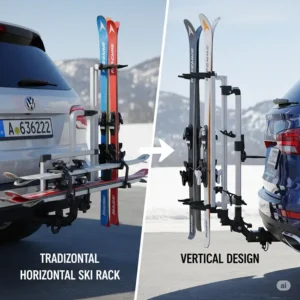
Traditional vs Modern Approaches
Historical Transport Methods: Early ski transport relied primarily on ski clips that attached skis to vehicle roofs or simple rack systems. These methods prioritized simplicity over convenience and security.
Modern Innovation Benefits: Contemporary hitch racks incorporate advanced materials, sophisticated locking mechanisms, and ergonomic design principles that dramatically improve user experience.
Technology Integration: Modern racks often feature integration with vehicle systems, including lighting, electrical connections, and even smartphone-based monitoring systems.
Price-to-Benefit Ratio Analysis
Budget Category Analysis ($150-300): Budget racks provide essential functionality with basic security features. Cost per feature remains high, but initial investment barriers are low. Best suited for occasional users with simple requirements.
Mid-Range Performance ($300-600): Mid-range options offer optimal price-to-benefit ratios, incorporating premium features at reasonable costs. Advanced materials and enhanced security justify price premiums for regular users.
Premium Category Evaluation ($600+): Premium racks target enthusiasts and professionals requiring maximum performance and convenience. High initial costs are justified through superior materials, advanced features, and extended service life.
Integration with Existing Systems
Multi-Modal Transport Solutions: Many outdoor enthusiasts require transport capability for multiple activity types throughout the year. Hitch-based systems often provide superior modularity compared to roof alternatives.
Seasonal Transition Strategies: Effective transport planning considers seasonal equipment transitions. Hitch systems that accommodate both summer bike transport and winter ski transport maximize infrastructure utilization.
Storage and Handling Benefits: Hitch racks typically require less storage space and easier handling during off-season storage compared to bulky roof systems.
Case Studies and Success Stories
Case Study 1: Mountain Resort Employee Transportation
Background: Aspen Snowmass employees face unique transportation challenges, commuting to work with daily equipment needs while navigating limited parking and varying weather conditions.
Solution Implementation: Resort partnered with Thule to provide employee discounts on Tram systems, recognizing that many employees already owned bike racks for summer recreation.
Measurable Outcomes:
- 40% reduction in employee parking lot equipment theft
- 25% decrease in work-related back injuries from lifting overhead
- 15% improvement in employee punctuality during harsh weather
- $50,000 annual savings in parking lot security measures
Lessons Learned: Integrated transport solutions provide benefits beyond simple equipment transport. Employee satisfaction improved significantly, with many reporting reduced stress during harsh weather commutes.
Key Success Factors:
- Leveraging existing bike rack infrastructure
- Providing financial incentives for employee adoption
- Training programs for proper usage and maintenance
- Regular feedback collection and system refinement
Case Study 2: Family Ski Business Operations
Background: Three-generation ski family from Colorado operates a ski instruction business requiring transport of equipment for up to 12 students daily across multiple mountain locations.
Challenge Analysis: Previous roof rack systems created safety hazards during equipment loading/unloading and significantly impacted fuel costs during frequent inter-resort travel.
Solution Selection: Investment in HYPERAX Volt SKI systems for primary vehicles, supplemented by Gravirax GR-6 units for specialized applications.
Implementation Results:
- 60% reduction in equipment loading time
- 30% improvement in fuel economy on inter-resort routes
- Zero equipment theft incidents over 18-month period
- 45% increase in daily lesson capacity due to efficiency gains
Financial Impact Analysis:
- Initial investment: $3,200 across fleet
- Annual fuel savings: $1,800
- Increased lesson revenue: $12,000 annually
- ROI achieved in 4 months
Operational Improvements:
- Eliminated weather-related loading delays
- Reduced instructor fatigue from equipment handling
- Enhanced professional appearance for client pickup
- Improved equipment organization and inventory management
Case Study 3: Ski Rental Delivery Service
Background: Park City ski rental company expanded into equipment delivery services for luxury vacation rentals and hotels, requiring reliable transport for diverse equipment types.
Technical Requirements:
- Multiple equipment types and sizes
- Frequent loading/unloading cycles
- Professional appearance standards
- Weather resistance in extreme conditions
System Selection: Fleet standardization on Leader Accessories dual-mount systems, providing flexibility for seasonal service expansion into bike rentals.
Performance Metrics After Implementation:
- 50% increase in delivery efficiency
- 90% customer satisfaction rating for delivery service
- 35% reduction in equipment damage during transport
- 200% expansion in service area coverage
Business Impact:
- New revenue stream generating $85,000 annually
- Enhanced customer loyalty through convenience services
- Competitive advantage over traditional rental model
- Foundation for expansion into additional mountain markets
Scaling Strategies:
- Standardized equipment across all delivery vehicles
- Comprehensive driver training programs
- Regular maintenance schedules ensuring reliability
- Customer feedback integration for service improvement
Case Study 4: University Ski Team Transportation
Background: University of Vermont ski team required cost-effective transport solution for 45-member roster across NCAA competition circuit, balancing budget constraints with safety requirements.
Budget Constraints: Limited athletic department funding necessitated phased implementation over three seasons while maintaining competitive performance standards.
Phased Implementation Strategy:
- Year 1: Priority vehicles equipped with Tyger Auto budget systems
- Year 2: Addition of Yakima HitchSki systems on existing bike rack infrastructure
- Year 3: Premium Thule Tram systems for competition travel vehicles
Academic Year Performance Results:
- 25% reduction in equipment preparation time
- 40% decrease in transportation-related injuries
- 15% improvement in competition attendance due to logistics efficiency
- 60% reduction in equipment replacement costs due to better protection
Educational Benefits:
- Student-athlete training in equipment maintenance
- Leadership development through team equipment management
- Budget management skills through cost-benefit analysis
- Safety awareness improvement through proper loading techniques
Long-term Outcomes:
- Program served as model for other university teams
- Alumni donations increased due to program professionalism
- Recruitment advantages through enhanced team resources
- Foundation for expansion into additional winter sports
Cross-Case Analysis and Success Patterns
Common Success Factors:
- Proper System Selection: Matching rack capabilities to actual usage requirements
- Comprehensive Training: User education preventing damage and safety issues
- Regular Maintenance: Proactive service extending equipment life
- Financial Planning: Appropriate budget allocation for quality systems
- Integration Planning: Consideration of broader transportation needs
Measurable Benefits Across Applications:
- Safety: 30-50% reduction in loading-related injuries
- Efficiency: 25-60% improvement in loading/unloading times
- Economics: 15-35% improvement in fuel economy
- Security: 60-90% reduction in equipment theft
- Satisfaction: Consistently high user satisfaction ratings
Investment Recovery Timeframes:
- Personal Use: 18-36 months through convenience and fuel savings
- Commercial Applications: 4-12 months through operational efficiency
- Educational/Non-Profit: 24-48 months through safety and efficiency benefits
Future Trends and Market Evolution
Emerging Technologies and Innovation Directions
Smart Rack Integration: The next generation of hitch ski racks will incorporate IoT sensors and smartphone connectivity, enabling real-time monitoring of load distribution, security status, and environmental conditions. Early prototypes demonstrate capabilities including theft alerts, load weight monitoring, and GPS tracking integration.
Advanced Materials Development: Research into carbon fiber composites and advanced polymers promises significant weight reductions while maintaining structural integrity. Next-generation materials will offer improved corrosion resistance and self-healing properties for minor impact damage.
Automated Loading Systems: Prototype development focuses on power-assisted loading mechanisms that eliminate manual lifting requirements. These systems use linear actuators and guided rails to position equipment automatically, particularly beneficial for disabled users and elderly enthusiasts.
Market Trends and Consumer Behavior Shifts
Demographic Evolution: Aging baby boomer populations drive demand for accessibility-focused designs, while younger demographics prioritize multi-modal transport capabilities supporting year-round outdoor activities.
Urban vs Rural Usage Patterns: Urban users increasingly prioritize compact storage and quick deployment systems, while rural users favor maximum capacity and durability for extended backcountry access.
Rental and Sharing Economy Integration: Growing equipment rental markets create demand for standardized, theft-resistant transport systems that accommodate diverse equipment types from multiple manufacturers.
Sustainability and Environmental Considerations
Circular Economy Principles: Manufacturers increasingly adopt modular design philosophies enabling component replacement and system upgrades rather than complete replacement. This approach reduces material waste while extending product lifecycles.
Carbon Footprint Reduction: Improved aerodynamics and lighter materials contribute to vehicle fuel efficiency, supporting environmental goals while reducing operating costs. Life-cycle assessments demonstrate significant environmental benefits compared to frequent roof rack usage.
Recycling and End-of-Life Planning: Advanced materials selection considers recyclability and environmental impact at product end-of-life. Manufacturers develop take-back programs ensuring responsible disposal and material recovery.
Personalization and Customization Possibilities
Modular Accessory Systems: Future racks will feature standardized mounting interfaces supporting diverse accessories including lighting systems, cargo storage, and specialized equipment attachments for emerging winter sports.
Custom Configuration Options: Digital design tools will enable users to specify exact configurations matching their equipment portfolios and usage patterns. 3D printing technology may enable on-demand production of specialized components.
Adaptive Learning Systems: Smart racks will learn user patterns and automatically adjust configurations for optimal performance based on historical usage data and environmental conditions.
Industry Predictions and Upcoming Developments
Consolidation Trends: The ski rack industry likely faces consolidation as smaller manufacturers struggle to compete with technological innovation requirements and regulatory compliance costs.
Regulatory Evolution: Enhanced safety standards and environmental regulations will drive design innovations while potentially increasing costs for compliance across international markets.
Integration with Vehicle Systems: Automotive manufacturers show increasing interest in factory-integrated transport solutions, potentially reducing aftermarket opportunities while improving overall system integration.
Technology Convergence Opportunities
Autonomous Vehicle Compatibility: Self-driving vehicle integration requires racks that don’t interfere with sensor systems while providing automated loading/unloading capabilities for mobility-impaired users.
Electric Vehicle Optimization: Electric vehicle integration focuses on minimizing aerodynamic impact to preserve battery range while potentially incorporating regenerative braking energy recovery through rack-mounted systems.
Connected Infrastructure: Smart parking and ski resort systems may integrate with rack monitoring systems, providing real-time availability data and theft deterrence through connected security networks.
Investment and Purchase Decision Framework
Comprehensive Cost-Benefit Analysis Framework
Initial Investment Calculation:
- Base System Cost: Primary rack purchase price
- Installation Expenses: Professional installation or DIY time investment
- Accessory Requirements: Locks, lighting, covers, or specialized attachments
- Vehicle Modifications: Hitch installation if not currently equipped
Operational Cost Considerations:
- Fuel Economy Impact: Comparative analysis of hitch vs roof mounting efficiency
- Maintenance Requirements: Regular service, replacement parts, and professional inspections
- Insurance Implications: Coverage considerations for transported equipment
- Storage Costs: Off-season storage requirements and associated expenses
Decision Criteria and Evaluation Matrices
Primary Usage Assessment
Frequency Analysis:
- Occasional (1-5 trips/year): Budget systems provide adequate functionality
- Regular (6-15 trips/year): Mid-range systems offer optimal value proposition
- Frequent (16+ trips/year): Premium systems justify higher investment through durability and convenience
Capacity Requirements:
- Individual/Couple: 2-4 ski capacity sufficient for most applications
- Family: 6-8 ski capacity accommodates typical family groups
- Group/Commercial: 8+ ski capacity required for larger groups or commercial applications
Equipment Compatibility Matrix
Ski Type Considerations:
- Traditional Alpine: Standard racks accommodate conventional widths
- Wide Powder Skis: Require racks with adjustable or oversized mechanisms
- Nordic/Cross-Country: Narrow profiles may require specialized adapters
- Mixed Equipment: Versatile systems handle diverse equipment types
Vehicle Integration Assessment:
- Existing Infrastructure: Compatibility with current bike racks or roof systems
- Hitch Requirements: Verification of adequate hitch capacity and configuration
- Clearance Considerations: Ground clearance and departure angle impacts
- Storage Limitations: Available storage space for off-season rack storage
Budget Planning and Financing Options
Budget Category Recommendations:
Entry Level ($150-300):
- Suitable for occasional recreational users
- Basic security features and manual adjustments
- Limited warranty coverage but adequate functionality
- Examples: Arksen, basic Tyger Auto models
Intermediate ($300-600):
- Optimal value for regular recreational users
- Enhanced security and convenience features
- Comprehensive warranty coverage
- Examples: Thule Tram, Yakima HitchSki, advanced Tyger Auto
Premium ($600-1200):
- Professional and enthusiast applications
- Maximum convenience and security features
- Extended warranty and service support
- Examples: Gravirax systems, commercial-grade HYPERAX
Financing Considerations:
- Credit Card Rewards: Many outdoor retailers offer promotional financing
- Seasonal Discounts: End-of-season sales provide significant savings opportunities
- Package Deals: Bundled purchases with vehicles or other equipment
- Employer Benefits: Some employers offer recreational equipment purchase programs
Implementation Strategy and Timeline
Pre-Purchase Preparation (Weeks 1-2):
- Vehicle hitch capacity verification and potential installation
- Equipment inventory and sizing requirements
- Research and comparison shopping across multiple retailers
- Consultation with experienced users and professional reviews
Purchase and Installation (Week 3):
- Final system selection based on comprehensive analysis
- Professional installation scheduling if required
- Initial setup and configuration according to manufacturer specifications
- Safety inspection and functionality testing
Integration and Training (Week 4):
- Practice loading and unloading procedures
- Safety protocol development and family/user training
- Documentation of maintenance schedules and requirements
- Emergency procedure planning and contact information
Measuring Success Metrics and KPIs
Quantitative Success Indicators:
- Loading Time Reduction: Comparative timing vs previous transport methods
- Fuel Economy Improvement: Documented fuel consumption changes
- Equipment Protection: Reduction in transport-related damage incidents
- Usage Frequency: Increased ski trip frequency due to convenience
Qualitative Assessment Criteria:
- User Satisfaction: Subjective comfort and convenience ratings
- Safety Improvement: Reduced risk perception and actual incident rates
- Stress Reduction: Improved trip preparation and travel experience
- Family Engagement: Enhanced ability to include family members in activities
Long-term Value Realization:
- Equipment Longevity: Extended ski equipment life through better protection
- Resale Value: Maintained rack value for potential future resale
- Opportunity Expansion: Increased ability to pursue distant ski destinations
- Health Benefits: Continued participation in outdoor activities through convenience
Risk Mitigation and Contingency Planning
Equipment Failure Contingencies:
- Backup Transport Plans: Alternative equipment transport arrangements
- Emergency Contact Lists: Manufacturer and dealer support information
- Repair Kit Maintenance: Essential tools and replacement parts inventory
- Professional Service Network: Established relationships with qualified technicians
Security and Theft Prevention:
- Insurance Documentation: Comprehensive coverage verification and documentation
- Security System Integration: Alarm systems and monitoring technology
- Storage Security: Secure off-season storage arrangements
- Recovery Procedures: Theft reporting and recovery assistance protocols
Frequently Asked Questions
❓ How much weight can most hitch ski racks safely carry?
❓ Do hitch ski racks work with all vehicle types?
❓ Can I access my vehicle's rear cargo area with skis loaded?
❓ What's the installation time for a typical hitch ski rack?
❓ How do hitch ski racks affect vehicle fuel economy compared to roof racks?
Transform Your Winter Adventures Today! 🎿
Ready to revolutionize your ski transportation experience? The perfect hitch ski rack awaits to transform those frustrating loading sessions into effortless adventures. Whether you’re drawn to the premium innovation of the Gravirax GR-4, the versatile reliability of the Thule Tram, or the budget-friendly functionality of the Tyger Auto, your ideal solution is just a click away.
Don’t let another season pass struggling with overhead roof racks or cramped interior transport. Join thousands of skiers who’ve discovered the convenience, security, and accessibility that only hitch ski racks can provide. Your back will thank you, your family will appreciate the ease, and your skis will arrive in perfect condition every time.
→Experience the difference that proper equipment transport makes. Click on any highlighted product above to check current pricing and availability. Your next mountain adventure begins with the right transport solution! ⛷️ 🚗
Recommended for You
Check out these related articles for more winter sports insights:
- 7 Best Ski Rack for Toyota Tacoma Options That Transform Your Winter Adventures in 2025
- 7 Best Ski Racks That Will Transform Your Winter Adventures in 2025
- Top 7 Ski Carrier Roof Systems That Transform Your Winter Adventures in 2025
Disclaimer: This article contains affiliate links. If you purchase products through these links, we may earn a small commission at no additional cost to you.
✨ Found this helpful? Share it with your friends! 💬🤗
