
In This Article
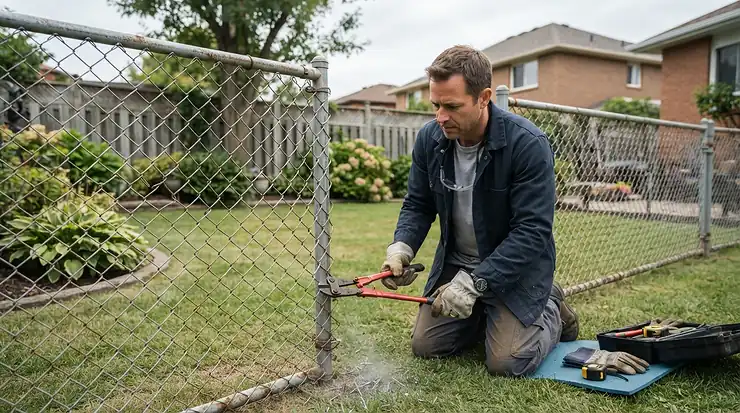
Bolt cutters for chain link are long-handled, compound-hinge cutting tools sized to shear the galvanized or vinyl-coated steel wire in fence fabric, tension wire and fence ties. They trade speed for leverage, so a pair matched to your wire gauge makes cuts feel almost rude in their ease. The wrong pair gives you mashed wire, rolled jaw edges and a sore palm by lunch.
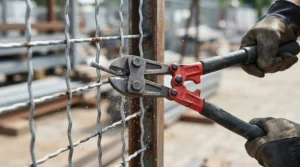
Here’s the thing about bolt cutters for chain link: the job looks trivial until you’re forty feet into a fence line and the wire starts fighting back. Residential fabric usually runs between 9 and 11.5 gauge, which works out to roughly 0.148 and 0.113 inch of steel. Commercial and industrial jobs can climb to 6 gauge, about 0.192 inch. Vinyl-coated fabric adds a twist of its own, because the gauge on the label often describes the coated wire, while the steel core inside is thinner.
The physics is on your side. Wikipedia’s bolt cutter entry gives a worked example where about 250 newtons at the handles becomes roughly 20 kilonewtons at the jaws, around 80 times the input. That multiplication is why a 24-inch tool feels like cheating. It’s also why jaw steel and handle length matter far more than the logo stamped near the pivot.
This guide covers seven real models, from an 8-inch pocket cutter to 36-inch heavy duty bolt cutters built for chain and stubborn locks. Along the way you’ll find padlock bolt cutters explained, honest notes on lock removal, a fence installation walkthrough, and a plain-English look at hardened steel cutting. One note on sourcing: the specs here come from manufacturer data and published editorial testing. Where I couldn’t verify a current pool of customer reviews, I say so rather than guess.
Quick Comparison: Bolt Cutters for Chain Link at a Glance
Start here if you want the short version. Each tool below is covered in depth in the expert analysis that follows.
| Product | Length | Price Range (Check Current) | Best For |
|---|---|---|---|
| Knipex CoBolt 71 01 200 | 8 in | $40-$60 | Fence ties, tension wire, tight spots |
| WORKPRO W017004A | 14 in | Under $30 | Budget repairs and ladder work |
| Crescent H.K. Porter 0090MCP | 18 in | $40-$60 | Midsize all-rounder for 11.5 gauge fabric |
| TEKTON 24-Inch (3410) | 24 in | $35-$50 | Value-minded fence installation |
| Crescent H.K. Porter 0190MCP | 24 in | $50-$80 | One do-it-all pair for most homeowners |
| TEKTON 36-Inch | 36 in | Under $80 | Chain, hasps and demolition on a budget |
| Crescent H.K. Porter 36-Inch High Leverage | 36 in | $100-$130 | Hardened shackles and heavy chain |
Price ranges are approximations from retailer listings found during research. Prices may vary, so check the current price before you buy.
Looking at the comparison above, the WORKPRO W017004A is the cheapest ticket into bolt cutters for chain link work, and its low weight is a real advantage on a ladder. The Crescent H.K. Porter 0190MCP is the pair I’d point most homeowners toward, because it covers fabric, ties and light rebar in one tool. Anyone facing padlocks or chain should skip ahead to the Crescent H.K. Porter 36-Inch High Leverage, because it publishes a hardness-rated capacity.
💬 Just one click — help others make better buying decisions too!😊
Top 7 Bolt Cutters for Chain Link: Expert Analysis
1. Knipex CoBolt 71 01 200 — pocket-sized leverage for fence ties
Eight inches of German-made steel with the leverage of a much bigger tool is the whole pitch. The Knipex CoBolt 71 01 200 weighs about 335 grams, roughly three-quarters of a pound. Its induction-hardened edges are rated at approximately 62-64 HRC, depending on which Knipex data sheet you read. In plain English, the edges are harder than nearly any wire you’ll feed them, so they bite instead of rolling. Published capacities run from 1/4 inch in soft wire down to 5/32 inch in hard wire.
Based on the spec comparison, 9 gauge fabric at about 0.148 inch sits close to that hard-wire ceiling, so you’ll squeeze deliberately on commercial mesh. This is a fence-tie, tension-wire and small-repair tool. Knipex even sells a fencing-labeled variant (71 01 200 R), which tells you who the maker had in mind. It isn’t one of the padlock bolt cutters you’d grab for a stubborn shackle.
On reviews: I couldn’t verify a large, current pool of Amazon reviews for this exact model, so check the live count yourself. The manufacturer’s published emphasis is precision and low effort, not brute force.
Pros:
- ✅ Induction-hardened edges stay sharp on thin hard wire
- ✅ Fits a tool pouch or glove box easily
- ✅ Gripping surface below the joint pulls wire and nails
Cons:
- ❌ Capacity tops out near 5/32 inch in hard wire
- ❌ Premium price for such a small tool
Expect the $40-$60 range (check current price). It’s fair value only if your wire matches its limits.

2. WORKPRO W017004A 14-Inch — lightest budget cutter that still bites
At 2.05 pounds, the WORKPRO W017004A is the cutter you can carry up a ladder all afternoon. It has center-cut blades, a compound lever design and, per the manufacturer, chrome-molybdenum steel blades. In Bob Vila’s published tests, it handled baling wire and cattle panels with moderate effort. It couldn’t cut 3/16-inch all thread, though the blades came through unchipped. Translated: 11.5 gauge residential fabric, fence ties and tension wire are in range. Thick 6 gauge mesh or a hardened shackle is not.
What most buyers overlook is how much a light tool matters over a long fence job. Fatigue wrecks accuracy before capacity ever becomes the problem. This is a “keep one in the truck” tool for homeowners, and a second pair for installers. The same testing found the hinges rusted after exposure to snow, so wipe it dry after wet work.
On reviews: the testers’ verdict was comfort and low weight at a low cost. I couldn’t verify current Amazon review totals, so look at the live star distribution before ordering.
Pros:
- ✅ Light enough for one-handed overhead cuts
- ✅ Blades stayed unchipped in published testing
- ✅ Soft ergonomic grips reduce hand strain
Cons:
- ❌ Couldn’t cut 3/16-inch threaded rod in testing
- ❌ Hinges rusted after snow exposure
Budget tier, typically under $30 (check current price). It’s strong value for light fabric work.
3. Crescent H.K. Porter 0090MCP 18-Inch — double-compound leverage in a manageable size
The Crescent H.K. Porter 0090MCP weighs about 5 pounds and uses double-compound hinges that Crescent brands “PowerPivot.” Padded nonslip grips keep your palms happier through repetitive cuts. General guidance for 18-inch cutters is about 9/32 inch in mild steel. That is nearly double the diameter of 9 gauge wire, so chain link fabric is comfortably inside its range.
In Bob Vila’s tests it cut baling wire and cattle panels easily, and all thread took more force but went through. It couldn’t cut 3/8-inch rebar, though the jaws weren’t nicked or chipped trying. Based on that, this is the sweet spot for fence installation work, where you’re snipping ties, bands and fabric rather than demolishing hardware. The testers also noted stiff hinges at first that loosened after about 20 cuts, so don’t judge it on cut number one.
On reviews: the testers called it strong for a midsize model. I couldn’t verify current Amazon review sentiment, so check recent reviews for hinge-stiffness comments.
Pros:
- ✅ Double-compound hinge multiplies hand force
- ✅ No nicks or chips after a failed rebar attempt
- ✅ Padded grips reduce fatigue on repeated cuts
Cons:
- ❌ Stiff hinges until broken in
- ❌ Can’t cut 3/8-inch rebar
Roughly the $40-$60 range (check current price). It’s a solid middle path for homeowners.
4. TEKTON 24-Inch Bolt Cutter (3410) — replaceable jaws at a friendly price
The TEKTON 24-Inch (3410) measures about 24.3 inches and weighs roughly 5.3 pounds. Its jaws are drop-forged hardened alloy steel, adjustable and replaceable, and the tubular steel handles carry cushioned grips. The listed jaw capacity is 5/16 inch. That’s well above the diameter of 9 gauge fabric, and it also covers 6 gauge mesh at about 0.192 inch.
Replaceable jaws are the quiet hero here. When edges dull or chip, you swap jaws instead of the whole tool. That feature is more common on heavy duty bolt cutters costing far more. Based on the spec comparison, it suits people who want one tool to last a decade of fence repairs. One caveat: capacity ratings like this typically describe mild steel, and I couldn’t find a published hard-steel figure.
On reviews: a retailer listing I found showed only a handful of reviews, too small a sample to draw conclusions, and I couldn’t verify Amazon’s current totals. TEKTON advertises a no-receipt warranty, so check its terms before purchase.
Pros:
- ✅ Jaws are adjustable and replaceable
- ✅ 5/16-inch rated capacity covers heavy fence wire
- ✅ Cushioned grips on tubular steel handles
Cons:
- ❌ Hard-steel capacity isn’t clearly published
- ❌ Heavier than 18-inch alternatives
Think $35-$50 range (check current price). It’s excellent value for a 24-inch tool with serviceable jaws.
5. Crescent H.K. Porter 0190MCP 24-Inch — best overall in a published test
The Crescent H.K. Porter 0190MCP earned the top spot in Bob Vila’s lineup. It weighs 7.74 pounds and has center-cut blades, a double-compound hinge, tubular steel handles and nonslip padded grips. In testing it cut cattle panels, baling wire and 3/16-inch all thread easily. It also got through 3/8-inch rebar with more squeezing force, with no bent handles and no blade nicks.
What the spec sheet won’t tell you is why the weight is a feature. A heavier tool sits steadier in the cut and resists twisting, which protects the jaws. Ability to bite 3/8-inch rebar means 9 gauge fabric, tension bands and many mild padlock shackles are inside its comfort zone. It’s the closest thing to a one-pair solution, though the tight hinges needed 20 to 30 cuts to loosen.
On reviews: the testers’ verdict was strongly positive. I couldn’t verify current Amazon sentiment, so scan recent reviews for hinge or quality-control comments.
Pros:
- ✅ Cut 3/8-inch rebar in published testing
- ✅ Handles didn’t bend under load
- ✅ No blade nicks after the test sequence
Cons:
- ❌ Heavier than nearly every hand-operated competitor
- ❌ Hinges stiff for the first few dozen cuts
Plan on the $50-$80 range (check current price). It’s strong value if you want one cutter to do almost everything.
6. TEKTON 36-Inch Heavy Duty Bolt Cutter — big leverage without a big bill
The TEKTON 36-Inch is a different animal. It’s listed at roughly 10.5 pounds, with drop-forged hardened alloy steel jaws that are adjustable and replaceable, plus tubular steel handles and cushioned grips. Handle length is the lever arm, so 36 inches puts serious force at the jaws. For context, Klein’s 36-inch model publishes 9/16 inch in soft material and 7/16 inch in hard. Check TEKTON’s own listing for its stated numbers rather than assuming parity.
Honestly, 36 inches is overkill for ordinary fabric. Where it earns its keep is chain, hasps, heavy padlocks and demolition. This is where hardened steel cutting begins to matter, and where padlock bolt cutters of this length make sense. The tradeoff is handling. Overhead or tight-space cuts get awkward fast.
On reviews: I couldn’t verify a trustworthy pool of current Amazon reviews for this exact model, so read the recent ones for jaw-wear comments.
Pros:
- ✅ Long handles multiply leverage for stubborn cuts
- ✅ Replaceable jaws extend tool life
- ✅ Cushioned grips help during two-handed squeezes
Cons:
- ❌ Heavy and awkward overhead or in tight spots
- ❌ Overkill for ordinary chain link fabric
Under the $80 range (check current price). It’s good value if chain and locks are on your list.
7. Crescent H.K. Porter 36-Inch High Leverage Compound — hardness-rated for padlock work
The Crescent H.K. Porter 36-Inch High Leverage Compound is the only tool here that publishes the number buyers should care most about. Crescent lists 9.5 mm (0.375 inch) capacity at 48 HRC, which is a hard-material rating. It also lists a full lifetime warranty. The model appears as CT36HLC on Crescent’s site and as 0390MCP on a retailer page, so confirm the listing you’re buying.
A hardness-rated capacity tells you what the tool will do against a real shackle, not just mild steel. That’s the difference between marketing and engineering in heavy duty bolt cutters. For lock removal on a gate you own, it’s the one I’d lean toward. For ordinary fabric it’s far more tool than you need.
On reviews: a retailer listing I found showed 4.7 out of 5 across 15 reviews, with one reviewer saying pricier competitors cut faster. That’s a small sample from a non-Amazon page, so check the live Amazon reviews.
Pros:
- ✅ Published 3/8-inch capacity at 48 HRC
- ✅ Full lifetime warranty
- ✅ High leverage for chain and shackles
Cons:
- ❌ Costs more than comparable 36-inch tools
- ❌ Heavy, demanding a stable two-handed stance
Around the $100-$130 range (check current price). The premium buys a documented hard-steel rating.
Top 7 Bolt Cutters for Chain Link Compared
| Product | Weight | Published Capacity Note | Best For |
|---|---|---|---|
| Knipex CoBolt 71 01 200 | About 0.74 lb | 1/4 in soft wire, 5/32 in hard wire | Ties and tension wire |
| WORKPRO W017004A | 2.05 lb | Not published in sources reviewed | Light fabric and budget repairs |
| Crescent H.K. Porter 0090MCP | About 5 lb | General 18-in guidance: 9/32 in | Routine fence repair |
| TEKTON 24-Inch (3410) | About 5.3 lb | 5/16 in (mild steel) | Value fence installation |
| Crescent H.K. Porter 0190MCP | 7.74 lb | Cut 3/8 in rebar in testing | All-purpose homeowner pick |
| TEKTON 36-Inch | About 10.5 lb | Check listing | Chain and hasps on a budget |
| Crescent H.K. Porter 36-Inch High Leverage | Heavy (check listing) | 3/8 in at 48 HRC | Hardened shackles |
Reading the table, capacity numbers only mean something alongside the material hardness they were measured on. The Crescent H.K. Porter 36-Inch High Leverage is the only entry with a hardness-tagged figure, while the Crescent H.K. Porter 0190MCP has the best documented real-world cutting. If your work is fabric and ties, the WORKPRO W017004A or Knipex CoBolt 71 01 200 will do the job with far less weight.
How to Choose Bolt Cutters for Chain Link (Step by Step)
Pick the tool by working backward from the wire. Here’s the order I’d follow:
- Identify your wire gauge. Residential fabric is typically 9 to 11.5 gauge, while heavier commercial jobs use 6 to 9. Vinyl-coated mesh is often sold by finished gauge, so the steel core is thinner than the label implies.
- Match length to the job. Roughly 8 to 14 inches suits ties and light repairs, 18 inches suits routine work, 24 inches is the all-rounder, and 36 inches is for chain and locks.
- Check capacity at hardness, not just mild steel. Look for two numbers, one for soft metal and one for hard. A tool rated 3/8 inch on soft metal may manage far less on hardened material.
- Prefer center-cut jaws for versatility. Wikipedia describes center, angle, shear and clipper cuts, and center cut is the safest general-purpose choice.
- Look for replaceable jaws. They turn a chipped edge into a ten-minute fix instead of a new purchase.
- Weigh leverage against control. Longer arms create more power, but bigger isn’t always better because long cutters are harder to aim precisely.
- Read the warranty. A tool you plan to keep for a decade should have terms you understand.
Common Mistakes When Buying Bolt Cutters for Chain Link
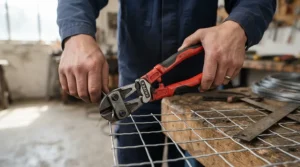
The most common error is buying by length alone. A 36-inch tool with unpublished hardness capacity can lose to a shorter one with documented numbers. Another trap is trusting “heavy duty” on the box. It describes marketing intent, not a standard.
Buyers also forget that bolt cutters for chain link face two very different jobs. Fabric is mild and forgiving. Security chain and padlocks are not. Cutting hardened material with a budget tool risks chipped jaws, so match the tool to the hardest thing you’ll ever cut, not the average one. Finally, don’t overlook storage. Hinges that rusted after snow exposure in published testing prove that a wet tool in a cold garage ages quickly.
Features That Actually Matter in Heavy Duty Bolt Cutters (And Those That Don’t)
What matters. Jaw steel is first. Drop-forged chrome-moly or chrome-vanadium with induction hardening is the credible spec. Next is a hardness-tagged capacity, because mild-steel numbers flatter every tool. Third is hinge design, since a double-compound pivot multiplies force and a looser design wastes it. Finally, replaceable jaws are cheap insurance.
What doesn’t. Color schemes, “military grade” language and bundled carrying cases rarely change how a cut feels. Soft grips help comfort, but they won’t rescue a weak jaw. Even tool weight is double-edged: it steadies a cut but punishes your shoulder overhead.
In practice, the most valuable feature for heavy duty bolt cutters is honesty about limits. A tool that publishes what it can’t cut is easier to trust than one claiming everything.
Bolt Cutters vs Other Chain Link Fence Cutting Tool Options
A chain link fence cutting tool doesn’t have to be a bolt cutter. Wire cutters, lineman’s pliers and even unweaving the fabric all work in the right situation.
| Option | Strength | Weakness | Best For |
|---|---|---|---|
| Bolt cutters | Fast, clean cuts through thick wire | Bulky, pricier | Frequent fabric cutting |
| Wire cutters | Cheap and light | Slow on thick wire | Occasional ties |
| Pliers (unweaving) | No cutting required | Time-consuming | Removing a section cleanly |
Unweaving is a legitimate technique. Opening the top and bottom ends of a wire strand and corkscrewing it out of the fabric leaves no cut ends. It’s slow, though, and only worthwhile on fabric you plan to reuse.
Based on the table, cutting wins whenever speed matters or the fabric is headed for the scrap pile. Unweaving wins when a clean, reusable edge is the goal. Most fence installation jobs involve both, which is why many installers own a compact cutter plus a longer one.
Padlock Bolt Cutters and Lock Removal: What Size Actually Works
Padlock bolt cutters live or die on one measurement: the shackle. Shackles typically range from about 1/4 inch on light indoor locks to roughly 1/2 inch on heavy commercial ones. Cheaper locks use soft-ish steel, while quality locks use hardened shackles built specifically to resist shearing.
For lock removal on a basic shackle around 1/4 to 5/16 inch, an 18 to 24-inch tool is a reasonable starting point. Hardened or shrouded shackles resist manual cutters even when the numbers technically fit. That’s where a hardness-rated capacity, like the one on the Crescent H.K. Porter 36-Inch High Leverage, earns its price.
Use padlock bolt cutters only on locks you own or have clear permission to remove. A lost key on your own shed is a fair use case. Someone else’s gate isn’t. Also expect jaw wear: hardened steel cutting is hard on edges, which is another reason replaceable jaws, like those on the TEKTON 24-Inch (3410) and TEKTON 36-Inch, are worth having.
Fence Installation Guide: Using Bolt Cutters for Chain Link Like a Pro
Good cuts start before the cutter comes out. Walk the line first and call 811 before you dig for posts. Then work in this order:
- Cut tension wire and ties first. A compact tool like the Knipex CoBolt 71 01 200 is perfect here.
- Cut fabric in manageable sections. Angi’s removal guide suggests that with a helper you can roll the fabric in roughly 50-foot sections.
- Cut at a right angle. Square contact protects the jaws, and angled pressure is what chips edges.
- Cut flush, then file. Sharp wire ends snag clothing and skin, so a quick file pass is worth the minute.
For maintenance, wipe the tool dry after use, add a drop of light oil to the pivot monthly, and tighten the center bolt if the jaws separate. The most common first-30-days mistakes are forcing a too-small tool through thick wire and leaving it in a damp truck bed. If you cut vinyl coating, touch up exposed steel with rust-inhibiting paint.
✨ Don’t Miss These Top-Rated Picks!
🔍 Take your fence installation to the next level with these carefully selected tools. Click on any highlighted item to check current pricing and availability. The right cutter will help you create clean, professional results you’ll be proud of!
Real-World Scenarios: Which Bolt Cutters for Chain Link Fit Your Situation
Scenario 1: The weekend repairer. You have a 4-foot, 11.5 gauge residential fence with a hole from a fallen branch. You’ll cut a few times a year and want to spend under $50. The Crescent H.K. Porter 0090MCP or TEKTON 24-Inch (3410) both fit. Either has more capacity than the wire needs.
Scenario 2: The DIY installer. You’re putting up 150 feet of 9 gauge vinyl-coated fabric over a long weekend and will make hundreds of cuts. The Crescent H.K. Porter 0190MCP handles fabric and bands, while a Knipex CoBolt 71 01 200 clipped to your belt handles ties without hauling the heavy tool around. Budget for both is roughly $100-$140 combined.
Scenario 3: The property manager. Lost keys happen a few times a year across several hardened-shackle padlocks on gates. A 36-inch cutter with documented hardness capacity is the sensible buy. The Crescent H.K. Porter 36-Inch High Leverage fits, and its warranty matters more than saving $40 up front.
Problem → Solution: Fixing Common Bolt Cutter Headaches
Problem: the jaws mash wire instead of cutting. The wire is likely too hard or thick for the tool, or you’re cutting at an angle. Try a longer tool, like stepping from the Crescent H.K. Porter 0090MCP up to the Crescent H.K. Porter 0190MCP.
Problem: stiff hinges. Published testing found two Crescent models stiff at first, loosening after about 20 to 30 cuts. A drop of oil helps, and patience does the rest.
Problem: rust on the pivot. Wet storage is the usual culprit, as the WORKPRO W017004A testing showed. Wipe dry and oil lightly.
Problem: hand fatigue. Use both hands, cut closer to the pivot for hard spots, and consider cushioned grips. The TEKTON 24-Inch (3410) helps here.
Problem: sharp springback. Cut near a post or support, wear eye protection, and keep your face out of the wire’s path.
Safety and Legal Guide: Hardened Steel Cutting Done Right
Wire under tension can snap violently, and cut fragments fly. For workplaces, OSHA’s eye and face protection standard requires employers to provide suitable protection from flying particles, and homeowners should follow the same sensible rule with safety glasses. Add gloves, a stable stance and firm footing.
Never use bolt cutters on energized lines or cables. Crescent’s own product pages carry that warning in capitals. Don’t extend handles with pipes, either. That can bend the tool or chip the jaws.
Hardened steel cutting deserves special respect. Chipped jaw fragments are a real hazard, and some hardened or boron-alloy shackles can defeat hand cutters entirely. Only cut locks and fences you own or have permission to cut, and when a lock won’t yield, call a locksmith rather than escalating force.
Long-Term Cost and Maintenance of Heavy Duty Bolt Cutters
Think in cost per project, not sticker price. A $45 cutter used twice a year for ten years costs about $2.25 per project, while a $120 tool used the same way costs roughly $6. Fewer uses favor the cheaper tool. Hard use favors the better-built one.
| Tier | Example | Price Range | Jaw Replacement | Best Value When |
|---|---|---|---|---|
| Budget | WORKPRO W017004A | Under $30 | Not stated | Light, occasional work |
| Value | TEKTON 24-Inch (3410) | $35-$50 | Yes | Long-term fence upkeep |
| Midrange | Crescent H.K. Porter 0190MCP | $50-$80 | Check listing | One-tool homeowner |
| Premium | Crescent H.K. Porter 36-Inch High Leverage | $100-$130 | Check listing | Hardened locks and chain |
The table shows that replaceable jaws and warranty coverage, not the initial price, drive total cost of ownership. A cheap tool you replace twice costs more than one good tool you keep. Maintenance is nearly free, just a rag, a little oil and dry storage.
FAQ
❓ Can heavy duty bolt cutters cut vinyl-coated chain link without causing rust?
❓ Is a 24-inch or 36-inch cutter better for chain link fence cutting and padlocks?
❓ Where should I look for bolt cutters for chain link with replaceable jaws?
❓ Do padlock bolt cutters work on every lock?
❓ How much should I spend on bolt cutters for chain link?
Conclusion
The best bolt cutters for chain link are the ones matched to your wire, not the biggest ones on the shelf. For ties and thin wire, the Knipex CoBolt 71 01 200 or WORKPRO W017004A will do the job without fuss. For routine fence work, the Crescent H.K. Porter 0090MCP and TEKTON 24-Inch (3410) deliver real value. If you want one pair that handles almost everything, the Crescent H.K. Porter 0190MCP earned its best-overall status in published testing. For hardened shackles and heavy chain, the Crescent H.K. Porter 36-Inch High Leverage and TEKTON 36-Inch bring the leverage, with the Crescent adding a hardness-rated capacity.
Whatever you choose, read capacity at hardness, wear eye protection and only cut what’s yours to cut. Treat the cutter like a precision tool, keep it dry and oiled, and it will outlast the fence it’s helping you build.
Recommended for You
- Tin Snips For Sheet Metal: 7 Best Picks Ranked For 2026
- Utility Knife For Box Cutting: 7 Best Picks For 2026
- Moisture Meter For Wood Flooring: 7 Best Picks Ranked (2026)
Disclaimer: This article contains affiliate links. As an Amazon Associate, I earn from qualifying purchases. If you purchase products through these links, we may earn a small commission at no additional cost to you.
✨ Found this helpful? Share it with your friends! 💬🤗
