
In This Article
A ratcheting wrench set for tight spaces is a group of box-end or combination wrenches built around a geared ratchet head. The wrench stays seated on the fastener while you sweep a tiny arc, so you can loosen and tighten bolts where a socket, extension, or ordinary spanner simply won’t fit.

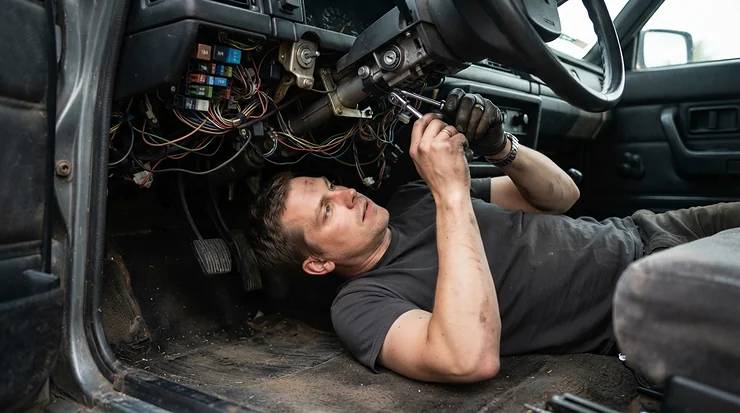
Here’s the problem it solves. Behind an alternator or beside a brake caliper, a standard combination wrench needs about 30 degrees of swing before it can reset for another bite. Only 20 degrees of room? Welcome to the flip-and-pray routine, and the knuckle scrapes that come with it. A fine-toothed ratcheting box end cuts that reset to between 2.5 and 5 degrees. That single spec is the whole game.
This guide is for buyers who’d rather skip the marketing fog. We compared seven real sets on swing arc clearance, head thickness, tooth count, size coverage, and long-term value. Then we added practical advice on engine bay repair, ownership costs, and safety. Whether you want a compact ratchet wrench kit for the trunk or a full tight clearance wrench set for the home garage, the right pick comes down to a handful of measurable details. Low-profile ratcheting wrenches are only part of the answer.
One honesty note before we dive in. Everything here rests on published specs, manufacturer documentation, and aggregated review sentiment from third-party roundups, not personal bench testing. Prices appear as ranges at the time of research and change often, so check current price before you buy.
Quick Comparison: Best Ratcheting Wrench Set for Tight Spaces at a Glance
Here’s how the seven contenders stack up on the specs that matter most when space is scarce.
| Set | Teeth / Swing Arc | Head Style | Best For |
|---|---|---|---|
| GEARWRENCH 9416 | 72 / 5° | Rigid, thin head and beam | All-round pro garage use |
| Milwaukee 48-22-9516 | 144 / 2.5° | Rigid, double-stacked pawls | The tightest swing arc clearance |
| Klein Tools 69408MG | 90 / 4° | Rigid, reversing switch | A compact kit for the toolbag |
| Wera 6000 Joker | 80 / 4.5° (ring end) | Rigid, holding-function open end | Fastener control and precision |
| TEKTON WRN53190 | 72 / 5° | 6-point box, 15° open end | Value with no skipped sizes |
| Jaeger TIGHTSPOT 16PCRWMMRK | 90 / 4° | Rigid, reinforced open end | Wide size range per dollar |
| DURATECH Extra Long Double Box | 72 / 5° | Double box, extra long beams | Budget reach |
Looking at the table above, Milwaukee 48-22-9516 has the smallest arc on paper at 2.5 degrees. But the jump from 5 to 4 degrees on Klein Tools 69408MG and Jaeger TIGHTSPOT 16PCRWMMRK already captures a big slice of that benefit for less money. If your priority is size coverage, TEKTON WRN53190 is the only set here with every size from 8 to 19 mm. Budget buyers should note that DURATECH Extra Long Double Box gives up size coverage to hit its low price point.
💬 Just one click — help others make better buying decisions too!😊
Top 7 Ratcheting Wrench Sets for Tight Spaces: Expert Analysis
Each pick below gets the same treatment: specs translated into real-world meaning, an honest take on who it suits, and what reviewers report. Where verified review data was thin, I say so rather than fill the gap.
1. GEARWRENCH 9416 16-Piece Ratcheting Wrench Set — the slim-head benchmark
If this guide had a control group, it would be this set. The metric kit packs 16 wrenches from 8 mm to 24 mm. Each has a 72-tooth, 12-point ratcheting box end that needs only 5 degrees of movement, versus roughly 30 for a standard wrench. Retail spec tables list the 9 mm wrench’s ratcheting head at about 0.27 inches thick, the kind of number that decides whether a wrench slips behind a bracket or doesn’t. Off-corner loading puts force on the flats instead of the corners, and the 15-degree open end gives you a second angle of attack. A pass-through design also lets the box end slide down long threaded rods.
Based on the spec comparison, this is the set for the serious DIYer or working tech who wants one metric roll that handles most under-hood fasteners without drama. Roundups from Bob Vila and Garage Tooled place a 16-piece GearWrench set at or near the top, with praise centered on the thin head and dependable ratcheting. I couldn’t verify a large pool of individual customer reviews for this exact listing, so treat that praise as directional.
Pros:
- ✅ Slim head and beam reach recessed fasteners
- ✅ 5-degree swing versus 30 on standard wrenches
- ✅ Off-corner loading helps resist rounding
Cons:
- ❌ Metric only, so SAE needs a separate set
- ❌ Rigid heads can’t angle around obstructions
Price: around the $120-$180 range at the time of research; check current price. Verdict: strong value if you turn metric bolts weekly.
2. Milwaukee 48-22-9516 15-Piece Metric Ratcheting Wrench Set — the tightest arc in this lineup
The headline is a 144-tooth gear and a 2.5-degree swing arc, half of what a 72-tooth wrench needs. Fifteen wrenches run from 8 mm to 22 mm. The double-stacked pawls inside each ratcheting end spread the load across more contact points, which the maker says extends ratchet life. The open ends carry a grip pattern the maker claims delivers up to 25 percent more torque than smooth jaws, so fewer rounded bolts when you switch ends.
On paper, this is the answer when swing arc clearance is the bottleneck. Picture the area behind a power-steering pump, where the handle might travel five degrees and not one more. The trade-off is physical: finer teeth are smaller teeth, which is exactly why the double pawls matter. A listed shipping weight of roughly 6.5 pounds also hints at a drawer-first tray kit rather than a grab-and-go roll.
Reviewers of this set family, as echoed in roundups like Garage Tooled’s, point to the ultra-tight arc as the reason to pay up. Verified customer reviews for this exact SKU were thin during research.
Pros:
- ✅ 2.5-degree arc, tightest in this guide
- ✅ Double-stacked pawls for longer ratchet life
- ✅ Lifetime guarantee and drawer-ready tray
Cons:
- ❌ Rigid heads, so flex versions are separate sets
- ❌ Heavy tray storage isn’t pocket-friendly
Price: roughly the $110-$170 range; check current price. Verdict: premium, but justified when arc is your real problem.
3. Klein Tools 69408MG 8-Piece 90-Tooth Metric Ratcheting Wrench Set — a lean kit with a 4-degree arc
Eight wrenches (8, 10, 12, 13, 14, 15, 17, and 19 mm) ride in a roll pouch, making this a compact ratchet wrench kit in the truest sense. The 90-tooth mechanism gives a 4-degree swing, which the maker pitches as a 20 percent improvement over 72-tooth designs. The math checks out. A pass-through box end runs down long studs, and a reversing switch with laser-etched on/off marks shows ratchet direction at a glance. Distributor listings cite cold-forged 400CrV steel and a black finish.
Here’s what the spec sheet won’t tell you: skipping 9, 11, 16, and 18 mm means you’ll occasionally grab something else. Still, those eight sizes cover a surprising share of under-hood and household work, which is why this suits a glovebox, a bike-repair bag, or a second set for a rolling cart.
Bob Vila’s roundup named the SAE version of this 8-piece family best for tight spaces. Beyond that, I couldn’t verify a broad customer-review pool for the metric SKU.
Pros:
- ✅ 90-tooth gear delivers a 4-degree swing
- ✅ Pass-through box end handles long studs
- ✅ Roll pouch slips into any bag
Cons:
- ❌ Only eight sizes, with real gaps
- ❌ Less coverage per dollar than larger kits
Price: around the $70-$120 range; check current price. Verdict: the best carry-everywhere option here.
4. Wera 6000 Joker 11 Set 1 Ratcheting Combination Wrench Set — holding function keeps fasteners put
The twist is the open end. A replaceable hardened metal plate and limit stop hold the nut in place, and bi-hex geometry shrinks the return angle to 30 degrees instead of the usual 60. On the ring side, an 80-tooth ratchet gives a working arc of about 4.5 degrees. The 11 wrenches cover 8 to 19 mm (skipping 9 mm) in drop-forged chrome-moly steel, with lengths from 144 to 246 mm.
What does that mean at the bench? When you’re loosening a hex bolt in a recess with no room to flip the wrench, the small return angle on the open end saves you. The holding function also stops a nut from dropping into the abyss under an intake. This is the pick for people who value fastener control as much as raw swing arc clearance.
Garage Tooled ranks it second overall and predicts it will outlast the rest of your toolbox. I couldn’t verify an aggregate score for this exact set.
Pros:
- ✅ 80-tooth ring end with a roughly 4.5-degree arc
- ✅ Holding function keeps nuts from dropping
- ✅ Drop-forged chrome-moly construction
Cons:
- ❌ Premium pricing for 11 wrenches
- ❌ Metric only and skips 9 mm
Price: around the $200-$300 range; check current price. Verdict: a luxury buy that rewards precision-minded users.
5. TEKTON WRN53190 12-Piece Ratcheting Combination Wrench Set (8-19 mm) — no skipped sizes at a fair price
Twelve wrenches run 8 through 19 mm with no gaps, packed in a roll-up pouch. The 72-tooth gear needs only a 5-degree swing, and the open end sits at 15 degrees so you can flip the wrench and engage the fastener twice as often in cramped spots. Chrome vanadium steel and a 6-point box end round out the build. A 6-point box grips the flats of a hex fastener instead of the corners, which resists round-off.
Normally, 6-point heads need more re-seating room than 12-point ones. With a ratchet that stays engaged, that downside mostly disappears, and you keep the grip advantage. For a first serious tight clearance wrench set, the full size run matters more than a tooth-count flex.
I couldn’t confirm a verified review aggregate for this set, since review data is scattered across individual wrench listings. Availability also varies by version, as TEKTON’s own page for a related 12-piece shows as no longer available, so confirm the pouch version is in stock.
Pros:
- ✅ Complete 8-19 mm range, no gaps
- ✅ 6-point box end resists rounding
- ✅ Roll-up pouch keeps wrenches secured
Cons:
- ❌ No flex head for off-axis access
- ❌ Version availability can change
Price: roughly the $70-$120 range; check current price. Verdict: the sensible all-rounder for most home garages.
6. Jaeger TIGHTSPOT 16PCRWMMRK 16-Piece Metric Ratcheting Wrench Set — a 4-degree arc with wide coverage
Jaeger pairs a 90-tooth gear (a 4-degree swing) with 16 metric wrenches, a reinforced open end, hardened chrome vanadium steel, and a lock-in rack. The maker cites drop forging and heat treating, and lists jaw capacity up to 24 mm. In plain English, that’s the same piece count as GEARWRENCH 9416 with a finer arc, typically at a lower price band.
The honest caveat is brand track record. Feedback on the closely related 24-piece Jaeger master set is mixed: owners praise value and responsive lifetime-warranty support, while a minority report gears failing early. That’s the closest verifiable review pool available, so weigh it accordingly. If you pick this set, register your purchase and test every wrench’s ratchet direction on day one.
Pros:
- ✅ 4-degree swing from a 90-tooth gear
- ✅ Broad size range for the money
- ✅ Lock-in rack and lifetime warranty
Cons:
- ❌ Mixed durability reports on related sets
- ❌ Smaller track record than longtime brands
Price: around the $60-$110 range; check current price. Verdict: a smart value pick if you accept some brand risk.
7. DURATECH Extra Long Double Box Ratcheting Wrench Set (Metric, 9-Piece) — budget reach with long beams
Nine double-box wrenches (8, 10, 12, 13, 14, 16, 17, 19, and 22 mm) use a 72-tooth, 12-point gear with a 5-degree swing arc and chrome vanadium steel, stored in an EVA foam organizer. The extra length adds leverage and reach, which helps when the obstacle is your hand rather than the wrench head.
Think of it as a specialist, not a daily driver. Long beams need a clear straight-line approach to the fastener, so they struggle where you must come in from the side. The size gaps (9, 11, 15, and 18 mm) also limit it as a primary set. As a budget add-on for deep recesses, though, it earns its place. I couldn’t verify a review aggregate, so treat it as budget-tier and inspect it on arrival.
Pros:
- ✅ Long beams add leverage and reach
- ✅ 5-degree swing at a very low price
- ✅ Foam organizer keeps sizes in order
Cons:
- ❌ Nine sizes leave notable gaps
- ❌ Double-box layout can’t approach from the side
Price: under $60 range; check current price. Verdict: a cheap, useful second set.
Top 7 at a Glance: Specs, Prices, and Review Signals
| Set | Pieces / Range | Price Range | Review Signal | Best For |
|---|---|---|---|---|
| GEARWRENCH 9416 | 16 / 8-24 mm | $120-$180 | Top-ranked in several roundups | Pro-grade daily use |
| Milwaukee 48-22-9516 | 15 / 8-22 mm | $110-$170 | Praised for 2.5° arc; thin SKU reviews | Tightest clearance |
| Klein Tools 69408MG | 8 / 8-19 mm (gaps) | $70-$120 | Family named best for tight spaces | Toolbag carry |
| Wera 6000 Joker | 11 / 8-19 mm | $200-$300 | Ranked #2 in one roundup | Fastener control |
| TEKTON WRN53190 | 12 / 8-19 mm | $70-$120 | Not verified in aggregate | Complete sizes, fair cost |
| Jaeger TIGHTSPOT 16PCRWMMRK | 16 metric | $60-$110 | Mixed on related sets | Value hunters |
| DURATECH Extra Long Double Box | 9 / 8-22 mm (gaps) | Under $60 | Not verified in aggregate | Budget reach |
The pattern is clear: spending more buys finer arcs and stronger brand backing, not necessarily more usefulness per job. TEKTON WRN53190 and Jaeger TIGHTSPOT 16PCRWMMRK sit in the sweet spot where size coverage and arc are both respectable. Only buy Wera 6000 Joker if the holding function solves a real problem you have, and treat DURATECH Extra Long Double Box as a supplement rather than a foundation.
✨ Ready to Reach the Unreachable Bolt?
🔧 Pick the set that fits your garage and your budget. Click on any highlighted item to check current pricing and availability. The right tools turn a three-hour knuckle-buster into a calm afternoon of progress!
How to Choose a Ratcheting Wrench Set for Tight Spaces
Choosing well takes five minutes and saves a lot of cursing. Work through these steps in order.
- Start with swing arc, not piece count. Divide 360 by the tooth count: 72 teeth gives 5 degrees, 90 gives 4, and 144 gives 2.5. If your jobs allow 5 degrees, premium gearing is optional.
- Check head thickness and beam width. Spec tables sometimes list head thickness, such as roughly 0.27 inches for a 9 mm GEARWRENCH 9416 wrench. Measure the gap you actually work in.
- Decide rigid or flex. Rigid heads handle more force; flex heads help when the fastener sits off-axis.
- Match sizes to your fleet. Most modern vehicles run metric, while older American cars and some appliances use SAE. Watch for skipped sizes like 9 and 11 mm.
- Inspect the open end. Offset angles, grip patterns, and holding functions like the Wera 6000 Joker plate change how the other half of the wrench behaves.
- Think ergonomics. A NIOSH and Cal/OSHA guide to selecting non-powered hand tools stresses that a tool is only ergonomic when it fits the task and your hand without forcing awkward postures.
- Read the warranty and storage. Lifetime coverage and a roll or rack that keeps sizes visible matter more than they sound.
Gear-Tooth Ratchet Head: What Tooth Count Really Buys You
Open a ratcheting box end and you’ll find a gear-tooth ratchet head: a toothed ring and a spring-loaded pawl that clicks past each tooth in one direction and locks in the other. More teeth means each click is smaller, so the handle needs less travel to advance. That’s the entire reason a 90-tooth set beats a 72-tooth one in a cramped corner.
But finer teeth are physically smaller, and smaller teeth carry less load each. That’s why the Milwaukee 48-22-9516 leans on double-stacked pawls to share the work. A well-made gear-tooth ratchet head in the 72-tooth class remains the proven workhorse for a reason: it balances strength and arc. The 80-tooth ring on the Wera 6000 Joker and the 90-tooth heads on Klein Tools 69408MG and Jaeger TIGHTSPOT 16PCRWMMRK sit in the middle ground.
The practical rule is simple. If your work rarely leaves more than 5 degrees of handle travel, buy for size coverage and build quality. If you’re constantly fighting a 2 to 4 degree window, pay for the finer gear-tooth ratchet head and accept the extra cost.
Swing Arc Clearance: Why Degrees Beat Torque Numbers
Swing arc clearance is the amount of handle travel you actually have between your hand and the nearest obstruction. It’s the number that decides whether a wrench works at all, yet it rarely appears on a packaging front.
Here’s an example. Suppose you’ve got a 25-degree gap beside a bracket. A standard 12-point wrench, which needs roughly 30 degrees to reset, can’t complete a single useful stroke. A 5-degree ratcheting wrench resets with a tiny back-swing and keeps turning. Most of each stroke becomes productive turning instead of repositioning.
That’s why the GEARWRENCH 9416, with its 5-degree arc, can feel like a different tool from a standard wrench of the same size. And it’s why the Wera 6000 Joker emphasizes a 30-degree return angle on the open end, half the usual 60.
One caution: arc isn’t everything. Head thickness, beam length, and approach angle all contribute to swing arc clearance. A 2.5-degree wrench with a thick head can lose to a 5-degree wrench with a slim one. Measure both dimensions before you spend extra.
Low-Profile Ratcheting Wrenches vs Standard Combination Wrenches
Low-profile ratcheting wrenches trade a little brute force for a lot of access. They keep the head and beam slim, hold the fastener continuously, and need a fraction of the swing. Standard combination wrenches remain king for raw breaking torque, which is why some sets, such as the GEARWRENCH XL 85988 double-box set, include a non-ratcheting end for cracking stubborn fasteners and then a ratcheting end for running them out.
| Factor | Low-Profile Ratcheting Wrench | Standard Combination Wrench | Socket Ratchet + Extension |
|---|---|---|---|
| Swing needed | About 2.5-5° | About 30° | Varies by ratchet |
| Head thickness | Slim, often under 0.3 in on small sizes | Thin | Bulkier head plus socket |
| Speed | Stays engaged, no re-seating | Re-seat every stroke | Fast if it fits |
| Breaking torque | Moderate | Highest | High with breaker bar |
| Best For | Cramped, recessed, engine bay jobs | Final tightening and stuck bolts | Open, accessible fasteners |
The takeaway: ratcheting wrenches win whenever space or time is the constraint, and standard wrenches win when force is. A smart toolbox owns both. Use the ratcheting end to run the bolt, then finish with a rigid wrench or torque tool where specifications demand it.
Compact Ratchet Wrench Kit: Features That Actually Matter (And Those That Don’t)
A good compact ratchet wrench kit lives or dies on a short list of features. Everything else is packaging.
What matters:
- Size coverage. Count the sizes you actually use. TEKTON WRN53190 covers 8-19 mm without gaps, while Klein Tools 69408MG skips four sizes.
- Storage that survives your life. A roll pouch (Klein Tools 69408MG) rides in a bag. A lock-in rack (Jaeger TIGHTSPOT 16PCRWMMRK) keeps sizes visible. A drawer tray (Milwaukee 48-22-9516) suits a steel chest.
- Warranty. Lifetime coverage turns a bad gear into a replacement.
- Readable markings. Stamped or color-coded sizes save time in dim engine bays.
What doesn’t:
- Giant piece counts. Large kits often pad the number with stubby duplicates.
- Mirror finishes. They look great and tell you nothing about gear quality.
- Unsourced torque claims. Without a stated test standard, a number is just decoration.
If you only remember one filter, make it this: buy the smallest compact ratchet wrench kit that covers your real fastener list, then add specialists like DURATECH Extra Long Double Box as problems appear.
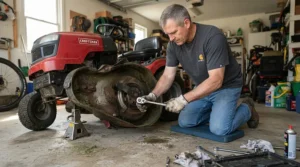
Engine Bay Repair: A Practical Usage Guide
A ratcheting set earns its keep on engine bay repair, where alternator brackets, thermostat housings, and power-steering mounts hide behind everything else. Use these steps to get more from whichever set you buy.
Setup and first use:
- Wipe each wrench and test the ratchet direction in your hand before you’re upside-down under a fender.
- Seat the box end fully on the fastener. Partial engagement is the fastest route to rounded corners.
- Break stubborn bolts loose with a rigid wrench or a non-ratcheting end, like the one on the GEARWRENCH XL 85988, then switch to ratcheting to spin them out.
Technique tips:
- Pull the handle toward you instead of pushing. Klein’s published warnings for its ratcheting box wrenches also advise against hammering or extending the handle.
- Rest your wrist neutrally where you can. NIOSH’s overview of ergonomics and musculoskeletal disorders lists awkward postures and sustained force among the key risk factors, so take breaks during long sessions.
Maintenance schedule (general practice; follow the maker’s guidance):
- After each job: wipe off grit and fluids.
- Monthly or as needed: a drop of light oil on the mechanism and a few test clicks in each direction.
- Every few months: check for sticky pawls or gritty feel.
Common mistakes in the first 30 days: using a cheater pipe, ratcheting in dirty conditions, mixing metric and SAE on a worn bolt, and storing wrenches loose where heads get knocked.
Real-World Scenarios: Which Tight Clearance Wrench Set Fits Your Garage
Specs only matter when matched to a life. Here are four profiles.
If you’re a college student doing occasional repairs on a commuter hatchback, your budget is tight and your use is a few times a month. TEKTON WRN53190 gives you every size from 8 to 19 mm at a moderate price, and a pouch that fits a closet shelf.
If you’re a weekend DIYer with a driveway garage and three or four jobs a month, GEARWRENCH 9416 is the safe, balanced choice. Its slim heads and 16-wrench coverage handle most metric tasks without upgrades.
If you’re a working technician doing alternator, pump, and bracket work all day, the tightest arcs pay for themselves in saved minutes. Milwaukee 48-22-9516 suits a drawer-based workflow, while Wera 6000 Joker suits someone who cares about open-end control.
If you want a roadside or glovebox kit, Klein Tools 69408MG is compact, travels well, and its eight sizes cover the common cases. Add DURATECH Extra Long Double Box later if you find a recess you can’t reach.
Tight Clearance Wrench Set: Long-Term Cost & Maintenance
The sticker price is only the opening bid. A tight clearance wrench set should be judged by cost per use over years. Imagine a set in the $150 range used 40 times a year for five years. That works out to roughly 75 cents per use, which is far cheaper than a single rounded bolt that turns into a shop bill.
Warranty is the other half of the math. Listings for Milwaukee 48-22-9516, Klein Tools 69408MG, and Jaeger TIGHTSPOT 16PCRWMMRK cite lifetime coverage, and GEARWRENCH 9416 lists a lifetime warranty, with “full” or “limited” wording varying by seller. Read the terms, and keep your receipt.
Upkeep is cheap but real. Ratchet pawls fail when grit gets in or when you hammer on the handle. A wipe-down habit, a rack or pouch that prevents knocks, and a rule against cheater pipes will extend life more than any premium finish.
Finally, count the hidden cost of cheap gear. If a gear strips mid-job, you’ve lost both the wrench and the afternoon. That’s the real argument for stepping up from DURATECH Extra Long Double Box to a mid-tier kit if you work often.
Safety, Standards, and Compliance Guide
Ratcheting wrenches are simple tools, but safe habits still matter. The U.S. Occupational Safety and Health Administration’s hand tools standard for construction says employers must not issue or permit unsafe hand tools. It also says wrenches shall not be used when jaws are sprung to the point that slippage occurs. That rule is written for workplaces, but it’s a good inspection standard for any garage.
Practical takeaways:
- Retire any wrench whose box end slips under load, skips teeth, or has visible cracks.
- Wear eye protection, as Klein’s listed warnings for its ratcheting sets advise, and never use these tools on or near live electrical circuits.
- Don’t hammer, extend, or “cheater” the handle.
- Check the standards language. The GEARWRENCH 9416 listing states it meets or exceeds ASME and ANSI specifications.
- Some listings, including Klein Tools 69408MG and Wera 6000 Joker, carry California Proposition 65 notices, so read the packaging if that matters to you.
FAQ
❓ Is a 90-tooth ratcheting wrench set worth it over a 72-tooth set?
❓ What is the best budget ratcheting wrench set for tight spaces?
❓ Can flex-head ratcheting wrenches break loose rusted bolts?
❓ Should I buy SAE or metric ratcheting wrenches for a modern car?
❓ Do ratcheting wrench sets come with a lifetime warranty?
Final Verdict: Choosing the Right Ratcheting Wrench Set for Tight Spaces
Here’s the short version. For most people, GEARWRENCH 9416 is the balanced choice, with slim heads, a 5-degree arc, and 16 metric sizes. If swing arc clearance is your constant enemy, Milwaukee 48-22-9516 brings the tightest arc here at 2.5 degrees. For a pocket-friendly kit, Klein Tools 69408MG wins on portability. Wera 6000 Joker is the precision luxury, TEKTON WRN53190 the sensible value, Jaeger TIGHTSPOT 16PCRWMMRK the wide-coverage bargain with some brand risk, and DURATECH Extra Long Double Box the budget specialist.
Whatever you choose, buy for the gap you actually work in. Measure it, match your sizes, and remember that a modest tool you can fit beats a premium tool you can’t. A good ratcheting wrench set for tight spaces doesn’t make the job glamorous, but it makes it calm.
Recommended for You
- Metric Wrench Set: 7 Best Picks You Can Trust In 2026
- Combination Wrench Set For Mechanics: 7 Proven Picks (2026)
- Emergency Roadside Hand Tool Kit: 7 Real Picks For 2026
Disclaimer: This article contains affiliate links. As an Amazon Associate, I earn from qualifying purchases. If you purchase products through these links, we may earn a small commission at no additional cost to you.
✨ Found this helpful? Share it with your friends! 💬🤗
