
In This Article
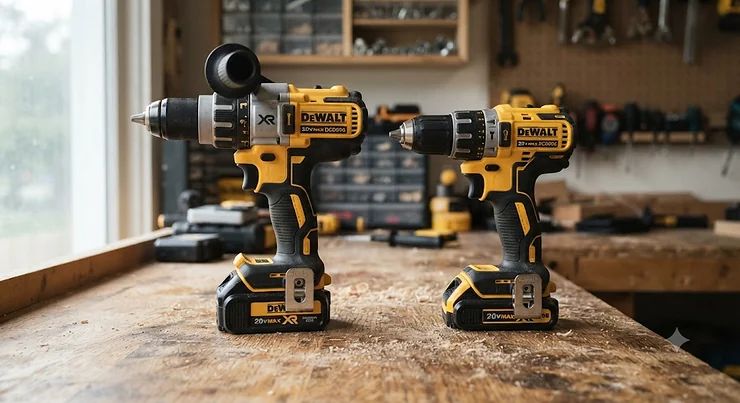
Somewhere in every homeowner’s life there’s a moment of reckoning with a brick wall. You’ve got a shelf bracket, a masonry bit that’s smoking after ten seconds, and a growing suspicion that your trusty drill just isn’t built for this fight. That suspicion is correct. The hammer drill vs regular drill question isn’t marketing fluff — it’s the difference between a project that takes five minutes and one that ends with a burned-out motor and a chipped bit rattling on the garage floor.
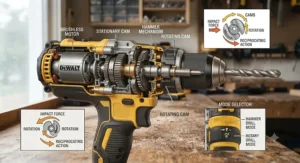
Here’s the short version: a hammer drill vs regular drill comparison comes down to one mechanical trick. A regular drill only spins. A hammer drill spins and punches forward at the same time, thousands of times a minute, turning your bit into a tiny jackhammer that shatters masonry instead of just scraping at it. Reviewers consistently note that once you’ve drilled brick with a hammer drill, going back to a spinning-only tool for that job feels like showing up to a fistfight with a butter knife.
This guide breaks down seven real, currently-sold tools — from a budget-friendly homeowner pick to a corded rotary hammer that eats concrete for breakfast — so you can match the tool to the wall, not the other way around. We’ll dig into blows-per-minute ratings, masonry bit compatibility, and exactly which of these belongs in an electrician’s bag versus a mason’s. At the time of research, prices below reflect general market ranges; always check current price before buying, since tool pricing shifts with promotions and retailer stock.
Quick Comparison: Hammer Drill vs Regular Drill at a Glance
| Tool Type | Best For | Motor Action | Typical Price Range |
|---|---|---|---|
| Ryobi P1813 | Budget cordless hammer drilling | Spin + hammer | Around $130-150 |
| Black+Decker BDCHD18B | Occasional homeowner masonry work | Spin + hammer | Under $80 |
| Bosch GSR18V-535C | Electricians, tight-space regular drilling | Spin only | $100-140 range |
| DEWALT DCD996B | All-around pro/DIY hammer drilling | Spin + hammer | $150-200 range |
| Makita XPH07TB | Long-runtime cordless hammer drilling | Spin + hammer | $200-250 range |
| Milwaukee M18 FUEL 2804-20 | Daily tradesperson use | Spin + hammer | $150-190 range |
| Bosch 11255VSR | Heavy concrete, anchoring, SDS bits | Spin + rotary-hammer piston | $200-230 range |
What jumps out here is that “hammer drill” isn’t one category — it’s a spectrum. On one end you’ve got compact drill/drivers like the Bosch GSR18V-535C that skip hammer function entirely because electricians rarely need it. On the other end sits the Bosch 11255VSR, a true rotary hammer that outclasses every standard hammer drill on this list for sheer concrete-eating power. Budget doesn’t always track with capability, either — the Ryobi P1813 punches well above its price tag for occasional masonry work, while a corded rotary hammer earns its higher cost through mechanism, not brand markup.
💬 Found a pick you like already? Tap through to check today’s price before it changes!😊
Top 7 Hammer Drills & Drills: Expert Analysis
1. Ryobi P1813 — best budget cordless hammer drill
The Ryobi P1813 proves you don’t need a $200 tool to knock a few anchor holes into a concrete block wall. Under the hood, it runs on a brushless motor with a rated 750 in-lbs of torque, delivered through a three-mode selector — drill, driver, hammer — that’s a genuine upgrade from the brushed hammer drills Ryobi sold a few years back. In practice, that brushless motor means longer runtime per charge and noticeably less heat buildup during back-to-back holes, which matters more than the spec sheet lets on when you’re drilling a dozen anchor points on a Saturday.
Who should buy the Ryobi P1813? Anyone already invested in the One+ 18V battery ecosystem, or a homeowner who needs hammer mode a few times a year rather than a few times a day. Reviewers consistently report that the tool feels more capable than its price suggests, with several noting it out-torques drills from pricier brands on paper, though a handful mention the single included battery runs out faster than expected on longer jobs.
Pros:
- ✅ Brushless motor at a genuinely budget-friendly price point
- ✅ Compatible with the huge Ryobi One+ battery lineup
- ✅ Clutch override makes switching modes fast on the job
Cons:
- ❌ Kit ships with only one battery, not two
- ❌ Not built for daily professional-grade concrete work
At the time of research, the Ryobi P1813 kit sits in the $130-150 range, and for occasional masonry drilling around the house, it’s hard to beat that value — check current price before buying, since Ryobi kits fluctuate with seasonal Home Depot promotions.
2. Black+Decker BDCHD18B — lightest pick for occasional masonry jobs
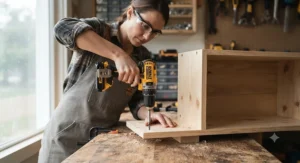
If your masonry drilling needs amount to “hang a mirror on a brick accent wall once a year,” the Black+Decker BDCHD18B is built exactly for that reality. It’s a 20V MAX hammer drill with a compact frame and lighter overall weight than most of the pro-grade tools on this list, which matters when you’re one-handed on a ladder trying to hold a level and a drill at the same time.
Based on the spec comparison, this tool trades top-end torque and hammer aggressiveness for size and simplicity — it won’t out-drill a rotary hammer in old, dense concrete, but for softer brick, mortar joints, and cinder block it gets the job done without the bulk. What most buyers overlook about entry-level hammer drills like this one is that the battery platform matters as much as the tool itself; Black+Decker’s 20V MAX batteries are inexpensive to replace, which keeps long-term ownership cheap even if the tool itself sees light use.
Pros:
- ✅ Noticeably lighter and more compact than pro-tier models
- ✅ Inexpensive 20V MAX battery platform to maintain
- ✅ Easy single-handed operation for quick household jobs
Cons:
- ❌ Limited power ceiling for dense or reinforced concrete
- ❌ Fewer speed/torque settings than premium competitors
Expect a price under $80 for the bare tool or a modest kit at the time of research — genuinely one of the more affordable entry points into hammer drilling, though buyers should check current price since retailer bundles vary.
3. Bosch GSR18V-535C — best regular drill for electricians and tight spaces
Not every job calls for hammer mode, and this is exactly why the Bosch GSR18V-535C earns its spot here as the “regular drill” side of the hammer drill vs regular drill equation. It’s a compact 18V drill/driver with no hammer function at all, built instead around a short head length and slim grip that slides into electrical boxes, cabinetry, and stud bays that a bulkier hammer drill simply can’t reach.
Electricians and finish trades gravitate toward tools like this because most of their day is spent driving screws and boring holes in wood, drywall, and thin metal — tasks where hammer mode adds nothing but extra weight and vibration. Bosch’s connectivity features let the tool report battery health and usage data through a companion app, a detail that matters more to contractors managing a fleet of tools than to a weekend DIYer. Reviewers on trade forums frequently describe Bosch’s compact drill line as dependable and well-built for everyday tasks, even though it won’t dominate a heavy-duty job site the way a fuel-class hammer drill would.
Pros:
- ✅ Compact head fits tight electrical boxes and cabinetry
- ✅ Lighter and less fatiguing for all-day driving work
- ✅ App connectivity useful for multi-tool fleet tracking
Cons:
- ❌ No hammer mode at all — unsuitable for masonry
- ❌ Smaller battery capacity options limit heavy-duty runtime
At the time of research, this compact Bosch drill sits in the $100-140 range depending on bare-tool versus kit configuration — a smart, focused buy for anyone whose “drilling into concrete” needs are effectively zero.
4. DEWALT DCD996B — best all-around cordless hammer drill for pros and serious DIYers
The DEWALT DCD996B is the tool most contractors picture when someone says “cordless hammer drill.” It runs a brushless motor paired with the 20V MAX XR battery platform, a three-speed transmission (0-450 / 0-1,300 / 0-2,000 RPM), and a hammer function rated up to 38,250 BPM — one of the higher blows-per-minute figures in the cordless hammer drill category, which translates directly into faster hole-starts in brick and block.
Here’s what the spec sheet won’t tell you, but the design implies: that half-inch ratcheting metal chuck with carbide inserts is built to grip masonry bits without slipping under hammer-mode vibration, a common failure point on cheaper chucks. The three-speed gearbox also means this isn’t a one-trick masonry tool — the low-speed, high-torque setting handles large spade bits in framing lumber, while the top speed is snappy enough for quick fastener driving. This drill is for the buyer who wants one tool that handles concrete anchors on Monday and deck screws on Tuesday without complaint.
Pros:
- ✅ Class-leading 38,250 BPM hammer rating for its category
- ✅ Metal ratcheting chuck holds masonry bits securely
- ✅ Three-speed gearbox covers both torque and finish work
Cons:
- ❌ Bare tool only — batteries and charger sold separately
- ❌ Heavier in hand than compact-class drill/drivers
Bare-tool pricing typically lands in the $150-200 range at the time of research, which is reasonable for XR-platform buyers already holding DEWALT batteries, though newcomers to the brand should factor in battery cost before checking out.
5. Makita XPH07TB — best runtime and ergonomics in a premium cordless hammer drill
The Makita XPH07TB built its reputation on something that doesn’t show up cleanly on a spec sheet: how a tool feels after two hours of continuous use. Its 18V LXT brushless motor and redesigned ergonomic grip consistently earn praise from reviewers for reducing wrist fatigue during long masonry-anchoring sessions, which matters enormously on jobs that involve dozens of repetitive holes rather than just two or three.
Mechanically, it delivers strong torque and multiple speed settings comparable to other flagship 18V hammer drills, but what most buyers overlook is the battery efficiency angle — Makita’s LXT platform is known for squeezing more working time out of each amp-hour than some rival systems, meaning fewer battery swaps mid-job. Reviewers frequently name it a top pick specifically because it balances raw drilling capability with all-day comfort, rather than chasing the single highest torque number on the shelf.
Pros:
- ✅ Ergonomic grip reduces fatigue on long masonry sessions
- ✅ Efficient LXT battery platform stretches runtime per charge
- ✅ Well-regarded build quality across the Makita LXT lineup
Cons:
- ❌ Premium price compared to base-tier hammer drills
- ❌ LXT batteries carry a cost premium versus some rivals
At the time of research, kit pricing for the Makita XPH07TB generally runs in the $200-250 range with two batteries included — pricier upfront, but the batteries alone justify a meaningful chunk of that cost.
6. Milwaukee M18 FUEL 2804-20 — best for daily tradesperson use
For contractors who pick up a hammer drill every single working day, the Milwaukee M18 FUEL 2804-20 is frequently the default recommendation, and the reasoning holds up under scrutiny. It’s built on Milwaukee’s FUEL brushless platform with the M18 REDLINK PLUS electronics that manage heat and overload protection — a detail that matters when a drill runs eight hours a day, five days a week, rather than a weekend here and there.
What most buyers overlook about FUEL-class tools is that the electronics package does as much work as the motor itself: overload protection extends motor life under sustained heavy use, and the tool’s diagnostic feedback (through Milwaukee’s app ecosystem on some models) helps fleet managers track wear before a tool fails mid-job. Trade-forum discussion consistently frames the M18 platform as having the deepest tool ecosystem of any cordless brand, meaning a contractor’s existing M18 batteries carry across dozens of other tools — a real total-cost-of-ownership advantage that a spec sheet comparison alone won’t surface.
Pros:
- ✅ REDLINK PLUS electronics extend motor life under heavy use
- ✅ Massive M18 battery/tool ecosystem lowers long-term cost
- ✅ Proven reliability record on demanding daily job sites
Cons:
- ❌ Bare tool pricing still requires buy-in to M18 batteries
- ❌ Overkill for buyers who only drill masonry occasionally
Bare-tool pricing at the time of research generally sits in the $150-190 range — a smart buy specifically for anyone already standing inside the Milwaukee M18 ecosystem, less so for a first-time cordless buyer starting from zero.
7. Bosch 11255VSR — best drill for concrete and heavy anchoring work
When a job moves past “a few holes in brick” into “core-heavy anchoring in cured concrete,” a standard hammer drill starts to struggle, and that’s precisely the gap the Bosch 11255VSR fills. This is a corded SDS-plus rotary hammer, not a hammer drill — an important distinction we’ll unpack further down — running an 8.0-amp motor that delivers 2.0 ft-lbs of impact energy at up to 5,800 BPM, with three selectable modes: rotary hammer, rotation-only, and hammer-only for light chiseling.
Based on the spec comparison, the mechanical difference here is the piston-driven hammering action rather than the sliding-disc mechanism found in standard hammer drills, and that’s why this tool out-drills every cordless option on this list in dense or reinforced concrete. The SDS-plus chuck system also means tool-free bit changes and a bit that “floats” slightly in the chuck, absorbing shock that would otherwise transfer straight into your wrist. Bosch’s PRO+GUARD dust system pairs with this tool to help move toward OSHA Table 1 dust-control compliance, a detail that matters more than it sounds for anyone drilling concrete professionally.
Pros:
- ✅ Piston-driven impact vastly outperforms standard hammer drills in concrete
- ✅ SDS-plus tool-free bit changes with shock-absorbing float
- ✅ Three modes cover drilling, driving, and light chiseling
Cons:
- ❌ Corded only — no cordless version at this exact spec
- ❌ Heavier and louder than any drill/driver on this list
At the time of research, the Bosch 11255VSR generally runs in the $200-230 range — a specialist’s tool, and genuinely the right call the moment “drill for concrete” becomes a recurring rather than occasional need.
Practical Usage Guide: Setting Up and Getting the Most From Your Hammer Drill
Getting a new hammer drill out of the box is the easy part — dialing it in for masonry work is where most first-time buyers stumble. Start by confirming the tool is actually in hammer mode; nearly every model on this list uses a separate ring or switch (distinct from the speed selector) that toggles the hammering mechanism on and off, and it’s shockingly easy to leave it in drill-only mode and wonder why a $180 tool won’t touch a brick wall. Next, always start a masonry hole at a slight angle or with a center-punch dimple, then straighten out once the bit bites — starting straight-on against a hard, smooth surface is the single most common cause of bit walk.
Maintenance-wise, masonry drilling generates far more dust than wood or metal work, and that dust is abrasive to chucks and bearings. Wipe down the chuck jaws after every masonry session, and periodically back the chuck open fully and blow out accumulated dust with compressed air. A common mistake in the first 30 days of ownership is running the hammer function continuously in short, aggressive bursts rather than a steady, moderate feed rate — steady pressure lets the hammering mechanism do the work, while jabbing at the wall mostly just tires out your arm and can crack the edges of the hole. Finally, keep a dedicated set of masonry bits separate from your wood and metal bits; using a hammer-rated masonry bit on wood dulls the carbide tip fast, and it’s a needless expense to replace.
Real-World Scenarios: Matching the Tool to the Project
Picture three different people standing in a hardware store aisle. First, a renter hanging two picture frames on a plaster-over-brick wall — twice a year, tops. For that person, the Black+Decker BDCHD18B is plenty; buying anything more is money spent on capability that will sit unused in a drawer. Second, a weekend DIYer finishing a basement who needs to anchor furring strips into a concrete foundation wall across an entire room, plus handle general framing and deck-screw work for months afterward — that’s the sweet spot for the DEWALT DCD996B or Makita XPH07TB, tools versatile enough to be the only drill in the garage.
Third, an electrician running conduit and mounting panel boxes all day, drilling almost exclusively into drywall, wood studs, and thin sheet metal, with masonry work being rare and typically limited to soft brick veneer — this is the exact profile the Bosch GSR18V-535C was designed around, prioritizing compactness and all-day comfort over hammer capability they’ll rarely use. And for a mason or a contractor drilling dozens of anchor holes into cured, reinforced concrete every week, only the Bosch 11255VSR rotary hammer delivers the speed and durability that job demands without burning through cheaper tools.
Problem → Solution: Common Hammer Drill Headaches
Drilling stalls halfway through a hole in brick? The most common cause is dull carbide on the masonry bit rather than a weak drill — swap in a fresh bit before assuming the tool is underpowered. Bit wandering off-mark on a smooth concrete surface? Use a center punch or a strip of masking tape as a starting guide, and begin at a shallow angle before straightening the drill upright. Excessive dust clouding your work area and your lungs? Attach a dust-collection shroud where compatible, or have a helper run a shop vacuum nozzle near the hole as you drill — this is also directly relevant to OSHA’s silica dust guidance for anyone drilling concrete professionally.
Chuck slipping under load during hammer mode? This usually signals a worn or under-tightened chuck rather than a defective tool — hand-tighten in all three jaw positions, not just one. And if a cordless hammer drill bogs down noticeably faster than it used to, suspect the battery before the motor; lithium-ion cells lose peak output as they age, and a fresh battery pack often restores performance that felt like it belonged to a “broken” tool.
How to Choose a Hammer Drill vs a Regular Drill
Making this decision well comes down to a short checklist rather than guesswork:
- Identify your primary material. If most of your drilling is wood, drywall, plastic, or thin metal, a regular drill/driver like the Bosch GSR18V-535C covers you completely and saves weight and cost.
- Estimate masonry frequency. A few holes a year points toward an affordable hammer drill like the Ryobi P1813 or Black+Decker BDCHD18B; weekly masonry work points toward a rotary hammer.
- Check the BPM rating, not just torque — a higher blows-per-minute figure, like the DEWALT DCD996B‘s 38,250 BPM, generally means faster hole-starts in hard material.
- Match the chuck type to your bits. Standard hammer drills use round or hex-shank masonry bits; rotary hammers like the Bosch 11255VSR require SDS-plus bits and won’t accept ordinary chucked bits at all.
- Weigh battery ecosystem investment. If you already own Milwaukee M18 or DEWALT 20V MAX batteries, staying in that platform saves real money over buying a whole new system.
- Consider job duration and comfort. For all-day use, ergonomic weight distribution — a strength of the Makita XPH07TB — matters as much as raw output.
- Factor in dust and noise exposure, especially for anything approaching professional-frequency masonry work, where OSHA’s Table 1 guidance on respirable crystalline silica controls becomes directly relevant.
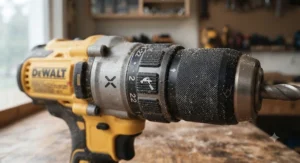
Rotary Hammer vs Hammer Drill: What’s Actually Different
This is one of the most persistently confused comparisons in the power tool aisle, and it’s worth untangling because the two tools aren’t interchangeable despite looking similar. A standard hammer drill, like the DEWALT DCD996B or Ryobi P1813, creates its hammering action with two ridged discs — one fixed, one attached to the chuck — that slide against each other under spring pressure, producing a rapid but comparatively light vibrating punch. This mechanism works well for occasional brick and block drilling, and critically, most hammer drills can switch the hammer function off entirely and behave like an ordinary drill for wood and metal.
A rotary hammer, like the Bosch 11255VSR, generates its pounding action completely differently — through a piston driven by a crankshaft or electro-pneumatic mechanism, similar in principle to a small jackhammer. According to Family Handyman’s comparison of the two mechanisms, rotary hammers deliver substantially more impact energy and are the preferred tool among professionals specifically because that piston action holds up to daily, heavy concrete drilling in a way the disc-based hammer drill mechanism simply isn’t designed for. The trade-off is versatility: rotary hammers require SDS-plus or SDS-max bits exclusively, whereas a standard hammer drill’s chuck accepts the same round or hex-shank bits you’d use for wood and metal. In short, buy a hammer drill for occasional, mixed-material work, and step up to a rotary hammer the moment concrete drilling becomes a weekly or daily task rather than an occasional one.
Understanding Hammer Drill BPM Ratings
BPM — blows per minute — is the single most useful spec for predicting how fast a hammer drill will bore through masonry, yet it’s routinely overlooked in favor of voltage or torque numbers that sound more impressive on a box. What is a hammer drill’s BPM rating? It’s simply how many times per minute the hammering mechanism strikes the chuck while drilling, and higher figures generally translate into faster progress through brick, block, and light concrete.
On this list, the spread is wide: the DEWALT DCD996B rates up to 38,250 BPM, while the Bosch 11255VSR rotary hammer runs a comparatively modest 5,800 BPM — a number that looks weaker on paper but is misleading, since rotary hammer impacts carry far more force per strike due to the piston mechanism, not just frequency. What most buyers overlook is that BPM alone doesn’t tell the whole story; impact energy (measured in foot-pounds) matters just as much, which is why a lower-BPM rotary hammer can still out-drill a higher-BPM standard hammer drill in genuinely hard concrete. Use BPM to compare within the same tool category — hammer drill to hammer drill — rather than across categories.
Choosing the Right Masonry Bit for Your Hammer Drill
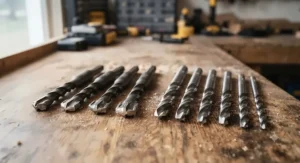
A hammer drill is only as effective as the bit chucked into it, and this is a spot where buyers who nail the tool choice still get frustrated by poor results. Standard hammer drills use round or hex-shank carbide-tipped masonry bits, held in an ordinary keyed or keyless chuck. According to a technical breakdown of carbide-tipped masonry bit design, the carbide tip is brazed onto the bit head specifically to survive the pounding of hammer mode, while the flute design is engineered to clear dust from the hole as you drill — a detail that directly affects drilling speed and bit lifespan.
Rotary hammers like the Bosch 11255VSR, on the other hand, require SDS-plus shank bits exclusively; a standard round-shank masonry bit simply won’t lock into an SDS chuck, and vice versa. What most buyers overlook when shopping for masonry bits is flute width — wider flutes clear debris faster, which matters enormously in deep anchor holes where packed dust can cause a bit to bind and overheat. For occasional work with any of the standard hammer drills on this list, a basic carbide-tipped masonry bit set covers brick, block, and mortar comfortably; for the Bosch 11255VSR, budget separately for SDS-plus bits since they aren’t interchangeable with your other drills.
Best Drill for Electricians and Tight-Space Trade Work
Electricians have a genuinely different tool profile than masons or general contractors, and it’s worth calling out directly since it’s one of the most common searches in this category. The bulk of an electrician’s drilling work involves wood studs, drywall, junction boxes, and thin sheet metal — materials where hammer mode adds weight and vibration without adding value. This is exactly why the Bosch GSR18V-535C earns its spot on this list: a short head length for working inside cramped panels and stud bays, lighter overall weight for holding overhead for extended periods, and app connectivity that larger electrical contractors increasingly value for tracking tool health across a crew.
That said, electricians occasionally do need masonry capability — running conduit into a block foundation wall, for instance — and in those cases, a compact cordless hammer drill like the Ryobi P1813 makes a sensible secondary tool rather than replacing the primary compact drill entirely. The takeaway: don’t assume “hammer drill” is automatically the better buy for every trade. For electricians specifically, prioritize compactness and driving comfort first, and treat hammer capability as an occasional-use bonus rather than a daily requirement.
Common Mistakes When Buying a Hammer Drill
The most frequent mistake is buying based on voltage alone — an 18V or 20V MAX label tells you almost nothing about actual drilling performance, since brands measure “max voltage” differently and it doesn’t correlate cleanly with torque or BPM. A second common misstep is assuming every “hammer drill” on a store shelf can handle heavy concrete work; as covered above, standard hammer drills and rotary hammers are genuinely different tools, and buying a $150 hammer drill expecting rotary-hammer performance in cured concrete leads to disappointment and a burned-out motor.
A third mistake is ignoring battery ecosystem lock-in until after the purchase — buying a Milwaukee M18 tool when you already own a garage full of DEWALT 20V MAX batteries means starting a second, expensive battery platform from scratch. Finally, buyers frequently skip checking chuck type against their existing bit collection, only to discover a new rotary hammer won’t accept any of the round-shank masonry bits sitting in their toolbox. A five-minute compatibility check before checkout avoids all four of these regrets.
Safety, Dust, and Vibration: What Regulations Actually Say
Masonry drilling isn’t just noisy — it generates fine silica dust that carries real long-term health risk with repeated exposure, which is why OSHA created specific compliance guidance for construction tasks involving concrete and masonry drilling. Per OSHA’s respirable crystalline silica standard for construction, employers can follow Table 1’s specified engineering controls — such as water suppression or vacuum dust extraction attached directly to the drill — as a straightforward path to compliance without needing to independently measure exposure levels on every job.
For homeowners and DIYers, the practical takeaway is simpler but still worth taking seriously: wear an N95 or better respirator when drilling into concrete or block for extended periods, use a shop vacuum or dust-shroud attachment where your tool supports one (the Bosch 11255VSR‘s PRO+GUARD system is built for exactly this), and take breaks during heavy hammer-mode use, since repeated vibration exposure over long sessions is a recognized contributor to hand-arm vibration issues. None of this requires professional-grade equipment — just consistent habits any time hammer mode is running for more than a few minutes at a stretch.
✨ Ready to Stop Fighting That Wall?
🔍 Compare current prices on today’s top hammer drills and rotary hammers before your next project. Click through on any pick above to check availability — the right tool turns a frustrating afternoon into a fifteen-minute job.

Frequently Asked Questions
❓ What is the difference between a hammer drill and a regular drill?
❓ Can a hammer drill be used as a regular drill?
❓ Do I need a hammer drill for concrete anchors?
❓ What BPM rating is good for a hammer drill?
❓ What masonry bit works with a hammer drill?
Conclusion
The hammer drill vs regular drill debate isn’t really about which tool is “better” — it’s about matching mechanism to material. A regular drill like the Bosch GSR18V-535C stays lighter, quieter, and more comfortable for the wood-and-drywall work that fills most trade days, while a hammer drill’s punching action exists for exactly one purpose: getting through brick, block, and concrete without destroying your bit or your patience.
Across the seven tools here, there’s a clear ladder: the Black+Decker BDCHD18B and Ryobi P1813 cover occasional homeowner masonry affordably, the DEWALT DCD996B, Makita XPH07TB, and Milwaukee M18 FUEL 2804-20 handle daily mixed-material pro work, and the Bosch 11255VSR rotary hammer steps in the moment concrete drilling becomes a serious, recurring job. Match your project frequency and material honestly, and the right tool stops feeling like a purchase decision and starts feeling obvious.
Recommended for You
- 7 Best Cordless Drill for Home Use Picks in 2026 (Tested & Compared)
- Dewalt vs milwaukee vs makita: 7 Best Drills Ranked for 2026
- Best Cordless Drill Set: 7 Tested Picks That Won’t Let You Down (2026)
Disclaimer: This article contains affiliate links. As an Amazon Associate, I earn from qualifying purchases. If you purchase products through these links, we may earn a small commission at no additional cost to you.
✨ Found this helpful? Share it with your friends! 💬🤗
