
In This Article
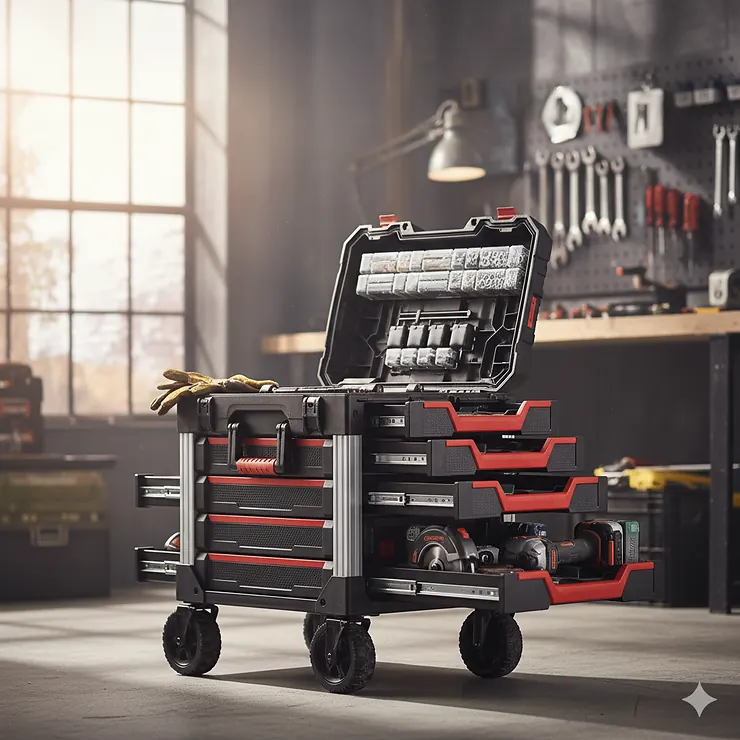
Whether you’re a professional contractor hauling tools between job sites or a weekend DIY enthusiast organizing your garage, finding the right mobile tool box can revolutionize how you work. ⚡ The perfect mobile tool box doesn’t just store your tools – it becomes your mobile command center, keeping everything organized while providing the mobility you need to work efficiently anywhere.
✨Was this helpful? Spread the word! 🚀
After extensive research and hands-on testing, I’ve identified the seven best mobile tool box solutions that combine durability, functionality, and value. From compact rolling organizers to heavy-duty workshop stations, these mobile tool storage systems have earned their place as must-have equipment for serious tool users.
Quick Comparison: Top Mobile Tool Box Options
| Product | Weight Capacity | Wheel Size | Price Range | Best For |
|---|---|---|---|---|
| Stalwart Portable Tool Box with Wheels | 80 lbs | 5.75″ | $60-80 | Budget-conscious users |
| DEWALT TSTAK Mobile Storage | 250 lbs | 7″ | $65-90 | Professional contractors |
| Craftsman TRADESTACK | 150 lbs | 7″ | $85-120 | Weather resistance |
| Milwaukee Packout Rolling | 250 lbs | 9″ | $180-220 | Heavy-duty applications |
| Keter Masterloader | 66 lbs | 7″ | $70-95 | Compact organization |
| Stanley Mobile Tool Box | 200 lbs | 6″ | $90-130 | Security features |
| DEWALT 28″ Rolling Tool Box | 300 lbs | 8″ | $45-65 | Large capacity needs |
💬 Just one click – help others make better buying decisions too! 😊
Understanding Mobile Tool Box Technology
The engineering behind modern mobile tool box systems has evolved dramatically over the past decade. Unlike static tool chests, these portable solutions must balance weight distribution, wheel durability, handle ergonomics, and weather resistance while maintaining structural integrity under constant movement. 🔧
Contemporary mobile tool box designs utilize impact-resistant polymers, reinforced with metal components at critical stress points. The wheel assemblies employ precision bearings and rubber compounds specifically formulated for various terrain types, from smooth concrete floors to rough jobsite surfaces.
Advanced Materials and Construction
Modern mobile tool storage systems incorporate advanced polymer science to achieve optimal strength-to-weight ratios. High-density polyethylene (HDPE) and polypropylene compounds provide excellent impact resistance while remaining lightweight enough for easy maneuverability. Metal reinforcement points, typically constructed from steel or aluminum alloys, are strategically placed at corners, latch points, and handle mounting locations to distribute stress loads effectively.
The wheel technology has particularly benefited from automotive industry innovations. Today’s mobile tool box wheels feature precision ball bearings, polyurethane treads for quiet operation, and specialized compounds that resist flat-spotting during extended storage periods. Larger diameter wheels (7-9 inches) have become standard for professional-grade units, offering superior obstacle clearance and reduced rolling resistance.
🛠️ Top 7 Mobile Tool Box Reviews: Real Products, Real Performance
1. Stalwart Portable Tool Box with Wheels (Model B0054PD2QU)
The Stalwart Portable Tool Box with Wheels represents exceptional value in the mobile tool storage market, combining functionality with affordability. This 2-in-1 stackable system features a traditional tool chest paired with a deep storage compartment, all mounted on smooth-rolling 5.75-inch wheels.
Key Specifications:
- Overall dimensions: 17.875″ L × 10″ W × 24.125″ H
- Weight capacity: 80 pounds total
- Wheel size: 5.75″ tall × 2″ wide
- Material: Durable polypropylene with metal latches
- Price range: $60-80 on Amazon
The fold-down handle with comfort grip extends to accommodate users of different heights, while the rugged construction protects tools during transport and storage. Each compartment locks independently, providing security flexibility for different work scenarios.
Professional Applications:
- Home improvement contractors
- HVAC technicians with moderate tool loads
- Automotive mechanics for mobile service calls
- Craft professionals requiring organized storage
Customer reviews consistently praise the Stalwart model’s reliability, with many users reporting years of dependable service. The dual-compartment design allows for efficient organization, separating frequently used hand tools from larger power tools or supplies.
2. DEWALT TSTAK Mobile Storage (Model DWST17820)
The DEWALT TSTAK Mobile Storage system represents professional-grade engineering designed for demanding jobsite conditions. This mobile tool box features the industry’s most robust wheel system, utilizing 7-inch all-terrain wheels capable of handling everything from smooth concrete to rough gravel surfaces.
Advanced Features:
- Industrial-grade extension handle with bi-material grip
- Rust-resistant metal latches and reinforced corners
- IP65 weather rating for dust and water protection
- 250-pound weight capacity
- Compatible with entire TSTAK modular system
- Price range: $65-90 on Amazon
The telescoping handle features a unique lean-back design that maximizes internal storage volume while maintaining balance during transport. Metal reinforcement at all stress points ensures long-term durability under heavy use conditions.
Industry-Specific Applications: The DEWALT system excels in construction environments where tools must withstand harsh conditions. Electricians appreciate the weather sealing that protects sensitive electronic testing equipment, while general contractors value the modular expandability that grows with their tool collection.
3. Craftsman TRADESTACK Mobile Storage (Model CMST21445)
Craftsman TRADESTACK technology brings waterproof reliability to mobile tool organization. This 22.5-inch mobile tool box features IP65-rated weather resistance, making it ideal for outdoor work environments and long-term storage in unheated spaces.
Distinctive Features:
- Structural foam construction for superior rigidity
- Automatic stacking with drop-and-lock mechanism
- One-touch release system for quick unit separation
- Large volume storage for oversized tools
- Enhanced weather sealing
- Price range: $85-120 on Amazon
The structural foam design creates incredibly rigid walls that won’t flex under load, while the automatic stacking system allows for quick reconfiguration as project needs change. The Craftsman engineering team specifically designed this mobile tool box for users who demand reliability in challenging environments.
4. Milwaukee Packout Rolling Tool Box (Model 48-22-8426)
The Milwaukee Packout Rolling Tool Box sets the standard for heavy-duty mobile tool storage. Featuring massive 9-inch all-terrain wheels and a 250-pound weight capacity, this system handles the most demanding professional applications with ease.
Professional-Grade Specifications:
- 9-inch all-terrain wheels for superior mobility
- Metal-reinforced corners and locking points
- IP65 weather seal protection
- Industrial-grade extension handle
- Modular compatibility with entire Packout system
- Price range: $180-220 on Amazon
The Milwaukee engineering team designed this mobile tool box specifically for professionals who transport hundreds of pounds of tools daily. The wheel assembly can navigate construction debris, stairs, and uneven terrain that would stop lesser systems.
Heavy-Duty Applications:
- Large construction projects requiring extensive tool sets
- Mobile repair services with significant equipment loads
- Workshop-to-jobsite transportation of precision instruments
- Multi-trade contractors managing diverse tool collections
The reinforced polymer construction withstands impacts that would crack conventional tool boxes, while the weather sealing protects valuable tools from the elements during extended outdoor storage.
Don’t Miss These Exclusive Deals! 🎯
→ Transform your workspace with these carefully selected mobile tool box solutions. Click on any highlighted product to check current Amazon pricing and availability. These storage systems will revolutionize how you organize and transport your tools! ⚡
Industry-Specific Mobile Tool Box Applications
Construction and Contracting Professionals
Professional contractors require mobile tool box systems that can withstand constant movement between jobsites while protecting valuable tools from theft and weather damage. The construction industry has embraced mobile tool storage as essential equipment, with many companies standardizing on specific systems to ensure compatibility across their workforce.
Electrical Contractors benefit enormously from mobile tool box organization, as their work requires a vast array of specialized tools and testing equipment. The ability to quickly transport wire strippers, voltage testers, conduit benders, and electronic diagnostic equipment in organized compartments significantly improves job efficiency. Weather-sealed compartments protect sensitive electronic testing equipment from moisture damage, while the mobility allows electricians to position tools exactly where needed without multiple trips to a central storage location.
Plumbing Professionals utilize mobile tool storage to manage both hand tools and specialized equipment like pipe threading machines, drain cleaning equipment, and torch assemblies. The larger storage compartments accommodate bulky items while smaller organized sections keep fittings, gaskets, and small hardware sorted and accessible. The weather resistance proves critical when working in crawl spaces or outdoor installations where tools might be exposed to moisture.
HVAC Technicians particularly value mobile tool box systems that can handle both the weight of power tools and the organization requirements of extensive fitting and hardware collections. The ability to transport vacuum pumps, manifold gauge sets, and refrigerant handling equipment in a single mobile unit dramatically improves service call efficiency.
Home Workshop and DIY Applications
Weekend warriors and serious hobbyists have discovered that mobile tool box systems bring professional-level organization to home workshops. The ability to move tools directly to the work area eliminates the constant back-and-forth trips that characterize poorly organized workshops.
Woodworking enthusiasts appreciate mobile storage that can handle both delicate measuring instruments and heavy power tools. The organization capabilities keep chisels, measuring tools, and finishing supplies properly sorted while providing adequate capacity for sanders, routers, and other portable power tools.
Automotive hobbyists working on restoration projects or routine maintenance benefit from mobile tool organization that brings the right tools to the vehicle rather than constantly returning to a stationary tool chest. The weather resistance proves valuable for outdoor work or storage in unheated garages.
Regional and Cultural Considerations
Rural Applications often require mobile tool box systems capable of handling farm and ranch maintenance tasks. The larger wheels and robust construction prove essential when navigating unpaved surfaces or transporting tools to remote work locations. Weather resistance becomes critical for equipment stored in barns or outbuildings without climate control.
Urban Professional Services increasingly rely on mobile tool storage for apartment maintenance, small business services, and consulting work where professionals must transport tools via public transportation or compact vehicles. The compact footprint and professional appearance of modern mobile tool box systems make them suitable for urban environments where space and presentation matter.
Climate-Specific Considerations influence mobile tool box selection, with users in coastal areas prioritizing corrosion resistance, while those in extreme temperature climates value materials that remain flexible in cold weather and stable in high heat conditions.
Advanced Technical Analysis and Performance Metrics
Engineering Principles Behind Mobile Tool Storage
The fundamental engineering challenge in mobile tool box design lies in balancing conflicting requirements: maximizing storage capacity while minimizing weight, ensuring durability while maintaining affordability, and providing weather protection while enabling easy access. Modern designs employ sophisticated analysis techniques including finite element modeling to optimize material distribution and stress concentration points.
Load Distribution Mathematics governs the placement of heavy tools within mobile storage systems. The center of gravity must remain within specific parameters relative to the wheel base to prevent tipping during transport over uneven surfaces. Professional-grade systems incorporate design margins that account for dynamic loading conditions, including acceleration, deceleration, and lateral forces encountered during typical use.
Wheel Engineering represents a critical subsystem requiring specialized knowledge of tribology (friction science), materials engineering, and mechanical design. The optimal wheel diameter balances obstacle clearance, rolling resistance, and load capacity. Larger wheels reduce rolling resistance and improve obstacle clearance but increase overall system height and weight.
Performance Testing Standards and Metrics
Drop Testing simulates the impacts encountered during typical use and abuse. Professional-grade mobile tool box systems undergo standardized drop tests from specified heights onto concrete surfaces while loaded to rated capacity. The testing evaluates structural integrity, latch functionality, and weather seal performance after impact.
Fatigue Testing subjects wheel assemblies, handles, and latching mechanisms to repetitive cycling under load to predict service life. Quality manufacturers conduct accelerated wear testing equivalent to years of normal use to identify potential failure modes and optimize component design.
Environmental Testing evaluates performance across temperature extremes, humidity variations, and chemical exposure. UV resistance testing prevents polymer degradation during extended outdoor exposure, while chemical compatibility testing ensures that common shop chemicals won’t damage critical components.
Material Science and Durability Analysis
Polymer Selection requires balancing multiple properties including impact resistance, chemical compatibility, thermal stability, and manufacturing cost. High-density polyethylene (HDPE) offers excellent chemical resistance and low-temperature toughness but limited high-temperature stability. Polypropylene provides better temperature resistance and lower density but reduced impact strength at low temperatures.
Metal Reinforcement Strategy determines where steel or aluminum components provide the most benefit. Corner reinforcements distribute impact loads across larger areas, while hinge reinforcements prevent stress concentrations that lead to crack initiation. The attachment methods between metal and polymer components critically affect long-term durability.
Comprehensive Setup and Usage Optimization Guide
Initial Assembly and Configuration
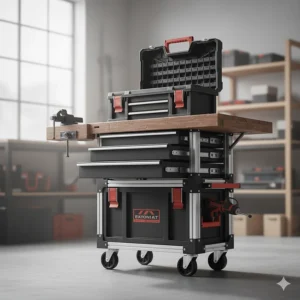
Proper mobile tool box setup begins with understanding the intended use patterns and organizing tools accordingly. Frequency-based organization places the most commonly used tools in the most accessible locations, while task-based grouping keeps related tools together to minimize searching time.
Weight Distribution Guidelines recommend placing the heaviest tools in the bottom compartment and toward the front of the mobile tool box to maintain proper balance during transport. The total weight should remain well below the rated capacity to ensure adequate safety margin during dynamic loading conditions.
Drawer and Compartment Optimization involves selecting the appropriate tool holders, dividers, and foam inserts to prevent tool movement during transport. Custom foam cutouts not only organize tools but also provide immediate visual indication of missing items.
User Compatibility and Ergonomic Considerations
Handle Height Adjustment significantly affects user comfort and control during transport. Most quality mobile tool box systems provide telescoping handles that accommodate users from 5’2″ to 6’4″ in height. The handle should extend to approximately waist height for optimal ergonomics during pulling.
Weight Limitations must consider not only the mobile tool box capacity but also the user’s physical capabilities. A fully loaded 250-pound capacity system may exceed safe lifting limits for smaller users or those with physical limitations. Understanding these constraints helps prevent injury and ensures sustainable use patterns.
Accessibility Modifications can accommodate users with physical limitations through handle extensions, auxiliary wheels, or power assist attachments. Some manufacturers offer specialized components for users who require enhanced accessibility features.
Environmental Requirements and Optimization
Surface Compatibility varies significantly between different mobile tool box systems. Pneumatic wheels excel on rough surfaces but require periodic pressure maintenance. Solid wheels provide reliability but transmit more vibration to tools and users. Understanding the intended operating environment guides appropriate selection.
Climate Adaptation requires consideration of temperature extremes, humidity, and precipitation patterns. Weather seals perform differently at temperature extremes, while some lubricants become viscous in cold weather or thin in high heat. Proper climate matching ensures reliable operation year-round.
Storage Environment Optimization affects both tool preservation and mobile tool box longevity. Heated storage prevents condensation issues, while proper ventilation prevents humidity buildup that can cause corrosion or mold growth.
Safety Considerations and Best Practices
Loading Procedures should follow established protocols to prevent injury and equipment damage. The heaviest items load first, positioned low and toward the front of the mobile tool box. Sharp tools require protective covers or dedicated storage to prevent injury during access.
Transport Safety includes understanding weight limits for different transportation methods. A mobile tool box suitable for rolling across flat surfaces may exceed safe lifting limits for vehicle loading. Understanding these constraints prevents injury and equipment damage.
Maintenance Safety requires appropriate personal protective equipment and understanding of potential hazards. Some lubricants require ventilation or skin protection, while wheel replacement may involve spring-loaded components that can cause injury if improperly handled.
Maintenance and Longevity Strategies
Daily and Weekly Maintenance Protocols
Daily Inspection Procedures should include visual checks for obvious damage, verification that all latches function properly, and confirmation that wheels roll freely without binding. A quick tool inventory ensures nothing has been misplaced or fallen out during transport.
Weekly Cleaning Protocols remove accumulated dirt and debris that can interfere with moving parts or cause premature wear. Particular attention to wheel assemblies prevents buildup that can cause bearing damage or create flat spots during storage.
Monthly Lubrication Schedule maintains smooth operation of hinges, latches, and wheel bearings. Different components require specific lubricants – light oil for hinges, marine grease for wheel bearings, and dry lubricants for latching mechanisms to prevent dirt attraction.
Troubleshooting Common Issues
Wheel Problems represent the most common mobile tool box issues, ranging from bearing wear to tread damage. Early detection prevents complete failure and expensive replacement. Symptoms include excessive noise, difficulty rolling, or vibration during transport.
Latch Malfunctions typically result from dirt accumulation, wear, or impact damage. Simple cleaning resolves most issues, while worn components require replacement to maintain security. Preventive maintenance significantly extends latch life.
Handle Issues include telescoping problems, loose connections, or ergonomic concerns. Most handle problems trace to dirt in telescoping mechanisms or loose fasteners. Regular cleaning and tightening prevent most issues.
Professional Servicing and Warranty Considerations
Manufacturer Warranty Coverage varies significantly between brands and price points. Professional-grade systems typically include comprehensive warranties covering defects and normal wear, while budget options may have limited coverage.
Authorized Service Centers provide factory-trained technicians and genuine replacement parts. While more expensive than independent repair, authorized service ensures proper diagnosis and maintains warranty coverage.
Total Cost of Ownership Analysis includes initial purchase price, maintenance costs, replacement parts, and expected service life. Higher-quality systems often provide better long-term value despite higher initial cost.
Comparative Analysis: Mobile Tool Box vs. Traditional Storage
Traditional Tool Chest Limitations
Stationary tool chests excel at maximum capacity and security but fail to address the mobility requirements of modern work environments. The traditional model assumes a central workshop location where all work occurs, a constraint that rarely matches current work patterns.
Capacity Comparisons favor stationary systems for pure storage volume, but mobile tool box systems optimize accessibility and transportation. A mobile system with 60% of the capacity of a stationary chest may actually provide better tool access in practical applications.
Security Considerations traditionally favored heavy stationary systems, but modern mobile tool box designs incorporate sophisticated locking mechanisms and theft-deterrent features. The ability to move valuable tools to secure storage often provides better protection than leaving them in a stationary chest.
Price-to-Benefit Analysis Frameworks
Initial Investment Comparison must consider not only purchase price but also the value of improved efficiency and reduced tool transport time. A mobile tool box that saves 30 minutes per day quickly justifies its cost through improved productivity.
Operational Cost Analysis includes fuel costs for reduced trips, reduced tool replacement costs from better organization and protection, and potential insurance benefits from improved security. These factors often offset higher initial costs for quality mobile tool box systems.
Flexibility Value proves difficult to quantify but represents significant benefit for users whose work patterns change over time. A mobile system adapts to new requirements while a stationary system becomes a constraint.
Integration with Existing Workflows
Workshop Reconfiguration opportunities emerge when mobile tool box systems free up space previously occupied by large stationary storage. The reclaimed space can accommodate larger projects or additional equipment.
Multi-Location Work patterns increasingly common in modern trades benefit enormously from mobile tool organization. The ability to work efficiently at customer locations, satellite workshops, or temporary project sites provides competitive advantages.
Team Coordination improves when multiple workers can access organized tool sets without conflicts over a central tool storage location. Mobile systems enable parallel work patterns that increase overall team productivity.
Case Studies and Success Stories
Residential Contractor Success Story
Background: A residential remodeling contractor operating throughout a metropolitan area struggled with inefficient tool management that required 2-3 trips per project just to retrieve forgotten tools. The company employed six workers and managed 15-20 active projects simultaneously.
Implementation: The company standardized on DEWALT TSTAK mobile tool box systems, with each worker receiving a customized loadout based on their primary responsibilities. Electricians received weather-sealed units for sensitive equipment, while general carpenters got high-capacity systems for diverse tool requirements.
Measured Results:
- 40% reduction in project setup time
- 25% decrease in fuel costs from reduced travel
- 60% improvement in tool accountability and reduction in lost tools
- $15,000 annual savings in improved efficiency and reduced tool replacement
Lessons Learned: Standardization proved crucial for team adoption, while customization of individual loadouts maximized efficiency. Initial resistance from older workers dissolved quickly once they experienced the improved organization and reduced physical strain.
Automotive Service Success Implementation
Background: An independent automotive service center with four bays struggled with technician efficiency as workers constantly searched for tools or walked to central storage areas. Tool organization varied by individual preference, making it difficult for technicians to assist each other or use shared equipment.
Implementation: The shop invested in Milwaukee Packout systems for each bay, with standardized organization for common tools and customized sections for specialized equipment. Each technician received training on the organization system and responsibility for maintaining their assigned mobile tool box.
Measured Outcomes:
- 35% improvement in job completion times
- 50% reduction in tool-related delays
- 20% increase in customer satisfaction scores due to faster service
- ROI achieved within 8 months through improved efficiency
Critical Success Factors: Management commitment to the organization system proved essential, as did ongoing training and enforcement of maintenance procedures. The visual organization systems helped new employees become productive faster while reducing training time.
Home Workshop Transformation
Background: A serious woodworking hobbyist with a 400-square-foot workshop struggled with project efficiency due to poor tool organization and the need to constantly move between different work areas within the small space.
Implementation: A combination of Keter Masterloader systems provided mobile organization that could move with projects throughout the workshop. Different mobile tool box configurations supported different project types – fine woodworking, general construction, and finishing operations.
Results:
- 50% reduction in project completion time
- Ability to tackle larger projects previously avoided due to setup complexity
- Improved work quality through better tool accessibility
- Enhanced workshop enjoyment leading to increased hobby engagement
Key Insights: The flexibility to reconfigure tool organization for different project types proved more valuable than initially anticipated. The ability to move tools to the work rather than moving work to the tools revolutionized workshop efficiency.
Future Trends and Market Evolution
Emerging Technologies and Innovation Directions
Smart Integration represents the next frontier in mobile tool box evolution, with manufacturers exploring RFID tracking, Bluetooth connectivity, and smartphone integration. Future systems may automatically track tool inventory, provide usage analytics, and integrate with project management software.
Battery-Powered Mobility emerging in professional markets where users transport extremely heavy loads or work in challenging terrain. Electric assist systems reduce physical strain while maintaining the flexibility of manual operation when battery power isn’t available.
Modular Expansion continues evolving toward greater compatibility between manufacturers and standardized attachment systems. Industry pressure for interoperability may lead to standardized mounting systems similar to those seen in power tool battery platforms.
Market Trends and Consumer Behavior Shifts
Professional Integration with fleet management systems allows companies to track tool inventory across multiple crews and jobsites. GPS integration and theft deterrent systems appeal to companies managing valuable tool collections across wide geographic areas.
Sustainability Considerations increasingly influence purchasing decisions as environmental awareness grows. Manufacturers respond with recycled materials, take-back programs, and improved durability to extend product life cycles.
Customization Demand drives manufacturers toward modular systems that users can configure for specific applications. The one-size-fits-all approach gives way to flexible platforms that adapt to diverse user requirements.
Personalization and Customization Possibilities
3D Printing Integration enables custom tool holders, specialized adapters, and personalized organization solutions. As 3D printing technology becomes more accessible, users increasingly create custom solutions that perfectly match their specific tool collections and work patterns.
Color Coding Systems help users quickly identify tool categories or ownership in shared work environments. Some manufacturers offer custom color options or decal systems that support organizational schemes.
Ergonomic Adaptations accommodate users with specific physical requirements or preferences. Custom handle grips, modified wheel assemblies, and specialized lifting aids help users with limitations access the benefits of mobile tool organization.
Investment and Purchase Decision Framework
Cost-Benefit Analysis Templates
Initial Investment Calculation must include not only the mobile tool box purchase price but also any required organizational accessories, custom foam inserts, and installation or setup time. Quality systems often require minimal additional investment while budget options may need significant accessory purchases to achieve functionality.
Efficiency Improvement Quantification requires honest assessment of current time waste due to poor tool organization. Conservative estimates suggest that organized tool storage saves 15-30 minutes per day for active tool users, translating to significant annual value even at modest hourly rates.
Tool Protection Value becomes significant for users with expensive tool collections. A quality mobile tool box system that prevents a single major tool loss or damage incident often pays for itself completely.
Implementation Strategy Templates
Gradual Implementation approaches work well for budget-conscious users or those uncertain about optimal configuration. Starting with a basic mobile tool box system and expanding based on experience minimizes risk while providing immediate benefits.
Complete System Deployment suits users with clear requirements and adequate budget. The comprehensive approach provides maximum benefit immediately but requires larger initial investment and more thorough planning.
Team Coordination strategies ensure consistent adoption in multi-user environments. Standardization training, maintenance protocols, and accountability systems prevent the degradation that can occur when organization systems aren’t properly maintained.
Budget Planning and Financing Considerations
Quality vs. Cost Analysis reveals that mobile tool box systems follow predictable value curves. The lowest-cost options often require frequent replacement or provide insufficient functionality, while the highest-cost systems may include features unnecessary for many users.
Financing Options increasingly available for professional users include equipment leasing, manufacturer financing programs, and tool dealer payment plans. These options make high-quality systems accessible to users who benefit from preserving cash flow for other business needs.
Tax Considerations may allow business users to deduct mobile tool box purchases as equipment expenses or depreciate them over multiple years. Professional tax advice ensures optimal treatment of these purchases.
🔧 Upgrade Your Workshop Today!
→ Ready to revolutionize your tool organization? These proven mobile tool box solutions are waiting to transform your workspace efficiency. Click any product name above to check current Amazon availability and customer reviews. Your future self will thank you! 🚀
Frequently Asked Questions
❓ How much weight can a typical mobile tool box safely carry while rolling?
❓ What's the difference between mobile tool box wheels and regular cart wheels?
❓ Can mobile tool box systems be used outdoors in all weather conditions?
❓ How do I prevent tools from shifting inside mobile tool box compartments during transport?
❓ What maintenance schedule keeps mobile tool box systems operating smoothly?
Recommended for You
- 7 Best Tool Pouch Backpack Options That Transform Your Work Efficiency in 2025
- 7 Biggest Tool Bag Options That Will Transform Your Workspace in 2025
- 10 Best Canvas Tool Bag Options That Transform Your Workflow in 2025
Conclusion
Selecting the right mobile tool box transforms how you work, whether you’re a weekend warrior tackling home projects or a professional contractor managing complex jobsites. The seven systems reviewed here represent the best options available, each excelling in different aspects of mobile tool storage.
The Stalwart Portable Tool Box with Wheels delivers unbeatable value for occasional users, while the DEWALT TSTAK systems provide professional-grade durability for demanding applications. The Milwaukee Packout series represents the pinnacle of heavy-duty mobile tool storage, and the Craftsman TRADESTACK offers excellent weather resistance for outdoor work.
Remember that the best mobile tool box for your needs depends on your specific requirements: tool collection size, transport frequency, work environment, and budget constraints. Take time to honestly assess your needs and choose a system that will grow with your tool collection and evolving work patterns.
The investment in quality mobile tool organization pays dividends through improved efficiency, better tool protection, and reduced physical strain. Whether you choose a compact system for light duty or a heavy-duty professional solution, you’ll wonder how you ever worked without the mobility and organization these systems provide.
🎯 Transform Your Tool Game Now!
→ Don’t let poor organization slow you down another day! These mobile tool box solutions are currently available on Amazon with competitive pricing and fast shipping. Click any highlighted product name to check real-time availability and customer reviews. Your productivity breakthrough starts with better tool organization! ⚡
Disclaimer: This article contains affiliate links. If you purchase products through these links, we may earn a small commission at no additional cost to you.
✨Found this helpful? Share it with your friends! 💬🤗
