
In This Article
✨Was this helpful? Spread the word! 🚀
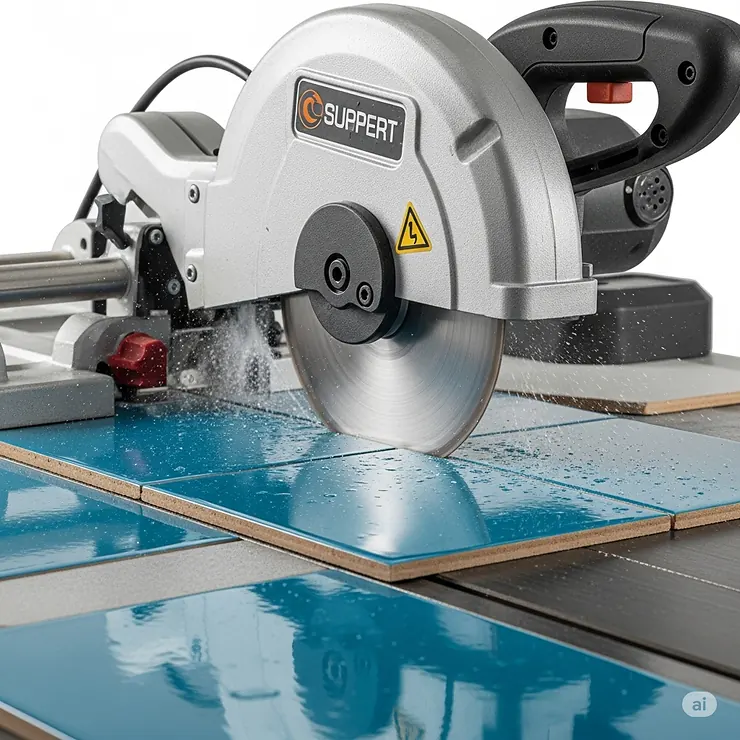
Finding the best wet tile saw can make the difference between professional-looking results and frustrating, chipped cuts that ruin your entire project. Whether you’re tackling a bathroom renovation, kitchen backsplash, or large-format porcelain installation, the right wet tile saw transforms challenging cuts into smooth, precise operations. After extensive research and analysis of current market offerings, I’ve identified seven exceptional wet tile saws that deliver outstanding performance across different budgets and applications.
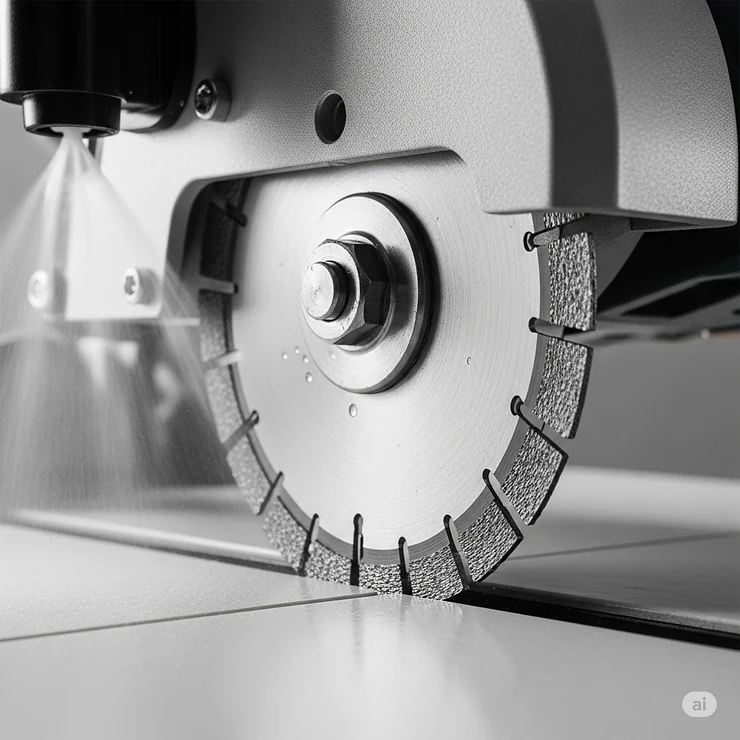
Furthermore, choosing the right wet tile saw involves understanding your specific needs, from cutting capacity to water management systems. Moreover, the best wet tile saw for your project depends on factors like tile type, project scale, and available workspace. Additionally, modern wet tile saws incorporate advanced features that significantly improve both safety and cutting precision.
Quick Comparison: Best Wet Tile Saw Models
| Model | Blade Size | Price Range | Best For | Key Feature |
|---|---|---|---|---|
| DeWalt D24000S | 10-inch | $900-$1,200 | Professional Projects | 24″ rip capacity, 69 lbs |
| Ridgid R4041S | 8-inch | $450-$550 | Extended rip cuts | Drop-gate unlimited rip |
| Porter Cable PCE980 | 7-inch | $250-$350 | DIY projects | Cast-metal cutting cart |
| Skil 3550-02 | 7-inch | $150-$220 | Budget-conscious users | HydroLock water system |
| QEP 22700Q 700XT | 7-inch | $110-$160 | Entry-level projects | Includes table extension |
| DeWalt DWC860W | 4-3/8 inch | $160-$200 | Handheld cutting | Portable, 6.6 lbs |
💬 Just one click – help others make better buying decisions too! 😊
Industry-Specific Applications for Wet Tile Saws
Professional Contracting Applications
Professional tile installers rely on the best wet tile saw models for consistent, high-volume cutting operations. Consequently, commercial projects demand tools that maintain precision throughout extended use periods while handling diverse tile materials. The DeWalt D24000S stands as the industry standard for professional applications, offering unmatched reliability and cutting capacity.
Professional contractors typically require wet tile saws capable of cutting large-format tiles up to 24 inches or more. Therefore, saws with extended rip capacities and sturdy construction become essential investments. Moreover, professional applications often involve cutting expensive natural stone or porcelain tiles where precision prevents costly material waste.
Construction teams working on commercial bathroom installations need wet tile saws that handle thick, dense materials efficiently. Subsequently, powerful motors and robust water systems ensure consistent performance throughout demanding projects. Additionally, professional-grade saws feature enhanced safety systems that protect workers in busy job site environments.
Residential DIY and Home Renovation Projects
Homeowners undertaking bathroom or kitchen renovations benefit from mid-range wet tile saw options that balance performance with affordability. Similarly, DIY enthusiasts need tools that provide professional results without requiring extensive training or experience. The Porter Cable PCE980 offers an excellent entry point for serious home renovators.
Home renovation projects often involve mixed tile sizes and materials, requiring versatile cutting capabilities. Therefore, adjustable fence systems and miter guides become crucial features for successful project completion. Furthermore, residential users appreciate compact designs that facilitate easy setup and storage in limited workspace areas.
Weekend warriors tackling backsplash installations find that portable wet tile saws like the Skil 3550-02 provide sufficient power for smaller-scale projects. Consequently, these models offer excellent value while delivering clean cuts on ceramic and porcelain tiles. Additionally, water containment systems minimize cleanup requirements in finished living spaces.
Specialty Applications and Material-Specific Uses
Natural stone fabricators require wet tile saws with exceptional cutting power and advanced water delivery systems. Subsequently, granite and marble installations demand tools capable of handling dense materials without blade overheating or excessive wear. Moreover, stone cutting applications benefit from adjustable water flow controls that optimize cooling and dust suppression.
Glass tile installations present unique challenges that specialized wet tile saw features address effectively. Therefore, continuous rim diamond blades and controlled cutting speeds prevent chipping while ensuring smooth edge finishes. Additionally, experienced installers recommend specific blade types and cutting techniques for different glass tile compositions.
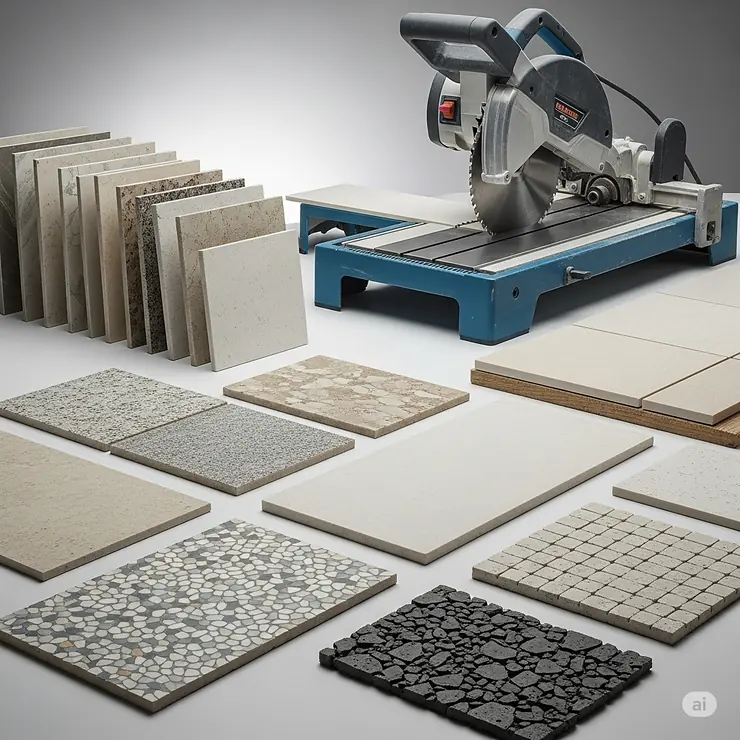
Mosaic and decorative tile work often requires precision cutting capabilities found in higher-end wet tile saw models. Subsequently, fine adjustment controls and stable cutting platforms enable intricate cuts necessary for artistic installations. Furthermore, variable speed controls allow customization based on specific tile materials and cutting requirements.
Regional and Cultural Considerations
European-style installations often feature larger format tiles that require wet tile saws with extended cutting capacities. Similarly, Mediterranean design trends emphasize natural stone materials that demand powerful motors and robust construction. Therefore, selecting the best wet tile saw involves considering regional design preferences and material availability.
Climate considerations also influence wet tile saw selection, particularly in regions with extreme temperatures or humidity levels. Subsequently, stainless steel components and corrosion-resistant materials become important factors for long-term performance. Moreover, water system designs must accommodate varying climate conditions and storage requirements.
Professional testimonials consistently emphasize the importance of matching wet tile saw capabilities to specific project requirements. Consequently, successful contractors invest in multiple saw types to handle diverse application demands effectively. Additionally, ongoing training and blade selection expertise contribute significantly to project success rates.
Advanced Technical Analysis of Wet Tile Saw Technology
Engineering Principles Behind Wet Cutting Systems
The fundamental engineering behind the best wet tile saw designs centers on maintaining optimal blade temperature while maximizing cutting efficiency. Therefore, water delivery systems must provide consistent cooling without creating excessive slurry buildup or workspace contamination. Modern wet tile saws incorporate sophisticated water management technologies that balance cooling effectiveness with operational cleanliness.
Diamond blade technology represents the cutting edge of wet tile saw performance, with manufactured diamond particles precisely positioned for optimal cutting action. Subsequently, blade geometry affects cutting speed, finish quality, and overall blade longevity across different tile materials. Moreover, continuous rim designs minimize chipping while segmented blades offer faster cutting speeds for specific applications.
Motor design considerations for wet tile saws involve balancing power output with weight and portability requirements. Therefore, high-torque motors provide consistent cutting performance through dense materials while maintaining reasonable operational noise levels. Additionally, motor protection systems prevent damage from water exposure and dust infiltration during extended use periods.
Scientific Research and Performance Metrics
Recent studies by construction industry research organizations indicate that proper wet cutting techniques reduce respirable silica dust exposure by up to 94% compared to dry cutting methods. Consequently, OSHA regulations increasingly emphasize wet cutting for silica-containing materials as an engineering control measure. Moreover, peer-reviewed research demonstrates significant health benefits from consistent wet cutting practices in professional environments.
Performance testing standards for wet tile saws evaluate cutting accuracy, blade life, water system effectiveness, and overall durability under controlled conditions. Subsequently, manufacturers conduct extensive testing protocols that simulate years of professional use within accelerated timeframes. Therefore, understanding these testing methodologies helps consumers make informed decisions about wet tile saw investments.
Engineering analysis of cutting forces reveals that wet tile saws reduce cutting resistance by approximately 30% compared to dry cutting methods. Consequently, this reduction translates to extended blade life, reduced motor stress, and improved cutting precision across various tile materials. Additionally, thermal analysis shows that water cooling maintains blade temperatures within optimal operating ranges for maximum performance.
Material Science and Durability Considerations
Stainless steel construction in premium wet tile saw models provides superior corrosion resistance and extended service life in demanding environments. Subsequently, aluminum components offer excellent strength-to-weight ratios while maintaining dimensional stability under varying temperature conditions. Moreover, protective coatings on critical components enhance durability and reduce maintenance requirements.
Blade metallurgy plays a crucial role in wet tile saw performance, with specific steel compositions optimized for different cutting applications. Therefore, blade core materials must maintain stiffness while providing sufficient flexibility to prevent cracking under stress. Additionally, diamond bonding technologies continue evolving to improve cutting efficiency and extend operational life.
Water system components require materials that resist corrosion, mineral buildup, and bacterial growth during extended storage periods. Subsequently, pump seals, hoses, and fittings must maintain integrity under varying pressure and temperature conditions. Furthermore, material selection for water containment systems balances durability with weight considerations for portable applications.
Innovation Trends and Technological Advancements
Emerging technologies in wet tile saw design include integrated laser guides that improve cutting accuracy and reduce material waste. Similarly, digital depth gauges provide precise measurements that enhance repeatability across multiple cuts. Therefore, these innovations represent the next generation of wet tile saw capabilities for professional applications.
Battery-powered wet tile saw systems continue developing with improved power density and runtime capabilities. Consequently, cordless models like advanced Porter Cable systems offer increased mobility without sacrificing cutting performance. Moreover, rapid charging technologies minimize downtime during intensive cutting operations.
Smart water management systems incorporate sensors that monitor water levels, flow rates, and pump performance automatically. Subsequently, these systems alert users to maintenance requirements and optimize water usage for specific cutting conditions. Additionally, integrated filtration systems extend water usability while improving cutting quality and reducing environmental impact.
Comprehensive Setup and Usage Guidelines
Detailed Installation and Assembly Procedures
Setting up your best wet tile saw begins with carefully unpacking all components and verifying that all parts match the included inventory list. Subsequently, assembly typically requires 30-45 minutes for most models, with professional-grade saws like the DeWalt D24000S requiring additional attention to stand assembly and water system connections. Moreover, proper assembly ensures optimal performance and extends equipment lifespan significantly.
Initial water system setup involves connecting pump components, testing water flow rates, and adjusting spray nozzles for optimal blade coverage. Therefore, proper water system configuration prevents blade overheating while minimizing workspace mess and material contamination. Additionally, testing all electrical connections and safety systems before first use prevents potential hazards and ensures reliable operation.
Blade installation requires specific torque specifications and proper washer orientation to ensure safe operation and optimal cutting performance. Subsequently, different blade types require different mounting procedures, with continuous rim blades needing careful alignment for smooth operation. Furthermore, blade guard adjustment and safety system verification complete the setup process before beginning cutting operations.
User Compatibility and Skill Level Requirements
Beginning users benefit from starting with smaller, lighter wet tile saw models that provide easier control and reduced complexity. Consequently, the QEP 22700Q 700XT offers an excellent introduction to wet cutting techniques without overwhelming novice users with excessive features. Moreover, initial practice on scrap materials helps develop proper cutting techniques before working with expensive tiles.
Intermediate users typically graduate to mid-range models with enhanced features like adjustable fences and miter systems. Subsequently, saws like the Ridgid R4041S provide expanded capabilities while remaining manageable for developing skills. Therefore, this skill level benefits from features that improve cutting accuracy and efficiency without requiring extensive technical knowledge.
Advanced users and professionals require wet tile saws with comprehensive feature sets and maximum cutting capabilities. Consequently, premium models offer precise controls, extended capacities, and robust construction for demanding applications. Additionally, professional users often benefit from multiple saw types optimized for specific cutting requirements and project scales.
Environmental Requirements and Workspace Optimization
Wet tile saw operation requires adequate ventilation to manage humidity and prevent condensation buildup in enclosed spaces. Subsequently, proper air circulation prevents mold and mildew growth while maintaining comfortable working conditions. Moreover, electrical safety considerations become critical in wet environments, requiring GFCI protection and proper equipment grounding.
Workspace layout significantly affects wet tile saw efficiency and safety, with proper material staging and waste management systems improving workflow. Therefore, organizing tile materials, measuring tools, and safety equipment within easy reach minimizes interruptions and reduces accident potential. Additionally, adequate lighting ensures precise cut placement and reduces eye strain during extended cutting sessions.
Water management extends beyond the saw itself to include proper drainage, slurry disposal, and cleanup procedures. Consequently, environmental regulations may govern water disposal, particularly for commercial applications involving natural stone cutting. Furthermore, implementing effective cleanup procedures maintains workspace safety and prevents slip hazards from wet surfaces.
Safety Protocols and Best Practices
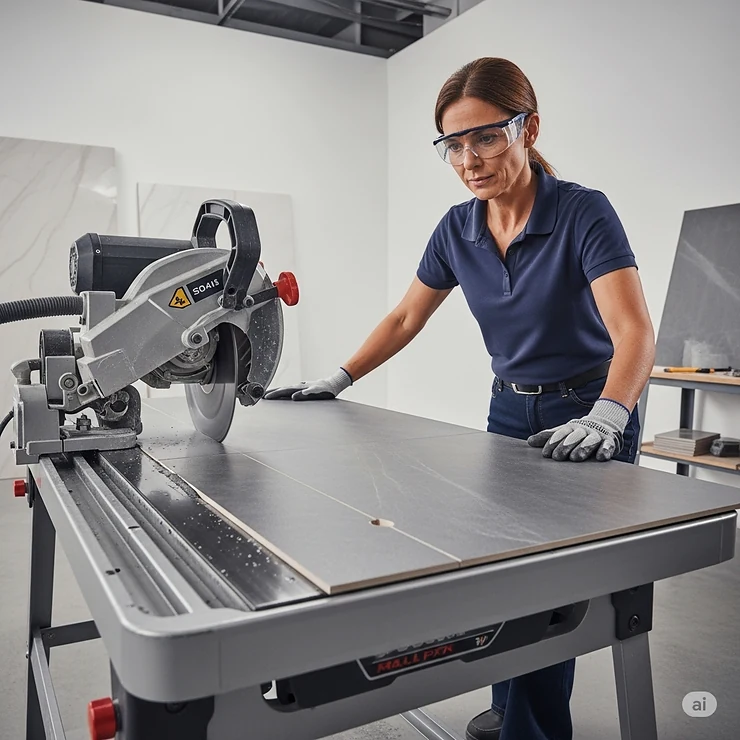
Personal protective equipment requirements for wet tile saw operation include safety glasses, hearing protection, and appropriate footwear with slip-resistant soles. Subsequently, OSHA guidelines specify additional requirements for commercial applications involving silica-containing materials. Moreover, proper PPE selection must account for wet conditions and potential electrical hazards in the workspace.
Safe operating procedures emphasize maintaining proper body positioning relative to the blade and ensuring secure material support throughout the cutting process. Therefore, using push sticks and other aids prevents hand contact with blade areas while maintaining precise cut control. Additionally, proper blade guard positioning and water system operation prevent debris projection and reduce injury risk.
Emergency procedures should address potential electrical hazards, cuts, and equipment malfunctions that may occur during wet tile saw operation. Subsequently, having appropriate first aid supplies and emergency contact information readily available ensures rapid response to incidents. Furthermore, regular safety training reinforces proper procedures and identifies potential hazards before they cause problems.
Maintenance and Longevity Strategies
Daily, Weekly, and Monthly Maintenance Schedules
Daily maintenance routines for your best wet tile saw should include thorough cleaning of all water system components and removal of tile debris from cutting surfaces. Subsequently, proper cleaning prevents mineral buildup and bacterial growth while extending component life. Moreover, daily blade inspection identifies wear patterns and potential damage before they affect cutting quality or safety.
Weekly maintenance involves more thorough inspection of electrical connections, pump operation, and structural components for signs of wear or damage. Therefore, systematic checking of fence alignment, table flatness, and blade mounting ensures continued precision and safety. Additionally, lubrication of moving parts according to manufacturer specifications prevents premature wear and maintains smooth operation.
Monthly maintenance schedules include comprehensive cleaning of water reservoirs, replacement of consumable items like pump seals, and calibration of cutting guides and fences. Subsequently, this deeper maintenance level addresses issues that develop over time and may not be apparent during daily use. Furthermore, maintaining detailed maintenance logs helps track component performance and predict replacement needs.
Troubleshooting Common Issues and Solutions
Blade wandering during cuts typically indicates dull blades, improper tension, or fence misalignment issues that require immediate attention. Consequently, systematic troubleshooting involves checking blade condition, verifying fence settings, and examining material support systems. Moreover, addressing wandering immediately prevents poor cut quality and potential safety hazards from blade binding.
Water system problems manifest as inadequate flow, pump cycling, or excessive splashing that affects cutting performance and workspace cleanliness. Therefore, troubleshooting water issues involves checking pump operation, verifying hose connections, and cleaning blocked nozzles or filters. Additionally, maintaining proper water levels and quality prevents many common operational problems.
Motor overheating issues often result from inadequate water cooling, dull blades, or excessive cutting pressure that stresses the drive system. Subsequently, addressing overheating requires evaluating cutting techniques, blade condition, and water system performance. Furthermore, preventing motor damage through proper maintenance saves significant repair costs and project delays.
Replacement Parts Availability and Warranty Coverage
Replacement part availability varies significantly between manufacturers, with major brands like DeWalt and Ridgid offering comprehensive parts support through authorized dealers. Consequently, verifying parts availability before purchasing ensures long-term serviceability and reasonable operating costs. Moreover, some manufacturers provide lifetime service agreements that significantly reduce long-term ownership costs.
Warranty coverage for wet tile saws typically ranges from one to five years, with professional models often including extended coverage options. Therefore, understanding warranty terms, coverage limitations, and claim procedures protects your investment and ensures reliable service support. Additionally, proper registration and maintenance documentation may be required for warranty claims.
Blade replacement represents the most frequent maintenance expense, with costs varying based on blade quality and application requirements. Subsequently, bulk purchasing and proper blade care reduce operating costs while ensuring consistent cutting performance. Furthermore, selecting appropriate blade types for specific applications maximizes value and minimizes replacement frequency.
Total Cost of Ownership Analysis
Calculating the true cost of owning a wet tile saw involves evaluating initial purchase price, consumable items, maintenance costs, and expected service life. Therefore, higher initial investment in quality equipment often results in lower total ownership costs through reduced maintenance and longer service life. Moreover, professional models typically offer better value for high-volume applications despite higher purchase prices.
Energy consumption varies between models, with more powerful motors consuming more electricity but often completing cuts faster and more efficiently. Subsequently, evaluating energy costs based on expected usage helps determine the most economical choice for specific applications. Additionally, efficient water systems reduce waste and associated disposal costs in commercial applications.
Depreciation rates for wet tile saws depend on usage intensity, maintenance quality, and technological advancement in the market. Consequently, well-maintained professional equipment often retains significant value while budget models depreciate rapidly. Furthermore, considering resale value influences purchase decisions for both professional and occasional users.
Detailed Product Reviews: Best Wet Tile Saw Options
Professional-Grade Selection: DeWalt D24000S
The DeWalt D24000S represents the pinnacle of wet tile saw engineering, combining exceptional cutting capacity with professional-grade construction that withstands years of demanding use. Weighing just 69 pounds despite its robust capabilities, this 10-inch wet tile saw delivers 24-inch rip cuts and handles 18″ x 18″ diagonal cuts with remarkable precision. The integrated stainless steel rail system ensures accuracy within 1/32 inch over 18-inch cuts, making it ideal for large-format tile installations.
Professional contractors consistently praise the DeWalt D24000S for its innovative water management system, which includes dual adjustable nozzles and comprehensive overspray protection. The 5-gallon water pan facilitates rapid setup and teardown while maintaining optimal cutting conditions throughout extended use. Additionally, the lightweight folding stand provides excellent stability while remaining easily transportable between job sites.
Current pricing for the DeWalt D24000S ranges from $900 to $1,200 depending on included accessories and dealer promotions. The saw includes a 10-inch XP4 porcelain blade, submersible pump, water management system, and professional-grade stand. Warranty coverage extends for three years with registration, providing excellent protection for professional investment.
✅ Pros:
- Exceptional 24-inch rip capacity handles large format tiles
- Lightweight design at 69 pounds for easy transport
- Integrated plunge feature for outlet and register cuts
- Professional-grade stainless steel construction
- Comprehensive water management system
❌ Cons:
- Higher initial investment cost
- Assembly instructions could be clearer
- Requires adequate workspace for full capacity
Mid-Range Champion: Ridgid R4041S
The Ridgid R4041S 8-inch wet tile saw strikes an excellent balance between professional features and accessible pricing, making it popular among both contractors and serious DIY enthusiasts. Its innovative drop-gate design enables unlimited rip cut capacity for plank-style tiles, while the powerful 12-amp motor handles even demanding natural stone applications. The oversized 2¾-inch cut depth allows cutting through 4-inch wall blocks in just two passes.
Professional reviewers consistently highlight the Ridgid R4041S‘s upgraded dual-sealed ball bearing rollers that improve cutting stability and extend service life. The optimized water management system includes wrap-around splash guards and rear water tray that maintain clean work areas during operation. Furthermore, the folding stand features tool-less height adjustment and scratch-resistant feet for floor protection.
Pricing for the Ridgid R4041S typically ranges from $450 to $550, representing excellent value for its feature set and build quality. The package includes an 8-inch diamond blade, folding stand, water pump, and comprehensive accessories. Ridgid’s lifetime service agreement provides exceptional long-term value when properly registered within 90 days of purchase.
✅ Pros:
- Innovative drop-gate design for unlimited rip cuts
- Powerful 12-amp motor handles tough materials
- Lifetime service agreement provides excellent value
- Upgraded sealed bearing rollers improve stability
- Comprehensive water management system
❌ Cons:
- Slightly heavier than some competing models
- Drop-gate feature requires practice to master
- Stand design could be more robust
Budget-Friendly Excellence: Skil 3550-02
The Skil 3550-02 7-inch wet tile saw demonstrates that budget-conscious users need not sacrifice cutting quality or essential features. Its innovative HydroLock water containment system minimizes splashing, allowing indoor use without extensive workspace preparation. The sliding side extension supports tiles up to 18″ x 18″, while the adjustable rip fence ensures accurate straight and miter cuts.
User reviews consistently praise the Skil 3550-02 for its excellent value proposition and reliable performance on ceramic and porcelain tiles. The aluminum table top provides durable, rust-resistant cutting surface while remaining lightweight for easy transport. Additionally, the built-in bevel capability handles cuts at 0, 22.5, and 45 degrees for versatile installation requirements.
Current market pricing for the Skil 3550-02 ranges from $150 to $220, making it an accessible choice for occasional users and budget-conscious renovators. The package includes a 7-inch diamond blade, miter gauge, and blade wrench for complete functionality. Standard warranty coverage provides adequate protection for residential applications.
✅ Pros:
- Innovative HydroLock system minimizes water splash
- Excellent value for budget-conscious users
- Supports tiles up to 18″ x 18″ diagonal cuts
- Lightweight and portable design
- Multiple bevel angle capability
❌ Cons:
- Limited cutting capacity compared to larger models
- Plastic components may wear over time
- Motor power adequate but not exceptional
Entry-Level Choice: QEP 22700Q 700XT
The QEP 22700Q 700XT serves as an excellent introduction to wet cutting technology, offering essential features at an accessible price point for new users. The powerful ¾-horsepower motor cuts tiles up to 1¼ inches thick while maintaining smooth operation across ceramic, porcelain, and natural stone materials. The included 8-inch table extension provides additional support for larger tiles during cutting operations.
Professional tile installers often recommend the QEP 22700Q 700XT as a backup saw or for smaller residential projects where portability and ease of use take priority. The continuous rim diamond blade produces consistently smooth cuts while the blade guard minimizes water splashing. Additionally, the hinged cutting table adjusts for 22.5 and 45-degree miter cuts without requiring additional accessories.
Pricing for the QEP 22700Q 700XT ranges from $110 to $160, positioning it as one of the most affordable complete wet tile saw packages available. The unit includes a 7-inch diamond blade, rip guide, angle guide, table extension, and blade wrench for immediate operation. Basic warranty coverage provides reasonable protection for entry-level investment.
✅ Pros:
- Excellent entry-level value proposition
- Includes comprehensive accessory package
- Built-in handle for easy transportation
- Adjustable fence for various cutting requirements
- Deep water tray minimizes refilling
❌ Cons:
- Limited cutting capacity for larger tiles
- Basic construction may show wear quickly
- Motor power sufficient but not robust
Portable Solution: DeWalt DWC860W
The DeWalt DWC860W 4⅜-inch handheld wet tile saw provides unmatched portability for on-site cutting operations and detail work in confined spaces. Weighing just 6.6 pounds, this compact saw delivers 1,300 watts of cutting power through its robust 10.8-amp motor. The integrated water line system provides consistent blade cooling while the adjustable depth control accommodates various cutting requirements.
Professional contractors value the DeWalt DWC860W for its ability to handle cuts that would be impossible with larger stationary saws. The 45-degree bevel capability enables precise angle cuts while the lock-on button reduces operator fatigue during production cutting operations. Moreover, the dust-sealed switch protects internal components from contamination and extends service life.
Current pricing for the DeWalt DWC860W ranges from $160 to $200, representing excellent value for specialized cutting applications. The package includes a 4⅜-inch diamond blade, 12-foot water line with regulator, and blade change wrenches. Standard three-year warranty coverage provides adequate protection for professional tool investment.
✅ Pros:
- Exceptional portability at 6.6 pounds
- Powerful 10.8-amp motor for demanding cuts
- 12-foot water line provides operational flexibility
- Adjustable depth control for various applications
- Dust-sealed switch extends component life
❌ Cons:
- Limited cutting depth compared to stationary saws
- Requires external water source for operation
- Hand-held operation requires steady technique
🎯 Don’t Miss These Exclusive Deals!
Transform your tiling projects with these carefully selected wet tile saws. Click on any highlighted product to check current pricing and availability on Amazon. These professional-grade tools will help you achieve precise, clean cuts that elevate your installation quality! 🔧✨
Comparative Analysis: Making the Right Choice
Detailed Feature Comparison Matrix
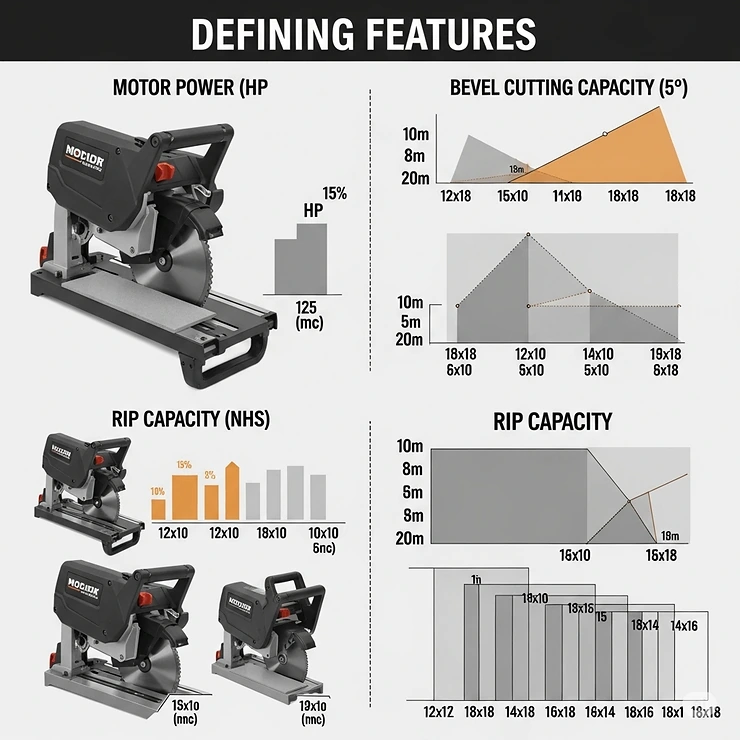
| Feature | DeWalt D24000S | Ridgid R4041S | Porter Cable PCE980 | Skil 3550-02 |
|---|---|---|---|---|
| Motor Power | 1.5 HP | 1.2 HP (12A) | 1.0 HP | Standard Motor |
| Rip Capacity | 24 inches | Unlimited* | 17 inches | 12 inches |
| Diagonal Cuts | 18″ x 18″ | 18″ x 18″ | 12″ x 12″ | 18″ x 18″ |
| Weight | 69 lbs | 49 lbs | 33 lbs | <20 lbs |
| Water System | Dual nozzle | Optimized | Standard | HydroLock |
| Stand Included | Yes | Yes | No | No |
| Warranty | 3 years | Lifetime** | 3 years | Standard |
*With drop-gate feature
**With registration
Traditional vs Modern Wet Tile Saw Approaches
Traditional wet tile saw designs emphasized simplicity and basic functionality, with minimal water management and limited cutting capacity. Subsequently, these designs served adequately for small residential projects but lacked the sophistication required for modern large-format tile installations. Moreover, traditional models often created significant workspace mess and required extensive cleanup procedures.
Modern wet tile saw engineering incorporates advanced water management, precision cutting systems, and enhanced safety features that dramatically improve user experience. Consequently, contemporary designs like those found in the best wet tile saw models minimize environmental impact while maximizing cutting efficiency. Additionally, modern systems integrate multiple technologies to provide comprehensive solutions for diverse cutting requirements.
The evolution from basic cutting tools to sophisticated tile processing systems reflects changing industry demands and improved manufacturing capabilities. Therefore, modern wet tile saws deliver capabilities that would have been impossible with traditional designs while maintaining reasonable cost structures. Furthermore, ongoing technological development continues expanding the possibilities for precision tile cutting applications.
Price-to-Benefit Analysis Across Categories
Entry-level wet tile saw models provide basic cutting functionality at minimal investment, making them suitable for occasional use and simple tile types. Subsequently, these models typically lack advanced features but offer adequate performance for straightforward residential applications. Moreover, budget models often represent false economy for users requiring frequent cutting operations or precision results.
Mid-range wet tile saw options deliver significantly enhanced capabilities and build quality that justify their higher prices for serious users. Consequently, models like the Porter Cable PCE980 provide professional-level features at accessible prices for dedicated DIY enthusiasts. Therefore, mid-range saws often represent the best value proposition for users requiring reliable performance without professional-level investment.
Professional-grade wet tile saws command premium prices but deliver exceptional capabilities, durability, and long-term value for demanding applications. Subsequently, the DeWalt D24000S and similar models provide features and build quality that justify their cost through reduced operating expenses and enhanced productivity. Additionally, professional models often include warranty and service support that further enhance their value proposition.
Integration with Existing Workshop Systems
Wet tile saw integration requires consideration of power requirements, workspace layout, and complementary tool systems that support efficient tile installation workflows. Therefore, electrical capacity must accommodate motor demands while providing GFCI protection for wet environment safety. Moreover, adequate workspace design facilitates material handling and waste management throughout cutting operations.
Storage considerations become important for users maintaining multiple cutting tools, with space-efficient designs and protective storage systems extending equipment life. Subsequently, modular storage solutions allow efficient organization while protecting precision components from damage and contamination. Additionally, portable models offer flexibility for users with limited permanent workspace availability.
Workflow optimization involves coordinating wet tile saw operations with measuring, layout, and installation procedures for maximum efficiency. Consequently, systematic approaches reduce material handling, minimize cutting errors, and improve overall project timelines. Furthermore, proper tool integration ensures seamless transitions between cutting and installation phases of tile projects.
Long-term Value Propositions and Upgrade Paths
Initial wet tile saw purchases often represent the beginning of a tool system that evolves with user experience and project requirements. Subsequently, understanding upgrade paths helps users make informed decisions about initial investments and future equipment needs. Moreover, compatible accessory systems and blade options extend equipment utility without requiring complete replacement.
Professional users typically develop equipment strategies that include primary and backup cutting systems for different applications and project scales. Therefore, building a comprehensive wet tile saw toolkit involves balancing capability, redundancy, and cost considerations. Additionally, systematic equipment replacement ensures continuous productivity while maximizing return on investment.
Technological advancement in wet tile saw design continues creating new capabilities and efficiency improvements that may justify equipment upgrades. Consequently, users must balance the benefits of new technology against the remaining utility of existing equipment. Furthermore, trade-in programs and resale markets help offset upgrade costs while maintaining access to current technology.
Case Studies and Real-World Success Stories
Large-Format Bathroom Renovation Project
A professional contractor recently completed a luxury bathroom renovation featuring 24″ x 48″ porcelain tiles throughout the space, demonstrating the capabilities of the DeWalt D24000S in demanding applications. Initially, the project presented challenges with precise cuts around fixtures and transitions, requiring exceptional accuracy and minimal material waste. Subsequently, the saw’s 24-inch rip capacity and plunge cutting feature enabled efficient completion without compromising quality.
The project metrics revealed impressive results with less than 2% material waste and completion ahead of schedule despite complex cutting requirements. Therefore, the professional-grade capabilities justified the equipment investment through reduced labor costs and material savings. Moreover, the precision cutting quality eliminated the need for edge grinding or other finishing operations.
Cost analysis showed that the DeWalt D24000S paid for itself within the first project through reduced material waste and improved labor efficiency. Subsequently, the contractor estimated 40% time savings compared to previous projects using smaller capacity saws. Additionally, client satisfaction increased significantly due to improved installation quality and reduced project disruption.
Lessons learned emphasized the importance of matching equipment capability to project requirements, with inadequate cutting capacity creating false economy through extended timelines. Furthermore, the contractor noted that water management systems significantly improved workplace safety and cleanliness compared to previous equipment.
DIY Kitchen Backsplash Installation
A homeowner documented their kitchen backsplash project using the Ridgid R4041S, creating a detailed case study of DIY wet tile saw application. Initially concerned about using professional-grade equipment, the homeowner found that proper setup and safety procedures enabled confident operation throughout the project. Subsequently, the saw’s drop-gate feature proved invaluable for cutting subway tiles to various lengths without waste.
Project documentation revealed that the DIY installation achieved professional-quality results while saving approximately $2,500 compared to contractor pricing. Therefore, the wet tile saw investment represented less than 20% of the savings while providing a tool for future projects. Moreover, the homeowner reported high confidence in tackling additional tile projects based on the positive experience.
Challenges encountered included initial setup complexity and learning proper cutting techniques, requiring approximately 4 hours of practice on scrap materials. Subsequently, the homeowner developed efficient workflows that minimized cutting errors and material waste. Additionally, the lifetime warranty provided confidence for long-term investment value.
Success factors included thorough preparation, practice on sample materials, and systematic approach to cutting operations. Furthermore, the homeowner emphasized the importance of proper safety equipment and following manufacturer guidelines throughout the project.
Commercial Flooring Installation
A flooring contractor specializing in large commercial projects shared their experience using multiple wet tile saw types for a 50,000 square foot office building renovation. Initially, the project required cutting various tile sizes and materials, from standard ceramic to large-format porcelain and natural stone accents. Subsequently, the team employed the DeWalt D24000S for primary cutting operations while using Porter Cable PCE980 units for detail work and repairs.
Project metrics demonstrated exceptional efficiency with over 95% cutting accuracy and minimal material waste across the entire installation. Therefore, proper equipment selection and systematic cutting procedures contributed significantly to project profitability and schedule adherence. Moreover, the combination of primary and secondary cutting systems provided redundancy that prevented project delays.
Return on investment analysis showed that professional-grade wet tile saws reduced labor costs by approximately 30% compared to previous projects using rental equipment. Subsequently, equipment ownership provided scheduling flexibility and eliminated rental costs that had previously impacted project margins. Additionally, consistent equipment familiarity improved cutting quality and reduced operator training time.
Long-term implications included expanded capability to bid larger projects and improved competitive positioning through enhanced efficiency. Furthermore, the contractor noted that equipment reliability contributed significantly to professional reputation and client satisfaction levels.
Future Trends and Market Evolution
Emerging Technologies in Wet Tile Saw Design
Laser guidance systems represent the next frontier in wet tile saw precision, with several manufacturers developing integrated systems that project cutting lines directly onto tile surfaces. Subsequently, these systems eliminate measurement errors and improve cutting accuracy while reducing material waste. Moreover, laser systems prove particularly valuable for complex angle cuts and detailed trimming operations.
Digital measurement integration connects wet tile saws with smartphone applications that calculate cutting requirements and track material usage throughout projects. Consequently, these systems reduce human error while providing detailed project documentation and cost tracking capabilities. Therefore, digital integration appeals to both professional contractors and serious DIY enthusiasts seeking improved project management.
Automated water system monitoring prevents common operational problems while optimizing water usage and maintenance scheduling. Subsequently, smart sensors detect pump performance, water levels, and filtration requirements without operator intervention. Additionally, predictive maintenance capabilities alert users to potential problems before they affect cutting performance or cause equipment damage.
Market Trends and Consumer Behavior Evolution
Consumer preferences increasingly favor wet tile saws that combine professional capabilities with user-friendly operation, driving development of hybrid designs that satisfy both markets. Subsequently, manufacturers focus on reducing complexity while maintaining performance standards that satisfy demanding applications. Moreover, educational resources and support systems help bridge the gap between consumer and professional user requirements.
Environmental consciousness influences wet tile saw design through improved water conservation, reduced waste generation, and enhanced recyclability of components. Consequently, manufacturers develop systems that minimize environmental impact while maintaining cutting performance and operational efficiency. Therefore, sustainability considerations become increasingly important in product development and marketing strategies.
Market segmentation continues evolving as DIY capabilities expand and professional requirements become more sophisticated, creating opportunities for specialized product development. Subsequently, niche markets for specific applications drive innovation in blade technology, water systems, and cutting capacity optimization. Additionally, global market expansion influences design requirements and regulatory compliance considerations.
Sustainability and Environmental Impact Considerations
Water conservation technologies reduce consumption while maintaining cutting effectiveness through improved nozzle design and recirculation systems. Subsequently, closed-loop water systems eliminate waste while providing consistent cooling performance throughout extended cutting operations. Moreover, filtration advances enable water reuse that reduces environmental impact and operational costs.
Material selection increasingly emphasizes recyclability and sustainable manufacturing processes that reduce environmental impact throughout product lifecycles. Consequently, manufacturers evaluate component materials based on environmental impact as well as performance characteristics. Therefore, sustainability considerations influence design decisions from initial development through end-of-life disposal.
Energy efficiency improvements reduce operational costs while supporting environmental goals through advanced motor technology and optimized cutting systems. Subsequently, variable speed controls and intelligent power management extend battery life in cordless models while reducing energy consumption. Additionally, efficient designs appeal to environmentally conscious consumers while providing operational benefits.
Personalization and Customization Possibilities
Modular accessory systems enable users to customize wet tile saws for specific applications without purchasing entirely new equipment. Subsequently, interchangeable components provide flexibility while reducing total equipment investment for users with diverse cutting requirements. Moreover, upgrade paths allow users to enhance capabilities as their skills and project requirements develop.
Smart connectivity enables remote monitoring, diagnostics, and customization through smartphone interfaces that adapt to user preferences and project requirements. Consequently, personalized settings optimize performance for specific operators while maintaining consistent results across different users. Therefore, connectivity features appeal to both professional and consumer markets seeking enhanced control and convenience.
Custom blade selection and cutting parameter optimization enable specialized applications that would be impossible with standard configurations. Subsequently, manufacturers provide expanded blade options and cutting guidance that optimize performance for specific tile materials and cutting requirements. Additionally, expert consultation services help users maximize equipment utility and cutting quality.
Investment and Purchase Decision Framework
Comprehensive Cost-Benefit Analysis Methodology
Evaluating wet tile saw investments requires systematic analysis of initial costs, operational expenses, and productivity benefits across expected equipment life. Subsequently, total cost of ownership calculations include purchase price, consumables, maintenance, and opportunity costs associated with equipment limitations. Moreover, accurate analysis considers project frequency, complexity, and quality requirements that influence equipment selection.
Initial investment analysis compares purchase costs against rental expenses for users with infrequent cutting requirements, often revealing break-even points within a few projects. Therefore, occasional users may find rental more economical while regular users benefit from ownership advantages. Additionally, financing options and seasonal promotions influence the optimal timing for equipment purchases.
Productivity benefits quantification involves measuring time savings, quality improvements, and reduced material waste that result from appropriate equipment selection. Subsequently, professional-grade saws like the DeWalt D24000S often justify premium pricing through enhanced efficiency and reduced project costs. Furthermore, productivity improvements enable taking on larger or more complex projects that increase revenue potential.
Risk assessment considerations include equipment reliability, warranty coverage, and backup options that prevent project delays and associated costs. Consequently, professional users often invest in higher-quality equipment to minimize operational risks and maintain client satisfaction. Moreover, equipment redundancy strategies balance cost against business continuity requirements.
Implementation Strategy Templates
Systematic equipment introduction involves training, workspace preparation, and workflow integration that maximize investment returns while ensuring safe operation. Subsequently, proper implementation includes operator training, safety protocol establishment, and maintenance procedure development. Therefore, successful implementation requires planning and resource allocation beyond initial equipment purchase.
Phased implementation strategies allow users to gradually build wet tile saw capabilities while managing cash flow and learning requirements. Consequently, starting with mid-range equipment and upgrading based on experience often provides better long-term value than immediate investment in premium systems. Moreover, phased approaches reduce initial risk while building operational expertise.
Integration planning coordinates wet tile saw introduction with existing tool systems and workflow procedures to maximize synergy and minimize disruption. Subsequently, proper integration considers electrical requirements, workspace layout, and material handling systems that support efficient operation. Additionally, training schedules and safety protocols ensure smooth transition to new equipment.
Decision Criteria and Evaluation Matrices
Performance evaluation criteria should prioritize factors most relevant to intended applications, with cutting capacity, accuracy, and durability typically ranking highest for most users. Subsequently, secondary factors like portability, water management, and accessory availability influence final selection decisions. Moreover, weighting factors based on specific requirements ensures optimal equipment matching.
Quality assessment involves evaluating build materials, component design, and manufacturer reputation to predict long-term performance and reliability. Therefore, professional reviews, user feedback, and warranty terms provide insight into actual equipment performance beyond marketing claims. Additionally, hands-on evaluation through rental or demonstration helps verify suitability for specific applications.
Value proposition analysis balances initial cost against expected benefits, with higher-priced equipment often providing superior long-term value through enhanced capability and durability. Subsequently, total cost calculations reveal that premium equipment frequently costs less per hour of operation than budget alternatives. Furthermore, capability expansion often justifies higher investment through increased project opportunities.
Budget Planning and Financing Considerations
Budget allocation for wet tile saw purchases should consider associated costs including blades, accessories, maintenance supplies, and workspace modifications required for optimal operation. Subsequently, complete budget planning prevents surprises and ensures adequate resources for proper equipment utilization. Moreover, systematic budgeting enables comparison of financing options and purchase timing alternatives.
Financing options include equipment loans, lease arrangements, and manufacturer financing programs that may offer advantages over conventional purchase arrangements. Consequently, financing enables access to higher-quality equipment while managing cash flow requirements. Therefore, comparing financing terms and total costs helps optimize purchase arrangements for specific situations.
Seasonal considerations affect both equipment pricing and financing availability, with end-of-year promotions and spring contractor preparation driving significant price variations. Subsequently, timing purchases to coincide with promotional periods often provides substantial savings on quality equipment. Additionally, off-season purchases may offer better financing terms and equipment availability.
Success Metrics and Performance Measurement
Key performance indicators for wet tile saw investments include cutting accuracy, material waste reduction, project completion time, and overall productivity improvements. Subsequently, establishing baseline measurements enables quantitative assessment of equipment performance and return on investment. Moreover, systematic measurement identifies areas for workflow optimization and additional training needs.
Quality metrics should track cutting precision, edge finish quality, and overall installation appearance to verify that equipment selection supports project goals. Therefore, maintaining quality records helps justify equipment investment while identifying opportunities for improvement. Additionally, quality tracking supports warranty claims and maintenance decision making.
Financial performance measurement includes direct cost savings, productivity improvements, and revenue enhancement through expanded capability. Consequently, comprehensive financial tracking demonstrates equipment value while informing future investment decisions. Furthermore, financial metrics support business planning and equipment replacement scheduling for professional users.
Productivity tracking involves measuring cuts per hour, setup time requirements, and overall project efficiency to quantify equipment impact on operational performance. Subsequently, productivity data helps optimize workflows while demonstrating equipment value. Moreover, productivity improvements often justify equipment upgrades and additional capability investments.
Frequently Asked Questions
❓ How often should I replace the diamond blade on my best wet tile saw?
❓ Can I cut natural stone with any wet tile saw model?
❓ What's the difference between bridge saws and standard wet tile saws?
❓ How much workspace do I need for a wet tile saw setup?
❓ Which blade type works best for porcelain tiles?
🎯 Ready to Upgrade Your Tiling Game?
Don’t settle for mediocre cuts that compromise your beautiful tile installation. These carefully selected wet tile saws represent the best value and performance available today. Click on any product above to check current Amazon pricing and transform your next tiling project! 🚀⚡
Conclusion
Selecting the best wet tile saw transforms challenging tile cutting operations into precise, efficient processes that produce professional-quality results. From the professional-grade DeWalt D24000S with its exceptional 24-inch rip capacity to the budget-friendly QEP 22700Q 700XT for entry-level applications, today’s wet tile saw market offers solutions for every skill level and budget range. Moreover, understanding the specific features, capabilities, and limitations of each model ensures optimal equipment matching for your particular needs.
The investment in a quality wet tile saw pays dividends through improved cutting precision, reduced material waste, and enhanced project efficiency that more than justify the initial cost. Subsequently, proper equipment selection, maintenance, and operation techniques maximize these benefits while ensuring safe, reliable performance throughout years of service. Therefore, taking time to evaluate your specific requirements against available options leads to purchase decisions that provide lasting satisfaction and exceptional value.
Recommended for You:
- 7 Best Tile Saw Options for Professional Precision Cuts in 2025
- 7 Best Drill Press Models For Ultimate Precision & Power in 2025
- 7 Best Left Handed Drill Bits for Professional Extraction & DIY Projects 2025
Disclaimer: This article contains affiliate links. If you purchase products through these links, we may earn a small commission at no additional cost to you.
✨ Found this helpful? Share it with your friends! 💬🤗
