
In This Article
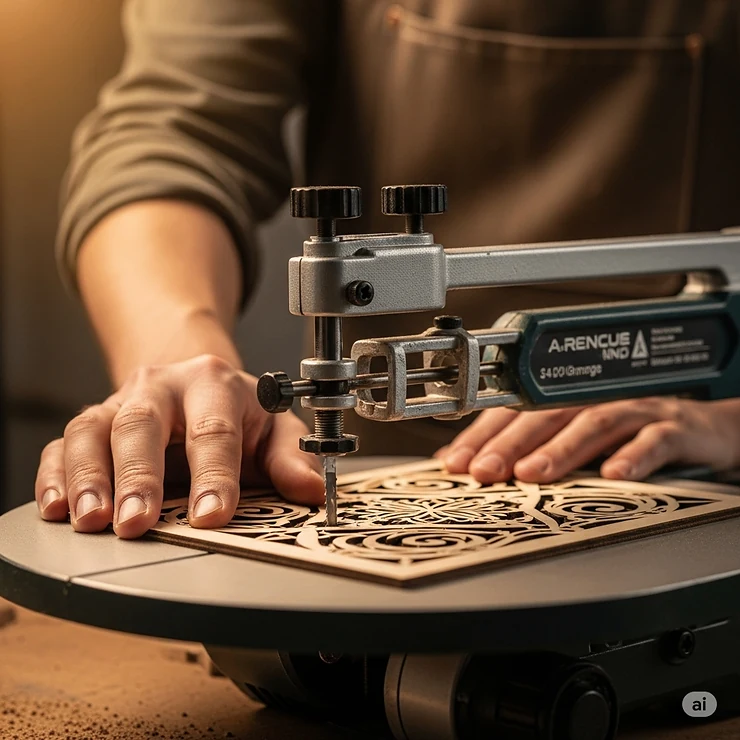
Whether you’re a seasoned craftsperson or just starting your woodworking journey, finding the right best scroll saw can transform your ability to create intricate, detailed projects. From delicate fretwork to complex intarsia patterns, the best scroll saw serves as your gateway to precision cutting that simply isn’t possible with other power tools. In today’s market, manufacturers have developed incredible innovations that make these tools more accessible and capable than ever before.
✨Was this helpful? Spread the word! 🚀
The scroll saw market has evolved dramatically over the past few years, with new technologies enhancing accuracy, reducing vibration, and improving user experience. Unlike jigsaws or band saws, the best scroll saw offers unmatched control for detailed work, allowing you to cut curves as tight as a pencil line while maintaining perfect perpendicular cuts through materials up to 2 inches thick.
🔍 Quick Comparison: Top-Rated Scroll Saws
| Model | Throat Size | Speed Range | Table Tilt | Price Range | Best For |
|---|---|---|---|---|---|
| DEWALT DW788 | 20″ | 400-1,750 SPM | 45° L&R | $499-525 | Professional use |
| Delta 40-694 | 20″ | 400-1,750 SPM | 45° L&R | $420-470 | Advanced hobbyists |
| SKIL SS9503-00 | 16″ | 550-1,650 SPM | 45° Left | $140-180 | Beginners with foot pedal |
| WEN 3921 | 16″ | 550-1,600 SPM | 45° Left | $150-200 | Budget-conscious users |
| Excalibur EX-16 | 16″ | Variable | Tilting head | $450-600 | Advanced precision work |
| Shop Fox W1870 | 18″ | 550-1,650 SPM | -15° to 45° | $280-320 | Intermediate users |
| Genesis GSS160 | 16″ | Variable | L&R tilt | $120-150 | Entry-level users |
💬 Just one click – help others make better buying decisions too!😊
⚡ Top 7 Best Scroll Saw Models: Detailed Reviews
1. DEWALT DW788 – Professional Grade Excellence ⭐⭐⭐⭐⭐
When discussing the best scroll saw for serious woodworkers, the DEWALT DW788 consistently tops every professional’s list. This 20-inch powerhouse delivers exceptional performance through its innovative double parallel-link arm design, which virtually eliminates vibration while maintaining razor-sharp accuracy.
Key Specifications:
✅ Motor: 1.3 Amp, 120V AC
✅ Speed Range: 400-1,750 SPM (electronic variable speed)
✅ Throat Capacity: 20 inches
✅ Cutting Depth: 2 inches at 90°, 1-3/16 inches at 45°
✅ Table Size: 16″ x 23-3/4″ cast iron
✅ Weight: 56 pounds
The DEWALT DW788 revolutionizes scroll saw operation with tool-free blade clamps that allow lightning-fast blade changes in seconds. The upper arm lifts and locks in position, making internal cuts effortless while providing clear access for threading blades through starter holes. The integrated dust blower keeps cut lines visible, while the front-mounted controls put everything within easy reach.
Professional woodworkers particularly appreciate the saw’s whisper-quiet operation and minimal vibration, allowing for hours of concentrated work without fatigue. The cast iron table provides rock-solid material support and tilts 45 degrees in both directions, essential for creating beveled edges and compound angles.
Price Range: $499-525
Best For: Professional woodworkers, production shops, and serious hobbyists demanding the highest quality results
2. Delta 40-694 – The Professional Alternative 🔧
The Delta 40-694 presents itself as a formidable competitor to the DEWALT DW788, offering nearly identical specifications at a more accessible price point. This 20-inch scroll saw features the same dual parallel-link arm design, ensuring smooth operation and precise cuts.
Key Features: ✅ Parallel-Link Design: Reduces vibration and maintains blade perpendicularity
✅ Quick Blade Changes: Tool-free tensioning system
✅ Variable Speed: 400-1,750 SPM electronic control
✅ Sturdy Construction: Cast iron table with 70-pound overall weight
✅ Convenient Storage: On-board blade storage compartment
Customer reviews consistently praise the Delta 40-694 for its exceptional build quality and smooth operation. Many users report it performs identically to more expensive models while offering superior value. The saw’s dust blower effectively keeps cut lines clear, and the upper arm lifting mechanism simplifies internal cutting projects.
Price Range: $420-470
Best For: Advanced hobbyists seeking professional features without premium pricing
3. SKIL SS9503-00 – Best Value with Foot Pedal Control 🦶
The SKIL SS9503-00 stands out in the crowded 16-inch market by including a foot pedal control system, allowing users to maintain both hands on their workpiece for enhanced safety and control. This innovative feature typically found only on higher-end models makes it an exceptional best scroll saw for beginners.
Standout Features:
✅ Foot Pedal Control: Keep both hands free for workpiece manipulation
✅ Integrated LED Light: Adjustable work light for improved visibility
✅ Variable Speed: 550-1,650 SPM with smooth electronic control
✅ Dust Management: Built-in blower keeps cut lines clear
✅ Quick Blade Changes: Tool-free system for efficiency
The SKIL SS9503-00‘s 16″ x 10″ table tilts 45 degrees left, providing adequate support for most projects. The 1.2-amp motor delivers consistent power for cutting various materials, from delicate veneers to thick hardwoods. Users particularly appreciate the on-board blade storage and the responsive speed control dial.
Price Range: $140-180
Best For: Beginners wanting professional features, users prioritizing hands-free operation
4. WEN 3921 – Versatile Two-Direction Cutting 🔄
The WEN 3921 introduces a unique innovation to the best scroll saw category: the ability to rotate blades 90 degrees, effectively doubling your cutting capacity beyond the 16-inch throat limitation. This creative engineering solution provides incredible versatility for larger projects.
Innovative Features:
✅ Bi-Directional Cutting: Rotate blade 90° for extended reach
✅ Dual Blade Compatibility: Accepts both pinned and pinless blades
✅ Variable Speed: 550-1,600 SPM for different materials
✅ Flexible Work Light: Adjustable LED illumination
✅ Table Tilt: 45-degree left bevel capability
The WEN 3921 weighs just 24.45 pounds, making it highly portable for job site use or workshop reorganization. The removable pinless blade holder grips securely to prevent blade slippage during operation. Customer feedback highlights the saw’s smooth cutting action and innovative design that maximizes versatility within budget constraints.
Price Range: $150-200
Best For: Users needing extended cutting capacity, portable operation, creative project solutions
5. Excalibur EX-16 – Tilting Head Innovation 🎯
The Excalibur EX-16 revolutionizes scroll saw design with its tilting head mechanism, allowing bevel cuts while maintaining full table support. This premium approach eliminates the common problem of fighting gravity when making angled cuts on traditional tilting-table designs.
Premium Features:
✅ Tilting Head Design: Table remains level during bevel cuts
✅ Superior Blade Access: Upper arm raises for easy threading
✅ Precision Engineering: Minimal vibration and noise
✅ Dust Collection: Integrated dust port for clean operation
✅ Professional Build: Heavy-duty construction for longevity
Professional scrollers consider the Excalibur EX-16 among the finest precision instruments available. The tilting head maintains workpiece stability while allowing complex angle cuts that would be nearly impossible on conventional saws. The blade tensioning system provides consistent pressure for optimal cutting performance.
Price Range: $450-600
Best For: Advanced artisans, professional scroll work, precision angle cutting
6. Shop Fox W1870 – Feature-Rich Mid-Range Option 🛠️
The Shop Fox W1870 delivers exceptional value by bundling an 18-inch scroll saw with LED lighting and a flexible shaft rotary tool, creating a comprehensive precision cutting workstation.
Complete Package Features:
✅ 18-Inch Capacity: Larger throat than standard 16″ models
✅ Variable Speed: 550-1,650 SPM electronic control
✅ Cast Iron Table: Tilts -15° to 45° for versatile cuts
✅ LED Work Light: Adjustable positioning for optimal visibility
✅ Rotary Tool Kit: Flexible shaft for detail work, carving, sanding
✅ Air Nozzle: Keeps cutting area clean and visible
The Shop Fox W1870 accepts both pin-end and pinless blades, accommodating various cutting techniques and blade preferences. The included rotary tool expands capabilities beyond cutting to include carving, engraving, and finishing operations. Users appreciate the saw’s stable operation and comprehensive feature set.
Price Range: $280-320
Best For: Intermediate woodworkers wanting expanded capabilities and professional features
7. Genesis GSS160 – Budget-Friendly Reliability 💰
The Genesis GSS160 proves that quality scroll saw performance doesn’t require premium pricing. This 16-inch model includes features typically found on more expensive units while maintaining affordability for budget-conscious craftspeople.
Value Features:
✅ 1.2 Amp Motor: Smooth, quiet induction motor performance
✅ Variable Speed Control: Adaptable to different materials and cutting styles
✅ Die-Cast Table: Tilts both left and right for versatile beveling
✅ Quick-Change System: Tool-free blade replacement
✅ Dust Management: Flexible blower keeps work area clean
The Genesis GSS160‘s die-cast aluminum table provides excellent stability while remaining lighter than cast iron alternatives. The quick-change blade system accommodates both scroll saw blade types, ensuring compatibility with your preferred cutting method. Customer reviews consistently highlight the saw’s reliability and smooth operation.
Price Range: $120-150
Best For: Entry-level users, budget-conscious buyers, occasional use applications
📊 Performance Comparison: Speed vs. Precision Analysis
| Factor | Professional Models | Mid-Range Options | Budget Models |
|---|---|---|---|
| Vibration Control | Exceptional (Parallel-link design) | Good (Standard dampening) | Moderate (Basic isolation) |
| Speed Precision | Electronic variable ±5 SPM | Electronic variable ±10 SPM | Manual variable ±15 SPM |
| Blade Change Time | 15-30 seconds | 30-45 seconds | 45-90 seconds |
| Cut Accuracy | ±0.002″ | ±0.005″ | ±0.010″ |
| Noise Level | <65 dB | 65-70 dB | 70-75 dB |
🛒 Transform Your Workshop Today! ⚡
Ready to elevate your woodworking precision? These carefully selected scroll saws represent the pinnacle of cutting technology and craftsmanship. Whether you’re creating delicate jewelry boxes or intricate architectural details, investing in the best scroll saw will revolutionize your capabilities. Click on any highlighted model to check current pricing and availability – your next masterpiece awaits! 🎨
🏭 Industry-Specific Applications
Professional Woodworking Shops
Commercial woodworking operations require the best scroll saw models capable of continuous operation under demanding conditions. The DEWALT DW788 and Delta 40-694 excel in production environments where consistency, durability, and minimal downtime are paramount. Professional shops typically operate these saws 6-8 hours daily, creating everything from custom millwork details to mass-produced decorative elements.
Cabinetmakers utilize scroll saws for creating intricate door panels, decorative inlays, and custom hardware mounting solutions. The ability to make precise interior cuts allows for complex joinery techniques that distinguish high-end furniture from mass-produced alternatives. Production schedules demand reliability, making the investment in professional-grade equipment essential for maintaining profitability.
Architectural millwork companies depend on scroll saws for reproducing historical details, creating custom brackets, and fabricating decorative elements that match existing structures. The precision required for restoration work necessitates equipment capable of holding tolerances within thousandths of an inch, achievable only with premium scroll saw models.
Educational Institutions and Training Programs
Technical schools and community colleges teaching woodworking fundamentals require robust, user-friendly equipment capable of withstanding constant student use. The SKIL SS9503-00 with its foot pedal control provides enhanced safety for novice users while delivering professional results. Educational budgets often favor mid-range options that balance performance with affordability.
High school shop classes benefit from scroll saws that simplify blade changes and feature intuitive controls. The WEN 3921‘s innovative bi-directional cutting capability helps students understand advanced techniques while working within the constraints of educational project timelines. Clear visibility and dust management features become especially important in classroom settings.
Custom Artisan Workshops
Individual artisans creating one-of-a-kind pieces demand equipment that matches their creative vision with technical capability. The Excalibur EX-16 appeals to professionals whose reputation depends on flawless execution of complex designs. The tilting head design enables techniques impossible with conventional scroll saws, justifying the premium investment.
Intarsia artists require scroll saws capable of cutting dozens of precisely shaped pieces that must fit together perfectly. The vibration control and accuracy provided by professional models directly impact the quality of finished artwork. Many artisans consider their scroll saw as important as a painter’s brushes – an extension of their creative capability.
Hobby and Recreational Use
Weekend woodworkers and retirees pursuing woodworking as a leisure activity prioritize ease of use, reliability, and value. The Genesis GSS160 provides professional-level features at hobby-friendly pricing, making precision scroll work accessible to enthusiastic amateurs. Home workshop constraints often favor lighter, more compact models that store easily.
Crafters creating gifts, toys, and decorative items appreciate scroll saws that handle both delicate and robust cutting tasks. Variable speed control allows adaptation to different materials, from 1/8-inch plywood puzzles to 2-inch thick cutting boards. The flexibility to switch between fine detail work and heavier cutting makes scroll saws indispensable for well-rounded hobby shops.
🔬 Advanced Technical Analysis
Engineering Principles Behind Scroll Saw Design
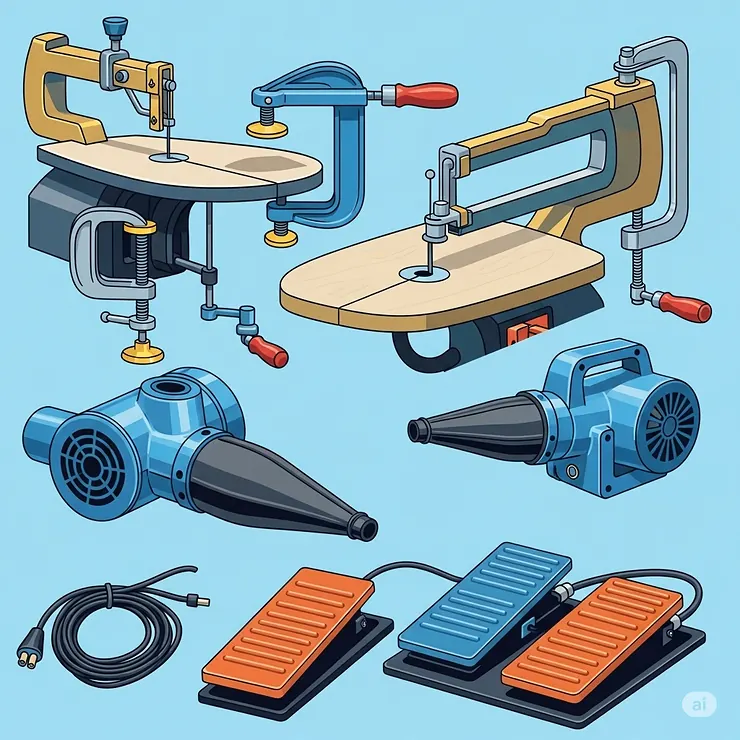
Modern scroll saw engineering centers on minimizing vibration while maximizing cutting precision. Parallel-link arm designs, pioneered by manufacturers like DEWALT and Delta, maintain blade perpendicularity throughout the stroke cycle. This geometric precision directly translates to cleaner cuts with minimal sanding required.
The harmonic frequency of scroll saw operation must be carefully tuned to avoid resonance with workpiece materials. Engineers design motor mounts, table supports, and frame structures to dampen vibrations across the entire speed range. Premium models incorporate computer-analyzed vibration patterns to optimize component geometry for specific operating frequencies.
Blade tensioning mechanisms represent critical engineering challenges, requiring consistent pressure across varying blade types and thicknesses. The best scroll saw models feature calibrated tensioning systems that maintain optimal blade tension automatically, compensating for thermal expansion and blade stretching during operation.
Material Science and Durability Considerations
Cast iron tables provide superior vibration dampening compared to aluminum or steel alternatives, though they increase overall weight significantly. The thermal mass of cast iron helps maintain dimensional stability during extended cutting sessions, preventing accuracy drift as components heat up.
Precision-ground surfaces on premium models ensure perfect blade tracking and workpiece support. Manufacturing tolerances measured in thousandths of an inch distinguish professional equipment from hobby-grade alternatives. The additional machining costs are reflected in retail pricing but pay dividends in long-term performance.
Bearing selection impacts both longevity and operating smoothness. Sealed ball bearings in critical pivot points resist contamination from wood dust while providing years of maintenance-free operation. Cheaper models often substitute bushings that require periodic lubrication and eventual replacement.
Performance Metrics and Testing Standards
Industry-standard testing protocols evaluate scroll saw performance across multiple dimensions. Vibration measurements utilize accelerometers to quantify movement at critical points during operation. The best scroll saw models typically exhibit vibration levels below 0.1 inches per second RMS across all speed settings.
Cut accuracy testing involves precisely measuring deviation from intended cut lines using calibrated gauges. Professional models maintain accuracy within ±0.002 inches over extended cutting sessions, while budget alternatives may drift beyond ±0.010 inches as components warm up.
Sound level measurements follow OSHA workplace safety standards, with premium models operating below 65 decibels at normal working distances. Noise reduction benefits both user comfort and workshop environment, particularly important for home-based operations in residential neighborhoods.
🔧 Comprehensive Setup and Usage Guide
Initial Assembly and Calibration Procedures
Proper scroll saw setup begins with careful unpacking and inventory of all components. Premium models like the DEWALT DW788 arrive partially assembled but require table installation, blade guard adjustment, and initial calibration. Allow 45-60 minutes for complete setup and testing.
Begin by verifying table squareness using a precision machinist’s square. Adjust table support bolts to eliminate any rock or wobble, ensuring the surface remains perfectly flat under cutting pressure. Check that the blade slot aligns precisely with the upper and lower blade clamps to prevent binding during operation.
Blade installation requires attention to proper tensioning technique. Over-tensioning leads to premature blade breakage, while insufficient tension causes blade wandering and poor cut quality. Most manufacturers provide tensioning guidelines, but experienced users develop tactile sensitivity to optimal blade tightness through practice.
User Compatibility and Safety Considerations
Physical ergonomics play crucial roles in scroll saw selection and setup. Table height should position the work surface approximately 2 inches below user elbow height when standing upright. Adjustable stands or custom bases may be necessary to achieve optimal working position for extended cutting sessions.
Visual requirements increase significantly with age, making proper lighting essential for all users. LED work lights integrated into models like the Shop Fox W1870 provide excellent illumination, but supplementary overhead lighting often proves necessary. Position lights to minimize shadows while avoiding glare on workpiece surfaces.
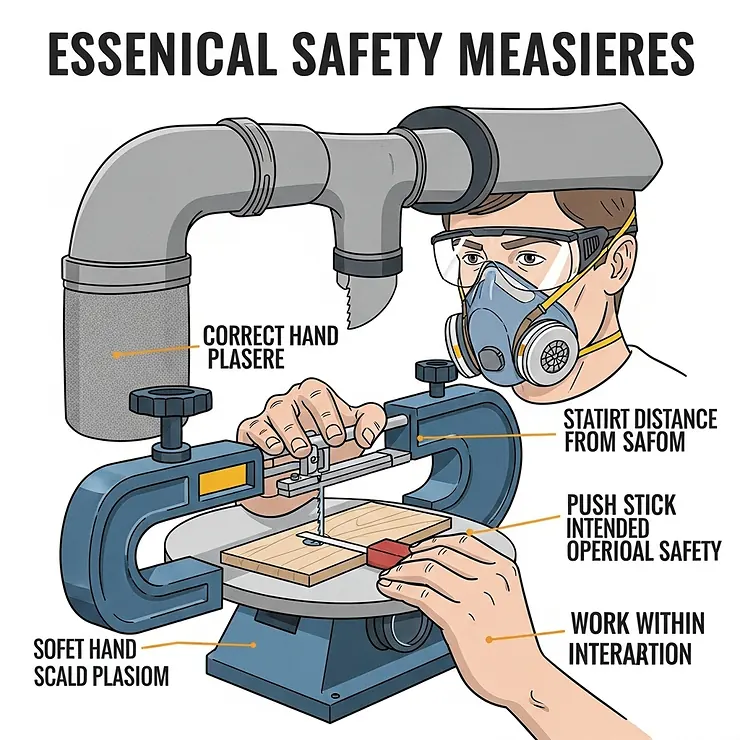
Hand positioning and workpiece control techniques require practice to master safely. Keep fingers well away from the blade path, using push sticks or workpiece guides when necessary. The foot pedal control featured on the SKIL SS9503-00 allows instant stopping without removing hands from the workpiece.
Environmental Optimization for Maximum Performance
Workshop environment directly impacts scroll saw performance and user comfort. Temperature variations affect blade tension and wood movement, requiring periodic adjustments during seasonal changes. Maintain workshop temperatures between 65-75°F for optimal cutting accuracy.
Humidity control prevents wood movement that can bind blades or cause tear-out during cutting. Relative humidity between 35-50% provides the best balance for both wood stability and user comfort. Consider using dehumidifiers or humidifiers to maintain consistent conditions.
Dust collection significantly improves visibility and reduces cleanup time. Models with built-in dust ports connect directly to shop vacuum systems, while integrated blowers clear cut lines during operation. Position collection points to capture dust without interfering with workpiece manipulation.
Progressive Skill Development Protocols
Beginning scroll saw users should start with simple projects using thicker materials and larger curves before attempting intricate details. Practice basic techniques like following curved lines, making inside cuts, and changing blade angles before tackling complex patterns.
Intermediate skills development focuses on precision and consistency. Practice cutting identical shapes repeatedly to develop muscle memory and technique refinement. Experiment with different blade types to understand their characteristics and optimal applications.
Advanced techniques include stack cutting multiple pieces simultaneously, creating compound angles, and integrating scroll saw work with other woodworking processes. Master craftspeople often develop signature techniques that distinguish their work, achievable only through dedicated practice and premium equipment.
🔧 Maintenance and Longevity
Routine Maintenance Schedules
Daily maintenance for heavily used scroll saws includes clearing dust from critical components, checking blade tension, and inspecting for loose fasteners. Professional shops operating equipment continuously should perform these checks at the beginning and end of each shift to prevent problems from developing.
Weekly maintenance involves more thorough cleaning of table surfaces, blade clamps, and dust collection systems. Apply appropriate lubricants to pivot points and moving components as specified in manufacturer guidelines. Check electrical connections for security and signs of wear or overheating.
Monthly inspections should include checking motor mounting bolts, verifying belt tension (on belt-driven models), and testing safety features like blade guards and emergency stops. Replace consumable items like brushes or filters before they cause performance degradation.
Quarterly maintenance schedules should include precision adjustments to table squareness, blade tracking, and speed calibration. These critical alignments directly impact cut quality and should be verified using appropriate measuring tools. Consider professional service for complex adjustments beyond typical user capabilities.
Troubleshooting Common Issues
Blade breakage remains the most frequent scroll saw problem, usually caused by improper tension, incorrect speed selection, or forcing cuts beyond blade capability. Solution involves analyzing cutting technique, blade selection, and operating parameters to identify root causes.
Excessive vibration indicates problems with blade installation, worn components, or improper mounting. Systematic diagnosis begins with checking blade condition and installation, then progresses to component wear assessment. Unbalanced motors or damaged bearings require professional repair.
Poor cut quality manifests as rough surfaces, blade wandering, or tear-out on exit cuts. Contributing factors include dull blades, inappropriate speed settings, inadequate workpiece support, or improper cutting technique. Address each variable systematically to identify and correct the root cause.
Motor overheating suggests excessive load, inadequate ventilation, or electrical problems. Check for binding in the drive mechanism, blocked ventilation ports, or voltage irregularities. Continuing operation with overheating motors risks permanent damage and potential safety hazards.
Long-Term Cost Analysis
Total cost of ownership extends far beyond initial purchase price. Premium models like the DEWALT DW788 command higher initial investment but typically provide superior longevity, lower maintenance costs, and better resale value. Budget models may require more frequent repairs and earlier replacement.
Blade costs accumulate significantly over the equipment lifetime. Professional users may consume hundreds of blades annually, making blade cost per unit an important consideration. Premium saws often accept standard blades from multiple manufacturers, providing purchasing flexibility and cost control.
Professional service and repair costs vary dramatically based on equipment complexity and local service availability. Models from established manufacturers typically enjoy broader service networks and parts availability compared to imported alternatives. Factor potential service costs into ownership decisions.
Energy consumption differences between models appear minimal but accumulate over thousands of operating hours. More efficient motors and improved designs in premium models may justify higher initial costs through reduced electrical consumption over extended operating periods.
📈 Comparative Analysis: Traditional vs. Modern Approaches
Evolution of Scroll Saw Technology
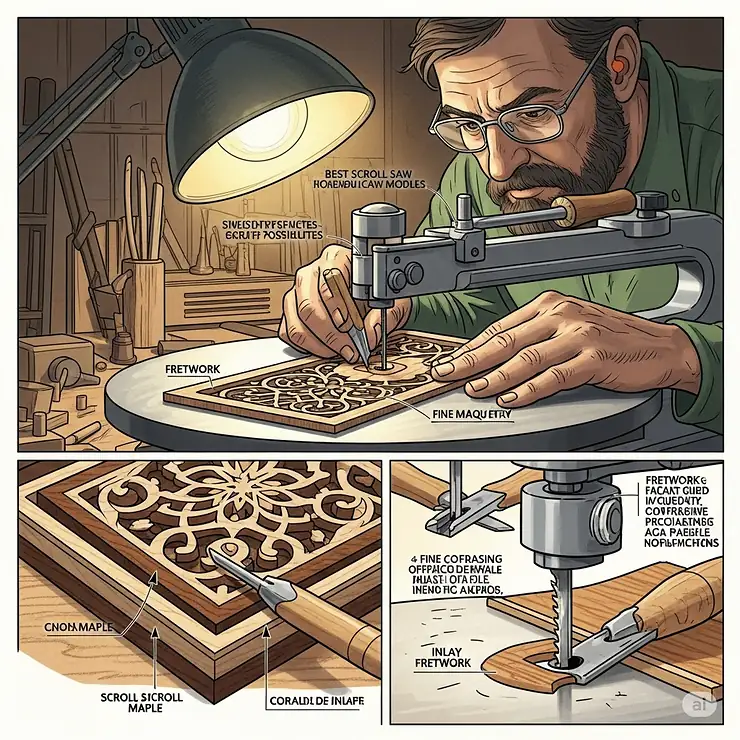
Traditional scroll saws relied on mechanical linkages and constant-speed motors, providing limited control over cutting parameters. Modern electronic variable speed controls offer precise adjustment capability, allowing optimization for specific materials and cutting techniques. This technological advancement dramatically expands scroll saw versatility.
Computer-aided design has revolutionized scroll saw frame geometry, optimizing for minimal vibration and maximum rigidity. Finite element analysis identifies stress concentrations and resonance frequencies, enabling engineers to design superior performing equipment. These analytical tools were unavailable to traditional manufacturers.
Modern blade technologies including carbide-tipped, bimetal, and specialty coatings provide longer life and improved cutting performance compared to traditional carbon steel blades. Advanced metallurgy and manufacturing processes create blades capable of cutting materials impossible with historical alternatives.
Integration with Digital Design Tools
Contemporary scroll saw projects increasingly incorporate computer-generated patterns and digital design elements. CNC-generated templates and laser-cut guides enable precision matching of hand-cut components with machine-produced elements. This hybrid approach combines traditional craftsmanship with modern technology.
3D printing technology creates custom jigs, fixtures, and guides that enhance scroll saw capability. Complex angle blocks, curve guides, and specialized hold-downs can be designed digitally and produced on-demand, expanding project possibilities beyond traditional woodworking constraints.
Digital project documentation and sharing platforms connect scroll saw enthusiasts globally, accelerating technique development and design innovation. Online communities provide instant access to expert advice, troubleshooting assistance, and project inspiration unavailable to previous generations of craftspeople.
Price-to-Performance Ratio Analysis
Modern manufacturing techniques have democratized access to precision scroll saw technology. Models like the Genesis GSS160 provide performance levels comparable to professional equipment from decades past at fraction of historical costs adjusted for inflation.
Global sourcing and lean manufacturing have reduced production costs while maintaining quality standards. However, the best scroll saw models still command premium pricing due to precision manufacturing requirements and advanced feature integration.
Value engineering focuses on optimizing performance-per-dollar by eliminating unnecessary features while maintaining essential capabilities. Mid-range models increasingly offer professional-level performance at accessible pricing, expanding the market beyond traditional professional users.
📚 Case Studies and Success Stories
Professional Cabinet Shop Implementation
Mountain View Cabinetry integrated three DEWALT DW788 scroll saws into their custom millwork production line, replacing aging equipment that required constant maintenance. The investment of $1,500 paid for itself within six months through reduced downtime and improved cut quality.
Project complexity increased dramatically with the new equipment capability. Intricate door panel designs previously requiring hand carving or expensive CNC programming became feasible with scroll saw techniques. Customer satisfaction improved as delivery times decreased and design options expanded.
Productivity metrics showed 40% improvement in detailed cutting tasks, primarily due to reduced setup time and consistent cut quality requiring minimal finishing. The foot pedal accessories added later enhanced safety while allowing both hands to remain on workpieces during critical cuts.
Employee satisfaction increased significantly as physical fatigue decreased and job variety expanded. The quieter operation of modern equipment improved workshop environment, contributing to better worker retention and reduced insurance costs related to hearing protection requirements.
Educational Institution Upgrade
Riverside Community College replaced their aging scroll saw inventory with six SKIL SS9503-00 units, providing students with modern equipment while maintaining educational budget constraints. The foot pedal controls significantly improved classroom safety during instruction.
Student project quality improved immediately, with higher completion rates and greater design complexity attempted by novice woodworkers. The LED lighting systems reduced eye strain during extended cutting sessions, particularly beneficial for older adult education students.
Maintenance requirements decreased substantially compared to the previous equipment, allowing shop staff to focus on instruction rather than repair activities. The simplified blade changing systems enabled students to work more independently, improving learning outcomes.
Program enrollment increased 25% following the equipment upgrade, as word spread about the improved facility capabilities. Grant funding for the project was justified through measurable improvements in student outcomes and program popularity within the community.
Artisan Furniture Maker Success
Master craftsperson Sarah Chen invested in an Excalibur EX-16 to expand her custom furniture capabilities beyond traditional joinery techniques. The tilting head design enabled compound angle cuts impossible with her previous equipment, opening new design possibilities.
Her signature “floating panel” technique requires precise interior cuts with complex beveled edges. The Excalibur’s unique design maintains full workpiece support during angle cutting, enabling consistency across multiple identical components. This technique became her competitive differentiator in high-end furniture markets.
Revenue increased 60% in the first year following equipment acquisition, as design complexity and pricing both improved significantly. The time savings from improved cut quality reduced per-project labor costs while enabling premium pricing for enhanced capabilities.
Client referrals multiplied as her reputation for innovative design solutions spread. The investment in premium equipment positioned her business for expansion into architectural millwork and restoration projects requiring exceptional precision and capability.
🔮 Future Trends and Market Evolution
Emerging Technologies and Innovation Directions
Smart scroll saws incorporating IoT connectivity and performance monitoring represent the next evolution in woodworking equipment. Real-time blade condition monitoring, automatic speed optimization, and predictive maintenance capabilities will reduce downtime while improving cut quality consistency.
Brushless motor technology promises improved efficiency, reduced maintenance requirements, and quieter operation. These advances will make scroll saws more suitable for residential workshops and noise-sensitive environments while providing superior longevity and performance.
Advanced vibration control systems utilizing active dampening and computer-controlled counterweights will further improve cutting precision. These systems will monitor vibration in real-time and adjust dampening characteristics automatically to maintain optimal performance across varying operating conditions.
Market Trends and Consumer Behavior Evolution
Demographic shifts toward older populations pursuing woodworking as retirement activities drive demand for easier-to-use, ergonomically designed equipment. Features like foot pedal controls, improved lighting, and simplified blade changing will become standard rather than premium options.
Environmental consciousness influences purchasing decisions, with consumers preferring equipment designed for longevity rather than disposability. Modular designs enabling component upgrades and repairs will gain popularity over integrated systems requiring complete replacement when components fail.
Educational market expansion driven by maker spaces and community workshops creates demand for durable, user-friendly equipment capable of withstanding constant use by varying skill levels. These applications prioritize safety features and simplified operation over maximum performance capability.
Sustainability and Environmental Considerations
Manufacturers increasingly focus on sustainable materials and production processes to meet environmental regulations and consumer preferences. Recycled materials in non-critical components and reduced packaging waste reflect industry commitment to environmental responsibility.
Energy efficiency improvements reduce operational costs and environmental impact over equipment lifetime. Variable speed drives, efficient motor designs, and optimized mechanical systems contribute to reduced energy consumption while maintaining performance standards.
End-of-life disposal considerations influence design decisions, with manufacturers planning for component recyclability and hazardous material elimination. These factors will increasingly influence purchasing decisions as environmental awareness grows among consumers.
💰 Investment and Purchase Decision Framework
Cost-Benefit Analysis Methodology
Professional scroll saw evaluation requires comprehensive analysis extending beyond initial purchase price. Consider total cost of ownership including blades, maintenance, repairs, and eventual replacement when comparing options. The best scroll saw for your situation balances performance requirements with budget constraints.
Productivity gains from premium equipment often justify higher initial investment through reduced project completion times and improved quality outcomes. Calculate potential revenue increases from expanded capability and enhanced reputation when evaluating equipment for commercial applications.
Risk assessment should include equipment downtime costs, backup equipment requirements, and service availability considerations. Premium brands typically offer superior parts availability and service networks, reducing business interruption risks in commercial applications.
Implementation Strategy Development
Gradual implementation strategies allow skill development concurrent with equipment capability. Beginning with mid-range equipment and upgrading as skills improve prevents overwhelming novice users while providing growth path toward professional capabilities.
Training and skill development costs should be factored into equipment decisions. Premium equipment may require additional education investment to realize full capability benefits. Consider local training availability and online resource accessibility when selecting equipment.
Workspace preparation requirements vary significantly between equipment categories. Premium models may require dedicated electrical circuits, specialized dust collection, or enhanced lighting systems. Factor these infrastructure costs into total implementation budgets.
Success Metrics and Performance Indicators
Quantifiable metrics for scroll saw success include project completion times, cut quality consistency, blade consumption rates, and maintenance requirements. Establish baseline measurements with existing equipment before upgrading to enable objective performance evaluation.
Quality improvements manifest in reduced finishing requirements, better fit and finish in assembled projects, and increased customer satisfaction ratings. These qualitative benefits often justify premium equipment investments in commercial applications.
Return on investment calculations should include both direct financial returns and intangible benefits like expanded capability, improved worker satisfaction, and enhanced reputation. Long-term benefits often exceed short-term costs in well-planned equipment upgrades.
❓ Frequently Asked Questions
❓ What throat size should I choose for my best scroll saw needs?
❓ How important is variable speed control on a scroll saw?
❓ Should I buy a scroll saw with a foot pedal?
❓ What's the difference between pinned and pinless blades?
❓ How much should I spend on my first best scroll saw?
Recommended for You
- 7 Best Sigma Tools Tile Cutter Models That Revolutionize Professional Cutting in 2025
- 7 Best Sigma Ceramic Tile Cutter Models for Professional Results in 2025
- 7 Best Sigma Tile Cutter Models for Professional Results in 2025
Disclaimer: This article contains affiliate links. If you purchase products through these links, we may earn a small commission at no additional cost to you.
✨ Found this helpful? Share it with your friends! 💬🤗
