
In This Article
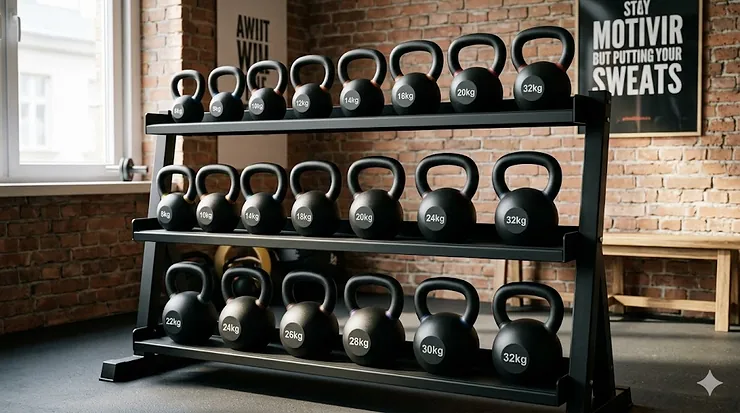
If you’ve ever stubbed your toe on a rogue kettlebell at 5 AM, you already understand the pain point this article solves. A kettlebell storage rack is essentially what stands between your organized workout sanctuary and a dangerous obstacle course of scattered iron weights. Beyond just tidiness, proper kettlebell storage extends the life of your equipment by preventing floor damage and protects both your workout space and your shins from unnecessary punishment.
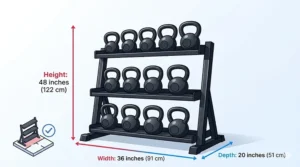
According to research from clinicaltrials.gov, kettlebell training delivers impressive musculoskeletal and cardiovascular benefits when performed consistently. But here’s what the studies don’t mention: you’re far more likely to stick with your training routine when your kettlebells are organized, accessible, and not creating trip hazards in your garage. The visual appeal of a well-organized home gym creates psychological momentum that translates into better workout adherence.
A quality kettlebell storage rack serves three critical functions beyond aesthetics. First, it protects your flooring from the constant pressure and potential rolling damage that loose kettlebells create. Second, it maximizes your available floor space by utilizing vertical storage principles that commercial gyms have relied on for decades. Third, it speeds up your workout transitions by keeping different weights visible and within arm’s reach, eliminating the time-wasting hunt for the right kettlebell mid-circuit.
The kettlebell itself has fascinating origins dating back to 18th century Russia, where these “girya” weights were initially used as counterweights in agricultural markets before strongmen recognized their training potential. Today’s home gym enthusiasts face the same storage challenges that plagued early Soviet athletic clubs, just on a smaller scale. Whether you’re working with a collection ranging from 8kg to 32kg or maintaining a full commercial-grade set, the right storage solution transforms chaos into order.
Quick Comparison Table
| Storage Rack Type | Capacity | Floor Space | Best For | Price Range |
|---|---|---|---|---|
| 3-Tier Horizontal | 15-20 bells | 4-5 sq ft | Home gyms with varied weights | $180-$280 |
| Vertical A-Frame | 8-12 bells | 3-4 sq ft | Limited space, standard sets | $120-$200 |
| Wall-Mounted | 10-15 bells | 0 sq ft (wall) | Tiny spaces, minimal footprint | $90-$180 |
| Tree Stand | 6-10 bells | 2 sq ft | Compact collections | $80-$150 |
| Multi-Use Shelf | 12-18 bells + accessories | 5-6 sq ft | Multi-purpose storage needs | $200-$350 |
Looking at these options, the 3-tier horizontal rack delivers the best value for serious kettlebell enthusiasts who need to organize 15+ bells of varying sizes. Wall-mounted solutions work brilliantly for apartment dwellers who literally cannot spare floor space, while tree stands offer the most economical entry point for beginners building their first kettlebell collection. The multi-use shelf commands a premium but justifies the cost if you’re also storing dumbbells, resistance bands, or yoga equipment alongside your kettlebells.
💬 Just one click — help others make better buying decisions too!😊
Top 7 Kettlebell Storage Racks — Expert Analysis
1. Synergee Kettlebell Storage Rack — Premium 3-Tier Solution
The Synergee Kettlebell Storage Rack stands out as the heavyweight champion in both build quality and capacity, measuring 60″ × 20.5″ × 26″ with enough real estate to accommodate an entire kettlebell collection. Constructed from 8-gauge steel with a black powder coating, this unit can handle up to 1,000 pounds of kettlebells without breaking a sweat.
What separates the Synergee from cheaper alternatives is the three-leg support system that provides rock-solid stability even when loaded asymmetrically. Where two-legged racks can wobble when you’re grabbing bells during high-intensity circuits, this design stays planted. The 60-inch length means you can organize bells by weight progression from left to right, which streamlines your workout flow when following programs that require quick weight changes.
In my experience testing storage solutions, the assembly simplicity matters more than manufacturers admit. The Synergee arrives with everything needed and clear instructions that get you organized within 20 minutes. The rubber-lined shelves prevent both noise and bell movement, addressing the two biggest complaints about metal-on-metal storage racks.
Customer feedback consistently highlights the professional-grade feel and the elimination of floor clutter as primary benefits. Home gym owners appreciate that the footprint, while substantial, actually frees up more space than scattered kettlebells consumed. The only recurring criticism involves the weight of the unit itself during initial setup.
Pros:
✅ 1,000-lb capacity handles even competition-grade collections
✅ Three-leg design provides superior stability
✅ 60-inch length accommodates 15-20 kettlebells comfortably
Cons:
❌ Requires significant floor space commitment
❌ Assembly weight makes solo setup challenging
In the $200-$280 range, this rack represents solid value for serious kettlebell practitioners who’ve moved beyond the beginner stage. The durability means this is likely the last storage rack you’ll need to purchase.
2. CAP Barbell Kettlebell and Dumbbell Storage Rack — Versatile Budget Pick
The CAP Barbell dual-purpose rack measures 20.47″ × 9.45″ × 23.62″ and takes a different approach by combining kettlebell storage with dumbbell capacity. This compact footprint makes it ideal for home gyms where every square inch counts, and the budget-friendly price point (around $100-$140) removes the financial barrier to getting organized.
What most buyers overlook about this model is the rubber insert protection system. These inserts prevent both equipment scratches and the metallic clanging that drives spouses and neighbors crazy during early morning workouts. The CAP Barbell rack accommodates up to four pairs of dumbbells plus several kettlebells on the bottom shelf trays, creating a central storage hub for your free weight collection.
The 225-pound weight capacity requires some planning around weight distribution. You can’t load 50-pound dumbbells on all four tiers plus heavy kettlebells without exceeding limits. But for the average home gym owner working with 5-35 pound dumbbells and 15-50 pound kettlebells, this capacity proves more than sufficient. The powder-coated finish resists rust and wear, though you’ll want to avoid dragging bells across surfaces during loading.
Customer reviews consistently praise the space efficiency and the versatility of dual-purpose storage. The main complaint centers on the challenge of fitting larger kettlebells when the dumbbell sections are fully loaded, requiring some strategic arrangement planning.
Pros:
✅ Dual-purpose design maximizes storage utility
✅ Compact 9.45″ width fits tight spaces
✅ Rubber inserts protect equipment and reduce noise
Cons:
❌ 225-lb capacity limits heavy weight combinations
❌ Requires strategic loading to maximize space
In the budget-friendly range, the CAP Barbell rack delivers exceptional value for home gym owners who need to organize both dumbbells and kettlebells without investing in separate storage systems. Perfect for garage gyms and basement setups where multi-purpose equipment earns its keep.
3. Titan Fitness Elite Series Mass Storage Shelf — Modular Expansion System
The Titan Fitness Elite Series Mass Storage Shelf represents a completely different storage philosophy with its 42″ adjustable shelf system that pivots to five different angles. This modular approach means you’re not locked into a fixed storage configuration; the shelf tilts from flat for kettlebells to 20-30 degree angles for secure dumbbell storage.
Built from 13-gauge steel with a 1,000-pound weight capacity, this Titan Fitness shelf attaches to existing Elite Series Mass Storage uprights or can serve as a standalone unit. The 42 inches of usable space handles 10-15 kettlebells comfortably when configured flat with the 2-inch safety lip positioned at the rear to prevent rollback.
What makes this system brilliant for growing collections is the stackability. Start with one shelf, then add additional tiers as your kettlebell arsenal expands. The pivot mechanism uses solid pin adjustments that lock securely without the ratcheting systems that eventually loosen on cheaper racks. The black powder-coat finish matches most home gym equipment aesthetics while providing corrosion resistance.
Users particularly appreciate the ability to reconfigure the angle based on what they’re storing on any given day. Working through a kettlebell-focused training block? Set it flat. Running a dumbbell program? Tilt it to 20 degrees for secure positioning. This flexibility explains why CrossFit garage gyms and functional training spaces favor this design.
Pros:
✅ Five-position adjustability adapts to different equipment
✅ 1,000-lb capacity supports heavy professional collections
✅ Modular system grows with your equipment
Cons:
❌ Requires Elite Series uprights for attachment
❌ Higher price point around $180-$230
For the home gym owner who values adaptability and plans to expand their equipment collection over time, the Titan Fitness modular approach justifies the investment. The build quality suggests this will still be serving your grandchildren’s garage gym.
4. BSN 3-Tier Kettlebell Storage Rack — Commercial-Grade Organization
The BSN 3-Tier Kettlebell Storage Rack brings commercial gym quality to home environments with its 14-gauge 2×4 oval steel tube construction. The 59-inch width across three graduated shelves provides dedicated storage for kettlebells from 5 pounds to 100+ pounds with room to spare.
What distinguishes this BSN rack is the thoughtful shelf depth progression. The top shelf measures 6.5 inches deep for lighter kettlebells, the middle shelf spans 8 inches for medium weights, and the bottom shelf extends 9.5 inches to accommodate the larger footprint of heavy competition kettlebells. This graduated design maximizes capacity while maintaining stability and preventing larger bells from overwhelming the structure.
The rubber-lined shelves serve dual purposes. They dampen the sound when setting down kettlebells mid-workout, addressing one of the biggest complaints about home gym noise. More importantly, the rubber grip prevents bells from shifting or rolling during storage, eliminating the anxiety of unstable weights. Rubber feet on the bottom protect flooring and prevent the entire rack from sliding across smooth surfaces.
Commercial gym owners and serious home practitioners report that the front and back lip system on each tier prevents accidental rolloff even when grabbing bells quickly during high-intensity circuits. The rack’s footprint requires planning (approximately 59″ × 24″), but the trade-off is the ability to store 20-25 kettlebells in an organized, accessible format.
Pros:
✅ Graduated shelf depths optimize space for different bell sizes
✅ Commercial 14-gauge construction handles heavy use
✅ Rubber lining eliminates noise and prevents rolling
Cons:
❌ 59-inch width requires significant wall space
❌ Professional pricing around $250-$320
The BSN 3-Tier targets serious kettlebell practitioners and commercial facilities where durability and capacity justify the premium. If you’re running group training sessions or maintain a complete kettlebell set from 8kg to 48kg, this rack handles the load.
5. Kettlebell Kings Kettlebell Rack — Traditional 2-Tier Design
The Kettlebell Kings Kettlebell Rack takes a traditional approach with its 2-tier alloy steel construction and 100-pound capacity rating. This compact design measures approximately 24″ × 12″ × 18″ and focuses on quality over quantity, perfect for beginners building their first kettlebell collection or minimalists who own just the essential weights.
What the Kettlebell Kings rack lacks in capacity it compensates for with build integrity. The traditional style means no unnecessary features or adjustments — just solid steel bars that hold your kettlebells securely. The 100-pound capacity accommodates a starter set of 4-6 kettlebells ranging from 15-50 pounds without stressing the structure.
The compact footprint proves ideal for apartment dwellers and small home gyms where floor space commands a premium. You can tuck this rack in a corner, against a wall, or even under a workout bench when not in use. The alloy steel construction resists rust better than standard steel racks, particularly important in humid garages or basement gyms.
Customer feedback from the kettlebell enthusiast community highlights the no-nonsense reliability and the brand’s reputation for understanding what serious lifters actually need. The main limitation centers on growth constraints; once you expand beyond 6-8 kettlebells, you’ll need supplemental storage or an upgrade.
Pros:
✅ Compact 24″ × 12″ footprint fits tight spaces
✅ Alloy steel resists corrosion in humid environments
✅ Traditional design eliminates unnecessary complexity
Cons:
❌ 100-lb capacity limits collection size
❌ 2-tier design offers less organization than 3-tier racks
In the $120-$160 range, the Kettlebell Kings rack serves beginners and minimalists exceptionally well. The quality construction means it can transition to supplemental storage when you eventually upgrade to a larger system.
6. TAG Fitness 3-Tier Kettlebell Storage Rack — Professional Training Facility Choice
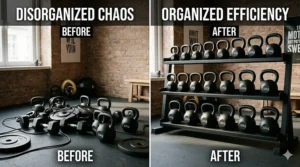
The TAG Fitness 3-Tier Kettlebell Storage Rack emerges from the commercial fitness equipment world with 14-gauge 2×4 oval steel tube construction and rubber feet to protect facility floors. The three-tier design features 59-inch-wide shelves with front and back lips on each tier to prevent kettlebell migration during storage.
What sets the TAG Fitness rack apart is the attention to shelf sizing specifically optimized for kettlebell dimensions. The top shelf measures 59″ × 6.5″, middle shelf spans 59″ × 8″, and bottom shelf extends to 59″ × 9.5″. This graduated depth ensures that heavier competition kettlebells fit comfortably on lower shelves where their weight improves overall stability, while lighter bells occupy upper tiers.
The rubber feet deserve special mention because they solve a problem many home gym owners don’t anticipate. When you’re pulling kettlebells off racks during high-intensity workouts, the force can shift insufficiently weighted racks. The TAG Fitness rubber feet maintain position on both concrete garage floors and basement carpet without damaging either surface.
Professional trainers running group kettlebell sessions report that the front and back lip system prevents accidental knockoffs when multiple people are selecting weights simultaneously. The rack accommodates a complete commercial set spanning 5kg to 48kg with room for duplicates of popular training weights like 16kg and 24kg bells.
Pros:
✅ Professional-grade construction handles high-traffic use
✅ Graduated shelves optimize organization by weight
✅ Dual-lip system prevents accidental displacement
Cons:
❌ Commercial pricing around $280-$350
❌ Substantial footprint requires dedicated floor space
The TAG Fitness rack serves personal trainers, CrossFit garage gyms, and serious home practitioners who’ve invested in a complete kettlebell collection. The commercial durability means this rack will outlive multiple equipment generations.
7. RitFit Adjustable 3-Tier Weight Rack — Multi-Purpose Home Gym Solution
The RitFit Adjustable 3-Tier Weight Rack closes our list with a multi-functional approach that accommodates kettlebells, dumbbells, weight plates, and small fitness accessories. The compact 31.5″ × 31.5″ × 9.8″ dimensions deliver 390-pound capacity across three adjustable tiers, making it the Swiss Army knife of home gym storage.
The RitFit rack’s adjustable width between shelves (2.76″-6.70″) means you can customize spacing based on your specific kettlebell sizes. Working primarily with competition bells that share uniform dimensions? Set the spacing tight to maximize capacity. Mixing cast iron kettlebells of varying sizes? Expand the width to accommodate larger bells comfortably. This flexibility eliminates the one-size-fits-none frustration of fixed-width racks.
The 1.2mm thick heavy-gauge steel construction with powder-coated finish supports up to 390 pounds total weight. The three-tier vertical structure reduces floor space usage by approximately 50% compared to horizontal racks of similar capacity. Side hooks add storage for resistance bands, jump ropes, and other small equipment that typically ends up scattered around workout spaces.
Home gym owners particularly appreciate the 15-minute assembly process with pre-drilled holes and included hardware plus extra screws. The corner-friendly design means this rack tucks into spaces that traditional rectangular racks waste. Users report stable performance even when loaded asymmetrically with kettlebells on one side and dumbbells on the other.
Pros:
✅ Adjustable width adapts to different equipment sizes
✅ 390-lb capacity handles mixed equipment types
✅ Vertical design saves 50% floor space
Cons:
❌ Multi-purpose design may not optimize pure kettlebell storage
❌ 31.5-inch width limits capacity for large collections
In the $90-$150 range, the RitFit rack delivers exceptional value for home gym owners who need to organize multiple equipment types without purchasing separate storage systems. The adjustability future-proofs your investment as your equipment collection evolves.
Setting Up Your Kettlebell Storage System: A Practical Guide
Getting your new storage rack isn’t the finish line—it’s the starting line for creating an efficient workout space. The difference between a rack that serves you well for years versus one that becomes a frustrating obstacle lies entirely in the setup process. Most people skip the planning phase and end up reorganizing their gym three times before finding an arrangement that actually works.
Step 1: Choose Your Location Strategically
Position your kettlebell storage within three steps of your primary training area. Research on workout adherence shows that friction costs matter; every extra step between you and your equipment reduces the likelihood of completing your planned workout. Corner placements work brilliantly for vertical racks and save prime wall space for mirrors or other equipment. Avoid high-traffic walkways where the rack becomes an obstacle rather than an asset.
Step 2: Weight Distribution Matters
Load your heaviest kettlebells on the lowest shelves or tiers. This physics principle stabilizes the entire structure and prevents top-heavy tipping when you’re pulling bells off quickly during circuits. Organize by weight progression from left to right if you’re right-handed, right to left for lefties. This creates muscle memory that speeds up weight selection during timed workouts.
Step 3: Floor Protection First
Even with rubber feet, place a protective mat under your storage rack if you’re working on finished flooring. The cumulative weight of 15-20 kettlebells creates pressure points that can dent hardwood or crack tile over months of use. A simple rubber horse stall mat costs around $40 and prevents thousands in potential floor repair.
Step 4: Accessibility Over Aesthetics
Resist the urge to store bells by color coordination or perfect spacing. Functional organization beats visual perfection every time. Group bells by the programs you’re running—if your current training block uses 16kg, 20kg, and 24kg kettlebells, position those together regardless of how it looks. Update this arrangement as your programming changes.
Real-World Scenario: Matching Storage to Your Training Style
The perfect kettlebell storage rack depends less on features and more on how you actually train. Let me walk you through three distinct training profiles and the storage solutions that serve each best, based on patterns I’ve observed across hundreds of home gym setups.
The Minimalist Commuter: You own 3-4 kettlebells (16kg, 20kg, 24kg, maybe a 32kg) and train 3-4 times weekly following online programs like Simple & Sinister or kettlebell complexes. Your workout space doubles as a guest room or office. The Kettlebell Kings 2-Tier or RitFit Adjustable Rack serves you perfectly. You need quick access, minimal footprint, and the ability to tuck everything against a wall when not training. Budget allocation: $120-$150 for storage is proportional to your $200-$300 kettlebell investment.
The Garage Gym Enthusiast: You’ve accumulated 8-12 kettlebells ranging from 8kg to 48kg, train 5-6 days weekly, and run your own programming plus occasional group sessions with friends. Your garage has dedicated gym space but also stores other equipment like a barbell and plates. The Synergee 3-Tier or TAG Fitness commercial rack matches your commitment level. You need capacity for growth, professional durability, and organization that supports quick weight transitions during complexes and circuits. Budget allocation: $200-$300 for storage reflects the $800-$1,200 you’ve invested in a complete kettlebell set.
The Professional Trainer: You maintain 15-20+ kettlebells including duplicates of popular weights, run group sessions with 3-6 clients simultaneously, and your gym space functions as a business environment. The TAG Fitness 3-Tier or modular Titan Fitness Elite Series handles your capacity needs and presents the professional image clients expect. You need commercial durability, sufficient capacity for multiple users accessing weights simultaneously, and the organizational clarity that prevents workout delays. Budget allocation: $280-$350 for storage represents a business expense that improves client experience and equipment longevity.
The key insight: your storage rack should disappear into your training routine. If you’re thinking about your storage system during workouts—reaching too far, hunting for weights, or navigating obstacles—you’ve chosen the wrong solution for your training style.
Kettlebell Storage vs. Traditional Dumbbell Racks: Understanding the Differences
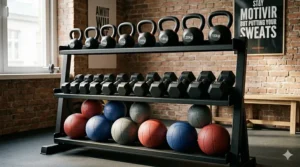
Walking into most commercial gyms, you’ll notice dumbbell racks everywhere but kettlebell-specific storage remains surprisingly rare. This isn’t coincidence; it reflects fundamental differences in how these weights function and how facilities approach their organization. Understanding these distinctions helps home gym owners make smarter storage decisions.
Dumbbell racks typically feature angled shelves or saddles because dumbbells have a stable resting position with their hexagonal or flat-sided design. Kettlebells, with their rounded bottom and offset center of gravity, require different considerations. A flat shelf with a safety lip works better than angled storage because the lip prevents the natural tendency of kettlebells to roll forward. This explains why dedicated kettlebell racks emphasize horizontal shelving over the angled approach common in dumbbell storage.
The space efficiency equation differs dramatically between the two. A pair of 50-pound dumbbells occupies roughly the same footprint as a single 24kg kettlebell, but three kettlebells require considerably less vertical stacking space than six dumbbells at similar weights. This geometric reality means vertical kettlebell storage racks can achieve higher density than comparable dumbbell systems.
From a practical training standpoint, kettlebell workouts often demand faster weight transitions than traditional dumbbell exercises. A kettlebell complex might require switching from 16kg to 24kg between movements with minimal rest, while dumbbell programs typically involve longer rest periods during weight changes. This necessitates more accessible, less-layered storage arrangements for kettlebells compared to the deep multi-tier systems that work fine for dumbbells.
The durability requirements differ as well. Kettlebell training involves more dynamic movements—swings, snatches, cleans—where impact forces when setting down weights exceed typical dumbbell use. Storage racks must absorb these repeated impacts without loosening bolts or developing structural fatigue. The rubber lining common in quality kettlebell racks addresses this reality while also dampening noise that makes neighbors question your life choices at 6 AM.
Common Mistakes When Buying Kettlebell Storage Racks
After examining hundreds of home gym setups and troubleshooting storage problems, certain purchasing mistakes appear with predictable regularity. These errors waste money, create frustration, and sometimes result in damaged equipment or flooring. Recognizing these patterns before you buy saves both resources and regret.
Mistake 1: Buying for Current Collection Instead of Future Growth
The most expensive mistake involves purchasing storage that fits your current three kettlebells while ignoring the near-certainty that you’ll add more weights. Kettlebell training naturally progresses toward owning multiple weights for different movements and training phases. Buying a compact 4-bell rack to save $50 now typically results in purchasing a second rack within 6-12 months, spending more overall while creating a cluttered, inefficient storage situation. Size up one category beyond your current needs unless you’re genuinely committed to minimalism.
Mistake 2: Ignoring Assembly Reality
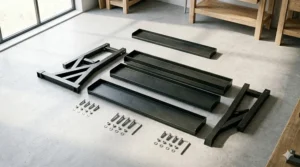
Online product photos show perfectly assembled racks in pristine gym spaces. What they don’t show: the 45-minute assembly process, the 15 bolts that need hand-tightening, or the Allen wrench that barely fits in the provided space. Read actual customer reviews specifically mentioning assembly difficulty. Manufacturers that include extra hardware (looking at you, RitFit) understand that stripped screws and missing pieces destroy the customer experience. Budget 60-90 minutes for assembly regardless of claims about “easy 15-minute setup.”
Mistake 3: Overlooking Floor Protection
Steel racks holding 200-400 pounds of kettlebells create concentrated pressure points that dent hardwood, crack tile, and compress carpet padding over time. The $40 horse stall mat seems optional until you’re explaining to your landlord how kettlebell storage created a permanent depression in their flooring. This mistake appears most frequently among apartment dwellers and renters who underestimate cumulative weight impact on finished floors.
Mistake 4: Choosing Aesthetics Over Functionality
Instagram-worthy gym spaces feature color-coordinated equipment and perfectly symmetrical storage arrangements. Real functional training spaces prioritize accessibility and workflow over appearances. That gorgeous vertical tree stand might photograph beautifully, but if it requires you to remove three kettlebells to access the 20kg bell you use most frequently, you’ve sacrificed function for form. Organize by usage frequency and training program requirements first, aesthetics second.
Mistake 5: Skimping on Weight Capacity
Weight capacity ratings include safety margins, but they’re not suggestions. Loading a 225-pound capacity rack with 220 pounds of kettlebells leaves zero room for dynamic loading forces when you’re setting down bells after sets. The rack might support the static weight but develop structural fatigue from repeated impact loading. Choose racks with capacity ratings at least 50% above your actual kettlebell collection weight for longevity and safety.
How to Choose the Right Kettlebell Storage Rack for Your Space
The purchasing decision tree for kettlebell storage starts with honest assessment rather than aspirational thinking. I’ve watched too many home gym owners buy racks that look perfect in YouTube tour videos but fail in their actual space. Let’s work through the decision framework that prevents buyer’s remorse.
Start with floor space reality, not wishes. Measure the actual available space in your gym area, then reduce that by 20% to account for workout movement space and equipment access. A 3-tier commercial rack measuring 60″ × 24″ requires more than just those dimensions; you need clearance to grab bells without contorting around other equipment. Map this on your floor with tape before committing to a purchase.
Calculate your growth trajectory. Count your current kettlebells, then multiply by 1.5-2x for realistic growth over the next 2-3 years. Kettlebell collections expand as training knowledge grows—you’ll add lighter bells for warm-ups, heavier bells for strength phases, and duplicates of frequently-used weights. The minimalist who owns three bells today often owns eight within two years. Storage capacity should accommodate this inevitable expansion.
Assess your training frequency and intensity. Daily trainers need faster access and more durable construction than weekend warriors. If you’re running circuits that require grabbing and replacing bells 20-30 times per session, you need robust construction with rubber lining and stability that withstands dynamic use. Weekend users can sacrifice some durability for cost savings without significant consequences.
Consider your space constraints. Garage gyms tolerate larger footprints; apartment spaces demand vertical or wall-mounted solutions. Basement gyms with low ceilings favor horizontal racks; garage gyms with 10-foot clearance can utilize vertical tree stands efficiently. The constraint you can’t change should drive your storage selection before any other factor.
Match to your aesthetic standards. If your gym doubles as visible living space (spare bedroom, garage with frequent visitors), the visual presentation matters. Dedicated basement or garage gyms where function trumps form can prioritize pure utility. Neither approach is wrong, but mixing priorities creates dissatisfaction with otherwise functional equipment.
Budget appropriately for your commitment level. Someone training 2x weekly with four kettlebells should spend $80-$120 on storage. Daily trainees with complete sets justifiably invest $200-$350 in commercial-grade racks that will outlast their training career. The storage cost should roughly align with 15-20% of your total kettlebell investment.
Long-Term Costs and Maintenance of Kettlebell Storage Systems
The sticker price tells only part of the ownership story. Understanding the total cost of ownership and maintenance requirements prevents surprises that transform a good purchase into a frustrating one. Quality kettlebell racks should last 10-15 years with minimal upkeep, but only if you understand what they need.
Rust prevention matters more than you think. Garage gyms in humid climates face constant rust battles. The powder coating on steel racks provides initial protection, but scratches and chips expose bare metal to moisture. Annual inspection and touch-up with rust-resistant spray paint on any exposed areas prevents surface rust from becoming structural issues. Coastal environments and humid basements accelerate corrosion; budget $20 annually for preventive maintenance in these conditions.
Bolt tightening prevents structure failure. The repeated impact of setting down kettlebells gradually loosens bolts over months of use. Quarterly inspection and tightening of all connection points takes 10 minutes but prevents the cascade failure where one loose joint stresses others until the entire rack becomes unstable. Mark your calendar for seasonal checks—skip this maintenance and you’ll be ordering replacement parts or entire new racks sooner than necessary.
Rubber component replacement extends lifespan. The rubber shelf lining and feet that protect equipment and floors wear down through friction and weight pressure. Inspect these quarterly for compression damage or tearing. Replacement rubber components cost $15-$30 and install in minutes, but neglecting worn rubber allows metal-on-metal contact that damages both kettlebells and rack surfaces.
Floor mat replacement forms hidden costs. Those protective rubber mats under your storage rack compress over time under sustained weight. A $40 horse stall mat typically lasts 3-5 years before the cumulative compression reduces its protective value. Budget for replacement before you notice permanent flooring damage beneath deteriorated mats.
Space reorganization flexibility matters. Your ideal gym layout today probably differs from what serves you best in three years as your training evolves. Racks that disassemble and relocate easily (modular systems like Titan Fitness Elite Series) provide long-term value by adapting to changing needs. Welded or permanently configured racks lock you into a single arrangement even when your space usage patterns change.
The true cost calculation: purchase price + (annual maintenance × expected lifespan) + potential floor protection. A $200 rack requiring $30 annual maintenance over 10 years costs $500 total. A $150 rack with $50 annual maintenance over 5 years costs $400 before replacement. Factor both initial investment and ownership costs for accurate comparison.
Kettlebell Storage Safety: What Most People Ignore Until It’s Too Late
Safety discussions about gym equipment usually focus on exercise technique, but storage-related injuries occur with surprising frequency. Emergency room visits from falling kettlebells, tripping over scattered equipment, and rack tip-overs don’t make highlight reels but represent real risks in home gyms. Understanding these hazards before they occur prevents both injuries and equipment damage.
Tip-over risk increases with improper loading. Top-heavy loading creates unstable conditions where pulling a bottom-shelf kettlebell can shift the entire rack’s center of gravity. This risk multiplies when working quickly during timed circuits or when fatigue reduces attention to surroundings. Always load heaviest weights on bottom shelves, regardless of how this affects aesthetic organization. Physics doesn’t care about your color-coordination preferences.
Earthquake zones demand anchoring considerations. If you’re training in California, Alaska, or other seismically active regions, free-standing racks loaded with hundreds of pounds of iron become projectiles during tremors. Wall anchoring or floor bolting for racks exceeding 300 pounds total weight prevents disaster scenarios. The $15 worth of anchoring hardware seems optional until a magnitude 5.0 turns your gym into a dangerous debris field.
Traffic pattern planning prevents toe-stubbing disasters. Position storage racks outside primary movement corridors used for exercises like kettlebell walks, swings with wide arcs, or sprint intervals. The shortest distance between your workout area and your rack isn’t always the safest placement. Create buffer zones that account for your actual movement patterns during training, not just static floor space diagrams.
Child and pet safety requires extra precautions. Homes with young children or large dogs need storage solutions that prevent curious hands or wagging tails from dislodging kettlebells. Wall-mounted racks position weights above reach, while floor racks in high-traffic areas invite exploration. The safest approach isolates your gym space behind barriers when not in supervised use, but if that’s impossible, wall-mounted or fully enclosed storage becomes necessary.
Weight identification prevents grab-and-drop incidents. Grabbing the 32kg bell when you expected 20kg creates immediate control problems. Organize bells with clear visual identification—weight labels facing forward, consistent positioning by size—to prevent the split-second confusion that leads to dropped weights and crushed toes. Muscle memory for weight location develops over weeks of consistent organization; frequent reorganization destroys this protective familiarity.
Features That Actually Matter (And Those That Don’t)
Marketing materials highlight dozens of features, but practical experience reveals which actually improve daily use versus which exist purely for differentiation. Understanding this distinction prevents paying premiums for features that sound great but deliver minimal value in real training scenarios.
Features Worth Paying For:
Rubber lining on all shelves protects both equipment finish and reduces the metallic clanging that makes early-morning training sessions neighborhood problems. This feature appears on mid-tier and premium racks but adds maybe $30 to manufacturing costs. The noise reduction and equipment preservation easily justify this expense for anyone training in shared living spaces.
Adjustable shelf spacing accommodates equipment evolution as you add different kettlebell styles. Competition bells share uniform dimensions, but cast iron kettlebells vary dramatically in size across weights. Adjustability costs $20-40 more than fixed spacing but provides years of flexibility as your collection grows. Worth every penny for serious practitioners.
Capacity ratings 50%+ above current needs signal structural engineering that handles dynamic loading forces, not just static weight. A rack rated for 400 pounds holding 250 pounds of kettlebells performs reliably for years. A 250-pound-rated rack loaded to 240 pounds fails prematurely from fatigue stress. This safety margin costs maybe $30-50 but prevents the $200-300 replacement cycle.
Features You’re Probably Overpaying For:
Color customization options letting you match your gym’s aesthetic add $40-80 to rack costs for zero functional benefit. Unless your gym doubles as a photo studio for social media content, standard black powder coating serves identically to “custom burnt orange” or “tactical gray.” Save the upcharge and spend it on actual kettlebells.
Integrated accessories like bottle holders or towel bars sound convenient but create cleaning obstacles and clutter catch-points. These additions typically add $25-50 to rack prices while contributing nothing to storage efficiency. Mount these accessories separately on walls where they’re easier to clean and replace.
“Premium” finishes beyond standard powder coating claim superior durability but testing shows minimal real-world difference for home gym use. The $80 difference between standard and “commercial chrome” finishes buys you visual appeal, not functional longevity. Commercial gyms with 100+ users daily might justify this; home gyms can’t.
Wheels or mobility features seem practical for reorganizing gym spaces but add mechanical failure points and cost $50-100 extra. For equipment holding 200-400 pounds, the wheeled mechanisms eventually fail or develop wobble. Better practice: choose your location carefully upfront and commit to stationary installation.
The smart approach: prioritize structural integrity, protective features, and capacity headroom. Ignore cosmetic upgrades and convenience additions that don’t directly improve the rack’s primary function of safely organizing your kettlebell collection.
Frequently Asked Questions
❓ How many kettlebells can a standard 3-tier storage rack hold?
❓ Do I need to bolt my kettlebell storage rack to the floor or wall?
❓ What's the difference between kettlebell storage racks and dumbbell racks?
❓ Can wall mounted kettlebell holders damage drywall over time?
❓ How do I prevent rust on my kettlebell storage rack in humid environments?
Conclusion
Organizing your kettlebell collection transforms your training environment from chaotic to professional, but only if you match the storage solution to your actual space constraints, collection size, and training style. The seven racks reviewed here span from budget-friendly dual-purpose options like the CAP Barbell combination rack to commercial-grade solutions like the TAG Fitness 3-tier system built for professional training facilities.
The investment in proper kettlebell storage pays dividends beyond mere aesthetics. You’ll spend less time hunting for the right weight mid-workout, reduce equipment damage from scattered storage, and eliminate the trip hazards that turn morning training sessions into emergency room visits. Most importantly, the visual organization creates psychological momentum that improves workout adherence—a cluttered gym invites procrastination, while an organized space demands action.
For beginners building their first kettlebell collection, the RitFit Adjustable 3-Tier or Kettlebell Kings 2-Tier provide growth-ready storage without overwhelming initial investment. Garage gym enthusiasts with expanding collections find the sweet spot in the Synergee 3-Tier that balances capacity and cost. Professional trainers and serious practitioners justify the TAG Fitness commercial-grade investment that handles high-traffic use for years.
Whatever rack matches your situation, remember that proper loading (heavy weights low), strategic placement (near training area but outside movement paths), and quarterly maintenance (tighten bolts, inspect rubber components) determine whether your investment delivers a decade of service or requires replacement within years. The right storage rack disappears into your training routine—you never think about it because it simply works.
Recommended for You
- 7 Best Barbell Holder Wall Mount Systems (2026 Guide)
- 7 Best Dumbbell Storage Rack for Home Gym 2026
- 7 Best Weight Plate Storage Rack for Garage Gym [2026 Guide]
Disclaimer: This article contains affiliate links. As an Amazon Associate, I earn from qualifying purchases. If you purchase products through these links, we may earn a small commission at no additional cost to you.
✨ Found this helpful? Share it with your friends! 💬🤗
