
In This Article
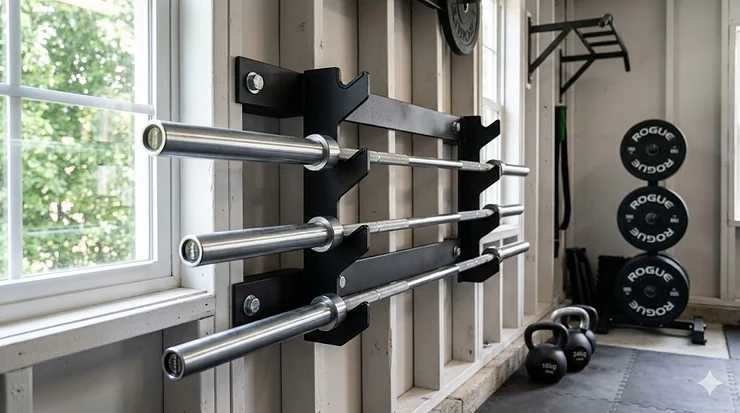
Anyone who’s ever stepped on a rolling Olympic bar at 5 AM knows the frustration of disorganized gym equipment. A barbell holder wall mount isn’t just about aesthetics — it’s about reclaiming your floor space, protecting your investment, and creating a workout environment that actually motivates you to show up. Proper weight training equipment storage has become essential as more people build dedicated home gyms. After analyzing dozens of storage systems and consulting with home gym owners who’ve tried everything from DIY solutions to premium setups, I’ve narrowed down the seven barbell storage racks that deliver the best combination of durability, space efficiency, and value in 2026.
What most buyers overlook is this: the difference between a $30 rack and a $120 rack isn’t just the price tag. The protective UHMW plastic lining, 7-gauge steel construction, and proper weight distribution design can mean the difference between a barbell with pristine knurling after three years versus one that looks like it survived a demolition derby. Whether you’re working with an 8-foot garage wall or trying to squeeze storage into a basement corner with limited ceiling height, the right horizontal barbell rack or vertical configuration will transform how you train.
In this guide, you’ll discover which gun rack style barbell storage works best for different home gym layouts, how to avoid the common installation mistakes that cause bars to scratch or racks to sag, and which olympic bar holder systems offer the most flexibility as your equipment collection grows. I’ll also break down the real-world performance differences between budget-friendly options around $30-40 and premium USA-made systems that command prices in the $80-150 range.
Quick Comparison: Top Barbell Storage Systems at a Glance
| Product | Capacity | Orientation | Price Range | Best For | Key Feature |
|---|---|---|---|---|---|
| Titan Fitness Gun Rack | 6 bars | Horizontal | $70-$90 | Multi-bar collections | UHMW plastic protection |
| PRx Three-Bar Hanging | 3 bars | Vertical | $80-$100 | Space-constrained gyms | USA-made construction |
| Yes4All Horizontal Rack | 3-6 bars | Horizontal | $30-$60 | Budget-conscious buyers | 7-gauge steel build |
| PRx Vertical Single | 1 bar | Vertical | $40-$55 | Minimalist setups | Ceiling space saver |
| JNIHEEP Wall Hanger | 1 bar | Vertical | $25-$35 | Individual bar storage | Rubber gasket protection |
| Yes4All Vertical Holder | 2 bars | Vertical | $35-$50 | Dual-bar systems | Protective UHMW pads |
| CAP Barbell Horizontal | 3 bars | Horizontal | $40-$55 | Traditional layouts | Established brand reliability |
Looking at this comparison, the Titan Fitness Gun Rack delivers exceptional capacity for serious lifters with multiple specialty bars, while the Yes4All horizontal options provide outstanding value for those building their first dedicated storage system. If vertical space is your luxury and floor space your constraint, the PRx hanging systems justify their premium pricing through superior build quality and the peace of mind that comes with Made-in-USA construction. Budget buyers should note that the JNIHEEP and entry-level Yes4All models sacrifice some protective features for their lower price points, which matters less if you’re storing basic bars rather than expensive cerakote-finished specialty equipment.
💬 Just one click — help others make better buying decisions too! 😊
Top 7 Barbell Holder Wall Mount Systems: Expert Analysis
1. Titan Fitness Horizontal Wall-Mounted Barbell Gun Rack
The Titan Fitness Gun Rack stands as the workhorse solution for home gym owners who’ve accumulated a serious barbell collection. This dual-bracket system holds up to six Olympic-sized bars horizontally with a combined 400-pound capacity — enough headroom for even the heaviest specialty bars like safety squat bars or thick-grip options.
What sets this rack apart is the fully lined UHMW plastic protection. While budget racks often use thin plastic strips that wear through within months, Titan’s implementation provides comprehensive coverage across all contact points. This means your cerakote finish and aggressive knurling stay pristine even after hundreds of racking cycles. The single-piece bent steel brackets eliminate weak points that plague welded designs, and at 32 inches tall with 5.4 inches of depth, the rack accommodates everything from standard 20kg bars to shorter technique bars and longer axle bars.
Installation requires locating wall studs or using the included wood mounting hardware, which most buyers complete in under 45 minutes with a socket wrench. The horizontal configuration works brilliantly when you have 8+ feet of wall space but limited ceiling height — a common scenario in garage gyms with overhead doors or storage. One consideration: the 6-bar capacity assumes relatively standard bar spacing; if you’re storing particularly thick specialty bars or trying to fit seven bars, you’ll find things get snug.
Customer feedback consistently highlights the rack’s stability and how the laser-cut UHMW liners genuinely protect equipment. A few users note that the mounting hardware could be more robust for concrete walls, requiring separate masonry anchors for optimal security.
✅ Holds 6 bars with 400-lb total capacity
✅ Complete UHMW plastic lining protection
✅ Single-piece bent steel construction
❌ Requires significant horizontal wall space
❌ Concrete mounting needs separate hardware
Price range: Around $70-$90. For serious home gym owners storing multiple bars, this represents solid mid-tier value — you’re getting commercial-grade protection without the extreme premium pricing of boutique brands.
2. PRx Performance Three Barbell Storage Wall Mounted
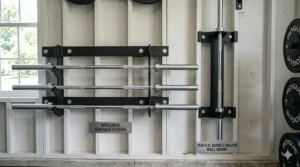
The PRx Three-Bar Hanging System occupies the premium tier of barbell storage solutions for good reason. This vertical hanging design holds three Olympic barbells by their sleeves, requiring minimal wall space while taking advantage of ceiling height that often goes unused in home gyms.
Made in the USA from heavy-duty steel with a black powder-coated finish, this isn’t just equipment storage — it’s a statement piece that elevates your entire gym aesthetic. The vertical orientation means you need approximately 105 inches of ceiling height for an 87-inch men’s bar or 93 inches for a 79-inch women’s bar. What most buyers appreciate here is how this system transforms otherwise wasted vertical space into organized storage, particularly valuable in narrow garage setups or basement gyms where floor space comes at a premium.
The engineering details matter: PRx uses protective materials that prevent sleeve scratches during insertion and removal, and the mounting system distributes weight across multiple studs for maximum stability. Installation requires precision to ensure bars hang plumb, but PRx includes all mounting hardware and the process typically takes under an hour for someone comfortable with power tools.
Real-world performance feedback from CrossFit athletes and powerlifters emphasizes how this system handles frequent daily use without showing wear. The powder coating resists chips and rust even in humid garage environments, and the vertical design naturally keeps bars from rolling or shifting. The trade-off for this premium build quality is cost — PRx commands prices nearly double what you’d pay for budget horizontal racks.
✅ Space-efficient vertical design
✅ USA-made with premium materials
✅ Scratch-resistant powder coating
❌ Requires significant ceiling height
❌ Premium pricing vs. alternatives
Price range: In the $80-$100 territory. If you value Made-in-USA construction, have limited wall width but adequate ceiling height, and want storage that will outlast your equipment collection, this system delivers.
3. Yes4All Horizontal Wall Mounted Olympic Barbell Rack
The Yes4All Horizontal Rack represents the sweet spot between budget constraints and quality construction that serious lifters demand. Available in both 3-bar and 6-bar configurations (sold as pairs of brackets), this system has become the go-to recommendation for home gym builders working with moderate budgets.
Constructed from 7-gauge steel with laser-cut precision and CNC bending technology, the brackets deliver surprising rigidity despite their accessible price point. The protective UHMW plastic layer prevents bar damage during storage — a critical feature that budget racks often skimp on. Each pair of brackets handles up to 440 pounds, providing substantial capacity headroom for even loaded bars if you need temporary storage during plate changes.
What makes this rack particularly practical is its versatility across bar types. Owners report successfully storing everything from standard Olympic bars to curl bars, aluminum training bars, and axle bars. The horizontal gun-rack style keeps bars easily accessible at waist height, eliminating the ceiling clearance requirements that vertical systems demand.
Installation straightforward with 16-inch on-center stud spacing, though you’ll need to verify your wall studs align properly. The powder-coated black finish holds up well in climate-controlled environments but may show minor wear in extremely humid garage settings after years of use. Customer reviews consistently praise the value proposition — you’re getting protective features and solid construction at roughly half the price of premium alternatives.
The main consideration: while the 7-gauge steel provides adequate strength for home gym use, commercial facilities or gyms with heavy traffic might benefit from upgrading to thicker-gauge commercial options.
✅ Excellent value for money
✅ 7-gauge steel construction
✅ Fits multiple bar types
❌ Not ideal for extreme humidity
❌ Lower gauge than premium options
Price range: Around $30-$60 depending on configuration (3-bar or 6-bar capacity). This pricing makes Yes4All the standout choice for budget-conscious buyers who refuse to compromise on protective features.
4. PRx Performance Vertical Barbell Storage Rack
The PRx Vertical Single Bar Holder solves a specific problem beautifully: how do you store a single high-value barbell in minimal space while maintaining quick access? This wall-mounted vertical rack holds one Olympic bar by its sleeve, taking advantage of ceiling height to keep your floor completely clear.
Built with the same USA-made quality as PRx’s three-bar system but sized for individual storage, this unit works exceptionally well for minimalist setups or as part of a modular storage system you build over time. The design allows you to install multiple single holders at different heights or positions, creating a custom configuration that fits your exact wall layout and equipment collection.
The protective sleeve lining prevents scratching during insertion and removal — particularly valuable if you’re storing a premium bar with specialized coatings. Installation height flexibility means you can position the holder to work with your specific ceiling clearance, though PRx recommends adding 5 inches to your bar length to determine minimum ceiling height requirements.
What sets this apart from cheaper single-bar holders is the quality of materials and the attention to protection details. The powder-coated steel construction maintains its appearance even in less-than-ideal garage environments, and the mounting system feels overbuilt in the best possible way. Users particularly appreciate being able to add units incrementally as their bar collection grows rather than committing to a large multi-bar system upfront.
The single-bar limitation is both the product’s strength and its constraint — it’s perfect for focused storage but requires buying multiple units for larger collections, which can become cost-prohibitive compared to multi-bar alternatives.
✅ Minimal wall footprint
✅ Premium USA construction
✅ Modular expansion capability
❌ Single bar capacity only
❌ Cost adds up for multiple units
Price range: In the $40-$55 range per unit. Best suited for buyers with one or two premium barbells who value quality over capacity, or those building a custom modular storage system.
5. JNIHEEP Olympic Barbell Hanger
The JNIHEEP Vertical Wall Hanger delivers essential barbell storage at entry-level pricing, making it an attractive option for budget-conscious gym builders or those testing vertical storage before committing to premium systems. This single-bar holder mounts vertically on your wall, accommodating bars under 33mm in diameter — which covers standard Olympic bars but may exclude some specialty thick-grip variants.
Made from powder-coated steel plate with a rubber gasket protection pad, the JNIHEEP provides basic protection for your barbell’s finish and knurling. The construction feels solid for its price point, though it clearly occupies a different tier than USA-made alternatives. What buyers appreciate is the straightforward installation process and the fact that it actually delivers on its core promise: keeping one barbell organized and off the floor.
The matte anti-rust coating shows decent durability in climate-controlled environments, though gym owners in particularly humid garages report some surface rust developing after 12-18 months of use. The rubber gasket does its job preventing direct metal-on-metal contact, extending the life of your bar’s finish beyond what you’d get from direct wall contact or cheap J-hooks.
Real-world feedback suggests this holder works best for basic training bars rather than expensive specialty equipment. The spacing between the “fingers” that cradle the bar provides adequate support, though some users reinforce the unit with additional wall anchors beyond what’s included for extra peace of mind when storing heavier loaded bars temporarily.
At its price point, expecting premium features would be unreasonable. What you get is functional storage that protects your bar better than leaving it on the floor, without the price premium that comes with brand-name alternatives or advanced materials.
✅ Budget-friendly pricing
✅ Rubber gasket protection
✅ Simple installation
❌ Basic materials vs. premium options
❌ May rust in humid environments
Price range: Around $25-$35. Ideal for beginners building their first home gym or as supplemental storage for less frequently used bars.
6. Yes4All Vertical Wall Mounted Olympic Barbell Holder
The Yes4All Vertical Holder represents the brand’s answer to vertical storage needs, offering a two-bar capacity system that splits the difference between single-bar minimalism and large multi-bar installations. This wall-mounted design holds barbells vertically by their sleeves, requiring the same ceiling height considerations as other vertical systems but providing organized storage for a pair of bars at an accessible price point.
Built with Yes4All’s characteristic attention to value engineering, this holder features protective UHMW plastic pads at all contact points — a feature that preserves your bar’s finish and knurling through countless storage cycles. The steel construction handles the weight of Olympic bars comfortably, and the powder coating provides decent protection against environmental wear in most home gym settings.
What makes this configuration particularly practical is its suitability for households where multiple people lift. Storing a men’s 20kg bar alongside a women’s 15kg bar vertically keeps them organized and immediately accessible without requiring separate storage locations. The dual-bar design also works well for powerlifters who rotate between a competition bar and a beater bar for heavy training sessions.
Installation requires careful measurement to ensure both bars hang properly without interference, and you’ll need to verify adequate ceiling clearance for your longest bar plus the mounting hardware height. Users report the installation hardware works reliably with wood studs but recommend upgrading to proper concrete anchors if mounting to masonry or block walls.
The trade-off versus horizontal storage is the ceiling height requirement, but for gyms with adequate vertical space and limited wall width, this orientation delivers exceptional space efficiency.
✅ Two-bar capacity
✅ UHMW protective pads
✅ Good value pricing
❌ Requires ceiling clearance
❌ Limited to 2 bars maximum
Price range: Around $35-$50. A solid middle-ground option for small collections where vertical space is available but horizontal wall space is constrained.
7. CAP Barbell Horizontal Bar Wall Rack
The CAP Barbell Horizontal Rack brings the reliability of an established fitness equipment manufacturer to the barbell storage category. While CAP may not generate the same enthusiast buzz as newer boutique brands, their decades-long presence in the industry translates to consistent quality control and readily available replacement parts if needed.
This horizontal wall rack accommodates three Olympic bars in a traditional gun-rack configuration. The construction utilizes quality materials without the premium pricing of specialized storage companies — you’re essentially paying for functional equipment rather than brand cachet. The rack’s straightforward design works with standard Olympic bars, shorter specialty bars, and most curl bars, providing versatility for mixed equipment collections.
What buyers appreciate about CAP products generally is their no-nonsense approach: the rack does exactly what it claims without unnecessary features that drive up costs. Installation follows standard wall-mounting procedures, and the weight capacity handles typical home gym loads without concern. The finish quality falls somewhere between budget no-name brands and premium powder-coated options — adequate for most garage gym environments though perhaps not ideal for high-humidity coastal areas without supplemental protection.
Customer feedback suggests CAP’s customer service responsiveness exceeds what you’d typically receive from budget-focused brands, though it doesn’t quite match the white-glove treatment of premium manufacturers. For buyers who value brand recognition and the peace of mind that comes with purchasing from an established company, CAP represents a sensible middle path.
The rack works particularly well for gyms where aesthetics matter less than function, or where you’re building out a complete equipment set and prefer sourcing multiple items from a single established manufacturer for consistency.
✅ Established brand reputation
✅ Consistent quality control
✅ Three-bar capacity
❌ Less specialized than boutique brands
❌ Finish quality is adequate not premium
Price range: Around $40-$55. Best for buyers who prioritize brand reliability and customer service over cutting-edge features or Made-in-USA construction.
Setting Up Your First Barbell Storage System: A Step-by-Step Guide
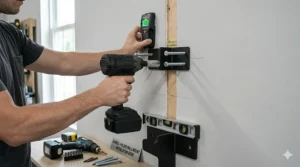
Installing a barbell holder wall mount transforms from intimidating to straightforward once you understand the three critical factors: stud location, weight distribution, and bar clearance. Start by mapping your wall studs using a quality stud finder — the magnetic models work reliably and eliminate the false positives that plague cheaper electronic versions. Your barbell storage system needs to mount directly into studs for safety; wall anchors alone won’t support 200+ pounds of loaded bar weight.
Step 1: Measure and Mark
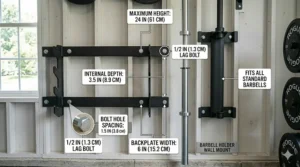
Determine your storage orientation based on available space. Horizontal racks require 6-8 feet of unobstructed wall width and work best when mounted at shoulder height for easy access. Vertical systems need ceiling clearance equal to your longest bar length plus 5-7 inches for the mounting hardware and insertion angle. Mark your stud locations and use a level to ensure your mounting points align perfectly horizontal or vertical.
Step 2: Pre-Drill and Install Hardware
Pre-drilling pilot holes prevents wood splitting and ensures lag screws thread properly. For horizontal gun-rack systems, install the lower bracket first, then use your level and measurements to position the upper bracket for perfect alignment. Vertical hangers require only one mounting point but demand precise positioning to ensure bars hang straight without rubbing against walls.
Step 3: Load Testing and Adjustment
Before loading your entire barbell collection, test the installation with a single bar. Check that the protective UHMW liners align properly with where your bar contacts the rack. Adjust spacing if needed — some systems allow minor repositioning during initial setup. Verify that bars sit securely without excessive movement or tipping.
Step 4: Organization Strategy
Organize bars by usage frequency, not weight. Your primary training bar belongs in the most accessible position, with specialty bars like safety squat bars or curl bars in secondary positions. This simple change cuts several seconds off every training session and reduces the temptation to leave bars leaning against walls between workouts.
Horizontal vs Vertical Storage: Which Configuration Fits Your Gym?
The orientation debate isn’t about which system is objectively better — it’s about matching storage geometry to your specific space constraints and training style. Horizontal gun-rack storage excels in standard garage gyms with adequate wall width but limited ceiling height. The waist-high positioning means you can grab bars quickly without awkward overhead reaching, and the horizontal arrangement lets you instantly see your entire collection at a glance.
Vertical hanging systems flip this equation, trading ceiling height for wall width savings. If you’re working in a narrow basement or a garage bay where cars still need to park, vertical storage might be your only viable option. The ceiling-to-floor orientation also creates a visually striking display that makes your gym feel more professional and purpose-built.
Horizontal Advantages:
Quick bar selection and retrieval without strain, works in standard 8-foot ceiling spaces, easier installation with standard stud spacing, and compatible with the widest range of bar types including unusual specialty bars.
Vertical Advantages:
Minimal wall footprint perfect for narrow spaces, utilizes otherwise wasted ceiling height, creates impressive visual impact, and naturally prevents bars from rolling if accidentally bumped.
Hybrid Approach:
Many experienced home gym owners eventually adopt both orientations — horizontal racks for their primary training bars that see daily use, and vertical hanging for specialty bars used less frequently. This combination maximizes space efficiency while optimizing accessibility based on usage patterns.
The decision ultimately depends on your available dimensions. Measure your space carefully, consider future equipment additions, and choose the orientation that preserves the most functional training area while keeping your bars organized and protected.
Understanding Weight Capacity: Don’t Ignore the Math
Weight capacity specifications often confuse buyers because they mix different measurement contexts. A rack rated for 400 pounds total capacity doesn’t mean each bracket handles 400 pounds — it means the entire system supports 400 pounds distributed across all contact points. For a 6-bar horizontal rack, this translates to roughly 65-70 pounds per bar position, which easily accommodates unloaded Olympic bars (typically 45 pounds for men’s, 35 pounds for women’s, 15 pounds for technique bars).
The confusion arises when people temporarily store loaded bars. While most quality racks can handle a loaded bar briefly during plate changes, that’s not the intended long-term use case. Barbells should always be stored unloaded — storing them loaded can cause permanent warping over time, and it puts unnecessary stress on your wall mounting system.
Single Wall Stud Capacity:
A standard 2×4 wood stud can support approximately 200-300 pounds when using proper lag screws and mounting techniques. However, that’s static load in ideal conditions. For dynamic gym equipment that gets loaded and unloaded regularly, professional installers recommend staying well below maximum ratings — typically 150 pounds per stud for long-term reliability.
Multiple Stud Distribution:
Quality horizontal racks span multiple studs (typically 2-3 studs for a 6-bar system), distributing weight across a larger structural area. This explains why a rack might be rated for 400 pounds total even though a single stud could theoretically support 200+ pounds — the system isn’t overbuilding, it’s engineering for real-world safety margins.
Material Thickness Matters:
Seven-gauge steel (approximately 0.18 inches thick) provides adequate strength for home gym use. Eleven-gauge steel (roughly 0.12 inches) offers even more rigidity but at increased cost and weight. Avoid racks using 14-gauge or thinner steel for barbell storage — they’ll flex under load and wear prematurely.
Installation Mistakes That Ruin Barbells and Racks
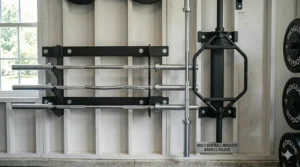
The most expensive mistake isn’t buying the wrong rack — it’s installing it incorrectly. Mounting a horizontal rack without checking for level results in bars that constantly roll to one side, eventually wearing grooves in the protective UHMW plastic. Within months, you’ll have uneven wear patterns that damage your bar’s finish, defeating the entire purpose of wall storage.
Mistake 1: Skipping the Stud Finder
Wall anchors work for picture frames, not for 200-pound equipment loads. Every professional installer emphasizes this point: lag screws must thread into solid wood studs for reliable long-term support. The extra fifteen minutes spent carefully locating and marking studs prevents catastrophic failures that damage walls and equipment.
Mistake 2: Inadequate Pilot Holes
Driving lag screws directly into studs without pre-drilling pilot holes often splits the wood, compromising holding power. The pilot hole should be slightly smaller than the screw shaft diameter — typically 1/8 to 1/4 inch smaller depending on screw size. This preparation allows proper threading while preventing wood damage.
Mistake 3: Overtightening Hardware
Cranking down lag screws until the bracket warps or the wood crushes creates a weaker connection than proper torque. Tighten until the bracket sits flush and firm, then stop. Overtightening actually reduces contact area and can crack the mounting bracket on cheaper racks.
Mistake 4: Ignoring Bar Clearance
Installing vertical hangers too close to the wall leaves insufficient insertion angle for longer bars. The physics requires space: you need to angle the bar to get the sleeve into the holder, then lower it to vertical. Calculate clearance by adding 12-18 inches to your bar length to determine minimum wall-to-obstruction distance.
Mistake 5: Mixing Mount Types
Using wood screws rated for stud mounting on concrete or masonry walls invites failure. Concrete requires different hardware — typically sleeve anchors or wedge anchors designed specifically for masonry applications. Using the wrong hardware type is perhaps the single most common installation error among DIY home gym builders.
Protecting Your Investment: Bar Care and Storage Best Practices
The most expensive barbell storage system in the world won’t protect your equipment if you’re storing bars incorrectly. Olympic barbells should always be stored completely unloaded — the weight of plates creates uneven stress that can cause permanent bending over time, especially in bars with aggressive knurling or specialized coatings that affect flexibility. Professional gym storage specialists emphasize this as the single most important maintenance practice.
Cleaning Before Storage:
Wipe down bars after every training session to remove sweat, chalk residue, and oils from your hands. These substances accelerate corrosion, particularly on aggressive knurling that traps moisture and contaminants. A simple microwave cleaning takes thirty seconds and dramatically extends bar life.
Sleeve Rotation:
If you’re storing barbells vertically by their sleeves, rotate which sleeve hangs in the holder every few months. This prevents uneven wear patterns on the bushing or bearing assemblies and ensures smooth spinning performance over years of use.
Climate Considerations:
Garage gyms in humid climates face accelerated corrosion challenges. If you’re storing bars in unconditioned spaces with humidity above 60%, consider applying a thin coat of 3-in-1 oil to the shaft and sleeves every few months. Wipe it down before use, but this protective layer prevents rust formation that eventually destroys knurling and degrades finishes. Research on equipment storage in various climates shows that proper maintenance routines can extend equipment life by years.
Spacing Between Bars:
Horizontal racks work best when bars don’t contact each other during storage. Bars with aggressive knurling can scratch neighboring bars if stored too closely. Quality racks design spacing to prevent this contact, but if you’re building a DIY system or using a budget rack with minimal spacing, consider which bars you store adjacently.
Inspection Schedule:
Quarterly inspections of both your bars and storage system prevent small issues from becoming expensive problems. Check for loose mounting hardware, wear patterns on protective liners, and any signs of rust or corrosion on both the rack and your equipment. Addressing minor wear immediately costs far less than replacing damaged bars or repairing walls after a rack failure.
Small Gym, Big Impact: Storage Solutions for Limited Space
Working within a single-car garage bay or a 10×12 basement room doesn’t mean sacrificing proper barbell storage — it means being strategic about vertical space utilization. The most effective small-space approach combines vertical hanging for primary bars with strategic placement of other equipment to maximize every square foot.
Consider this layout: vertical barbell hangers mounted on the wall opposite your power rack or squat stand keep bars accessible without encroaching on your lifting area. When mounted at strategic heights, you can store multiple bars vertically while maintaining clear pathways for movement. A single wall can accommodate 2-3 vertical hangers across a 6-foot span, whereas horizontal gun-rack storage might require 8+ feet of clear wall space for the same number of bars.
Corner Utilization:
Dead corners represent untapped storage potential in compact gyms. Mount vertical hangers in corner positions where horizontal racks won’t fit, taking advantage of ceiling height that typically goes unused. This placement keeps bars completely out of your training space while remaining quickly accessible.
Ceiling Clearance Math:
Before committing to vertical storage, measure carefully. Add 5 inches to your longest bar length to account for mounting hardware and insertion angle. If your ceiling barely clears this minimum, horizontal storage might be your only reliable option — forcing vertical storage in inadequate ceiling height leads to awkward bar insertion angles that scratch finishes and frustrate users.
Modular Growth Strategy:
Start with storage for your current equipment, but choose systems that allow expansion. PRx’s single-bar vertical holders let you add units as your collection grows. Yes4All’s horizontal brackets can be installed in pairs initially, with additional pairs added later without removing existing hardware. This incremental approach keeps initial costs manageable while providing growth capacity.
Multi-Purpose Zones:
If your gym doubles as storage for other items (common in garage gyms), designate specific zones for different functions. Wall-mounted barbell storage keeps equipment vertical and out of the way, leaving floor space for bikes, yard tools, or other non-gym items that need garage storage.
The key insight for small space success: vertical solutions waste nothing. Floor space is precious and limited; ceiling height above 7 feet is abundant and largely unused. Match your storage strategy to this reality and even compact gyms can accommodate serious equipment collections. According to home gym organization experts, utilizing vertical wall space is one of the most effective strategies for maximizing workout areas.
Premium vs Budget: Where Quality Actually Matters
The price spectrum for barbell holder wall mount systems spans from $25 budget single-bar hangers to $150+ premium multi-bar installations. Understanding where that price difference manifests helps buyers spend wisely rather than simply spending more.
Material Gauge and Thickness:
Premium racks use thicker steel (7-gauge or 11-gauge) compared to budget options (often 12-14 gauge). This difference translates to rigidity under load and long-term durability. A budget rack might flex noticeably when loading the sixth bar; a premium option stays rock-solid. For home gyms with 3-4 bars, this difference matters less than for commercial facilities or serious collectors with 8+ bars.
Protective Coating Quality:
Budget powder coating often shows chips and wear within the first year, particularly at high-contact points. Premium coatings use multiple layers and higher-quality materials that resist chipping, scratching, and corrosion for years. In climate-controlled spaces, this distinction is cosmetic. In humid garages or unconditioned basements, quality coating becomes functional — preventing rust that eventually compromises structural integrity.
UHMW Plastic Implementation:
The difference between cheap plastic strips and quality UHMW lining dramatically affects bar protection. Budget racks often use thin plastic that wears through in months, exposing metal contact points that damage knurling. Premium racks implement thicker UHMW (often 1/8 inch or more) that lasts years while providing comprehensive coverage across all contact areas.
Manufacturing Origin:
USA-made racks command 50-100% price premiums over imported alternatives, primarily due to labor costs and material sourcing. For buyers who value supporting domestic manufacturing or want maximum quality assurance, brands like PRx Performance deliver this option. For budget-conscious builders, imported options from reputable brands like Yes4All or Titan Fitness provide solid quality at accessible prices.
Where to Invest:
If you own premium barbells with specialized finishes (cerakote, stainless steel, chrome), investing in quality storage with proper protective features makes economic sense. If you’re storing basic bars that cost $100-200 each, budget storage that still includes UHMW protection delivers better value. Match your storage investment to your equipment investment — don’t store a $400 bar on a $20 rack with no protective features.
The Gun Rack Revolution: Why Horizontal Is Having a Moment
The “gun rack” style barbell storage — horizontal wall-mounted brackets that display bars like rifles in a cabinet — has become the default recommendation in home gym communities for specific reasons rooted in practical usability. The design originated in commercial CrossFit gyms where coaches needed instant visual inventory of available bars and quick access during classes with multiple athletes.
What makes this orientation particularly effective for home use is the psychological aspect: horizontal storage at waist height removes friction from the “grab a bar and start training” workflow. Vertical systems require overhead reaching and often involve a two-hand operation to lift and insert bars. Horizontal gun racks let you rack and unrack bars single-handed, which seems trivial until you’re doing it multiple times daily.
The visual organization aspect shouldn’t be underestimated either. When bars hang horizontally, you can instantly identify your competition bar versus your beater bar versus specialty options like safety squat bars or curl bars. This instant recognition speeds up workout transitions and eliminates the mental decision fatigue that comes from digging through cluttered storage.
Capacity Considerations:
Gun-rack systems scale effectively from 3-bar starter setups to 6+ bar collections without requiring different mounting approaches. Adding capacity means installing additional bracket pairs rather than completely reconfiguring your storage system. This scalability makes horizontal systems particularly attractive for growing equipment collections.
Trade-offs:
The horizontal advantage requires horizontal space, which immediately disqualifies this approach for narrow basement gyms or single-wall garage installations. The design also positions bars where they can collect dust more readily than vertical hanging (where gravity helps keep sleeves clean). Neither factor is insurmountable, but they represent real considerations in the vertical-versus-horizontal decision.
For standard garage gyms with adequate wall width and ceilings in the 8-9 foot range, horizontal gun-rack storage has earned its popularity through genuine practical advantages that improve daily training experience.
Common Buyer Questions: Real Answers from Real Users
❓ Can I store loaded barbells on wall mounts?
❓ How do I choose between horizontal and vertical storage?
❓ Will wall-mounted storage damage my walls?
❓ Do I really need UHMW plastic protection?
❓ Can vertical hangers accommodate specialty bars like safety squat bars?
Final Verdict: Organizing Your Iron the Right Way
After examining storage systems ranging from budget-friendly $25 single-bar hangers to premium $150+ multi-bar installations, the pattern becomes clear: the “best” barbell holder wall mount depends entirely on your specific situation, not on absolute rankings. A home gym owner with two bars and limited ceiling height needs different solutions than a serious lifter with six specialty bars and 10-foot ceilings.
For budget-conscious builders starting their first home gym, the Yes4All Horizontal Wall Mounted Rack delivers exceptional value — quality protective features at accessible pricing that won’t look embarrassing next to more expensive equipment. Mid-tier buyers seeking the sweet spot between cost and quality should examine the Titan Fitness Gun Rack for horizontal installations or the Yes4All Vertical Holder if space constraints demand vertical orientation.
Premium buyers willing to invest in Made-in-USA construction and superior build quality will find the PRx Performance line justifies its pricing through material quality, finish durability, and the confidence that comes with domestic manufacturing. These systems represent long-term investments that will likely outlast the barbells they store.
The larger lesson extends beyond product selection: proper barbell storage isn’t a luxury feature for gym enthusiasts with money to burn. It’s fundamental equipment maintenance that extends the usable life of expensive bars while creating a training environment that actually motivates consistent workouts. A gym where equipment is organized, accessible, and well-maintained simply gets used more frequently than cluttered spaces where you trip over rolling bars.
Take accurate measurements of your available space, honestly assess your equipment collection (including future additions), and choose storage systems that match your geometry rather than fighting against it. Whether you spend $30 or $150, the key is selecting the right orientation and capacity for your specific situation. Your barbells — and your shins — will thank you.
Recommended for You
- 7 Best Dumbbell Storage Rack for Home Gym 2026
- 7 Best Weight Plate Storage Rack for Garage Gym [2026 Guide]
- 7 Best Tire Storage Rack for Garage Solutions in 2026
Disclaimer: This article contains affiliate links. As an Amazon Associate, I earn from qualifying purchases. If you purchase products through these links, we may earn a small commission at no additional cost to you.
✨ Found this helpful? Share it with your friends! 💬🤗
